English
Enduring Understanding (BIG IDEA 3 — Information Storage and Transmission): Living systems store, retrieve, transmit, and respond to information essential to life processes.
Learning Objective 6.1.A: Describe the structures involved in passing hereditary information from one generation to the next.
- 6.1.A.1 Genetic information is stored in and passed to subsequent generations through DNA molecules and, in some cases, RNA molecules.
- 6.1.A.1.i Prokaryotic organisms typically have circular chromosomes.
- 6.1.A.1.ii Eukaryotic organisms typically have multiple linear chromosomes that are comprised of DNA. These chromosomes are condensed using histones and associated proteins.
- 6.1.A.2 Prokaryotes and eukaryotes can contain plasmids, which are extra-chromosomal circular molecules of DNA.
Learning Objective 6.1.B: Describe the characteristics of DNA that allow it to be used as hereditary material.
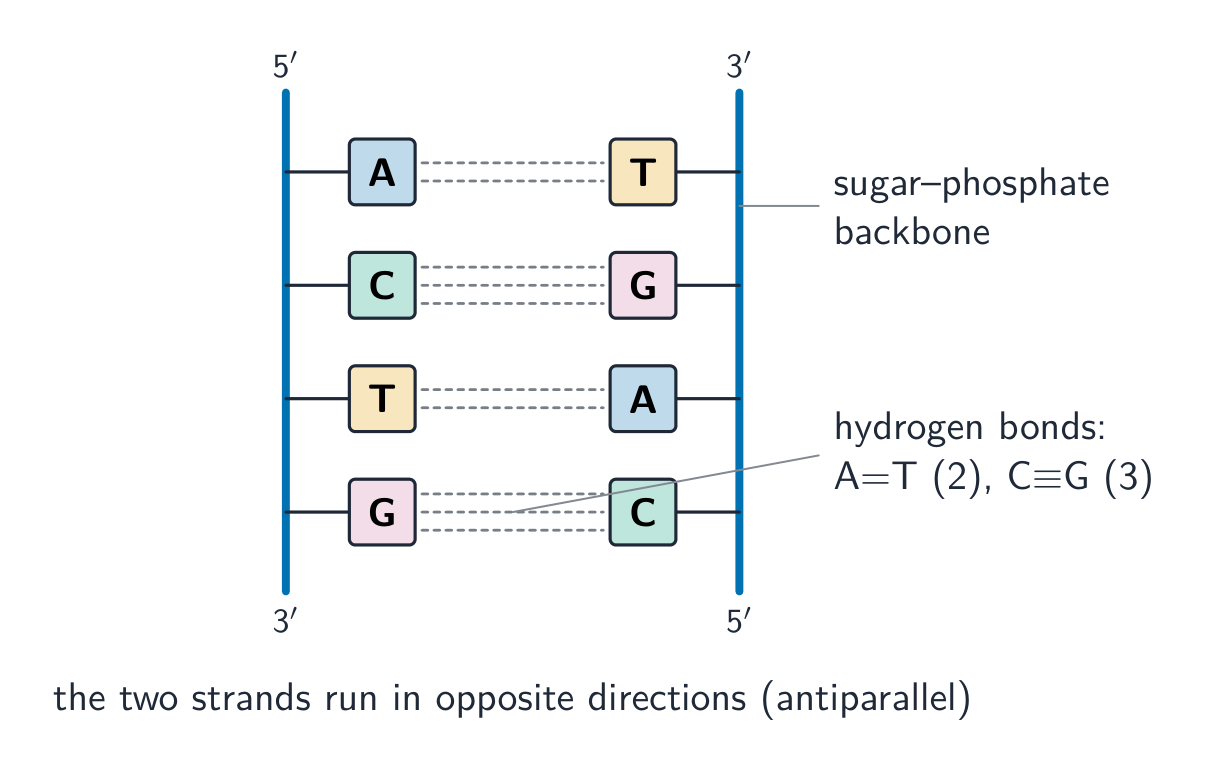
- 6.1.B.1 Nucleic acids exhibit specific nucleotide base pairing that is conserved through evolution.
- 6.1.B.1.i Purines (guanine and adenine) have a double ring structure.
- 6.1.B.1.ii Pyrimidines (cytosine, thymine, and uracil) have a single ring structure.
- 6.1.B.1.iii Purines pair with pyrimidines: adenine with thymine (or uracil in RNA) and guanine with cytosine.
한국어
지속적 이해 (BIG IDEA 3 — 정보 저장 및 전송): 생명 체계는 생명 과정에 필수적인 정보를 저장하고,检索하고, 전송하며, 반응한다.
학습 목표 6.1.A: 한 세대에서 다음 세대까지 유전 정보를 전달하는 데 관여하는 구조를 설명하십시오.
- 6.1.A.1 유전 정보는 DNA 분자, 때로는 RNA 분자에 저장되어 후대에게 전달됩니다.
- 6.1.A.1.i 원핵생물은 일반적으로 원형 염색체를 가집니다.
- 6.1.A.1.ii 진핵생물은 일반적으로 DNA로 구성된 다수의 선형 염색체를 가집니다. 이 염색체는 히스톤 및 관련 단백질을 사용하여 응축됩니다.
- 6.1.A.2 원핵생물과 진핵생물은 플라스미드를 포함할 수 있으며, 이는 염색체 외부의 원형 DNA 분자입니다.
학습 목표 6.1.B: DNA가 유전 물질로 사용될 수 있게 하는 그 특성을 설명하십시오.
- 6.1.B.1 염기산은 진화를 통해 보존된 특정 염기 서열 쌍을 나타냅니다.
- 6.1.B.1.i 퓨린(구아닌 및 아데닌)은 이중 고리 구조를 가집니다.
- 6.1.B.1.ii 피리미딘(시토신, 티민 및 우라실)은 단일 고리 구조를 가집니다.
- 6.1.B.1.iii 퓨린은 피리미딘과 쌍을 이룹니다: 아데닌은 티민(또는 RNA에서는 우라실)과, 구아닌은 시토신과 쌍을 이룹니다.