Skip to content

Industrialization and Its Effects, c. 1815 to c. 1914

AP European History · Topic 6

Train
6.1

Contextualizing Industrialization

Syllabus

6.1 Contextualizing Industrialization and Its Origins and Effects

Learning ObjectivePreview: Unit 6 Key Concepts

Unit 6.A
Explain the context in which industrialization originated, developed, and spread in Europe.

  • KC-3.1 The Industrial Revolution spread from Great Britain to the continent, where the state played a greater role in promoting industry.
    • KC-3.1.I Great Britain established its industrial dominance through the mechanization of textile production, iron and steel production, and new transportation systems in conjunction with uniquely favorable political and social climates.
    • KC-3.1.II Following the British example, industrialization took root in continental Europe, sometimes with state sponsorship.
  • KC-3.2 The experiences of everyday life were shaped by industrialization, depending on the level of industrial development in a particular location.
    • KC-3.2.I Industrialization promoted the development of new classes in the industrial regions of Europe.
    • KC-3.2.II Europe experienced rapid population growth and urbanization, leading to social dislocations.
    • KC-3.2.III Over time, the Industrial Revolution altered the family structure and relations for bourgeois and working-class families.
  • KC-3.3 Political revolutions and the complications resulting from industrialization triggered a range of ideological, governmental, and collective responses.
    • KC-3.3.I Ideologies developed and took root throughout society as a response to industrial and political revolutions.
    • KC-3.3.II Governments, at times based on the pressure of political or social organizations, responded to problems created or exacerbated by industrialization.

Source: College Board AP Course and Exam Description

Unit 6 covers c. 1815 to c. 1914 and rests on three claims the CED states as key concepts:

  • The Industrial Revolution spread from Great Britain to the continent, where the state played a greater role in promoting industry.
  • Everyday experience was shaped by industrialisation depending on the level of industrial development in a particular location - so the answer to "what was life like" is always where, and how far along.
  • Political revolutions and the complications of industrialisation triggered a range of ideological, governmental, and collective responses 意识形态政府与集体回应.

That third claim is the unit's spine. Industrialisation created problems; the ideologies and reforms of the nineteenth century are the answers people proposed to them.
Vocabulary Train
English Chinese Pinyin
triggered a range of ideological, governmental, and collective responses 意识形态、政府与集体回应 yì shí xíng tài 、 zhèng fǔ yǔ jí tǐ huí yìng
6.2

The Spread of Industry Throughout Europe

Syllabus

6.2 The Spread of Industry Throughout Europe

Thematic FocusLearning ObjectiveHistorical Developments

ECD
Economic and Commercial Developments — Economic development, especially the development of capitalism, played an important role in Europe’s history, often having significant social, political, and cultural effects.

Unit 6.B
Explain the factors that influenced the development of industrialization in Europe from 1815 to 1914.

  • KC-3.1.I.A Britain’s ready supplies of coal, iron ore, and other essential raw materials promoted industrial growth.
  • KC-3.1.I Great Britain established its industrial dominance through the mechanization of textile production, iron and steel production, and new transportation systems in conjunction with uniquely favorable political and social climates.
  • KC-3.1.I.B Economic institutions and human capital such as engineers, inventors, and capitalists helped Britain lead the process of industrialization, largely through private initiative.
  • KC-3.1.I.C Britain’s parliamentary government promoted commercial and industrial interests because those interests were represented in Parliament.
  • KC-3.1.II.A France moved toward industrialization at a more gradual pace than Great Britain, with government support and with less dislocation of traditional methods of production.
  • KC-3.1.II.C A combination of factors, including geography, lack of resources, the dominance of traditional landed elites, the persistence of serfdom in some areas, and inadequate government sponsorship, accounted for eastern and southern Europe’s lag in industrial development.
  • KC-3.2.V Because of the continued existence of more primitive agricultural practices and land-owning patterns, some areas of Europe lagged in industrialization while facing famine, debt, and land shortages.

Illustrative examples:

  • Britain’s leadership: §Bullet The Crystal Palace at the Great Exhibition of 1851 §Bullet Banks §Bullet Government financial awards to inventors Commercial interest in government: §Bullet Repeal of the Corn Laws Government support of industrialization: §Bullet Canals §Bullet Railroads §Bullet Trade agreements Geographic factors in eastern and southern Europe: §Bullet Lack of resources §Bullet Lack of adequate transportation Primitive agricultural practices and famines: §Bullet The “Hungry ’40s” §Bullet Irish potato famine §Bullet Russian serfdom

Source: College Board AP Course and Exam Description

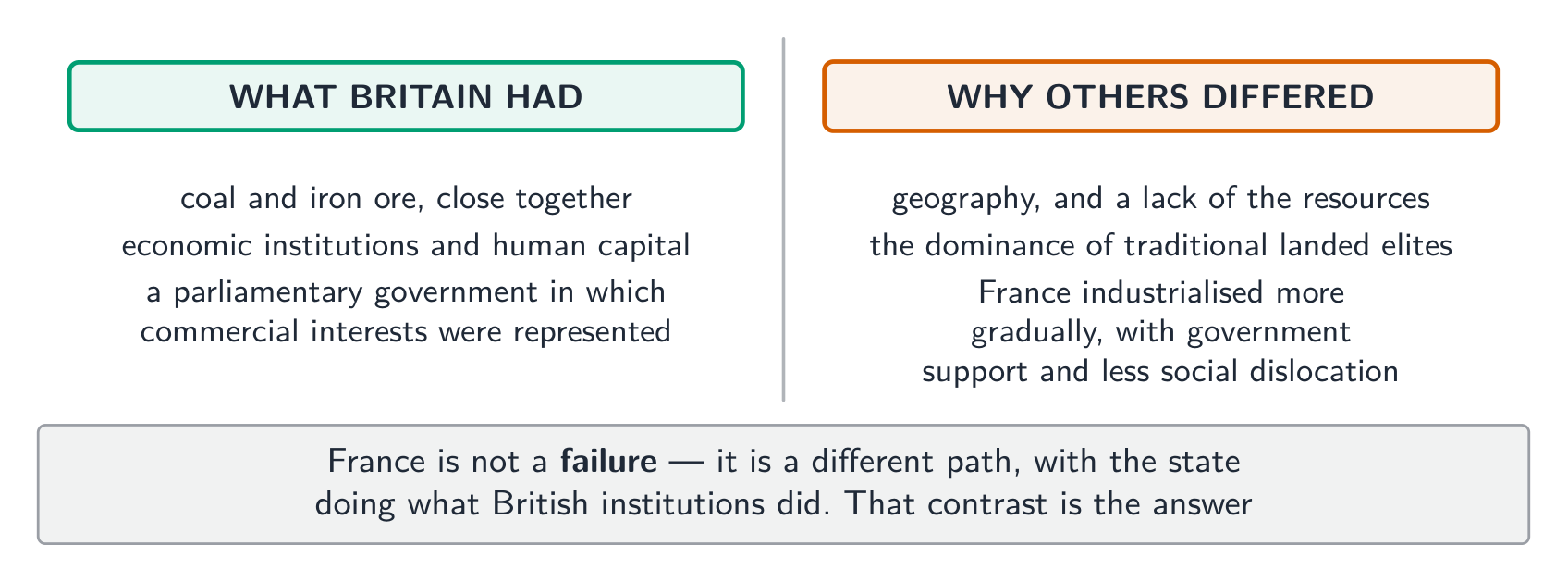
Britain led, and the CED gives the reasons as a set:

  • Ready supplies of coal, iron ore, and other raw materials.
  • Mechanisation of textile production, iron and steel, and the development of machine tools.
  • Economic institutions and human capital 人力资本 - engineers, inventors, and capitalists.
  • A parliamentary government that promoted commercial and industrial interests because those interests were represented in Parliament - the political condition, and the one students leave out.

The continent then diverged, which is the examinable comparison:
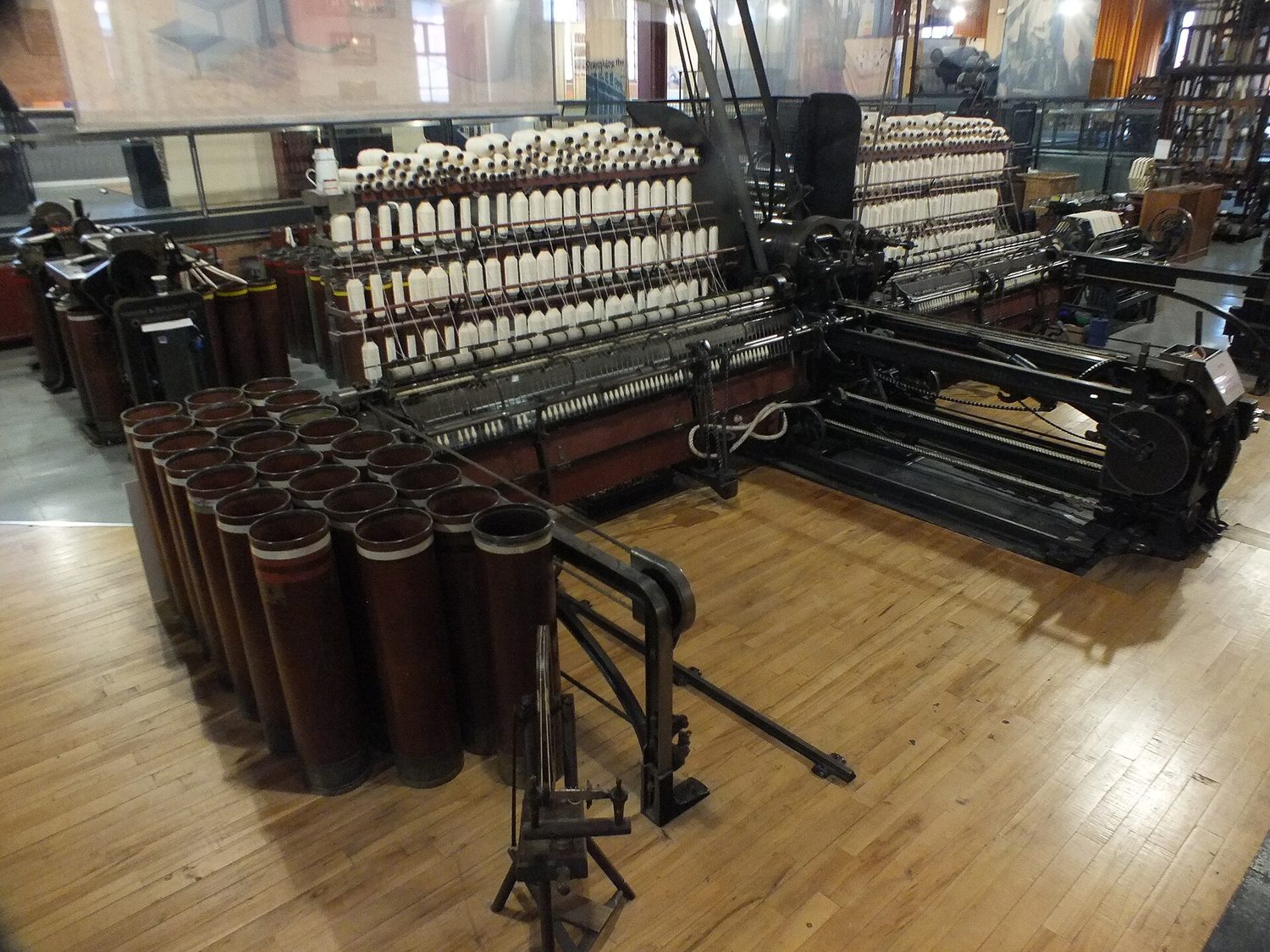
  • France industrialised more gradually, with government support and with less social dislocation 社会失序 than Britain.
  • Elsewhere, a combination of geography, lack of resources, the dominance of traditional landed elites, and the persistence of serf-like labour relations slowed industrialisation.
  • Because more primitive agricultural practices and landholding patterns persisted, some areas of Europe lagged behind entirely.
Vocabulary Train
English Chinese Pinyin
Economic institutions and human capital 人力资本 rén lì zī běn
less social dislocation 社会失序 shè huì shī xù
6.3

Second Wave Industrialization

Syllabus

6.3 Second Wave Industrialization and Its Effects

Thematic FocusLearning ObjectiveHistorical Developments

ECD
Economic and Commercial Developments — Economic development, especially the development of capitalism, played an important role in Europe’s history, often having significant social, political, and cultural effects.

Unit 6.C
Explain how innovations and advances in technology during the Industrial Revolutions led to economic and social change.

  • KC-3.1.III.A Mechanization and the factory system became the predominant modes of production by 1914.
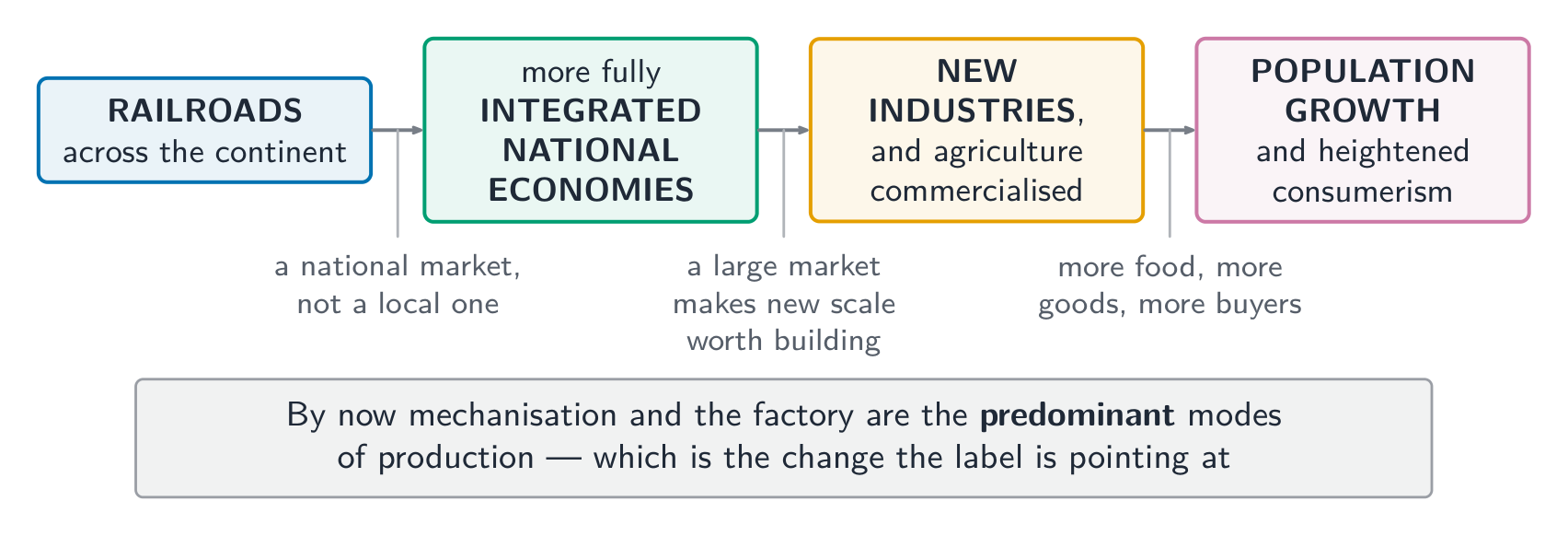
  • KC-3.1.III.B New technologies and means of communication and transportation—including railroads— resulted in more fully integrated national economies, a higher level of urbanization, and a truly global economic network.
  • KC-3.2.IV.B New, efficient methods of transportation and other innovations created new industries, improved the distribution of goods, increased consumerism, and enhanced quality of life.

Unit 6.D
Explain how industrialization influenced economic and political development throughout the period from 1815 to 1914.

  • KC-3.1.III During the second industrial revolution (c. 1870–1914), more areas of Europe experienced industrial activity, and industrial processes increased in scale and complexity.
    • KC-3.1.III.C Volatile business cycles in the last quarter of the 19th century led corporations and governments to try to manage the market through a variety of methods, including monopolies, banking practices, and tariffs.
  • KC-3.2.II.A Along with better harvests caused in part by the commercialization of agriculture, industrialization promoted population growth, longer life expectancy, and lowered infant mortality.
  • KC-3.2.IV A heightened consumerism developed as a result of the second industrial revolution.
    • KC-3.2.IV.A Industrialization and mass marketing increased both the production and demand for a new range of consumer goods— including clothing, processed foods, and labor-saving devices—and created more leisure opportunities.
    • KC-3.2.IV.A Industrialization in Prussia allowed that state to become the leader of a unified Germany, which subsequently underwent rapid industrialization under government sponsorship.

Illustrative examples:

  • Factory production: §Bullet Manchester, England §Bullet The Krupp family (Essen, Germany) New technologies: §Bullet Bessemer process §Bullet Mass production §Bullet Electricity §Bullet Chemicals Developments in communication and transportation: §Bullet Telegraph §Bullet Steamship §Bullet Streetcars or trolley cars §Bullet Telephones §Bullet Internal combustion engine §Bullet Airplane §Bullet Radio New, efficient methods of transportation and other innovations: §Bullet Steamships §Bullet Railroads §Bullet Refrigerated rail cars §Bullet Ice boxes §Bullet Streetcars §Bullet Bicycles New industries: §Bullet Chemical industry §Bullet Electricity and utilities §Bullet Automobile §Bullet Leisure travel §Bullet Professional and leisure sport (CONT’D) Mass marketing: §Bullet Advertising §Bullet Department stores §Bullet Catalogs Industrialization in Prussia: §Bullet Zollverein §Bullet Investment in transportation network §Bullet Adoption of improved methods of manufacturing §Bullet Friedrich List’s National System

Source: College Board AP Course and Exam Description

By 1914 mechanisation and the factory system had become the predominant modes of production. During the second industrial revolution 第二次工业革命 (c. 1870-1914) industrial activity spread across more of Europe, and:
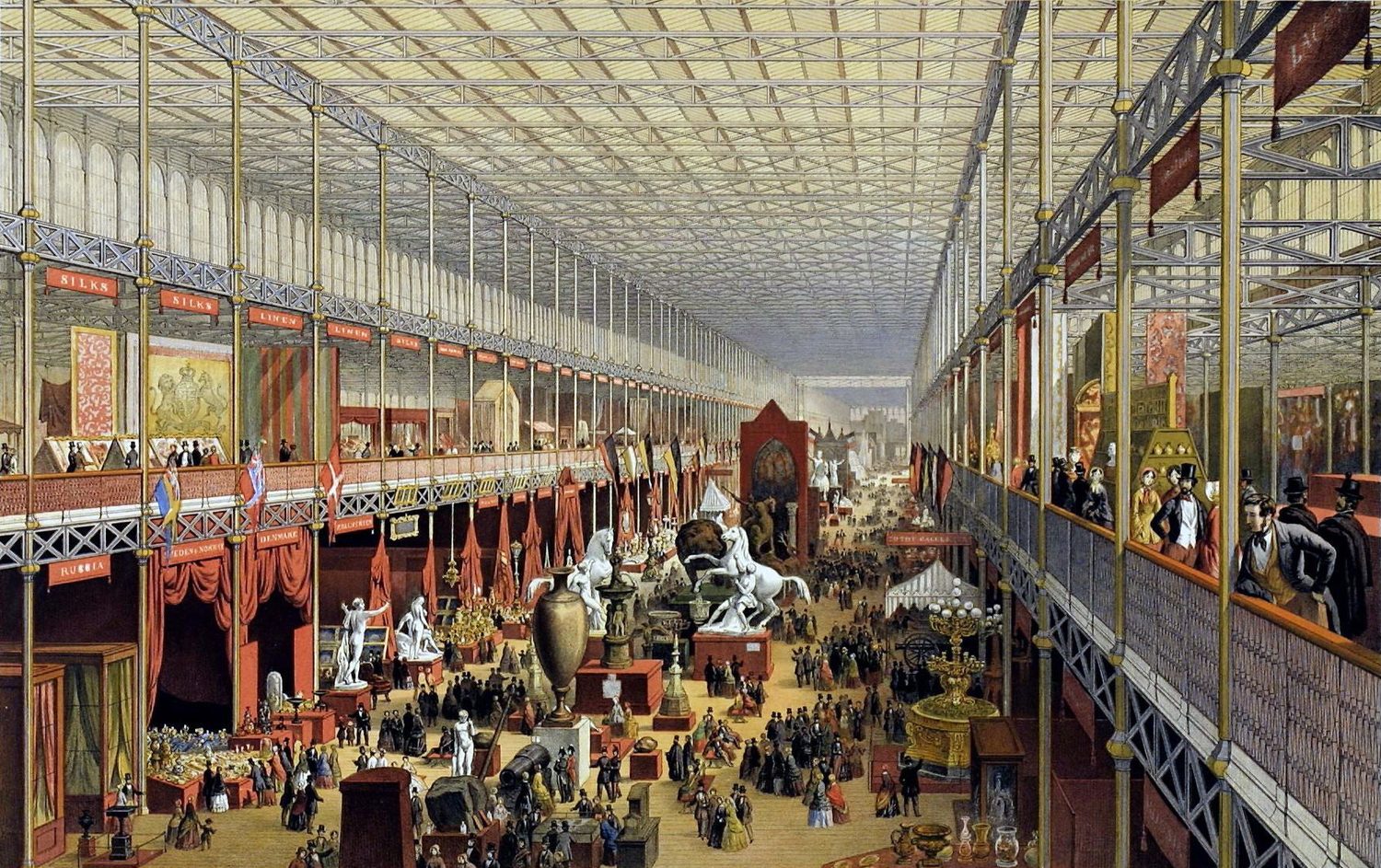
  • New technologies and means of communication and transport - notably railroads 铁路 - produced more fully integrated national economies 一体化的国民经济.
  • Efficient transport and other innovations created new industries and improved the distribution of goods.
  • Together with better harvests from the commercialisation of agriculture, industrialisation promoted population growth 人口增长.
  • A heightened consumerism 消费主义 developed.
Vocabulary Train
English Chinese Pinyin
second industrial revolution 第二次工业革命 dì èr cì gōng yè gé mìng
railroads 铁路 tiě lù
more fully integrated national economies 一体化的国民经济 yī tǐ huà de guó mín jīng jì
promoted population growth 人口增长 rén kǒu zēng zhǎng
heightened consumerism 消费主义 xiāo fèi zhǔ yì
6.4

Social Effects of Industrialization

Syllabus

6.4 Social Effects of Industrialization

Thematic FocusLearning ObjectiveHistorical Developments

SCD
Social Organization and Development — Economic, political, and cultural factors have influenced the form and status of family, class, and social groups in European history, which has, in turn, affected both the individual and society.

Unit 6.E
Explain the causes and consequences of social developments resulting from industrialization.

  • KC-3.2.I.A In industrialized areas of Europe (i.e., western and northern Europe), socioeconomic changes created divisions of labor that led to the development of self-conscious classes, including the proletariat and the bourgeoisie.
  • KC-3.2.I.B In some of the less industrialized areas of Europe, the dominance of agricultural elites continued into the 20th century.
  • KC-3.2.I.C Class identity developed and was reinforced through participation in philanthropic, political, and social associations among the middle classes, and in mutual aid societies and trade unions among the working classes.
  • KC-3.2.II.B With migration from rural to urban areas in industrialized regions, cities experienced overcrowding, while affected rural areas suffered declines in available labor as well as weakened communities.
  • KC-3.2.III.A Bourgeois families became focused on the nuclear family and the cult of domesticity, with distinct gender roles for men and women.
  • KC-3.2.III.B By the end of the century, higher wages, laws restricting the labor of children and women, social welfare programs, improved diet, and increased access to birth control affected the quality of life for the working class.
  • KC-3.2.III.C Economic motivations for marriage, while still important for all classes, diminished as the middle-class notion of companionate marriage began to be adopted by the working classes.
  • KC-3.2.III.D Leisure time centered increasingly on the family or small groups, concurrent with the development of activities and spaces to use that time.

Illustrative examples:

  • Laws restricting the labor of children and women: §Bullet Factory Act of 1833 §Bullet Mines Act of 1842 §Bullet Ten Hours Act of 1847 Leisure time activities and spaces: §Bullet Parks §Bullet Sports clubs and arenas §Bullet Beaches §Bullet Department stores §Bullet Museums §Bullet Theaters §Bullet Opera houses

Source: College Board AP Course and Exam Description

  • In industrialised western and northern Europe, socioeconomic change created divisions of labour leading to an entrepreneurial and professional middle class and an industrial working class.
  • In less industrialised areas, the dominance of agricultural elites continued into the twentieth century.
  • Class identity 阶级认同 developed and was reinforced through participation in philanthropic, political, and social associations.
  • Rural-to-urban migration produced urban overcrowding 城市拥挤 while affected rural areas suffered population loss.
  • Bourgeois families focused on the nuclear family and the cult of domesticity 家庭崇拜, with distinct gender roles.
  • By the century's end, higher wages, laws restricting the labour of children and women, social welfare programmes, and improved diet raised living standards.
  • Economic motives for marriage diminished as the middle-class notion of companionate marriage 伴侣式婚姻 spread.
  • Leisure time centred increasingly on the family or small groups, with new activities and spaces built for it.
Vocabulary Train
English Chinese Pinyin
Class identity 阶级认同 jiē jí rèn tóng
urban overcrowding 城市拥挤 chéng shì yōng jǐ
cult of domesticity 家庭崇拜 jiā tíng chóng bài
companionate marriage 伴侣式婚姻 bàn lǚ shì hūn yīn
6.5

The Concert of Europe and European Conservatism

Syllabus

6.5 The Concert of Europe and European Conservatism

Thematic FocusLearning ObjectiveHistorical Developments

SOP
States and Other Institutions of Power — European states and nations developed governmental and civil institutions from 1450 to the present to organize society and consolidate political power, with a variety of social, cultural, and economic effects.

Unit 6.F
Explain how the European political order was maintained and challenged from 1815 to 1914.

  • KC-3.3.I.C Conservatives developed a new ideology in support of traditional political and religious authorities, which was based on the idea that human nature was not perfectible.
  • KC-3.4.I The Concert of Europe (or Congress System) sought to maintain the status quo through collective action and adherence to conservatism.
    • KC-3.4.I.A Metternich, architect of the Concert of Europe, used it to suppress nationalist and liberal revolutions.
    • KC-3.4.I.B Conservatives reestablished control in many European states and attempted to suppress movements for change and, in some areas, to strengthen adherence to religious authorities.

Illustrative examples:

  • Influential conservative influences: §Bullet Edmund Burke §Bullet Joseph de Maistre §Bullet Klemens von Metternich

Source: College Board AP Course and Exam Description

The Concert of Europe 欧洲协调, or Congress System, sought to maintain the status quo through collective action and adherence to conservative principles.

Conservatism 保守主义 in this period is a genuine ideology, not merely resistance: it supported traditional political and religious authorities on the ground that society is an organic whole with a natural hierarchy, which cannot be redesigned by abstract reason without harm.

Vocabulary Train
English Chinese Pinyin
Concert of Europe 欧洲协调 ōu zhōu xié tiáo
Conservatism 保守主义 bǎo shǒu zhǔ yì
6.6

Reactions and Revolutions

Syllabus

6.6 Reactions and Revolutions

Thematic FocusLearning ObjectiveHistorical Developments

SOP
States and Other Institutions of Power — European states and nations developed governmental and civil institutions from 1450 to the present to organize society and consolidate political power, with a variety of social, cultural, and economic effects.

Unit 6.G
Explain how and why various groups reacted against the existing order from 1815 to 1914.

  • KC-3.4.I.C In the first half of the 19th century, revolutionaries attempted to destroy the status quo.
  • KC-3.4.I.D The revolutions of 1848, triggered by economic hardship and discontent with the political status quo, challenged conservative politicians and governments and led to the breakdown of the Concert of Europe.
  • KC-3.4.II.D In Russia, autocratic leaders pushed through a program of reform and modernization, including the emancipation of the serfs, which gave rise to revolutionary movements and eventually the Russian Revolution of 1905.

Illustrative examples:

  • Early 19th-century political revolts: §Bullet War of Greek Independence §Bullet Decembrist revolt in Russia §Bullet Polish rebellion §Bullet July Revolution in France Reformers in Russia: §Bullet Alexander II §Bullet Sergei Witte §Bullet Peter Stolypin

Source: College Board AP Course and Exam Description

In the first half of the nineteenth century, revolutionaries attempted to destroy the status quo. The revolutions of 1848 1848年革命, triggered by economic hardship and discontent with the political order, challenged conservative power across Europe - and largely failed, which is itself examinable.

In Russia, autocratic leaders pushed through reform and modernisation from above, including the emancipation of the serfs 农奴解放 - reform used as an alternative to revolution rather than a concession to it.

Vocabulary Train
English Chinese Pinyin
revolutions of 1848 1848年革命 1848 nián gé mìng
emancipation of the serfs 农奴解放 nóng nú jiě fàng
6.7

Ideologies of Change and Reform Movements

Syllabus

6.7 Ideologies of Change and Reform Movements

Thematic FocusLearning ObjectiveHistorical Developments

CID
Cultural and Intellectual Developments — The creation and transmission of knowledge, including the relationship between traditional sources of authority and the development of differing world views, had significant political, intellectual, economic, cultural, and social effects on European and world societies.

Unit 6.H
Explain how and why different intellectual developments challenged the political and social order from 1815 to 1914.

  • KC-3.3.I.A Liberals emphasized popular sovereignty, individual rights, and enlightened self-interest but debated the extent to which all groups in society should actively participate in its governance.
  • KC-3.3.I.B Radicals in Britain and republicans on the continent demanded universal male suffrage and full citizenship without regard to wealth and property ownership; some argued that such rights should be extended to women.
  • KC-3.3.I.D Socialists called for the redistribution of society’s resources and wealth and evolved from a utopian to a Marxist scientific critique of capitalism.
  • KC-3.6.II.C Marx’s scientific socialism provided a systematic critique of capitalism and a deterministic analysis of society and historical evolution.
  • KC-3.3.I.E Anarchists asserted that all forms of governmental authority were unnecessary and should be overthrown and replaced with a society based on voluntary cooperation.

Illustrative examples:

  • Liberals: §Bullet Jeremy Bentham §Bullet Anti-Corn Law League §Bullet John Stuart Mill Advocates of suffrage: §Bullet Chartists §Bullet Flora Tristan Utopian socialists: §Bullet Henri de Saint-Simon §Bullet Charles Fourier §Bullet Robert Owen Marxists: §Bullet Friedrich Engels §Bullet Clara Zetkin §Bullet Rosa Luxemburg Anarchists: §Bullet Mikhail Bakunin §Bullet Georges Sorel

Source: College Board AP Course and Exam Description

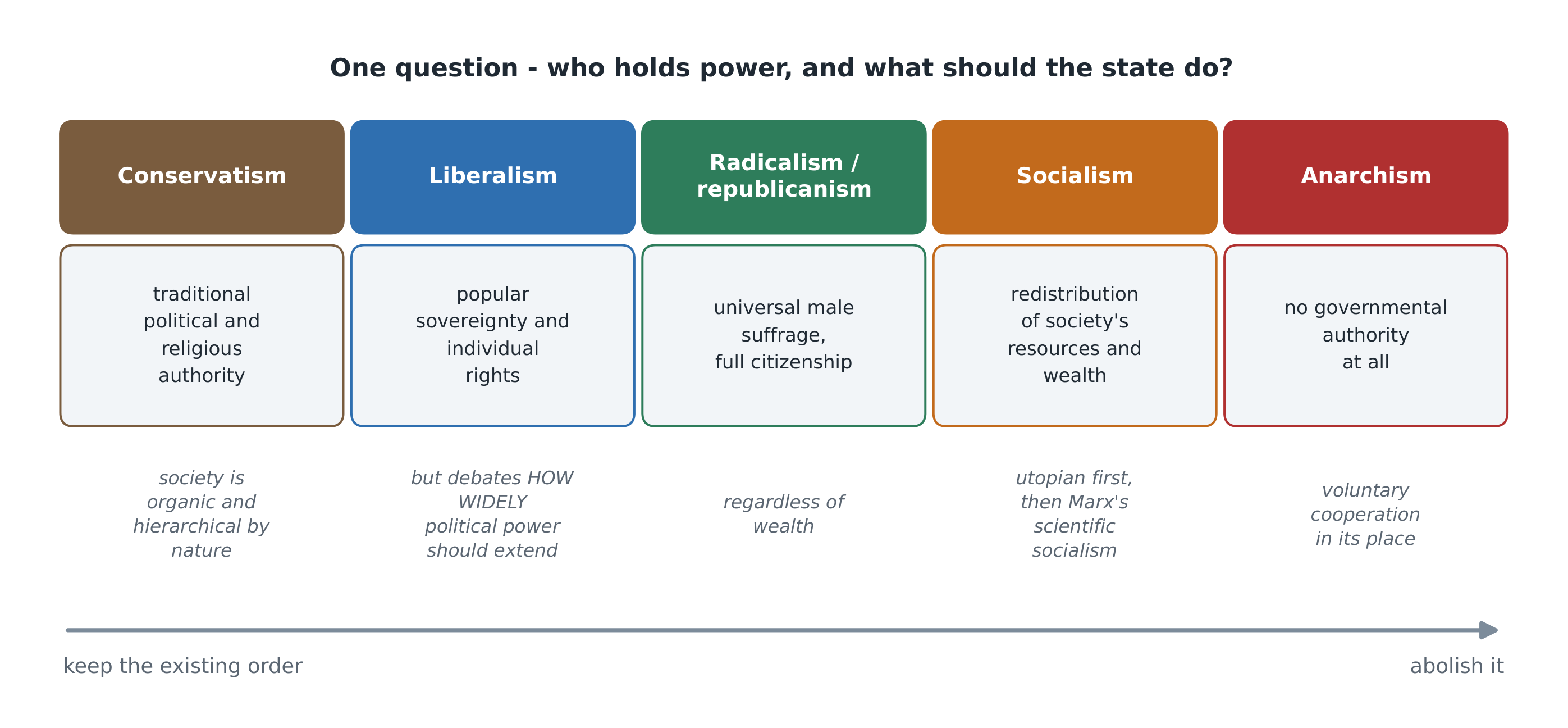
The century's argument, laid out - each ideology answering the same question differently
Questions ask you to distinguish these, so learn them as a set rather than one at a time

The CED names five positions, and they are best learned as answers to one question: who should hold power, and what should the state do?

  • Liberals 自由主义者 emphasised popular sovereignty, individual rights, and enlightened self-interest, but debated how far all groups should share political power.
  • Radicals in Britain and republicans on the continent demanded universal male suffrage 男性普选权 and full citizenship without regard to wealth.
  • Socialists 社会主义者 called for the redistribution of society's resources and wealth, evolving from utopian to Marxist scientific socialism.
  • Marx's scientific socialism 科学社会主义 provided a systematic critique of capitalism and a deterministic analysis of society and historical change.
  • Anarchists 无政府主义者 asserted that all forms of governmental authority were unnecessary and should be replaced by a society based on voluntary cooperation.
Vocabulary Train
English Chinese Pinyin
Liberals 自由主义者 zì yóu zhǔ yì zhě
universal male suffrage 男性普选权 nán xìng pǔ xuǎn quán
Socialists 社会主义者 shè huì zhǔ yì zhě
Marx's scientific socialism 科学社会主义 kē xué shè huì zhǔ yì
Anarchists 无政府主义者 wú zhèng fǔ zhǔ yì zhě
6.8 6.9

19th-Century Social Reform and Institutional Responses

Syllabus

6.8 19th-Century Social Reform

Thematic FocusLearning ObjectiveHistorical Developments

SCD
Social Organization and Development — Economic, political, and cultural factors have influenced the form and status of family, class, and social groups in European history, which has, in turn, affected both the individual and society.

Unit 6.I
Explain the various movements and calls for social reform that resulted from intellectual developments from 1815 to 1914.

  • KC-3.3.III Political movements and social organizations responded to problems of industrialization.
    • KC-3.3.III.A Mass-based political parties emerged as sophisticated vehicles for social, economic, and political reform.
    • KC-3.3.III.B Workers established labor unions and movements promoting social and economic reforms that also developed into political parties.
    • KC-3.3.III.C Feminists pressed for legal, economic, and political rights for women as well as improved working conditions.
    • KC-3.3.III.D Various nongovernmental reform movements, many of them religious, assisted the poor and worked to end serfdom and slavery.

Illustrative examples:

  • Mass-based political parties: §Bullet Conservatives and Liberals in Great Britain §Bullet Conservatives and Socialists in France §Bullet Social Democratic Party in Germany Political parties representing workers: §Bullet German Social Democratic Party §Bullet British Labour Party §Bullet Russian Social Democratic Party Feminists and feminist movements: §Bullet Flora Tristan §Bullet British Women’s Social and Political Union §Bullet Pankhurst family §Bullet Barbara Smith Bodichon Reform movements and social reformers: §Bullet The Sunday School movement §Bullet The temperance movement §Bullet British abolitionist movement §Bullet Josephine Butler

6.9 Institutional Responses and Reform

Thematic FocusLearning ObjectiveHistorical Developments

SOP
States and Other Institutions of Power — European states and nations developed governmental and civil institutions from 1450 to the present to organize society and consolidate political power, with a variety of social, cultural, and economic effects.

Unit 6.J
Explain how and why governments and other institutions responded to challenges resulting from industrialization.

  • KC-3.3.II.A Liberalism shifted from laissez-faire to interventionist economic and social policies in response to the challenges of industrialization.
  • KC-3.3.II.B Reforms transformed unhealthy and overcrowded cities by modernizing infrastructure, regulating public health, reforming prisons, and establishing modern police forces. The reforms were enacted by governments motivated by such forces as public opinion, prominent individuals, and charity organizations.
  • KC-3.3.II.C Reformers promoted compulsory public education to advance the goals of public order, nationalism, and economic growth.

Illustrative examples:

  • Modernizing infrastructure: §Bullet Sewage and water systems §Bullet Public lighting §Bullet Public housing §Bullet Urban redesign §Bullet Parks §Bullet Public transportation §Bullet Edwin Chadwick §Bullet Georges Haussmann

Source: College Board AP Course and Exam Description

Political movements and social organisations responded to the problems of industrialisation. The institutional side is equally examinable:

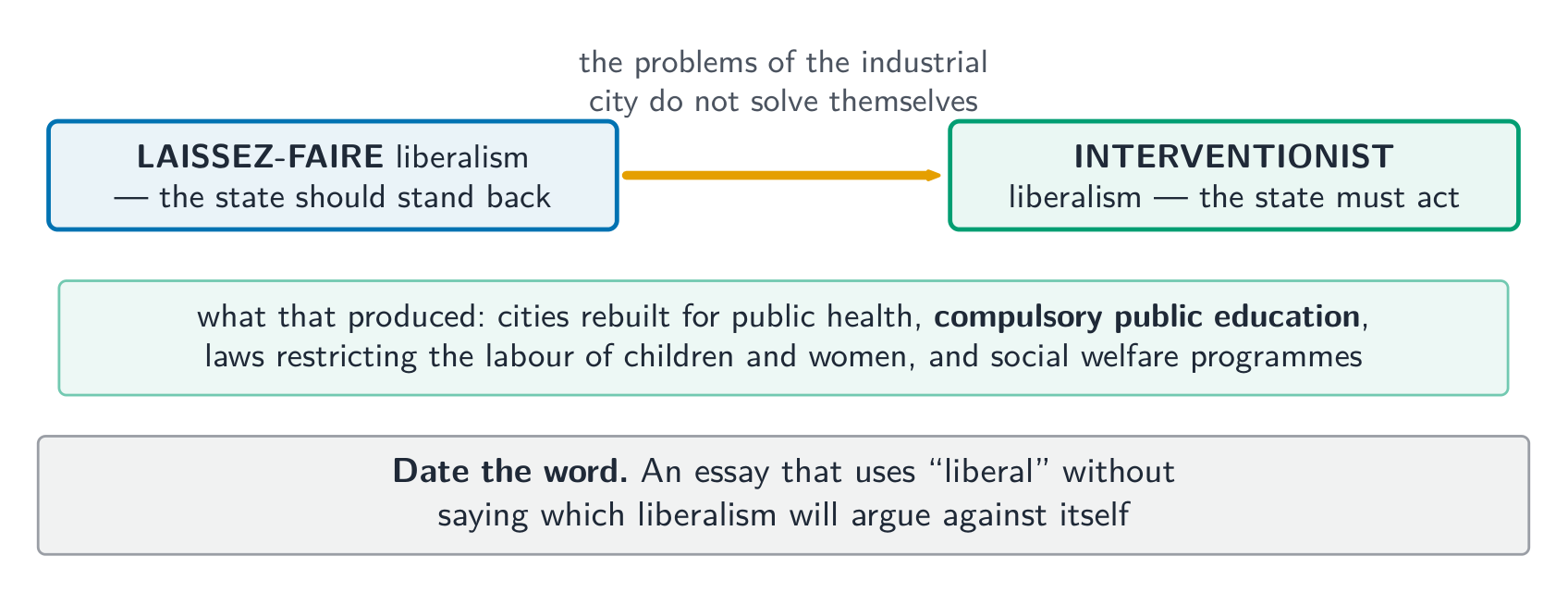
  • Liberalism shifted from laissez-faire to interventionist 从自由放任转向干预 economic and social policies in response to industrialisation's challenges. This is the unit's most important intellectual change - the ideology that began by wanting the state out ended by using it.
  • Reforms transformed unhealthy and overcrowded cities by modernising infrastructure, regulating public health, and reforming prisons.
  • Reformers promoted compulsory public education 义务教育 to advance public order, nationalism, and economic growth. Note all three motives - the CED lists them, and none is purely benevolent.
Vocabulary Train
English Chinese Pinyin
Liberalism shifted from laissez-faire to interventionist 从自由放任转向干预 cóng zì yóu fàng rèn zhuǎn xiàng gān yù
compulsory public education 义务教育 yì wù jiào yù
6.10

Causation in the Age of Industrialization

Syllabus

6.10 Causation in the Age of Industrialization

Learning ObjectiveReview: Unit 6 Key Concepts

Unit 6.K
Explain the influence of innovations and technological developments in Europe from 1815 to 1914.

  • KC-3.1 The Industrial Revolution spread from Great Britain to the continent, where the state played a greater role in promoting industry.
    • KC-3.1.I Great Britain established its industrial dominance through the mechanization of textile production, iron and steel production, and new transportation systems in conjunction with uniquely favorable political and social climates.
    • KC-3.1.II Following the British example, industrialization took root in continental Europe, sometimes with state sponsorship.
  • KC-3.2 The experiences of everyday life were shaped by industrialization, depending on the level of industrial development in a particular location.
    • KC-3.2.I Industrialization promoted the development of new classes in the industrial regions of Europe.
    • KC-3.2.II Europe experienced rapid population growth and urbanization, leading to social dislocations.
    • KC-3.2.III Over time, the Industrial Revolution altered the family structure and relations for bourgeois and working-class families.
  • KC-3.3 Political revolutions and the complications resulting from industrialization triggered a range of ideological, governmental, and collective responses.
    • KC-3.3.I Ideologies developed and took root throughout society as a response to industrial and political revolutions.
    • KC-3.3.II Governments, at times based on the pressure of political or social organizations, responded to problems created or exacerbated by industrialization.

Source: College Board AP Course and Exam Description

The unit's reasoning skill is causation.

Worked example (a real AP exam question). AP European History short-answer questions here ask, for example, to "Explain one way in which industrialisation contributed to the development of new political ideologies in the nineteenth century." A full-mark answer traces the link: "Industrialisation created a large urban working class with common conditions and no political representation, which gave socialists a constituency and an argument: that the wealth produced by industry was distributed by ownership rather than by labour. Marx's scientific socialism turned that observation into a systematic critique of capitalism, and the concentration of workers in factories and cities made organising around it possible." Notice that the answer explains why the idea found an audience, not only that it existed.

6.10

Exam tips

  • Britain's advantages include a political one - industrial interests were represented in Parliament. Most answers list only resources.
  • France industrialised gradually with state support and less dislocation. That contrast answers many comparison questions.
  • Learn the five ideologies as a set, distinguished by who holds power and what the state does.
  • Liberalism's shift from laissez-faire to intervention is the century's key ideological change. Name it.
  • Compulsory education had three motives - order, nationalism, growth. Give all three.
  • Living standards rose by the end of the century, after decades of hardship. Timing is the mark.

Interactive lessons on this topic

Work through it step by step, with instant-check exercises.

More topics in AP European History

Log in or create account

IGCSE, A-Level & AP