1.1 Contextualizing Renaissance and Discovery
| Learning Objective | Preview: Unit 1 Key Concepts |
|---|---|
Unit 1.A |
|
AP European History · Topic 1
 11:21
11:21
Unit 1: Renaissance and Exploration
Two words in the CED tell you how this entire course is marked, and they appear in Unit 1. Varying degrees. The struggle for sovereignty within and among…
English narration · English + 中文 subtitles burned in
| Learning Objective | Preview: Unit 1 Key Concepts |
|---|---|
Unit 1.A |
|
Source: College Board AP Course and Exam Description
Unit 1 covers roughly 1450 to 1648, and four changes run through it at once. The CED states them as the unit's key concepts, and almost every question draws on at least two:
That last phrase - varying degrees - is a standing instruction for the whole course. European History rewards answers that say how far a change went in one place compared with another.
| English |
|---|
| rediscovery of classical works/ˌriːdɪˈskʌvəri ɒv ˈklæsɪkl wɜːks/ |
| Indigenous populations/ɪnˈdɪdʒənəs ˌpɒpjʊˈleɪʃnz/ |
| commercial and agricultural capitalism/kəˈmɜːʃl ænd ˌæɡrɪˈkʌltʃərəl ˈkæpɪtəlɪzəm/ |
| struggle for sovereignty/ˈstrʌɡl fɔː ˈsɒvərɪnti/ |
| Thematic Focus | Learning Objective | Historical Developments |
|---|---|---|
CID | Unit 1.B |
|
Unit 1.C |
|
Illustrative examples:
Source: College Board AP Course and Exam Description
Italian Renaissance humanists 人文主义者, including Petrarch 彼特拉克, promoted a revival of classical literature and created new philological 语文学 approaches to ancient texts - reading them critically, in their original languages, as historical documents.
That revival had three effects the CED names separately:
The third point is the one students underuse. Renaissance art is examinable as political evidence: patronage was a claim to legitimacy, not only a taste in pictures.
| English |
|---|
| Italian Renaissance humanists/ɪˈtælɪən rɪˈneɪsəns ˈhjuːmənɪsts/ |
| Petrarch/ˈpetrɑːk/ |
| philological/ˌfɪləˈlɒdʒɪkl/ |
| printing press/ˈprɪntɪŋ pres/ |
| civic humanism/ˈsɪvɪk ˈhjuːmənɪzəm/ |
| enhancing their prestige/enˈhænsɪŋ ðeə preˈstiːʒ/ |
| Thematic Focus | Learning Objective | Historical Developments |
|---|---|---|
CID | Unit 1.D |
|
Illustrative examples:
Source: College Board AP Course and Exam Description
As Renaissance ideas moved north, they changed. The Northern Renaissance retained a more religious focus, producing a human-centred naturalism 以人为中心的自然主义 that considered individuals and everyday life as proper subjects for art.
Intellectually, the key development is Christian humanism 基督教人文主义, embodied in the writings of Erasmus 伊拉斯谟, which put Renaissance learning at the service of religious reform 宗教改革. Holding that link makes Unit 2 far easier: the Reformation did not arrive from nowhere.
| English |
|---|
| human-centred naturalism/ˈhjuːmən ˈsentəd ˈnætʃərəlɪzəm/ |
| Christian humanism/ˈkrɪstʃn ˈhjuːmənɪzəm/ |
| Erasmus/ɪˈræzməs/ |
| religious reform/rɪˈlɪdʒəs rɪˈfɔːm/ |
| Thematic Focus | Learning Objective | Historical Developments |
|---|---|---|
TSI | Unit 1.E |
|
Source: College Board AP Course and Exam Description
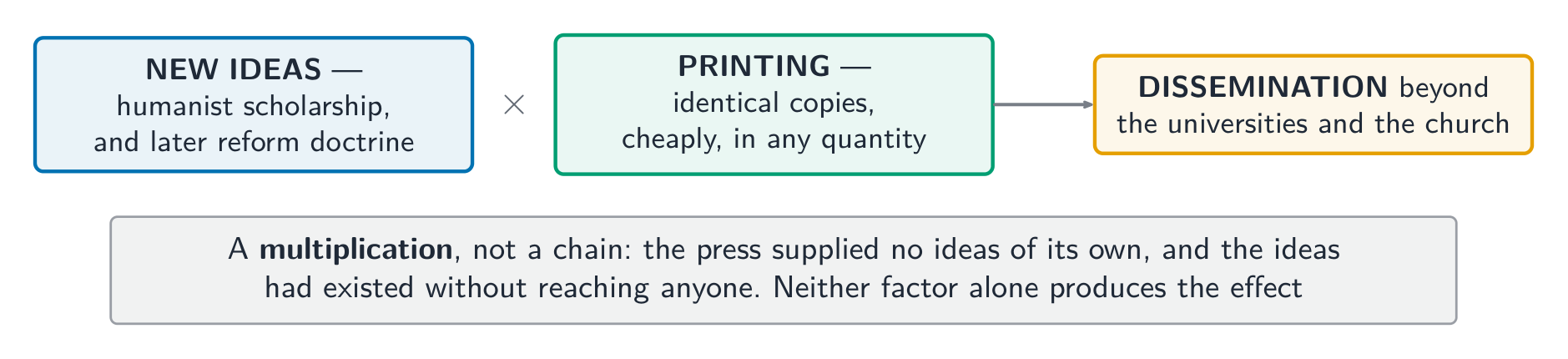
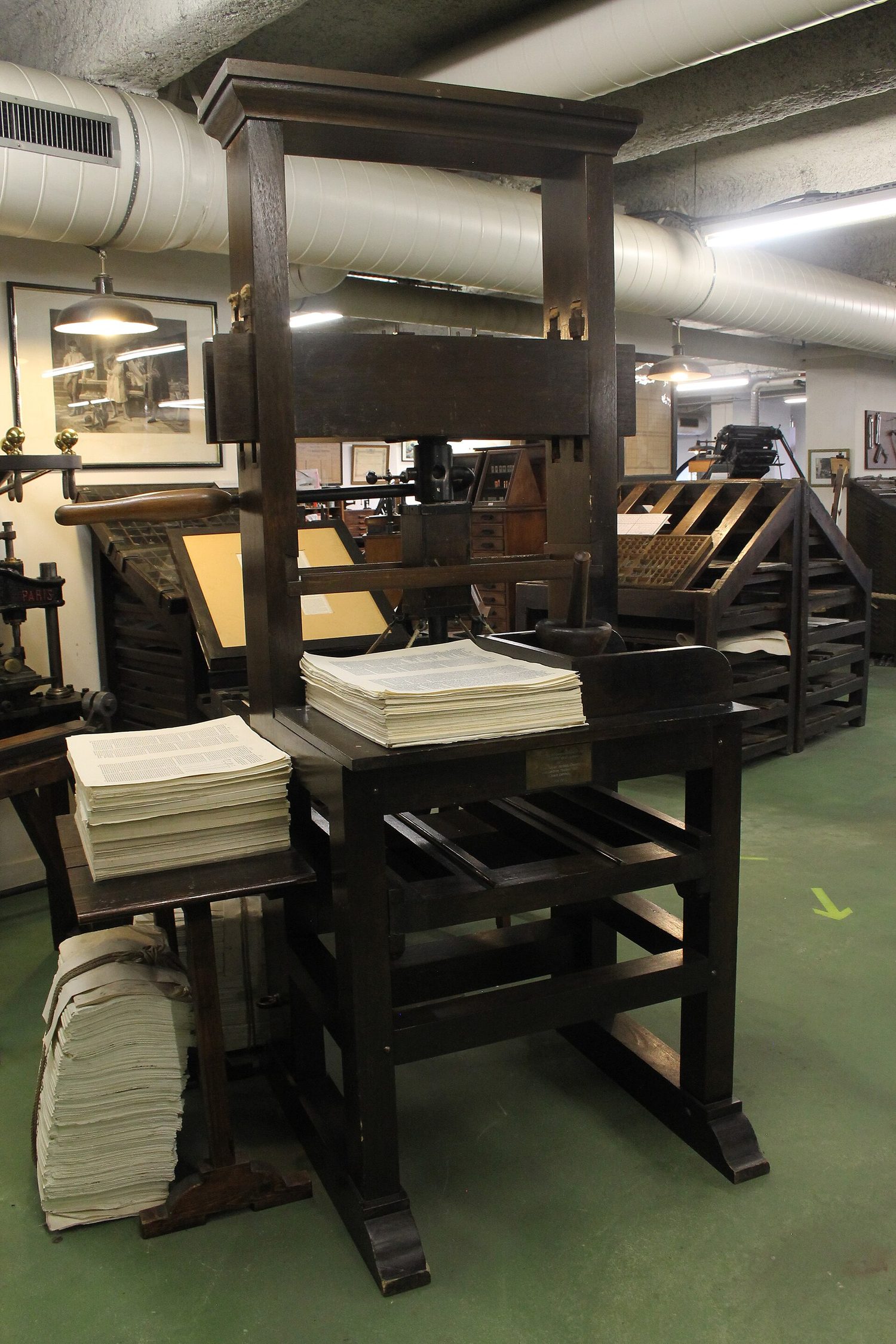
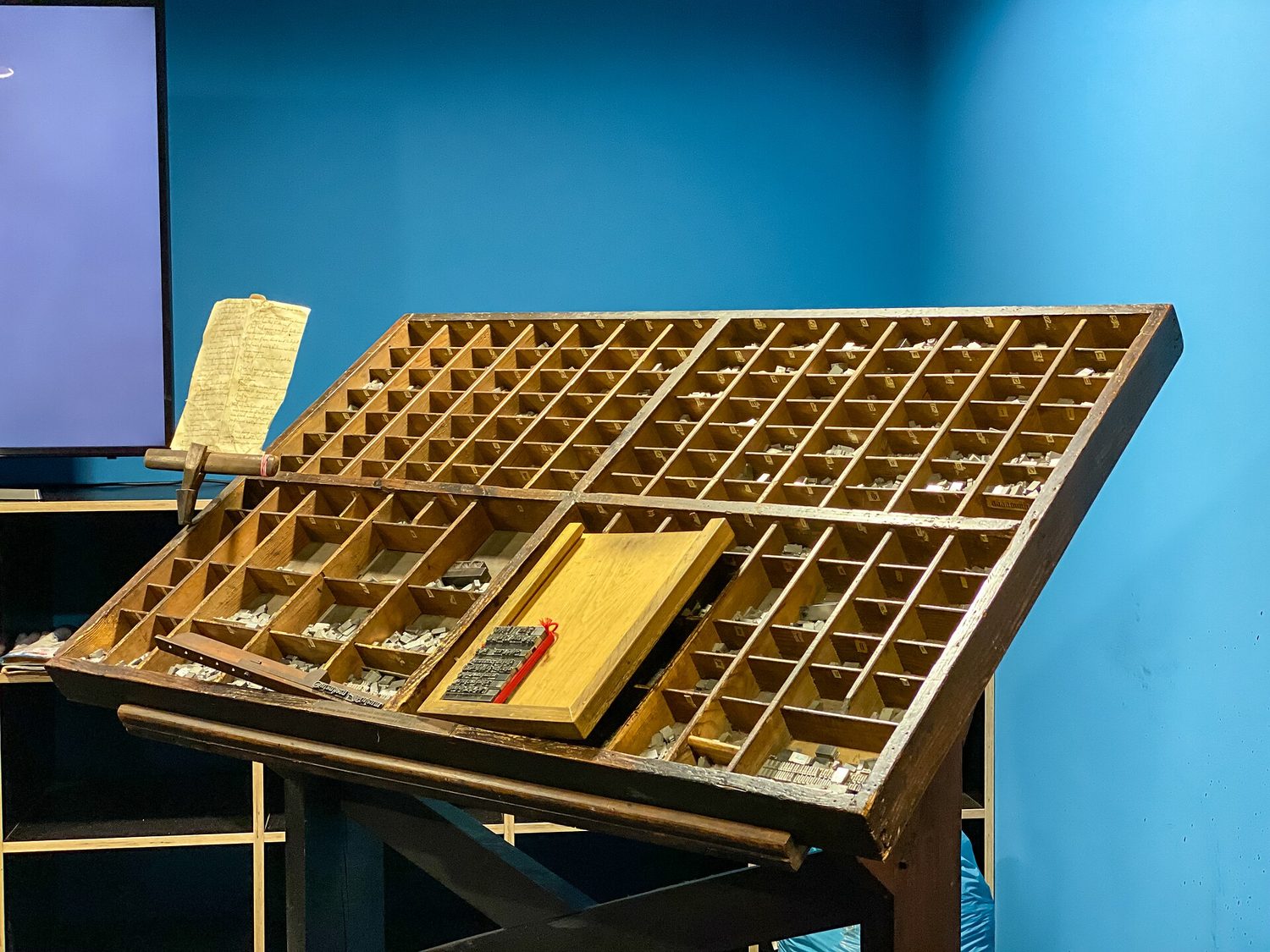
The CED gives printing a topic of its own for a reason: the invention of printing promoted the dissemination of new ideas.
Printing is best understood as an amplifier rather than a cause. It did not create humanism, religious dissent, or political argument - but it changed their speed, reach, and cost, which is what allowed ideas to escape the control of the institutions that had previously governed which texts circulated.
| Thematic Focus | Learning Objective | Historical Developments |
|---|---|---|
SOP | Unit 1.F |
|
Illustrative examples:
Source: College Board AP Course and Exam Description
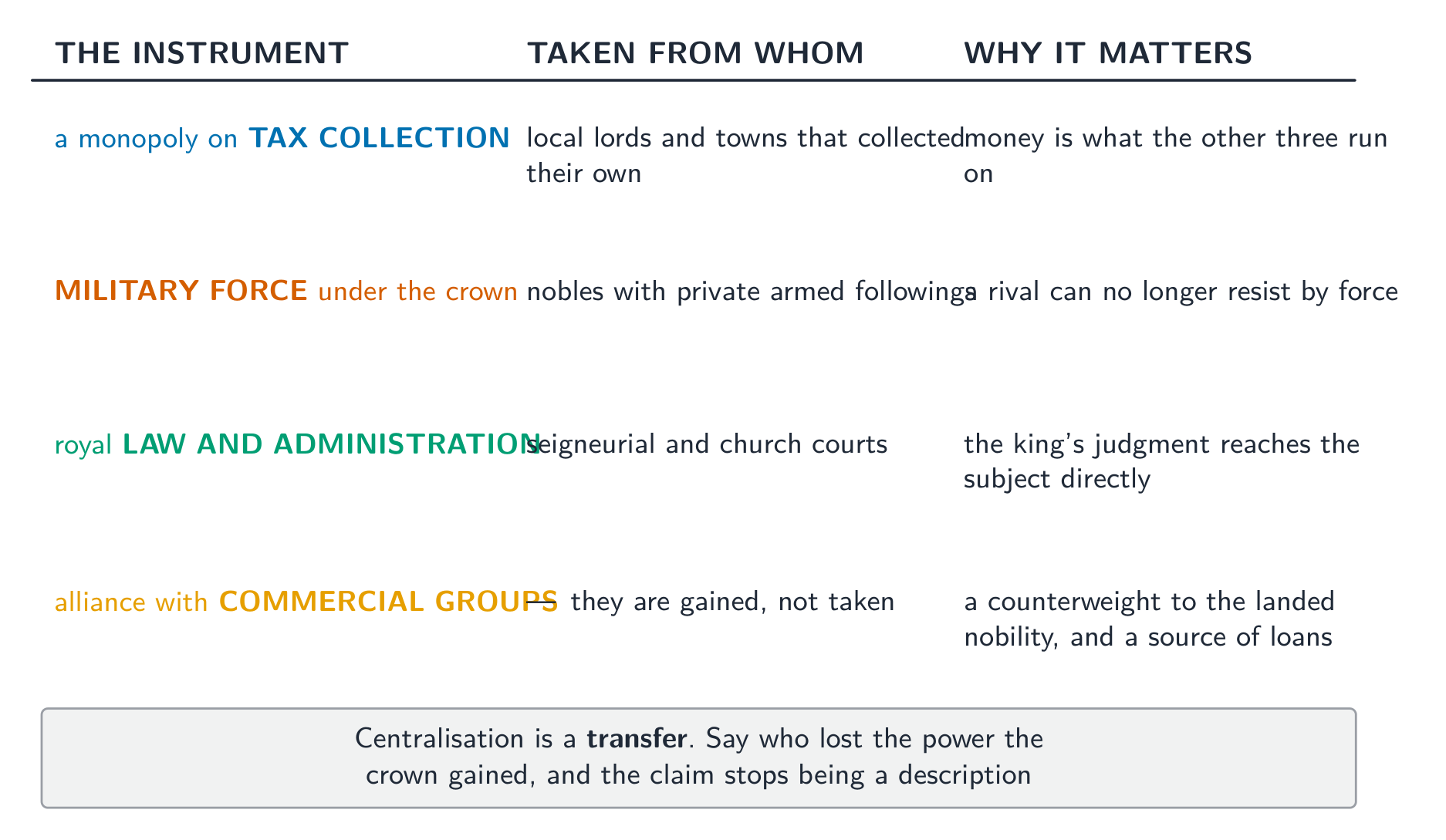
The new monarchies 新君主国 laid the foundation for the centralised modern state by:
Two counterweights are also examinable. Commercial and professional groups gained power across Europe and played a greater role in political affairs. And continued political fragmentation in Renaissance Italy provided the background for new concepts of the secular state 世俗国家 - the theory came from the place where centralisation had failed, not succeeded.
Some monarchs, including Henry VIII and Elizabeth I, also initiated religious reform from the top down to strengthen royal control - a point that belongs to both this unit and the next.
Centralisation is a transfer. Name who lost the power the crown gained and the claim stops being a description.
| English |
|---|
| new monarchies/njuː ˈmɒnəkiz/ |
| monopolies on tax collection/məˈnɒpəliz ɒn tæks kəˈlekʃn/ |
| employing military force/emˈplɔɪɪŋ ˈmɪlɪtəri fɔːs/ |
| secular state/ˈsekjʊlə steɪt/ |
| Thematic Focus | Learning Objective | Historical Developments |
|---|---|---|
TSI | Unit 1.G |
|
Unit 1.H |
|
Illustrative examples:
Source: College Board AP Course and Exam Description
Advances in navigation, cartography, and military technology enabled Europeans to establish overseas colonies and empires. Technology is the enabling condition; the CED then gives the motives separately:
Keep enabling conditions and motives in separate categories. A question asking "why" wants motives; a question asking "how it became possible" wants the technology.
| English |
|---|
| mercantilism/ˈmɜːkæntəlɪzəm/ |
| Christianity was a stimulus/ˌkrɪstɪˈænɪti wʌzə ˈstɪmjʊləs/ |
| Thematic Focus | Learning Objective | Historical Developments |
|---|---|---|
ECD | Unit 1.I |
|
Illustrative examples:
Source: College Board AP Course and Exam Description
Europeans established overseas empires and trade networks through coercion and negotiation 强制与谈判 - both, not one. Where local states were strong, Europeans negotiated for trading rights; where they were not, coercion followed.
Competition among European states for these networks reshaped relations at home. Commercial rivalry became a standing cause of European war, which is a continuity that runs all the way to Unit 7.
| English |
|---|
| through coercion and negotiation/θruː ˌkəʊˈɜːʃn ænd nɪˌɡəʊʃɪˈeɪʃn/ |
| Thematic Focus | Learning Objective | Historical Developments |
|---|---|---|
INT | Unit 1.J |
|
Unit 1.K |
|
Illustrative examples:
Source: College Board AP Course and Exam Description
The Portuguese established a commercial network along the African coast and in South and East Asia in the late fifteenth and sixteenth centuries; other states followed.
The Columbian Exchange 哥伦布大交换 - the exchange of new plants, animals, and diseases - is presented by the CED with deliberate double vision, and both halves are examinable:
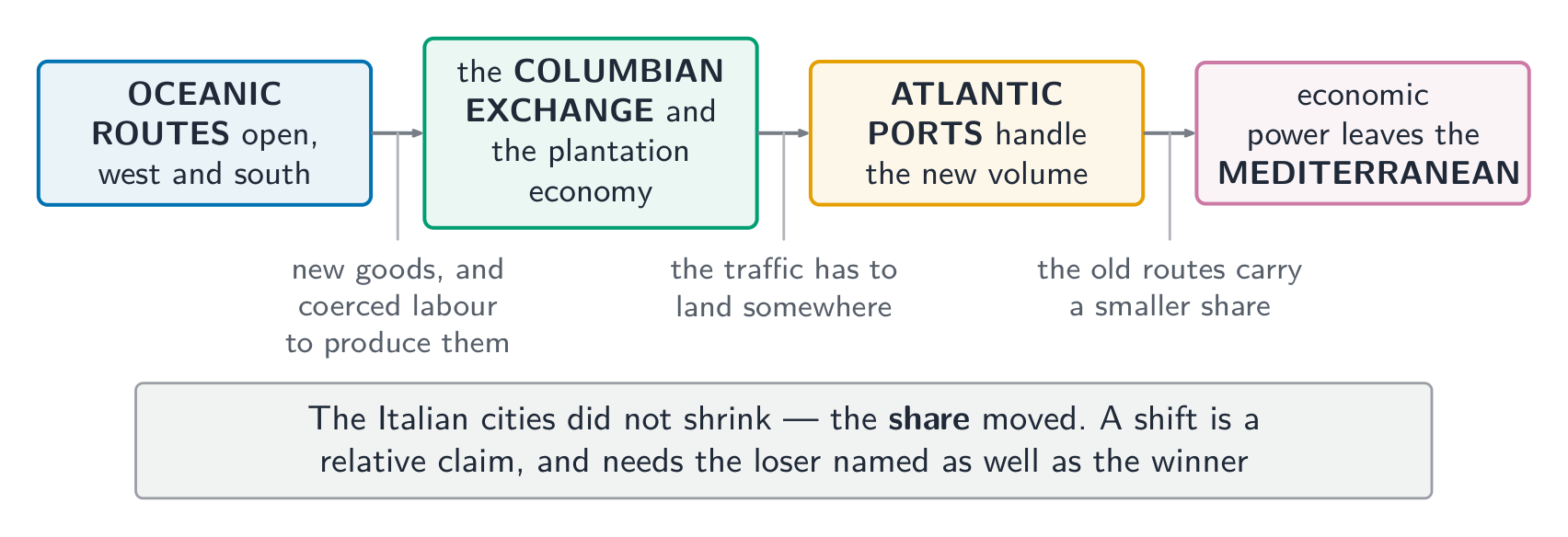
Economically, the exchange of goods shifted the centre of economic power in Europe from the Mediterranean to the Atlantic states. That shift explains why the leading powers of Unit 3 are not the leading powers of Unit 1.
A shift is a relative claim: the Italian cities did not shrink, the share moved.
| English |
|---|
| Columbian Exchange/kəˈlʌmbɪən eksˈtʃeɪndʒ/ |
| Thematic Focus | Learning Objective | Historical Developments |
|---|---|---|
INT | Unit 1.L |
|
Illustrative examples:
Source: College Board AP Course and Exam Description
Europeans expanded the trade of enslaved Africans in response to the establishment of a plantation economy 种植园经济 in the Americas and to demographic collapse among Indigenous populations.
The causal chain is explicit in the CED and should be reproduced as a chain: plantation agriculture demanded labour on a scale the Americas' devastated population could not supply, and that demand was met by an expanded Atlantic trade in enslaved people.
| English |
|---|
| plantation economy/plænˈteɪʃn ɪˈkɒnəmi/ |
| Thematic Focus | Learning Objective | Historical Developments |
|---|---|---|
TSI | Unit 1.E |
|
| Thematic Focus | Learning Objective | Historical Developments |
|---|---|---|
SOP | Unit 1.F |
|
Illustrative examples:
| Thematic Focus | Learning Objective | Historical Developments |
|---|---|---|
SCD | Unit 1.M |
|
Unit 1.N |
|
Illustrative examples:
Source: College Board AP Course and Exam Description
The Renaissance and the voyages are the visible half of this unit; the CED also asks for the economic base underneath them, because it is what the later units change.
Subsistence agriculture 自给农业 was the rule almost everywhere: a family grew what it ate, with little surplus to sell. Land was worked in open fields and rotated to keep it fertile — a three-crop rotation 三圃轮作 in the north, where wetter summers allowed a spring sowing as well as an autumn one, and a two-crop rotation 二圃轮作 around the Mediterranean, where the dry summer forced half the land to lie fallow each year. Most peasants did not own the land; they paid rent to a landholder, in produce, in money, or in labour service.
That base explains the fragility of the period: a single failed harvest meant famine, because there was almost no stored surplus and little trade in grain over long distances.
Towns grew faster than they could cope. Urban populations rose through the sixteenth century, and sanitation 卫生 did not keep pace: waste ran in the streets, water was drawn from contaminated wells, and overpopulation 人口过剩 in the poorer quarters made epidemic disease spread quickly. Plague outbreaks stayed a recurring feature of European life for this whole period.
States acted on religion and morality, not only on taxes. Governments and city councils regulated public behaviour: attendance at worship, permitted forms of belief, marriage, drinking, gambling and morality 道德 offences generally. This is worth remembering because it is the same instrument the confessional states of the next unit use on a larger scale — the machinery existed before the Reformation gave it a new purpose.
| English |
|---|
| Subsistence agriculture/sʌbˈsɪstəns ˈæɡrɪkʌltʃə/ |
| three-crop rotation/θriː krɒp rəʊˈteɪʃn/ |
| two-crop rotation/tuː krɒp rəʊˈteɪʃn/ |
| sanitation/ˌsænɪˈteɪʃn/ |
| overpopulation/ˌəʊvəˌpɒpjʊˈleɪʃn/ |
| morality/mɒˈrælɪti/ |
| Thematic Focus | Learning Objective | Historical Developments |
|---|---|---|
SCD | Unit 1.M |
|
Unit 1.N |
|
Illustrative examples:
Source: College Board AP Course and Exam Description
Innovations in banking and finance promoted the growth of urban financial centres and a money economy 货币经济. Economic change produced new social patterns, while traditions of hierarchy and status continued - the two coexisted, which is the CED's own framing.
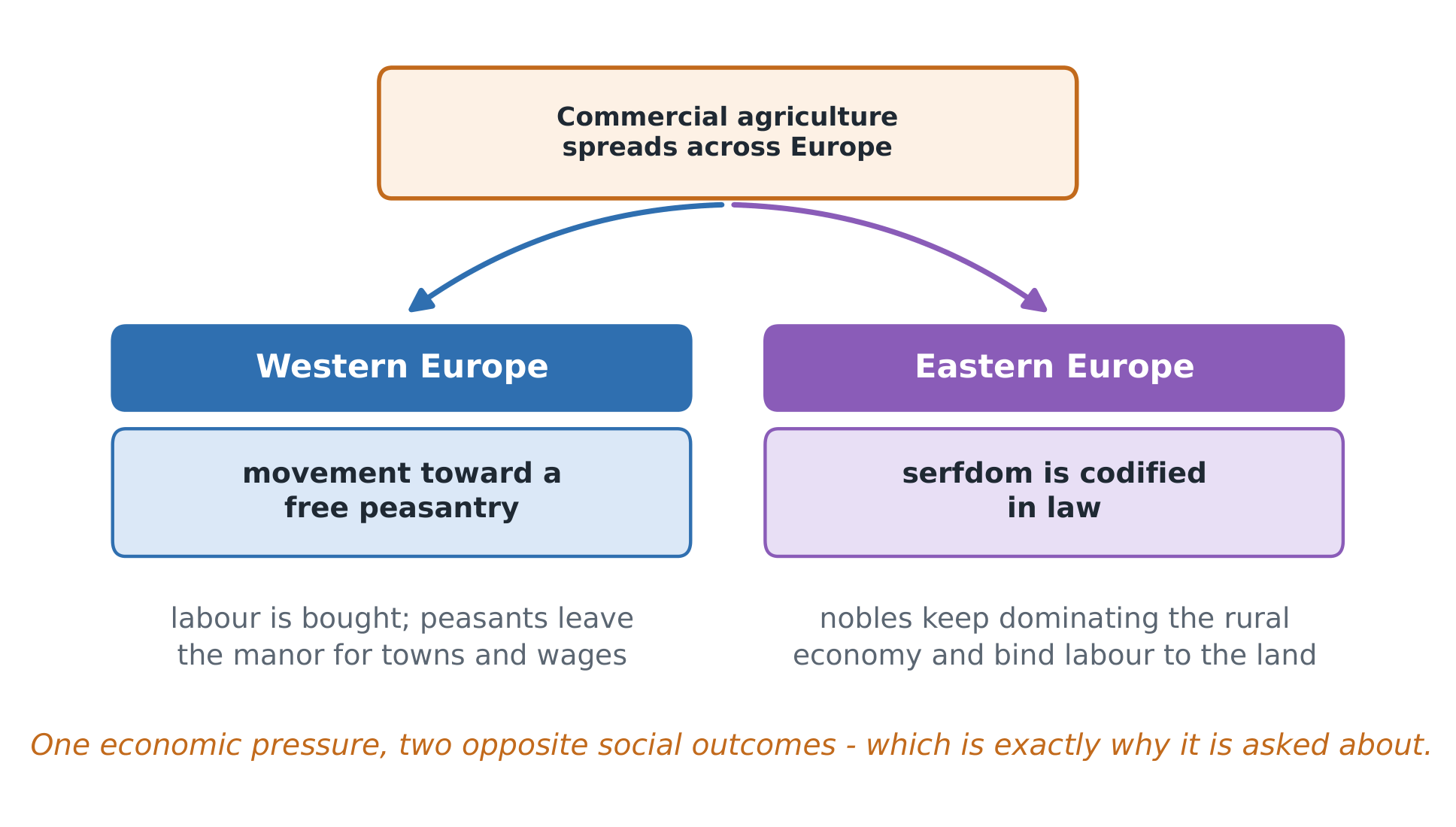
Most Europeans still derived their livelihood from agriculture and organised life around the seasons, the village, or the manor. Within that, a sharp divergence opened:
The same commercial pressure produced opposite outcomes, and that is exactly why it is examinable. Two related consequences: landlords attempting to increase revenues by restricting traditional peasant rights provoked revolt 反抗; and migrants to the cities strained resources and challenged the ability of merchant elites and craft guilds to govern.
Finally, from the late sixteenth century Europeans responded to economic and environmental pressure - including the Little Ice Age 小冰期 - by delaying marriage and childbearing, a demographic adaptation worth knowing because it is unusual evidence.
| English |
|---|
| money economy/ˈmʌni ɪˈkɒnəmi/ |
| free peasantry/friː ˈpezəntri/ |
| serfdom was codified/ˈsɜːfdəm wɒz ˈkəʊdɪfaɪd/ |
| revolt/rɪˈvəʊlt/ |
| Little Ice Age/ˈlɪtl aɪs eɪdʒ/ |
| Learning Objective | Review: Unit 1 Key Concepts |
|---|---|
Unit 1.O |
|
Source: College Board AP Course and Exam Description
The unit's reasoning skill is causation.
Worked example (a real AP exam question). AP European History short-answer questions in this unit ask, for example, to "Explain one way in which the development of printing affected European intellectual life in the period 1450 to 1648." A full-mark answer gives the mechanism, not the fact: "Printing allowed humanist editions of Greek and Roman texts to be reproduced cheaply and identically, so scholars across Europe could read and compare the same critical editions. This weakened the control that universities and the Church had exercised over which texts circulated, and made it far harder to suppress an argument once it was in print." Notice the shape: affected requires a consequence traced through a process.
Work through it step by step, with instant-check exercises.
Loading subjects…