Skip to content · ⁨コンテンツへスキップ⁩

Reading skills · ⁨読解スキル⁩

IGCSE English · ⁨IGCSE 英語⁩ · Topic 1 · ⁨トピック 1⁩

View Slides · ⁨查看幻灯片⁩ Train · ⁨練習する⁩
Video lesson for this topic · ⁨このトピックのビデオレッスン⁩ Open the video page · ⁨動画ページを開く⁩
7:55

リーディングスキル

リーディング試験を開いてください。長いテキスト——600文字、あるいはそれ以上——と質問のフルページが見えます。時計は45分を示しています。多くの生徒は……

English narration · English + 中文 subtitles burned in · ⁨英語ナレーション・英語+中文字幕 burning-in⁩

1.1

Reading for specific information · ⁨特定情報の読解⁩

Syllabus · ⁨シラバス⁩
English
  1. skim a text quickly to get the general idea, then scan to locate specific facts, names, numbers, times and places
  2. answer short questions with a single word or short phrase, using the exact detail from the text
  3. predict what kind of information a question is asking for before reading the text closely
日本語
  1. テキストを素早く読み全体像を把握し、その後スキャンして特定の事実、人名、数字、時間や場所を特定する
  2. テキストから正確な詳細情報を用いて、単語一つまたは短いフレーズで短問に答える
  3. テキストを精読する前に、問題がどのような情報を求めているかを予測する

Source: Cambridge International syllabus · ⁨出典: Cambridge International シラバス⁩

English

In the exam you do not read every word slowly. You change your speed to fit your goal.

Skim first, then scan

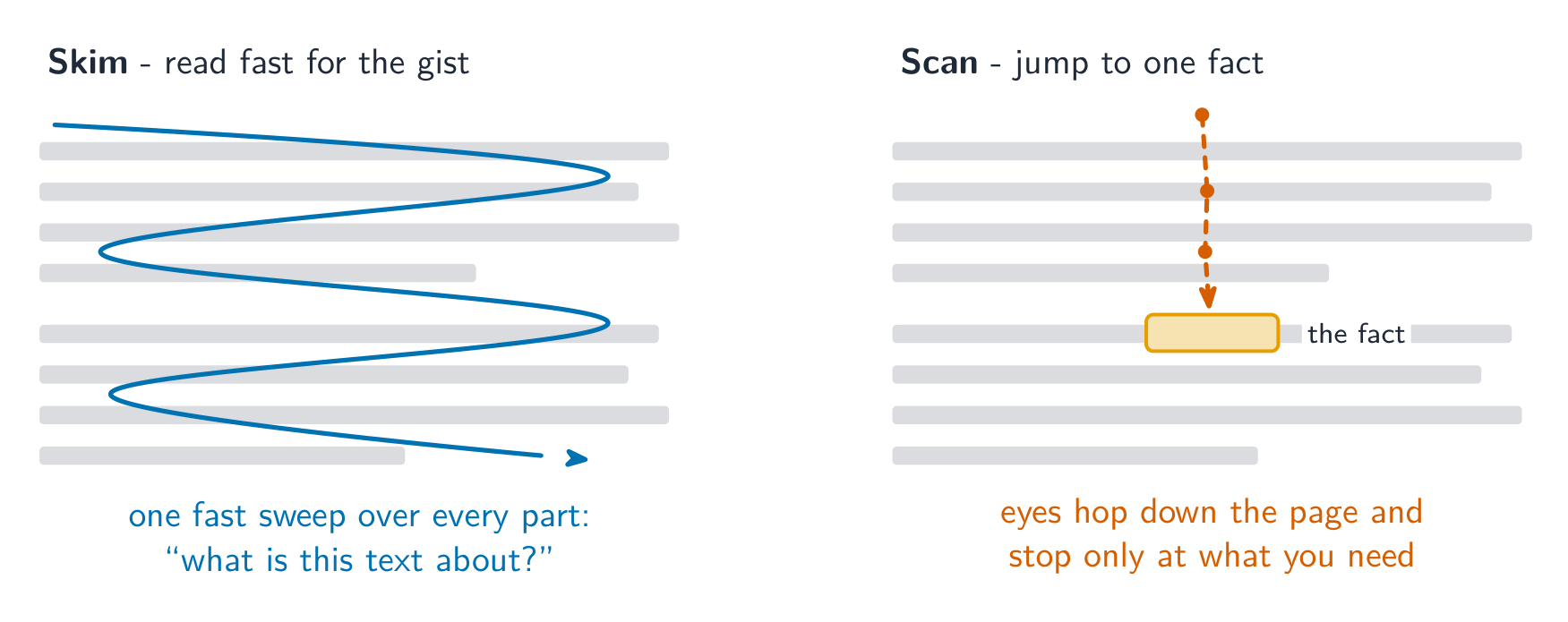
  • First skim 略读 the text. Read it fast to get the gist 大意 — the general idea. Look at the title, the first line of each paragraph 段落, and any pictures.
  • Then scan 扫读 to find one piece of information. Move your eyes quickly down the page. Do not read every word. Stop when you see what you need.
  • Use scanning for facts like names, numbers, dates, times and places.

Match the question to the text

  • Read the question first. Decide what kind of answer it wants: a name? a number? a reason?
  • Predict 预测 the answer before you look. This helps your eyes find it faster.
  • Find the part of the text that talks about the same idea. The answer is usually there.

Write short, exact answers

  • Here you write a single word or a short phrase 短语, not a full sentence.
  • Copy the exact word from the text when you can.
  • Answer only what the question asks. Extra words can lose the mark.
日本語

試験ではすべての単語をゆっくり読む必要はない。目標に応じて速度を変える。

まず要約読み、次に精読

  • まず要約読みで本文を読む。素早く読んで大意(全体的な内容)を掴む。タイトル、各段落の冒頭文、図などを確認する。
  • 次に精読で特定の情報を一つ探す。ページを下へ素早く目を通す。すべての単語を読む必要はない。必要な情報が見つかったら止める。
  • 人名、数字、日付、時刻、場所などの事実情報には精読を使う。
Two text blocks compared: skim is one fast sweep over every line for the gist, scan hops down the page and stops on one highlighted fact
スキャミングは全体像を掴むためにすべてを素通りし、スキャンは特定の事実へ直接飛ぶ
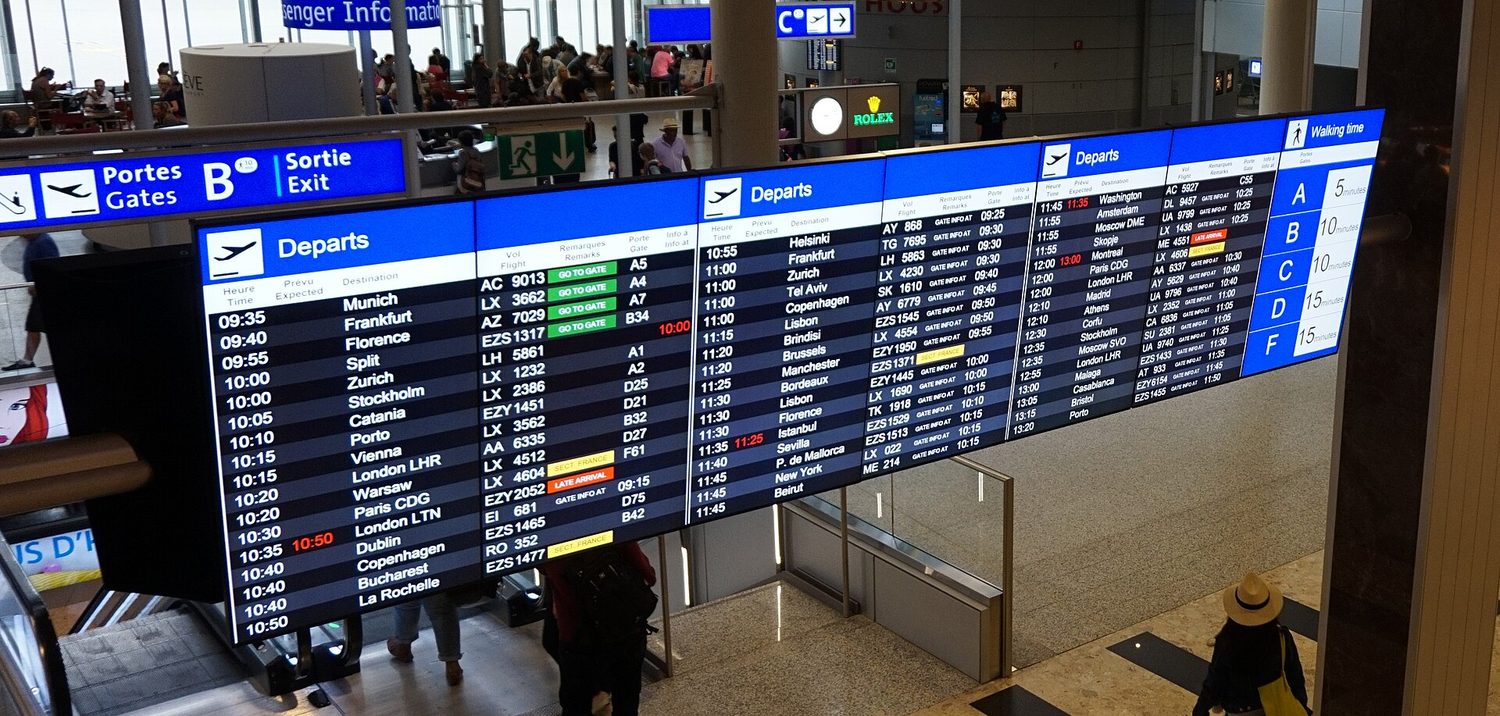
A large airport departure board listing many flight times, destinations and gates
発表板は精読の実際の例である:すべての行を読むのではなく、必要な飛行時間やゲート番号に直接飛ぶ

質問と本文を合わせる

  • 質問を最初に読む。どのような回答が必要かを判断する:名前?数字?理由?
  • 見る前に予測しておく。これにより目が素早く見つけられる。
  • 同じ考えを扱っている本文の部分を探す。答えは通常そこに含まれている。

短く正確な回答を書く

  • 単一語や短いフレーズを書き、完全な文は書かない。
  • 可能であれば、本文から正確な言葉をそのまま写す。
  • 質問で求められていることだけ答える。余計な言葉は失点の原因になる。
Vocabulary · ⁨語彙⁩ Train · ⁨練習する⁩
English 日本語
skim/skɪm/ スクイムする
gist/dʒɪst/ 要点
paragraph/ˈpærəɡræf/ 段落
scan/skæn/ スキャン
predict/prɪˈdɪkt/ 予測
phrase/freɪz/ フレーズ
multiple matching/ˈmʌltɪpl ˈmætʃɪŋ/ 複数一致問題
paraphrase/ˈpærəfreɪz/ 言い換え
1.2

Connecting ideas across a text · ⁨本文全体での関連性の理解⁩

Syllabus · ⁨シラバス⁩
English
  1. follow how ideas, opinions and attitudes in a text connect to one another
  2. match each question to the section or short text that contains the relevant idea (multiple matching)
  3. recognise words and phrases that signal time, cause and effect, addition and contrast
日本語
  1. テキスト内の考え、意見、態度がどのように相互に関連しているかを追跡する
  2. 各問題を、関連する考えを含むセクションや短いテキストに割り当てる(マルチマッチング)
  3. 時間、因果関係、追加、対比を示す言葉やフレーズを識別する

Source: Cambridge International syllabus · ⁨出典: Cambridge International シラバス⁩

English

A long text is not just a list of facts. The ideas link to each other, and you must follow how.

Multiple matching

  • In a multiple matching 多项匹配 task you read several short texts, or several parts of one text.
  • Each question describes an idea. You choose the text or part that matches it.
  • The words in the question are usually different from the words in the text. Look for the same meaning, not the same words. This is called a paraphrase 改写.

Signal words

  • Writers use small words to show how ideas connect. These are signal words 信号词.
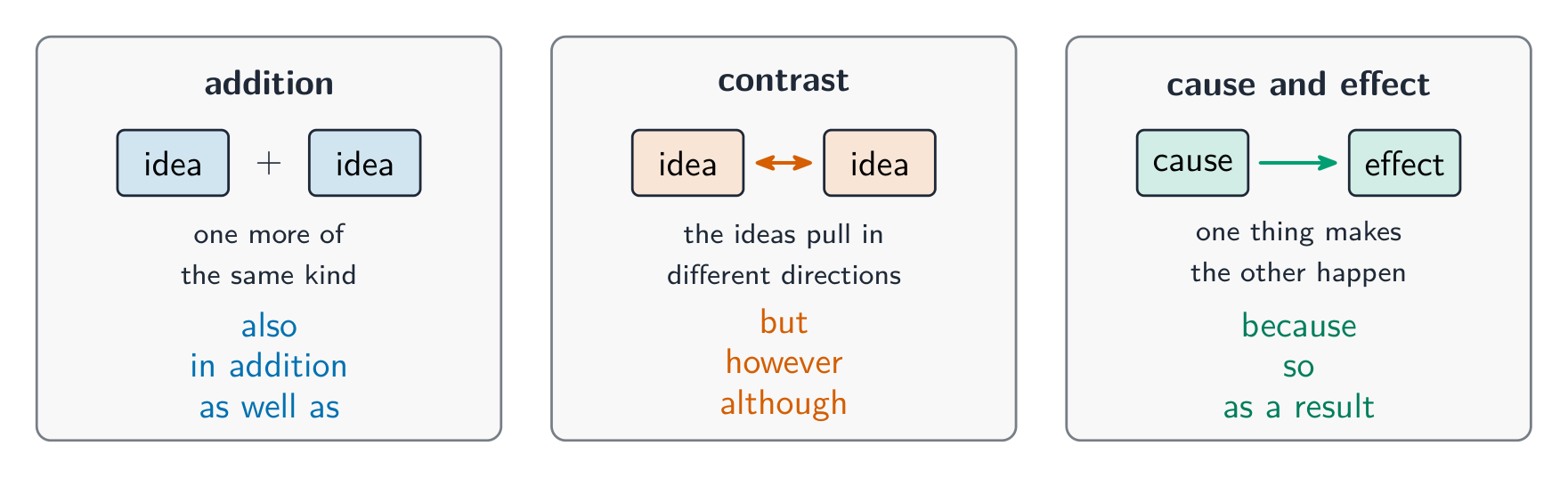
  • Some show addition 递进 (also, in addition, as well as). Some show contrast 对比 (but, however, although). Some show cause and effect 因果 (because, so, as a result).
  • When you notice these words, you can see how the writer's ideas fit together.
日本語

長い本文は単なる事実の羅列ではない。考え同士が結びついており、そのつながりを追う必要がある。

多項選択問題

  • 多項選択問題では、複数の短い本文、あるいは一つの本文の複数の部分を読む。
  • 各質問は一つの考えを記述している。それに合う本文または部分を選ぶ。
  • 質問の言葉は本文の言葉と通常異なる。同じ言葉ではなく、同じ意味を見つける。これを言い換えという。

信号語

  • 筆者は考えのつながりを示すために小さな言葉を使う。これらを信号語という。
  • 追加(also, in addition, as well as)を示すものもある。対比(but, however, although)を示すものもある。因果関係(because, so, as a result)を示すものもある。
  • これらの言葉に気づくと、筆者の考えがどのように組み合わさっているかがわかる。
Three cards: addition words add one more idea of the same kind, contrast words pull two ideas in different directions, cause-and-effect words link a cause to its effect
3つのシグナルワードファミリーと、それらが考えに与える影響
Vocabulary · ⁨語彙⁩ Train · ⁨練習する⁩
English 日本語
signal words/ˈsɪɡnl wɜːdz/ シグナルワード
addition/əˈdɪʃn/ 付加反応
contrast/ˈkɒntræst/ 対比
cause and effect/kɔːz ænd ɪˈfekt/ 因果関係
note-making/nəʊt ˈmeɪkɪŋ/ メモ書き
1.3

Making notes and summaries · ⁨メモ取りと要約作成⁩

Syllabus · ⁨シラバス⁩
English
  1. select only the relevant points from a text for a given purpose
  2. complete a set of brief notes under headings, using short phrases rather than full sentences
  3. leave out examples and repetition, keeping just the key information
日本語
  1. 特定の目的のために、テキストから必要なポイントのみを選択する
  2. 見出しの下に短いフレーズを用いて完全文ではなく簡潔なメモを作成する
  3. 例示や重複を省略し、主要な情報だけを残す

Source: Cambridge International syllabus · ⁨出典: Cambridge International シラバス⁩

English

Sometimes you must take the main points out of a text and write them in a short form.

Note-making

  • In a note-making 做笔记 task you complete notes under headings.
  • Write short notes, not full sentences. A word or a short phrase is enough.
  • Choose only the points that fit the heading. Leave out examples and extra detail.

Summary skills

  • A summary 概括 gives only the most important ideas, in fewer words.
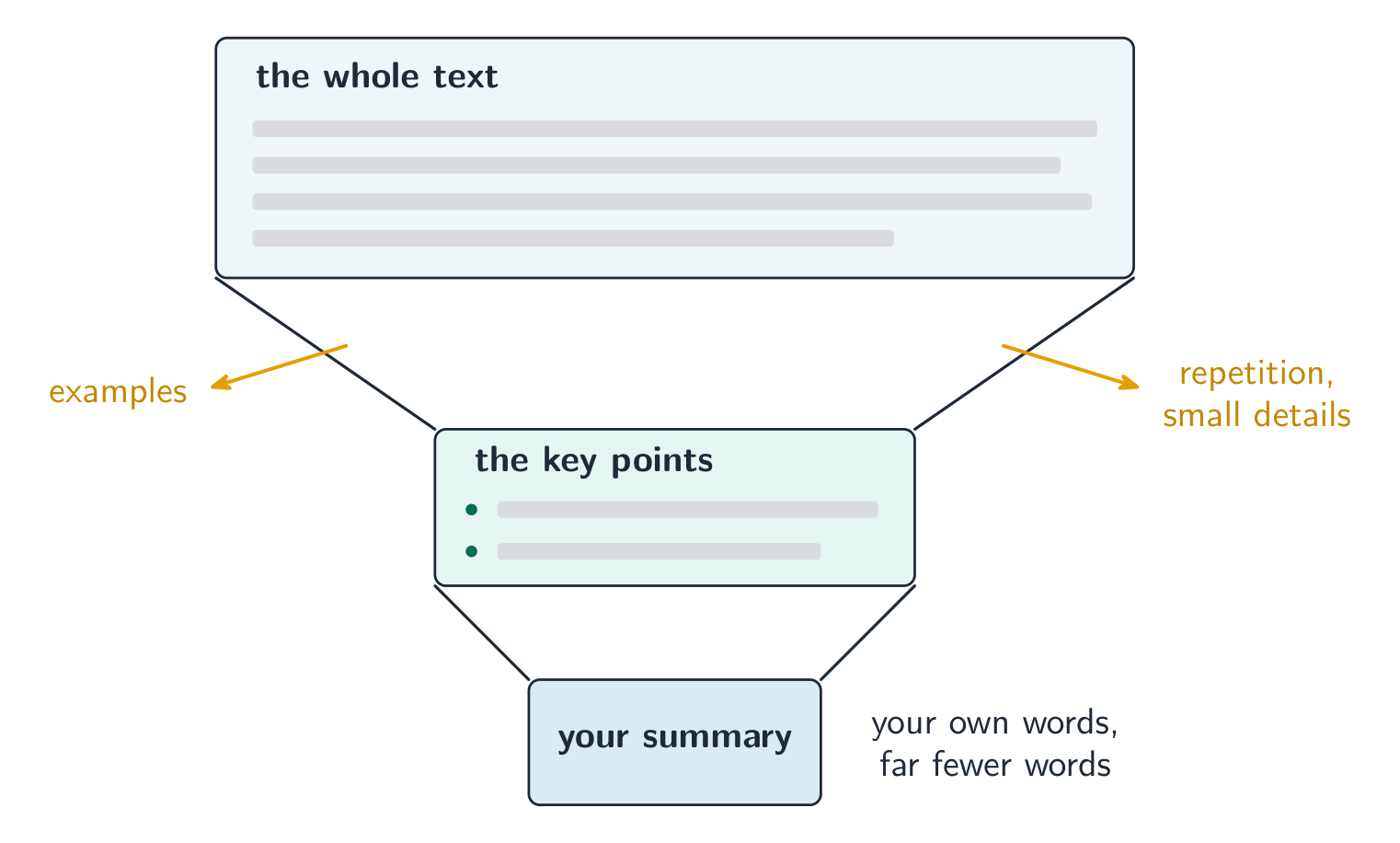
  • Find the key points. Ignore examples, repetition 重复 and small details.
  • Use your own words where you can. Do not copy whole sentences.
日本語

sometimes you must take the main points out of a text and write them in a short form.

メモ取り

  • メモ取りタスクでは、見出しの下にメモを埋める。
  • 完全な文ではなく短いメモを書く。一つの単語や短いフレーズで十分。
  • 見出しに合うポイントのみ選ぶ。具体例や余計な詳細は省略する。

要約技能

  • 要約は、より少ない言葉で最も重要な考えだけを伝える。
  • 主要ポイントを見つける。具体例、反復、細かい詳細は無視する。
  • 可能な限り自分の言葉で書く。完全な文をコピーしない。
A funnel: the whole text goes in at the top, examples and repetition are squeezed out at the sides, the key points remain, and a short summary in your own words comes out at the bottom
要約はあなたの言葉で主要なポイントのみを残す
Vocabulary · ⁨語彙⁩ Train · ⁨練習する⁩
English 日本語
summary/ˈsʌməri/ 要約
repetition/ˌrepəˈtɪʃn/ 反復
1.4

Reading between the lines · ⁨文中の隠された意味を読む⁩

Syllabus · ⁨シラバス⁩
English
  1. understand meaning that is implied but not directly stated
  2. work out a writer's opinion, attitude or feelings from the words and phrases they choose
  3. deduce the meaning of an unfamiliar word from the information around it
  4. answer multiple-choice questions about main ideas, details and attitudes
日本語
  1. 明言されていないが暗示されている意味を理解する
  2. 著者が選んだ言葉やフレーズから、その意見、態度、感情を読み取る
  3. 前後の文脈情報から未知の言葉の意味を導き出す
  4. 主要な考え方、詳細、態度に関する選択肢から正解を選ぶ問題に答える

Source: Cambridge International syllabus · ⁨出典: Cambridge International シラバス⁩

English

Some answers are not written directly in the text. You must work them out. This is called inference 推断.

Implied meaning

  • Sometimes the writer implies 暗示 something without saying it openly. The meaning is there, but it is hidden.
  • Read the words around the idea. Ask: what does the writer want me to understand here?

The writer's attitude

  • The writer's attitude 态度 is how they feel about the topic — for example, excited, worried, or unsure.
  • You find the attitude in the writer's word choice 用词. Strong or emotional words show feelings.
  • In a multiple-choice 选择题 question about attitude, read all the options. Choose the one that fits the whole text, not just one line.

Unfamiliar words

  • You will meet words you do not know. Do not stop.
  • Use the context 语境 — the words around it — to guess the meaning of the new word.
日本語
A woman holding a stack of old books, reading one of them closely
精読:推論の答えは、筆者の選び抜いた言葉から導かれるものであり、そのままコピーできる文からは得られない

Some answers are not written directly in the text. You must work them out. This is called inference 推断.

暗示される意味

  • 筆者が暗示すること有时没有明说。意味はあるが隠されている。
  • 考えの周囲の言葉を読む。筆者は何を理解させたいと思っているか考える。

筆者の態度

  • 筆者の態度とは、テーマに対する感情である:例えば、興奮、不安、または不確実性など。
  • 態度は筆者の語彙の選択で見つける。強い言葉や感情的な言葉は感情を示す。
  • 態度に関する選択式問題では、すべての選択肢を読みなさい。1行だけ fitしているものではなく、全文に fitするものを選びなさい。

見慣れない単語

  • 知らない単語に出会うことがある。そこで止まってはいけない。
  • 文脈 — その周囲にある言葉 — を用いて、新しい単語の意味を推測しなさい。
Vocabulary · ⁨語彙⁩ Train · ⁨練習する⁩
English 日本語
inference/ˈɪnfərəns/ 推論
implies/ɪmˈplaɪz/ imply(~を意味する)
attitude/ˈætɪtjuːd/ 態度
word choice/wɜːd tʃɔɪs/ 語彙の選択
multiple-choice/ˈmʌltɪpl tʃɔɪs/ 選択式問題
context/ˈkɒntekst/ コンテキスト
1.4

Exam tips · ⁨試験対策⁩

English
  • Read the question before the text. Underline the key word: a name? a number? a reason?
  • Answers usually come in the same order as the text, so do not hunt backwards for question 1.
  • Copy the exact word from the text when you can; a changed word can lose the mark.
  • Check how many answers the question wants: "Give TWO reasons" needs two, not one.
  • In multiple matching, the text usually does not repeat the question's words. Hunt for the same idea said differently.
  • Never leave an empty line. A guess can win a mark; a blank never can.
日本語
  • 本文より前に問題を読みなさい。キーワードに下線を引く:人名? 数字? 理由?
  • 答えは通常、本文の順に現れるため、問題1のために後方へ探さなくていい。
  • 可能であれば、本文から正確な言葉をそのままコピーしなさい。変えられた言葉は失点する可能性がある。
  • 問題が求める答えの数を確認しなさい。「2つの理由を列挙せよ」なら、1つではなく2つ必要だ。
  • マッチング問題では、本文は通常、問題の言葉を繰り返さない。同じ考えが異なる表現で語られている場所を探しなさい。
  • 必ず空欄を残さず、何かを書きなさい。推測した答えでも点数を得られるが、空白では絶対に得点できない。

Interactive lessons on this topic · ⁨このトピックのインタラクティブ授業⁩

Work through it step by step, with instant-check exercises. · ⁨一歩ずつ進め、即時チェック付きの問題で学習します。⁩

Past Papers · ⁨過去問⁩

More topics in IGCSE English · ⁨IGCSE 英語⁩ · ⁨IGCSE English · ⁨IGCSE 英語⁩ の他のトピック⁩

Log in or create account · ⁨ログインまたはアカウント作成⁩

IGCSE, A-Level & AP