Skip to content · ⁨コンテンツへスキップ⁩

Agriculture and Rural Land-Use Patterns and Processes · ⁨農業および農村土地利用のパターンとプロセス⁩

AP Human Geography · ⁨AP 人文地理学⁩ · Topic 5 · ⁨トピック 5⁩

View Slides · ⁨查看幻灯片⁩ Train · ⁨練習する⁩
Video lesson for this topic · ⁨このトピックのビデオレッスン⁩ Open the video page · ⁨動画ページを開く⁩
8:32

農業および農村土地利用のパターンとプロセス

二人の農夫。同じ仕事:食料を生産する。全く異なる世界。一人は広大で果てを見通せない圃場を機械で走り回り、すべての穀粒…

English narration · English + 中文 subtitles burned in · ⁨英語ナレーション・英語+中文字幕 burning-in⁩

5.1

Introduction to Agriculture · ⁨農業入門⁩

Syllabus · ⁨シラバス⁩
English

Enduring Understanding (PSO-5): Availability of resources and cultural practices influence agricultural practices and land-use patterns.

Learning Objective PSO-5.A: Explain the connection between physical geography and agricultural practices.

  • PSO-5.A.1 Agricultural practices are influenced by the physical environment and climatic conditions, such as the Mediterranean climate and tropical climates.
  • PSO-5.A.2 Intensive farming practices include market gardening, plantation agriculture, and mixed crop/livestock systems.
  • PSO-5.A.3 Extensive farming practices include shifting cultivation, nomadic herding, and ranching.
日本語

持続的認識(PSO-5): 資源の利用可能性と文化的慣習は、農業実践および土地利用パターンに影響を与える。

学習目標 PSO-5.A: 自然地理と農業実践との関連性を説明する。

  • PSO-5.A.1 農業実践は、地中海性気候や熱帯気候のような自然環境および気象条件の影響を受ける。
  • PSO-5.A.2 集約農法には、市場庭園、プランテーション農業、および混合作物・家畜系統が含まれる。
  • PSO-5.A.3 延焼農法には、移動栽培、遊牧、およびランチングが含まれる。
Source: College Board AP Course and Exam Description · ⁨出典: College Board AP コースおよび試験説明書⁩

English

Agriculture 农业 is the deliberate growing of crops and raising of animals for food and other products. A first big split:

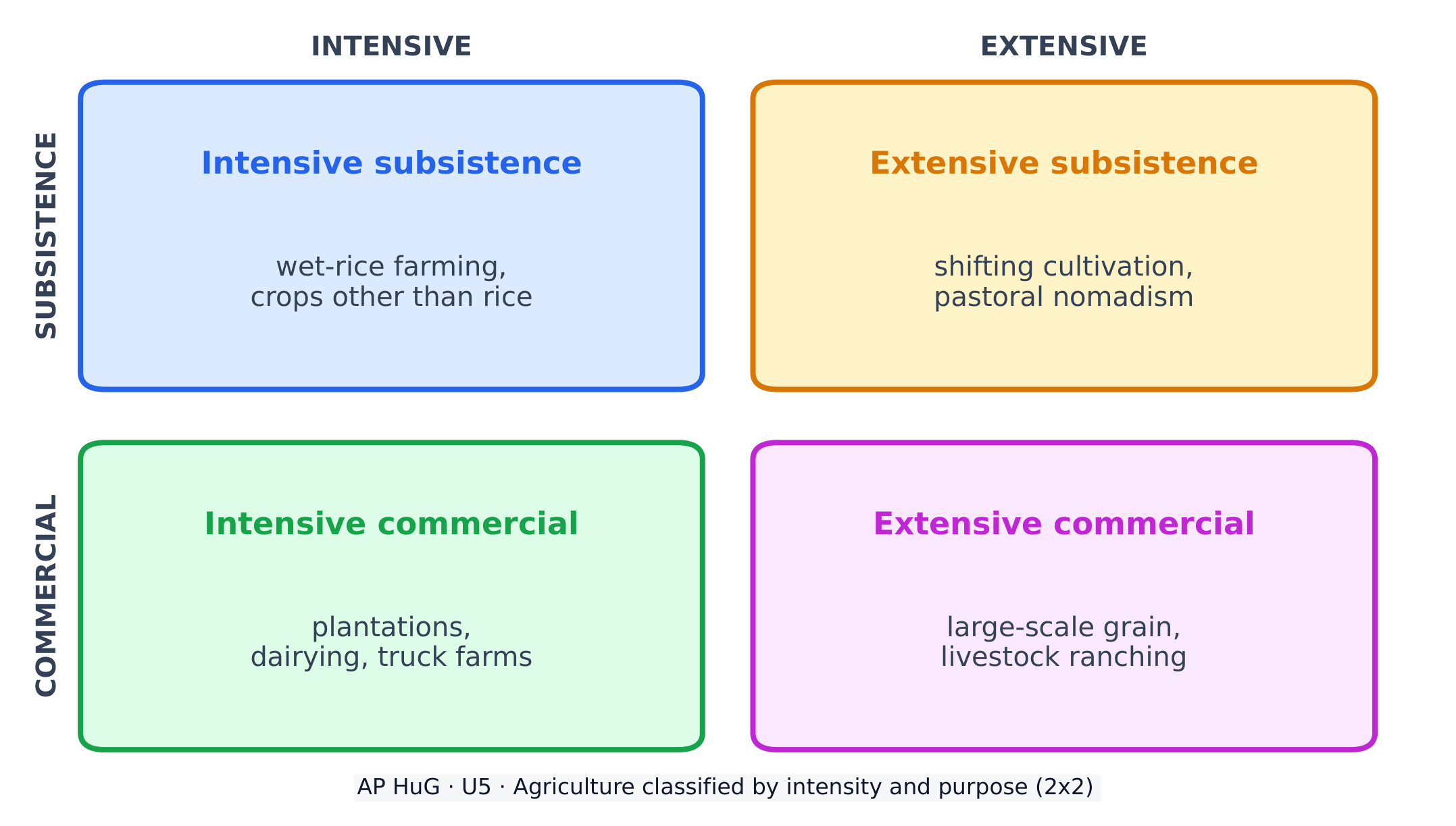
  • Subsistence agriculture 自给农业 — farming to feed the farmer's own family, common in less-developed regions.
  • Commercial agriculture 商业农业 — farming to sell for profit, common in developed regions and often large-scale and mechanised.

Farming also varies by intensity: intensive 集约 farming uses a lot of labour or money on a small area (rice paddies, market gardening); extensive 粗放 farming uses little input over a large area (ranching, shifting cultivation).

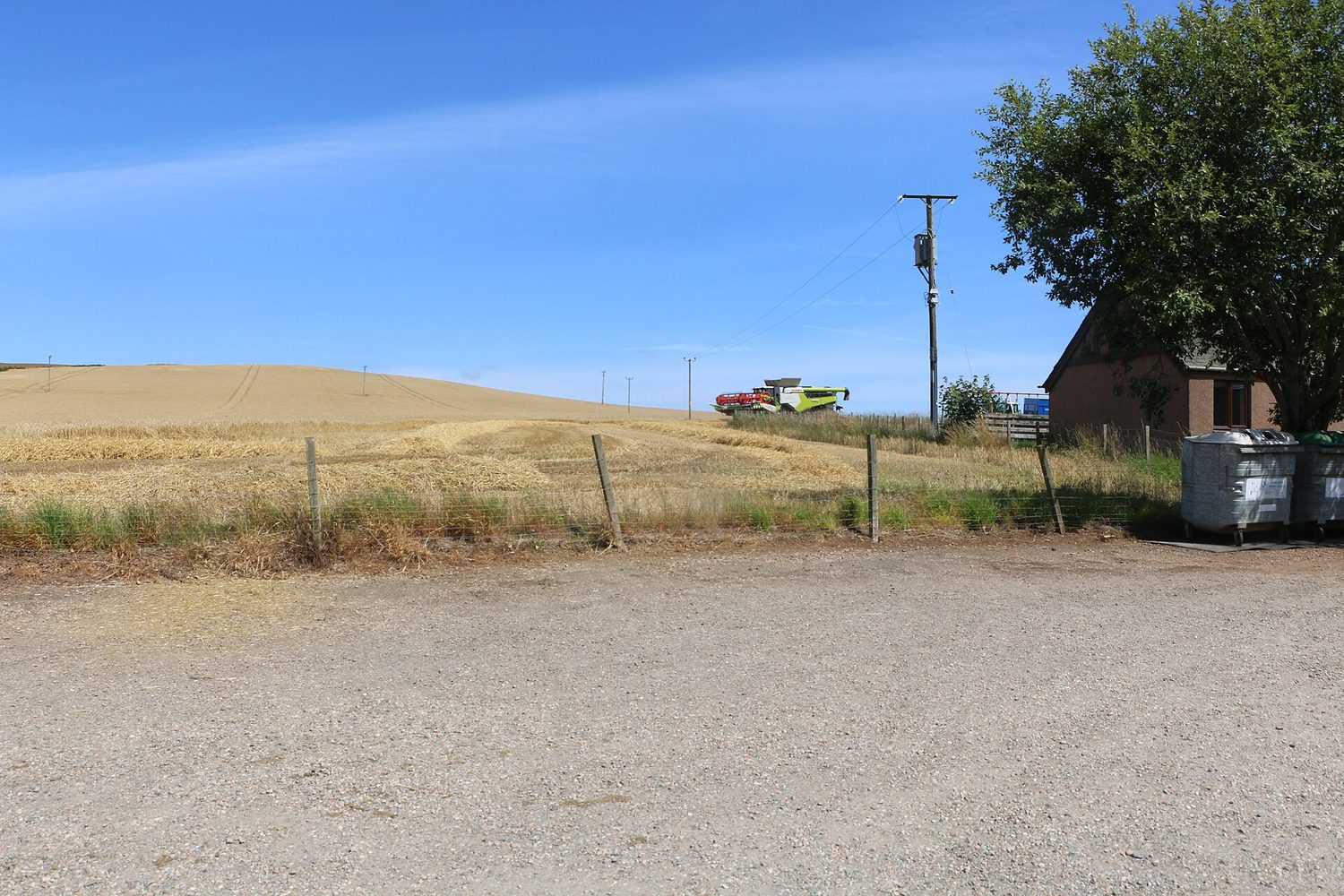
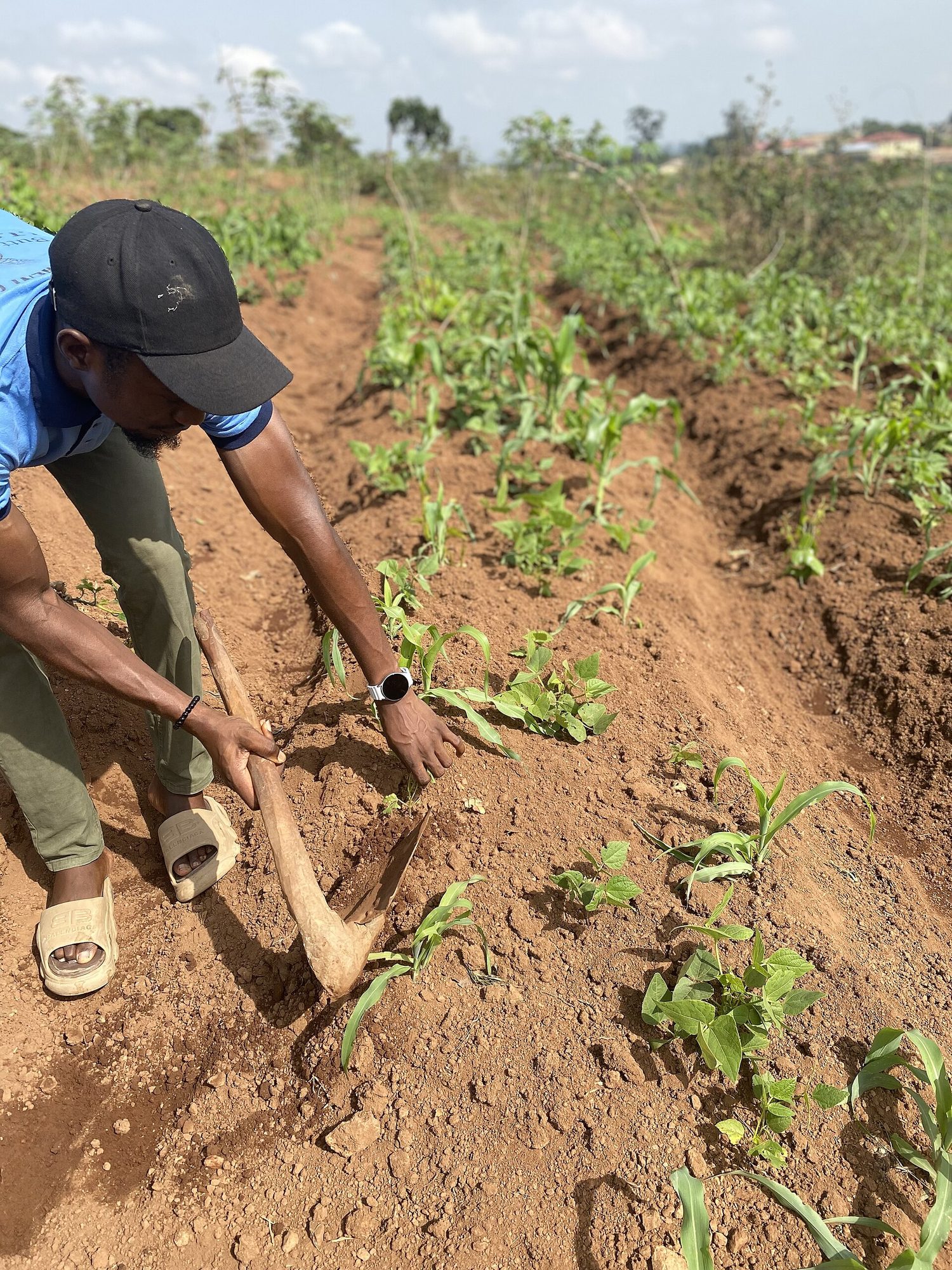
The two photos below are the two ends of the first split — one machine feeding a market versus one person feeding a family:

日本語

農業とは、食料やその他の製品のために作物を栽培し、家畜を飼育することを意図的に行うことです。最初の大きな分類:

  • 自給農業 — 農夫自身の家族を養うために農業を行うもので、未開発地域に一般的です。
  • 商業農業 — 利益のために販売するために農業を行うもので、先進地域に一般的であり、大規模で機械化されていることが多いです。

農業はまた集約度によって異なります:集約的な農業は、少ない面積に多くの労働力や資金を使います(水田、市場園芸);広延的な農業は、広い面積に少ない投入で行われます(牧場業、焼畑農業)。

以下の2枚の写真は、最初の分類の両極を示しています — 一台の機械が市場を支える versus 一人の人が家族を支える:

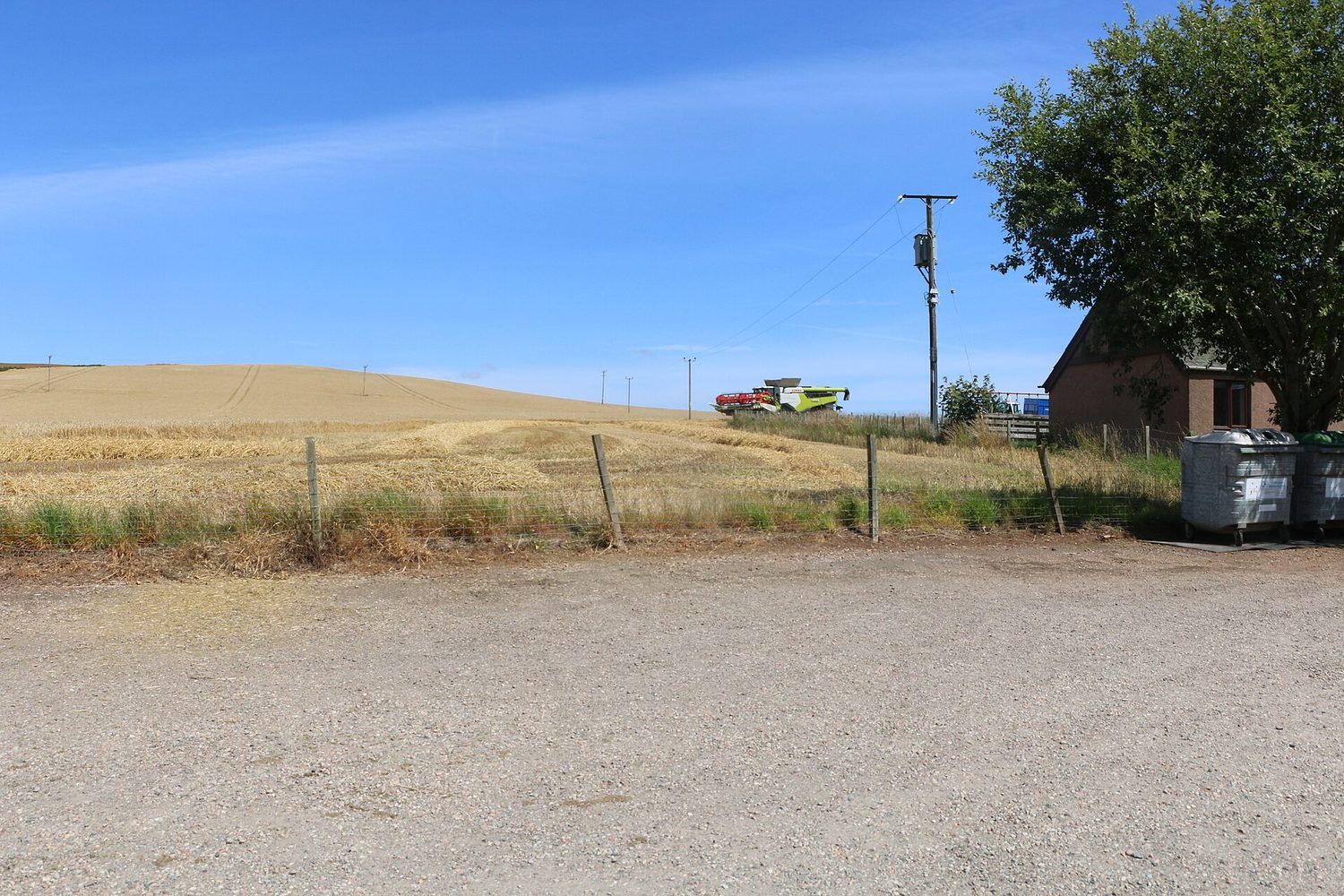
金色の小麦畑を刈り取る大型の赤と緑のコンバインハーベスター
商業農業:コンバインハーベスターがほぼ労働力なしで巨大な小麦畑を刈り取り、販売のための穀物を生産
小型のトウモロコシ畑の土を手作業で耕作する農夫
自給農業:農夫がクワを使って小さな畑を手作業で耕作し、主に家族を養うため
Explore · ⁨探索⁩

Intensive or extensive farming? · ⁨集約農業か、粗放農業か?⁩

Intensive farming puts a lot of labour or money into a small area; extensive farming spreads little input over a large area. · ⁨集約農業は限られた土地に多くの労働力や資金投入を行う;粗放農業は広い土地に少ない投入量で営む。⁩

5.2

Settlement Patterns and Survey Methods · ⁨集落パターンと調査方法⁩

Syllabus · ⁨シラバス⁩
English

Enduring Understanding (PSO-5): Availability of resources and cultural practices influence agricultural practices and land-use patterns.

Learning Objective PSO-5.B: Identify different rural settlement patterns and methods of surveying rural settlements.

  • PSO-5.B.1 Specific agricultural practices shape different rural land-use patterns.
  • PSO-5.B.2 Rural settlement patterns are classified as clustered, dispersed, or linear.
  • PSO-5.B.3 Rural survey methods include metes and bounds, township and range, and long lot.
日本語

持続的認識(PSO-5): 資源の利用可能性と文化的慣習は、農業実践および土地利用パターンに影響を与える。

学習目標 PSO-5.B: 多様な農村集落パターンおよび農村集落の調査方法を特定せよ。

  • PSO-5.B.1 特定の農業実態が異なる農村土地利用パターンを形成する。
  • PSO-5.B.2 農村集落パターンは、凝集型、分散型、または線状型に分類される。
  • PSO-5.B.3 農村の調査方法には、メト・アンド・バウンズ(境界指定法)、タウンシップ・アンド・レンジ(区画測量法)、およびロング・ロット(長区画法)が含まれる。

Source: College Board AP Course and Exam Description · ⁨出典: College Board AP コースおよび試験説明書⁩

English

How farmers settle the land leaves a lasting pattern.

  • Clustered (nucleated) 集聚式 settlements group homes together; dispersed 分散 settlements spread them out; linear settlements follow a road or river.
  • Survey methods divide the land: the metes-and-bounds system uses natural features; the township-and-range system uses a grid of squares; the long-lot system gives each farm a thin strip reaching a river or road.
日本語

農夫が土地に入植する方法は、永続的なパターンを残します。

  • **集団型(核集落)**集落は家をグループ化して配置し、分散型集落はそれを広範囲に分散させ、線状型集落は道路や川に沿って形成されます。
  • 調査方法は土地を区分けます:メッツ・アンド・バウンズ方式は自然地形を利用し、タウンシップ・アンド・レンジ方式は正方形のグリッドを使用し、ロング・ロット方式は各農場に川や道路に至る細長い区画を与えます。
5.3 5.4 5.5

Agricultural Origins and Revolutions · ⁨農業の起源と革命⁩

Syllabus · ⁨シラバス⁩
English

Enduring Understanding (SPS-5): Agriculture has changed over time because of cultural diffusion and advances in technology.

Learning Objective SPS-5.A: Identify major centers of domestication of plants and animals.

  • SPS-5.A.1 Early hearths of domestication of plants and animals arose in the Fertile Crescent and several other regions of the world, including the Indus River Valley, Southeast Asia, and Central America.

Learning Objective SPS-5.B: Explain how plants and animals diffused globally.

  • SPS-5.B.1 Patterns of diffusion, such as the Columbian Exchange and the agricultural revolutions, resulted in the global spread of various plants and animals.
日本語

持続的理解(SPS-5): 文化的拡散と技術の進歩により、農業は時代とともに変化してきた。

学習目標 SPS-5.A: 植物および動物の domestication の主要な中心地を特定せよ。

  • SPS-5.A.1 植物および動物の domestication の初期の発祥地は、肥沃な三日月地帯およびインダス河川流域、東南アジア、中央アメリカを含む世界のいくつかの地域に生じた。

学習目標 SPS-5.B: 植物および動物が世界的に拡散した仕組みを説明せよ。

  • SPS-5.B.1 コロンブス交換や農業革命などの拡散パターンにより、多様な植物および動物が世界的に広まった。
English

Enduring Understanding (SPS-5): Agriculture has changed over time because of cultural diffusion and advances in technology.

Learning Objective SPS-5.C: Explain the advances and impacts of the second agricultural revolution.

  • SPS-5.C.1 New technology and increased food production in the second agricultural revolution led to better diets, longer life expectancies, and more people available for work in factories.
日本語

持続的理解(SPS-5): 文化的拡散と技術の進歩により、農業は時代とともに変化してきた。

学習目標 SPS-5.C: 第二次農業革命における進展と影響を説明せよ。

  • SPS-5.C.1 第二次農業革命における新技術と食糧生産の増加は、より良い食事、平均寿命の延長、および工場での労働に供する人口の増大をもたらした。
English

Enduring Understanding (SPS-5): Agriculture has changed over time because of cultural diffusion and advances in technology.

Learning Objective SPS-5.D: Explain the consequences of the Green Revolution on food supply and the environment in the developing world.

  • SPS-5.D.1 The Green Revolution was characterized in agriculture by the use of high-yield seeds, increased use of chemicals, and mechanized farming.
  • SPS-5.D.2 The Green Revolution had positive and negative consequences for both human populations and the environment.
日本語

持続的理解(SPS-5): 文化的拡散と技術の進歩により、農業は時代とともに変化してきた。

学習目標 SPS-5.D: 開発途上国におけるグリーン革命が食糧供給および環境に与えた結果を説明せよ。

  • SPS-5.D.1 グリーン革命は、高収量種子の使用、化学物質の使用増加、および機械化耕作という特徴を持つ。
  • SPS-5.D.2 グリーン革命は、人間社会および環境の両方に対して好影響と悪影響をもたらした。

Source: College Board AP Course and Exam Description · ⁨出典: College Board AP コースおよび試験説明書⁩

English

Farming began in a few hearths and spread by diffusion, then was transformed by three revolutions.

  • The First (Neolithic) Agricultural Revolution 新石器农业革命 was the original domestication of plants and animals, letting people settle in one place.
  • The Second Agricultural Revolution 第二次农业革命 used the tools of the Industrial Revolution (machines, better transport, crop rotation) to raise output and feed growing cities.
  • The Green Revolution 绿色革命 (mid-1900s) introduced high-yield seeds, fertilisers, pesticides, and irrigation — hugely increasing food output, though at an environmental and social cost.

Worked example (a real AP exam question). "Describe the concept of an early hearth of domestication." (2023) A full-mark answer: "A place where people first domesticated a wild plant or animal into a farmed variety, and from which that farming practice then spread to other regions." The command word Describe wants more than a one-word definition — give the key features (where domestication began and that it spread) — but it does not require the cause-and-effect reasoning that "Explain" demands.

日本語

農業は限られた数箇所の起源地で始まり、拡散によって広がり、その後3つの革命によって変貌しました。

  • 第1次(新石器時代)農業革命は、植物や動物の最初的な驯化であり、人々が定住することを可能にしました。
  • 第二次農業革命は、工業革命の道具(機械、より良い輸送手段、輪作)を用いて生産性を高め、成長する都市を養った。
  • グリーン革命(1900年代半ば)は、高収量品種、肥料、農薬、灌漑を導入し、食料生産を劇的に増大させたが、環境・社会的コストも伴った。

** worked example (実際のAP試験問題)。** 「早期の驯化の起源地という概念を説明せよ。」 (2023年) 満点答案: 「人々が野生の植物や動物を最初に栽培品種として馴化した場所であり、そこからその農業実践が他の地域に広がったこと。」 指示語 Describe は、単なる一言の定義よりも詳細を求めます — 驯化が始まった場所かつそれが他地域に広がったことを示す主要な特徴を与える必要があります — しかし、「Explain」が求める因果関係の論理までは必要ありません。

5.6

Agricultural Production Regions · ⁨農業生産地域⁩

Syllabus · ⁨シラバス⁩
English

Enduring Understanding (PSO-5): Availability of resources and cultural practices influence agricultural practices and land-use patterns.

Learning Objective PSO-5.C: Explain how economic forces influence agricultural practices.

  • PSO-5.C.1 Agricultural production regions are defined by the extent to which they reflect subsistence or commercial practices (monocropping or monoculture).
  • PSO-5.C.2 Intensive and extensive farming practices are determined in part by land costs (bid-rent theory).
日本語

持続的認識(PSO-5): 資源の利用可能性と文化的慣習は、農業実践および土地利用パターンに影響を与える。

学習目標 PSO-5.C: 経済的要因が農業実態に及ぼす影響を説明せよ。

  • PSO-5.C.1 農業生産地域は、自給農業か商業農業か(単一栽培または単一耕作)をどの程度反映しているかに基づいて定義される。
  • PSO-5.C.2 集約的農業および粗放的農業の実態は、土地コスト(入札地代理論)の一部によって決定される。

Source: College Board AP Course and Exam Description · ⁨出典: College Board AP コースおよび試験説明書⁩

English

The type of farming in a place depends on climate and level of development.

  • Tropical regions favour shifting cultivation 迁移农业 (slash-and-burn) and plantation crops; dry regions favour pastoral nomadism 游牧 (herding).
  • Developed regions have mixed crop and livestock, dairying, and large commercial grain farms.
  • Bid-rent theory 竞租理论 explains why land close to a market is used more intensively: it is more expensive, so it must earn more per hectare.
日本語

ある地域での農業の種類は、気候と発展レベルによって決まります。

  • 熱帯地域では**焼畑農業(焼畑)やプランテーション作物が適しており、乾燥地域では遊牧(放牧)**が適しています。
  • 先進地域では混種農法、酪農、大規模な商業穀物農場が見られます。
  • ビッドレント理論は、市場に近い土地がより集約的に利用される理由を説明します — 土地代が高いため、ヘクタールあたりの収益を上げなければならないからです。
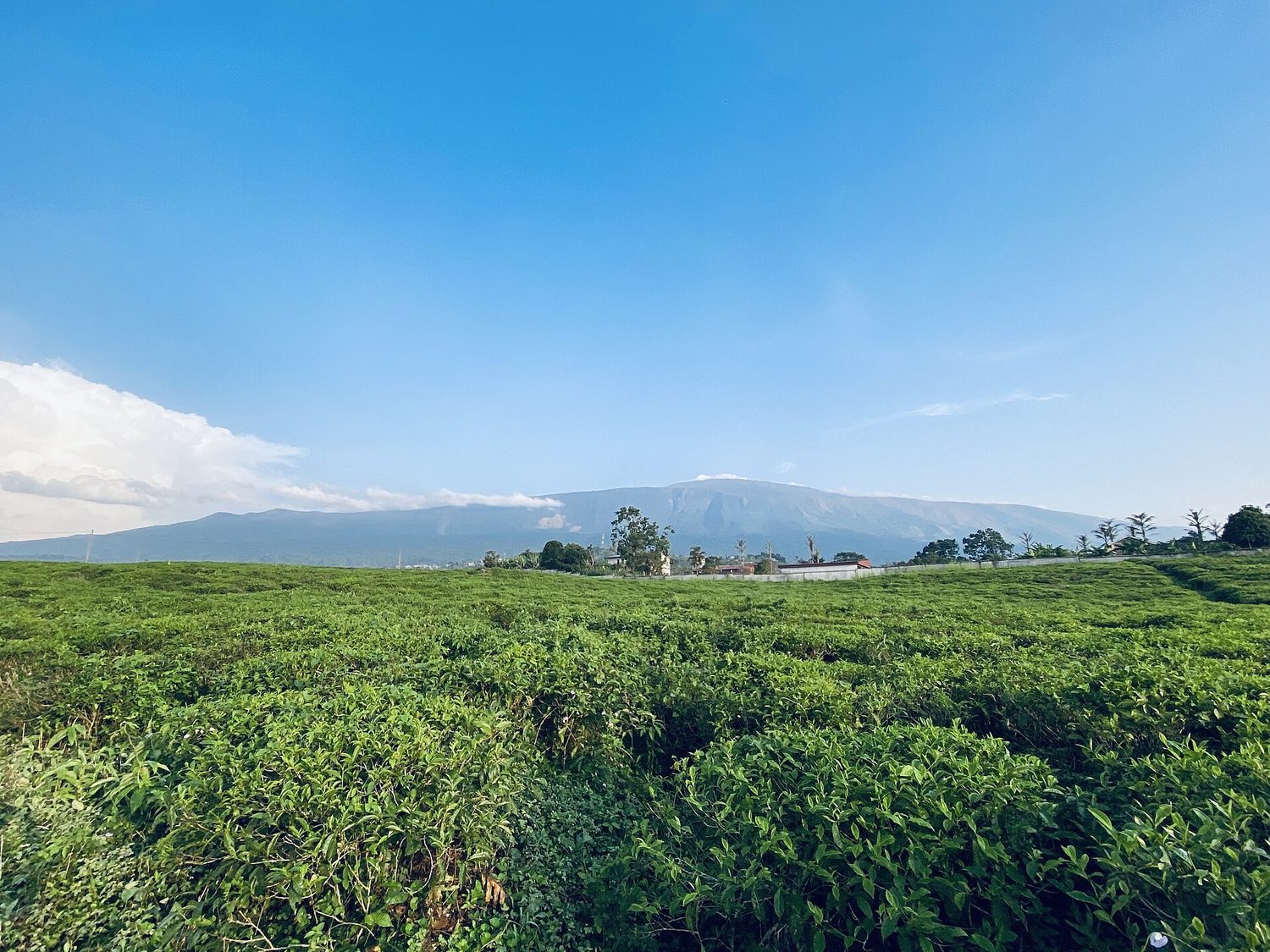
丘全体を覆う整然とした平行な低木の茶樹の列
茶園:整然とした列で広大な面積に栽培される単一作物で、熱帯地域の商業農業に典型的です
集約度と目的による農業の分類
2つの軸 — 土地単位あたりに投入される労働力と資本の量(集約 vs 広延)、そして食料の消費者(自給 vs 商業)
Vocabulary · ⁨語彙⁩ Train · ⁨練習する⁩
English 日本語
Agriculture/ˈæɡrɪkʌltʃə/ 農業
Subsistence agriculture/sʌbˈsɪstəns ˈæɡrɪkʌltʃə/ 自給農業
Commercial agriculture/kəˈmɜːʃl ˈæɡrɪkʌltʃə/ 商業農業
intensive/ɪnˈtensɪv/ 集約的
extensive/ekˈstensɪv/ 広範囲
Clustered (nucleated)/ˈklʌstəd/ 集簇型(核集積型)
dispersed/dɪˈspɜːst/ 分散型
First (Neolithic) Agricultural Revolution/fɜːst ˌæɡrɪˈkʌltʃərəl ˌrevəˈluːʃn/ 第一次(新石器時代)農業革命
Second Agricultural Revolution/ˈsekənd ˌæɡrɪˈkʌltʃərəl ˌrevəˈluːʃn/ 第二次農業革命
Green Revolution/ɡriːn ˌrevəˈluːʃn/ グリーン革命
shifting cultivation/ˈʃɪftɪŋ ˌkʌltɪˈveɪʃn/ 移動式耕作法
pastoral nomadism/ˈpæstərəl ˈnəʊmeɪdɪzəm/ 牧歌的遊民
Bid-rent theory/bɪd rent ˈθɪəri/ 入札地代理論
plantation/plænˈteɪʃn/ プランテーション
von Thünen model/vɒn ˈθuːnən ˈmɒdl/ フォン・チューネンモデル
global supply chain/ˈɡləʊbl səˈplaɪ tʃeɪn/ グローバルサプライチェーン
Agribusiness/ˈæɡrɪbɪznəs/ アグロビジネス
export commodities/ˈekspɔːt kəˈmɒdɪtiz/ 輸出商品
Fair trade/feə treɪd/ 公平貿易
desertification/dɪˌzɜːtɪfɪˈkeɪʃn/ 砂漠化
food security/fuːd sɪˈkjʊərɪti/ 食糧安全保障
5.7 5.8

Spatial Organization and the Von Thünen Model · ⁨空間的組織とフォン・テュネンモデル⁩

Syllabus · ⁨シラバス⁩
English

Enduring Understanding (PSO-5): Availability of resources and cultural practices influence agricultural practices and land-use patterns.

Learning Objective PSO-5.C: Explain how economic forces influence agricultural practices.

  • PSO-5.C.3 Large-scale commercial agricultural operations are replacing small family farms.
  • PSO-5.C.4 Complex commodity chains link production and consumption of agricultural products.
  • PSO-5.C.5 Technology has increased economies of scale in the agricultural sector and the carrying capacity of the land.
日本語

持続的認識(PSO-5): 資源の利用可能性と文化的慣習は、農業実践および土地利用パターンに影響を与える。

学習目標 PSO-5.C: 経済的要因が農業実態に及ぼす影響を説明せよ。

  • PSO-5.C.3 大規模商業農業経営体は小規模家族農場に取って代わられている。
  • PSO-5.C.4 複雑な商品チェーンが農業製品の生産と消費を結びつけている。
  • PSO-5.C.5 技術は農業部門における規模の経済および土地の carrying capacity を増大させた。
English

Enduring Understanding (PSO-5): Availability of resources and cultural practices influence agricultural practices and land-use patterns.

Learning Objective PSO-5.D: Describe how the von Thünen model is used to explain patterns of agricultural production at various scales.

  • PSO-5.D.1 Von Thünen’s model helps to explain rural land use by emphasizing the importance of transportation costs associated with distance from the market; however, regions of specialty farming do not always conform to von Thünen’s concentric rings.
日本語

持続的認識(PSO-5): 資源の利用可能性と文化的慣習は、農業実践および土地利用パターンに影響を与える。

学習目標 PSO-5.D: ヴォン・チューネンモデルがどのような方法で、さまざまなスケールにおける農業生産パターンの説明に用いられるかを記述せよ。

  • PSO-5.D.1 ヴォン・チューネンのモデルは、市場からの距離に関連する輸送費の重要性を強調することで農村土地利用を説明するが、特作農地の領域は必ずしもヴォン・チューネンの同心円状のリングに従うわけではない。

Source: College Board AP Course and Exam Description · ⁨出典: College Board AP コースおよび試験説明書⁩

English
The Von Thünen model

The von Thünen model 冯·杜能模型 (1826) explains what farmers grow where, based on transport cost and distance to market.

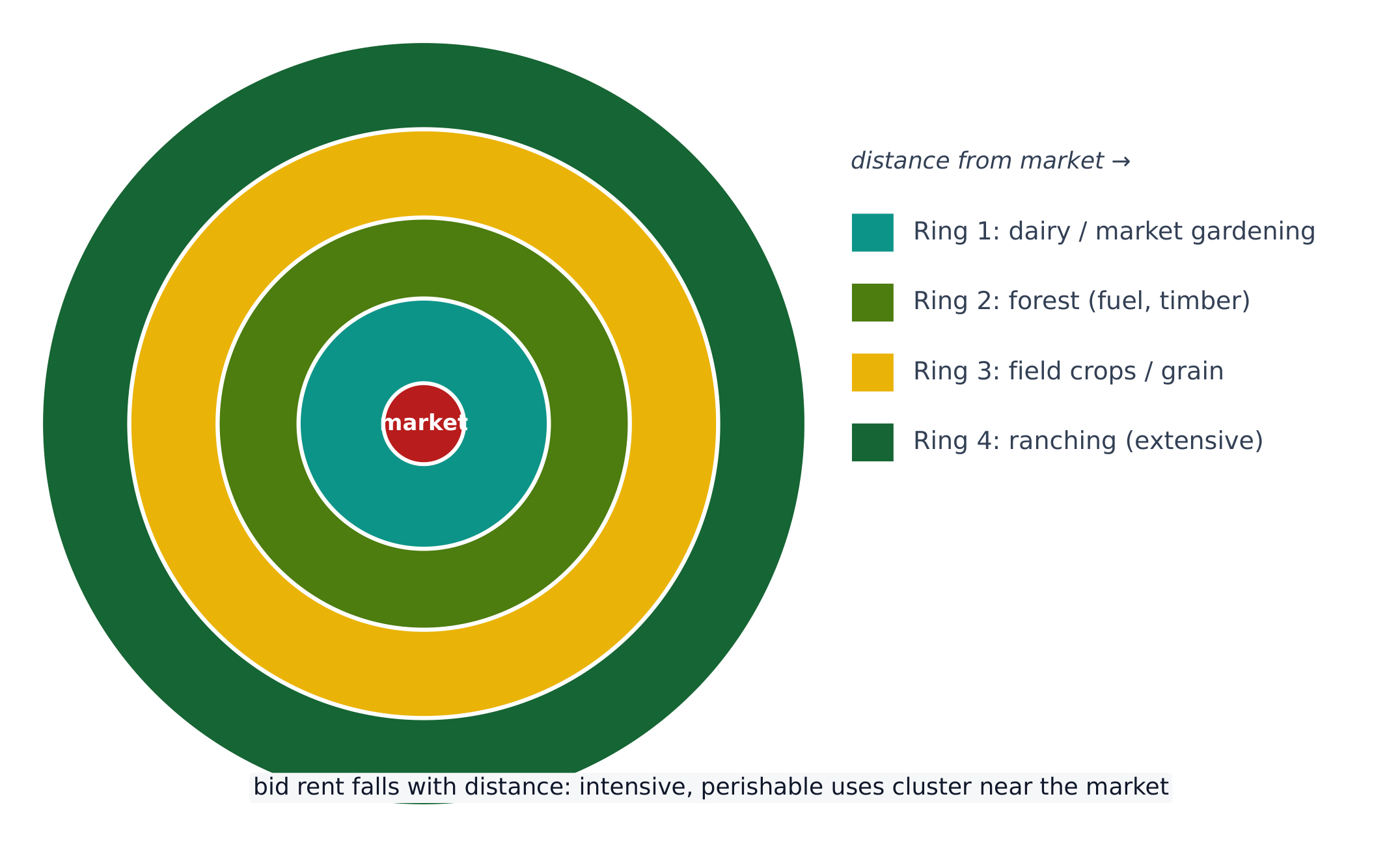
  • At the centre is the market (a city). Around it, land use forms concentric rings.
  • Ring 1 — market gardening and dairying (perishable, must be near market).
  • Ring 2 — forest (heavy firewood, costly to move, in his day).
  • Ring 3 — field crops and grain (less perishable).
  • Ring 4 — ranching (extensive, low value per hectare, can be far away).

The model assumes a flat, uniform plain with one market. Real regions bend the rings because of roads, rivers, terrain, and refrigeration — but the core idea, that transport cost shapes land use, still holds.

日本語
フォン・テュネンモデル

フォン・テュネンモデル(1826年)は、輸送コストと市場までの距離に基づき、農夫がどこで何を育てるかexplainedします。

フォン・チューネンモデル:土地利用は中央市場を取り巻く同心円状のリングを形成する
消費されやすい、重量のある、あるいは集約的な製品は市場付近に立地し、広大な利用は遠方に行われる
  • 中心には市場(都市)があり、その周囲に土地利用が同心円状に形成される。
  • 第1環 — 園芸・酪農( perishableであり、市場に近い必要がある)。
  • 第2環 — 森林(重たい薪であり、彼の時代には輸送コストが高かった)。
  • 第3環 — 畑作物および穀物(perishabilityが低い)。
  • 第4環 — 放牧(広大な土地利用であり、ヘクタールあたりの価値が低く、遠くても構わない)。

このモデルは平坦で均質な平原かつ単一市場を前提としている。現実の地域では道路、河川、地形、冷蔵技術により円形が歪むが、核心的な概念である輸送コストが土地利用を決定するという点は依然として成り立つ。

5.9

The Global System of Agriculture · ⁨農業の世界的システム⁩

Syllabus · ⁨シラバス⁩
English

Enduring Understanding (PSO-5): Availability of resources and cultural practices influence agricultural practices and land use patterns.

Learning Objective PSO-5.E: Explain the interdependence among regions of agricultural production and consumption.

  • PSO-5.E.1 Food and other agricultural products are part of a global supply chain.
  • PSO-5.E.2 Some countries have become highly dependent on one or more export commodities.
  • PSO-5.E.3 The main elements of global food distribution networks are affected by political relationships, infrastructure, and patterns of world trade.
日本語

持続的理解(PSO-5): 資源の利用可能性および文化的実態は、農業実態および土地利用パターンに影響を与える。

学習目標 PSO-5.E: 農業生産地域と消費地域の相互依存関係を説明せよ。

  • PSO-5.E.1 食料およびその他の農業製品は、グローバルなサプライチェーンの一部である。
  • PSO-5.E.2 いくつかの国は、輸出商品として一つのもの、あるいは複数のものに極めて依存するようになった。
  • PSO-5.E.3 世界的食料流通ネットワークの主要な要素は、政治関係、インフラストラクチャ、および世界貿易のパターンによって影響を受ける。

Source: College Board AP Course and Exam Description · ⁨出典: College Board AP コースおよび試験説明書⁩

English

Modern farming is a global supply chain 全球供应链.

  • Agribusiness 农业综合企业 links farms to seed, machinery, processing, and retail companies.
  • Many countries specialise in a few export commodities 出口商品 (coffee, cocoa, soy), which can make them dependent on world prices.
  • Fair trade 公平贸易 and local-food movements are responses to the inequalities of this global system.
日本語

現代農業はグローバルサプライチェーンである。

  • アグロビジネスは、農場を種子、機械、加工、小売企業と結びつけている。
  • 多くの国々が数種類の輸出商品(コーヒー、カカオ、大豆など)に特化しており、これにより世界価格への依存を生むことがある。
  • フェアトレードやローカルフード運動は、この世界的システムの不平等に対する反応である。
5.10 5.11

Consequences and Challenges of Agriculture · ⁨農業の影響と課題⁩

Syllabus · ⁨シラバス⁩
English

Enduring Understanding (IMP-5): Agricultural production and consumption patterns vary in different locations, presenting different environmental, social, economic, and cultural opportunities and challenges.

Learning Objective IMP-5.A: Explain how agricultural practices have environmental and societal consequences.

  • IMP-5.A.1 Environmental effects of agricultural land use include pollution, land cover change, desertification, soil salinization, and conservation efforts.
  • IMP-5.A.2 Agricultural practices—including slash and burn, terraces, irrigation, deforestation, draining wetlands, shifting cultivation, and pastoral nomadism—alter the landscape.
  • IMP-5.A.3 Societal effects of agricultural practices include changing diets, role of women in agricultural production, and economic purpose.
日本語

持続的認識(IMP-5): 農業生産および消費のパターンは場所によって異なり、異なる環境的、社会的、経済的、文化的な機会と課題を示す。

学習目標 IMP-5.A: 農業実践が環境的および社会的にどのような影響を与えるかを説明する。

  • IMP-5.A.1 農業土地利用の環境的影響には、汚染、土地被覆の変化、砂漠化、土壌塩類化、および保全活動が含まれる。
  • IMP-5.A.2 農業実践—including 焼畑、段丘、灌漑、森林伐採、湿地排水、移動栽培、および遊牧—は景観を変える。
  • IMP-5.A.3 農業実践の社会的影響には、食事内容の変化、農業生産における女性の役割、および経済的目的が含まれる。
English

Enduring Understanding (IMP-5): Agricultural production and consumption patterns vary in different locations, presenting different environmental, social, economic, and cultural opportunities and challenges.

Learning Objective IMP-5.B: Explain challenges and debates related to the changing nature of contemporary agriculture and food-production practices.

  • IMP-5.B.1 Agricultural innovations such as biotechnology, genetically modified organisms, and aquaculture have been accompanied by debates over sustainability, soil and water usage, reductions in biodiversity, and extensive fertilizer and pesticide use.
  • IMP-5.B.2 Patterns of food production and consumption are influenced by movements relating to individual food choice, such as urban farming, community-supported agriculture (CSA), organic farming, value-added specialty crops, fair trade, local-food movements, and dietary shifts.
  • IMP-5.B.3 Challenges of feeding a global population include lack of food access, as in cases of food insecurity and food deserts; problems with distribution systems; adverse weather; and land use lost to suburbanization.
  • IMP-5.B.4 The location of food-processing facilities and markets, economies of scale, distribution systems, and government policies all have economic effects on food-production practices.
日本語

持続的認識(IMP-5): 農業生産および消費のパターンは場所によって異なり、異なる環境的、社会的、経済的、文化的な機会と課題を示す。

学習目標 IMP-5.B: 現代農業および食料生産实践の変化に関する課題と議論を説明する。

  • IMP-5.B.1 バイオテクノロジー、遺伝子組み換え生物、および養殖業といった農業革新は、持続可能性、土壌および水の使用、生物多様性の減少、および大量の肥料および農薬使用に関する議論を伴った。
  • IMP-5.B.2 食品生産および消費のパターンは、都市農法、コミュニティ・サポーテッド・アグリカルチャー(CSA)、有機農業、付加価値型特作作物、公平貿易、地産地消運動、および食生活の変化といった、個人の食品選択に関連する動向によって影響を受ける。
  • IMP-5.B.3 世界人口を養うことへの課題には、食の安全保障やフードデスерт(食料オアシス)のような食のアクセス欠如、流通システムの問題、悪天候、および郊外化により失われた土地利用が含まれる。
  • IMP-5.B.4 食品加工施設や市場の立地、規模の経済、流通システム、政府政策はすべて、食品生産実態に経済的影響を与える。

Source: College Board AP Course and Exam Description · ⁨出典: College Board AP コースおよび試験説明書⁩

English

Modern agriculture feeds billions but creates problems:

  • Environmental: soil erosion, water pollution from fertiliser, loss of biodiversity, desertification 荒漠化, and greenhouse-gas emissions.
  • Economic and social: the loss of small family farms, rural depopulation, and questions about food security 粮食安全 and GMOs 转基因生物.
  • Land use change: suburbanisation and urban growth eat into farmland at the edge of cities.
日本語

現代農業は数十億人を養う一方で、問題も生み出している:

  • 環境面:土壌侵食、肥料による水質汚染、生物多様性の喪失、砂漠化、および温室効果ガス排出。
  • 経済的・社会的:小規模家族農場の消失、地方の人口減少、食料安全保障およびGMOsに関する懸念。
  • 土地利用の変化:郊外化や都市拡大により、都市辺境の農地が削られている。
集約商業農業:単一栽培は収量向上をもたらすが、土壌や生物多様性を劣化させる可能性がある
Vocabulary · ⁨語彙⁩ Train · ⁨練習する⁩
English 日本語
GMOs/ˌdʒiː em ˈəʊz/ 遺伝子組み換え作物(GMOs)
5.12

Women in Agriculture · ⁨農業における女性⁩

Syllabus · ⁨シラバス⁩
English

Enduring Understanding (IMP-5): Agricultural production and consumption patterns vary in different locations, presenting different environmental, social, economic, and cultural opportunities and challenges.

Learning Objective IMP-5.C: Explain geographic variations in female roles in food production and consumption.

  • IMP-5.C.1 The role of females in food production, distribution, and consumption varies in many places depending on the type of production involved.
日本語

持続的認識(IMP-5): 農業生産および消費のパターンは場所によって異なり、異なる環境的、社会的、経済的、文化的な機会と課題を示す。

学習目標 IMP-5.C: 食品生産および消費における女性の役割の地理的変異を説明せよ。

  • IMP-5.C.1 食品生産、流通、および消費における女性の役割は、関わる生産の種類に応じて多くの場所で異なる。

Source: College Board AP Course and Exam Description · ⁨出典: College Board AP コースおよび試験説明書⁩

English

In much of the developing world, women do the majority of farm labour, especially in subsistence agriculture, yet often own little of the land. Their role is central to family food supply. Improving women's access to land, credit, and education raises farm output and, by lowering fertility, links back to the demographic transition.

日本語

発展途上国の多くにおいて、女性は生活自給型農業を中心に農作業の大部分を担っているが、土地所有は少ないことが一般的である。彼らの役割は家族の食糧供給にとって中心的である。女性の土地、信用、教育へのアクセスを改善することは農業生産性を高め、出生率低下を通じて人口転換にもつながる。

5.12

Exam tips · ⁨試験対策⁩

English
  • Classify farming on two axes at once: subsistence or commercial, and intensive or extensive.
  • Drive every Von Thünen answer with transport cost and the perishability of the product.
  • Weigh the Green Revolution: higher yields against costly inputs, environmental harm, and uneven reach.
  • Name the survey system (long-lot, township-and-range, metes-and-bounds) from the field shape.
  • Connect farming to its consequences: soil degradation, water pollution, and deforestation.
日本語
  • 農業を二つの軸で分類せよ:生活自給型か商業型か、そして集約的か広域的か。
  • ヴォン・テューネンの答えには必ず輸送コストと製品のperishabilityを根拠とする。
  • グリーン革命を評価せよ:収量の向上に対し、高コストの投入財、環境への悪影響、格差のある普及状況を比較考証する。
  • 圃場の形状から測量システム(ロングロット、タウンシップ・アンド・レンジ、メッツ・アンド・バウンズ)を特定せよ。
  • 農業とその結果(土壌劣化、水汚染、森林破壊)を結びつけよ。

Interactive lessons on this topic · ⁨このトピックのインタラクティブ授業⁩

Work through it step by step, with instant-check exercises. · ⁨一歩ずつ進め、即時チェック付きの問題で学習します。⁩

Past Papers · ⁨過去問⁩

More topics in AP Human Geography · ⁨AP 人文地理学⁩ · ⁨AP Human Geography · ⁨AP 人文地理学⁩ の他のトピック⁩

Log in or create account · ⁨ログインまたはアカウント作成⁩

IGCSE, A-Level & AP