Skip to content · ⁨コンテンツへスキップ⁩

Cultural Patterns and Processes · ⁨文化的パターンとプロセス⁩

AP Human Geography · ⁨AP 人文地理学⁩ · Topic 3 · ⁨トピック 3⁩

View Slides · ⁨查看幻灯片⁩ Train · ⁨練習する⁩
Video lesson for this topic · ⁨このトピックのビデオレッスン⁩ Open the video page · ⁨動画ページを開く⁩
7:50

文化的パターンとプロセス

この門はアメリカ合衆国シアトルの通りの上に立っている。しかし、屋根、色、文字はすべて中国から来ており、ほぼ一万キロメートル…

English narration · English + 中文 subtitles burned in · ⁨英語ナレーション・英語+中文字幕 burning-in⁩

3.1

Introduction to Culture · ⁨文化への導入⁩

Syllabus · ⁨シラバス⁩
English

Enduring Understanding (PSO-3): Cultural practices vary across geographical locations because of physical geography and available resources.

Learning Objective PSO-3.A: Define the characteristics, attitudes, and traits that influence geographers when they study culture.

  • PSO-3.A.1 Culture comprises the shared practices, technologies, attitudes, and behaviors transmitted by a society.
  • PSO-3.A.2 Cultural traits include such things as food preferences, architecture, and land use.
  • PSO-3.A.3 Cultural relativism and ethnocentrism are different attitudes toward cultural difference.
日本語

持続的理解 (PSO-3): 文化的実践は、物理的地形および利用可能な資源の違いにより、地理的場所ごとに異なる。

学習目標 PSO-3.A: 地理学者が文化を研究する際に影響を与える特徴、態度、特性を定義する。

  • PSO-3.A.1 文化とは、社会によって伝承される共有された実践、技術、態度、行動の総称である。
  • PSO-3.A.2 文化的特性には、食の好み、建築、土地利用などが含まれる。
  • PSO-3.A.3 文化的相対主義とエスノセントリズムは、文化的差異に対する異なる態度である。
Source: College Board AP Course and Exam Description · ⁨出典: College Board AP コースおよび試験説明書⁩

English

Culture 文化 is the shared set of beliefs, values, practices, and objects of a group of people. Geographers split it into two parts:

  • Material culture 物质文化 — the things people make and use (clothing, tools, food, buildings, art).
  • Nonmaterial culture 非物质文化 — the ideas people hold (language, religion, values, rules).

A cultural trait 文化特征 is a single element of culture (using chopsticks); a group of linked traits is a cultural complex. Cultural relativism 文化相对论 is the practice of judging a culture by its own standards rather than your own.

日本語

文化とは、ある集団が共有する信念、価値観、実践、物事のセットである。地理学者はこれを2つの部分に分ける:

  • 物質文化 — 人々が作り、使うもの(衣服、道具、食料、建物、芸術)。
  • 非物質文化 — 人々が持つ考え(言語、宗教、価値観、ルール)。

一つの文化的要素を文化的特徴という(箸を使うことなど)、関連した特徴の集まりを文化的複合体という。文化的相対主義とは、自分の基準ではなくその文化独自の基準で文化を評価することである。

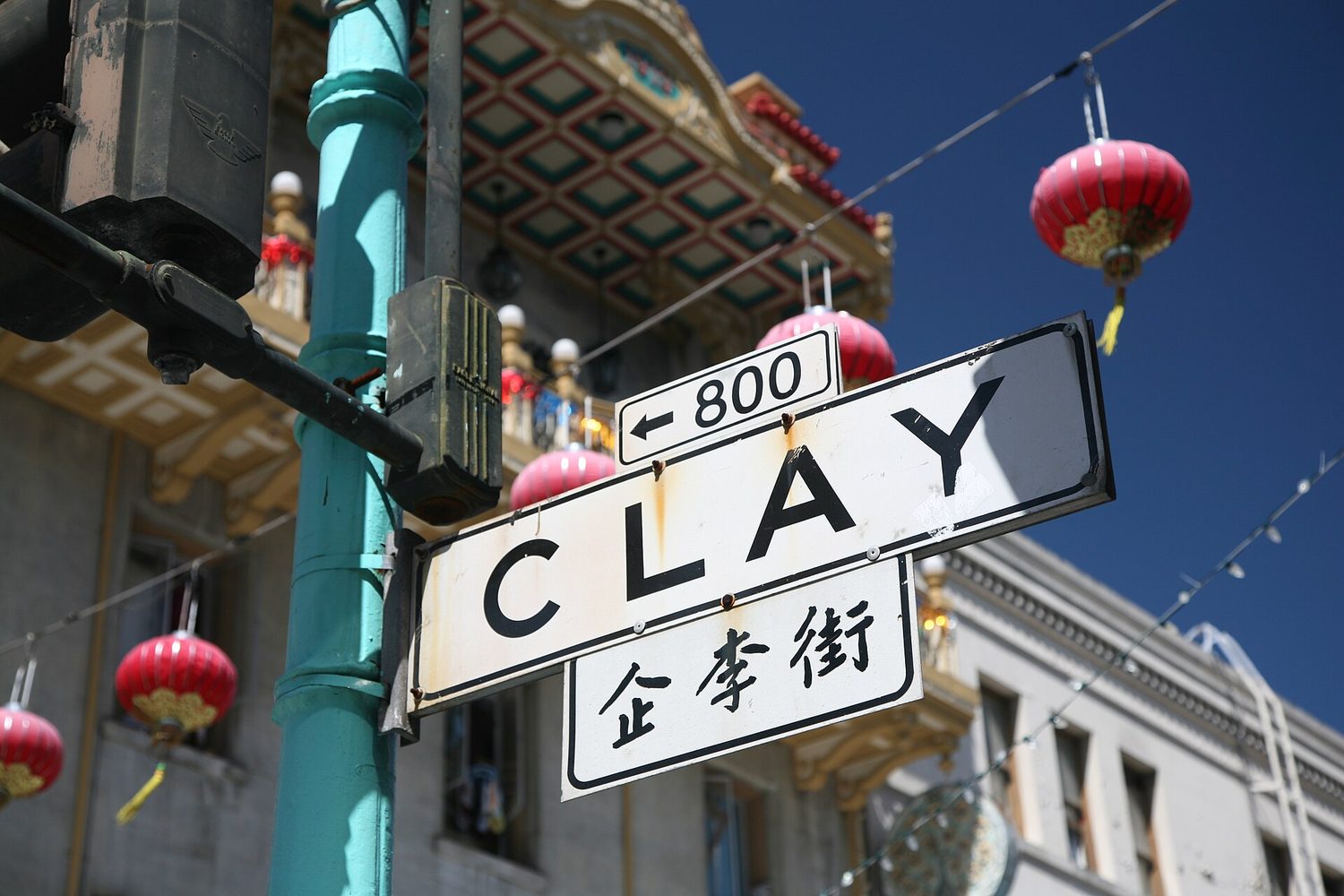
チャイナタウンの看板:文化は人々が学び受け継ぐ共有された実践、価値観、象徴である
Vocabulary · ⁨語彙⁩ Train · ⁨練習する⁩
English 日本語
Culture/ˈkʌltʃə/ 文化
Material culture/məˈtɪərɪəl ˈkʌltʃə/ 物質文化
Nonmaterial culture/ˌnɒnməˈtɪərɪəl ˈkʌltʃə/ 非物質文化
cultural trait/ˈkʌltʃərəl treɪt/ 文化的特徴
Cultural relativism/ˈkʌltʃərəl ˈrelətɪvɪzəm/ 文化的相対主義
3.2

Cultural Landscapes · ⁨文化的景観⁩

Syllabus · ⁨シラバス⁩
English

Enduring Understanding (PSO-3): Cultural practices vary across geographical locations because of physical geography and available resources.

Learning Objective PSO-3.B: Describe the characteristics of cultural landscapes.

  • PSO-3.B.1 Cultural landscapes are combinations of physical features, agricultural and industrial practices, religious and linguistic characteristics, evidence of sequent occupancy, and other expressions of culture including traditional and postmodern architecture and land-use patterns.

Learning Objective PSO-3.C: Explain how landscape features and land and resource use reflect cultural beliefs and identities.

  • PSO-3.C.1 Attitudes toward ethnicity and gender, including the role of women in the workforce; ethnic neighborhoods; and indigenous communities and lands help shape the use of space in a given society.
日本語

持続的理解 (PSO-3): 文化的実践は、物理的地形および利用可能な資源の違いにより、地理的場所ごとに異なる。

学習目標 PSO-3.B: 文化的景観の特徴を説明する。

  • PSO-3.B.1 文化的景観とは、地形、農業および産業活動、宗教的・言語的特徴、順次占有の痕跡、伝統的およびポストモダン建築、土地利用パターンなどの他の文化的表現との組み合わせである。

学習目標 PSO-3.C: 景観の特徴および土地・資源の利用が文化的信念およびアイデンティティをどのように反映しているかを説明する。

  • PSO-3.C.1 人種や性に対する態度、労働市場における女性の役割、人種地区、先住民コミュニティと土地は、特定の社会における空間の使い方を形成する。

Source: College Board AP Course and Exam Description · ⁨出典: College Board AP コースおよび試験説明書⁩

English

The cultural landscape 文化景观 is the visible imprint of human activity on the land — buildings, farms, roads, signs, and monuments. It records the values of the people who made it.

  • Sequent occupance 承继占用 is the idea that each group who lives in a place leaves a layer on the landscape, so the landscape shows its whole history.
  • Ethnic enclaves 族裔聚居区, religious buildings, and language on signs are all readable clues to who lives there and what they value.
日本語

文化的景観とは、人間活動による土地への可視的な痕跡であり、建物、農場、道路、看板、記念碑を含む。それは形成した人々の価値観を記録している。

  • 後続占有とは、ある場所に暮らす各集団が景観に層を残すという概念であり、したがって景観はその歴史全体を示している。
  • 民族的エンクレーブ、宗教施設、看板の言語は、そこに誰が住み何を重視しているかを知る読める手がかりである。
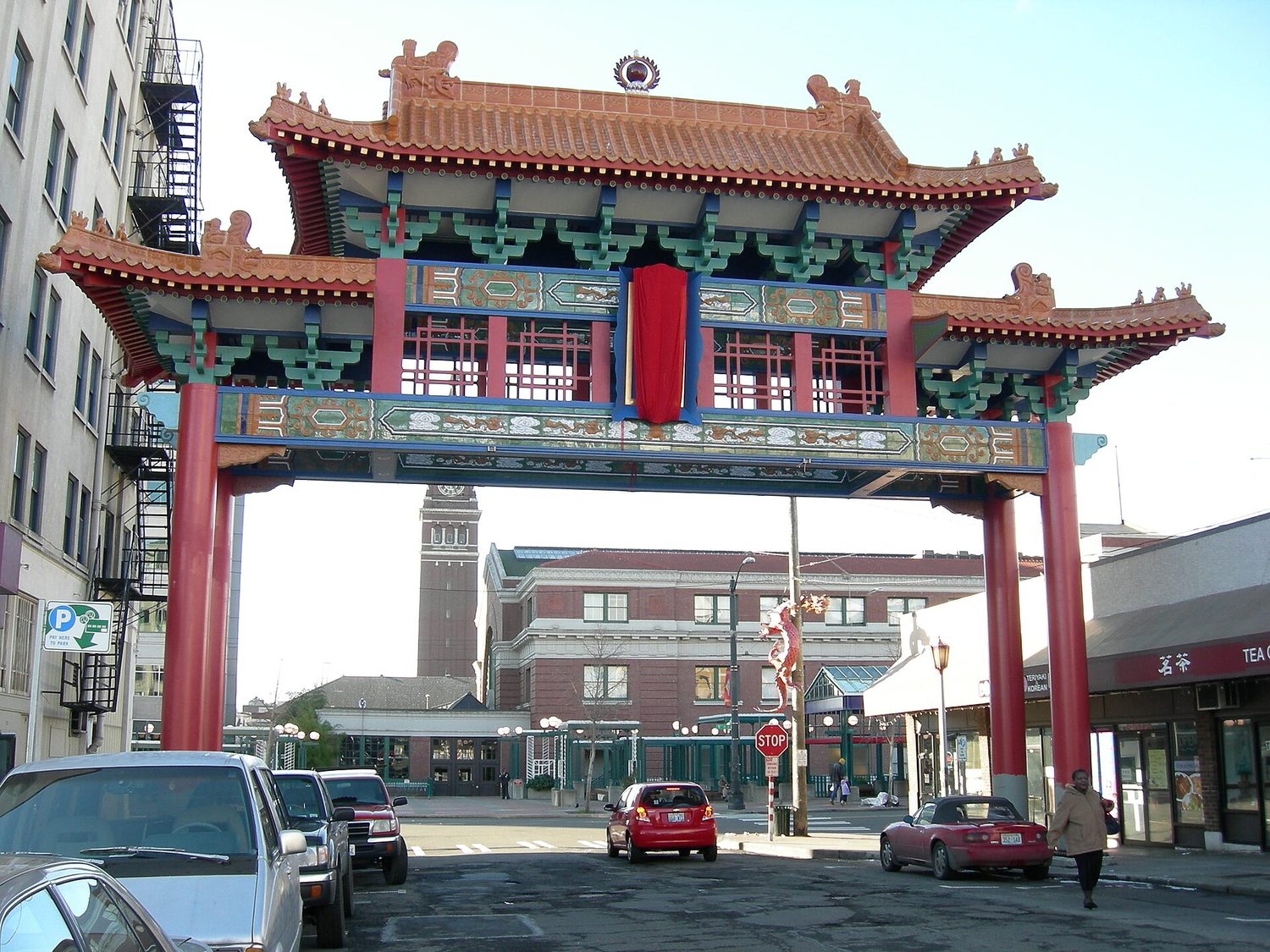
緑の瓦葺き屋根を持つ大きな装飾的な伝統的な中国門が通りを横切り、シアトルチャイナタウンの入口を示している
シアトルのチャイナタウンの門:建築様式と両語看板は民族的エンクレーブを示しており、特定の集団による文化的景観への明確な痕跡である
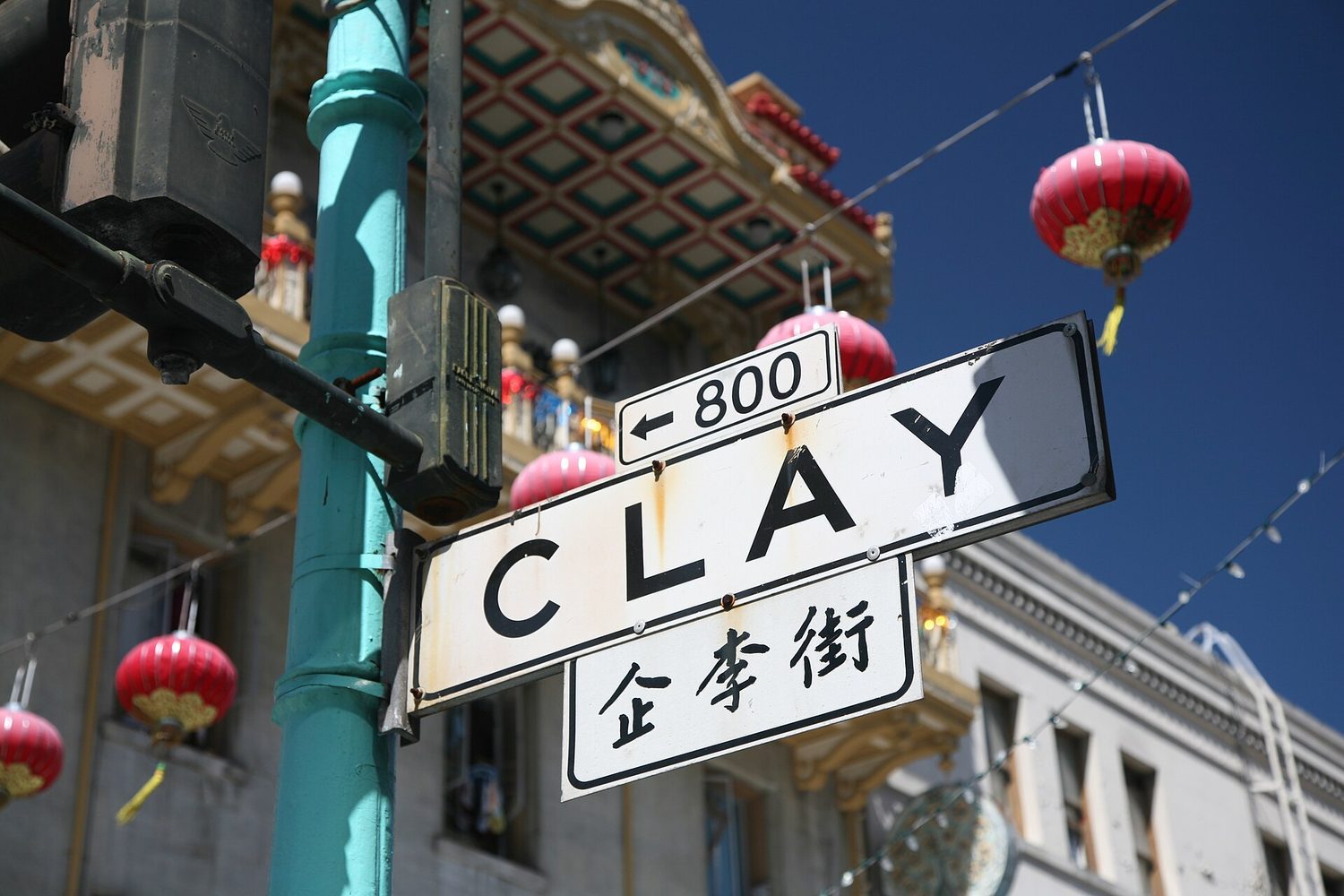
チャイナタウンの街路標識:文化的景観と拡散は都市に永続的なパターンを残す
チャイナタウンの街路標識:文化的景観と拡散が都市に永続的なパターンを残す
Vocabulary · ⁨語彙⁩ Train · ⁨練習する⁩
English 日本語
cultural landscape/ˈkʌltʃərəl ˈlændskeɪp/ 文化的景観 (cultural landscape)
Sequent occupance/ˈsiːkwənt ˈɒkjʊpəns/ 順次占有
Ethnic enclaves/ˈeθnɪk ˈeŋkleɪvz/ 民族エンクレーブ
Centripetal forces/senˈtrɪpɪtl ˈfɔːsɪz/ 収束力
centrifugal forces/ˌsentrɪˈfjuːɡl ˈfɔːsɪz/ 離心力 (centrifugal forces)
Acculturation/əˌkʌltʃəˈreɪʃn/ 適応
assimilation/əˌsɪmɪˈleɪʃn/ 同化 (assimilation)
syncretism/ˈsɪŋkrɪtɪzəm/ 折衷主義 (syncretism)
lingua franca/ˈlɪŋɡjuːə ˈfræŋkə/ リンガ・フランカ
3.3

Cultural Patterns · ⁨文化的パターン⁩

Syllabus · ⁨シラバス⁩
English

Enduring Understanding (PSO-3): Cultural practices vary across geographical locations because of physical geography and available resources.

Learning Objective PSO-3.D: Explain patterns and landscapes of language, religion, ethnicity, and gender.

  • PSO-3.D.1 Regional patterns of language, religion, and ethnicity contribute to a sense of place, enhance placemaking, and shape the global cultural landscape.
  • PSO-3.D.2 Language, ethnicity, and religion are factors in creating centripetal and centrifugal forces.
日本語

持続的理解 (PSO-3): 文化的実践は、物理的地形および利用可能な資源の違いにより、地理的場所ごとに異なる。

学習目標 PSO-3.D: 言語、宗教、人種、性のパターンと景観を説明する。

  • PSO-3.D.1 言語、宗教、人種の地域的なパターンは、場所への帰属意識を生み出し、プレイスメイキングを強化し、世界的な文化景観を形作る。
  • PSO-3.D.2 言語、人種、宗教は、集権的力と分断的力を生む要因である。

Source: College Board AP Course and Exam Description · ⁨出典: College Board AP コースおよび試験説明書⁩

English

Cultures spread across space in patterns. Key ideas:

  • Centripetal forces 向心力 pull a group together (a shared language or religion); centrifugal forces 离心力 push it apart.
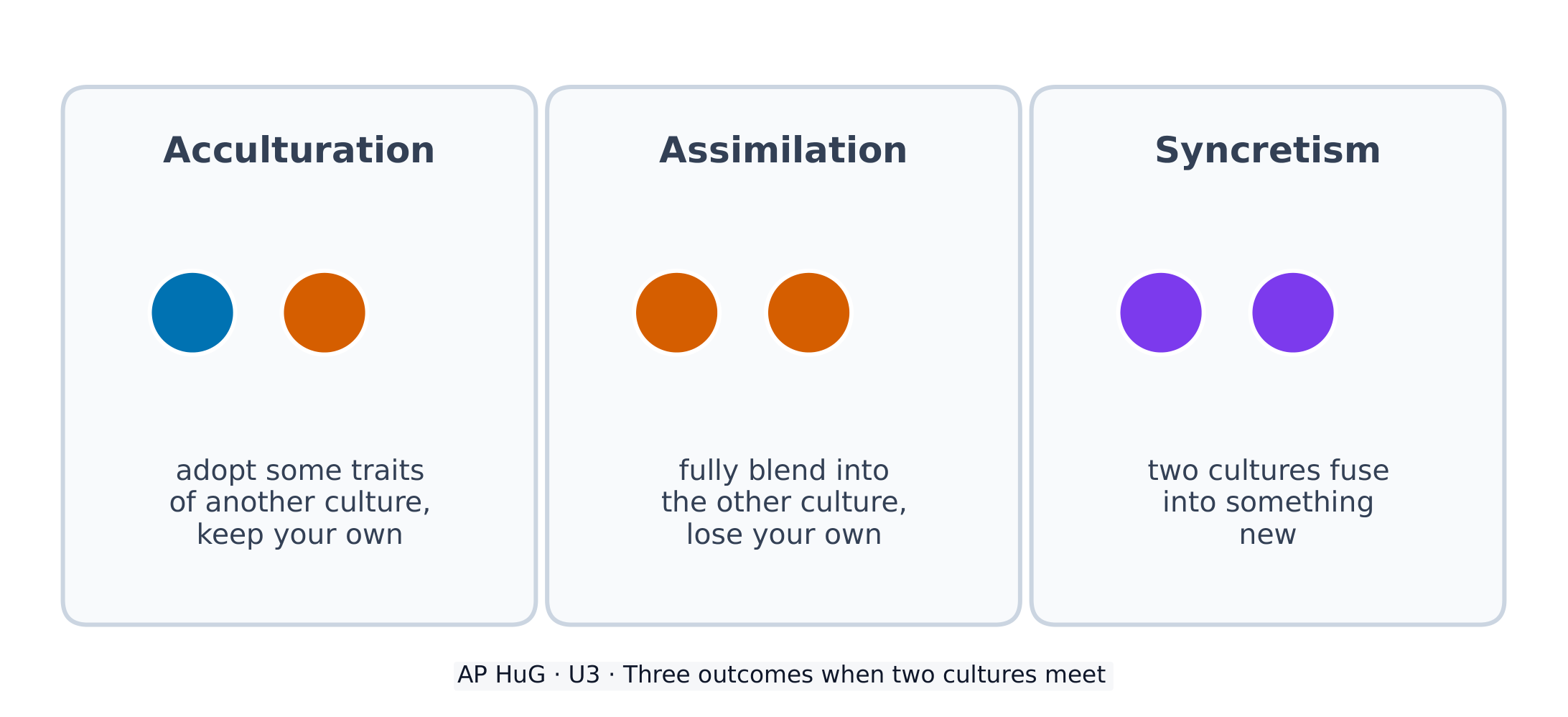
  • Acculturation 文化适应 (adopting some traits of another culture while keeping your own), assimilation 同化 (fully blending into another culture), and syncretism 融合 (two cultures blending into something new) describe how cultures change on contact.
  • A lingua franca 通用语 is a common language used between groups who speak different first languages.

Worked example (a real AP exam question). "Explain how food preferences can be a culture trait." (2023) A full-mark answer: "Many dishes use ingredients or ways of cooking that are unique to one culture group — for example a national dish — so choosing and eating that food expresses belonging to the group, which is what makes it a culture trait." The command word Explain needs a link, not a definition: connect the food preference to the idea of a shared culture. Simply listing foods earns zero.

日本語

文化は空間的にパターンを持って広がる。重要な概念:

  • 内聚力(共通の言語や宗教など)が集団を引き寄せる一方、離心力は集団を分断する。
  • 適応(他の文化の特徴を一部採用しつつ自分自身のものを保つこと)、同化(他の文化に完全に溶け込むこと)、折衷主義(二つの文化が混ざり合って新たなものを生むこと)は、接触によって文化がどのように変化するかを説明する。
  • リンガ・フランカとは、異なる母語を持つグループ間で使われる共通言語のことである。
2つの文化が遭遇した際の3つの結果
適応は自分自身の文化を保ち、同化はそれを置き換え、折衷主義は両者を混ぜて新たなものを生む

** worked example (実際のAP試験問題)。「食品の好み是如何成为一种文化特质?」 (2023年)満点答案:「多くの料理には、単一の文化的グループに固有の食材や調理法が含まれており—例として国民料理—そのため、その食品を選び食べることは所属感を表し、これがそれが文化的特質である理由である。」 指示語説明には定義ではなく、リンクが必要である:食品の好みを共有文化の概念に結びつける。単に食品をリストするだけでは得点ゼロである。

3.4

Types of Diffusion · ⁨拡散の種類⁩

Syllabus · ⁨シラバス⁩
English

Enduring Understanding (IMP-3): The interaction of people contributes to the spread of cultural practices.

Learning Objective IMP-3.A: Define the types of diffusion.

  • IMP-3.A.1 Relocation and expansion—including contagious, hierarchical, and stimulus expansion—are types of diffusion.
日本語

持続的理解 (IMP-3): 人々の相互作用が文化的実践の拡散に寄与する。

学習目標 IMP-3.A: 拡散の種類を定義する。

  • IMP-3.A.1 移住と拡大(伝染的、階層的、刺激拡大)は拡散の種類である。

Source: College Board AP Course and Exam Description · ⁨出典: College Board AP コースおよび試験説明書⁩

English
The four types of diffusion

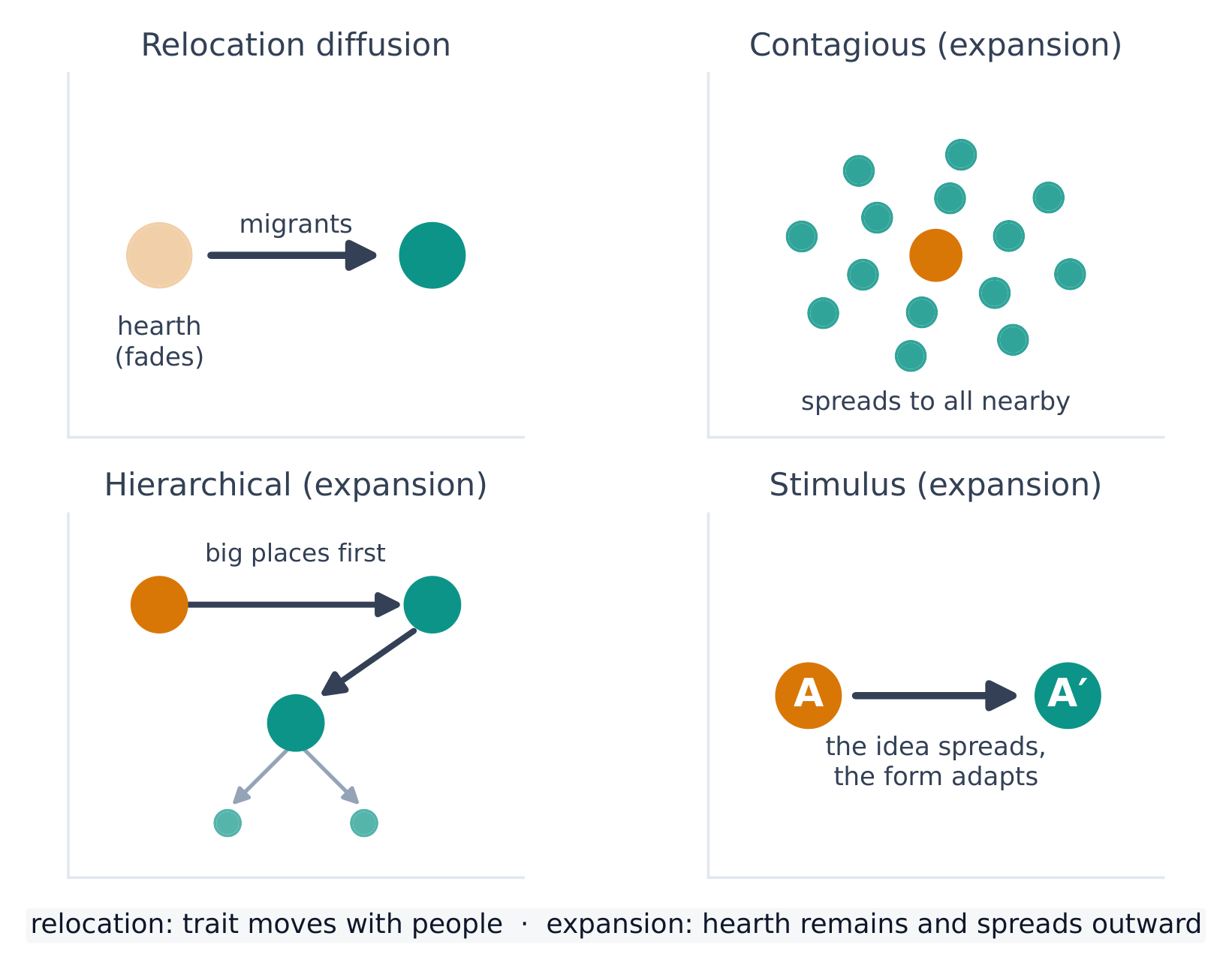
Diffusion 扩散 is the spread of a cultural trait from its hearth 源地 (place of origin) to new areas. There are two big families.

  • Relocation diffusion 迁移扩散 — the trait moves as people migrate, so it appears in the new place but may fade at the source.
  • Expansion diffusion 扩展扩散 — the trait spreads outward while staying strong at the source. It has three types:
    • Contagious 传染扩散 — spreads person-to-person to nearby people (like a viral video).
    • Hierarchical 等级扩散 — jumps from big, important places to other big places first (a fashion from major cities).
    • Stimulus 刺激扩散 — the underlying idea spreads even if the exact trait changes (a global brand adapting its menu locally).
日本語
四つの拡散の種類

拡散とは、文化的特徴がその発祥地(起源の場所)から新しい地域へ広まることである。大きく二つのファミリーがある。

移住拡散と拡張拡散(伝染型、階層型、刺激型)
移転拡散は移民と共に移動し、拡大拡散は発祥地に残りながら外側へ広がる
  • 移転拡散 — 特徴が人々が移住するに伴って移動するため、新しい場所には現れるが、発祥地では薄れることがある。
  • 拡大拡散 — 特徴が発祥地で強く残ったまま外側へ広がる。三つの種類がある:
    • 感染型 — 個人から個人へ、近所の人々へ広がる( viral video のようなもの)。
    • 階層的 — 大きい重要な場所からまず他の大きい場所へ飛び跳ねる(主要都市からのファッション)。
    • 刺激型 — exact trait が変化しても、基礎となる idea が広がる(グローバルブランドが現地のメニューに適応すること)。
Explore · ⁨探索⁩

Which type of diffusion is it? · ⁨どのような拡散か?⁩

Relocation diffusion moves with migrants; contagious spreads to everyone nearby; hierarchical jumps between big places; stimulus spreads the idea while the form changes. · ⁨移動拡散は移民と一緒に移動する;伝染的拡散は近所の人々すべてに広がる;階層的拡散は大きな場所間で飛び移る;刺激拡散は理念を広げながら形態を変える。⁩

Vocabulary · ⁨語彙⁩ Train · ⁨練習する⁩
English 日本語
Diffusion/dɪˈfjuːʒn/ 拡散
hearth/hɑːθ/ 発祥地
Relocation diffusion/rɪləʊˈkeɪʃn dɪˈfjuːʒn/ 移住拡散
Expansion diffusion/ekˈspænʃn dɪˈfjuːʒn/ 拡張拡散
Contagious/kənˈteɪdʒəs/ 伝染的
Hierarchical/haɪəˈrɑːkɪkl/ 階層的
Stimulus/ˈstɪmjʊləs/ 刺激型
colonialism/ˈkɒləʊnɪəlɪzəm/ 植民地主義 (colonialism)
imperialism/ɪmˈpɪərɪəlɪzəm/ 帝国主義
globalisation/ˌɡləʊbəlaɪˈzeɪʃn/ グローバル化
Universalising religions/ˌjuːnɪˈvɜːsəlaɪzɪŋ rɪˈlɪdʒnz/ 普遍化宗教
Ethnic religions/ˈeθnɪk rɪˈlɪdʒnz/ 民族宗教
language families/ˈlæŋɡwɪdʒ ˈfæmɪliz/ 言語ファミリー
dialects/ˈdaɪəlekts/ 方言
Cultural convergence/ˈkʌltʃərəl kənˈvɜːdʒəns/ 文化的同調
Cultural divergence/ˈkʌltʃərəl daɪˈvɜːdʒəns/ 文化的分化
3.5 3.6

Causes of Diffusion · ⁨拡散の原因⁩

Syllabus · ⁨シラバス⁩
English

Enduring Understanding (SPS-3): Cultural ideas, practices, and innovations change or disappear over time.

Learning Objective SPS-3.A: Explain how historical processes impact current cultural patterns.

  • SPS-3.A.1 Interactions between and among cultural traits and larger global forces can lead to new forms of cultural expression; for example, creolization and lingua franca.
  • SPS-3.A.2 Colonialism, imperialism, and trade helped to shape patterns and practices of culture.
日本語

持続的理解 (SPS-3): 文化的理念、実践、革新は時とともに変化したり消失したりする。

学習目標 SPS-3.A: 歴史的過程が現在の文化的パターンにどう影響するかを説明する。

  • SPS-3.A.1 文化的特性間の相互作用およびそれらがより大きな世界的要因と絡み合うことは、新しい文化的表現の形をもたらす;例えばクレオール化やリンガ・フランカなど。
  • SPS-3.A.2 植民地主義、帝国主義、貿易は文化のパターンと実践の形成に寄与した。
English

Enduring Understanding (SPS-3): Cultural ideas, practices, and innovations change or disappear over time.

Learning Objective SPS-3.A: Explain how historical processes impact current cultural patterns.

  • SPS-3.A.3 Cultural ideas and practices are socially constructed and change through both small-scale and large-scale processes such as urbanization and globalization. These processes come to bear on culture through media, technological change, politics, economics, and social relationships.
  • SPS-3.A.4 Communication technologies, such as the internet and the time-space convergence, are reshaping and accelerating interactions among people; changing cultural practices, as in the increasing use of English and the loss of indigenous languages; and creating cultural convergence and divergence.
日本語

持続的理解 (SPS-3): 文化的理念、実践、革新は時とともに変化したり消失したりする。

学習目標 SPS-3.A: 歴史的過程が現在の文化的パターンにどう影響するかを説明する。

  • SPS-3.A.3 文化的理念と実践は社会的に構築されており、都市化やグローバル化のような小規模かつ大規模なプロセスを通じて変化する。これらのプロセスはメディア、技術的変化、政治、経済、社会的関係を通じて文化に影響を与える。
  • SPS-3.A.4 インターネットや時空収束などのコミュニケーション技術は、人々の相互作用を再編成して加速させ、文化的実践を変化させている(英語の使用増加や先住民言語の喪失など)、また文化的同質化と多様化を生み出している。

Source: College Board AP Course and Exam Description · ⁨出典: College Board AP コースおよび試験説明書⁩

English

Diffusion has both historical and contemporary causes.

  • Historical: colonialism 殖民主义, imperialism 帝国主义, trade, and the spread of religion carried culture across the world for centuries.
  • Contemporary: globalisation 全球化, the internet, transport, and time–space compression speed diffusion up enormously — a trend can now spread worldwide in hours.

These forces can spread culture but also threaten local traditions, raising debates about a global culture versus local identity.

日本語

拡散には歴史的かつ现代的な原因がある。

  • 歴史的:植民地主義、帝国主義、貿易、そして宗教の普及により、数世紀にわたり文化が世界中に伝播された。
  • 现代的:グローバリゼーション、インターネット、交通、そして時間・空間圧縮により拡散が劇的に加速している —趋势は現在数時間で全世界に広がることができる。

これらの力は文化を広げる一方で、地元の伝統を脅かすこともあり、世界的な文化 versus 地元のアイデンティティに関する議論を生んでいる。

3.7

Diffusion of Religion and Language · ⁨宗教と言語の拡散⁩

Syllabus · ⁨シラバス⁩
English

Enduring Understanding (IMP-3): The interaction of people contributes to the spread of cultural practices.

Learning Objective IMP-3.B: Explain what factors lead to the diffusion of universalizing and ethnic religions.

  • IMP-3.B.1 Language families, languages, dialects, world religions, ethnic cultures, and gender roles diffuse from cultural hearths.
  • IMP-3.B.2 Diffusion of language families, including Indo-European, and religious patterns and distributions can be visually represented on maps, in charts and toponyms, and in other representations.
  • IMP-3.B.3 Religions have distinct places of origin from which they diffused to other locations through different processes. Practices and belief systems impacted how widespread the religion diffused.
  • IMP-3.B.4 Universalizing religions, including Christianity, Islam, Buddhism, and Sikhism, are spread through expansion and relocation diffusion.
  • IMP-3.B.5 Ethnic religions, including Hinduism and Judaism, are generally found near the hearth or spread through relocation diffusion.
日本語

持続的理解 (IMP-3): 人々の相互作用が文化的実践の拡散に寄与する。

学習目標 IMP-3.B: 普遍化宗教と民族宗教の拡散につながる要因を説明する。

  • IMP-3.B.1 言語家族、言語、方言、世界宗教、民族文化、性別役割は文化発祥地から拡散する。
  • IMP-3.B.2 インド・ヨーロッパ語族を含む言語家族の拡散、および宗教のパターンと分布は、地図、チャート、地名、その他表現方法によって視覚的に表される。
  • IMP-3.B.3 宗教には異なる起源の場所があり、そこから異なるプロセスを通じて他の地域へ拡散した。実践や信仰体系は宗教の普及範囲に影響を与えた。
  • IMP-3.B.4 キリスト教、イスラム教、仏教、シク教を含む普遍化宗教は、拡大拡散と移住拡散によって広まった。
  • IMP-3.B.5 ヒンドゥー教やユダヤ教を含む民族宗教は、一般的に発祥地の近くに見られるか、移住拡散によって広がった。

Source: College Board AP Course and Exam Description · ⁨出典: College Board AP コースおよび試験説明書⁩

English

Religions and languages are the two clearest examples of cultural diffusion.

  • Universalising religions 普世宗教 (Christianity, Islam, Buddhism) actively seek converts and spread widely by expansion and relocation diffusion. Ethnic religions 民族宗教 (Hinduism, Judaism) are tied to one group and spread mainly by relocation.
  • Languages belong to language families 语系; they spread with migration and trade, and can split into dialects 方言 or die out as speakers switch to a dominant language.
日本語

宗教と言語は文化的拡散の最も明らかな二つの例である。

  • 普遍宗教(キリスト教、イスラム教、仏教)は積極的な信者獲得を目指し、拡大拡散と移転拡散によって広く広がる。民族宗教(ヒンドゥー教、ユダヤ教)は特定の集団に結びつき、主に移転拡散によって広がる。
  • 言語は言語家族に属し、移民や交易とともに広まり、話者が支配的な言語に切り替えることで方言に分かれるか、消滅する。
3.8

Effects of Diffusion · ⁨拡散の影響⁩

Syllabus · ⁨シラバス⁩
English

Enduring Understanding (SPS-3): Cultural ideas, practices, and innovations change or disappear over time.

Learning Objective SPS-3.B: Explain how the process of diffusion results in changes to the cultural landscape.

  • SPS-3.B.1 Acculturation, assimilation, syncretism, and multiculturalism are effects of the diffusion of culture.
日本語

持続的理解 (SPS-3): 文化的理念、実践、革新は時とともに変化したり消失したりする。

学習目標 SPS-3.B: 拡散のプロセスが文化景観の変化をもたらすことを説明する。

  • SPS-3.B.1 異文化適応、同化、折衷主義、多文化主義は文化拡散の結果である。

Source: College Board AP Course and Exam Description · ⁨出典: College Board AP コースおよび試験説明書⁩

English

When cultures spread and meet, several outcomes follow:

  • Cultural convergence 文化趋同 — cultures become more alike as they share traits (global brands, English online).
  • Cultural divergence 文化分化 — a culture becomes more distinct, often to resist outside influence.
  • Diffusion can enrich a place with new food, music, and ideas, but can also erode local languages and traditions — a central tension of a globalising world.
日本語

文化が広まり出会うと、いくつかの結果が生じます:

  • 文化的同化(収束) — 共通の特性を共有することで文化がより似通う(グローバルブランド、オンラインでの英語使用など)。
  • 文化的分化 — 外部からの影響に抵抗するため、文化がより独自性を帯びる。
  • 拡散は新しい食料、音楽、アイデアによって場所を豊かにする一方で、地元の言語や伝統を損なうこともある。これはグローバル化された世界における中心的な緊張関係である。
3.8

Exam tips · ⁨試験対策⁩

English
  • Distinguish relocation diffusion (people move) from expansion diffusion (the idea spreads and stays at its source).
  • Name the expansion sub-type precisely: contagious, hierarchical, or stimulus.
  • Separate universalizing religions (seek converts) from ethnic religions (spread mainly by birth).
  • Use the cultural landscape — architecture, toponyms, sequent occupance — as evidence of past groups.
  • For effects, keep acculturation, assimilation, and syncretism distinct; they are not the same.
日本語
  • 移住拡散(人々の移動)と拡大拡散(考えが広がり、発生源に残る)を区別する。
  • 拡大拡散のサブタイプを正確に名指す:伝染的、階層的、または刺激。
  • 信者獲得を目指す普遍宗教と、主に出生によって広がる民族宗教を区別する。
  • 過去の集団の証拠として文化的景観 — 建築、地名、後続居住 — を用いる。
  • 影響について、適応、同化、折衷主義を明確に区別する;これらは同じではない。

Interactive lessons on this topic · ⁨このトピックのインタラクティブ授業⁩

Work through it step by step, with instant-check exercises. · ⁨一歩ずつ進め、即時チェック付きの問題で学習します。⁩

Past Papers · ⁨過去問⁩

More topics in AP Human Geography · ⁨AP 人文地理学⁩ · ⁨AP Human Geography · ⁨AP 人文地理学⁩ の他のトピック⁩

Log in or create account · ⁨ログインまたはアカウント作成⁩

IGCSE, A-Level & AP