English
This topic pulls the macroeconomics together: the goals a government has, how they clash, and how well its tools work.
日本語
このトピックはマクロ経済全体を統合します:政府が掲げる目標、それらがぶつかり合う点、そして政策ツールの有効性についてです。
A-Level Economics · Aレベル経済学 · Topic 10 · トピック 10
 7:13
7:13
政府によるマクロ経済的介入(A Level)
このような建物の内部で、小さな委員会が開かれ、単一の数字——利率——を変更します。何も建設されず、何も購入されません。しかし数日以内に…
English narration · English + 中文 subtitles burned in · 英語ナレーション・英語+中文字幕 burning-in
This topic pulls the macroeconomics together: the goals a government has, how they clash, and how well its tools work.
このトピックはマクロ経済全体を統合します:政府が掲げる目標、それらがぶつかり合う点、そして政策ツールの有効性についてです。
Source: Cambridge International syllabus · 出典: Cambridge International シラバス
Governments aim at several macroeconomic objectives 宏观经济目标 at once:
| Objective | How it is measured |
|---|---|
| economic growth 经济增长 | the % change in real GDP |
| price stability 物价稳定 (low inflation 通货膨胀) | the % change in the consumer price index |
| full employment 充分就业 | the unemployment rate |
| balance of payments 国际收支 stability | the current account balance |
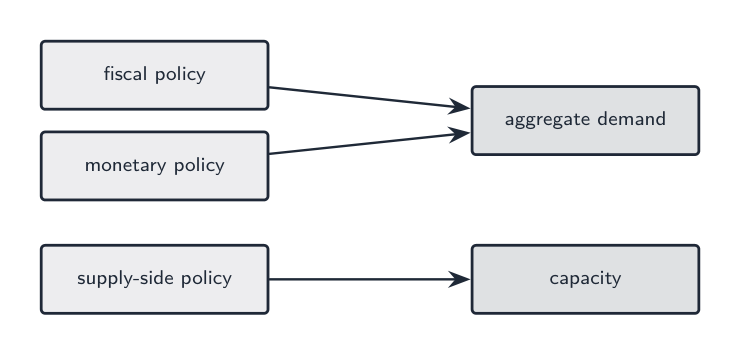
To reach these goals, the government uses three sets of tools:
Fiscal and monetary policy mainly work on aggregate demand 总需求, so they are quick but can cause inflation. Supply-side policy works on capacity, so it is slow but lasting.
政府は同時に複数のマクロ経済目標を目指します:

| 目標 | 測定方法 |
|---|---|
| 経済成長 | 実質GDPの変化率 |
| 価格安定(低いインフレ) | 消費者物価指数の変化率 |
| 完全雇用 | 失業率 |
| 国際収支の安定 | 経常収支残高 |
これらの目標を達成するため、政府は三種類のツールを使用します:
財政政策と金融政策は主に総需要に影響を与えるため、即効性がありますが、インフレを引き起こす可能性があります。一方、供給側政策は生产能力に影響を与えるため、効果発現は遅いものの持続的です。

Classify policy examples by the macroeconomic objective they target. · マクロ経済目標に対応する政策例を分類せよ。

Source: Cambridge International syllabus · 出典: Cambridge International シラバス
The objectives are interrelated — reaching one can move another. Often there is a trade-off 取舍, a conflict 冲突 where gaining on one goal costs you on another.
Because the goals are linked, a government must often accept "second best" on one aim to protect another. A clever policy mix tries to ease the trade-offs — for example, supply-side policy can raise growth and lower inflation, easing the usual clash.
目標は互いに関連しており、一つの目標を達成すると別の目標も変動します。一般的にトレードオフや対立が存在し、ある目標で利益を得ることは他の目標でコストを生むことを意味します。
目標が相互に関連しているため、政府はしばしば一つの目的に対して「第二最佳」を受け入れ、他の目標を守らなければなりません。賢明な政策ミックスはトレードオフを緩和しようとします。例えば、供給側政策は成長を促すと同時にインフレを抑えることができ、通常の対立を和らげます。
Classify policy examples by the macroeconomic objective they target. · マクロ経済目標に対応する政策例を分類せよ。
| English | 日本語 |
|---|---|
| macroeconomic objectives/ˌmækrəˌriːkəˈnɒmɪk ɒbˈdʒektɪvz/ | マクロ経済目標 |
| economic growth/ˌiːkəˈnɒmɪk ɡrəʊθ/ | 経済成長である |
| price stability/praɪs stəˈbɪlɪti/ | 価格安定 |
| inflation/ɪnˈfleɪʃn/ | インフレ |
| full employment/fʊl emˈplɔɪmənt/ | 完全雇用 |
| balance of payments/ˈbæləns ɒv ˈpeɪmənts/ | 国際収支 |
| fiscal policy/ˈfɪskl ˈpɒlɪsi/ | 財政政策 |
| monetary policy/ˈmʌnɪtəri ˈpɒlɪsi/ | 金融政策 |
| interest rate/ˈɪntrest reɪt/ | 金利 |
| supply-side policy/səˈplaɪ saɪd ˈpɒlɪsi/ | 供給側政策 |
| aggregate demand/ˈæɡrɪɡeɪt dɪˈmænd/ | 総需要 |
| trade-off/treɪd ɒf/ | トレードオフ |
| conflict/ˈkɒnflɪkt/ | 矛盾する |
| Phillips curve/ˈfɪlɪps kɜːv/ | フィリップス曲線 |
| time lags/taɪm læɡz/ | 時遅れ |
| national debt/ˈnæʃənl det/ | 国債 |

Source: Cambridge International syllabus · 出典: Cambridge International シラバス
Each tool has strengths and weaknesses.
It can act directly and powerfully on demand, and it can target particular groups or regions. But:
The Laffer curve 拉弗曲线 is a useful warning. It shows that as the tax rate rises, tax revenue 税收收入 first rises but then falls: very high rates discourage work and encourage tax avoidance, so revenue drops. There is a tax rate that raises the most revenue, and going above it is self-defeating.
It is flexible — the interest rate can be changed at any time. But it also works with a long time lag, and in a deep slump even very low rates may fail to make worried firms and households borrow.
It is the only tool that can raise growth and lower inflation together, with no trade-off. But it is slow (education and training take years), it is costly, and some measures (like cutting benefits) can widen inequality.
No single policy can hit every target. The objectives conflict, the effects come with delays, and the future is uncertain. So governments usually combine demand-side policies 需求侧政策 (fiscal and monetary) for the short term with supply-side policy for the long term, and accept that some goals must be traded against others.
Worked example. A government cuts interest rates to reduce unemployment. Which other objective is put at risk, and why? Lower rates make borrowing cheaper and saving less attractive, so consumption and investment rise: aggregate demand rises, output rises, and unemployment falls. But that same rise in demand pulls prices up, especially as the economy nears full capacity - so the objective at risk is low inflation. This is the classic Phillips curve trade-off: lower unemployment bought at the price of higher inflation. It also tends to worsen the current account, because richer consumers buy more imports. Name the objective at risk and the mechanism joining the two - and remember that a supply-side policy is the one tool that can improve both objectives at once, which is usually the evaluation the question is fishing for.
各ツールには強みと弱みがあります。
需要に直接かつ強力に作用でき、特定の集団や地域に焦点を当てることができます。しかし:
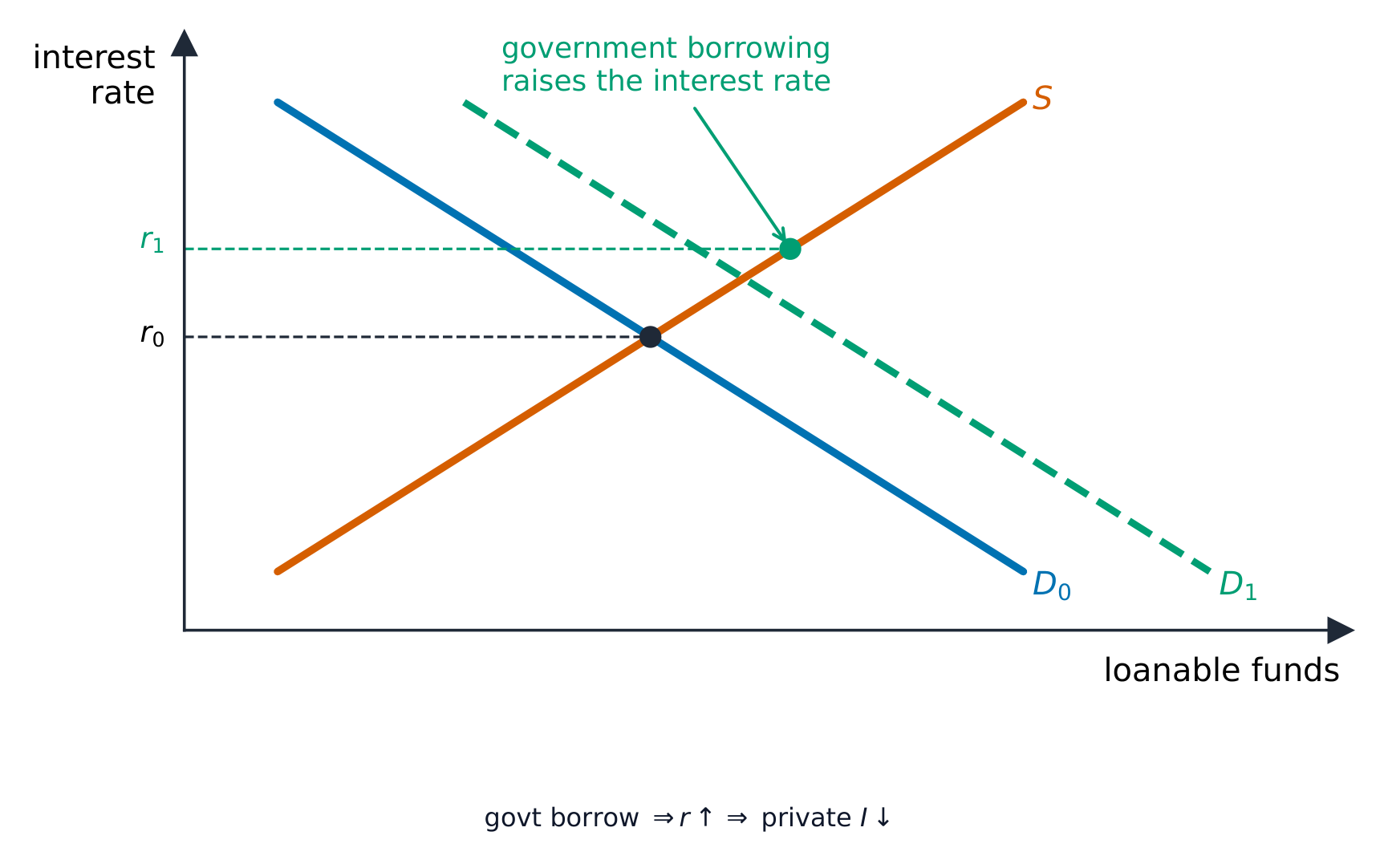
ラッファー曲線は有用な警告です。税率の上昇に伴い、税収は一旦増加しますが、その後減少することを示しています。非常に高い税率は労働意欲を低下させ、節税を促進するため、税収が落ち込みます。最大税収をもたらす税率が存在し、それを超えると逆に税収が減ってしまうのです。
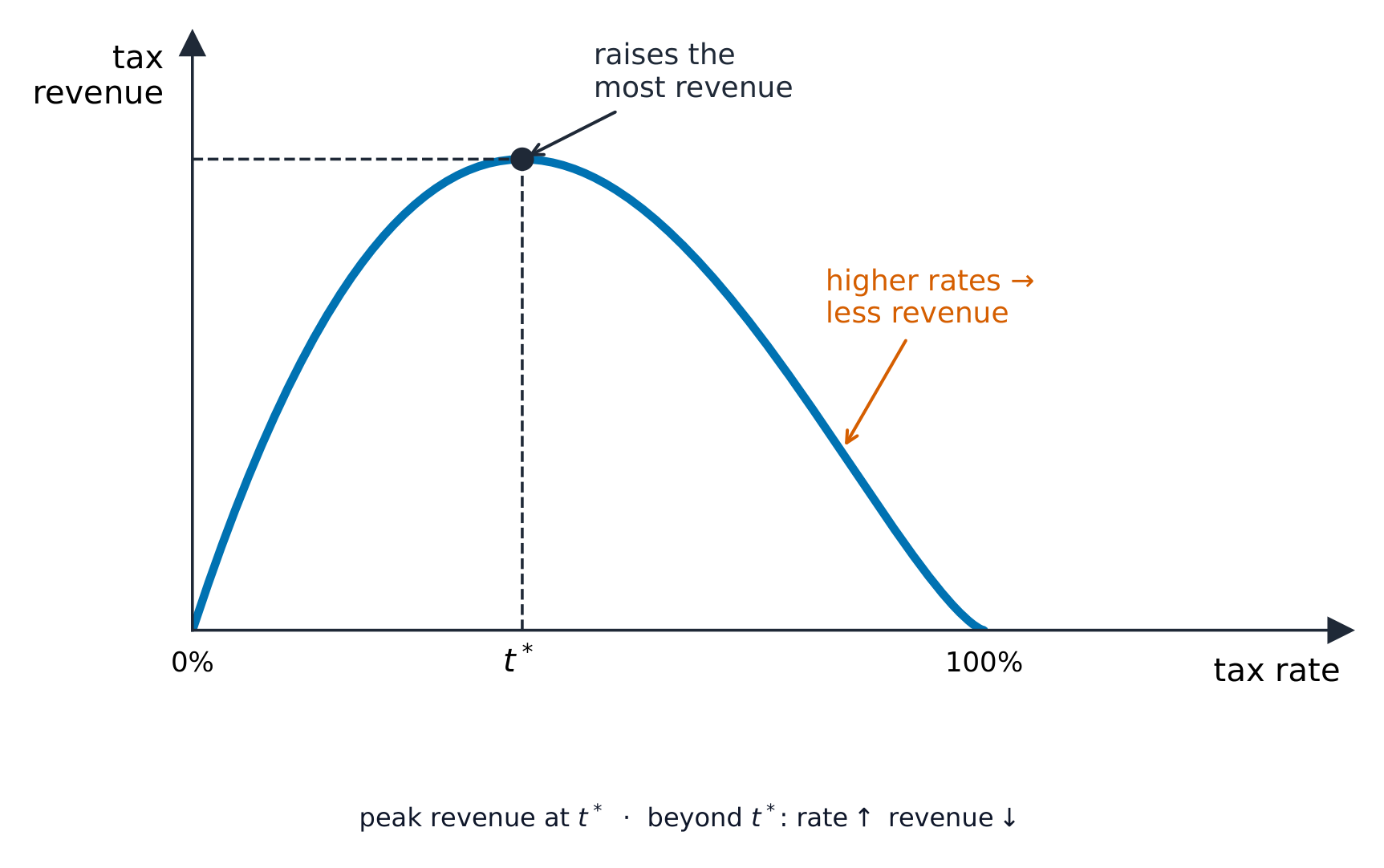
柔軟性があり、いつでも金利を変更できます。しかし、タイムラグも長く、深刻な景気後退期には極めて低い金利であっても、不安な企業や家計が借り入れを行わない場合があります。
成長を促しつつインフレを抑える唯一のツールであり、トレードオフがありません。しかし、教育や訓練に数年かかるため遅く、費用もかかり、給付金の削減などの措置は格差を拡大させる可能性があります。
一つの政策で全てのターゲットを達成することはできません。目標は対立しており、効果には遅延が生じ、未来は不確実です。そのため、政府は通常、短期には需要側政策(財政政策と金融政策)を組み合わせ、長期には供給側政策を採用し、一部の目標は他の目標と引き換えに接受することになります。
計算例。 政府が金利を下げ、失業率を減らそうとする。他の目標はどれがリスクにさらされ、なぜか? 利子率が下がると借入は安くなり、貯蓄の魅力は薄れるため、消費と投資が増加する:総需要が上昇し、生産量も増え、失業率は下がる。しかし、その同じ需要の増加は物価を引き上げる。特に経済が満 capacity に近づくとこの傾向が顕著になるため、リスクにある目標は低インフレである。これは古典的なフィリップス曲線のトレードオフであり、より高いインフレという代償でより低い失業率を実現するものである。また、豊かになった消費者が輸入品を更多に購入するため、経常収支が悪化する傾向もある。リスクにある目標と両者を結びつけるメカニズムの名前を答えよ。なお、供給側政策だけが両方の目標を同時に改善できる唯一の手段であることを思い出し、これが問われている評価(evaluation)の要点であることに注意せよ。
Classify real examples by the economic idea they show. · 經濟の概念を示す実例を分類せよ。
| English | 日本語 |
|---|---|
| crowding out/ˈkraʊdɪŋ aʊt/ | crowding out(挤出效应) |
| Laffer curve/ˈlæfə kɜːv/ | ラッファー曲線 |
| tax revenue/tæks ˈrevənjuː/ | 税収 |
| demand-side policies/dɪˈmænd saɪd ˈpɒlɪsiz/ | 需要側政策 |
Work through it step by step, with instant-check exercises. · 一歩ずつ進め、即時チェック付きの問題で学習します。
Loading subjects… · 科目を読み込み中...