Government macroeconomic policy objectives
Introduced| English | Meaning |
|---|---|
| price stability/praɪs stəˈbɪlɪti/ | A condition in which the general price level changes slowly and predictably rather than rising or falling substantially. |
| balance of payments/ˈbæləns ɒv ˈpeɪmənts/ | A record of economic transactions between an economy's residents and the rest of the world over a period. |
| equity/ˈekwɪti/ | Fairness in the distribution of resources, opportunities or outcomes, taking relevant differences in circumstances into account. |
| trade-offs/treɪd ɒfs/ | A choice that involves giving up some benefit or objective to gain another. |
Juggling four balls at once
- A finance minister can rarely fix everything at once: chase growth and inflation creeps up; tame inflation and jobs are lost.
- Real policy is about prioritising among competing objectives — and accepting that hitting one may mean missing another.
Macro objective lab
Classify policy examples by the macroeconomic objective they target.
Which set best lists the main macroeconomic objectives?
Difficulty 1/5 · 100 coins + a small bonus on first completion today
These four (plus equity and the environment) are the standard objectives.
The objectives, recapped
- Growth, low unemployment, price stability 物价稳定, and a sound balance of payments 国际收支 — plus equity 公平 and the environment.
- At any moment, a government weighs which matters most given the state of the economy.

Central banks, such as the European Central Bank, are a main tool of macroeconomic policy
In a deep recession, a government would most likely prioritise:
Difficulty 1/5 · 100 coins + a small bonus on first completion today
When output and jobs are falling, reviving growth and employment comes first.
Pursuing faster growth can conflict with controlling inflation.
Difficulty 1/5 · 100 coins + a small bonus on first completion today
A booming economy can overheat, pushing up prices — a classic conflict.
Match each objective pair to the conflict between them.
Difficulty 2/5 · 140 coins + a small bonus on first completion today
Improving one objective often worsens another.
Why they conflict
- Growth vs inflation/BoP: a boom can overheat prices and suck in imports.
- Inflation vs unemployment: cooling inflation with high rates can raise joblessness.
- Growth vs environment: faster output can mean more pollution.

The main macroeconomic objectives often pull against each other, so hitting one can mean missing another
Priorities shift with the cycle. In a recession, governments prioritise growth and jobs; when inflation is high, they switch to price stability — the same objectives, reordered.
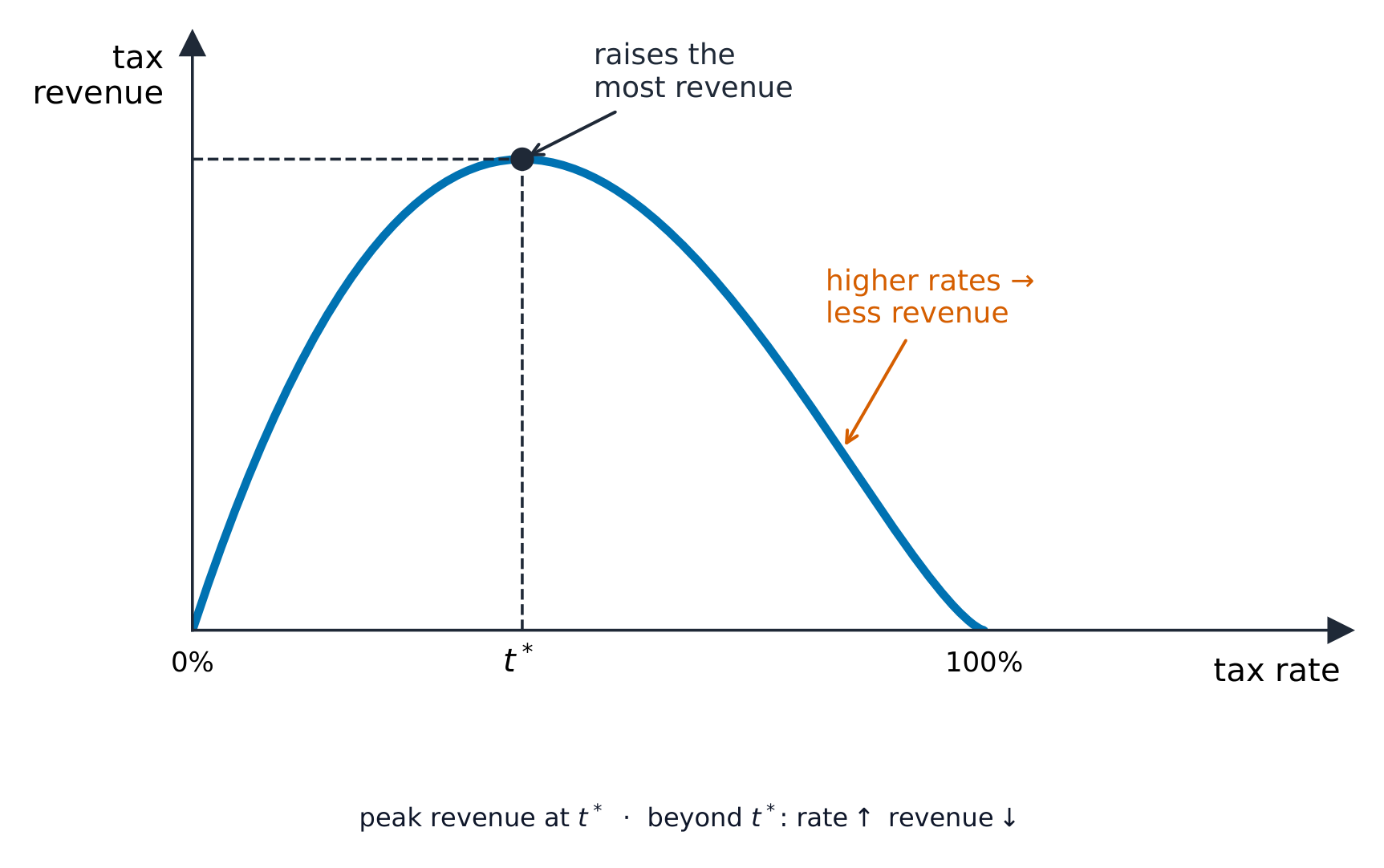
The Laffer curve
Because objectives conflict, policy always involves making ______.
Difficulty 1/5 · 100 coins + a small bonus on first completion today
No policy improves every objective at once.
Making the trade-offs 权衡取舍
- Good policy states the objective, picks the tool best suited to it, and accepts the cost to other objectives.
- There is no policy that improves everything at once — economics is the study of these trade-offs.
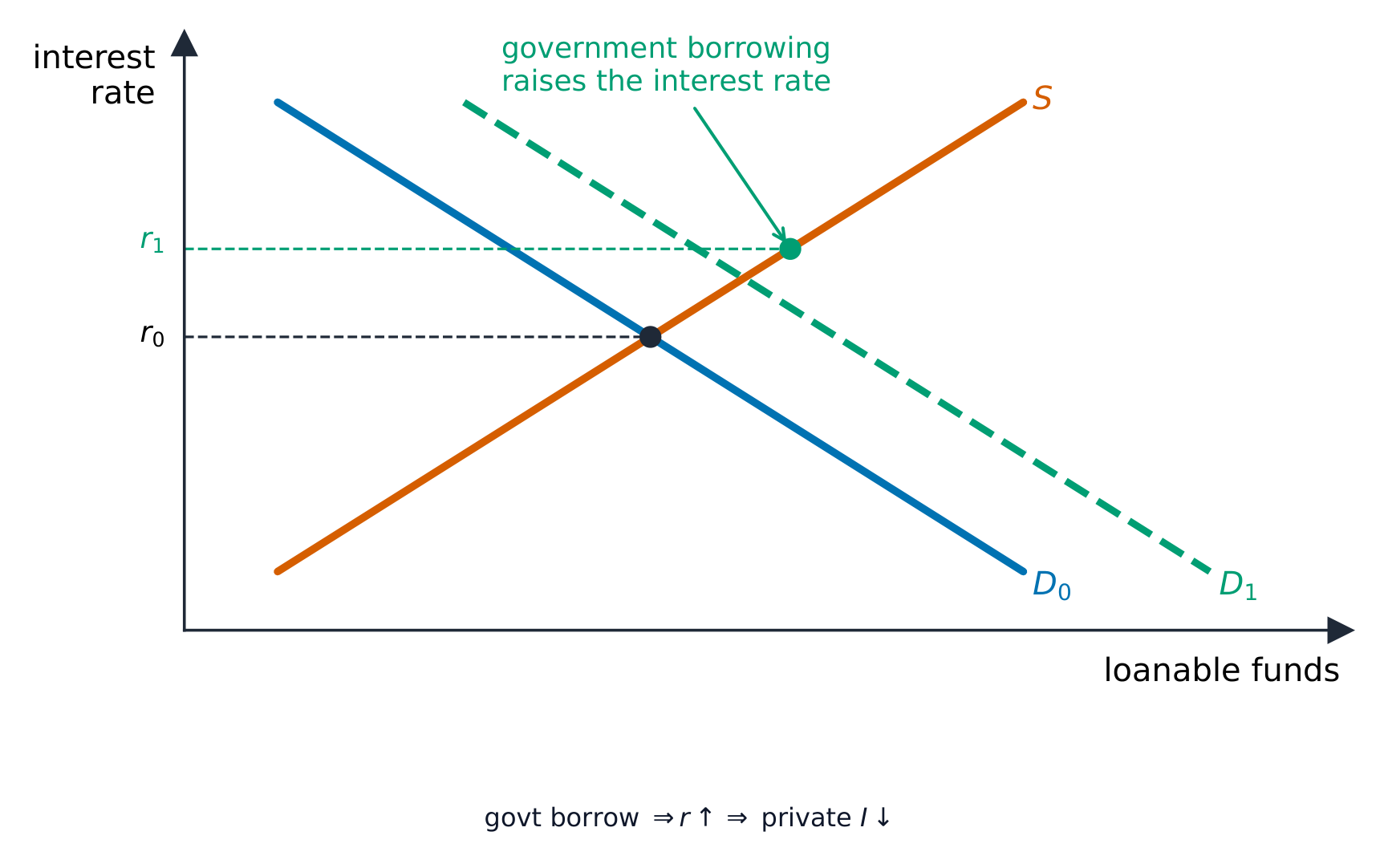
Government borrowing raises interest rates and crowds out private investment
You've got it
- objectives: growth, low unemployment, price stability, balance of payments (+ equity, environment)
- they conflict (growth vs inflation; inflation vs unemployment; growth vs environment)
- policy means prioritising and accepting trade-offs, reordered as the economy changes