Skip to content · ⁨Lompat ke konten⁩

Industrialization and Its Effects, c. 1815 to c. 1914 · ⁨Industrialisasi dan Dampaknya, c. 1815 hingga c. 1914⁩

AP European History · ⁨AP Sejarah Eropa⁩ · Topic 6 · ⁨Topik 6⁩

Video lesson for this topic · ⁨Pelajaran video untuk topik ini⁩ Open the video page · ⁨Buka halaman video⁩
9:15

Unit 6: Industrialisasi dan Dampaknya

Satu klaim menjadi tulang punggung unit ini. Revolusi politik dan komplikasi industrialisasi memicu serangkaian ideologi, pemerintahan, dan…

English narration · English + 中文 subtitles burned in · ⁨Narasi bahasa Inggris · Subtitle bahasa Inggris + 中文 disematkan langsung⁩

6.1

Contextualizing Industrialization · ⁨Mengkontekstualisasikan Industrialisasi⁩

Syllabus · ⁨Silabus⁩
English

6.1 Contextualizing Industrialization and Its Origins and Effects

Learning Objective Unit 6.A: Explain the context in which industrialization originated, developed, and spread in Europe.

  • KC-3.1 The Industrial Revolution spread from Great Britain to the continent, where the state played a greater role in promoting industry.
    • KC-3.1.I Great Britain established its industrial dominance through the mechanization of textile production, iron and steel production, and new transportation systems in conjunction with uniquely favorable political and social climates.
    • KC-3.1.II Following the British example, industrialization took root in continental Europe, sometimes with state sponsorship.
  • KC-3.2 The experiences of everyday life were shaped by industrialization, depending on the level of industrial development in a particular location.
    • KC-3.2.I Industrialization promoted the development of new classes in the industrial regions of Europe.
    • KC-3.2.II Europe experienced rapid population growth and urbanization, leading to social dislocations.
    • KC-3.2.III Over time, the Industrial Revolution altered the family structure and relations for bourgeois and working-class families.
  • KC-3.3 Political revolutions and the complications resulting from industrialization triggered a range of ideological, governmental, and collective responses.
    • KC-3.3.I Ideologies developed and took root throughout society as a response to industrial and political revolutions.
    • KC-3.3.II Governments, at times based on the pressure of political or social organizations, responded to problems created or exacerbated by industrialization.
Bahasa Indonesia

6.1 Mengkontekstualisasikan Industrialisasi dan Asal-Usul serta Dampaknya

Tujuan Pembelajaran Unit 6.A: Jelaskan konteks di mana industrialisasi bermula, berkembang, dan menyebar di Eropa.

  • KC-3.1 Revolusi Industri menyebar dari Inggris Raya ke benua, di mana negara memainkan peran lebih besar dalam mempromosikan industri.
    • KC-3.1.I Inggris Raya menetapkan dominasi industrinya melalui mekanisasi produksi tekstil, produksi besi dan baja, serta sistem transportasi baru bersamaan dengan iklim politik dan sosial yang sangat menguntungkan.
    • KC-3.1.II Mengikuti contoh Inggris, industrialisasi berakar di Eropa kontinen, terkadang dengan sponsor negara.
  • KC-3.2 Pengalaman kehidupan sehari-hari dibentuk oleh industrialisasi, tergantung pada tingkat pengembangan industri di lokasi tertentu.
    • KC-3.2.I Industrialisasi mendorong perkembangan kelas-kelas baru di wilayah industri Eropa.
    • KC-3.2.II Eropa mengalami pertumbuhan populasi dan urbanisasi yang cepat, yang menyebabkan dislokasi sosial.
    • KC-3.2.III Seiring berjalannya waktu, Revolusi Industri mengubah struktur keluarga dan hubungan bagi keluarga kelas borjuis dan kelas pekerja.
  • KC-3.3 Revolusi politik dan komplikasi yang ditimbulkan oleh industrialisasi memicu berbagai respons ideologis, pemerintah, dan kolektif.
    • KC-3.3.I Ideologi berkembang dan mengakar di seluruh masyarakat sebagai respons terhadap revolusi industri dan politik.
    • KC-3.3.II Pemerintah, terkadang berdasarkan tekanan dari organisasi politik atau sosial, merespons masalah yang tercipta atau diperparah oleh industrialisasi.
Source: College Board AP Course and Exam Description · ⁨Sumber: Deskripsi Kursus dan Ujian College Board AP⁩

English

Unit 6 covers c. 1815 to c. 1914 and rests on three claims the CED states as key concepts:

  • The Industrial Revolution spread from Great Britain to the continent, where the state played a greater role in promoting industry.
  • Everyday experience was shaped by industrialisation depending on the level of industrial development in a particular location - so the answer to "what was life like" is always where, and how far along.
  • Political revolutions and the complications of industrialisation triggered a range of ideological, governmental, and collective responses.

That third claim is the unit's spine. Industrialisation created problems; the ideologies and reforms of the nineteenth century are the answers people proposed to them.

Bahasa Indonesia

Unit 6 mencakup c. 1815 hingga c. 1914 dan berlandaskan tiga klaim yang CED nyatakan sebagai konsep kunci:

  • Revolusi Industri menyebar dari Inggris ke benua, di mana negara memainkan peran lebih besar dalam mempromosikan industri.
  • Pengalaman sehari-hari dibentuk oleh industrialisasi tergantung pada tingkat perkembangan industri di lokasi tertentu - sehingga jawaban untuk "bagaimana kehidupan" selalu di mana, dan sejauh mana.
  • Revolusi politik dan komplikasi industrialisasi memicu berbagai respons ideologis, pemerintahan, dan kolektif.

Klaim ketiga inilah tulang punggung unit. Industrialisasi menciptakan masalah; ideologi dan reformasi abad kesembilan belas adalah jawaban yang diusulkan orang-orang atas masalah-masalah tersebut.

6.2

The Spread of Industry Throughout Europe · ⁨Penyebaran Industri Sepanjang Eropa⁩

Syllabus · ⁨Silabus⁩
English

6.2 The Spread of Industry Throughout Europe

Thematic Focus (ECD): Economic and Commercial Developments — Economic development, especially the development of capitalism, played an important role in Europe’s history, often having significant social, political, and cultural effects.

Learning Objective Unit 6.B: Explain the factors that influenced the development of industrialization in Europe from 1815 to 1914.

  • KC-3.1.I.A Britain’s ready supplies of coal, iron ore, and other essential raw materials promoted industrial growth.
  • KC-3.1.I Great Britain established its industrial dominance through the mechanization of textile production, iron and steel production, and new transportation systems in conjunction with uniquely favorable political and social climates.
  • KC-3.1.I.B Economic institutions and human capital such as engineers, inventors, and capitalists helped Britain lead the process of industrialization, largely through private initiative.
  • KC-3.1.I.C Britain’s parliamentary government promoted commercial and industrial interests because those interests were represented in Parliament.
  • KC-3.1.II.A France moved toward industrialization at a more gradual pace than Great Britain, with government support and with less dislocation of traditional methods of production.
  • KC-3.1.II.C A combination of factors, including geography, lack of resources, the dominance of traditional landed elites, the persistence of serfdom in some areas, and inadequate government sponsorship, accounted for eastern and southern Europe’s lag in industrial development.
  • KC-3.2.V Because of the continued existence of more primitive agricultural practices and land-owning patterns, some areas of Europe lagged in industrialization while facing famine, debt, and land shortages.

Illustrative examples:

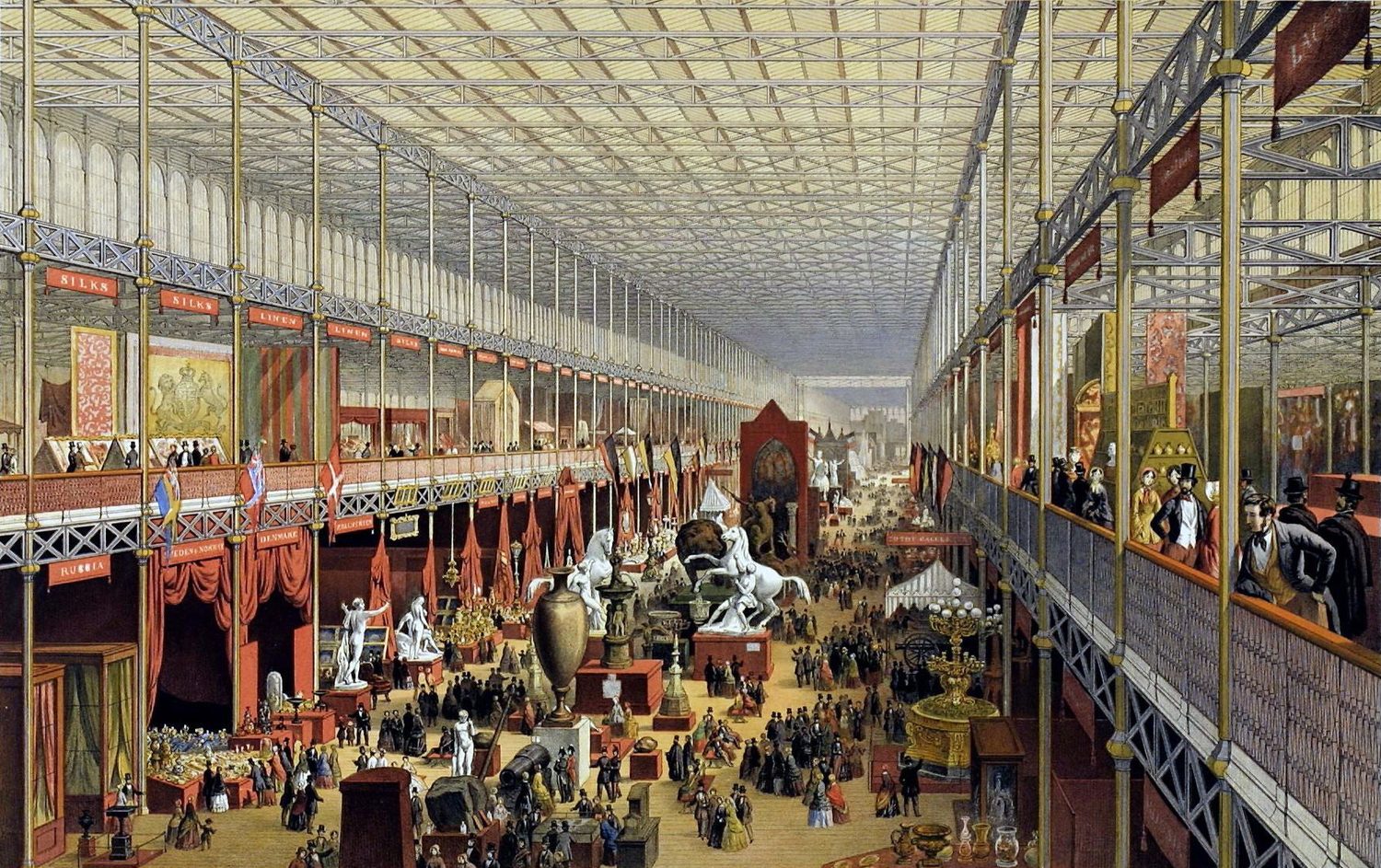
  • Britain’s leadership: §Bullet The Crystal Palace at the Great Exhibition of 1851 §Bullet Banks §Bullet Government financial awards to inventors Commercial interest in government: §Bullet Repeal of the Corn Laws Government support of industrialization: §Bullet Canals §Bullet Railroads §Bullet Trade agreements Geographic factors in eastern and southern Europe: §Bullet Lack of resources §Bullet Lack of adequate transportation Primitive agricultural practices and famines: §Bullet The “Hungry ’40s” §Bullet Irish potato famine §Bullet Russian serfdom
Bahasa Indonesia

6.2 Penyebaran Industri di Seluruh Eropa

Fokus Tematik (ECD): Pengembangan Ekonomi dan Komersial — Pengembangan ekonomi, khususnya perkembangan kapitalisme, memainkan peran penting dalam sejarah Eropa, sering kali berdampak signifikan secara sosial, politik, dan budaya.

Tujuan Pembelajaran Unit 6.B: Jelaskan faktor-faktor yang memengaruhi perkembangan industrialisasi di Eropa dari tahun 1815 hingga 1914.

  • KC-3.1.I.A Ketersediaan bahan bakar batu bara, bijih besi, dan bahan mentah penting lainnya di Inggris mendorong pertumbuhan industri.
  • KC-3.1.I Britania Raya menetapkan dominasi industrinya melalui mekanisasi produksi tekstil, produksi besi dan baja, serta sistem transportasi baru yang bersamaan dengan iklim politik dan sosial yang secara unik menguntungkan.
  • KC-3.1.I.B Lembaga ekonomi dan modal manusia seperti insinyur, penemu, dan kapitalis membantu Inggris memimpin proses industrialisasi, sebagian besar melalui inisiatif swasta.
  • KC-3.1.I.C Pemerintahan parlemen Inggris mendukung kepentingan komersial dan industri karena kepentingan tersebut diwakili dalam Parlemen.
  • KC-3.1.II.A Prancis bergerak menuju industrialisasi dengan tempo lebih lambat daripada Britania Raya, dengan dukungan pemerintah dan dengan gangguan yang lebih sedikit terhadap metode produksi tradisional.
  • KC-3.1.II.C Kombinasi faktor, termasuk geografi, kurangnya sumber daya, dominasi elit tanah tradisional, kelangsungan perbudakan di beberapa wilayah, dan sponsor pemerintah yang tidak memadai, menjelaskan keterlambatan Eropa Timur dan Selatan dalam pengembangan industri.
  • KC-3.2.V Karena kelangsungan praktik pertanian yang lebih primitif dan pola kepemilikan lahan, beberapa wilayah di Eropa tertinggal dalam industrialisasi sementara menghadapi kelaparan, utang, dan kekurangan lahan.

Contoh ilustratif:

  • Kepemimpinan Inggris: §Bullet Kerangka Kristal di Pameran Besar 1851 §Bullet Bank §Bullet Penghargaan keuangan pemerintah kepada penemu Minat komersial terhadap pemerintah: §Bullet Pembatalan Undang-Undang Jagung Dukungan pemerintah terhadap industrialisasi: §Bullet Kanal §Bullet Kereta api §Bullet Perjanjian perdagangan Faktor geografis di Eropa Timur dan Selatan: §Bullet Kurangnya sumber daya §Bullet Kurangnya transportasi yang memadai Praktik pertanian primitif dan kelaparan: §Bullet "Tahun Kelaparan '40" §Bullet Kelaparan kentang Irlandia §Bullet Perbudakan Rusia

Source: College Board AP Course and Exam Description · ⁨Sumber: Deskripsi Kursus dan Ujian College Board AP⁩

English

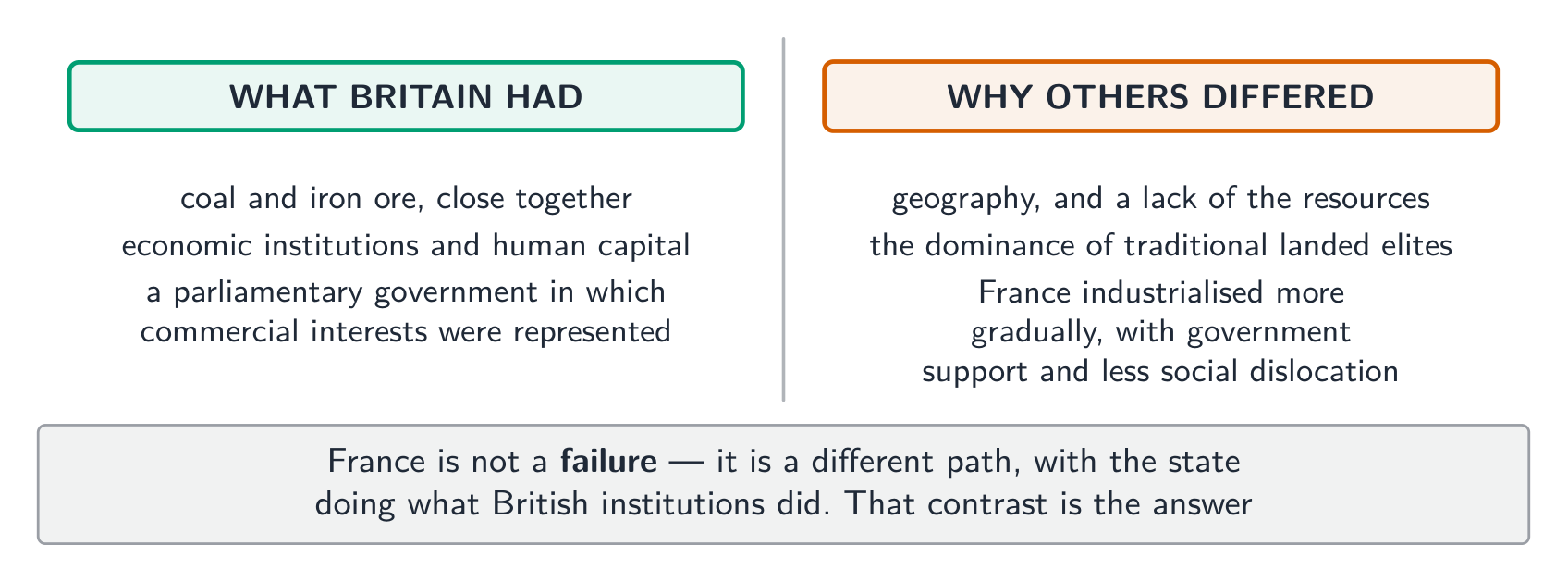
Britain led, and the CED gives the reasons as a set:

  • Ready supplies of coal, iron ore, and other raw materials.
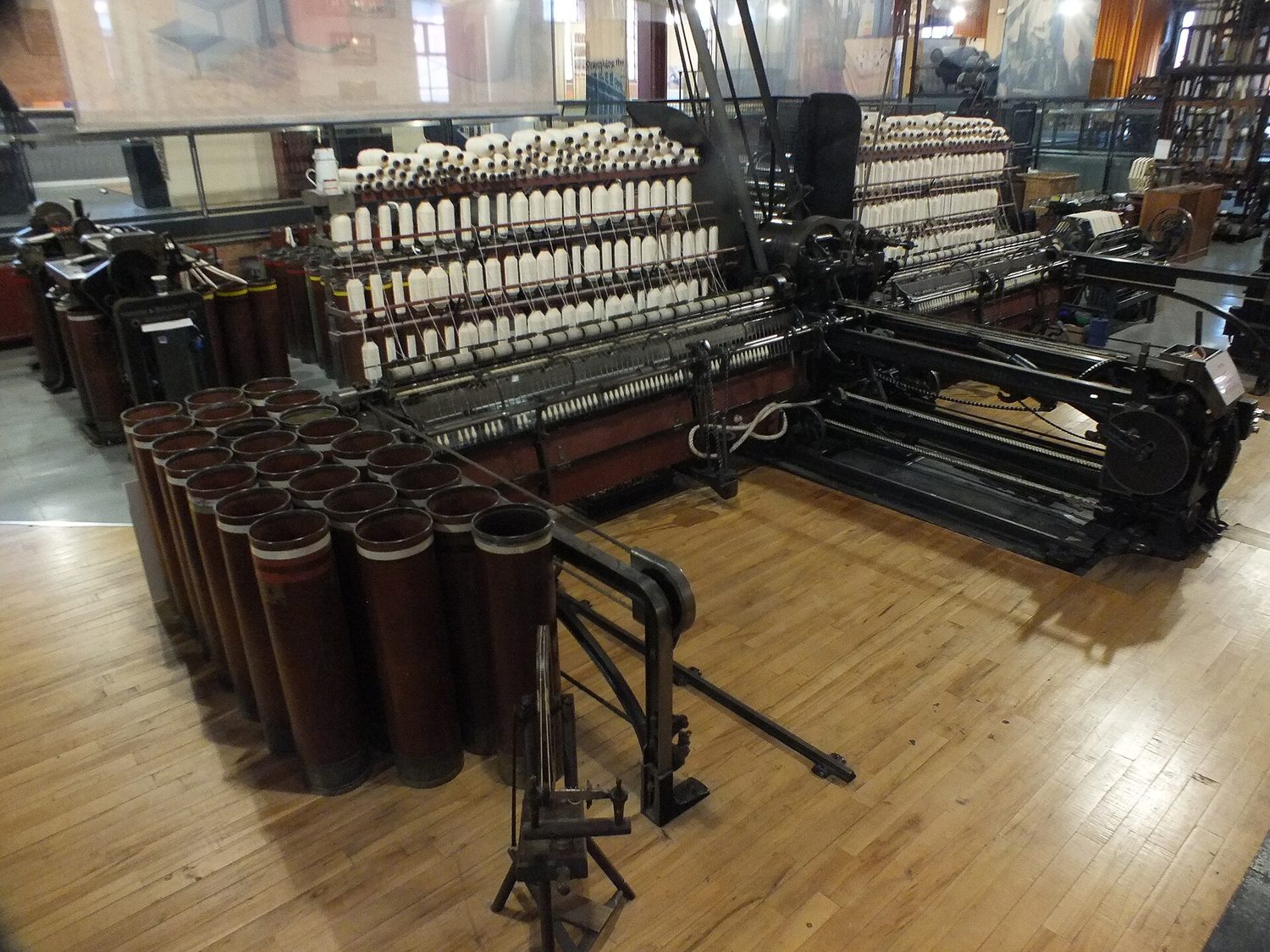
  • Mechanisation of textile production, iron and steel, and the development of machine tools.
  • Economic institutions and human capital - engineers, inventors, and capitalists.
  • A parliamentary government that promoted commercial and industrial interests because those interests were represented in Parliament - the political condition, and the one students leave out.

The continent then diverged, which is the examinable comparison:

  • France industrialised more gradually, with government support and with less social dislocation 社会失序 than Britain.
  • Elsewhere, a combination of geography, lack of resources, the dominance of traditional landed elites, and the persistence of serf-like labour relations slowed industrialisation.
  • Because more primitive agricultural practices and landholding patterns persisted, some areas of Europe lagged behind entirely.
Bahasa Indonesia

Inggris memimpin, danCED memberikan alasannya sebagai serangkaian:

  • Pasokan batu bara, bijih besi, dan bahan mentah lainnya yang siap pakai.
  • Mekanisasi produksi tekstil, besi dan baja, serta pengembangan alat mesin.
  • Institusi ekonomi dan modal manusia - insinyur, penemu, dan kapitalis.
  • Pemerintahan parlementer yang mempromosikan kepentingan komersial dan industri karena kepentingan tersebut diwakili di Parlemen - kondisi politik, dan satu yang sering dilupakan siswa.

Benua kemudian menyimpang, yang merupakan perbandingan yang diujikan:

  • Prancis mengindustrialisasi secara lebih bertahap, dengan dukungan pemerintah dan dengan gangguan sosial yang lebih sedikit dibandingkan Inggris.
  • Di tempat lain, kombinasi geografi, kurangnya sumber daya, dominasi elit tanah tradisional, dan kelangsungan hubungan kerja mirip budak memperlambat industrialisasi.
  • Karena praktik pertanian dan pola kepemilikan lahan yang lebih primitif terus berlangsung, beberapa wilayah Eropa tertinggal sepenuhnya.
Kedua sisi soal: apa yang dimiliki Inggris, dan apa yang menghambat yang lain
Spinning mule - satu mesin menggantikan pekerjaan banyak pemintal tangan
Explore · ⁨Jelajahi⁩

Sort each factor: British advantage or continental obstacle · ⁨Urutkan setiap faktor: keunggulan Inggris atau hambatan benua⁩

'Why Britain first' needs both halves. France is a different path, not a failure. · ⁨'Mengapa Inggris lebih dulu' membutuhkan kedua bagian. Prancis adalah jalur berbeda, bukan kegagalan.⁩

6.3

Second Wave Industrialization · ⁨Gelombang Industrialisasi Kedua⁩

Syllabus · ⁨Silabus⁩
English

6.3 Second Wave Industrialization and Its Effects

Thematic Focus (TSI): Technological and Scientific Innovation — Scientific and technological innovations have increased efficiency, improved daily life, and shaped human development and interactions, having both intended and unintended consequences.

Thematic Focus (ECD): Economic and Commercial Developments — Economic development, especially the development of capitalism, played an important role in Europe’s history, often having significant social, political, and cultural effects.

Learning Objective Unit 6.C: Explain how innovations and advances in technology during the Industrial Revolutions led to economic and social change.

  • KC-3.1.III.A Mechanization and the factory system became the predominant modes of production by 1914.
  • KC-3.1.III.B New technologies and means of communication and transportation—including railroads— resulted in more fully integrated national economies, a higher level of urbanization, and a truly global economic network.
  • KC-3.2.IV.B New, efficient methods of transportation and other innovations created new industries, improved the distribution of goods, increased consumerism, and enhanced quality of life.

Learning Objective Unit 6.D: Explain how industrialization influenced economic and political development throughout the period from 1815 to 1914.

  • KC-3.1.III During the second industrial revolution (c. 1870–1914), more areas of Europe experienced industrial activity, and industrial processes increased in scale and complexity.
    • KC-3.1.III.C Volatile business cycles in the last quarter of the 19th century led corporations and governments to try to manage the market through a variety of methods, including monopolies, banking practices, and tariffs.
  • KC-3.2.II.A Along with better harvests caused in part by the commercialization of agriculture, industrialization promoted population growth, longer life expectancy, and lowered infant mortality.
  • KC-3.2.IV A heightened consumerism developed as a result of the second industrial revolution.
    • KC-3.2.IV.A Industrialization and mass marketing increased both the production and demand for a new range of consumer goods— including clothing, processed foods, and labor-saving devices—and created more leisure opportunities.
    • KC-3.2.IV.A Industrialization in Prussia allowed that state to become the leader of a unified Germany, which subsequently underwent rapid industrialization under government sponsorship.

Illustrative examples:

  • Factory production: §Bullet Manchester, England §Bullet The Krupp family (Essen, Germany) New technologies: §Bullet Bessemer process §Bullet Mass production §Bullet Electricity §Bullet Chemicals Developments in communication and transportation: §Bullet Telegraph §Bullet Steamship §Bullet Streetcars or trolley cars §Bullet Telephones §Bullet Internal combustion engine §Bullet Airplane §Bullet Radio New, efficient methods of transportation and other innovations: §Bullet Steamships §Bullet Railroads §Bullet Refrigerated rail cars §Bullet Ice boxes §Bullet Streetcars §Bullet Bicycles New industries: §Bullet Chemical industry §Bullet Electricity and utilities §Bullet Automobile §Bullet Leisure travel §Bullet Professional and leisure sport (CONT’D) Mass marketing: §Bullet Advertising §Bullet Department stores §Bullet Catalogs Industrialization in Prussia: §Bullet Zollverein §Bullet Investment in transportation network §Bullet Adoption of improved methods of manufacturing §Bullet Friedrich List’s National System
Bahasa Indonesia

6.3 Gelombang Industrialisasi Kedua dan Dampaknya

Fokus Tematik (TSI): Inovasi Teknologi dan Ilmiah — Inovasi ilmiah dan teknologi telah meningkatkan efisiensi, memperbaiki kehidupan sehari-hari, dan membentuk perkembangan serta interaksi manusia, dengan konsekuensi yang disengaja maupun tidak disengaja.

Fokus Tematik (ECD): Pengembangan Ekonomi dan Komersial — Pengembangan ekonomi, khususnya perkembangan kapitalisme, memainkan peran penting dalam sejarah Eropa, sering kali berdampak signifikan secara sosial, politik, dan budaya.

Tujuan Pembelajaran Unit 6.C: Jelaskan bagaimana inovasi dan kemajuan teknologi selama Revolusi Industri menyebabkan perubahan ekonomi dan sosial.

  • KC-3.1.III.A Mekanisasi dan sistem pabrik menjadi mode produksi dominan pada tahun 1914.
  • KC-3.1.III.B Teknologi baru dan sarana komunikasi serta transportasi—termasuk kereta api—menghasilkan ekonomi nasional yang lebih terintegrasi sepenuhnya, tingkat urbanisasi yang lebih tinggi, dan jaringan ekonomi benar-benar global.
  • KC-3.2.IV.B Metode transportasi baru yang efisien dan inovasi lainnya menciptakan industri baru, meningkatkan distribusi barang, meningkatkan konsumerisme, dan meningkatkan kualitas hidup.

Tujuan Pembelajaran Unit 6.D: Jelaskan bagaimana industrialisasi memengaruhi perkembangan ekonomi dan politik sepanjang periode dari 1815 hingga 1914.

  • KC-3.1.III Selama revolusi industri kedua (c. 1870–1914), lebih banyak wilayah di Eropa mengalami aktivitas industri, dan proses industri meningkat dalam skala dan kompleksitas.
    • KC-3.1.III.C Siklus bisnis yang fluktuatif pada kuartal terakhir abad ke-19 membuat perusahaan dan pemerintah mencoba mengelola pasar melalui berbagai metode, termasuk monopoli, praktik perbankan, dan tarif.
  • KC-3.2.II.A Bersama dengan panen yang lebih baik yang disebabkan sebagian oleh komersialisasi pertanian, industrialisasi mendorong pertumbuhan populasi, harapan hidup yang lebih panjang, dan penurunan angka kematian bayi.
  • KC-3.2.IV Konsumerisme yang meningkat berkembang sebagai akibat dari revolusi industri kedua.
    • KC-3.2.IV.A Industrialisasi dan pemasaran massal meningkatkan produksi dan permintaan untuk berbagai jenis barang konsumen baru—termasuk pakaian, makanan olahan, dan perangkat penghemat tenaga kerja—serta menciptakan lebih banyak kesempatan rekreasi.
    • KC-3.2.IV.A Industrialisasi di Prusia memungkinkan negara bagian itu menjadi pemimpin Jerman yang bersatu, yang kemudian mengalami industrialisasi cepat di bawah sponsor pemerintah.

Contoh ilustratif:

  • Produksi pabrik: §Bullet Manchester, Inggris §Bullet Keluarga Krupp (Essen, Jerman) Teknologi baru: §Bullet Proses Bessemer §Bullet Produksi massal §Bullet Listrik §Bullet Kimia Perkembangan dalam komunikasi dan transportasi: §Bullet Telegraf §Bullet Kapal uap §Bullet Kereta rel atau trem §Bullet Telepon §Bullet Mesin pembakaran dalam §Bullet Pesawat terbang §Bullet Radio Metode transportasi baru yang efisien dan inovasi lainnya: §Bullet Kapal uap §Bullet Kereta api §Bullet Gerbong kereta pendingin §Bullet Kotak es §Bullet Kereta rel §Bullet Sepeda Industri baru: §Bullet Industri kimia §Bullet Listrik dan utilitas §Bullet Otomotif §Bullet Wisata rekreasi §Bullet Olahraga profesional dan rekreasi (LANJUTAN) Pemasaran massal: §Bullet Iklan §Bullet Toko departemen §Bullet Katalog Industrialisasi di Prusia: §Bullet Zollverein §Bullet Investasi dalam jaringan transportasi §Bullet Adopsi metode manufaktur yang ditingkatkan §Bullet Sistem Nasional Friedrich List

Source: College Board AP Course and Exam Description · ⁨Sumber: Deskripsi Kursus dan Ujian College Board AP⁩

English

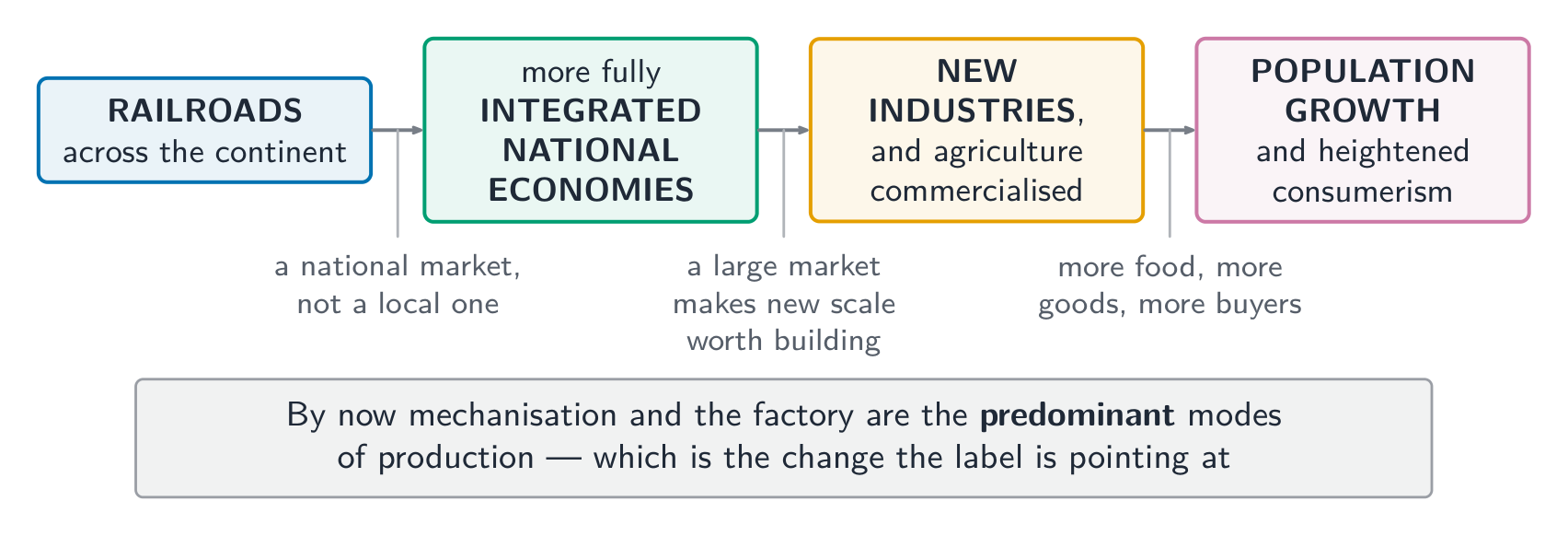
By 1914 mechanisation and the factory system had become the predominant modes of production. During the second industrial revolution 第二次工业革命 (c. 1870-1914) industrial activity spread across more of Europe, and:

  • New technologies and means of communication and transport - notably railroads 铁路 - produced more fully integrated national economies.
  • Efficient transport and other innovations created new industries and improved the distribution of goods.
  • Together with better harvests from the commercialisation of agriculture, industrialisation promoted population growth 人口增长.
  • A heightened consumerism 消费主义 developed.
Bahasa Indonesia

Pada tahun 1914 mekanisasi dan sistem pabrik telah menjadi mode produksi yang dominan. Selama revolusi industri kedua (c. 1870-1914) aktivitas industri menyebar melintasi lebih banyak bagian Eropa, dan:

  • Teknologi baru dan sarana komunikasi serta transportasi - terutama kereta api - menghasilkan ekonomi nasional yang lebih terintegrasi sepenuhnya.
  • Transportasi efisien dan inovasi lainnya menciptakan industri baru dan meningkatkan distribusi barang.
  • Bersama dengan panen yang lebih baik dari komersialisasi pertanian, industrialisasi mendorong pertumbuhan populasi.
  • Konsumerisme yang meningkat berkembang.
Gelombang kedua sebagai rantai: rel mengintegrasikan pasar, dan sisanya mengikuti
Istana Kristal, 1851 - besi dan kaca dalam skala yang hanya mungkin dicapai melalui produksi industri
6.4

Social Effects of Industrialization · ⁨Dampak Sosial Industrialisasi⁩

Syllabus · ⁨Silabus⁩
English

6.4 Social Effects of Industrialization

Thematic Focus (SCD): Social Organization and Development — Economic, political, and cultural factors have influenced the form and status of family, class, and social groups in European history, which has, in turn, affected both the individual and society.

Learning Objective Unit 6.E: Explain the causes and consequences of social developments resulting from industrialization.

  • KC-3.2.I.A In industrialized areas of Europe (i.e., western and northern Europe), socioeconomic changes created divisions of labor that led to the development of self-conscious classes, including the proletariat and the bourgeoisie.
  • KC-3.2.I.B In some of the less industrialized areas of Europe, the dominance of agricultural elites continued into the 20th century.
  • KC-3.2.I.C Class identity developed and was reinforced through participation in philanthropic, political, and social associations among the middle classes, and in mutual aid societies and trade unions among the working classes.
  • KC-3.2.II.B With migration from rural to urban areas in industrialized regions, cities experienced overcrowding, while affected rural areas suffered declines in available labor as well as weakened communities.
  • KC-3.2.III.A Bourgeois families became focused on the nuclear family and the cult of domesticity, with distinct gender roles for men and women.
  • KC-3.2.III.B By the end of the century, higher wages, laws restricting the labor of children and women, social welfare programs, improved diet, and increased access to birth control affected the quality of life for the working class.
  • KC-3.2.III.C Economic motivations for marriage, while still important for all classes, diminished as the middle-class notion of companionate marriage began to be adopted by the working classes.
  • KC-3.2.III.D Leisure time centered increasingly on the family or small groups, concurrent with the development of activities and spaces to use that time.

Illustrative examples:

  • Laws restricting the labor of children and women: §Bullet Factory Act of 1833 §Bullet Mines Act of 1842 §Bullet Ten Hours Act of 1847 Leisure time activities and spaces: §Bullet Parks §Bullet Sports clubs and arenas §Bullet Beaches §Bullet Department stores §Bullet Museums §Bullet Theaters §Bullet Opera houses
Bahasa Indonesia

6.4 Dampak Sosial Industrialisasi

Fokus Tematik (SCD): Organisasi Sosial dan Pembangunan — Faktor ekonomi, politik, dan budaya telah memengaruhi bentuk dan status keluarga, kelas, dan kelompok sosial dalam sejarah Eropa, yang pada gilirannya memengaruhi individu maupun masyarakat.

Tujuan Pembelajaran Unit 6.E: Jelaskan penyebab dan konsekuensi dari perkembangan sosial yang timbul akibat industrialisasi.

  • KC-3.2.I.A Di wilayah Eropa yang terindustrialisasi (yaitu, Eropa barat dan utara), perubahan sosioekonomi menciptakan pembagian kerja yang mengarah pada pembentukan kelas-kelas yang sadar diri, termasuk proletariat dan borjuis.
  • KC-3.2.I.B Di beberapa wilayah Eropa yang kurang terindustrialisasi, dominasi elit agraris berlanjut hingga abad ke-20.
  • KC-3.2.I.C Identitas kelas berkembang dan diperkuat melalui partisipasi dalam asosiasi filantropis, politik, dan sosial di kalangan kelas menengah, serta dalam organisasi saling bantu dan serikat buruh di kalangan kelas pekerja.
  • KC-3.2.II.B Dengan migrasi dari daerah pedesaan ke perkotaan di wilayah terindustrialisasi, kota mengalami kepadatan penduduk, sementara daerah pedesaan yang terkena dampak mengalami penurunan tenaga kerja yang tersedia serta melemahnya komunitas.
  • KC-3.2.III.A Keluarga borjuis mulai berfokus pada keluarga inti dan kultus domestikasi, dengan peran gender yang berbeda untuk pria dan wanita.
  • KC-3.2.III.B Pada akhir abad tersebut, upah yang lebih tinggi, undang-undang yang membatasi pekerjaan anak-anak dan wanita, program kesejahteraan sosial, perbaikan gizi, dan peningkatan akses terhadap kontrasepsi memengaruhi kualitas hidup kelas pekerja.
  • KC-3.2.III.C Motivasi ekonomi untuk menikah, meskipun masih penting bagi semua kelas, berkurang karena gagasan kelas menengah tentang pernikahan kompanionat mulai diadopsi oleh kelas pekerja.
  • KC-3.2.III.D Waktu luang semakin berpusat pada keluarga atau kelompok kecil, seiring dengan berkembangnya aktivitas dan ruang untuk memanfaatkan waktu tersebut.

Contoh ilustratif:

  • Undang-undang yang membatasi pekerjaan anak-anak dan wanita: §Bullet Undang-Undang Pabrik 1833 §Bullet Undang-Undang Tambang 1842 §Bullet Undang-Undang Sepuluh Jam 1847 Aktivitas dan ruang waktu luang: §Bullet Taman §Bullet Klub olahraga dan arena §Bullet Pantai §Bullet Toko departemen §Bullet Museum §Bullet Teater §Bullet Rumah opera

Source: College Board AP Course and Exam Description · ⁨Sumber: Deskripsi Kursus dan Ujian College Board AP⁩

English
  • In industrialised western and northern Europe, socioeconomic change created divisions of labour leading to an entrepreneurial and professional middle class and an industrial working class.
  • In less industrialised areas, the dominance of agricultural elites continued into the twentieth century.
  • Class identity 阶级认同 developed and was reinforced through participation in philanthropic, political, and social associations.
  • Rural-to-urban migration produced urban overcrowding 城市拥挤 while affected rural areas suffered population loss.
  • Bourgeois families focused on the nuclear family and the cult of domesticity 家庭崇拜, with distinct gender roles.
  • By the century's end, higher wages, laws restricting the labour of children and women, social welfare programmes, and improved diet raised living standards.
  • Economic motives for marriage diminished as the middle-class notion of companionate marriage 伴侣式婚姻 spread.
  • Leisure time centred increasingly on the family or small groups, with new activities and spaces built for it.
Bahasa Indonesia
  • Di Eropa Barat dan Utara yang terindustrialisasi, perubahan sosioekonomi menciptakan pembagian kerja yang mengarah pada kelas menengah wirausaha dan profesional serta kelas pekerja industri.
  • Di daerah yang kurang terindustrialisasi, dominasi elit pertanian berlanjut hingga abad kedua puluh.
  • Identitas kelas berkembang dan diperkuat melalui partisipasi dalam asosiasi filantropis, politik, dan sosial.
  • Migrasi dari pedesaan ke perkotaan menghasilkan kepadatan penduduk di kota, sementara daerah pedesaan yang terdampak mengalami kehilangan populasi.
  • Keluarga borjuis berfokus pada keluarga inti dan kultus domesticity, dengan peran gender yang berbeda.
  • Pada akhir abad tersebut, gaji yang lebih tinggi, undang-undang yang membatasi tenaga kerja anak-anak dan wanita, program kesejahteraan sosial, serta perbaikan diet meningkatkan standar hidup.
  • Motif ekonomi untuk pernikahan berkurang seiring menyebarnya gagasan kelas menengah tentang pernikahan companionship.
  • Waktu luang semakin berpusat pada keluarga atau kelompok kecil, dengan aktivitas dan ruang baru dibangun untuk tujuan tersebut.
6.5

The Concert of Europe and European Conservatism · ⁨Konser Eropa dan Konservatisme Eropa⁩

Syllabus · ⁨Silabus⁩
English

6.5 The Concert of Europe and European Conservatism

Thematic Focus (SOP): States and Other Institutions of Power — European states and nations developed governmental and civil institutions from 1450 to the present to organize society and consolidate political power, with a variety of social, cultural, and economic effects.

Learning Objective Unit 6.F: Explain how the European political order was maintained and challenged from 1815 to 1914.

  • KC-3.3.I.C Conservatives developed a new ideology in support of traditional political and religious authorities, which was based on the idea that human nature was not perfectible.
  • KC-3.4.I The Concert of Europe (or Congress System) sought to maintain the status quo through collective action and adherence to conservatism.
    • KC-3.4.I.A Metternich, architect of the Concert of Europe, used it to suppress nationalist and liberal revolutions.
    • KC-3.4.I.B Conservatives reestablished control in many European states and attempted to suppress movements for change and, in some areas, to strengthen adherence to religious authorities.

Illustrative examples:

  • Influential conservative influences: §Bullet Edmund Burke §Bullet Joseph de Maistre §Bullet Klemens von Metternich
Bahasa Indonesia

6.5 Konser Eropa dan Konservatisme Eropa

Fokus Tematik (SOP): Negara dan Institusi Kekuasaan Lainnya — Negara-negara dan bangsa-bangsa Eropa mengembangkan institusi pemerintahan dan sipil dari 1450 hingga masa kini untuk mengatur masyarakat dan mengkonsolidasikan kekuasaan politik, dengan berbagai efek sosial, budaya, dan ekonomi.

Tujuan Pembelajaran Unit 6.F: Jelaskan bagaimana tatanan politik Eropa dipertahankan dan ditantang dari tahun 1815 hingga 1914.

  • KC-3.3.I.C Para konservatif mengembangkan ideologi baru yang mendukung otoritas politik dan agama tradisional, yang didasarkan pada gagasan bahwa sifat manusia tidak dapat disempurnakan.
  • KC-3.4.I Konser Eropa (atau Sistem Kongres) berupaya mempertahankan status quo melalui tindakan kolektif dan kepatuhan terhadap konservatisme.
    • KC-3.4.I.A Metternich, arsitek Konser Eropa, menggunakannya untuk menekan revolusi nasionalis dan liberal.
    • KC-3.4.I.B Para konservatif menegakkan kembali kendali di banyak negara Eropa dan berusaha menekan gerakan perubahan, dan di beberapa wilayah, memperkuat kepatuhan terhadap otoritas agama.

Contoh ilustratif:

  • Pengaruh konservatif yang berpengaruh: §Bullet Edmund Burke §Bullet Joseph de Maistre §Bullet Klemens von Metternich

Source: College Board AP Course and Exam Description · ⁨Sumber: Deskripsi Kursus dan Ujian College Board AP⁩

English

The Concert of Europe 欧洲协调, or Congress System, sought to maintain the status quo through collective action and adherence to conservative principles.

Conservatism 保守主义 in this period is a genuine ideology, not merely resistance: it supported traditional political and religious authorities on the ground that society is an organic whole with a natural hierarchy, which cannot be redesigned by abstract reason without harm.

Bahasa Indonesia

The Concert of Europe, atau Sistem Kongres, berupaya mempertahankan status quo melalui tindakan kolektif dan adherence terhadap prinsip-prinsip konservatif.

Konservatisme pada periode ini adalah ideologi yang genuine, bukan sekadar resistance: ia mendukung otoritas politik dan agama tradisional dengan alasan bahwa masyarakat adalah organic whole dengan hierarki natural, yang tidak dapat redesigned oleh abstract reason tanpa harm.

Vocabulary · ⁨Kosa kata⁩ Train · ⁨Latih⁩
English Bahasa Indonesia
less social dislocation/les ˈsəʊʃl dɪsləʊˈkeɪʃn/ sedikit dislokasi sosial
second industrial revolution/ˈsekənd ɪnˈdʌstrɪəl ˌrevəˈluːʃn/ revolusi industri kedua
railroads/ˈreɪlrəʊdz/ rel kereta api
promoted population growth/prəˈməʊtɪd ˌpɒpjʊˈleɪʃn ɡrəʊθ/ mendorong pertumbuhan penduduk
heightened consumerism/ˈhaɪtnd kənˈsuːmərɪzəm/ konsumerisme meningkat
Class identity/klæs aɪˈdentɪti/ identitas kelas
urban overcrowding/ˈɜːbən ˌəʊvəˈkraʊdɪŋ/ overcrowding di perkotaan
cult of domesticity/kʌlt ɒv dəmɪˈstɪsɪti/ kultus domesticity
companionate marriage/kəmˈpænɪəneɪt ˈmærɪdʒ/ pernikahan kompanionate
Concert of Europe/ˈkɒnsət ɒv ˈjʊərəp/ Konser Eropa
Conservatism/kənˈsɜːvətɪzəm/ Konservatisme
revolutions of 1848/ˌrevəˈluːʃnz ɒv wɒn ˈθaʊznd ˈeɪthʌndrɪdn ˈfɔːti eɪt/ revolusi 1848
emancipation of the serfs/ɪˌmænsɪˈpeɪʃn ɒvðə sɜːfs/ pembebasan budak tanah
6.6

Reactions and Revolutions · ⁨Reaksi dan Revolusi⁩

Syllabus · ⁨Silabus⁩
English

6.6 Reactions and Revolutions

Thematic Focus (SOP): States and Other Institutions of Power — European states and nations developed governmental and civil institutions from 1450 to the present to organize society and consolidate political power, with a variety of social, cultural, and economic effects.

Learning Objective Unit 6.G: Explain how and why various groups reacted against the existing order from 1815 to 1914.

  • KC-3.4.I.C In the first half of the 19th century, revolutionaries attempted to destroy the status quo.
  • KC-3.4.I.D The revolutions of 1848, triggered by economic hardship and discontent with the political status quo, challenged conservative politicians and governments and led to the breakdown of the Concert of Europe.
  • KC-3.4.II.D In Russia, autocratic leaders pushed through a program of reform and modernization, including the emancipation of the serfs, which gave rise to revolutionary movements and eventually the Russian Revolution of 1905.

Illustrative examples:

  • Early 19th-century political revolts: §Bullet War of Greek Independence §Bullet Decembrist revolt in Russia §Bullet Polish rebellion §Bullet July Revolution in France Reformers in Russia: §Bullet Alexander II §Bullet Sergei Witte §Bullet Peter Stolypin
Bahasa Indonesia

6.6 Reaksi dan Revolusi

Fokus Tematik (SOP): Negara dan Institusi Kekuasaan Lainnya — Negara-negara dan bangsa-bangsa Eropa mengembangkan institusi pemerintahan dan sipil dari 1450 hingga masa kini untuk mengatur masyarakat dan mengkonsolidasikan kekuasaan politik, dengan berbagai efek sosial, budaya, dan ekonomi.

Tujuan Pembelajaran Unit 6.G: Jelaskan bagaimana dan mengapa berbagai kelompok bereaksi terhadap tatanan yang ada dari tahun 1815 hingga 1914.

  • KC-3.4.I.C Pada setengah pertama abad ke-19, para revolusioner mencoba menghancurkan status quo.
  • KC-3.4.I.D Revolusi tahun 1848, yang dipicu oleh kesulitan ekonomi dan ketidakpuasan terhadap status quo politik, menantang para politisi dan pemerintah konservatif serta menyebabkan runtuhnya Konser Eropa.
  • KC-3.4.II.D Di Rusia, pemimpin autokratis mendorong program reformasi dan modernisasi, termasuk pembebasan budak tanah, yang memicu gerakan revolusioner dan akhirnya Revolusi Rusia 1905.

Contoh ilustratif:

  • Pemberontakan politik awal abad ke-19: §Bullet Perang Kemerdekaan Yunani §Bullet Pemberontakan Decebrist di Rusia §Bullet Pemberontakan Polandia §Bullet Revolusi Juli di Prancis Reformator di Rusia: §Bullet Alexander II §Bullet Sergei Witte §Bullet Peter Stolypin

Source: College Board AP Course and Exam Description · ⁨Sumber: Deskripsi Kursus dan Ujian College Board AP⁩

English

In the first half of the nineteenth century, revolutionaries attempted to destroy the status quo. The revolutions of 1848 1848年革命, triggered by economic hardship and discontent with the political order, challenged conservative power across Europe - and largely failed, which is itself examinable.

In Russia, autocratic leaders pushed through reform and modernisation from above, including the emancipation of the serfs 农奴解放 - reform used as an alternative to revolution rather than a concession to it.

Bahasa Indonesia

Pada paruh pertama abad kesembilan belas, para revolusioner mencoba untuk menghancurkan tatanan yang ada. Revolusi 1848 1848, yang dipicu oleh kesulitan ekonomi dan ketidakpuasan terhadap tatanan politik, menantang kekuasaan konservatif di seluruh Eropa - dan sebagian besar gagal, yang mana itu sendiri merupakan poin yang dapat diuji.

Di Rusia, pemimpin autokratis mendorong reformasi dan modernisasi dari atas, termasuk emansipasi budak - reformasi digunakan sebagai alternative terhadap revolusi daripada concession terhadapnya.

6.7

Ideologies of Change and Reform Movements · ⁨Ideologi Perubahan dan Gerakan Reformasi⁩

Syllabus · ⁨Silabus⁩
English

6.7 Ideologies of Change and Reform Movements

Thematic Focus (CID): Cultural and Intellectual Developments — The creation and transmission of knowledge, including the relationship between traditional sources of authority and the development of differing world views, had significant political, intellectual, economic, cultural, and social effects on European and world societies.

Learning Objective Unit 6.H: Explain how and why different intellectual developments challenged the political and social order from 1815 to 1914.

  • KC-3.3.I.A Liberals emphasized popular sovereignty, individual rights, and enlightened self-interest but debated the extent to which all groups in society should actively participate in its governance.
  • KC-3.3.I.B Radicals in Britain and republicans on the continent demanded universal male suffrage and full citizenship without regard to wealth and property ownership; some argued that such rights should be extended to women.
  • KC-3.3.I.D Socialists called for the redistribution of society’s resources and wealth and evolved from a utopian to a Marxist scientific critique of capitalism.
  • KC-3.6.II.C Marx’s scientific socialism provided a systematic critique of capitalism and a deterministic analysis of society and historical evolution.
  • KC-3.3.I.E Anarchists asserted that all forms of governmental authority were unnecessary and should be overthrown and replaced with a society based on voluntary cooperation.

Illustrative examples:

  • Liberals: §Bullet Jeremy Bentham §Bullet Anti-Corn Law League §Bullet John Stuart Mill Advocates of suffrage: §Bullet Chartists §Bullet Flora Tristan Utopian socialists: §Bullet Henri de Saint-Simon §Bullet Charles Fourier §Bullet Robert Owen Marxists: §Bullet Friedrich Engels §Bullet Clara Zetkin §Bullet Rosa Luxemburg Anarchists: §Bullet Mikhail Bakunin §Bullet Georges Sorel
Bahasa Indonesia

6.7 Ideologi Perubahan dan Gerakan Reformasi

Fokus Tematik (CID): Perkembangan Budaya dan Intelektual — Penciptaan dan transmisi pengetahuan, termasuk hubungan antara sumber otoritas tradisional dan perkembangan pandangan dunia yang berbeda, memiliki dampak politik, intelektual, ekonomi, budaya, dan sosial yang signifikan bagi masyarakat Eropa dan dunia.

Tujuan Pembelajaran Unit 6.H: Jelaskan bagaimana dan mengapa perkembangan intelektual yang berbeda menantang tatanan politik dan sosial dari tahun 1815 hingga 1914.

  • KC-3.3.I.A Para liberal menekankan kedaulatan rakyat, hak-hak individu, dan kepentingan diri yang terpencahayaan tetapi mendebat sejauh mana semua kelompok dalam masyarakat harus secara aktif berpartisipasi dalam pengelolaannya.
  • KC-3.3.I.B Para radikal di Britania Raya dan republikani di benua menuntut hak suara universal untuk laki-laki dan kewarganegaraan penuh tanpa memandang kekayaan dan kepemilikan properti; beberapa berpendapat bahwa hak-hak seperti itu harus diperluas kepada perempuan.
  • KC-3.3.I.D Para sosialis menyerukan pendistribasian kembali sumber daya dan kekayaan masyarakat serta berevolusi dari kritik utopis menjadi kritik ilmiah Marxisme terhadap kapitalisme.
  • KC-3.6.II.C Sosialisme ilmiah Marx memberikan kritik sistematis terhadap kapitalisme dan analisis deterministik mengenai masyarakat serta evolusi sejarah.
  • KC-3.3.I.E Para anarkis menegaskan bahwa semua bentuk otoritas pemerintahan tidak diperlukan dan harus digulingkan, lalu diganti dengan masyarakat yang didasarkan pada kerja sama sukarela.

Contoh ilustratif:

  • Liberal: §Bullet Jeremy Bentham §Bullet Anti-Corn Law League §Bullet John Stuart Mill Advocat hak pilih: §Bullet Chartist §Bullet Flora Tristan Sosialis utopis: §Bullet Henri de Saint-Simon §Bullet Charles Fourier §Bullet Robert Owen Marxis: §Bullet Friedrich Engels §Bullet Clara Zetkin §Bullet Rosa Luxemburg Anarkis: §Bullet Mikhail Bakunin §Bullet Georges Sorel

Source: College Board AP Course and Exam Description · ⁨Sumber: Deskripsi Kursus dan Ujian College Board AP⁩

English

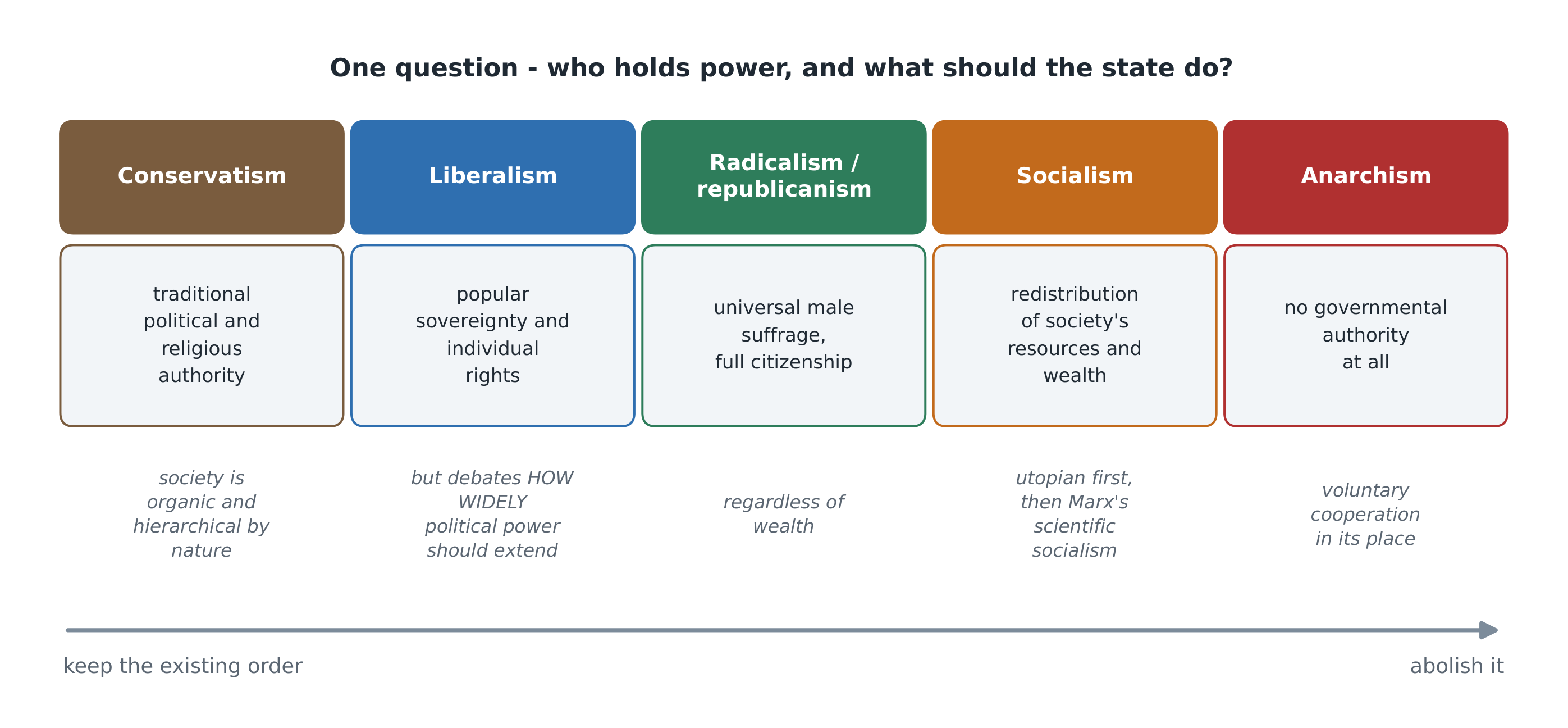
The CED names five positions, and they are best learned as answers to one question: who should hold power, and what should the state do?

  • Liberals 自由主义者 emphasised popular sovereignty, individual rights, and enlightened self-interest, but debated how far all groups should share political power.
  • Radicals in Britain and republicans on the continent demanded universal male suffrage 男性普选权 and full citizenship without regard to wealth.
  • Socialists 社会主义者 called for the redistribution of society's resources and wealth, evolving from utopian to Marxist scientific socialism.
  • Marx's scientific socialism 科学社会主义 provided a systematic critique of capitalism and a deterministic analysis of society and historical change.
  • Anarchists 无政府主义者 asserted that all forms of governmental authority were unnecessary and should be replaced by a society based on voluntary cooperation.
Bahasa Indonesia
Argumen abad tersebut, diuraikan - setiap ideologi menjawab pertanyaan yang sama dengan cara berbeda
Pertanyaan meminta Anda untuk membedakan mereka, jadi pelajari mereka sebagai set daripada satu per satu

CED menyebut lima posisi, dan mereka paling baik dipelajari sebagai jawaban atas satu pertanyaan: siapa yang seharusnya memegang kekuasaan, dan apa yang harus dilakukan negara?

  • Liberals menekankan kedaulatan rakyat, hak-hak individu, dan kepentingan diri yang terang, tetapi berdebat tentang sejauh mana semua kelompok harus berbagi kekuasaan politik.
  • Radicals di Britania Raya dan republicans di benua menuntut hak pilih universal untuk pria dan kewarganegaraan penuh tanpa regard terhadap kekayaan.
  • Socialists menyeru untuk redistribusi sumber daya dan kekayaan masyarakat, berevolusi dari utopian menuju sosialisme ilmiah Marx.
  • Sosialisme ilmiah Marx menyediakan kritik sistematis terhadap kapitalisme dan analisis deterministik mengenai masyarakat dan perubahan sejarah.
  • Anarchists menegaskan bahwa semua bentuk otoritas pemerintah tidak diperlukan dan harus digantikan oleh masyarakat berbasis voluntary cooperation.
Vocabulary · ⁨Kosa kata⁩ Train · ⁨Latih⁩
English Bahasa Indonesia
Liberals/ˈlɪbərəlz/ Liberal
universal male suffrage/ˌjuːnɪˈvɜːsl meɪl ˈsʌfrɪdʒ/ sufrase pria universal
Socialists/ˈsəʊʃəlɪsts/ Sosialis
Marx's scientific socialism/ˈmɑːksɪz saɪənˈtɪfɪk ˈsəʊʃəlɪzəm/ sosialisme ilmiah Marx
Anarchists/ˈænɑːkɪsts/ Anarkis
compulsory public education/kəmˈpʌlsəri ˈpʌblɪk ˌedʒuːˈkeɪʃn/ pendidikan publik wajib
6.8 6.9

19th-Century Social Reform and Institutional Responses · ⁨Reformasi Sosial Abad ke-19 dan Respons Institusional⁩

Syllabus · ⁨Silabus⁩
English

6.8 19th-Century Social Reform

Thematic Focus (SCD): Social Organization and Development — Economic, political, and cultural factors have influenced the form and status of family, class, and social groups in European history, which has, in turn, affected both the individual and society.

Learning Objective Unit 6.I: Explain the various movements and calls for social reform that resulted from intellectual developments from 1815 to 1914.

  • KC-3.3.III Political movements and social organizations responded to problems of industrialization.
    • KC-3.3.III.A Mass-based political parties emerged as sophisticated vehicles for social, economic, and political reform.
    • KC-3.3.III.B Workers established labor unions and movements promoting social and economic reforms that also developed into political parties.
    • KC-3.3.III.C Feminists pressed for legal, economic, and political rights for women as well as improved working conditions.
    • KC-3.3.III.D Various nongovernmental reform movements, many of them religious, assisted the poor and worked to end serfdom and slavery.

Illustrative examples:

  • Mass-based political parties: §Bullet Conservatives and Liberals in Great Britain §Bullet Conservatives and Socialists in France §Bullet Social Democratic Party in Germany Political parties representing workers: §Bullet German Social Democratic Party §Bullet British Labour Party §Bullet Russian Social Democratic Party Feminists and feminist movements: §Bullet Flora Tristan §Bullet British Women’s Social and Political Union §Bullet Pankhurst family §Bullet Barbara Smith Bodichon Reform movements and social reformers: §Bullet The Sunday School movement §Bullet The temperance movement §Bullet British abolitionist movement §Bullet Josephine Butler
Bahasa Indonesia

6.8 Reformasi Sosial Abad ke-19

Fokus Tematik (SCD): Organisasi Sosial dan Pembangunan — Faktor ekonomi, politik, dan budaya telah memengaruhi bentuk dan status keluarga, kelas, dan kelompok sosial dalam sejarah Eropa, yang pada gilirannya memengaruhi individu maupun masyarakat.

Tujuan Pembelajaran Unit 6.I: Jelaskan berbagai gerakan dan seruan untuk reformasi sosial yang muncul akibat perkembangan intelektual dari tahun 1815 hingga 1914.

  • KC-3.3.III Gerakan politik dan organisasi sosial merespons masalah-masalah yang timbul akibat industrialisasi.
    • KC-3.3.III.A Partai-partai berbasis massa muncul sebagai wahana yang canggih bagi reformasi sosial, ekonomi, dan politik.
    • KC-3.3.III.B Para pekerja mendirikan serikat buruh dan gerakan yang mendorong reformasi sosial dan ekonomi yang kemudian juga berkembang menjadi partai politik.
    • KC-3.3.III.C Para feminis mendesak agar perempuan mendapatkan hak-hak hukum, ekonomi, dan politik serta perbaikan kondisi kerja.
    • KC-3.3.III.D Berbagai gerakan reformasi nongovernmen, banyak di antaranya bersifat religius, membantu kaum miskin dan berupaya mengakhiri perbudakan dan sistem budak.

Contoh ilustratif:

  • Partai berbasis massa: §Bullet Konservatif dan Liberal di Inggris Raya §Bullet Konservatif dan Sosialis di Prancis §Bullet Partai Demokrat Sosial di Jerman Partai yang mewakili pekerja: §Bullet Partai Demokrat Sosial Jerman §Bullet Partai Buruh Britania Raya §Bullet Partai Sosial Demokrat Rusia Feminis dan gerakan feminis: §Bullet Flora Tristan §Bullet Serikat Sosial dan Politik Wanita Britania Raya §Bullet Keluarga Pankhurst §Bullet Barbara Smith Bodichon Gerakan reformasi dan pembaharu sosial: §Bullet Gerakan Sekolah Minggu §Bullet Gerakan temperansi §Bullet Gerakan penghapusan perbudakan Britania Raya §Bullet Josephine Butler
English

6.9 Institutional Responses and Reform

Thematic Focus (SOP): States and Other Institutions of Power — European states and nations developed governmental and civil institutions from 1450 to the present to organize society and consolidate political power, with a variety of social, cultural, and economic effects.

Learning Objective Unit 6.J: Explain how and why governments and other institutions responded to challenges resulting from industrialization.

  • KC-3.3.II.A Liberalism shifted from laissez-faire to interventionist economic and social policies in response to the challenges of industrialization.
  • KC-3.3.II.B Reforms transformed unhealthy and overcrowded cities by modernizing infrastructure, regulating public health, reforming prisons, and establishing modern police forces. The reforms were enacted by governments motivated by such forces as public opinion, prominent individuals, and charity organizations.
  • KC-3.3.II.C Reformers promoted compulsory public education to advance the goals of public order, nationalism, and economic growth.

Illustrative examples:

  • Modernizing infrastructure: §Bullet Sewage and water systems §Bullet Public lighting §Bullet Public housing §Bullet Urban redesign §Bullet Parks §Bullet Public transportation §Bullet Edwin Chadwick §Bullet Georges Haussmann
Bahasa Indonesia

6.9 Respons dan Reformasi Institusional

Fokus Tematik (SOP): Negara dan Institusi Kekuasaan Lainnya — Negara-negara dan bangsa-bangsa Eropa mengembangkan institusi pemerintahan dan sipil dari 1450 hingga masa kini untuk mengatur masyarakat dan mengkonsolidasikan kekuasaan politik, dengan berbagai efek sosial, budaya, dan ekonomi.

Tujuan Pembelajaran Unit 6.J: Jelaskan bagaimana dan mengapa pemerintah serta institusi lainnya merespons tantangan yang ditimbulkan oleh industrialisasi.

  • KC-3.3.II.A Liberalisme bergeser dari kebijakan ekonomi dan sosial laissez-faire menuju kebijakan intervensionis sebagai respons terhadap tantangan industrialisasi.
  • KC-3.3.II.B Reformasi mengubah kota-kota yang tidak sehat dan padat penduduk dengan memodernisasi infrastruktur, mengatur kesehatan publik, mereformasi penjara, dan membentuk kekuatan polisi modern. Reformasi ini ditetapkan oleh pemerintah yang didorong oleh faktor-faktor seperti opini publik, tokoh-tokoh terkemuka, dan organisasi amal.
  • KC-3.3.II.C Para pembaharu mendorong pendidikan publik wajib guna memajukan tujuan-tujuan ketertiban publik, nasionalisme, dan pertumbuhan ekonomi.

Contoh ilustratif:

  • Memodernisasi infrastruktur: §Bullet Sistem saluran pembuangan dan air §Bullet Penerangan umum §Bullet Perumahan publik §Bullet Desain ulang perkotaan §Bullet Taman §Bullet Transportasi publik §Bullet Edwin Chadwick §Bullet Georges Haussmann

Source: College Board AP Course and Exam Description · ⁨Sumber: Deskripsi Kursus dan Ujian College Board AP⁩

English

Political movements and social organisations responded to the problems of industrialisation. The institutional side is equally examinable:

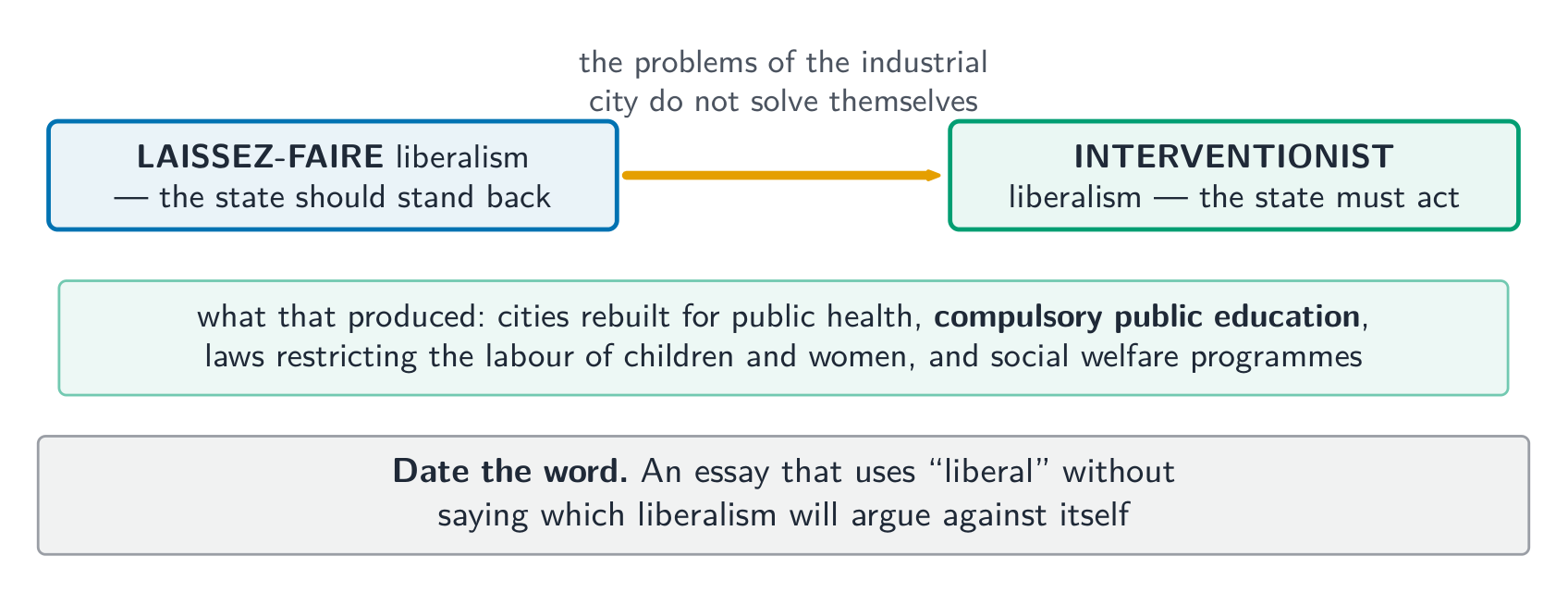
  • Liberalism shifted from laissez-faire to interventionist economic and social policies in response to industrialisation's challenges. This is the unit's most important intellectual change - the ideology that began by wanting the state out ended by using it.
  • Reforms transformed unhealthy and overcrowded cities by modernising infrastructure, regulating public health, and reforming prisons.
  • Reformers promoted compulsory public education 义务教育 to advance public order, nationalism, and economic growth. Note all three motives - the CED lists them, and none is purely benevolent.
Bahasa Indonesia

Gerakan politik dan organisasi sosial merespons masalah-masalah industrialisasi. Sisi institusional juga equally examinable:

  • Liberalisme bergeser dari laissez-faire menjadi intervensionist kebijakan ekonomi dan sosial sebagai respons terhadap tantangan industrialisasi. Ini adalah perubahan intelektual unit yang paling penting - ideologi yang dimulai dengan ingin negara keluar berakhir dengan menggunakannya.
  • Reformasi mengubah kota-kota yang tidak sehat dan padat dengan memodernisasi infrastruktur, mengatur kesehatan publik, dan mereformasi penjara.
  • Para reformator mempromosikan pendidikan publik wajib untuk memajukan ketertiban umum, nasionalisme, dan pertumbuhan ekonomi. Perhatikan ketiga motif - CED mencantumkannya, dan tidak ada yang purely benevolent.
Kata yang sama, dua kebijakan berlawanan - tentukan tanggal istilah atau esai bertentangan dengan dirinya sendiri
Explore · ⁨Jelajahi⁩

Watch liberalism change sides · ⁨Perhatikan liberalisme berganti pihak⁩

'Liberal' in 1830 and in 1900 recommend contradictory things. Date the word or the essay will argue against itself. · ⁨'Liberal' pada tahun 1830 dan 1900 merekomendasikan hal yang kontradiktif. Tentukan waktu kata tersebut atau esai akan berargumen menentang dirinya sendiri.⁩

6.10

Causation in the Age of Industrialization · ⁨Kausalitas di Era Industrialisasi⁩

Syllabus · ⁨Silabus⁩
English

6.10 Causation in the Age of Industrialization

Learning Objective Unit 6.K: Explain the influence of innovations and technological developments in Europe from 1815 to 1914.

  • KC-3.1 The Industrial Revolution spread from Great Britain to the continent, where the state played a greater role in promoting industry.
    • KC-3.1.I Great Britain established its industrial dominance through the mechanization of textile production, iron and steel production, and new transportation systems in conjunction with uniquely favorable political and social climates.
    • KC-3.1.II Following the British example, industrialization took root in continental Europe, sometimes with state sponsorship.
  • KC-3.2 The experiences of everyday life were shaped by industrialization, depending on the level of industrial development in a particular location.
    • KC-3.2.I Industrialization promoted the development of new classes in the industrial regions of Europe.
    • KC-3.2.II Europe experienced rapid population growth and urbanization, leading to social dislocations.
    • KC-3.2.III Over time, the Industrial Revolution altered the family structure and relations for bourgeois and working-class families.
  • KC-3.3 Political revolutions and the complications resulting from industrialization triggered a range of ideological, governmental, and collective responses.
    • KC-3.3.I Ideologies developed and took root throughout society as a response to industrial and political revolutions.
    • KC-3.3.II Governments, at times based on the pressure of political or social organizations, responded to problems created or exacerbated by industrialization.
Bahasa Indonesia

6.10 Kausalitas pada Zaman Industrialisasi

Tujuan Pembelajaran Unit 6.K: Jelaskan pengaruh inovasi dan perkembangan teknologi di Eropa dari tahun 1815 hingga 1914.

  • KC-3.1 Revolusi Industri menyebar dari Inggris Raya ke benua, di mana negara memainkan peran lebih besar dalam mempromosikan industri.
    • KC-3.1.I Inggris Raya menetapkan dominasi industrinya melalui mekanisasi produksi tekstil, produksi besi dan baja, serta sistem transportasi baru bersamaan dengan iklim politik dan sosial yang sangat menguntungkan.
    • KC-3.1.II Mengikuti contoh Inggris, industrialisasi berakar di Eropa kontinen, terkadang dengan sponsor negara.
  • KC-3.2 Pengalaman kehidupan sehari-hari dibentuk oleh industrialisasi, tergantung pada tingkat pengembangan industri di lokasi tertentu.
    • KC-3.2.I Industrialisasi mendorong perkembangan kelas-kelas baru di wilayah industri Eropa.
    • KC-3.2.II Eropa mengalami pertumbuhan populasi dan urbanisasi yang cepat, yang menyebabkan dislokasi sosial.
    • KC-3.2.III Seiring berjalannya waktu, Revolusi Industri mengubah struktur keluarga dan hubungan bagi keluarga kelas borjuis dan kelas pekerja.
  • KC-3.3 Revolusi politik dan komplikasi yang ditimbulkan oleh industrialisasi memicu berbagai respons ideologis, pemerintah, dan kolektif.
    • KC-3.3.I Ideologi berkembang dan mengakar di seluruh masyarakat sebagai respons terhadap revolusi industri dan politik.
    • KC-3.3.II Pemerintah, terkadang berdasarkan tekanan dari organisasi politik atau sosial, merespons masalah yang tercipta atau diperparah oleh industrialisasi.
Source: College Board AP Course and Exam Description · ⁨Sumber: Deskripsi Kursus dan Ujian College Board AP⁩

English

The unit's reasoning skill is causation.

Worked example (a real AP exam question). AP European History short-answer questions here ask, for example, to "Explain one way in which industrialisation contributed to the development of new political ideologies in the nineteenth century." A full-mark answer traces the link: "Industrialisation created a large urban working class with common conditions and no political representation, which gave socialists a constituency and an argument: that the wealth produced by industry was distributed by ownership rather than by labour. Marx's scientific socialism turned that observation into a systematic critique of capitalism, and the concentration of workers in factories and cities made organising around it possible." Notice that the answer explains why the idea found an audience, not only that it existed.

Bahasa Indonesia

Keterampilan beralasan unit ini adalah kausalitas.

Contoh kerja (soal ujian AP yang sebenarnya). Soal AP European History short-answer di sini meminta, misalnya, untuk "Jelaskan satu cara di mana industrialisasi berkontribusi terhadap pengembangan ideologi politik baru di abad kesembilan belas." Jawaban bernilai penuh melacak link: "Industrialisasi menciptakan kelas pekerja perkotaan yang besar dengan kondisi bersama dan tanpa representasi politik, yang memberikan socialist sebuah constituency dan argument: bahwa wealth yang dihasilkan oleh industri didistribusikan melalui ownership daripada melalui labour. Socialisme ilmiah Marx mengubah observasi itu menjadi kritik sistematis terhadap kapitalisme, dan konsentrasi pekerja di pabrik dan kota membuat organizing di sekitarnya menjadi mungkin." Perhatikan bahwa jawaban menjelaskan mengapa ide tersebut menemukan audiens, tidak hanya bahwa ide itu ada.

6.10

Exam tips · ⁨Tips ujian⁩

English
  • Britain's advantages include a political one - industrial interests were represented in Parliament. Most answers list only resources.
  • France industrialised gradually with state support and less dislocation. That contrast answers many comparison questions.
  • Learn the five ideologies as a set, distinguished by who holds power and what the state does.
  • Liberalism's shift from laissez-faire to intervention is the century's key ideological change. Name it.
  • Compulsory education had three motives - order, nationalism, growth. Give all three.
  • Living standards rose by the end of the century, after decades of hardship. Timing is the mark.
Bahasa Indonesia
  • Keuntungan Britania mencakup satu politik - kepentingan industri diwakili di Parlemen. Sebagian besar jawaban hanya mencantumkan resources.
  • Prancis terindustrialisasi secara bertahap dengan dukungan negara dan dislokasi yang lebih sedikit. Kontras itu menjawab banyak comparison questions.
  • Pelajari lima ideologi sebagai set, dibedakan oleh siapa yang memegang kekuasaan dan apa yang dilakukan negara.
  • Pergeseran liberalisme dari laissez-faire ke intervensi adalah perubahan ideologi utama abad ini. Sebutkan.
  • Pendidikan wajib memiliki tiga motif - ketertiban, nasionalisme, pertumbuhan. Sebutkan ketiga-tiganya.
  • Standar hidup meningkat pada akhir abad, setelah dekade-dekade penderitaan. Waktu adalah poin penilaiannya.

Interactive lessons on this topic · ⁨Pelajaran interaktif untuk topik ini⁩

Work through it step by step, with instant-check exercises. · ⁨Kerjakan langkah demi langkah, dengan latihan pengecekan instan.⁩

Past Papers · ⁨Soal-Soil Masa Lalu⁩

More topics in AP European History · ⁨AP Sejarah Eropa⁩ · ⁨Topik lain dalam AP European History · ⁨AP Sejarah Eropa⁩⁩

Log in or create account · ⁨Masuk atau buat akun⁩

IGCSE, A-Level & AP