Skip to content · ⁨Lompat ke konten⁩

Gene Expression and Regulation · ⁨Ekspresi dan Regulasi Gen⁩

AP Biology · ⁨AP Biologi⁩ · Topic 6 · ⁨Topik 6⁩

Video lesson for this topic · ⁨Pelajaran video untuk topik ini⁩ Open the video page · ⁨Buka halaman video⁩
8:40

Ekspresi dan Regulasi Gen

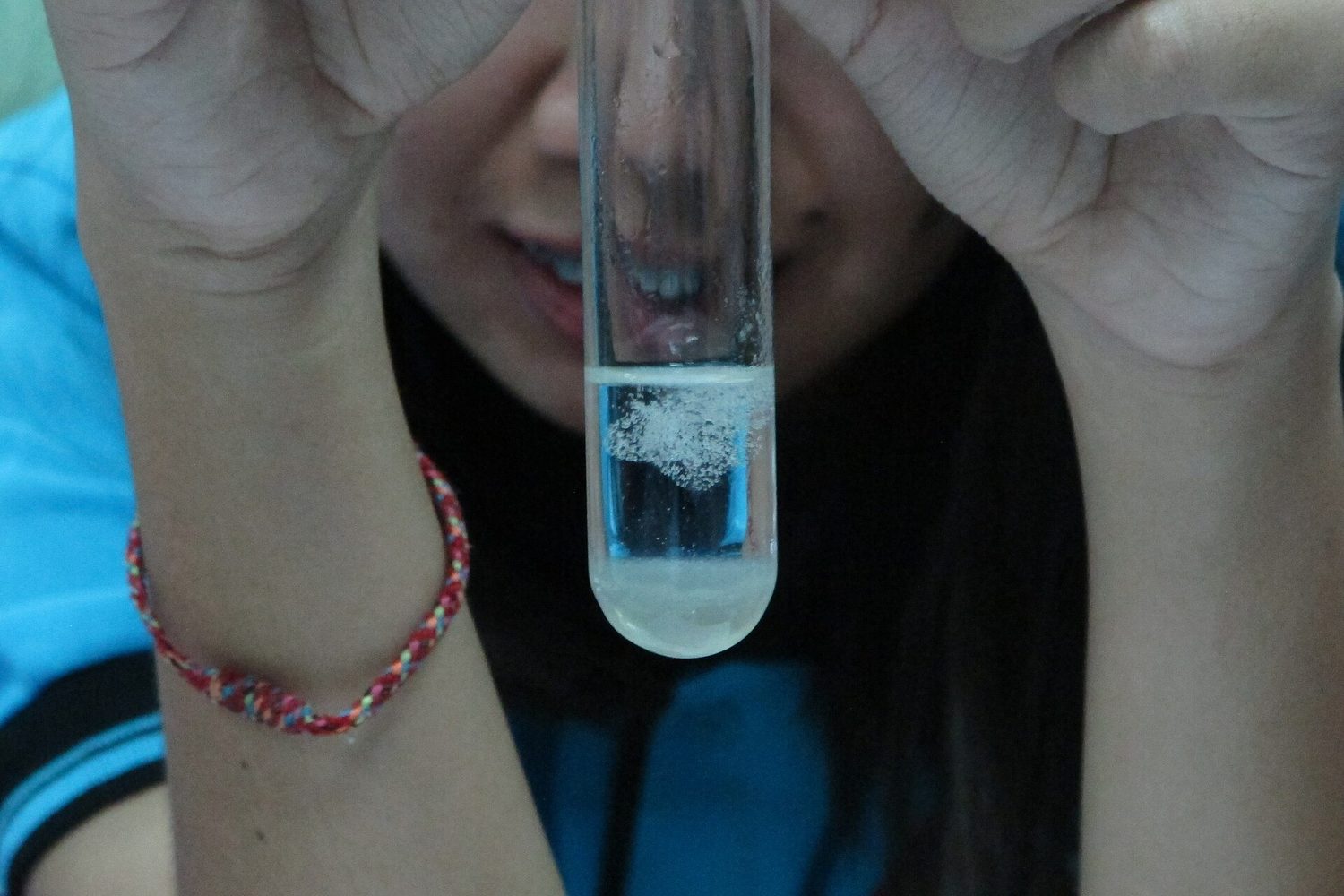
Benang putih di dalam tabung itu adalah DNA sungguhan, diambil dari sel biasa. Tampilannya seperti apa-apa. Namun, ia menyimpan setiap instruksi yang akan pernah dibutuhkan tubuh Anda.…

English narration · English + 中文 subtitles burned in · ⁨Narasi bahasa Inggris · Subtitle bahasa Inggris + 中文 disematkan langsung⁩

6.1

DNA and RNA Structure · ⁨Struktur DNA dan RNA⁩

Syllabus · ⁨Silabus⁩
English

Enduring Understanding (BIG IDEA 3 — Information Storage and Transmission): Living systems store, retrieve, transmit, and respond to information essential to life processes.

Learning Objective 6.1.A: Describe the structures involved in passing hereditary information from one generation to the next.

  • 6.1.A.1 Genetic information is stored in and passed to subsequent generations through DNA molecules and, in some cases, RNA molecules.
    • 6.1.A.1.i Prokaryotic organisms typically have circular chromosomes.
    • 6.1.A.1.ii Eukaryotic organisms typically have multiple linear chromosomes that are comprised of DNA. These chromosomes are condensed using histones and associated proteins.
  • 6.1.A.2 Prokaryotes and eukaryotes can contain plasmids, which are extra-chromosomal circular molecules of DNA.

Learning Objective 6.1.B: Describe the characteristics of DNA that allow it to be used as hereditary material.

  • 6.1.B.1 Nucleic acids exhibit specific nucleotide base pairing that is conserved through evolution.
    • 6.1.B.1.i Purines (guanine and adenine) have a double ring structure.
    • 6.1.B.1.ii Pyrimidines (cytosine, thymine, and uracil) have a single ring structure.
    • 6.1.B.1.iii Purines pair with pyrimidines: adenine with thymine (or uracil in RNA) and guanine with cytosine.
Bahasa Indonesia

Pemahaman Abadi (GAGASAN BESAR 3 — Penyimpanan dan Transmisi Informasi): Sistem hidup menyimpan, mengambil, mentransmisikan, dan merespons informasi yang penting bagi proses kehidupan.

Tujuan Pembelajaran 6.1.A: Deskripsikan struktur yang terlibat dalam pewarisan informasi genetik dari satu generasi ke generasi berikutnya.

  • 6.1.A.1 Informasi genetik disimpan dalam dan diwariskan kepada generasi berikutnya melalui molekul DNA dan, dalam beberapa kasus, molekul RNA.
    • 6.1.A.1.i Organisme prokariotik biasanya memiliki kromosom berbentuk lingkaran.
    • 6.1.A.1.ii Organisme eukariotik biasanya memiliki banyak kromosom linear yang tersusun atas DNA. Kromosom-kromosom ini dikondensasikan menggunakan histon dan protein terkait.
  • 6.1.A.2 Prokariotik dan eukariotik dapat mengandung plasmid, yaitu molekul DNA ekstra-kromosom berbentuk lingkaran.

Tujuan Pembelajaran 6.1.B: Deskripsikan karakteristik DNA yang memungkinkannya digunakan sebagai materi genetik.

  • 6.1.B.1 Asam nukleat menunjukkan pasangan basa nukleotida spesifik yang dilestarikan melalui evolusi.
    • 6.1.B.1.i Purin (guanin dan adenin) memiliki struktur cincin ganda.
    • 6.1.B.1.ii Pirimidin (sitosin, timin, dan urasil) memiliki struktur cincin tunggal.
    • 6.1.B.1.iii Purin berpasangan dengan pirimidin: adenin dengan timin (atau urasil pada RNA) dan guanin dengan sitosin.
Source: College Board AP Course and Exam Description · ⁨Sumber: Deskripsi Kursus dan Ujian College Board AP⁩

English

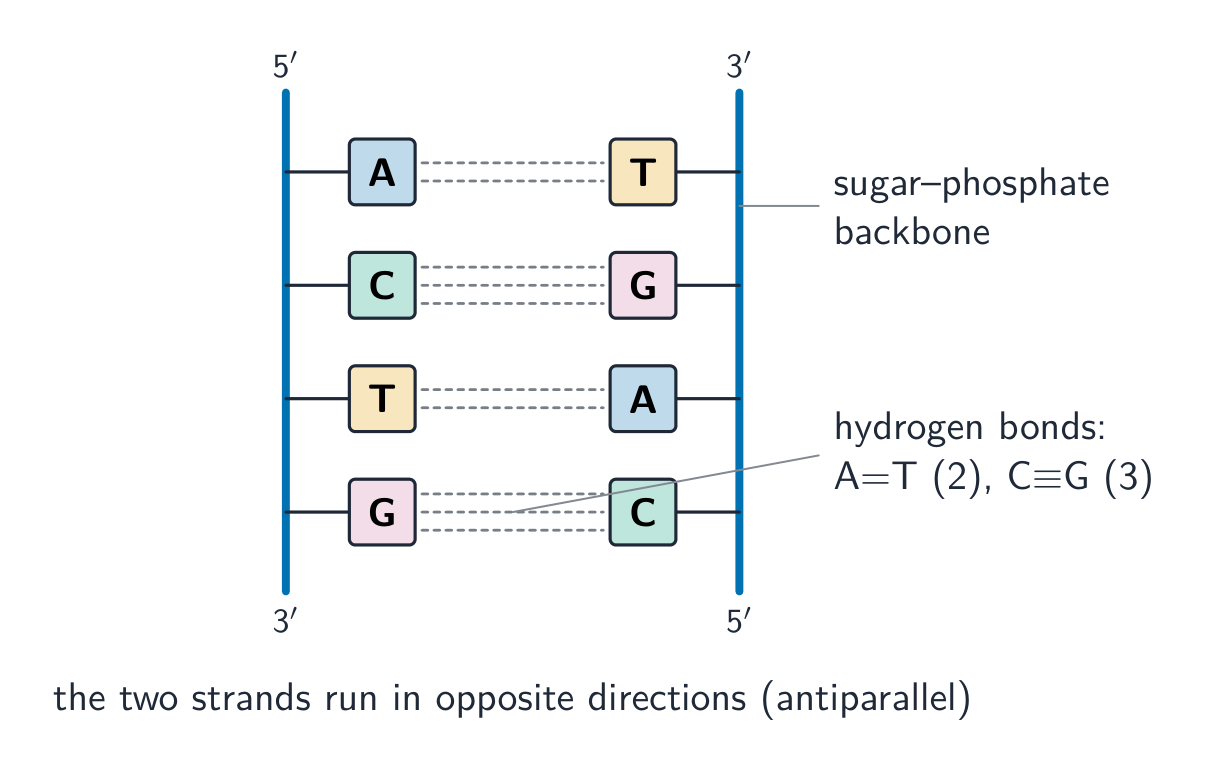
DNA carries genetic information as a double helix 双螺旋 of two strands. Its nucleotides 核苷酸 pair by rule – A with T, G with C (complementary base pairing 互补配对) – so one strand specifies the other. The strands run antiparallel 反平行. RNA is single-stranded, uses uracil (U) instead of thymine, and has ribose sugar.

How the DNA is packaged differs between the domains, and the CED asks for both.

  • Prokaryotic organisms typically have a single circular chromosome 环状染色体 in the cytoplasm, often with extra small circles called plasmids.
  • Eukaryotic organisms typically have multiple linear chromosomes 线性染色体, and each is condensed by wrapping around proteins called histones 组蛋白. That packing is what fits two metres of DNA into a nucleus a few micrometres across — and because a tightly wound region is hard for the transcription machinery to reach, the packing is itself a level of gene regulation.
Bahasa Indonesia
Memutar DNA yang mengendap dari ekstrak sel — DNA adalah molekul nyata yang terlihat

DNA membawa informasi genetik sebagai heliks ganda dua untai. Nukleotida-nya berpasang menurut aturan – A dengan T, G dengan C (pasangan basa komplementer) – sehingga satu untai menentukan untai lainnya. Untai-untai tersebut berjalan antiparalel. RNA untainya tunggal, menggunakan urasil (U) menggantikan timin, dan memiliki gula ribosa.

DNA: dua untai antiparalel yang diikat oleh pasangan basa komplementer

Cara pengemasan DNA berbeda antara domain, dan CED meminta keduanya.

  • Organisme prokariotik biasanya memiliki satu kromosom sirkular di sitoplasma, sering kali dengan lingkaran kecil tambahan yang disebut plasmid.
  • Organisme eukariotik biasanya memiliki beberapa kromosom linear, dan masing-masing dikondensasi dengan cara melilit pada protein yang disebut histon. Pengemasan inilah yang membuat dua meter DNA muat dalam inti berukuran beberapa mikrometer — dan karena wilayah yang tergulung rapat sulit dijangkau mesin transkripsi, pengemasan itu sendiri merupakan tingkat regulasi gen.
6.2

DNA Replication · ⁨Replikasi DNA⁩

Syllabus · ⁨Silabus⁩
English

Enduring Understanding (BIG IDEA 3 — Information Storage and Transmission): Living systems store, retrieve, transmit, and respond to information essential to life processes.

Learning Objective 6.2.A: Describe the mechanisms by which genetic information is copied for transmission between generations.

  • 6.2.A.1 DNA replication ensures continuity of hereditary information.
    • 6.2.A.1.i DNA is synthesized in the 5' to 3' direction.
    • 6.2.A.1.ii Replication is a semiconservative process, meaning one strand of DNA serves as the template for a new strand of complementary DNA.
    • 6.2.A.1.iii Helicase unwinds the DNA strands.
    • 6.2.A.1.iv Topoisomerase relaxes supercoiling in front of the replication fork.
    • 6.2.A.1.v DNA polymerase requires RNA primers to initiate DNA synthesis.
    • 6.2.A.1.vi DNA polymerase synthesizes new strands of DNA continuously on the leading strand and discontinuously on the lagging strand.
    • 6.2.A.1.vii Ligase joins the fragments on the lagging strand.
    • Exclusion statement: The names of the steps and particular enzymes involved, excluding DNA polymerase, ligase, RNA polymerase, helicase, and topoisomerase, are beyond the scope of the AP Exam.
Bahasa Indonesia

Pemahaman Abadi (GAGASAN BESAR 3 — Penyimpanan dan Transmisi Informasi): Sistem hidup menyimpan, mengambil, mentransmisikan, dan merespons informasi yang penting bagi proses kehidupan.

Tujuan Pembelajaran 6.2.A: Deskripsikan mekanisme penyalinan informasi genetik untuk transmisi antar generasi.

  • 6.2.A.1 Replikasi DNA memastikan kesinambungan informasi genetik.
    • 6.2.A.1.i DNA disintesis dalam arah 5' ke 3'.
    • 6.2.A.1.ii Replikasi adalah proses semikonservatif, artinya satu untai DNA berfungsi sebagai cetakan untuk untai DNA komplementer baru.
    • 6.2.A.1.iii Helikase membuka untai-untai DNA.
    • 6.2.A.1.iv Topoisomerase merilekskan superkoiling di depan garpu replikasi.
    • 6.2.A.1.v Polimerase DNA memerlukan primer RNA untuk memulai sintesis DNA.
    • 6.2.A.1.vi Polimerase DNA mensintesis untai DNA baru secara kontinu pada untai pelindung dan secara diskontinu pada untai yang tertinggal.
    • 6.2.A.1.vii Ligase menggabungkan fragmen pada untai yang tertinggal.
    • Pernyataan pengecualian: Nama-nama langkah-langkah dan enzim tertentu yang terlibat, kecuali DNA polimerase, ligase, RNA polimerase, helikase, dan topoisomerase, berada di luar cakupan Ujian AP.

Source: College Board AP Course and Exam Description · ⁨Sumber: Deskripsi Kursus dan Ujian College Board AP⁩

English

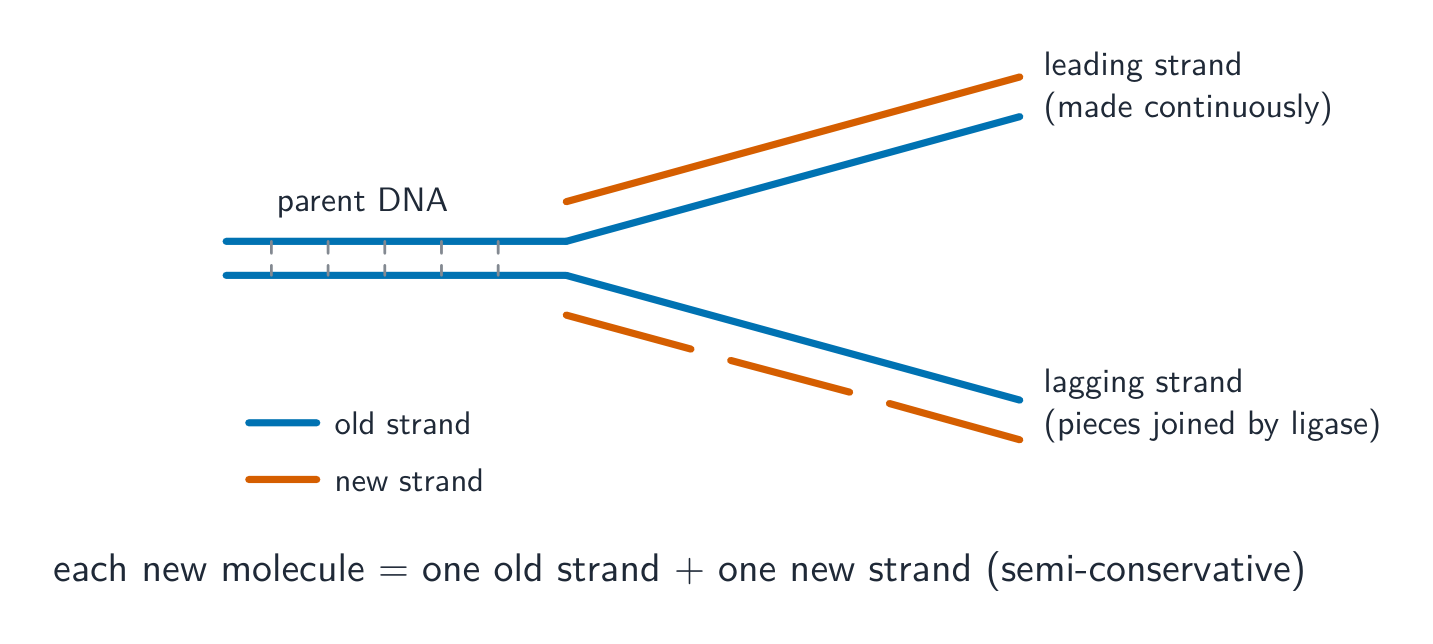
Before a cell divides, DNA is copied semiconservatively 半保留复制: the helix unwinds and each old strand templates a new one, so each daughter helix has one old and one new strand. DNA polymerase 聚合酶 adds nucleotides following base-pairing rules, building the new strand and proofreading as it goes.

Bahasa Indonesia

Sebelum sel membelah, DNA disalin secara semikonserfatif: heliks membuka dan setiap untai lama menjadi cetakan untuk untai baru, sehingga setiap heliks anak memiliki satu untai lama dan satu untai baru. DNA polimerase menambahkan nukleotida mengikuti aturan pasangan basa, membangun untai baru sambil melakukan proofreading.

Replikasi DNA semikonserfatif di garpu replikasi
6.3

Transcription and RNA Processing · ⁨Transkripsi dan Pemrosesan RNA⁩

Syllabus · ⁨Silabus⁩
English

Enduring Understanding (BIG IDEA 3 — Information Storage and Transmission): Living systems store, retrieve, transmit, and respond to information essential to life processes.

Learning Objective 6.3.A: Describe the mechanisms by which genetic information flows from DNA to RNA to protein.

  • 6.3.A.1 The sequence of the RNA bases, together with the structure of the RNA molecule, determines RNA function.
    • 6.3.A.1.i Messenger RNA (mRNA) molecules carry information from DNA in the nucleus to the ribosome in the cytoplasm.
    • 6.3.A.1.ii Distinct transfer RNA (tRNA) molecules bind specific amino acids and have anticodon sequences that base pair with the codons of mRNA. tRNA is recruited to the ribosome during translation to generate the primary peptide sequence based on the mRNA sequence.
    • 6.3.A.1.iii Ribosomal RNA (rRNA) molecules are functional building blocks of ribosomes.
  • 6.3.A.2 RNA polymerases use a single template strand of DNA to direct the inclusion of bases in the newly formed RNA molecule. This process is known as transcription.
  • 6.3.A.3 The enzyme RNA polymerase synthesizes mRNA molecules in the 5' to 3' direction by reading the template DNA strand in the 3' to 5' direction.
  • 6.3.A.4 In eukaryotic cells the mRNA transcript undergoes a series of enzyme-mediated modifications.
    • 6.3.A.4.i The addition of a poly-A tail makes mRNA more stable.
    • 6.3.A.4.ii The addition of a GTP cap helps with ribosomal recognition.
    • 6.3.A.4.iii The excision of introns, along with the splicing and retention of exons, generates different versions of the resulting mature mRNA molecule. This process is known as alternative splicing.
Bahasa Indonesia

Pemahaman Abadi (GAGASAN BESAR 3 — Penyimpanan dan Transmisi Informasi): Sistem hidup menyimpan, mengambil, mentransmisikan, dan merespons informasi yang penting bagi proses kehidupan.

Tujuan Pembelajaran 6.3.A: Deskripsikan mekanisme aliran informasi genetik dari DNA ke RNA ke protein.

  • 6.3.A.1 Urutan basa RNA, bersama dengan struktur molekul RNA, menentukan fungsi RNA.
    • 6.3.A.1.i Molekul RNA messenger (mRNA) membawa informasi dari DNA di inti sel ke ribosom di sitoplasma.
    • 6.3.A.1.ii Molekul transfer RNA (tRNA) yang berbeda mengikat asam amino spesifik dan memiliki urutan antikodon yang berpasangan basa dengan kodon mRNA. tRNA direkrut ke ribosom selama translasi untuk menghasilkan urutan peptida primer berdasarkan urutan mRNA.
    • 6.3.A.1.iii Molekul RNA ribosomal (rRNA) merupakan blok pembangun fungsional ribosom.
  • 6.3.A.2 RNA polimerase menggunakan satu untai cetakan DNA untuk mengarahkan penyisipan basa dalam molekul RNA yang baru terbentuk. Proses ini dikenal sebagai transkripsi.
  • 6.3.A.3 Enzim RNA polimerase mensintesis molekul mRNA dalam arah 5' ke 3' dengan membaca untai cetakan DNA dalam arah 3' ke 5'.
  • 6.3.A.4 Dalam sel eukariotik, transkrip mRNA mengalami serangkaian modifikasi yang dimediasi oleh enzim.
    • 6.3.A.4.i Penambahan ekor poly-A membuat mRNA lebih stabil.
    • 6.3.A.4.ii Penambahan kap GTP membantu pengenalan ribosomal.
    • 6.3.A.4.iii Eksisi intron, bersama dengan splicing dan retensi ekson, menghasilkan berbagai versi molekul mRNA matang yang dihasilkan. Proses ini dikenal sebagai splicing alternatif.

Source: College Board AP Course and Exam Description · ⁨Sumber: Deskripsi Kursus dan Ujian College Board AP⁩

English

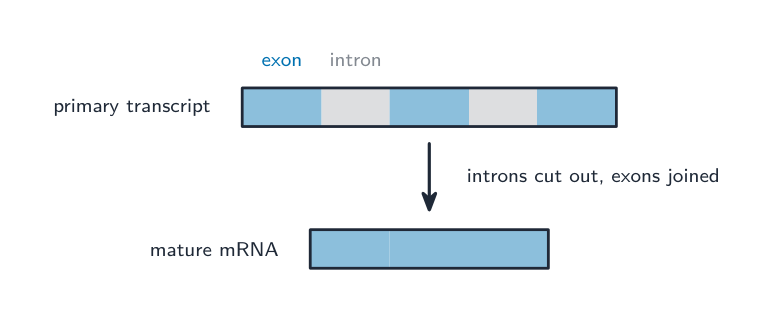
Transcription 转录 copies a gene's DNA into messenger RNA 信使RNA (mRNA). RNA polymerase reads the template strand and builds a complementary RNA. In eukaryotes the mRNA is then processed: a cap and tail are added, and introns 内含子 (non-coding parts) are spliced out, leaving the exons 外显子.

The 5′ cap added during processing is a modified guanine nucleotide — a GTP cap — and its job is recognition: it helps the ribosome recognise and bind the mRNA, as well as protecting the transcript from degradation as it leaves the nucleus.

Bahasa Indonesia

Transkripsi menyalin DNA gen menjadi messenger RNARNA (mRNA). RNA polimerase membaca untai cetakan dan membangun RNA komplementer. Pada eukariot, mRNA kemudian diproses: kap dan ekor ditambahkan, serta intron (bagian non-koding) disangkutkan keluar, menyisakan ekson.

Intron dihapus dan ekson digabungkan untuk membuat mRNA matang

Kap 5′ yang ditambahkan selama pemrosesan adalah nukleotida guanin termodifikasi — sebuah kap GTP — dan fungsinya adalah pengenalan: ia membantu ribosom mengenali dan mengikat mRNA, serta melindungi transkrip dari degradasi saat meninggalkan inti.

Explore · ⁨Jelajahi⁩

Transcribe DNA into messenger RNA · ⁨Transkripsikan DNA menjadi mRNA⁩

Transcription copies a DNA template into mRNA, pairing A→U, T→A, C→G, G→C. Step through to build the RNA strand base by base. · ⁨Transkripsi menyalin cetakan DNA menjadi mRNA, berpasangan A→U, T→A, C→G, G→C. Langkahkan untuk membangun untaian RNA basa demi basa.⁩

Vocabulary · ⁨Kosa kata⁩ Train · ⁨Latih⁩
English Bahasa Indonesia
double helix/ˈdʌbl ˈhiːlɪks/ heliks ganda
nucleotides/ˈnjuːklɪɒtaɪdz/ nukleotida
complementary base pairing/ˌkɒmplɪˈmentəri beɪs ˈpeərɪŋ/ pasangan basa komplementer
antiparallel/ˌæntɪˈpærəlel/ antiparalel
single circular chromosome/ˈsɪŋɡl ˈsɜːkjʊlə ˈkrəʊməsəʊm/ kromosom sirkular tunggal
multiple linear chromosomes/ˈmʌltɪpl ˈlɪnɪə ˈkrəʊməsəʊmz/ kromosom linear ganda
condensed by wrapping around proteins called histones/kənˈdenst baɪ ˈræpɪŋ əˈraʊnd ˈprəʊtiːnz kɔːld ˈhɪstəʊnz/ memadatkan dengan melilit pada protein yang disebut histon
semiconservatively/ˌsemɪkənˈsɜːvətɪvli/ semikonservatif
DNA polymerase/ˌdiː en ˈeɪ ˌpɒlɪməˈreɪz/ DNA polimerase
Transcription/trænˈskrɪpʃn/ Transkripsi
messenger RNA/ˈmesɪndʒə ˌɑː en ˈeɪ/ RNA messenger
introns/ɪnˈtrɒnz/ intron
exons/eɡˈzɒnz/ ekson
Translation/trænˈsleɪʃn/ Terjemahan
ribosome/ˈriːbəʊsəʊm/ ribosom
codons/ˈkəʊdɒnz/ kodons
6.4

Translation · ⁨Terjemahan⁩

Syllabus · ⁨Silabus⁩
English

Enduring Understanding (BIG IDEA 3 — Information Storage and Transmission): Living systems store, retrieve, transmit, and respond to information essential to life processes.

Learning Objective 6.4.A: Explain how the phenotype of an organism is determined by its genotype.

  • 6.4.A.1 Translation of the mRNA to generate a polypeptide occurs on ribosomes that are present in the cytoplasm of both prokaryotic and eukaryotic cells, as well as the cytoplasmic surface of the rough ER of eukaryotic cells.
  • 6.4.A.2 In prokaryotic organisms, translation of the mRNA molecule occurs while it is being transcribed.
  • 6.4.A.3 Translation involves many sequential steps, including initiation, elongation, and termination. The salient features of translation include:
    • 6.4.A.3.i Translation is initiated when the rRNA in the ribosome interacts with the mRNA at the start codon (AUG, coding for the amino acid methionine).
    • 6.4.A.3.ii The sequence of nucleotides on the mRNA is read in triplets, called codons.
    • 6.4.A.3.iii Each codon encodes a specific amino acid, which can be deduced by using a genetic code chart. Many amino acids are encoded by more than one codon.
    • 6.4.A.3.iv Nearly all living organisms use the same genetic code, which is evidence for the common ancestry of all living organisms.
    • 6.4.A.3.v tRNA brings the correct amino acid to the place specified by the codon on the mRNA.
    • 6.4.A.3.vi The amino acid is transferred to the growing polypeptide chain.
    • 6.4.A.3.vii The process continues along the mRNA until a stop codon is reached.
    • 6.4.A.3.viii Translation terminates with the release of the newly synthesized protein.
    • Exclusion statement: The details and names of the enzymes and factors involved in each of these steps are beyond the scope of the AP Exam.
    • Exclusion statement: Memorization of the genetic code, with the exception of the start codon AUG, is beyond the scope of the AP Exam.
  • 6.4.A.4 Genetic information in retroviruses is a special case and has an alternate flow of information: from RNA to DNA, made possible by reverse transcriptase, an enzyme that copies the viral RNA genome into DNA. This DNA integrates into the host genome and is transcribed and translated for the assembly of new viral progeny.
Bahasa Indonesia

Pemahaman Abadi (GAGASAN BESAR 3 — Penyimpanan dan Transmisi Informasi): Sistem hidup menyimpan, mengambil, mentransmisikan, dan merespons informasi yang penting bagi proses kehidupan.

Tujuan Pembelajaran 6.4.A: Jelaskan bagaimana fenotipe organisme ditentukan oleh genotipenya.

  • 6.4.A.1 Translasi mRNA untuk menghasilkan polipeptida terjadi pada ribosom yang terdapat di sitoplasma baik sel prokariotik maupun eukariotik, serta pada permukaan sitoplasmika retikulum endoplasma kasar sel eukariotik.
  • 6.4.A.2 Pada organisme prokariotik, translasi molekul mRNA terjadi saat sedang ditranskripsi.
  • 6.4.A.3 Translasi melibatkan banyak langkah berurutan, termasuk inisiasi, elongasi, dan terminasi. Fitur utama translasi meliputi:
    • 6.4.A.3.i Translasi diinisiasi ketika rRNA dalam ribosom berinteraksi dengan mRNA pada kodon awal (AUG, yang mengkode asam amino metionin).
    • 6.4.A.3.ii Urutan nukleotida pada mRNA dibaca dalam triplet, yang disebut kodon.
    • 6.4.A.3.iii Setiap kodon mengkodekan asam amino spesifik, yang dapat diturunkan dengan menggunakan tabel kode genetik. Banyak asam amino dikodekan oleh lebih dari satu kodon.
    • 6.4.A.3.iv Hampir semua organisme hidup menggunakan kode genetik yang sama, yang merupakan bukti untuk nenek moyang bersama seluruh organisme hidup.
    • 6.4.A.3.v tRNA membawa asam amino yang benar ke tempat yang ditentukan oleh kodon pada mRNA.
    • 6.4.A.3.vi Asam amino ditransfer ke rantai polipeptida yang sedang tumbuh.
    • 6.4.A.3.vii Proses ini berlanjut sepanjang mRNA hingga mencapai kodon berhenti.
    • 6.4.A.3.viii Translasi berakhir dengan pelepasan protein yang baru disintesis.
    • Pengecualian: Detail dan nama enzim serta faktor yang terlibat dalam setiap langkah ini berada di luar cakupan Ujian AP.
    • Pengecualian: Menghafal kode genetik, dengan pengecualian kodon awal AUG, berada di luar cakupan Ujian AP.
  • 6.4.A.4 Informasi genetik pada retrovirus merupakan kasus khusus dan memiliki aliran informasi alternatif: dari RNA ke DNA, yang dimungkinkan oleh transkriptase balik, sebuah enzim yang menyalin genom RNA virus menjadi DNA. DNA ini terintegrasi ke dalam genom inang dan ditranskripsi serta diterjemahkan untuk perakisan keturunan virus baru.

Source: College Board AP Course and Exam Description · ⁨Sumber: Deskripsi Kursus dan Ujian College Board AP⁩

English

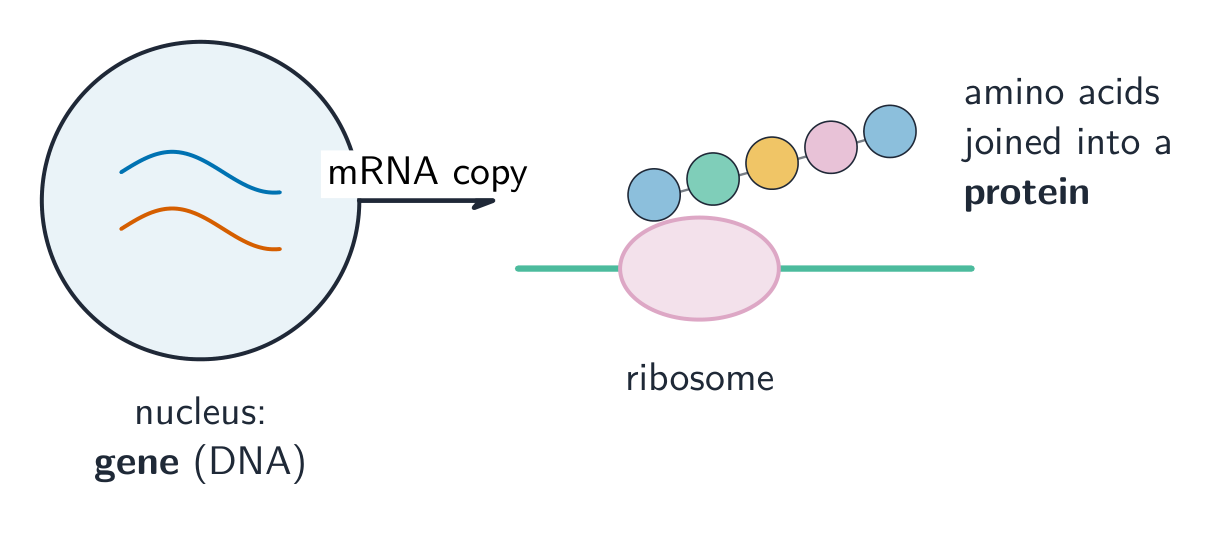
Translation 翻译 builds a protein from the mRNA at the ribosome 核糖体. The mRNA is read in three-base codons 密码子, each specifying one amino acid (the genetic code). Transfer RNA 转运RNA brings the matching amino acid, and the ribosome links them into a polypeptide until a stop codon ends it. This is the "central dogma": DNA → RNA → protein.

Bahasa Indonesia

Terjemahan membangun protein dari mRNA di ribosom. mRNA dibaca dalam kodon tiga basa, masing-masing menentukan satu asam amino (kode genetik). Transfer RNARNA membawa asam amino yang sesuai, dan ribosom menghubungkannya menjadi polipeptida hingga kodon stop mengakhiri proses. Ini adalah "dogma sentral": DNA → RNA → protein.

mRNA dibaca oleh ribosom untuk membangun protein dari asam amino
Vocabulary · ⁨Kosa kata⁩ Train · ⁨Latih⁩
English Bahasa Indonesia
Transfer RNA/ˈtrænsfɜː ˌɑː en ˈeɪ/ RNA transfer
operons/ˈɒpərənz/ operon
differential gene expression/ˌdɪfəˈrenʃl dʒiːn ekˈspreʃn/ ekspresi gen diferensial
6.5

Regulation of Gene Expression · ⁨Regulasi Ekspresi Gen⁩

Syllabus · ⁨Silabus⁩
English

Enduring Understanding (BIG IDEA 3 — Information Storage and Transmission): Living systems store, retrieve, transmit, and respond to information essential to life processes.

Learning Objective 6.5.A: Describe the types of interactions that regulate gene expression.

  • 6.5.A.1 Regulatory sequences are stretches of DNA that interact with regulatory proteins to control transcription. Some genes are constitutively expressed, and others are inducible.
  • 6.5.A.2 Epigenetic changes can affect gene expression through reversible modifications of DNA or histones.
  • 6.5.A.3 The phenotype of a cell or an organism is determined by the combination of genes that are expressed and the levels at which they are expressed.
    • 6.5.A.3.i Observable cell differentiation results from the expression of genes for tissue-specific proteins.
    • 6.5.A.3.ii Induction of transcription factors during development results in sequential gene expression.
    • 6.5.A.3.iii The function and amount of gene products determine the phenotype of organisms.

Learning Objective 6.5.B: Explain how the location of regulatory sequences relates to their function.

  • 6.5.B.1 Both prokaryotes and eukaryotes have groups of genes that are coordinately regulated.
    • 6.5.B.1.i Prokaryotes regulate operons in an inducible or repressible system.
    • 6.5.B.1.ii In eukaryotes, groups of genes may be influenced by the same transcription factors to coordinately regulate expression.
Bahasa Indonesia

Pemahaman Abadi (GAGASAN BESAR 3 — Penyimpanan dan Transmisi Informasi): Sistem hidup menyimpan, mengambil, mentransmisikan, dan merespons informasi yang penting bagi proses kehidupan.

Tujuan Pembelajaran 6.5.A: Jelaskan jenis-jenis interaksi yang mengatur ekspresi gen.

  • 6.5.A.1 Urutan regulasi adalah rentang DNA yang berinteraksi dengan protein regulasi untuk mengontrol transkripsi. Beberapa gen diekspresikan secara konstitutif, sementara yang lain bersifat induksibel.
  • 6.5.A.2 Perubahan epigenetik dapat memengaruhi ekspresi gen melalui modifikasi reversibel pada DNA atau histon.
  • 6.5.A.3 Fenotipe sel atau organisme ditentukan oleh kombinasi gen yang diekspresikan dan tingkat ekspresinya.
    • 6.5.A.3.i Diferensiasi sel yang terlihat terjadi akibat ekspresi gen untuk protein spesifik jaringan.
    • 6.5.A.3.ii Induksi faktor transkripsi selama perkembangan menghasilkan ekspresi gen secara berurutan.
    • 6.5.A.3.iii Fungsi dan jumlah produk gen menentukan fenotipe organisme.

Tujuan Pembelajaran 6.5.B: Jelaskan bagaimana lokasi urutan regulasi berkaitan dengan fungsinya.

  • 6.5.B.1 Baik prokariota maupun eukariota memiliki kelompok gen yang diregulasi secara koordinat.
    • 6.5.B.1.i Prokariota meregulasi operon dalam sistem induksibel atau repressibel.
    • 6.5.B.1.ii Pada eukariota, kelompok gen mungkin dipengaruhi oleh faktor transkripsi yang sama untuk meregulasi ekspresi secara koordinat.

Source: College Board AP Course and Exam Description · ⁨Sumber: Deskripsi Kursus dan Ujian College Board AP⁩

English

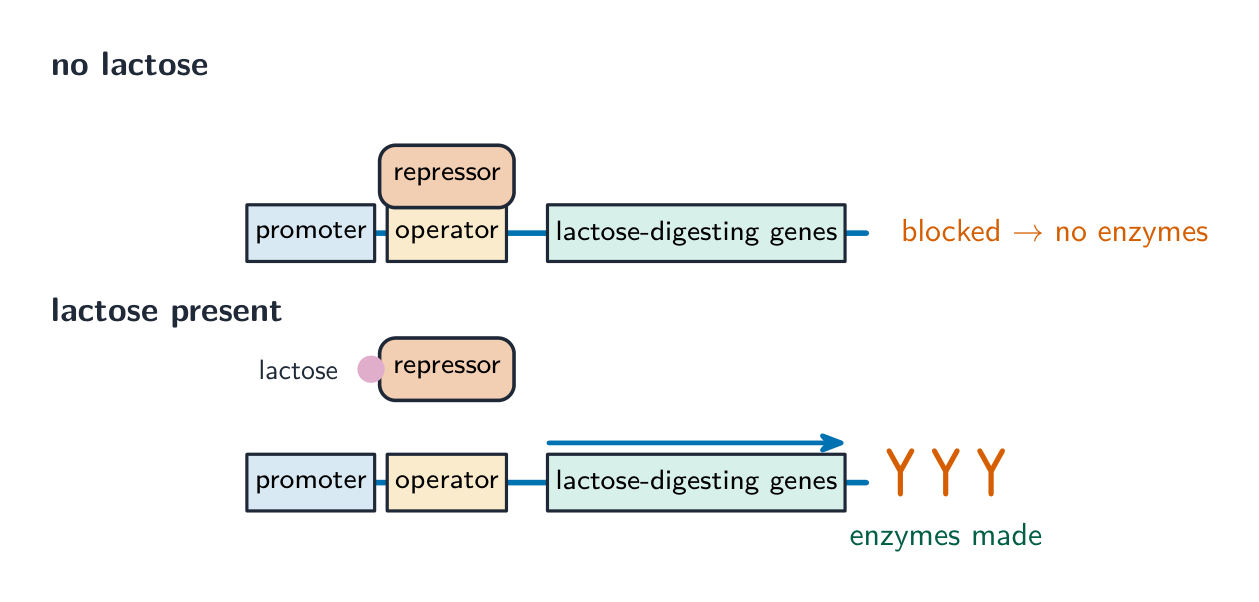
Cells control which genes are expressed and when. In prokaryotes, operons 操纵子 switch groups of genes on or off. In eukaryotes, regulation happens at many levels – which genes are transcribed (transcription factors, promoters, enhancers), RNA processing, and after translation. This lets a cell respond to its environment without changing its DNA.

Bahasa Indonesia

Sel mengatur gen mana yang diekspresikan dan kapan. Pada prokariot, operon menghidupkan atau mematikan kelompok gen. Pada eukariot, regulasi terjadi di banyak level – gen mana yang ditranskripsi (faktor transkripsi, promotor, enhancer), pemrosesan RNA, dan pasca-translasi. Ini memungkinkan sel merespons lingkungannya tanpa mengubah DNA-nya.

Operon lac menghidupkan gen hanya ketika laktosa hadir
6.6

Gene Expression and Cell Specialization · ⁨Ekspresi Gen dan Spesialisasi Sel⁩

Syllabus · ⁨Silabus⁩
English

Enduring Understanding (BIG IDEA 3 — Information Storage and Transmission): Living systems store, retrieve, transmit, and respond to information essential to life processes.

Learning Objective 6.6.A: Explain how the binding of transcription factors to promoter regions affects gene expression and the phenotype of the organism.

  • 6.6.A.1 RNA polymerase and transcription factors bind to promoter or enhancer DNA sequences to initiate transcription. These sequences can be upstream or downstream of the transcription start site.
  • 6.6.A.2 Negative regulatory molecules inhibit gene expression by binding to DNA and blocking transcription.

Learning Objective 6.6.B: Explain the connection between the regulation of gene expression and phenotypic differences in cells and organisms.

  • 6.6.B.1 Gene regulation results in differential gene expression and influences cell products and functions.
  • 6.6.B.2 Certain small RNA molecules have roles in regulating gene expression.
Bahasa Indonesia

Pemahaman Abadi (GAGASAN BESAR 3 — Penyimpanan dan Transmisi Informasi): Sistem hidup menyimpan, mengambil, mentransmisikan, dan merespons informasi yang penting bagi proses kehidupan.

Tujuan Pembelajaran 6.6.A: Jelaskan bagaimana pengikatan faktor transkripsi ke daerah promotor memengaruhi ekspresi gen dan fenotipe organisme.

  • 6.6.A.1 RNA polimerase dan faktor transkripsi berikatan dengan urutan DNA promotor atau enhancer untuk menginisiasi transkripsi. Urutan ini dapat berada di hulu atau hilir titik mulai transkripsi.
  • 6.6.A.2 Molekul regulasi negatif menghambat ekspresi gen dengan berikatan pada DNA dan memblokir transkripsi.

Tujuan Pembelajaran 6.6.B: Jelaskan hubungan antara regulasi ekspresi gen dan perbedaan fenotipe pada sel dan organisme.

  • 6.6.B.1 Regulasi gen menghasilkan ekspresi gen diferensial dan memengaruhi produk serta fungsi sel.
  • 6.6.B.2 Molekul RNA kecil tertentu memiliki peran dalam mengatur ekspresi gen.

Source: College Board AP Course and Exam Description · ⁨Sumber: Deskripsi Kursus dan Ujian College Board AP⁩

English

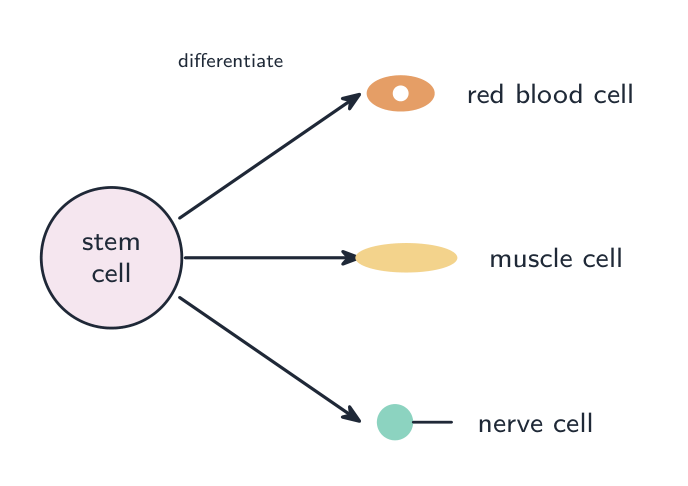
Every cell in a body has the same DNA, yet cells differ because they express different genes – differential gene expression 差异表达. This is how one fertilized egg produces many specialized cell types (muscle, nerve, skin); signals during development turn specific genes on and off.

Bahasa Indonesia

Setiap sel dalam tubuh memiliki DNA yang sama, namun sel berbeda karena mereka mengekspresikan gen yang berbeda – ekspresi gen diferensial. Inilah cara satu sel telur yang dibuahi menghasilkan banyak jenis sel terspesialisasi (otot, saraf, kulit); sinyal selama perkembangan menghidupkan dan mematikan gen tertentu.

Stem sel berdiferensiasi menjadi jenis sel terspesialisasi
6.7

Mutations · ⁨Mutasi⁩

Syllabus · ⁨Silabus⁩
Big IdeaLearning ObjectiveEssential Knowledge

Big Idea 3 — Information Storage and Transmission
Living systems store, retrieve, transmit, and respond to information essential to life processes.

6.7.A
Describe the various types of mutation.

  • 6.7.A.1 Alterations in a DNA sequence are mutations that can cause changes in the type or amount of the protein produced and the consequent phenotype. DNA mutations can be beneficial, detrimental, or neutral based on the effect or the lack of effect they have on the resulting nucleic acid or protein and the phenotypes that are conferred by the protein.
    • 6.7.A.1.i Point mutations occur when one nucleotide has been substituted for a different nucleotide.
    • 6.7.A.1.ii Frameshift mutations occur when one or more nucleotides are inserted or deleted, causing the reading frame to be shifted.
    • 6.7.A.1.iii Nonsense mutations occur when there is a point mutation that causes a premature stop.
    • 6.7.A.1.iv Silent mutations occur when the change in the nucleotide sequence has no effect on the amino acid sequence.
    • Illustrative examples for 6.7.A.1:
      • Mutations in the CFTR gene disrupt ion transport and result in cystic fibrosis.
      • Mutations in the MC1R gene give adaptive melanism in pocket mice.
    • Exclusion statement: Knowledge of specific mutations and their effects is beyond the scope of the AP Exam.

6.7.B
Explain how changes in genotype may result in changes in phenotype.

  • 6.7.B.1 Errors in DNA replication or DNA repair mechanisms as well as external factors, including radiation and reactive chemicals, can cause random mutations in the DNA.
    • 6.7.B.1.i Whether a mutation is beneficial, detrimental, or neutral depends on the environmental context.
    • 6.7.B.1.ii Mutations are a source of genetic variation.
  • 6.7.B.2 Errors in mitosis or meiosis can result in changes in phenotype.
    • 6.7.B.2.i Changes in chromosome number resulting from nondisjunction often result in new phenotypes caused by triploidy (aneuploidy).
    • 6.7.B.2.ii Changes in chromosome number often result in disorders with developmental limitations.
    • 6.7.B.2.iii Alterations in chromosome structure lead to genetic disorders.
    • Exclusion statement: Knowledge of specific disorders related to changes in chromosome number is beyond the scope of the AP Exam.

6.7.C
Explain how alterations in DNA sequences contribute to variation that can be subject to natural selection.

  • 6.7.C.1 Changes in genotype may affect phenotypes that are subject to natural selection. Genetic changes that enhance survival and reproduction can be selected for by environmental conditions.
    • 6.7.C.1.i The horizontal acquisitions of genetic information in prokaryotes via transformation (uptake of DNA), transduction (viral transmission of genetic information), conjugation (cell-to-cell transfer of DNA), and transposition (movement of DNA segments within and between DNA molecules) increase genetic variation.
    • 6.7.C.1.ii Related viruses can recombine genetic information if they infect the same host cell.
    • 6.7.C.1.iii Reproductive processes that increase genetic variation are evolutionarily conserved and are shared by various organisms.
    • Illustrative examples for 6.7.C.1: Sickle cell anemia

Source: College Board AP Course and Exam Description · ⁨Sumber: Deskripsi Kursus dan Ujian College Board AP⁩

English

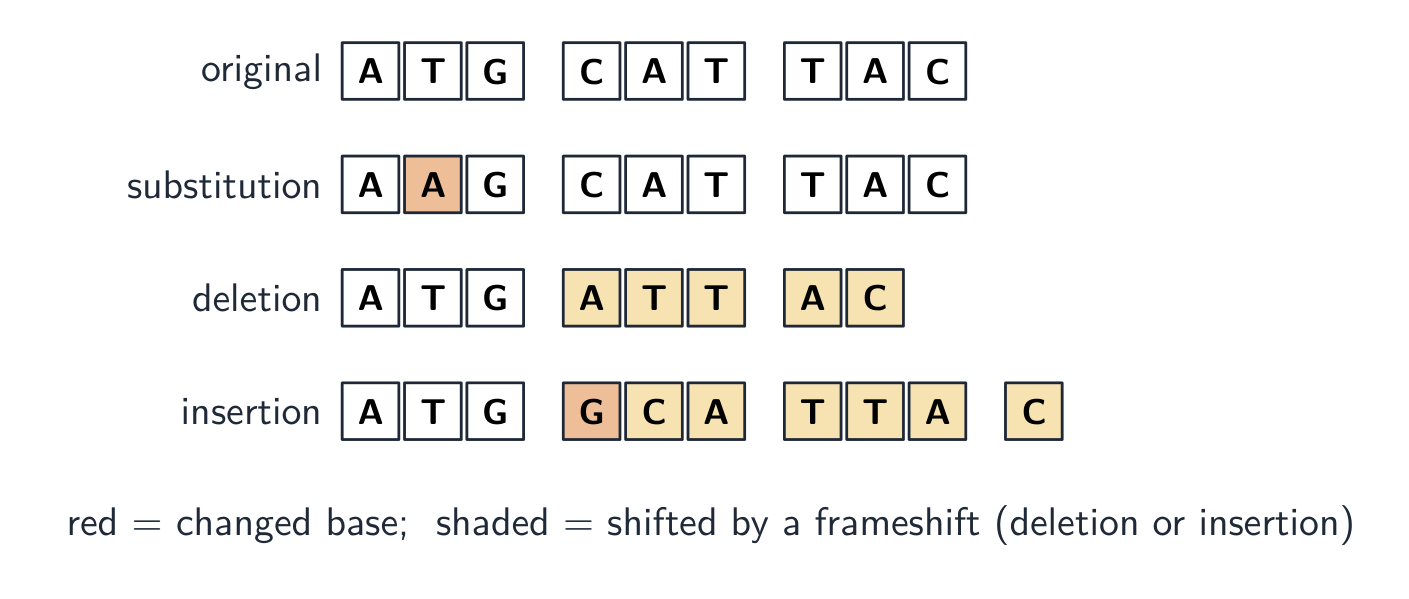
A mutation 突变 is a change in the DNA sequence. Point mutations change one base (silent, missense, or nonsense); insertions/deletions can cause a frameshift 移码 that garbles everything downstream. Mutations in gametes are heritable; they may be harmful, neutral, or beneficial – and beneficial ones supply the variation for natural selection.

Whole-chromosome errors change the phenotype too. Mutation is not only a change of base: errors in mitosis or meiosis can result in changes in phenotype. If chromosomes fail to separate — nondisjunction 不分离 — a gamete receives an extra copy or none, and the resulting zygote has an abnormal chromosome number (aneuploidy 非整倍性). Trisomy 21 is the familiar example. Because a whole chromosome carries hundreds of genes, the phenotypic effect is far broader than a point mutation's.

Bahasa Indonesia

Mutasi adalah perubahan dalam urutan DNA. Mutasi titik mengubah satu basa (diam, missense, atau nonsense); insersi/delesi dapat menyebabkan pergeseran kerangka yang merusak semua bagian downstream. Mutasi pada gamet dapat diwariskan; mungkin berbahaya, netral, atau menguntungkan – dan yang menguntungkan menyediakan variasi untuk seleksi alam.

Mutasi substitusi, delesi, dan insersi

Kesalahan kromosom utuh juga mengubah fenotipe. Mutasi bukan hanya perubahan basa: kesalahan pada mitosis atau meiosis dapat menghasilkan perubahan fenotipe. Jika kromosom gagal berpisah — nondisjunction — gamet menerima salinan tambahan atau tidak sama sekali, dan zigot yang terbentuk memiliki jumlah kromosom abnormal (aneuploidi). Trisomi 21 adalah contoh yang umum dikenal. Karena satu kromosom utuh membawa ratusan gen, efek fenotipik jauh lebih luas daripada mutasi titik.

Vocabulary · ⁨Kosa kata⁩ Train · ⁨Latih⁩
English Bahasa Indonesia
mutation/mjuːˈteɪʃn/ mutasi
frameshift/ˈfreɪmʃɪft/ pergeseran kerangka baca
nondisjunction/ˌnɒndɪsˈdʒʌŋkʃn/ nondisjunction
aneuploidy/ˈeɪnəplɔɪdi/ aneuploidi
Biotechnology/ˌbaɪəʊtekˈnɒlədʒi/ Bioteknologi
6.8

Biotechnology · ⁨Bioteknologi⁩

Syllabus · ⁨Silabus⁩
Big IdeaLearning ObjectiveEssential Knowledge

Big Idea 3 — Information Storage and Transmission
Living systems store, retrieve, transmit, and respond to information essential to life processes.

6.8.A
Explain the use of genetic engineering techniques in analyzing or manipulating DNA.

  • 6.8.A.1 Genetic engineering techniques can be used to analyze and manipulate DNA and RNA.
    • 6.8.A.1.i Gel electrophoresis is a process that separates DNA fragments by size and charge.
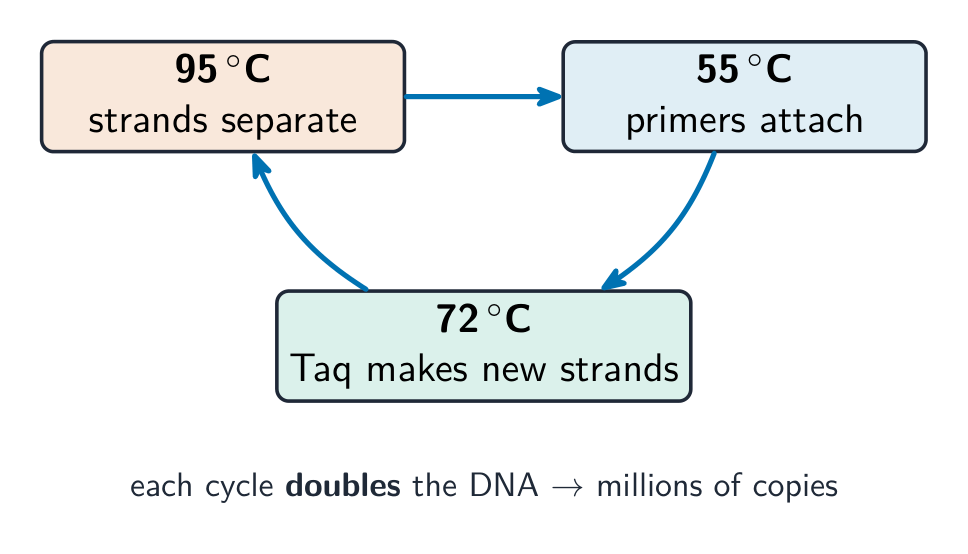
    • 6.8.A.1.ii During polymerase chain reaction (PCR), DNA fragments are amplified by denaturing DNA, annealing primers to the original strand, and extending the new DNA molecule.
    • 6.8.A.1.iii Bacterial transformation introduces foreign DNA into bacterial cells.
    • 6.8.A.1.iv DNA sequencing technology determines the order of nucleotides in a DNA molecule. Typically, these techniques result in a DNA fingerprint that allows for the comparison of DNA sequences from various samples.
    • Illustrative examples for 6.8.A.1:
      • Amplified DNA fragments can be used to identify organisms and perform phylogenetic analysis.
      • Analysis of DNA can be used for forensic identification.
      • Genetically modified organisms include transgenic animals.
      • Gene cloning allows propagation of DNA fragments.
    • Exclusion statement: Knowledge of the details of each of these genetic engineering techniques is beyond the scope of the AP Exam.

Source: College Board AP Course and Exam Description · ⁨Sumber: Deskripsi Kursus dan Ujian College Board AP⁩

English

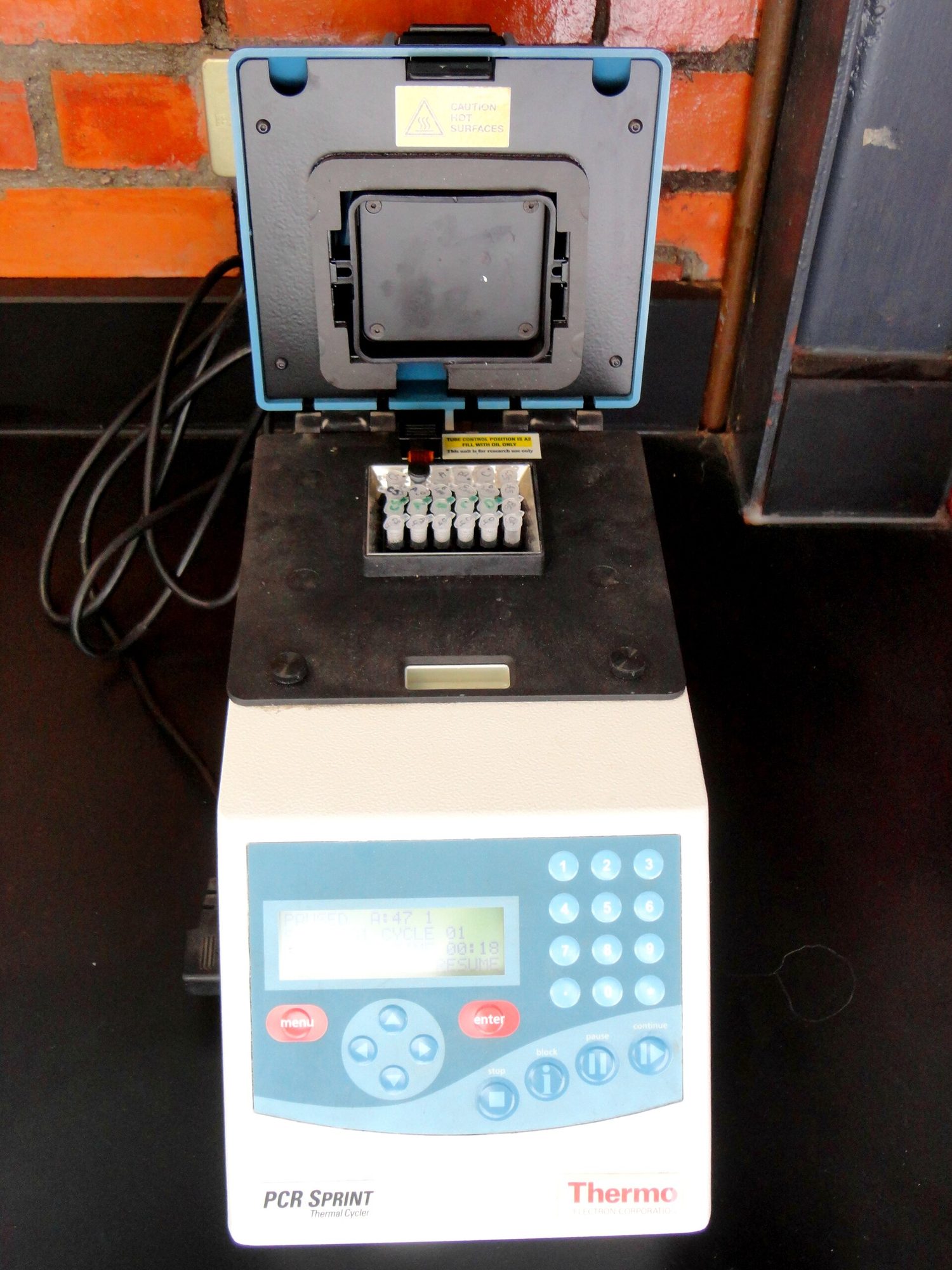
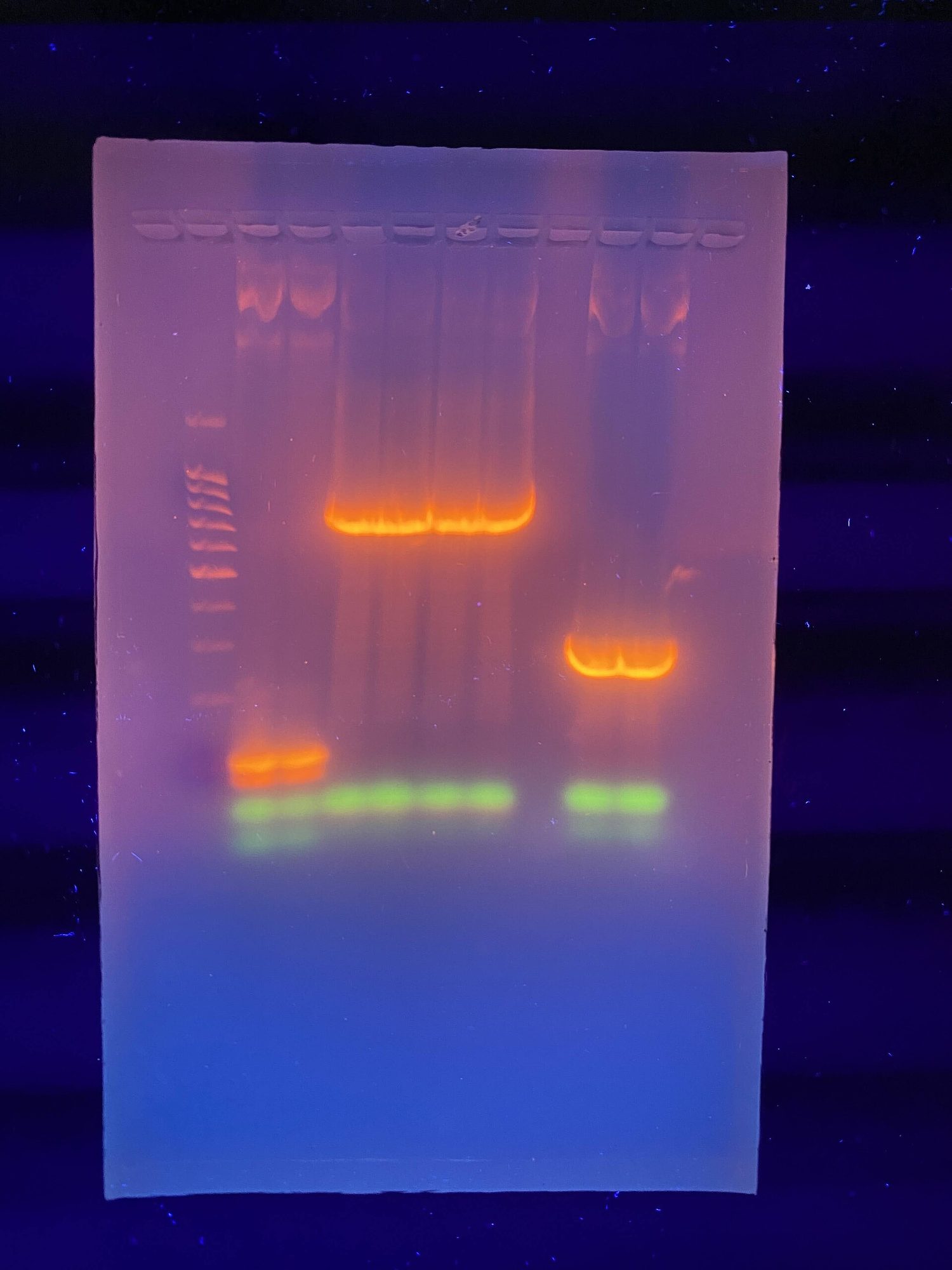
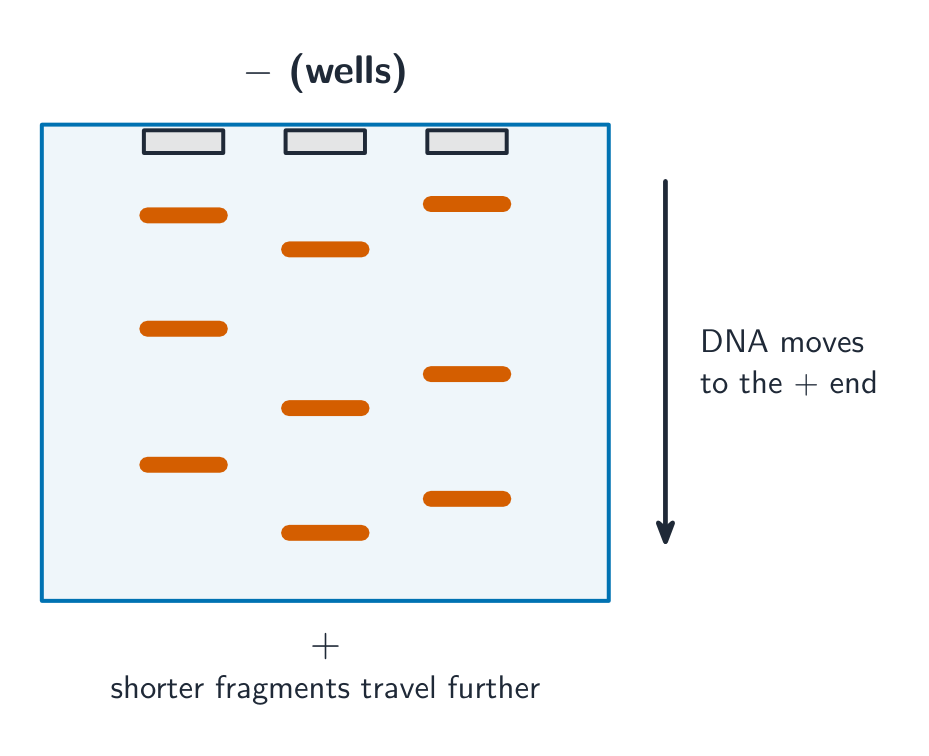
Biotechnology 生物技术 tools manipulate genetic material: PCR 聚合酶链反应 copies DNA, gel electrophoresis 凝胶电泳 separates DNA fragments by size, restriction enzymes and cloning move genes between organisms, and CRISPR edits sequences. These techniques enable genetic testing, engineered organisms, and medical treatments.

Worked example. A template DNA strand 3'-TAC GGA TTC-5' is transcribed into mRNA 5'-AUG CCU AAG-3'. A ribosome reads three codons: AUG = Met (start), CCU = Pro, AAG = Lys — coding for Met–Pro–Lys. Changing the third base of a codon often gives the same amino acid, because the genetic code is degenerate, which softens the effect of many mutations.

Reading DNA identifies individuals. Because the number of repeats at certain non-coding loci varies from person to person, analysis of DNA can be used for forensic identification: amplify those regions by PCR, separate the fragments by gel electrophoresis, and compare the pattern of band positions with a reference sample. A match is a statement about probability rather than certainty, which is why several loci are tested rather than one.

Bahasa Indonesia
Termosikler memanaskan dan mendinginkan sampel berulang kali untuk mengamplifikasi DNA (PCR)
Termal cycler memanaskan dan mendinginkan sampel berulang kali untuk memperbanyak DNA (PCR)
Gelebar agarosa di bawah cahaya UV: fragmen DNA terpisah berdasarkan ukuran sebagai pita terang
Gel agarosa di bawah cahaya UV: fragmen DNA terpisah berdasarkan ukuran sebagai pita terang

Alat bioteknologi memanipulasi materi genetik: PCR menyalin DNA, elektroforesis gel memisahkan fragmen DNA berdasarkan ukuran, enzim restriksi dan kloning memindahkan gen antar organisme, dan CRISPR mengedit urutan. Teknik-teknik ini memungkinkan pengujian genetik, organisme rekayasa, dan pengobatan medis.

Elektroforesis gelebar memisahkan fragmen DNA berdasarkan panjangnya
Elektroforesis gel memisahkan fragmen DNA berdasarkan panjang
Reaksi berantai polimerase menggandakan DNA setiap siklus

Contoh terpecahkan. Untai DNA template 3'-TAC GGA TTC-5' ditranskripsi menjadi mRNA 5'-AUG CCU AAG-3'. Ribosom membaca tiga kodon: AUG = Met (awal), CCU = Pro, AAG = Lys — mengkode Met–Pro–Lys. Mengubah basa ketiga dari sebuah kodon sering memberikan asam amino yang sama, karena kode genetik bersifat degenerate, yang meredam efek banyak mutasi.

Membaca DNA mengidentifikasi individu. Karena jumlah pengulangan pada lokus non-pengkode tertentu bervariasi dari orang ke orang, analisis DNA dapat digunakan untuk identifikasi forensik: perbanyak daerah tersebut dengan PCR, pisahkan fragmennya dengan elektroforesis gel, dan bandingkan pola posisi pita dengan sampel referensi. Kecocokan adalah pernyataan tentang probabilitas bukan kepastian, itulah sebabnya beberapa lokus diuji bukan hanya satu.

Vocabulary · ⁨Kosa kata⁩ Train · ⁨Latih⁩
English Bahasa Indonesia
PCR/ˌpiː siː ˈɑː/ PCR
gel electrophoresis/dʒel ɪˌlektrəʊfɔːˈriːsɪs/ elektroforesis gel
6.8

Exam tips · ⁨Tips ujian⁩

English
  • Know the central dogma DNA → RNA → protein: transcription makes mRNA, translation reads it in three-base codons at the ribosome.
  • Remember RNA is single-stranded and uses U instead of T; replication is semiconservative.
  • Every cell has the same DNA — cells differ because they express different genes (differential gene expression).
  • A mutation is a change in the DNA sequence and may be harmful, neutral, or beneficial (the raw material for selection).
  • Link biotech tools to their jobs: PCR copies DNA; gel electrophoresis separates fragments by size.
Bahasa Indonesia
  • Pahami dogma sentral DNA → RNA → protein: transkripsi membuat mRNA, translasi membacanya dalam kodon tiga-basa kodons di ribosom.
  • Ingat RNA untainya tunggal dan menggunakan U alih-alih T; replikasi bersifat semikonseratif.
  • Setiap sel memiliki DNA yang sama — sel berbeda karena mereka mengekspresikan gen yang berbeda (ekspresi gen diferensial).
  • Mutasi adalah perubahan dalam urutan DNA dan mungkin berbahaya, netral, atau bermanfaat (bahan mentah untuk seleksi).
  • Hubungkan alat biotek dengan tugasnya: PCR menyalin DNA; elektroforesis gel memisahkan fragmen berdasarkan ukuran.

Interactive lessons on this topic · ⁨Pelajaran interaktif untuk topik ini⁩

Work through it step by step, with instant-check exercises. · ⁨Kerjakan langkah demi langkah, dengan latihan pengecekan instan.⁩

Past Papers · ⁨Soal-Soil Masa Lalu⁩

More topics in AP Biology · ⁨AP Biologi⁩ · ⁨Topik lain dalam AP Biology · ⁨AP Biologi⁩⁩

Log in or create account · ⁨Masuk atau buat akun⁩

IGCSE, A-Level & AP