להדליק מנורה יש להחליף מתג. כדי למשוך ברזל יש להחזיק מגנט קרוב אליו. שני הכוחות האלו — חשמל ומגנטיות — נראים נפרדים, אך הם עמוקים…
English narration · English + 中文 subtitles burned in · קריאת קול באנגלית · תרגום אנגלי + סינית שרוף בתוך הסרטון
4.1
Magnetism · מגנטיות
Syllabus · סיילבוס
English
Core
Supplement
1 Describe the forces between magnetic poles and between magnets and magnetic materials, including the use of the terms north pole (N pole), south pole (S pole), attraction and repulsion, magnetised and unmagnetised
10 Explain that magnetic forces are due to interactions between magnetic fields
2 Describe induced magnetism
3 State the differences between the properties of temporary magnets (made of soft iron) and the properties of permanent magnets (made of steel
4 State the difference between magnetic and non-magnetic materials
5 Describe a magnetic field as a region in which a magnetic pole experiences a force
6 Draw the pattern and direction of magnetic field lines around a bar magnet
11 Know that the relative strength of a magnetic field is represented by the spacing of the magnetic field lines
7 State that the direction of a magnetic field at a point is the direction of the force on the N pole of a magnet at that point
8 Describe the plotting of magnetic field lines with a compass or iron filings and the use of a compass to determine the direction of the magnetic field
9 Describe the uses of permanent magnets and electromagnets
עברית
ליבה
תוספת
1 תאר את הכוחות בין קוטבי מגנט ובין מגנטים וחומרים מגנטיים, כולל השימוש במונחים קוטב צפוני (N), קוטב דרומי (S), משיכה ודחייה, מגנטי ומלא מגנטי
10 הסבר כי כוחות מגנטיים נובעים מתגובות בין שדות מגנטיים
2 תאר מגנטיות מעוררת
3 ציין את ההבדלים בין תכונות מגנטים זמניים (עשויים ברזל רך) לתכונות מגנטים קבועים (עשויים פלדה
4 ציין את ההבדל בין חומרים מגנטיים לחומרים לא מגנטיים
5 תאר שדה מגנטי כאזור בו קוטב מגנטי חווה כוח
6 צייר את הדפוס והכיוון של קווי השדה המגנטי סביב מקטב בר
11 דע שחוזק השדה המגנטי היחסי מיוצג על ידי המרווח בין קווי השדה המגנטי
7 ציין כי כיוון השדה המגנטי בנקודה הוא כיוון הכוח על קוטב N של מגנט בנקודה זו
8 תאר את מיפוי קווי השדה המגנטי עם מצפן או אבקת ברזל, ואת השימוש במצפן לקביעת כיוון השדה המגנטי
9 תאר את השימושים של מגנטים קבועים ואלקטרומגנטים
Source: Cambridge International syllabus · מקור: הסיילבוס הבינלאומי של קמבריד'ג'
English
A magnet 磁体 can attract some metals. Every magnet has two ends, called poles 磁极: a north pole 北极 (N pole) and a south pole 南极 (S pole).
The rule for two poles is like the rule for charges:
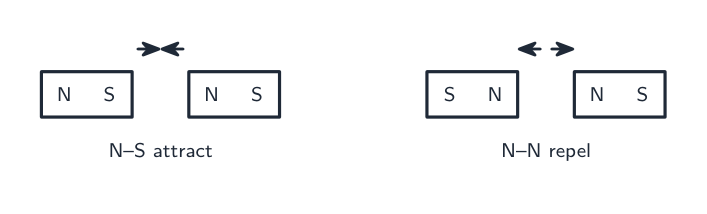
Poles that are the same (N and N, or S and S) repel 排斥 (push apart): this is repulsion 排斥力.
Poles that are different (N and S) attract 吸引 (pull together): this is attraction 吸引力.
A magnet attracts a magnetic material 磁性材料, such as iron, steel, cobalt and nickel. Other materials (copper, plastic, wood) are non-magnetic and feel no force.
Induced magnetism
Put a piece of iron near or touching a magnet, and the iron becomes a magnet itself. This is induced magnetism 感应磁性. The end of the iron nearest the magnet gains the opposite pole, so the two then attract.
Temporary and permanent magnets
Soft iron 软铁 is easy to magnetise 磁化 but loses its magnetism quickly. It is used for a temporary magnet 临时磁体.
Steel 钢 is harder to magnetise but keeps its magnetism. It is used for a permanent magnet 永磁体.
So an unmagnetised 未磁化 piece of soft iron is the best core for an electromagnet, while steel is best for a bar magnet.
Magnetic fields
A magnetic field 磁场 is a region 区域 where a magnetic pole feels a force. We draw it with magnetic field lines 磁场线:
The lines come out of the N pole and go into the S pole.
The field direction at a point is the direction of the force on the N pole of a small test magnet placed there.
Where the lines are close together the field is strong; where they are far apart the field is weak.
You can show the pattern by sprinkling iron filings 铁屑 on paper over a magnet, or by moving a small plotting compass 指南针 around it (the needle points along the field).
Uses of magnets
Permanent magnets: fridge door catches, compass needles, loudspeakers.
Electromagnets 电磁铁 (magnetic only while a current flows): cranes that lift scrap iron, electric bells, relays. An electromagnet can be switched on and off and made stronger, which a permanent magnet cannot.
Magnetic forces happen because the fields of the two magnets push and pull on each other.
עברית
מגנט יכול למשוך מספר מתכות. לכל מגנט יש שני קצוות הנקראים קוטבים: קוטב צפוני (קוטב N) וקוטב דרומי (קוטב S).
קוטבים זהים דוחים; קוטבים נגדים מושכים זה את זה
הכלל לשני קוטבים הוא כמו הכלל למטענים:
קוטבים זהים (N ו-N, או S ו-S) נדחים (דוחפים זה את זה): זוהי דחייה.
קוטבים שונים (N ו-S) נמשכים (מושכים זה אל זה): זוהי משיכה.
מגנט מושך חומר מגנטי, כמו ברזל, פלדה, קובלט וניקל. חומרים אחרים (נחושת, פלסטיק, עץ) הם לא-מגנטיים ואינם מרגישים כוח.
מגנטיות מושרית
להניח חתיכת ברזל קרוב או במגע עם מגנט, והברזל הופך בעצמו למגנט. זוהי מגנטיות מושרית. הקצה של הברזל הקרוב ביותר למגנט רוכש את הקוטב השונה, כך שהשניים ימשכו זה את זה.
מגנטים זמניים וקבועים
ברזל רך קל למגנטיזציה אך מאבד את המגנטיות שלו במהירות. משמש למגנט זמני.
פלדה קשה יותר למגנטיזציה אך שומרת על המגנטיות שלה. משמש למגנט קבוע.
לכן חתיכת ברזל רך לא-מגנטית היא ליבת הטובה ביותר למגנט אלקטרוני, בעוד שפלדה היא הטובה ביותר למגנט מוט.
שדות מגנטיים
שדה מגנטי הוא אזור בו קוטב מגנטי מרגיש כוח. אנו מציירים אותו באמצעות קווי שדה מגנטיים:
הקווים יוצאים מה קוטב N ונסגרים אל קוטב S.
כיוון השדה בנקודה הוא הכיוון של הכוח על קוטב N של מגנט בדיקה קטן שנמצא שם.
כשהקווים קרובים זה לזה, השדה חזק; כשהם רחוקים זה מזה, השדה חלש.
קווי השדה של מגנט מוצאים מהקוטב N ונכנסים לקוטב S
ניתן להציג את הדפוס על ידי פיזור אבקת ברזל על נייר מעל המגנט, או על ידי הזזת מצפן פיתוח קטן סביבו (המחט מצביעה לאורך השדה).
אבקת ברזל מסתדרת לאורך קווי השדה ומראה את דפוס השדה של מגנט מוט
אלקטרומגנטים (מגנטי רק בזמן זרימת זרם): מנופי הרמה לפסולת ברזל, פעמונים חשמליים, ממסרים. אלקטרומגנט ניתן להפעיל ולהכבות ולחזק אותו, דבר שאינו אפשרי במגנט קבוע.
כוחות מגנטיים מתרחשים מכיוון שמדות המגנטים דוחפים ומושכים זה את זה.
Explore · חקור
Make the magnetic field visible · להפוך את השדה המגנטי לנראה לעין
Compass needles trace the field from N to S; switch between attract and repel and watch the whole pattern reorganise, with a neutral point appearing for like poles. · מחטיו של מצפן מציירים את השדה מ-N ל-S; מעביר בין משיכה לדחיפה וצופה בארגון מחדש של כל הדפוס, כאשר נקודה ניטרלית מופיעה לקוטבים זהים.
1 State that there are positive and negative charges
7 State that charge is measured in coulombs
2 State that positive charges repel other positive charges, negative charges repel other negative charges, but positive charges attract negative charges
8 Describe an electric field as a region in which an electric charge experiences a force
3 Describe simple experiments to show the production of electrostatic charges by friction and to show the detection of electrostatic charges
9 State that the direction of an electric field at a point is the direction of the force on a positive charge at that point
4 Explain that charging of solids by friction involves only a transfer of negative charge (electrons)
10 Describe simple electric field patterns, including the direction of the field: (a) around a point charge (b) around a charged conducting sphere (c) between two oppositely charged parallel conducting plates (end effects will not be examined)
5 Describe an experiment to distinguish between electrical conductors and insulators
6 Recall and use a simple electron model to explain the difference between electrical conductors and insulators and give typical examples
4.2.2 Electric current
Core
Supplement
1 Know that electric current is related to the flow of charge
5 Define electric current as the charge passing a point per unit time; recall and use the equation $I = \frac{Q}{t}$
2 Describe the use of ammeters (analogue and digital) with different ranges
3 Describe electrical conduction in metals in terms of the movement of free electrons
6 State that conventional current is from positive to negative and that the flow of free electrons is from negative to positive
4 Know the difference between direct current (d.c.) and alternating current (a.c.)
4.2.3 Electromotive force and potential difference
Core
Supplement
1 Define electromotive force (e.m.f.) as the electrical work done by a source in moving a unit charge around a complete circuit
6 Recall and use the equation for e.m.f. $E = \frac{W}{Q}$
2 Know that e.m.f. is measured in volts (V)
3 Define potential difference (p.d.) as the work done by a unit charge passing through a component
7 Recall and use the equation for p.d. $V = \frac{W}{Q}$
4 Know that the p.d. between two points is measured in volts (V)
5 Describe the use of voltmeters (analogue and digital) with different ranges
4.2.4 Resistance
Core
Supplement
1 Recall and use the equation for resistance$R = \frac{V}{I}$
4 Sketch and explain the current–voltage graphs for a resistor of constant resistance, a filament lamp and a diode
2 Describe an experiment to determine resistance using a voltmeter and an ammeter and do the appropriate calculations
3 State, qualitatively, the relationship of the resistance of a metallic wire to its length and to its cross-sectional area
5 Recall and use the following relationship for a metallic electrical conductor: (a) resistance is directly proportional to length (b) resistance is inversely proportional to cross-sectional area
4.2.5 Electrical energy and electrical power
Core
Supplement
1 Understand that electric circuits transfer energy from a source of electrical energy, such as an electrical cell or mains supply, to the circuit components and then into the surroundings
2 Recall and use the equation for electrical power $P = IV$
3 Recall and use the equation for electrical energy $E = IVt$
4 Define the kilowatt-hour (kWh) and calculate the cost of using electrical appliances where the energy unit is the kWh
עברית
4.2.1 מטען חשמלי
ליבה
תוספת
1 ציין כי קיימות מטענים חיוביים ושליליים
7 ציין כי מטען נמדד בקולומים
2 ציין כי מטענים חיוביים דוחים מטענים חיוביים אחרים, מטענים שליליים דוחים מטענים שליליים אחרים, אך מטענים חיוביים מושכים מטענים שליליים
8 תאר שדה חשמלי כאזור שבו מטען חשמלי חווה כוח
3 תאר ניסויים פשוטים להמחשת יצירת מטענים אלקטרוסטטיים על ידי חיכוך ולהמחשת זיהוי מטענים אלקטרוסטטיים
9 ציין כי כיוון השדה החשמלי בנקודה הוא הכיוון של הכוח הפועל על מטען חיובי באותו נקודה
4 הסבר כי טעינת מוצקים על ידי חיכוך כוללת רק העברה של מטען שלילי (אלקטרונים)
10 תאר דפוסים פשוטים של שדות חשמליים, כולל כיוון השדה: (א) סביב מטען נקודתי (ב) סביב כדור מוליך טעון (ג) בין לוחות מוליכים מקבילים בעלי מטענים מנוגדים (אפקטי קצה לא ייבדקו)
5 תאר ניסוי להבחנה בין מוליכים ו-מבודדים חשמליים
6 זכור והשתמש בדגם אלקטרון פשוט כדי להסביר את ההבדל בין מוליכים ומבודדים חשמליים ותן דוגמאות אופייניות
4.2.2 זרם חשמלי
ליבה
תוספת
1 דע כי זרם חשמלי קשור לזרימת מטען
5 הגדר זרם חשמלי כמטען העובר דרך נקודה ליחידת זמן; זכור והשתמש במשוואה $I = \frac{Q}{t}$
2 תאר את השימוש במיליאמפרמטרים (אנלוגיים ודיגיטליים) עם טווחים שונים
3 תאר הולכה חשמלית מתכותים בתוך תנועת אלקטרונים חופשיים
6 ציין כי זרם מסורתי זורם מחיובי לשלילי ושזרימת האלקטרונים החופשיים היא משלילי לחיובי
4 דע את ההבדל בין זרם ישיר (d.c.) וזרם מתחלף (a.c.)
4.2.3 כוח חשמלי והפרש פוטנציאלים
ליבה
תוספת
1 הגדר כוח חשמלי (e.m.f.) כעבודה חשמלית הנעשית על ידי מקור בהעברת מטען יחידה מסביב למעגל סגור
6 זכור והשתמש במשוואה לכוח חשמלי $E = \frac{W}{Q}$
2 דע כי כוח חשמלי נמדד בוולטים (V)
3 הגדר הפרש פוטנציאלים (p.d.) כעבודה הנעשית על ידי מטען יחידה העובר דרך רכיב
4 דע כי הפרש הפוטנציאלים בין שתי נקודות נמדד בוולטים (V)
5 תאר את השימוש בוולטמטרים (אנלוגיים ודיגיטליים) עם טווחים שונים
4.2.4 התנגדות
ליבה
תוספת
1 זכור והשתמש במשוואה להתנגדות$R = \frac{V}{I}$
4 סרט וסבר גרפים של זרם-מתח עבור נגד בעל התנגדות קבועה, נורת להט ודיודה
2 תאר ניסוי לקביעת התנגדות באמצעות וולטמטר ומיליאמפרמטר ובצע את החישובים המתאימים
3 הצג, באופן איכותי, את הקשר בין התנגדות חוט מתכתי לבין אורכו ובין התנגדותו לשטח החתך שלו
5 זכור והשתמש בקשר הבא למוליך חשמלי מתכתי: (א) התנגדות יחסית ישירות לאורך (ב) התנגדות יחסית הפוכה לשטח החתך שלו
4.2.5 אנרגיה חשמלית הספק חשמלי
ליבה
תוספת
1 הבן שמעגלים חשמליים מעבירים אנרגיה ממקור אנרגיה חשמלית, כמו תא חשמלי או ספק כוח רשת, לרכיבי המעגל ולאחר מכן לסביבה
2 זכור והשתמש במשוואה להספק חשמלי $P = IV$
3 זכור והשתמש במשוואה לאנרגיה חשמלית $E = IVt$
4 הגדר את הקילווט-שעה (kWh) וחשב את העלות של שימוש במכשירי חשמל כאשר יחידת האנרגיה היא ה-kWh
Source: Cambridge International syllabus · מקור: הסיילבוס הבינלאומי של קמבריד'ג'
English
There are two kinds of electric charge 电荷: positive charge 正电荷 and negative charge 负电荷. The rule is like the rule for poles — same charges repel, different charges attract.
Charging by friction
When you rub two different materials together, electrons 电子 (tiny negative particles) move from one to the other. This is charging by friction 摩擦起电.
The material that gains electrons becomes negative.
The material that loses electrons becomes positive.
Only the negative electrons move; the positive charge stays in place. For example, a plastic rod rubbed with a cloth becomes negative because electrons move from the cloth onto the rod, leaving the cloth positive.
Detecting a charge. A charged rod picks up small pieces of paper, and it bends a thin stream of water from a tap. Hang one charged rod from a thread and bring another charged rod near it: if the two have the same kind of charge, the hanging rod swings away. Repulsion is the only sure test for a charge, because attraction also happens with uncharged objects.
Conductors and insulators
A conductor 导体 (copper and other metals) lets charge flow through it easily, because it has free electrons that can move.
An insulator 绝缘体 (plastic, rubber, glass) does not let charge flow, because its electrons cannot move freely.
To test a material, join it in a circuit with a lamp and a battery: the lamp lights only for a conductor.
Electric fields and ions
Charge is measured in coulombs 库仑 (C). An electric field 电场 is a region where an electric charge feels a force. Its direction at a point is the direction of the force on a positive charge. Simple field patterns (the arrows show the direction):
around a point charge 点电荷: straight lines, pointing away from a positive charge and towards a negative charge;
around a charged ball (sphere): the same, spreading out evenly all around;
between two parallel plates with opposite charges: straight, evenly spaced lines from the positive plate to the negative plate.
An atom is normally neutral. If it loses electrons it becomes a positive ion 离子; if it gains electrons it becomes a negative ion.
עברית
ישנם שני סוגי מטען חשמלי: מטען חיובי ומטען שלילי. הכלל הוא כמו הכלל לקוטבים – מטענים זהים דוחים, מטענים שונים מושכים.
כל שיער נושא את אותו מטען מהגוף, ומטענים זהים דוחים – ולכן השיער מתרחקים זה מזה
טעינה בשחיקה
כששוחקים שני חומרים שונים זה בזה, אלקטרונים (חלקיקים שליליים זעירים) עוברים מאחד לשני. זה נקרא טעינה בשחיקה.
החומר שרוכש אלקטרונים הופך למטען שלילי.
החומר שיצא לו אלקטרונים הופך למטען חיובי.
רק האלקטרונים השליליים זזים; המטען החיובי נשאר במקומו. לדוגמה, מוט פלסטיק שנשחק בבד הופך לשלילי כי אלקטרונים עוברים מהבד למוט, והבד נשאר חיובי.
זיהוי מטען. מוט טעון מושך חתיכות נייר קטנות ומכופף זרם דק ממים מברז. תלו מוט טעון בחוט והקריבו אליו מוט טעון אחר: אם לשני המוטות אותו סוג מטען, המוט התלוי יסטה החוצה. דחייה היא הבדיקה היחידה הוודאית למטען, מכיוון שה attraction מתרחשת גם עם עצמים לא טעונים.
מוליכים ומבודדים
מוליך (נחושת ומתכות אחרות) מאפשר לטעון הזרם דרכו בקלות, משום שיש לו אלקטרונים חופשיים שיכולים להזיז.
מבודד (פלסטיק, גומי, זכוכית) אינו מאפשר לטעון הזרם, משום שהאלקטרונים שלו אינם יכולים להזיז בחופשיות.
כדי לבדוק חומר, חבר אותו במעגל עם נורת חשמל וסוללה: הנורה תדליק רק עבור מוליך.
שדות חשמליים ויונים
הטעון נמדד ב-קולון (C). שדה חשמלי הוא אזור בו טעון חשמלי מרגיש בכוח. כיוונו בנקודה נתונה הוא כיוון הכוח על טעון חיובי. דפוסי שדה פשוטים (החצים מראים את הכיוון):
סביב טעון נקודתי: קווים ישרים, המצביעים החוצה מטעון חיובי ופנימה לעבר טעון שלילי;
סביב כדור טעון (כדור): אותו דבר, מתפשט באופן אחיד בכל הכיוונים;
בין שתי לוחות מקבילים עם טעונים מנוגדים: קווים ישרים, במרווח אחיד, מהלוח החיובי אל הלוח השלילי.
קווי שדה חשמלי מצביעים החוצה מטעון חיובי ופנימה לעבר טעון שלילי; בין לוחות מקבילים השדה הוא אחיד
אטום הוא בדרך כלל ניטרלי. אם הוא מאבד אלקטרונים הוא הופך ל-יון חיובי; אם הוא מקבל אלקטרונים הוא הופך ליון שלילי.
Explore · חקור
Rub a balloon and watch it charge · שפשפו בלון וצפו בטעינתו
Rubbing moves electrons onto the balloon, making it negative — then it attracts a neutral wall or your hair, but repels another negative balloon. · שפיפה מעבירה אלקטרונים לבלון, מה שהופך אותו למטען שלילי — ולאחר מכן הוא מושך קיר ניטרלי או שיער, אך מדחף בלון שלילי נוסף.
An electric current 电流 is a flow of electric charge. It is measured in amperes 安培 (A) with an ammeter 电流表, joined in series in the circuit.
An analogue 模拟 ammeter has a needle that moves over a scale; a digital 数字 ammeter shows the reading as a number. Both come with different ranges 量程. Choose the range just above the biggest current you expect, so the reading is accurate: a 0–1 A range for a current of about 0.4 A, or a 0–100 mA range for a few milliamps.
Current is the charge that passes a point each second:
$$I = \frac{Q}{t}$$
Here $I$ is current (A), $Q$ is charge (C) and $t$ is time (s). Rearranged, $Q = It$.
Worked example. A current of $3.0\ \text{A}$ flows through a lamp for $20\ \text{s}$. How much charge passes through it?
$$Q = It = 3.0 \times 20 = 60\ \text{C}$$
In a metal the current is a flow of free electrons 自由电子. There are two "directions" to know:
Conventional current 常规电流 is taken to flow from + to − round the outside of the cell.
The free electrons really drift the other way, from − to +.
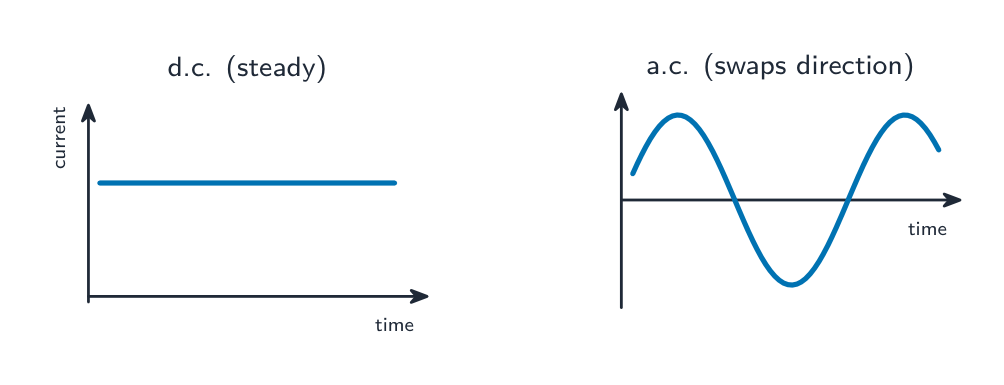
A direct current 直流电 (d.c.) always flows one way, as from a battery. An alternating current 交流电 (a.c.) keeps swapping direction many times each second, as from the mains supply 市电.
עברית
זרם חשמלי הוא זרימת טעון חשמלי. הוא נמדד ב-אמפר (A) באמצעות ממטר, המחובר בסדרה במעגל.
ממטר אנלוגי יש לו מחוגה שמזיזה על קנה מידה; ממטר דיגיטלי מציג את הקריאה כמספר. לשניהם יש טווחים שונים. בחר את הטווח שמעט מעל הזרם הגדול ביותר שתצפה לו, כדי שקריאה תהיה מדויקת: טווח 0–1 A לזרם של כ-0.4 A, או טווח 0–100 mA לכמה מיליאמפרים.
הזרם הוא הטעון שעובר בנקודה כל שנייה:
$$I = \frac{Q}{t}$$
כאן $I$ הוא זרם (A), $Q$ הוא טעון (C) ו$t$ הוא זמן (s). לאחר עיצוב מחדש, $Q = It$.
דוגמה פתורה. זרם של $3.0\ \text{A}$ זורם דרך נורה למשך $20\ \text{s}$. כמה טעון עובר דרכה?
$$Q = It = 3.0 \times 20 = 60\ \text{C}$$
במתכת הזרם הוא זרימת אלקטרונים חופשיים. יש שני "כיוונים" לדעת:
זרם מסורתי נחשב כזורם מ+ אל − סביב החוץ של התא.
האלקטרונים החופשיים באמת זזים לאט בצורה הפוכה, מ-− אל +.
זרם ישר (d.c.) זורם תמיד בכיוון אחד, כמו ממקור סוללה. זרם מתחלף (a.c.) משנה כיוון מספר פעמים בכל שנייה, כמו מהמתח הרשת.
זרם ישר הוא יציב בכיוון אחד; זרם מתחלף מתחלף כיוון ברצף, חוצה אפס פעמים רבות בכל שנייה
4.2
E.m.f. and potential difference · כוח דחימה חשמלי והפרש פוטנציאלים
English
A cell gives energy 能量 to the charges that move through it. Two quantities describe this, and both are measured in volts 伏特 (V).
The electromotive force 电动势 (e.m.f.) of a source is the electrical work it does to drive unit charge all the way round a complete circuit 电路.
The potential difference 电势差 (p.d.) across a component is the work done by unit charge as it passes through that component.
A voltmeter 电压表 measures e.m.f. or p.d. It is joined in parallel (across the component). Like ammeters, voltmeters are analogue or digital and have different ranges: pick the range just above the largest voltage you expect.
Both are work done per unit charge:
$$E = \frac{W}{Q}, \qquad V = \frac{W}{Q}$$
where $W$ is the energy transferred (J) and $Q$ is the charge (C). For example, if a cell does $120\ \text{J}$ of work moving $60\ \text{C}$ of charge round a circuit, its e.m.f. is $120 / 60 = 2\ \text{V}$.
עברית
תא חשמלי מעניק אנרגיה למטענים הנעים דרכו. שתי גודלים מתארים זאת, ושניהם נמדדים בוולטים (V).
הכוח הדחימה החשמלי (e.m.f.) של מקור הוא העבודה החשמלית שמבצע כדי להניע מטען יחיד לכל אורך מעגל מלא.
ההפרש הפוטנציאלים (p.d.) על רכיב הוא העבודה שמבצע מטען יחיד כאשר הוא עובר דווקא דרך הרכיב הזה.
וולטמטר מדוד e.m.f. או p.d. מחובר במקביל (על פני הרכיב). כמו אמפרמטרים, וולטמטרים הם אנלוגיים או דיגיטליים ול他们有 טווחי מדידה שונים: בחר את הטווח הקרוב ביותר הגבוה מהמתח המקסימלי הצפוי.
וולטמטר על התא קורא את ה-e.m.f. (האנרגיה שניתנה לכל קולון); וולטמטר על הנורה קורא את ה-p.d. (האנרגיה שהושקעה לכל קולון שם).
שניהם מייצגים עבודה ליחידת מטען:
$$E = \frac{W}{Q}, \qquad V = \frac{W}{Q}$$
כאן $W$ היא האנרגיה המועברת (J) ו-$Q$ הוא המטען (C). לדוגמה, אם תא מבצע עבודה של $120\ \text{J}$ כדי להניע מטען של $60\ \text{C}$ במעגל, ה-e.m.f. שלו היא $120 / 60 = 2\ \text{V}$.
4.2
Resistance · התנגדות
English
Resistance 电阻 measures how hard it is for current to flow. A bigger resistance gives a smaller current. It is measured in ohms 欧姆 (Ω).
$$R = \frac{V}{I}$$
Measuring resistance. Connect the component in series with a cell, a switch, an ammeter and a variable resistor 可变电阻器, and connect a voltmeter across the component. Close the switch, read $I$ and $V$, then change the variable resistor to get several more pairs of readings. Either calculate $R = V/I$ for each pair and take the average, or plot $V$ against $I$: for a metal wire at constant temperature the graph is a straight line through the origin, and its gradient is $R$.
Worked example. A $12\ \text{V}$ battery drives a current of $0.50\ \text{A}$ through a lamp. Find the lamp's resistance.
a longer wire has a bigger resistance — resistance is directly proportional 成正比 to length, $R \propto l$;
a thicker wire has a smaller resistance — resistance is inversely proportional 成反比 to cross-sectional area 横截面积, $R \propto \dfrac{1}{A}$.
So doubling the length doubles the resistance; doubling the area halves it. (Area depends on the diameter squared, so a small change in diameter changes the resistance a lot.)
Current–voltage graphs show how three components behave:
Component
Shape of the I–V graph
What it tells you
resistor 电阻器 (fixed)
straight line through the origin
resistance is constant, so $I \propto V$
filament lamp 灯丝灯泡
S-shaped, getting flatter as $V$ rises
the wire heats up, so its resistance rises
diode 二极管
current one way only
very high resistance the "wrong" way
עברית
התנגדות מדדת עד כמה קשה לזרם לזרום. התנגדות גדולה יותר נותנת זרם קטן יותר. נמדדת באוהמים (Ω).
$$R = \frac{V}{I}$$
מדידת התנגדות. חבר את הרכיב בסדרה עם תא, מתג, אמפרמטר ונגר משתנה, וחבר וולטמטר על פני הרכיב. סגור את המתג, קרא את $I$ ו-$V$, ולאחר מכן שינה את הנגר המשנה כדי לקבל עוד מספר זוגות קריאות. ניתן לחשב את $R = V/I$ עבור כל זוג ולקחת את הממוצע, או לשרטט את $V$ כנגד $I$: עבור חוט מתכת בטמפרטורה קבועה הגרף הוא קו ישר העובר דרך הראשית, ומשייתו היא $R$.
דוגמה פותרת. סוללה בעלת $12\ \text{V}$ מניעה זרם של $0.50\ \text{A}$ דרך נורה. מצא את התנגדות הנורה.
חוט ארוך יותר יש לו התנגדות גדולה יותר — ההתנגדות יחסית ישירות לאורך, $R \propto l$;
חוט עבה יותר יש לו התנגדות קטנה יותר — ההתנגדות יחסית הפוכה לשטח חתך, $R \propto \dfrac{1}{A}$.
כלומר, הכפלת האורך מכפילה את ההתנגדות; הכפלת השטח מחלקת אותה בחצי. (שטח תלוי בריבוע הקוטר, כך ששינוי קטן בקוטר משנה את ההתנגדות באופן ניכר.)
גרפים של זרם-מתח מראים כיצד שלושה רכיבים מתנהגים:
רכיב
צורת הגרף I–V
מה זה אומר
נגר (קבוע)
קו ישר העובר דרך הראשית
ההתנגדות קבועה, לכן $I \propto V$
מנורת להב
בצורת S, הופכת שטוחה יותר ככל ש$V$ עולה
החוט מתחמם, ולכן ההתנגדות שלו עולה
דיודה
זורמת רק בכיוון אחד
התנגדות גבוהה מאוד ב"כיוון השגוי"
נגד נותן קו ישר; מנורת חוט מעוקלת כשהיא מתחממת; דיודה מאפשרת מעבר זרם רק בכיוון אחד
Explore · חקור
Ohm's law · חוק אום
V = IR
For an ohmic conductor the current is proportional to the voltage — the gradient is 1/resistance. · עבור מוליך אומי הזרם פרופורציונלי למתח — השיפוע הוא 1/ההתנגדות.
Explore · חקור
I–V characteristics · אופיי I–V
A resistor gives a straight line; a filament lamp and a diode do not. Pick a component and read I and R off the curve. · נגד נותן קו ישר; נורת להב ודיודה לא ככה. בחר רכיב ועיין בערך ה-I וה-R מהעקומה.
Explore · חקור
Resistance · התנגדות חשמלית
V = R·I
Ohm's law: voltage is proportional to current — the gradient is the resistance R. · חוק אוהם: המתח פרופורציונלי לזרם — השיפוע הוא ההתנגדות R.
4.2
Electrical energy and power · אנרגיה חשמלית והספק
English
A circuit transfers energy from a source (a cell or the mains) to the components, and then into the surroundings (often as heat, light or sound).
Electrical power 电功率 is the energy transferred each second, measured in watts 瓦特 (W):
$$P = IV$$
The electrical energy 电能 transferred in a time $t$, measured in joules 焦耳 (J), is:
$$E = IVt$$
Worked example. A $12\ \text{V}$ motor draws a current of $2.0\ \text{A}$. Find its power, and the energy it transfers in $30\ \text{s}$.
$$P = IV = 2.0 \times 12 = 24\ \text{W}$$
$$E = Pt = 24 \times 30 = 720\ \text{J}$$
The kilowatt-hour
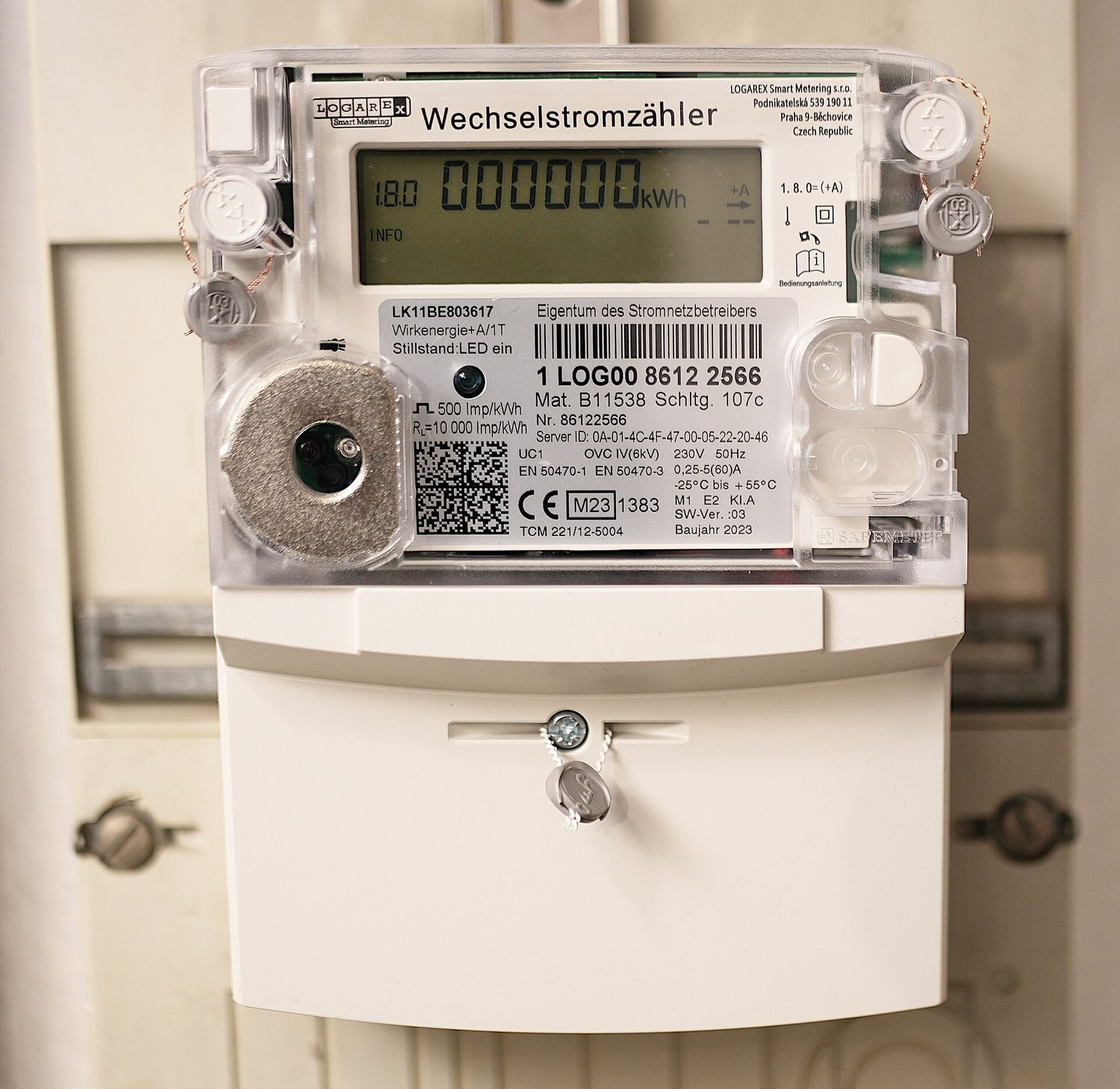
Home electricity bills use a bigger energy unit, the kilowatt-hour 千瓦时 (kWh). One kilowatt-hour is the energy used by a $1\ \text{kW}$appliance 电器 in $1$ hour.
$$\text{cost} = \text{energy (kWh)} \times \text{price per kWh}$$
For example, a $2\ \text{kW}$heater 加热器 used for $3$ hours uses $2 \times 3 = 6\ \text{kWh}$. If one kWh costs $20$ cents, the cost is $6 \times 20 = 120$ cents.
עברית
מעגל ממיר אנרגיה ממקור (סוללה או רשת) למרכיבים, ואז לסביבה (לרוב בחום, אור או קול).
הספק חשמלי הוא האנרגיה המועברת בכל שנייה, הנמדדת ב-וואטים (W):
$$P = IV$$
האנרגיה החשמלית המועברת בזמן $t$, הנמדדת ב-ג'ולים (J), היא:
$$E = IVt$$
דוגמה פותרת. מנוע $12\ \text{V}$ צורך זרם של $2.0\ \text{A}$. מצאו את ההספק שלו ואת האנרגיה שהוא ממיר ב$30\ \text{s}$.
$$P = IV = 2.0 \times 12 = 24\ \text{W}$$
$$E = Pt = 24 \times 30 = 720\ \text{J}$$
שעת קילו-וואט
חשבונות חשמל ביתיים משתמשים ביחידת אנרגיה גדולה יותר, קילוואט-שעה (kWh). קילוואט-שעה אחת היא האנרגיה שנצרכת על ידי מכשיר $1\ \text{kW}$ במשך שעה $1$.
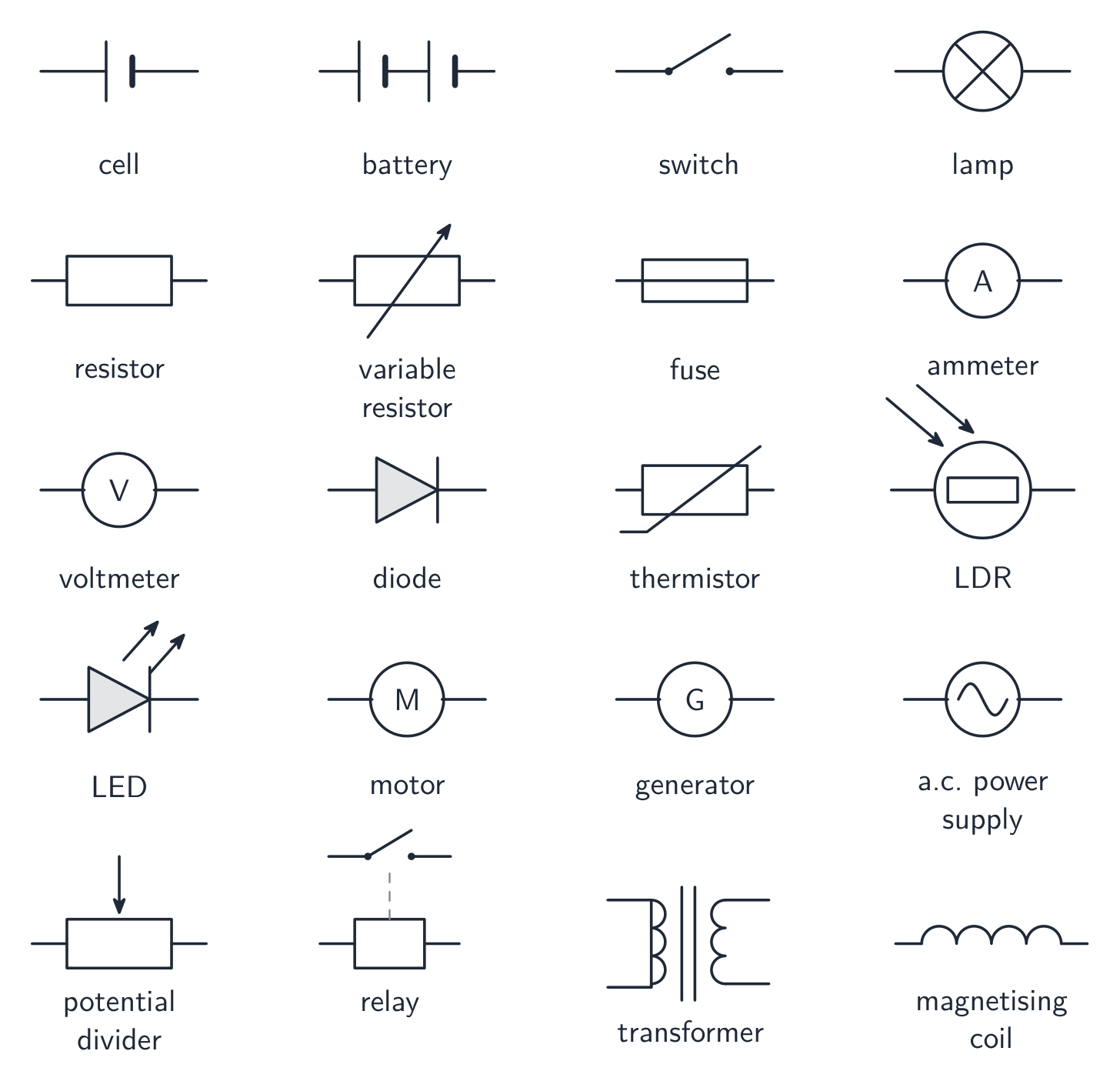
1 Draw and interpret circuit diagrams containing cells, batteries, power supplies, generators, potential dividers, switches, resistors (fixed and variable), heaters, thermistors (NTC only), light-dependent resistors (LDRs), lamps, motors, bells, ammeters, voltmeters, magnetising coils, transformers, fuses and relays and know how these components behave in the circuit
2 Draw and interpret circuit diagrams containing diodes and light-emitting diodes (LEDs) and know how these components behave in the circuit
4.3.2 Series and parallel circuits
Core
Supplement
1 Know that the current at every point in a series circuit is the same
8 Recall and use in calculations, the fact that: (a) the sum of the currents entering a junction in a parallel circuit is equal to the sum of the currents that leave the junction (b) the total p.d. across the components in a series circuit is equal to the sum of the individual p.d.s across each component (c) the p.d. across an arrangement of parallel resistances is the same as the p.d. across one branch in the arrangement of the parallel resistances
2 Know how to construct and use series and parallel circuits
3 Calculate the combined e.m.f. of several sources in series
4 Calculate the combined resistance of two or more resistors in series
5 State that, for a parallel circuit, the current from the source is larger than the current in each branch
9 Explain that the sum of the currents into a junction is the same as the sum of the currents out of the junction
6 State that the combined resistance of two resistors in parallel is less than that of either resistor by itself
10 Calculate the combined resistance of two resistors in parallel
7 State the advantages of connecting lamps in parallel in a lighting circuit
4.3.3 Action and use of circuit components
Core
Supplement
1 Know that the p.d. across an electrical conductor increases as its resistance increases for a constant current
2 Describe the action of a variable potential divider
3 Recall and use the equation for two resistors used as a potential divider
2 צייר ומפרש דיאגרמות מעגלים הכוללות דיודות ונורות קורנות LED והבן כיצד רכיבים אלו מתנהגים במעגל
4.3.2 מעגלים סדרתיים ומקבילים
ליבה
תוספת
1 הבן שזרם בכל נקודה במעגל סדרתי הוא זהה
8 זכור והשתמש בחישובים בעובדה זו: (א) סכום הזרמים הנכנסים לקשר במעגל מקביל שווה לסכום הזרמים היוצאים מהקשר (ב) המתח הכולל על פני הרכיבים במעגל סדרתי שווה לסכום המתחים הפרטיים על פני כל רכיב (ג) המתח על פני ערוץ של נגדים מקבילים זהה למתח על פני ערוץ אחד בערוצי הנגדים המקבילים
2 הבן כיצד לבנות ולשמש במעגלים סדרתיים ומקבילים
3 חשב את המתח הכולל (e.m.f.) של מספר מקורות בסדר
4 חשב את ההתנגדות הכוללת של שניים או יותר נגדים בסדר
5 ציין שכשמדובר במעגל מקביל, הזרם מהמקור גדול מזרם בכל ערוץ
9 הסבר שאינו סכום הזרמים הנכנסים לקשר שווה לסכום הזרמים היוצאים מהקשר
6 ציין שההתנגדות הכוללת של שני נגדים במקביל קטנה מההתנגדות של כל נגד בנפרד
10 חשב את ההתנגדות הכוללת של שני נגדים במקביל
7 ציין את היתרונות בחיבור נורות במקביל במעגל תאורה
4.3.3 פעולה ושימוש ברכיבי מעגל
ליבה
תוספת
1 הבן שהמתח על פני מוליך חשמלי עולה כשהתנגדותו עולה עבור זרם קבוע
2 תאר את פעולת מחלקת מתח משתנה
3 זכור והשתמש במשוואה לשני נגדים המשמשים כמחלקת מתח
$$\frac{R_1}{R_2} = \frac{V_1}{V_2}$$
Source: Cambridge International syllabus · מקור: הסיילבוס הבינלאומי של קמבריד'ג'
English
Circuit components
You should know these components and how they behave:
Component
What it does
cell 电池 / battery 电池组
drives current round the circuit (a battery is two or more cells)
power supply 电源
a source of d.c. or a.c.
switch 开关
breaks or completes the circuit
resistor (fixed)
gives a fixed resistance
variable resistor
a resistance you can change, to control the current
fuse 保险丝
melts and breaks the circuit if the current is too big
lamp / heater
turns electrical energy into light / into heat
thermistor 热敏电阻
its resistance falls as it gets hotter
light-dependent resistor 光敏电阻 (LDR)
its resistance falls as the light gets brighter
diode / light-emitting diode 发光二极管 (LED)
lets current one way only; an LED also gives out light
relay 继电器
a switch worked by an electromagnet (small current controls a big one)
motor 电动机
turns electrical energy into movement
bell 电铃
makes a sound
transformer 变压器
changes the size of an a.c. voltage
Series and parallel
In a series 串联 circuit the parts form one single loop:
the current is the same at every point;
the supply p.d. is shared between the components;
cells in series add their e.m.f.s (when they point the same way);
resistors in series add up: $R_{\text{total}} = R_1 + R_2 + \dots$
In a parallel 并联 circuit the parts are on separate branches:
each branch gets the full supply p.d.;
the current splits, so the current from the source is bigger than the current in any one branch;
the total resistance 总电阻 is less than the smallest single resistance.
Lamps in a home are wired in parallel: each gets the full voltage, and if one fails the others stay on.
For calculations (with the rules above):
at a junction 节点, the total current flowing in equals the total current flowing out;
in series, the supply p.d. equals the sum of the p.d.s across the components;
in parallel, the p.d. across each branch is the same;
Notice the combined resistance ($2\ \Omega$) is smaller than the smaller of the two resistors.
Potential dividers
Two resistors in series share the supply voltage. This is a potential divider 分压器. For the same current, a bigger resistance has a bigger p.d. across it, so the bigger resistor takes the bigger share:
$$\frac{R_1}{R_2} = \frac{V_1}{V_2}$$
A variable potential divider (or a variable resistor) lets you change the output voltage smoothly, for example from $0\ \text{V}$ up to the full supply. If you use a thermistor or an LDR as one of the resistors, the output voltage changes with temperature or light — handy for switching a heater or a lamp on and off automatically.
עברית
רכיבי מעגל
עליכם לדעת את הרכיבים הללו וכיצד הם מתנהגים:
רכיב
מה הוא עושה
סוללה / סוללה
דוחף זרם סביב המעגל (סוללה היא שתי סוללות או יותר)
מספק כוח
מקור DC או AC
מתג
מקטע או משלים את המעגל
נגד (קבוע)
מספק התנגדות קבועה
נגד משתנה
התנגדות שניתן לשנות, כדי לשלוט בעוצמת הזרם
מיסכה
נמסה ונקטעת את המעגל אם הזרם גדול מדי
נורת חשמל / מחמם
ממיר אנרגיה חשמלית לאור / לחום
תרמו-נגד
ההתנגדות שלו יורדת כשהוא מתחמם
נגד תלוי באור (LDR)
ההתנגדות שלו יורדת כשבהירות האור עולה
דיודה / נורת LED
מאפשרת זרם רק בכיוון אחד; LED גם פולט אור
ממסר
מתג המופעל על ידי סולנואיד (זרם קטן שולט בזרם גדול)
מנוע
ממיר אנרגיה חשמלית לתנועה
פעמון
מייצר צליל
מתמר
משנה את גודל מתח AC
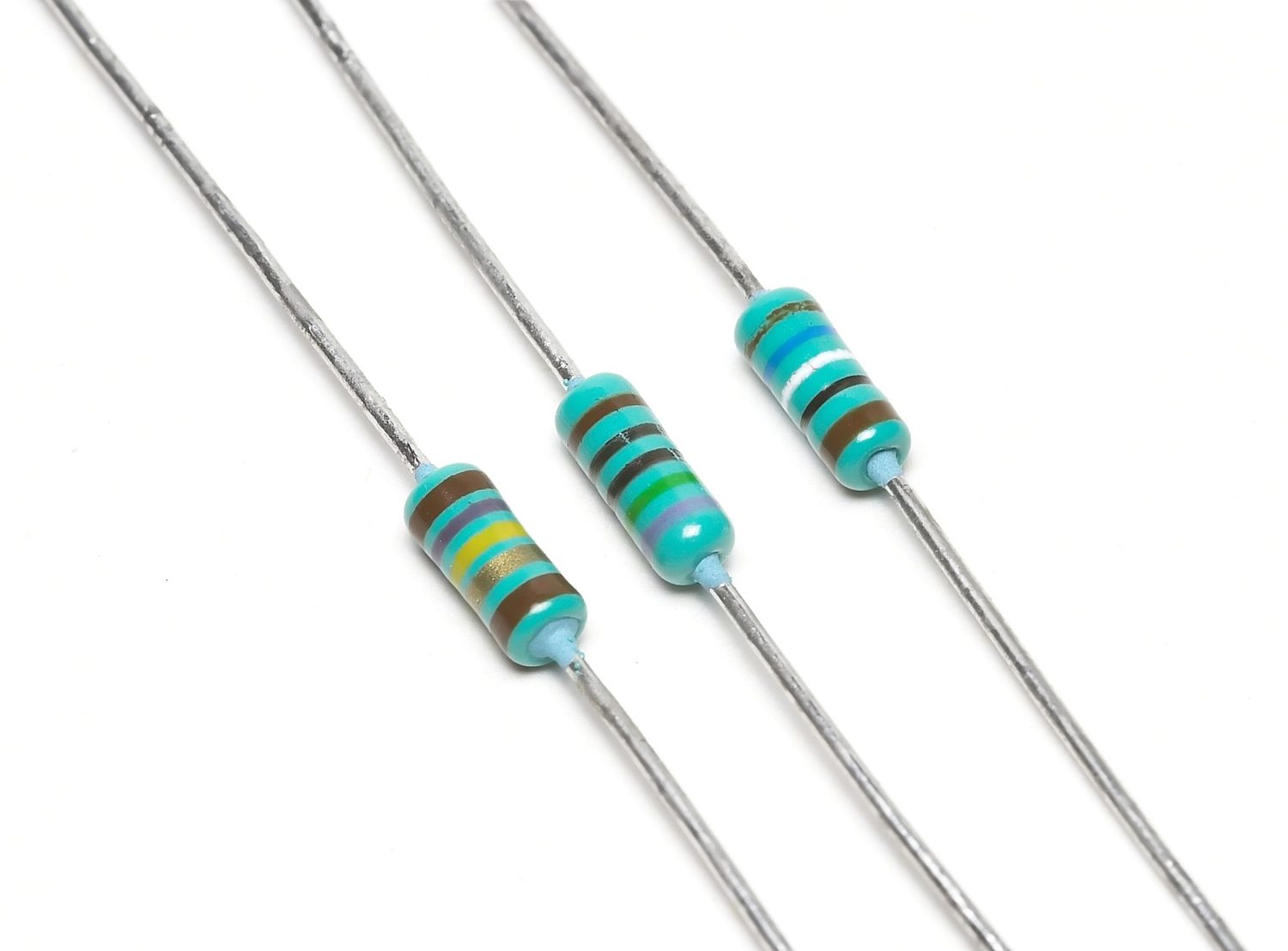
הסימנים הסטנדרטיים המשמשים לציור מעגלי חשמלנגדים אמיתיים: הפסים הצבעוניים מציינים את ההתנגדות של כל אחד מהם באוהם
חיבור סדרתי ומקביל
במעגל סדרתי החלקים יוצרים לולאה אחת בלבד:
עוצמת הזרם זהה בכל נקודה;
מתח המקור מתחלק בין הרכיבים;
תאים בסדרה מוסיפים את ה-EMF שלהם (כאשר הם מכוונים באותה כיוון);
נגדנים בסדרה מתחברים: $R_{\text{total}} = R_1 + R_2 + \dots$
במעגל מקביל החלקים נמצאים על ערוצים נפרדים:
לכל ערוץ מגיע המפל וולט מלא מהספק;
הזרם מתפצל, ולכן הזרם מהמקור גדול מזרם בכל ערוץ בודד;
ההתנגדות הכוללת קטנה מהתנגדות הבודדת הקטנה ביותר.
נורות בבית מחוברות במקביל: כל אחת מקבלת את המתח המלא, ואם אחת נשברת האחרות נשארות דולקות.
במעגל סדרתי המרכיבים משתפים מעגל אחד; במעגל מקביל לנורה יש ערוץ משלה
לחישובים (עם הכללים למעלה):
בנקודה מחלקת זרם, הזרם הכולל הנכנס שווה לזרם הכולל היוצא;
בסדרה, מפל הוולט מהספק שווה לסכום המפל וולט על פני המרכיבים;
שימו לב שההתנגדות המשותפת ($2\ \Omega$) קטנה מהתנגדות הקטנה ביותר בין השניים.
חלוקת מתח
שני נגדנים בסדרה משתפים את מתח הספק. זהו חלוקת מתח. עבור אותו זרם, התנגדות גדולה יותר גורמת למפל וולט גדול יותר על פניה, ולכן הנגד הגדול לוקח את החלק הגדול יותר:
$$\frac{R_1}{R_2} = \frac{V_1}{V_2}$$
חלוקת מתח משתנה (או נגד משתנה) מאפשרת לשנות את מתח היציאה בצורה חלקה, לדוגמה מ$0\ \text{V}$ ועד למתח הספק המלא. אם משתמשים בטורמיסטור או ב-LDR כאחד הנגדנים, מתח היציאה משתנה בהתאם לטמפרטורה או לתאורה — שימושי להפעלת ומכירת חימום או נורה באופן אוטומטי.
Explore · חקור
Build the current with Ohm's law · חשב את הזרם לפי חוק אוהם
Turn up the voltage and the electrons speed up and the bulb glows brighter; add resistance and the current drops. I = V/R, brightness = power. · הגבר את המתח והאלקטרונים מהירים ונורת הקרינה תבהיר יותר; הוסף התנגדות והזרם יורד. I = V/R, בהירות = הספק.
1 State the hazards of: (a) damaged insulation (b) overheating cables (c) damp conditions (d) excess current from overloading of plugs, extension leads, single and multiple sockets when using a mains supply
2 Know that a mains circuit consists of a live wire (line wire), a neutral wire and an earth wire and explain why a switch must be connected to the live wire for the circuit to be switched off safely
3 Explain the use and operation of trip switches and fuses and choose appropriate fuse ratings and trip switch settings
4 Explain why the outer casing of an electrical appliance must be either non-conducting (double-insulated) or earthed
5 State that a fuse without an earth wire protects the circuit and the cabling for a double-insulated appliance
עברית
ליבה
תוספת
1 ציין את הסיכונים של: (א) בידוד פגום (ב) כבלים מתחממים יתר על המידה (ג) תנאי לחות (ד) זרע עדיף מטעינת יתר של שקעים, מאריכות-חשמל, שקעים יחידים ומרובים בעת שימוש באספקת חשמל מהרשת
2 דע כי מעגל רשת מורכב מחוט חי (חוט קו), חוט נייטרלי וחוט אדמה, והסבר מדוע מתחיל להיוצר מעגל חשמלי בטוח רק כאשר מתחיל מחובר לחוט החי
3 הסבר את השימוש בתפעול של מתגי הגנה ופיוזים ובחר דרגות פיוז מתאימות והגדרות מתגי הגנה
4 הסבר מדוע הקונסטרוקציה החיצונית של מכשיר חשמלי חייבת להיות לא-מוליכה (בעלת בידוד כפול) או מחוברת לאדמה
5 ציין שפיוז ללא חוט אדמה מגן על המעגל ועל הכבלים עבור מכשיר בעל בידוד כפול
Source: Cambridge International syllabus · מקור: הסיילבוס הבינלאומי של קמבריד'ג'
English
A home is fed by the mains. The mains is dangerous if it is used wrongly.
Hazards
These are hazards 危险 (dangers) with mains electricity:
damaged insulation 绝缘层 — bare wires can give a shock or start a fire;
overheating 过热 cables — too much current makes a cable hot, which can start a fire;
damp 潮湿 conditions — water lets current pass into a person, raising the risk of a shock;
overloading 过载 — plugging too many appliances into one socket 插座 draws too much current.
Live, neutral and earth
A mains cable has three wires:
the live wire 火线 carries the high voltage;
the neutral wire 零线 completes the circuit at about zero voltage;
the earth wire 地线 is a safety wire joined to the ground.
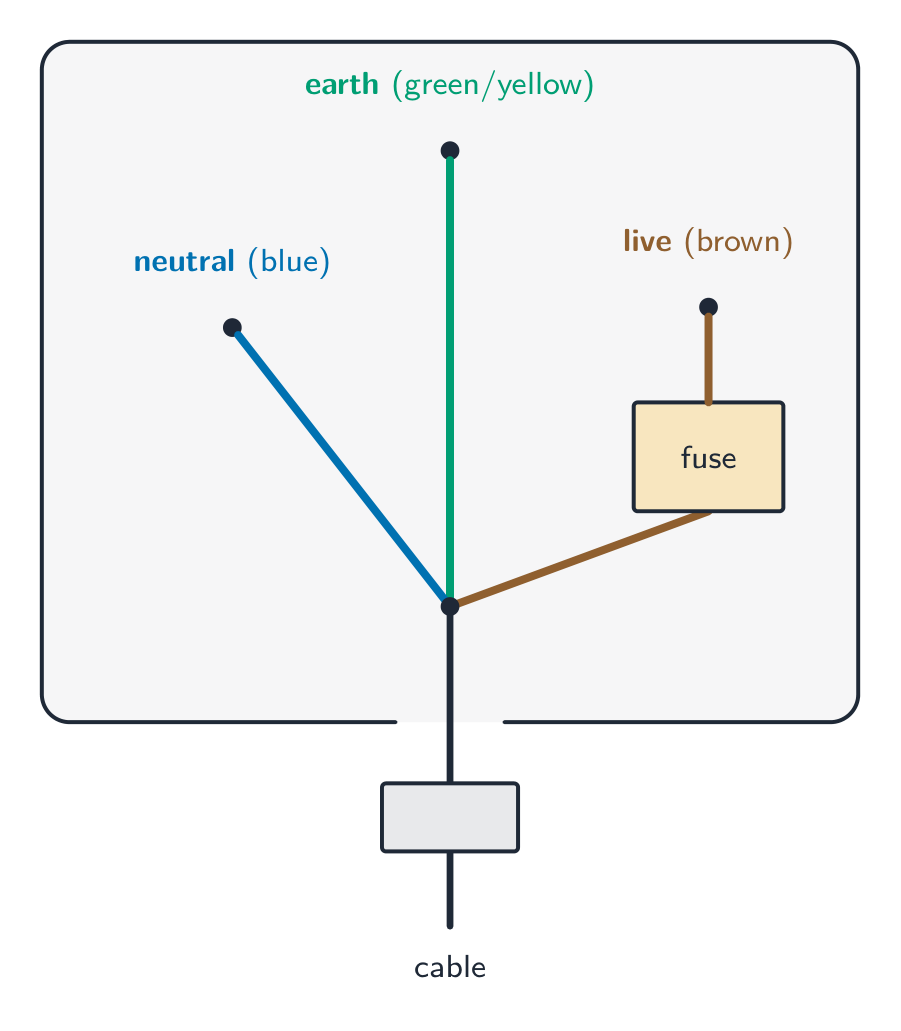
A switch (and a fuse) must be fitted in the live wire. Then, when the switch is off, the appliance is cut off from the high voltage and is safe to touch.
Fuses, trip switches and earthing
A fuse is a thin wire that melts if the current gets too big, breaking the circuit before the cable overheats. Choose a fuse rating 额定值 just above the normal working current — for example a $13\ \text{A}$ fuse for an appliance that normally uses about $10\ \text{A}$.
A trip switch 跳闸开关 (circuit breaker) does the same job but acts faster and can be reset instead of replaced.
The metal casing 外壳 of an appliance must be made safe in one of two ways:
earthed 接地: the casing is joined to the earth wire. If a live wire touches the casing, a large current flows to earth and blows the fuse.
double-insulated 双重绝缘: the casing is plastic, so it can never become live. Such an appliance needs no earth wire; its fuse still protects the cable.
עברית
בית מוזן מהרשת החשמלית. הרשת החשמלית מסוכנת אם היא משמשת לא כראוי.
סכנות
אלו הן סכנות הקשורות לחשמל רשת:
בידוד פגום — חוטים חשופים עלולים לגרום לזעמום או להצית אש;
חימו יתר של כבלים — זרם גבוה מדי גורם לכבל להתחמם, מה שעלול להצית אש;
תנאי לחות — מים מאפשרים מעבר זרם אל הגוף, ומגבירים את הסיכון לזעמום;
עומס יתר — חיבור של מכשירים רבים מדי לשקע אחד מושך זרם גבוה מדי.
חוט חי, נייטר ואדמה
כבל רשת מכיל שלושה חוטים:
החוטי החי מוביל מתח גבוה;
החוטי הנייטר משלים את המעגל בערך מתח קרוב לאפס;
החוטי האדמה הוא חוט בטיחות המחובר לאדמה.
מתג (וגם פיוז) חובה להיות מותקנים בחוט החי. כך, כאשר המתג מכובה, המכשיר נתנתק מהמתח הגבוה והוא בטוח למגע.
בתקע תלת-פיני, החי (חום) והנייטר (כחול) מובילים את הזרם, האדמה (ירוק/צהוב) היא חוט הבטיחות, והפיוז תמיד ממוקם בחוט החי.
פיוזים, מתגי הצבה ואדמה
פיוז הוא חוט דק הנמס כאשר הזרם גדול מדי, ומנתק את המעגל לפני שהכבל מתחמם. יש לבחור דירוג פיוז מעט מעל הזרם התקין – לדוגמה, פיוז של $13\ \text{A}$ למכשיר שצורך באופן רגיל כ-$10\ \text{A}$.
מתג הצבה (מפסק) מבצע אותה עבודה אך מגיב מהר יותר וניתן לאיפוס במקום להחלפה.
המעטפת המתכתית של מכשיר חייבת להיות בטוחה באחד משתי הדרכים:
מאווד: המעטפת מחוברת לחוט האדמה. אם חוט חי נוגע במעטפת, זרם גדול זורם לאדמה ומפוצץ את הפיוז.
בעל בידוד כפול: המעטפת עשויה מפלסטיק ולכן לעולם לא תהפוך לחיה. מכשיר כזה אינו זקוק לחוט אדמה; הפיוז שלו עדיין מגן על הכבל.
יחידת צריכה ביתית: כל MCB הוא מתג הרשעה שמנתק את המעגל כשהזרם גדול מדי; ה-RCD (80 A, 30 mA) נותק עד מהר יותר אם הוא מגלה תקלה לאדמה
Explore · חקור
Electrical safety route · דרך הבטיחות החשמלית
Follow fault current and see how safety devices protect people. · עקוב אחר זרם התקלה והתרשם כיצד מכשירי בטיחות מגנים על אנשים.
1 Know that a conductor moving across a magnetic field or a changing magnetic field linking with a conductor can induce an e.m.f. in the conductor
4 Know that the direction of an induced e.m.f. opposes the change causing it
2 Describe an experiment to demonstrate electromagnetic induction
5 State and use the relative directions of force, field and induced current
3 State the factors affecting the magnitude of an induced e.m.f.
4.5.2 The a.c. generator
Core
Supplement
1 Describe a simple form of a.c. generator (rotating coil or rotating magnet) and the use of slip rings and brushes where needed
2 Sketch and interpret graphs of e.m.f. against time for simple a.c. generators and relate the position of the generator coil to the peaks, troughs and zeros of the e.m.f.
4.5.3 Magnetic effect of a current
Core
Supplement
1 Describe the pattern and direction of the magnetic field due to currents in straight wires and in solenoids
4 State the qualitative variation of the strength of the magnetic field around straight wires and solenoids
2 Describe an experiment to identify the pattern of the magnetic field (including direction) due to currents in straight wires and in solenoids
3 Describe how the magnetic effect of a current is used in relays and loudspeakers and give examples of their application
5 Describe the effect on the magnetic field around straight wires and solenoids of changing the magnitude and direction of the current
4.5.4 Force on a current-carrying conductor
Core
Supplement
1 Describe an experiment to show that a force acts on a current-carrying conductor in a magnetic field, including the effect of reversing: (a) the current (b) the direction of the field
2 Recall and use the relative directions of force, magnetic field and current
3 Determine the direction of the force on beams of charged particles in a magnetic field
4.5.5 The d.c. motor
Core
Supplement
1 Know that a current-carrying coil in a magnetic field may experience a turning effect and that the turning effect is increased by increasing: (a) the number of turns on the coil (b) the current (c) the strength of the magnetic field
2 Describe the operation of an electric motor, including the action of a split-ring commutator and brushes
4.5.6 The transformer
Core
Supplement
1 Describe the construction of a simple transformer with a soft-iron core, as used for voltage transformations
6 Explain the principle of operation of a simple iron-cored transformer
2 Use the terms primary, secondary, step-up and step-down
3 Recall and use the equation
$$\frac{V_p}{V_s} = \frac{N_p}{N_s}$$
where p and s refer to primary and secondary
7 Recall and use the equation for 100% efficiency in a transformer
$$I_p V_p = I_s V_s$$
where p and s refer to primary and secondary
4 Describe the use of transformers in high-voltage transmission of electricity
5 State the advantages of high-voltage transmission
8 Recall and use the equation
$$P = I^2 R$$
to explain why power losses in cables are smaller when the voltage is greater
עברית
4.5.1 השראת אלקטרומגנטית
ליבה
תוספת
1 דע שמוליך הנע ברובו אלכסונית לשדה מגנטי או שדה מגנטי משתנה המקשר עם מוליך יכול לגרום להשראת e.m.f במוליך
4 דע כי כיוון ה-e.m.f המושרה נגד לשינוי גורמו
2 תאר ניסוי להדגמת השראה אלקטרומגנטית
5 ציין ושתמש בכיוונים היחסיים של כוח, שדה וזרע מושרה
3 ציין את הגורמים המשפיעים על הגודל של ה-e.m.f המושרה
4.5.2 גנרטור AC
ליבה
תוספת
1 תאר סוג פשוט של גנרטור AC (סליל מסתובב או מגנט מסתובב) ואת השימוש בטבעות החלקה וברשותות כאשר נדרש
2 שרטט ופרש גרפים של e.m.f מול זמן לגנרטורים פשוטים של AC וקשר בין מיקום הסליל בגנרטור לבין הפסגות, העמקים ואפסים של ה-e.m.f
4.5.3 האפקט המגנטי של זרע
ליבה
תוספת
1 תאר את הדפוס והכיוון של השדה המגנטי הנובע מזרעים בחוטים ישרים ובסולנוئידים
4 ציין את השינוי האיכותי בעוצמת השדה המגנטי סביב חוטים ישרים וסולנואידים
2 תאר ניסוי לזיהוי דפוס השדה המגנטי (כולל כיוון) הנובע מזרעים בחוטים ישרים ובסולנואידים
3 תאר כיצד ההשפעה המגנטית של זרע מופעלת בממסרים ורמקולים ותן דוגמאות לשימוש שלהם
5 תאר את ההשפעה על השדה המגנטי סביב חוטים ישרים וסולנואידים של שינוי בגודל ובכיוון הזרע
4.5.4 כוח על מוליך נושא זרע
ליבה
תוספת
1 תאר ניסוי להראות שכוח פועל על מוליך נושא זרע בשדה מגנטי, כולל את ההשפעה של הפוך: (א) הזרע (ב) כיוון השדה
2 זכור ושתמש בכיוונים היחסיים של כוח, שדה מגנטי וזרע
3 קבע את כיוון הכוח על קורות חלקיקים מטענים בשדה מגנטי
4.5.5 מנוע זרם ישר (d.c.)
ליבה
תוספת
1 דע כי סליל המעביר זרם בשדה מגנטי עשוי לחוות מומנט סיבובי, וכי המומנט גדל בהגדלת: (א) מספר הפיתולים בסליל (ב) הזרם (ג) עוצמת השדה המגנטי
2 תאר את פעולתו של מנוע חשמלי, כולל פעולת מחלק זרם (split-ring commutator) וברשותות
4.5.6 השנאי
ליבה
תוספת
1 תאר את מבנהו של שנאי פשוט עם ליבת ברזל רך, המשמש לשינויי מתח
6 הסבר את עקרון הפעולה של שנאי פשוט בעל ליבת ברזל
2 השתמש במונחים ראשוני, שניוני, העלאה ומורידה
3 זכור והשתמש במשוואה
$$\frac{V_p}{V_s} = \frac{N_p}{N_s}$$
כאשר p ו-s מתייחסים לצד ראשוני ושניוני
7 זכור והשתמש במשוואה ליעילות 100% בשנאי
$$I_p V_p = I_s V_s$$
כאשר p ו-s מתייחסים לצד ראשוני ושניוני
4 תאר את השימוש בשנאים בהעברת חשמל במתח גבוה
5 נסח את היתרונות של העברת חשמל במתח גבוה
8 זכור והשתמש במשוואה
$$P = I^2 R$$
כדי להסביר מדוע אובדני ההספק בכבלים קטנים יותר כשהמתח גבוה יותר
Source: Cambridge International syllabus · מקור: הסיילבוס הבינלאומי של קמבריד'ג'
English
The transformer: turns ratioElectromagnetic induction
The magnetic effect of a current
A current in a wire makes a magnetic field around it.
Around a straight wire the field lines are circles around the wire; the field is stronger close to the wire. Reverse the current and the field reverses.
A solenoid 螺线管 (a long coil 线圈 of wire) makes a field just like a bar magnet, with a N pole at one end and a S pole at the other. The field inside is strong and even.
You can show both patterns with iron filings or a plotting compass. The field gets stronger if you increase the current, add more turns, or place a soft-iron core inside.
The magnetic effect is used in a relay and in a loudspeaker. In a relay, a small current in a coil magnetises a soft-iron core, which pulls a switch closed in a second circuit. The second circuit can carry a large current, so a small switch or a sensor can safely control a motor or a heater (for example, the ignition switch of a car starts its motor through a relay). In a loudspeaker 扬声器 a changing current in a coil makes the coil push and pull a paper cone, which moves the air and makes sound.
Electromagnetic induction
When a wire moves across a magnetic field, or the field through a coil changes, an e.m.f. is induced in the wire. If the wire is part of a complete circuit, this e.m.f. drives a current. This is electromagnetic induction 电磁感应.
To show it: move a magnet in and out of a coil joined to a sensitive meter, and watch the needle flick. The induced e.m.f. is bigger when you use a stronger magnet, move faster, or use more turns on the coil. The induced e.m.f. always acts to oppose the change that causes it. The direction of the induced current is given by Fleming's right-hand rule 弗莱明右手定则: hold the thumb, first finger and second finger of the right hand at right angles to one another; the thumb points along the motion of the wire, the first finger along the field (N to S), and the second finger then gives the induced current.
The a.c. generator
An a.c. generator 交流发电机 turns movement into electricity. A coil is spun in a magnetic field (or a magnet is spun near a coil). As it turns, the field through the coil keeps changing, so an alternating e.m.f. is induced.
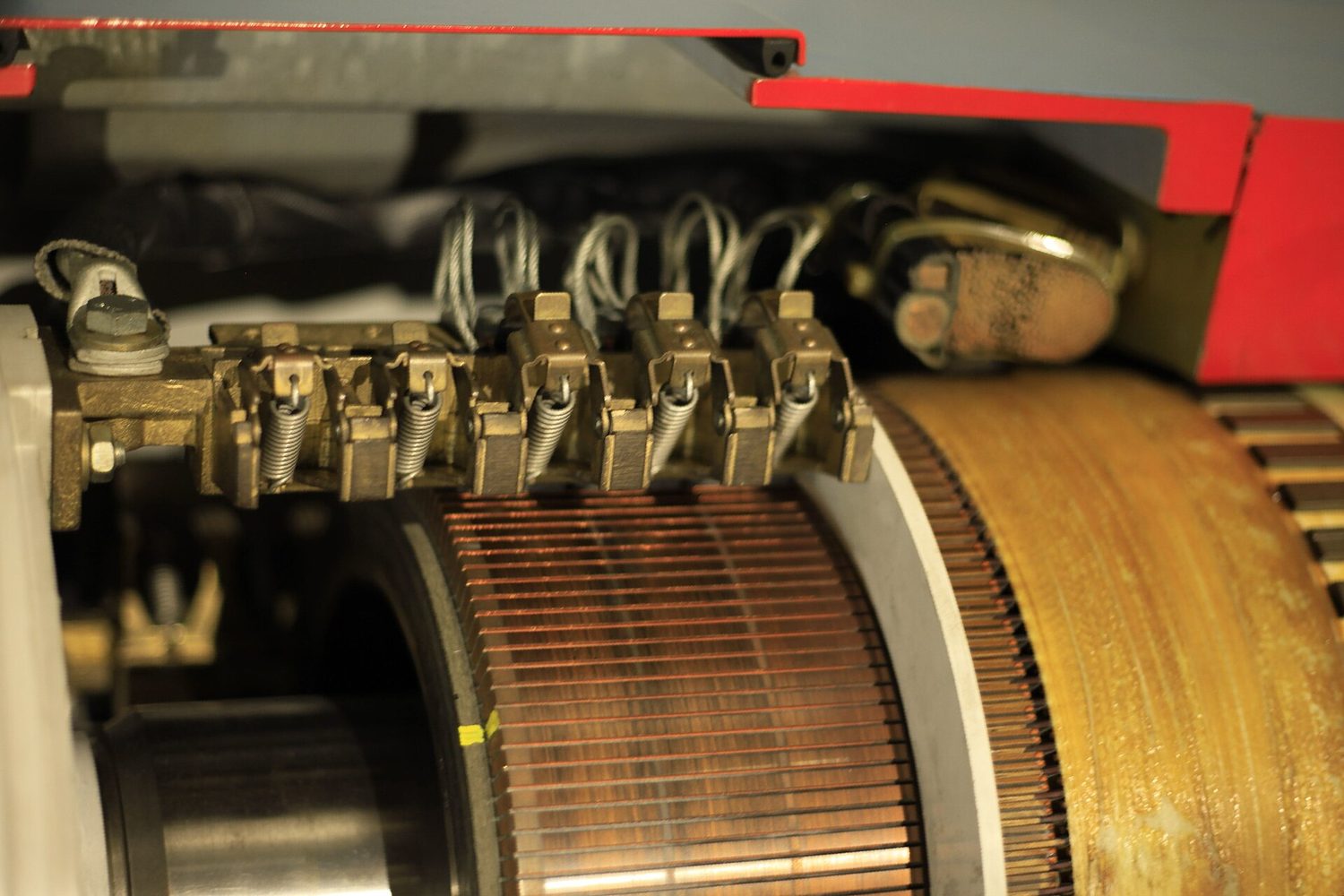
Slip rings 滑环 and carbon brushes 电刷 carry the current out to the circuit while the coil keeps turning.
The e.m.f. is largest when the coil is flat (moving fastest across the field) and zero when the coil is upright (moving along the field). So the e.m.f.–time graph is a wave: peak, zero, opposite peak, zero, for each turn.
Force on a current-carrying conductor
When a current-carrying wire lies in a magnetic field, the field of the wire and the field of the magnet push on each other, so the wire feels a force. This is the motor effect.
Reverse the current, or reverse the field, and the force reverses.
Make the current bigger or the field stronger, and the force is bigger.
The force, the field and the current are at right angles to one another. You can find the force direction with Fleming's left-hand rule 弗莱明左手定则: thumb = force (motion), first finger = field (N to S), second finger = current.
Showing the force. Lay a stiff copper wire (or a strip of aluminium foil) between the poles of a U-shaped magnet and connect it to a cell through a switch. When the current flows, the wire jumps up or down. Reverse the cell and the wire jumps the other way; turn the magnet over and it reverses again. A bigger current or a stronger magnet gives a bigger jump.
A moving stream of charged particles is a current, so a magnetic field pushes it sideways too — it deflects 偏转 the beam. (Remember electrons flow opposite to the conventional current.)
The d.c. motor
A coil carrying a current in a magnetic field feels a turning effect 转动效应, because the forces on its two sides act in opposite directions. This is a d.c. motor 直流电动机. The turning effect is bigger with more turns on the coil, a bigger current, or a stronger field.
A split-ring commutator 换向器 swaps the current direction in the coil every half-turn. This keeps the coil turning the same way instead of stopping after half a turn.
The transformer
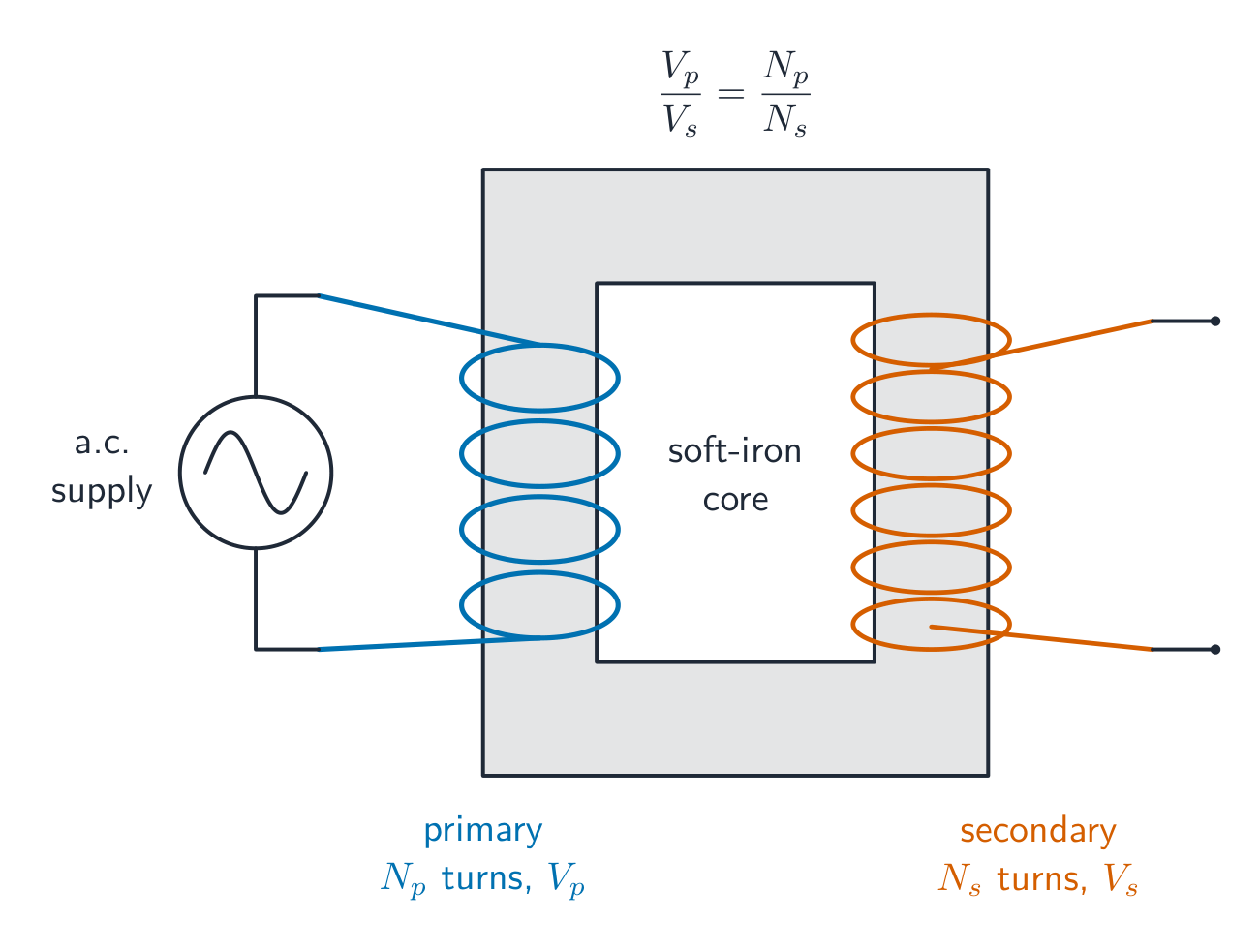
A transformer changes the size of an a.c. voltage. It has two coils wound on a soft-iron core 软铁芯:
the primary coil 原线圈 takes in the a.c. voltage;
the secondary coil 副线圈 gives out the changed voltage.
The a.c. in the primary makes a changing magnetic field in the core. The core carries this field to the secondary, where it induces an a.c. e.m.f. The voltages and the numbers of turns are linked by:
$$\frac{V_p}{V_s} = \frac{N_p}{N_s}$$
Worked example. A transformer has $1200$ turns on the primary coil and $100$ turns on the secondary coil. The primary is connected to a $240\ \text{V}$ a.c. supply. Find the secondary voltage.
Fewer turns on the secondary, so this is a step-down transformer.
If the secondary has more turns it is a step-up 升压 transformer (voltage rises); fewer turns make a step-down 降压 transformer (voltage falls). For example, a transformer changing $240\ \text{V}$ to $12\ \text{V}$ is a step-down type, and the primary has $20$ times as many turns as the secondary.
If a transformer is 100% efficient, the power in equals the power out:
$$I_p V_p = I_s V_s$$
So a step-up transformer raises the voltage but lowers the current.
Why we use high voltage to send power
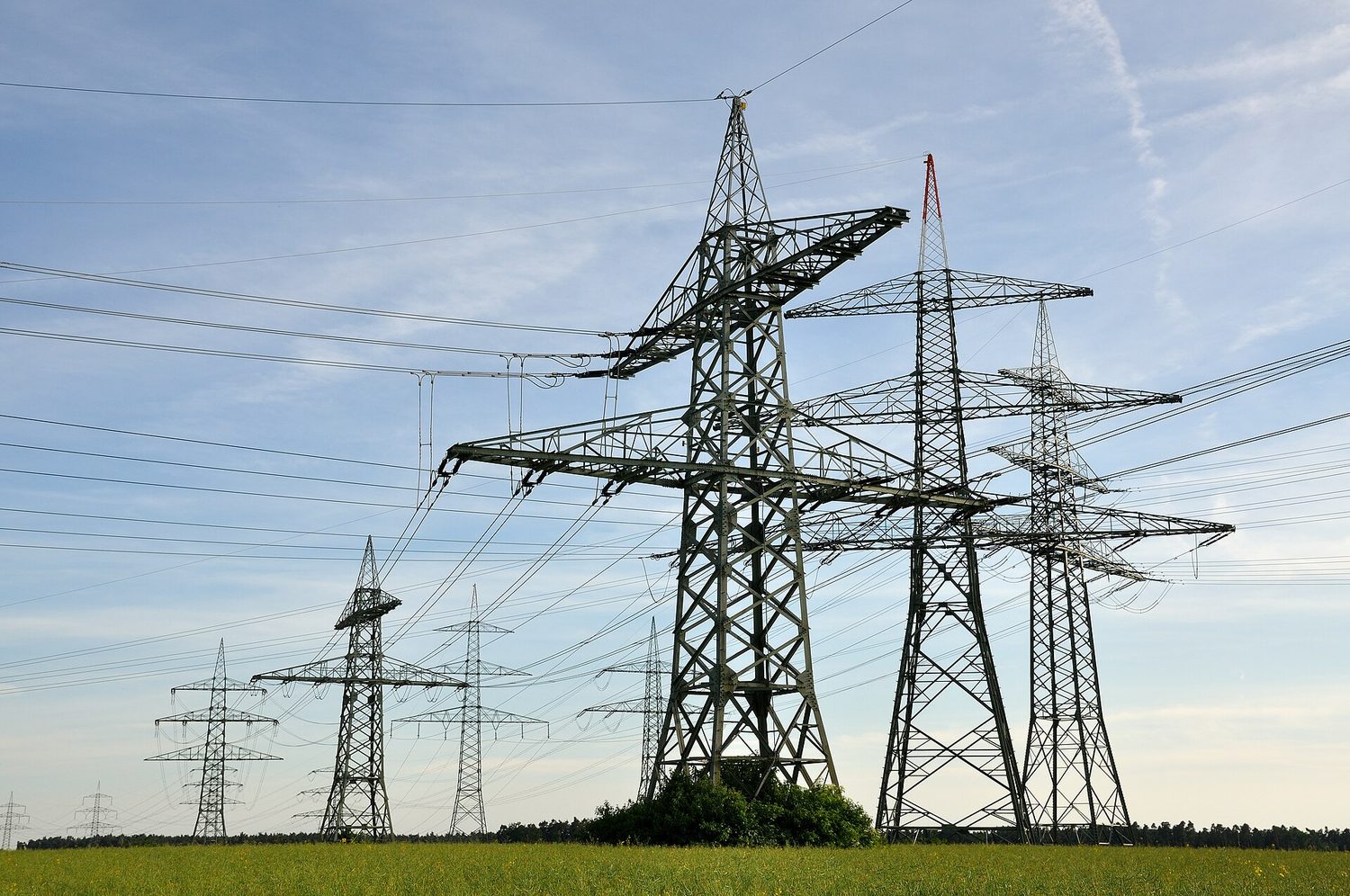
Electricity is sent across the country by high-voltage transmission 高压输电. The power lost as heat in the cables is
$$P = I^2 R$$
where $R$ is the resistance of the cables. A step-up transformer raises the voltage and so lowers the current for the same power ($P = IV$). A smaller current means much less power wasted in the cables. A step-down transformer then lowers the voltage again to a safe value before it reaches homes.
עברית
המתחל: יחס הליפופיםהשראת אלקטרומגנטית
ההשפעה המגנטית של זרם
זרם בחוט יוצר שדה מגנטי סביבו.
סביב חוט ישר קווי השדה הם מעגלים סביב החוט; השדה חזק ככל שקרובים לחוט. הפוך את הזרם והשדה יופך.
סולנואיד (סליל חוט ארוך) יוצר שדה דומה למגנט מוט, עם קוטב N בקצה אחד וקוטב S בקצה השני. השדה בפנים חזק ואחיד.
ניתן להראות את הדפוסים הללו באמצעות גרגרי ברזל או מצפן פירוק. השדה מתחזק אם מעלים את הזרם, מוסיפים סיבובים נוספים או מניחים ליבת ברזל רך בפנים.
זרם יוצר קווי שדה מעגליים סביב חוט ישר, ויוצר שדה דומה למגנט מוט עבור סולנואיד
ההשפעה המגנטית משמשת בממסר וברמקול. בממסר, זרם קטן בסליל מגנטיזי ליבת ברזל רך, שהיא מושכת מתג לסגירה במעגל שני. המעגל השני יכול לשאת זרם גדול, כך שמתג קטן או חיישן יכולים לבטחה לשלוט במנוע או במחמם (למשל, מתג הצתה של רכב מפעיל את המנוע שלו דרך ממסר). ברמקול, זרם משתנה בסליל גורם לו לדחוף ומשוך חרוט נייר, שהזזת האוויר מייצרת קול.
אינדוקציה אלקטרומגנטית
כשחוט נע חוצה שדה מגנטי, או כשהשדה דרך סליל משתנה, נוצר e.m.f. בחוט. אם החוט הוא חלק ממעגל שלם, e.m.f. זו מניעה זרם. זה נקרא אינדוקציה אלקטרומגנטית.
להראות זאת: הזז מגנט פנימה והוצאה מסליל מחובר למדוד רגיש, וצפה בזעזוע המחוג. ה-e.m.f. הנדחקת גדולה יותר כשמשתמשים במגנט חזק יותר, זזים מהר יותר, או משתמשים ביותר סיבובים על הסליל. ה-e.m.f. הנדחקת תמיד פועלת להתנגד לשינוי הגורם לה. כיוון הזרם הנדחק נתון על ידי חוק היד הימנית של פלמינג: אחוז את האגודל, האצבע הראשונה והאצבע השנייה של היד הימנית בזווית ישרה אחד לשני; האגודל מצביע לאורך תנועת החוט, האצבע הראשונה לאורך השדה (N ל-S), והאצבע השנייה אז נותנת את הזרם הנדחק.
גנרטור AC
גנרטור AC ממיר תנועה לחשמל. סליל מסתובב בשדה מגנטי (או מגנט מסתובב ליד סליל). כשהוא מסתובב, השדה דרך הסליל משתנה ברצף, ולכן נוצר e.m.f. מתחלף.
טבעות החלקה ומברשות פחמן מוליכות את הזרם החוצה למעגל בעוד הסליל ממשיך להסתובב.
ה-e.m.f. היא הגדולה ביותר כשהסליל שטוח (זז מהר ביותר חוצה השדה) ואפס כשהסל אנכי (זז לאורך השדה). לכן גרף ה-e.m.f.-זמן הוא גל: שיא, אפס, שיא הפוך, אפס, לכל סיבוב.
כשחוט המעביר זרם נמצא בשדה מגנטי, השדה של החוט ושדה המגנט דוחפים זה את זה, ולכן החוט מרגיש בכוח. תופעה זו נקראת האפקט המנועי.
הפוך את הזרם, או הפוך את השדה, והכוח יתהפך.
הגדל את הזרם או חזק את השדה, והכוח יהיה גדול יותר.
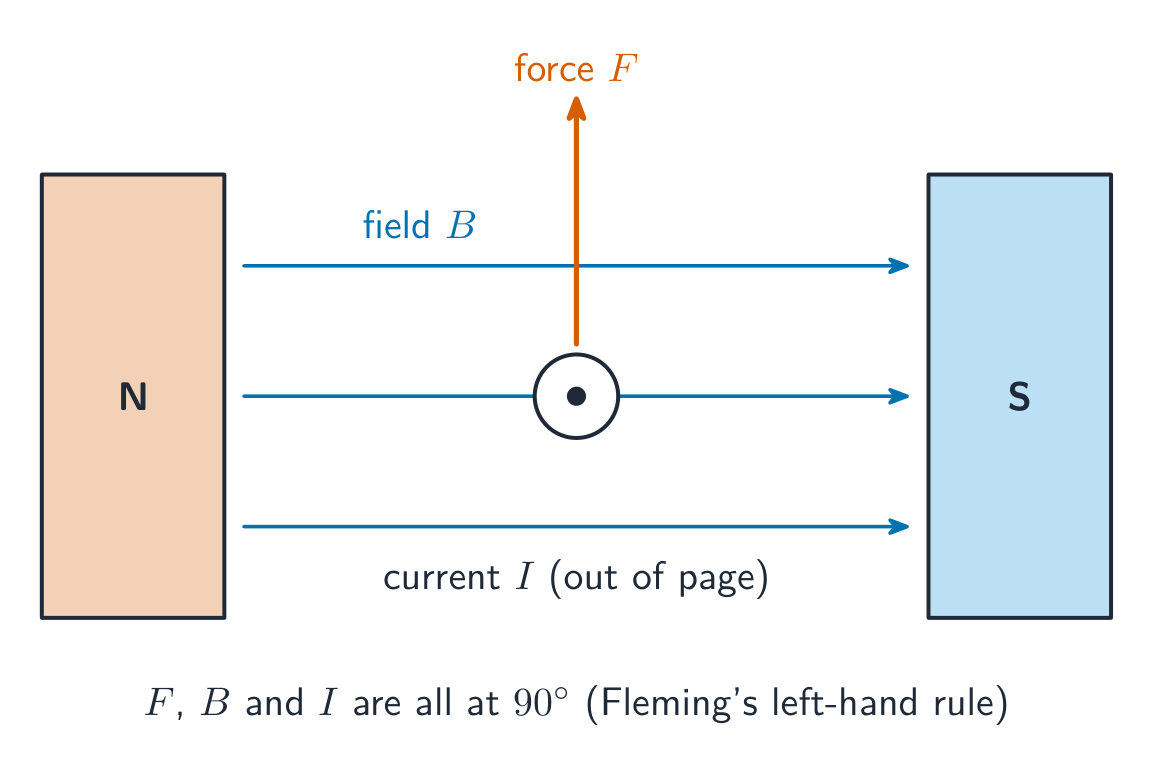
הכוח, השדה והזרם ניצבים זה לזה בזווית ישרה. ניתן למצוא את כיוון הכוח באמצעות כלל היד השמאלית של פלמינג: אגודל = כוח (תנועה), אצבע ראשונה = שדה (מ-N ל-S), אצבע שנייה = זרם.
הדגמת הכוח. הנח חוט נחושת קשיח (או רצועת נייר אלומיניום) בין הקוטבים של מגנט בצורת U וחבר אותו לסוללה דרך מתג. כאשר הזרם זורם, החוט מקפוץ כלפי מעלה או כלפי מטה. הפוך את סוללת הסוללה והחוט יקפוץ לכיוון ההפוך; הפוך את המגנט והכוח יתהפך שוב. זרם גדול יותר או מגנט חזק יותר גורמים לקפיצה גדולה יותר.
חוט המעביר זרם בשדה מגנטי מרגיש בכוח בזווית ישרה גם לשדה וגם לזרם
זרימה של חלקיקים טעונים היא זרם, ולכן שדה מגנטי דוחף אותו הצידה גם כן — הוא מטה את האשכול. (זכרו שאלקטרונים זורמים בכיוון ההפוך לזרם המקובל.)
המנוע DC
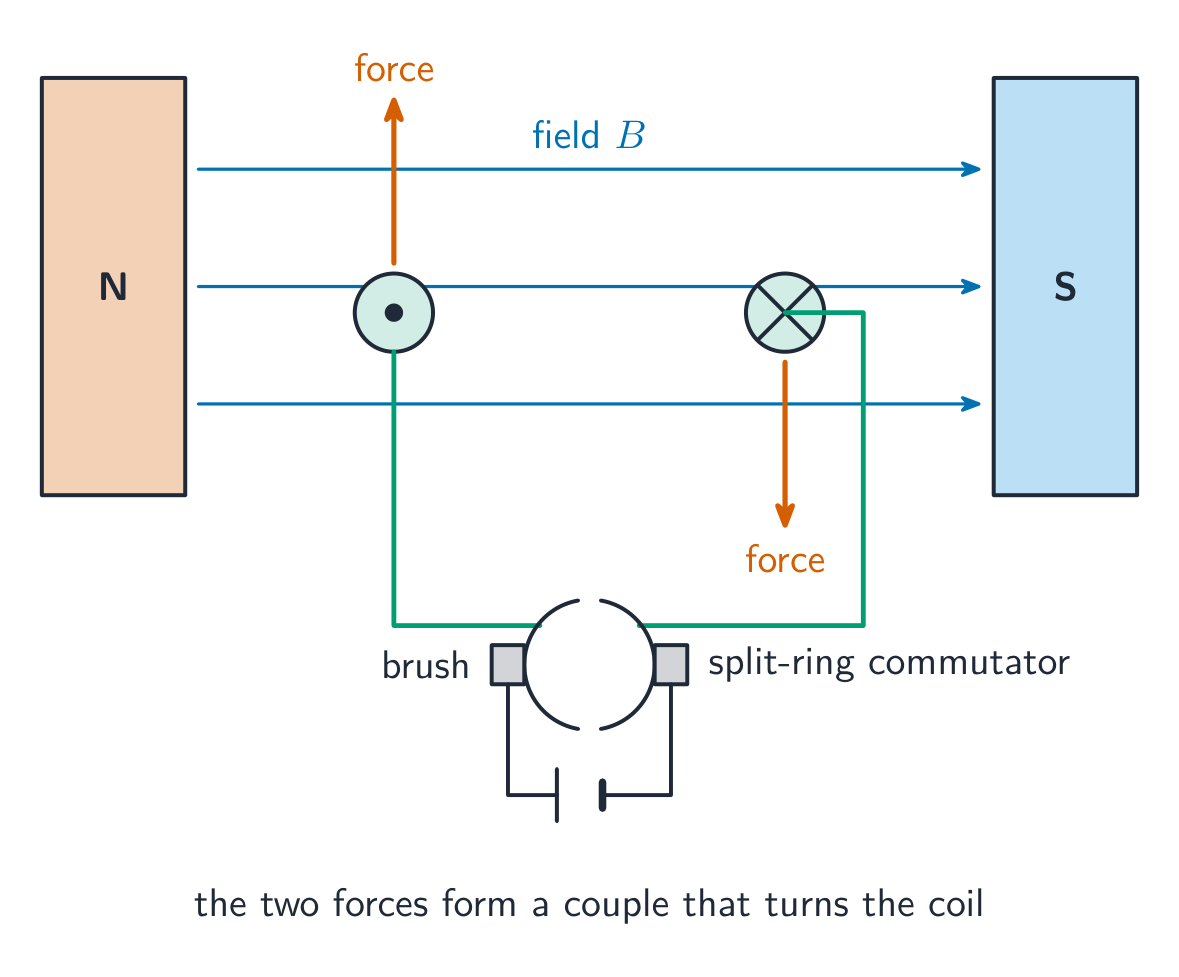
סליל המעביר זרם בשדה מגנטי מרגיש באפקט סיבובי, מכיוון שכוחות על שני צדדיו פועלים בכיוונים הפוכים. זהו מנוע DC. האפקט הסיבובי גדול יותר כשהסליל יש לו יותר הליכים, זרם גדול יותר, או שדה חזק יותר.
קומסטטור בעל טבעת מפוצלת מחליף את כיוון הזרם בסליל בכל חצי סיבוב. כך נשמר סיבוב הסליל באותו כיוון במקום עצירה לאחר חצי סיבוב.
הכוחות על שני צדדי הסליל יוצרים זוג כוחות; הקומסטטור בעל הטבעת המפוצלת שומר על סיבוב לאותו כיווןבמכונה DC אמיתית, מברשות פחמן לוחצות על פסות הקומסטטור הנחושת כדי להעביר זרם לסליל המסתובב
המתחל
מתחל משנה את גודל מתח AC. יש לו שני סלילים עטופים על ליבת ברזל רך:
הסליל הראשוני מקבל את מתח ה-AC;
הסליל השניוני מספק את מתח השינוי.
הזרם המסולב (a.c.) בסיבוב הראשוני יוצר שדה מגנטי משתנה בליבה. הליבה מעבירה את השדה הזה לסיבוב השני, שבו היא גורמת להופעת כוח חשמלי מסולב (e.m.f.). המתחים ומספרי הסלילים קשורים זה לזה על ידי:
$$\frac{V_p}{V_s} = \frac{N_p}{N_s}$$
דוגמא פותרת. טראנספורמה בעלת $1200$ סלילים בסיבוב הראשוני ו$100$ סלילים בסיבוב השני. סיבוב ראשוני מחובר למקור מתח מסולב בגודל $240\ \text{V}$. מצאו את מתח סיבוב שני.
פחות סלילים בסיבוב השני, ולכן זוהי טראנספורמת צמצום מתח.
השדה המשתנה בליבה מקשר בין שני הסיבובים; היחס בין המתחים שווה ליחס בין מספר הסליליםטראנספורמה אמיתית על עמוד חשמל מצמצמת את המתח הגבוה בכבלים למתח בטוח לבתי מגורים
אם לסיבוב השני יש יותר סלילים, זוהי טראנספורמת הרמת מתח (המתח עולה); פחות סלילים יוצרים טראנספורמת צמצום מתח (המתח יורד). לדוגמה, טראנספורמה הממירה $240\ \text{V}$ ל$12\ \text{V}$ היא מסוג צמצום מתח, והסיבוב הראשוני מכיל $20$ פעמים יותר סלילים מהסיבוב השני.
אם יעילות הטראנספורמה היא 100%, ההספק הנכנס שווה להספק היוצא:
$$I_p V_p = I_s V_s$$
לכן טראנספורמת הרמת מתח מרימה את המתח אך מורידה את הזרם.
מדוע אנו משתמשים במתח גבוה לשליחת חשמל
חשמל נשלח לכל רחבי הארץ באמצעות שידור במתח גבוה. ההספק הולך לאיבוד בחום בכבלים הוא
$$P = I^2 R$$
כאן $R$ הוא התנגדות הכבלים. טראנספורמת הרמת מתח מרימה את המתח ולכן מורידה את הזרם עבור אותו הספק ($P = IV$). זרם קטן יותר פירושו הרבה פחות הספק הולך לאיבוד בכבלים. לאחר מכן, טראנספורמת צמצום מתח מורידה שוב את המתח לערך בטוח לפני שהוא מגיע לבתים.
עמודי התמיכה מחזיקים את הכבלים העוברים בהם חשמל במתח גבוה מאוד, דבר שמפחית את הזרם — וההספק המבוזבז— לקיומו
Explore · חקור
The force that spins a motor · הכוח שמייצר סיבוב במנוע
A current in a magnetic field is pushed at right angles to both — reverse the current or flip the magnet and it pushes the other way. That is what turns a motor. · זרם בשדה מגנטי מושפע בכוח ניצב לשני הגורמים — אם הופכים את כיוון הזרם או מהפכים את המגנט, הכוח יפעל בכיוון ההפוך. זהו המנגנון שמסובב את המנוע.
Explore · חקור
The generator · הגנרטור
V = a sin(bt)
A spinning coil induces a sinusoidal voltage — the AC output. · סליל מסתובב משרה מתח סינוסואלי — זהו פלט ה-AC.
Explore · חקור
Transformer · טרנספורמר
Add turns to the secondary to step the voltage up, fewer to step it down — Vs/Vp = Ns/Np, exactly how the grid moves power efficiently. · הוספת סיבובים למפסגה מעלה את המתח, הפחתתם מורידה אותו — Vs/Vp = Ns/Np, בדיוק כך הרשת מעבירה כוח ביעילות.
Current is the same everywhere in a series circuit; in a parallel circuit it splits between the branches. Voltage (p.d.) is shared out in series, but is the same across every parallel branch.
Adding resistors in series increases the total resistance ($R_1 + R_2$); adding them in parallel makes the total less than the smallest single resistor.
An ammeter goes in series and has very low resistance; a voltmeter goes in parallel across a component and has very high resistance.
In a transformer$\dfrac{V_p}{V_s} = \dfrac{N_p}{N_s}$: more turns on the secondary steps the voltage up, fewer steps it down. Transformers only work on a.c.
Power is sent across country at high voltage so the current — and the heat wasted in the cables, $P = I^2R$ — is small.
Fit the switch and the fuse in the live wire, and choose a fuse rating just above the appliance's normal working current.
עברית
זרם זהה בכל נקודה במעגל סדרתי; במעגל מקביל הוא מתפצל בין הערוצים. מתח (p.d.) מתחלק בסדרתי, אך זהה בכל ערוץ מקביל.
הוספת התנגדויות בסדרה מגדילה את ההתנגדות הכוללת ($R_1 + R_2$); הוספתן במקביל הופכת את הסך הכל קטן מההתנגדות הבודדת הקטנה ביותר.
אמפרמטר מחובר בסדרתי ויש לו התנגדות נמוכה מאוד; וולטמטר מחובר במקביל סביב רכיב ויש לו התנגדות גבוהה מאוד.
בטראנספורמה $\dfrac{V_p}{V_s} = \dfrac{N_p}{N_s}$: יותר סלילים בסיבוב השני מרים את המתח למעלה, פחות סלילים מורידים את המתח למטה. טראנספורמות פועלות רק עם זרם מסולב (a.c.).
חשמל נשלח לכל רחבי הארץ במתח גבוה כדי שהזרם — והחום המבוזבז בכבלים, $P = I^2R$ — יהיה קטן.
התקן את המתג והפיוס בחוט החי, ובחר ערך פיוס מעט גבוה מהזרם העבודה הרגיל של ההתקן.
Interactive lessons on this topic · שיעורים אינטראקטיביים בנושא זה
Work through it step by step, with instant-check exercises. · לעבור על הדברים צעד אחר צעד, עם תרגילים לבדיקה מיידית.
Pick one and the site follows you — notes, papers, videos and practice all open on it. · בחרו נושא אחד והאתר יעקוב אחריו — הערות, מסמכים, וידאו ותרגולים פתוחים בו.
Type to search notes, lessons, code, vocabulary and past-paper questions across every subject. · הקלד כדי לחפש הערות, שיעורים, קוד, אוצר מילים ושאלות מבחנים בכל הנושאים.