English
| Core | Supplement |
|---|---|
| 1 Identify physical and chemical changes, and describe the differences between them |
עברית
| ליבה | תוספת |
|---|---|
| 1 זיהוי שינויים פיזיקליים וכימיים, ותיאור ההבדלים ביניהם |
IGCSE Chemistry · כימיה IGCSE · Topic 6 · נושא 6
 15:53
15:53
קצבים ואיזון
חלב על השידה מתעלף בתוך יום. במקרר הוא מחזיק שבוע. אותו חלב — אך התגובה מתרחשת בקצב שונה. תחילה, בדיקה מהירה: כימיה…
English narration · English + 中文 subtitles burned in · קריאת קול באנגלית · תרגום אנגלי + סינית שרוף בתוך הסרטון

| Core | Supplement |
|---|---|
| 1 Identify physical and chemical changes, and describe the differences between them |
| ליבה | תוספת |
|---|---|
| 1 זיהוי שינויים פיזיקליים וכימיים, ותיאור ההבדלים ביניהם |
Source: Cambridge International syllabus · מקור: הסיילבוס הבינלאומי של קמבריד'ג'
A physical change 物理变化 does not make a new substance. The substance only changes its state or shape, and the change can usually be reversed. Melting ice and dissolving sugar are physical changes.
A chemical change 化学变化 (a chemical reaction) makes one or more new substances and is usually hard to reverse. Signs of a chemical change include a colour change, a gas being given off, an energy change, or a precipitate 沉淀 (a solid) forming.
| Physical change | Chemical change |
|---|---|
| no new substance made | new substance(s) made |
| easy to reverse | usually hard to reverse |
| e.g. melting, boiling, dissolving | e.g. burning, rusting |
שינוי פיזיקלי אינו יוצר חומר חדש. החומר משנה רק את מצבו או צורתו, והשינוי ניתן להפכה בדרך כלל. ההיתוך של קרח והמסת סוכר הם שינויים פיזיקליים.
שינוי כימי (תגובה כימית) יוצר חומר אחד או יותר חדשים וקשה להפכתו בדרך כלל. סימנים לשינוי כימי כוללים שינוי צבע, פליטת גז, שינוי אנרגטי או היווצרות משקע (חומר מוצק).
| שינוי פיזיקלי | שינוי כימי |
|---|---|
| לא נוצר חומר חדש | נוצר(ו) חומר(ים) חדש(ים) |
| קל להפכה | בדרך כלל קשה להפכה |
| לדוגמה: התכה, רתיחה, המסה | לדוגמה: בעירה, חלודה |
Step through the difference. A physical change makes no new substance and is usually easy to reverse; a chemical change makes a new substance and is hard to undo. · הסבר ההבדל. שינוי פיזיקלי אינו יוצר חומר חדש ולרוב ניתן להפכו; שינוי כימי יוצר חומר חדש וקשה להחזירו למצב המקורי.

| Core | Supplement |
|---|---|
| 5 Describe collision theory in terms of: (a) number of particles per unit volume (b) frequency of collisions between particles (c) kinetic energy of particles (d) activation energy, $E_a$ | |
| 1 Describe the effect on the rate of reaction of: (a) changing the concentration of solutions (b) changing the pressure of gases (c) changing the surface area of solids (d) changing the temperature (e) adding or removing a catalyst, including enzymes | 6 Describe and explain the effect on the rate of reaction of: (a) changing the concentration of solutions (b) changing the pressure of gases (c) changing the surface area of solids (d) changing the temperature (e) adding or removing a catalyst, including enzymes using collision theory |
| 2 State that a catalyst increases the rate of a reaction and is unchanged at the end of a reaction | 7 State that a catalyst decreases the activation energy, $E_a$, of a reaction |
| 3 Describe practical methods for investigating the rate of a reaction including change in mass of a reactant or a product and the formation of a gas | 8 Evaluate practical methods for investigating the rate of a reaction including change in mass of a reactant or a product and the formation of a gas |
| 4 Interpret data, including graphs, from rate of reaction experiments |
| ליבה | תוספת |
|---|---|
| 5 לחדש את תיאוריית ההתנגשות בתוך: (א) מספר חלקיקים ליחידת נפח (ב) תדירות ההתנגשויות בין חלקיקים (ג) האנרגיה הקינטית של חלקיקים (ד) אנרגיית השפעול, $E_a$ | |
| 1 לחדש את ההשפעה על קצב התגובה של: (א) שינוי ריכוז של תמיסות (ב) שינוי לחץ של גזים (ג) שינוי שטח פנים של מוצקים (ד) שינוי טמפרטורה (ה) הוספה או הסרת קטליזטור, כולל אנזימים | 6 לחדש ולהסביר את ההשפעה על קצב התגובה של: (א) שינוי ריכוז של תמיסות (ב) שינוי לחץ של גזים (ג) שינוי שטח פנים של מוצקים (ד) שינוי טמפרטורה (ה) הוספה או הסרת קטליזטור, כולל אנזימים, באמצעות תיאוריית ההתנגשות |
| 2 ציין שזרז מגביר את קצב התגובה ואינו משתנה בסופה | 7 ציין שזרז מפחית את אנרגיית ההפעלה, $E_a$, של תגובה |
| 3 תאר שיטות מעשיות לחקירת קצב תגובה, כולל שינוי במסה של מגיב או תוצר והיווצרות גז | 8 שפוט שיטות מעשיות לחקירת קצב תגובה, כולל שינוי במסה של מגיב או תוצר והיווצרות גז |
| 4 פרשנת נתונים, כולל גרפים, ממערכי ניסויים על קצב תגובה |
Source: Cambridge International syllabus · מקור: הסיילבוס הבינלאומי של קמבריד'ג'
The rate of reaction 反应速率 tells you how fast the reactants 反应物 change into products 生成物.
Collision theory 碰撞理论 explains what controls the rate. For a reaction to happen, the particles 粒子 must collide 碰撞, and they must collide with enough energy. The least energy they need is the activation energy 活化能 ($E_a$). A faster rate happens when the particles have successful collisions more often.
| Change | Effect | Reason (collision theory) |
|---|---|---|
| increase concentration 浓度 of a solution | faster | more particles in the same volume, so collisions happen more often |
| increase pressure 压强 of gases | faster | particles are pushed closer, so collisions happen more often |
| increase surface area 表面积 of a solid | faster | more particles are exposed, so collisions happen more often |
| increase temperature | faster | particles gain kinetic energy 动能 and move faster, so collisions are more frequent and more of them have enough energy |
| add a catalyst 催化剂 | faster | the catalyst lowers the activation energy, so more collisions are successful |
A catalyst speeds up a reaction but is not used up — it is unchanged at the end. It works by lowering the activation energy. Enzymes 酶 are biological catalysts (catalysts that work in living things).
You can follow a reaction over time in these ways:
On a graph of product against time, the line is steepest at the start (fastest rate), becomes less steep as reactants are used up, and goes flat when the reaction has finished.
הקצב התגובה מעיד על מהירות השינוי של התגובות למוצרים.
תיאוריית ההתנגשויות מסבירה מה קובע את הקצב. כדי שתגובה תתרחש, החלקיקים חייבים להתנגש, והם חייבים להתנגש באנרגיה מספקת. האנרגיה המינימלית שהם זקוקים לה היא אנרגיית הפעלה ($E_a$). קצב מהיר יותר מתקבל כאשר לחלקיקים יש התנגשויות מוצלחות תדירות יותר.
| שינוי | השפעה | סיבה (על פי תיאוריית ההתנגשויות) |
|---|---|---|
| הגברת ריכוז של תמיסה | מהיר יותר | יותר חלקיקים באותו נפח, כך שההתנגשויות מתרחשות לעיתים קרובות יותר |
| הגברת לחץ של גזים | מהיר יותר | החלקיקים דוחסים זה לקרוב, כך שההתנגשויות מתרחשות לעיתים קרובות יותר |
| הגדלת שטח פני שטח של מוצק | מהיר יותר | יותר חלקיקים חשופים, כך שההתנגשויות מתרחשות לעיתים קרובות יותר |
| העלאת הטמפרטורה | מהיר יותר | החלקיקים רוכשים אנרגיה קינטית ונעים מהר יותר, כך שההתנגשויות הן בתדר גבוה יותר וגם יותר מהן כוללות אנרגיה מספקת |
| הוספת מצטנע | מהיר יותר | המצטנע מפחית את אנרגיית ההפעלה, כך שההתנגשויות רבות יותר הן מוצלחות |

מצטנע מאיץ תגובה אך אינו נבזבז — הוא נשאר ללא שינוי בסוף התגובה. הוא פועל על ידי הפחתת אנרגיית ההפעלה. אנזימים הם מצטנעים ביולוגיים (מצטנעים הפועלים בבעלי חיים).

ניתן לעקוב אחר תגובה לאורך זמן בדרכים הבאות:
 *מצית הגז אוסף את הגז המשתחרר; קראו את נפחו במרווחי זמן קבועים כדי לעקוב אחר הקצב
בגרף של מוצר לאורך זמן, הקו תלול ביותר בהתחלה (קצב מהיר), הופך לפחות תלול ככל שהתגיבים נספגים, והופך שטוח כאשר התגובה מסתיימת.
 *הקצב הוא מהיר ביותר בהתחלה (הכי תלול) והקו משתדל כאשר התגובה מסתיימת
The gradient of the volume–time curve is the rate; it is steepest at the start and flattens as reactants run out. · השיפוע של עקומת הנפח-זמן הוא הקצב; הוא תלול ביותר בתחילה ומתשטח כשהמגיבים נגמרים.
conc = c₀·bᵗ
Concentration falls over time — fast at first, then slower. · הריכוז יורד לאורך הזמן — מהר בהתחלה, ואז איטי יותר.
Watch the particles collide. Heat speeds them up so they collide more often and harder; more particles or a catalyst give more successful collisions — the rate climbs. · צפו בחלקיקים המתנגשים. חימום מאיץ אותם כך שהם מתנגשים תדירות ובעוצמה רבה יותר; מספר חלקיקים גדול יותר או זרז מביאים להתנגשויות מוצלחות יותר — הקצב עולה.
| English | עברית |
|---|---|
| physical change/ˈfɪzɪkl tʃeɪndʒ/ | שינוי פיזיקלי |
| chemical change/ˈkemɪkl tʃeɪndʒ/ | שינוי כימי |
| precipitate/prɪˈsɪpɪteɪt/ | משקע |
| rate of reaction/reɪt ɒv rɪˈækʃn/ | קצב תגובה |
| reactants/rɪˈæktənts/ | מגיבים |
| products/ˈprɒdʌkts/ | מוצרים |
| collision theory/kəˈlɪʒn ˈθɪəri/ | תיאוריית ההתנגשויות |
| particles/ˈpɑːtɪklz/ | חלקיקים |
| collide/kəˈlaɪd/ | התנגשות |
| activation energy/ˌæktɪˈveɪʃn ˈenədʒi/ | אנרגיית השפעול |
| concentration/ˌkɒnsənˈtreɪʃn/ | ריכוז |
| pressure/ˈpreʃə/ | לחץ |
| surface area/ˈsɜːfɪs ˈeərɪə/ | שטח פני |
| kinetic energy/kɪˈnetɪk ˈenədʒi/ | אנרגיה קינטית |
| catalyst/ˈkætəlɪst/ | מצעין |
| enzymes/ˈenzaɪmz/ | אנזימים |
| syringe/sɪˈrɪndʒ/ | מזרקת תכנון |
| reversible reaction/rɪˈvɜːsɪbl rɪˈækʃn/ | תגובה הפוכה |
| hydrated/haɪˈdreɪtɪd/ | מוצק |
| anhydrous/ænˈhaɪdrəs/ | ללא מים |
| closed system/kləʊzd ˈsɪstəm/ | מערכת סגורה |

| Core | Supplement |
|---|---|
| 1 State that some chemical reactions are reversible as shown by the symbol $\rightleftharpoons$ | 3 State that a reversible reaction in a closed system is at equilibrium when: (a) the rate of the forward reaction is equal to the rate of the reverse reaction (b) the concentrations of reactants and products are no longer changing |
| 2 Describe how changing the conditions can change the direction of a reversible reaction for: (a) the effect of heat on hydrated compounds (b) the addition of water to anhydrous compounds limited to copper(II) sulfate and cobalt(II) chloride | 4 Predict and explain, for a reversible reaction, how the position of equilibrium is affected by: (a) changing temperature (b) changing pressure (c) changing concentration (d) using a catalyst using information provided |
| 5 State the symbol equation for the production of ammonia in the Haber process, $\text{N}_2\text{(g)} + 3\text{H}_2\text{(g)} \rightleftharpoons 2\text{NH}_3\text{(g)}$ | |
| 6 State the sources of the hydrogen (methane) and nitrogen (air) in the Haber process | |
| 7 State the typical conditions in the Haber process as $450\text{ }^{\circ}\text{C}$, $20\,000\text{ kPa}/200\text{ atm}$ and an iron catalyst | |
| 8 State the symbol equation for the conversion of sulfur dioxide to sulfur trioxide in the Contact process, $2\text{SO}_2\text{(g)} + \text{O}_2\text{(g)} \rightleftharpoons 2\text{SO}_3\text{(g)}$ | |
| 9 State the sources of the sulfur dioxide (burning sulfur or roasting sulfide ores) and oxygen (air) in the Contact process | |
| 10 State the typical conditions for the conversion of sulfur dioxide to sulfur trioxide in the Contact process as $450\text{ }^{\circ}\text{C}$, $200\text{ kPa}/2\text{ atm}$ and a vanadium(V) oxide catalyst | |
| 11 Explain, in terms of rate of reaction and position of equilibrium, why the typical conditions stated are used in the Haber process and in the Contact process, including safety considerations and economics |
| ליבה | תוספת |
|---|---|
| 1 ציין כי חלק מהתגובות הכימיות הן הפיכות, כפי שמראה הסמל $\rightleftharpoons$ | 3 ציין שתגובה הפיכה במערכת סגורה נמצאת בשווי משקל כאשר: (א) קצב התגובה הקדמית שווה לקצב התגובה ההפוכה (ב) ריכוזי המגיבים והתוצרים אינם משתנים עוד |
| 2 תאר כיצד שינוי בתנאים יכול לשנות את כיוון התגובה ההפכית עבור: (א) השפעת חום על תרכובות הידרטיות (ב) הוספת מים לתרכובות אנוהידריות, במוגבלות לנחושת(II) סולפט וקובלט(II) כלוריד | 4 תחזה והסבר, עבור תגובה הפיכה, כיצד מיקום שווי המשקל מושפע מ: (א) שינוי בטמפרטורה (ב) שינוי בלחץ (ג) שינוי בריכוז (ד) שימוש בזרז, באמצעות המידע הנתון |
| 5 ציין את משוואת הסמלים ליצירת אמוניה בתהליך האבר, $\text{N}_2\text{(g)} + 3\text{H}_2\text{(g)} \rightleftharpoons 2\text{NH}_3\text{(g)}$ | |
| 6 ציין את מקורות מימן (מתאן) וחנקן (אוויר) בתהליך האבר | |
| 7 ציין את התנאים הנפוצים בתהליך האבר כ$450\text{ }^{\circ}\text{C}$, $20\,000\text{ kPa}/200\text{ atm}$ ובנוכחות זרז ברזל | |
| 8 ציין את משוואת הסמלים להמרת סולפור דו-חמצני לסולפור טרי-חמצני בתהליך הקונטקט, $2\text{SO}_2\text{(g)} + \text{O}_2\text{(g)} \rightleftharpoons 2\text{SO}_3\text{(g)}$ | |
| 9 ציין את מקורות סולפור דו-חמצני (שריפת סולפור או צלייה של עודני סולפידים) וחמצן (אוויר) בתהליך הקונטקט | |
| 10 ציין את התנאים הנפוצים להמרת סולפור דו-חמצני לסולפור טרי-חמצני בתהליך הקונטקט כ$450\text{ }^{\circ}\text{C}$, $200\text{ kPa}/2\text{ atm}$ ובנוכחות זרז חומצת ונדיום(V) אוקסיד | |
| 11 הסבר, בהתייחס לקצב התגובה ומיקום שווי המשקל, מדוע התנאים הנפוצים מצוינים משמשים בתהליך האבר ובתהליך הקונטקט, כולל considerations בטיחותיים וכלכליים |
Source: Cambridge International syllabus · מקור: הסיילבוס הבינלאומי של קמבריד'ג'
Some reactions are reversible 可逆反应: the products can react to form the reactants again. We show this with the symbol $\rightleftharpoons$.
A clear example uses hydrated 水合 and anhydrous 无水 compounds:
Adding water to the anhydrous solid (and seeing the colour return) is used as a test for water.
In a closed system 密闭系统 (where nothing enters or leaves), a reversible reaction reaches equilibrium 平衡 when:
The position of equilibrium 平衡位置 tells you whether there are more reactants or more products. You can move it:
The Haber process 哈伯法 makes ammonia:
The Contact process 接触法 turns sulfur dioxide into sulfur trioxide:
The conditions are a compromise 折中:
חלק מהתגובות הן הפיכות: המוצרים יכולים להגיב כדי ליצור שוב את התגיבים. אנו מסמנים זאת באמצעות הסמל $\rightleftharpoons$.
דוגמה ברורה משתמשת בתרכובות הידרטיות וללא-מים:
הוספת מים לתרכובת המוצקה ללא-מים (וראיית החזרת הצבע) משמשת כמבחן לזיהוי מים.
מערכת סגורה (בה אין כניסה או יציאה), תגובה הפיכה מגיעה לאיזון כימי כאשר:
מיקום האיזון מספר לכם האם יש יותר תגיבים או יותר מוצרים. ניתן להזיז אותו:
תהליך האבר מייצר אמोनיה:
תהליך הקונטקט ממיר סולפיד אווירי לסולפוקסיד:
התנאים הם התאמה:
Change temperature, pressure or concentration and watch a reversible reaction shift to a new balance. · שנה טמפרטורה, לחץ או ריכוז והתבונן בתגובה הפיכה מתזזת לאיזון חדש.
| English | עברית |
|---|---|
| equilibrium/ˌiːkwɪˈlɪbrɪəm/ | איזון |
| forward reaction/ˈfɔːwəd rɪˈækʃn/ | תגובה קדמית |
| reverse reaction/rɪˈvɜːs rɪˈækʃn/ | תגובה הפוכה |
| position of equilibrium/pəˈzɪʃn ɒv ˌiːkwɪˈlɪbrɪəm/ | מיקום שיווי משקל |
| endothermic/ˌendəʊˈθɜːmɪk/ | אנדותרמי |
| exothermic/eɡzəˈðɜːmɪk/ | אקסותרמי |
| Haber process/ˈheɪbə ˈprəʊses/ | תהליך האבר |
| hydrogen/ˈhaɪdrədʒn/ | מימן |
| methane/ˈmiːθeɪn/ | מתן |
| nitrogen/ˈnaɪtrədʒn/ | חנקן |
| iron/ˈaɪən/ | ברזל |
| Contact process/ˈkɒntækt ˈprəʊses/ | תהליך הקונטקט |
| sulfur/ˈsʌlfɜː/ | גופרית |
| oxygen/ˈɒksɪdʒn/ | חמצן |
| vanadium(V) oxide/væˈneɪdɪəm ˈɒksaɪd/ | חמצן ונדיה(V) |
| compromise/ˈkɒmprəmaɪz/ | התאמה |

| Core | Supplement |
|---|---|
| 1 Use a Roman numeral to indicate the oxidation number of an element in a compound | |
| 2 Define redox reactions as involving simultaneous oxidation and reduction | |
| 3 Define oxidation as gain of oxygen and reduction as loss of oxygen | 6 Define oxidation in terms of: (a) loss of electrons (b) an increase in oxidation number |
| 7 Define reduction in terms of: (a) gain of electrons (b) a decrease in oxidation number | |
| 4 Identify redox reactions as reactions involving gain and loss of oxygen | 8 Identify redox reactions as reactions involving gain and loss of electrons |
| 5 Identify oxidation and reduction in redox reactions | 9 Identify redox reactions by changes in oxidation number using: (a) the oxidation number of elements in their uncombined state is zero (b) the oxidation number of a monatomic ion is the same as the charge on the ion (c) the sum of the oxidation numbers in a compound is zero (d) the sum of the oxidation numbers in an ion is equal to the charge on the ion |
| 10 Identify redox reactions by the colour changes involved when using acidified aqueous potassium manganate(VII) or aqueous potassium iodide | |
| 11 Define an oxidising agent as a substance that oxidises another substance and is itself reduced | |
| 12 Define a reducing agent as a substance that reduces another substance and is itself oxidised | |
| 13 Identify oxidising agents and reducing agents in redox reactions |
| ליבה | תוספת |
|---|---|
| 1 השתמש במספר רומאי כדי לציין את מספר החמצון של יסוד בתרכובת | |
| 2 הגדר תגובות חמצון-חיזור כמעורבות בו-זמנית בחמצון וחיזור | |
| 3 הגדר חמצון כקיבלת חמצן וחיזור כאובדן חמצן | 6 הגדר חמצון במונחים: (א) אובדן אלקטרונים (ב) עלייה במספר החמצון |
| 7 הגדר חיזור במונחים: (א) קבלת אלקטרונים (ב) ירידה במספר החמצון | |
| 4 זיהה תגובות חמצון-חיזור כתגובות המעורבות בקבלת ואובדן חמצן | 8 זיהה תגובות חמצון-חיזור כתגובות המעורבות בקבלת ואובדן אלקטרונים |
| 5 זיהה חמצון וחיזור בתגובות חמצון-חיזור | 9 זיהה תגובות חמצון-חיזור לפי שינויים במספר החמצון באמצעות: (א) מספר החמצון של יסודות במצבם הלא-משולב הוא אפס (ב) מספר החמצון של יון מונו-אטומי זהה למטען על היון (ג) סכום מספרי החמצון בתרכובת הוא אפס (ד) סכום מספרי החמצון ביון שווה למטען על היון |
| 10 זיהוי תגובות חמצון-הורדה על בסיס שינויי צבע המתרחשים בעת השימוש במחמץ אקוואני של נתרן פרמןגנטי (VII) או פתרון אקוואני של יודיד אשלגן | |
| 11 הגדרת גורם מחמצן כחומר שמחמצן חומר אחר ועצמו מתחמצן | |
| 12 הגדרת גורם מחזר כחומר שמחזר חומר אחר ועצמו מתחמצן | |
| 13 זיהוי גורמי חמצון וגורמי הורדה בתגובות חמצון-הורדה |
Source: Cambridge International syllabus · מקור: הסיילבוס הבינלאומי של קמבריד'ג'
Oxidation 氧化 and reduction 还原 always happen at the same time, in what is called a redox reaction 氧化还原反应. ('Redox' is short for reduction–oxidation.)
There are three ways to describe oxidation and reduction:
A useful memory aid is OIL RIG: Oxidation Is Loss, Reduction Is Gain — of electrons.
The oxidation number is shown by a Roman numeral, as in iron(II) and iron(III). The rules are:
Worked example. Find the oxidation number of manganese in the manganate(VII) ion, $\text{MnO}_4^{-}$. Each oxygen is $-2$, and there are four of them, giving $4 \times (-2) = -8$. The oxidation numbers in an ion must add up to the charge on the ion, which here is $-1$. So if manganese is $x$, then $x + (-8) = -1$, giving $x = +7$ - exactly what the (VII) in the name tells you. Set the total to the ion's charge, not to zero: zero is only for a neutral compound.
Some redox reactions show clear colour changes:
חמצון והורדה מתרחשים תמיד בו-זמנית, במה שנכונה תגובת חמצון-הורדה. ('Redox' הוא קיצור של reduction–oxidation.)
ישנם שלושה דרכים לתאר חמצון והורדה:
עזר זיכרון שימושי הוא OIL RIG: חמצון הוא איבוד, חיזור היא רכישה — של אלקטרונים.
מספר החמצון מצוין באות רומית, כמו ברזל(II) וברזל(III). הכללים הם:
דוגמה פותרת. מצאו את מספר החמצון של המנגן ביון המנגנז(VII), $\text{MnO}_4^{-}$. כל חמצן הוא $-2$, ויש ארבעה מהם, מה שנותן $4 \times (-2) = -8$. סך מספרי החמצון ביון חייב להסתכם למטען היון, שהוא כאן $-1$. לכן אם המנגן הוא $x$, אז $x + (-8) = -1$, מה שנותן $x = +7$ - בדיוק כפי שה-(VII) בשם אומר. הציבו את הסך למטען היון, לא לאפס: אפס הוא רק לתיקון ניטרלי.
חלק ממרידי רדוקס מראים שינויים צבע ברורים:
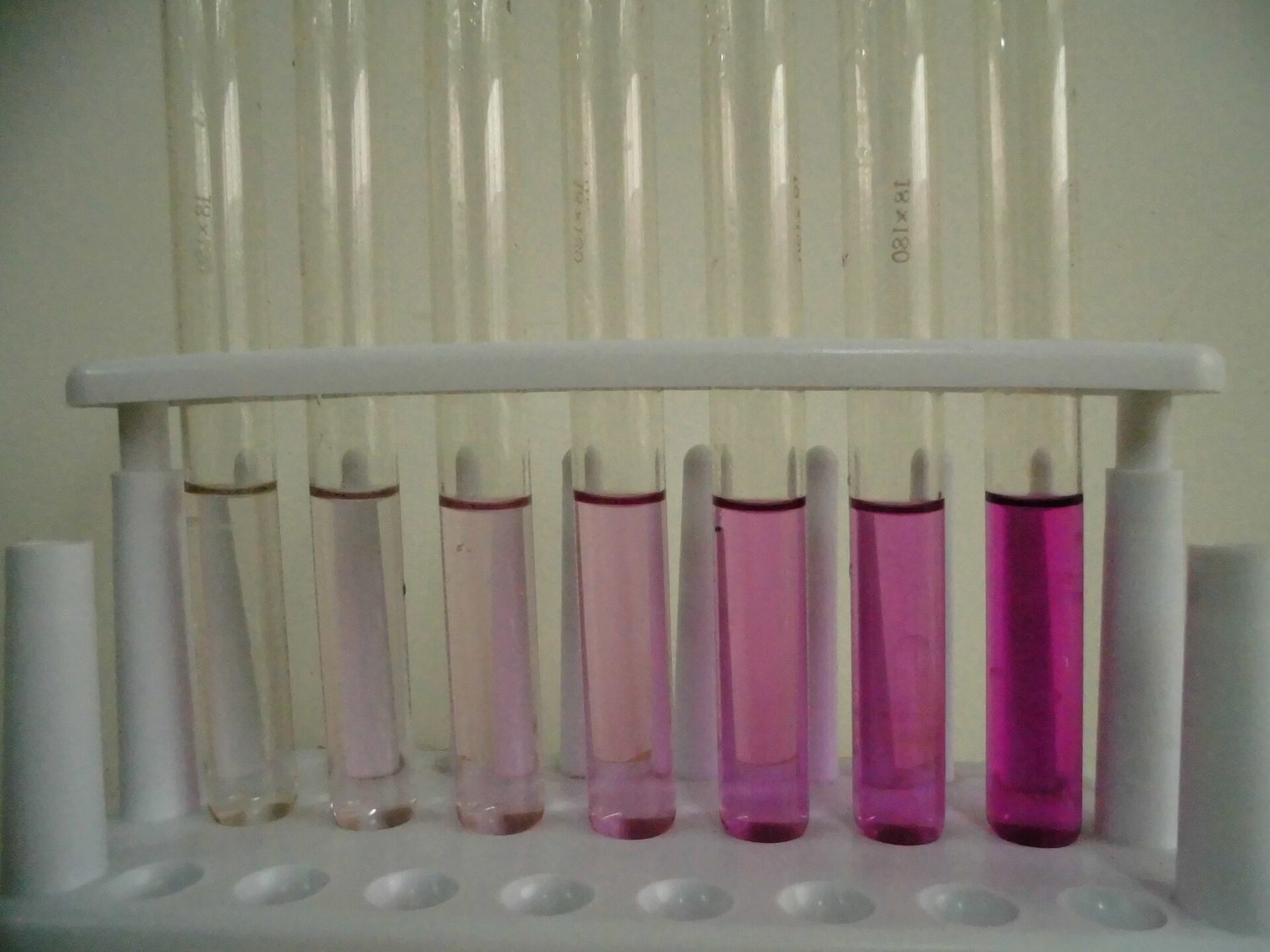
Step through a redox reaction. One substance loses electrons while another gains them — you can never have one without the other. · עבור שלב אחר שלב בתגובת חמצון-חיזור. חומר אחד מאבד אלקטרונים בעוד שחומר אחר מקבל אותם — לעולם לא ניתן לקבל אחד ללא השני.
| English | עברית |
|---|---|
| oxidation/ˌɒksɪˈdeɪʃn/ | חמצון |
| reduction/rɪˈdʌkʃn/ | חיזור |
| redox reaction/rɪˈdɒks rɪˈækʃn/ | תגובת חמצון-חיזור |
| electrons/ɪˈlektrɒnz/ | אלקטרונים |
| oxidation number/ˌɒksɪˈdeɪʃn ˈnʌmbə/ | מספר חמצון |
| oxidising agent/ˈɒksɪdaɪzɪŋ ˈeɪdʒənt/ | גורם מחמצן |
| reducing agent/rɪˈdjuːsɪŋ ˈeɪdʒənt/ | גורם מחזר |
| potassium manganate(VII)/pəˈtæsɪəm ˈmæŋɡəneɪt/ | מנגנטן אשלגני(VII) |
| potassium iodide/pəˈtæsɪəm ˈaɪədaɪd/ | יודיד אשלגן |
| iodine/ˈaɪədiːn/ | יוד |
Work through it step by step, with instant-check exercises. · לעבור על הדברים צעד אחר צעד, עם תרגילים לבדיקה מיידית.
Loading subjects… · טוען נושאים…