Skip to content · ⁨דלג לתוכן⁩

Gene Expression and Regulation · ⁨ביטוי גן וויסות⁩

AP Biology · ⁨ביולוגיה AP⁩ · Topic 6 · ⁨נושא 6⁩

Video lesson for this topic · ⁨שיעור וידאו לנושא זה⁩ Open the video page · ⁨פתח את עמוד הוידאו⁩
8:40

ביטוי גן וויסות

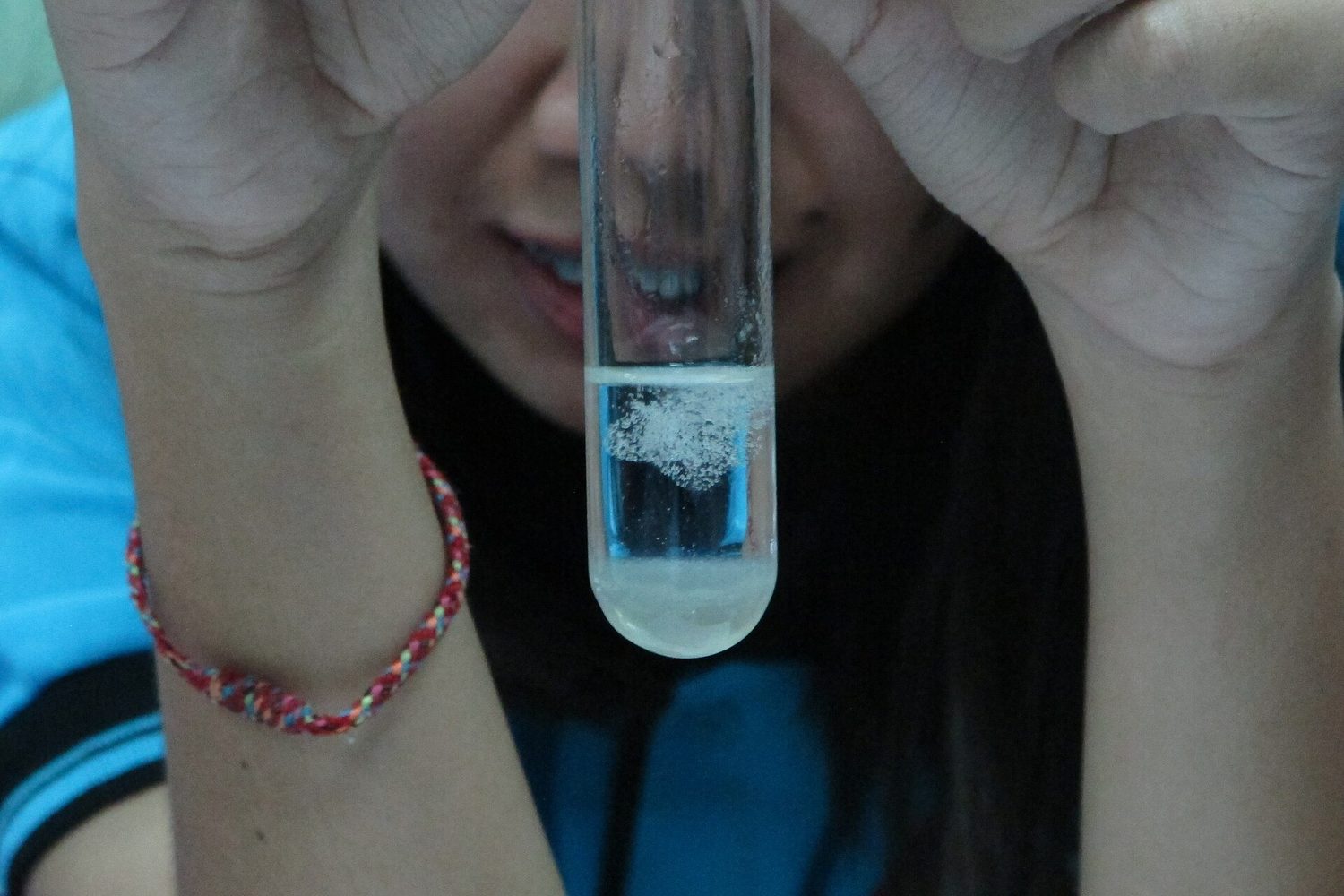
החוטים הלבנים בצינור הם DNA אמיתי, שהושאל מתאים רגילים. הוא לא נראה כמו כלום. אבל הוא מכיל את כל ההוראות שהגוף שלך יצריך לעולם.…

English narration · English + 中文 subtitles burned in · ⁨קריאת קול באנגלית · תרגום אנגלי + סינית שרוף בתוך הסרטון⁩

6.1

DNA and RNA Structure · ⁨מבנה DNA ו-RNA⁩

Syllabus · ⁨סיילבוס⁩
English

Enduring Understanding (BIG IDEA 3 — Information Storage and Transmission): Living systems store, retrieve, transmit, and respond to information essential to life processes.

Learning Objective 6.1.A: Describe the structures involved in passing hereditary information from one generation to the next.

  • 6.1.A.1 Genetic information is stored in and passed to subsequent generations through DNA molecules and, in some cases, RNA molecules.
    • 6.1.A.1.i Prokaryotic organisms typically have circular chromosomes.
    • 6.1.A.1.ii Eukaryotic organisms typically have multiple linear chromosomes that are comprised of DNA. These chromosomes are condensed using histones and associated proteins.
  • 6.1.A.2 Prokaryotes and eukaryotes can contain plasmids, which are extra-chromosomal circular molecules of DNA.

Learning Objective 6.1.B: Describe the characteristics of DNA that allow it to be used as hereditary material.

  • 6.1.B.1 Nucleic acids exhibit specific nucleotide base pairing that is conserved through evolution.
    • 6.1.B.1.i Purines (guanine and adenine) have a double ring structure.
    • 6.1.B.1.ii Pyrimidines (cytosine, thymine, and uracil) have a single ring structure.
    • 6.1.B.1.iii Purines pair with pyrimidines: adenine with thymine (or uracil in RNA) and guanine with cytosine.
עברית

הבנה מתמשכת (רעיון גדול 3 — אחסון ומעבר מידע): מערכות חיות מאחסנות, מחזירות, מעבירות ומוגבות למידע החיוני לתהליכי החיים.

מטרות למידה 6.1.A: תאר את המבנים המעורבים בהעברת מידע גנטי מדור לדור.

  • 6.1.A.1 מידע גנטי מאוחסן ועובר לדורות הבאות דרך מולקולות DNA ובמקרים מסוימים מולקולות RNA.
    • 6.1.A.1.i אורגניזמים פרוקריוטיים בדרך כלל בעלי כרומוזומים מעגליים.
    • 6.1.A.1.ii אורגניזמים איקריאטיים בדרך כלל בעלי מספר רב של כרומוזומים ליניאריים המורכבים מ-DNA. כרומוזומים אלו מתכווצים באמצעות היסטונים וחלבונים קשורים.
  • 6.1.A.2 לפרוקריוטים ולאיקריאטים יכול להיות פלסמידים, שהם מולקולות DNA מעגליות מחוץ לכרומוזומים.

מטרות למידה 6.1.B: תאר את התכונות של DNA המאפשרות שימוש בו כחומר גנטי.

  • 6.1.B.1 חומצות גרעין מציגות זיווג בסיסי נאוכלוטידים ספציפי הנשמר לאורך האבולוציה.
    • 6.1.B.1.i פורינים (גואנין ואדנין) הם בעלי מבנה דו-טבעתי.
    • 6.1.B.1.ii פירימידינים (ציטוזין, תימין ואוראקיל) הם בעלי מבנה טבעתי אחד.
    • 6.1.B.1.iii פורינים זוגיים עם פירימידינים: אדנין עם תימין (או אוראקיל ב-RNA) וגואנין עם ציטוזין.
Source: College Board AP Course and Exam Description · ⁨מקור: תיאור הקורס והמבחן של College Board AP⁩

English

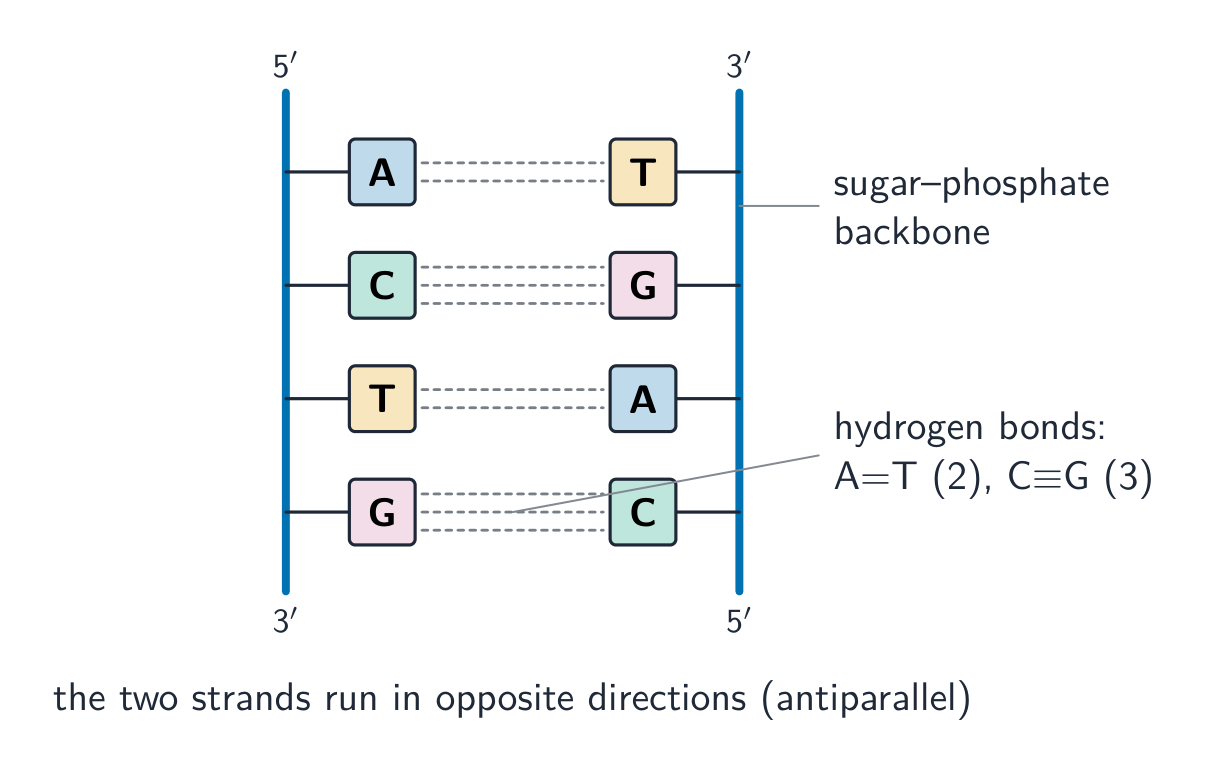
DNA carries genetic information as a double helix 双螺旋 of two strands. Its nucleotides 核苷酸 pair by rule – A with T, G with C (complementary base pairing 互补配对) – so one strand specifies the other. The strands run antiparallel 反平行. RNA is single-stranded, uses uracil (U) instead of thymine, and has ribose sugar.

How the DNA is packaged differs between the domains, and the CED asks for both.

  • Prokaryotic organisms typically have a single circular chromosome 环状染色体 in the cytoplasm, often with extra small circles called plasmids.
  • Eukaryotic organisms typically have multiple linear chromosomes 线性染色体, and each is condensed by wrapping around proteins called histones 组蛋白. That packing is what fits two metres of DNA into a nucleus a few micrometres across — and because a tightly wound region is hard for the transcription machinery to reach, the packing is itself a level of gene regulation.
עברית
ספיגת DNA מופרש מתמצית תאית — ה-DNA הוא מולקולה אמיתית ונראית לעין

DNA נושא מידע גנטי כסליל כפול של שני סלילים. ה-נוקאוטידים שלו זוגיים לפי כלל – A עם T, G עם C (זיווג בסיסים משלים) כך שסליל אחד מגדיר את השני. הסלילים נעים בכיוון אנטי-פראללי. RNA הוא סליל יחיד, משתמש באוראציל (U) במקום תימין, ומכיל סוכר ריבוז.

DNA: שני סלילים אנטי-פראלליים הקשורים בזיוגי בסיסים משלימים

האריזה של ה-DNA שונה בין הדומיינים, וה-CED דורש את שניהם.

  • לאוקריוטים יש בדרך כלל כרומוזום עגול יחיד בציטופלזמה, לעיתים עם מעגלים קטנים נוספים הנקראים פלסמידים.
  • לאוקריוטים יש בדרך כלל מספר כרומוזומים ליניאריים, וכל אחד מהם מתכווץ על ידי עטיפה סביב חלבונים הנקראים היסטונים. אריזה זו היא מה שמאפשר הכנסת שני מטרים של DNA לתוך גרעין בעל קוטר של מספר מיקרומטרים — ובגלל שהאזור המעטוף בחוזקה קשה למנגנון התרגום להגיע אליו, האריזה עצמה מהווה רמת ויסות גנטי.
6.2

DNA Replication · ⁨שכפול DNA⁩

Syllabus · ⁨סיילבוס⁩
English

Enduring Understanding (BIG IDEA 3 — Information Storage and Transmission): Living systems store, retrieve, transmit, and respond to information essential to life processes.

Learning Objective 6.2.A: Describe the mechanisms by which genetic information is copied for transmission between generations.

  • 6.2.A.1 DNA replication ensures continuity of hereditary information.
    • 6.2.A.1.i DNA is synthesized in the 5' to 3' direction.
    • 6.2.A.1.ii Replication is a semiconservative process, meaning one strand of DNA serves as the template for a new strand of complementary DNA.
    • 6.2.A.1.iii Helicase unwinds the DNA strands.
    • 6.2.A.1.iv Topoisomerase relaxes supercoiling in front of the replication fork.
    • 6.2.A.1.v DNA polymerase requires RNA primers to initiate DNA synthesis.
    • 6.2.A.1.vi DNA polymerase synthesizes new strands of DNA continuously on the leading strand and discontinuously on the lagging strand.
    • 6.2.A.1.vii Ligase joins the fragments on the lagging strand.
    • Exclusion statement: The names of the steps and particular enzymes involved, excluding DNA polymerase, ligase, RNA polymerase, helicase, and topoisomerase, are beyond the scope of the AP Exam.
עברית

הבנה מתמשכת (רעיון גדול 3 — אחסון ומעבר מידע): מערכות חיות מאחסנות, מחזירות, מעבירות ומוגבות למידע החיוני לתהליכי החיים.

מטרות למידה 6.2.A: תאר את המנגנונים שבהם מידע גנטי משוכפל להעברה בין דורות.

  • 6.2.A.1 שכפול DNA מבטיח רציפות של מידע גנטי.
    • 6.2.A.1.i DNA סינתטי בכיוון 5' ל-3'.
    • 6.2.A.1.ii השכפול הוא תהליך חצי-שמרני, כלומר חוט אחד של DNA משמש כתבנית לחוט חדש של DNA משלים.
    • 6.2.A.1.iii הלिकאזה פותחת את רצועות ה-DNA.
    • 6.2.A.1.iv טופואיסומראז משחרר סופר-קוילינג (התכווצות יתר) לפני מזלג הרפליקציה.
    • 6.2.A.1.v DNA פולימראז דורש מקדימי RNA כדי להתחיל סינתזת DNA.
    • 6.2.A.1.vi DNA פולימראז מסינתז רצועות חדשות של DNA ברצף ברצועה המובילה ובצורה לא רציפה ברצועה המאוחרת.
    • 6.2.A.1.vii ליגאזה מחברת את המקטעים ברצועה המאוחרת.
    • הצהרת חריגה: שמות השלבים והאנזימים הספציפיים המעורבים, למעט DNA פולימראז, ליגאז, RNA פולימראז, הליקאזה וטופואיסומראז, הם מעבר לטווח הלימודים של המבחן AP.

Source: College Board AP Course and Exam Description · ⁨מקור: תיאור הקורס והמבחן של College Board AP⁩

English

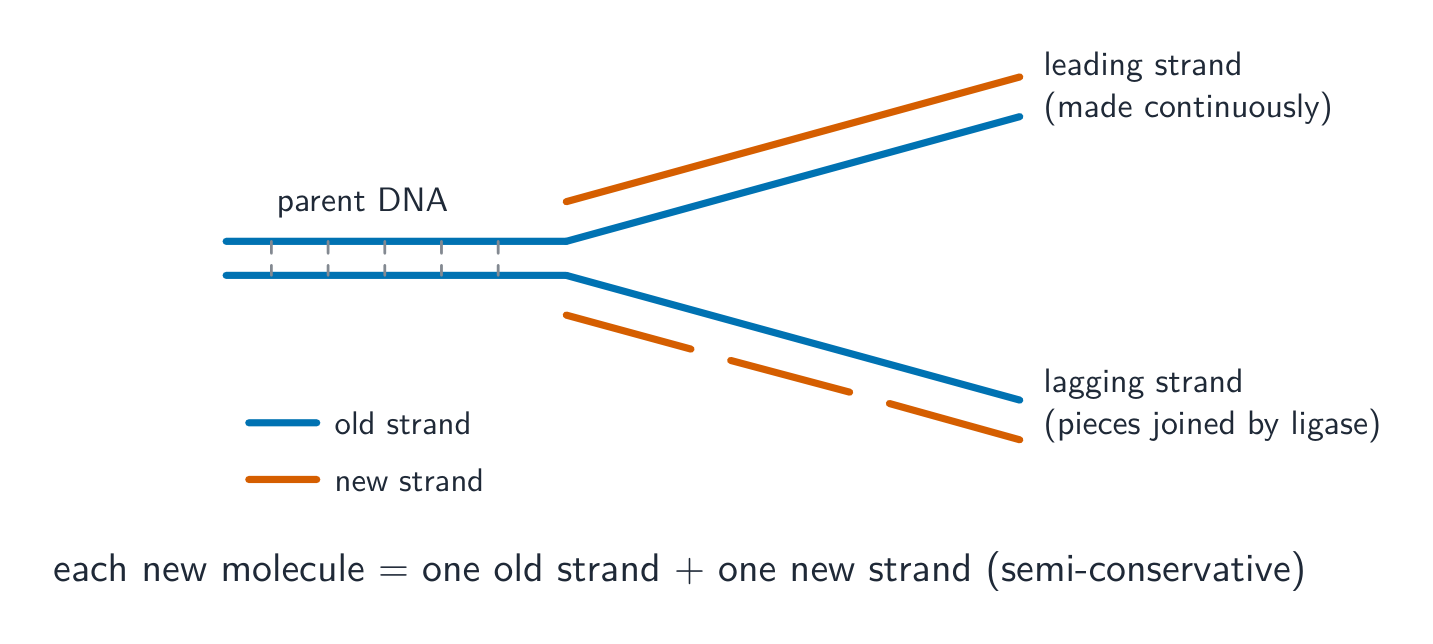
Before a cell divides, DNA is copied semiconservatively 半保留复制: the helix unwinds and each old strand templates a new one, so each daughter helix has one old and one new strand. DNA polymerase 聚合酶 adds nucleotides following base-pairing rules, building the new strand and proofreading as it goes.

עברית

לפני חלוקת תא, ה-DNA מועתק באופן שמית-שמרני: ההליקסה מתפתלת וה每条 הקדומה משמשת כתבנית לסיבה חדשה, כך שכל הליקסת בת מכילה סיבה אחת ישנה ואחת חדשה. פולימראז ה-DNA מוסיף נאוטידידים בהתאם לכללי זוגיות הבסיסים, בונה את הסיבה החדשה ומבצע בדיקות תקינות בזמן הפעולה.

שכפול DNA שמית-שמרני באתר השכפול
6.3

Transcription and RNA Processing · ⁨תרגום ועיבוד RNA⁩

Syllabus · ⁨סיילבוס⁩
English

Enduring Understanding (BIG IDEA 3 — Information Storage and Transmission): Living systems store, retrieve, transmit, and respond to information essential to life processes.

Learning Objective 6.3.A: Describe the mechanisms by which genetic information flows from DNA to RNA to protein.

  • 6.3.A.1 The sequence of the RNA bases, together with the structure of the RNA molecule, determines RNA function.
    • 6.3.A.1.i Messenger RNA (mRNA) molecules carry information from DNA in the nucleus to the ribosome in the cytoplasm.
    • 6.3.A.1.ii Distinct transfer RNA (tRNA) molecules bind specific amino acids and have anticodon sequences that base pair with the codons of mRNA. tRNA is recruited to the ribosome during translation to generate the primary peptide sequence based on the mRNA sequence.
    • 6.3.A.1.iii Ribosomal RNA (rRNA) molecules are functional building blocks of ribosomes.
  • 6.3.A.2 RNA polymerases use a single template strand of DNA to direct the inclusion of bases in the newly formed RNA molecule. This process is known as transcription.
  • 6.3.A.3 The enzyme RNA polymerase synthesizes mRNA molecules in the 5' to 3' direction by reading the template DNA strand in the 3' to 5' direction.
  • 6.3.A.4 In eukaryotic cells the mRNA transcript undergoes a series of enzyme-mediated modifications.
    • 6.3.A.4.i The addition of a poly-A tail makes mRNA more stable.
    • 6.3.A.4.ii The addition of a GTP cap helps with ribosomal recognition.
    • 6.3.A.4.iii The excision of introns, along with the splicing and retention of exons, generates different versions of the resulting mature mRNA molecule. This process is known as alternative splicing.
עברית

הבנה מתמשכת (רעיון גדול 3 — אחסון ומעבר מידע): מערכות חיות מאחסנות, מחזירות, מעבירות ומוגבות למידע החיוני לתהליכי החיים.

מטרות הלמידה 6.3.A: לתאר את המנגנונים שבהם מידע גנטי זורם מ-DNA ל-RNA ולחלבון.

  • 6.3.A.1 רצף בסיסי ה-RNA, יחד עם מבנה המולקולה, קובע את התפקוד של ה-RNA.
    • 6.3.A.1.i מולקולות mRNA נושאות מידע מ-DNA בגרעין אל הריבוזום בציטופלזמה.
    • 6.3.A.1.ii מולקולות tRNA שונות מקשרות חומצות אמינו ספציפיות ויש להן רצפי אנטי-קודון המשלימים בזוגיות עם הקודונים של mRNA. tRNA מיועד לריבוזום במהלך התרגום כדי ליצור את הרצף הפפטיד הראשוני בהתאם לרצף ה-mRNA.
    • 6.3.A.1.iii מולקולות rRNA הן בלוקי בנייה פונקציונליים של ריבוזומים.
  • 6.3.A.2 RNA פולימראזים משתמשים ברצועת תבנית אחת של DNA כדי להנחות הוספת בסיסים למולקולת ה-RNA הנוצרת. תהליך זה נקרא תרגום גנטי.
  • 6.3.A.3 האנזים RNA פולימראז ממשיך מולקולות mRNA בכיוון 5' ל-3' על ידי קריאת רצועת ה-DNA התבנית בכיוון 3' ל-5'.
  • 6.3.A.4 בתאים אוקריוטיים, תרסקריפט ה-mRNA עובר סדרת שינויים המתווכים על ידי אנזימים.
    • 6.3.A.4.i הוספת זנב פוליא- A הופכת את ה-mRNA ליציב יותר.
    • 6.3.A.4.ii הוספת כובע GTP עוזרת בזיהוי על ידי ריבוזומים.
    • 6.3.A.4.iii חיתוך אינטרונים, לצד חיבור ושמירה על אקסונים, מייצר גרסאות שונות של מולקולת ה-mRNA הבוגרת. תהליך זה נקרא חיבור אלטרנטיבי.

Source: College Board AP Course and Exam Description · ⁨מקור: תיאור הקורס והמבחן של College Board AP⁩

English

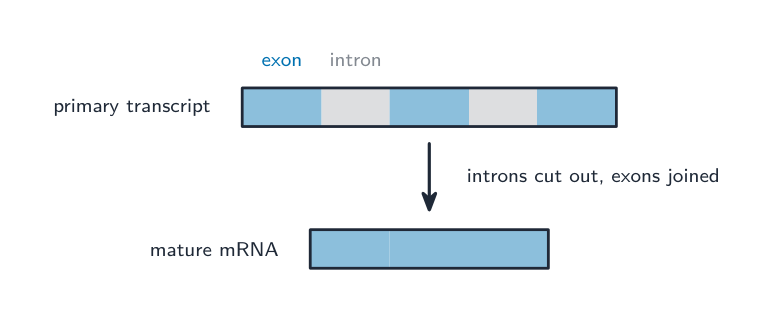
Transcription 转录 copies a gene's DNA into messenger RNA 信使RNA (mRNA). RNA polymerase reads the template strand and builds a complementary RNA. In eukaryotes the mRNA is then processed: a cap and tail are added, and introns 内含子 (non-coding parts) are spliced out, leaving the exons 外显子.

The 5′ cap added during processing is a modified guanine nucleotide — a GTP cap — and its job is recognition: it helps the ribosome recognise and bind the mRNA, as well as protecting the transcript from degradation as it leaves the nucleus.

עברית

תרגום מעתיק את ה-DNA של גן ל-RNA מסייע (mRNA). פולימראז ה-RNA קורא את הסיבה התבנית ובונה RNA משלים. באוקריוטים, לאחר מכן העיבוד mRNA: נוספים כובע וזנב, ו-אינטרונים (חלקים שאינם מקודדים) נחתכים החוצה, ומותרים את ה-אקסונים.

אינטרונים נשלפים ואקסונים מחוברים ליצירת mRNA בשל

הכובע ב-5′ שנוסף במהלך העיבוד הוא נאוטיד גואנין מודול — כובע GTP — ותפקידו הוא זיהוי: הוא עוזר לריבוזום לזהות ולקשר את ה-mRNA, כמו גם להגן על התרגום מפני פירוק כשהוא יוצא מהגרעין.

Explore · ⁨חקור⁩

Transcribe DNA into messenger RNA · ⁨תרגם DNA ל-RNA משרת⁩

Transcription copies a DNA template into mRNA, pairing A→U, T→A, C→G, G→C. Step through to build the RNA strand base by base. · ⁨תרגום מעתיק תבנית DNA ל-mRNA, עם זוגיות A→U, T→A, C→G, G→C. מעבר שלב-לשלב לבניית רצועת ה-RNA בסיס אחר בסיס.⁩

6.4

Translation · ⁨תרגום⁩

Syllabus · ⁨סיילבוס⁩
English

Enduring Understanding (BIG IDEA 3 — Information Storage and Transmission): Living systems store, retrieve, transmit, and respond to information essential to life processes.

Learning Objective 6.4.A: Explain how the phenotype of an organism is determined by its genotype.

  • 6.4.A.1 Translation of the mRNA to generate a polypeptide occurs on ribosomes that are present in the cytoplasm of both prokaryotic and eukaryotic cells, as well as the cytoplasmic surface of the rough ER of eukaryotic cells.
  • 6.4.A.2 In prokaryotic organisms, translation of the mRNA molecule occurs while it is being transcribed.
  • 6.4.A.3 Translation involves many sequential steps, including initiation, elongation, and termination. The salient features of translation include:
    • 6.4.A.3.i Translation is initiated when the rRNA in the ribosome interacts with the mRNA at the start codon (AUG, coding for the amino acid methionine).
    • 6.4.A.3.ii The sequence of nucleotides on the mRNA is read in triplets, called codons.
    • 6.4.A.3.iii Each codon encodes a specific amino acid, which can be deduced by using a genetic code chart. Many amino acids are encoded by more than one codon.
    • 6.4.A.3.iv Nearly all living organisms use the same genetic code, which is evidence for the common ancestry of all living organisms.
    • 6.4.A.3.v tRNA brings the correct amino acid to the place specified by the codon on the mRNA.
    • 6.4.A.3.vi The amino acid is transferred to the growing polypeptide chain.
    • 6.4.A.3.vii The process continues along the mRNA until a stop codon is reached.
    • 6.4.A.3.viii Translation terminates with the release of the newly synthesized protein.
    • Exclusion statement: The details and names of the enzymes and factors involved in each of these steps are beyond the scope of the AP Exam.
    • Exclusion statement: Memorization of the genetic code, with the exception of the start codon AUG, is beyond the scope of the AP Exam.
  • 6.4.A.4 Genetic information in retroviruses is a special case and has an alternate flow of information: from RNA to DNA, made possible by reverse transcriptase, an enzyme that copies the viral RNA genome into DNA. This DNA integrates into the host genome and is transcribed and translated for the assembly of new viral progeny.
עברית

הבנה מתמשכת (רעיון גדול 3 — אחסון ומעבר מידע): מערכות חיות מאחסנות, מחזירות, מעבירות ומוגבות למידע החיוני לתהליכי החיים.

מטרות הלמידה 6.4.A: להסביר כיצד הפנוטיפ של אורגניזם נקבע על ידי הגנוטיפ שלו.

  • 6.4.A.1 התרגום של ה-mRNA ליצירת פוליפפטיד מתרחש על ריבוזומים הנמצאים בציטופלזמה של תאי פרוקריוטים ואוקריוטים, כמו גם על פני שטח ה-ER הגס הציטופלזמי של תאי אוקריוטים.
  • 6.4.A.2 באורגניזמים פרוקריוטיים, התרגום של מולקולת ה-mRNA מתרחש בזמן שהיא מתורגמת (Transcription).
  • 6.4.A.3 התרגום כולל מספר רב של שלבים עוקבים, כולל התחלה, הארכה וסיום. המאפיינים הבולטים בתרגום הם:
    • 6.4.A.3.i התרגום מתחיל כאשר ה-rRNA בריבוזום נעשה אינטראקציה עם ה-mRNA בקודון ההתחלה (AUG, המקודד לחומצה אמינית מטיונין).
    • 6.4.A.3.ii הרצף של הנוקלאוטידים ב-mRNA נקרא בשלושות, הנקראות קודונים.
    • 6.4.A.3.iii כל קודון מקודד חומצה אמינית ספציפית, שניתן לגזור על ידי שימוש בטבלת הקוד הגנטי. למעט חומצות אמיניות מסוימות מקודדות על ידי יותר מקודון אחד.
    • 6.4.A.3.iv כמעט כל האורגניזמים החיים משתמשים באותו קוד גנטי, מה שמצביע על מוצא משותף לכל האורגניזמים החיים.
    • 6.4.A.3.v ה-tRNA מביאה את החומצה האמינית הנכונה למיקום שנקבע על ידי הקודון ב-mRNA.
    • 6.4.A.3.vi החומצה האמינית מועברת לשרשרת הפוליפפטיד הגדלה.
    • 6.4.A.3.vii התהליך ממשיך לאורך ה-mRNA עד שתגיע לקודון עצירה.
    • 6.4.A.3.viii התרגום מסתיים בשחרור החלבון שהוסנתז חדש.
    • *הערה: פרטים ושמות האנזימים והגורמים המשתתפים בכל שלב מהם הם מחוץ להיקף הבחינה AP.
    • *הערה: השינון של הקוד הגנטי, למעט קודון ההתחלה AUG, הוא מחוץ להיקף הבחינה AP.
  • 6.4.A.4 המידע הגנטי בווירוסים רטרוויוריים הוא מקרה מיוחד ויש לו זרימת מידע חלופית: מ-RNA ל-DNA, המאפשרת על ידי טרנסקריפטזה הפוכה, אנזים שמעתיק את הגנום הוויראלי של ה-RNA ל-DNA. DNA זה משתלב בגנום המארח ומתורגם ומתרגם לצורך הרכבת צאצאים ויראליים חדשים.

Source: College Board AP Course and Exam Description · ⁨מקור: תיאור הקורס והמבחן של College Board AP⁩

English

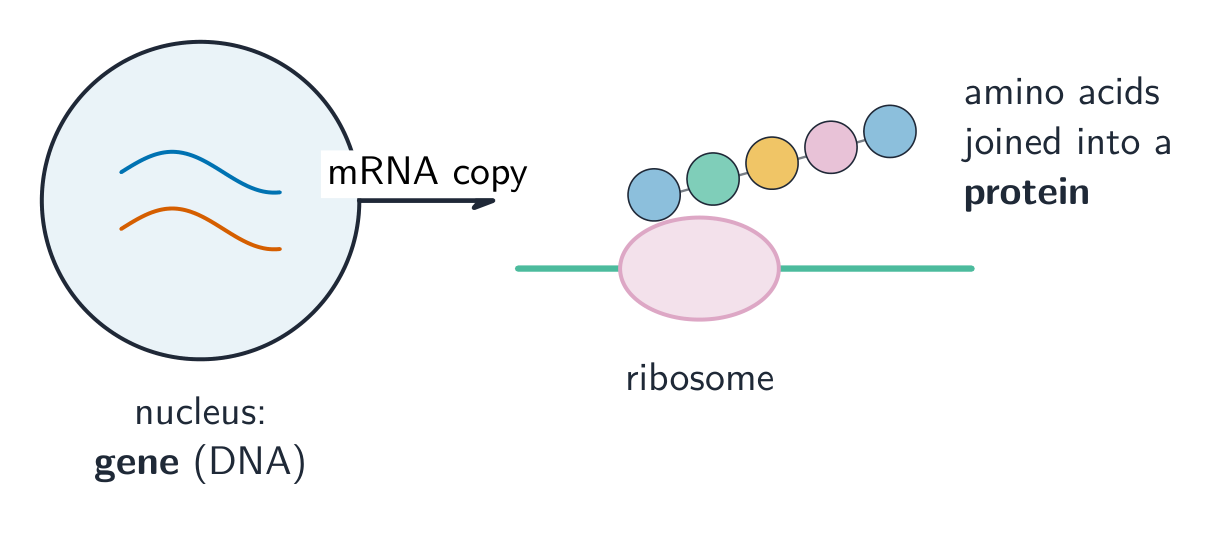
Translation 翻译 builds a protein from the mRNA at the ribosome 核糖体. The mRNA is read in three-base codons 密码子, each specifying one amino acid (the genetic code). Transfer RNA 转运RNA brings the matching amino acid, and the ribosome links them into a polypeptide until a stop codon ends it. This is the "central dogma": DNA → RNA → protein.

עברית

תרגום בונה חלבון מה-mRNA ב-ריבוזום. ה-mRNA נקרא בקודונים בעלי שלושה בסיסים, כל אחד מהם מציין חומצה אמינו אחת (הקוד הגנטי). tRNA מביאה את החומצה האמינו המתאימה, והריבוזום מקשר אותן לפוליפפטיד עד לקודון עצירה שיסתיים בתהליך. זהו ה"דוגמה המרכזית": DNA → RNA → חלבון.

mRNA נקרא על ידי ריבוזום כדי לבנות חלבון מחומצות אמינו
6.5

Regulation of Gene Expression · ⁨ויסות ביטוי גנים⁩

Syllabus · ⁨סיילבוס⁩
English

Enduring Understanding (BIG IDEA 3 — Information Storage and Transmission): Living systems store, retrieve, transmit, and respond to information essential to life processes.

Learning Objective 6.5.A: Describe the types of interactions that regulate gene expression.

  • 6.5.A.1 Regulatory sequences are stretches of DNA that interact with regulatory proteins to control transcription. Some genes are constitutively expressed, and others are inducible.
  • 6.5.A.2 Epigenetic changes can affect gene expression through reversible modifications of DNA or histones.
  • 6.5.A.3 The phenotype of a cell or an organism is determined by the combination of genes that are expressed and the levels at which they are expressed.
    • 6.5.A.3.i Observable cell differentiation results from the expression of genes for tissue-specific proteins.
    • 6.5.A.3.ii Induction of transcription factors during development results in sequential gene expression.
    • 6.5.A.3.iii The function and amount of gene products determine the phenotype of organisms.

Learning Objective 6.5.B: Explain how the location of regulatory sequences relates to their function.

  • 6.5.B.1 Both prokaryotes and eukaryotes have groups of genes that are coordinately regulated.
    • 6.5.B.1.i Prokaryotes regulate operons in an inducible or repressible system.
    • 6.5.B.1.ii In eukaryotes, groups of genes may be influenced by the same transcription factors to coordinately regulate expression.
עברית

הבנה מתמשכת (רעיון גדול 3 — אחסון ומעבר מידע): מערכות חיות מאחסנות, מחזירות, מעבירות ומוגבות למידע החיוני לתהליכי החיים.

מטרות הלמידה 6.5.A: לתאר את סוגי האינטראקציות המכוונות ביטוי גנים.

  • 6.5.A.1 רצפי ויסות הם stretches של DNA הנעשים אינטראקציה עם חלבוני ויסות כדי לשלוט בתורגמה. חלק מהגנים מבויעים באופן קונסטיטוטיבי וחלקם מבויעים באופן אינדוקסיבי.
  • 6.5.A.2 שינויים אפיקגנטיים יכולים להשפיע על ביטוי גנים דרך שינויים הפיכים של ה-DNA או ההיסטונים.
  • 6.5.A.3 הפנוטיפ של תא או אורגניזם נקבע על ידי השילוב של הגנים המבוيعים ובדרגות הביטוי שלהם.
    • 6.5.A.3.i הבדלי תא נראים לעין נובעים מביטוי גנים לחלבונים ספציפיים לרקמה.
    • 6.5.A.3.ii הדלקת גורמי תעתיק במהלך פיתוח גורמת לביוטון גנים רצפי.
    • 6.5.A.3.iii הפונקציה וכמות המוצרים הגנטיים קובעים את הפנוטיפ של האורגניזמים.

מטרות למידה 6.5.B: הסבר כיצד מיקום הרצפים הווסתוני קשור לפונקציה שלהם.

  • 6.5.B.1 גם לפרוקאריוטים וגם לאיכריוטים יש קבוצות גנים המווסתות באופן סנכרוני.
    • 6.5.B.1.i לפרוקאריוטים יש וסטת אופרונים במערכת אינדוקציבית או רפראסיבית.
    • 6.5.B.1.ii באיכריוטים, קבוצות גנים עשויות להיות מושפעות מאותו גורם תמסול כדי לווסת ביטוי באופן סנכרוני.

Source: College Board AP Course and Exam Description · ⁨מקור: תיאור הקורס והמבחן של College Board AP⁩

English

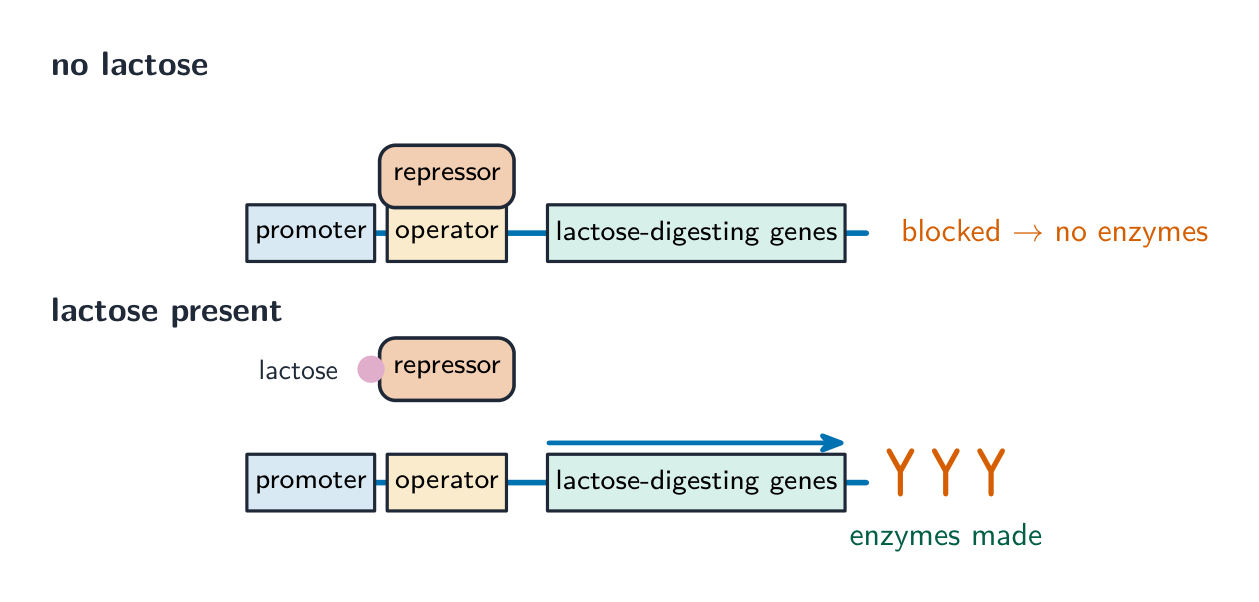
Cells control which genes are expressed and when. In prokaryotes, operons 操纵子 switch groups of genes on or off. In eukaryotes, regulation happens at many levels – which genes are transcribed (transcription factors, promoters, enhancers), RNA processing, and after translation. This lets a cell respond to its environment without changing its DNA.

עברית

תאים שולטים באילו גנים מבויעים ובמתי. באוקריוטים, אופרונים מדליקים או מכבים קבוצות של גנים. באוקריוטים, ויסות מתרחש ברמות רבות – אילו גנים מתורגמים (גורמי תרגום, פרומוטורים, מגברונים), עיבוד RNA, ואחרי תרגום. זה מאפשר לתא להגיב לסביבתו ללא שינוי ב-DNA שלו.

אופרון lac מדליק גנים רק כאשר לקטוז נוכח
6.6

Gene Expression and Cell Specialization · ⁨ביטוי גנים והתמחות תא⁩

Syllabus · ⁨סיילבוס⁩
English

Enduring Understanding (BIG IDEA 3 — Information Storage and Transmission): Living systems store, retrieve, transmit, and respond to information essential to life processes.

Learning Objective 6.6.A: Explain how the binding of transcription factors to promoter regions affects gene expression and the phenotype of the organism.

  • 6.6.A.1 RNA polymerase and transcription factors bind to promoter or enhancer DNA sequences to initiate transcription. These sequences can be upstream or downstream of the transcription start site.
  • 6.6.A.2 Negative regulatory molecules inhibit gene expression by binding to DNA and blocking transcription.

Learning Objective 6.6.B: Explain the connection between the regulation of gene expression and phenotypic differences in cells and organisms.

  • 6.6.B.1 Gene regulation results in differential gene expression and influences cell products and functions.
  • 6.6.B.2 Certain small RNA molecules have roles in regulating gene expression.
עברית

הבנה מתמשכת (רעיון גדול 3 — אחסון ומעבר מידע): מערכות חיות מאחסנות, מחזירות, מעבירות ומוגבות למידע החיוני לתהליכי החיים.

מטרות למידה 6.6.A: הסבר כיצד קישור גורמי תמסול לאזורי מקדמים משפיע על ביטוי גנים ועל הפנוטיפ של האורגניזם.

  • 6.6.A.1 RNA פולימראזה וגורמי תמסול נקשרים לרצפי DNA מקדמים או מגברים כדי להפעיל תמסול. רצפים אלו יכולים להיות מעל (upstream) או מתחת (downstream) לאתר ההתחלה של התמסול.
  • 6.6.A.2 מולקולות ויסות שליליות מדכאות ביטוי גנים על ידי קישור ל-DNA וחסימת התמסול.

מטרות למידה 6.6.B: הסבר הקשר בין ויסת ביטוי גנים להבדלים פנוטיפיים בתאים ובאורגניזמים.

  • 6.6.B.1 ויסת גנים מובילה לביטוי גנים שונה ומשפיעה על מוצרים ותפקודי התא.
  • 6.6.B.2 חלק ממולקולות ה-RNA הקטנות משמשות בווסת ביטוי גנים.

Source: College Board AP Course and Exam Description · ⁨מקור: תיאור הקורס והמבחן של College Board AP⁩

English

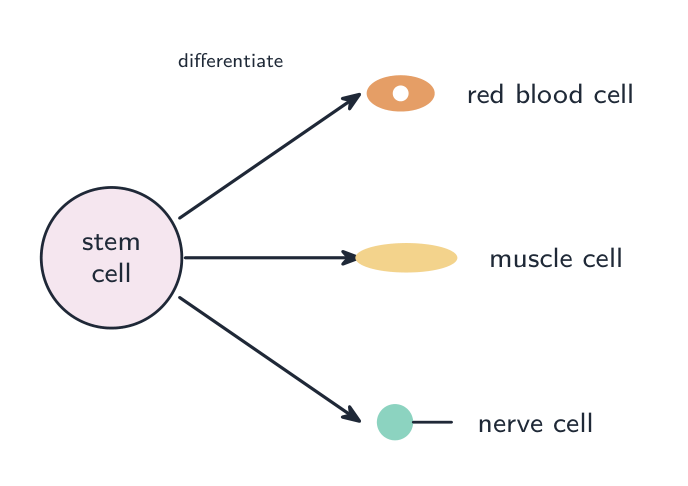
Every cell in a body has the same DNA, yet cells differ because they express different genes – differential gene expression 差异表达. This is how one fertilized egg produces many specialized cell types (muscle, nerve, skin); signals during development turn specific genes on and off.

עברית

לכל תא בגוף יש את אותו ה-DNA, אך תאים שונים כי הם מבטאים גנים שונים – ביטוי גנטי בלתי שווה. זוהי הדרך שבה ביצה מופרית אחת מייצרת סוגים רבים של תאים מומחים (שרירים, עצבים, עור); אותות במהלך ההתפתחות מדליקים וכבים גנים ספציפיים.

תא גזע מתמחז לסוגי תאים מומחים
6.7

Mutations · ⁨מוטציות⁩

Syllabus · ⁨סיילבוס⁩
English

Enduring Understanding (BIG IDEA 3 — Information Storage and Transmission): Living systems store, retrieve, transmit, and respond to information essential to life processes.

Learning Objective 6.7.A: Describe the various types of mutation.

  • 6.7.A.1 Alterations in a DNA sequence are mutations that can cause changes in the type or amount of the protein produced and the consequent phenotype. DNA mutations can be beneficial, detrimental, or neutral based on the effect or the lack of effect they have on the resulting nucleic acid or protein and the phenotypes that are conferred by the protein.
    • 6.7.A.1.i Point mutations occur when one nucleotide has been substituted for a different nucleotide.
    • 6.7.A.1.ii Frameshift mutations occur when one or more nucleotides are inserted or deleted, causing the reading frame to be shifted.
    • 6.7.A.1.iii Nonsense mutations occur when there is a point mutation that causes a premature stop.
    • 6.7.A.1.iv Silent mutations occur when the change in the nucleotide sequence has no effect on the amino acid sequence.
    • Illustrative examples for 6.7.A.1:
      • Mutations in the CFTR gene disrupt ion transport and result in cystic fibrosis.
      • Mutations in the MC1R gene give adaptive melanism in pocket mice.
    • Exclusion statement: Knowledge of specific mutations and their effects is beyond the scope of the AP Exam.

Learning Objective 6.7.B: Explain how changes in genotype may result in changes in phenotype.

  • 6.7.B.1 Errors in DNA replication or DNA repair mechanisms as well as external factors, including radiation and reactive chemicals, can cause random mutations in the DNA.
    • 6.7.B.1.i Whether a mutation is beneficial, detrimental, or neutral depends on the environmental context.
    • 6.7.B.1.ii Mutations are a source of genetic variation.
  • 6.7.B.2 Errors in mitosis or meiosis can result in changes in phenotype.
    • 6.7.B.2.i Changes in chromosome number resulting from nondisjunction often result in new phenotypes caused by triploidy (aneuploidy).
    • 6.7.B.2.ii Changes in chromosome number often result in disorders with developmental limitations.
    • 6.7.B.2.iii Alterations in chromosome structure lead to genetic disorders.
    • Exclusion statement: Knowledge of specific disorders related to changes in chromosome number is beyond the scope of the AP Exam.

Learning Objective 6.7.C: Explain how alterations in DNA sequences contribute to variation that can be subject to natural selection.

  • 6.7.C.1 Changes in genotype may affect phenotypes that are subject to natural selection. Genetic changes that enhance survival and reproduction can be selected for by environmental conditions.
    • 6.7.C.1.i The horizontal acquisitions of genetic information in prokaryotes via transformation (uptake of DNA), transduction (viral transmission of genetic information), conjugation (cell-to-cell transfer of DNA), and transposition (movement of DNA segments within and between DNA molecules) increase genetic variation.
    • 6.7.C.1.ii Related viruses can recombine genetic information if they infect the same host cell.
    • 6.7.C.1.iii Reproductive processes that increase genetic variation are evolutionarily conserved and are shared by various organisms.
    • Illustrative examples for 6.7.C.1: Sickle cell anemia
עברית

הבנה מתמשכת (רעיון גדול 3 — אחסון ומעבר מידע): מערכות חיות מאחסנות, מחזירות, מעבירות ומוגבות למידע החיוני לתהליכי החיים.

מטרות למידה 6.7.A: תיאור סוגי המוטציה השונים.

  • 6.7.A.1 שינויים ברצף ה-DNA הם מוטציות שיכולות לגרום לשינויים בסוג או בכמות החלבון המיוצר ולפנוטיפ הנגזר מכך. מוטציות ב-DNA יכולות להיות יועילות, מזיקות או ניטרליות בהתבסס על ההשפעה או העדר ההשפעה שלהן על חומצה גנטית או חלבון נוצר ועל הפנוטיפים שמעניק החלבון.
    • 6.7.A.1.i מוטציות נקודתיות מתרחשות כאשר נאוטידיד אחד הוחלף בנאוטידיד אחר.
    • 6.7.A.1.ii מוטציות הזזה מסגרת מתרחשות כאשר נאוטידיד אחד או יותר מוחדרים או נמחקים, מה שגורם להזזה במסגרת הקריאה.
    • 6.7.A.1.iii מוטציות הפסקה (nonsense) מתרחשות כאשר ישנה מוטציה נקודתית הגורמת לעצירה מוקדמת.
    • 6.7.A.1.iv מוטציות שקטות מתרחשות כאשר השינוי ברצף הנאוטידידים אינו משפיע על רצף האמינו_'+s_'+.
    • דוגמאות מדגמות עבור 6.7.A.1:
      • מוטציות בגן CFTR מפריעות לתובלת יונים וגורמות למחלת סיסית ריאתית.
      • מוטציות בגן MC1R גורמות למלניזם אדפטיבי בעכברוני כיס.
    • הצהרת בלילה: ידע על מוטציות ספציפיות והשפעתן אינו נכלל בתחום המבחן AP.

יעד לימודי 6.7.B: הסבר כיצד שינויים בגנוטיפ עשויים לגרום לשינויים בפנוטיפ.

  • 6.7.B.1 שגיאות בשכפול DNA או במנגנוני תיקון DNA, כמו גם גורמים חיצוניים, כגון קרני רדיואקטיביות וחומרים ריאקטיביים, עלולים לגרום למוטציות אקראיות ב-DNA.
    • 6.7.B.1.i האם מוטציה היא יתירית, מזיקה או ניטרלית תלויה בהקשר הסביבתי.
    • 6.7.B.1.ii מוטציות הן מקור למגוון גנטי.
  • 6.7.B.2 שגיאות במייטוז או במיוזה עלולות לגרום לשינויים בפנוטיפ.
    • 6.7.B.2.i שינויים במספר הכרומוזומים הנגרמים מעדר הפרדה (nondisjunction) מובילים לעיתים קרובות לפנוטיפים חדשים כתוצאה משלושיות (אנופלואדיה).
    • 6.7.B.2.ii שינויים במספר הכרומוזומים מובילים לעיתים קרובות למחלות עם מגבלות התפתחות.
    • 6.7.B.2.iii שינויים במבנה הכרומוזומים מובילים למחלות גנטיות.
    • הצהרת בלילה: ידע על מחלות ספציפיות הקשורות לשינויים במספר הכרומוזומים אינו נכלל בתחום המבחן AP.

יעד לימודי 6.7.C: הסבר כיצד שינויים ברצפי DNA תורמים למגוון שעלול להיות נתון לבחירה טבעית.

  • 6.7.C.1 שינויים בגנוטיפ עשויים להשפיע על פנוטיפים הנמצאים תחת בחירה טבעית. שינויים גנטיים המגבירים את ההישרדות וההתרבהות יכולים להיות נבחרים על ידי תנאי הסביבה.
    • 6.7.C.1.i רכישת מידע גנטי אנכי בקדקאריוטים דרך טרנספורמציה (ספיגת DNA), טרנסדוקציה (העברת מידע גנטי ויראלית), קונג'וגציה (העברת DNA מתא לתא) וטרנספוזיציה (תנועת מקטעי DNA בתוך ובין מולקולות DNA) מגבירים את המגוון הגנטי.
    • 6.7.C.1.ii וירוסים קשורים יכולים לשלב מידע גנטי אם הם מזהמים את אותה תא מארח.
    • 6.7.C.1.iii תהליכים רפרודוקטיביים המגבירים את המגוון הגנטי הם שמורים אבולוציונית ושיתופיים בין אורגניזמים שונים.
    • דוגמאות להמחשה ל-6.7.C.1: אנמיה תאית צורת סחף

Source: College Board AP Course and Exam Description · ⁨מקור: תיאור הקורס והמבחן של College Board AP⁩

English

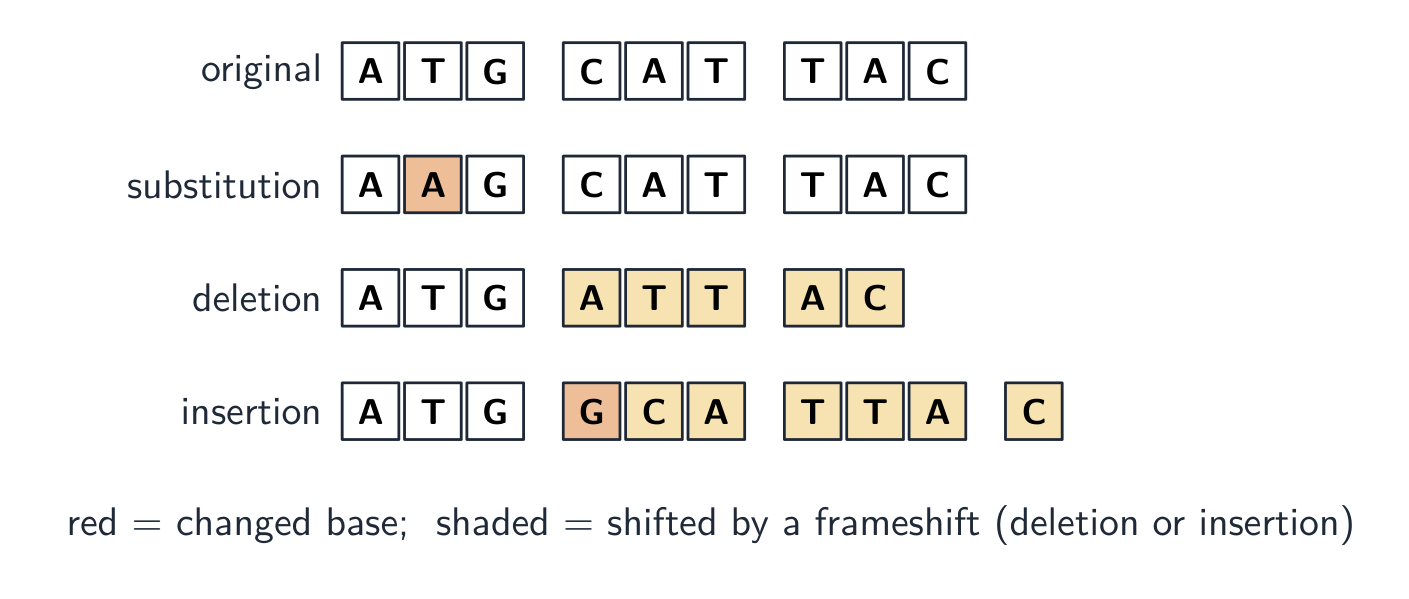
A mutation 突变 is a change in the DNA sequence. Point mutations change one base (silent, missense, or nonsense); insertions/deletions can cause a frameshift 移码 that garbles everything downstream. Mutations in gametes are heritable; they may be harmful, neutral, or beneficial – and beneficial ones supply the variation for natural selection.

Whole-chromosome errors change the phenotype too. Mutation is not only a change of base: errors in mitosis or meiosis can result in changes in phenotype. If chromosomes fail to separate — nondisjunction 不分离 — a gamete receives an extra copy or none, and the resulting zygote has an abnormal chromosome number (aneuploidy 非整倍性). Trisomy 21 is the familiar example. Because a whole chromosome carries hundreds of genes, the phenotypic effect is far broader than a point mutation's.

עברית

מוטציה היא שינוי ברצף ה-DNA. מוטציות נקודתיות משנות בסיס אחד (שקט, מיסנס או נונסנס); הכנסות/מחיקות עלולות לגרום להזזת מסגרת שמבלבלת הכל בשאר הרצף. מוטציות בגמטות הן ירثיות; הן עשויות להיות מזיקות, ניטרליות או מועילות – והמוטציות המועילות מספקות את השונות לקידוח טבעי.

מוטציות החלפה, מחיקה והכנסה

שגיאות כרומוזומליות שלמות משנות גם את הפנוטיפ. מוטציה אינה רק שינוי בסיס: שגיאות במיוזה או במיטוזה עלולות להוביל לשינויים בפנוטיפ. אם כרומוזומים לא נפרדים – אי-הפרדה – גמטה מקבלת העתק נוסף או אף אחד, והזיגוטה הנוצרת בעלת מספר כרומוזומים חריג (אנופלואדיה). תריסומי 21 הוא הדוגמה המוכרת מכאן. מכיוון שכרומוזום שלם נושא מאות גנים, ההשפעה הפנוטיפית רחבה הרבה יותר מזו של מוטציה נקודתית.

Vocabulary · ⁨מילון מונחים⁩ Train · ⁨אימון⁩
English עברית
double helix/ˈdʌbl ˈhiːlɪks/ הליקס הכפול
nucleotides/ˈnjuːklɪɒtaɪdz/ ניאוטינודים
complementary base pairing/ˌkɒmplɪˈmentəri beɪs ˈpeərɪŋ/ זיווג בסיסים משלים
antiparallel/ˌæntɪˈpærəlel/ אנטי-מקביל
single circular chromosome/ˈsɪŋɡl ˈsɜːkjʊlə ˈkrəʊməsəʊm/ כרומזום עגול יחיד
multiple linear chromosomes/ˈmʌltɪpl ˈlɪnɪə ˈkrəʊməsəʊmz/ כרומוזומים ליניאריים מרובים
condensed by wrapping around proteins called histones/kənˈdenst baɪ ˈræpɪŋ əˈraʊnd ˈprəʊtiːnz kɔːld ˈhɪstəʊnz/ עטופים סביב חלבונים הנקראים היסטונים
semiconservatively/ˌsemɪkənˈsɜːvətɪvli/ סמי-שמרנית
DNA polymerase/ˌdiː en ˈeɪ ˌpɒlɪməˈreɪz/ פולימראז DNA
Transcription/trænˈskrɪpʃn/ טרנסקריפציה
messenger RNA/ˈmesɪndʒə ˌɑː en ˈeɪ/ mRNA (RNAs החדר)
introns/ɪnˈtrɒnz/ אינטרונים
exons/eɡˈzɒnz/ אקסונים
Translation/trænˈsleɪʃn/ טרנסלציה
ribosome/ˈriːbəʊsəʊm/ ריבוזום
codons/ˈkəʊdɒnz/ קודונים
Transfer RNA/ˈtrænsfɜː ˌɑː en ˈeɪ/ RNA תעתיק
operons/ˈɒpərənz/ אופרונים
differential gene expression/ˌdɪfəˈrenʃl dʒiːn ekˈspreʃn/ ביטוי גני דיפרנציאלי
mutation/mjuːˈteɪʃn/ מוטציה
frameshift/ˈfreɪmʃɪft/ זזת מסגרת קריאה
nondisjunction/ˌnɒndɪsˈdʒʌŋkʃn/ אי-התפצלות
aneuploidy/ˈeɪnəplɔɪdi/ אנופלואידיה
Biotechnology/ˌbaɪəʊtekˈnɒlədʒi/ ביוטכנולוגיה
6.8

Biotechnology · ⁨ביוטכנולוגיה⁩

Syllabus · ⁨סיילבוס⁩
English

Enduring Understanding (BIG IDEA 3 — Information Storage and Transmission): Living systems store, retrieve, transmit, and respond to information essential to life processes.

Learning Objective 6.8.A: Explain the use of genetic engineering techniques in analyzing or manipulating DNA.

  • 6.8.A.1 Genetic engineering techniques can be used to analyze and manipulate DNA and RNA.
    • 6.8.A.1.i Gel electrophoresis is a process that separates DNA fragments by size and charge.
    • 6.8.A.1.ii During polymerase chain reaction (PCR), DNA fragments are amplified by denaturing DNA, annealing primers to the original strand, and extending the new DNA molecule.
    • 6.8.A.1.iii Bacterial transformation introduces foreign DNA into bacterial cells.
    • 6.8.A.1.iv DNA sequencing technology determines the order of nucleotides in a DNA molecule. Typically, these techniques result in a DNA fingerprint that allows for the comparison of DNA sequences from various samples.
    • Illustrative examples for 6.8.A.1:
      • Amplified DNA fragments can be used to identify organisms and perform phylogenetic analysis.
      • Analysis of DNA can be used for forensic identification.
      • Genetically modified organisms include transgenic animals.
      • Gene cloning allows propagation of DNA fragments.
    • Exclusion statement: Knowledge of the details of each of these genetic engineering techniques is beyond the scope of the AP Exam.
עברית

הבנה מתמשכת (רעיון גדול 3 — אחסון ומעבר מידע): מערכות חיות מאחסנות, מחזירות, מעבירות ומוגבות למידע החיוני לתהליכי החיים.

מטרת למידה 6.8.A: הסבר על השימוש בטכניקות הנדלנות גנטית לניתוח או לעיבוד DNA.

  • 6.8.A.1 טכניקות נדלנות גנטית יכולות לשמש לניתוח ועיבוד של DNA ו-RNA.
    • 6.8.A.1.i אלקטרופורזה בג'ל היא תהליך המפריד קטעי DNA לפי גודל ומטען.
    • 6.8.A.1.ii במהלך תגובת שרשרת פולימראז (PCR), קטעי DNA מועתקים באמצעות דנאטורציה של DNA, חיבור פרימרים לרצועה המקורית והארכת המולקולה החדשה.
    • 6.8.A.1.iii טרנספורמציה חיבתרית כניסה של DNA זר לתוך תאי חיידקים.
    • 6.8.A.1.iv טכנולוגיות ריצוף DNA קובעות את סדר הגונינים במולקולת DNA. לרוב, טכניקות אלו מובילות ליצירת טביעת אצבע DNA המאפשרת השוואה בין רצפי DNA ממגוון דגימות.
    • דוגמאות מ illustrate ל-6.8.A.1:
      • קטעי DNA מועתקים יכולים לשמש לזיהוי אורגניזמים ולביצוע ניתוח פיлогנטי.
      • ניתוח DNA יכול לשמש לזיהוי פורנסי.
      • אורגניזמים מהנדסים גנטית כוללים בעלי חיים טרנסגניים.
      • קלונिंग גנית מאפשרת הרבה קטעי DNA.
    • הצהרת בלילה: ידע בפרטים של כל אחת מטכניקות הנדלנות הגנטיות הללו אינו בתחום הבחינה AP.

Source: College Board AP Course and Exam Description · ⁨מקור: תיאור הקורס והמבחן של College Board AP⁩

English

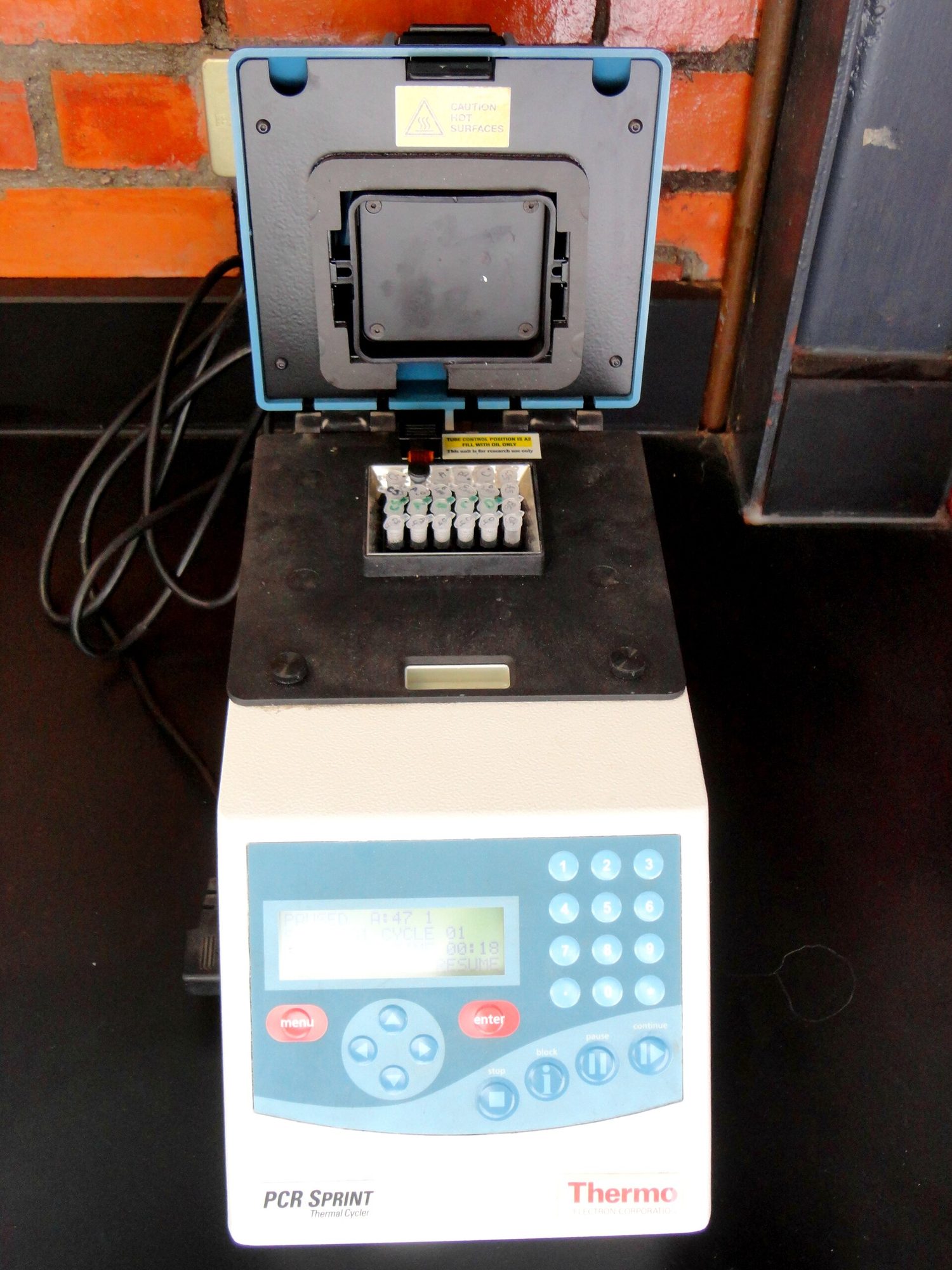
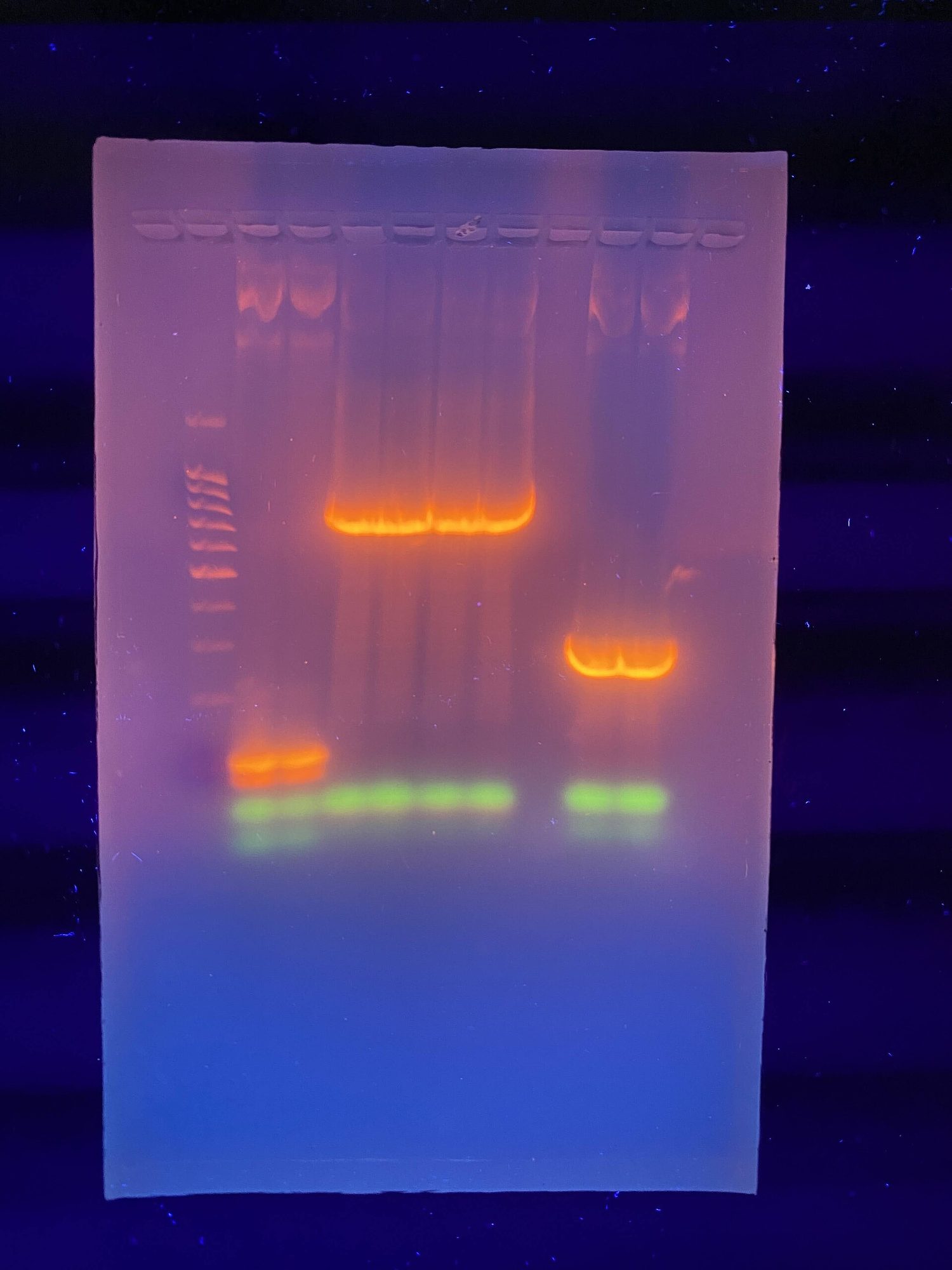
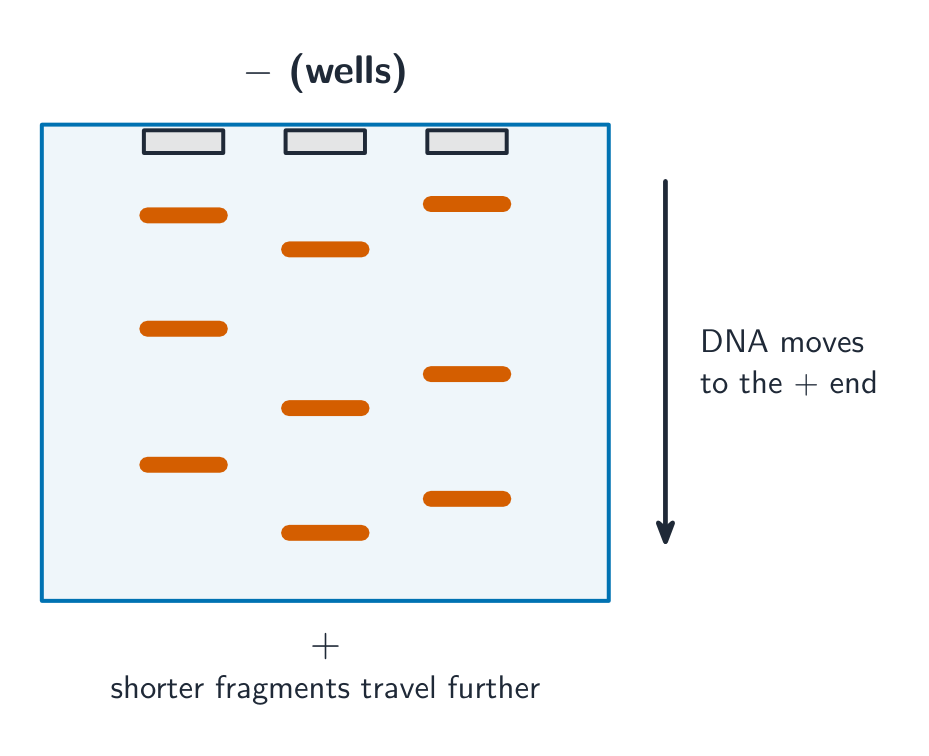
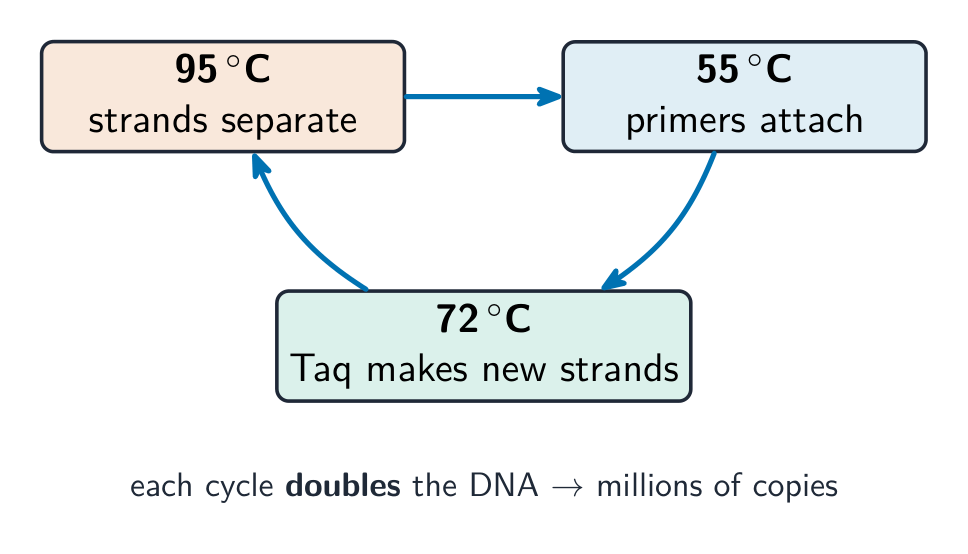
Biotechnology 生物技术 tools manipulate genetic material: PCR 聚合酶链反应 copies DNA, gel electrophoresis 凝胶电泳 separates DNA fragments by size, restriction enzymes and cloning move genes between organisms, and CRISPR edits sequences. These techniques enable genetic testing, engineered organisms, and medical treatments.

Worked example. A template DNA strand 3'-TAC GGA TTC-5' is transcribed into mRNA 5'-AUG CCU AAG-3'. A ribosome reads three codons: AUG = Met (start), CCU = Pro, AAG = Lys — coding for Met–Pro–Lys. Changing the third base of a codon often gives the same amino acid, because the genetic code is degenerate, which softens the effect of many mutations.

Reading DNA identifies individuals. Because the number of repeats at certain non-coding loci varies from person to person, analysis of DNA can be used for forensic identification: amplify those regions by PCR, separate the fragments by gel electrophoresis, and compare the pattern of band positions with a reference sample. A match is a statement about probability rather than certainty, which is why several loci are tested rather than one.

עברית
מחזור תרמי מחמם ומקרר דגימות חוזר ושוב כדי להכפיל DNA (PCR)
ג'ל אגרוז בתחתית UV: מקטעי DNA נפרדים לפי גודל כרצועות זוהרות
ג'ל אגרז תחת אור UV: קטעי DNA נפרדים לפי גודל כפסים בהירים

כלי ביוטכנולוגיה מעבירים חומר גנטי: PCR משכפל DNA, אלקטרופורזה על ג'ל מפרידה קטעי DNA לפי גודל, אנזימי הגבלה וקלונינג ממקמים גנים בין אורגניזמים, ו-CRISPR עורכת רצפים. טכניקות אלו מאפשרות בדיקות גנטיות, אורגניזמים מהונדסים וטיפול רפואי.

אלקטרופורזה בג'ל מפרידה מקטעי DNA לפי אורך
אלקטרופורזה על ג'ל מפרידה קטעי DNA לפי אורך
התגובה שרשרת הפולימראז כופלת את ה-DNA בכל מחזור
תגובה שרשרת פולימראז כופלת את ה-DNA בכל מחזור

דוגמה פתורה. רצף תבנית DNA 3'-TAC GGA TTC-5' מתורגם ל-mRNA 5'-AUG CCU AAG-3'. ריבוזום קורא שלושה קודונים: AUG = Met (התחלה), CCU = Pro, AAG = Lys – המקודד ל-Met–Pro–Lys. שינוי הבסיס השלישי בקודון לעיתים קרובות נותן אותו חומצת אמינו, מכיוון שהקוד הגנטי הוא דגנרטי, מה שמקל על ההשפעה של מוטציות רבות.

קריאת DNA מזהה אנשים. מכיוון שמספר ההכפלות באזורי לא-קודिंग מסוימים משתנה מאדם לאדם, ניתוח DNA יכול לשמש לזיהוי פורנזי: להכפיל אזורים אלו באמצעות PCR, להפריד את הקטעים באמצעות אלקטרופורזה על ג'ל, ולהשוות את תבנית מיקום הפסים לדגימת ייחוס. התאמה היא הצהרה על הסתברות ולא בוודאות, ולכן נבדקים מספר אזורי זיהוי במקום אחד.

Vocabulary · ⁨מילון מונחים⁩ Train · ⁨אימון⁩
English עברית
PCR/ˌpiː siː ˈɑː/ PCR
gel electrophoresis/dʒel ɪˌlektrəʊfɔːˈriːsɪs/ אלקטרופורזה על ג'ל
6.8

Exam tips · ⁨טיפים לבחינות⁩

English
  • Know the central dogma DNA → RNA → protein: transcription makes mRNA, translation reads it in three-base codons at the ribosome.
  • Remember RNA is single-stranded and uses U instead of T; replication is semiconservative.
  • Every cell has the same DNA — cells differ because they express different genes (differential gene expression).
  • A mutation is a change in the DNA sequence and may be harmful, neutral, or beneficial (the raw material for selection).
  • Link biotech tools to their jobs: PCR copies DNA; gel electrophoresis separates fragments by size.
עברית
  • להכיר את הכלב המרכזי DNA → RNA → חלבון: תעתיק יוצר mRNA, ותרגום קורא אותו בקודונים בעלי שלושה בסיסים על הריבוזום.
  • לזכור ש-RNA הוא חד-שרטית ומשתמש ב-U במקום T; הרפליקציה היא חצי-שמירתית.
  • לכל תא יש את אותו DNA — התאים נבדלים זה מזה משום שהם מבטאים גנים שונים (ביטוי גן דיפרנציאלי).
  • מוטציה היא שינוי ברצף ה-DNA ועלולה להיות מזיקה, ניטרלית או מועילה (חומר הגלם לבחירה טבעית).
  • לקשר כלים ביוטכנולוגיים לתפקידיהם: PCR מעתיק DNA; אלקטרופורזת ג'ל מפרידה קטעים לפי גודלם.

Interactive lessons on this topic · ⁨שיעורים אינטראקטיביים בנושא זה⁩

Work through it step by step, with instant-check exercises. · ⁨לעבור על הדברים צעד אחר צעד, עם תרגילים לבדיקה מיידית.⁩

Past Papers · ⁨מבחני עבר⁩

More topics in AP Biology · ⁨ביולוגיה AP⁩ · ⁨נושאים נוספים בAP Biology · ⁨ביולוגיה AP⁩⁩

Log in or create account · ⁨היכנס או צור חשבון⁩

IGCSE, A-Level & AP