English
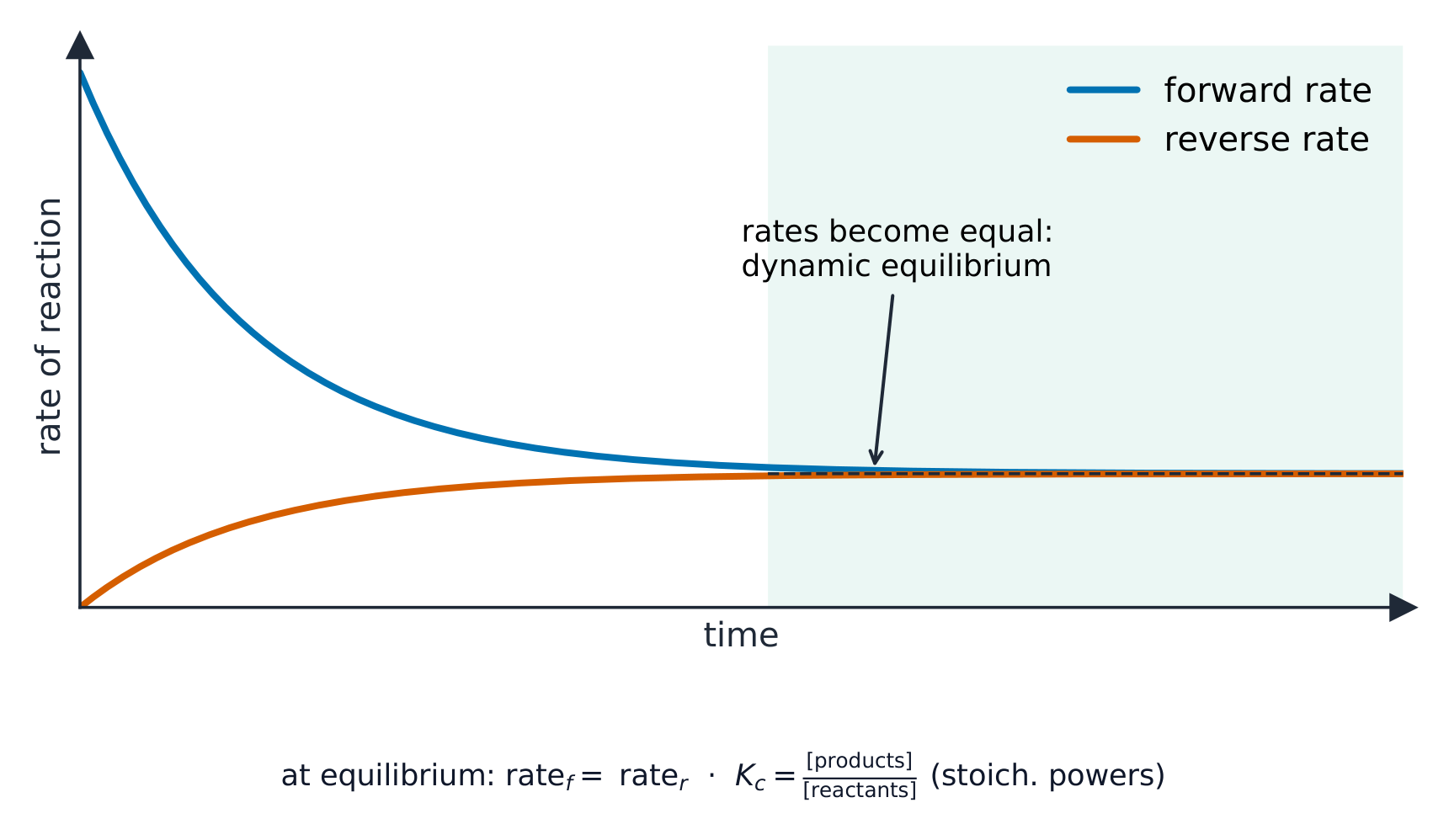
- (a) understand what is meant by a reversible reaction (b) understand what is meant by dynamic equilibrium in terms of the rate of forward and reverse reactions being equal and the concentration of reactants and products remaining constant (c) understand the need for a closed system in order to establish dynamic equilibrium
- define Le Chatelier’s principle as: if a change is made to a system at dynamic equilibrium, the position of equilibrium moves to minimise this change
- use Le Chatelier’s principle to deduce qualitatively (from appropriate information) the effects of changes in temperature, concentration, pressure or presence of a catalyst on a system at equilibrium
- deduce expressions for equilibrium constants in terms of concentrations, $K_c$
- use the terms mole fraction and partial pressure
- deduce expressions for equilibrium constants in terms of partial pressures, $K_p$ (use of the relationship between $K_p$ and $K_c$ is not required)
- use the $K_c$ and $K_p$ expressions to carry out calculations (such calculations will not require the solving of quadratic equations)
- calculate the quantities present at equilibrium, given appropriate data
- state whether changes in temperature, concentration or pressure or the presence of a catalyst affect the value of the equilibrium constant for a reaction
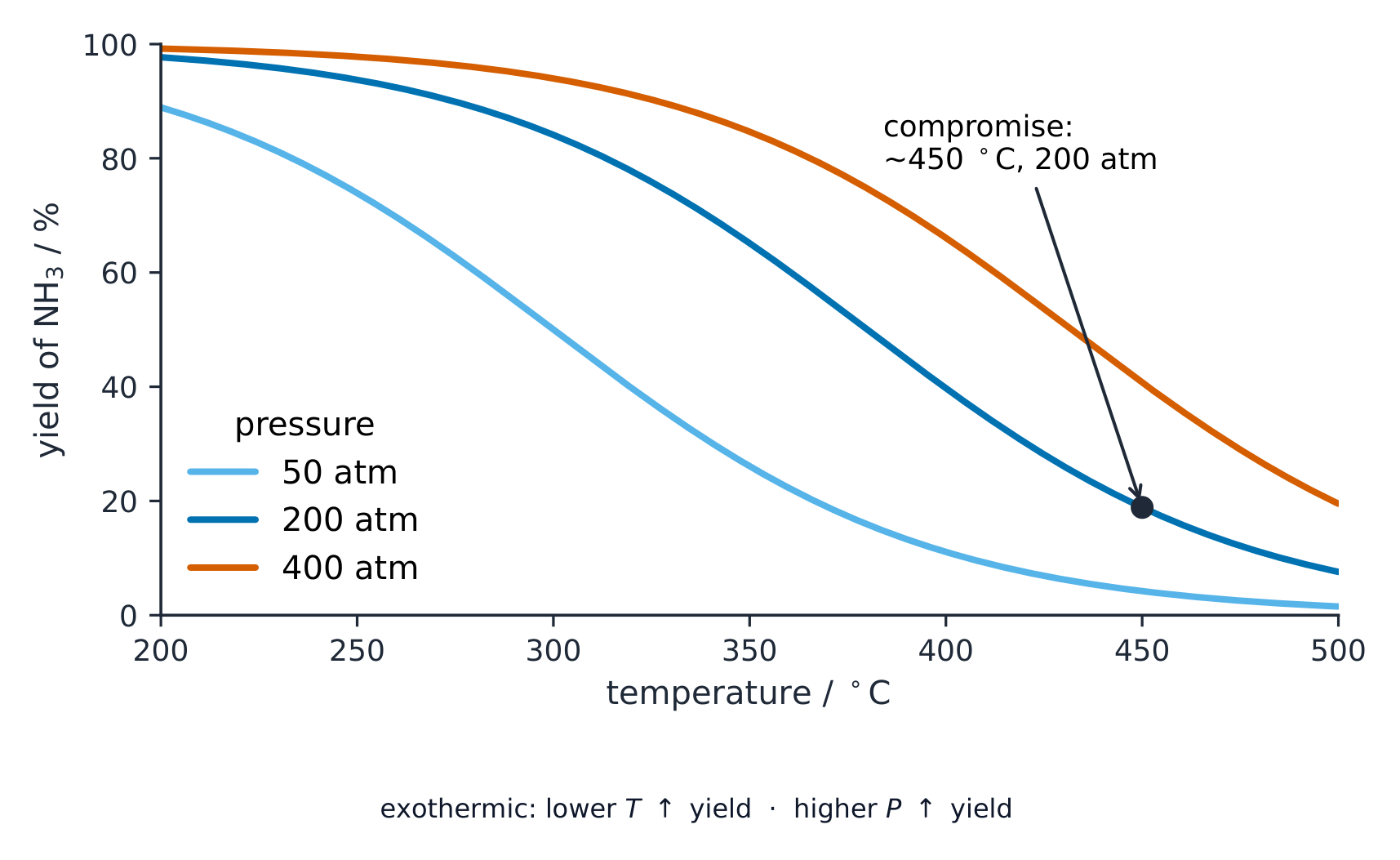
- describe and explain the conditions used in the Haber process and the Contact process, as examples of the importance of an understanding of dynamic equilibrium in the chemical industry and the application of Le Chatelier’s principle
עברית
- (א) הבן מהו משמעות תגובה הפיכה; (ב) הבן מהו משמעות איזון דינמי בהקשר של שוויון קצבי התגובה הקדמית וההפוכה ושמירה על ריכוזים קבועים של חומרי המוצא והמוצרים; (ג) הבן את הצורך במערכת סגורה כדי לקיים איזון דינמי
- הגדר את עקרון לה-שטלייה כ advent: אם נעשה שינוי במערכת באיזון דינמי, מיקום האיזון זז כדי למזער את השינוי הזה
- השתמש בעקרון לה-שטלייה כדי להסיק באופן איכותי (מתוך נתונים מתאימים) את ההשפעות של שינויים בטמפרטורה, ריכוז, לחץ או נוכחות מצומם על מערכת באיזון
- הנה ביטויים עבור קבועי איזון בהתבסס על ריכוזים, $K_c$
- השתמש במונחים כמות חומר ו-לחץ חלקי
- גזור ביטויים לקבועי איזון ביחס ללחצים חלקיים, $K_p$ (שימוש בקשר בין $K_p$ ל$K_c$ אינו נדרש)
- השתמש בביטויים $K_c$ ו-$K_p$ לבצע חישובים (חישובים אלו לא ידרשו פתרון משוואות ריבועיות)
- חשב את הכמויות הקיימות באיזון, בהינתן נתונים מתאימים
- ציין האם שינויים בטמפרטורה, ריכוז או לחץ או נוכחות מצומם משפיעים על ערך קבוע האיזון לתגובה
- תאר והסבר את התנאים המשמשים בתהליך האבר ובתהליך הקונטאקט, כדוגמאות לחשיבות ההבנה של איזון דינמי בתעשייה הכימית וליישום עקרון לה-שטלייה