Skip to content · ⁨الانتقال إلى المحتوى⁩

Gene Expression and Regulation · ⁨تعبير الجينات وتنظيمها⁩

AP Biology · ⁨AP علم الأحياء⁩ · Topic 6 · ⁨الموضوع 6⁩

Video lesson for this topic · ⁨درس فيديو لهذا الموضوع⁩ Open the video page · ⁨افتح صفحة الفيديو⁩
8:40

تعبير الجينات وتنظيمها

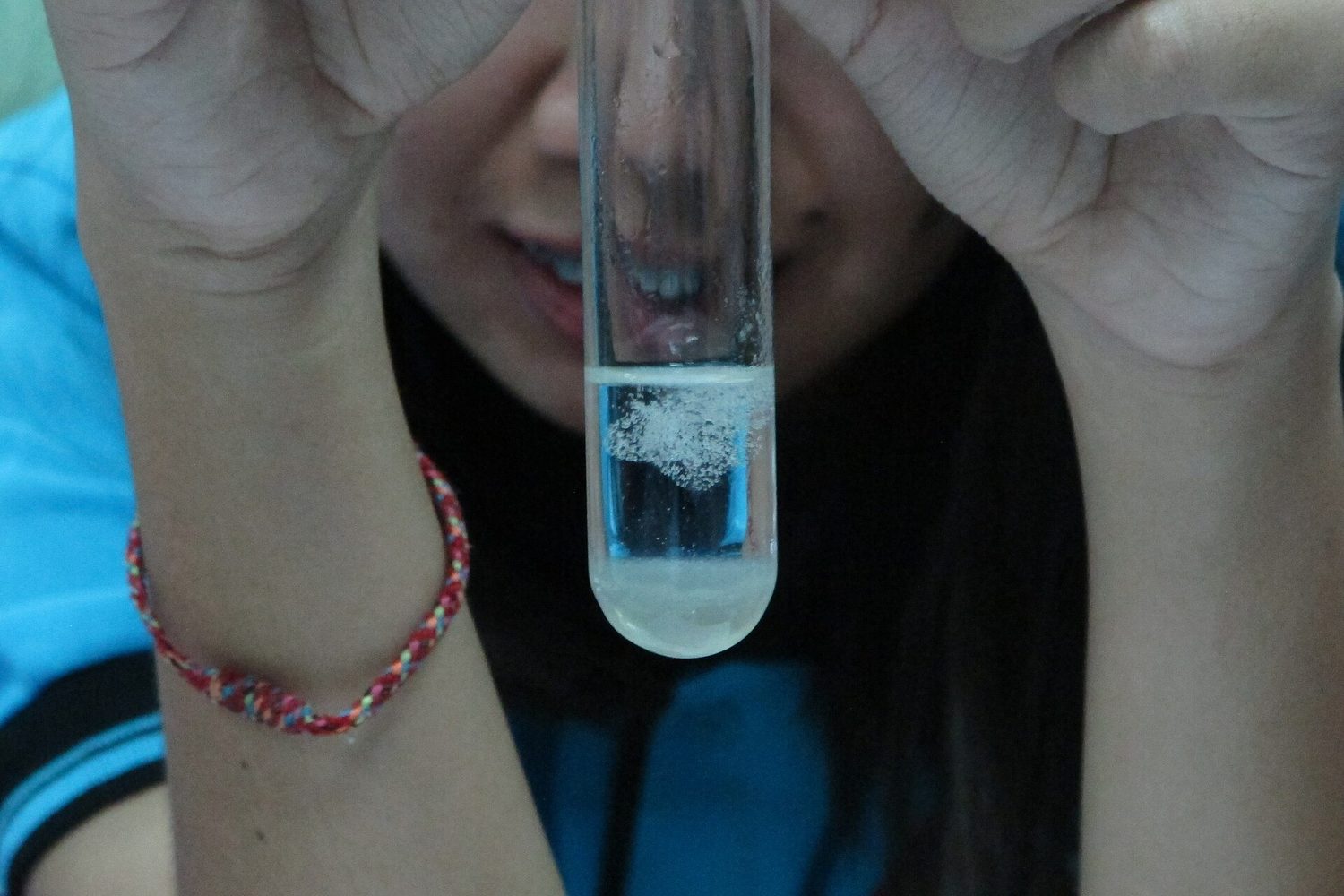
هذا الخيط الأبيض في الأنبوب هو حمض نووي حقيقي، تم استخلاصه من خلايا عادية. لا يبدو شيئًا على الإطلاق. لكنه يحتوي على كل تعليمات سيحتاجها جسمك على الإطلاق.…

English narration · English + 中文 subtitles burned in · ⁨سرد باللغة الإنجليزية · ترجمة مدمجة بالإنجليزية + الصينية⁩

6.1

DNA and RNA Structure · ⁨بنية الحمض النووي والحمض النووي الريبوزي⁩

Syllabus · ⁨المنهج⁩
English

Enduring Understanding (BIG IDEA 3 — Information Storage and Transmission): Living systems store, retrieve, transmit, and respond to information essential to life processes.

Learning Objective 6.1.A: Describe the structures involved in passing hereditary information from one generation to the next.

  • 6.1.A.1 Genetic information is stored in and passed to subsequent generations through DNA molecules and, in some cases, RNA molecules.
    • 6.1.A.1.i Prokaryotic organisms typically have circular chromosomes.
    • 6.1.A.1.ii Eukaryotic organisms typically have multiple linear chromosomes that are comprised of DNA. These chromosomes are condensed using histones and associated proteins.
  • 6.1.A.2 Prokaryotes and eukaryotes can contain plasmids, which are extra-chromosomal circular molecules of DNA.

Learning Objective 6.1.B: Describe the characteristics of DNA that allow it to be used as hereditary material.

  • 6.1.B.1 Nucleic acids exhibit specific nucleotide base pairing that is conserved through evolution.
    • 6.1.B.1.i Purines (guanine and adenine) have a double ring structure.
    • 6.1.B.1.ii Pyrimidines (cytosine, thymine, and uracil) have a single ring structure.
    • 6.1.B.1.iii Purines pair with pyrimidines: adenine with thymine (or uracil in RNA) and guanine with cytosine.
العربية

الفهم الدائم (الفكرة الكبرى 3 — تخزين المعلومات ونقلها): تخزن الأنظمة الحية وتسترجع وتُنقل وتستجيب للمعلومات الضرورية للعمليات الحيوية.

هدف التعلم 6.1.A: صف الهياكل المشاركة في نقل المعلومات الوراثية من جيل إلى آخر.

  • 6.1.A.1 تُخزن المعلومات الوراثية وتُنقل إلى الأجيال التالية عبر جزيئات الحمض النووي DNA، وفي بعض الحالات، جزيئات الحمض النووي الريبوزي RNA.
    • 6.1.A.1.i تتميز الكائنات بدائية النواة عادةً بكروموسومات دائرية.
    • 6.1.A.1.ii تتميز الكائنات حقيقية النواة عادةً بعدة كروموسومات خطية تتكون من الحمض النووي DNA. يتم تكثيف هذه الكروموسومات باستخدام الهيستونات والبروتينات المرتبطة بها.
  • 6.1.A.2 يمكن أن تحتوي بدائيات النواة وحقيقية النواة على بلازميدات، وهي جزيئات دائرية إضافية للكروموسوم من الحمض النووي DNA.

هدف التعلم 6.1.B: صف خصائص الحمض النووي DNA التي تسمح له بالاستخدام كمادة وراثية.

  • 6.1.B.1 تظهر الأحماض النووية ازدواجًا محددًا لقواعد النيوكليوتيد الذي تم الحفاظ عليه عبر التطور.
    • 6.1.B.1.i البيورينات (الجوانين والأدينين) لها بنية حلقتين مزدوجة.
    • 6.1.B.1.ii البيريميدينيات (السيتوسين والثيمين واليوراسيل) لها بنية حلقة واحدة.
    • 6.1.B.1.iii تزدوج البيورينات مع البيريميدينيات: الأدينين مع الثيمين (أو اليوراسيل في الحمض النووي الريبوزي RNA) والجوانين مع السيتوسين.
Source: College Board AP Course and Exam Description · ⁨المصدر: وصف دورة وامتحان College Board AP⁩

English

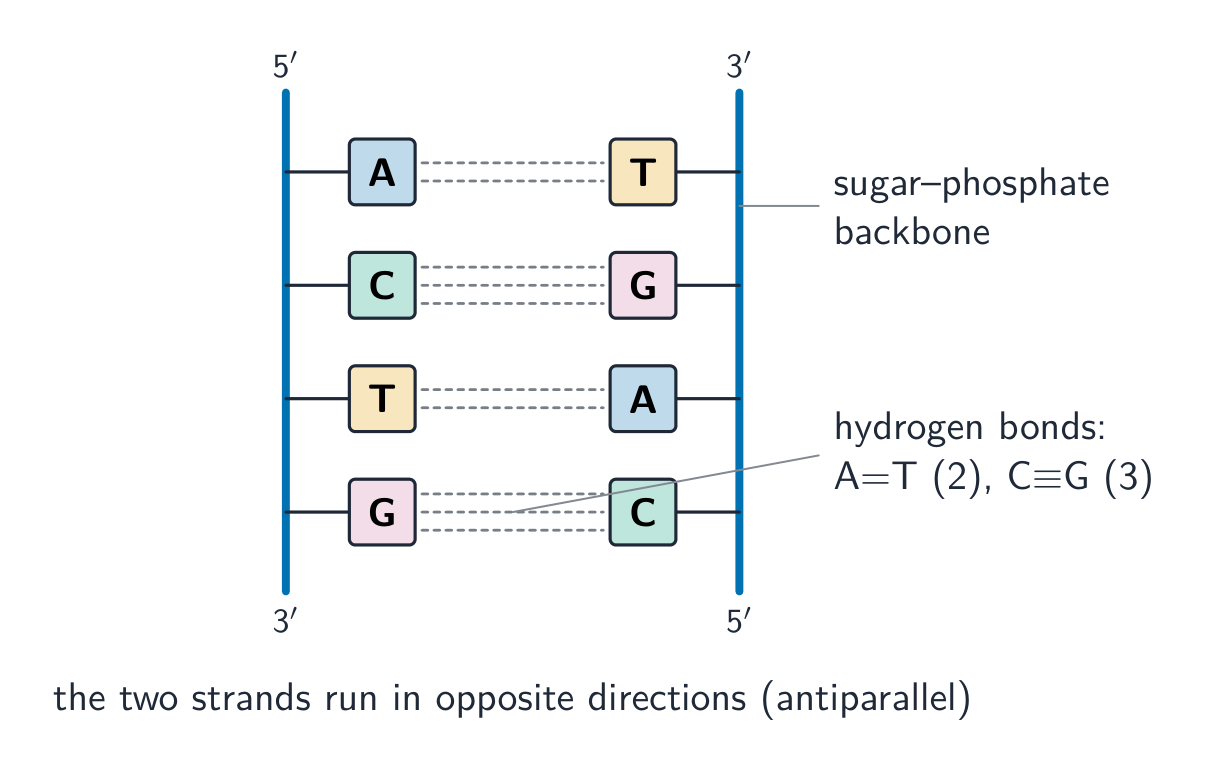
DNA carries genetic information as a double helix 双螺旋 of two strands. Its nucleotides 核苷酸 pair by rule – A with T, G with C (complementary base pairing 互补配对) – so one strand specifies the other. The strands run antiparallel 反平行. RNA is single-stranded, uses uracil (U) instead of thymine, and has ribose sugar.

How the DNA is packaged differs between the domains, and the CED asks for both.

  • Prokaryotic organisms typically have a single circular chromosome 环状染色体 in the cytoplasm, often with extra small circles called plasmids.
  • Eukaryotic organisms typically have multiple linear chromosomes 线性染色体, and each is condensed by wrapping around proteins called histones 组蛋白. That packing is what fits two metres of DNA into a nucleus a few micrometres across — and because a tightly wound region is hard for the transcription machinery to reach, the packing is itself a level of gene regulation.
العربية
دحرجة الحمض النووي المترسب من مستخلص خلوي — الحمض النووي جزيء حقيقي مرئي

الحمض النووي (DNA) يحمل المعلومات الوراثية على شكل حلزون مزدوج من شريطين. ترتبط نيوكليوتيداته بقاعدة محددة – A مع T، G مع C (ترابط القواعد المتممة) – بحيث يحدد أحد الشريطين الآخر. الشريطان يسيران في اتجاهين عكسيين. أما الحمض النووي الريبوزي (RNA) فهو أحادي الشريط، ويستخدم يوراسيل (U) بدلاً من الثايمين، ويحتوي على سكر ريبوز.

الحمض النووي: شريانان عكسيان الاتجاه مربوطان بقواعد متكملة

طريقة تعبئة الحمض النووي تختلف بين المجالات، ويطلب CED كلاهما.

  • الكائنات بدائية النواة عادة ما تحتوي على كروموسوم دائري واحد في السيتوبلازم، وغالبًا ما تكون هناك دوائر صغيرة إضافية تسمى البلاسميدات.
  • الكائنات حقيقية النواة عادة ما تحتوي على عدة كروموسومات خطية، وكل كروموسوم مكثف عن طريق لفه حول بروتينات تسمى الهستونات. هذه التعبئة هي ما يسمح بوضع مترين من الحمض النووي داخل نواة يبلغ قطرها بضعة ميكرومترات – وبما أن المنطقة الملفوفة بإحكام يصعب الوصول إليها بواسطة آلة النسخ، فإن التعبئة نفسها تمثل مستوى من مستويات تنظيم الجينات.
6.2

DNA Replication · ⁨تضاعف الحمض النووي⁩

Syllabus · ⁨المنهج⁩
English

Enduring Understanding (BIG IDEA 3 — Information Storage and Transmission): Living systems store, retrieve, transmit, and respond to information essential to life processes.

Learning Objective 6.2.A: Describe the mechanisms by which genetic information is copied for transmission between generations.

  • 6.2.A.1 DNA replication ensures continuity of hereditary information.
    • 6.2.A.1.i DNA is synthesized in the 5' to 3' direction.
    • 6.2.A.1.ii Replication is a semiconservative process, meaning one strand of DNA serves as the template for a new strand of complementary DNA.
    • 6.2.A.1.iii Helicase unwinds the DNA strands.
    • 6.2.A.1.iv Topoisomerase relaxes supercoiling in front of the replication fork.
    • 6.2.A.1.v DNA polymerase requires RNA primers to initiate DNA synthesis.
    • 6.2.A.1.vi DNA polymerase synthesizes new strands of DNA continuously on the leading strand and discontinuously on the lagging strand.
    • 6.2.A.1.vii Ligase joins the fragments on the lagging strand.
    • Exclusion statement: The names of the steps and particular enzymes involved, excluding DNA polymerase, ligase, RNA polymerase, helicase, and topoisomerase, are beyond the scope of the AP Exam.
العربية

الفهم الدائم (الفكرة الكبرى 3 — تخزين المعلومات ونقلها): تخزن الأنظمة الحية وتسترجع وتُنقل وتستجيب للمعلومات الضرورية للعمليات الحيوية.

هدف التعلم 6.2.A: صف الآليات التي يتم من خلالها نسخ المعلومات الوراثية للنقل بين الأجيال.

  • 6.2.A.1 يضمن تضاعف الحمض النووي استمرارية المعلومات الوراثية.
    • 6.2.A.1.i يُصنع الحمض النووي DNA في الاتجاه من 5' إلى 3'.
    • 6.2.A.1.ii عملية التضاعف هي عملية شبه محتفظ بها، مما يعني أن أحد خيطي الحمض النووي DNA يعمل كنموذج لخيط جديد من الحمض النووي DNA المتمم.
    • 6.2.A.1.iii إنزيم الهيليكاز يفك تشابك خيوط الحمض النووي DNA.
    • 6.2.A.1.iv ينشيط إنزيم التوبويسوميريز الانعقافات الفائقة أمام شوكة التضاعف.
    • 6.2.A.1.v يتطلب إنزيم بلمرة الحمض النووي DNA بادئات RNA لبدء تصنيع الحمض النووي DNA.
    • 6.2.A.1.vi يقوم إنزيم بلمرة الحمض النووي DNA بتصنيع خيوط جديدة من الحمض النووي DNA بشكل مستمر على الخيط الرائد وبشكل متقطع على الخيط المتأخر.
    • 6.2.A.1.vii يربط إنزيم الليجاز القطع على الخيط المتأخر.
    • بيان الاستبعاد: أسماء الخطوات والإنزيمات الخاصة المعنية، باستثناء إنزيمات بلمرة الحمض النووي DNA، والليجاز، وبلمرة الحمض النووي الريبوزي RNA، والهيليكاز، والتوبويسوميريز، تقع خارج نطاق امتحان AP.

Source: College Board AP Course and Exam Description · ⁨المصدر: وصف دورة وامتحان College Board AP⁩

English

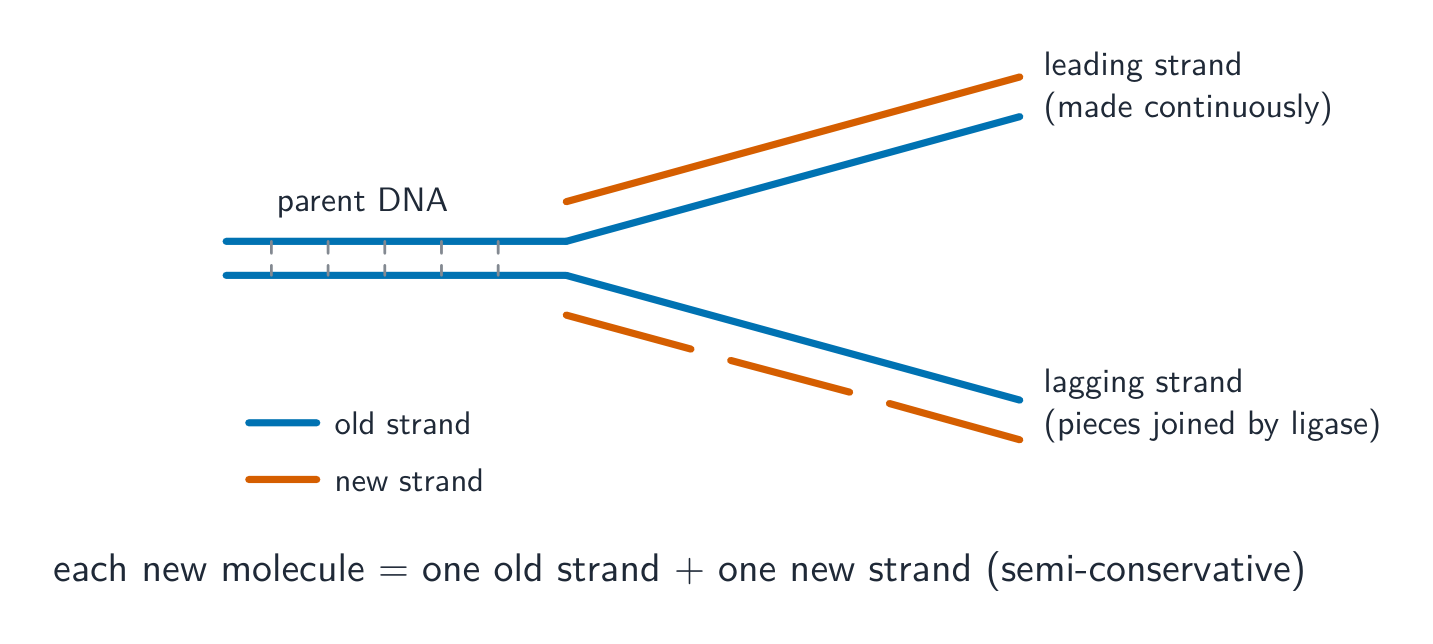
Before a cell divides, DNA is copied semiconservatively 半保留复制: the helix unwinds and each old strand templates a new one, so each daughter helix has one old and one new strand. DNA polymerase 聚合酶 adds nucleotides following base-pairing rules, building the new strand and proofreading as it goes.

العربية

قبل انقسام الخلية، يتم نسخ الحمض النووي بشكل شبه محافظ: ينفتح الحلزون وتكون كل شريط قديم قالبًا لشريط جديد، sehingga يكون لكل حلزون ابنة شريط قديم وشريط جديد. يضيف بوليميراز الحمض النووي النيوكليوتيدات وفقًا لقواعد ارتباط القواعد، مبنيًا الشريط الجديد ومصحح الأخطاء أثناء العملية.

تضاعف DNA شبه محافظ عند شوكة تضاعف
تضاعف الحمض النووي شبه المحافظ عند شوكة التضاعف
6.3

Transcription and RNA Processing · ⁨النسخ ومعالجة الحمض النووي الريبوزي⁩

Syllabus · ⁨المنهج⁩
English

Enduring Understanding (BIG IDEA 3 — Information Storage and Transmission): Living systems store, retrieve, transmit, and respond to information essential to life processes.

Learning Objective 6.3.A: Describe the mechanisms by which genetic information flows from DNA to RNA to protein.

  • 6.3.A.1 The sequence of the RNA bases, together with the structure of the RNA molecule, determines RNA function.
    • 6.3.A.1.i Messenger RNA (mRNA) molecules carry information from DNA in the nucleus to the ribosome in the cytoplasm.
    • 6.3.A.1.ii Distinct transfer RNA (tRNA) molecules bind specific amino acids and have anticodon sequences that base pair with the codons of mRNA. tRNA is recruited to the ribosome during translation to generate the primary peptide sequence based on the mRNA sequence.
    • 6.3.A.1.iii Ribosomal RNA (rRNA) molecules are functional building blocks of ribosomes.
  • 6.3.A.2 RNA polymerases use a single template strand of DNA to direct the inclusion of bases in the newly formed RNA molecule. This process is known as transcription.
  • 6.3.A.3 The enzyme RNA polymerase synthesizes mRNA molecules in the 5' to 3' direction by reading the template DNA strand in the 3' to 5' direction.
  • 6.3.A.4 In eukaryotic cells the mRNA transcript undergoes a series of enzyme-mediated modifications.
    • 6.3.A.4.i The addition of a poly-A tail makes mRNA more stable.
    • 6.3.A.4.ii The addition of a GTP cap helps with ribosomal recognition.
    • 6.3.A.4.iii The excision of introns, along with the splicing and retention of exons, generates different versions of the resulting mature mRNA molecule. This process is known as alternative splicing.
العربية

الفهم الدائم (الفكرة الكبرى 3 — تخزين المعلومات ونقلها): تخزن الأنظمة الحية وتسترجع وتُنقل وتستجيب للمعلومات الضرورية للعمليات الحيوية.

هدف التعلم 6.3.A: صف الآليات التي يتدفق بها المعلومات الوراثية من الحمض النووي DNA إلى الحمض النووي الريبوزي RNA ثم إلى البروتين.

  • 6.3.A.1 تحدد تسلسل قواعد الحمض النووي الريبوزي RNA، بالإضافة إلى بنية جزيء الحمض النووي الريبوزي RNA، وظيفة الحمض النووي الريبوزي RNA.
    • 6.3.A.1.i تحمل جزيئات الحمض النووي الريبوزي الرسول (mRNA) المعلومات من الحمض النووي DNA في النواة إلى الريبوسوم في السيتوبلازم.
    • 6.3.A.1.ii ترتبط جزيئات الحمض النووي الريبوزي الناقل (tRNA) المحددة بأحماض أمينية محددة ولها تسلسلات مضادة للتكود ترتبط بالقواعد مع تكيدات الحمض النووي الريبوزي الرسول mRNA. يتم تجنيد الحمض النووي الريبوزي الناقل tRNA إلى الريبوسوم أثناء الترجمة لتوليد التسلسل الببتيدي الأولي بناءً على تسلسل الحمض النووي الريبوزي الرسول mRNA.
    • 6.3.A.1.iii جزيئات الحمض النووي الريبوزي الريبوسومي (rRNA) هي وحدات بناء وظيفية للريبوسومات.
  • 6.3.A.2 تستخدم إنزيمات بلمرة الحمض النووي الريبوزي RNA خيط نموذج واحد من الحمض النووي DNA لتوجيه إدراج القواعد في جزيء الحمض النووي الريبوزي RNA الجديد. تُعرف هذه العملية باسم النسخ.
  • 6.3.A.3 يصنع إنزيم بلمرة الحمض النووي الريبوزي RNA جزيئات الحمض النووي الريبوزي الرسول mRNA في الاتجاه من 5' إلى 3' عن طريق قراءة خيط الحمض النووي DNA النموذجي في الاتجاه من 3' إلى 5'.
  • 6.3.A.4 في الخلايا حقيقية النواة، يخضع نسخ الحمض النووي الريبوزي Messenger mRNA لسلسلة من التعديلات التي يحفزها الإنزيم.
    • 6.3.A.4.i إضافة ذيل متعدد-A يجعل الحمض النووي الريبوزي الرسول mRNA أكثر استقراراً.
    • 6.3.A.4.ii إضافة قبعة GTP تساعد في التعرف الريبوسومي.
    • 6.3.A.4.iii إزالة الإنترونات، جنبًا إلى استبدالها واستمرار الإكسونات، تولد إصدارات مختلفة من جزيء الحمض النووي الريبوزي الناضج الناتج. تُعرف هذه العملية بالاستبدال البديل.

Source: College Board AP Course and Exam Description · ⁨المصدر: وصف دورة وامتحان College Board AP⁩

English

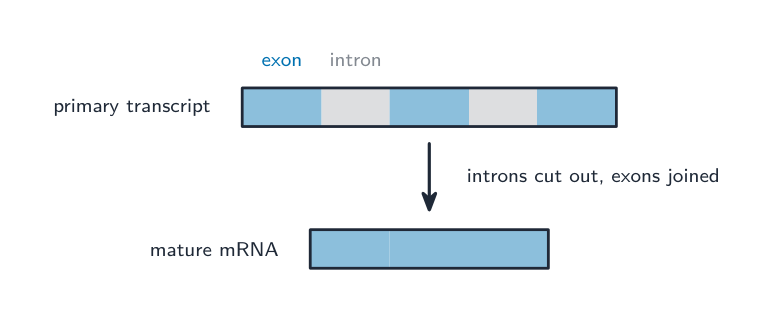
Transcription 转录 copies a gene's DNA into messenger RNA 信使RNA (mRNA). RNA polymerase reads the template strand and builds a complementary RNA. In eukaryotes the mRNA is then processed: a cap and tail are added, and introns 内含子 (non-coding parts) are spliced out, leaving the exons 外显子.

The 5′ cap added during processing is a modified guanine nucleotide — a GTP cap — and its job is recognition: it helps the ribosome recognise and bind the mRNA, as well as protecting the transcript from degradation as it leaves the nucleus.

العربية

النسخ ينسخ حمض نووي جين معين إلى حمض نووي رسول (mRNA). يقرأ بوليميراز الحمض النووي الريبوزي الشريط القائم ويبني حمض نووي ريبوزي مكتمل. في حقيقيات النواة، يتم بعد ذلك معالجة الـ mRNA: إضافة غطاء وذيل، واستئصال الإنترونات (الأجزاء غير المشفرة) عبر الاستئصال، متركًا الإكسونات.

تتم إزالة الإنترونات وربط الإكسونات للحصول على mRNA ناضج

الغطاء 5′ المضاف أثناء المعالجة هو نيوكليوتيد جوانين معدل — وهو غطاء GTP — ووظيفته التعرف: حيث يساعد الريبوسوم على التعرف على الـ mRNA والارتباط به، بالإضافة إلى حماية الرنا من التحلل أثناء مغادرته النواة.

Explore · ⁨استكشف⁩

Transcribe DNA into messenger RNA · ⁨انسخ الـ DNA إلى الـ mRNA⁩

Transcription copies a DNA template into mRNA, pairing A→U, T→A, C→G, G→C. Step through to build the RNA strand base by base. · ⁨النسخ ينسخ قالب DNA إلى mRNA، بربط A→U، T→A، C→G، G→C. مرّ لبناء سلسلة RNA قاعدة تلو الأخرى.⁩

6.4

Translation · ⁨الترجمة⁩

Syllabus · ⁨المنهج⁩
English

Enduring Understanding (BIG IDEA 3 — Information Storage and Transmission): Living systems store, retrieve, transmit, and respond to information essential to life processes.

Learning Objective 6.4.A: Explain how the phenotype of an organism is determined by its genotype.

  • 6.4.A.1 Translation of the mRNA to generate a polypeptide occurs on ribosomes that are present in the cytoplasm of both prokaryotic and eukaryotic cells, as well as the cytoplasmic surface of the rough ER of eukaryotic cells.
  • 6.4.A.2 In prokaryotic organisms, translation of the mRNA molecule occurs while it is being transcribed.
  • 6.4.A.3 Translation involves many sequential steps, including initiation, elongation, and termination. The salient features of translation include:
    • 6.4.A.3.i Translation is initiated when the rRNA in the ribosome interacts with the mRNA at the start codon (AUG, coding for the amino acid methionine).
    • 6.4.A.3.ii The sequence of nucleotides on the mRNA is read in triplets, called codons.
    • 6.4.A.3.iii Each codon encodes a specific amino acid, which can be deduced by using a genetic code chart. Many amino acids are encoded by more than one codon.
    • 6.4.A.3.iv Nearly all living organisms use the same genetic code, which is evidence for the common ancestry of all living organisms.
    • 6.4.A.3.v tRNA brings the correct amino acid to the place specified by the codon on the mRNA.
    • 6.4.A.3.vi The amino acid is transferred to the growing polypeptide chain.
    • 6.4.A.3.vii The process continues along the mRNA until a stop codon is reached.
    • 6.4.A.3.viii Translation terminates with the release of the newly synthesized protein.
    • Exclusion statement: The details and names of the enzymes and factors involved in each of these steps are beyond the scope of the AP Exam.
    • Exclusion statement: Memorization of the genetic code, with the exception of the start codon AUG, is beyond the scope of the AP Exam.
  • 6.4.A.4 Genetic information in retroviruses is a special case and has an alternate flow of information: from RNA to DNA, made possible by reverse transcriptase, an enzyme that copies the viral RNA genome into DNA. This DNA integrates into the host genome and is transcribed and translated for the assembly of new viral progeny.
العربية

الفهم الدائم (الفكرة الكبرى 3 — تخزين المعلومات ونقلها): تخزن الأنظمة الحية وتسترجع وتُنقل وتستجيب للمعلومات الضرورية للعمليات الحيوية.

هدف التعلم 6.4.A: اشرح كيف يُحدد النمط الظاهري لكائن حي بواسطة نمظه الجيني.

  • 6.4.A.1 يحدث ترجمة الحمض النووي الريبوزي الرسول mRNA لتوليد عديد الببتيد على الريبوسومات الموجودة في السيتوبلازم لكل من خلايا بدائيات النواة وحقيقية النواة، وكذلك على السطح السيتوبلازمي للشبكة الإندوبلازمية الخشنة في خلايا حقيقية النواة.
  • 6.4.A.2 في الكائنات بدائية النواة، تحدث ترجمة جزيء الحمض النووي الريبوزي الرسول mRNA بينما يتم نسخه.
  • 6.4.A.3 يتضمن الترجمة خطوات متسلسلة عديدة، بما في ذلك البدء والإطالة والإنهاء. تشمل الملامح البارزة للترجمة ما يلي:
    • 6.4.A.3.i تبدأ الترجمة عندما يتفاعل rRNA في الريبوسوم مع mRNA عند الكودون البادئ (AUG، الذي يشفر حمض أميني الميثيونين).
    • 6.4.A.3.ii تُقرأ سلسلة النيوكليوتيدات على mRNA على شكل ثلاثيات تسمى كودونات.
    • 6.4.A.3.iii يشفر كل كودون حمضًا أمينيًا محددًا، يمكن استنتاجه باستخدام مخطط الشفرة الوراثية. يُشفر العديد من الأحماض الأمينية بواسطة أكثر من كودون واحد.
    • 6.4.A.3.iv تستخدم معظم الكائنات الحية نفس الشفرة الوراثية، وهو دليل على النسب المشترك لجميع الكائنات الحية.
    • 6.4.A.3.v يجلب tRNA الحمض الأميني الصحيح إلى الموقع المحدد بواسطة الكودون على mRNA.
    • 6.4.A.3.vi يُنقل الحمض الأميني إلى سلسلة عديد الببتيد النامية.
    • 6.4.A.3.vii تستمر العملية على طول mRNA حتى يتم الوصول إلى كودون توقف.
    • 6.4.A.3.viii تنتهي الترجمة بإطلاق البروتين الجديد المُصنَّع حديثًا.
    • عبارة الاستبعاد: تفاصيل وأسماء الإنزيمات والعوامل المشاركة في كل من هذه الخطوات تقع خارج نطاق امتحان AP.
    • عبارة الاستبعاد: حفظ الشفرة الوراثية، باستثناء الكودون البادئ AUG، يقع خارج نطاق امتحان AP.
  • 6.4.A.4 المعلومات الوراثية في الفيروسات العكسية حالة خاصة ولها تدفق معلومات بديل: من RNA إلى DNA، مما تمكّنت منه إنزيم النسخ العكسي، وهو إنزيم ينسخ الجينوم الفيروسي من RNA إلى DNA. يندمج هذا DNA في جينوم العائل ويتم نسخه وترجمته لتجميع أجيال فيروسية جديدة.

Source: College Board AP Course and Exam Description · ⁨المصدر: وصف دورة وامتحان College Board AP⁩

English

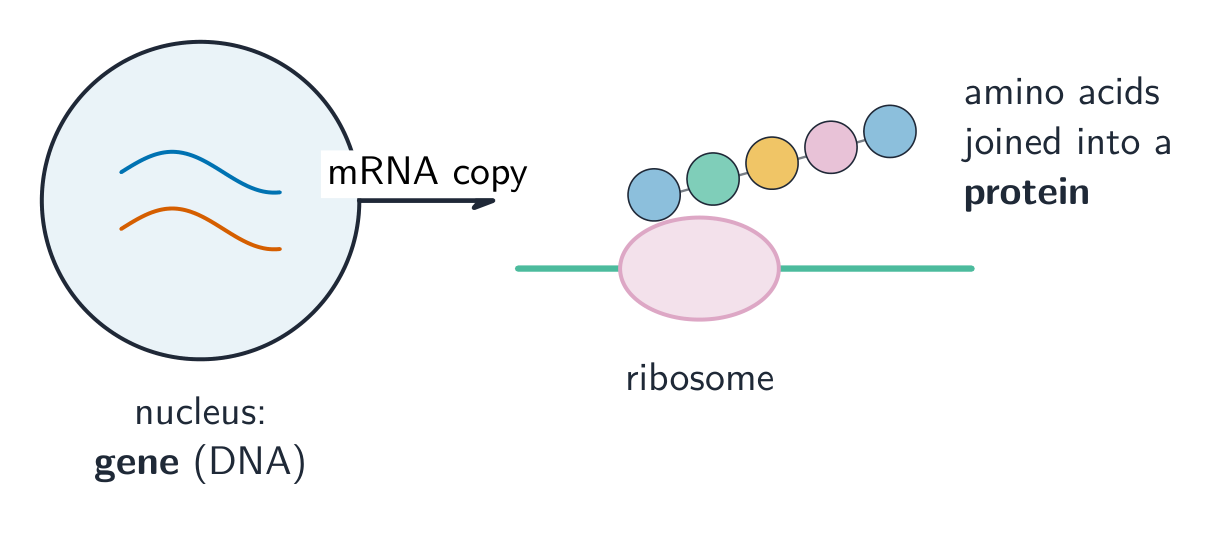
Translation 翻译 builds a protein from the mRNA at the ribosome 核糖体. The mRNA is read in three-base codons 密码子, each specifying one amino acid (the genetic code). Transfer RNA 转运RNA brings the matching amino acid, and the ribosome links them into a polypeptide until a stop codon ends it. This is the "central dogma": DNA → RNA → protein.

العربية

الترجمة تبني بروتينًا من الـ mRNA عند الريبوسوم. يُقرأ الـ mRNA في مجموعات ثلاثية تسمى الكودونات، كل كودون يحدد حمضًا أمينيًا واحدًا (الشجرة الوراثية). الحمض النووي الريبوزي الناقل (tRNA) يحمل الحمض الأميني المطابق، ويربط الريبوسوم بينها في سلسلة عديد الببتيد حتى ينتهي كودون التوقف. هذا هو "المرتكز المركزي": DNA → RNA → protein.

يُقرأ الـ mRNA بواسطة ريبوسوم لبناء بروتين من أحماض أمينية
6.5

Regulation of Gene Expression · ⁨تنظيم التعبير الجيني⁩

Syllabus · ⁨المنهج⁩
English

Enduring Understanding (BIG IDEA 3 — Information Storage and Transmission): Living systems store, retrieve, transmit, and respond to information essential to life processes.

Learning Objective 6.5.A: Describe the types of interactions that regulate gene expression.

  • 6.5.A.1 Regulatory sequences are stretches of DNA that interact with regulatory proteins to control transcription. Some genes are constitutively expressed, and others are inducible.
  • 6.5.A.2 Epigenetic changes can affect gene expression through reversible modifications of DNA or histones.
  • 6.5.A.3 The phenotype of a cell or an organism is determined by the combination of genes that are expressed and the levels at which they are expressed.
    • 6.5.A.3.i Observable cell differentiation results from the expression of genes for tissue-specific proteins.
    • 6.5.A.3.ii Induction of transcription factors during development results in sequential gene expression.
    • 6.5.A.3.iii The function and amount of gene products determine the phenotype of organisms.

Learning Objective 6.5.B: Explain how the location of regulatory sequences relates to their function.

  • 6.5.B.1 Both prokaryotes and eukaryotes have groups of genes that are coordinately regulated.
    • 6.5.B.1.i Prokaryotes regulate operons in an inducible or repressible system.
    • 6.5.B.1.ii In eukaryotes, groups of genes may be influenced by the same transcription factors to coordinately regulate expression.
العربية

الفهم الدائم (الفكرة الكبرى 3 — تخزين المعلومات ونقلها): تخزن الأنظمة الحية وتسترجع وتُنقل وتستجيب للمعلومات الضرورية للعمليات الحيوية.

الهدف التعليمي 6.5.A: وصف أنواع التفاعلات التي تنظم التعبير الجيني.

  • 6.5.A.1 التسلسلات التنظيمية هي أجزاء من DNA تتفاعل مع بروتينات تنظيمية للتحكم في عملية النسخ. بعض الجينات تُعبَّر بشكل دائم، والبعض الآخر قابلاً للتحفيز.
  • 6.5.A.2 يمكن أن تؤثر التغييرات الإبيجينية على التعبير الجيني من خلال تعديلات قابلة للعكس في DNA أو الهستونات.
  • 6.5.A.3 يُحدد النمط الظاهري للخلية أو الكائن الحي بمجموعة الجينات المُعبَّرة ومستويات تعبيرها.
    • 6.5.A.3.i ينتج عن تمايز الخلايا المرئي تعبير الجينات المسؤولة عن بروتينات محددة بالأنسجة.
    • 6.5.A.3.ii يؤدي تحفيز عوامل النسخ أثناء التطور إلى تعبير جيني تسلسلي.
    • 6.5.A.3.iii تحدد وظيفة وكمية منتجات الجينات النمط الظاهري للكائنات.

الهدف التعليمي 6.5.B: شرح العلاقة بين موقع التسلسلات التنظيمية ووظيفتها.

  • 6.5.B.1 يمتلك كل من بدائيات النواة وحقيقيات النوى مجموعات من الجينات التي تخضع لتنظيم متناسق.
    • 6.5.B.1.i تنظم بدائيات النواة العمليات الأوبرونية في نظام قابل للتحفيز أو قمع.
    • 6.5.B.1.ii في حقيقيات النواة، قد تتأثر مجموعات الجينات بنفس عوامل النسخ لتنظيم التعبير بشكل متناسق.

Source: College Board AP Course and Exam Description · ⁨المصدر: وصف دورة وامتحان College Board AP⁩

English

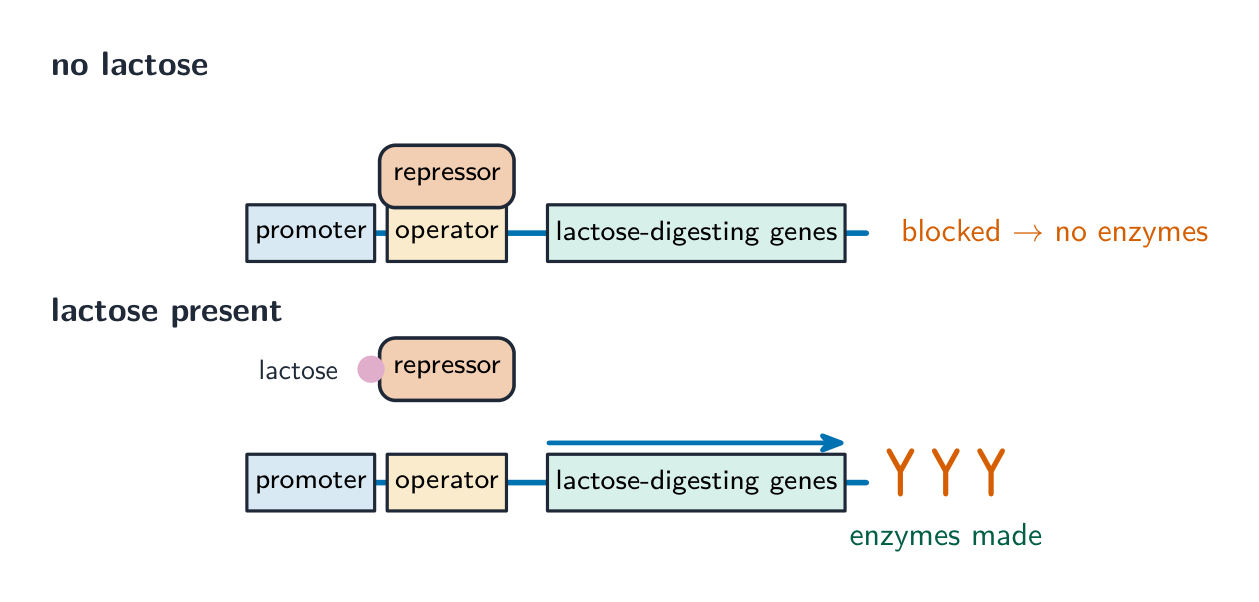
Cells control which genes are expressed and when. In prokaryotes, operons 操纵子 switch groups of genes on or off. In eukaryotes, regulation happens at many levels – which genes are transcribed (transcription factors, promoters, enhancers), RNA processing, and after translation. This lets a cell respond to its environment without changing its DNA.

العربية

تتحكم الخلايا في أي الجينات يتم التعبير عنها ومتى. في بدائيات النواة، تقوم الأوبرونات بتشغيل أو إيقاف مجموعات من الجينات. في حقيقيات النواة، يحدث التنظيم على مستويات متعددة - أي الجينات يتم نسخها (عوامل النسخ، المحفزات، المعززات)، معالجة الـ RNA، وما بعد الترجمة. هذا يسمح للخلية بالاستجابة لبيئتها دون تغيير حمضها النووي.

أوبرون lac يشغل الجينات فقط عند وجود اللاكتوز
6.6

Gene Expression and Cell Specialization · ⁨التعبير الجيني وتخصص الخلايا⁩

Syllabus · ⁨المنهج⁩
English

Enduring Understanding (BIG IDEA 3 — Information Storage and Transmission): Living systems store, retrieve, transmit, and respond to information essential to life processes.

Learning Objective 6.6.A: Explain how the binding of transcription factors to promoter regions affects gene expression and the phenotype of the organism.

  • 6.6.A.1 RNA polymerase and transcription factors bind to promoter or enhancer DNA sequences to initiate transcription. These sequences can be upstream or downstream of the transcription start site.
  • 6.6.A.2 Negative regulatory molecules inhibit gene expression by binding to DNA and blocking transcription.

Learning Objective 6.6.B: Explain the connection between the regulation of gene expression and phenotypic differences in cells and organisms.

  • 6.6.B.1 Gene regulation results in differential gene expression and influences cell products and functions.
  • 6.6.B.2 Certain small RNA molecules have roles in regulating gene expression.
العربية

الفهم الدائم (الفكرة الكبرى 3 — تخزين المعلومات ونقلها): تخزن الأنظمة الحية وتسترجع وتُنقل وتستجيب للمعلومات الضرورية للعمليات الحيوية.

الهدف التعليمي 6.6.A: شرح كيفية تأثير ارتباط عوامل النسخ بمنطقة المحفز على التعبير الجيني والنمط الظاهري للكائن الحي.

  • 6.6.A.1 ترتبط بلمرناز RNA وعوامل النسخ بتسلسلات DNA المحفزة أو المعززة لبدء عملية النسخ. يمكن أن تكون هذه التسلسلات قبل أو بعد نقطة بدء النسخ.
  • 6.6.A.2 تثبط الجزيئات التنظيمية السلبية التعبير الجيني عن طريق الارتباط بـ DNA وحجب عملية النسخ.

الهدف التعليمي 6.6.B: شرح الصلة بين تنظيم التعبير الجيني والاختلافات النمطية في الخلايا والكائنات الحية.

  • 6.6.B.1 يؤدي تنظيم الجينات إلى تعبير جيني متفاوت ويؤثر على المنتجات والوظائف الخلوية.
  • 6.6.B.2 تلعب بعض جزيئات RNA الصغيرة أدوارًا في تنظيم التعبير الجيني.

Source: College Board AP Course and Exam Description · ⁨المصدر: وصف دورة وامتحان College Board AP⁩

English

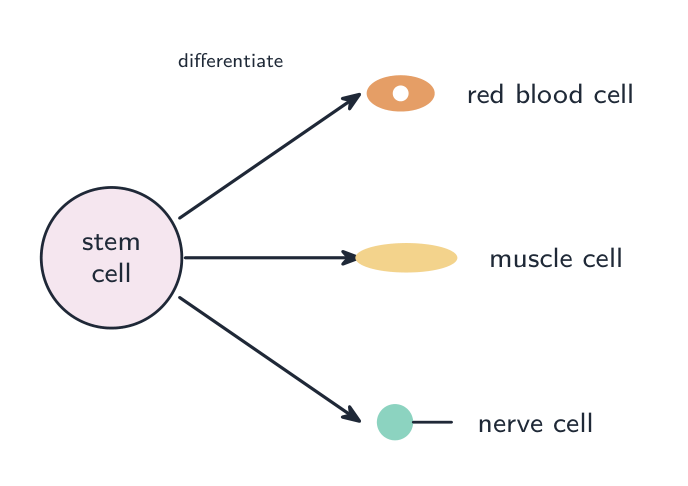
Every cell in a body has the same DNA, yet cells differ because they express different genes – differential gene expression 差异表达. This is how one fertilized egg produces many specialized cell types (muscle, nerve, skin); signals during development turn specific genes on and off.

العربية

كل خلية في الجسم تمتلك نفس الحمض النووي، ومع ذلك تختلف الخلايا لأنها تعبر عن جينات مختلفة – التعبير الجيني التفاضلي. وهذا هو السبب الذي يجعل بويضة مخصبة واحدة تنتج أنواعًا عديدة من الخلايا المتخصصة (عضلية، عصبية، جلدية)؛ إشارات أثناء التطور تشغيل جينات معينة وتشغيل أخرى.

تتمايز الخلية الجذعية إلى أنواع خلايا متخصصة
6.7

Mutations · ⁨الطفرات⁩

Syllabus · ⁨المنهج⁩
English

Enduring Understanding (BIG IDEA 3 — Information Storage and Transmission): Living systems store, retrieve, transmit, and respond to information essential to life processes.

Learning Objective 6.7.A: Describe the various types of mutation.

  • 6.7.A.1 Alterations in a DNA sequence are mutations that can cause changes in the type or amount of the protein produced and the consequent phenotype. DNA mutations can be beneficial, detrimental, or neutral based on the effect or the lack of effect they have on the resulting nucleic acid or protein and the phenotypes that are conferred by the protein.
    • 6.7.A.1.i Point mutations occur when one nucleotide has been substituted for a different nucleotide.
    • 6.7.A.1.ii Frameshift mutations occur when one or more nucleotides are inserted or deleted, causing the reading frame to be shifted.
    • 6.7.A.1.iii Nonsense mutations occur when there is a point mutation that causes a premature stop.
    • 6.7.A.1.iv Silent mutations occur when the change in the nucleotide sequence has no effect on the amino acid sequence.
    • Illustrative examples for 6.7.A.1:
      • Mutations in the CFTR gene disrupt ion transport and result in cystic fibrosis.
      • Mutations in the MC1R gene give adaptive melanism in pocket mice.
    • Exclusion statement: Knowledge of specific mutations and their effects is beyond the scope of the AP Exam.

Learning Objective 6.7.B: Explain how changes in genotype may result in changes in phenotype.

  • 6.7.B.1 Errors in DNA replication or DNA repair mechanisms as well as external factors, including radiation and reactive chemicals, can cause random mutations in the DNA.
    • 6.7.B.1.i Whether a mutation is beneficial, detrimental, or neutral depends on the environmental context.
    • 6.7.B.1.ii Mutations are a source of genetic variation.
  • 6.7.B.2 Errors in mitosis or meiosis can result in changes in phenotype.
    • 6.7.B.2.i Changes in chromosome number resulting from nondisjunction often result in new phenotypes caused by triploidy (aneuploidy).
    • 6.7.B.2.ii Changes in chromosome number often result in disorders with developmental limitations.
    • 6.7.B.2.iii Alterations in chromosome structure lead to genetic disorders.
    • Exclusion statement: Knowledge of specific disorders related to changes in chromosome number is beyond the scope of the AP Exam.

Learning Objective 6.7.C: Explain how alterations in DNA sequences contribute to variation that can be subject to natural selection.

  • 6.7.C.1 Changes in genotype may affect phenotypes that are subject to natural selection. Genetic changes that enhance survival and reproduction can be selected for by environmental conditions.
    • 6.7.C.1.i The horizontal acquisitions of genetic information in prokaryotes via transformation (uptake of DNA), transduction (viral transmission of genetic information), conjugation (cell-to-cell transfer of DNA), and transposition (movement of DNA segments within and between DNA molecules) increase genetic variation.
    • 6.7.C.1.ii Related viruses can recombine genetic information if they infect the same host cell.
    • 6.7.C.1.iii Reproductive processes that increase genetic variation are evolutionarily conserved and are shared by various organisms.
    • Illustrative examples for 6.7.C.1: Sickle cell anemia
العربية

الفهم الدائم (الفكرة الكبرى 3 — تخزين المعلومات ونقلها): تخزن الأنظمة الحية وتسترجع وتُنقل وتستجيب للمعلومات الضرورية للعمليات الحيوية.

الهدف التعليمي 6.7.A: وصف الأنواع المختلفة للطفرات.

  • 6.7.A.1 التغيرات في تسلسل DNA هي طفرات يمكن أن تسبب تغييرات في نوع أو كمية البروتين المنتَج والنمط الظاهري الناتج. يمكن أن تكون طفرات DNA مفيدة أو ضارة أو محايدة بناءً على تأثيرها أو عدم تأثيرها على حمض نووي أو بروتين ناتج والنمط الظاهري الذي يمنحه البروتين.
    • 6.7.A.1.i تحدث الطفرات النقطةية عندما يتم استبدال نيوكليوتيد واحد بنيوكليوتيد مختلف.
    • 6.7.A.1.ii تحدث طفرات إزاحة الإطار عندما يتم إدخال أو حذف نيوكليوتيد واحد أو أكثر، مما يسبب إزاحة إطار القراءة.
    • 6.7.A.1.iii تحدث الطفرات غير المعبرة عندما يكون هناك طفرة نقطية تسبب توقفًا مبكرًا.
    • 6.7.A.1.iv تحدث الطفرات الصامتة عندما لا يكون للتغير في تسلسل النيوكليوتيدات أي تأثير على تسلسل الأحماض الأمينية.
    • أمثلة توضيحية لـ 6.7.A.1:
      • الطفرات في جين CFTR تعطل نقل الأيونات وتؤدي إلى مرض التليف الكيسي.
      • الطفرات في جين MC1R تمنح الميلان التكيفي في فئران الجيب.
    • عبارة الاستبعاد: معرفة الطفرات المحددة وتأثيراتها تقع خارج نطاق امتحان AP.

الهدف التعليمي 6.7.B: شرح كيف يمكن أن تؤدي التغيرات في النمط الجيني إلى تغيرات في النمط الظاهري.

  • 6.7.B.1 يمكن أن تسبب أخطاء في آليات نسخ DNA أو إصلاحه بالإضافة إلى العوامل الخارجية، بما في ذلك الإشعاع والمواد الكيميائية التفاعلية، طفرات عشوائية في DNA.
    • 6.7.B.1.i يعتمد ما إذا كانت الطفرة مفيدة أو ضارة أو محايدة على السياق البيئي.
    • 6.7.B.1.ii الطفرات مصدر للتنوع الجيني.
  • 6.7.B.2 يمكن أن تؤدي الأخطاء في الانقسام المتساوي أو الانقسام المنصف إلى تغييرات في النمط الظاهري.
    • 6.7.B.2.i غالبًا ما تؤدي التغيرات في عدد الكروموسومات الناتجة عن عدم الانفصال إلى نمط ظاهري جديد ناتج عن ثلاثية الصبغيات (عدم انتظام الصبغيات).
    • 6.7.B.2.ii غالبًا ما تؤدي التغيرات في عدد الكروموسومات إلى اضطرابات مع قيود في النمو والتطور.
    • 6.7.B.2.iii تؤدي التعديلات في بنية الكروموسوم إلى اضطرابات جينية.
    • عبارة الاستبعاد: معرفة الاضطرابات المحددة المتعلقة بالتغيرات في عدد الكروموسومات تقع خارج نطاق امتحان AP.

الهدف التعليمي 6.7.C: اشرح كيف تساهم التغييرات في تسلسلات الحمض النووي في التنوع الذي يمكن أن يخضع للاختيار الطبيعي.

  • 6.7.C.1 قد تؤثر التغيرات في النمط الجيني على الأنماط الظاهرية التي تخضع للاختيار الطبيعي. يمكن أن يتم اختيار التغيرات الجينية التي تعزز البقاء والتكاثر من قبل الظروف البيئية.
    • 6.7.C.1.i تزيد الاكتسابات الأفقية للمعلومات الجينية في بدائيات النوى عبر التحول (امتصاص الحمض النووي)، والعدوى الفيروسية (نقل المعلومات الجينية بواسطة فيروس)، والاقتران (نقل الحمض النووي بين الخلايا)، والنقل (حركة مقاطع الحمض النووي داخل وجزيئات الحمض النووي) التنوع الجيني.
    • 6.7.C.1.ii يمكن للفيروسات ذات الصلة إعادة تركيب المعلومات الجينية إذا أصابت نفس الخلية المضيفة.
    • 6.7.C.1.iii عمليات التكاثر التي تزيد من التنوع الجيني محفوظة تطوريًا ومشتركة بين مختلف الكائنات الحية.
    • أمثلة توضيحية لـ 6.7.C.1: فقر الدم المنجلي

Source: College Board AP Course and Exam Description · ⁨المصدر: وصف دورة وامتحان College Board AP⁩

English

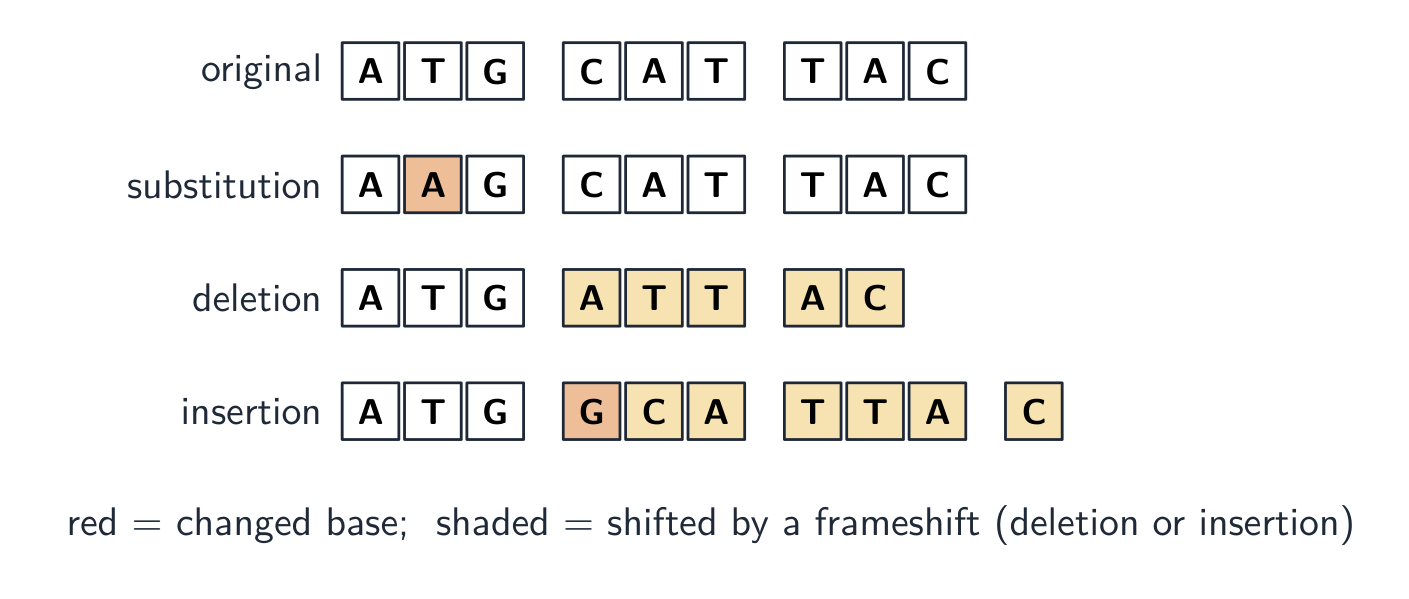
A mutation 突变 is a change in the DNA sequence. Point mutations change one base (silent, missense, or nonsense); insertions/deletions can cause a frameshift 移码 that garbles everything downstream. Mutations in gametes are heritable; they may be harmful, neutral, or beneficial – and beneficial ones supply the variation for natural selection.

Whole-chromosome errors change the phenotype too. Mutation is not only a change of base: errors in mitosis or meiosis can result in changes in phenotype. If chromosomes fail to separate — nondisjunction 不分离 — a gamete receives an extra copy or none, and the resulting zygote has an abnormal chromosome number (aneuploidy 非整倍性). Trisomy 21 is the familiar example. Because a whole chromosome carries hundreds of genes, the phenotypic effect is far broader than a point mutation's.

العربية

الطفرة هي تغيير في تسلسل الحمض النووي. الطفرات النقطية تغير قاعدة واحدة (صامتة، استبدال، أو توقف)؛ الإدراجات/الحذف يمكن أن تسبب إزاحة إطار القراءة التي تشوه كل ما يليها. الطفرات في الأمشاج قابلة للوراثة؛ قد تكون ضارة، محايدة، أو مفيدة – والمفيدة توفر التنوع للاختيار الطبيعي.

طفرات الاستبدال والحذف والإدراج

أخطاء الكروموسوم الكامل تغير النمط الظاهري أيضًا. الطفرة ليست مجرد تغيير في قاعدة: الأخطاء في الانقسام الخيطي أو الانقسام الميوزي قد تؤدي إلى تغييرات في النمط الظاهري. إذا فشلت الكروموسومات في الانفصال — عدم الانفصال — يتلقى مشيج نسخة إضافية أو لا شيء، ويكون الزيجوت الناتج لديه عدد كروموسومات غير طبيعي (عدم انتظام العدد الكروموسومي). متلازمة داون (الثلاثية 21) هي المثال المألوف. نظرًا لأن الكروموسوم الكامل يحمل مئات الجينات، فإن التأثير على النمط الظاهري أوسع بكثير من طفرة النقطة الواحدة.

Vocabulary · ⁨مفردات⁩ Train · ⁨تدريب⁩
English العربية
double helix/ˈdʌbl ˈhiːlɪks/ حلزون مزدوج
nucleotides/ˈnjuːklɪɒtaɪdz/ النيوكليوتيدات
complementary base pairing/ˌkɒmplɪˈmentəri beɪs ˈpeərɪŋ/ complementary base pairing
antiparallel/ˌæntɪˈpærəlel/ antiparallel
single circular chromosome/ˈsɪŋɡl ˈsɜːkjʊlə ˈkrəʊməsəʊm/ كروموسوم دائري مفرد
multiple linear chromosomes/ˈmʌltɪpl ˈlɪnɪə ˈkrəʊməsəʊmz/ كروموسومات خطية متعددة
condensed by wrapping around proteins called histones/kənˈdenst baɪ ˈræpɪŋ əˈraʊnd ˈprəʊtiːnz kɔːld ˈhɪstəʊnz/ مكثف عن طريق لفه حول بروتينات تسمى الهيستونات
semiconservatively/ˌsemɪkənˈsɜːvətɪvli/ بنصف محافظ
DNA polymerase/ˌdiː en ˈeɪ ˌpɒlɪməˈreɪz/ بوليميراز الحمض النووي الريبوزي منقوص الأكسجين
Transcription/trænˈskrɪpʃn/ النسخ
messenger RNA/ˈmesɪndʒə ˌɑː en ˈeɪ/ messenger RNA
introns/ɪnˈtrɒnz/ الإنترونات
exons/eɡˈzɒnz/ الإكسونات
Translation/trænˈsleɪʃn/ الترجمة
ribosome/ˈriːbəʊsəʊm/ الريبوسومات
codons/ˈkəʊdɒnz/ ثلاثيات
Transfer RNA/ˈtrænsfɜː ˌɑː en ˈeɪ/ الحمض النووي الريبوزي الناقل
operons/ˈɒpərənz/ أوبرونات
differential gene expression/ˌdɪfəˈrenʃl dʒiːn ekˈspreʃn/ التعبير الجيني التفريقي
mutation/mjuːˈteɪʃn/ طفرة
frameshift/ˈfreɪmʃɪft/ تغيير إطار القراءة
nondisjunction/ˌnɒndɪsˈdʒʌŋkʃn/ عدم الانفصال
aneuploidy/ˈeɪnəplɔɪdi/ اضطراب العدد الكروموسومي
Biotechnology/ˌbaɪəʊtekˈnɒlədʒi/ التكنولوجيا الحيوية
6.8

Biotechnology · ⁨التكنولوجيا الحيوية⁩

Syllabus · ⁨المنهج⁩
English

Enduring Understanding (BIG IDEA 3 — Information Storage and Transmission): Living systems store, retrieve, transmit, and respond to information essential to life processes.

Learning Objective 6.8.A: Explain the use of genetic engineering techniques in analyzing or manipulating DNA.

  • 6.8.A.1 Genetic engineering techniques can be used to analyze and manipulate DNA and RNA.
    • 6.8.A.1.i Gel electrophoresis is a process that separates DNA fragments by size and charge.
    • 6.8.A.1.ii During polymerase chain reaction (PCR), DNA fragments are amplified by denaturing DNA, annealing primers to the original strand, and extending the new DNA molecule.
    • 6.8.A.1.iii Bacterial transformation introduces foreign DNA into bacterial cells.
    • 6.8.A.1.iv DNA sequencing technology determines the order of nucleotides in a DNA molecule. Typically, these techniques result in a DNA fingerprint that allows for the comparison of DNA sequences from various samples.
    • Illustrative examples for 6.8.A.1:
      • Amplified DNA fragments can be used to identify organisms and perform phylogenetic analysis.
      • Analysis of DNA can be used for forensic identification.
      • Genetically modified organisms include transgenic animals.
      • Gene cloning allows propagation of DNA fragments.
    • Exclusion statement: Knowledge of the details of each of these genetic engineering techniques is beyond the scope of the AP Exam.
العربية

الفهم الدائم (الفكرة الكبرى 3 — تخزين المعلومات ونقلها): تخزن الأنظمة الحية وتسترجع وتُنقل وتستجيب للمعلومات الضرورية للعمليات الحيوية.

الهدف التعليمي 6.8.A: اشرح استخدام تقنيات الهندسة الوراثية في تحليل أو تعديل الحمض النووي.

  • 6.8.A.1 يمكن استخدام تقنيات الهندسة الوراثية لتحليل وتعديل الحمض النووي والحمض النووي الريبوزي.
    • 6.8.A.1.i الكهربية الهلامية هي عملية تفصل قطع الحمض النووي حسب الحجم والشحنة.
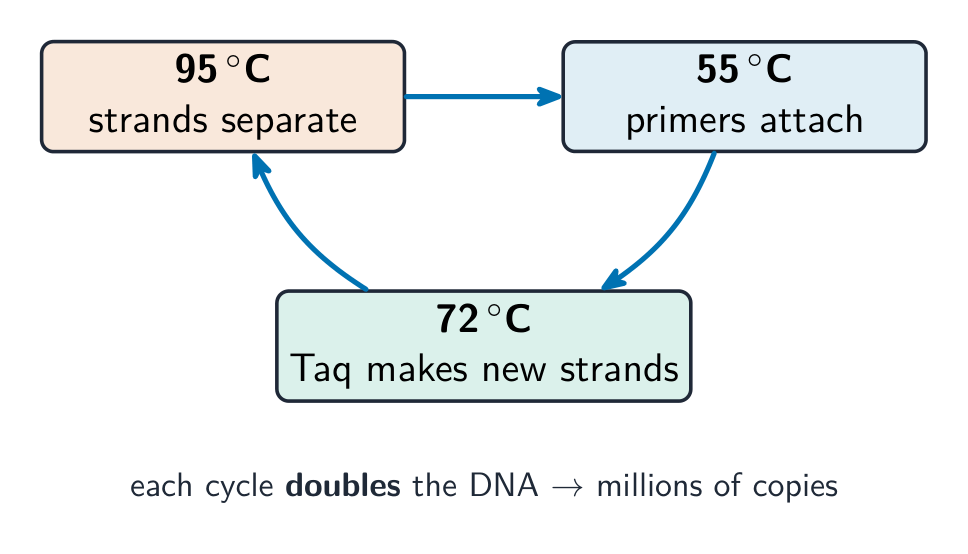
    • 6.8.A.1.ii أثناء تفاعل البوليميراز المتسلسل (PCR)، يتم تضخيم قطع الحمض النووي عن طريق إذابة الحمض النووي، ولصق البادئات على السلسلة الأصلية، وتمديد جزيء الحمض النووي الجديد.
    • 6.8.A.1.iii تحويل البكتيريا يدخل حمض نووي أجنبي إلى خلايا البكتيريا.
    • 6.8.A.1.iv technology تسلسل الحمض النووي تحدد ترتيب النيوكليوتيدات في جزيء الحمض النووي. عادةً ما تؤدي هذه التقنيات إلى بصمة حمض نووي تسمح بمقارنة تسلسلات الحمض النووي من عينات مختلفة.
    • أمثلة توضيحية لـ 6.8.A.1:
      • يمكن استخدام قطع الحمض النووي المضخاة لتحديد الكائنات وإجراء التحليل التطوري.
      • يمكن استخدام تحليل الحمض النووي للتعرف الجنائي.
      • الكائنات المعدلة وراثيًا تشمل الحيوانات المستحدثة.
      • allows cloning الجينات انتشار قطع الحمض النووي.
    • عبارة الاستبعاد: معرفة تفاصيل كل من هذه التقنيات الهندسية الوراثية تقع خارج نطاق امتحان AP.

Source: College Board AP Course and Exam Description · ⁨المصدر: وصف دورة وامتحان College Board AP⁩

English

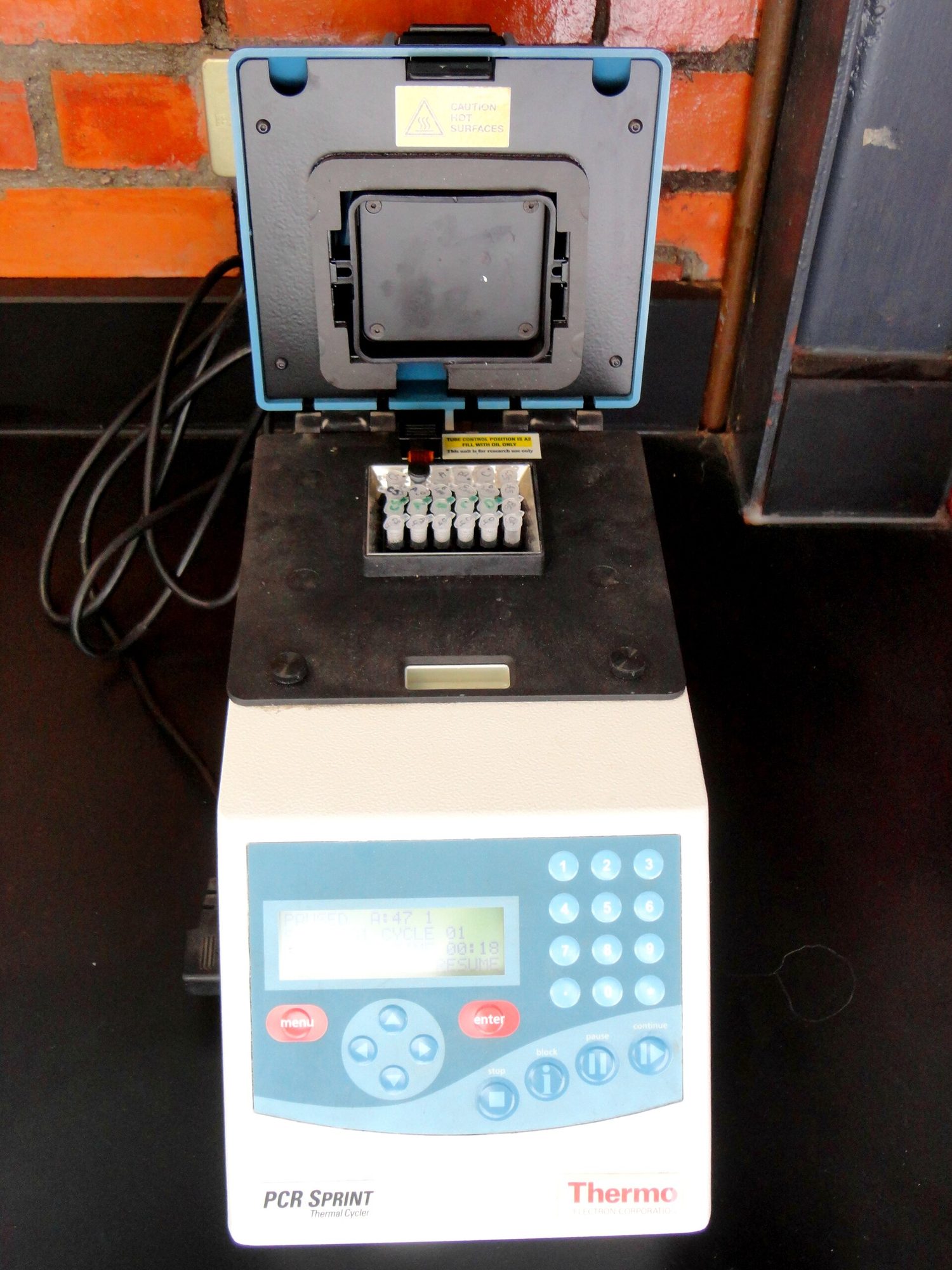
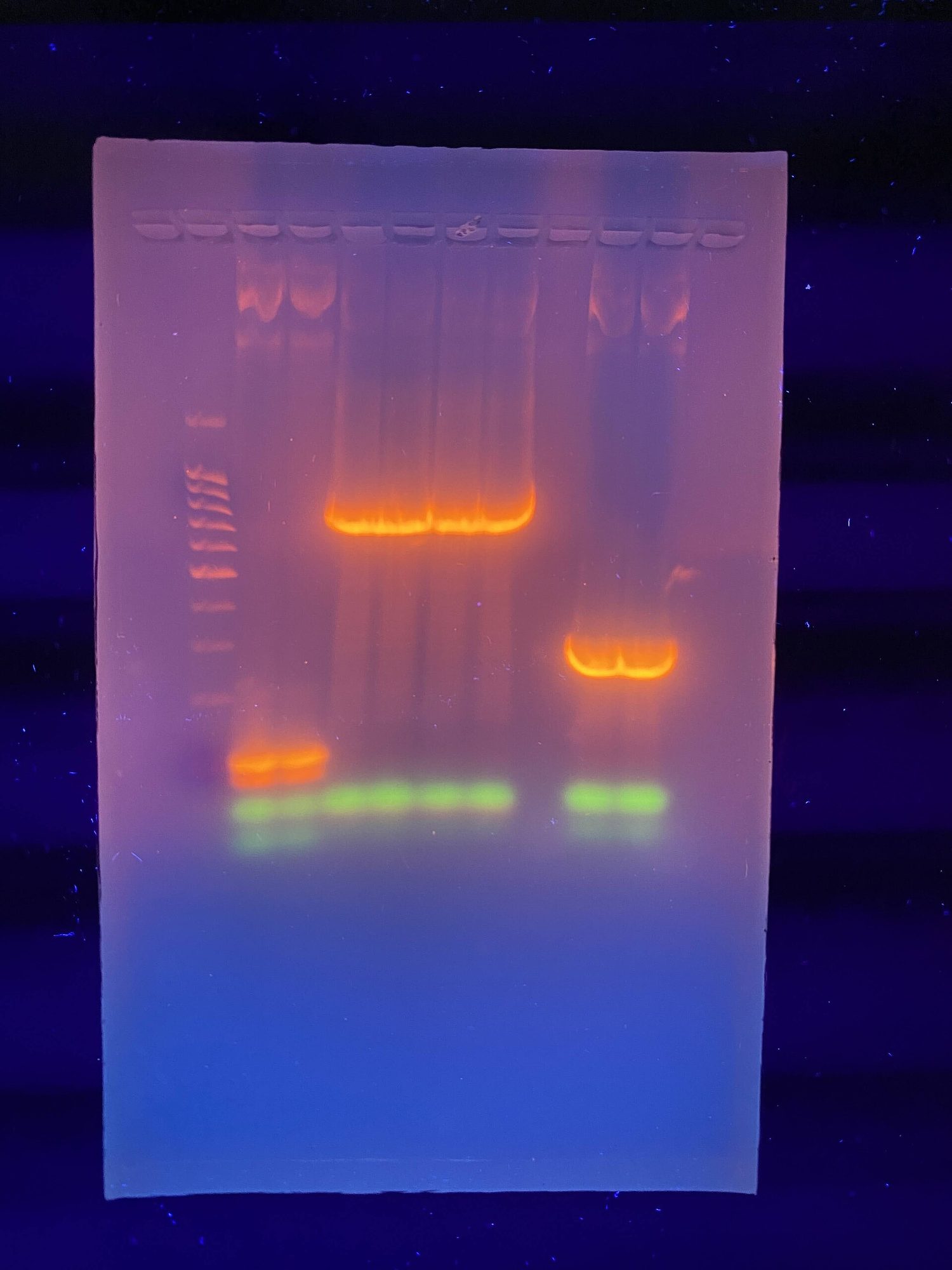
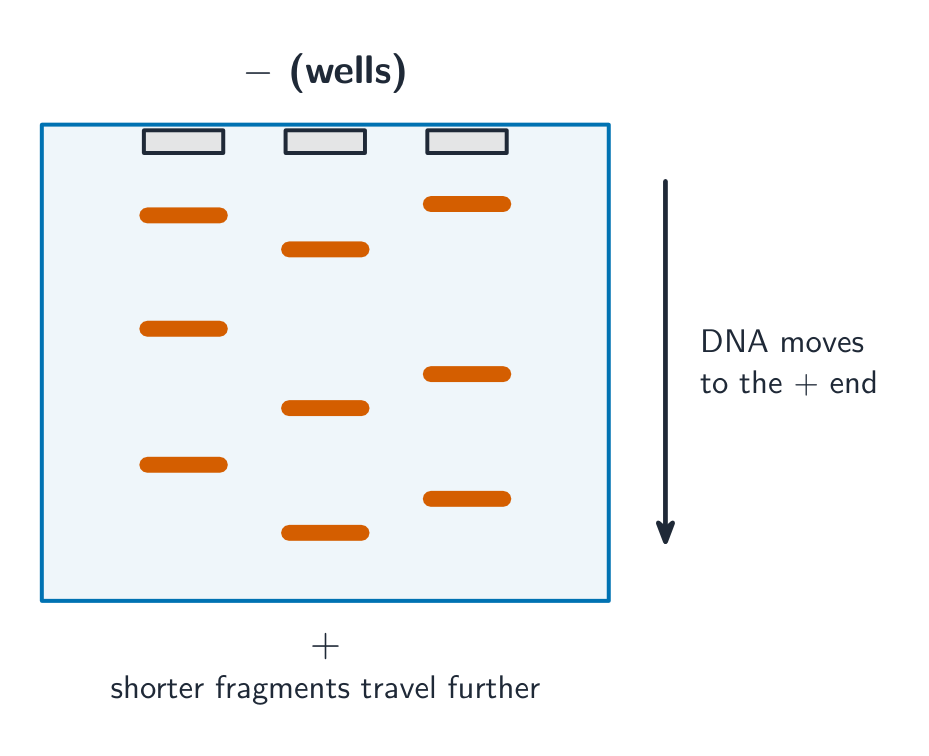
Biotechnology 生物技术 tools manipulate genetic material: PCR 聚合酶链反应 copies DNA, gel electrophoresis 凝胶电泳 separates DNA fragments by size, restriction enzymes and cloning move genes between organisms, and CRISPR edits sequences. These techniques enable genetic testing, engineered organisms, and medical treatments.

Worked example. A template DNA strand 3'-TAC GGA TTC-5' is transcribed into mRNA 5'-AUG CCU AAG-3'. A ribosome reads three codons: AUG = Met (start), CCU = Pro, AAG = Lys — coding for Met–Pro–Lys. Changing the third base of a codon often gives the same amino acid, because the genetic code is degenerate, which softens the effect of many mutations.

Reading DNA identifies individuals. Because the number of repeats at certain non-coding loci varies from person to person, analysis of DNA can be used for forensic identification: amplify those regions by PCR, separate the fragments by gel electrophoresis, and compare the pattern of band positions with a reference sample. A match is a statement about probability rather than certainty, which is why several loci are tested rather than one.

العربية
آلة دورة حرارية تسخن وتبرد العينات بشكل متكرر لتضخيم DNA (تفاعل البوليميراز المتسلسل)
آلة التسخين والتبريد الدورية تسخن وتبرد العينات بشكل متكرر لتضخيم الحمض النووي (تفاعل البوليميراز المتسلسل)
هلام الأجاروس تحت ضوء الأشعة فوق البنفسجية: تنفصل фрагментات الحمض النووي حسب الحجم كأشرطة مضيئة
هلام الأجار تحت ضوء الأشعة فوق البنفسجية: تنفصل фрагментات الحمض النووي حسب الحجم كأشرطة مضيئة

أدوات التكنولوجيا الحيوية تManipulate المادة الوراثية: تفاعل البوليميراز المتسلسل ينسخ الحمض النووي، الكهرباء الهلامية تفصل片段 الحمض النووي حسب الحجم، إنزيمات القص والتجميع تنقل الجينات بين الكائنات، وكريسبر يعدل التسلسلات. تمكن هذه التقنيات الفحوصات الوراثية، والكائنات المعدلة، والعلاجات الطبية.

الكهرباء الهلامية تفصل片段ات الحمض النووي حسب الطول
الكهرباء الهلامية تفصل片段 الحمض النووي حسب الطول
تضاعف تفاعل البوليميراز المتسلسل الحمض النووي في كل دورة
تفاعل البوليميراز المتسلسل يضاعف الحمض النووي في كل دورة

مثال محلول. شريط DNA قالب 3'-TAC GGA TTC-5' يتم نسخه إلى mRNA 5'-AUG CCU AAG-3'. تقرأ ريبوسوم ثلاثة كودونات: AUG = Met (بداية)، CCU = Pro، AAG = Lys — مشفرًا لـ Met–Pro–Lys. تغيير القاعدة الثالثة للكودون غالبًا ما يعطي نفس الأحماض الأمينية، لأن الشفرة الوراثية متدهورة، مما يخفف تأثير العديد من الطفرات.

قراءة الحمض النووي تحدد الأفراد. نظرًا لأن عدد التكرارات عند某些 مواقع غير مشفرة يتغير من شخص لآخر، يمكن استخدام تحليل الحمض النووي للتعرف الجنائي: تضخم تلك المناطق بواسطة PCR، وفصل片段ها بالكهرباء الهلامية، ومقارنة نمط مواقع الأشرطة مع عينة مرجعية. التطابق هو statement حول الاحتمالية وليس اليقين، ولهذا السبب يتم اختبار عدة مواقع بدلاً من واحدة.

Vocabulary · ⁨مفردات⁩ Train · ⁨تدريب⁩
English العربية
PCR/ˌpiː siː ˈɑː/ تفاعل البوليميراز المتسلسل (PCR)
gel electrophoresis/dʒel ɪˌlektrəʊfɔːˈriːsɪs/ الكهرباء الهلامية
6.8

Exam tips · ⁨نصائح للامتحان⁩

English
  • Know the central dogma DNA → RNA → protein: transcription makes mRNA, translation reads it in three-base codons at the ribosome.
  • Remember RNA is single-stranded and uses U instead of T; replication is semiconservative.
  • Every cell has the same DNA — cells differ because they express different genes (differential gene expression).
  • A mutation is a change in the DNA sequence and may be harmful, neutral, or beneficial (the raw material for selection).
  • Link biotech tools to their jobs: PCR copies DNA; gel electrophoresis separates fragments by size.
العربية
  • اعرف القاعدة المركزية DNA → RNA → protein: النسخ يصنع mRNA، والترجمة يقرأه في ثلاثية كودونات عند الريبوسوم.
  • تذكر أن RNA أحادي السلسلة ويستخدم U بدلاً من T؛ النسخ نصف محافظ.
  • كل خلية لها نفس الحمض النووي — الخلايا تختلف لأنها تعبر عن جينات مختلفة (التعبير الجيني الانتقائي).
  • الطفرة هي تغيير في تسلسل الحمض النووي وقد تكون ضارة، محايدة، أو مفيدة (المادة الخام للاختيار).
  • اربط أدوات التكنولوجيا الحيوية بوظائفها: PCR ينسخ الحمض النووي؛ الكهرباء الهلامية تفصل片段 حسب الحجم.

Interactive lessons on this topic · ⁨دروس تفاعلية حول هذا الموضوع⁩

Work through it step by step, with instant-check exercises. · ⁨ا-working عليه خطوة بخطوة، مع تمارين تحقق فوري.⁩

Past Papers · ⁨أوراق الامتحانات السابقة⁩

More topics in AP Biology · ⁨AP علم الأحياء⁩ · ⁨المزيد من المواضيع في AP Biology · ⁨AP علم الأحياء⁩⁩

Log in or create account · ⁨تسجيل الدخول أو إنشاء حساب⁩

IGCSE, A-Level & AP