学习目标 3.1.A: 解释持久的主题如何影响发展心理学。
- 3.1.A.1 发展心理学既关注发展的时间顺序,也关注贯穿整个生命周期的主题问题。发展心理学家关注的主题包括稳定与变化、先天与后天,以及发展的连续性与阶段性。
学习目标 3.1.B: 描述发展心理学中使用的横断研究和纵向研究设计方法如何增进对行为和心理过程的理解。
AP 心理学 · 知识点 3
 12:18
12:18
发展与学习
一个四岁的孩子捡起一个沉重的玻璃弹珠,试图在地板上弹跳。他不是在犯傻。他对圆形物体有一条规则:圆形的东西会弹跳。…
英语旁白 · 英中内嵌字幕
学习目标 3.1.A: 解释持久的主题如何影响发展心理学。
学习目标 3.1.B: 描述发展心理学中使用的横断研究和纵向研究设计方法如何增进对行为和心理过程的理解。
来源:College Board AP 课程与考试说明
发展心理学 发展心理学研究个体在整个生命周期中的变化。应关注变化的机制、特征的稳定性,以及遗传特征与经验如何相互作用(先天与后天 先天与后天)。
研究人员使用两种设计来回答这些问题。横断研究 比较不同年龄组在同一时间点的表现——速度快,但差异可能源于不同世代的区别。纵向研究 对同一群人进行多年追踪——速度较慢,但能显示个体内部的变化。同辈群体效应 指与某一代人经历相关的差异,而非仅由年龄引起。纵向研究可能受参与者流失和重复测试的影响;单纯跟踪人群本身并不能证明变化的原因。
| English | 中文 | 拼音 |
|---|---|---|
| Developmental psychology/dɪˈveləpmentl saɪˈkɒlədʒi/ | 发展心理学 | fā zhǎn xīn lǐ xué |
| continuous/kənˈtɪnjuːəs/ | 连续的 | lián xù de |
| discontinuous/dɪskənˈtɪnjuːəs/ | 不连续的 | bù lián xù de |
| stable/ˈsteɪbl/ | 稳定的 | wěn dìng de |
| cross-sectional study/krɒs ˈsekʃənl ˈstʌdi/ | 横断研究 | héng duàn yán jiū |
| longitudinal study/ˌlɒŋɡɪˈtjuːdɪnl ˈstʌdi/ | 纵向研究 | zòng xiàng yán jiū |
学习目标 3.2.A: 解释出生前的身体发展如何影响行为和心理过程。
学习目标 3.2.B: 解释婴儿期和儿童期的身体发展如何影响行为和心理过程。
学习目标 3.2.C: 解释青春期的身体发展如何影响行为和心理过程。
学习目标 3.2.D: 解释成年期的身体发展如何影响行为和心理过程。
来源:College Board AP 课程与考试说明
出生前的发展可能被致畸物(teratogens,如酒精等有害因素)、母亲的疾病、基因突变,以及激素或环境因素所干扰。
婴儿身体发育通常遵循相似的一般顺序,但时机存在差异。大肌肉动作技能 使用大块肌肉群,如行走;精细动作技能 使用较小的协调运动,如握笔。新生儿表现出 反射,提供关于发育的证据,例如 觅食反射(脸颊受触时转向)。视崖 装置提供了早期深度知觉的证据。避免其明显的跌落并不证明恐高完全是先天的;经验和任务同样重要。
关键期 是一个有限的时间窗口,特定的输入对于功能的典型发展是必需的;敏感期 是反应性增强的时期,在此期间仍可发生后期学习。某些动物表现出 印刻,即在有限的发展窗口期内类似早期依恋的跟随反应。不要将其等同于人类的所有依恋行为。
青春期 带来 青春期发育突增 和 青春发育期,包括 第一性征(生殖器官及其发育)和 第二性征(如声音变化和体毛)。初潮 指第一次月经;首次遗精 指第一次射精。成年期贯穿人生的大部分时光。行动能力、灵活性、反应时间和感官敏锐度可能以不同速率变化;衰退并非对所有人或所有能力都相同。更年期 标志月经周期的结束和生殖变化,而非学习或社会发展的终结。
| English | 中文 | 拼音 |
|---|---|---|
| teratogens/ˈterətədʒnz/ | 致畸物 | zhì jī wù |
| reflexes/ˈriːfleksɪz/ | 反射 | fǎn shè |
| rooting reflex/ˈruːtɪŋ ˈriːfleks/ | 觅食反射 | mì shí fǎn shè |
| visual cliff/ˈvɪʒuːəl klɪf/ | 视崖 | shì yá |
| critical period/ˈkrɪtɪkl ˈpɪərɪəd/ | 关键期 | guān jiàn qī |
| sensitive period/ˈsensɪtɪv ˈpɪərɪəd/ | 敏感期 | mǐn gǎn qī |
| Adolescence/ˌædəˈlesəns/ | 青春期 | qīng chūn qī |
| adolescent growth spurt/ˌædəˈlesənt ɡrəʊθ spɜːt/ | 青春期发育突增 | qīng chūn qī fā yù tū zēng |
| puberty/ˈpjuːbəti/ | 青春发育期 | qīng chūn fā yù qī |
| primary sex characteristics/ˈpraɪməri seks ˌkærɪktəˈrɪstɪks/ | 第一性征 | dì yī xìng zhēng |
| secondary sex characteristics/ˈsekəndəri seks ˌkærɪktəˈrɪstɪks/ | 第二性征 | dì èr xìng zhēng |
| menopause/ˈmenəpɔːz/ | 更年期 | gēng nián qī |
| Sex/seks/ | 生理性别 | shēng lǐ xìng bié |
| gender/ˈdʒendə/ | 社会性别 | shè huì xìng bié |
| Gender roles/ˈdʒendə rəʊlz/ | 性别角色 | xìng bié jué sè |
| socialization/ˌsəʊʃəlaɪˈzeɪʃn/ | 社会化 | shè huì huà |
| Sexual orientation/ˈsekʃuːəl ˌɔːrɪənˈteɪʃn/ | 性取向 | xìng qǔ xiàng |
学习目标 3.3.A: 描述生理性别和性别如何影响社会化及其他发展方面。
来源:College Board AP 课程与考试说明
生理性别 指生物特征,而 社会性别 包括社会角色、期望及身份认同。生理性别、性别认同、性别角色和性取向是不同的概念。性别角色 通过 社会化 习得:家庭、学校、同伴和媒体都教导什么是预期的行为。性取向 描述一个人持久的吸引模式。例如,来自成人的不同鼓励可以塑造练习技能的机会。群体差异本身并不能确立生物学原因。不要根据衣着、玩具或单一行为推断个人的身份或取向。
学习目标 3.4.A: 解释认知发展理论如何应用于行为和心理过程。
来源:College Board AP 课程与考试说明
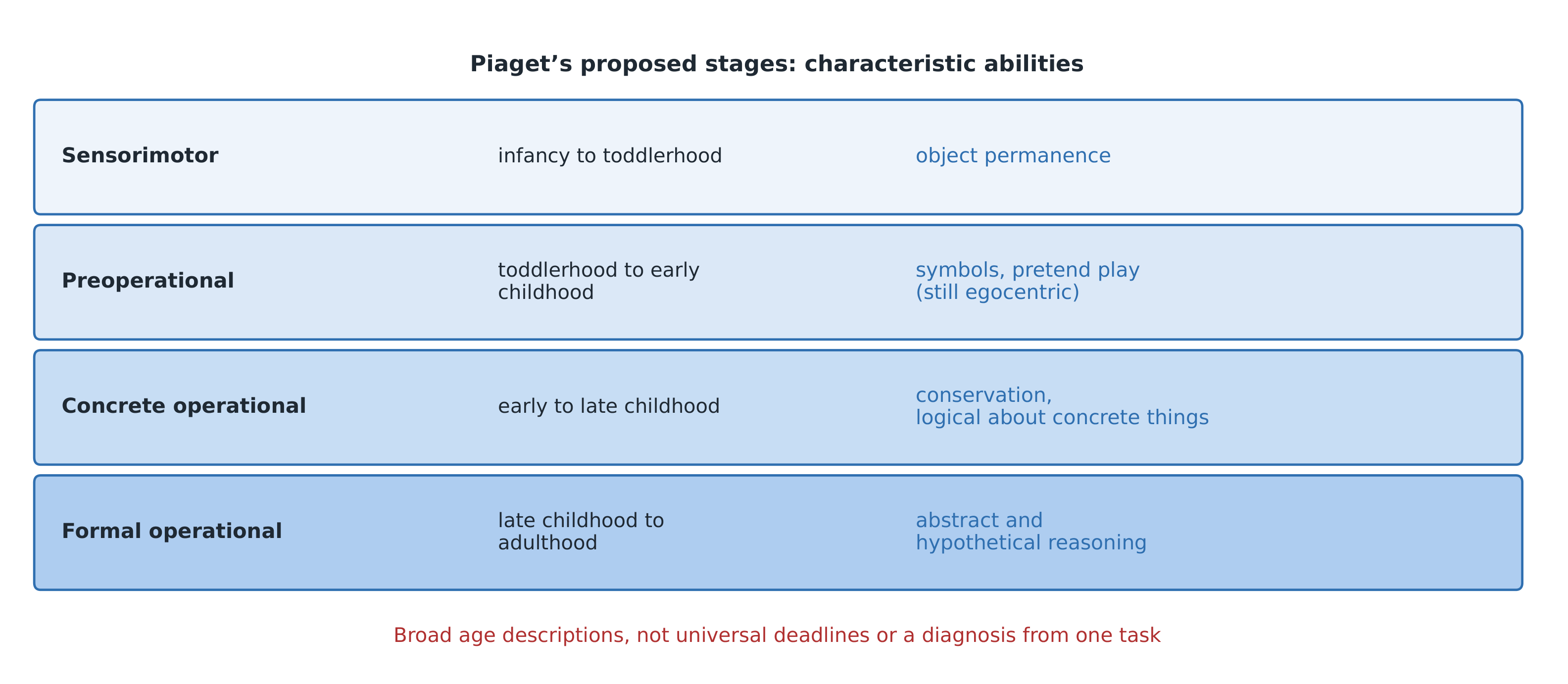
皮亚杰 提出儿童构建 图式,即组织经验的心智框架。同化 将新经验纳入现有图式;当图式不适用时,顺应 会改变该图式。他的理论包含四个阶段;它们的宽泛年龄描述并非每个孩子的精确截止日期:
维果茨基 认为儿童是社会学习者。最近发展区 是指儿童独立能做的与在帮助下能做的之间的差距;支架 是临时的、调整过的支持,帮助学习者完成任务,并随着独立性增长而减少。皮亚杰也承认经验的作用,维果茨基的理论并不意味着孤立学习是不可能的。
成人认知也会发生变化,在这里,单元 2 中的流体/晶体分裂再次出现:流体推理平均呈下降趋势,而晶体知识在整个成年期的许多阶段相对稳定。个体轨迹各不相同。痴呆 涉及超出正常老化的认知障碍;课堂片段或遗忘一件物品无法建立诊断。
| English | 中文 | 拼音 |
|---|---|---|
| Piaget/ˈpaɪəɡɪt/ | 皮亚杰 | pí yà jié |
| Sensorimotor stage/ˈsensɔːrɪməʊtə steɪdʒ/ | 感知运动阶段 | gǎn zhī yùn dòng jiē duàn |
| object permanence/ˈɒbdʒekt ˈpɜːmənəns/ | 客体永久性 | kè tǐ yǒng jiǔ xìng |
| Preoperational stage/prɪəʊˈpreɪʃənl steɪdʒ/ | 前运算阶段 | qián yùn suàn jiē duàn |
| egocentrism/ˈiːɡəʊsentrɪzəm/ | 自我中心 | zì wǒ zhōng xīn |
| conservation/ˌkɒnsəˈveɪʃn/ | 守恒 | shǒu héng |
| Concrete operational stage/ˈkɒŋkriːt ˌɒpəˈreɪʃənl steɪdʒ/ | 具体运算阶段 | jù tǐ yùn suàn jiē duàn |
| Formal operational stage/ˈfɔːml ˌɒpəˈreɪʃənl steɪdʒ/ | 形式运算阶段 | xíng shì yùn suàn jiē duàn |
| Vygotsky/vaɪˈɡɒtski/ | 维果茨基 | wéi guǒ cí jī |
| zone of proximal development/zəʊn ɒv ˈprɒksɪml dɪˈveləpmənt/ | 最近发展区 | zuì jìn fā zhǎn qū |
| scaffolding/ˈskæfəʊldɪŋ/ | 支架 | zhī jià |
| Dementia/dɪˈmenʃə/ | 痴呆 | chī dāi |
| Language/ˈlæŋɡwɪdʒ/ | 语言 | yǔ yán |
| gestures/ˈdʒestʃəz/ | 手势 | shǒu shì |
| cooing/ˈkuːɪŋ/ | 咕咕声 | gū gū shēng |
| babbling/ˈbæblɪŋ/ | 咿呀语 | yī yā yǔ |
| one-word stage/wʌn wɜːd steɪdʒ/ | 单词阶段 | dān cí jiē duàn |
| telegraphic speech/ˌtelɪˈɡræfɪk spiːtʃ/ | 电报式语言 | diàn bào shì yǔ yán |
学习目标 3.5.A: 解释语言与沟通的关键要素如何应用于行为和心理过程。
学习目标 3.5.B: 解释人类语言是如何发展的。
来源:College Board AP 课程与考试说明
语言 是一种用于交流的共享任意符号系统。音素 是具有区别意义的声音单位;语素 是最小的有意义的单位,如单词或具有意义的词尾。语义 关注意义;句法 关注词序,属于 语法 的范畴。受规则支配的组合使人们能够生成新的信息。发展过程包括:非言语 手势、咕咕声、咿呀语、单词阶段 和 电报式语言(常省略功能词的简短组合)。这些阶段的时间安排各不相同,且手势会伴随语言持续存在,并不会在说话开始时被放弃。
儿童先掌握规则,后掌握例外,于是出现过度规则化(overgeneralization)——把 went 说成 "goed"。这恰恰证明他们在学规则,而不只是模仿。
| English | 中文 | 拼音 |
|---|---|---|
| overgeneralization/ˌəʊvəˌdʒenərəlaɪˈzeɪʃn/ | 过度规则化 | guò dù guī zé huà |
| Ecological systems theory/ˌekəˈlɒdʒɪkl ˈsɪstəmz ˈθɪəri/ | 生态系统理论 | shēng tài xì tǒng lǐ lùn |
| parenting styles/ˈpeərəntɪŋ staɪlz/ | 教养方式 | jiào yǎng fāng shì |
| authoritarian/ˌɔːθɔːrɪˈteərɪən/ | 专制型 | zhuān zhì xíng |
| authoritative/ɔːˈθɒrɪtətɪv/ | 权威型 | quán wēi xíng |
| permissive/pəˈmɪsɪv/ | 放任型 | fàng rèn xíng |
| Generalization/ˌdʒenərəlaɪˈzeɪʃn/ | 泛化 | fàn huà |
| stimulus discrimination/ˈstɪmjʊləs dɪˌskrɪmɪˈneɪʃn/ | 刺激辨别 | cì jī biàn bié |
| higher-order conditioning/ˈhaɪə ˈɔːdə kənˈdɪʃənɪŋ/ | 高级条件作用 | gāo jí tiáo jiàn zuò yòng |
| taste aversion/teɪst əˈvɜːʃn/ | 味觉厌恶 | wèi jué yàn wù |
| Habituation/ˌhæbɪtʃuːˈeɪʃn/ | 习惯化 | xí guàn huà |
学习目标 3.6.A: 解释社会发展与行为及心理过程之间的关系。
来源:College Board AP 课程与考试说明
生态系统理论 描述发展是随时间推移相互作用的多种环境。微系统 涉及直接接触;中间系统 涉及这些环境之间的联系,例如家校合作。外系统 包含间接影响,例如照顾者的工作场所。宏系统 涉及更广泛的文化条件;时间系统 关注时间、生活转折及不断变化的情境。
研究确定了 教养方式:专制型(高要求、低温暖)、权威型(高要求、高温暖)和 放任型(低要求、高温暖)。文化背景会影响实践与结果之间的关系;这些类别并不意味着单一的教养方式就能决定孩子的未来。
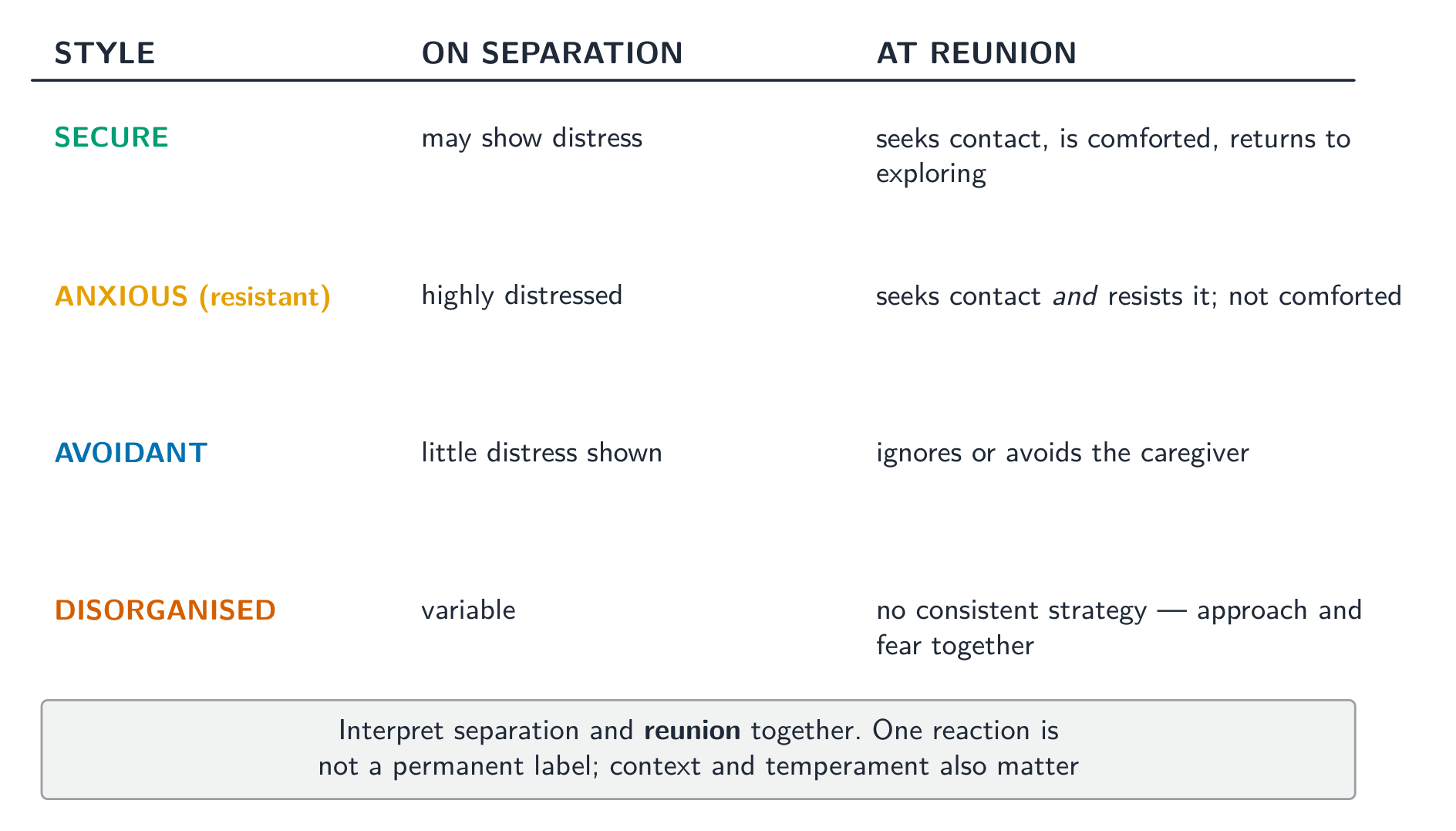
依恋 是婴儿与照顾者之间的情感纽带,通过 陌生情境 程序进行研究。分离与重聚时的模式有助于分类;单一孤立反应并不能确立永久标签。气质 指相对稳定的情绪反应特征,也与依恋有关。依恋类型包括 安全型依恋 和不安全形式(回避型、焦虑型、混乱型)。分离焦虑 指离开照顾者时产生的强烈痛苦。猴子研究表明,当婴儿在进食时更喜欢柔软的代理母亲而非另一只猴子时,体现了 接触安慰。这挑战了仅以食物解释依恋的观点;但这并不意味着食物对依恋不重要,也不意味着动物实验结果可以毫无限制地推广到人类身上。
同伴关系通过童年的 平行游戏 和 假装游戏 发展而来,青少年随着年龄增长往往更依赖同伴。假想观众 是指认为他人特别关注自己的信念;个人神话 是指认为自己经历独特的信念,有时还包括不可战胜感。这些概念不同于幼儿时期的观点采择错误。
埃里克森 提出了 心理社会发展 的阶段理论,每个阶段都面临一个需要解决的冲突——青春期阶段为 同一性与角色混乱。在埃里克森的理论中,冲突涵盖信任与不信任;自主与羞怯怀疑;主动与内疚;勤奋与自卑;同一性与角色混乱;亲密与孤独;繁衍与停滞;整合与绝望。这些是理论上的发展任务,而非诊断或某种固定结果的保证。社会时钟 描述了受文化塑造的生活事件时间期望;成年初显期 是在某些社会背景下被认可的一个过渡阶段。支持性的成人关系可以在家庭和其他亲密网络中建立。童年不良经历 (ACEs) 可能影响日后的人际关系和健康,但背景和提供支持会影响结果;它们并不注定未来的结局。同一性的形成可能涉及探索与承诺:同一性达成 发生在探索与承诺之后;同一性延缓 涉及探索但未承诺;同一性早闭 涉及承诺但未探索;同一性弥散 则两者皆少。这些过程可涉及职业、宗教、种族/民族、性别、性取向和家庭认同。
| English | 中文 | 拼音 |
|---|---|---|
| Attachment/əˈtætʃmənt/ | 依恋 | yī liàn |
| strange situation/streɪndʒ ˌsɪtʃuːˈeɪʃn/ | 陌生情境 | mò shēng qíng jìng |
| secure attachment/sɪˈkjʊə əˈtætʃmənt/ | 安全型依恋 | ān quán xíng yī liàn |
| avoidant/əˈvɔɪdənt/ | 回避型 | huí bì xíng |
| anxious/ˈæŋʃəs/ | 焦虑型 | jiāo lǜ xíng |
| disorganized/dɪˈsɔːɡənaɪzd/ | 混乱型 | hùn luàn xíng |
| Separation anxiety/ˌsepəˈreɪʃn æŋˈzaɪəti/ | 分离焦虑 | fēn lí jiāo lǜ |
| contact comfort/ˈkɒntækt ˈkʌmfət/ | 接触安慰 | jiē chù ān wèi |
| parallel play/ˈpærəlel pleɪ/ | 平行游戏 | píng xíng yóu xì |
| pretend play/prɪˈtend pleɪ/ | 假装游戏 | jiǎ zhuāng yóu xì |
| Erikson/ˈerɪksn/ | 埃里克森 | āi lǐ kè sēn |
| psychosocial development/ˈsaɪkəʊsəʊʃl dɪˈveləpmənt/ | 心理社会发展 | xīn lǐ shè huì fā zhǎn |
| identity versus role confusion/aɪˈdentɪti ˈvɜːsɪz rəʊl kənˈfjuːʒn/ | 同一性与角色混乱 | tóng yī xìng yǔ jué sè hùn luàn |
| Adverse childhood experiences (ACEs)/ædˈvɜːs ˈtʃaɪldhʊd ekˈspɪərɪənsɪz/ | 童年不良经历 | tóng nián bù liáng jīng lì |
| behavioral perspective/bɪˈheɪvjərəl pəˈspektɪv/ | 行为主义视角 | xíng wéi zhǔ yì shì jiǎo |
学习目标 3.7.A: 解释经典条件反射如何应用于行为和心理过程。
来源:College Board AP 课程与考试说明
行为主义视角 传统上强调可观察的行为和条件反射,通常将心理过程排除在其解释之外。后来的学习理论也开始考虑认知因素。
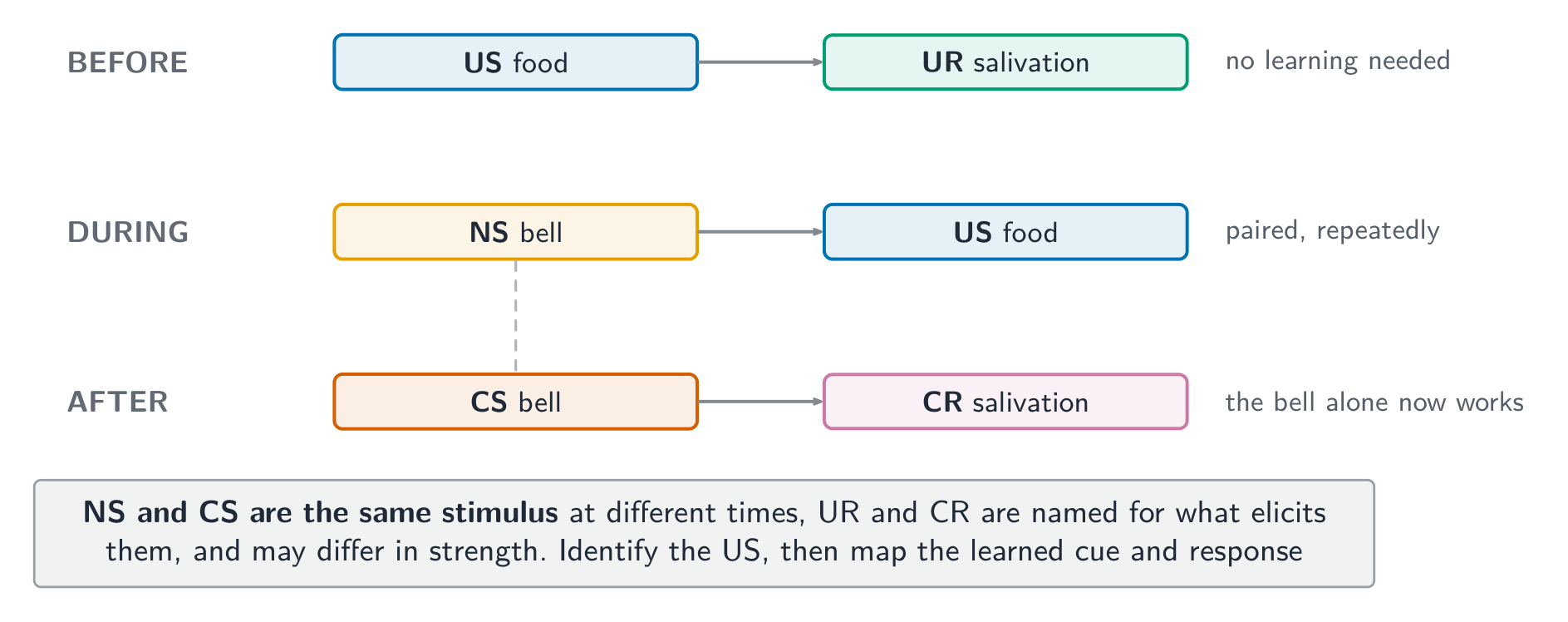
经典条件作用(classical conditioning)把一个刺激与另一个刺激联系起来:
情绪反应可以被条件化,味觉厌恶展示了某些联结只需一次试错即可习得,体现了生物准备性:即某些联结比其他联结更容易被学习。对抗条件作用将一个线索与先前习得反应的相容反应配对;这是一种学习原则,而非课堂干预指令。习惯化指对重复刺激的反应减弱。
将自然诱发的刺激与习得线索分别映射到其对应的反应,而不假设两者反应强度相同。
| English | 中文 | 拼音 |
|---|---|---|
| Classical conditioning/ˈklæsɪkl kənˈdɪʃənɪŋ/ | 经典条件作用 | jīng diǎn tiáo jiàn zuò yòng |
| unconditioned stimulus (UCS)/ʌŋkənˈdɪʃnd ˈstɪmjʊləs/ | 无条件刺激 | wú tiáo jiàn cì jī |
| unconditioned response (UCR)/ʌŋkənˈdɪʃnd rɪˈspɒns/ | 无条件反应 | wú tiáo jiàn fǎn yìng |
| neutral stimulus/ˈnjuːtrəl ˈstɪmjʊləs/ | 中性刺激 | zhōng xìng cì jī |
| conditioned stimulus (CS)/kənˈdɪʃnd ˈstɪmjʊləs/ | 条件刺激 | tiáo jiàn cì jī |
| conditioned response (CR)/kənˈdɪʃnd rɪˈspɒns/ | 条件反应 | tiáo jiàn fǎn yìng |
| Acquisition/əkwɪˈsɪʃn/ | 习得 | xí dé |
| Extinction/ekˈstɪŋkʃn/ | 消退 | xiāo tuì |
| spontaneous recovery/spɒnˈteɪnɪəs rɪˈkʌvəri/ | 自发恢复 | zì fā huī fù |
学习目标 3.8.A: 解释操作性条件作用如何应用于行为和心理过程。
来源:College Board AP 课程与考试说明
操作性条件作用(operant conditioning)把行为与其后果联系起来。
强化程式改变学习的强度和持久性。连续强化奖励每一次反应,能产生快速学习但也会导致快速消退。部分强化有四种类型——固定比率、变动比率、固定时距和变动时距。比率程式取决于反应次数;时距程式则在时间流逝后奖励第一个符合条件的反应。“固定”意味着可预测,“变动”意味着变化不定。变动比率程式通常会产生高频率且稳定的反应,并表现出对消退的抵抗力;但这并非脱离具体程序和数值设定的普遍排名。
效果律将后果与未来行为发生的可能性联系起来。强化物和惩罚物是根据其观察到的效果来确定的,而非成年人的意图。本能漂移发生在物种典型行为干扰了已训练反应时。操作性辨别与泛化涉及在不同情境下做出不同或相似的应答。
迷信行为(superstitious behavior)源于后果强化了无关的动作。习得性无助(learned helplessness)则是个体反复无法逃离厌恶事件后不再尝试。
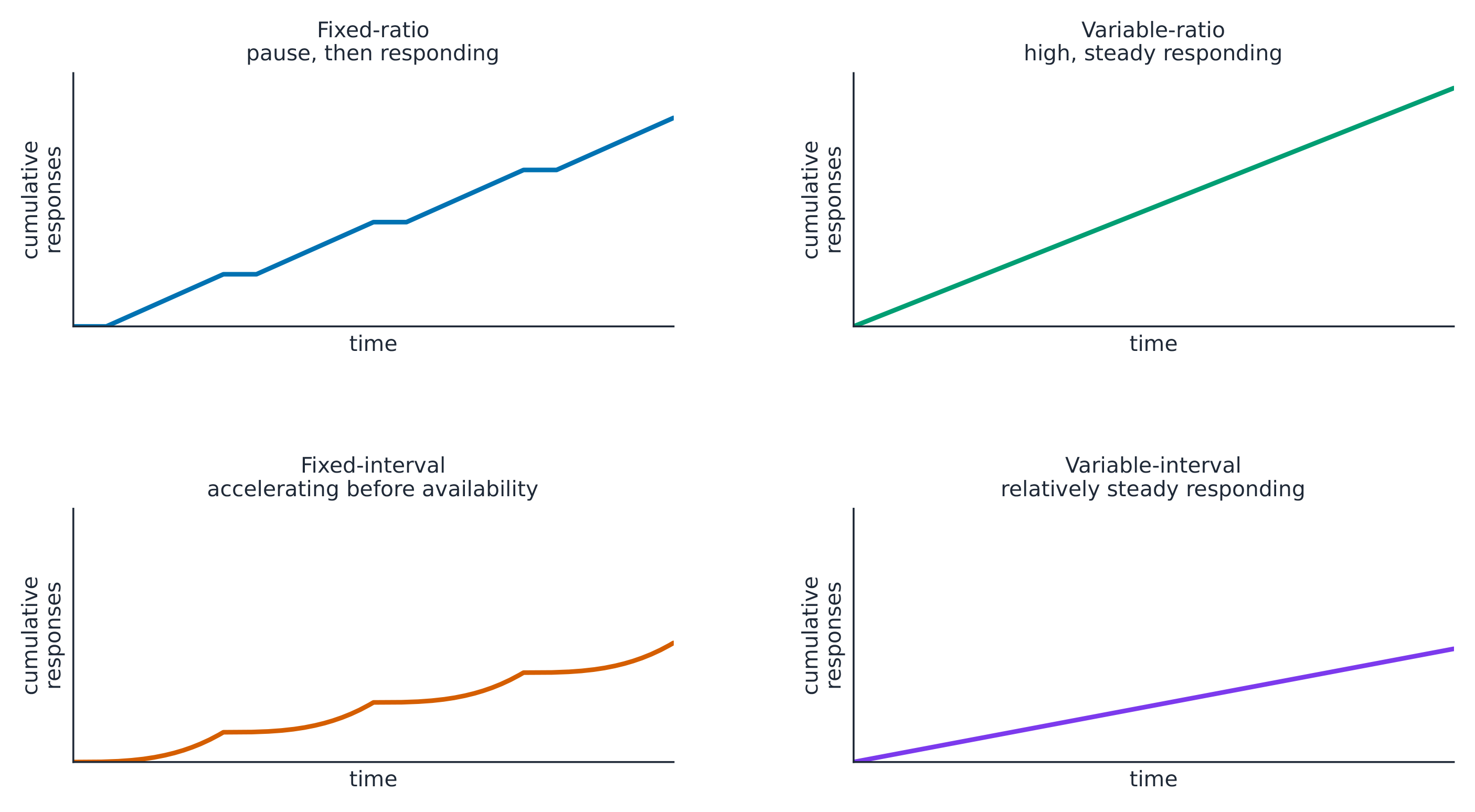
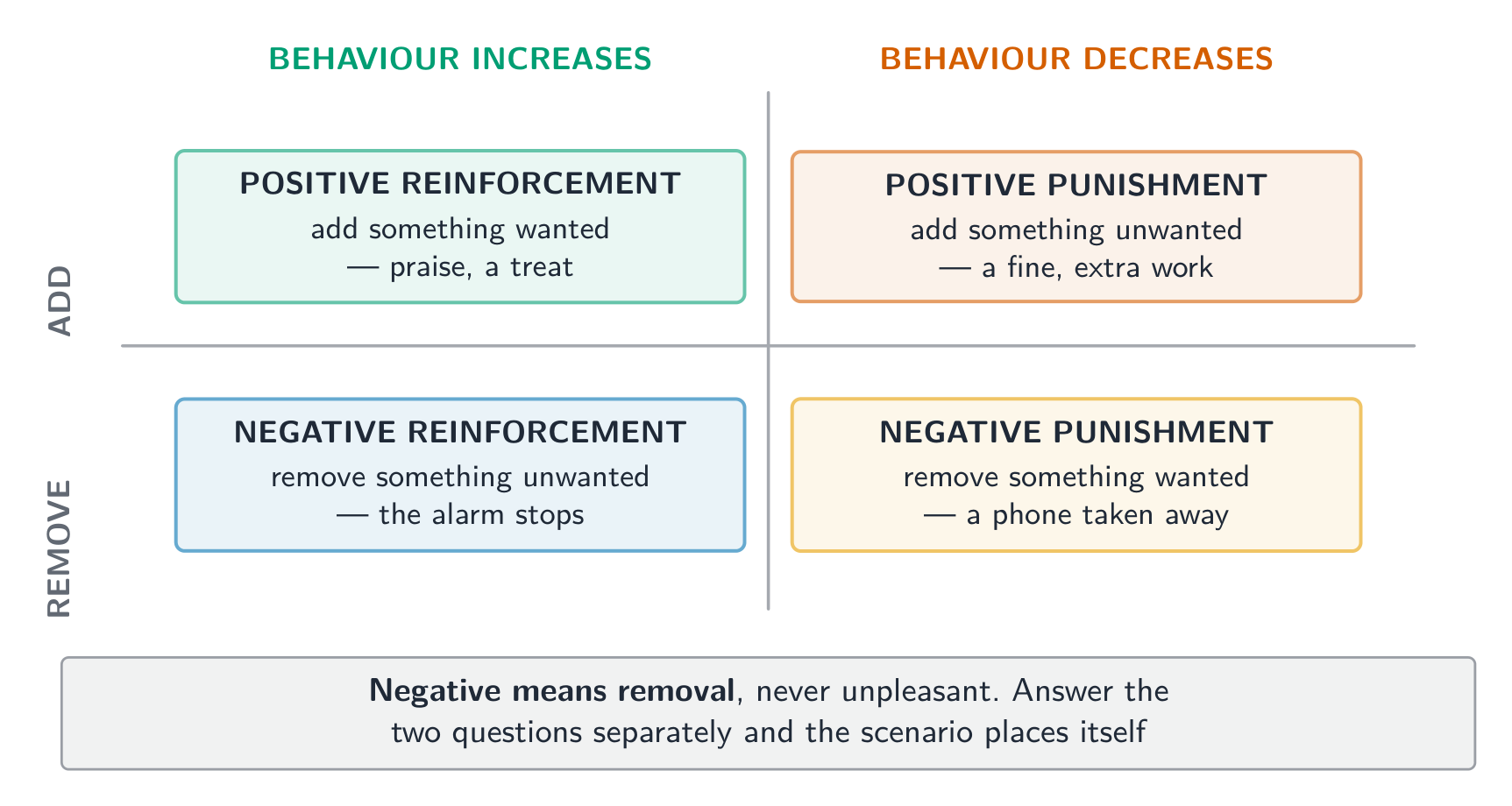
对增加/减少行为及观察到的行为增强/减弱进行分类。
| English | 中文 | 拼音 |
|---|---|---|
| Operant conditioning/ˈɒpərənt kənˈdɪʃənɪŋ/ | 操作性条件作用 | cāo zuò xìng tiáo jiàn zuò yòng |
| Reinforcement/ˌriːɪnˈfɔːsmənt/ | 强化 | qiáng huà |
| punishment/ˈpʌnɪʃmənt/ | 惩罚 | chéng fá |
| Positive/ˈpɒzɪtɪv/ | 正 | zhèng |
| negative/ˈneɡətɪv/ | 负 | fù |
| negative reinforcement/ˈneɡətɪv ˌriːɪnˈfɔːsmənt/ | 负强化 | fù qiáng huà |
| primary reinforcer/ˈpraɪməri ˌriːɪnˈfɔːsə/ | 原级强化物 | yuán jí qiáng huà wù |
| secondary reinforcer/ˈsekəndəri ˌriːɪnˈfɔːsə/ | 次级强化物 | cì jí qiáng huà wù |
| Shaping/ˈʃeɪpɪŋ/ | 塑造 | sù zào |
| successive approximations/səkˈsesɪv əˌprɒksɪˈmeɪʃnz/ | 逐步接近 | zhú bù jiē jìn |
| Reinforcement schedules/ˌriːɪnˈfɔːsmənt ˈʃedjuːlz/ | 强化程式 | qiáng huà chéng shì |
| Continuous reinforcement/kənˈtɪnjuːəs ˌriːɪnˈfɔːsmənt/ | 连续强化 | lián xù qiáng huà |
| Partial reinforcement/ˈpɑːʃl ˌriːɪnˈfɔːsmənt/ | 部分强化 | bù fèn qiáng huà |
| fixed-ratio/fɪkst ˈreɪʃɪəʊ/ | 固定比率 | gù dìng bǐ lǜ |
| variable-ratio/ˈveərɪəbl ˈreɪʃɪəʊ/ | 变动比率 | biàn dòng bǐ lǜ |
| fixed-interval/fɪkst ˈɪntəvl/ | 固定时距 | gù dìng shí jù |
| variable-interval/ˈveərɪəbl ˈɪntəvl/ | 变动时距 | biàn dòng shí jù |
| Superstitious behavior/ˌsuːpəˈstɪʃəs bɪˈheɪvjə/ | 迷信行为 | mí xìn xíng wéi |
| Learned helplessness/lɜːnd ˈhelpləsnəs/ | 习得性无助 | xí dé xìng wú zhù |
学习目标 3.9.A: 解释社会学习如何应用于行为和心理过程。
学习目标 3.9.B: 解释学习中的认知因素如何应用于行为和心理过程。
来源:College Board AP 课程与考试说明
并非所有学习都需要亲身经历。社会学习理论(social learning theory)表明,行为可以通过观察(observation)与榜样示范(modeling)习得——这正是波波玩偶实验中攻击行为被模仿的基础。
顿悟学习是一种突然的解决方案,而非一系列外显的受奖近似行为序列;它不必暗示完全没有先前的任何经验。潜伏学习是指在没有强化的情况下发生的学习,这种学习保持隐蔽状态,直到出现展示它的理由时才显现出来,由老鼠形成迷宫的认知地图所证实。
| English | 中文 | 拼音 |
|---|---|---|
| Social learning theory/ˈsəʊʃl ˈlɜːnɪŋ ˈθɪəri/ | 社会学习理论 | shè huì xué xí lǐ lùn |
| observation/ɒbzəˈveɪʃn/ | 观察 | guān chá |
| modeling/ˈmɒdəlɪŋ/ | 榜样示范 | bǎng yàng shì fàn |
| Insight learning/ˈɪnsaɪt ˈlɜːnɪŋ/ | 顿悟学习 | dùn wù xué xí |
| Latent learning/ˈleɪtənt ˈlɜːnɪŋ/ | 潜伏学习 | qián fú xué xí |
| cognitive map/ˈkɒɡnɪtɪv mæp/ | 认知地图 | rèn zhī dì tú |
| nature and nurture/ˈneɪtʃə ænd ˈnɜːtʃə/ | 先天与后天 | xiān tiān yǔ hòu tiān |
| cohort effect/ˈkəʊhɔːt ɪˈfekt/ | 同辈群体效应 | tóng bèi qún tǐ xiào yìng |
| Gross motor skills/ɡrəʊs ˈməʊtə skɪlz/ | 大肌肉动作技能 | dà jī ròu dòng zuò jì néng |
| fine motor skills/faɪn ˈməʊtə skɪlz/ | 精细动作技能 | jīng xì dòng zuò jì néng |
| imprinting/ɪmˈprɪntɪŋ/ | 印刻 | yìn kè |
| Menarche/ˈmenɑːtʃ/ | 初潮 | chū cháo |
| spermarche/ˈspɜːmɑːtʃ/ | 首次遗精 | shǒu cì yí jīng |
| schemas/ˈskiːməz/ | 图式 | tú shì |
| Assimilation/əˌsɪmɪˈleɪʃn/ | 同化 | tóng huà |
| accommodation/əˌkɒməˈdeɪʃn/ | 顺应 | shùn yìng |
| reversibility/rɪˌvɜːsəˈbɪlɪti/ | 可逆性 | kě nì xìng |
| Animism/ˈænɪmɪzəm/ | 泛灵论 | fàn líng lùn |
| Theory of mind/ˈθɪəri ɒv maɪnd/ | 心智理论 | xīn zhì lǐ lùn |
| Phonemes/ˈfəʊniːmz/ | 音素 | yīn sù |
| morphemes/ˈmɔːfiːmz/ | 语素 | yǔ sù |
| Semantics/səˈmæntɪks/ | 语义 | yǔ yì |
| syntax/ˈsɪntæks/ | 句法 | jù fǎ |
| grammar/ˈɡræmə/ | 语法 | yǔ fǎ |
| microsystem/ˈmaɪkrəʊsɪstəm/ | 微系统 | wēi xì tǒng |
| mesosystem/ˈmesəsɪstəm/ | 中间系统 | zhōng jiān xì tǒng |
| exosystem/ˈeksəʊsɪstəm/ | 外系统 | wài xì tǒng |
| macrosystem/ˈmækrəsɪstəm/ | 宏系统 | hóng xì tǒng |
| chronosystem/ˈkrɒnəsɪstəm/ | 时间系统 | shí jiān xì tǒng |
| Temperament/ˈtemprəmənt/ | 气质 | qì zhì |
| imaginary audience/ɪˈmædʒɪnəri ˈɔːdɪəns/ | 假想观众 | jiǎ xiǎng guān zhòng |
| personal fable/ˈpɜːsənl ˈfeɪbl/ | 个人神话 | gè rén shén huà |
| social clock/ˈsəʊʃl klɒk/ | 社会时钟 | shè huì shí zhōng |
| emerging adulthood/ɪˈmɜːdʒɪŋ əˈdʌlthʊd/ | 成年初显期 | chéng nián chū xiǎn qī |
| achievement/əˈtʃiːvmənt/ | 同一性达成 | tóng yī xìng dá chéng |
| moratorium/ˌmɔːrəˈtɔːrɪəm/ | 同一性延缓 | tóng yī xìng yán huǎn |
| foreclosure/fɔːˈkləʊʒə/ | 同一性早闭 | tóng yī xìng zǎo bì |
| diffusion/dɪˈfjuːʒn/ | 同一性弥散 | tóng yī xìng mí sàn |
| biological preparedness/ˌbaɪəˈlɒdʒɪkl prɪˈpeədnəs/ | 生物准备性 | shēng wù zhǔn bèi xìng |
| Counterconditioning/ˈkaʊntəkəndɪʃənɪŋ/ | 对抗条件作用 | duì kàng tiáo jiàn zuò yòng |
| law of effect/lɔː ɒv ɪˈfekt/ | 效果律 | xiào guǒ lǜ |
| Instinctive drift/ɪnˈstɪŋktɪv drɪft/ | 本能漂移 | běn néng piāo yí |
以下所有任务均为原创题目。请在阅读每个例题解析前先尝试作答。
**发展设计。**研究人员对20岁、40岁和60岁的儿童仅在一个陌生的数字任务上进行一次测试。年长组得分较低。请识别该设计并解释为何仅凭此结果无法确立个体内的认知衰退。
**解析。**这是横断设计:在同一时间点比较不同的年龄组。不同代际间的技术使用经验差异可能产生影响。若追踪同一批人,则可揭示个体内的变化,但仍需关注流失率和练习效应。
**图式与视角。**梅认为所有圆形玩具都会弹跳。她尝试让一颗木珠弹跳,随后改变了分类以区分珠子与橡胶球。后来她将一张图片举向自己,便假设朋友也能看到这张图片。请分别用具体细节解释同化、顺应和自我中心主义。
**解析。**将珠子视为熟悉的弹跳物体符合现有图式:这是同化。修正分类属于顺应。假设朋友能看到自己的视野,体现了难以采纳他人视角,而非自私意图的证明。
**经典条件作用。**一个无害的音调反复出现在气吹之前,而气吹自然会引发眨眼。之后仅靠音调就能引起眨眼。请识别无条件刺激(UCS)、无条件反应(UCR)、条件刺激(CS)和条件反应(CR)。反复呈现音调而不给予气吹会导致眨眼减少;经过休息后,音调再次引发部分眨眼。请解释这两种变化。
**解析。**气吹是无条件刺激(UCS),对气吹的眨眼是无条件反应(UCR),习得的音调是条件刺激(CS),对音调的眨眼是条件反应(CR)。不给予气吹导致反应减少是消退;休息后无新配对即恢复部分反应是自发性恢复。无条件反应和条件反应属于同一反应类别,但其强度或时间未必完全相同。这是一个 hypothetical 学习示例,并非针对同学进行实验的操作指令。
**操作性后果。**在一虚构案例中,系好安全带使蜂鸣器停止,未来系安全带的行为增加。另外,一名学习者因打断游戏而失去游戏时间,未来打断行为减少。请根据所添加/移除的事件及观察到的行为变化对两者进行分类。
**解析。**停止蜂鸣器属于移除刺激且系安全带行为增加:负强化。因打断行为而移除游戏时间导致该行为减少:负惩罚。如果行为未发生变化,则不能仅凭后果本身确立相应的标签。
**程式比较。**A中每答对五题即获得奖励;B中每隔五分钟答对的第一题获得奖励;C中答对的题数不断变化,平均为五题。请识别各程式,并解释为何仅凭持续反应这一现象不足以确立C的程式类型。
**解析。**A是固定比率,B是固定时距,C是变动比率。程序设定的联结关系决定了标签。若无关于反应次数、时间及可预测性的信息,仅凭持续性反应是不足的。
**证据与辨别。**虚构任务数据:在训练中对蓝色信号反应给予奖励而对黄色信号不予奖励后,在相等的60秒测试时段内,对蓝色的平均反应数为8,对黄色的平均反应数为2。请解释结果如何支持辨别学习,并指出其局限性。
**解析。**对受奖线索的反应多于另一线索,符合习得的辨别特征。平均值之差为6次反应,但这些均值本身无法确立统计显著性,也不能证明每个人都进行了辨别或排除所有替代解释。这并非实际的研究数据。
利用场景中的相关细节解释概念与细节之间的联系。仅凭定义无法展示应用;应遵循具体问题,而非依赖通用评分公式。对于证据类问题,使用具体结果并解释其为何支持或限定该主张。区分年龄与群体、参与感与正式标签、学习与可见表现、预期后果与观察到的行为变化。应根据强化计划的关联性进行识别,而非仅依据类似赌博的情绪或坚持性。
范围:本地AP心理学CED主题3.1–3.9,PDF页码81–95,以及College Board于十月2025的澄清,包括自发恢复。未添加产前阶段名称、性心理发展阶段理论、语言语用学及条件反射命名时间亚型。
已阅读本地2024集1 Q1及官方指南,以验证较旧的Gavin场景的概念-应用要求。这是一个遗留格式示例,并非当前考试格式。已抽查本地2025集2 AAQ及其官方指南,内容涉及操作定义、数据解读、概括性及基于证据的刺激辨别解释。原始练习旨在训练这些技能,而非复制整套考试。College Board发布的考试页面指出,旧材料与修订后的考试并不完全一致。历史试卷、题库条目和大纲文件均未更改。
逐步完成,配合即时检查练习。
正在加载学科…