跳到主要内容

心理健康与身体健康

AP 心理学 · 第 5 主题

训练
讲义 词汇表
5.1

健康心理学导论

大纲
Learning ObjectiveEssential Knowledge

5.1.A
Explain how health psychology addresses issues of physical health and wellness as they apply to behavior and mental processes.

5.1.B
Explain how stress applies to behavior and mental processes.

  • 5.1.B.1 Stress is a factor in heightened susceptibility to disorders and disease. Stress has been linked to physiological issues such as hypertension, headaches, and immune suppression.
  • 5.1.B.2 Stressors can be viewed as motivating (eustress) or debilitating (distress). Stressors can be experienced as traumatic or as daily hassles that can build up over time. Adverse childhood experiences (ACEs) are sources of stress that can affect a person throughout the lifespan.

5.1.C
Explain how reactions to stress apply to behavior and mental processes.

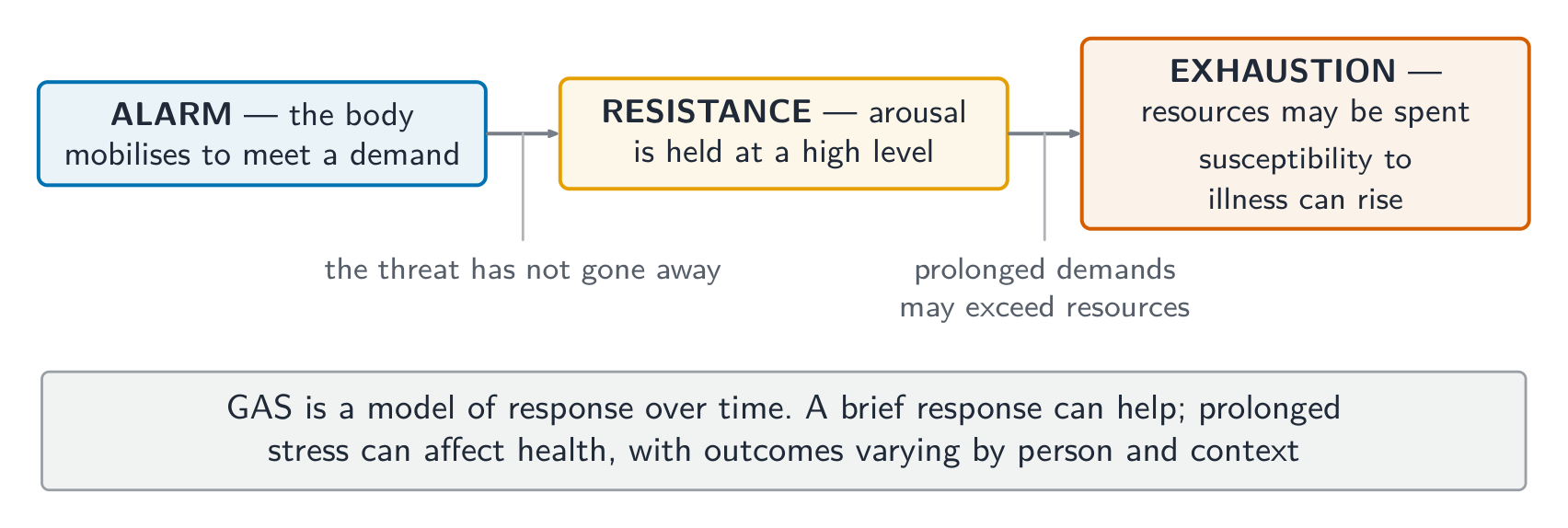
  • 5.1.C.1 The general adaptation syndrome (GAS) describes the process of experiencing stress. Initially, alarm reaction occurs when the stress is encountered (via a fight-flight-freeze response). Then, a resistance phase occurs as the stress is confronted. Finally, an exhaustion phase occurs when the stress subsides, or resources are spent. The greatest susceptibility to illness occurs during the exhaustion phase.
  • 5.1.C.2 The tend-and-befriend theory proposes that some people react to stress by tending to their own needs and/or the needs of others and seeking connection with others. This phenomenon seems to occur mostly in women.

5.1.D
Explain how the ways that people cope with stress applies to behavior and mental processes.

  • 5.1.D.1 Problem-focused coping involves seeing stress as a problem to be solved and working solutions until a solution is found.
  • 5.1.D.2 Emotion-focused coping involves managing emotional reactions to stress as a means of coping. Strategies that are emotion-focused may include deep breathing, meditation, or taking medication aimed at reducing stressful emotional responses.

来源:美国大学理事会 AP 课程与考试说明

健康心理学(health psychology)研究心理因素如何影响身体健康。

压力(stress)是人们评估并应对各种要求的过程,而应激源(stressor)是那个要求本身。压力会提高患病易感性,并与免疫功能下降和心脏病相关。

应激源并不都一样:

  • 良性压力(eustress)具有激励作用,消极压力(distress)则令人衰弱。
  • 应激源的范围从日常烦扰(daily hassles)到重大生活变化(significant life changes)与灾难性事件(catastrophes)。

一般适应综合征(general adaptation syndrome, GAS)把身体的反应分为三个阶段:警觉期(alarm,交感神经系统动员起来)、抵抗期(resistance,身体在较高但可维持的水平上应对)和衰竭期(exhaustion,资源耗竭,患病风险上升)。

并非人人都以"战或逃"作出反应。照料-结盟理论(tend-and-befriend theory)提出,有些人应对压力的方式是照料他人并寻求社会支持。

应对大致有两种方式。问题聚焦应对(problem-focused coping)把应激源当作有待解决的问题,直接处理原因,适合个体能够控制的情境。情绪聚焦应对(emotion-focused coping)则转而管理情绪反应,适合无法改变的情境。

词汇表 训练
英文 中文 拼音
Health psychology 健康心理学 jiàn kāng xīn lǐ xué
Stress 压力 yā lì
stressor 应激源 yīng jī yuán
Eustress 良性压力 liáng xìng yā lì
distress 消极压力 xiāo jí yā lì
daily hassles 日常烦扰 rì cháng fán rǎo
significant life changes 重大生活变化 zhòng dà shēng huó biàn huà
catastrophes 灾难性事件 zāi nàn xìng shì jiàn
general adaptation syndrome (GAS) 一般适应综合征 yì bān shì yìng zōng hé zhēng
alarm 警觉期 jǐng jué qī
resistance 抵抗期 dǐ kàng qī
exhaustion 衰竭期 shuāi jié qī
Tend-and-befriend theory 照料-结盟理论 zhào liào - jié méng lǐ lùn
Problem-focused coping 问题聚焦应对 wèn tí jù jiāo yìng duì
Emotion-focused coping 情绪聚焦应对 qíng xù jù jiāo yìng duì
5.2

积极心理学

大纲
Learning ObjectiveEssential Knowledge

5.2.A
Explain how positive psychology approaches the study of behavior and mental processes.

  • 5.2.A.1 Positive psychology seeks to identify factors that lead to well-being, resilience, positive emotions, and psychological health.

5.2.B
Explain how positive subjective experiences apply to behavior and mental processes.

  • 5.2.B.1 Expressing gratitude, a positive subjective experience, increases subjective well-being.
  • 5.2.B.2 People who exercise their signature strengths or virtues report higher levels of positive objective experiences such as happiness and subjective well-being. A classification of character strengths has been developed around 6 categories of virtues: wisdom, courage, humanity, justice, temperance, and transcendence.
  • 5.2.B.3 Posttraumatic growth, a positive subjective experience, may result after the experience of trauma or stress.

来源:美国大学理事会 AP 课程与考试说明

积极心理学(positive psychology)研究是什么让生活变好,而不只是研究哪里出了问题。它寻找幸福感(well-being)与心理韧性(resilience)背后的因素。

三项结论在考试范围内:

  • 表达感恩(gratitude)能提升主观幸福感(subjective well-being)。
  • 发挥自身标志性优势(signature strengths)的人,客观幸福水平更高。
  • 创伤后成长(posttraumatic growth)是在与创伤抗争之后可能出现的积极心理变化。
词汇表 训练
英文 中文 拼音
Positive psychology 积极心理学 jī jí xīn lǐ xué
well-being 幸福感 xìng fú gǎn
resilience 心理韧性 xīn lǐ rèn xìng
gratitude 感恩 gǎn ēn
subjective well-being 主观幸福感 zhǔ guān xìng fú gǎn
signature strengths 标志性优势 biāo zhì xìng yōu shì
Posttraumatic growth 创伤后成长 chuāng shāng hòu chéng zhǎng
5.3

心理障碍的解释与分类

大纲
Learning ObjectiveEssential Knowledge

5.3.A
Describe the approaches used to define behaviors and mental processes as psychological disorders.

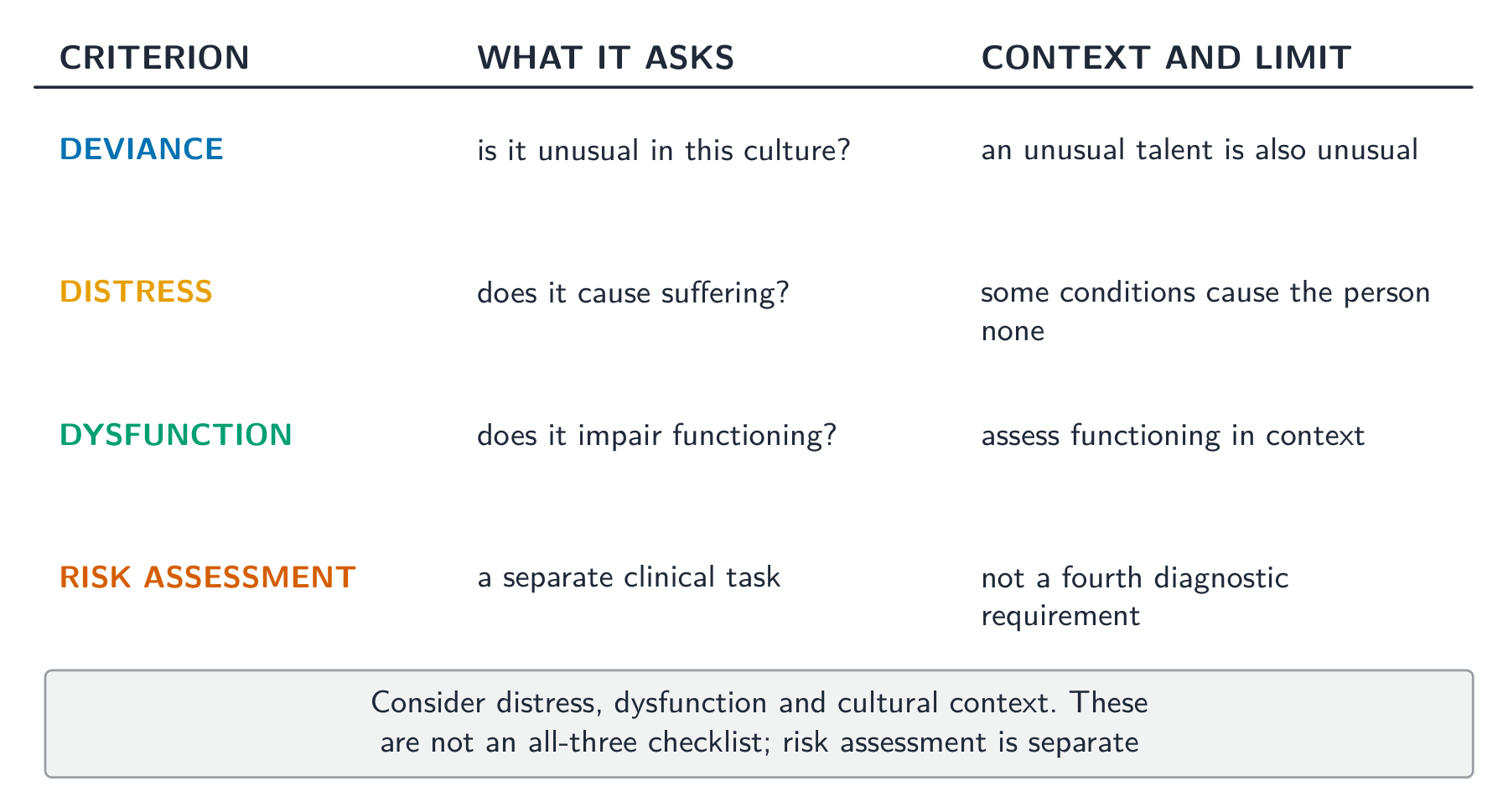
  • 5.3.A.1 Level of dysfunction, perception of distress, and deviation from the social norm are all factors used to identify psychological disorders.
  • 5.3.A.2 Diagnosing or classifying psychological disorders has positive and negative consequences depending on the nature of the disorder, the individual being diagnosed, and the presence of cultural/societal norms, stigma, racism, sexism, ageism, and discrimination.
  • 5.3.A.3 Diagnosing psychological disorders requires specialized training and the use of evidence-based diagnostic tools. The American Psychiatric Association developed the Diagnostic and Statistical Manual (DSM) of Mental Disorders to classify mental disorders. The World Health Organization developed the International Classification of Mental Disorders (ICD) to classify mental disorders. These classification systems are updated regularly to be responsive to new research and practice advances.

5.3.B
Explain how psychological perspectives define psychological disorders.

  • 5.3.B.1 Most psychologists employ an eclectic approach (using more than one psychological perspective) when diagnosing and treating clients.
  • 5.3.B.2 The behavioral perspective proposes that the causes of mental disorders focus on maladaptive learned associations between or among responses to stimuli.
  • 5.3.B.3 The psychodynamic perspective proposes that the causes of mental disorders focus on unconscious thoughts and experiences, often developed during childhood.
  • 5.3.B.4 The humanistic perspective proposes that the causes of mental disorders focus on a lack of social support and being unable to fulfill one’s potential.
  • 5.3.B.5 The cognitive perspective proposes that the causes of mental disorders focus on maladaptive thoughts, beliefs, attitudes, or emotions.
  • 5.3.B.6 The evolutionary perspective proposes that the causes of mental disorders focus on behaviors and mental processes that reduce the likelihood of survival.
  • 5.3.B.7 The sociocultural perspective proposes that the causes of mental disorders focus on maladaptive social and cultural relationships and dynamics.
  • 5.3.B.8 The biological perspective proposes that the causes of mental disorders focus on physiological or genetic issues.

5.3.C
Explain how interaction models define psychological disorders.

  • 5.3.C.1 The biopsychosocial model assumes that any psychological problem potentially involves a combination of biological, psychological, and sociocultural factors.
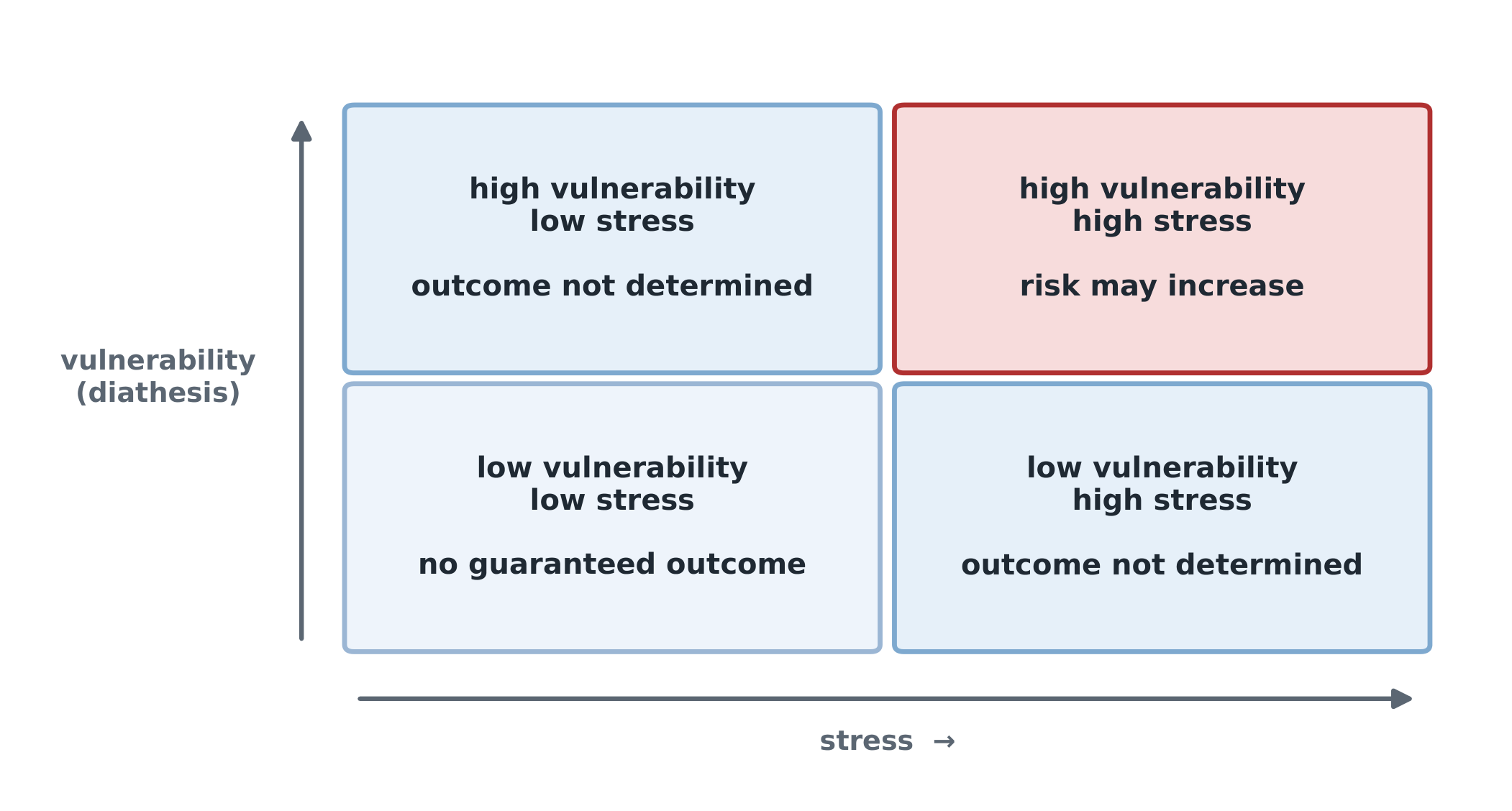
  • 5.3.C.2 The diathesis-stress model assumes that psychological disorders develop due to a genetic vulnerability (diathesis) in combination with stressful life experiences (stress).

来源:美国大学理事会 AP 课程与考试说明

判断某种行为是否属于障碍要考虑三点:功能失调(dysfunction)的程度、个体的个人痛苦(personal distress),以及偏离社会规范(deviation from social norms)的程度。由于规范因文化而异、也随时间改变,这一判断并非纯粹客观。

对障碍进行分类既有益处也有代价。诊断能指导治疗、帮助获得支持,但标签也可能带来污名(stigma),改变他人对待此人的方式。诊断需要专门训练和有循证依据的标准。

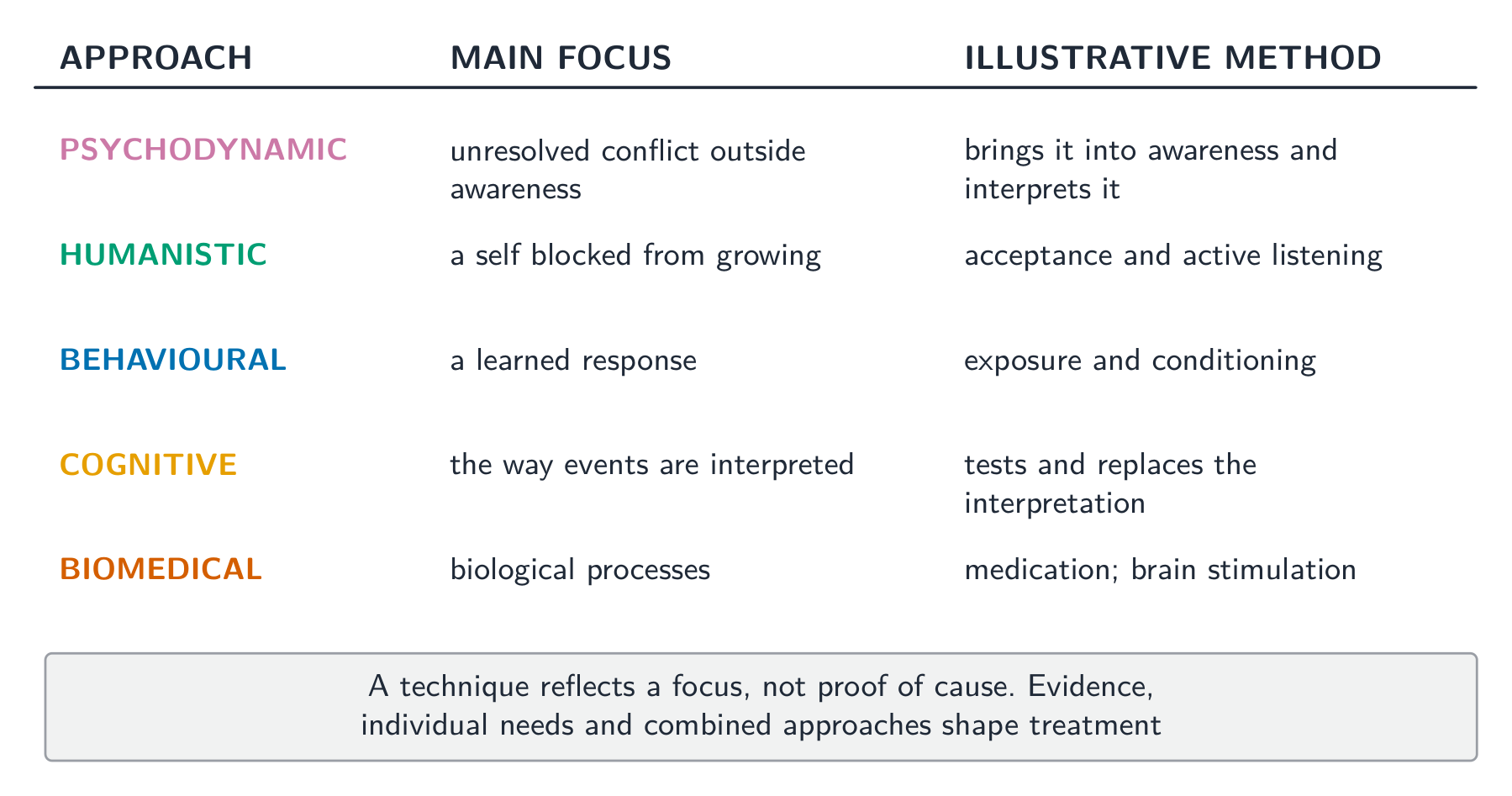
多数心理学家采取折衷取向(eclectic approach),同时借助多个视角:

  • 行为主义(behavioral):障碍源于习得的不良联结。
  • 精神动力学(psychodynamic):源于无意识冲突。
  • 人本主义(humanistic):源于缺乏接纳与支持。
  • 认知(cognitive):源于不良的思维模式。
  • 进化(evolutionary):源于曾经具有适应意义的行为。
  • 社会文化(sociocultural):源于个体所处的社会与文化环境。
  • 生物学(biological):源于生理与遗传因素。

有两个整合模型在考试范围内。生物心理社会模型(biopsychosocial model)假定任何心理问题都可能同时涉及生物、心理与社会原因。素质-压力模型(diathesis-stress model)提出:当潜在的易感性遇上足够的压力时,障碍才会出现——这解释了为什么具有相同易感性的两个人结果可能不同。

词汇表 训练
英文 中文 拼音
dysfunction 功能失调 gōng néng shī tiáo
personal distress 个人痛苦 gè rén tòng kǔ
deviation from social norms 偏离社会规范 piān lí shè huì guī fàn
stigma 污名 wū míng
eclectic approach 折衷取向 zhé zhōng qǔ xiàng
Behavioral 行为主义 xíng wéi zhǔ yì
Psychodynamic 精神动力学 jīng shén dòng lì xué
Humanistic 人本主义 rén běn zhǔ yì
Cognitive 认知 rèn zhī
Evolutionary 进化 jìn huà
Sociocultural 社会文化 shè huì wén huà
Biological 生物学 shēng wù xué
biopsychosocial model 生物心理社会模型 shēng wù xīn lǐ shè huì mó xíng
diathesis-stress model 素质-压力模型 sù zhì - yā lì mó xíng
5.4

心理障碍主要类别选介

大纲
Learning ObjectiveEssential Knowledge

5.4.A
Describe the symptoms and possible causes of selected neurodevelopmental disorders.

  • 5.4.A.1 Neurodevelopmental disorders are a group of disorders with onset occurring during the developmental period. Symptoms of neurodevelopmental disorders focus on whether the person is exhibiting behaviors appropriate for their age or maturity range. Selected disorders in scope for AP Psychology in this category are attention-deficit/ hyperactivity disorder (ADHD) and autism spectrum disorder (ASD).
  • 5.4.A.2 Possible causes of neurodevelopmental disorders may be environmental, physiological, or genetic in nature.

5.4.B
Describe the symptoms and possible causes of selected schizophrenic spectrum disorders.

  • 5.4.B.1 Schizophrenic spectrum disorders are characterized by issues in one or more of these five areas: delusions, hallucinations, disorganized thinking or speech, disorganized motor behavior, and negative symptoms. Schizophrenia can be experienced as an acute or chronic condition.
    • 5.4.B.1.i Delusions (false beliefs) are positive symptoms and may manifest in ways such as delusions of persecution or grandeur.
    • 5.4.B.1.ii Hallucinations (false perceptions) are positive symptoms and may involve one or more of the senses.
    • 5.4.B.1.iii Disorganized thinking or speech is a positive symptom and may manifest as speaking in ways such as speaking in a word salad (stringing together words in nonsensical ways).
    • 5.4.B.1.iv Disorganized motor behavior may manifest as catatonia. Catatonia, or disordered movement, may be experienced as excitement (a positive symptom manifestation) or stupor (a negative symptom manifestation).
    • 5.4.B.1.v Negative symptoms present as the lack of a typical behavior, such as the lack of emotional expression (flat affect) or lack of movement (catatonic stupor).
  • 5.4.B.2 Possible causes of schizophrenia suggest a genetic or biological link, such as prenatal virus exposure or imbalances with certain neurotransmitters (dopamine hypothesis).

5.4.C
Describe the symptoms and possible causes of selected depressive disorders.

  • 5.4.C.1 Depressive disorders are characterized by the presence of sad, empty, or irritable mood along with physical and cognitive changes that affect a person’s ability to function. Selected disorders in scope for AP Psychology in this category are major depressive disorder and persistent depressive disorder.
  • 5.4.C.2 Possible causes of depressive disorders focus on biological, genetic, social, cultural, behavioral, or cognitive sources.

5.4.D
Describe the symptoms and possible causes of selected bipolar disorders.

  • 5.4.D.1 Bipolar disorders are characterized by periods of mania and periods of depression. Bipolar cycling involves experiencing periods of depression and mania in alternating periods that can last various amounts of time. Selected disorders in scope for AP Psychology in this category are Bipolar I disorder and Bipolar II disorder.
  • 5.4.D.2 Possible causes of bipolar disorders focus on biological, genetic, social, cultural, behavioral, or cognitive sources.

5.4.E
Describe the symptoms and possible causes of selected anxiety disorders.

  • 5.4.E.1 Anxiety disorders are characterized by excessive fear and/or anxiety with related disturbances to behavior. Selected disorders in scope for AP Psychology in this category are specific phobia, agoraphobia, panic disorder, social anxiety disorder, and generalized anxiety disorder.
    • 5.4.E.1.i Specific phobia involves fear or anxiety toward a specific object or situation, such as acrophobia (heights) or arachnophobia (spiders).
    • 5.4.E.1.ii Agoraphobia is intense fear of specific social situations, including using public transportation, being in open spaces, being in enclosed spaces (e.g., shops, theaters, etc.), standing in line or being in a crowd, or being outside of the home alone.
    • 5.4.E.1.iii Panic disorder involves the experience of panic attacks (unanticipated and overwhelming biological, cognitive, and emotional experiences of fear/anxiety). Panic disorder can manifest as a culture-bound anxiety disorder such as ataque de nervios (experienced mainly by people of e Caribbean or Iberian descent).
    • 5.4.E.1.iv Social anxiety disorder involves the intense fear of being judged or watched by others. Social anxiety disorder is distinct from but may include agoraphobia. Taijin kyofusho is a culture-bound anxiety disorder experienced mainly by Japanese people in which people fear others are judging their bodies as undesirable, offensive, or unpleasing.
    • 5.4.E.1.v Generalized anxiety disorder (GAD) involves prolonged experiences of nonspecific anxiety or fear.
  • 5.4.E.2 Possible causes of anxiety disorders focus on learned associations between and among stimuli, maladaptive thinking or emotional responses, and biological or genetic sources.

5.4.F
Describe the symptoms and possible causes of selected obsessive-compulsive disorders and related disorders.

  • 5.4.F.1 Obsessive-compulsive and related disorders are characterized by the presence of obsessions (intrusive thoughts) and compulsions (intrusive, often repetitive, behaviors intended to address obsessions). Selected disorders in scope for AP Psychology in this category are obsessive-compulsive disorder and hoarding disorder.
  • 5.4.F.2 Possible causes of obsessive-compulsive disorders involve learned associations between and among stimuli, maladaptive thinking or emotional responses, and biological or genetic sources.

5.4.G
Describe the symptoms and possible causes of selected dissociative disorders.

  • 5.4.G.1 Dissociative disorders are characterized by dissociations from consciousness, memory, identity, emotion, perception, body representation, motor control, and behavior. Selected disorders in scope for AP Psychology in this category are dissociative amnesia (with and without fugue) and dissociative identity disorder.
  • 5.4.G.2 Possible causes of dissociative disorders involve the experience of trauma or stress.

5.4.H
Describe the symptoms and possible causes of selected trauma and stressor-related disorders.

  • 5.4.H.1 Trauma and stressor-related disorders are characterized by exposure to a traumatic or stressful event with subsequent psychological distress. Symptoms of trauma and stressor-related disorders may involve hypervigilance, severe anxiety, flashbacks to traumatic or stressful experiences, insomnia, emotional detachment, and hostility. The selected disorder in scope for AP Psychology in this category is posttraumatic stress disorder.
  • 5.4.H.2 Possible causes of trauma and stressor-related disorders involve the experience of trauma or stress.

5.4.I
Describe the symptoms and possible causes of selected feeding and eating disorders.

  • 5.4.I.1 Feeding and eating disorders are characterized by altered consumption or absorption of food that impairs health or psychological functioning. Selected disorders in scope for AP Psychology in this category are anorexia nervosa and bulimia nervosa.
  • 5.4.I.2 Possible causes of feeding and eating disorders focus on biological, genetic, social, cultural, behavioral, or cognitive sources.

5.4.J
Describe the symptoms and possible causes of selected personality disorders.

  • 5.4.J.1 Personality disorders (which fall into three clusters) are characterized by enduring patterns of internal experience and behavior that is deviant from one’s culture; is pervasive and inflexible; begins in adolescence or early adulthood; is stable over time; and leads to personal distress or impairment.
    • 5.4.J.1.i Cluster A is the odd or eccentric cluster and includes paranoid, schizoid, and schizotypal personality disorders.
    • 5.4.J.1.ii Cluster B is the dramatic, emotional, or erratic cluster and includes antisocial, histrionic, narcissistic, and borderline personality disorders.
    • 5.4.J.1.iii Cluster C is the anxious or fearful cluster and includes avoidant, dependent, and obsessive-compulsive personality disorders.
  • 5.4.J.2 Possible causes of personality disorders focus on biological, genetic, social, cultural, behavioral, or cognitive sources.

来源:美国大学理事会 AP 课程与考试说明

素质-压力模型呈现为两个输入的组合:潜在易感性加上足够的压力才会导致障碍
单有易感性或单有压力都可能不产生障碍;该模型预测两者同时出现时才会发病

CED 列出了有限的一组类别,每一类都有其特征与可能成因。

  • 神经发育障碍(neurodevelopmental disorders)起病于发育阶段,成因可能是环境、生理或遗传因素。
  • 精神分裂症谱系障碍(schizophrenic spectrum disorders)包括阳性症状(positive symptoms)——妄想(delusions,错误信念)、幻觉(hallucinations,错误知觉)、思维紊乱(disorganized thinking)和紧张症(catatonia)——以及阴性症状(negative symptoms),即缺少本应有的行为,例如情感淡漠(flat affect)。
  • 抑郁障碍(depressive disorders)表现为悲伤、空虚或易激惹的心境,并伴有身体与思维方面的变化。
  • 双相障碍(bipolar disorders)表现为躁狂(mania)期与抑郁期交替出现。
  • 焦虑障碍(anxiety disorders)表现为过度的恐惧或焦虑:特定恐惧症(specific phobia)、广场恐惧症(agoraphobia)、伴有惊恐发作(panic attacks)的惊恐障碍(panic disorder)、社交焦虑障碍(social anxiety disorder)和广泛性焦虑障碍(generalized anxiety disorder, GAD)。
  • 强迫及相关障碍(obsessive-compulsive and related disorders)包含强迫思维(obsessions,侵入性想法)与强迫行为(compulsions,反复的动作)。
  • 分离障碍(dissociative disorders)表现为与意识、记忆或身份的分离,与创伤或应激有关。
  • 创伤及应激相关障碍(trauma and stressor-related disorders)发生在暴露于创伤事件之后,主要例子是创伤后应激障碍(posttraumatic stress disorder, PTSD)。
  • 进食障碍(feeding and eating disorders)表现为食物摄入或吸收方式的改变。
  • 人格障碍(personality disorders)是持久的行为模式,分为三个群组:A 群(Cluster A)古怪或反常,B 群(Cluster B)戏剧化或反复无常,C 群(Cluster C)焦虑或畏惧。

对每一类别,考试都期待同样的两部分结构:界定性特征,以及可能成因——生物、遗传、社会、文化、行为与认知。

词汇表 训练
英文 中文 拼音
Neurodevelopmental disorders 神经发育障碍 shén jīng fā yù zhàng ài
Schizophrenic spectrum disorders 精神分裂症谱系障碍 jīng shén fēn liè zhèng pǔ xì zhàng ài
positive symptoms 阳性症状 yáng xìng zhèng zhuàng
delusions 妄想 wàng xiǎng
hallucinations 幻觉 huàn jué
disorganized thinking 思维紊乱 sī wéi wěn luàn
catatonia 紧张症 jǐn zhāng zhèng
negative symptoms 阴性症状 yīn xìng zhèng zhuàng
flat affect 情感淡漠 qíng gǎn dàn mò
Depressive disorders 抑郁障碍 yì yù zhàng ài
Bipolar disorders 双相障碍 shuāng xiāng zhàng ài
mania 躁狂 zào kuáng
Anxiety disorders 焦虑障碍 jiāo lǜ zhàng ài
specific phobia 特定恐惧症 tè dìng kǒng jù zhèng
agoraphobia 广场恐惧症 guǎng chǎng kǒng jù zhèng
panic disorder 惊恐障碍 jīng kǒng zhàng ài
panic attacks 惊恐发作 jīng kǒng fā zuò
social anxiety disorder 社交焦虑障碍 shè jiāo jiāo lǜ zhàng ài
generalized anxiety disorder (GAD) 广泛性焦虑障碍 guǎng fàn xìng jiāo lǜ zhàng ài
Obsessive-compulsive and related disorders 强迫及相关障碍 qiǎng pò jí xiāng guān zhàng ài
obsessions 强迫思维 qiǎng pò sī wéi
compulsions 强迫行为 qiǎng pò xíng wéi
Dissociative disorders 分离障碍 fēn lí zhàng ài
Trauma and stressor-related disorders 创伤及应激相关障碍 chuāng shāng jí yīng jī xiāng guān zhàng ài
posttraumatic stress disorder (PTSD) 创伤后应激障碍 chuāng shāng hòu yīng jī zhàng ài
Feeding and eating disorders 进食障碍 jìn shí zhàng ài
Personality disorders 人格障碍 rén gé zhàng ài
5.5

心理障碍的治疗

大纲
Learning ObjectiveEssential Knowledge

5.5.A
Describe research and trends in the treatment of psychological disorders.

  • 5.5.A.1 Many researchers who have conducted meta-analytic studies of psychotherapy conclude that psychotherapies are generally effective. Many psychologists use evidence-based interventions to develop treatment plans. Therapists should exhibit cultural humility and establish a therapeutic alliance with the client to deliver therapy successfully.

5.5.B
Describe research and trends in the treatment of psychological disorders.

  • 5.5.B.1 Due to the increased use and effectiveness of psychotropic medication therapy, hospitals and asylums deinstitutionalized massive numbers of people in the late 20th century. Therapists now prefer to treat in decentralized ways, often with a combination of medication and psychological therapies.

5.5.C
Describe ethical principles in the treatment of psychological disorders.

  • 5.5.C.1 Psychologists in clinical or therapeutic situations must follow certain ethical principles as established by the APA, including nonmaleficence, fidelity, integrity, and respect for people’s rights and dignity.

5.5.D
Describe techniques used with psychological therapies.

  • 5.5.D.1 Psychodynamic therapies employ free association and dream interpretation to uncover the unconscious mind.
  • 5.5.D.2 Cognitive therapies may employ cognitive restructuring or fear hierarchies to combat maladaptive thinking. Cognitive therapy proposes that people should focus on the cognitive triad—negative thoughts about oneself, the world, and the future.
  • 5.5.D.3 Applied behavior analysis involves applying principles of conditioning to address mental disorders and developmental disabilities. Exposure therapies (such as systematic desensitization), aversion therapies, and token economies all employ principles of applied behavior analysis. Biofeedback uses principles of conditioning to help clients regulate body systems (such as the sympathetic and parasympathetic nervous systems) that contribute to feelings of anxiety or depression.
  • 5.5.D.4 Cognitive-behavioral therapies, such as dialectical behavior therapy and rational-emotive behavior therapy, combine techniques from the cognitive and behavioral perspectives to treat mental and behavioral disorders.
  • 5.5.D.5 Therapy from the humanistic perspective, commonly referred to as person-centered therapy, employs active listening and unconditional positive regard.

5.5.E
Explain how group therapy is different from individual therapy.

5.5.F
Describe effective uses of hypnosis.

  • 5.5.F.1 Hypnosis has shown effectiveness in treating pain and anxiety. Research does not support the use of hypnosis to retrieve accurate memories or regress in age.

5.5.G
Describe interventions derived from the biological perspective.

  • 5.5.G.1 Psychoactive medications, such as antidepressants, antianxiety drugs, lithium, or antipsychotic medications, interact with specific neurotransmitters in the central nervous system to address possible biochemical causes of mental disorders. Psychoactive medications can have side effects such as tardive dyskinesia (a movement disorder related to the regulation of dopamine in the nervous system).
  • 5.5.G.2 Surgical or invasive interventions include psychosurgery (which may involve lesioning), TMS (transcranial magnetic stimulation), or electroconvulsive therapy. The lobotomy is a form of psychosurgery that was popular in the mid-20th century but is rarely, if ever, performed today.

来源:美国大学理事会 AP 课程与考试说明

对心理治疗的元分析(meta-analyses)得出结论:心理治疗是有效的。有效的精神药物治疗(psychotropic medication)的普及也改变了照护方式,使长期住院让位于社区治疗。

临床工作者必须遵守伦理原则,包括知情同意(informed consent)、保密(confidentiality),以及在自身胜任范围内工作。

各种疗法对应上述视角:

  • 精神动力学治疗(psychodynamic therapies)使用自由联想(free association)与梦的解析来揭示无意识内容。
  • 认知疗法(cognitive therapies)使用认知重构(cognitive restructuring)与恐惧等级表(fear hierarchies)来改变不良思维。
  • 应用行为分析(applied behavior analysis)运用条件作用原理,包括系统脱敏(systematic desensitization)与代币制(token economies)。
  • 认知行为疗法(cognitive-behavioral therapies),如辩证行为疗法(dialectical behavior therapy)与理性情绪行为疗法(rational-emotive behavior therapy),把二者结合起来。
  • 来自人本主义视角的以人为中心疗法(person-centered therapy)使用积极倾听(active listening)与无条件积极关注。

催眠(hypnosis)对疼痛与焦虑有效,但研究支持用它来恢复记忆。药物包括抗抑郁药(antidepressants)、抗焦虑药(antianxiety drugs)、锂盐(lithium)和抗精神病药(antipsychotics)。侵入性更强的手段包括精神外科手术(psychosurgery)、经颅磁刺激(transcranial magnetic stimulation, TMS)和电休克治疗(electroconvulsive therapy, ECT)。

**Worked example(一道真实的 AP 考题)。*2025 年的文章分析题在六个小问之一中要求「指出研究者所遵循的至少一条伦理准则」。这是一个 Identify 小问,因此它要的是从研究中点出一条有名称的准则,而不是一篇论述:「研究者在研究开始前获得了被试的知情同意。」*注意其结构:Identify 小问用一句准确的话作答即可,额外的解释并不加分。把笔墨留给 Explain 小问,那里才需要用证据支撑论断。

词汇表 训练
英文 中文 拼音
Meta-analyses 元分析 yuán fēn xī
psychotropic medication 精神药物治疗 jīng shén yào wù zhì liáo
informed consent 知情同意 zhī qíng tóng yì
confidentiality 保密 bǎo mì
Psychodynamic therapies 精神动力学治疗 jīng shén dòng lì xué zhì liáo
free association 自由联想 zì yóu lián xiǎng
Cognitive therapies 认知疗法 rèn zhī liáo fǎ
cognitive restructuring 认知重构 rèn zhī zhòng gòu
fear hierarchies 恐惧等级表 kǒng jù děng jí biǎo
Applied behavior analysis 应用行为分析 yìng yòng xíng wéi fēn xī
systematic desensitization 系统脱敏 xì tǒng tuō mǐn
token economies 代币制 dài bì zhì
Cognitive-behavioral therapies 认知行为疗法 rèn zhī xíng wéi liáo fǎ
dialectical behavior therapy 辩证行为疗法 biàn zhèng xíng wéi liáo fǎ
rational-emotive behavior therapy 理性情绪行为疗法 lǐ xìng qíng xù xíng wéi liáo fǎ
Person-centered therapy 以人为中心疗法 yǐ rén wéi zhōng xīn liáo fǎ
active listening 积极倾听 jī jí qīng tīng
Hypnosis 催眠 cuī mián
antidepressants 抗抑郁药 kàng yì yù yào
antianxiety drugs 抗焦虑药 kàng jiāo lǜ yào
lithium 锂盐 lǐ yán
antipsychotics 抗精神病药 kàng jīng shén bìng yào
psychosurgery 精神外科手术 jīng shén wài kē shǒu shù
transcranial magnetic stimulation (TMS) 经颅磁刺激 jīng lú cí cì jī
electroconvulsive therapy (ECT) 电休克治疗 diàn xiū kè zhì liáo
5.5

考试技巧

  • 题目问什么使行为构成障碍时,把三点合起来用:功能失调个人痛苦偏离规范
  • 回答素质-压力时,两半都要写出来。只有易感性而无应激源,或只有应激源而无易感性,正是该模型的要点。
  • 分清阳性阴性症状:阳性是多出了什么(幻觉),阴性是缺少了什么(情感淡漠)。
  • 把疗法与视角对应起来。自由联想属于精神动力学,认知重构属于认知,系统脱敏属于行为主义。
  • 强迫思维是想法,强迫行为是动作。
  • 看清任务动词。Identify 要名称,Describe 要细节,Explain 要有证据支撑的理由。

本主题的互动课程

逐步学习,并即时检测练习。

AP 心理学的更多主题

登录或创建账号

IGCSE, A-Level & AP