跳到主要内容

行为的生物学基础

AP 心理学 · 第 1 主题

训练
讲义 词汇表
1.1

遗传与环境的相互作用

大纲
Learning ObjectiveEssential Knowledge

1.1.A
Explain the relationship between heredity and environment in shaping behavior and mental processes.

  • 1.1.A.1 Heredity and environmental factors interact to shape behavior and mental processes.
    • 1.1.A.1.i Heredity, or “nature,” refers to genetic or predisposed characteristics that influence physical, behavioral, and mental traits and processes.
    • 1.1.A.1.ii Environmental factors, or “nurture,” refers to the external factors that one experiences, such as family interactions or education.
      • Exclusion Statement: Specific information about genetics (genotype, phenotype, DNA, chromosomes, and recessive and dominant gene expression) is beyond the scope of the AP Psychology Exam.
  • 1.1.A.2 The evolutionary perspective explores how natural selection affects the expression of behavior and mental processes to increase survival and reproductive success. Some theorists have sought to apply principles of the evolutionary perspective in ways that discriminate against others (eugenics).
  • 1.1.A.3 Research on the effects of genes on individual behavior and mental processes is often conducted using twin studies, family studies, and adoption studies.

来源:美国大学理事会 AP 课程与考试说明

心理学研究行为(behavior,一个人做了什么)和心理过程(mental processes,一个人怎么想、怎么感受)。第一单元要问的是:这些东西在身体里从哪里来。

每一种特征都由两个来源共同塑造。遗传(heredity)是一个人从父母那里继承来的东西,环境(environment)是发生在他周围的一切。两者都不会单独起作用。

  • 先天与后天(nature and nurture)始终相互作用。身高由遗传决定,但营养不良会让它变矮。
  • 进化论视角(evolutionary perspective)解释那些曾帮助祖先生存和繁衍的行为。人容易学会怕蛇,是因为这在过去能保命。
  • 双生子与收养研究(twin and adoption studies)可以把两个来源分开。如果分开抚养的同卵双胞胎仍然相似,说明遗传对该特征有影响。

*注意:*考试不考基因、DNA 或染色体,而是考遗传与环境如何共同塑造行为。

词汇表 训练
英文 中文 拼音
behavior 行为 xíng wéi
mental processes 心理过程 xīn lǐ guò chéng
Heredity 遗传 yí chuán
Environment 环境 huán jìng
Nature and nurture 先天与后天 xiān tiān yǔ hòu tiān
evolutionary perspective 进化论视角 jìn huà lùn shì jiǎo
Twin and adoption studies 双生子与收养研究 shuāng shēng zi yǔ shōu yǎng yán jiū
1.2

神经系统概览

大纲
Learning ObjectiveEssential Knowledge

1.2.A
Differentiate among the subsystems of the human nervous system and their functions.

  • 1.2.A.1 The central nervous system includes the brain and the spinal cord and interacts with all processes in the body.
  • 1.2.A.2 The peripheral nervous system relays messages from the central nervous system to the rest of the body and includes the autonomic and somatic nervous systems.
    • 1.2.A.2.i The autonomic nervous system governs processes that are involuntary and includes the parasympathetic and sympathetic nervous systems.
    • 1.2.A.2.ii The somatic nervous system governs processes that are voluntary.

来源:美国大学理事会 AP 课程与考试说明

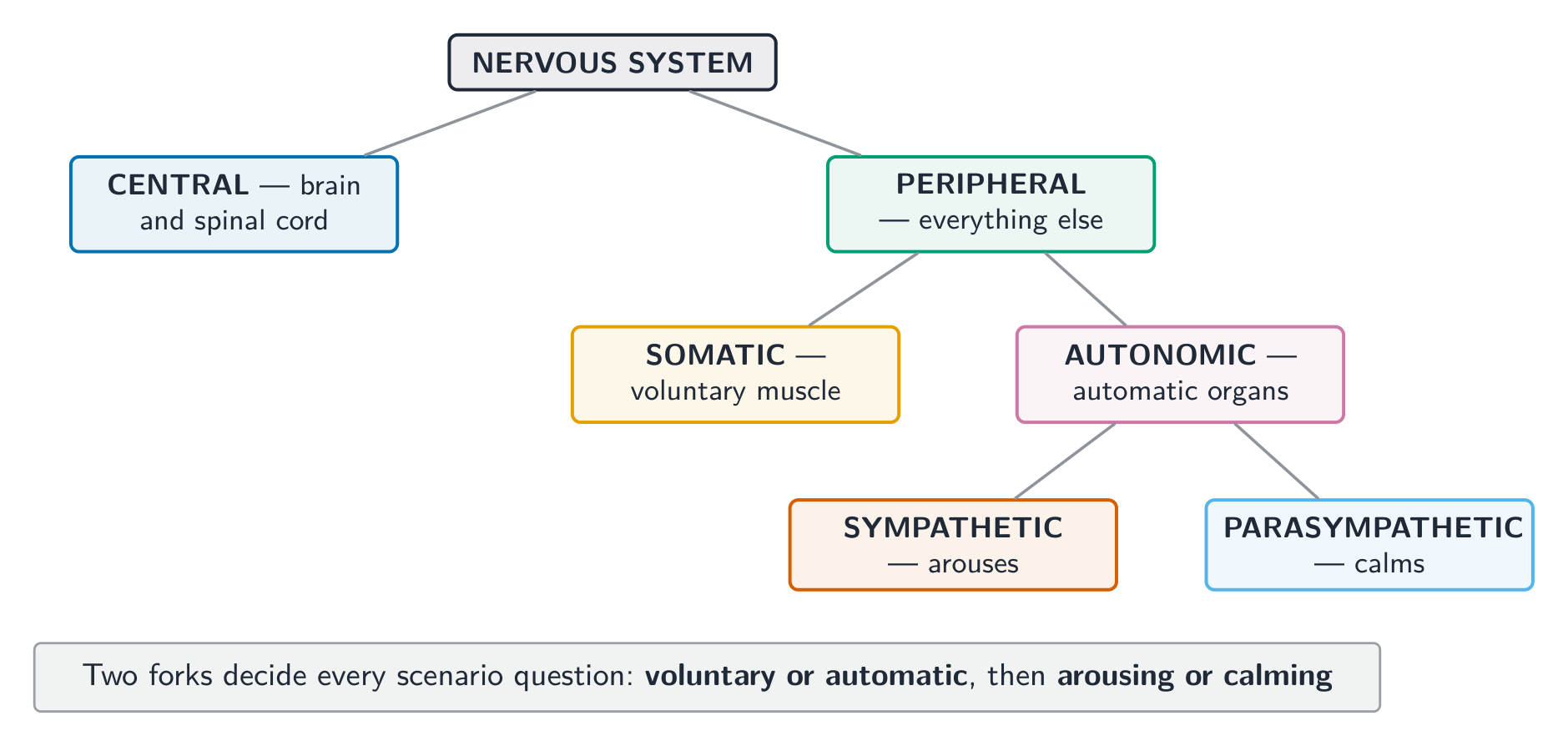
神经系统(nervous system)在身体里传递信息,分为两大部分。

中枢神经系统(central nervous system, CNS)由大脑和脊髓(spinal cord)组成,与身体的一切过程相互作用。

周围神经系统(peripheral nervous system, PNS)在中枢神经系统与身体其余部分之间传递信息,它又分为:

  • 躯体神经系统(somatic nervous system)控制随意的(voluntary)动作,比如举手。
  • 自主神经系统(autonomic nervous system)控制不随意的(involuntary)过程,比如心跳和消化。它有两个作用相反的分支:交感神经系统(sympathetic nervous system)让身体准备行动(即"战或逃"反应),副交感神经系统(parasympathetic nervous system)随后让身体平静下来。
词汇表 训练
英文 中文 拼音
nervous system 神经系统 shén jīng xì tǒng
central nervous system (CNS) 中枢神经系统 zhōng shū shén jīng xì tǒng
spinal cord 脊髓 jí suǐ
peripheral nervous system (PNS) 周围神经系统 zhōu wéi shén jīng xì tǒng
somatic nervous system 躯体神经系统 qū tǐ shén jīng xì tǒng
voluntary 随意的 suí yì de
autonomic nervous system 自主神经系统 zì zhǔ shén jīng xì tǒng
involuntary 不随意的 bù suí yì de
sympathetic nervous system 交感神经系统 jiāo gǎn shén jīng xì tǒng
parasympathetic nervous system 副交感神经系统 fù jiāo gǎn shén jīng xì tǒng
1.3

神经元与神经冲动

大纲
Learning ObjectiveEssential Knowledge

1.3.A
Explain how the structures and functions of typical neurons in the central nervous system affect behavior and mental processes.

  • 1.3.A.1 Two common types of neural cells in the brain are neurons (neural cells that transmit information) and glial cells (cells that provide structure, insulation, communication, and waste transport). These types of cells form the basis of the nervous system and are the building blocks of all behavior and mental processes.
  • 1.3.A.2 In the spinal cord, the reflex arc demonstrates how neurons within the central and peripheral nervous systems work together to respond to stimuli. Three types of neurons work together in the spinal cord to create a reflex arc: sensory neurons, motor neurons, and interneurons.

1.3.B
Explain how the basic process of neural transmission is related to behavior and mental processes.

  • 1.3.B.1 The process of neural transmission most commonly occurs in an orderly, systematic way and involves the all-or-none principle, depolarization, refractory period, resting potential, reuptake, and threshold. Disruptions to this process could lead to disorders such as multiple sclerosis or myasthenia gravis.
    • Exclusion Statement: The sodium-potassium pump is outside the scope of the AP Psychology Exam.
  • 1.3.B.2 Each neurotransmitter has specific function(s) related to behavior and mental processes, which may depend on the neurotransmitter’s location in the nervous system. Neurotransmitters generally communicate either excitatory (making an action potential more likely) or inhibitory (making an action potential less likely) messages. Neurotransmitters related to behavior and mental processes for study in AP Psychology are limited to dopamine, serotonin, norepinephrine, glutamate, GABA, endorphins, substance p, and acetylcholine.
    • Exclusion Statement: The AP Psychology Exam will only address the listed neurotransmitters in EK 1.3.B.2.
  • 1.3.B.3 Outside of the nervous system, hormones perform actions similar to neurotransmitters. Hormones related to behavior and mental processes for study in AP Psychology are limited to adrenaline, leptin, ghrelin, melatonin, and oxytocin.
    • Exclusion Statement: The AP Psychology Exam will only address the listed hormones in EK 1.3.B.3.
    • Exclusion Statement: Specific information about the glands of the endocrine system (with the exception of the pituitary gland as referenced in EK 1.4.A.4) is outside the scope of the AP Psychology Exam.

1.3.C
Explain how psychoactive drugs affect behavior and mental processes.

  • 1.3.C.1 Psychoactive drugs can influence neurotransmitter function in various ways throughout the neural communication process. Some act as agonists which encourage neural firing. Some act as antagonists which discourage neural firing. Some act as reuptake inhibitors which block the reabsorption of neurotransmitters back into the cell.
  • 1.3.C.2 Psychoactive drugs have psychological and physiological effects.
    • 1.3.C.2.i Stimulants, such as caffeine and cocaine, typically cause increased neural activity.
    • 1.3.C.2.ii Depressants, such as alcohol, typically cause decreased neural activity.
    • 1.3.C.2.iii Hallucinogens, such as marijuana, typically cause distortions in perception and/or cognition.
    • 1.3.C.2.iv Opioids, such as heroin, typically act as pain relievers.
  • 1.3.C.3 Psychoactive drug use can lead to tolerance and/or addiction. Addiction can create significant withdrawal symptoms if the psychoactive drugs are no longer consumed.

来源:美国大学理事会 AP 课程与考试说明

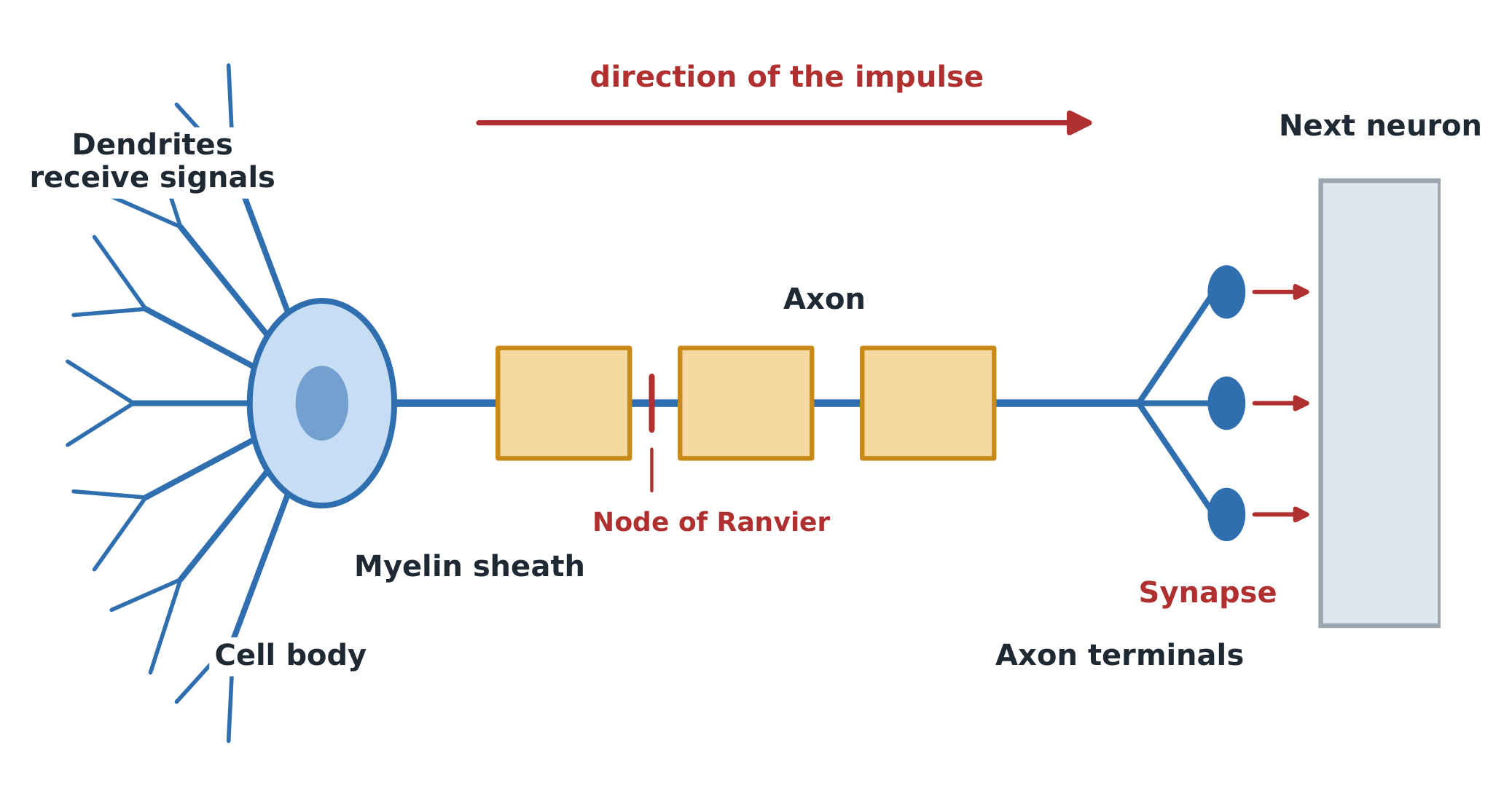
标注了神经元结构的示意图:树突接收信号,细胞体整合信号,轴突把冲动传到末梢
神经元在树突处接收信号,沿轴突放电,再通过突触把信息传给下一个细胞

有两类细胞在工作。神经元(neurons)负责传递信息,神经胶质细胞(glial cells)提供结构、绝缘、通讯和废物运输。二者共同构成一切行为与心理过程的基础。

一个神经元有接收信号的树突(dendrites)、细胞体(cell body),以及把信号传出去的轴突(axon)。许多轴突外面裹着髓鞘(myelin sheath),它能加快信号传导。

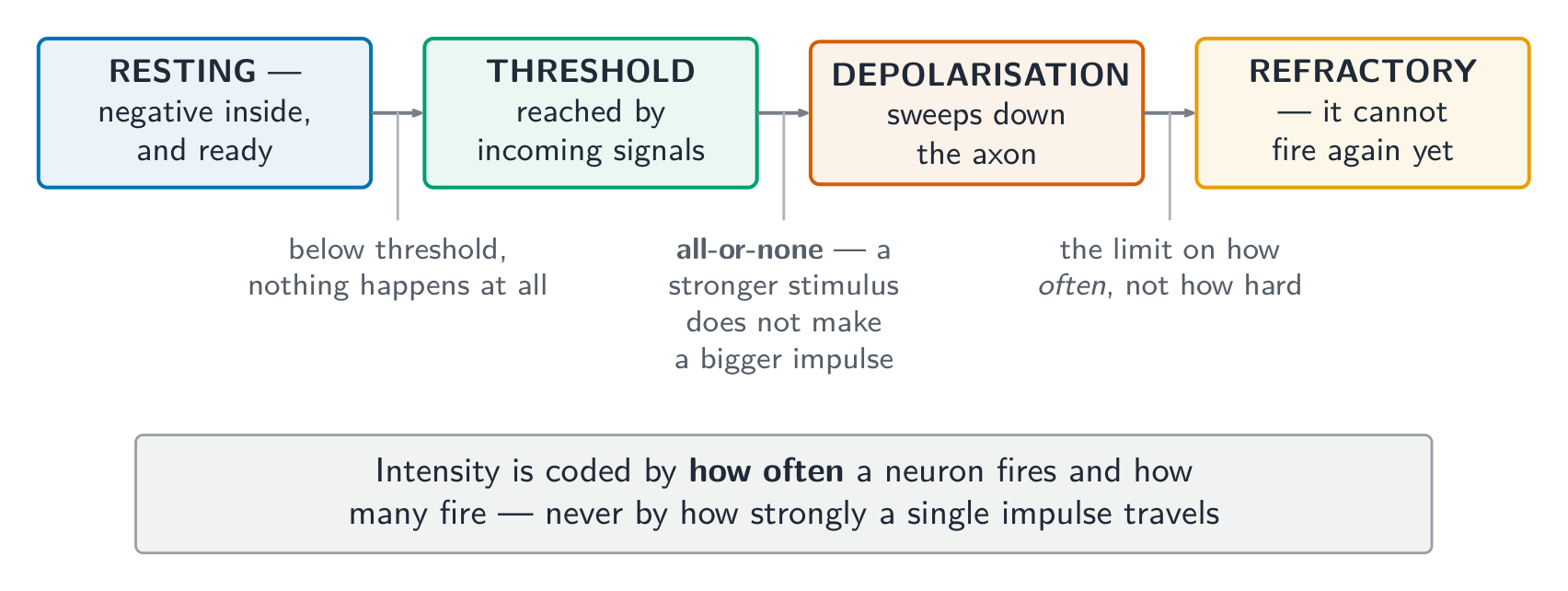
神经传导按固定顺序进行:

  • 静息时神经元保持静息电位(resting potential),准备就绪但不放电。
  • 当传入信号超过阈限(threshold),神经元就去极化(depolarizes)并放电。
  • 放电遵循全或无原则(all-or-none principle):要么全力放电,要么完全不放。刺激更强只会让它放电更频繁,而不是更用力。
  • 放电之后紧接着是不应期(refractory period),此时神经元无法再次放电。
  • 在神经元之间的间隙突触(synapse)处,化学物质跨过间隙到达下一个细胞。多余的化学物质会通过再摄取(reuptake)被收回。

这一过程受损可能导致多发性硬化(multiple sclerosis)或重症肌无力(myasthenia gravis)等疾病。

在脊髓中,反射弧(reflex arc)展示了整个系统如何作为一个整体运作:感觉神经元(sensory neurons)把信息传入,中间神经元(interneurons)在脊髓内连接,运动神经元(motor neurons)把指令传出——这一切都发生在大脑参与之前。

词汇表 训练
英文 中文 拼音
Neurons 神经元 shén jīng yuán
Glial cells 神经胶质细胞 shén jīng jiāo zhì xì bāo
dendrites 树突 shù tū
cell body 细胞体 xì bāo tǐ
axon 轴突 zhóu tū
myelin sheath 髓鞘 suǐ qiào
resting potential 静息电位 jìng xī diàn wèi
threshold 阈限 yù xiàn
depolarizes 去极化 qù jí huà
all-or-none principle 全或无原则 quán huò wú yuán zé
refractory period 不应期 bù yīng qī
synapse 突触 tū chù
reuptake 再摄取 zài shè qǔ
multiple sclerosis 多发性硬化 duō fā xìng yìng huà
myasthenia gravis 重症肌无力 zhòng zhèng jī wú lì
reflex arc 反射弧 fǎn shè hú
Sensory neurons 感觉神经元 gǎn jué shén jīng yuán
interneurons 中间神经元 zhōng jiān shén jīng yuán
motor neurons 运动神经元 yùn dòng shén jīng yuán
1.3

神经元与神经冲动

大纲
Learning ObjectiveEssential Knowledge

1.3.A
Explain how the structures and functions of typical neurons in the central nervous system affect behavior and mental processes.

  • 1.3.A.1 Two common types of neural cells in the brain are neurons (neural cells that transmit information) and glial cells (cells that provide structure, insulation, communication, and waste transport). These types of cells form the basis of the nervous system and are the building blocks of all behavior and mental processes.
  • 1.3.A.2 In the spinal cord, the reflex arc demonstrates how neurons within the central and peripheral nervous systems work together to respond to stimuli. Three types of neurons work together in the spinal cord to create a reflex arc: sensory neurons, motor neurons, and interneurons.

1.3.B
Explain how the basic process of neural transmission is related to behavior and mental processes.

  • 1.3.B.1 The process of neural transmission most commonly occurs in an orderly, systematic way and involves the all-or-none principle, depolarization, refractory period, resting potential, reuptake, and threshold. Disruptions to this process could lead to disorders such as multiple sclerosis or myasthenia gravis.
    • Exclusion Statement: The sodium-potassium pump is outside the scope of the AP Psychology Exam.
  • 1.3.B.2 Each neurotransmitter has specific function(s) related to behavior and mental processes, which may depend on the neurotransmitter’s location in the nervous system. Neurotransmitters generally communicate either excitatory (making an action potential more likely) or inhibitory (making an action potential less likely) messages. Neurotransmitters related to behavior and mental processes for study in AP Psychology are limited to dopamine, serotonin, norepinephrine, glutamate, GABA, endorphins, substance p, and acetylcholine.
    • Exclusion Statement: The AP Psychology Exam will only address the listed neurotransmitters in EK 1.3.B.2.
  • 1.3.B.3 Outside of the nervous system, hormones perform actions similar to neurotransmitters. Hormones related to behavior and mental processes for study in AP Psychology are limited to adrenaline, leptin, ghrelin, melatonin, and oxytocin.
    • Exclusion Statement: The AP Psychology Exam will only address the listed hormones in EK 1.3.B.3.
    • Exclusion Statement: Specific information about the glands of the endocrine system (with the exception of the pituitary gland as referenced in EK 1.4.A.4) is outside the scope of the AP Psychology Exam.

1.3.C
Explain how psychoactive drugs affect behavior and mental processes.

  • 1.3.C.1 Psychoactive drugs can influence neurotransmitter function in various ways throughout the neural communication process. Some act as agonists which encourage neural firing. Some act as antagonists which discourage neural firing. Some act as reuptake inhibitors which block the reabsorption of neurotransmitters back into the cell.
  • 1.3.C.2 Psychoactive drugs have psychological and physiological effects.
    • 1.3.C.2.i Stimulants, such as caffeine and cocaine, typically cause increased neural activity.
    • 1.3.C.2.ii Depressants, such as alcohol, typically cause decreased neural activity.
    • 1.3.C.2.iii Hallucinogens, such as marijuana, typically cause distortions in perception and/or cognition.
    • 1.3.C.2.iv Opioids, such as heroin, typically act as pain relievers.
  • 1.3.C.3 Psychoactive drug use can lead to tolerance and/or addiction. Addiction can create significant withdrawal symptoms if the psychoactive drugs are no longer consumed.

来源:美国大学理事会 AP 课程与考试说明

神经递质(neurotransmitters)是跨过突触的化学物质。每一种都有自己的功能,而其效果可能取决于它在神经系统中的作用部位。传递的信息要么是兴奋性的(excitatory,使放电更可能发生),要么是抑制性的(inhibitory,使放电更不可能发生)。

只有以下这些属于考试范围:多巴胺(dopamine,奖赏与运动)、血清素(serotonin,情绪与睡眠)、去甲肾上腺素(norepinephrine,警觉)、谷氨酸(glutamate,主要的兴奋性递质)、γ-氨基丁酸(GABA,主要的抑制性递质)、内啡肽(endorphins,镇痛)、P物质(substance P,痛觉信号)和乙酰胆碱(acetylcholine,肌肉运动与记忆)。

激素(hormones)在神经系统之外发挥类似作用,通过血液传播,速度更慢。同样只有五种在考试范围内:肾上腺素(adrenaline)、瘦素(leptin,降低饥饿感)、胃饥饿素(ghrelin,增加饥饿感)、褪黑素(melatonin,睡眠)和催产素(oxytocin,情感联结)。

精神药物(psychoactive drugs)通过三种方式作用于神经传导来改变行为:

  • 激动剂(agonist)促进神经放电。
  • 拮抗剂(antagonist)抑制神经放电。
  • 再摄取抑制剂(reuptake inhibitor)阻断回收,使突触中留下更多递质。

药物类别:兴奋剂(stimulants,咖啡因、可卡因)提高神经活动;抑制剂(depressants,酒精)降低神经活动;致幻剂(hallucinogens,大麻)扭曲知觉;阿片类药物(opioids,海洛因)缓解疼痛。反复使用会导致耐受性(tolerance,需要更大剂量才能达到同样效果)和成瘾(addiction),停用时会出现戒断反应(withdrawal)。

词汇表 训练
英文 中文 拼音
Neurotransmitters 神经递质 shén jīng dì zhì
excitatory 兴奋性的 xīng fèn xìng de
inhibitory 抑制性的 yì zhì xìng de
dopamine 多巴胺 duō bā àn
serotonin 血清素 xuè qīng sù
norepinephrine 去甲肾上腺素 qù jiǎ shèn shàng xiàn sù
glutamate 谷氨酸 gǔ ān suān
GABA γ-氨基丁酸 γ- ān jī dīng suān
endorphins 内啡肽 nèi fēi tài
substance P P物质 P wù zhì
acetylcholine 乙酰胆碱 yǐ xiān dǎn jiǎn
Hormones 激素 jī sù
adrenaline 肾上腺素 shèn shàng xiàn sù
leptin 瘦素 shòu sù
ghrelin 胃饥饿素 wèi jī è sù
melatonin 褪黑素 tuì hēi sù
oxytocin 催产素 cuī chǎn sù
Psychoactive drugs 精神药物 jīng shén yào wù
agonist 激动剂 jī dòng jì
antagonist 拮抗剂 jié kàng jì
reuptake inhibitor 再摄取抑制剂 zài shè qǔ yì zhì jì
stimulants 兴奋剂 xīng fèn jì
depressants 抑制剂 yì zhì jì
hallucinogens 致幻剂 zhì huàn jì
opioids 阿片类药物 ā piàn lèi yào wù
tolerance 耐受性 nài shòu xìng
addiction 成瘾 chéng yǐn
withdrawal 戒断反应 jiè duàn fǎn yìng
1.4

大脑

大纲
Learning ObjectiveEssential Knowledge

1.4.A
Explain how the structures and functions of the brain apply to behavior and mental processes.

  • 1.4.A.1 The brain stem (including the medulla) generally controls basic functioning such as breathing and heart rate.
  • 1.4.A.2 The reticular activating system and the brain’s reward center generally control alertness, some voluntary movement, eye movement, and some types of learning, cognition, and emotion.
  • 1.4.A.3 The cerebellum generally controls coordination of muscle movement, balance, and some forms of procedural learning.
  • 1.4.A.4 The cerebral cortex is divided into two hemispheres and includes the limbic system (thalamus, hypothalamus, pituitary gland, hippocampus, amygdala), corpus callosum, and the lobes of the cortex.
    • 1.4.A.4.i The occipital lobes generally control visual information processing and are located in the rear of the brain.
    • 1.4.A.4.ii The temporal lobes generally control auditory and linguistic processing and are located on the sides of the brain.
    • 1.4.A.4.iii The parietal lobes generally control association areas, which process and organize information, and the somatosensory cortex, which processes touch sensitivity. These lobes are located near the back crown of the brain.
    • 1.4.A.4.iv The frontal lobes, located just behind the forehead, generally control linguistic processing, higher-order thinking, and executive functioning, especially in the prefrontal cortex. The motor cortex is located at the rear of the frontal lobes and controls most types of skeletal movement.
  • 1.4.A.5 Split brain research, achieved by severing the corpus callosum (often a treatment for severe epilepsy), reveals that the right and left hemispheres of the brain may specialize in different activities and functions.
    • 1.4.A.5.i Areas of the brain that affect language are typically located in the left hemisphere and include Broca’s area (responsible for speech production) and Wernicke’s area (responsible for speech comprehension). Damage to these parts of the brain can lead to aphasia.
    • 1.4.A.5.ii Researchers test for cortex specialization with split-brain patients by showing information in each visual field, taking advantage of the brain’s contralateral hemispheric organization.
  • 1.4.A.6 Brain plasticity is the ability of the brain to rewire itself or modify or create new connections throughout development and generally allows for the function of a damaged part of the brain to be assumed by a different part of the brain.
  • 1.4.A.7 Research on the brain is done using scans (including EEG and fMRI), case studies, and surgical procedures (such as lesioning) to promote understanding of how the different structures of the brain work and how the brain functions together as a whole.

来源:美国大学理事会 AP 课程与考试说明

研究大脑通常自下而上,因为越低的结构负责越基本的功能。

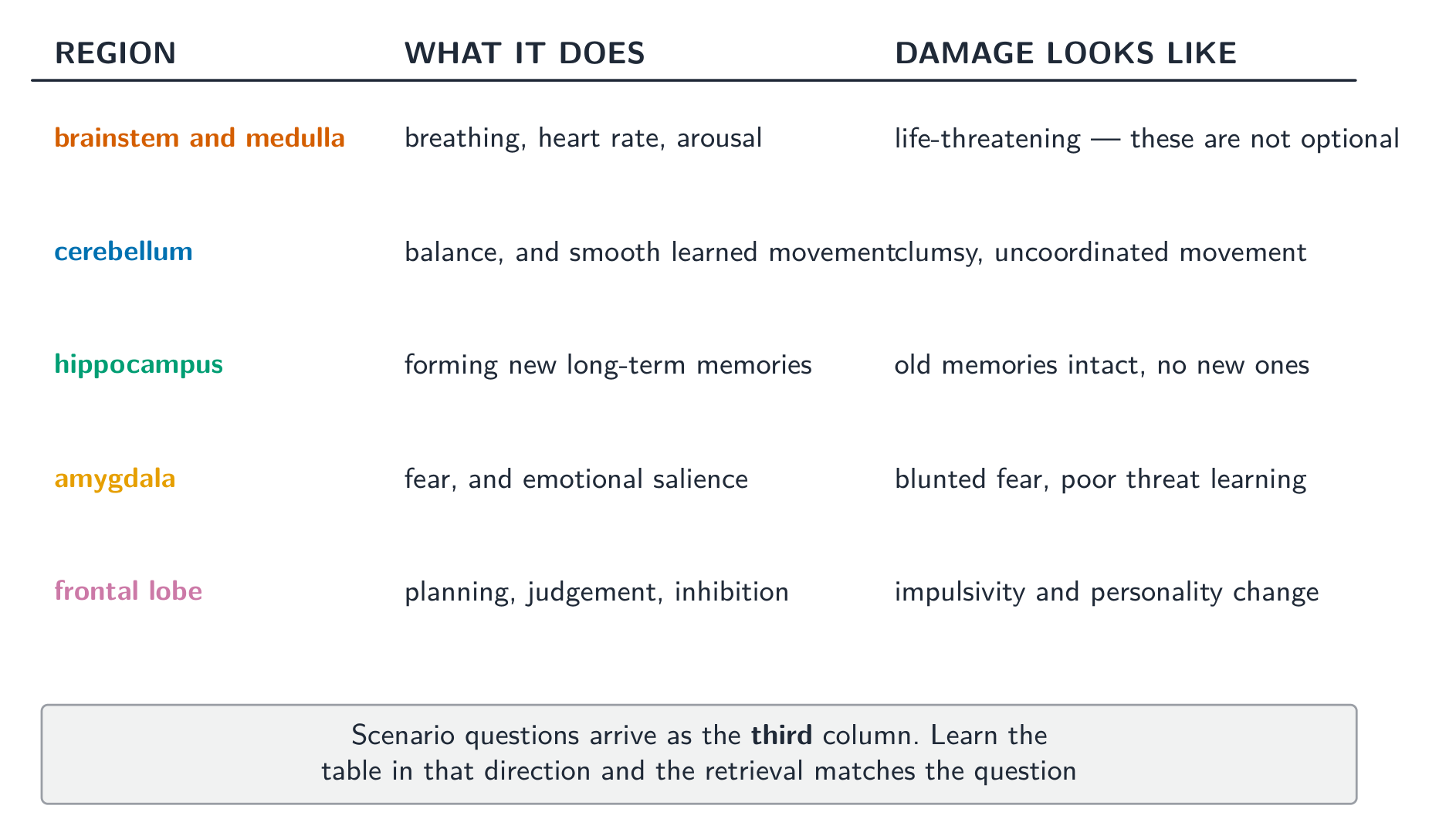
  • 脑干(brain stem)包括延髓(medulla),控制呼吸和心率。
  • 网状激活系统(reticular activating system)控制警觉与唤醒水平。
  • 小脑(cerebellum)控制动作协调、平衡,以及部分程序性学习(procedural learning)。
  • 边缘系统(limbic system)位于大脑皮层内部,包括丘脑(thalamus,感觉信息的中转站)、下丘脑(hypothalamus,饥饿、口渴、体温)、脑垂体(pituitary gland)、海马体(hippocampus,形成新记忆)和杏仁核(amygdala,恐惧与情绪)。

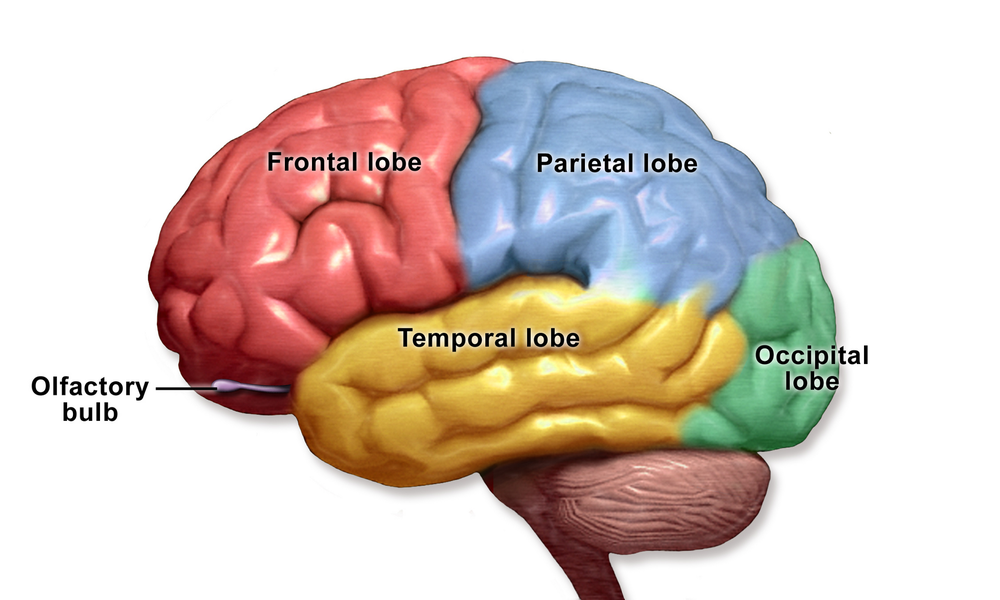
大脑皮层(cerebral cortex)分为两个半球(hemispheres)和四个脑叶:枕叶(occipital lobes)在后部处理视觉;颞叶(temporal lobes)在两侧处理听觉与语言;顶叶(parietal lobes)包含处理触觉的体感皮层(somatosensory cortex);额叶(frontal lobes)负责高级思维与执行功能(executive function)。

语言功能主要位于左半球:布罗卡区(Broca's area)负责言语产生,韦尼克区(Wernicke's area)负责言语理解。

裂脑研究(split-brain research)以切断胼胝体(corpus callosum)治疗严重癫痫的病人为对象,表明两个半球可以独立工作。研究者每次只向一侧视野(visual field)呈现信息,因为每侧视野由对侧半球处理。

大脑可塑性(brain plasticity)指大脑重新连线、形成新连接的能力,这有助于损伤后的恢复。研究方法包括脑电图(EEG)和功能性磁共振成像(fMRI)扫描、个案研究以及损毁法(lesioning)。

词汇表 训练
英文 中文 拼音
brain stem 脑干 nǎo gàn
medulla 延髓 yán suǐ
reticular activating system 网状激活系统 wǎng zhuàng jī huó xì tǒng
cerebellum 小脑 xiǎo nǎo
procedural learning 程序性学习 chéng xù xìng xué xí
limbic system 边缘系统 biān yuán xì tǒng
thalamus 丘脑 qiū nǎo
hypothalamus 下丘脑 xià qiū nǎo
pituitary gland 脑垂体 nǎo chuí tǐ
hippocampus 海马体 hǎi mǎ tǐ
amygdala 杏仁核 xìng rén hé
cerebral cortex 大脑皮层 dà nǎo pí céng
hemispheres 半球 bàn qiú
occipital lobes 枕叶 zhěn yè
temporal lobes 颞叶 niè yè
parietal lobes 顶叶 dǐng yè
somatosensory cortex 体感皮层 tǐ gǎn pí céng
frontal lobes 额叶 é yè
executive function 执行功能 zhí xíng gōng néng
Broca's area 布罗卡区 bù luó kǎ qū
Wernicke's area 韦尼克区 wéi ní kè qū
Split-brain research 裂脑研究 liè nǎo yán jiū
corpus callosum 胼胝体 pián zhī tǐ
visual field 视野 shì yě
Brain plasticity 大脑可塑性 dà nǎo kě sù xìng
lesioning 损毁法 sǔn huǐ fǎ
1.5

睡眠

大纲
Learning ObjectiveEssential Knowledge

1.5.A
Explain how the sleep/wake cycle affects behavior and mental processes throughout the day and night.

  • 1.5.A.1 Consciousness has varying levels of awareness of thoughts, feelings, behavior, and events in individuals’ internal and external worlds. Sleep and wakefulness are two types of consciousness.
  • 1.5.A.2 The sleep/wake cycle is a circadian rhythm, which in humans is about a 24-hour cycle. Jet lag and shift work are disruptions of the circadian rhythm.
  • 1.5.A.3 The stages of sleep are identified by their specific EEG patterns.
    • 1.5.A.3 .i NREM sleep occurs in Stages 1 through 3 and decreases in duration throughout the cycle. Hypnagogic sensations occur as one enters Initial Stage 1 sleep.
    • 1.5.A.3 .ii REM sleep is considered paradoxical because it produces waves similar to wakefulness, but the body is at its most relaxed. Dreaming typically occurs in REM sleep. The frequency of REM sleep typically increases as the cycle progresses. When deprived of REM sleep, REM rebound can occur.
  • 1.5.A.4 Theories regarding the structure and function of dreams include activation-synthesis and consolidation theory.
    • Exclusion Statement: The psychoanalytic theory of dreams is outside of the scope of the AP Psychology Exam.
  • 1.5.A.5 Memory consolidation and restoration are current theories about why sleep occurs. These theories suggest that sleep is useful for organizing and consolidating memories or restoring depleted resources used throughout a given day.
  • 1.5.A.6 Many disorders interrupt healthy sleep, and their effects on waking behavior and health vary. Sleep disruptions can affect physical and cognitive performance during wakefulness. Treating sleep disorders and following regular schedules for sleeping can improve waking performance and overall well-being. Disorders commonly studied in introductory psychology include insomnia, narcolepsy, REM sleep behavior disorder, sleep apnea, and somnambulism.
    • Exclusion Statement: The AP Psychology Exam will only address the listed disorders in EK 1.5.A.6.

来源:美国大学理事会 AP 课程与考试说明

意识(consciousness)是对内部与外部事件的觉察,其水平会变化。

睡眠/觉醒周期是一种约 24 小时的昼夜节律(circadian rhythm)。时差反应(jet lag)和轮班工作会打乱它。

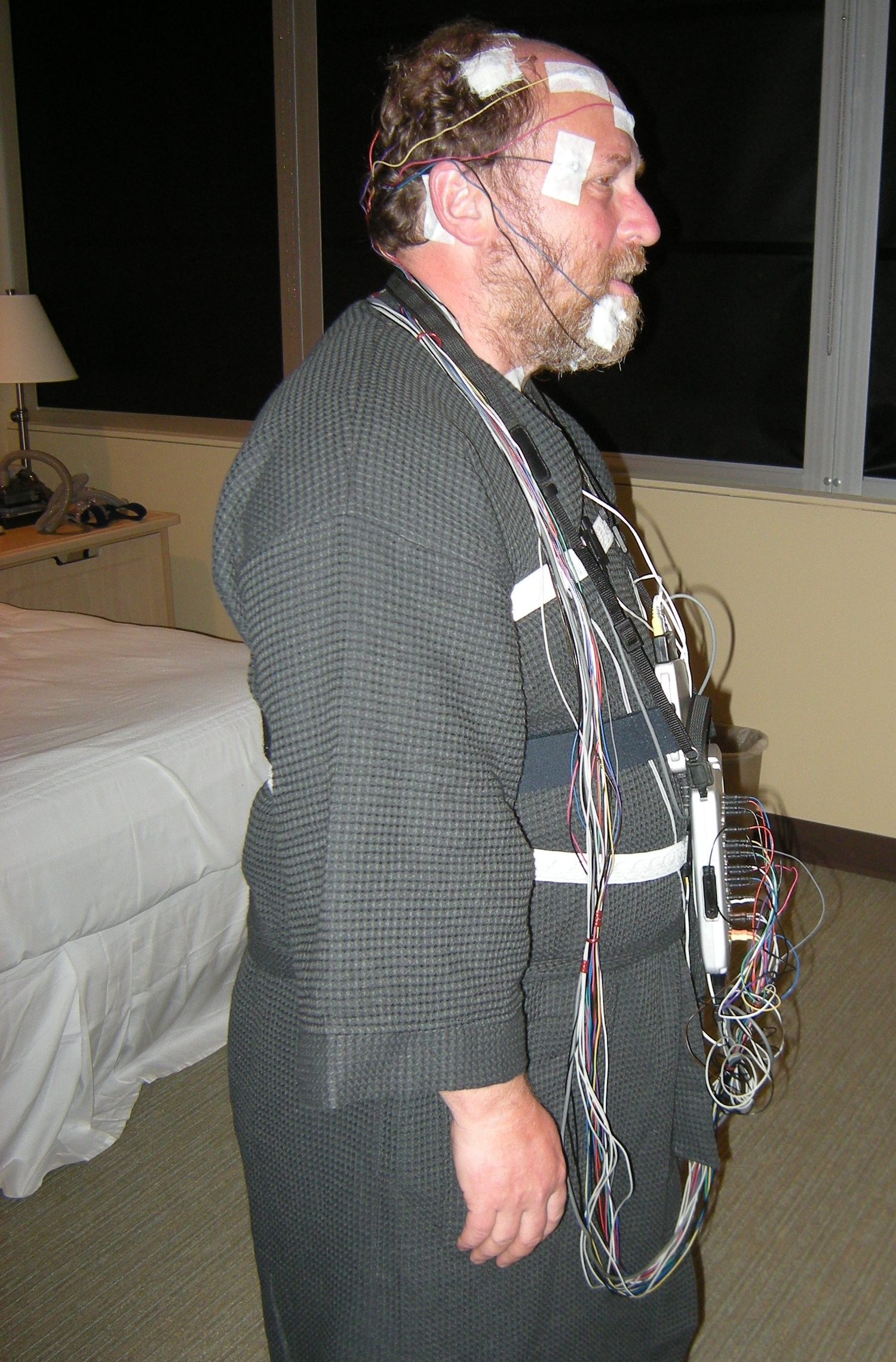
睡眠阶段由脑电图模式来判定。非快速眼动睡眠(NREM sleep)包括第 1 至第 3 阶段;入睡时会出现入睡幻觉(hypnagogic sensations)。快速眼动睡眠(REM sleep)被称为异相睡眠(paradoxical sleep),因为此时脑电波接近清醒而身体最放松,大多数梦发生在这一阶段。

关于梦有两种在考试范围内的理论:激活-综合理论(activation-synthesis theory,大脑对随机活动作出解释)和巩固理论(consolidation theory,梦反映记忆加工)。关于人为什么需要睡眠,则有记忆巩固(memory consolidation)与恢复(restoration)两种理论。

*注意:*精神分析的梦理论不在考试范围内。

睡眠障碍会影响清醒时的行为与健康:失眠(insomnia)、发作性睡病(narcolepsy)、睡眠呼吸暂停(sleep apnea)、梦游(somnambulism)和快速眼动睡眠行为障碍(REM sleep behavior disorder)。

词汇表 训练
英文 中文 拼音
Consciousness 意识 yì shí
circadian rhythm 昼夜节律 zhòu yè jié lǜ
Jet lag 时差反应 shí chà fǎn yìng
NREM sleep 非快速眼动睡眠 fēi kuài sù yǎn dòng shuì mián
hypnagogic sensations 入睡幻觉 rù shuì huàn jué
REM sleep 快速眼动睡眠 kuài sù yǎn dòng shuì mián
paradoxical sleep 异相睡眠 yì xiāng shuì mián
activation-synthesis theory 激活-综合理论 jī huó - zōng hé lǐ lùn
consolidation theory 巩固理论 gǒng gù lǐ lùn
memory consolidation 记忆巩固 jì yì gǒng gù
restoration 恢复 huī fù
insomnia 失眠 shī mián
narcolepsy 发作性睡病 fā zuò xìng shuì bìng
sleep apnea 睡眠呼吸暂停 shuì mián hū xī zàn tíng
somnambulism 梦游 mèng yóu
REM sleep behavior disorder 快速眼动睡眠行为障碍 kuài sù yǎn dòng shuì mián xíng wéi zhàng ài
Sensation 感觉 gǎn jué
1.6

感觉

大纲
Learning ObjectiveEssential Knowledge

1.6.A
Explain how the process of sensation is related to behavior and mental processes.

  • 1.6.A.1 Sensation is the process of detecting information from the environment that meets a certain threshold and transducing stimuli into neurochemical messages for processing (perception) in the brain. The absolute threshold occurs when a stimulus can be detected at least 50% of the time.
  • 1.6.A.2 Detection of change in stimuli or diminished sensitivity to stimuli can be explained by the just-noticeable difference and sensory adaptation. Weber’s law describes the degree to which stimuli need to be different for the difference to be detected.
  • 1.6.A.3 The sensory systems constantly work together in a process called sensory interaction. Synesthesia is an experience of sensation in which one system of sensation is experienced through another.

1.6.B
Explain how the structures and functions of the visual sensory system relate to behavior and mental processes.

  • 1.6.B.1 The retina is the photosensitive surface at the back of the eye. Cells in the retina capture visual information that is transduced to the brain for processing. Evidence of incomplete images captured by the retina is demonstrated by the presence of the blind spot, where the visual nerve exits the eye. The brain fills in the gaps in the incomplete retinal images to perceive a relatively complete picture of the world.
  • 1.6.B.2 Visual stimuli are focused onto the retina by the lens via a process called accommodation. When this process is altered, nearsightedness or farsightedness can result.
  • 1.6.B.3 Cells that lie in the periphery of the eye and detect shapes and movement, but not color, are called rods. These cells are mainly activated in low-light environments. These cells play a role in light and dark adaptation.
  • 1.6.B.4 Color vision is explained by both the trichromatic theory and the opponent-process theory.
    • 1.6.B.4.i Photoreceptor cells located in the fovea of the eye that process color and detail are called cones. Researchers have identified blue (detecting short wavelengths), green (detecting medium wavelengths) and red (detecting long wavelengths) cones in the retina.
    • 1.6.B.4.ii Afterimages result when certain ganglion cells in the retina are activated while others are not. The ganglion cells involved in this opponent process are red/green, blue/ yellow/ and black/white.
    • 1.6.B.4.iii Color vision deficiency involves damage or irregularities to one or more cones or ganglion cells (red/green, blue/ yellow). Color vision deficiency includes dichromatism or monochromatism.
  • 1.6.B.5 Damage to parts of the brain responsible for vision (mainly the occipital lobes) can result in disorders such as prosopagnosia (face blindness) and blindsight.

1.6.C
Explain how the structures and functions of the auditory sensory system relate to behavior and mental processes.

  • 1.6.C.1 Sound occurs through the movement of air molecules at different wavelengths (called pitch) and amplitudes (called loudness).
  • 1.6.C.2 Theories that help explain pitch perception include place theory, volley theory, and frequency theory.
  • 1.6.C.3 Sound localization describes how we identify where sounds in our environment are coming from.
  • 1.6.C.4 Hearing difficulties can result from aging and various kinds of damage to auditory structures. Types of hearing loss include conduction deafness and sensorineural deafness.

1.6.D
Explain how the structures and functions of the chemical sensory systems relate to behavior and mental processes.

  • 1.6.D.1 Structures in the nose and brain process and/ or transduce olfactory stimuli. Smell is the only sense not processed first in the thalamus of the brain. Pheromones produce chemical messages for the olfactory system.
  • 1.6.D.2 Gustation is the sense of taste, and types of tastes include sweet, sour, salty, bitter, umami, and oleogustus.
  • 1.6.D.3 Structures in the tongue, mouth, and brain process and/or transduce basic tastes. The number of taste receptors on the tongue is related to how sensitive people are to tastes, classifying them as supertasters, medium tasters, or nontasters.
  • 1.6.D.4 The chemical senses interact to create the sensation of taste. Without the sense of smell, taste sensations are either muted or not experienced.

1.6.E
Explain how the structures and functions of the touch sensory system relate to behavior and mental processes.

  • 1.6.E.1 Structures within the skin and brain process and/or transduce touch stimuli. The sensation of “hot” is produced by the activation of warm and cold receptors in the skin.

1.6.F
Explain how the structures and functions of the pain sensory system relate to behavior and mental processes.

  • 1.6.F.1 Pain is processed both in the body and in the brain. Gate control theory is one attempt to describe the complexities of pain. Phantom limb sensation occurs when people who have lost limbs report sensation or pain where the limb used to be.

1.6.G
Explain how the structures and functions that maintain balance (vestibular) and body movement (kinesthetic) relate to behavior and mental processes.

  • 1.6.G.1 The vestibular sense controls balance and is primarily detected by the semicircular canals and structures in the brain.
  • 1.6.G.2 Kinesthesis the sense of one’s body movement. Kinesthesis allows the body to move in coordinated ways without having to look at the various parts of the body as it moves.

来源:美国大学理事会 AP 课程与考试说明

感觉(sensation)是探测环境中的信息,并把它转导(transducing)为大脑可用的神经信号。探测需要达到一定的绝对阈限(absolute threshold)。

  • 最小可觉差(just-noticeable difference)是一个人能察觉到的最小变化。
  • 感觉适应(sensory adaptation)指对不变刺激的敏感度下降——你会闻不到一直存在的气味。
  • 感觉相互作用(sensory interaction)指各种感觉协同工作。联觉(synesthesia)是一种感觉引发另一种感觉的体验。

视觉。光线通过晶状体(lens)改变形状被聚焦到视网膜(retina)上,这一过程称为视觉调节(visual accommodation);这一过程出问题就会造成近视(nearsightedness)或远视(farsightedness)。视杆细胞(rods)分布在视网膜周边,在弱光下探测形状与运动。视锥细胞(cones)位于中央凹(fovea),负责颜色与细节。色觉需要两种理论共同解释:三色理论(trichromatic theory,蓝、绿、红三种视锥细胞)和解释后像(afterimages)的对立过程理论(opponent-process theory)。枕叶受损可能导致面孔失认症(prosopagnosia)。

听觉。声音是空气的运动;波长决定音高(pitch),振幅决定响度(loudness)。音高知觉由位置理论(place theory)、齐射理论(volley theory)和频率理论(frequency theory)共同解释。声源定位(sound localization)让我们判断声音来自哪里。听力损失可分为传导性耳聋(conduction deafness)和感音神经性耳聋(sensorineural deafness)。

化学感觉。嗅觉(olfaction)是唯一不先经丘脑中转的感觉。味觉(gustation)包括甜、酸、咸、苦、鲜味(umami)和脂味(oleogustus)。二者相互作用:失去嗅觉后,味觉会变得很弱。

触觉、痛觉与身体位置。皮肤中的感受器转导触觉;"热"的感觉来自温觉与冷觉感受器同时放电。疼痛在身体和大脑中共同加工,闸门控制理论(gate control theory)解释了为什么注意力会改变疼痛程度;幻肢(phantom limb)现象则显示了大脑的作用。前庭觉(vestibular sense)通过半规管(semicircular canals)控制平衡,动觉(kinesthesis)是对自身身体运动的感觉。

Worked example(一道真实的 AP 考题)。2025 年的文章分析题(AAQ)要求学生"指出该研究使用的研究方法",并进一步"结合研究中具体、相关的证据,解释该研究结果在多大程度上可以或不可以推广"*。第二问的满分答案会同时点明局限*扣住证据:*"该结果可能难以广泛推广,因为被试是同一所大学的本科生,样本不能代表总体人群。"*注意其结构:Explain 需要一个论断加上支撑它的证据。只写出研究方法,回答的是 A 问,而不是 E 问。

词汇表 训练
英文 中文 拼音
transducing 转导 zhuǎn dǎo
absolute threshold 绝对阈限 jué duì yù xiàn
just-noticeable difference 最小可觉差 zuì xiǎo kě jué chà
Sensory adaptation 感觉适应 gǎn jué shì yìng
Sensory interaction 感觉相互作用 gǎn jué xiāng hù zuò yòng
Synesthesia 联觉 lián jué
retina 视网膜 shì wǎng mó
lens 晶状体 jīng zhuàng tǐ
visual accommodation 视觉调节 shì jué tiáo jié
nearsightedness 近视 jìn shì
farsightedness 远视 yuǎn shì
Rods 视杆细胞 shì gān xì bāo
Cones 视锥细胞 shì zhuī xì bāo
fovea 中央凹 zhōng yāng āo
trichromatic theory 三色理论 sān sè lǐ lùn
opponent-process theory 对立过程理论 duì lì guò chéng lǐ lùn
afterimages 后像 hòu xiàng
prosopagnosia 面孔失认症 miàn kǒng shī rèn zhèng
pitch 音高 yīn gāo
loudness 响度 xiǎng dù
place theory 位置理论 wèi zhì lǐ lùn
volley theory 齐射理论 qí shè lǐ lùn
frequency theory 频率理论 pín lǜ lǐ lùn
Sound localization 声源定位 shēng yuán dìng wèi
conduction deafness 传导性耳聋 chuán dǎo xìng ěr lóng
sensorineural deafness 感音神经性耳聋 gǎn yīn shén jīng xìng ěr lóng
Olfaction 嗅觉 xiù jué
Gustation 味觉 wèi jué
umami 鲜味 xiān wèi
oleogustus 脂味 zhī wèi
gate control theory 闸门控制理论 zhá mén kòng zhì lǐ lùn
phantom limb 幻肢 huàn zhī
vestibular sense 前庭觉 qián tíng jué
semicircular canals 半规管 bàn guī guǎn
kinesthesis 动觉 dòng jué
1.6

考试技巧

  • 只需记住列出的神经递质激素;考试不会考其他种类,而内分泌腺除脑垂体外都不在范围内。
  • 感觉(sensation)与知觉(perception)区分开:感觉是探测与转导,知觉是解释(第二单元)。
  • 全或无原则意味着刺激强度由神经元放电的频率编码,而不是由放电的强弱编码。
  • 动笔前先把结构与功能对应好:海马体形成记忆,杏仁核处理恐惧,小脑协调运动。
  • 交感神经系统唤醒身体,副交感神经系统使其平静。题目若描述心跳加速,就要点出交感分支。
  • 要说清一种扫描能显示什么、不能显示什么。fMRI 显示随时间变化的活动;EEG 显示电活动模式并用于判定睡眠阶段。
词汇表 训练
英文 中文 拼音
EEG 脑电图 nǎo diàn tú
fMRI 功能性磁共振成像 gōng néng xìng cí gòng zhèn chéng xiàng

本主题的互动课程

逐步学习,并即时检测练习。

AP 心理学的更多主题

登录或创建账号

IGCSE, A-Level & AP