跳到主要内容

基因表达与调控

AP 生物 · 第 6 主题

训练
讲义 词汇表
6.1

DNA 与 RNA 的结构

大纲
Big IdeaLearning ObjectiveEssential Knowledge

Big Idea 3 — Information Storage and Transmission
Living systems store, retrieve, transmit, and respond to information essential to life processes.

6.1.A
Describe the structures involved in passing hereditary information from one generation to the next.

  • 6.1.A.1 Genetic information is stored in and passed to subsequent generations through DNA molecules and, in some cases, RNA molecules.
    • 6.1.A.1.i Prokaryotic organisms typically have circular chromosomes.
    • 6.1.A.1.ii Eukaryotic organisms typically have multiple linear chromosomes that are comprised of DNA. These chromosomes are condensed using histones and associated proteins.
  • 6.1.A.2 Prokaryotes and eukaryotes can contain plasmids, which are extra-chromosomal circular molecules of DNA.

6.1.B
Describe the characteristics of DNA that allow it to be used as hereditary material.

  • 6.1.B.1 Nucleic acids exhibit specific nucleotide base pairing that is conserved through evolution.
    • 6.1.B.1.i Purines (guanine and adenine) have a double ring structure.
    • 6.1.B.1.ii Pyrimidines (cytosine, thymine, and uracil) have a single ring structure.
    • 6.1.B.1.iii Purines pair with pyrimidines: adenine with thymine (or uracil in RNA) and guanine with cytosine.

来源:美国大学理事会 AP 课程与考试说明

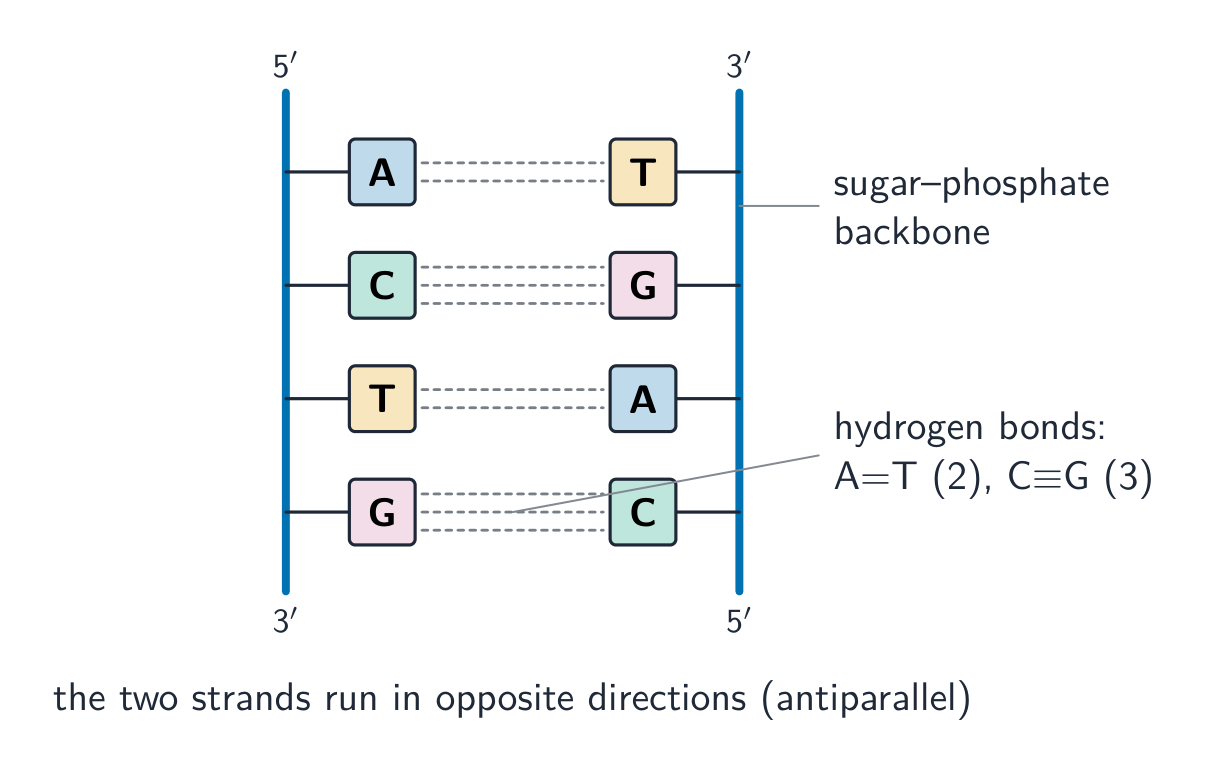
DNA 作为两条链的一个双螺旋(double helix)携带遗传信息。它的核苷酸(nucleotides)按规则配对——A 与 T、G 与 C(互补配对(complementary base pairing))——所以一条链指定另一条。这两条链反平行(antiparallel)地运行。RNA 是单链的,用尿嘧啶(uracil)(U)代替胸腺嘧啶,并有核糖。

DNA:由互补碱基对维系的两条反平行链
DNA:由互补碱基对维系的两条反平行链
词汇表 训练
英文 中文 拼音
double helix 双螺旋 shuāng luó xuán
nucleotides 核苷酸 hé gān suān
complementary base pairing 互补配对 hù bǔ pèi duì
antiparallel 反平行 fǎn píng xíng
6.2

DNA 复制

大纲
Big IdeaLearning ObjectiveEssential Knowledge

Big Idea 3 — Information Storage and Transmission
Living systems store, retrieve, transmit, and respond to information essential to life processes.

6.2.A
Describe the mechanisms by which genetic information is copied for transmission between generations.

  • 6.2.A.1 DNA replication ensures continuity of hereditary information.
    • 6.2.A.1.i DNA is synthesized in the 5' to 3' direction.
    • 6.2.A.1.ii Replication is a semiconservative process, meaning one strand of DNA serves as the template for a new strand of complementary DNA.
    • 6.2.A.1.iii Helicase unwinds the DNA strands.
    • 6.2.A.1.iv Topoisomerase relaxes supercoiling in front of the replication fork.
    • 6.2.A.1.v DNA polymerase requires RNA primers to initiate DNA synthesis.
    • 6.2.A.1.vi DNA polymerase synthesizes new strands of DNA continuously on the leading strand and discontinuously on the lagging strand.
    • 6.2.A.1.vii Ligase joins the fragments on the lagging strand.
    • Exclusion statement: The names of the steps and particular enzymes involved, excluding DNA polymerase, ligase, RNA polymerase, helicase, and topoisomerase, are beyond the scope of the AP Exam.

来源:美国大学理事会 AP 课程与考试说明

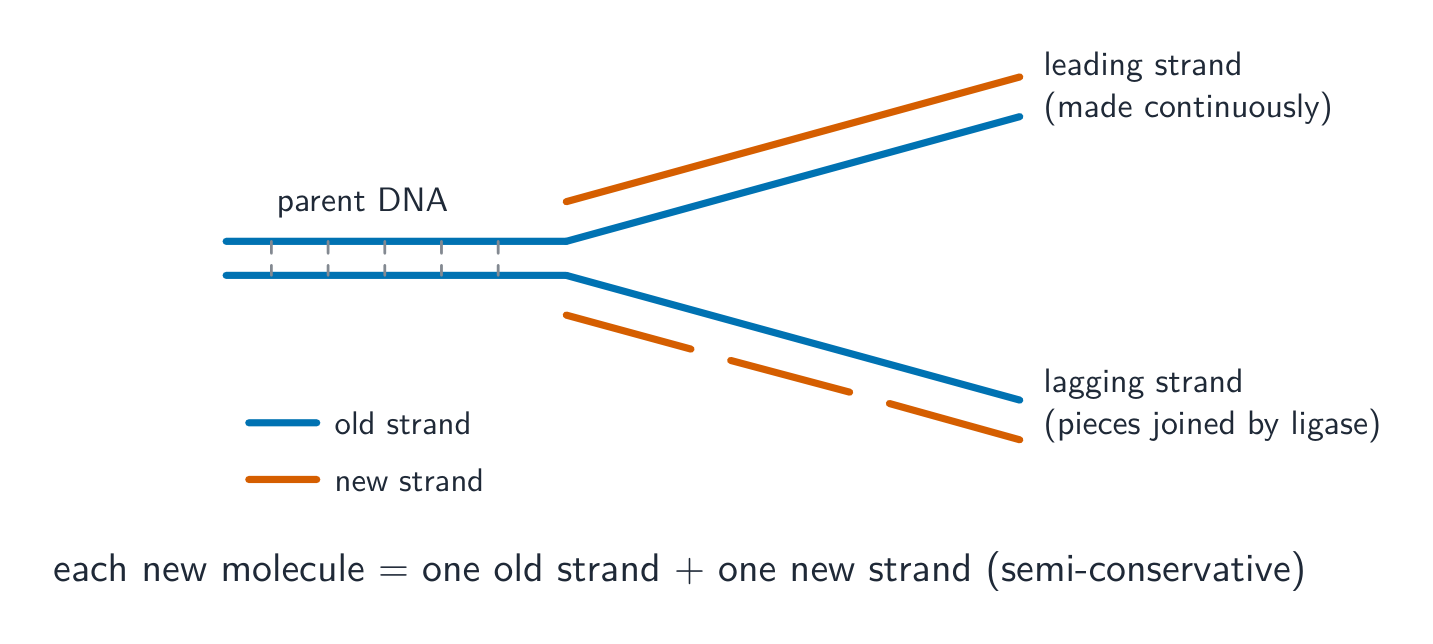
在一个细胞分裂之前,DNA 被半保留复制(semiconservatively):螺旋解开而每条旧链模板化一条新链,所以每个子螺旋有一条旧链和一条新链。聚合酶(DNA polymerase)遵循碱基配对规则添加核苷酸,构建新链并边进行边校对。

在一个复制叉处的半保留 DNA 复制
在一个复制叉处的半保留 DNA 复制
词汇表 训练
英文 中文 拼音
semiconservatively 半保留复制 bàn bǎo liú fù zhì
DNA polymerase 聚合酶 jù hé méi
6.3

转录与 RNA 加工

大纲
Big IdeaLearning ObjectiveEssential Knowledge

Big Idea 3 — Information Storage and Transmission
Living systems store, retrieve, transmit, and respond to information essential to life processes.

6.3.A
Describe the mechanisms by which genetic information flows from DNA to RNA to protein.

  • 6.3.A.1 The sequence of the RNA bases, together with the structure of the RNA molecule, determines RNA function.
    • 6.3.A.1.i Messenger RNA (mRNA) molecules carry information from DNA in the nucleus to the ribosome in the cytoplasm.
    • 6.3.A.1.ii Distinct transfer RNA (tRNA) molecules bind specific amino acids and have anticodon sequences that base pair with the codons of mRNA. tRNA is recruited to the ribosome during translation to generate the primary peptide sequence based on the mRNA sequence.
    • 6.3.A.1.iii Ribosomal RNA (rRNA) molecules are functional building blocks of ribosomes.
  • 6.3.A.2 RNA polymerases use a single template strand of DNA to direct the inclusion of bases in the newly formed RNA molecule. This process is known as transcription.
  • 6.3.A.3 The enzyme RNA polymerase synthesizes mRNA molecules in the 5' to 3' direction by reading the template DNA strand in the 3' to 5' direction.
  • 6.3.A.4 In eukaryotic cells the mRNA transcript undergoes a series of enzyme-mediated modifications.
    • 6.3.A.4.i The addition of a poly-A tail makes mRNA more stable.
    • 6.3.A.4.ii The addition of a GTP cap helps with ribosomal recognition.
    • 6.3.A.4.iii The excision of introns, along with the splicing and retention of exons, generates different versions of the resulting mature mRNA molecule. This process is known as alternative splicing.

来源:美国大学理事会 AP 课程与考试说明

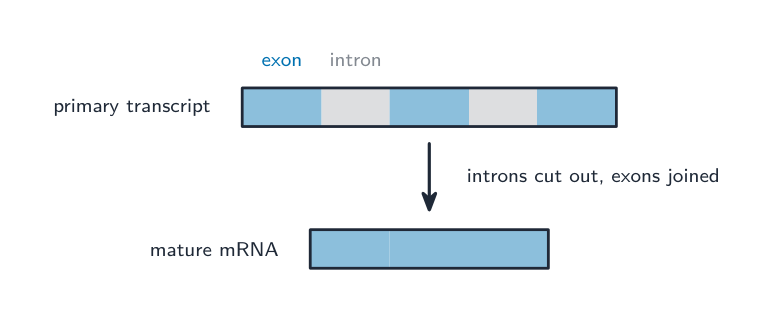
转录(transcription)把一个基因的 DNA 复制成信使RNA(messenger RNA,mRNA)。RNA 聚合酶(RNA polymerase)读取模板链并构建一条互补的 RNA。在真核生物里 mRNA 然后被加工:一个帽和尾被添加,而内含子(introns)(非编码部分)被剪接掉,留下外显子(exons)。

内含子被移除而外显子被连接以制造成熟的 mRNA
探索

Transcribe DNA into messenger RNA

Transcription copies a DNA template into mRNA, pairing A→U, T→A, C→G, G→C. Step through to build the RNA strand base by base.

词汇表 训练
英文 中文 拼音
Transcription 转录 zhuǎn lù
messenger RNA 信使 xìn shǐ
introns 内含子 nèi hán zi
exons 外显子 wài xiǎn zi
练习卷
6.4

翻译

大纲
Big IdeaLearning ObjectiveEssential Knowledge

Big Idea 3 — Information Storage and Transmission
Living systems store, retrieve, transmit, and respond to information essential to life processes.

6.4.A
Explain how the phenotype of an organism is determined by its genotype.

  • 6.4.A.1 Translation of the mRNA to generate a polypeptide occurs on ribosomes that are present in the cytoplasm of both prokaryotic and eukaryotic cells, as well as the cytoplasmic surface of the rough ER of eukaryotic cells.
  • 6.4.A.2 In prokaryotic organisms, translation of the mRNA molecule occurs while it is being transcribed.
  • 6.4.A.3 Translation involves many sequential steps, including initiation, elongation, and termination. The salient features of translation include:
    • 6.4.A.3.i Translation is initiated when the rRNA in the ribosome interacts with the mRNA at the start codon (AUG, coding for the amino acid methionine).
    • 6.4.A.3.ii The sequence of nucleotides on the mRNA is read in triplets, called codons.
    • 6.4.A.3.iii Each codon encodes a specific amino acid, which can be deduced by using a genetic code chart. Many amino acids are encoded by more than one codon.
    • 6.4.A.3.iv Nearly all living organisms use the same genetic code, which is evidence for the common ancestry of all living organisms.
    • 6.4.A.3.v tRNA brings the correct amino acid to the place specified by the codon on the mRNA.
    • 6.4.A.3.vi The amino acid is transferred to the growing polypeptide chain.
    • 6.4.A.3.vii The process continues along the mRNA until a stop codon is reached.
    • 6.4.A.3.viii Translation terminates with the release of the newly synthesized protein.
    • Exclusion statement: The details and names of the enzymes and factors involved in each of these steps are beyond the scope of the AP Exam.
    • Exclusion statement: Memorization of the genetic code, with the exception of the start codon AUG, is beyond the scope of the AP Exam.
  • 6.4.A.4 Genetic information in retroviruses is a special case and has an alternate flow of information: from RNA to DNA, made possible by reverse transcriptase, an enzyme that copies the viral RNA genome into DNA. This DNA integrates into the host genome and is transcribed and translated for the assembly of new viral progeny.

来源:美国大学理事会 AP 课程与考试说明

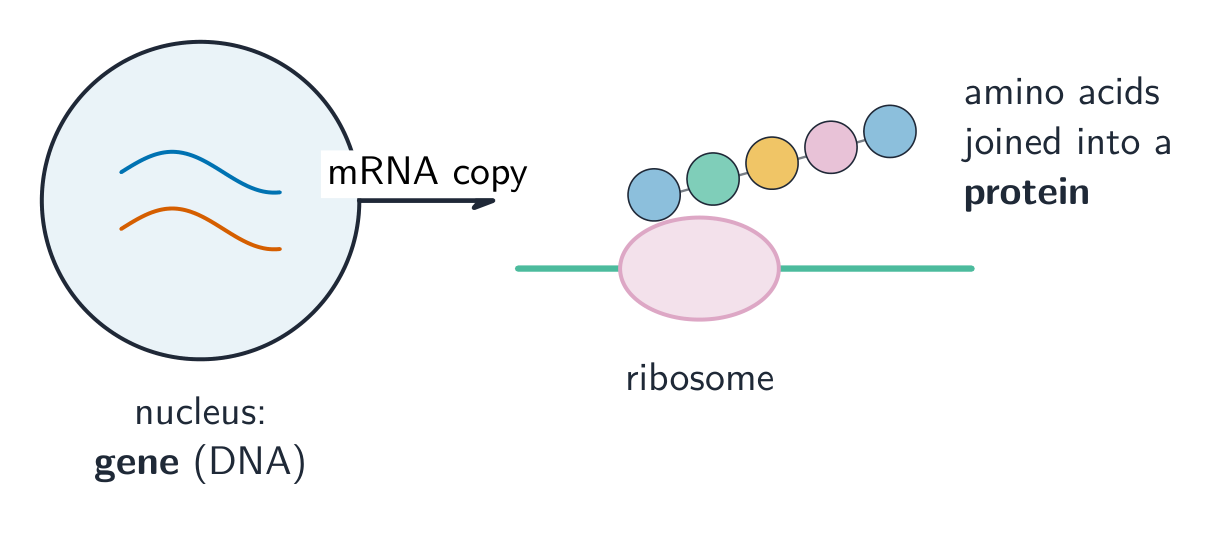
翻译(translation)在核糖体(ribosome)从 mRNA 构建一个蛋白质。mRNA 以三个碱基的密码子(codons)被读取,每个指定一个氨基酸(遗传密码)。转运RNA(transfer RNA)带来匹配的氨基酸,而核糖体把它们连接成一条多肽,直到一个终止密码子结束它。这是"中心法则":DNA → RNA → 蛋白质。

mRNA 被一个核糖体读取以从氨基酸构建一个蛋白质
词汇表 训练
英文 中文 拼音
Translation 翻译 fān yì
ribosome 核糖体 hé táng tǐ
codons 密码子 mì mǎ zi
Transfer RNA 转运 zhuǎn yùn
练习卷
6.5

基因表达的调控

大纲
Big IdeaLearning ObjectiveEssential Knowledge

Big Idea 3 — Information Storage and Transmission
Living systems store, retrieve, transmit, and respond to information essential to life processes.

6.5.A
Describe the types of interactions that regulate gene expression.

  • 6.5.A.1 Regulatory sequences are stretches of DNA that interact with regulatory proteins to control transcription. Some genes are constitutively expressed, and others are inducible.
  • 6.5.A.2 Epigenetic changes can affect gene expression through reversible modifications of DNA or histones.
  • 6.5.A.3 The phenotype of a cell or an organism is determined by the combination of genes that are expressed and the levels at which they are expressed.
    • 6.5.A.3.i Observable cell differentiation results from the expression of genes for tissue-specific proteins.
    • 6.5.A.3.ii Induction of transcription factors during development results in sequential gene expression.
    • 6.5.A.3.iii The function and amount of gene products determine the phenotype of organisms.

6.5.B
Explain how the location of regulatory sequences relates to their function.

  • 6.5.B.1 Both prokaryotes and eukaryotes have groups of genes that are coordinately regulated.
    • 6.5.B.1.i Prokaryotes regulate operons in an inducible or repressible system.
    • 6.5.B.1.ii In eukaryotes, groups of genes may be influenced by the same transcription factors to coordinately regulate expression.

来源:美国大学理事会 AP 课程与考试说明

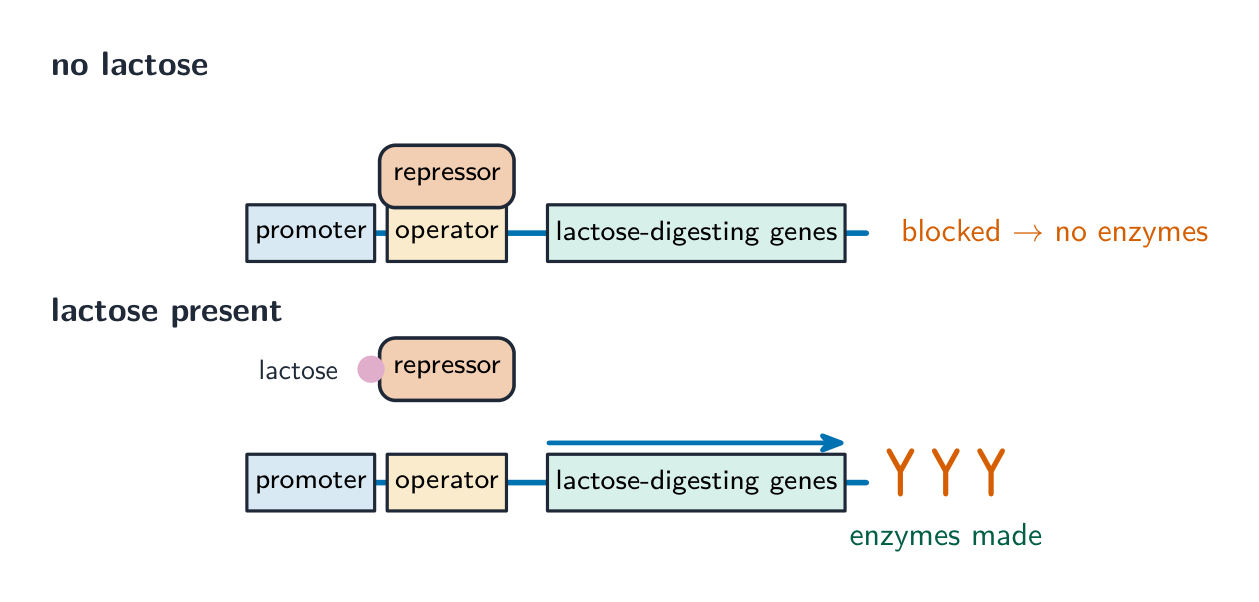
细胞控制哪些基因被表达以及何时。在原核生物里,操纵子(operons)把成组的基因开或关。在真核生物里,调节发生在许多层次——哪些基因被转录(转录因子、启动子、增强子)、RNA 加工,以及翻译之后。这让一个细胞在不改变它 DNA 的情况下对它的环境反应。

乳糖操纵子只在乳糖存在时把基因开启
乳糖操纵子只在乳糖存在时把基因开启
词汇表 训练
英文 中文 拼音
operons 操纵子 cāo zòng zi
6.6

基因表达与细胞特化

大纲
Big IdeaLearning ObjectiveEssential Knowledge

Big Idea 3 — Information Storage and Transmission
Living systems store, retrieve, transmit, and respond to information essential to life processes.

6.6.A
Explain how the binding of transcription factors to promoter regions affects gene expression and the phenotype of the organism.

  • 6.6.A.1 RNA polymerase and transcription factors bind to promoter or enhancer DNA sequences to initiate transcription. These sequences can be upstream or downstream of the transcription start site.
  • 6.6.A.2 Negative regulatory molecules inhibit gene expression by binding to DNA and blocking transcription.

6.6.B
Explain the connection between the regulation of gene expression and phenotypic differences in cells and organisms.

  • 6.6.B.1 Gene regulation results in differential gene expression and influences cell products and functions.
  • 6.6.B.2 Certain small RNA molecules have roles in regulating gene expression.

来源:美国大学理事会 AP 课程与考试说明

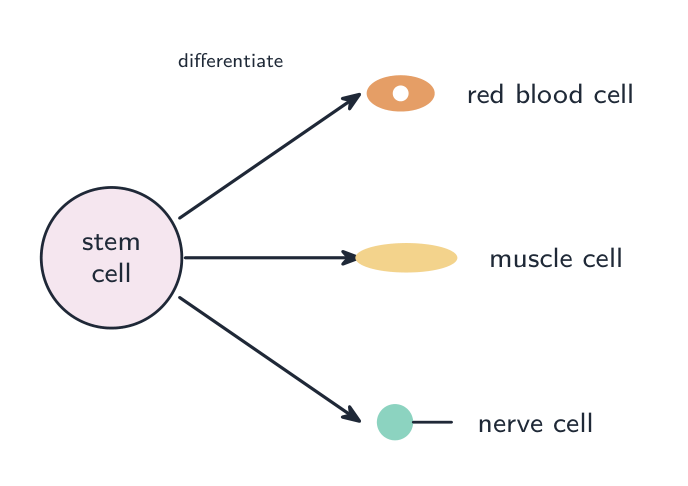
一个身体里的每个细胞有相同的 DNA,然而细胞不同,因为它们表达不同的基因——差异表达(differential gene expression)。这就是一个受精卵如何产生许多特化的细胞类型(肌肉、神经、皮肤);发育期间的信号把特定的基因开和关。

一个干细胞分化成特化的细胞类型
一个干细胞分化成特化的细胞类型
词汇表 训练
英文 中文 拼音
differential gene expression 差异表达 chā yì biǎo dá
6.7

突变

大纲
Big IdeaLearning ObjectiveEssential Knowledge

Big Idea 3 — Information Storage and Transmission
Living systems store, retrieve, transmit, and respond to information essential to life processes.

6.7.A
Describe the various types of mutation.

  • 6.7.A.1 Alterations in a DNA sequence are mutations that can cause changes in the type or amount of the protein produced and the consequent phenotype. DNA mutations can be beneficial, detrimental, or neutral based on the effect or the lack of effect they have on the resulting nucleic acid or protein and the phenotypes that are conferred by the protein.
    • 6.7.A.1.i Point mutations occur when one nucleotide has been substituted for a different nucleotide.
    • 6.7.A.1.ii Frameshift mutations occur when one or more nucleotides are inserted or deleted, causing the reading frame to be shifted.
    • 6.7.A.1.iii Nonsense mutations occur when there is a point mutation that causes a premature stop.
    • 6.7.A.1.iv Silent mutations occur when the change in the nucleotide sequence has no effect on the amino acid sequence.
    • Illustrative examples for 6.7.A.1:
      • Mutations in the CFTR gene disrupt ion transport and result in cystic fibrosis.
      • Mutations in the MC1R gene give adaptive melanism in pocket mice.
    • Exclusion statement: Knowledge of specific mutations and their effects is beyond the scope of the AP Exam.

6.7.B
Explain how changes in genotype may result in changes in phenotype.

  • 6.7.B.1 Errors in DNA replication or DNA repair mechanisms as well as external factors, including radiation and reactive chemicals, can cause random mutations in the DNA.
    • 6.7.B.1.i Whether a mutation is beneficial, detrimental, or neutral depends on the environmental context.
    • 6.7.B.1.ii Mutations are a source of genetic variation.
  • 6.7.B.2 Errors in mitosis or meiosis can result in changes in phenotype.
    • 6.7.B.2.i Changes in chromosome number resulting from nondisjunction often result in new phenotypes caused by triploidy (aneuploidy).
    • 6.7.B.2.ii Changes in chromosome number often result in disorders with developmental limitations.
    • 6.7.B.2.iii Alterations in chromosome structure lead to genetic disorders.
    • Exclusion statement: Knowledge of specific disorders related to changes in chromosome number is beyond the scope of the AP Exam.

6.7.C
Explain how alterations in DNA sequences contribute to variation that can be subject to natural selection.

  • 6.7.C.1 Changes in genotype may affect phenotypes that are subject to natural selection. Genetic changes that enhance survival and reproduction can be selected for by environmental conditions.
    • 6.7.C.1.i The horizontal acquisitions of genetic information in prokaryotes via transformation (uptake of DNA), transduction (viral transmission of genetic information), conjugation (cell-to-cell transfer of DNA), and transposition (movement of DNA segments within and between DNA molecules) increase genetic variation.
    • 6.7.C.1.ii Related viruses can recombine genetic information if they infect the same host cell.
    • 6.7.C.1.iii Reproductive processes that increase genetic variation are evolutionarily conserved and are shared by various organisms.
    • Illustrative examples for 6.7.C.1: Sickle cell anemia

来源:美国大学理事会 AP 课程与考试说明

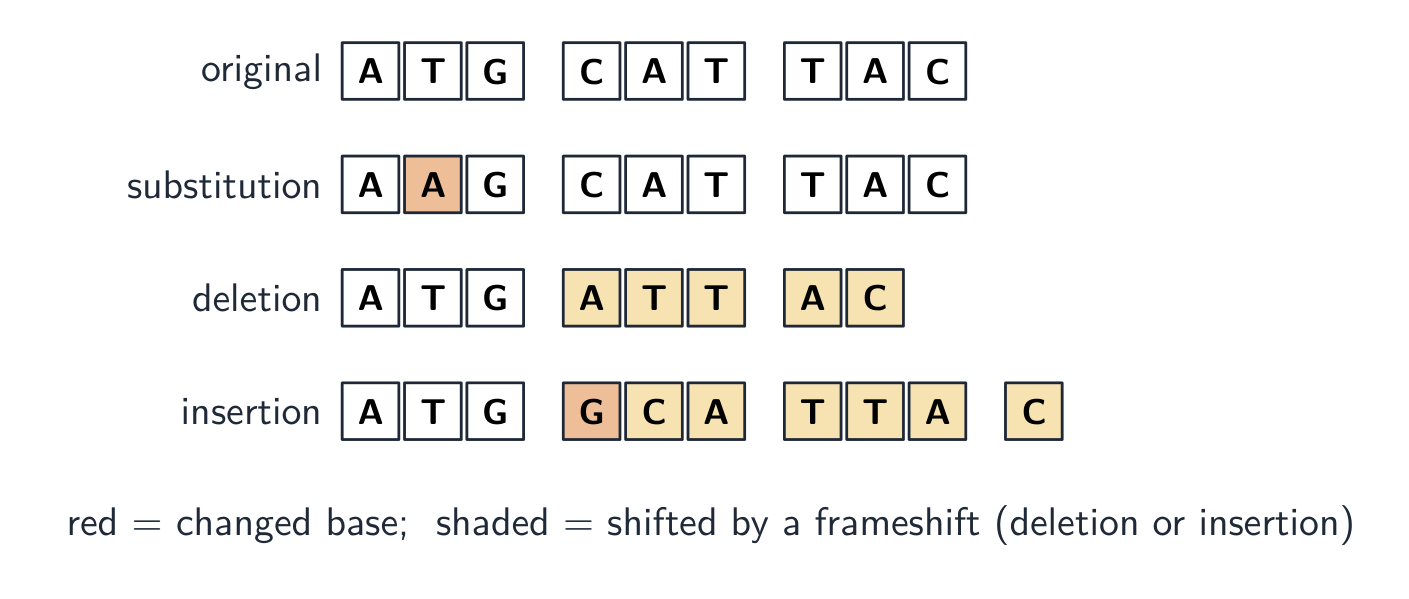
一个突变(mutation)是 DNA 序列的一个变化。点突变(point mutations)改变一个碱基(沉默、错义,或无义);插入/缺失(insertions/deletions)能造成一次移码(frameshift),它把下游的一切弄乱。配子里的突变是可遗传的;它们可能是有害的、中性的,或有益的——而有益的提供自然选择的变异。

替换、缺失和插入突变
替换、缺失和插入突变
词汇表 训练
英文 中文 拼音
mutation 突变 tū biàn
frameshift 移码 yí mǎ
6.8

生物技术

大纲
Big IdeaLearning ObjectiveEssential Knowledge

Big Idea 3 — Information Storage and Transmission
Living systems store, retrieve, transmit, and respond to information essential to life processes.

6.8.A
Explain the use of genetic engineering techniques in analyzing or manipulating DNA.

  • 6.8.A.1 Genetic engineering techniques can be used to analyze and manipulate DNA and RNA.
    • 6.8.A.1.i Gel electrophoresis is a process that separates DNA fragments by size and charge.
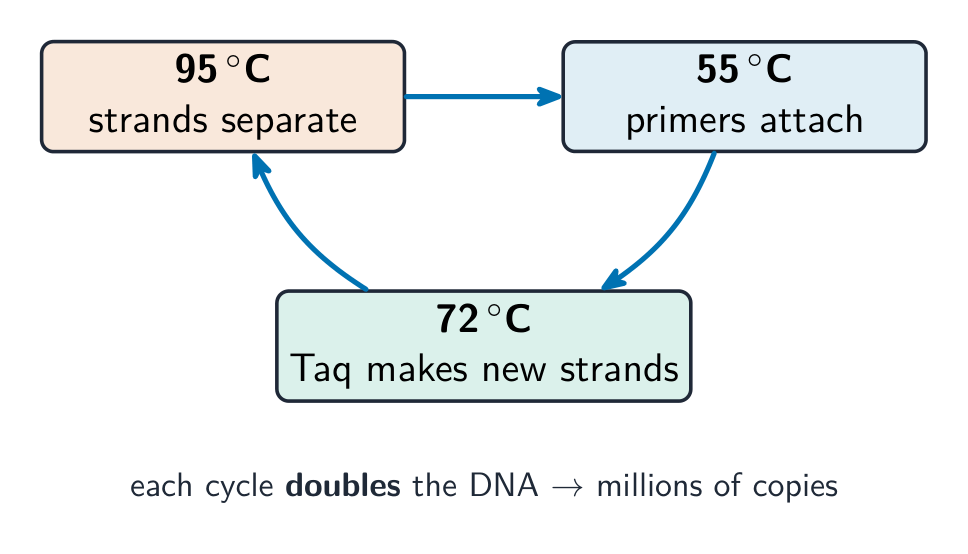
    • 6.8.A.1.ii During polymerase chain reaction (PCR), DNA fragments are amplified by denaturing DNA, annealing primers to the original strand, and extending the new DNA molecule.
    • 6.8.A.1.iii Bacterial transformation introduces foreign DNA into bacterial cells.
    • 6.8.A.1.iv DNA sequencing technology determines the order of nucleotides in a DNA molecule. Typically, these techniques result in a DNA fingerprint that allows for the comparison of DNA sequences from various samples.
    • Illustrative examples for 6.8.A.1:
      • Amplified DNA fragments can be used to identify organisms and perform phylogenetic analysis.
      • Analysis of DNA can be used for forensic identification.
      • Genetically modified organisms include transgenic animals.
      • Gene cloning allows propagation of DNA fragments.
    • Exclusion statement: Knowledge of the details of each of these genetic engineering techniques is beyond the scope of the AP Exam.

来源:美国大学理事会 AP 课程与考试说明

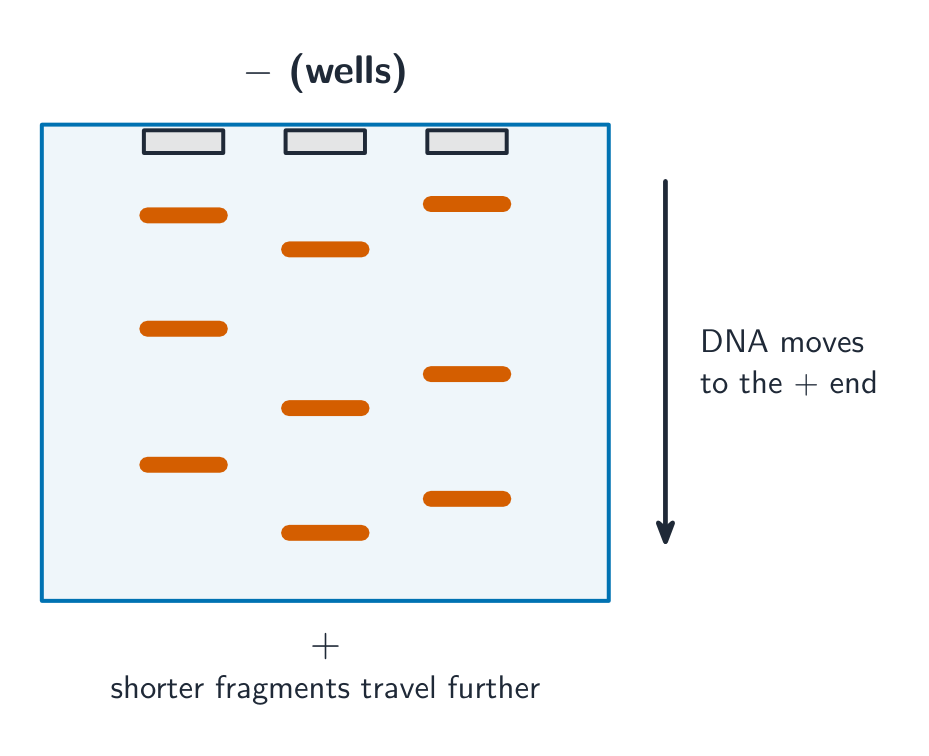
生物技术(biotechnology)工具操纵遗传物质:聚合酶链反应(PCR)复制 DNA、凝胶电泳(gel electrophoresis)按大小分开 DNA 片段、限制酶(restriction enzymes)和克隆在生物之间移动基因,而 CRISPR 编辑序列。这些技术使基因检测、工程化生物和医学治疗成为可能。
凝胶电泳按长度分开 DNA 片段
凝胶电泳按长度分开 DNA 片段
聚合酶链反应每个循环使 DNA 加倍
聚合酶链反应每个循环使 DNA 加倍

Worked example. 模板 DNA 链 3'-TAC GGA TTC-5' 被转录成 mRNA 5'-AUG CCU AAG-3'。一个核糖体读取三个密码子:AUG = 甲硫氨酸 Met(起始)、CCU = 脯氨酸 Pro、AAG = 赖氨酸 Lys——编码 Met–Pro–Lys。改变一个密码子的第三个碱基常常给出相同的氨基酸,因为遗传密码是简并的,这软化了许多突变的影响。

词汇表 训练
英文 中文 拼音
Biotechnology 生物技术 shēng wù jì shù
gel electrophoresis 凝胶电泳 níng jiāo diàn yǒng
6.8

考试技巧

  • 知道中心法则 DNA → RNA → 蛋白质:转录制造 mRNA,翻译在核糖体以三个碱基的密码子读取它。
  • 记住 RNA 是单链的并用 U 代替 T;复制是半保留的
  • 每个细胞有相同的 DNA——细胞不同,因为它们表达不同的基因(差异表达)。
  • 一个突变是 DNA 序列的一个变化,可能是有害的、中性的,或有益的(选择的原材料)。
  • 把生物技术工具与它们的工作联系起来:PCR 复制 DNA;凝胶电泳按大小分开片段。
词汇表 训练
英文 中文 拼音
PCR 聚合酶链反应 jù hé méi liàn fǎn yìng

本主题的互动课程

逐步学习,并即时检测练习。

AP 生物历年真题

AP 生物的更多主题

登录或创建账号

IGCSE, A-Level & AP