
ขอบเขตและเงื่อนไขก่อนเข้าเรียน
หัวข้อจิตวิทยา GRE 15 (HT.1). ใช้บทเรียนภาพรวมด้านการวัด VI เมื่อตีความหลักฐานจากการวิจัย ฝึกฝนด้านล่างนี้เป็นงานต้นฉบับ ไม่ใช่คำถามทางการของ ETS
แนวคิดและวิธีการ
โครงสร้างนิยม: โรงเรียนของ Titchener วิเคราะห์ประสบการณ์ออกเป็นองค์ประกอบพื้นฐานด้วยการสะท้อนคิดภายใน การปฏิวัติทางปัญญา: การคืนสถานะกระบวนการทางจิตใจให้กลับมาเป็นวัตถุที่ศึกษาได้อย่างมีกฎระเบียบในช่วง 1950s ซึ่งแทนที่พฤติกรรมนิยมแบบเข้มงวด
Psychology's laboratories began in the 1870s: Wilhelm Wundt at Leipzig (1879) and William James's Harvard laboratory work. Wundt's student Titchener carried structuralism, analysing experience into elements by introspection; James's functionalism instead asked what mental processes are for, shaped by evolution. Gestalt psychologists (Wertheimer, Köhler, Koffka) rejected element analysis, arguing that organised wholes precede parts in perception.
Freud's psychoanalysis centred on unconscious conflict and early experience, with defence mechanisms and stages of psychosexual development; its claims are debated as science but shaped clinical practice. Watson's 1913 behaviourism rejected introspection for observable behaviour, and Skinner's radical behaviourism explained action by operant consequences. Horney analysed coping as moving toward, away from or against people.
The humanistic third force (Maslow's hierarchy of needs, Rogers's person-centred approach) stressed growth and self-actualisation against both psychoanalysis and behaviourism. The cognitive revolution of the 1950s restored mind as a lawful object: Miller's working-memory limits, Neisser's cognitive synthesis, and Chomsky's 1959 review arguing that Skinner's verbal-behaviour account cannot explain language acquisition.
กระแสรายหลังพัฒนาต่อยอดจากสิ่งเหล่านี้: Social learning ของ Bandura (การทดลองตุ๊กตา Bobo) เพิ่มการสังเกตและการเลียนแบบเข้าไปในกระบวนการฝึกฝน; Cognitive therapy ของ Beck รักษาความคิดที่บิดเบี้ยวในผู้ป่วยซึมเศร้า; Eysenck อธิบายบุคลิกภาพบนมิติกว้างเช่น การเข้าสังคมและความวิตกกังวล จงจับคู่ชื่อแต่ละคนกับคำอ้างและวิธีการ ไม่ใช่แค่จับคู่กับวลีที่มีชื่อเสียงเท่านั้น
จำแนกคำอธิบายโดยกลไกและวิธีการที่เสนอไว้ การวิเคราะห์ Structuralist ของประสบการณ์แตกต่างจากคำถามเกี่ยวกับ adaptation ที่ Functional. Baccountary accounts ศึกษาความสัมพันธ์ระหว่างสิ่งแวดล้อมและพฤติกรรมที่สังเกตได้; Cognitive accounts ใช้ representations และ processing. Gestalt accounts เน้น organization แทนที่จะลด percept ทุกอย่างให้เหลือ sensation ที่แยกออกจากกันฉลากทางประวัติศาสตร์มีประโยชน์ก็ต่อเมื่อระบุ claim ที่สามารถนำการเก็บรวบรวมหลักฐานได้
ตัวอย่างเหตุผลประกอบ
Wundt's Leipzig laboratory and James's Harvard work mark the 1870s founding; Titchener turned introspection into structuralism while James asked functional questions. Chomsky's review of Verbal Behavior is a landmark of the cognitive turn against Skinner. A therapist targeting distorted automatic thoughts works in Beck's cognitive tradition.
คำอธิบายหนึ่งศึกษาตารางการเสริมแรง คำอธิบายอีกแบบจำลองที่เก็บข้อมูลชั่วคราว และอีกแบบหนึ่งศึกษาวัตถุประสงค์ที่พฤติกรรมนั้นทำหน้าที่ จงจับคู่จุดเน้นของแต่ละแบบ
ตารางการเสริมแรงสอดคล้องกับจุดเน้นทางพฤติกรรม ที่เก็บข้อมูลชั่วคราวสอดคล้องกับจุดเน้นการประมวลผลข้อมูลทางปัญญา วัตถุประสงค์ในการปรับตัวสอดคล้องกับคำถามลักษณะเฉพาะของฟังก์ชันนิยม สิ่งเหล่านี้เป็นจุดเน้นในการอธิบาย ไม่ใช่คำอ้างว่านักวิจัยยุคใหม่ต้องอยู่ในสายลัทธิใดลัทธิหนึ่งเพียงอย่างเดียว
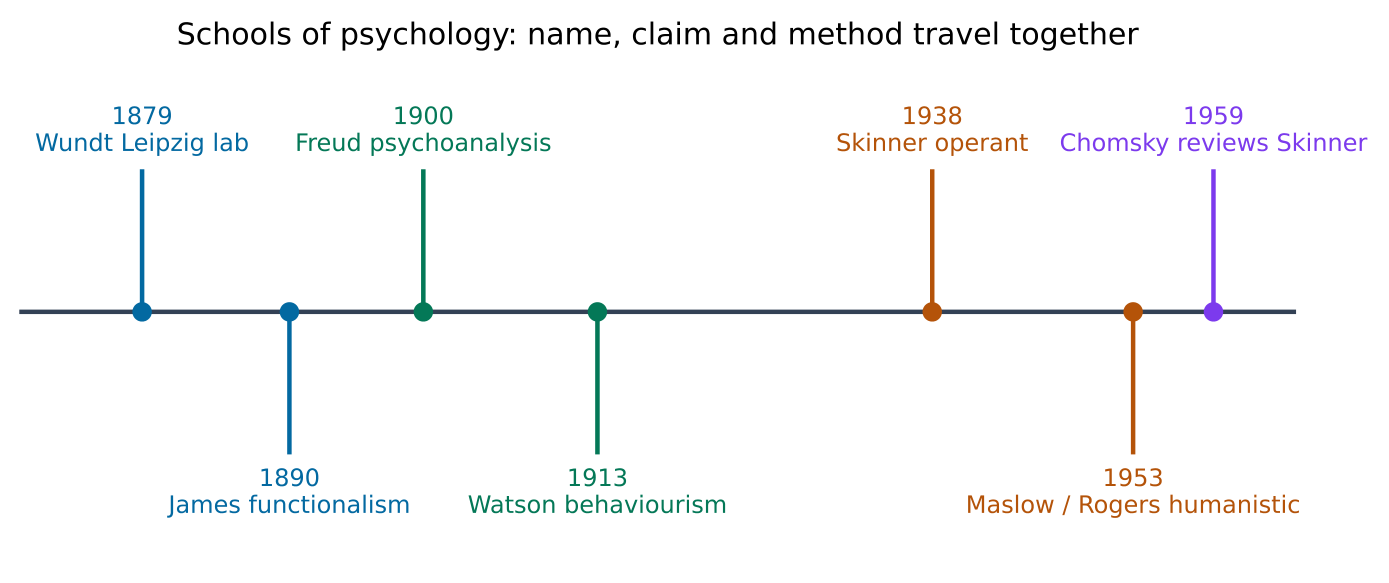 เชื่อมโยงชื่อแต่ละสำนักกับข้ออ้าง วิธีการ และปี',
การถ่ายโอนแบบอิสระ
คำตอบที่ระบุชื่อนักทฤษฎีที่มีชื่อเสียงแต่ไม่ได้ให้คำอธิบายเกี่ยวกับการสังเกต ให้เขียนใหม่เป็นคำอธิบายที่สามารถตรวจสอบได้ โดยใช้กรณีการเสริมแรง
ลองทำอย่างอิสระ แล้วใช้เฉลยแผ่นทักษะที่จับคู่
การทบทวนและข้อจำกัดของแหล่งข้อมูล
Avoid this error: Crediting one founder with founding alone, or treating psychoanalytic claims and tested cognitive findings as the same kind of evidence.