Skip to content · ⁨ข้ามไปยังเนื้อหา⁩

Human resource management · ⁨การบริหารทรัพยากรมนุษย์⁩

A-Level Business · ⁨Business A-Level⁩ · Topic 2 · ⁨หัวข้อ 2⁩

Video lesson for this topic · ⁨บทเรียนวิดีโอสำหรับหัวข้อนี้⁩ Open the video page · ⁨เปิดหน้าวิดีโอ⁩
10:27

การบริหารทรัพยากรมนุษย์

โรงงานสองแห่ง มีเครื่องจักร วัตถุดิบ และชั่วโมงการทำงานเหมือนกัน工厂之一ผลิตได้ gấpสองเท่าของอีกแห่ง ความแตกต่างไม่ใช่เครื่องจักร — แต่คือคน แรงงาน…

English narration · English + 中文 subtitles burned in · ⁨การบรรยายภาษาอังกฤษ · คำบรรยายภาษาอังกฤษ + 中文 ลอยตัวบนภาพ⁩

2.1

What human resource management does · ⁨การบริหารทรัพยากรมนุษย์ทำอะไรบ้าง⁩

Syllabus · ⁨หลักสูตร⁩
English
  1. explain the purpose and roles of human resource management (HRM): workforce planning, recruitment and selection, training and development
  2. explain redundancy and dismissal, employer/employee rights and the management of change in HR
  3. calculate and interpret labour turnover and labour productivity
ไทย
  1. อธิบายวัตถุประสงค์และบทบาทของ การบริหารทรัพยากรมนุษย์ (HRM): workforce planning, recruitment and selection, training and development
  2. อธิบาย redundancy และ dismissal, สิทธิของนายจ้าง/ลูกจ้าง และการจัดการการเปลี่ยนแปลงใน HR
  3. คำนวณและตีความ labour turnover และ labour productivity

Source: Cambridge International syllabus · ⁨แหล่งที่มา: หลักสูตร Cambridge International⁩

English

Human resource management 人力资源管理 (HRM) is the part of a business that looks after its people. Good HRM makes sure the firm has enough staff, with the right skills, who are well trained and motivated.

The main roles of HRM are:

  • workforce planning 人力规划 — working out how many staff, and what skills, the business will need in the future.
  • recruitment 招聘 and selection 甄选 — finding people to apply for jobs, then choosing the best.
  • training 培训 and development 培养 — improving staff skills now and helping them grow for the future.
ไทย

การบริหารทรัพยากรมนุษย์ (Human resource management - HRM) เป็นส่วนของธุรกิจที่ดูแลพนักงานของตน การบริหารทรัพยากรมนุษย์ที่ดีช่วยให้มั่นใจว่าบริษัทมีพนักงานเพียงพอ มีทักษะที่เหมาะสม ได้รับการอบรมอย่างดี และมีแรงจูงใจ

ผู้บริหาร正在进行 business meeting Around a table
ผู้จัดการวางแผนและจัดระเบียบกำลังคน — ซึ่งเป็นหัวใจของการบริหารทรัพยากรมนุษย์

บทบาทหลักของ HRM ได้แก่:

  • การวางแผนกำลังคน (workforce planning) — คำนวณว่าธุรกิจจำเป็นต้องมีพนักงานกี่คนและมีทักษะอะไรในอนาคต
  • การสรรหา (recruitment) และ การคัดเลือก (selection) — ค้นหาผู้ที่สมัครงาน จากนั้นเลือกผู้ที่ดีที่สุด
  • การฝึกอบรม (training) และ การพัฒนา (development) — ปรับปรุงทักษะพนักงานในปัจจุบันและช่วยพัฒนา họสำหรับอนาคต
Explore · ⁨สำรวจ⁩

Human resources decision lab · ⁨ห้องปฏิบัติการการตัดสินใจทรัพยากรมนุษย์⁩

Classify HR actions by the job they do inside the workforce. · ⁨จำแนกการกระทำของ HR ตามหน้าที่ที่ทำในกำลังแรงงาน⁩

Vocabulary · ⁨คำศัพท์⁩ Train · ⁨ฝึกฝน⁩
English ไทย
human resource management/ˈhjuːmən rɪˈzɔːs ˈmænɪdʒmənt/ การบริหารทรัพยากรมนุษย์
workforce planning/ˈwɜːkfɔːs ˈplænɪŋ/ การวางแผนกำลังแรงงาน
recruitment/rɪˈkruːtmənt/ การสรรหา
selection/sɪˈlekʃn/ การคัดเลือก
training/ˈtreɪnɪŋ/ การฝึกสอน (training)
development/dɪˈveləpmənt/ การพัฒนา
management/ˈmænɪdʒmənt/ การบริหารจัดการ
planning/ˈplænɪŋ/ การวางแผน
2.1

Workforce planning, recruitment and selection · ⁨การวางแผนกำลังคน การสรรหา และการคัดเลือก⁩

English

Workforce planning looks at the firm's plans, then at the staff it already has, to find the gap. The gap may be filled by hiring, training, or moving staff.

To recruit, the firm first writes:

  • a job description 职位描述 — the title, duties and tasks of the job.
  • a person specification 人员规格 — the skills, qualifications 资格 and qualities the right person should have.

The firm can recruit from inside or outside:

  • internal recruitment 内部招聘 — filling the job with someone who already works there. It is cheaper and faster, and the person is known, but no new ideas come in.
  • external recruitment 外部招聘 — hiring someone from outside. It brings new skills and ideas, but costs more and is slower.

Selection methods include reading application forms and CVs, interviews 面试, tests, and group tasks.

ไทย

การวางแผนกำลังคนพิจารณาแผนของบริษัทจากนั้นพิจารณาพนักงานที่มีอยู่แล้ว เพื่อหาช่องว่าง ช่องว่างนี้อาจเติมเต็มด้วยการจ้าง การอบรม หรือการย้ายตำแหน่งพนักงาน

การสรรหาบุคลากร: เขียน job description และ person specification, สรรหาภายในหรือภายนอก, จากนั้นเลือกผู้สมัครที่ดีที่สุด
การสรรหา: อธิบายตำแหน่งงาน, โฆษณา, แล้วคัดเลือกผู้สมัครที่ดีที่สุด

ในการสรรหา บริษัทต้องเขียนสิ่งต่อไปนี้ก่อน:

  • รายละเอียดตำแหน่งงาน (job description) — ชื่อตำแหน่ง หน้าที่และความรับผิดชอบของงาน
  • คุณสมบัติผู้สมัคร (person specification) — ทักษะ คุณวุฒิ (qualifications) และคุณภาพที่คนที่เหมาะสมควรมี

บริษัทสามารถสรรหาจากภายในหรือภายนอก:

  • การสรรหาภายใน (internal recruitment) — เติมเต็มตำแหน่งด้วยคนที่ทำงานอยู่แล้ว มีราคาถูกและเร็วกว่า คนKnown แต่ไม่มีไอเดียใหม่ๆ เข้ามา
  • การจ้างงานภายนอก — การจ้างบุคคลจากภายนอกองค์กร สิ่งนี้ช่วยนำทักษะและความคิดใหม่เข้ามา แต่มีต้นทุนสูงกว่าและใช้เวลานานกว่า

วิธีการคัดเลือกประกอบด้วย การอ่านใบสมัครและประวัติส่วนตัว, การสัมภาษณ์, การทดสอบ และกิจกรรมกลุ่ม

หญิงสาวกำลังตอบคำถามในการสัมภาษณ์งาน
การคัดเลือก: การสัมภาษณ์เป็นขั้นตอนที่ผู้สมัครส่วนใหญ่ต้องผ่าน และมักถูกทดสอบในข้อสอบมากที่สุด
Vocabulary · ⁨คำศัพท์⁩ Train · ⁨ฝึกฝน⁩
English ไทย
job description/dʒɒb dɪˈskrɪpʃn/ รายละเอียดตำแหน่งงาน
person specification/ˈpɜːsn ˌspesɪfɪˈkeɪʃn/ รายละเอียดตำแหน่งงาน
qualifications/ˌkwɒlɪfɪˈkeɪʃnz/ คุณวุฒิ
internal recruitment/ɪnˈtɜːnl rɪˈkruːtmənt/ การสรรหาภายใน
external recruitment/ekˈstɜːnl rɪˈkruːtmənt/ การสรรหาภายนอก
interviews/ˈɪntəvjuːz/ การสัมภาษณ์
2.1

Training and development · ⁨การอบรมและพัฒนา⁩

English

Training improves the skills staff need to do their jobs well. Common types are:

  • induction training 入职培训 — given to new staff so they learn how the firm works.
  • on-the-job training 在岗培训 — learning while doing the real job.
  • off-the-job training 脱产培训 — learning away from the workplace, such as a course.

Training costs time and money, but it raises quality, productivity 生产率 and motivation, and helps keep staff.

ไทย

การอบรมพัฒนาทักษะที่พนักงานจำเป็นต้องใช้ในการทำงานได้อย่างดี ประเภททั่วไป ได้แก่:

สามรูปแบบของการอบรม: การแนะนำตัวสำหรับพนักงานใหม่, การอบรมขณะปฏิบัติงานจริง และการอบรมนอกสถานที่ทำงาน
สามประเภทของการอบรม: การแนะนำตัว, ขณะปฏิบัติงาน และนอกสถานที่
  • การอบรมแนะนำตัว (induction training) — ให้แก่พนักงานใหม่เพื่อให้พวกเขาเรียนรู้วิธีการทำงานขององค์กร
  • การอบรมขณะปฏิบัติงาน (on-the-job training) — การเรียนรู้ไปพร้อมกับการทำงานจริง
  • การอบรมนอกสถานที่ (off-the-job training) — การเรียนรู้ خارجสภาพแวดล้อมการทำงาน เช่น การเข้าเรียนหลักสูตร

การอบรมใช้เวลาและเงิน แต่ช่วยเพิ่มคุณภาพ, ประสิทธิภาพการผลิต และความมุ่งมั่น และช่วยให้พนักงานอยู่ต่อ

Vocabulary · ⁨คำศัพท์⁩ Train · ⁨ฝึกฝน⁩
English ไทย
induction training/ɪnˈdʌkʃn ˈtreɪnɪŋ/ การอบรมแนะนำตัว (induction training)
on-the-job training/ɒnðə dʒɒb ˈtreɪnɪŋ/ การอบรมในสถานที่ (on-the-job training)
off-the-job training/ɒf ðə dʒɒb ˈtreɪnɪŋ/ การอบรมนอกสถานที่ (off-the-job training)
2.1

Ending employment · ⁨การสิ้นสุดสัญญาจ้าง⁩

English

Sometimes a worker has to leave.

  • redundancy 裁员 happens when the job itself is no longer needed — for example, when a machine replaces it. It is not the worker's fault.
  • dismissal 解雇 happens when a worker is made to leave because of poor work or bad behaviour.
ไทย

บางครั้งพนักงานจำเป็นต้องลาออก

  • การเลิกจ้างเนื่องจากขาดความจำเป็น (redundancy) เกิดขึ้นเมื่อตำแหน่งงานนั้นไม่จำเป็นอีกต่อไป — เช่น เมื่อเครื่องจักรมาแทนที่ มันไม่ใช่ความผิดของพนักงาน
  • การไล่ออก (dismissal) เกิดขึ้นเมื่อพนักงานถูกสั่งให้ลาออกเนื่องจากผลงานไม่ดีหรือพฤติกรรมชั่วร้าย
Vocabulary · ⁨คำศัพท์⁩ Train · ⁨ฝึกฝน⁩
English ไทย
redundancy/rɪˈdʌndənsi/ การเลิกจ้างเกินจำเป็น
dismissal/dɪˈsmɪsl/ การเลิกจ้าง
employer/emˈplɔɪə/ นายจ้าง
2.1

Rights and managing change · ⁨สิทธิและการจัดการการเปลี่ยนแปลง⁩

English

Both sides have rights and duties. The employer 雇主 must follow the law on pay, safety, working hours and unfair dismissal. The employee 雇员 must work as agreed and follow safe, fair rules. These rights 权利 protect both sides.

Businesses change often — new technology, new markets, or restructuring 重组. The management of change 变革管理 in HR means planning the change, explaining it clearly, training staff for new roles, and listening to worries, so staff accept the change instead of resisting it.

ไทย

ทั้งสองฝ่ายมีสิทธิและหน้าที่ นายจ้าง ต้องปฏิบัติตามกฎหมายเกี่ยวกับค่าตอบแทน ความปลอดภัย เวลาทำงาน และการไล่ออกที่ไม่เป็นธรรม พนักงาน ต้องทำงานตามข้อตกลงและปฏิบัติตามกฎที่ปลอดภัยและเป็นธรรม สิทธิ เหล่านี้ปกป้องทั้งสองฝ่าย

ธุรกิจมีการเปลี่ยนแปลงบ่อย — เทคโนโลยีใหม่ ตลาดใหม่ หรือ การจัดโครงสร้างใหม่ การจัดการการเปลี่ยนแปลง ในด้านทรัพยากรมนุษย์หมายถึงการวางแผนการเปลี่ยนแปลง อธิบายอย่างชัดเจน อบรมพนักงานสำหรับบทบาทใหม่ และรับฟังความกังวล เพื่อให้พนักงานยอมรับการเปลี่ยนแปลงแทนที่จะต่อต้าน

2.1

Measuring the workforce · ⁨การวัดผลกำลังคน⁩

English

Two simple measures help managers judge how the workforce is doing.

Labour turnover 员工流失率 shows the percentage of staff who leave in a year:

$$\text{labour turnover} = \frac{\text{number of staff leaving}}{\text{average number employed}} \times 100\%$$

High labour turnover can mean low pay, poor motivation or weak management. It raises the cost of recruiting and training.

Worked example. A firm employs $200$ people on average, and $30$ leave during the year. Find its labour turnover.

$$\text{labour turnover} = \frac{30}{200} \times 100\% = 15\%.$$

Labour productivity 劳动生产率 shows the output made by each worker:

$$\text{labour productivity} = \frac{\text{total output}}{\text{number of employees}}$$

Higher labour productivity lowers the cost of each unit, so the firm can compete better.

Worked example. A team of $8$ workers makes $2400$ units in a week. Find the labour productivity.

$$\text{labour productivity} = \frac{2400}{8} = 300 \text{ units per worker per week}.$$
ไทย

ตัวชี้วัดแบบง่ายสองอย่างช่วยผู้บริหารตัดสินประสิทธิภาพของกำลังคน

อัตราการเปลี่ยนผ่านแรงงาน (labour turnover) แสดงเปอร์เซ็นต์ของพนักงานที่ลาออกในปีหนึ่ง:

$$\text{labour turnover} = \frac{\text{number of staff leaving}}{\text{average number employed}} \times 100\%$$

อัตราการเปลี่ยนผ่านแรงงานสูงอาจหมายถึงค่าแรงต่ำ ความมุ่งมั่นต่ำ หรือการบริหารจัดการที่อ่อนแอ ซึ่งเพิ่มค่าใช้จ่ายในการสรรหาและอบรม

ตัวอย่างวิธีทำ. บริษัท employs $200$ คนโดยเฉลี่ย และ $30$ คนลาออกในช่วงปีนั้น จงหาค่าอัตราการเปลี่ยนผ่านแรงงาน

$$\text{labour turnover} = \frac{30}{200} \times 100\% = 15\%.$$

ประสิทธิภาพการผลิตแรงงาน (labour productivity) แสดงปริมาณผลผลิตที่แต่ละพนักงานสร้างได้:

$$\text{labour productivity} = \frac{\text{total output}}{\text{number of employees}}$$

ประสิทธิภาพการผลิตแรงงานที่สูงขึ้นช่วยลดต้นทุนต่อหน่วย ทำให้บริษัทแข่งขันได้ดีขึ้น

ตัวอย่างวิธีทำ. ทีมงาน $8$ คน ผลิต $2400$ หน่วย ในช่วงหนึ่งสัปดาห์ จงหาผลผลิตต่อแรงงาน (labour productivity)

$$\text{labour productivity} = \frac{2400}{8} = 300 \text{ units per worker per week}.$$
Vocabulary · ⁨คำศัพท์⁩ Train · ⁨ฝึกฝน⁩
English ไทย
productivity/ˌprɒdəkˈtɪvɪti/ ประสิทธิภาพการผลิต
employee/emˈplɔɪiː/ ลูกจ้าง
rights/raɪts/ สิทธิ
restructuring/rɪˈstrʌktʃərɪŋ/ การปรับโครงสร้าง
management of change/ˈmænɪdʒmənt ɒv tʃeɪndʒ/ การจัดการการเปลี่ยนแปลง
labour turnover/ˈleɪbə ˈtɜːnəʊvə/ อัตราการเปลี่ยนผ่านแรงงาน
labour productivity/ˈleɪbə ˌprɒdəkˈtɪvɪti/ ประสิทธิภาพแรงงาน
2.2

Why motivation matters · ⁨ทำไมความมุ่งมั่นจึงสำคัญ⁩

Syllabus · ⁨หลักสูตร⁩
English
  1. explain the importance of motivation and the main motivation theories (Taylor, Mayo, Maslow, Herzberg, McClelland, Vroom)
  2. explain financial motivators (wages, salary, piece rate, commission, bonus, profit sharing, performance-related pay, fringe benefits)
  3. explain non-financial motivators (job enrichment, job rotation, job enlargement, empowerment, teamworking)
ไทย
  1. อธิบายความสำคัญของ motivation และทฤษฎีแรงจูงใจหลัก (Taylor, Mayo, Maslow, Herzberg, McClelland, Vroom)
  2. อธิบาย financial motivators (wages, salary, piece rate, commission, bonus, profit sharing, performance-related pay, fringe benefits)
  3. อธิบาย non-financial motivators (job enrichment, job rotation, job enlargement, empowerment, teamworking)

Source: Cambridge International syllabus · ⁨แหล่งที่มา: หลักสูตร Cambridge International⁩

English

Motivation 激励 is the desire to work hard and do a good job. Motivated staff produce more and better work, take fewer days off, stay longer, and give better service. So motivation lowers costs and raises quality.

ไทย

ความมุ่งมั่น (Motivation) คือความต้องการทำงานอย่างหนักและทำงานออกมาดี พนักงานที่มีแรงจูงใจจะผลิตงานได้มากกว่าและดีขึ้น ขาดงานน้อยลง อยู่กับองค์กรนานกว่า และให้บริการที่ดีกว่า ดังนั้นความมุ่งมั่นจึงลดต้นทุนและเพิ่มคุณภาพ

Vocabulary · ⁨คำศัพท์⁩ Train · ⁨ฝึกฝน⁩
English ไทย
motivation/ˌməʊtɪˈveɪʃn/ แรงจูงใจ
Watch lesson · ⁨ดูบทเรียน⁩
2.2

Theories of motivation · ⁨ทฤษฎีเรื่องความมุ่งมั่น⁩

English

Several thinkers tried to explain what motivates people. You should know the main idea of each.

Thinker Main idea
Taylor scientific management 科学管理 — workers are mainly motivated by money. Pay them per unit made (piece rate 计件工资) and they work harder.
Mayo human relations 人际关系 — workers are also motivated by attention, teamwork and feeling part of a group.
Maslow hierarchy of needs 需求层次 — people meet needs in order, from low to high (see below).
Herzberg two-factor theory 双因素理论 — some things cause unhappiness if missing, others truly motivate (see below).
McClelland people are driven by three needs in different amounts: achievement 成就, power and affiliation (belonging).
Vroom expectancy theory 期望理论 — people work hard only if they believe the effort will lead to a reward they want.

Maslow's hierarchy of needs

Maslow said people try to meet lower needs first, then move up:

  1. physiological needs 生理需求 — food, water, rest (met by pay).
  2. safety needs — a safe job and workplace.
  3. social needs — friendship and being part of a team.
  4. esteem needs 尊重需求 — respect and recognition 认可.
  5. self-actualisation 自我实现 — reaching your full potential.

Herzberg's two factors

  • hygiene factors 保健因素 — things like pay, conditions and rules. If they are poor, staff are unhappy; but fixing them does not truly motivate.
  • motivators 激励因素 — things like achievement, responsibility and recognition. These give real, lasting motivation.
ไทย
ขั้นบันไดความต้องการของมาสโลว์วาดเป็นรูปสามเหลี่ยมห้าชั้น
ขั้นบันไดความต้องการของมาสโลว์ พร้อมตัวอย่างในสถานที่ทำงานในแต่ละระดับ

นักคิดหลายท่านพยายามอธิบายสิ่งกระตุ้นคน คุณควรทราบแนวคิดหลักของแต่ละทฤษฎี

นักคิด แนวคิดหลัก
เทย์เลอร์ (Taylor) การบริหารจัดการเชิงวิทยาศาสตร์ (scientific management) — พนักงานถูกกระตุ้นด้วยเงินเป็นหลัก จ่ายตามจำนวนชิ้น (piece rate) แล้วพวกเขาจะทำงานหนักขึ้น
เมโย (Mayo) ความสัมพันธ์ระหว่างบุคคล (human relations) — พนักงาน还被由关注度 teamwork และความรู้สึกเป็นส่วนหนึ่งของกลุ่มกระตุ้น
มาสโลว์ (Maslow) ขั้นบันไดความต้องการ (hierarchy of needs) — คนตอบสนองความต้องการตามลำดับ จากต่ำไปสูง (ดูด้านล่าง)
เฮร์ซเบิร์ก (Herzberg) ทฤษฎีสองปัจจัย (two-factor theory) — บางสิ่งสร้างความไม่พอใจหากขาดหาย บางสิ่งกระตุ้นจริงๆ (ดูด้านล่าง)
แมคคลันด์ (McClelland) คนถูกขับเคลื่อนด้วยความต้องการสามประเภทในสัดส่วนต่างกัน: ความสำเร็จ (achievement), อำนาจ และการผูกพัน (归属感)
วรูม (Vroom) ทฤษฎีความคาดหวัง (expectancy theory) — คนทำงานหนักก็ต่อเมื่อเชื่อว่าความพยายามนั้นจะนำไปสู่รางวัลที่พวกเขาต้องการ

ขั้นบันไดความต้องการของมาสโลว์

มาสโลว์กล่าวว่าคนพยายามตอบสนองความต้องการพื้นฐานก่อน แล้วค่อยก้าวขึ้นไป:

  1. ความต้องการทางชีวภาพ (physiological needs) — อาหาร น้ำ พักผ่อน (ตอบสนองได้ด้วยค่าจ้าง)
  2. ความต้องการความปลอดภัย — งานที่ปลอดภัยและสภาพแวดล้อมการทำงานที่ปลอดภัย
  3. ความต้องการทางสังคม — มิตรภาพและการเป็นส่วนหนึ่งของทีม
  4. ความต้องการความภาคภูมิใจ (esteem needs) — การเคารพและการ ได้รับยกย่อง
  5. การพัฒนาตนเอง (self-actualisation) — การบรรลุศักยภาพสูงสุดของตัวเอง
สามเหลี่ยมห้าชั้นของ马斯洛需求层次,底部最宽(生理需求)至顶端(自我实现),箭头指示先满足低层需求
ลำดับขั้นความต้องการของมาสโลว์: คนตอบสนองความต้องการพื้นฐานก่อนความต้องการระดับสูง

ปัจจัยสองชนิดของเฮร์ซเบิร์ก

  • ปัจจัยสุขอนามัย (hygiene factors) — เช่น ค่าตอบแทน สภาพแวดล้อม และกฎระเบียบ หาก这些东西 poorly พนักงานจะไม่happy;แต่การแก้ไข them does not truly motivate.
  • ตัวกระตุ้น (motivators) — เช่น ความสำเร็จ ความรับผิดชอบ และการได้รับยกย่อง สิ่งเหล่านี้ให้ความมุ่งมั่นที่แท้จริงและยั่งยืน

กราฟ Herzberg: ปัจจัยสุขอนามัย (hygiene factors) เช่น เงินเดือน สภาพแวดล้อม เพียงแค่ป้องกันไม่ให้พนักงานไม่พอใจ ในขณะที่ปัจจัยกระตุ้น (motivators) เช่น ความสำเร็จ การยอมรับ ให้แรงจูงใจที่ยั่งยืนจริง ๆ *ปัจจัยสุขอนามัยหยุดความไม่happy;แต่เฉพาะตัวกระตุ้นเท่านั้นที่ให้ความมุ่งมั่นที่แท้จริงและยั่งยืน

Explore · ⁨สำรวจ⁩

Maslow's hierarchy of needs · ⁨ลำดับขั้นความต้องการของมาสโลว์⁩

Maslow said people are motivated by needs in order — satisfy the lower ones first, then they aim higher. · ⁨มาสโลว์ระบุว่าคนถูกกระตุ้นด้วยความต้องการตามลำดับ — อิ่มท้องความต้องการพื้นฐานก่อน แล้วจึงมุ่งสู่ระดับที่สูงขึ้น⁩

Vocabulary · ⁨คำศัพท์⁩ Train · ⁨ฝึกฝน⁩
English ไทย
scientific management/saɪənˈtɪfɪk ˈmænɪdʒmənt/ การจัดการทางวิทยาศาสตร์
piece rate/piːs reɪt/ อัตราค่าจ้างตามชิ้นงาน (piece rate)
human relations/ˈhjuːmən rɪˈleɪʃnz/ ความสัมพันธ์ระหว่างบุคคล
hierarchy of needs/ˈhaɪərɑːki ɒv niːdz/ ลำดับขั้นความต้องการ (hierarchy of needs)
two-factor theory/tuː ˈfæktə ˈθɪəri/ ทฤษฎีสองปัจจัย (two-factor theory)
achievement/əˈtʃiːvmənt/ ความสำเร็จ
expectancy theory/ekˈspektənsi ˈθɪəri/ ทฤษฎีความคาดหวัง (expectancy theory)
physiological needs/ˌfɪzɪəˈlɒdʒɪkl niːdz/ ความต้องการด้านสรีรวิทยา
esteem needs/eˈstiːm niːdz/ ความต้องการด้านเกียรติยศ
recognition/ˌrekəɡˈnɪʃn/ การจดจำ (recognition)
self-actualisation/self ˌæktʃuːəlaɪˈzeɪʃn/ thực hiện tiềm năng bản thân
hygiene factors/ˈhaɪdʒiːn ˈfæktəz/ ปัจจัยสุขอนามัย
motivators/ˈməʊtɪveɪtəz/ ตัวกระตุ้น
2.2

Financial motivators · ⁨ตัวกระตุ้นทางการเงิน⁩

English

Financial motivators 经济激励 are rewards paid in money:

  • wages 工资 — pay by the hour or week, often for manual work 体力劳动.
  • salary 薪水 — a fixed yearly amount, paid monthly.
  • piece rate — pay for each unit made.
  • commission 佣金 — pay based on how much you sell.
  • bonus 奖金 — an extra payment for good results.
  • profit sharing 利润分享 — staff get a share of the firm's profit.
  • performance-related pay 绩效工资 — extra pay for those who meet targets.
  • fringe benefits 附加福利 — non-cash extras, such as a company car or health care.
ไทย

ตัวกระตุ้นทางการเงิน (Financial motivators) คือรางวัลที่จ่ายเป็นเงิน:

  • ค่าจ้าง (wages) — จ่ายตามชั่วโมงหรือสัปดาห์ มักสำหรับ งาน/manual work
  • เงินเดือน (salary) — จำนวนเงินคงที่รายปี จ่ายรายเดือน
  • Piece rate — จ่ายตามจำนวนชิ้นที่ผลิตได้
  • ค่าคอมมิชชั่น (commission) — จ่ายตามยอดขาย
  • โบนัส (bonus) — เงินเพิ่มเติมสำหรับผลลัพธ์ที่ดี
  • แบ่งปันกำไร (profit sharing) — พนักงานได้รับส่วนแบ่งจากกำไรขององค์กร
  • ค่าตอบแทนที่สัมพันธ์กับประสิทธิภาพ (performance-related pay) — เงินเพิ่มสำหรับผู้ fulfilling targets
  • สวัสดิการเสริม (fringe benefits) — สิ่งเสริมที่ไม่ใช่เงินสด เช่น รถบริษัทหรือบริการสุขภาพ
Explore · ⁨สำรวจ⁩

Motivation methods lab · ⁨ห้องปฏิบัติการวิธีการสร้างแรงจูงใจ⁩

Compare financial and non-financial ways to raise effort. · ⁨เปรียบเทียบวิธีทางการเงินและไม่ทางการเงินในการเพิ่มแรงจูงใจ⁩

Vocabulary · ⁨คำศัพท์⁩ Train · ⁨ฝึกฝน⁩
English ไทย
financial motivators/faɪˈnænʃl ˈməʊtɪveɪtəz/ ตัวจูงใจด้านการเงิน
wages/ˈweɪdʒɪz/ wages
manual work/ˈmænjuːəl wɜːk/ งานใช้แรงงาน
salary/ˈsæləri/ เงินเดือน
commission/kəˈmɪʃn/ ค่าคอมมิชชัน
bonus/ˈbəʊnəs/ โบนัส
profit sharing/ˈprɒfɪt ˈʃeərɪŋ/ แบ่งปันกำไร
performance-related pay/pəˈfɔːməns rɪˈleɪtɪd peɪ/ เงินเดือน bitcoin based on performance
fringe benefits/frɪndʒ ˈbenɪfɪts/ สวัสดิการเสริม
non-financial motivators/nɒn faɪˈnænʃl ˈməʊtɪveɪtəz/ ตัวจูงใจที่ไม่ใช่การเงิน
2.2

Non-financial motivators · ⁨ตัวกระตุ้นที่ไม่ใช่การเงิน⁩

English

Non-financial motivators 非经济激励 reward staff without extra money, by making work more interesting and giving more control:

  • job enrichment 工作丰富化 — giving more challenging tasks and responsibility.
  • job rotation 工作轮换 — moving between different tasks to reduce boredom.
  • job enlargement 工作扩大化 — adding more tasks at the same level.
  • empowerment 授权 — letting staff make their own decisions about their work.
  • teamworking 团队合作 — organising staff into teams that share goals.
ไทย

ตัวกระตุ้นที่ไม่ใช่ทางการเงิน ให้รางวัลแก่พนักงานโดยไม่ใช้เงินเพิ่ม โดยทำให้งานน่าสนใจขึ้นและมอบอำนาจการตัดสินใจมากขึ้น:

  • การเสริมสร้างงาน (job enrichment) — การมอบงานที่ท้าทายมากขึ้นและความรับผิดชอบมากขึ้น
  • การหมุนเวียนงาน (job rotation) — การสลับไปทำงาน不同类型的任务เพื่อลดความเบื่อหน่าย
  • การขยายงาน (job enlargement) — การเพิ่มงานอื่นๆ ในระดับเดียวกัน
  • การมอบอำนาจ (empowerment) — การอนุญาตให้พนักงานตัดสินใจเกี่ยวกับงานของตนเอง
  • การทำงานเป็นทีม (teamworking) — การจัดกลุ่มพนักงานเข้าเป็นทีมที่มีเป้าหมายร่วมกัน
แผนผังแสดงวิธีกระตุ้นพนักงานให้ได้รับผลตอบแทนทางการเงิน (ค่าจ้าง, ค่าแรงตามชิ้นงาน, เงินโบนัส) และวิธีการที่ไม่ใช่การเงิน (การเพิ่มพูนหน้าที่งาน, การหมุนเวียนตำแหน่งงาน, การมอบอำนาจ, การทำงานเป็นทีม)
ตัวกระตุ้นมีทั้งแบบทางการเงิน (เงิน) และแบบไม่ใช้การเงิน (งานที่ดีขึ้น เต็มรูปแบบมากขึ้น)
Vocabulary · ⁨คำศัพท์⁩ Train · ⁨ฝึกฝน⁩
English ไทย
job enrichment/dʒɒb enˈrɪtʃmənt/ การขยายบทบาทงาน
job rotation/dʒɒb rəʊˈteɪʃn/ การหมุนเวียนตำแหน่งงาน
job enlargement/dʒɒb enˈlɑːdʒmənt/ ขยายขอบเขตงาน (job enlargement)
empowerment/emˈpaʊəmənt/ การมอบอำนาจ
teamworking/ˈtiːmwɜːkɪŋ/ การทำงานเป็นทีม
2.3

Management and its functions · ⁨การบริหารและการทำหน้าที่⁩

Syllabus · ⁨หลักสูตร⁩
English
  1. explain the role and functions of management (Fayol, Mintzberg)
  2. explain leadership versus management and the importance of effective management
ไทย
  1. อธิบายบทบาทและหน้าที่ของ management (Fayol, Mintzberg)
  2. อธิบายความแตกต่างระหว่าง leadership กับ management และความสำคัญของการบริหารจัดการที่มีประสิทธิภาพ

Source: Cambridge International syllabus · ⁨แหล่งที่มา: หลักสูตร Cambridge International⁩

English

Management 管理 means getting work done through other people to reach the firm's objectives.

Fayol said managers carry out five functions:

Function What the manager does
planning 计划 set objectives and decide how to reach them
organising 组织 arrange people and resources
commanding 指挥 give clear instructions and guidance
coordinating 协调 make sure all parts work together
controlling 控制 check results against the plan and correct problems

Mintzberg said managers also play ten roles 角色 in three groups: interpersonal (working with people), informational (sharing information), and decisional (making decisions). This shows that real management is busy and varied, not just the five neat functions.

ไทย

การบริหาร (Management) หมายถึงการทำให้งานสำเร็จผ่านผู้อื่นเพื่อบรรลุวัตถุประสงค์ขององค์กร

ฟายอล (Fayol) กล่าวว่า ผู้บริหารมีหน้าที่หลัก 5 ประการ:

หน้าที่ สิ่งที่ผู้บริหารทำ
การวางแผน (planning) กำหนดวัตถุประสงค์และตัดสินใจวิธีการบรรลุเป้าหมาย
การจัดระเบียบ (organising) จัดเตรียมคนและทรัพยากร
การสั่งการ (commanding) ให้คำแนะนำและแนวทางที่ชัดเจน
การประสานงาน (coordinating) ตรวจสอบให้แน่ใจว่าทุกส่วนทำงานร่วมกันได้
การควบคุม (controlling) ตรวจสอบผลลัพธ์เทียบกับแผนและแก้ไขปัญหา
วงจรของฟังก์ชันการบริหารจัดการทั้งห้าของฟายอล — การวางแผน, การจัดองค์กร, การสั่งการ, การประสานงาน, การควบคุม — จัดเรียงเป็นวงกลมรอบคำว่า "การจัดการ"
ฟังก์ชันการบริหารจัดการห้าประการของฟายอลสร้างวงจรซ้ำ

มินต์เบิร์ก (Mintzberg) กล่าวว่า ผู้บริหารยังมี บทบาท อีก 10 บทบาทใน 3 กลุ่ม: ด้านความสัมพันธ์ระหว่างบุคคล (ทำงานร่วมกับผู้คน), ด้านข้อมูล (แบ่งปันข้อมูล), และด้านการตัดสินใจ (การตัดสินใจ) สิ่งนี้แสดงว่าการบริหารจริงนั้นยุ่งเหยิงและหลากหลาย ไม่ใช่เพียง 5 หน้าที่ที่เรียบร้อยงัน

Explore · ⁨สำรวจ⁩

Leadership style lab · ⁨ห้องปฏิบัติการสไตล์การนำ⁩

Pick the management style that fits each situation. · ⁨เลือกสไตล์การจัดการที่เหมาะกับสถานการณ์แต่ละอย่าง⁩

Vocabulary · ⁨คำศัพท์⁩ Train · ⁨ฝึกฝน⁩
English ไทย
organising/ˈɔːɡənaɪzɪŋ/ การจัดระเบียบ
commanding/kəˈmændɪŋ/ สั่งการ
coordinating/kəʊˈɔːdɪneɪtɪŋ/ ประสานงาน
controlling/kənˈtrəʊlɪŋ/ การควบคุม
roles/rəʊlz/ บทบาท
2.3

Leadership versus management · ⁨ความแตกต่างของการนำ vs การบริหาร⁩

English

Leadership 领导 and management are not the same.

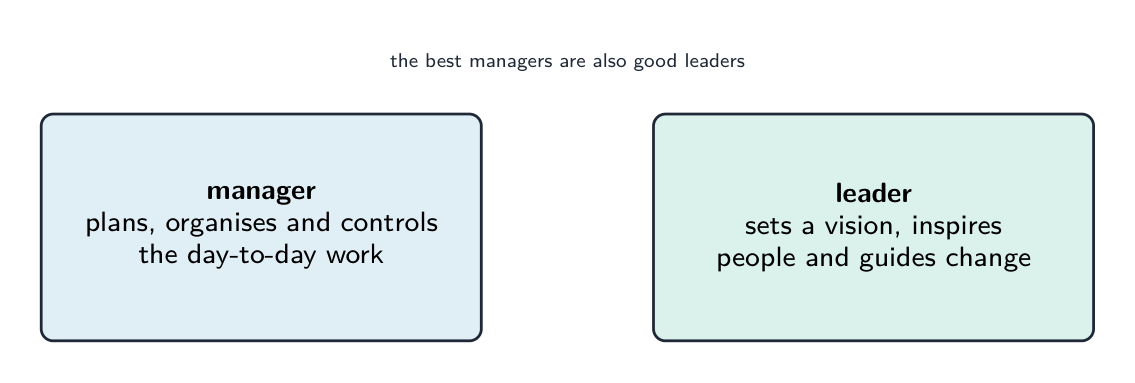
  • a manager plans, organises and controls the day-to-day work.
  • a leader sets a vision 愿景, inspires people, and guides change.

The best managers are also good leaders. Effective management matters because it raises productivity, keeps good staff, helps the firm adapt to change, and turns plans into real results.

ไทย

การนำ (Leadership) และการบริหารไม่ใช่สิ่งเดียวกัน

  • ผู้บริหารวางแผน จัดระเบียบ และควบคุมงานประจำวัน
  • ผู้นำกำหนด วิสัยทัศน์ สร้างแรงบันดาลใจ และนำพาการเปลี่ยนแปลง
กล่องสองใบ: ผู้บริหารที่วางแผน จัดการ และควบคุมงานประจำวัน และผู้นำที่กำหนดวิสัยทัศน์ กระตุ้นคน และนำพาการเปลี่ยนแปลง
ผู้บริหารดูแลงานประจำวัน; ผู้นำกำหนดทิศทางและสร้างแรงบันดาลใจ — คนเก่งที่สุดมักทำได้ทั้งสองอย่าง

ผู้บริหารที่ดีที่สุดคือผู้นำที่ดีด้วย การบริหารที่มีประสิทธิภาพมีความสำคัญเพราะช่วยเพิ่มผลผลิต รักษาคู่ค้าที่ดี ช่วยให้องค์กรปรับตัวต่อการเปลี่ยนแปลง และแปลงแผนให้เป็นผลลัพธ์จริง

Vocabulary · ⁨คำศัพท์⁩ Train · ⁨ฝึกฝน⁩
English ไทย
leadership/ˈliːdəʃɪp/ การนำ
vision/ˈvɪʒn/ vision
2.3

Exam tips · ⁨ข้อแนะนำสำหรับการสอบ⁩

English
  • Calculate and interpret labour turnover and labour productivity; high turnover raises recruitment and training costs.
  • Link a motivation theory to a method: Maslow (needs), Herzberg (hygiene vs motivators), Taylor (pay).
  • Distinguish financial (piece rate, bonus) from non-financial (job enrichment, empowerment) motivators.
  • Distinguish leadership from management and match a style (autocratic, democratic, laissez-faire) to the situation.
ไทย
  • คำนวณและตีความ อัตราการเปลี่ยนผ่านแรงงาน (labour turnover) และ ผลผลิตต่อแรงงาน (labour productivity); อัตราการเปลี่ยนผ่านสูงจะเพิ่มค่าใช้จ่ายในการสรรหาและฝึกอบรม
  • เชื่อมโยง ทฤษฎีแรงจูงใจ กับวิธีปฏิบัติ: มาสโลว์ (ความต้องการ), เฮร์ซเบิร์ก (ปัจจัยสุขอนามัย vs ตัวกระตุ้น), เทย์เลอร์ (ค่าตอบแทน)
  • แยกแยะระหว่างตัวกระตุ้นแบบ ทางการเงิน (อัตราส่วนชิ้นงาน, บอนัส) กับแบบ ไม่ใช้การเงิน (การเสริมสร้างงาน, การมอบอำนาจ)
  • แยกแยะ การนำออกจากการบริหาร และจับคู่สไตล์ (เผด็จการ, ประชาธิปไตย, เลิศฟรี) กับสถานการณ์

Interactive lessons on this topic · ⁨บทเรียนเชิงโต้ตอบสำหรับหัวข้อนี้⁩

Work through it step by step, with instant-check exercises. · ⁨ทำทีละขั้นตอน พร้อมแบบฝึกหัดตรวจสอบผลทันที⁩

Past Papers · ⁨ข้อสอบย้อนหลัง⁩

More topics in A-Level Business · ⁨Business A-Level⁩ · ⁨หัวข้อเพิ่มเติมใน A-Level Business · ⁨Business A-Level⁩⁩

Log in or create account · ⁨เข้าสู่ระบบหรือสร้างบัญชี⁩

IGCSE, A-Level & AP