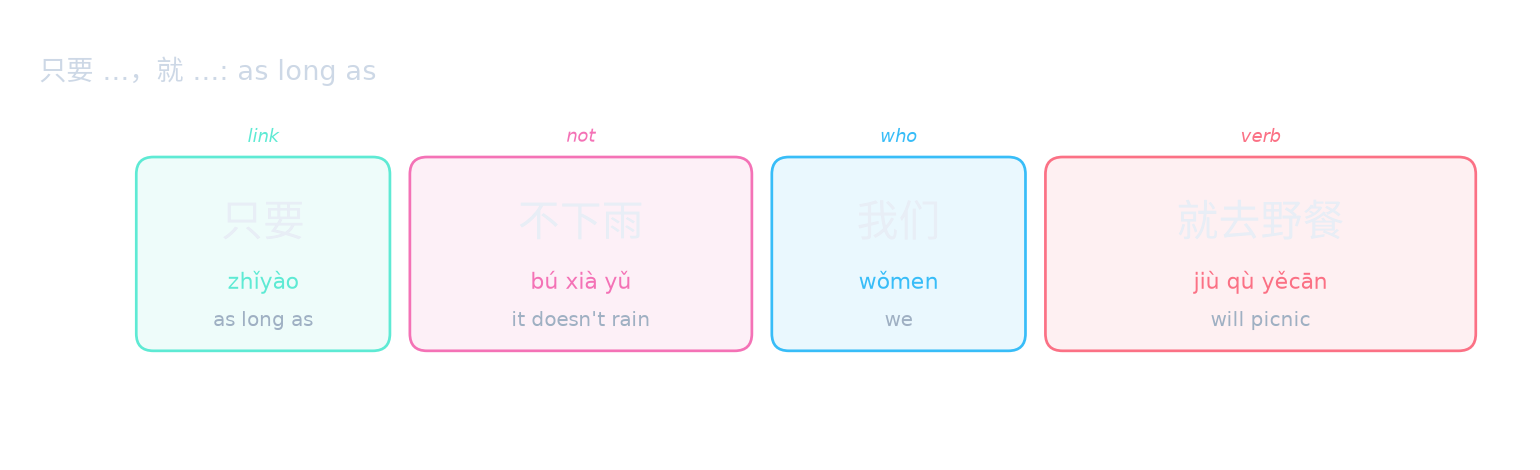
as long as只要 … ,then / just就 … (as long as)
Form: as long as只要 + condition,(subject +) then / just就 + result
- as long as只要不下雨,we / us我们then / just就to go去picnic野餐。 Zhǐyào bú xià yǔ, wǒmen jiù qù yěcān. – As long as it doesn't rain, we'll go on the picnic.
- as long as只要every day每天to practice练习,you你(modifier / structural particle)的Chinese language中文then / just就can / will会more and more越来越good好。 – As long as you practise every day, your Chinese will keep improving.
- as long as只要to have / there is有time时间,I / me我then / just就to go去to look at; to watch; to read看you你。 – Whenever I have time, I'll come and see you.
How it works. as long as只要 zhǐyào says the condition is enough: if A happens, B follows. as long as只要 opens the first clause; then / just就 goes after the subject of the second clause.
| as long as只要 A,then / just就 B | only (if) / only have只有 A,only then / not until才 B |
|---|---|
| A is enough (easy) | A is the only way (necessary) |
| as long as只要rich有钱then / just就can / be able to能to buy买 | only (if) / only have只有to work hard / effort努力,only then can / talent才能to succeed; success成功 |
Watch out
- wrong: as long as只要you你to come来,then / just就I / me我degree / adjective linker很happy; glad高兴 → as long as只要you你to come来,I / me我then / just就degree / adjective linker很happy; glad高兴.
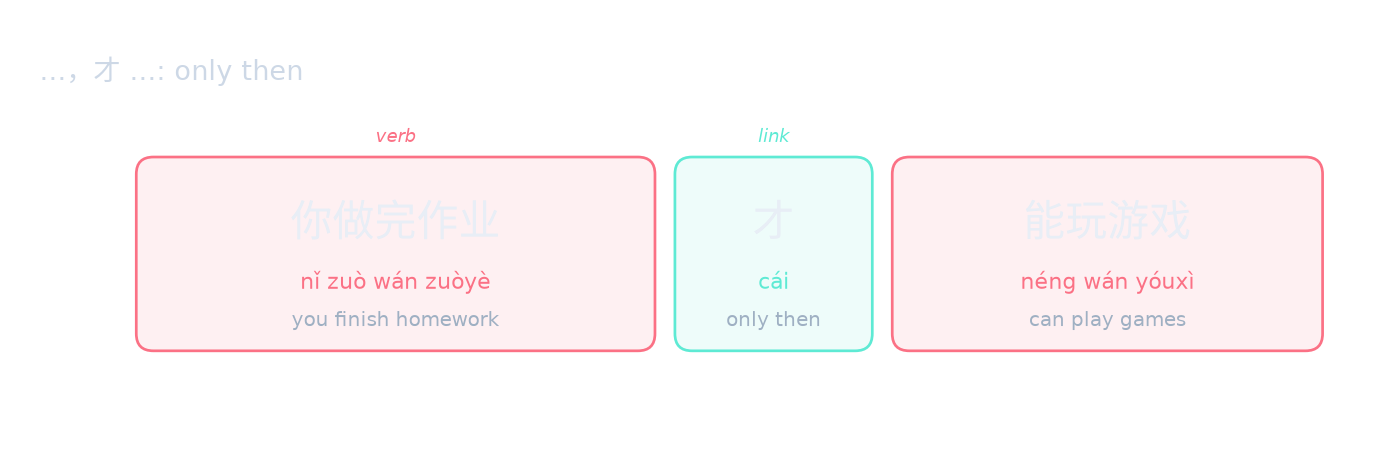
… ,only then / not until才 … (only then / only after)
Form: condition / effort,subject + only then / not until才 (+ can / be able to能 / can / will会) + verb
- you你做完作业,only then can / talent才能玩游戏。 Nǐ zuòwán zuòyè, cái néng wán yóuxì. – You can only play games after you finish your homework.
- you你many; much多to speak说,only then can / talent才能to come to an agreement说好。 Nǐ duō shuō, cái néng shuōhǎo. – Only by speaking a lot will you speak well.
- I / me我to ask问(completed / change)了he / him他three times三次,he / him他only then / not until才to tell告诉I / me我。 – I asked him three times before he told me.
- I / me我to wait; and so on等(completed / change)了degree / adjective linker很for a long time久,he / him他only then / not until才to come来。 – I waited a long time before he came.
How it works. only then / not until才 in the second clause says B happens only after, or only if, A: the condition had to come first, or took a lot of effort. only then / not until才 goes after the subject of the second clause, often with can / be able to能 or can / will会. Adding only (if) / only have只有 at the start makes the condition explicitly necessary: only (if) / only have只有做完作业,only then can / talent才能玩游戏.
Watch out
- wrong: only then / not until才he / him他to tell告诉I / me我 → he / him他only then / not until才to tell告诉I / me我.
only (if) / only have只有 … ,only then / not until才 … (only if)
Form: only (if) / only have只有 + condition,(subject +) only then / not until才 + verb
- only (if) / only have只有to know知道password密码,only then can / talent才能to go in进去。 Zhǐyǒu zhīdào mìmǎ, cái néng jìnqu. – Only if you know the code can you get in.
- only (if) / only have只有坐飞机,only then can / talent才能today今天to / arrive / (result: get)到。 – Only by flying can we arrive today.
- only (if) / only have只有he / him他only then / not until才to know知道answer答案。 Zhǐyǒu tā cái zhīdào dá'àn. – Only he knows the answer.
How it works. only (if) / only have只有 zhǐyǒu A,only then / not until才 B says A is necessary: without A, no B. A can be a condition, a method or a person. only then / not until才 goes after the subject of the second clause, often with can / be able to能 or can / will会.
| only (if) / only have只有 A,only then / not until才 B | as long as只要 A,then / just就 B |
|---|---|
| A is the only way | A is enough |
| only (if) / only have只有to work hard / effort努力,only then can / talent才能to succeed; success成功 | as long as只要to have / there is有passport护照,then / just就can / be able to能to buy tickets买票 |
Watch out
- only (if) / only have只有 pairs with only then / not until才: wrong: only (if) / only have只有you你to go去,he / him他then / just就can / will会to go去 → only (if) / only have只有you你to go去,he / him他only then / not until才can / will会to go去.
- wrong: only then / not until才he / him他can / will会to go去 → he / him他only then / not until才can / will会to go去.

Practice without the models
Cover the teaching sections before you answer. The answers follow.
as long as只要 … ,then / just就 … (as long as)
1. Complete: “As long as you ask, he will help you.” as long as只要you你to ask问,he / him他…………can / will会to help帮you你。
2. Which pair fits “Only by taking a taxi can you get there in time”? ___to take a taxi (in town)打车,you你___to have enough time来得及。
- A. because因为 … so / therefore所以
- B. only (if) / only have只有 … only then / not until才
- C. although虽然 … but但是
- D. as long as只要 … then / just就
3. Build: “Whenever I have time, I'll come and see you.”
Put in order: as long as只要to have / there is有time时间 / to go去to look at; to watch; to read看you你。 / , / I / me我then / just就
4. True or false? as long as只要you你to come来,then / just就I / me我degree / adjective linker很happy; glad高兴 has the correct word order. If false, correct it.
5. A friend is worried about tomorrow's picnic. You only need one thing to go right. Use as long as只要 … ,then / just就 …. Write your answer in Chinese, then say it aloud.
… ,only then / not until才 … (only then / only after)
6. Complete: “You can only go out after you've eaten.” you你吃了饭,…………can / be able to能to go out出去。
7. Build: “I asked him three times before he told me.”
Put in order: he / him他 / I / me我to ask问(completed / change)了he / him他three times三次, / only then / not until才 / to tell告诉I / me我。
8. “We waited an hour before the bus came.” Which is correct?
- A. we / us我们to wait; and so on等(completed / change)了一个hour小时,车才to come来。
- B. we / us我们only then / not until才to wait; and so on等(completed / change)了一个hour小时,车来。
- C. we / us我们to wait; and so on等(completed / change)了一个hour小时,only then / not until才车来。
- D. we / us我们to wait; and so on等(completed / change)了一个hour小时,车才to come来(completed / change)了。
9. Match each sentence to its meaning.
-
(1) you你做完作业then / just就can / may可以to play玩。
-
(2) you你做完作业only then can / talent才能to play玩。
-
A. You can play only after your homework is done.
-
B. Once your homework is done you can play.
10. True or false? only then / not until才he / him他to tell告诉I / me我 is the right word order. If false, correct it.
11. Your parents have one rule about screen time on school nights. Use … ,only then / not until才 …. Write your answer in Chinese, then say it aloud.
only (if) / only have只有 … ,only then / not until才 … (only if)
12. Complete: “Only if you rest well will you get better quickly.” only (if) / only have只有well好好to rest休息,…………can / be able to能to do sth more quickly快点good好。
13. “All you need is a student card to get in for free.” Which pair fits? ___to have / there is有student identity card学生证,___can / be able to能free免费to go in进去。
- A. as long as只要 … then / just就
- B. only (if) / only have只有 … only then / not until才
- C. only (if) / only have只有 … then / just就
- D. as long as只要 … only then / not until才
14. Build: “Only he knows the answer.”
Put in order: only then / not until才 / to know知道 / only (if) / only have只有he / him他 / answer答案。
15. True or false? only (if) / only have只有you你to go去,he / him他then / just就can / will会to go去 is the standard pairing. If false, correct it.
16. The building door needs a code, and only residents know it. Use only (if) / only have只有 … ,only then / not until才 …. Write your answer in Chinese, then say it aloud.
Answers and explanations
as long as只要 … ,then / just就 … (as long as)
1. then / just就
as long as只要…,then / just就….
2. B. only (if) / only have只有 … only then / not until才
The only way is only (if) / only have只有…only then / not until才….
3. as long as只要to have / there is有time时间,I / me我then / just就to go去to look at; to watch; to read看you你。
as long as只要 + condition, subject + then / just就 + result.
4. False.
then / just就 follows the subject: I / me我then / just就degree / adjective linker很happy; glad高兴.
5. Model answer: as long as只要不下雨,we / us我们then / just就to go去picnic野餐。
Check your answer:
- Put then / just就 after the subject of the second clause: as long as只要you你to come来,I / me我then / just就happy; glad高兴, not then / just就I / me我happy; glad高兴.
- as long as只要 means the condition is enough; for "only if" (a necessary condition), use only (if) / only have只有…only then / not until才….
… ,only then / not until才 … (only then / only after)
6. only then / not until才
Condition, then only then / not until才 + can / be able to能 + result.
7. I / me我to ask问(completed / change)了he / him他three times三次,he / him他only then / not until才to tell告诉I / me我。
Effort first, then subject + only then / not until才 + result.
8. A. we / us我们to wait; and so on等(completed / change)了一个hour小时,车才to come来。
Subject car车 + only then / not until才 + verb, with no (completed / change)了 at the end.
9. (1) B: you你做完作业then / just就can / may可以to play玩。 = Once your homework is done you can play.; (2) A: you你做完作业only then can / talent才能to play玩。 = You can play only after your homework is done.
then / just就 = then, easily; only then / not until才 = only then, not before.
10. False.
only then / not until才 goes after the subject: he / him他only then / not until才to tell告诉I / me我。
11. Model answer: you你做完作业,only then can / talent才能玩游戏。
Check your answer:
- I can explain that only then / not until才 means "only then, not before".
- only then / not until才 stands after the subject of the second clause, often with can / be able to能 or can / will会.
only (if) / only have只有 … ,only then / not until才 … (only if)
12. only then / not until才
only (if) / only have只有 pairs with only then / not until才.
13. A. as long as只要 … then / just就
A student card is enough, so as long as只要…then / just就….
14. only (if) / only have只有he / him他only then / not until才to know知道answer答案。
only (if) / only have只有 + person + only then / not until才 + verb.
15. False.
only (if) / only have只有 pairs with only then / not until才: he / him他only then / not until才can / will会to go去.
16. Model answer: only (if) / only have只有to know知道password密码,only then can / talent才能to go in进去。
Check your answer:
- Pair only (if) / only have只有 with only then / not until才: only (if) / only have只有you你to go去,he / him他only then / not until才can / will会to go去, not only (if) / only have只有you你to go去,he / him他then / just就can / will会to go去.
- Put only then / not until才 after the subject: he / him他only then / not until才can / will会to go去, not only then / not until才he / him他can / will会to go去.