English
8.1 Contextualizing Period 8
Learning Objective Unit 8.A: Explain the context for societal change from 1945 to 1980.
- KC-8.1 The United States responded to an uncertain and unstable postwar world by asserting and working to maintain a position of global leadership, with far-reaching domestic and international consequences.
- KC-8.1.I United States policymakers engaged in a cold war with the authoritarian Soviet Union, seeking to limit the growth of Communist military power and ideological influence, create a free-market global economy, and build an international security system.
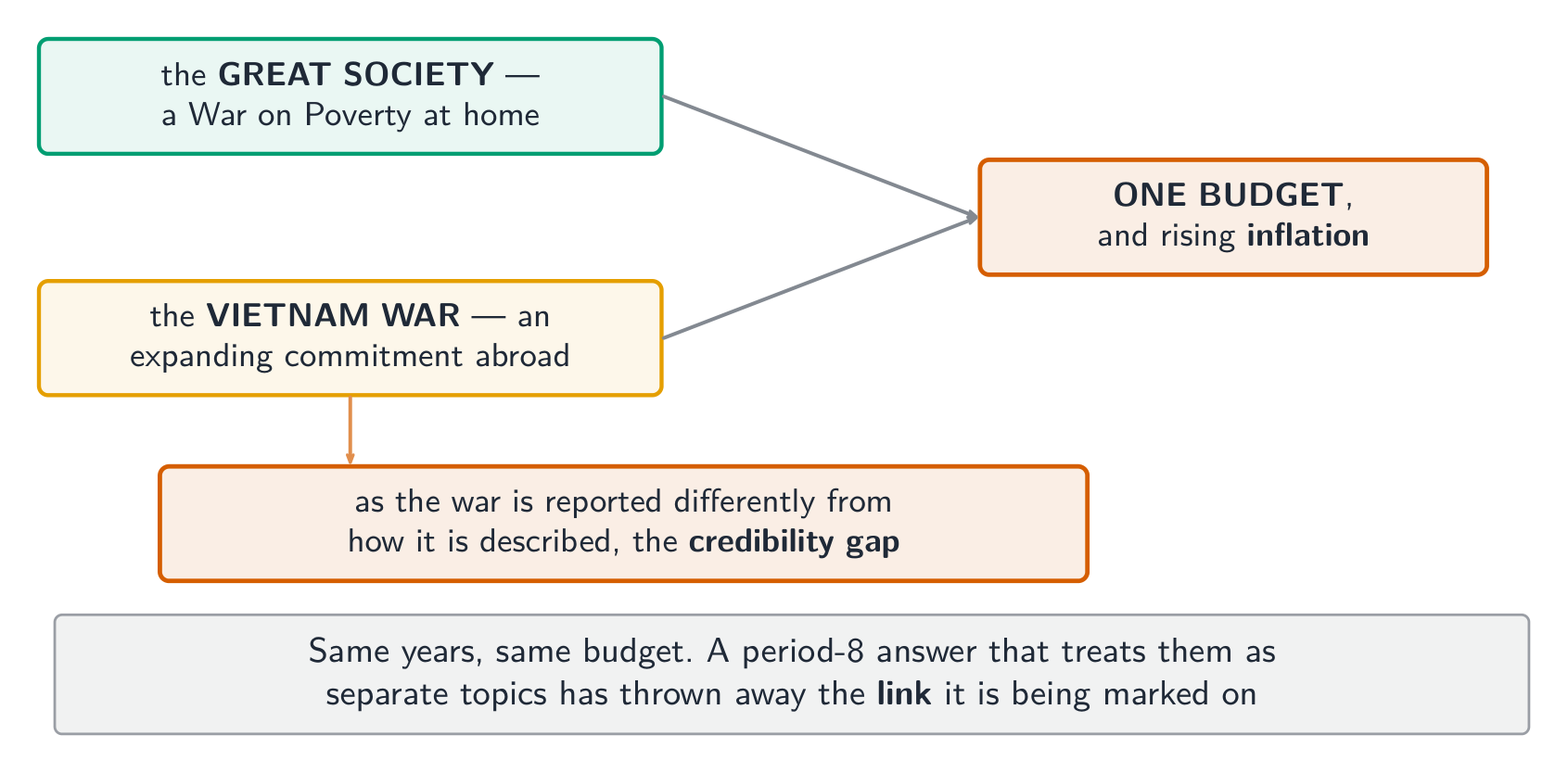
- KC-8.1.II Cold War policies led to public debates over the power of the federal government and acceptable means for pursuing international and domestic goals while protecting civil liberties.
- KC-8.2 New movements for civil rights and liberal efforts to expand the role of government generated a range of political and cultural responses.
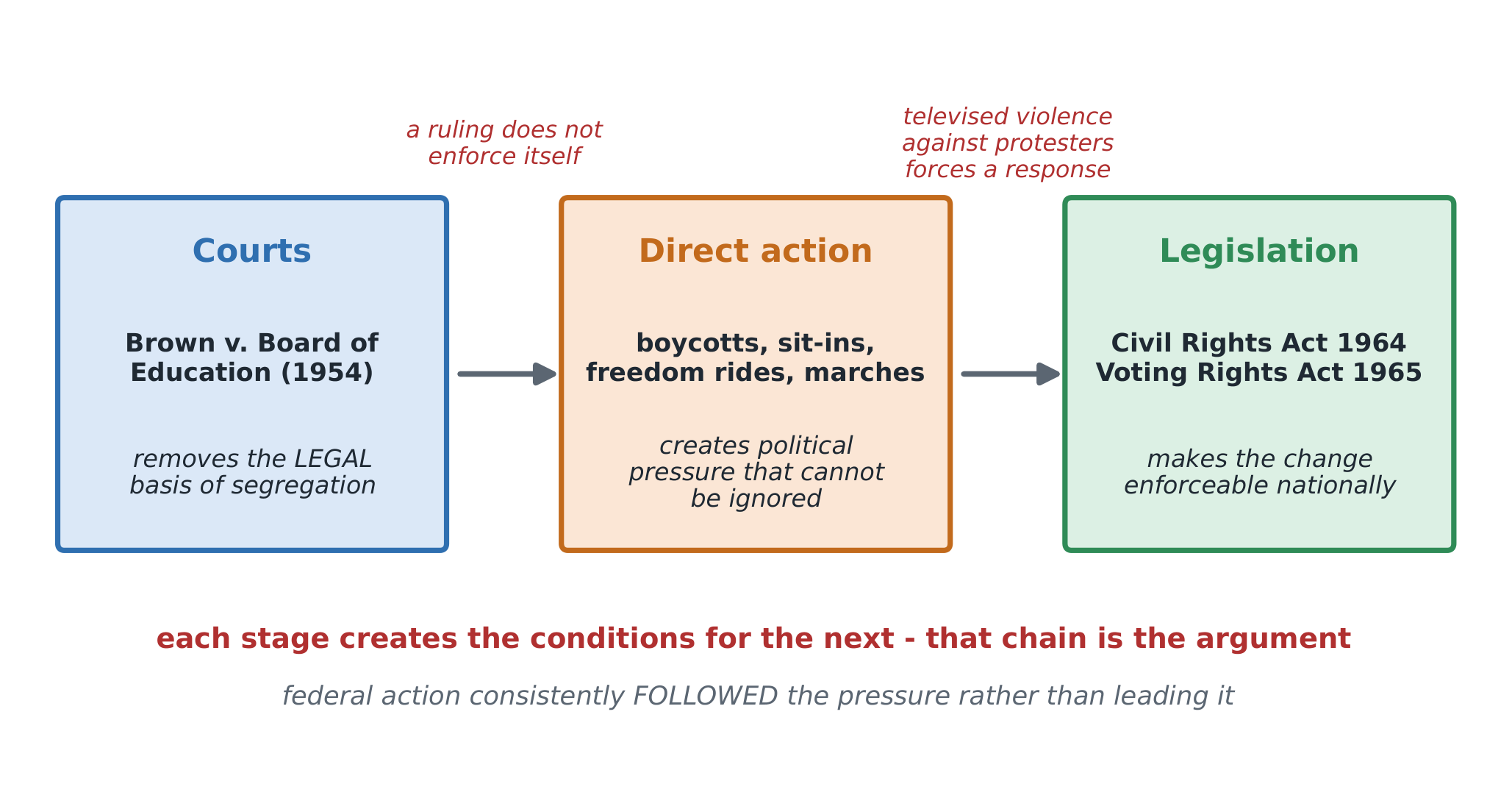
- KC-8.2.I Seeking to fulfill Reconstruction-era promises, civil rights activists and political leaders achieved some legal and political successes in ending segregation, although progress toward racial equality was slow.
- KC-8.2.II Responding to social conditions and the African American civil rights movement, a variety of movements emerged that focused on issues of identity, social justice, and the environment.
- KC-8.2.III Liberalism influenced postwar politics and court decisions, but it came under increasing attack from the left as well as from a resurgent conservative movement.
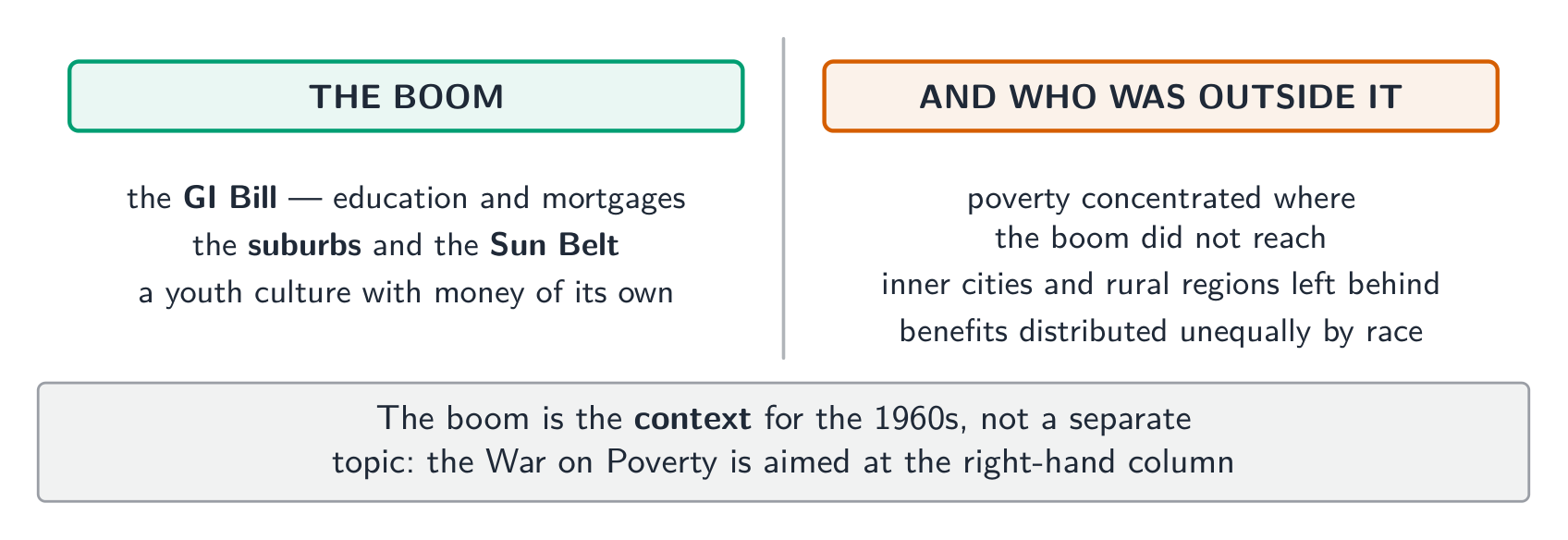
- KC-8.3 Postwar economic and demographic changes had far-reaching consequences for American society, politics, and culture.
- KC-8.3.I Rapid economic and social changes in American society fostered a sense of optimism in the postwar years.
- KC-8.3.II New demographic and social developments, along with anxieties over the Cold War, changed U.S. culture and led to significant political and moral debates that sharply divided the nation.
日本語
8.1 時期8の文脈付け
学習目標 単元8.A: 1945年から1980年にかけての社会的変化の背景を説明する。
- KC-8.1 米国は不確実で不安定な戦後世界に対し、世界的指導的地位を主張し維持するために尽力し、広範な国内および国際的影響を与えた。
- KC-8.1.I 米国の政策立案者たちは権威主義的なソビエト連邦との冷戦に従事し、共産主義の軍事力および思想的影響の拡大を制限し、自由市場の全球经济を構築し、国際安全保障体制を確立しようとした。
- KC-8.1.II 冷戦政策は、連邦政府の権限、国内外の目標達成のための許容される手段、および市民的自由の保護に関する公的な議論を引き起こした。
- KC-8.2 公民権と自由主義による政府の役割拡大への努力は、多様な政治的・文化的な反応を生み出した。
- KC-8.2.I 再建期に約束された事項の実現を目指し、公民権活動家や政治家たちは人種分離の撤廃において法的・政治的な成果を収めたものの、人種平等への道筋は遅々として進まなかった。
- KC-8.2.II 社会情勢およびアフリカ系アメリカ人の公民権運動に対する応答として、アイデンティティ、社会的公正、環境に関する問題に焦点を当てた多様な運動が台頭した。
- KC-8.2.III 自由主義は戦後の政治および裁判所判断に影響を与えたが、左派からの批判も増大し、再興した保守運動からも攻撃を受けた。
- KC-8.3 戦後の経済的・人口統計学的変化は、アメリカ社会、政治、文化に広範な影響を与えた。
- KC-8.3.I アメリカ社会における急速な経済的・社会的変化は、戦後期間に楽観的な感覚を生み出した。
- KC-8.3.II 新たな人口統計学および社会的発展、ならびに冷戦への不安は、アメリカ文化を変化させ、国家を鋭く分断する重要な政治的・倫理的論争を引き起こした。
English
8.2 The Cold War from 1945 to 1980
Thematic Focus (WOR): America in the World — Diplomatic, economic, cultural, and military interactions between empires, nations, and peoples shape the development of America and America’s increasingly important role in the world.
Learning Objective Unit 8.B: Explain the continuities and changes in Cold War policies from 1945 to 1980.
- KC-8.1.I United States policymakers engaged in a cold war with the authoritarian Soviet Union, seeking to limit the growth of Communist military power and ideological influence, create a free-market global economy, and build an international security system.
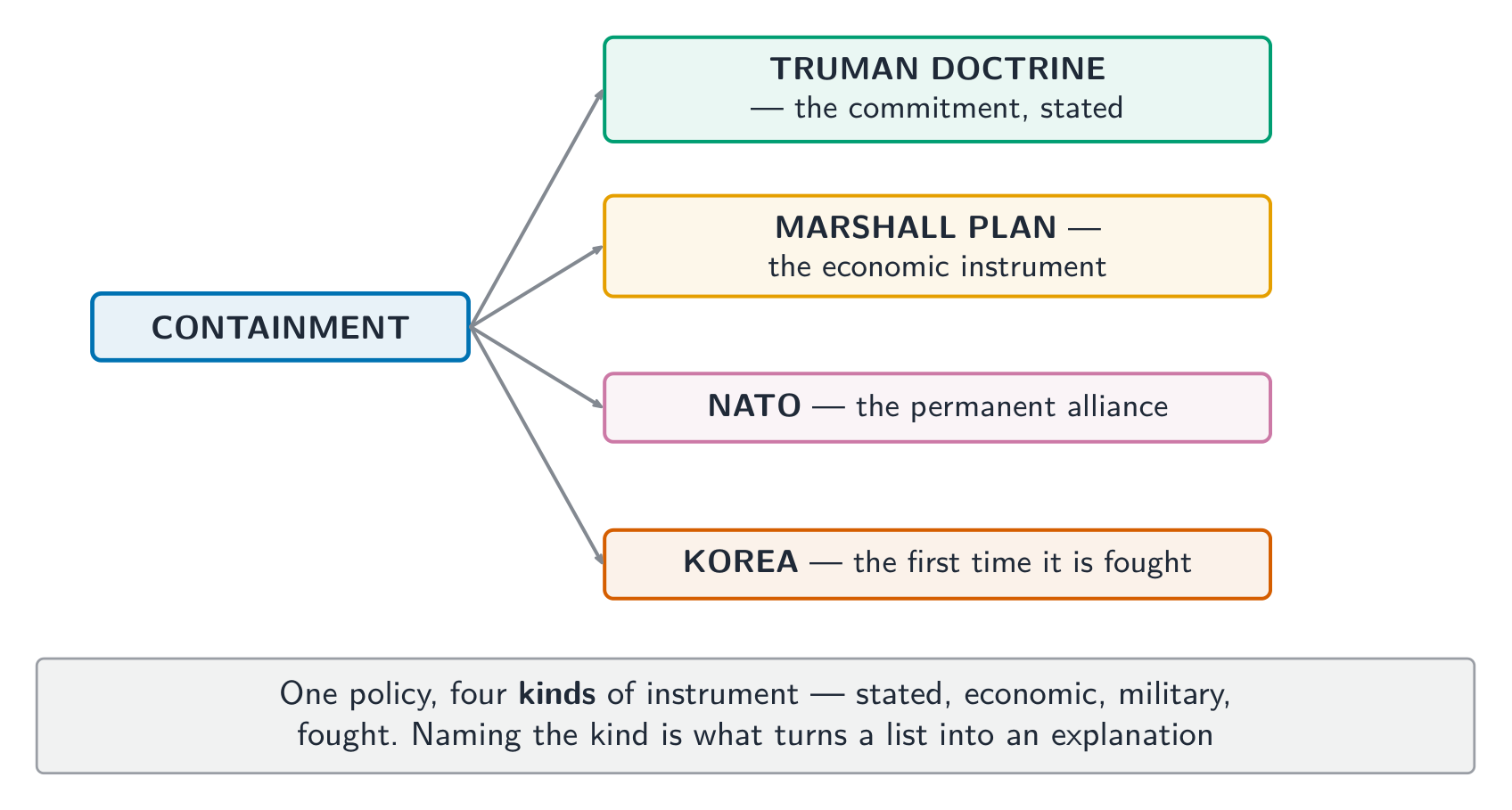
- KC-8.1.I.A As postwar tensions dissolved the wartime alliance between Western democracies and the Soviet Union, the United States developed a foreign policy based on collective security, international aid, and economic institutions that bolstered non-Communist nations.
- KC-8.1.I.B.i Concerned by expansionist Communist ideology and Soviet repression, the United States sought to contain communism through a variety of measures, including major military engagements in Korea.
- KC-8.1.I.C The Cold War fluctuated between periods of direct and indirect military confrontation and periods of mutual coexistence (or détente).
日本語
8.2 冷戦(1945年〜1980年)
テーマ焦点 (WOR): 世界の中のアメリカ — 帝国、国、民族間の外交、経済、文化的、軍事的相互作用は、アメリカの発展を形作り、アメリカの世界におけるより重要な役割を形成する。
学習目標 単元8.B: 1945年から1980年までの冷戦政策における継続性と変化点を説明する。
- KC-8.1.I アメリカの政策立案者たちは、権威主義的なソ連との冷戦に従事し、共産主義の軍事力と思想的影響の拡大を制限し、自由市場の世界的経済を確立し、国際安全保障体制を構築しようとした。
- KC-8.1.I.A 戦後の緊張が西側民主主義国とソ連との戦時同盟を解消すると、アメリカは集団安全保障、国際援助、非共産主義国家を強化する経済機関に基づく外交政策を展開した。
- KC-8.1.I.B.i 膨張主義的な共産主義思想とソ連の抑圧を懸念したアメリカは、朝鮮での大規模な軍事介入を含む多様な手段を通じて共産主義 containment を図った。
- KC-8.1.I.C 冷戦は、直接および間接的な軍事対立期と相互共存(またはデタント)期の間で変動した。