Skip to content · ⁨דלג לתוכן⁩

Cold War and Decolonization · ⁨מלחמת קרה ודה-קולוניזציה⁩

AP World History: Modern · ⁨היסטוריה עולמית: זמנים מודרניים - AP⁩ · Topic 8 · ⁨נושא 8⁩

Video lesson for this topic · ⁨שיעור וידאו לנושא זה⁩ Open the video page · ⁨פתח את עמוד הוידאו⁩
8:40

יחידה 8: מלחמת קר ודיקולוניזציה

שני תהליכים עוברים דרך יחידה זו בו-זמנית: מתחרות אידיאולוגית גלובלית, וסוף האימפריה. אם נלמדים אותם בנפרד, זה כפול מעמל וחצי…

English narration · English + 中文 subtitles burned in · ⁨קריאת קול באנגלית · תרגום אנגלי + סינית שרוף בתוך הסרטון⁩

8.1

Setting the Stage for the Cold War · ⁨זרועות למלחמה הקרה⁩

Syllabus · ⁨סיילבוס⁩
English

8.1 Setting the Stage for the Cold War and Decolonization

Thematic Focus (GOV): Governance — A variety of internal and external factors contribute to state formation, expansion, and decline. Governments maintain order through a variety of administrative institutions, policies, and procedures, and governments obtain, retain, and exercise power in different ways and for different purposes.

Learning Objective Unit 8.A: Explain the historical context of the Cold War after 1945.

  • KC-6.2.II Hopes for greater self-government were largely unfulfilled following World War I; however, in the years following World War II, increasing anti-imperialist sentiment contributed to the dissolution of empires and the restructuring of states.
  • KC-6.2.IV.C.i Technological and economic gains experienced during World War II by the victorious nations shifted the global balance of power.
עברית

8.1 הכנת הבמה למלחמת קרה ולדיקולוניזציה

מיקוד נושא (GOV): שלטון — מגוון גורמים פנימיים וחיצוניים תורמים ליצירת מדינות, הרחבתן ונפילתן. ממשלות שומרות על סדר באמצעות מגוון מוסדות, מדיניות ונהלים מנהליים, וממשלות רוכשות, שומרות ומפעילות כוח בדרכים ובמטרות שונות.

מטרות לימוד ליחידה 8.A: הסבר על ההקשר ההיסטורי של מלחמת קרה לאחר 1945.

  • KC-6.2.II התקוות לקבלת אוטונומיה עצמית גדולה נכשלו ברובן לאחר מלחמת העולם הראשונה; עם זאת, בשנים שלאחר מלחמת העולם השנייה, תחושת אנטי-אימפריאליזם הולכת וגוברת תרמה לפירוק האימפריות ולעיצוד מחדש של המדינות.
  • KC-6.2.IV.C.i ההישגים הטכנולוגיים והכלכליים שהושגו על ידי המדינות המנצחות במהלך מלחמת העולם השנייה שינו את מאזן הכוחות הגלובלי.
Source: College Board AP Course and Exam Description · ⁨מקור: תיאור הקורס והמבחן של College Board AP⁩

English

Unit 8 covers the period after 1945, and two processes run through it at once: a global ideological rivalry and the end of empire. Most of the unit's questions turn on how those two interacted.

Hopes for greater self-government were largely unfulfilled after World War I. In the years following World War II, increasing anti-imperialist sentiment 反帝情绪 built momentum in colonised regions, and this time it produced independence rather than promises.

At the same time, the technological and economic gains 技术与经济收益 made during World War II by the victorious nations shifted the global balance of power. This is the historical context the CED asks for: the war did not just destroy, it redistributed capability.

עברית

יחידה 8 עוסקת בתקופה שלאחר 1945, ועוברות בה שני תהליכים בו-זמנית: יריביות אידאולוגית גלובלית וסוף האימפריה. רוב השאלות ביחידה נסבבות על האופן שבו שני תהליכים אלו הושפעו זה מזה.

התקוות למועילת עצמית מוגברת לא התמשתו בעיקר לאחר מלחמת העולם הראשונה. בשנים שלאחר מלחמת העולם השנייה, רגשות אנטי-אימפריאליסטיים מוגברים צברו תאוצה באזורים המוחזקים,这一次 הפעם הדבר הביא לעצמאות ולא רק להבטחות.

באותה עת, התגבורים הטכנולוגיים והכלכליים שהושגו במהלך מלחמת העולם השנייה על ידי המדינות המנצחות שינו את מאזן הכוחות העולמי. זהו ההקשר ההיסטורי שמצפה לו CED: המלחמה לא רק הרסה, אלא גם חלקה מחדש יכולות.

Vocabulary · ⁨מילון מונחים⁩ Train · ⁨אימון⁩
English עברית
increasing anti-imperialist sentiment/ɪnˈkriːsɪŋ ˈænti ɪmˈpɪərɪəlɪst ˈsentɪmənt/ גילוי נוגד-אימפריאליסטי הולך וגובר
technological and economic gains/ˌteknəˈlɒdʒɪkl ænd ˌiːkəˈnɒmɪk ɡeɪnz/ השגים טכנולוגיים וכלכליים
ideological struggle/ˌaɪdɪəˈlɒdʒɪkl ˈstrʌɡl/ מאבק אידאולוגי
Non-Aligned Movement/nɒn əˈlaɪnd ˈmuːvmənt/ תנועת המדינות שאינן מצטרפות
New military alliances/njuː ˈmɪlɪtəri əˈlaɪənsɪz/ בריתות צבאיות חדשות
NATO/ˈneɪtəʊ/ נאט"ו
Warsaw Pact/ˈwɔːsɔː pækt/ ברית ורשה
Nuclear proliferation/ˈnjuːklɪə prəˌlɪfəˈreɪʃn/ התפשטות נשק גרעיני
Proxy wars/ˈprɒksi wɔːz/ מלחמות סוכנים
internal tension/ɪnˈtɜːnl ˈtenʃn/ מתחים פנימיים
Japanese aggression/ˌdʒæpəˈniːz əˈɡreʃn/ אגרסייה יפנית
Great Leap Forward/ɡreɪt liːp ˈfɔːwəd/ הדחיפה הגדולה קדימה
Nationalist leaders and parties/ˈnæʃənəlɪst ˈliːdəz ænd ˈpɑːtiz/ מנהיגים ומפלגות לאומניות
inherited imperial boundaries/ɪnˈherɪtɪd ɪmˈpɪərɪəl ˈbaʊndəriz/ גבולות אימפריאליים שנורשו
Mohandas Gandhi/məʊˈhændəz ˈɡɑːndi/ מוהנדס גנדי
Martin Luther King Jr./ˈmɑːtɪn ˈluːðə kɪŋ ˌdʒeɪˈɑː/ מרטין לותר קינג ג'וניור
Nelson Mandela/ˈnelsn mænˈdelə/ נלסון מנדילה
promoted non-violence/prəˈməʊtɪd nɒn ˈvaɪələns/ קידום אי-אלימות
public discontent/ˈpʌblɪk dɪskənˈtent/ תסכול ציבורי
economic problems/ˌiːkəˈnɒmɪk ˈprɒbləmz/ בעיות כלכליות
8.2

The Cold War · ⁨המלחמה הקרה⁩

Syllabus · ⁨סיילבוס⁩
English

8.2 The Cold War

Thematic Focus (CDI): Cultural Developments and Interactions — The development of ideas, beliefs, and religions illustrates how groups in society view themselves, and the interactions of societies and their beliefs often have political, social, and cultural implications.

Learning Objective Unit 8.B: Explain the causes and effects of the ideological struggle of the Cold War.

  • KC-6.2.IV.C.ii The global balance of economic and political power shifted during and after World War II and rapidly evolved into the Cold War. The democracy of the United States and the authoritarian communist Soviet Union emerged as superpowers, which led to ideological conflict and a power struggle between capitalism and communism across the globe.
  • KC-6.2.V.B Groups and individuals, including the Non-Aligned Movement, opposed and promoted alternatives to the existing economic, political, and social orders.

Illustrative examples:

  • Non-Aligned Movement:
    • Sukarno in Indonesia
    • Kwame Nkrumah in Ghana
עברית

8.2 המלחמה הקרה

מיקוד נושא (CDI): התפתחויות ותفاعלים תרבותיים — פיתוח רעיונות, אמונות ודתות מדגיש כיצד קבוצות בחברה רואות את עצמן, והתفاعלים בין חברות ואמונותיהן לעיתים קרובות יש להם משמעויות פוליטיות, חברתיות ותרבותיות.

מטרות למידה ליחידה 8.B: הסבר את הסיבות והתוצאות של הקרע האידאולוגי במהלך המלחמה הקרה.

  • KC-6.2.IV.C.ii מאזן הכוחות הכלכלי והפוליטי הגלובלי השתנה במהלך ומאחרי מלחמת העולם השנייה והתפתח במהירות למהלך המלחמה הקרה. הדמוקרטיה של ארצות הברית והקומוניסטית האוטוריטרית של ברית המועצות צמחו כעוצמות על, מה שהוביל לקרע אידאולוגי ולמאבק כוחות בין קפיטליזם לקומוניזם בכל רחבי העולם.
  • KC-6.2.V.B קבוצות ואנשים, כולל תנועת המדינות הלא-מיושרות, התנגדו וקידמו אלטרנטיבות לסדר הכלכלי, הפוליטי והחברתי הקיים.

דוגמאות מדגמיות:

  • תנועת המדינות הלא-מיושרות:
    • סוקארנו באינדונזיה
    • קוואמה נקרומה בגאנה

Source: College Board AP Course and Exam Description · ⁨מקור: תיאור הקורס והמבחן של College Board AP⁩

English

The shifted balance rapidly evolved into the Cold War - a rivalry between the democracies led by the United States and the communist states led by the Soviet Union, conducted as an ideological struggle 意识形态斗争 rather than direct war between the two principals.

The CED insists that this was not a world of only two options. Groups and individuals - including the Non-Aligned Movement 不结盟运动 - opposed and promoted alternatives to the existing economic, political, and social order. Leaving the non-aligned states out of an answer describes a two-sided world that did not exist.

עברית

מאזן הכוחות המשונה התפתח במהירות למלחמה קרה - יריביות בין הדמוקרטיה בראשות ארצות הברית ובין המדינות הקומוניסטיות בראשות ברית המועצות, שנערכה כקרב אידאולוגי ולא כמלחמה ישירה בין שני הצדדים.

ה-CED מדגיש כי זה לא היה עולם עם אפשרויות שתי בלבד. קבוצות ואנשים – כלל תנועת בלתי-מיושרים – התנגדו וקידמו חלופות לסדר הכלכלי, הפוליטי והחברתי הקיים. השארת מדינות בלתי-מיושרות מחוץ לתשובה מתארת עולם דו-צדדי שלא קיים.

8.3

Effects of the Cold War · ⁨השפעות המלחמה הקרה⁩

Syllabus · ⁨סיילבוס⁩

8.3 Effects of the Cold War

Thematic FocusLearning ObjectiveHistorical Developments

GOV
Governance — A variety of internal and external factors contribute to state formation, expansion, and decline. Governments maintain order through a variety of administrative institutions, policies, and procedures, and governments obtain, retain, and exercise power in different ways and for different purposes.

Unit 8.C
Compare the ways in which the United States and the Soviet Union sought to maintain influence over the course of the Cold War.

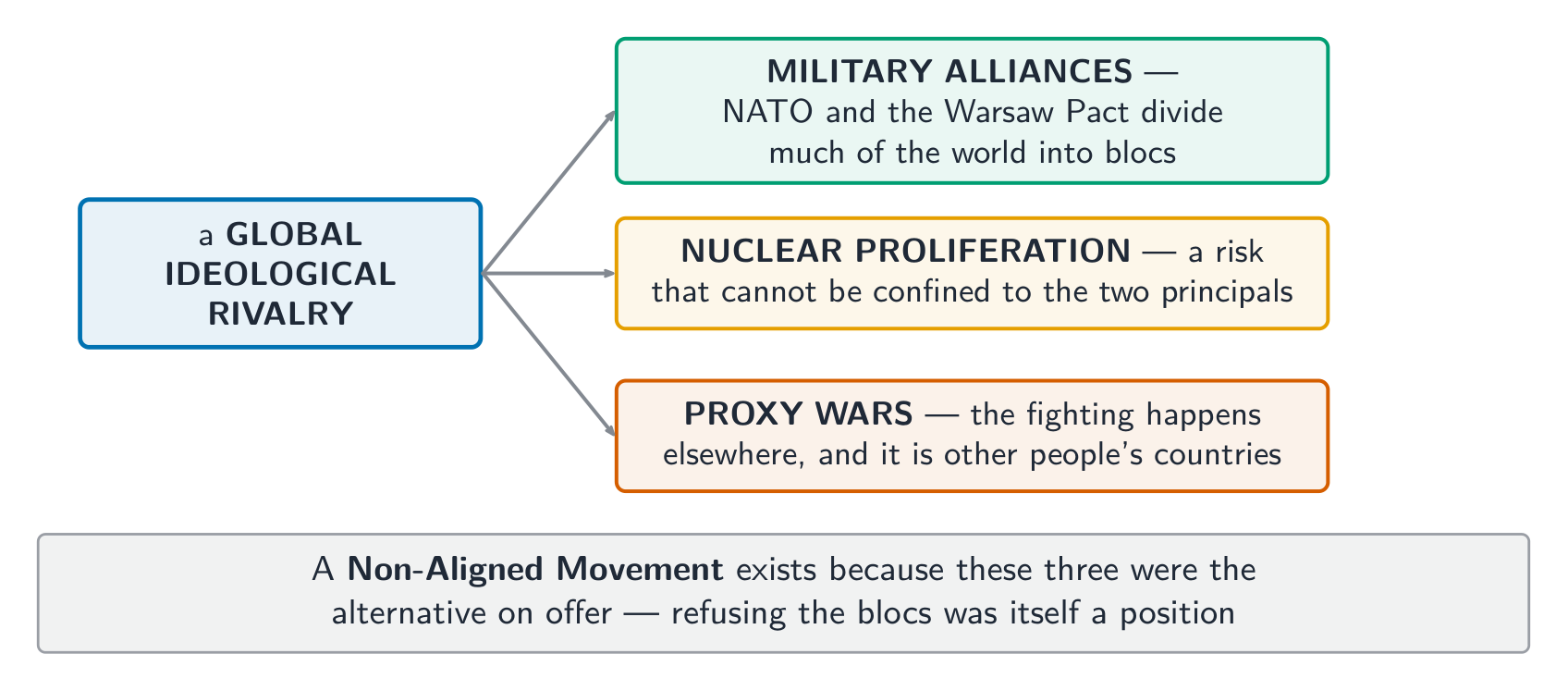
  • KC-6.2.IV.D The Cold War produced new military alliances, including NATO and the Warsaw Pact, and led to nuclear proliferation and proxy wars between and within postcolonial states in Latin America, Africa, and Asia.

Illustrative examples:

  • Proxy wars:
    • Korean War
    • Angolan Civil War
    • Sandinista-Contras conflict in Nicaragua

Source: College Board AP Course and Exam Description · ⁨מקור: תיאור הקורס והמבחן של College Board AP⁩

English

The rivalry produced concrete institutions and conflicts:

  • New military alliances 军事同盟 - NATO 北约 and the Warsaw Pact 华沙条约组织.
  • Nuclear proliferation 核扩散 - the spread of nuclear weapons to more states.
  • Proxy wars 代理人战争 between and within states, in which the two blocs supported opposing sides in conflicts elsewhere rather than fighting each other directly.

The comparison this topic sets up is how each superpower maintained influence over other states - through alliances, aid, military support, and intervention. Both used all four, which is why the comparison question is answerable in both directions.

עברית

היריביות ייצרה מוסדות ומלחמות ממשיות:

  • בריתות צבאיות חדשות – נאטו וברית ורשה.
  • התפשטות נוקלئרית – התפשטות נשק גרעיני למדינות נוספות.
  • מלחמות סוכנים בין מדינות בתוך מדינות, שבהן שני המחנות תומכו בצדדים נגודים בסכסוכים אחרים במקום להילחם זה בזה ישירות.

ההשוואה שנושא זה מציב היא איך כל אחד מהעצמות שמר על השפעה על מדינות אחרות – באמצעות בריתות, עזרה, תמיכה צבאית והתערבות. שניהם השתמשו בכל ארבע השיטות, ולכן שאלת ההשוואה ניתנת לעבודה משני הכיוונים.

יריביות שבנתה שלושה דברים – והבלתי-מיושרות הייתה תגובה לכל אחד מהם
Explore · ⁨חקור⁩

Follow the rivalry to what it built · ⁨עקוב אחר היריבות עד למה שהיא בנתה⁩

A rivalry that never becomes a direct war produces alliances, proliferation and proxy wars instead — and non-alignment is a response to all three. · ⁨יריבות מעולם לא הופכת למלחמה ישירה מייצרת בריתות, התפשטות ומלחמות גבוי — ואי-התחברות היא תגובה לכל שלושת האלו.⁩

8.4

Spread of Communism After 1900 · ⁨התפשטות הקומוניזם לאחר 1900⁩

Syllabus · ⁨סיילבוס⁩
English

8.4 Spread of Communism After 1900

Thematic Focus (ECN): Economics Systems — As societies develop, they affect and are affected by the ways that they produce, exchange, and consume goods and services.

Learning Objective Unit 8.D: Explain the causes and consequences of China’s adoption of communism. THEMATIC FOCUS Social Interactions and Organization SIO The process by which societies group their members and the norms that govern the interactions between these groups and between individuals influence political, economic, and cultural institutions and organization. LEARNING OBJECTIVE

  • KC-6.2.I.i As a result of internal tension and Japanese aggression, Chinese communists seized power. These changes in China eventually led to communist revolution.
  • KC-6.3.I.A.ii In communist China, the government controlled the national economy through the Great Leap Forward, often implementing repressive policies, with negative repercussions for the population. HISTORICAL DEVELOPMENTS

Learning Objective Unit 8.E: Explain the causes and effects of movements to redistribute economic resources.

  • KC-6.2.II.D.i Movements to redistribute land and resources developed within states in Africa, Asia, and Latin America, sometimes advocating communism or socialism.

Illustrative examples:

  • Land and resource redistribution:
    • Communist Revolution for Vietnamese independence
    • Mengistu Haile Mariam in Ethiopia
    • Land reform in Kerala and other states within India
    • White Revolution in Iran
עברית

8.4 התפשטות הקומוניזם לאחר 1900

הדגשה נושאית (ECN): מערכות כלכליות — כאשר חברות מתפתחות, הן משפיעות ומושפעות מהדרך שבהן הן מייצרות, מחליפות וצורכות סחורות ושירותים.

מטרות למידה ליחידה 8.D: הסבר את הסיבות והתוצאות של אימוץ הקומוניזם בסין. דגש נושאי: אינטראקציות חברתיות וארגון SIO התהליך שבו חברה מקבוצה את חבריה והnorms שמכוונים את האינטראקציות בין קבוצות אלו ובין פרטים משפיעים על מוסדות וארגון פוליטי, כלכלי ותרבותי. מטרת למידה

  • KC-6.2.I.i כתוצאה ממתיחות פנימיות ואגרסיביות יפנית, הקומוניסטים הסיניים תפסו את השלטון. שינויים אלו בסין הובילו לבסוף מהפכה קומוניסטית.
  • KC-6.3.I.A.ii בקומוניסטי סין, הממשלה שלטה בכלכלה הלאומית דרך "המפלצה הגדולה", לעיתים קרובות ביצירה מדיניות דיכוי, עם השלכות שליליות עבור האוכלוסייה. התפתחויות היסטוריות

מטרות למידה ליחידה 8.E: הסבר את הסיבות והתוצאות של תנועות לחלוקה מחדש של משאבים כלכליים.

  • KC-6.2.II.D.i תנועות להעברת קרקע ומשאבים שפותחו בתוך מדינות באפריקה, אסיה ולטינה אמריקה, לעיתים קרובות תומכות בקומוניזם או סוציאליזם.

דוגמאות מדגמיות:

  • העברת קרקע ומשאבים:
    • מהפכה קומוניסטית למען עצמאות וייטנאם
    • מנגיסטו היילה מרים באתיופיה
    • реформа קרקע בקראלה ובמדינות אחרות בהודו
    • המהפכה הלבנה באיראן

Source: College Board AP Course and Exam Description · ⁨מקור: תיאור הקורס והמבחן של College Board AP⁩

English

Two examinable threads run here. First, China: as a result of internal tension 内部矛盾 and Japanese aggression 日本侵略, Chinese communists seized power, and the CED notes this eventually contributed to communist revolutions elsewhere.

Second, state control of the economy. As in the Soviet Five Year Plans of Unit 7, the Chinese government controlled the national economy through the Great Leap Forward 大跃进, implementing repressive policies with significant costs to the population. The CED presents these as a matched pair, which is exactly how a comparison question will ask for them.

Beyond these, movements to redistribute land and resources developed within states in Africa, Asia, and Latin America, some advocating communism or socialism and some not. That distinction matters: land reform is not the same claim as revolution, and the CED separates them.

עברית

שני סיבים לבחינה עוברים כאן. ראשית, סין: כתוצאה ממתח פנימי והתקפות יפניות, הקומוניסטים הסין טלטלו כוח, וה-CED מציין שדבר זה תרם לבסוף למהפכות קומוניסטיות אחרות.

שני, שליטה מדינית בכלכלה. כמו בתוכניות החמש שנים של ברית המועצות ביחידה 7, הממשלה הסינית שלטה בכלכלה הלאומית באמצעות המפלצה הגדולה, ומימשה מדיניות ריכוזית עם עלויות משמעותיות לאוכלוסייה. ה-CED מציג אותם כזוג מאוזן, בדיוק כפי ששאלת השוואה תבקש אותם.

מעבר לכך, תנועות להעברת קרקע ומשאבים התפתחו בתוך מדינות באפריקה, אסיה ולטינה, חלקן תומכות בקומוניזם או סוציאליזם וחלקן לא. הבחנה זו חשובה: רפורמת הקרקע אינה אותו דבר כמו מהפכה, וה-CED מפריד ביניהם.

8.5

Decolonization After 1900 · ⁨פינוק colonialism לאחר 1900⁩

Syllabus · ⁨סיילבוס⁩
English

8.5 Decolonization After 1900

Thematic Focus (GOV): Governance — A variety of internal and external factors contribute to state formation, expansion, and decline. Governments maintain order through a variety of administrative institutions, policies, and procedures, and governments obtain, retain, and exercise power in different ways and for different purposes.

Learning Objective Unit 8.F: Compare the processes by which various peoples pursued independence after 1900.

  • KC-6.2.II.A Nationalist leaders and parties in Asia and Africa sought varying degrees of autonomy within or independence from imperial rule.
  • KC-6.2.I.C After the end of World War II, some colonies negotiated their independence, while others achieved independence through armed struggle.
  • KC-6.2.II.B Regional, religious, and ethnic movements challenged colonial rule and inherited imperial boundaries. Some of these movements advocated for autonomy.

Illustrative examples:

  • Nationalist leaders and parties:
    • Indian National Congress
    • Ho Chi Minh in French Indochina (Vietnam)
    • Kwame Nkrumah in British Gold Coast (Ghana)
    • Gamal Abdel Nasser in Egypt
  • Negotiated independence:
    • India from the British Empire
    • The Gold Coast from the British Empire
    • French West Africa
  • Independence through armed struggle:
    • Algeria from the French empire
    • Angola from the Portuguese empire
    • Vietnam from the French empire
  • Regional, religious, and ethnic movements:
    • Muslim League in British India
    • Québécois separatist movement in Canada
    • Biafra secessionist movement in Nigeria
עברית

8.5 עיקור לאחר 1900

מיקוד נושא (GOV): שלטון — מגוון גורמים פנימיים וחיצוניים תורמים ליצירת מדינות, הרחבתן ונפילתן. ממשלות שומרות על סדר באמצעות מגוון מוסדות, מדיניות ונהלים מנהליים, וממשלות רוכשות, שומרות ומפעילות כוח בדרכים ובמטרות שונות.

מטרות לימוד יחידה 8.F: השוו את התהליכים שבהם עמים שונים רדפו אחר עצמאות לאחר 1900.

  • KC-6.2.II.A מנהיגים לאומיים ומפלגות באסיה ובאפריקה ביקשו דרגות שונות של אוטונומיה בתוך שלטון אימפריאלי או עצמאות ממנו.
  • KC-6.2.I.C לאחר סוף מלחמת העולם השנייה, חלק מהמושבות משאו על עצמאותן, בעוד שאחרות השיגו אותה דרך מאבק מזוין.
  • KC-6.2.II.B תנועות אזוריות, דתיות ואתניות הת挑战 שלטון קולוניאלי וגבולות אימפריאליים שהושארו מהם. חלק מתנועות אלו תמכו באוטונומיה.

דוגמאות מדגמיות:

  • מנהיגים לאומיים ומפלגות:
    • הקונגרס הלאומי ההודי
    • הו צ'י מינה בצפון וייטנאם הצרפתית (וייטנאם)
    • קוואמה נקרומה בגולד קוסט הבריטית (גאנה)
    • גמאל עבד אל-נסר במצרים
  • עצמאות משאית:
    • הודו מהאימפריה הבריטית
    • הגולד קוסט מהאימפריה הבריטית
    • מערב אפריקה הצרפתית
  • עצמאות דרך מאבק מזוין:
    • אל#defineia מהאימפריה הצרפתית
    • אנגולה מהאימפריה הפורטוגזית
    • וייטנאם מהאימפריה הצרפתית
  • תנועות אזוריות, דתיות ואתניות:
    • הליגה המוסלמית בהודו הבריטית
    • התנועה הספרטניסטית הקווקולואית בקנדה
    • תנועת ההפרדה ביאפרה בניגריה

Source: College Board AP Course and Exam Description · ⁨מקור: תיאור הקורס והמבחן של College Board AP⁩

English

Nationalist leaders and parties 民族主义领袖与政党 in Asia and Africa sought varying degrees of autonomy within, or independence from, imperial rule. The examinable set of examples includes the Indian National Congress, Ho Chi Minh in French Indochina, Kwame Nkrumah in the Gold Coast, and Gamal Abdel Nasser in Egypt.

After World War II, some colonies negotiated their independence while others achieved it through armed struggle. India and the Gold Coast are the standard negotiated cases; Angola, Vietnam, and Algeria the standard armed ones.

A third strand is easily missed: regional, religious, and ethnic movements challenged both colonial rule and the inherited imperial boundaries 沿袭的帝国边界 those empires left behind. Those boundaries are the reason so many post-independence conflicts were about borders rather than about the departing power.

עברית
החלוקה של ה-CED עצמו: כיצד המדינה המושבת הגיעה לעצמאות קבעה מה המדינה החדשה ירשה
שתי הדרכים מסתיימות במצב חדש - אך הן אינן מסתיימות באותו מצב חדש

מנהיגים ומפלגות לאומניות באסיה ובאפריקה ביקשו רמות שונות של אוטונומיה בתוך, או עצמאות מול, השלטון האימפריאלי. סט דוגמאות לבדיקות כולל הקונגרס הלאומי ההודי, הו צ'י מינג בחוזה וייטנאם הצרפתית, קוואמה נקרומה בגולד קוסט, וג'מאל עבד אל-נאצר במצרים.

לאחר מלחמת העולם השנייה, חלק מהמושבות גיבשו את עצמאותן באמצעות משא ומתן, בעוד שאחרים השיגו אותה באמצעות מאבק מזוין. הודי וגולד קוסט הן המקרים הסטנדרטיים למשא ומתן; אנגולה, וייטנאם ואלג'יריה הן המקרים הסטנדרטיים למאבק מזוין.

זרם שלישי קל לפספס: תנועות אזוריות, דתיות ואתניות התמודדו גם עם השלטון המושבתי וגם עם הגבולות האימפריאליים שהשאירו האימפריות אחריהן. גבולות אלו הם הסיבה לכך שכך כך הרבה סכסוכים לאחר העצמאות היו עניין של גבולות ולא של הכוח היוצא.

8.6

Newly Independent States · ⁨מדינות חדשות ועצמאיות⁩

Syllabus · ⁨סיילבוס⁩

8.6 Newly Independent States

Thematic FocusLearning ObjectiveHistorical Developments

ECN
Economics Systems — As societies develop, they affect and are affected by the ways that they produce, exchange, and consume goods and services.

Unit 8.G
Explain how political changes in the period from c. 1900 to the present led to territorial, demographic, and nationalist developments.

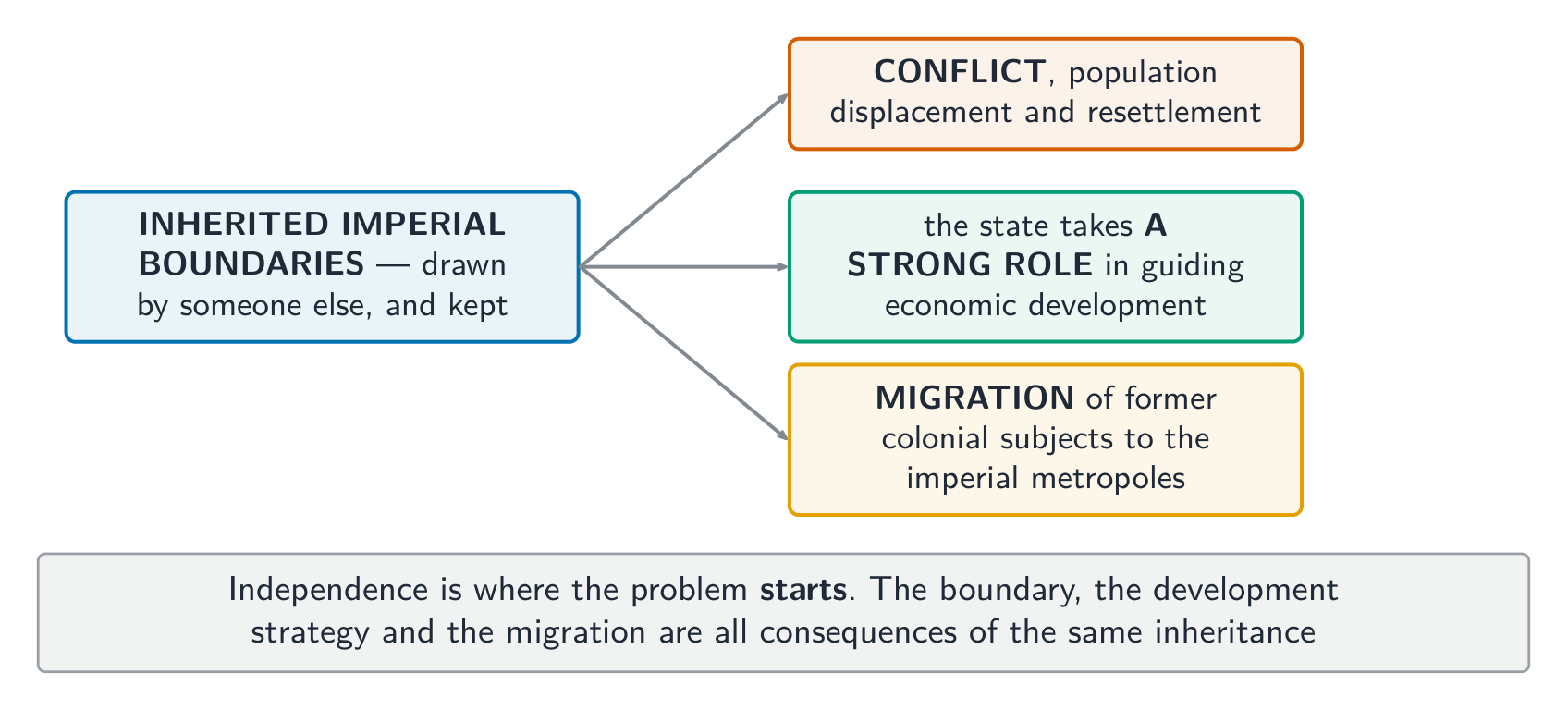
  • KC-6.2.III.A.i The redrawing of political boundaries after the withdrawal of former colonial authorities led to the creation of new states.
  • KC-6.2.III.A.ii The redrawing of political boundaries in some cases led to conflict as well as population displacement and/or resettlements, including those related to the Partition of India and the creation of the state of Israel.

Unit 8.H
Explain the economic changes and continuities resulting from the process of decolonization.

  • KC-6.3.I.C In newly independent states after World War II, governments often took on a strong role in guiding economic life to promote development.
  • KC-6.2.III.B The migration of former colonial subjects to imperial metropoles (the former colonizing country), usually in the major cities, maintained cultural and economic ties between the colony and the metropole even after the dissolution of empires.

Illustrative examples:

  • States created by redrawing of political boundaries:
    • Israel
    • Cambodia
    • Pakistan
  • (CONT’D) Governments guiding economic life:
    • Gamal Abdel Nasser’s promotion of economic development in Egypt
    • Indira Gandhi's economic policies in India
    • Julius Nyerere’s modernization in Tanzania
    • Sirimavo Bandaranaike’s economic policies in Sri Lanka
  • Migrations:
    • South Asians to Britain
    • Algerians to France
    • Filipinos to the United States

Source: College Board AP Course and Exam Description · ⁨מקור: תיאור הקורס והמבחן של College Board AP⁩

English

The redrawing of political boundaries after colonial withdrawal led to the creation of new states, and in some cases to conflict, population displacement, and resettlement. The partition of British India is the standard case of all three at once.

Economically, governments in newly independent states often took a strong role in guiding economic life to promote development - a continuity with the interwar pattern of Unit 7, arrived at from a completely different direction.

There was also a reverse flow of people: the migration of former colonial subjects to imperial metropoles - usually to major cities - which maintained cultural and economic ties between the former colony and the former colonial power long after independence.

עברית

שרטוט מחדש של הגבולות הפוליטיים לאחר יציאת הכוחות המושבתיים הביא ליצירת מדינות חדשות, ובמקרים מסוימים גם לסכסוך, הזזה של אוכלוסיות והתיישבות מחדש. חלוקת הודו הבריטית היא המקרה הסטנדרטי לשלושת האפשרויות בו זמנית.

כלכלית, ממשלות במדינות חדשות ועצמאיות נקטו לעיתים קרובות תפקיד חזק בהנחיית החיים הכלכליים כדי לקדם פיתוח - המשכיות לדפוס של תקופת בין המלחמות בסל של יחידה 7, אך בכיוון לחלוטין שונה.

היה גם זרימת אנשים הפוכה: ההגירה של תושבי מושבות בעבר למטרופולינים האימפריאליים - בדרך כלל לערים גדולות - שמירה על קשרים תרבותיים וכלכליים בין המושבה בעבר לבין הכוח המושבתי בעבר גם זמן רב לאחר העצמאות.

העצמאות היא שם הבעיה מתחילה: ירושה אחת, שלושה תוצאות
Explore · ⁨חקור⁩

Sort what a new state inherited from what it then did · ⁨מיוין מה מדינה חדשה ירשה ממה שעשתה לאחר מכן⁩

Independence is where the examinable problem starts: a boundary the new state did not draw produces the rest. · ⁨עצמאות היא המקום שבו הבעיה הנבחנת מתחילה: גבול שמדינה חדשה לא ציירת מייצר את השאר.⁩

8.7

Global Resistance to Established Power Structures · ⁨התנגדות גלובלית למבני כוח ממוסדים⁩

Syllabus · ⁨סיילבוס⁩

8.7 Global Resistance to Established Power Structures After 1900

Thematic FocusLearning ObjectiveHistorical Developments

CDI
Cultural Developments and Interactions — The development of ideas, beliefs, and religions illustrates how groups in society view themselves, and the interactions of societies and their beliefs often have political, social, and cultural implications.

Unit 8.I
Explain various reactions to existing power structures in the period after 1900.

  • KC-6.2.V Although conflict dominated much of the 20th century, many individuals and groups— including states—opposed this trend. Some individuals and groups, however, intensified the conflicts.
  • KC-6.2.V.A Groups and individuals challenged the many wars of the century, and some, such as Mohandas Gandhi, Martin Luther King Jr., and Nelson Mandela, promoted the practice of nonviolence as a way to bring about political change.
  • KC-6.2.V.C Militaries and militarized states often responded to the proliferation of conflicts in ways that further intensified conflict.
  • KC-6.2.V.D Some movements used violence against civilians in an effort to achieve political aims.

Illustrative examples:

  • Responses that intensified conflict:
    • Chile under Augusto Pinochet
    • Spain under Francisco Franco
    • Uganda under Idi Amin
    • The buildup of the military–industrial complex and weapons trading
  • Movements that used violence:
    • Shining Path
    • Al-Qaeda

Source: College Board AP Course and Exam Description · ⁨מקור: תיאור הקורס והמבחן של College Board AP⁩

English

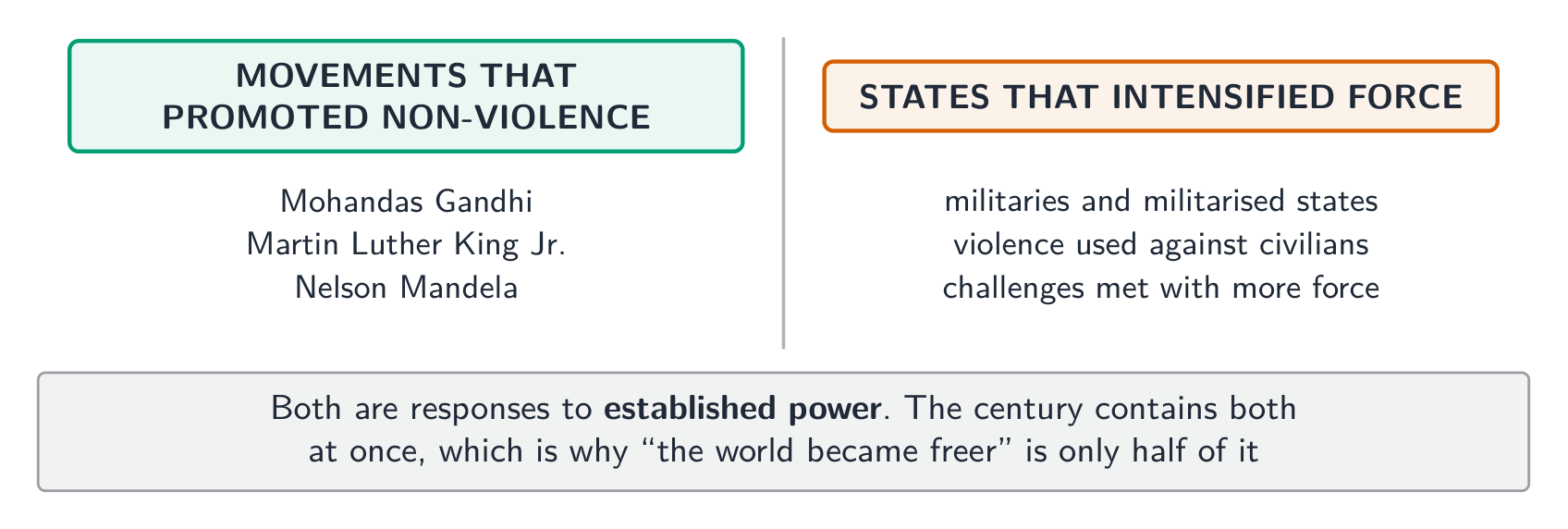
Although conflict dominated much of the twentieth century, many individuals and groups - including states - opposed that trend. The CED names three distinct patterns, and they should not be blurred:

  • Groups and individuals challenged the wars of the century, and some - Mohandas Gandhi 甘地, Martin Luther King Jr. 马丁·路德·金, and Nelson Mandela 曼德拉 - promoted non-violence 非暴力 as a method of change.
  • Militaries and militarised states often responded to the proliferation of conflicts in ways that further intensified them.
  • Some movements used violence against civilians in an effort to achieve political aims.

Both the third and second points are examinable content, not asides. A question on "reactions to existing power structures" expects the full range, not only the non-violent one.

עברית

אף על פי שסכסוך שלט על חלק ניכר מהמאה העשרים, אנשים וקבוצות רבים - כולל מדינות - התנגדו למגמה זו. ה-CED מיינה שלושה דפוסים נפרדים, ואין לערבב ביניהם:

  • קבוצות ואנשים התנגדו למלחמות המאה, וחלקם - מוהנדס גנדי, מרטין לותר קינג Jr. ו-נלסון מנדלה - קידמו אי-אלימות כשיטה לשינוי.
  • כוחות צבאיים ומדינות מיליטריסטיות נהגו לעיתים לתגובת התפשטות הסכסוכים בצורה שהחמירה אותם עוד יותר.
  • חלק מהתנועות השתמשו באלימות נגד אזרחים במטרה להשיג מטרות פוליטיות.

גם הנקודה השלישית וגם השנייה הן תוכן לבדיקות, לא חטפים. שאלה על "תגובות למבני כוח קיימים" מצפה לכל הטווח, לא רק לרמה הא-אלמית.

שתי התגובות למבני כוח ממוסדים - המאה מכילה את שניהם בו זמנית
8.8

End of the Cold War · ⁨סוף המלחמה הקרה⁩

Syllabus · ⁨סיילבוס⁩
English

8.8 End of the Cold War

Thematic Focus (GOV): Governance — A variety of internal and external factors contribute to state formation, expansion, and decline. Governments maintain order through a variety of administrative institutions, policies, and procedures, and governments obtain, retain, and exercise power in different ways and for different purposes.

Learning Objective Unit 8.J: Explain the causes of the end of the Cold War.

  • KC-6.2.IV.E Advances in U.S. military and technological development, the Soviet Union’s costly and ultimately failed invasion of Afghanistan, and public discontent and economic weakness in communist countries led to the end of the Cold War and the collapse of the Soviet Union.
עברית

8.8 סוף המלחמה הקרה

מיקוד נושא (GOV): שלטון — מגוון גורמים פנימיים וחיצוניים תורמים ליצירת מדינות, הרחבתן ונפילתן. ממשלות שומרות על סדר באמצעות מגוון מוסדות, מדיניות ונהלים מנהליים, וממשלות רוכשות, שומרות ומפעילות כוח בדרכים ובמטרות שונות.

מטרת למידה ליחידה 8.J: הסבר על הסיבות לסוף המלחמה הקרה.

  • KC-6.2.IV.E התקדמות בתחום ההתפתחות הצבאית והטכנולוגית של ארצות הברית, פלישת ברית המועצות לאפגניסטן היקרה שסתיימה בכישלון, וחוסר שביעות רצון ציבורית וחולשה כלכלית במדינות קומוניסטיות הביאו לסוף המלחמה הקרה ולקריסת ברית המועצות.

Source: College Board AP Course and Exam Description · ⁨מקור: תיאור הקורס והמבחן של College Board AP⁩

English

The CED gives a compound cause here too: advances in United States military and technological development, the Soviet Union's costly and ultimately failed invasion of Afghanistan, public discontent 公众不满, and economic problems 经济困难 within the Soviet system.

Notice that three of the four are internal to the Soviet Union. An answer that explains the end of the Cold War purely as external pressure has missed the CED's own weighting.

עברית

CED נותן כאן גם סיבה מורכבת: התקדמות בפיתוח צבאי וטכנולוגי של ארצות הברית, הכישלון המצריך והסופי של הפלישה הסובייטית לאפגניסטן, תסכול ציבורי ובעיות כלכליות בתוך המערכת הסובייטית.

שימו לב כי שלושה מארבעת הגורמים הם פנימיים לסובייטיות. תשובה שמסבירה את סוף המלחמה הקרה רק כלחץ חיצוני טועה במשקל עצמי של CED.

8.9

Causation in the Age of the Cold War · ⁨סיבתיות בתקופת המלחמה הקרה⁩

Syllabus · ⁨סיילבוס⁩
English

8.9 Causation in the Age of the Cold War and Decolonization

Learning Objective Unit 8.K: Explain the extent to which the effects of the Cold War were similar in the Eastern and Western Hemispheres.

  • KC-6.2 Peoples and states around the world challenged the existing political and social order in varying ways, leading to unprecedented worldwide conflicts.
    • KC-6.2.II Hopes for greater self-government were largely unfulfilled following the World War I; however, in the years following the World War II, increasing anti-imperialist sentiment contributed to the dissolution of empires and the restructuring of states.
    • KC-6.2.IV.C The Cold War conflict extended beyond its basic ideological origins to have profound effects on economic, political, social, and cultural aspects of global events.
  • KC-6.3 The role of the state in the domestic economy varied, and new institutions of global association emerged and continued to develop throughout the century.
    • KC-6.3.I States responded in a variety of ways to the economic challenges of the 20th century.
עברית

8.9 גורמים בעידן המלחמה הקרה ובתהליך העימוש

מטרת למידה ליחידה 8.K: הסבר עד כמה השפעות המלחמה הקרה היו דומות בחצי הכדור המזרחי ובמערבי.

  • KC-6.2 עמים ומדינות בכל העולם挑战了现有的政治和社会秩序在 varying ways, leading to unprecedented worldwide conflicts.
    • KC-6.2.II תקוות לשלטון עצמי מוגבר נכשלו לחלוטין לאחר מלחמת העולם הראשונה; עם זאת, בשנים שלאחר מלחמת העולם השנייה, תחושות אנטי-אימפריאליסטיות הולכות וגוברות תרמו לפירוק האימפריות ולשינוי מבנה המדינות.
    • KC-6.2.IV.C הסכסוך במלחמה הקרה התפשט מעבר למוצאים האידיאולוגיים הבסיסיים שלו והוביל להשפעות עמוקות על היבטים כלכליים, פוליטיים, חברתיים ותרבותיים באירועים גלובליים.
  • KC-6.3 תפקיד המדינה בכלכלה הפנימית משתנה, ומוסדות חדשים לקשרים גלובליים נוצרו והמשיכו להתפתח לאורך המאה.
    • KC-6.3.I מדינות הגיבו בדרכים מגוונות לאתגרים הכלכליים של המאה ה-20.

Source: College Board AP Course and Exam Description · ⁨מקור: תיאור הקורס והמבחן של College Board AP⁩

English

The unit's reasoning task is to explain the extent to which the effects of the Cold War were similar in the Eastern and Western Hemispheres. "Extent" is a comparison word: it asks for similarity and difference, with a judgement about which dominates.

Worked example (a real AP exam question). AP World short-answer questions here ask, for example, to "Explain one difference between the processes of decolonisation in two different regions after 1945." A full-mark answer names both cases and the difference between them: "In the Gold Coast, independence was achieved largely through negotiation, as nationalist parties won elections and Britain transferred power without a war. In Algeria, independence came through a prolonged armed struggle against France, which left the new state with a military-led government and a devastated economy." Notice what earns the mark: the difference is stated in terms that apply to both cases, and each side carries its own evidence.

עברית

משימת ההסתדרות של היחידה היא להסביר עד איזה מידה ההשפעות של המלחמה הקרה היו דומות בחצי הכדור המזרחי ובחצי הכדור המערבי. "עד איזה מידה" הוא ביטוי השוואתי: הוא דורש התייחסות גם לדמיון וגם להבדלים, תוך מתן הערכה לגבי מה שוקל יותר.

דוגמה מפורטת (שאלה אמיתית בבחן AP). שאלות התשובה הקצרה AP World כאן מבקשות לדוגמה "להסביר הבדל אחד בין תהליכי העימוש בשתי אזורות שונות לאחר 1945." תשובה מלאה נקבת שני המקרים וההבדל ביניהם: "בקוסט הזהב, עצמאות הושגה בעיקר דרך מגורים, כאשר מפלגות לאומניות ניצחו בבחירות ובריטניה העבירה את השלטון ללא מלחמה. באלג'יריה, העצמאות הגיעה דרך מאבק מזוין ממושנג נגד צרפת, שהשאיר למדינה החדשה ממשל מצפון-צבאי וכלכלה חרובה." שים לב למה מוכיח נקודה: ההבדל מנוסח בצורה החלה על שני המקרים, וכל צד נושא את העדפתו משלו.

8.9

Exam tips · ⁨טיפים לבחינות⁩

English
  • The Cold War was not two-sided. The Non-Aligned Movement is examinable content, and including it lifts an answer immediately.
  • Give the effects as the CED does: alliances, nuclear proliferation, proxy wars. Three named effects beat one described at length.
  • Negotiated versus armed independence is the highest-value comparison in the unit, because it explains what the new state inherited.
  • Inherited imperial boundaries explain post-independence conflict better than any other single factor. Use the phrase.
  • For resistance, give all three CED patterns - non-violence, militarised response, and violence against civilians.
  • The end of the Cold War was mostly internal to the Soviet system. Weight the causes that way and say why.
עברית
  • המלחמה הקרה לא הייתה דו-צדדית. תנועת המדינות הבלתי-ממוקמות היא תוכן נבחן, והכללתה מעלה מיד את רמת התשובה.
  • נתנו את ההשפעות כפי שהן מופיעות ב-CED: בריתות, התפשטות גרעינית, מלחמות סוביסטיים. שלוש השפעות המוזכרות בשמן יעלו על אחת שתתואר בפירוט.
  • עצמאות משא ומתן מול עצמאות באמצעות מאבק מזוין היא ההשוואה בעלת הערך הגבוה ביותר ביחידה, מכיוון שהיא מסבירה מה המדינה החדשה ירשה.
  • גבולות אימפריאליים מורשים מסבירים את הסכסוך לאחר העצמאות טוב יותר מכל גורם יחיד. השתמש בביטוי זה.
  • עבור התנגדות, תן את שלושת דפוסי ה-CED - אי-אלימות, תגובה ממוחצנת, ואלימות כלפי אזרחים.
  • סוף המלחמה הקרה היה בעיקר פנימי למערכת הסובייטית. הערך את הסיבות לפי משקל זה ואמור מדוע.

Interactive lessons on this topic · ⁨שיעורים אינטראקטיביים בנושא זה⁩

Work through it step by step, with instant-check exercises. · ⁨לעבור על הדברים צעד אחר צעד, עם תרגילים לבדיקה מיידית.⁩

Past Papers · ⁨מבחני עבר⁩

More topics in AP World History: Modern · ⁨היסטוריה עולמית: זמנים מודרניים - AP⁩ · ⁨נושאים נוספים בAP World History: Modern · ⁨היסטוריה עולמית: זמנים מודרניים - AP⁩⁩

Log in or create account · ⁨היכנס או צור חשבון⁩

IGCSE, A-Level & AP