Skip to content · ⁨الانتقال إلى المحتوى⁩

Cold War and Decolonization · ⁨الحرب الباردة والتفكك الاستعماري⁩

AP World History: Modern · ⁨تاريخ العالم الحديث (AP)⁩ · Topic 8 · ⁨الموضوع 8⁩

Video lesson for this topic · ⁨درس فيديو لهذا الموضوع⁩ Open the video page · ⁨افتح صفحة الفيديو⁩
8:40

الوحدة 8: الحرب الباردة والتفكك الاستعماري

سريان عمليتان متوازيتان عبر هذه الوحدة: منافسة أيديولوجية عالمية، ونهاية الإمبراطوريات. عند دراستهما بشكل منفصل، يصبح العمل ضعف ما يجب أن يكون ونصف النتيجة.

English narration · English + 中文 subtitles burned in · ⁨سرد باللغة الإنجليزية · ترجمة مدمجة بالإنجليزية + الصينية⁩

8.1

Setting the Stage for the Cold War · ⁨تمهيد الطريق للحرب الباردة⁩

Syllabus · ⁨المنهج⁩
English

8.1 Setting the Stage for the Cold War and Decolonization

Thematic Focus (GOV): Governance — A variety of internal and external factors contribute to state formation, expansion, and decline. Governments maintain order through a variety of administrative institutions, policies, and procedures, and governments obtain, retain, and exercise power in different ways and for different purposes.

Learning Objective Unit 8.A: Explain the historical context of the Cold War after 1945.

  • KC-6.2.II Hopes for greater self-government were largely unfulfilled following World War I; however, in the years following World War II, increasing anti-imperialist sentiment contributed to the dissolution of empires and the restructuring of states.
  • KC-6.2.IV.C.i Technological and economic gains experienced during World War II by the victorious nations shifted the global balance of power.
العربية

8.1 تمهيد الطريق لحرب البارد والتفكك الاستعماري

التركيز الموضوعي (GOV): الحكم — تساهم مجموعة متنوعة من العوامل الداخلية والخارجية في تشكيل الدولة وتوسعها وانهيارها. تحافظ الحكومات على النظام من خلال مجموعة متنوعة من المؤسسات والإجراءات والسياسات الإدارية، وتكتسب الحكومات وتحتفظ بالسلطة وتمارسها بطرق مختلفة ولأغراض مختلفة.

هدف التعلم الوحدة 8.A: اشرح السياق التاريخي لحرب البارد بعد عام 1945.

  • KC-6.2.II لم تتحقق آمال الحكم الذاتي بشكل كبير بعد الحرب العالمية الأولى؛ ومع ذلك، في السنوات التي أعقبت الحرب العالمية الثانية، ساهمت المشاعر المعادية للإمبريالية المتزايدة في تفكك الإمبراطوريات وإعادة هيكلة الدول.
  • KC-6.2.IV.C.i غيرت المكاسب التكنولوجية والاقتصادية التي حققتها الدول المنتصرة خلال الحرب العالمية الثانية التوازن العالمي للقوى.
Source: College Board AP Course and Exam Description · ⁨المصدر: وصف دورة وامتحان College Board AP⁩

English

Unit 8 covers the period after 1945, and two processes run through it at once: a global ideological rivalry and the end of empire. Most of the unit's questions turn on how those two interacted.

Hopes for greater self-government were largely unfulfilled after World War I. In the years following World War II, increasing anti-imperialist sentiment 反帝情绪 built momentum in colonised regions, and this time it produced independence rather than promises.

At the same time, the technological and economic gains 技术与经济收益 made during World War II by the victorious nations shifted the global balance of power. This is the historical context the CED asks for: the war did not just destroy, it redistributed capability.

العربية

تغطي الوحدة 8 الفترة ما بعد عام 1945، وعملتان تجريان في وقت واحد: صراع أيديولوجي عالمي و نهاية الإمبراطورية. يدور معظم أسئلة الوحدة حول كيفية تفاعل هذين العاملين مع بعضهما البعض.

كانت آمال الحكم الذاتي الأكبر غير محققة إلى حد كبير بعد الحرب العالمية الأولى. في السنوات التالية للحرب العالمية الثانية، تزايد Sentiment المعادي للإمبريالية زخمًا في المناطق المستعمرة، وهذه المرة أنتجت الاستقلال بدلاً من الوعود.

في نفس الوقت، المنافع التكنولوجية والاقتصادية التي حققتها الدول المنتصرة خلال الحرب العالمية الثانية أزاحت توازن القوى العالمي. هذا هو السياق التاريخي الذي يطلبه المنهج الدراسي: فلم تكن الحرب مجرد دمار، بل أعاد توزيع القدرة.

Vocabulary · ⁨مفردات⁩ Train · ⁨تدريب⁩
English العربية
increasing anti-imperialist sentiment/ɪnˈkriːsɪŋ ˈænti ɪmˈpɪərɪəlɪst ˈsentɪmənt/ تزايد مشاعر المعادية للإمبريالية
technological and economic gains/ˌteknəˈlɒdʒɪkl ænd ˌiːkəˈnɒmɪk ɡeɪnz/ المنافع التكنولوجية والاقتصادية
ideological struggle/ˌaɪdɪəˈlɒdʒɪkl ˈstrʌɡl/ الصراع الأيديولوجي
Non-Aligned Movement/nɒn əˈlaɪnd ˈmuːvmənt/ حركة عدم الانحياز
New military alliances/njuː ˈmɪlɪtəri əˈlaɪənsɪz/ تحالفات عسكرية جديدة
NATO/ˈneɪtəʊ/ الناتو
Warsaw Pact/ˈwɔːsɔː pækt/ حلف وارسو
Nuclear proliferation/ˈnjuːklɪə prəˌlɪfəˈreɪʃn/ انتشار الأسلحة النووية
Proxy wars/ˈprɒksi wɔːz/ الحروب البديلة
internal tension/ɪnˈtɜːnl ˈtenʃn/ التوتر الداخلي
Japanese aggression/ˌdʒæpəˈniːz əˈɡreʃn/ العدوان الياباني
Great Leap Forward/ɡreɪt liːp ˈfɔːwəd/ القفزة العظيمة للأمام
Nationalist leaders and parties/ˈnæʃənəlɪst ˈliːdəz ænd ˈpɑːtiz/ القادة والحزبات القومية
inherited imperial boundaries/ɪnˈherɪtɪd ɪmˈpɪərɪəl ˈbaʊndəriz/ الحدود الإمبراطورية الموروثة
Mohandas Gandhi/məʊˈhændəz ˈɡɑːndi/ موهنداس غاندي
Martin Luther King Jr./ˈmɑːtɪn ˈluːðə kɪŋ ˌdʒeɪˈɑː/ مارتن لوثر كينغ جونيور.
Nelson Mandela/ˈnelsn mænˈdelə/ نيلسون مانديلا
promoted non-violence/prəˈməʊtɪd nɒn ˈvaɪələns/ تعزيز عدم العنف
public discontent/ˈpʌblɪk dɪskənˈtent/ استياء الجمهور
economic problems/ˌiːkəˈnɒmɪk ˈprɒbləmz/ المشاكل الاقتصادية
8.2

The Cold War · ⁨الحرب الباردة⁩

Syllabus · ⁨المنهج⁩
English

8.2 The Cold War

Thematic Focus (CDI): Cultural Developments and Interactions — The development of ideas, beliefs, and religions illustrates how groups in society view themselves, and the interactions of societies and their beliefs often have political, social, and cultural implications.

Learning Objective Unit 8.B: Explain the causes and effects of the ideological struggle of the Cold War.

  • KC-6.2.IV.C.ii The global balance of economic and political power shifted during and after World War II and rapidly evolved into the Cold War. The democracy of the United States and the authoritarian communist Soviet Union emerged as superpowers, which led to ideological conflict and a power struggle between capitalism and communism across the globe.
  • KC-6.2.V.B Groups and individuals, including the Non-Aligned Movement, opposed and promoted alternatives to the existing economic, political, and social orders.

Illustrative examples:

  • Non-Aligned Movement:
    • Sukarno in Indonesia
    • Kwame Nkrumah in Ghana
العربية

8.2 حرب البارد

التركيز الموضوعي (CDI): التطورات والتفاعلات الثقافية — يعكس تطور الأفكار والمعتقدات والأديان كيف تنظر المجموعات في المجتمع إلى نفسها، وغالبًا ما يكون للتفاعلات بين المجتمعات ومعتقداتها عواقب سياسية واجتماعية وثقافية.

هدف التعلم الوحدة 8.B: اشرح أسباب ونتائج الصراع الأيديولوجي في حرب البارد.

  • KC-6.2.IV.C.ii تحوّل التوازن العالمي للقوى الاقتصادية والسياسية خلال وبعد الحرب العالمية الثانية وتطور بسرعة إلى حرب البارد. برزت الديمقراطية الأمريكية والاتحاد السوفيتي الشيوعي السلطوي كقوتين عظميين، مما أدى إلى صراع أيديولوجي وصراع على السلطة بين الرأسمالية والشيوعية عبر العالم.
  • KC-6.2.V.B عارضت المجموعات والأفراد، بما في ذلك حركة عدم الانحياز، ونشّطوا بدائل للنظام الاقتصادي والسياسي والاجتماعي السائد.

أمثلة توضيحية:

  • حركة عدم الانحياز:
    • سوكارنو في إندونيسيا
    • كوامي نكرumah في غانا

Source: College Board AP Course and Exam Description · ⁨المصدر: وصف دورة وامتحان College Board AP⁩

English

The shifted balance rapidly evolved into the Cold War - a rivalry between the democracies led by the United States and the communist states led by the Soviet Union, conducted as an ideological struggle 意识形态斗争 rather than direct war between the two principals.

The CED insists that this was not a world of only two options. Groups and individuals - including the Non-Aligned Movement 不结盟运动 - opposed and promoted alternatives to the existing economic, political, and social order. Leaving the non-aligned states out of an answer describes a two-sided world that did not exist.

العربية

تطور التوازن المزاح بسرعة إلى الحرب الباردة - صراع بين الديمقراطيات بقيادة الولايات المتحدة والدول الشيوعية بقيادة الاتحاد السوفيتي، أُجري كـ صراع أيديولوجي بدلاً من حرب مباشرة بين الطرفين الرئيسيين.

يصري المنهج الدراسي على أن هذا لم يكن عالماً له خياران فقط. عارضت المجموعات والأفراد - بما في ذلك حركة عدم الانحياز - ونشّطوا بدائل للنظام الاقتصادي والسياسي والاجتماعي القائم. استبعاد الدول غير المنحازة من الإجابة يصف عالماً ثنائي الأوجه لم يكن موجودًا.

8.3

Effects of the Cold War · ⁨آثار الحرب الباردة⁩

Syllabus · ⁨المنهج⁩
English

8.3 Effects of the Cold War

Thematic Focus (GOV): Governance — A variety of internal and external factors contribute to state formation, expansion, and decline. Governments maintain order through a variety of administrative institutions, policies, and procedures, and governments obtain, retain, and exercise power in different ways and for different purposes.

Learning Objective Unit 8.C: Compare the ways in which the United States and the Soviet Union sought to maintain influence over the course of the Cold War.

  • KC-6.2.IV.D The Cold War produced new military alliances, including NATO and the Warsaw Pact, and led to nuclear proliferation and proxy wars between and within postcolonial states in Latin America, Africa, and Asia.

Illustrative examples:

  • Proxy wars:
    • Korean War
    • Angolan Civil War
    • Sandinista-Contras conflict in Nicaragua
العربية

8.3 آثار حرب البارد

التركيز الموضوعي (GOV): الحكم — تساهم مجموعة متنوعة من العوامل الداخلية والخارجية في تشكيل الدولة وتوسعها وانهيارها. تحافظ الحكومات على النظام من خلال مجموعة متنوعة من المؤسسات والإجراءات والسياسات الإدارية، وتكتسب الحكومات وتحتفظ بالسلطة وتمارسها بطرق مختلفة ولأغراض مختلفة.

هدف التعلم الوحدة 8.C: قارن الطرق التي سعت بها الولايات المتحدة والاتحاد السوفيتي للحفاظ على نفوذها طوال فترة حرب البارد.

  • KC-6.2.IV.D أنتجت حرب البارد تحالفات عسكرية جديدة، بما في ذلك حلف الناتو وحصار وارسو، وأدت إلى انتشار الأسلحة النووية والحروب الوكيلية بين وبين داخل الدول ما بعد الاستعمار في أمريكا اللاتينية وأفريقيا وآسيا.

أمثلة توضيحية:

  • الحروب الوكيلية:
    • حرب كوريا
    • الحرب الأهلية الأنغولية
    • النزاع بين الساندينيستة والقونتراس في نيكاراغوا

Source: College Board AP Course and Exam Description · ⁨المصدر: وصف دورة وامتحان College Board AP⁩

English

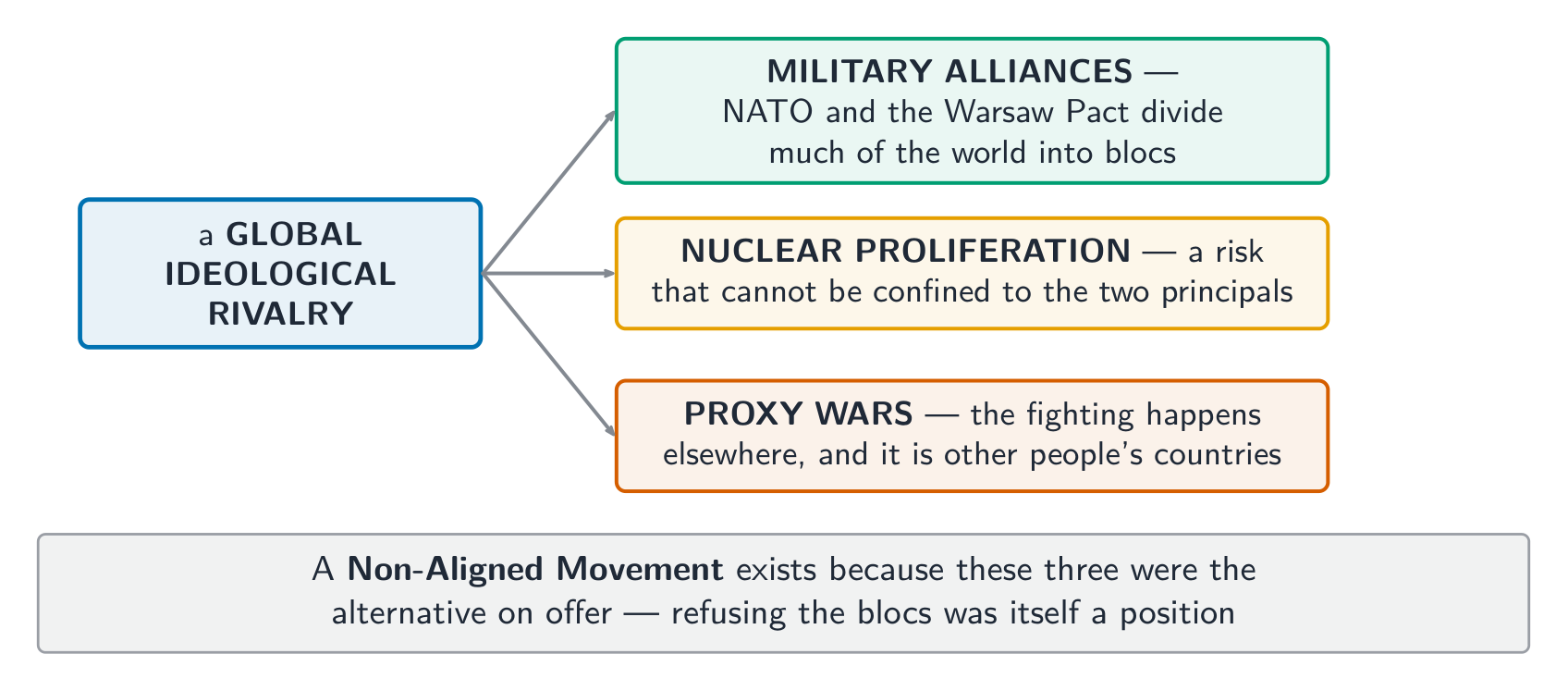
The rivalry produced concrete institutions and conflicts:

  • New military alliances 军事同盟 - NATO 北约 and the Warsaw Pact 华沙条约组织.
  • Nuclear proliferation 核扩散 - the spread of nuclear weapons to more states.
  • Proxy wars 代理人战争 between and within states, in which the two blocs supported opposing sides in conflicts elsewhere rather than fighting each other directly.

The comparison this topic sets up is how each superpower maintained influence over other states - through alliances, aid, military support, and intervention. Both used all four, which is why the comparison question is answerable in both directions.

العربية

أدى الصراع إلى مؤسسات وصراعات ملموسة:

  • تحالفات عسكرية جديدة - الناتو و حلف وارسو.
  • انتشار الأسلحة النووية - انتشار الأسلحة النووية إلى المزيد من الدول.
  • الحروب الوكيلية بين الدول وداخلها، حيث دعم كتلان مختلفان أطرافاً متعارضة في نزاعات في أماكن أخرى بدلاً من القتال ضد بعضهم البعض مباشرة.

المقارنة التي تطرحها هذه الموضوع هي كيف حافظت كل قوة عظمى على نفوذها فوق دول أخرى - من خلال التحالفات، المساعدات، الدعم العسكري، والتدخل. استخدم كلاهما جميع الخيارات الأربعة، ولهذا السبب يمكن الإجابة على سؤال المقارنة من كلا الاتجاهين.

صراع بناة ثلاثة أشياء - وعدم الانحياز كان رد فعل على الثلاثة جميعهم
Explore · ⁨استكشف⁩

Follow the rivalry to what it built · ⁨تابع المنافسة حتى ما بنىته⁩

A rivalry that never becomes a direct war produces alliances, proliferation and proxy wars instead — and non-alignment is a response to all three. · ⁨منافسة لا تتحول إلى حرب مباشرة تولد تحالفات وانتشاراً والحروب البديلة — والعدم الانحياز هو رد على الثلاثة معاً.⁩

8.4

Spread of Communism After 1900 · ⁨انتشار الشيوعية بعد عام 1900⁩

Syllabus · ⁨المنهج⁩
English

8.4 Spread of Communism After 1900

Thematic Focus (ECN): Economics Systems — As societies develop, they affect and are affected by the ways that they produce, exchange, and consume goods and services.

Learning Objective Unit 8.D: Explain the causes and consequences of China’s adoption of communism. THEMATIC FOCUS Social Interactions and Organization SIO The process by which societies group their members and the norms that govern the interactions between these groups and between individuals influence political, economic, and cultural institutions and organization. LEARNING OBJECTIVE

  • KC-6.2.I.i As a result of internal tension and Japanese aggression, Chinese communists seized power. These changes in China eventually led to communist revolution.
  • KC-6.3.I.A.ii In communist China, the government controlled the national economy through the Great Leap Forward, often implementing repressive policies, with negative repercussions for the population. HISTORICAL DEVELOPMENTS

Learning Objective Unit 8.E: Explain the causes and effects of movements to redistribute economic resources.

  • KC-6.2.II.D.i Movements to redistribute land and resources developed within states in Africa, Asia, and Latin America, sometimes advocating communism or socialism.

Illustrative examples:

  • Land and resource redistribution:
    • Communist Revolution for Vietnamese independence
    • Mengistu Haile Mariam in Ethiopia
    • Land reform in Kerala and other states within India
    • White Revolution in Iran
العربية

8.4 انتشار الشيوعية بعد عام 1900

التركيز الموضوعي (ECN): أنظمة الاقتصاد — عندما تتطور المجتمعات، فإنها تؤثر وتتأثر بالطرق التي تنتج بها وتبادلها وتستهلك بها السلع والخدمات.

هدف التعلم الوحدة 8.D: اشرح أسباب وعواقب اعتماد الصين للشيوعية. التركيز الموضوعي: التفاعلات الاجتماعية والتنظيم SIO هو العملية التي تُجمّع فيها المجتمعات أعضائها والمعايير التي تحكم التفاعلات بين هذه المجموعات وبين الأفراد التي تؤثر على المؤسسات السياسية والاقتصادية والثقافية والتنظيم. هدف التعلم

  • KC-6.2.I.i كنتيجة للتوتر الداخلي والهجوم الياباني، استولت الشيوعيون الصينيون على السلطة. أدّت هذه التغيرات في الصين في النهاية إلى ثورة شيوعية.
  • KC-6.3.I.A.ii في الصين الشيوعية، سيطرت الحكومة على الاقتصاد الوطني من خلال القفز العظيم للأمام، وغالبًا ما طبّقت سياسات قمعية، مع عواقب سلبية على السكان. التطورات التاريخية

هدف التعلم الوحدة 8.E: اشرح أسباب ونتائج حركات إعادة توزيع الموارد الاقتصادية.

  • KC-6.2.II.D.i تطورت حركات إعادة توزيع الأراضي والموارد داخل دول أفريقيا وآسيا وأمريكا اللاتينية، وأحيانًا دعت إلى الشيوعية أو الاشتراكية.

أمثلة توضيحية:

  • إعادة توزيع الأراضي والموارد:
    • الثورة الشيوعية من أجل الاستقلال الفيتنامي
    • مينقست هايلا ماريام في إثيوبيا
    • إصلاح الأراضي في كيرالا ودول أخرى داخل الهند
    • الثورة البيضاء في إيران

Source: College Board AP Course and Exam Description · ⁨المصدر: وصف دورة وامتحان College Board AP⁩

English

Two examinable threads run here. First, China: as a result of internal tension 内部矛盾 and Japanese aggression 日本侵略, Chinese communists seized power, and the CED notes this eventually contributed to communist revolutions elsewhere.

Second, state control of the economy. As in the Soviet Five Year Plans of Unit 7, the Chinese government controlled the national economy through the Great Leap Forward 大跃进, implementing repressive policies with significant costs to the population. The CED presents these as a matched pair, which is exactly how a comparison question will ask for them.

Beyond these, movements to redistribute land and resources developed within states in Africa, Asia, and Latin America, some advocating communism or socialism and some not. That distinction matters: land reform is not the same claim as revolution, and the CED separates them.

العربية

يوجد هنا خيطان قابلان للامتحان. أولاً، الصين: نتيجة للـ توتر الداخلي و العدوان الياباني، استولى الشيوعيون الصينيون على السلطة، وي noting المنهج الدراسي أن هذا ساهم في النهاية في الثورات الشيوعية في أماكن أخرى.

ثانياً، السيطرة الحكومية على الاقتصاد. كما في خطط الخمس سنوات السوفيتية في الوحدة 7، سيطرت الحكومة الصينية على الاقتصاد الوطني من خلال القفزة العظيمة للأمام، بتنفيذ سياسات قمعية ذات تكاليف كبيرة للسكان. يعرض المنهج الدراسي هذين كزوج متطابق، وهو بالضبط كيف سيطلب سؤال المقارنة منهما.

بeyond هذه، تطورت حركات لإعادة توزيع الأراضي والموارد داخل الدول في أفريقيا وآسيا وأمريكا اللاتينية، بعضها يدعو للشيوعية أو الاشتراكية وبعضها الآخر لا. هذا التمييز مهم: إصلاح الأراضي ليس نفس ادعاء الثورة، ويفصل المنهج بينهما.

8.5

Decolonization After 1900 · ⁨الاستعمار بعد عام 1900⁩

Syllabus · ⁨المنهج⁩
English

8.5 Decolonization After 1900

Thematic Focus (GOV): Governance — A variety of internal and external factors contribute to state formation, expansion, and decline. Governments maintain order through a variety of administrative institutions, policies, and procedures, and governments obtain, retain, and exercise power in different ways and for different purposes.

Learning Objective Unit 8.F: Compare the processes by which various peoples pursued independence after 1900.

  • KC-6.2.II.A Nationalist leaders and parties in Asia and Africa sought varying degrees of autonomy within or independence from imperial rule.
  • KC-6.2.I.C After the end of World War II, some colonies negotiated their independence, while others achieved independence through armed struggle.
  • KC-6.2.II.B Regional, religious, and ethnic movements challenged colonial rule and inherited imperial boundaries. Some of these movements advocated for autonomy.

Illustrative examples:

  • Nationalist leaders and parties:
    • Indian National Congress
    • Ho Chi Minh in French Indochina (Vietnam)
    • Kwame Nkrumah in British Gold Coast (Ghana)
    • Gamal Abdel Nasser in Egypt
  • Negotiated independence:
    • India from the British Empire
    • The Gold Coast from the British Empire
    • French West Africa
  • Independence through armed struggle:
    • Algeria from the French empire
    • Angola from the Portuguese empire
    • Vietnam from the French empire
  • Regional, religious, and ethnic movements:
    • Muslim League in British India
    • Québécois separatist movement in Canada
    • Biafra secessionist movement in Nigeria
العربية

8.5 التفكك الاستعماري بعد عام 1900

التركيز الموضوعي (GOV): الحكم — تساهم مجموعة متنوعة من العوامل الداخلية والخارجية في تشكيل الدولة وتوسعها وانهيارها. تحافظ الحكومات على النظام من خلال مجموعة متنوعة من المؤسسات والإجراءات والسياسات الإدارية، وتكتسب الحكومات وتحتفظ بالسلطة وتمارسها بطرق مختلفة ولأغراض مختلفة.

هدف التعلم الوحدة 8.F: قارن العمليات التي سعت بها شعوب مختلفة لتحقيق الاستقلال بعد عام 1900.

  • KC-6.2.II.A سعى قادة الأحزاب الوطنية في آسيا وأفريقيا إلى درجات متفاوتة من الاستقلالية داخل أو الاستقلال عن الحكم الإمبريالي.
  • KC-6.2.I.C بعد انتهاء الحرب العالمية الثانية،فاوضت بعض المستعمرات استقلالها، بينما حققت أخرى الاستقلال من خلال النضال المسلح.
  • KC-6.2.II.B和挑战 الاستعمار الحركات الإقليمية والدينية والإثنية الحدود الإمبريالية الموروثة. دعت بعض هذه الحركات إلى الاستقلالية.

أمثلة توضيحية:

  • قادة الأحزاب الوطنية:
    • الكونغرس الوطني الهندي
    • هو تشي مين في الهند الصينية الفرنسية (فيتنام)
    • كوامي نكرumah في ساحل الذهب البريطاني (غانا)
    • جمال عبد الناصر في مصر
  • الاستقلال التفاوضي:
    • الهند من الإمبراطورية البريطانية
    • ساحل الذهب من الإمبراطورية البريطانية
    • غرب أفريقيا الفرنسية
  • الاستقلال من خلال النضال المسلح:
    • الجزائر من الإمبراطورية الفرنسية
    • أنغولا من الإمبراطورية البرتغالية
    • فيتنام من الإمبراطورية الفرنسية
  • الحركات الإقليمية والدينية والإثنية:
    • رابطة المسلمين في الهند البريطانية
    • حركة الانفصال الكيبكسية في كندا
    • حركة انفصال بيافرا في نيجيريا

Source: College Board AP Course and Exam Description · ⁨المصدر: وصف دورة وامتحان College Board AP⁩

English

Nationalist leaders and parties 民族主义领袖与政党 in Asia and Africa sought varying degrees of autonomy within, or independence from, imperial rule. The examinable set of examples includes the Indian National Congress, Ho Chi Minh in French Indochina, Kwame Nkrumah in the Gold Coast, and Gamal Abdel Nasser in Egypt.

After World War II, some colonies negotiated their independence while others achieved it through armed struggle. India and the Gold Coast are the standard negotiated cases; Angola, Vietnam, and Algeria the standard armed ones.

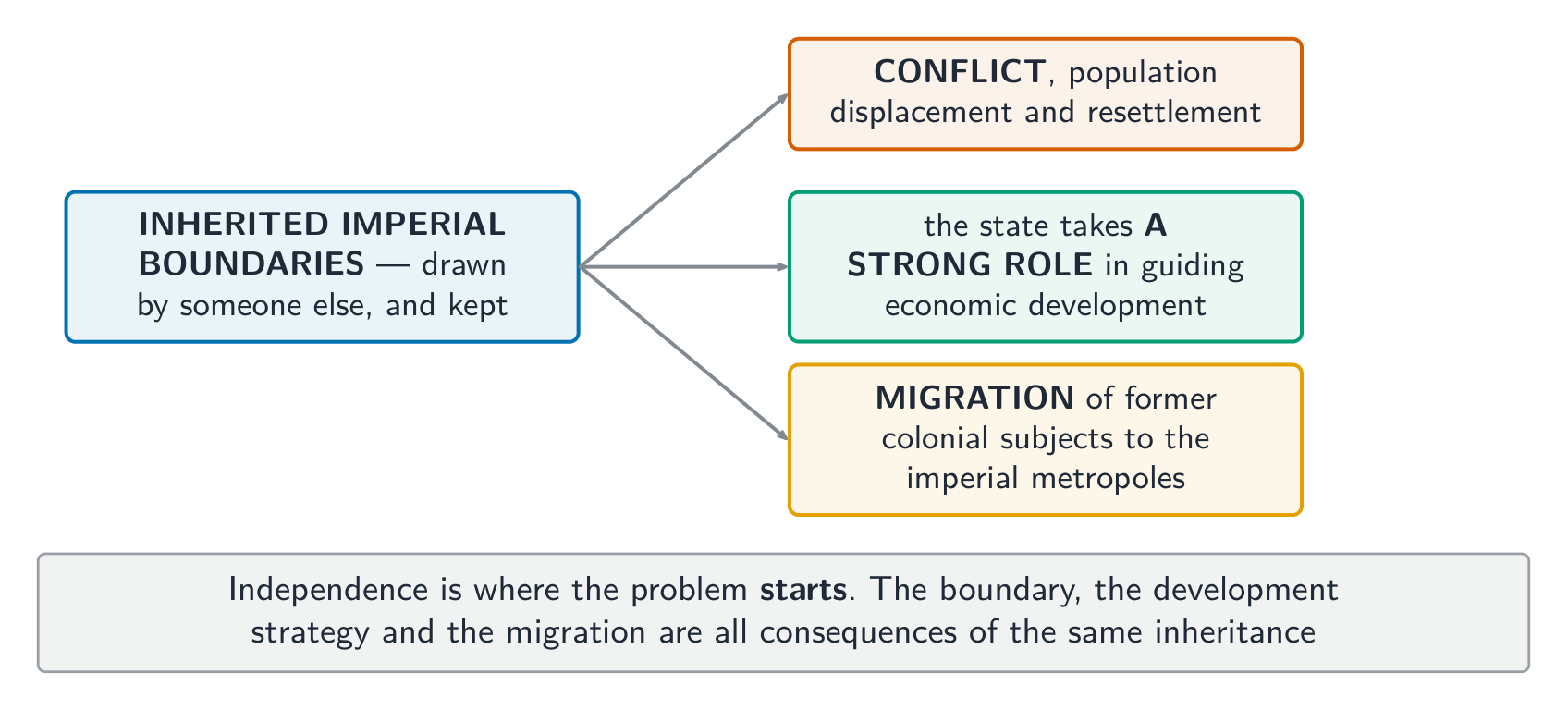
A third strand is easily missed: regional, religious, and ethnic movements challenged both colonial rule and the inherited imperial boundaries 沿袭的帝国边界 those empires left behind. Those boundaries are the reason so many post-independence conflicts were about borders rather than about the departing power.

العربية
تقسيم CED الخاص به: كيف شكل وصول مستعمرة إلى الاستقلال ما ورثته الدولة الجديدة
كلا المسارين ينتهيان بدولة جديدة - لكنهما لا ينتهيان بنفس الدولة الجديدة

القادة والاحزاب القومية في آسيا وأفريقيا سعوا إلى درجات متفاوتة من الاستقلالية داخل، أو الاستقلال عن، الحكم الإمبراطوري. تشمل المجموعة القابلة للاختبار أمثلة مثل الكونغرس القومي الهندي، هو تشي مينه في الهند الصينية الفرنسية، كوامي نكرumah في ساحل الذهب، وجمال عبد الناصر في مصر.

بعد الحرب العالمية الثانية، تفاوضت بعض المستعمرات على استقلالها، بينما حققتها أخرى من خلال النضال المسلح. تُعد الهند وساحل الذهب حالات التفاوض النموذجية؛ أما أنغولا وفيتنام والجزائر فهي الحالات المسلحة النموذجية.

خيط ثالث يمكن تفويته بسهولة: الحركات الإقليمية والدينية والإثنية تحققت من كل من الحكم الاستعماري والحدود الإمبراطورية الموروثة التي تركتها تلك الإمبراطوريات خلفها. هذه الحدود هي السبب في أن الكثير من الصراعات ما بعد الاستقلال كانت تتعلق بالحدود بدلاً من القوة المغادرة.

8.6

Newly Independent States · ⁨الدول حديثة الاستقلال⁩

Syllabus · ⁨المنهج⁩
English

8.6 Newly Independent States

Thematic Focus (GOV): Governance — A variety of internal and external factors contribute to state formation, expansion, and decline. Governments maintain order through a variety of administrative institutions, policies, and procedures, and governments obtain, retain, and exercise power in different ways and for different purposes.

Thematic Focus (ECN): Economics Systems — As societies develop, they affect and are affected by the ways that they produce, exchange, and consume goods and services.

Learning Objective Unit 8.G: Explain how political changes in the period from c. 1900 to the present led to territorial, demographic, and nationalist developments.

  • KC-6.2.III.A.i The redrawing of political boundaries after the withdrawal of former colonial authorities led to the creation of new states.
  • KC-6.2.III.A.ii The redrawing of political boundaries in some cases led to conflict as well as population displacement and/or resettlements, including those related to the Partition of India and the creation of the state of Israel.

Learning Objective Unit 8.H: Explain the economic changes and continuities resulting from the process of decolonization.

  • KC-6.3.I.C In newly independent states after World War II, governments often took on a strong role in guiding economic life to promote development.
  • KC-6.2.III.B The migration of former colonial subjects to imperial metropoles (the former colonizing country), usually in the major cities, maintained cultural and economic ties between the colony and the metropole even after the dissolution of empires.

Illustrative examples:

  • States created by redrawing of political boundaries:
    • Israel
    • Cambodia
    • Pakistan
  • (CONT’D) Governments guiding economic life:
    • Gamal Abdel Nasser’s promotion of economic development in Egypt
    • Indira Gandhi's economic policies in India
    • Julius Nyerere’s modernization in Tanzania
    • Sirimavo Bandaranaike’s economic policies in Sri Lanka
  • Migrations:
    • South Asians to Britain
    • Algerians to France
    • Filipinos to the United States
العربية

8.6 الدول المستقلة حديثاً

التركيز الموضوعي (GOV): الحكم — تساهم مجموعة متنوعة من العوامل الداخلية والخارجية في تشكيل الدولة وتوسعها وانهيارها. تحافظ الحكومات على النظام من خلال مجموعة متنوعة من المؤسسات والإجراءات والسياسات الإدارية، وتكتسب الحكومات وتحتفظ بالسلطة وتمارسها بطرق مختلفة ولأغراض مختلفة.

التركيز الموضوعي (ECN): أنظمة الاقتصاد — عندما تتطور المجتمعات، فإنها تؤثر وتتأثر بالطرق التي تنتج بها وتبادلها وتستهلك بها السلع والخدمات.

هدف التعلم الوحدة 8.G: اشرح كيف أدّت التغيرات السياسية في الفترة من حوالي عام 1900 إلى الوقت الحالي إلى تطورات إقليمية وديموغرافية وطنية.

  • KC-6.2.III.A.i أدى إعادة رسم الحدود السياسية بعد انسحاب السلطات الاستعمارية السابقة إلى إنشاء دول جديدة.
  • KC-6.2.III.A.ii أدى إعادة رسم الحدود السياسية في بعض الحالات إلى صراع أيضًا بالإضافة إلى تهجير السكان و/أو إعادة توطينهم، بما في ذلك تلك المتعلقة بتقسيم الهند وإنشاء دولة إسرائيل.

هدف التعلم الوحدة 8.H: اشرح التغيرات والاستمرارية الاقتصادية الناجمة عن عملية التفكك الاستعماري.

  • KC-6.3.I.C في الدول المستقلة حديثًا بعد الحرب العالمية الثانية، غالبًا ما تولت الحكومات دورًا قويًا في توجيه الحياة الاقتصادية لتعزيز التنمية.
  • KC-6.2.III.B أدّت هجرة رعايا المستعمرات السابقة إلى المراكز الإمبراطورية (الدولة المستعمرة سابقًا)، عادةً في المدن الكبرى، إلى الحفاظ على الروابط الثقافية والاقتصادية بين المستعمرة والمركز الإمبراطوري حتى بعد تفكك الإمبراطوريات.

أمثلة توضيحية:

  • دول نشأت عن إعادة رسم الحدود السياسية:
    • إسرائيل
    • كمبوديا
    • باكستان
  • (تابع) حكومات توجه الحياة الاقتصادية:
    • تشجيع جمال عبد الناصر للتنمية الاقتصادية في مصر
    • السياسات الاقتصادية لإنديرا غاندي في الهند
    • تحديث جوليس نييريري في تنزانيا
    • السياسات الاقتصادية لسيريمافو باندرانايكي في سريلانكا
  • الهجرات:
    • جنوب آسيا إلى بريطانيا
    • الجزائريون إلى فرنسا
    • الفلبينيون إلى الولايات المتحدة

Source: College Board AP Course and Exam Description · ⁨المصدر: وصف دورة وامتحان College Board AP⁩

English

The redrawing of political boundaries after colonial withdrawal led to the creation of new states, and in some cases to conflict, population displacement, and resettlement. The partition of British India is the standard case of all three at once.

Economically, governments in newly independent states often took a strong role in guiding economic life to promote development - a continuity with the interwar pattern of Unit 7, arrived at from a completely different direction.

There was also a reverse flow of people: the migration of former colonial subjects to imperial metropoles - usually to major cities - which maintained cultural and economic ties between the former colony and the former colonial power long after independence.

العربية

أدى إعادة رسم الحدود السياسية بعد الانسحاب الاستعماري إلى إنشاء دول جديدة، وفي بعض الحالات إلى صراع، ونزوح سكاني، وإعادة استيطان. يُعد تقسيم الهند البريطانية الحالة النموذجية لجميع هذه العناصر معاً.

من الناحية الاقتصادية، غالباً ما لعبت الحكومات في الدول حديثة الاستقلال دوراً قوياً في توجيه الحياة الاقتصادية لتعزيز التنمية - وهو استمرارية مع نمط ما بين الحربين في الوحدة 7، ولكن تم الوصول إليه من اتجاه مختلف تماماً.

كان هناك أيضاً تدفق عكسي للسكان: هجرة الرعايا السابقين للمستعمرين إلى المراكز الإمبراطورية - عادةً إلى المدن الكبرى - مما حافظ على الروابط الثقافية والاقتصادية بين المستعمرة السابقة والقوة الاستعمارية السابقة حتى وقت طويل بعد الاستقلال.

الاستقلال هو حيث تبدأ المشكلة: إرث واحد، ثلاثة نتائج
Explore · ⁨استكشف⁩

Sort what a new state inherited from what it then did · ⁨صنّف ما ورثه الدولة الجديدة عما فعلته لاحقاً⁩

Independence is where the examinable problem starts: a boundary the new state did not draw produces the rest. · ⁨الاستقلال هو حيث تبدأ المشكلة القابلة للاختبار: الحدود التي لم ترسمها الدولة الجديدة تولد الباقي.⁩

8.7

Global Resistance to Established Power Structures · ⁨المقاومة العالمية للهياكل القائمة للسلطة⁩

Syllabus · ⁨المنهج⁩
English

8.7 Global Resistance to Established Power Structures After 1900

Thematic Focus (CDI): Cultural Developments and Interactions — The development of ideas, beliefs, and religions illustrates how groups in society view themselves, and the interactions of societies and their beliefs often have political, social, and cultural implications.

Learning Objective Unit 8.I: Explain various reactions to existing power structures in the period after 1900.

  • KC-6.2.V Although conflict dominated much of the 20th century, many individuals and groups— including states—opposed this trend. Some individuals and groups, however, intensified the conflicts.
  • KC-6.2.V.A Groups and individuals challenged the many wars of the century, and some, such as Mohandas Gandhi, Martin Luther King Jr., and Nelson Mandela, promoted the practice of nonviolence as a way to bring about political change.
  • KC-6.2.V.C Militaries and militarized states often responded to the proliferation of conflicts in ways that further intensified conflict.
  • KC-6.2.V.D Some movements used violence against civilians in an effort to achieve political aims.

Illustrative examples:

  • Responses that intensified conflict:
    • Chile under Augusto Pinochet
    • Spain under Francisco Franco
    • Uganda under Idi Amin
    • The buildup of the military–industrial complex and weapons trading
  • Movements that used violence:
    • Shining Path
    • Al-Qaeda
العربية

8.7 المقاومة العالمية لهياكل السلطة الراسخة بعد عام 1900

التركيز الموضوعي (CDI): التطورات والتفاعلات الثقافية — يعكس تطور الأفكار والمعتقدات والأديان كيف تنظر المجموعات في المجتمع إلى نفسها، وغالبًا ما يكون للتفاعلات بين المجتمعات ومعتقداتها عواقب سياسية واجتماعية وثقافية.

هدف التعلم الوحدة 8.I: اشرح مختلف ردود الفعل على هياكل السلطة القائمة في الفترة التي تلت عام 1900.

  • KC-6.2.V على الرغم من أن الصراع هيمن على جزء كبير من 20th القرن، عارض العديد من الأفراد والمجموعات - بما في ذلك الدول - هذا الاتجاه. ومع ذلك، شدد بعض الأفراد والمجموعات على الصراعات.
  • KC-6.2.V.A تحدى المجموعات والأفراد الحروب العديدة في القرن، وعزز البعض، مثل مهاتما غاندي ومارتن لوثر كينغ جونيور ونلسون مانديلا، ممارسة اللاعنف كوسيلة لتحقيق تغيير سياسي.
  • KC-6.2.V.C غالبًا ما استجابت الجيوش والدول العسكرية لتفشي الصراعات بطرق زادت من حدة الصراع.
  • KC-6.2.V.D استخدمت بعض الحركات العنف ضد المدنيين سعياً منها لتحقيق أهداف سياسية.

أمثلة توضيحية:

  • ردود الأفعال التي زادت من حدة الصراع:
    • تشيلي تحت أوغستو بينيتش
    • إسبانيا تحت فرانسيسكو فرانكو
    • أوغندا تحت إيدي أمين
    • بناء المعقد العسكري-الصناعي وتجارة الأسلحة
  • حركات استخدمت العنف:
    • طريق الساطع
    • القاعدة

Source: College Board AP Course and Exam Description · ⁨المصدر: وصف دورة وامتحان College Board AP⁩

English

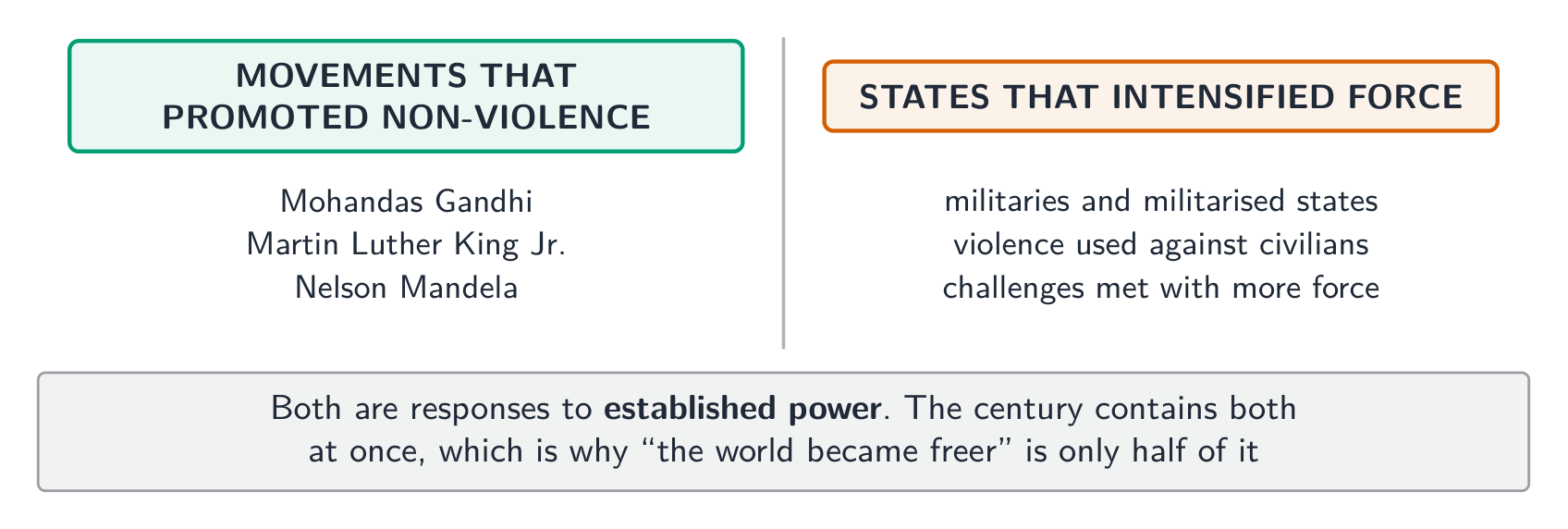
Although conflict dominated much of the twentieth century, many individuals and groups - including states - opposed that trend. The CED names three distinct patterns, and they should not be blurred:

  • Groups and individuals challenged the wars of the century, and some - Mohandas Gandhi 甘地, Martin Luther King Jr. 马丁·路德·金, and Nelson Mandela 曼德拉 - promoted non-violence 非暴力 as a method of change.
  • Militaries and militarised states often responded to the proliferation of conflicts in ways that further intensified them.
  • Some movements used violence against civilians in an effort to achieve political aims.

Both the third and second points are examinable content, not asides. A question on "reactions to existing power structures" expects the full range, not only the non-violent one.

العربية

على الرغم من أن الصراع هيمن على جزء كبير من القرن العشرين، إلا أن العديد من الأفراد والمجموعات - بما في ذلك الدول - عارضوا هذا الاتجاه. يحدد CED ثلاثة أنماط مختلفة، ولا ينبغي دمجها:

  • تحققت المجموعات والأفراد من الحروب في هذا القرن، وبعضهم - موهنداس غاندي، مارتن لوثر كينغ جونيور، ونيلسون مانديلا - روجوا للعنف كوسيلة للتغيير. (ملاحظة: النص الأصلي يقول non-violence أي عدم العنف) -> روجوا لعدم العنف كوسيلة للتغيير.
  • الجيوش والدول المزودة بالمسلحة غالباً ما استجابت لتوسع النزاعات بطرق أدت إلى تصعيدها أكثر. (ملاحظة: النص الأصلي says further intensified) -> أدت إلى تصعيدها أكثر.
  • استخدمت بعض الحركات العنف ضد المدنيين في محاولة لتحقيق أهداف سياسية.

النقطتان الثالثة والثانية هما محتوى قابل للاختبار، وليسا مجرد إضافات. يتطلب سؤال حول "ردود الفعل على هياكل السلطة القائمة" النطاق الكامل، وليس فقط الجانب غير العنيف.

كلاهما ردود فعل على السلطة القائمة - يحتوي القرن على كليهما معاً
8.8

End of the Cold War · ⁨نهاية الحرب الباردة⁩

Syllabus · ⁨المنهج⁩
English

8.8 End of the Cold War

Thematic Focus (GOV): Governance — A variety of internal and external factors contribute to state formation, expansion, and decline. Governments maintain order through a variety of administrative institutions, policies, and procedures, and governments obtain, retain, and exercise power in different ways and for different purposes.

Learning Objective Unit 8.J: Explain the causes of the end of the Cold War.

  • KC-6.2.IV.E Advances in U.S. military and technological development, the Soviet Union’s costly and ultimately failed invasion of Afghanistan, and public discontent and economic weakness in communist countries led to the end of the Cold War and the collapse of the Soviet Union.
العربية

8.8 نهاية الحرب الباردة

التركيز الموضوعي (GOV): الحكم — تساهم مجموعة متنوعة من العوامل الداخلية والخارجية في تشكيل الدولة وتوسعها وانهيارها. تحافظ الحكومات على النظام من خلال مجموعة متنوعة من المؤسسات والإجراءات والسياسات الإدارية، وتكتسب الحكومات وتحتفظ بالسلطة وتمارسها بطرق مختلفة ولأغراض مختلفة.

هدف التعلم الوحدة 8.J: اشرح أسباب انتهاء الحرب الباردة.

  • KC-6.2.IV.E أدّت التطورات في التطور العسكري والتكنولوجي الأمريكي، والعدوان المكلف الذي فشل في النهاية في أفغانستان، وعدم الرضا العام وضعف الاقتصاد في الدول الشيوعية إلى نهاية الحرب الباردة وسقوط الاتحاد السوفيتي.

Source: College Board AP Course and Exam Description · ⁨المصدر: وصف دورة وامتحان College Board AP⁩

English

The CED gives a compound cause here too: advances in United States military and technological development, the Soviet Union's costly and ultimately failed invasion of Afghanistan, public discontent 公众不满, and economic problems 经济困难 within the Soviet system.

Notice that three of the four are internal to the Soviet Union. An answer that explains the end of the Cold War purely as external pressure has missed the CED's own weighting.

العربية

يعطي CED هنا سبباً مركباً أيضاً: التقدم في التطوير العسكري والتكنولوجي للولايات المتحدة، والغزو المكلف والفاشل في النهاية لأفغانستان من قبل الاتحاد السوفيتي، واستياء الجمهور، والمشاكل الاقتصادية داخل النظام السوفيتي.

لاحظ أن ثلاثة من أصل أربعة أسباب تقع داخل الاتحاد السوفيتي. الإجابة التي تشرح نهاية الحرب الباردة كمجرد ضغط خارجي قد فواتت الوزن النسبي الذي وضعه CED.

8.9

Causation in the Age of the Cold War · ⁨التسبب في عصر الحرب الباردة⁩

Syllabus · ⁨المنهج⁩
English

8.9 Causation in the Age of the Cold War and Decolonization

Learning Objective Unit 8.K: Explain the extent to which the effects of the Cold War were similar in the Eastern and Western Hemispheres.

  • KC-6.2 Peoples and states around the world challenged the existing political and social order in varying ways, leading to unprecedented worldwide conflicts.
    • KC-6.2.II Hopes for greater self-government were largely unfulfilled following the World War I; however, in the years following the World War II, increasing anti-imperialist sentiment contributed to the dissolution of empires and the restructuring of states.
    • KC-6.2.IV.C The Cold War conflict extended beyond its basic ideological origins to have profound effects on economic, political, social, and cultural aspects of global events.
  • KC-6.3 The role of the state in the domestic economy varied, and new institutions of global association emerged and continued to develop throughout the century.
    • KC-6.3.I States responded in a variety of ways to the economic challenges of the 20th century.
العربية

8.9 التسبب في عصر الحرب الباردة والتحرر الاستعماري

هدف التعلم الوحدة 8.K: اشرح مدى تشابه تأثيرات الحرب الباردة في نصفي الكرة الأرضية الشرقي والغربي.

  • KC-6.2 عرّض شعوب ودول حول العالم النظام السياسي والاجتماعي القائم بطرق متنوعة، مما أدى إلى صراعات عالمية غير مسبوقة.
    • KC-6.2.II لم تتحقق آمال الحكم الذاتي بشكل كبير بعد الحرب العالمية الأولى؛ ومع ذلك، ساهمت المشاعر المعادية للاستعمار المتزايدة في السنوات التي أعقبت الحرب العالمية الثانية في تفكك الإمبراطوريات وإعادة هيكلة الدول.
    • KC-6.2.IV.C امتد صراع الحرب الباردة beyond أصوله الأيدولوجية الأساسية ليحدث تأثيرات عميقة على الجوانب الاقتصادية والسياسية والاجتماعية والثقافية للأحداث العالمية.
  • KC-6.3 اختلف دور الدولة في الاقتصاد المحلي، وظهرت مؤسسات جديدة للترابط العالمي واستمرت في التطور طوال القرن.
    • KC-6.3.I استجابت الدول بطرق متنوعة للتحديات الاقتصادية للقرن 20th.

Source: College Board AP Course and Exam Description · ⁨المصدر: وصف دورة وامتحان College Board AP⁩

English

The unit's reasoning task is to explain the extent to which the effects of the Cold War were similar in the Eastern and Western Hemispheres. "Extent" is a comparison word: it asks for similarity and difference, with a judgement about which dominates.

Worked example (a real AP exam question). AP World short-answer questions here ask, for example, to "Explain one difference between the processes of decolonisation in two different regions after 1945." A full-mark answer names both cases and the difference between them: "In the Gold Coast, independence was achieved largely through negotiation, as nationalist parties won elections and Britain transferred power without a war. In Algeria, independence came through a prolonged armed struggle against France, which left the new state with a military-led government and a devastated economy." Notice what earns the mark: the difference is stated in terms that apply to both cases, and each side carries its own evidence.

العربية

المهمة المنطقية للوحدة هي شرح مدى similarity (تشابه) تأثيرات الحرب الباردة في الكوكبين الشرقي والغربي. كلمة "مدى" هي كلمة مقارنة: إنها تطلب التشابه و الاختلاف، مع حكم بشأن ما يطغى.

مثال محلول (سؤال حقيقي من امتحان AP). أسئلة الإجابة القصيرة لـ AP World تطلب هنا، على سبيل المثال، "اشرح فرقاً واحداً بين عمليات إزالة الاستعمار في منطقتين مختلفتين بعد عام 1945." الإجابة الكاملة ذات العلامة الكاملة تذكر كلتا الحالتين والفرق بينهما: "في ساحل الذهب، تم تحقيق الاستقلال بشكل كبير من خلال التفاوض، حيث فازت الأحزاب القومية في الانتخابات ونقل بريطانيا السلطة دون حرب. أما في الجزائر، جاء الاستقلال من خلال نضال مسلح مطول ضد فرنسا، مما ترك الدولة الجديدة بحكومة يقودها الجيش واقتصاد مدمر." لاحظ ما يكتسب منه الدرجة: يتم صياغة الفرق بطريقة تنطبق على كلا الحالتين، ويحمل كل جانب دليله الخاص.

8.9

Exam tips · ⁨نصائح للامتحان⁩

English
  • The Cold War was not two-sided. The Non-Aligned Movement is examinable content, and including it lifts an answer immediately.
  • Give the effects as the CED does: alliances, nuclear proliferation, proxy wars. Three named effects beat one described at length.
  • Negotiated versus armed independence is the highest-value comparison in the unit, because it explains what the new state inherited.
  • Inherited imperial boundaries explain post-independence conflict better than any other single factor. Use the phrase.
  • For resistance, give all three CED patterns - non-violence, militarised response, and violence against civilians.
  • The end of the Cold War was mostly internal to the Soviet system. Weight the causes that way and say why.
العربية
  • لم تكن الحرب الباردة ذات وجهين. حركة عدم الانحياز هي محتوى قابل للاختبار، وتضمينها يرفع مستوى الإجابة فوراً.
  • قدم النتائج كما يفعل CED: التحالفات، الانتشار النووي، الحروب الوكيلية. ثلاث نتائج محددة تتفوق على واحدة موصوفة بتفصيل طويل.
  • الاستقلال المتفاوض عليه مقابل المسلح هو أعلى قيمة للمقارنة في الوحدة، لأنه يفسر ما ورثته الدولة الجديدة.
  • الحدود الإمبراطورية الموروثة تفسر صراعات ما بعد الاستقلال بشكل أفضل من أي عامل فردي آخر. استخدم هذه العبارة.
  • بالنسبة للمقاومة، قدم جميع أنماط CED الثلاثة - عدم العنف، والاستجابة العسكرية/المسلحة، والعنف ضد المدنيين.
  • كانت نهاية الحرب الباردة معظمها داخلية في النظام السوفيتي. وزّن الأسباب بهذا الشكل واذكر السبب.

Interactive lessons on this topic · ⁨دروس تفاعلية حول هذا الموضوع⁩

Work through it step by step, with instant-check exercises. · ⁨ا-working عليه خطوة بخطوة، مع تمارين تحقق فوري.⁩

Past Papers · ⁨أوراق الامتحانات السابقة⁩

More topics in AP World History: Modern · ⁨تاريخ العالم الحديث (AP)⁩ · ⁨المزيد من المواضيع في AP World History: Modern · ⁨تاريخ العالم الحديث (AP)⁩⁩

Log in or create account · ⁨تسجيل الدخول أو إنشاء حساب⁩

IGCSE, A-Level & AP