8.1 Contextualizing Period 8
Learning Objective Unit 8.A: Explain the context for societal change from 1945 to 1980.
- KC-8.1 The United States responded to an uncertain and unstable postwar world by asserting and working to maintain a position of global leadership, with far-reaching domestic and international consequences.
- KC-8.1.I United States policymakers engaged in a cold war with the authoritarian Soviet Union, seeking to limit the growth of Communist military power and ideological influence, create a free-market global economy, and build an international security system.
- KC-8.1.II Cold War policies led to public debates over the power of the federal government and acceptable means for pursuing international and domestic goals while protecting civil liberties.
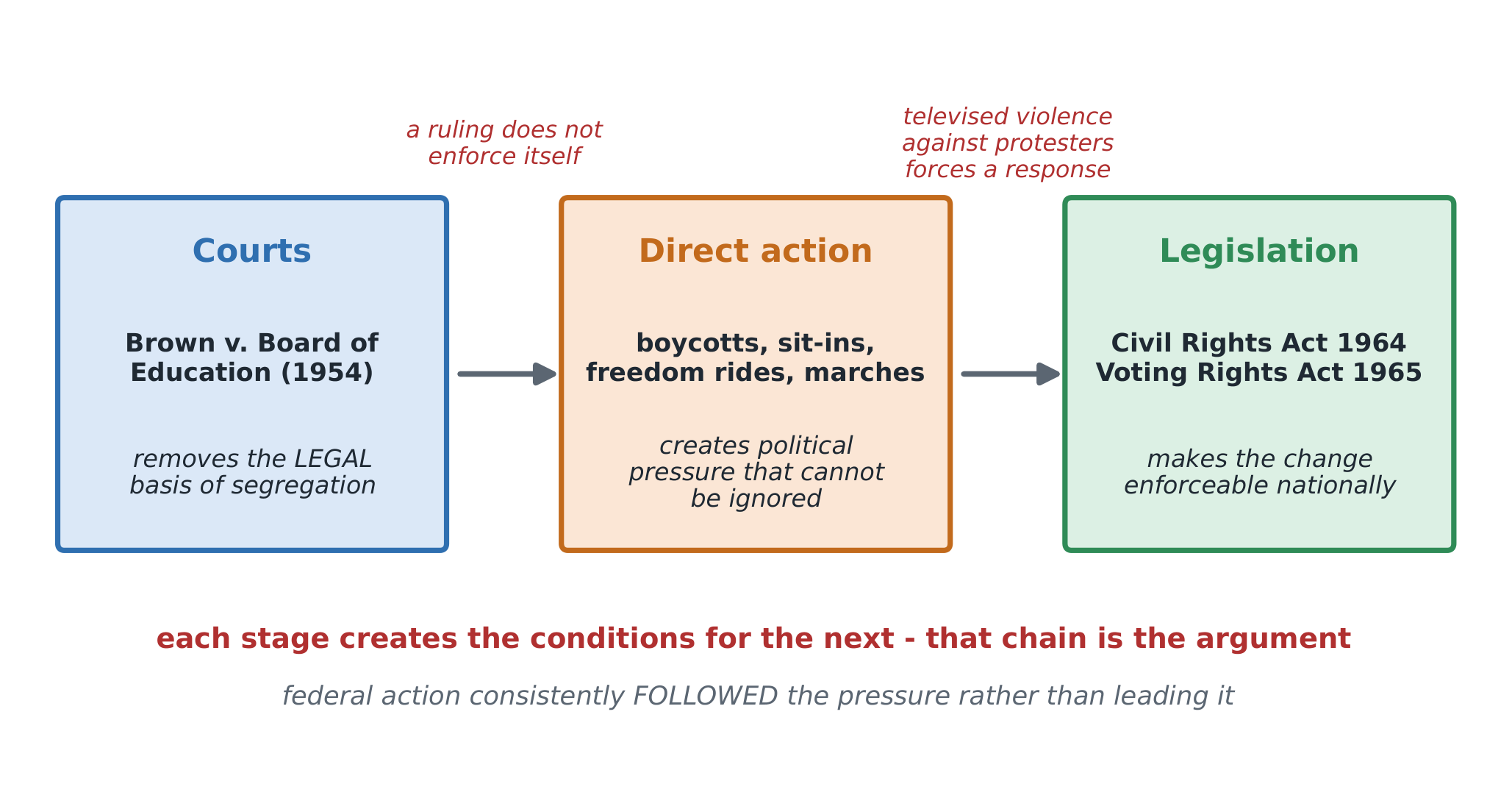
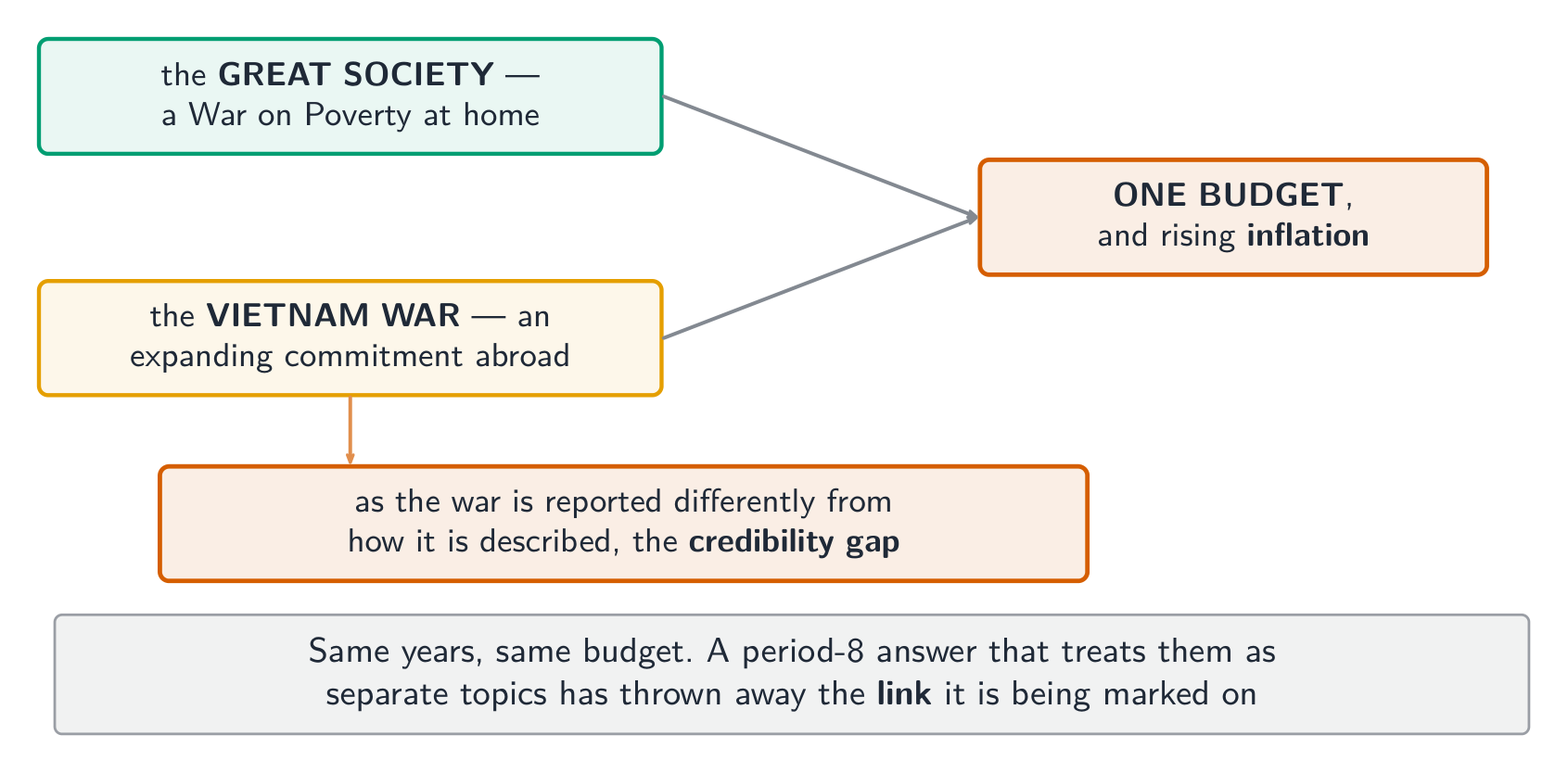
- KC-8.2 New movements for civil rights and liberal efforts to expand the role of government generated a range of political and cultural responses.
- KC-8.2.I Seeking to fulfill Reconstruction-era promises, civil rights activists and political leaders achieved some legal and political successes in ending segregation, although progress toward racial equality was slow.
- KC-8.2.II Responding to social conditions and the African American civil rights movement, a variety of movements emerged that focused on issues of identity, social justice, and the environment.
- KC-8.2.III Liberalism influenced postwar politics and court decisions, but it came under increasing attack from the left as well as from a resurgent conservative movement.
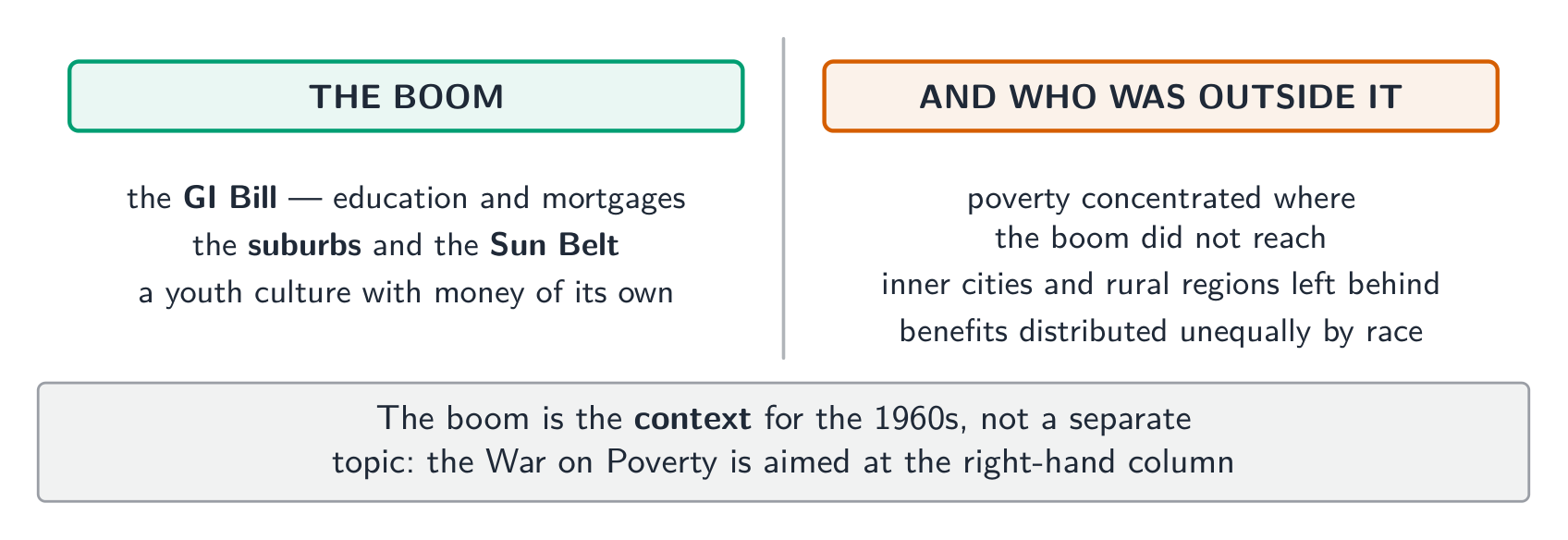
- KC-8.3 Postwar economic and demographic changes had far-reaching consequences for American society, politics, and culture.
- KC-8.3.I Rapid economic and social changes in American society fostered a sense of optimism in the postwar years.
- KC-8.3.II New demographic and social developments, along with anxieties over the Cold War, changed U.S. culture and led to significant political and moral debates that sharply divided the nation.
8.1 وضع الفترة 8 في سياقها التاريخي
هدف التعلم الوحدة 8.A: اشرح السياق للتغيير الاجتماعي من عام 1945 إلى 1980.
- KC-8.1 استجبت الولايات المتحدة لعالم ما بعد الحرب غير المستقر وغير المؤكد من خلال التأكيد السعي للحفاظ على مركز قيادي عالمي، مع عواقب داخلية ودولية بعيدة الأمد.
- KC-8.1.I شاركت سياسات الولايات المتحدة في حرب باردة مع الاتحاد السوفيتي الاستبدادي، سعياً لتقييد نمو القوة العسكرية الشيوعية والنفوذ الأيديولوجي، وإنشاء اقتصاد عالمي حر السوق، وبناء نظام أمني دولي.
- KC-8.1.II أدت سياسات الحرب الباردة إلى نقاشات عامة حول سلطة الحكومة الفيدرالية والوسائل المقبولة لتحقيق الأهداف الدولية والداخلية مع حماية الحريات المدنية.
- KC-8.2 أدت الحركات الجديدة لحقوق الإنسان والجهود الليبرالية لتوسيع دور الحكومة إلى ظهور مجموعة متنوعة من الاستجابات السياسية والثقافية.
- KC-8.2.I سعيًا لتحقيق وعود فترة إعادة البناء، حقق ناشطو حقوق الإنسان والقادة السياسيون بعض النجاحات القانونية والسياسية في إنهاء الفصل العنصري، على الرغم من أن التقدم نحو المساواة العرقية كان بطيئًا.
- KC-8.2.II استجابةً للظروف الاجتماعية وحركة حقوق الإنسان الأمريكية الأفريقية، ظهرت حركات متنوعة ركزت على قضايا الهوية والعدالة الاجتماعية والبيئة.
- KC-8.2.III أثّر الليبرالية على السياسة والأحكام القضائية ما بعد الحرب، لكنها واجهت هجمات متزايدة من اليسار وكذلك من حركة محافظية عائدة للظهور.
- KC-8.3 كان للتغيرات الاقتصادية والديموغرافية ما بعد الحرب عواقب بعيدة المدى على المجتمع الأمريكي والسياسة والثقافة.
- KC-8.3.I عززت التغيرات الاقتصادية والاجتماعية السريعة في المجتمع الأمريكي شعورًا بالأمل في سنوات ما بعد الحرب.
- KC-8.3.II غيرت التطورات الديموغرافية والاجتماعية الجديدة، إلى جانب القلق إزاء الحرب الباردة، الثقافة الأمريكية وأدت إلى نقاشات سياسية وأخلاقية كبيرة قسّمت الأمة بشدة.
8.2 The Cold War from 1945 to 1980
Thematic Focus (WOR): America in the World — Diplomatic, economic, cultural, and military interactions between empires, nations, and peoples shape the development of America and America’s increasingly important role in the world.
Learning Objective Unit 8.B: Explain the continuities and changes in Cold War policies from 1945 to 1980.
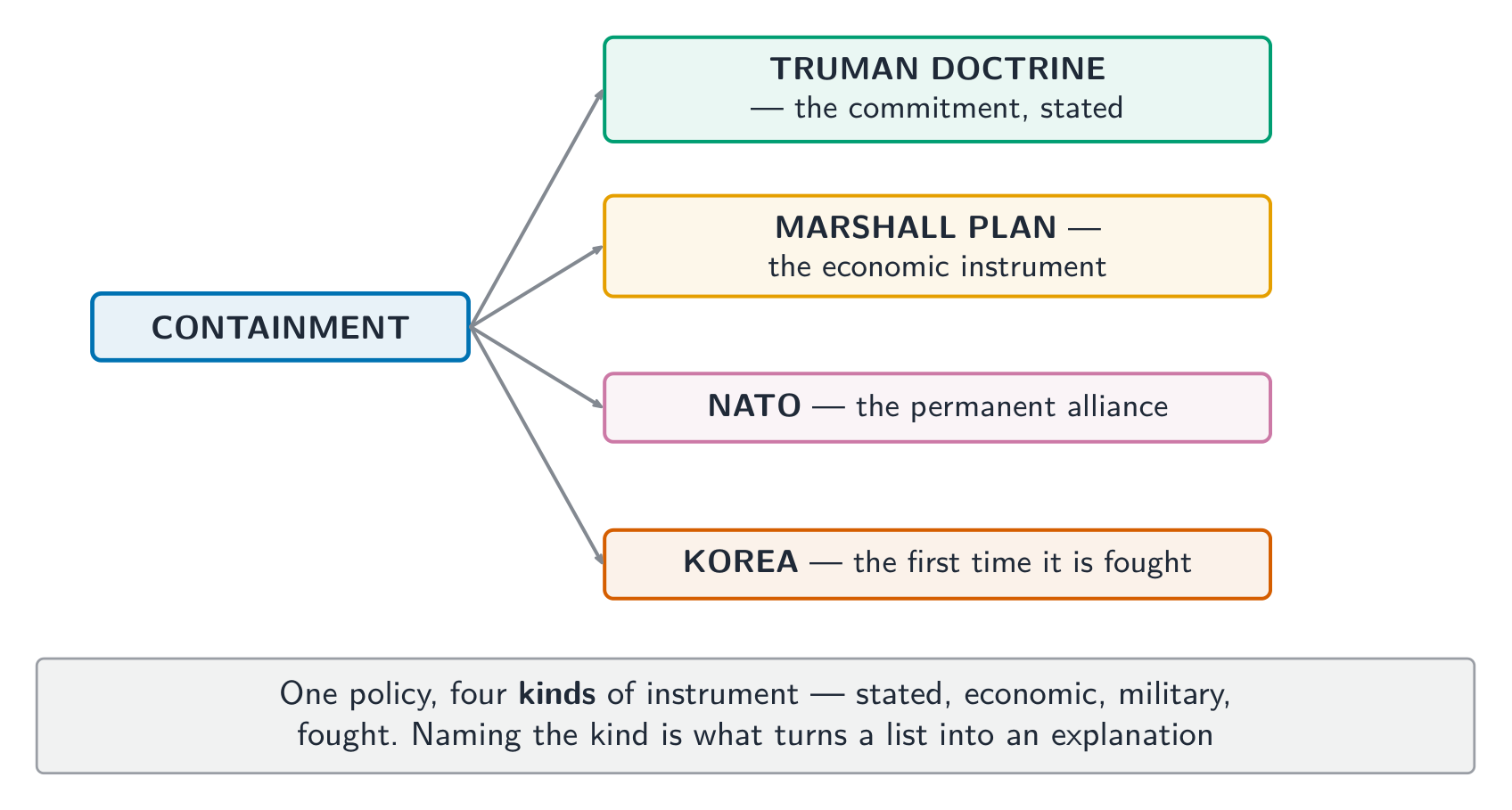
- KC-8.1.I United States policymakers engaged in a cold war with the authoritarian Soviet Union, seeking to limit the growth of Communist military power and ideological influence, create a free-market global economy, and build an international security system.
- KC-8.1.I.A As postwar tensions dissolved the wartime alliance between Western democracies and the Soviet Union, the United States developed a foreign policy based on collective security, international aid, and economic institutions that bolstered non-Communist nations.
- KC-8.1.I.B.i Concerned by expansionist Communist ideology and Soviet repression, the United States sought to contain communism through a variety of measures, including major military engagements in Korea.
- KC-8.1.I.C The Cold War fluctuated between periods of direct and indirect military confrontation and periods of mutual coexistence (or détente).
8.2 الحرب الباردة من 1945 إلى 1980
التركيز الموضوعي (WOR): أمريكا في العالم — التفاعلات الدبلوماسية والاقتصادية والثقافية والعسكرية بين الإمبراطوريات والدول والشعوب تشكل تطور أمريكا ودورها المتزايد الأهمية في العالم.
هدف التعلم الوحدة 8.ب: اشرح الاستمرارات والتغيرات في سياسات الحرب الباردة من 1945 إلى 1980.
- KC-8.1.I انخرط صانعو السياسات الأمريكيون في حرب باردة مع الاتحاد السوفيتي الاستبدادي، ساعين لتقييد نمو القوة العسكرية السوفيتية والنفوذ الأيديولوجي الشيوعي، وإنشاء اقتصاد عالمي حر السوق، وبناء نظام أمني دولي.
- KC-8.1.I.A ومع انحسار التوترات ما بعد الحرب وتفكك التحالف wartime بين الديمقراطيات الغربية والاتحاد السوفيتي، طورت الولايات المتحدة سياسة خارجية مبنية على الأمن الجماعي والمساعدات الدولية والمؤسسات الاقتصادية التي تعزز الدول غير الشيوعية.
- KC-8.1.I.B.i تقلقًا من التوسع الأيديولوجي الشيوعي والقمع السوفيتي، سعت الولايات المتحدة إلى احتواء الشيوعية من خلال مجموعة متنوعة من التدابير، بما في ذلك المشاركة العسكرية الكبيرة في كوريا.
- KC-8.1.I.C تذبذبت الحرب الباردة بين فترات من المواجهة العسكرية المباشرة وغير المباشرة وفترات من التعايش المتبادل (أو الانسجام).