شركة وعدت بمصنعها الجديد خلال مائة وخمسين أسبوعاً. افتتح متأخراً ثلاثين أسبوعاً، بتكلفة هائلة في الأجور والإيجار. تأخرت مهمة واحدة في الـ…
English narration · English + 中文 subtitles burned in · سرد باللغة الإنجليزية · ترجمة مدمجة بالإنجليزية + الصينية
9.1
Location and relocation · الموقع وإعادة التوطين
Syllabus · المنهج
English
explain the factors influencing the location and relocation of a business (including international location)
explain the optimum scale of operation and the significance of economies and diseconomies of scale
العربية
اشرح العوامل المؤثرة على الموقع وإعادة التوطين للشركة (بما في ذلك الموقع الدولي) ⟦number⟧
اشرح الحجم الأمثل للعمل وأهمية اقتصاديات ومكاسب الحجم ⟦number⟧
Source: Cambridge International syllabus · المصدر: منهج كامبريدج الدولي
English
Where a business sits affects its costs, its sales and its staff. Choosing a place is called location 选址; moving to a new place is relocation 迁址.
Factors that influence the choice fall into two groups:
quantitative factors 定量因素 — things you can measure in money, such as rent, wages, transport costs and government grants.
qualitative factors 定性因素 — things that are harder to measure, such as the skills of local workers, nearness to customers or suppliers, and the owner's own wishes.
A firm picks the place where the benefits, money and non-money together, are greatest.
العربية
موقع عمل ما يؤثر على تكاليفه ومبيعاته وموظفيه. اختيار مكان يسمى تحديد الموقع؛ الانتقال إلى مكان جديد يسمى إعادة التوطين.
العوامل التي تؤثر على الاختيار تنقسم إلى مجموعتين:
عوامل كمية — أشياء يمكنك قياسها بالنقود، مثل الإيجار والأجور وتكاليف النقل ومنح الحكومة.
عوامل نوعية — أشياء يصعب قياسها، مثل مهارات العمال المحليين وقربهم من العملاء أو الموردين ورغبات المالك نفسه.
تختار الشركة المكان الذي تكون فيه المنافع والنقد وغير النقدي معًا في أعلى مستوياتها.
قرار الموقع يوزن عوامل النقد والعوامل الأصعب في القياس، ثم يختار المكان ذو أقصى منفعة كلية
Explore · استكشف
Location factor lab · مختبر عامل الموقع
Classify why a business chooses one site over another. · صنف لماذا تختار شركة موقعًا معينًا بدلاً من آخر.
Many firms now locate abroad. Moving production to another country is offshoring 离岸外包. The reasons are often lower wages, nearness to new markets, fewer rules, or government help. The risks are longer supply lines, language and culture differences, and possible damage to the firm's image.
العربية
تقوم العديد من الشركات الآن بتحديد مواقعها في الخارج. نقل الإنتاج إلى بلد آخر يسمى التسويق الخارجي (Offshoring). الأسباب غالبًا ما تكون أجورًا أقل، وقربًا من الأسواق الجديدة، وقواعد أقل، أو مساعدة حكومية. المخاطر تشمل سلاسل إمداد أطول، و differences لغوية وثقافية، وإمكانية إلحاق الضرر بصورة الشركة.
The optimum scale of operation · الحجم الأمثل للعمل
English
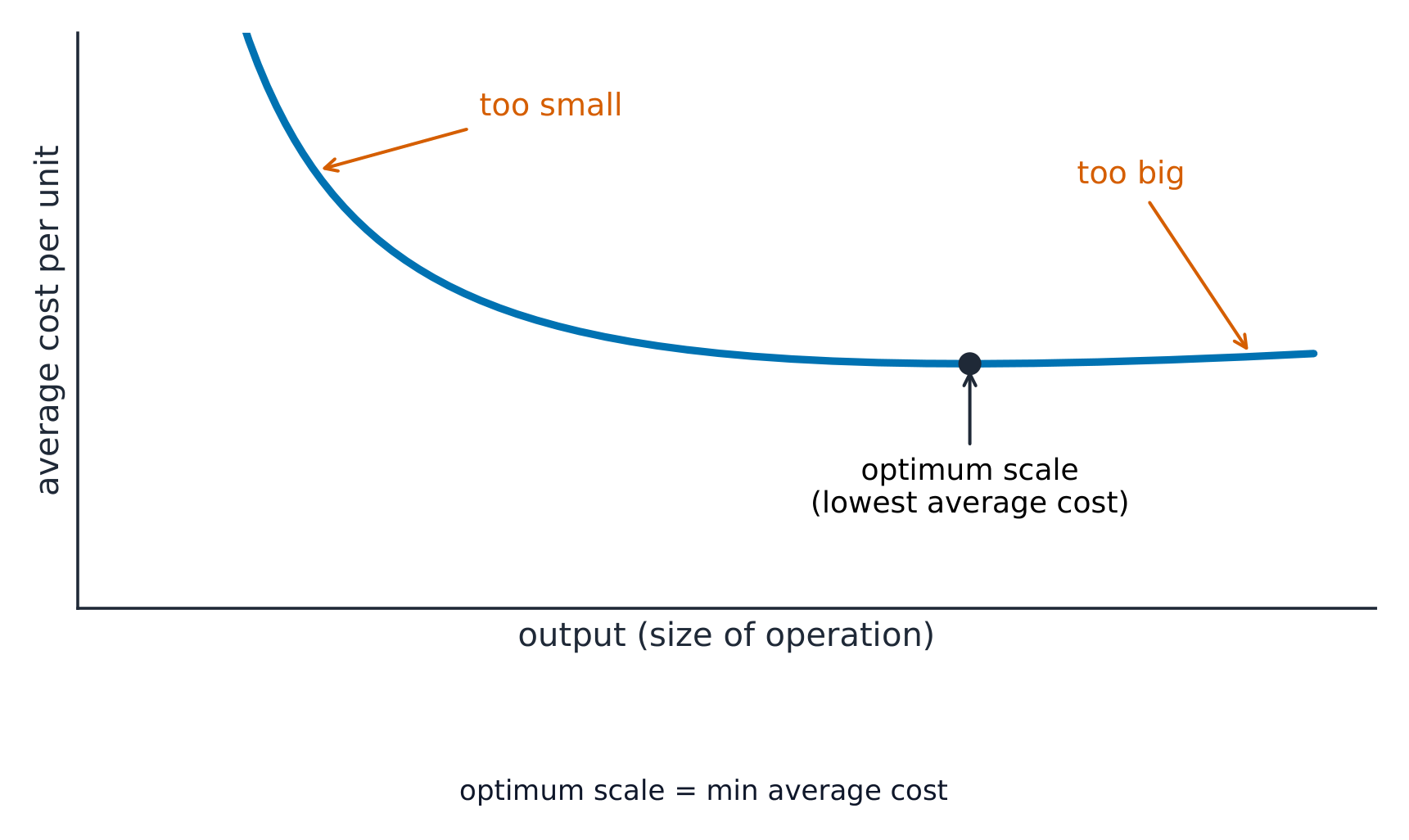
As a firm grows, its average cost first falls (from economies of scale) and later rises (from diseconomies of scale). The optimum scale 最优规模 is the size at which the average cost per unit is at its lowest.
economies of scale 规模经济 — cost savings from being larger (e.g. bulk buying).
diseconomies of scale 规模不经济 — rising average cost when a firm grows too big (e.g. poor communication).
A firm should try to grow up to its optimum scale, but not beyond it.
العربية
مع نمو الشركة، تنخفض متوسط التكلفة أولاً (بسبب اقتصاديات الحجم) ثم ترتفع لاحقًا (بسبب عدم اقتصاديات الحجم). الحجم الأمثل هو الحجم الذي يكون فيه متوسط التكلفة للوحدة في أدنى مستوى له.
اقتصاديات الحجم — توفير التكاليف الناتج عن الكبر (مثل الشراء بالجملة).
عدم اقتصاديات الحجم — ارتفاع متوسط التكلفة عندما تكبر الشركة بشكل كبير جدًا (مثل سوء التواصل).
يجب على الشركة محاولة النمو حتى حجمها الأمثل، ولكن ليس فوقه.
الحجم الأمثل هو الإنتاج الذي يكون فيه متوسط التكلفة للوحدة في أدنى مستوى
explain the importance of quality and methods of managing quality (quality control, quality assurance, total quality management, benchmarking)
العربية
اشرح أهمية الجودة وطرق إدارتها (مراقبة الجودة، ضمان الجودة، إدارة الجودة الشاملة، المعايير المرجعية) ⟦number⟧
Source: Cambridge International syllabus · المصدر: منهج كامبريدج الدولي
English
Quality 质量 means how well a product meets the customer's needs. Good quality wins repeat custom, lets the firm charge more, protects its brand, and cuts the cost of waste and returns. Poor quality loses customers and damages the firm's name.
العربية
الجودة تعني مدى استجابة المنتج لاحتياجات العميل. الجودة الجيدة تجذب العملاء المتكررين، وتسمح للشركة بفرض أسعار أعلى، وتحمي علامتها التجارية، وتقلل من تكاليف الهدر والمرتجعات. أما الجودة الرديئة فتؤدي إلى فقدان العملاء وتضر بسمعة الشركة.
Explore · استكشف
Leadership style lab · معسل نمط القيادة
Pick the management style that fits each situation. · حدد نمط الإدارة الذي يناسب كل موقف.
check finished products and remove the faulty ones at the end
quality assurance 质量保证
build quality into every stage, so faults are prevented, not just found
total quality management 全面质量管理 (TQM)
every worker takes responsibility for quality, aiming for zero faults
benchmarking 标杆管理
compare the firm's methods with the best firms, and copy what they do well
Quality control finds faults late, after money is already spent. Quality assurance and TQM try to stop faults happening, which is usually cheaper in the long run.
العربية
الطريقة
كيفية عملها
رقابة الجودة
فحص المنتجات النهائية وإزالة المعيبة في المرحلة الأخيرة
ضمان الجودة
دمج الجودة في كل مرحلة، بحيث تُمنع الأخطاء لاكتشافها فقط
إدارة الجودة الشاملة (TQM)
يتحمل كل عامل مسؤولية الجودة، بهدف الوصول إلى أخطاء صفرية
المعايير المرجعية
مقارنة طرق الشركة بأفضل الشركات ونسخ ما يقومون به بشكل جيد
تكتشف رقابة الجودة الأخطاء متأخراً، بعد إنفاق المال بالفعل. بينما تحاول ضمان الجودة والإدارة الشاملة منع وقوع الأخطاء، وهو أمر يكون عادةً أقل تكلفة على المدى الطويل.
مراقبة الجودة تتحقق في النهاية؛ ضمان الجودة تبني الجودة في كل مرحلة
total quality management/ˈtəʊtl ˈkwɒlɪti ˈmænɪdʒmənt/
إدارة الجودة الشاملة
benchmarking/ˈbentʃmɑːkɪŋ/
القياس المعياري
lean production/liːn prəˈdʌkʃn/
الإنتاج النحيف
waste/weɪst/
النفايات
capacity management/kəˈpæsɪti ˈmænɪdʒmənt/
إدارة الطاقة الإنتاجية
technology/tekˈnɒlədʒi/
تكنولوجيا
critical path analysis/ˈkrɪtɪkl pæθ əˈnæləsɪs/
تحليل المسار الحرج
nodes/nəʊdz/
العقد
earliest start time/ˈɜːlɪɪst stɑːt taɪm/
أول وقت بدء
latest finish time/ˈleɪtɪst ˈfɪnɪʃ taɪm/
آخر وقت انتهاء
9.3
Operations strategy: lean production · استراتيجية العمليات: الإنتاج النحيف
Syllabus · المنهج
English
explain operations decisions: lean production, capacity management, and the use of technology
use critical path analysis (CPA) to plan and manage projects (EST, LFT, total float, critical path, minimum project duration)
العربية
اشرح قرارات العمليات: الإنتاج النحيف، إدارة السعة، واستخدام التكنولوجيا ⟦number⟧
استخدم تحليل المسار الحرج (CPA) لتخطيط وإدارة المشاريع (أقصر وقت بدء مبكر، أحدث وقت انتهاء متأخر، إجمالي الطفو، المسار الحرج، أقل مدة للمشروع**) ⟦number⟧
Source: Cambridge International syllabus · المصدر: منهج كامبريدج الدولي
English
Lean production 精益生产 means making products with the least possible waste 浪费 — of time, materials, space and effort. Methods like just-in-time and continuous improvement cut waste, lower cost, and raise quality. Less money is tied up in stock, and problems are fixed quickly.
الإنتاج النحيف يعني تصنيع المنتجات بأقل قدر ممكن من الهدر — من الوقت والمواد والمساحة والجهد. تقلل أساليب مثل الإنتاج في الوقت المناسب والتحسين المستمر من الهدر، وخفض التكاليف، ورفع الجودة. كما يتم ربط مبلغ أقل في المخزون، ويتم حل المشكلات بسرعة.
Explore · استكشف
SWOT strategy lab · مختبر استراتيجية SWOT
Sort strategy evidence into internal and external factors. · رتب أدلة الاستراتيجية إلى عوامل داخلية وخارجية.
Capacity management and technology · إدارة الطاقة الإنتاجية والتكنولوجيا
English
Capacity management 产能管理 means matching what the firm can produce to the demand it faces. If demand is higher than capacity, the firm may add shifts, hire staff or outsource; if demand is lower, it may cut output or find new orders. New technology 技术, such as automation and data systems, helps a firm produce more, to a higher standard, at a lower cost.
العربية
إدارة الطاقة الإنتاجية تعني مطابقة ما يمكن للشركة إنتاجه مع الطلب الذي تواجهه. إذا كان الطلب أعلى من الطاقة الإنتاجية، قد تضيف الشركة وردات عمل أو توظف عمالة أو تستعير خدمات؛ وإذا كان الطلب أقل، قد تقلل الإنتاج أو تبحث عن طلبات جديدة. تساعد التكنولوجيا الجديدة، مثل الأتمتة وأنظمة البيانات، الشركة على إنتاج المزيد، بمعايير أعلى، بتكلفة أقل.
9.3
Critical path analysis · تحليل المسار الحرج
English
Critical path analysis 关键路径分析 (CPA) is a tool for planning a project made of many tasks. It draws the tasks as a network of arrows and nodes 节点 (circles), in the order they must happen. For each task it works out timings:
the earliest start time 最早开始时间 (EST) — the soonest a task can begin, once earlier tasks are done.
the latest finish time 最晚完成时间 (LFT) — the latest a task can finish without delaying the whole project.
From these comes the total float 总浮动时间 — the spare time a task has before it delays the project:
The critical path 关键路径 is the chain of tasks with zero float. These tasks cannot be late, or the whole project is late. Adding up the times along this path gives the minimum project duration 最短项目工期 — the shortest time the project can take.
CPA helps managers find the tasks that matter most, order resources for the right time, and see where delays would hurt. But it is only as good as the time estimates it is built on.
Worked example. A task has an EST of 6 days, a duration of 4 days, and an LFT of 14 days. Find its total float, and say whether it lies on the critical path. Use the formula: total float = LFT − duration − EST = $14 - 4 - 6 =$4 days. So the task could start up to 4 days late, or overrun by 4 days, without delaying the project - and because its float is not zero, it is not on the critical path. Only tasks with zero float are critical. Two points carry the marks: float is the spare time on that task, so using it up makes the task critical; and shortening a non-critical task like this one does not shorten the project at all, because only the critical path sets the minimum project duration.
العربية
تحليل المسار الحرج (CPA) هو أداة لتخطيط مشروع مكون من مهام عديدة. يرسم المهام كشبكة من الأسهم والعقد (دوائر)، حسب ترتيب حدوثها. لكل مهمة، يحسب التوقيتات:
أقرب وقت بدء (EST) — أسرع وقت يمكن أن تبدأ فيه المهمة، بمجرد انتهاء المهام السابقة.
أحدث وقت نهاية (LFT) — آخر وقت يمكن أن تنتهي فيه المهمة دون تأخير المشروع بأكمله.
من هذه النتائج ينتج الفارق الكلي — الوقت الإضافي الذي تتمتع به المهمة قبل أن تتسبب في تأخير المشروع:
المسار الحرج هو سلسلة المهام ذات الفارق الصفري. لا يمكن لهذه المهام أن تتأخر، وإلا سيتأخر المشروع بأكمله. جمع التوقات على طول هذا المسار يعطي أقل مدة للمشروع — أقصر وقت يمكن أن يستغرقه المشروع.
المسار الحرج هو سلسلة الأنشطة ذات الفارق الصفري — فهي تحدد طول المشروع
يساعد CPA المدراء على تحديد المهام الأكثر أهمية، وترتيب الموارد في الوقت المناسب، ورؤية أين قد تضر التأخيرات. لكنه لا يكون أفضل مما بُني عليه من تقديرات زمنية.
مثال محلول. مهمة لها EST يساوي 6 أيام، ومدة 4 أيام، وLFT يساوي 14 يومًا. أوجد فارقها الكلي، وحدد ما إذا كانت تقع على المسار الحرج. استخدم الصيغة: الفارق الكلي = LFT − المدة − EST = $14 - 4 - 6 =$4 أيام. إذن يمكن للمهمة أن تبدأ متأخرة حتى 4 أيام، أو تتجاوز موعدها بـ 4 أيام، دون تأخير المشروع - ولأن فارقها ليس صفراً، فهي ليست على المسار الحرج. فقط المهام ذات الفارق الصفري هي حرجة. نقطتان تحملان العلامة: الفارق هو الوقت الإضافي على تلك المهمة، لذا فإن استهلاكه يجعل المهمة حرجة؛ وقصر مهمة غير حرجة كهذه لا يُقصِّر المشروع على الإطلاق، لأن المسار الحرج فقط هو الذي يحدد أقل مدة للمشروع.
Explore · استكشف
Critical path analysis · تحليل المسار الحرج
CPA finds the sequence of tasks that decides the shortest time a project can take. · يحدد CPA تسلسل المهام الذي يحدد أقصر وقت يمكن أن يستغرقه المشروع.
Explore · استكشف
Find the critical path · إيجاد المسار الحرج
Drag the durations — the network rolls forward and back, the floats update, and the critical path jumps to whichever route is longest. · اسحب المدد — تدور الشبكة للأمام والخلف، يتم تحديث الفجوات، وينتقل المسار الحرج إلى أي مسار هو الأطول.
Pick one and the site follows you — notes, papers, videos and practice all open on it. · اختر واحدًا وسيتبعك الموقع — الملاحظات، الأوراق، الفيديوهات والتدريب جميعها تفتح عليه.
Type to search notes, lessons, code, vocabulary and past-paper questions across every subject. · اكتب للبحث عن ملاحظات، دروس، أكواد، مفردات وأسئلة امتحانات سابقة عبر جميع المواد.