What is heat, really? Zoom in far enough, and everything is made of tiny particles, always moving. Heat something, and its particles move faster. Cool it, and…
1 Know the distinguishing properties of solids, liquids and gases
2 Know the terms for the changes in state between solids, liquids and gases (gas to solid and solid to gas transfers are not required)
2.1.2 Particle model
Core
Supplement
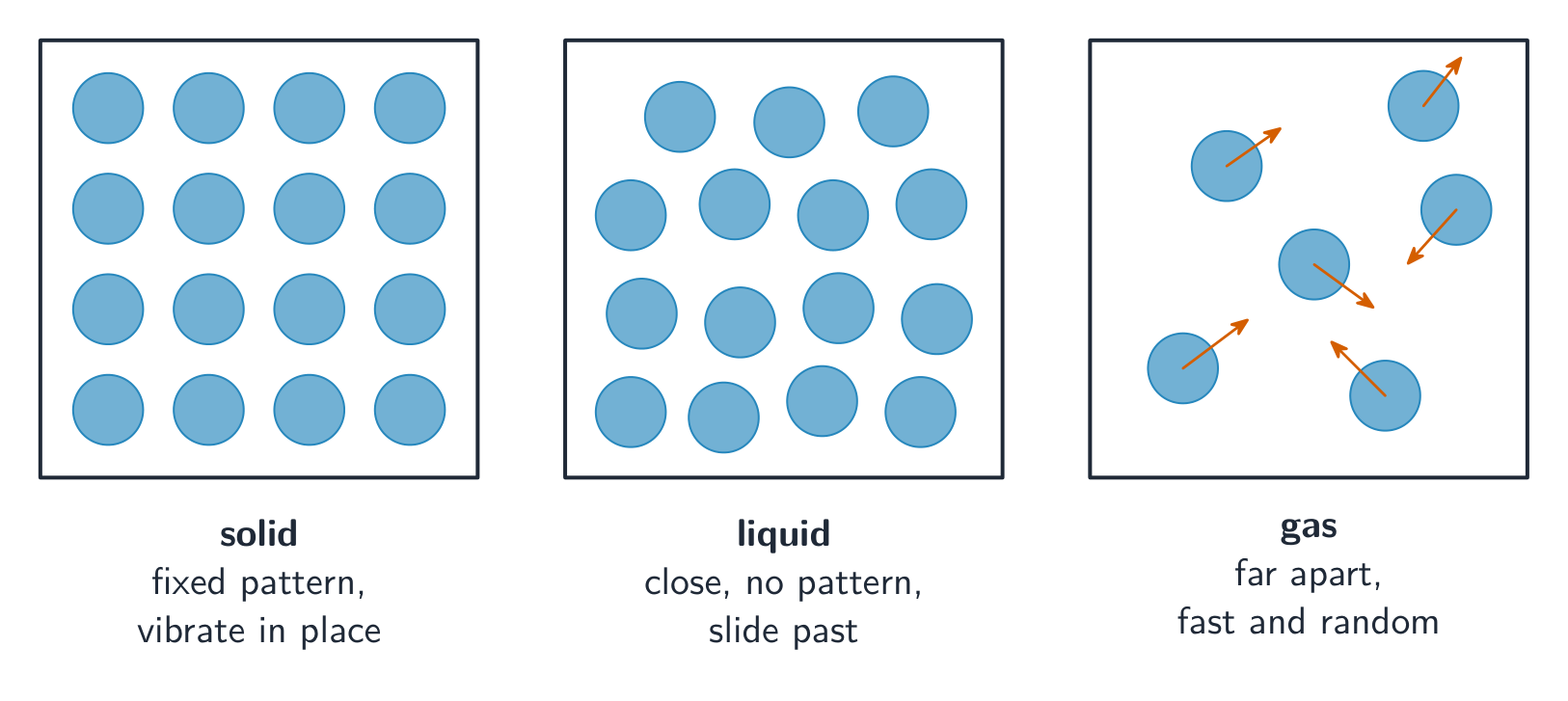
1 Describe the particle structure of solids, liquids and gases in terms of the arrangement, separation and motion of the particles and represent these states using simple particle diagrams
6 Know that the forces and distances between particles (atoms, molecules, ions and electrons) and the motion of the particles affects the properties of solids, liquids and gases
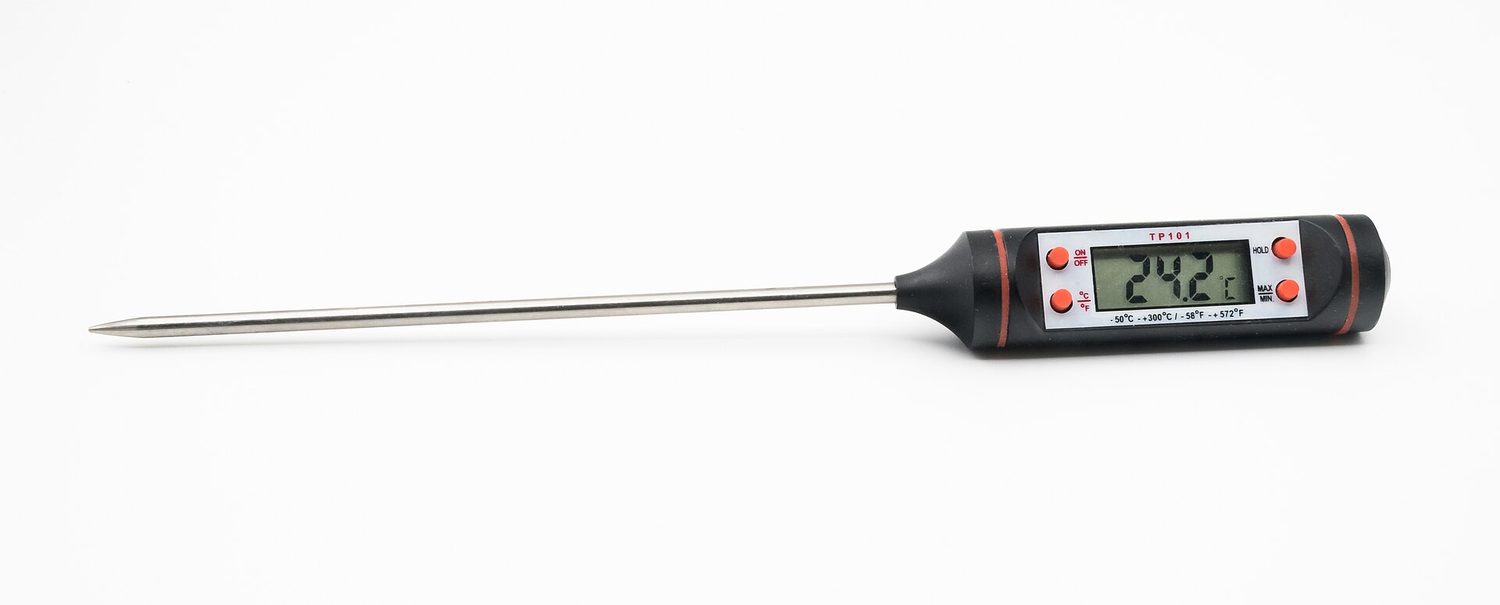
2 Describe the relationship between the motion of particles and temperature, including the idea that there is a lowest possible temperature ($-273\,{}^{\circ}\text{C}$), known as absolute zero, where the particles have least kinetic energy
3 Describe the pressure and the changes in pressure of a gas in terms of the motion of its particles and their collisions with a surface
7 Describe the pressure and the changes in pressure of a gas in terms of the forces exerted by particles colliding with surfaces, creating a force per unit area
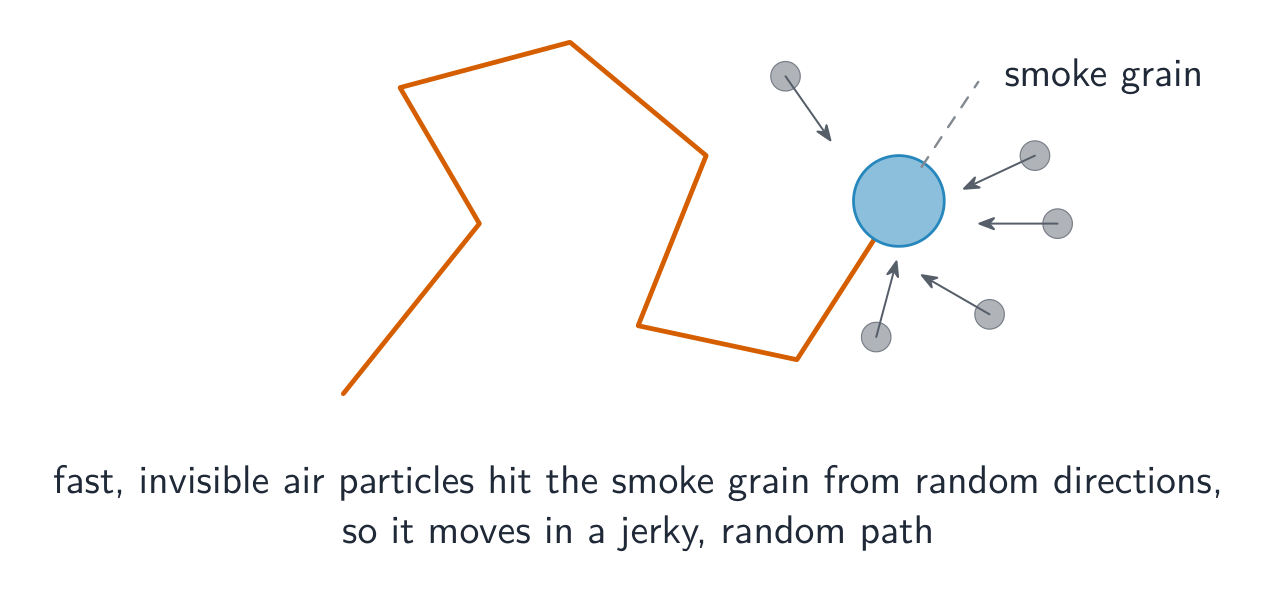
4 Know that the random motion of microscopic particles in a suspension is evidence for the kinetic particle model of matter
8 Know that microscopic particles may be moved by collisions with light fast-moving molecules and correctly use the terms atoms or molecules as distinct from microscopic particles
5 Describe and explain this motion (sometimes known as Brownian motion) in terms of random collisions between the microscopic particles in a suspension and the particles of the gas or liquid
2.1.3 Gases and the absolute scale of temperature
Core
Supplement
1 Describe qualitatively, in terms of particles, the effect on the pressure of a fixed mass of gas of: (a) a change of temperature at constant volume (b) a change of volume at constant temperature
3 Recall and use the equation $pV = \text{constant}$ for a fixed mass of gas at constant temperature, including a graphical representation of this relationship
2 Convert temperatures between kelvin and degrees Celsius; recall and use the equation $T\text{ (in K)} = \theta\text{ (in }^{\circ}\text{C)} + 273$
Slide the piston in to shrink the volume. The same particles get crammed into less space, so they hit the walls more often and the pressure climbs — while pressure × volume stays constant.
2.2.1 Thermal expansion of solids, liquids and gases
Core
Supplement
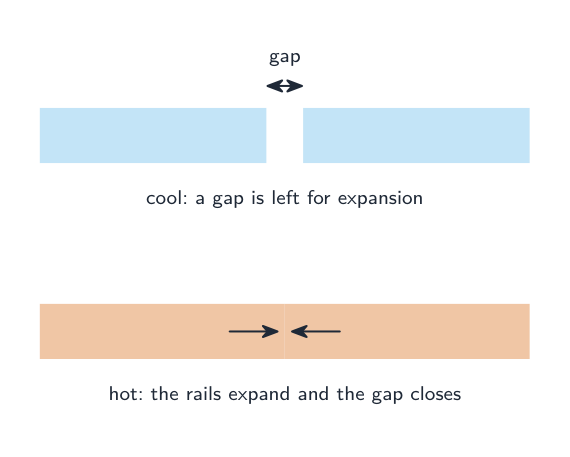
1 Describe, qualitatively, the thermal expansion of solids, liquids and gases at constant pressure
3 Explain, in terms of the motion and arrangement of particles, the relative order of magnitudes of the expansion of solids, liquids and gases as their temperatures rise
2 Describe some of the everyday applications and consequences of thermal expansion
2.2.2 Specific heat capacity
Core
Supplement
1 Know that a rise in the temperature of an object increases its internal energy
2 Describe an increase in temperature of an object in terms of an increase in the average kinetic energies of all of the particles in the object
3 Define specific heat capacity as the energy required per unit mass per unit temperature increase; recall and use the equation
$$c = \frac{\Delta E}{m\Delta\theta}$$
4 Describe experiments to measure the specific heat capacity of a solid and a liquid
2.2.3 Melting, boiling and evaporation
Core
Supplement
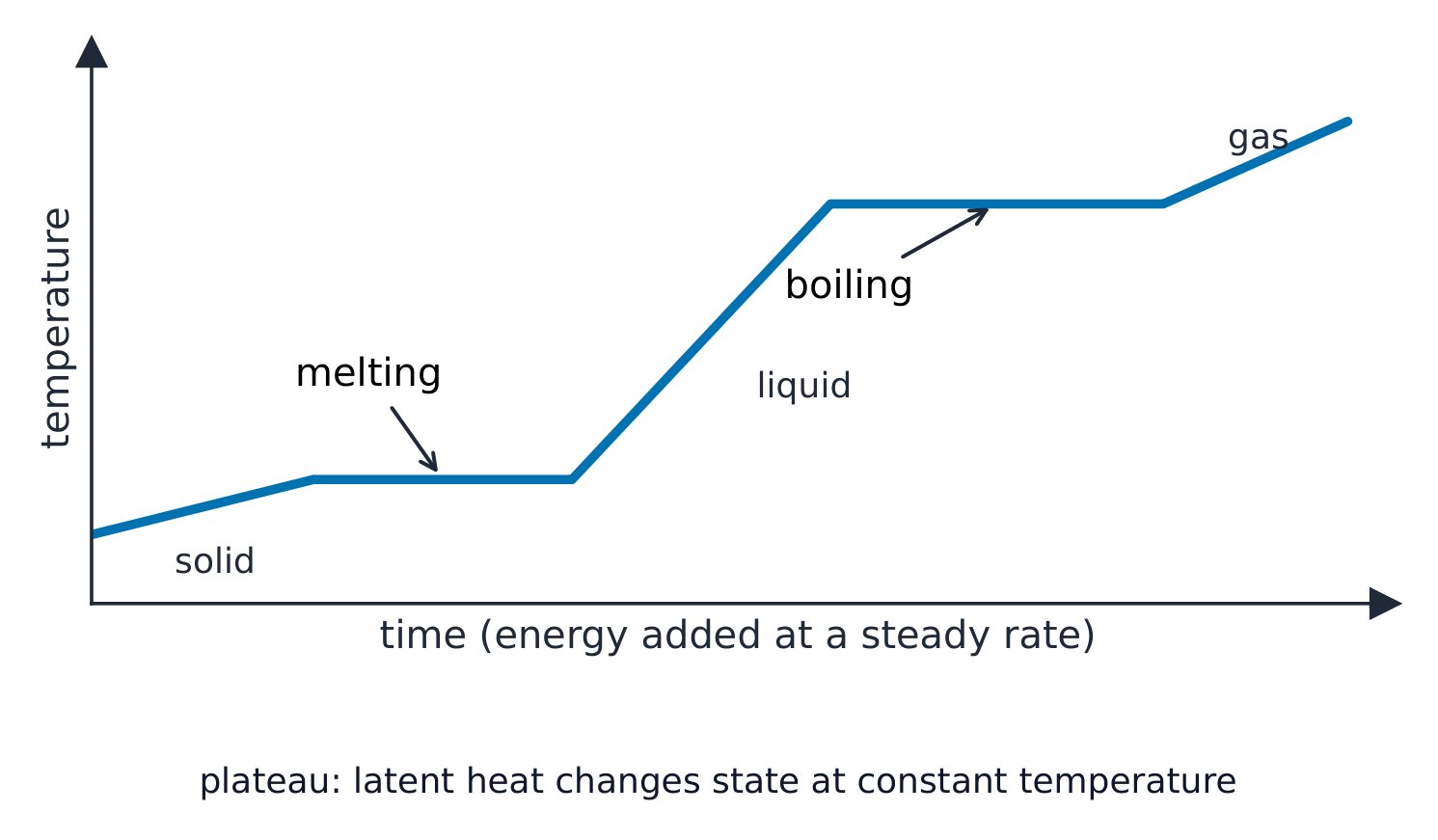
1 Describe melting and boiling in terms of energy input without a change in temperature
6 Describe the differences between boiling and evaporation
2 Know the melting and boiling temperatures for water at standard atmospheric pressure
3 Describe condensation and solidification in terms of particles
4 Describe evaporation in terms of the escape of more-energetic particles from the surface of a liquid
7 Describe how temperature, surface area and air movement over a surface affect evaporation
5 Know that evaporation causes cooling of a liquid
8 Explain the cooling of an object in contact with an evaporating liquid
While the substance is melting or boiling the temperature stays flat, even though heat is still going in — the energy breaks bonds instead of warming it.
transfer of thermal energy/ˈtrænsfɜː ɒv ˈθɜːml ˈenədʒi/
热能传递
rè néng chuán dì
2.3
热能的传递
大纲
2.3.1 Conduction
Core
Supplement
1 Describe experiments to demonstrate the properties of good thermal conductors and bad thermal conductors (thermal insulators)
2 Describe thermal conduction in all solids in terms of atomic or molecular lattice vibrations and also in terms of the movement of free (delocalised) electrons in metallic conductors
3 Describe, in terms of particles, why thermal conduction is bad in gases and most liquids
4 Know that there are many solids that conduct thermal energy better than thermal insulators but do so less well than good thermal conductors
2.3.2 Convection
Core
Supplement
1 Know that convection is an important method of thermal energy transfer in liquids and gases
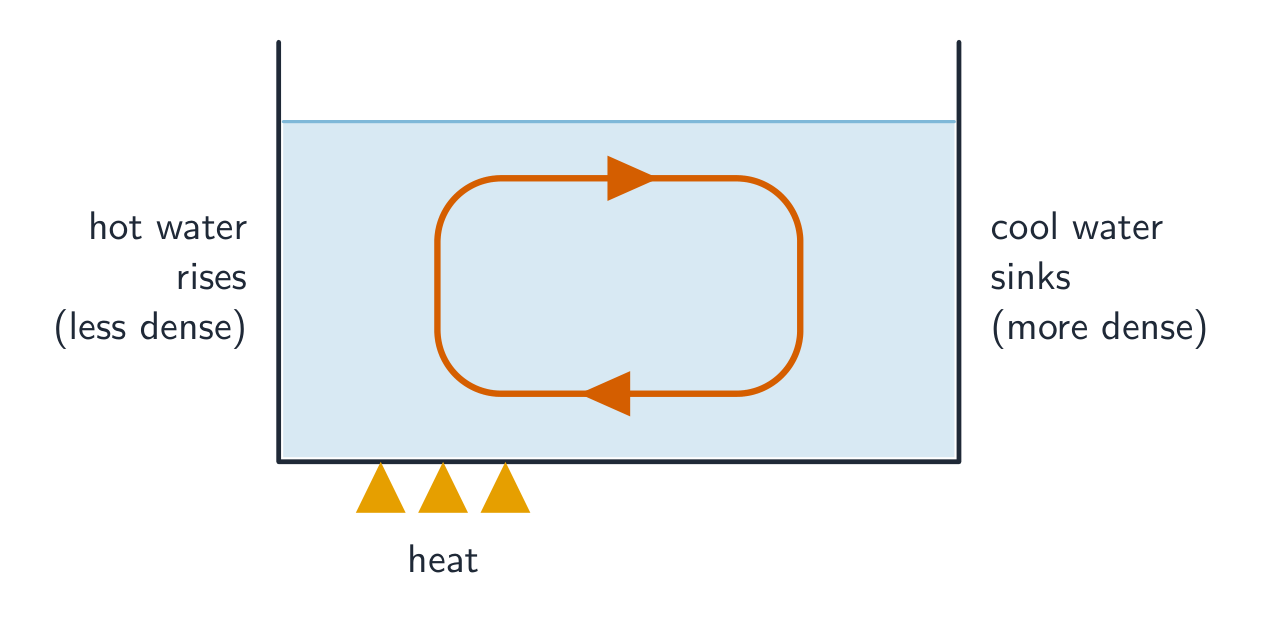
2 Explain convection in liquids and gases in terms of density changes and describe experiments to illustrate convection
2.3.3 Radiation
Core
Supplement
1 Know that thermal radiation is infrared radiation and that all objects emit this radiation
2 Know that thermal energy transfer by thermal radiation does not require a medium
4 Know that for an object to be at a constant temperature it needs to transfer energy away from the object at the same rate that it receives energy
3 Describe the effect of surface colour (black or white) and texture (dull or shiny) on the emission, absorption and reflection of infrared radiation
5 Know what happens to an object if the rate at which it receives energy is less or more than the rate at which it transfers energy away from the object
6 Know how the temperature of the Earth is affected by factors controlling the balance between incoming radiation and radiation emitted from the Earth’s surface
7 Describe experiments to distinguish between good and bad emitters of infrared radiation
8 Describe experiments to distinguish between good and bad absorbers of infrared radiation
9 Describe how the rate of emission of radiation depends on the surface temperature and surface area of an object
2.3.4 Consequences of thermal energy transfer
Core
Supplement
1 Explain some of the basic everyday applications and consequences of conduction, convection and radiation, including: (a) heating objects such as kitchen pans (b) heating a room by convection
2 Explain some of the complex applications and consequences of conduction, convection and radiation where more than one type of thermal energy transfer is significant, including: (a) a fire burning wood or coal (b) a radiator in a car