- listen for specific facts and details: places, names, times, dates and directions
- predict what kind of information you will hear before you listen
- select the correct multiple-choice option based on what the speaker says
听力技能
IGCSE 英语 · 第 9 主题
 7:00
7:00
Listening Skills
Here is what makes listening different from every other paper. In reading, the text sits still and waits for you. In listening, <slow>the recording does not…
英文讲解 · 内嵌中英文字幕
9.1
听取具体信息

大纲
来源:剑桥国际大纲
在听力考试中你听每段录音(recording)两次。好好利用两次机会。
Predict before you listen
- 在录音开始前读问题。
- 预测(predict)你需要哪种答案:一个地点、一个名字、一个数字、一个时间?
Catch the detail
- 听具体的(specific)事实:地点、名字、日期、时间和方向(directions)。
- 答案通常以和问题相同的顺序出现。
Use both playings
- 第一次听时,选择你的答案。
- 第二次时,检查它。不要没有一个好理由就改一个正确答案。

词汇表
训练
| 英文 | 中文 | 拼音 |
|---|---|---|
| recording/rɪˈkɔːdɪŋ/ | 录音 | lù yīn |
| predict/prɪˈdɪkt/ | 预测 | yù cè |
| specific/spəˈsɪfɪk/ | 具体的 | jù tǐ de |
| directions/daɪˈrekʃnz/ | 方向 | fāng xiàng |
| attitude/ˈætɪtjuːd/ | 态度 | tài dù |
9.2
观点、态度与联系
大纲
- understand speakers' ideas, opinions, feelings and attitudes
- follow how ideas connect across a longer talk or conversation
- notice the language that speakers use to express how they feel
来源:剑桥国际大纲
有些问题问一个说话者如何想或感受,不只是他们说什么。
Opinions and feelings
- 听说话者的观点(opinion)和感受(feelings)。
- 注意他们选择的词。强的词显示强的感受。
Follow the connections
- 在一段较长的谈话里,思想连接(connect)。跟随一个点如何引向下一个。
- 像 "but"、"because" 和 "so" 这样的词显示思想如何连接。
词汇表
训练
| 英文 | 中文 | 拼音 |
|---|---|---|
| opinion/əˈpɪnɪən/ | 观点 | guān diǎn |
| feelings/ˈfiːlɪŋz/ | 感受 | gǎn shòu |
| connect/kəˈnekt/ | 连接 | lián jiē |
9.3
听力中的推断
大纲
- understand what is implied but not directly stated
- work out a speaker's overall intention or attitude
- deduce the meaning of an unfamiliar word from the words around it
来源:剑桥国际大纲
不是每个答案都直接说出来。
Implied meaning
- 有时一个说话者暗示(suggests)某事而没有公开说它。
- 想想他们真正的意思,不只是确切的词。
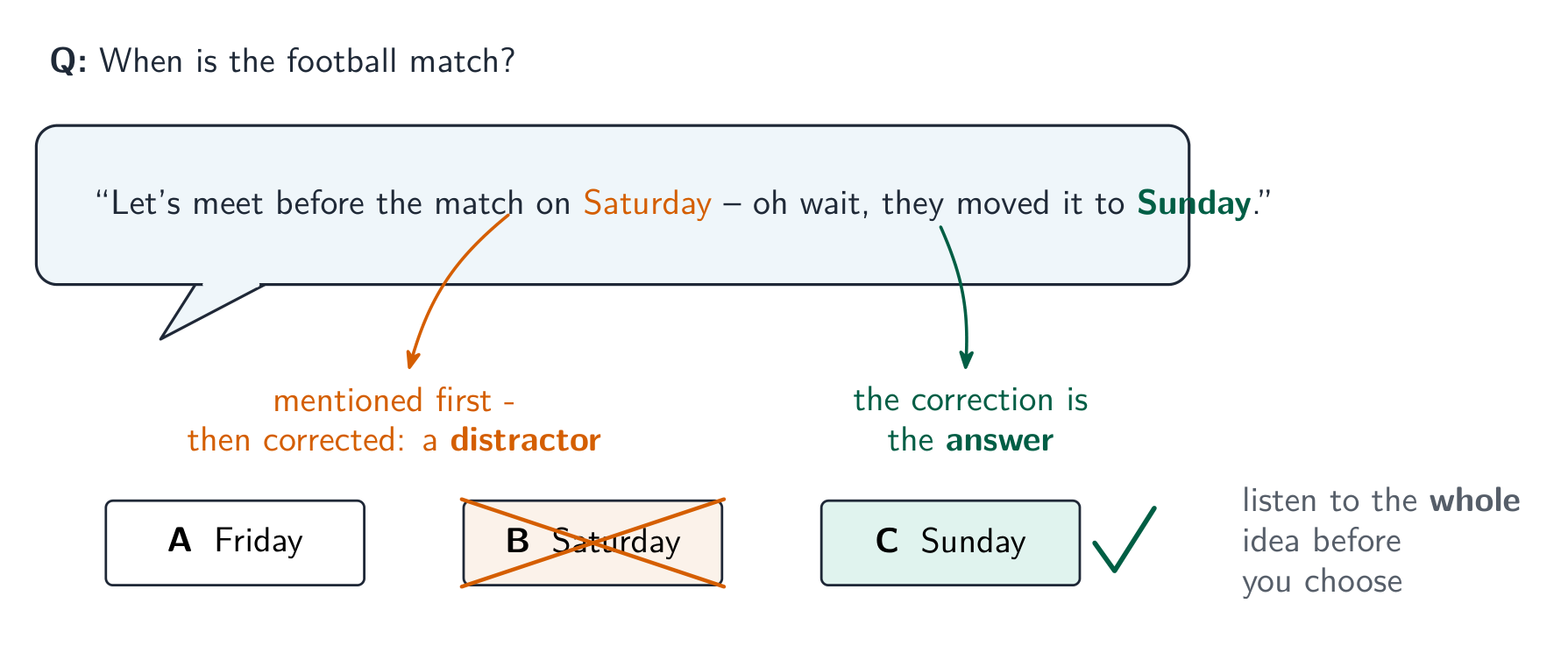
Watch the distractors
- 在选择题(multiple-choice)中,错误的选项被称为干扰项(distractors)。
- 一个说话者可能提到一个选项,然后改变主意。在你选择前听整个思想。
Words that signal the answer
训练过的耳朵听指向答案的小词。
- 一个更正要来了: actually… / sorry, I mean… / on second thought… ——这些之后的词通常持有真正的答案,而不是之前的那些。
- 关键点: the main thing is… / what matters is… / above all…
- 一个感受或态度(attitude): to be honest… / the trouble is… / I'm delighted that…
- 步骤的顺序: first… next… finally… ——这些帮助你跟随一个序列。
抓住一个信号词能为你赢得一分。在你听到它们时把它们记下来。
词汇表
训练
| 英文 | 中文 | 拼音 |
|---|---|---|
| suggests/səˈdʒests/ | 暗示 | àn shì |
| multiple-choice/ˈmʌltɪpl tʃɔɪs/ | 选择题 | xuǎn zé tí |
| distractors/dɪˈstræktəz/ | 干扰项 | gān rǎo xiàng |
9.3
考试技巧
- 在音频开始前读问题,并在每个问题里给关键词划线。
- 你把每样东西听两次:在第一轮回答你能回答的,在第二轮检查并填补空缺。
- 说话者常常用数字、日期和拼写更正自己。最后一个版本是答案。
- 错过了一个?放下它并跟随下一个问题;在第二次播放时回到那个空缺。
- 为每个问题写点东西。一个错误的猜测没有惩罚。
本主题的互动课程
逐步学习,并即时检测练习。