- identify the purpose of a piece of writing: to inform, to argue or to discuss
- think about the audience and how formal or informal the language should be
- choose a register and style that suit the purpose and the reader
写作:目的、读者与准确性
IGCSE 英语 · 第 2 主题
 7:50
7:50
Writing: Purpose, Audience and Accuracy
Two students want the same thing: permission to use the school hall on Saturday. Both write to the head teacher. The first one says: <slow>Hi, can we have the…
英文讲解 · 内嵌中英文字幕
2.1
目的、读者与语域

大纲
来源:剑桥国际大纲
在你写之前,问两个问题:我为什么写,以及谁会读它?
Know your purpose
- 每个写作任务有一个目的(purpose):告知(inform)、论证(argue)或讨论(discuss)。
- 目的决定你写什么以及你如何写它。
- 任务告诉你目的。仔细地读它并划出它。
Know your audience
- 读者(audience)是会读你写作的人——一个朋友、一位老师,或一个活动组织者。
- 以一种适合他们的方式写。你给一个朋友写与给一位老师不同的方式。
Choose the right register
- 语域(register)意味着你的语言有多正式(formal)或非正式(informal)。
- 对一个朋友用非正式的语言:缩写形式(I'm、don't)和友好的词。
- 对一位老师或一份报告用正式的语言:完整形式(I am、do not)和礼貌的词。没有俚语(slang)。

词汇表
训练
| 英文 | 中文 | 拼音 |
|---|---|---|
| purpose/ˈpɜːpəs/ | 目的 | mù dì |
| inform/ɪnˈfɔːm/ | 告知 | gào zhī |
| argue/ˈɑːɡjuː/ | 论证 | lùn zhèng |
| discuss/dɪˈskʌs/ | 讨论 | tǎo lùn |
| audience/ˈɔːdɪəns/ | 读者 | dú zhě |
| register/ˈredʒɪstə/ | 语域 | yǔ yù |
| formal/ˈfɔːml/ | 正式 | zhèng shì |
| informal/ɪnˈfɔːml/ | 非正式 | fēi zhèng shì |
| slang/slæŋ/ | 俚语 | lǐ yǔ |
2.2
组织观点与衔接手段
大纲
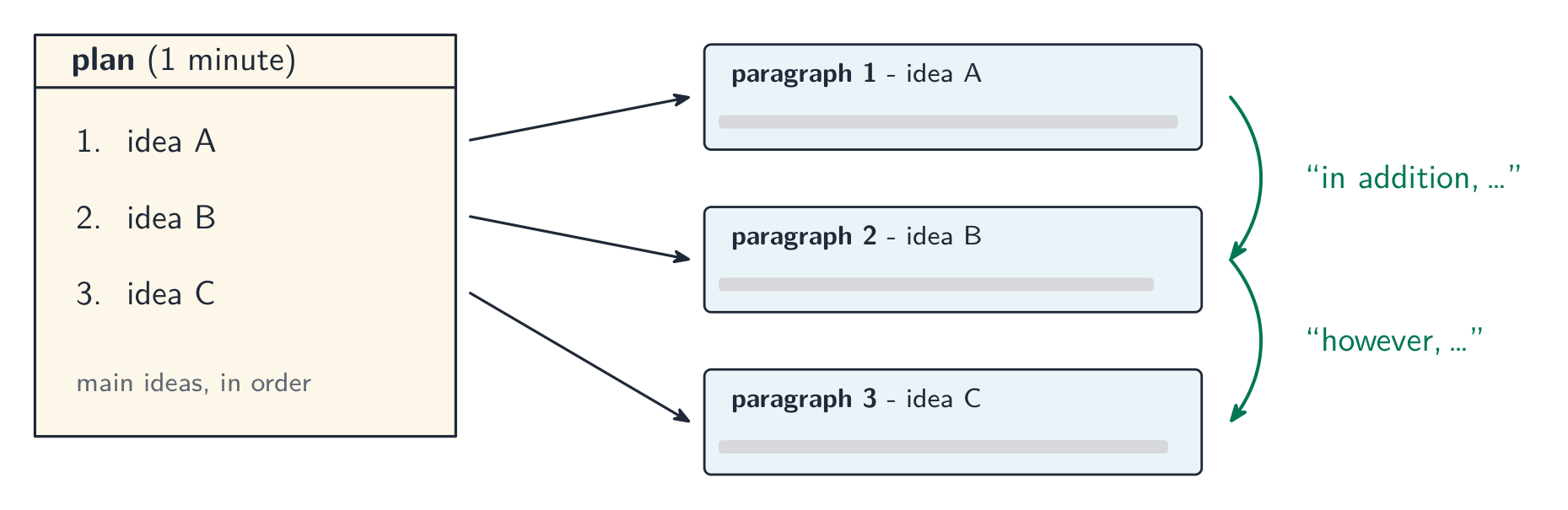
- plan what to include and the order in which to present it
- organise writing into clear paragraphs with a logical structure
- link ideas using devices for addition (in addition, moreover), contrast (however, although) and cause/effect (therefore, as a result)
来源:剑桥国际大纲
好的写作不只是正确的。它也容易跟随。
Plan before you write
- 在一个计划(plan)上花一分钟。写下你的主要思想并把它们排序。
- 一个计划阻止你忘记一个点或重复你自己。
Use paragraphs
- 把每个主要思想放在它自己的段落(paragraph)里。
- 为一个新思想开始一个新段落。这使你的写作清晰。
Link your ideas
- 用衔接词(linking words)把你的思想平滑地连接。
- 对于递进:in addition、also、as well as。对于对比:however、but、although。对于结果:so、therefore、as a result。
词汇表
训练
| 英文 | 中文 | 拼音 |
|---|---|---|
| plan/plæn/ | 计划 | jì huà |
| paragraph/ˈpærəɡræf/ | 段落 | duàn luò |
| linking words/ˈlɪŋkɪŋ wɜːdz/ | 衔接词 | xián jiē cí |
2.3
语法、词汇与检查
大纲
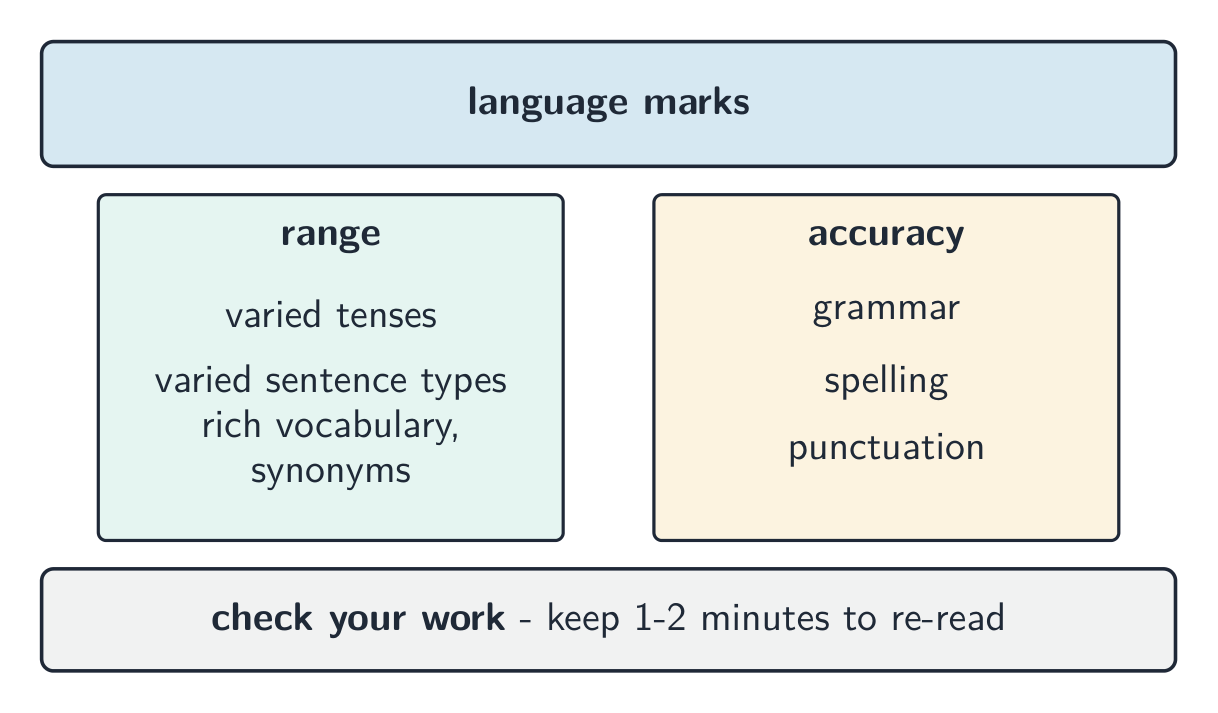
- use a range of grammatical structures: different verb forms and tenses, conditionals and varied sentence types
- use a range of vocabulary, including set phrases, collocations and synonyms to avoid repetition
- check your writing for accuracy in grammar, spelling and punctuation
来源:剑桥国际大纲
语言分数来自多样性(range)和准确性(accuracy)。
Show a range
- 用不同的时态(tenses)和句子类型。不要以同样的方式写每个句子。
- 用一系列的词汇(vocabulary)。选择一个比容易的更好的词,并用同义词(synonyms)以避免重复你自己。
Be accurate
- 检查你的语法(grammar)、拼写(spelling)和标点(punctuation)。
- 常见的错误是主谓一致、动词时态,和缺失的大写字母。
Check your work
- 留一两分钟再读你的作业。
- 寻找你能快速修复的小错误。检查能节省几分。
词汇表
训练
| 英文 | 中文 | 拼音 |
|---|---|---|
| range/reɪndʒ/ | 多样性 | duō yàng xìng |
| accuracy/ˈækjʊrəsi/ | 准确性 | zhǔn què xìng |
| tenses/ˈtensɪz/ | 时态 | shí tài |
| vocabulary/vəʊˈkæbjʊləri/ | 词汇 | cí huì |
| synonyms/ˈsɪnənɪmz/ | 同义词 | tóng yì cí |
| grammar/ˈɡræmə/ | 语法 | yǔ fǎ |
| spelling/ˈspelɪŋ/ | 拼写 | pīn xiě |
| punctuation/ˌpʌŋktʃuːˈeɪʃn/ | 标点 | biāo diǎn |
2.3
考试技巧
- 在你写之前,用一行说出你的工作:"一封给一个朋友的非正式电子邮件,邀请他去野餐"。
- 涵盖任务中的每个内容点。考官勾选每个点;一个缺失的立即花费分数。
- 学习你手写的 120 到 160 个词看起来是什么样,所以你在考试中从不数。
- 留最后五分钟检查你惯常的错误:动词 -s、过去形式、a / an / the。
- 一个短的正确句子每次都胜过一个长的破碎的。
本主题的互动课程
逐步学习,并即时检测练习。