- skim a text quickly to get the general idea, then scan to locate specific facts, names, numbers, times and places
- answer short questions with a single word or short phrase, using the exact detail from the text
- predict what kind of information a question is asking for before reading the text closely
阅读技能
IGCSE 英语 · 第 1 主题
 7:55
7:55
Reading Skills
Open the reading paper. You see a long text — six hundred words, maybe more — and a full page of questions. The clock says forty-five minutes. Many students…
英文讲解 · 内嵌中英文字幕
1.1
阅读获取具体信息
大纲
来源:剑桥国际大纲
在考试中你不慢慢地读每个词。你改变你的速度以适合你的目标。
Skim first, then scan
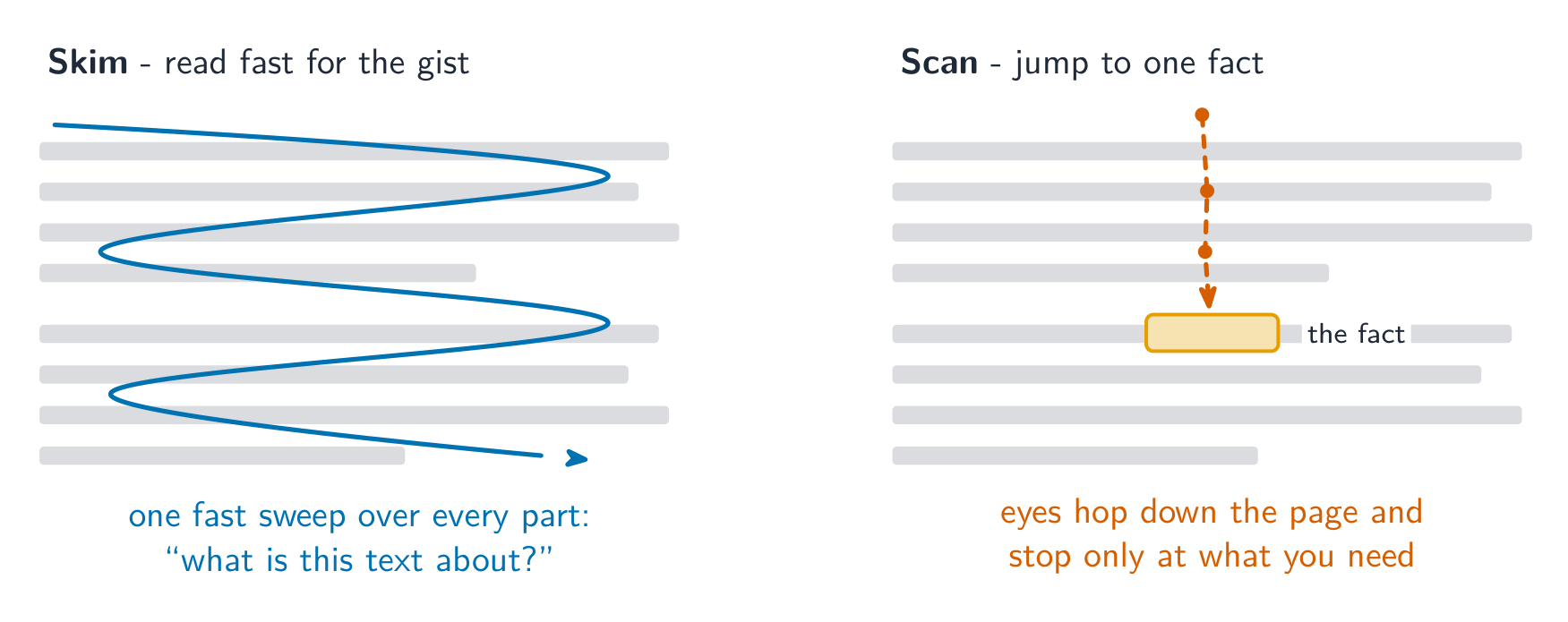
- 首先略读(skim)文本。快速地读它以得到大意(gist)——总体的思想。看标题、每个段落(paragraph)的第一行,以及任何图片。
- 然后扫读(scan)以找到一份信息。快速地把你的眼睛往页下移。不要读每个词。当你看到你需要的时停下。
- 对名字、数字、日期、时间和地点等事实用扫读。
Match the question to the text
- 先读问题。决定它想要什么种类的答案:一个名字?一个数字?一个原因?
- 在你看之前预测(predict)答案。这帮助你的眼睛更快地找到它。
- 找到文本中谈同一个思想的部分。答案通常在那里。
Write short, exact answers
- 这里你写一个单一的词或一个短的短语(phrase),不是一个完整的句子。
- 能的时候从文本复制确切的词。
- 只回答问题所问的。额外的词能失去分数。
词汇表
训练
| 英文 | 中文 | 拼音 |
|---|---|---|
| skim/skɪm/ | 略读 | lüè dú |
| gist/dʒɪst/ | 大意 | dà yì |
| paragraph/ˈpærəɡræf/ | 段落 | duàn luò |
| scan/skæn/ | 扫读 | sǎo dú |
| predict/prɪˈdɪkt/ | 预测 | yù cè |
| phrase/freɪz/ | 短语 | duǎn yǔ |
1.2
理解观点之间的联系
大纲
- follow how ideas, opinions and attitudes in a text connect to one another
- match each question to the section or short text that contains the relevant idea (multiple matching)
- recognise words and phrases that signal time, cause and effect, addition and contrast
来源:剑桥国际大纲
一个长文本不只是一个事实的列表。思想互相联系,而你必须跟随如何联系。
Multiple matching
- 在一个多项匹配(multiple matching)任务中,你读几个短文本,或一个文本的几个部分。
- 每个问题描述一个思想。你选择匹配它的文本或部分。
- 问题中的词通常与文本中的词不同。寻找同样的意思,而不是同样的词。这叫一个改写(paraphrase)。
Signal words
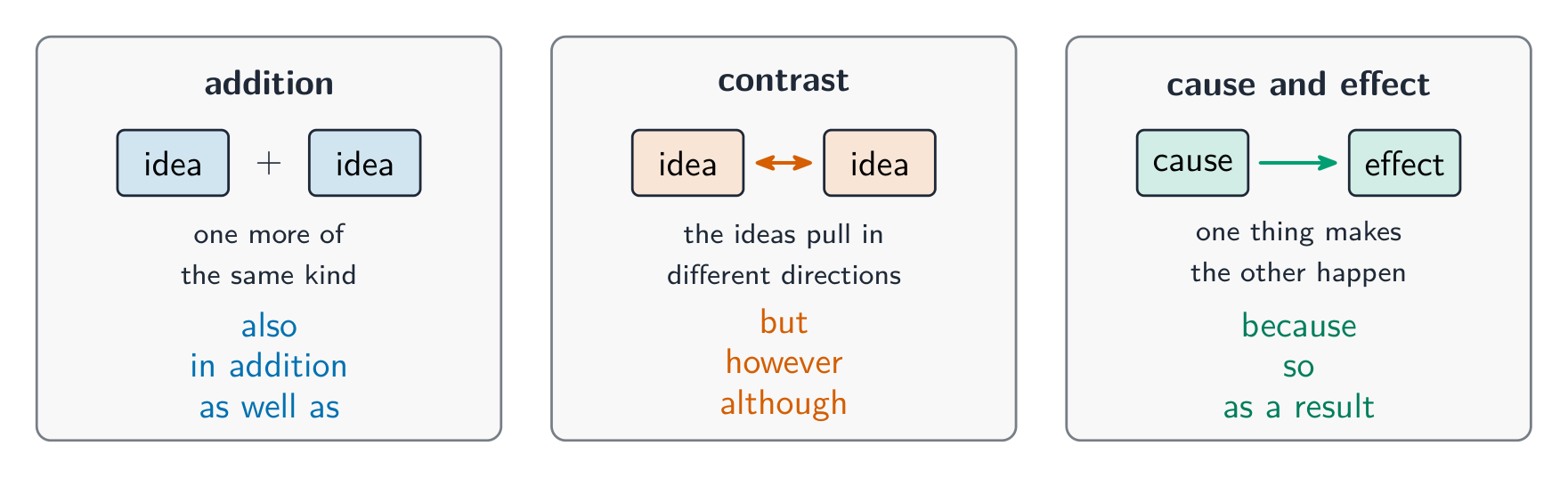
- 作者用小词来显示思想如何联系。这些是信号词(signal words)。
- 一些显示递进(addition,also、in addition、as well as)。一些显示对比(contrast,but、however、although)。一些显示因果(cause and effect,because、so、as a result)。
- 当你注意到这些词时,你能看到作者的思想如何组合在一起。
词汇表
训练
| 英文 | 中文 | 拼音 |
|---|---|---|
| multiple matching/ˈmʌltɪpl ˈmætʃɪŋ/ | 多项匹配 | duō xiàng pǐ pèi |
| paraphrase/ˈpærəfreɪz/ | 改写 | gǎi xiě |
| signal words/ˈsɪɡnl wɜːdz/ | 信号词 | xìn hào cí |
| addition/əˈdɪʃn/ | 递进 | dì jìn |
| contrast/ˈkɒntræst/ | 对比 | duì bǐ |
| cause and effect/kɔːz ænd ɪˈfekt/ | 因果 | yīn guǒ |
1.3
做笔记与总结
大纲
- select only the relevant points from a text for a given purpose
- complete a set of brief notes under headings, using short phrases rather than full sentences
- leave out examples and repetition, keeping just the key information
来源:剑桥国际大纲
有时你必须从一个文本取出主要点并以一个短的形式写它们。
Note-making
- 在一个做笔记(note-making)任务中,你在标题下完成笔记。
- 写短笔记,不是完整的句子。一个词或一个短短语就足够了。
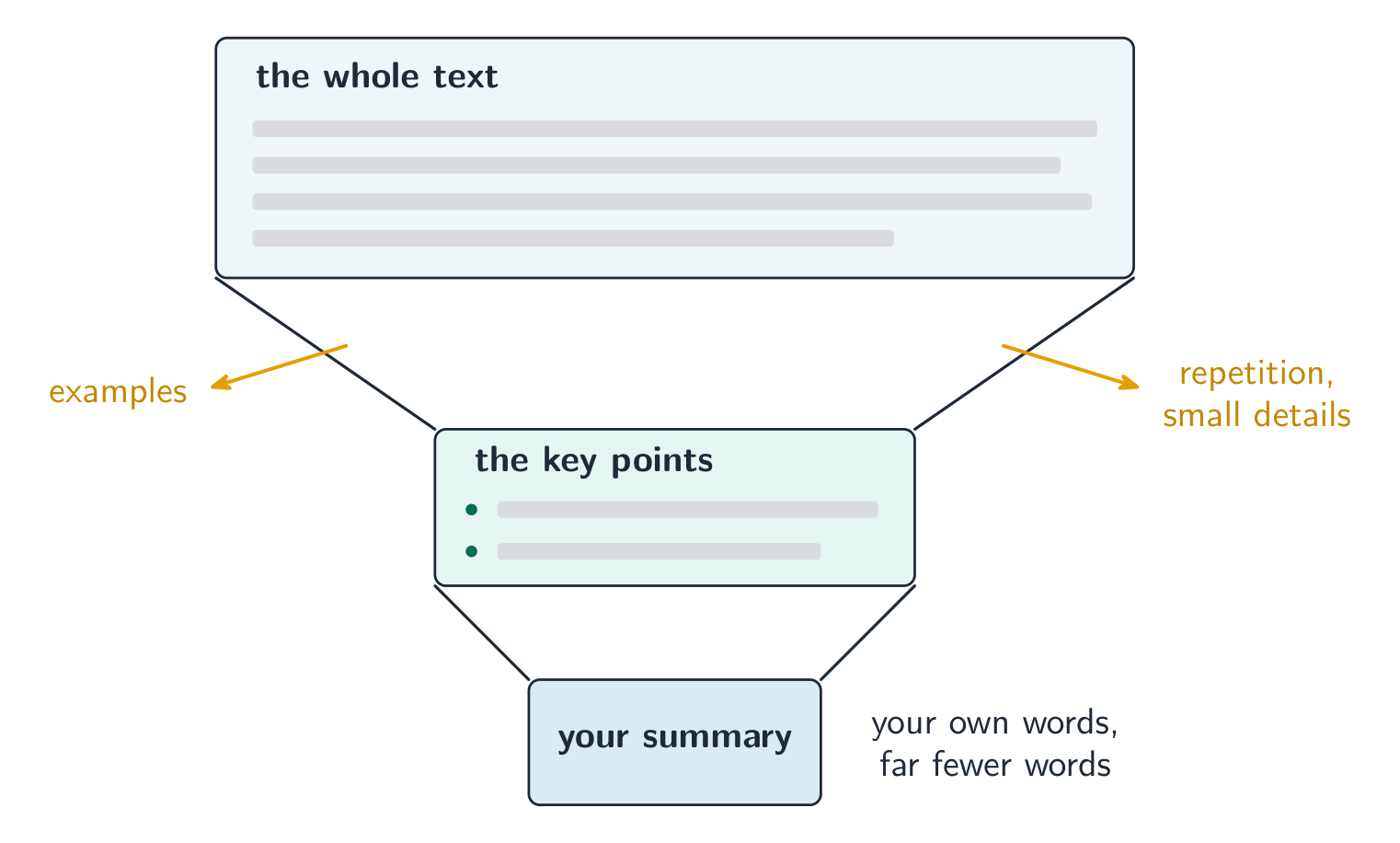
- 只选择适合标题的点。省去例子和额外的细节。
Summary skills
- 一个概括(summary)只给最重要的思想,用更少的词。
- 找到关键点。忽略例子、重复(repetition)和小细节。
- 能的地方用你自己的话。不要复制整个句子。
词汇表
训练
| 英文 | 中文 | 拼音 |
|---|---|---|
| note-making/nəʊt ˈmeɪkɪŋ/ | 做笔记 | zuò bǐ jì |
| summary/ˈsʌməri/ | 概括 | gài kuò |
| repetition/ˌrepəˈtɪʃn/ | 重复 | chóng fù |
1.4
推断与作者的态度

大纲
- understand meaning that is implied but not directly stated
- work out a writer's opinion, attitude or feelings from the words and phrases they choose
- deduce the meaning of an unfamiliar word from the information around it
- answer multiple-choice questions about main ideas, details and attitudes
来源:剑桥国际大纲
一些答案不直接写在文本中。你必须算出它们。这叫推断(inference)。
Implied meaning
- 有时作者暗示(implies)某样东西而不公开地说。意思在那里,但它被隐藏。
- 读思想周围的词。问:作者想让我在这里理解什么?
The writer's attitude
- 作者的态度(attitude)是他们对主题的感受——例如,兴奋、担忧或不确定。
- 你在作者的用词(word choice)中找到态度。强或情感的词显示感受。
- 在一个关于态度的选择题(multiple-choice)问题中,读所有的选项。选择适合整个文本、而不只是一行的那个。
Unfamiliar words
- 你会遇到你不知道的词。不要停。
- 用语境(context)——它周围的词——来猜新词的意思。
词汇表
训练
| 英文 | 中文 | 拼音 |
|---|---|---|
| inference/ˈɪnfərəns/ | 推断 | tuī duàn |
| implies/ɪmˈplaɪz/ | 暗示 | àn shì |
| attitude/ˈætɪtjuːd/ | 态度 | tài dù |
| word choice/wɜːd tʃɔɪs/ | 用词 | yòng cí |
| multiple-choice/ˈmʌltɪpl tʃɔɪs/ | 选择题 | xuǎn zé tí |
| context/ˈkɒntekst/ | 语境 | yǔ jìng |
1.4
考试技巧
- 在文本之前读问题。划出关键词:一个名字?一个数字?一个原因?
- 答案通常以与文本相同的顺序出现,所以不要往回找第 1 题。
- 能的时候从文本复制确切的词;一个改变的词能失去分数。
- 检查问题想要多少个答案:"给出两个原因"需要两个,不是一个。
- 在多项匹配中,文本通常不重复问题的词。找同样的思想以不同的方式说出。
- 绝不留一个空行。一个猜测能赢得一分;一个空白从不能。
本主题的互动课程
逐步学习,并即时检测练习。