- tell the difference between a discursive essay (balanced, both sides) and an argumentative essay (one main view)
- plan the main points and the reasons or evidence for each
- keep a formal, organised style
写议论文
IGCSE 英语 · 第 8 主题
 7:56
7:56
Writing an Essay
Two students answer the same essay question: should students have homework? Here is the first one. Homework is good. It helps you learn. Also some students do…
英文讲解 · 内嵌中英文字幕
8.1
论述文与议论文
大纲
来源:剑桥国际大纲
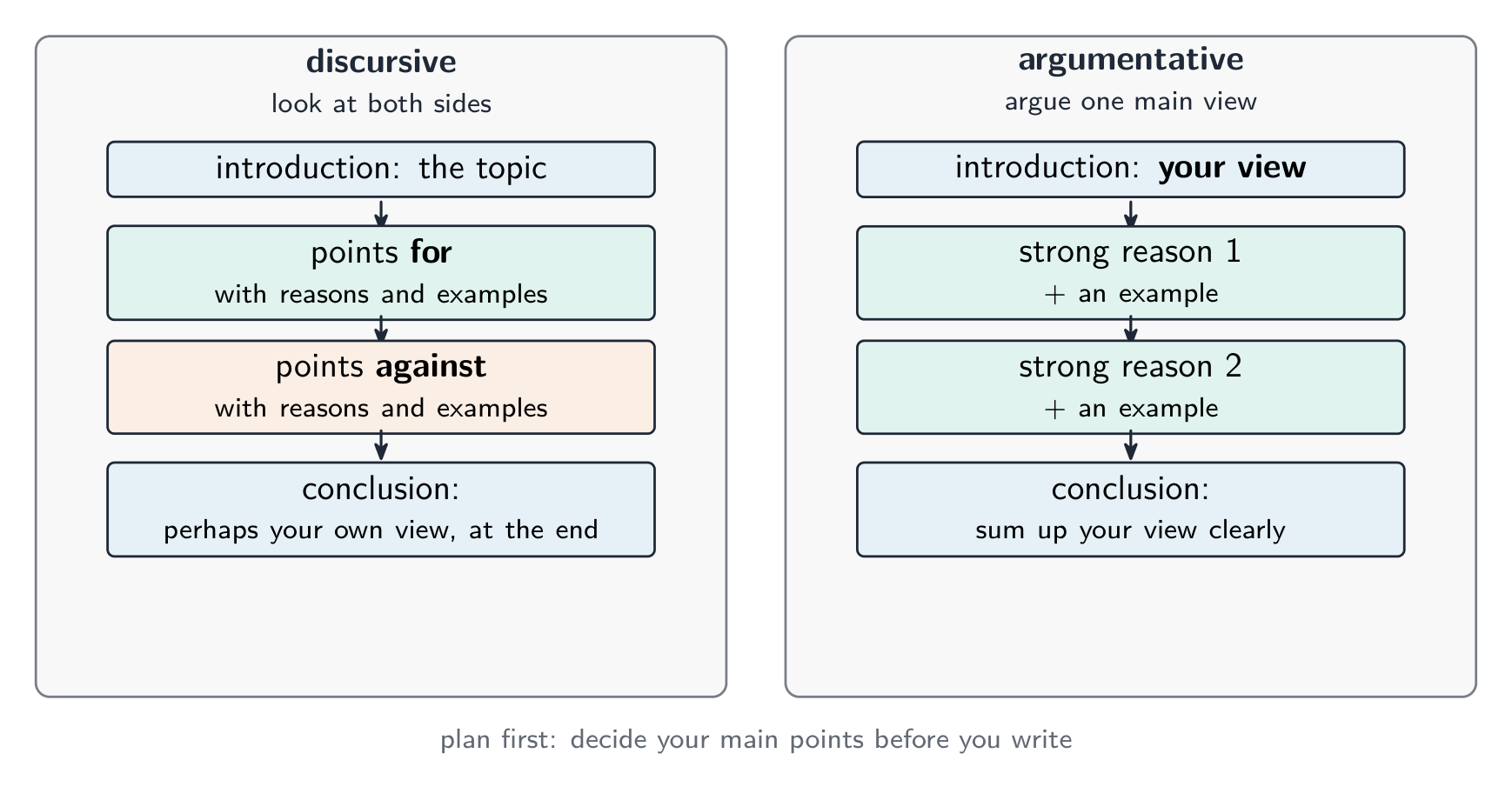
一篇议论文(essay)以一种有组织的方式给出你关于一个主题的思想。
Discursive essays
- 一篇论述的(discursive)议论文看一个主题的两方。
- 你给出支持和反对的点,或许在结尾给出你自己的看法。
Argumentative essays
- 一篇议论的(argumentative)议论文论证一个主要看法。
- 你给出强的原因和例子以支持你的观点。
Plan first
- 在你写之前决定你的主要点和每个的原因。
- 一个短计划保持你的议论文有组织。


词汇表
训练
| 英文 | 中文 | 拼音 |
|---|---|---|
| essay/ˈeseɪ/ | 议论文 | yì lùn wén |
| discursive/dɪˈskɜːsɪv/ | 论述的 | lùn shù de |
| argumentative/ˌɑːɡjuːˈmentətɪv/ | 议论的 | yì lùn de |
| conclusion/kənˈkluːʒn/ | 结论 | jié lùn |
8.2
结构:引言、主体与结论

大纲
- introduce the topic and your approach in the introduction
- develop one main idea per paragraph in the body, with reasons and examples
- draw the ideas together in a clear conclusion
来源:剑桥国际大纲
一个清晰的形状使你的论证容易跟随。
Introduction
- 引言(introduction)命名主题并说你将如何着手它。
- 保持它短——两三个句子。
Body paragraphs
- 在每个主体(body)段落里放一个主要思想。
- 以思想开始段落,然后加原因和例子。
Conclusion
- 结论(conclusion)把你的思想汇集起来。
- 不要在这里加一个新点。清晰地总结你的看法。
Useful language
衔接词(linking words)向你的读者发信号论证在哪里转向。它们是一篇议论文的路标。
- 要加一个点: Firstly… / In addition… / Another reason is…
- 要显示另一方: However… / On the other hand… / Some people argue that…
- 要给一个例子: For example… / For instance… / such as…
- 要总结: In conclusion… / Overall… / Weighing both sides…
在一个句子的开头用它们,而且不要过度使用一个。两三个放置得好的衔接词对一个段落就足够了。
A model body paragraph
观察三个动作:思想、然后原因、然后例子。
Firstly, homework teaches students to work alone. In class, a teacher is always nearby to help. At home, a student must solve the problem by themselves — and that is where real learning happens. For example, a maths question that felt easy in the lesson can teach far more when you meet it again, alone, at your desk.
第一个句子是思想。接下来两个解释为什么。最后一个用一个例子使它真实。每个主体段落都能遵循这个简单的形状。
词汇表
训练
| 英文 | 中文 | 拼音 |
|---|---|---|
| introduction/ˌɪntrəˈdʌkʃn/ | 引言 | yǐn yán |
| body/ˈbɒdi/ | 主体 | zhǔ tǐ |
| linking words/ˈlɪŋkɪŋ wɜːdz/ | 衔接词 | xián jiē cí |
8.2
考试技巧
- 在你写之前规划三分钟:你的看法、两个原因、一个相反的看法。
- 第一段引入问题;每个中间段落恰好携带一个论点。
- 用衔接词做路标:First of all、However、On the other hand、In conclusion。
- 给另一方一个公正的段落,然后回应它。平衡显示思考并赢得分数。
- 最后一段清晰地陈述你的观点。不要骑墙。
本主题的互动课程
逐步学习,并即时检测练习。