- recognise that an informal email is written to a friend or relative
- respond to all of the prompts given in the task
- use a friendly, personal tone that suits the reader
写非正式电子邮件
IGCSE 英语 · 第 3 主题
 7:50
7:50
Writing an Informal Email
Two students answer the same task: write to your friend about a place you visited. Here is the first one. <slow>I visited a museum. It was good. I went with my…
英文讲解 · 内嵌中英文字幕
3.1
目的与读者

大纲
来源:剑桥国际大纲
第一个写作任务要求你给一个朋友或一个家庭成员写一封非正式电子邮件(informal email)。
Cover every prompt
- 任务给你一些提示(prompts)——你必须写的短的点。
- 你必须涵盖每个提示。若你错过一个,你失去内容分数。
- 在你写它时勾选每个提示,所以你不忘记一个。
Use a friendly tone
- 给一个朋友的一封电子邮件是非正式(informal)的。用一种温暖、友好的语气(tone)。
- 就像你在和那个人说话一样写。也问他们问题。

词汇表
训练
| 英文 | 中文 | 拼音 |
|---|---|---|
| informal email/ɪnˈfɔːml ˈiːmeɪl/ | 非正式电子邮件 | fēi zhèng shì diàn zi yóu jiàn |
| prompts/prɒmpts/ | 提示 | tí shì |
| informal/ɪnˈfɔːml/ | 非正式 | fēi zhèng shì |
| tone/təʊn/ | 语气 | yǔ qì |
3.2
结构与常用语言
大纲
- open and close an informal email appropriately (for example: Hi … / Write back soon …)
- organise the email into short paragraphs, with one main idea per paragraph
- use informal language: contractions, friendly phrases and questions to the reader
来源:剑桥国际大纲
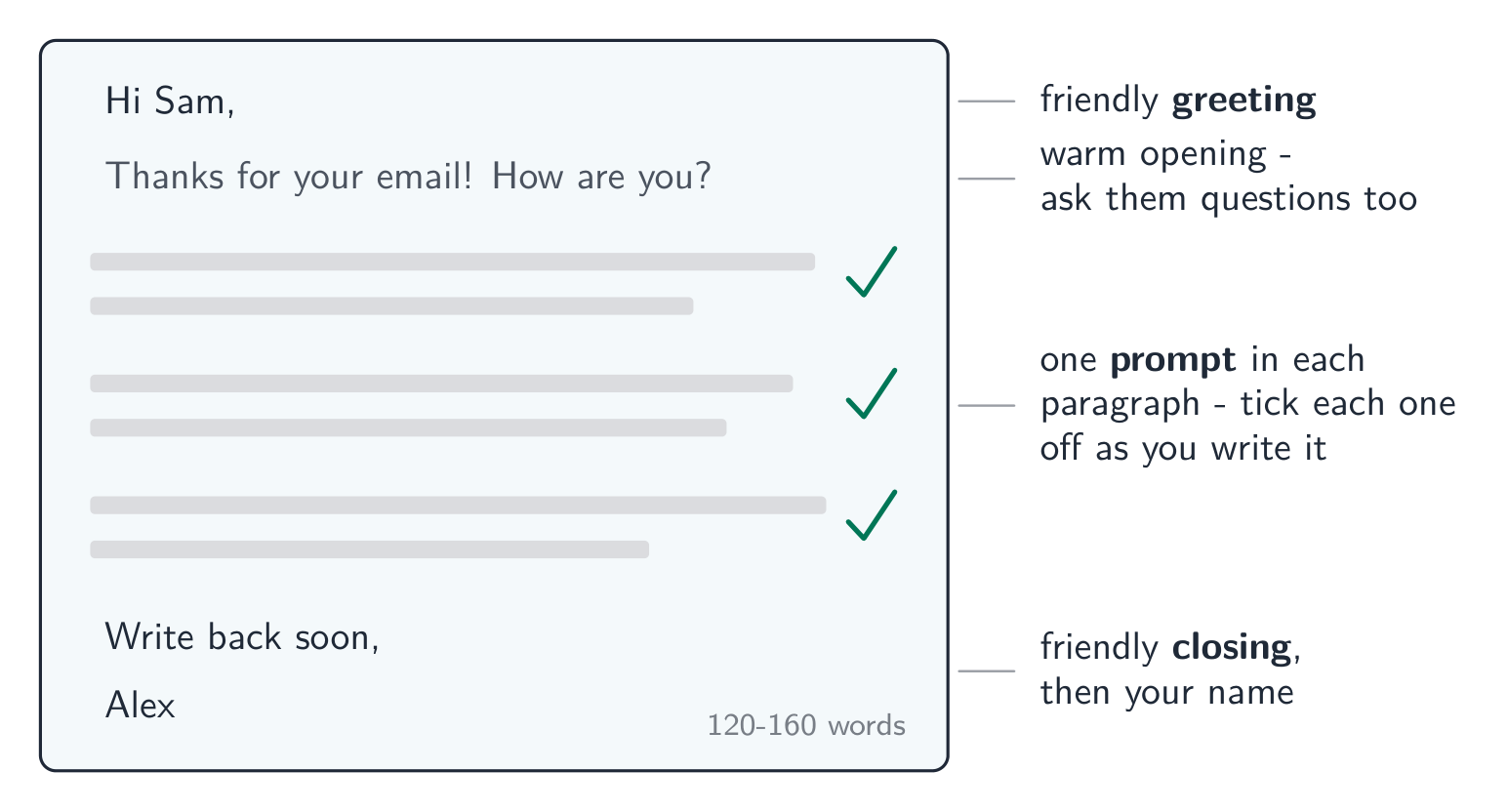
一封好的电子邮件有一个清晰的形状。
Greeting and ending
- 以一个问候语(greeting)开始:Hi Sam, 或 Dear Anna,
- 以一个友好的结束语(closing)结束:Write back soon, 或 See you soon, 然后你的名字。
Paragraphs
- 用短的段落(paragraphs)。在每个里放一个主要思想。
- 不要写一大块长文本。
Useful language
- 非正式的语言用缩略形式(short forms):I'm、don't、can't。
- 友好的短语有帮助:Guess what! / How are you? / I can't wait to…
词汇表
训练
| 英文 | 中文 | 拼音 |
|---|---|---|
| greeting/ˈɡriːtɪŋ/ | 问候语 | wèn hòu yǔ |
| closing/ˈkləʊzɪŋ/ | 结束语 | jié shù yǔ |
| paragraphs/ˈpærəɡræfz/ | 段落 | duàn luò |
| short forms/ʃɔːt fɔːmz/ | 缩略形式 | suō lüè xíng shì |
3.3
改进你的邮件
大纲
- develop each idea with a reason, example or detail rather than just listing points
- vary your sentence openings and link ideas smoothly
- check the length (120–160 words), the tone and the accuracy before finishing
来源:剑桥国际大纲
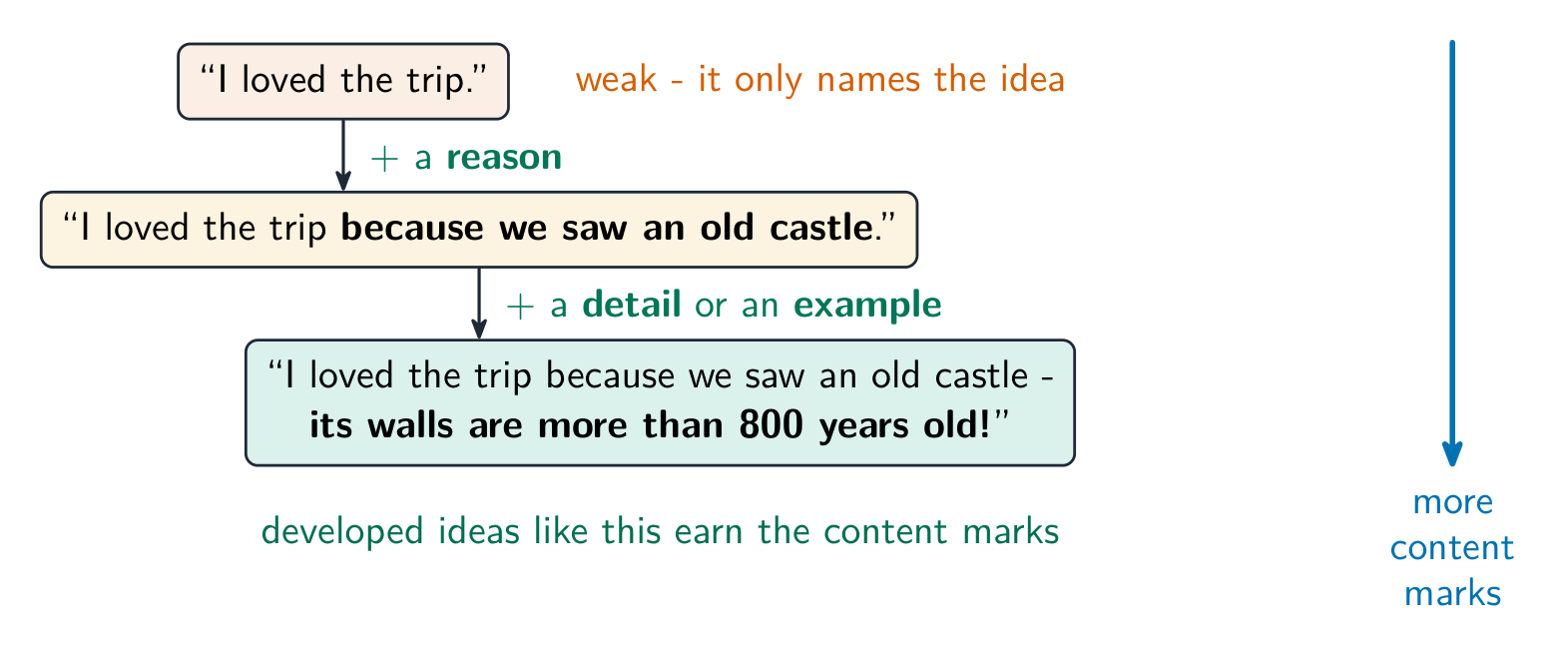
内容分数奖励展开的(developed)思想,而不是一个列表。
Develop your ideas
- 不要只命名一个思想。加一个原因(reason)、一个例子(example),或一个细节(detail)。
- "I loved the trip" 是弱的。"I loved the trip because we saw an old castle" 好得多。
Check before you finish
- 数你的词:瞄准 120 到 160 个词。
- 检查语气是友好的,然后修复小的语法和拼写错误。
A model email
看友好的语气和展开的思想如何一起工作。
Hi Sam,
Guess what — I finally visited the new science museum you told me about! I loved it, especially the space room, because you can sit in a real rocket seat and feel it shake. I went with my cousin, and we stayed until it closed.
How about you? Have you been yet? We really should go together in the summer.
Write back soon, Lin
注意温暖的问候、一个带一个原因的展开的思想、一个回给 Sam 的问题,和一个友好的结束。它读起来像一个给一个朋友的真实消息——而且它涵盖每个提示。
词汇表
训练
| 英文 | 中文 | 拼音 |
|---|---|---|
| developed/dɪˈveləpt/ | 展开的 | zhǎn kāi de |
| reason/ˈriːzn/ | 原因 | yuán yīn |
| example/eɡˈzæmpl/ | 例子 | lì zi |
| detail/ˈdiːteɪl/ | 细节 | xì jié |
3.3
考试技巧
- 温暖地开场:"Thanks for your email!" 或 "Great to hear from you!" 立即设定非正式的语气。
- 用缩略形式(I'm、don't、can't)。它们在这里是正确的,并使你听起来像一个朋友。
- 给任务中的每个提示它自己的短段落,并给每个加一个细节或原因。
- 像一个朋友一样结束:"Write back soon," 加上你的名字,绝不用全名。
- 从第一行到最后一行保持风格非正式;中间一个 "Dear Sir" 打破整封电子邮件。
本主题的互动课程
逐步学习,并即时检测练习。