- understand the purpose of business activity: combining factors of production (land, labour, capital, enterprise) to make goods and services that satisfy people's needs and wants
- understand the economic problem: needs and wants are unlimited but resources are scarce, so choices must be made
- understand opportunity cost: the next best alternative given up when a choice is made
- explain the concept of added value (selling price minus cost of bought-in materials) and how a business can increase added value
- understand why businesses succeed or fail (e.g. management skill, finance, competition)
理解商业活动
IGCSE 商业研究 · 第 1 主题
 17:55
17:55
Understanding business activity
Look at any high street. Shop after shop, all selling something, all chasing the same customers. Every one of them is a business. But what is a business really…
英文讲解 · 内嵌中英文字幕
1.1
商业活动

大纲
来源:剑桥国际大纲

一个企业(business)是一个为顾客(customers)制造商品(goods)或提供服务(services)的组织。
- 商品是你能触摸的实物——面包、手机、汽车。
- 服务是为你做的有用的行动——理发、坐公交、看医生。
企业活动的目的是使用资源(resources)来制造商品和服务,以便人们的需要(needs)和欲望(wants)被满足。
- 需要是你必须拥有才能生存的东西:食物、水、住所、衣服。
- 欲望是你想要但没有也能生活的东西:一次度假、一台游戏机。
Factors of production
要生产任何东西,一个企业把四个生产要素(factors of production)汇集起来——制造商品和服务所需的资源。
| 要素 | 它是什么意思 | 例子 |
|---|---|---|
| 土地(land) | 自然资源 | 农田、水、石油、矿物 |
| 劳动力(labour) | 人的工作 | 工人、经理 |
| 资本(capital) | 钱和用它买的人造工具 | 机器、工厂、车辆 |
| 企业家才能(enterprise) | 把其他三个汇集起来并承担风险的技能 | 所有者的想法和努力 |

The economic problem
人们的需要和欲望是无限的。但资源是稀缺(scarce)的——它们不足以满足一切。这是经济问题(economic problem)。
因为资源是稀缺的,你必须总是选择。你不能拥有一切。
Opportunity cost
当你选择一样东西时,你放弃下一个最好的东西。机会成本(opportunity cost)是你放弃的下一个最好的选择。
例子:一个企业有一些钱并把它花在一台新机器上。现在它不能也把那笔钱花在一家更大的商店上。更大的商店是机会成本。

Added value
增值(added value)是一个企业出售一个产品的价格和买来制造它的原材料(raw materials)成本之间的差。
$$\text{added value} = \text{selling price} - \text{cost of bought-in materials}$$

一个企业能通过以下方式增加增值:
- 提高价格,常常通过一个强的品牌(brand)或更好的设计,
- 降低材料的成本,例如通过找到更便宜的供应商,
- 改进产品以便顾客愿意付更多。
例题。 一家家具厂买一把椅子的木材和布料花 £40,把椅子卖 £110。厂房租金是每月 £6,000。求每把椅子的增值。
$$\text{added value} = \text{\pounds} 110 - \text{\pounds} 40 = \text{\pounds} 70$$
租金是故意设置的干扰项。增值只计算外购原材料的成本,所以租金、工资和其他运营成本都不算在内 - 它们影响的是利润,而不是增值。只减去为制造该产品而外购的部分,而且绝不要把增值当成利润。
Why businesses succeed or fail
一个企业更可能成功,当它有:
- 好的管理(management)——计划良好的熟练领导,
- 足够的资金(finance)——在它增长时付账单的钱,
- 一个顾客想要的产品,以及一个胜过竞争(competition)的优势(卖相似东西的其他企业)。
一个企业可能失败并关门,当它耗尽现金、糟糕地管理钱,或不能竞争时。弱的管理和差的现金控制是最常见的原因。
探索
Value added lab
Change the bought-in cost, the selling price and other costs to see how business activity creates value added.
词汇表
训练
| 英文 | 中文 | 拼音 |
|---|---|---|
| goods/ɡʊdz/ | 商品 | shāng pǐn |
| services/ˈsɜːvɪsɪz/ | 服务 | fú wù |
| customers/ˈkʌstəməz/ | 顾客 | gù kè |
| resources/rɪˈzɔːsɪz/ | 资源 | zī yuán |
| needs/niːdz/ | 需要 | xū yào |
| wants/wɒnts/ | 欲望 | yù wàng |
| factors of production/ˈfæktəz ɒv prəˈdʌkʃn/ | 生产要素 | shēng chǎn yào sù |
| land/lænd/ | 土地 | tǔ dì |
| labour/ˈleɪbə/ | 劳动力 | láo dòng lì |
| capital/ˈkæpɪtl/ | 资本 | zī běn |
| enterprise/ˈentəpraɪz/ | 企业家才能 | qǐ yè jiā cái néng |
| scarce/skeəs/ | 稀缺 | xī quē |
| economic problem/ˌiːkəˈnɒmɪk ˈprɒbləm/ | 经济问题 | jīng jì wèn tí |
| opportunity cost/ɒpəˈtjuːnɪti kɒst/ | 机会成本 | jī huì chéng běn |
| added value/ˈædɪd ˈvæljuː/ | 增值 | zēng zhí |
| raw materials/rɔː məˈtɪərɪəlz/ | 原材料 | yuán cái liào |
| brand/brænd/ | 品牌 | pǐn pái |
| management/ˈmænɪdʒmənt/ | 管理 | guǎn lǐ |
| finance/ˈfaɪnæns/ | 资金 | zī jīn |
| competition/ˌkɒmpəˈtɪʃn/ | 竞争 | jìng zhēng |
1.2
企业的分类

大纲
- classify business activity into primary, secondary and tertiary sectors with examples
- understand the changing importance of business sectors (de-industrialisation) in developed and developing economies
- distinguish the private sector and the public sector and give the features of each
来源:剑桥国际大纲
The three sectors
我们把所有企业活动分成三组,按工作离最终顾客有多远。
| 产业 | 它做什么 | 例子 |
|---|---|---|
| 第一产业(primary sector) | 从地球取自然资源 | 农业、渔业、采矿、石油钻探 |
| 第二产业(secondary sector) | 从原材料制造商品 | 建筑、制造业(manufacturing)、食品加工 |
| 第三产业(tertiary sector) | 提供服务 | 商店、银行、运输、旅游 |
How the sectors change
每个产业的重要性随着一个国家变得更富而变化。
- 在一个发展中经济体(developing economy)(一个建立它工业的较穷国家)里,第一产业常常很大——许多人务农。
- 随着国家增长,第二产业也增长。
- 在一个发达经济体(developed economy)(一个富有的、工业化的国家)里,大多数人在第三产业工作。
去工业化(de-industrialisation)是当第二产业萎缩而第三产业增长时。这在许多发达经济体里已经发生,因为工厂搬到国外。
Private sector and public sector
私营部门(private sector)由私人和团体拥有的企业组成。大多数旨在赚取一份利润(profit)。公共部门(public sector)由政府拥有的组织组成,它们旨在向公众提供一项服务。
| 私营部门 | 公共部门 | |
|---|---|---|
| 所有者 | 私人和公司 | 政府 |
| 主要目标 | 通常是利润 | 向每个人提供服务 |
| 例子 | 商店、工厂、私营公司 | 公立学校、公立医院、军队 |
探索
Classify business activity
Sort real firms by the sector they mainly belong to.
词汇表
训练
| 英文 | 中文 | 拼音 |
|---|---|---|
| primary sector/ˈpraɪməri ˈsektə/ | 第一产业 | dì yī chǎn yè |
| manufacturing/ˌmænjuːˈfæktʃərɪŋ/ | 制造业 | zhì zào yè |
| secondary sector/ˈsekəndəri ˈsektə/ | 第二产业 | dì èr chǎn yè |
| tertiary sector/ˈtɜːʃjəri ˈsektə/ | 第三产业 | dì sān chǎn yè |
| developing economy/dɪˈveləpɪŋ ɪˈkɒnəmi/ | 发展中经济体 | fā zhǎn zhōng jīng jì tǐ |
| developed economy/dɪˈveləpt ɪˈkɒnəmi/ | 发达经济体 | fā dá jīng jì tǐ |
| de-industrialisation/də ɪnˌdʌstrɪəlaɪˈzeɪʃn/ | 去工业化 | qù gōng yè huà |
| private sector/ˈpraɪvət ˈsektə/ | 私营部门 | sī yíng bù mén |
| profit/ˈprɒfɪt/ | 利润 | lì rùn |
| public sector/ˈpʌblɪk ˈsektə/ | 公共部门 | gōng gòng bù mén |
1.3
创业、企业成长与规模

大纲
- describe the characteristics of a successful entrepreneur (risk-taker, hard-working, innovative, confident, organised)
- explain the contents and purpose of a business plan and how it helps a business raise finance
- explain why and how governments support business start-ups (grants, loans, training, advice)
- measure the size of a business (number of employees, revenue/sales, capital employed) and the limitations of each measure
- explain why some businesses remain small and why/how businesses grow (internal/organic growth and external growth: mergers and takeovers, horizontal, vertical and conglomerate integration)
- explain economies and diseconomies of scale (purchasing, financial, managerial, technical, marketing)
来源:剑桥国际大纲
The entrepreneur
一个企业家(entrepreneur)是一个创办一个企业并承担经营它风险的人。成功的企业家通常:
- 愿意承担风险(risk)——把他们自己的钱冒险投在一个新想法上,
- 努力工作而不放弃,
- 是创新(innovative)的——充满新想法,
- 自信而擅长做决定,
- 组织良好,能够管理时间、金钱和人。
The business plan
一份商业计划书(business plan)是描述企业和它未来的一份文件。它通常包含企业的想法和目标、产品、它将卖给的市场(market)、谁将经营它,以及一个钱的计划。
一份商业计划书有两个主要用途:
- 它使所有者仔细思考并提前计划,
- 它帮助企业筹集资金(raise finance)——银行和投资者想在他们借出或投资之前看到一个计划。
Government support for start-ups
一个初创企业(start-up)是一个全新的企业。新企业创造就业并帮助经济增长,所以政府常常用以下方式支持它们:
- 补助金(grants)——给予的、不必偿还的钱,
- 低利息的贷款(loans)——以宽松条件借出的钱,
- 对新所有者的培训和建议,
- 头几年更低的税。
Measuring the size of a business
你能用几种方式衡量一个企业有多大。每一种都有一个弱点。
| 衡量 | 它如何起作用 | 局限 |
|---|---|---|
| 员工(employees)数量 | 数员工 | 一家高科技公司能有很少员工但很大的产量(output) |
| 收入(revenue)(销售) | 卖出的一切的价值 | 一家卖便宜商品的公司可能卖很多但很小 |
| 所用资本(capital employed) | 投入企业的总钱 | 在不同行业之间难以比较 |
Staying small or growing
有些企业故意保持小:所有者想保持控制、市场小,或产品专门化。
想变得更大的企业——要实现增长(growth)——能以两种方式做它。
- 内部增长(internal growth)(也叫有机增长):企业自己增长,通过卖更多、开新分店,或增加新产品。它更慢但风险更低。
- 外部增长(external growth):企业与另一个企业联合。这更快。它通过一次合并(merger)(两个企业同意联合成一个)或一次收购(takeover)(一个企业买下对另一个的控制)发生。
外部增长按被联合的企业种类分类。
| 类型 | 什么联合 | 例子 |
|---|---|---|
| 横向一体化(horizontal integration) | 同一企业的同一阶段的两家公司 | 两个汽车制造商联合 |
| 纵向一体化(vertical integration) | 同一企业的不同阶段的两家公司 | 一个汽车制造商买下一个轮胎制造商 |
| 混合一体化(conglomerate integration) | 完全不同企业里的两家公司 | 一个汽车制造商买下一个食品公司 |
Economies and diseconomies of scale
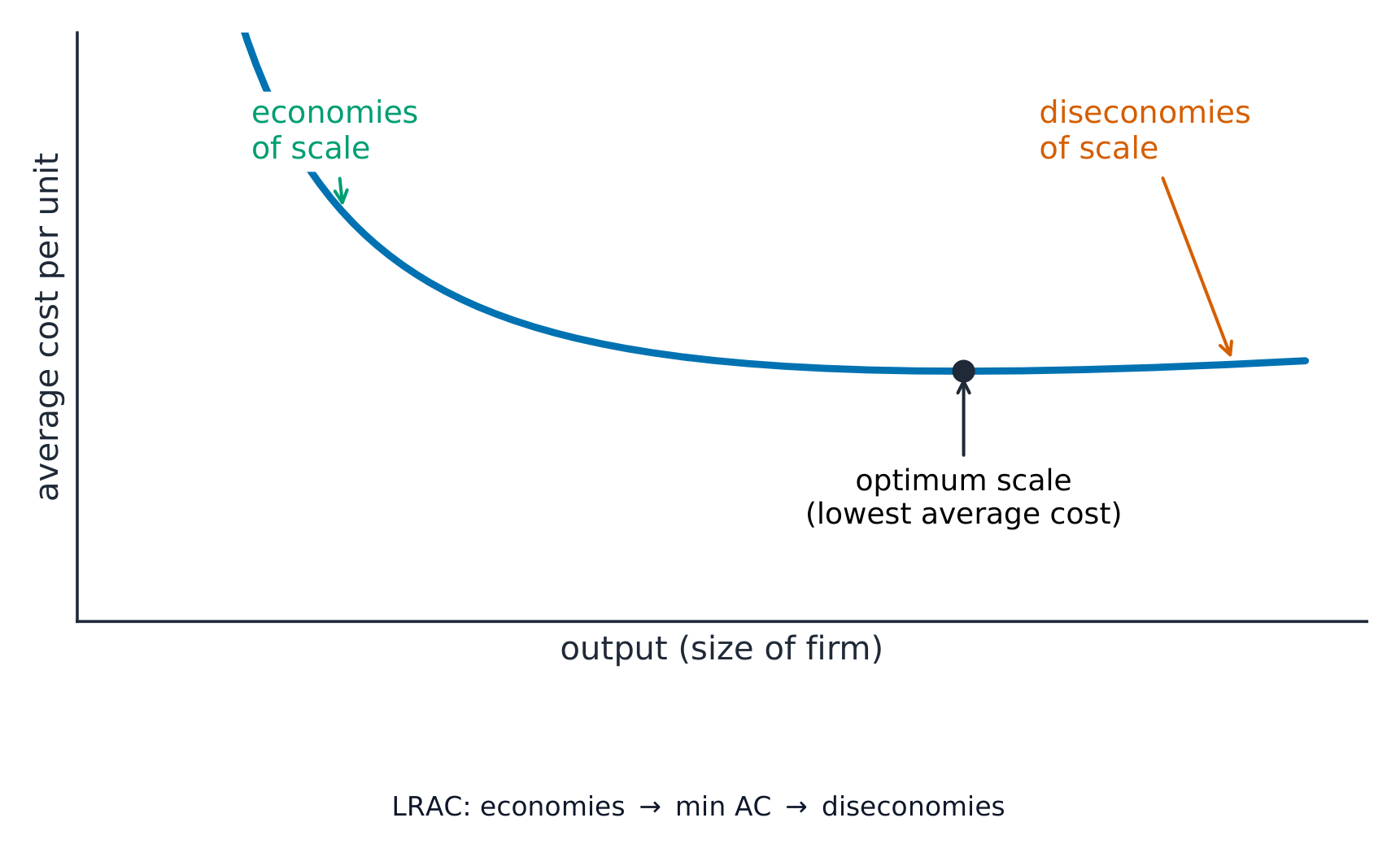
随着一个企业增长,它每单位的成本能下降。这些节省被称为规模经济(economies of scale)。
| 类型 | 每单位的成本如何下降 |
|---|---|
| 采购 | 大量购买材料带来更低的价格 |
| 财务 | 大公司能更便宜地借钱 |
| 管理 | 公司能负担得起专家经理 |
| 技术 | 公司能使用大的、高效的机器 |
| 营销(marketing) | 广告(advertising)的成本被分摊到更多的商品上 |
若一个企业增长得太大,每单位的成本能再次开始上升。这些是规模不经济(diseconomies of scale)。它们发生是因为一个巨大公司里的沟通(communication)变差、工人感到不那么重要而工作得不那么努力,而经理发现公司难以控制。
探索
Business case lab
Classify real decisions so the main business concept becomes concrete.
词汇表
训练
| 英文 | 中文 | 拼音 |
|---|---|---|
| business/ˈbɪznəs/ | 企业 | qǐ yè |
| entrepreneur/ˌɒntrɪprəˈnjʊə/ | 企业家 | qǐ yè jiā |
| risk/rɪsk/ | 风险 | fēng xiǎn |
| innovative/ˈɪnəveɪtɪv/ | 创新 | chuàng xīn |
| business plan/ˈbɪznəs plæn/ | 商业计划书 | shāng yè jì huà shū |
| market/ˈmɑːkɪt/ | 市场 | shì chǎng |
| raise finance/reɪz ˈfaɪnæns/ | 筹集资金 | chóu jí zī jīn |
| start-up/stɑːt ʌp/ | 初创企业 | chū chuàng qǐ yè |
| grants/ɡrænts/ | 补助金 | bǔ zhù jīn |
| loans/ləʊnz/ | 贷款 | dài kuǎn |
| employees/emˈplɔɪiːz/ | 员工 | yuán gōng |
| output/ˈaʊtpʊt/ | 产量 | chǎn liàng |
| revenue/ˈrevənjuː/ | 收入 | shōu rù |
| capital employed/ˈkæpɪtl emˈplɔɪd/ | 所用资本 | suǒ yòng zī běn |
| growth/ɡrəʊθ/ | 增长 | zēng zhǎng |
| internal growth/ɪnˈtɜːnl ɡrəʊθ/ | 内部增长 | nèi bù zēng zhǎng |
| external growth/ekˈstɜːnl ɡrəʊθ/ | 外部增长 | wài bù zēng zhǎng |
| merger/ˈmɜːdʒə/ | 合并 | hé bìng |
| takeover/ˈteɪkəʊvə/ | 收购 | shōu gòu |
| horizontal integration/ˌhɒrɪˈzɒntl ˌɪntɪˈɡreɪʃn/ | 横向一体化 | héng xiàng yī tǐ huà |
| vertical integration/ˈvɜːtɪkl ˌɪntɪˈɡreɪʃn/ | 纵向一体化 | zòng xiàng yī tǐ huà |
| conglomerate integration/kənˈɡlɒməreɪt ˌɪntɪˈɡreɪʃn/ | 混合一体化 | hùn hé yī tǐ huà |
| economies of scale/ɪˈkɒnəmiz ɒv skeɪl/ | 规模经济 | guī mó jīng jì |
| marketing/ˈmɑːkɪtɪŋ/ | 营销 | yíng xiāo |
| advertising/ˈædvətaɪzɪŋ/ | 广告 | guǎng gào |
| diseconomies of scale/ˌdɪsɪˈkɒnəmiz ɒv skeɪl/ | 规模不经济 | guī mó bù jīng jì |
| communication/kəˌmjuːnɪˈkeɪʃn/ | 沟通 | gōu tōng |
1.4
企业组织的类型

大纲
- describe the features, advantages and disadvantages of sole traders, partnerships, private limited companies and public limited companies
- explain the difference between unlimited and limited liability and between incorporated and unincorporated businesses
- describe franchises, joint ventures and social enterprises and their advantages and disadvantages
- explain the features of public sector business organisations (public corporations)
来源:剑桥国际大纲
Liability
责任(liability)意味着若一个企业不能自己付债务(debts)时谁必须付它们。
- 用无限责任(unlimited liability),所有者个人对所有债务负责。若企业失败,所有者可能失去个人的东西,像一栋房子或一辆车,来付它们。
- 用有限责任(limited liability),所有者只能失去他们投入企业的钱。他们个人的东西是安全的。
Incorporated and unincorporated
- 一个法人(incorporated)企业有一个与它所有者分开的法律身份。企业本身能拥有东西并被告上法庭。它的所有者得到有限责任。公司是法人。
- 一个非法人(unincorporated)企业在法律上不与它的所有者分开。独资商人和合伙企业是非法人。
The four main types
一个独资企业(sole trader)是由一个人拥有的一个企业。
| 优点 | 缺点 |
|---|---|
| 创办容易而便宜 | 无限责任 |
| 所有者保留所有利润 | 难以筹集资金 |
| 所有者做所有决定 | 长时间、没有人分担工作 |
| 私密(账目保持秘密) | 若所有者停止企业就结束 |
一个合伙企业(partnership)由两个或更多分担工作、决定和利润的人拥有。他们通常签一份书面协议。
| 优点 | 缺点 |
|---|---|
| 更多所有者带来更多资本 | 无限责任(在大多数情况下) |
| 工作和想法被分享 | 利润被分享 |
| 创办容易 | 合伙人能不同意 |
| 一个合伙人的错误影响每个人 |
一个私人有限公司(private limited company)(常"Ltd")由股东(shareholders)拥有,但它的股份不能卖给公众。所有者常常是家人和朋友。
| 优点 | 缺点 |
|---|---|
| 有限责任 | 更多法律规则和文书工作 |
| 比独资商人更容易筹集资本 | 股份不能卖给公众 |
| 控制保持在一个小群体里 | 账目必须与政府分享 |
一个公众有限公司(public limited company)(常"plc")是一家大公司,它的股份(shares)能被公众在证券交易所(stock exchange)买。
| 优点 | 缺点 |
|---|---|
| 能筹集非常大量的资本 | 创办昂贵而复杂 |
| 有限责任 | 账目完全公开 |
| 知名,所以容易借款 | 任何人都能买股份,所以有被收购的风险 |
| 原来的所有者可能失去控制 |
股东可能收到利润的一份,称为一份股息(dividend)。

Other forms of organisation
- 特许经营(franchise):一个人(加盟商(franchisee))付钱使用一个现有的成功企业(授权商(franchisor))的名字、产品和方法。加盟商得到一个知名品牌、培训和更低的风险,但必须付费用和利润的一份,而且有更少的自由。许多快餐连锁店以这种方式运作。
- 合资企业(joint venture):两个企业同意分担一个项目的成本、风险和利润,同时保持分开的公司。
- 社会企业(social enterprise):一个为帮助社会或环境而交易的企业,不只是为赚取利润。它大部分的利润被放回它的社会目标。
Public sector organisation
一个国有企业(public corporation)是一个由政府拥有和经营的企业,例如一个国家的铁路或邮政服务。它的目标包括向每个人提供一项重要的服务,不只是赚取利润。
探索
Choose the ownership form
Compare ownership, control and liability in real business types.
词汇表
训练
| 英文 | 中文 | 拼音 |
|---|---|---|
| liability/ˌlaɪəˈbɪlɪti/ | 责任 | zé rèn |
| debts/dets/ | 债务 | zhài wù |
| unlimited liability/ʌnˈlɪmɪtɪd ˌlaɪəˈbɪlɪti/ | 无限责任 | wú xiàn zé rèn |
| limited liability/ˈlɪmɪtɪd ˌlaɪəˈbɪlɪti/ | 有限责任 | yǒu xiàn zé rèn |
| incorporated/ɪnˈkɔːpəreɪtɪd/ | 法人 | fǎ rén |
| unincorporated/ˌʌnɪnˈkɔːpəreɪtɪd/ | 非法人 | fēi fǎ rén |
| sole trader/səʊl ˈtreɪdə/ | 独资企业 | dú zī qǐ yè |
| partnership/ˈpɑːtnəʃɪp/ | 合伙企业 | hé huǒ qǐ yè |
| private limited company/ˈpraɪvət ˈlɪmɪtɪd ˈkʌmpəni/ | 私人有限公司 | sī rén yǒu xiàn gōng sī |
| shareholders/ˈʃeəhəʊldəz/ | 股东 | gǔ dōng |
| public limited company/ˈpʌblɪk ˈlɪmɪtɪd ˈkʌmpəni/ | 公众有限公司 | gōng zhòng yǒu xiàn gōng sī |
| shares/ʃeəz/ | 股份 | gǔ fèn |
| stock exchange/stɒk eksˈtʃeɪndʒ/ | 证券交易所 | zhèng quàn jiāo yì suǒ |
| dividend/ˈdɪvɪdend/ | 股息 | gǔ xī |
| franchise/ˈfræntʃaɪz/ | 特许经营 | tè xǔ jīng yíng |
| franchisee/ˈfræntʃɪsiː/ | 加盟商 | jiā méng shāng |
| franchisor/ˈfræntʃaɪzə/ | 授权商 | shòu quán shāng |
| joint venture/dʒɔɪnt ˈventʃə/ | 合资企业 | hé zī qǐ yè |
| public corporation/ˈpʌblɪk ˌkɔːpəˈreɪʃn/ | 国有企业 | guó yǒu qǐ yè |
1.5
企业目标与利益相关者目标

大纲
- explain the objectives a business might have: survival, profit, growth, market share, customer service, social objectives
- explain the objectives of a social enterprise (economic, social and environmental)
- identify the main stakeholder groups (owners/shareholders, employees, customers, suppliers, government, local community, banks) and their objectives
- explain how and why stakeholder objectives may conflict
来源:剑桥国际大纲
Business objectives
一个目标(objective)是一个企业瞄准的一个目的。常见的目标是:
- 生存(survival)——留在生意里,尤其是当新的或在艰难时期,
- 利润——赚得比它花的多;大多数私营公司的主要目标,
- 增长——变得更大,以更安全并赚更多,
- 市场份额(market share)——一个企业持有的一个市场里总销售的份额,
- 顾客服务(customer service)——保持顾客高兴以便他们回来,
- 社会目标——帮助社会或环境(environment)。
Objectives of a social enterprise
一个社会企业一起瞄准三种目标:
- 经济的——赚足够的钱来生存和增长,
- 社会的——帮助人们,例如通过给那些发现工作难找的人工作,
- 环境的——保护地球,例如通过削减废物。
Stakeholders
一个利益相关者(stakeholder)是任何被一个企业影响或对它有兴趣的人或团体。
| 利益相关者 | 他们通常想要什么 |
|---|---|
| 所有者 / 股东 | 好的利润和一份上升的股息 |
| 员工 | 公平的报酬、安全的工作、稳定的工作 |
| 顾客 | 公平价格的好质量 |
| 供应商(suppliers) | 按时被支付,以及定期的订单 |
| 政府 | 企业遵守法律并缴税收(tax) |
| 当地社区(local community) | 就业,但没有污染或噪音 |
| 银行 | 被偿还他们借出的钱 |
Why stakeholder objectives conflict
利益相关者常常想要不同的东西,所以他们的目标能冲突(conflict)。一个企业不能一次完全取悦每个人。
- 所有者想要更高的利润,但员工想要更高的报酬。更高的报酬降低利润。
- 所有者想要削减成本,但当地社区想要更少的污染(pollution)。削减成本可能造成更多污染。
- 顾客想要低价格,但供应商想要被付更多。
好的经理试图平衡这些不同的目标。
探索
Stakeholder interest lab
See how different stakeholders judge the same business decision.
词汇表
训练
| 英文 | 中文 | 拼音 |
|---|---|---|
| social enterprise/ˈsəʊʃl ˈentəpraɪz/ | 社会企业 | shè huì qǐ yè |
| objective/ɒbˈdʒektɪv/ | 目标 | mù biāo |
| survival/səˈvaɪvl/ | 生存 | shēng cún |
| market share/ˈmɑːkɪt ʃeə/ | 市场份额 | shì chǎng fèn é |
| customer service/ˈkʌstəmə ˈsɜːvɪs/ | 顾客服务 | gù kè fú wù |
| environment/enˈvaɪrənmənt/ | 环境 | huán jìng |
| stakeholder/ˈsteɪkhəʊldə/ | 利益相关者 | lì yì xiāng guān zhě |
| suppliers/səˈplaɪəz/ | 供应商 | gōng yìng shāng |
| tax/tæks/ | 税收 | shuì shōu |
| local community/ˈləʊkl kəˈmjuːnɪti/ | 当地社区 | dāng dì shè qū |
| conflict/ˈkɒnflɪkt/ | 冲突 | chōng tū |
| pollution/pəˈluːʃn/ | 污染 | wū rǎn |
1.5
考试技巧
- 增值 = 出售价格 − 买来的材料成本。一个企业用一个强的品牌、更好的设计,或更便宜的材料提高它。
- 知道三个产业:第一(提取原材料)、第二(制造商品)、第三(服务)。随着一个国家发展,就业从第一产业转向第三产业。
- 无限责任(独资商人、合伙企业)把所有者个人的东西置于风险中;有限责任(Ltd、plc)把任何损失限制在投入的钱。
- 一个利益相关者是任何被企业影响的人,而他们的目标常常冲突——所有者想要利润、工人想要更高的报酬、社区想要更少的污染。
- 规模经济随着一家公司增长削减每单位的成本;增长得太大带来规模不经济(每单位的成本上升)。
本主题的互动课程
逐步学习,并即时检测练习。