Enterprise, business growth and size · 创业、企业增长与规模
| English | 中文 | Pinyin · 拼音 |
|---|---|---|
| risk/rɪsk/ | 风险 | fēng xiǎn |
| entrepreneur/ˌɒntrɪprəˈnjʊə/ | 企业家 | qǐ yè jiā |
| capital/ˈkæpɪtl/ | 资本 | zī běn |
| revenue/ˈrevənjuː/ | 收入 | shōu rù |
| average cost/ˈævrɪdʒ kɒst/ | 平均成本 | píng jūn chéng běn |
| economies of scale/ɪˈkɒnəmiz ɒv skeɪl/ | 规模经济 | guī mó jīng jì |
| diseconomies/ˌdɪsɪˈkɒnəmiz/ | 规模不经济 | guī mó bù jīng jì |
| niche/niːʃ/ | 利基市场 | lì jī shì chǎng |
Starting up and growing
- Behind every business is someone who took a risk 风险 to start it — an entrepreneur 企业家.
- Once running, a big question is whether, and how, to grow.
创业与成长
- 每个企业背后都有一个冒险去创办它的人——一个企业家(entrepreneur)。
- 一旦运营,一个大问题是是否以及如何成长。
Business case lab · 商业案例实验室
Classify real decisions so the main business concept becomes concrete. · 对真实决策进行分类,使主要商业概念具体化。
An entrepreneur is someone who: · 企业家是指:
Entrepreneurs bear risk to start a business for profit. · 企业家承担风险以创办盈利性企业。
Enterprise and entrepreneurs
- An entrepreneur spots an opportunity, takes the risk, and organises resources to start a business.
- They need finance, a business plan, and the willingness to bear the risk for profit.
Land, labour, capital 资本 and enterprise are combined to make goods and services
创业精神与企业家
- 一个企业家发现一个机会,承担风险,并组织资源来创办一个企业。
- 他们需要资金、一个商业计划,以及为了利润承担风险的意愿。

土地、劳动、资本和企业家才能被结合起来制造商品和服务
Which can measure the size of a business? (Select all that apply.) · 哪些可以衡量企业的规模?(选择所有适用项。)
Employees, revenue and capital are standard measures. · 员工人数、营收和资本是标准衡量指标。
Taking over another company is a form of external growth. · 收购另一家公司是一种外部增长形式。
Mergers and takeovers are external growth. · 合并和收购属于外部增长。
Measuring and growing a business
- Size is measured by number of employees, revenue 收入, or capital employed.
- Firms grow internally (more outlets/products) or externally (merging with or taking over another firm).
Average cost 平均成本 per unit falls then rises as a firm grows
测量和扩大一个企业
- 规模(size)按员工数量、收入(revenue)或所用的资本来测量。
- 公司内部成长(更多门店/产品)或外部成长(与另一家公司合并或收购它)。
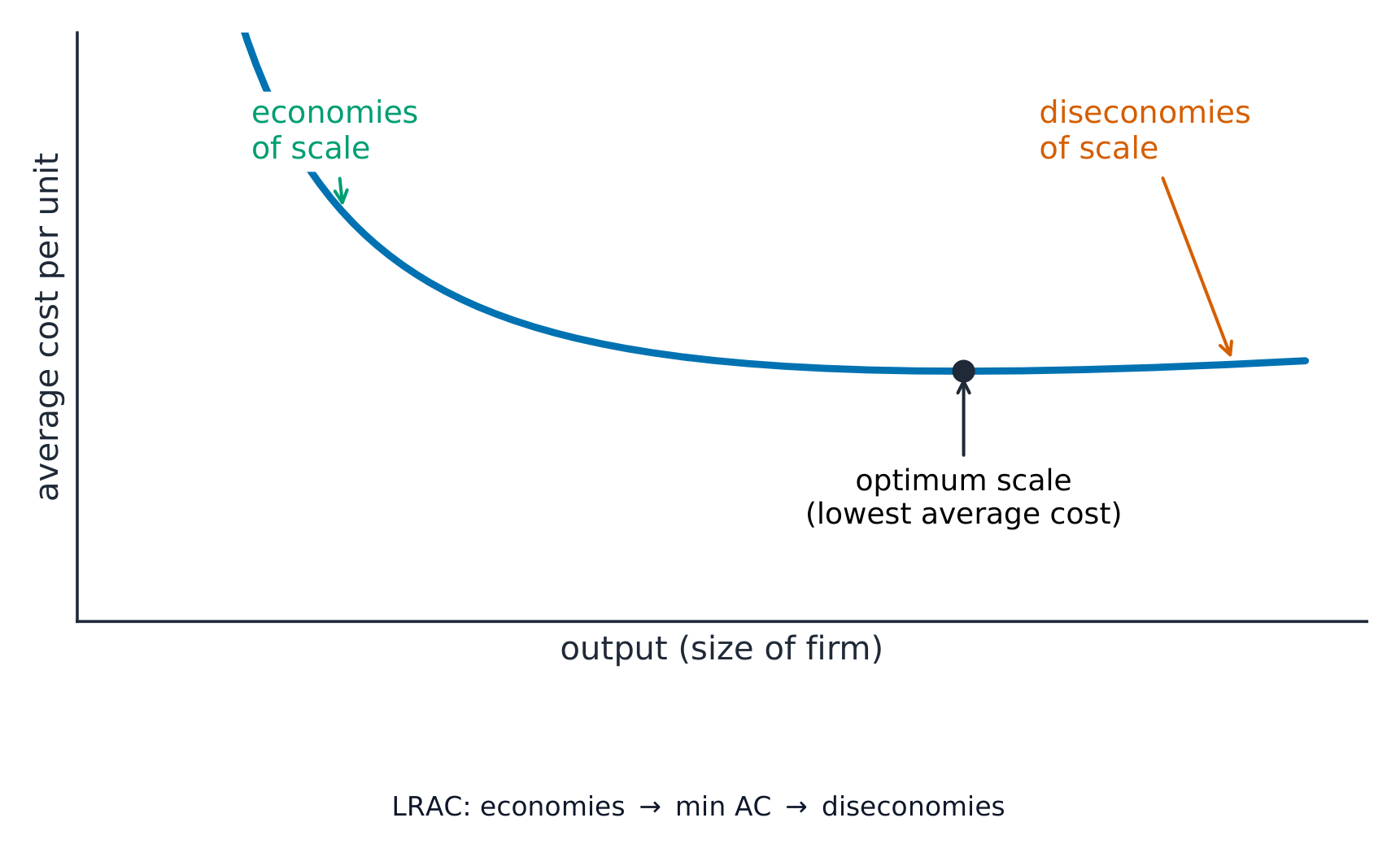
随着一个公司成长,每单位平均成本先降后升
Economies of scale mean that, as a firm grows, its: · 规模经济意味着,随着企业规模扩大,其:
Average cost per unit falls with greater scale. · 规模越大,单位平均成本越低。
When a firm grows so large that average cost rises, it suffers ______ of scale. · 当企业规模过大导致单位平均成本上升时,它会遭遇______规模。
Communication and coordination problems drive diseconomies. · 沟通和协调问题驱动了不经济性。
Economies of scale 规模经济
- As a business grows, its average cost per unit can fall — economies of scale.
- Grow too large and diseconomies 规模不经济 (poor communication, low morale) can push average cost back up.
Average cost falls as the firm grows, then rises if it becomes too large.
Bigger isn't always better. Past a certain size, diseconomies of scale raise average costs. Some firms stay small on purpose to keep control and serve a niche 利基市场.
规模经济
- 随着一个企业成长,它的每单位平均成本能下降——规模经济(economies of scale)。
- 成长得太大,规模不经济(diseconomies,沟通不良、士气低落)能把平均成本推回上去。
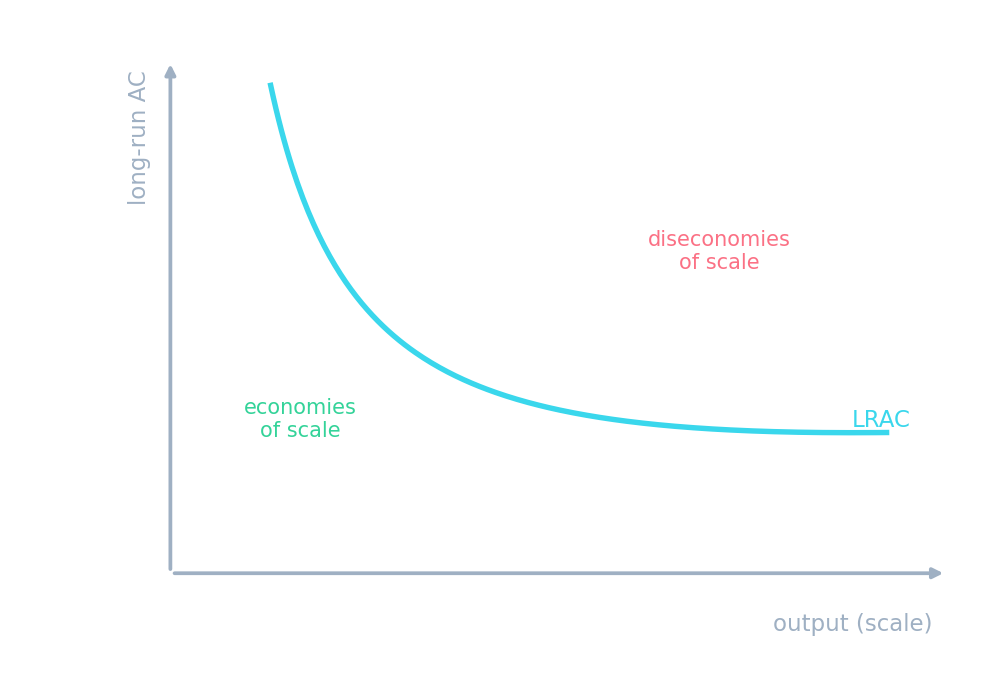
随着公司成长平均成本下降,然后如果它变得太大则上升。
更大并不总是更好。 超过某个规模,规模不经济提高平均成本。一些公司故意保持小规模以保持控制并服务一个利基市场。
You've got it
- an entrepreneur takes the risk and organises resources to start a business
- size is measured by employees, revenue or capital; growth is internal or external
- economies of scale lower average cost; diseconomies raise it if too big
你掌握了
- 一个企业家承担风险并组织资源来创办一个企业
- 规模按员工、收入或资本测量;成长是内部或外部的
- 规模经济降低平均成本;规模不经济在太大时提高它