| Enduring Understanding | Learning Objective | Essential Knowledge |
|---|---|---|
MOD-1 | MOD-1.A |
|
基本经济概念
AP 宏观经济学 · 第 1 主题
 7:30
7:30
Basic Economic Concepts
Here is a result that feels wrong the first time you meet it. Suppose you are faster than your friend at writing code and faster at writing documentation. You…
英文讲解 · 内嵌中英文字幕
1.1
稀缺性
大纲
来源:美国大学理事会 AP 课程与考试说明
经济学(economics)以稀缺性(scarcity)开始:人们的欲望是无限的,但满足它们的资源(resources)是有限的。这些资源——生产要素(factors of production)——是土地(land)、劳动(labor)、资本(capital)和企业家才能(entrepreneurship)。稀缺性迫使每个社会选择生产什么、如何生产和为谁生产,而它使权衡(trade-offs)不可避免。
词汇表
训练
| 英文 | 中文 | 拼音 |
|---|---|---|
| Economics/ˌiːkəˈnɒmɪks/ | 经济学 | jīng jì xué |
| scarcity/ˈskeəsɪti/ | 稀缺性 | xī quē xìng |
| resources/rɪˈzɔːsɪz/ | 资源 | zī yuán |
| factors of production/ˈfæktəz ɒv prəˈdʌkʃn/ | 生产要素 | shēng chǎn yào sù |
| labor/ˈleɪbə/ | 劳动 | láo dòng |
| capital/ˈkæpɪtl/ | 资本 | zī běn |
| entrepreneurship/ˌɒntrɪprəˈnjʊəʃɪp/ | 企业家才能 | qǐ yè jiā cái néng |
| trade-offs/treɪd ɒfs/ | 权衡 | quán héng |
1.2
机会成本与生产可能性曲线(PPC)
大纲
| Enduring Understanding | Learning Objective | Essential Knowledge |
|---|---|---|
MOD-1 | MOD-1.B |
|
来源:美国大学理事会 AP 课程与考试说明
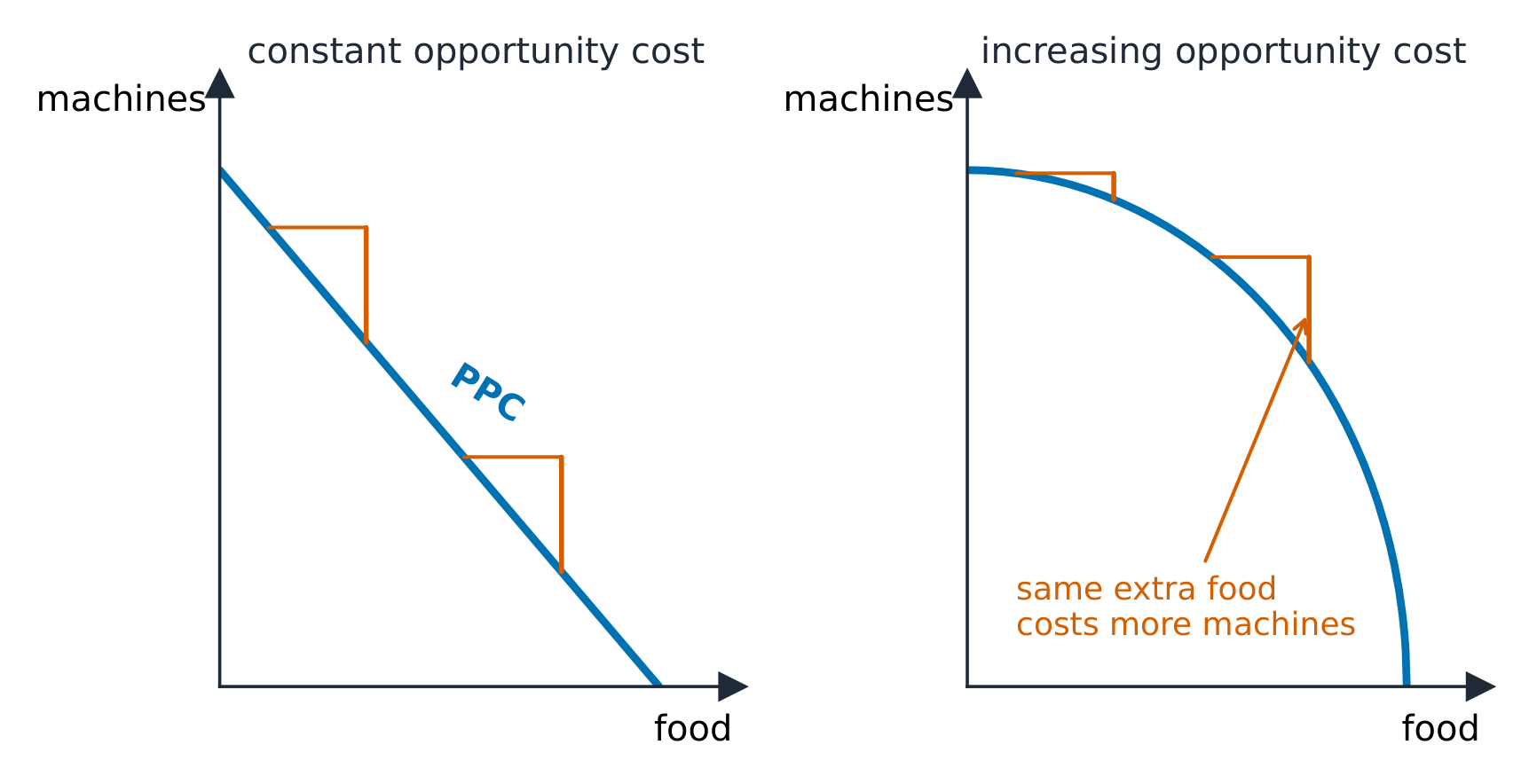
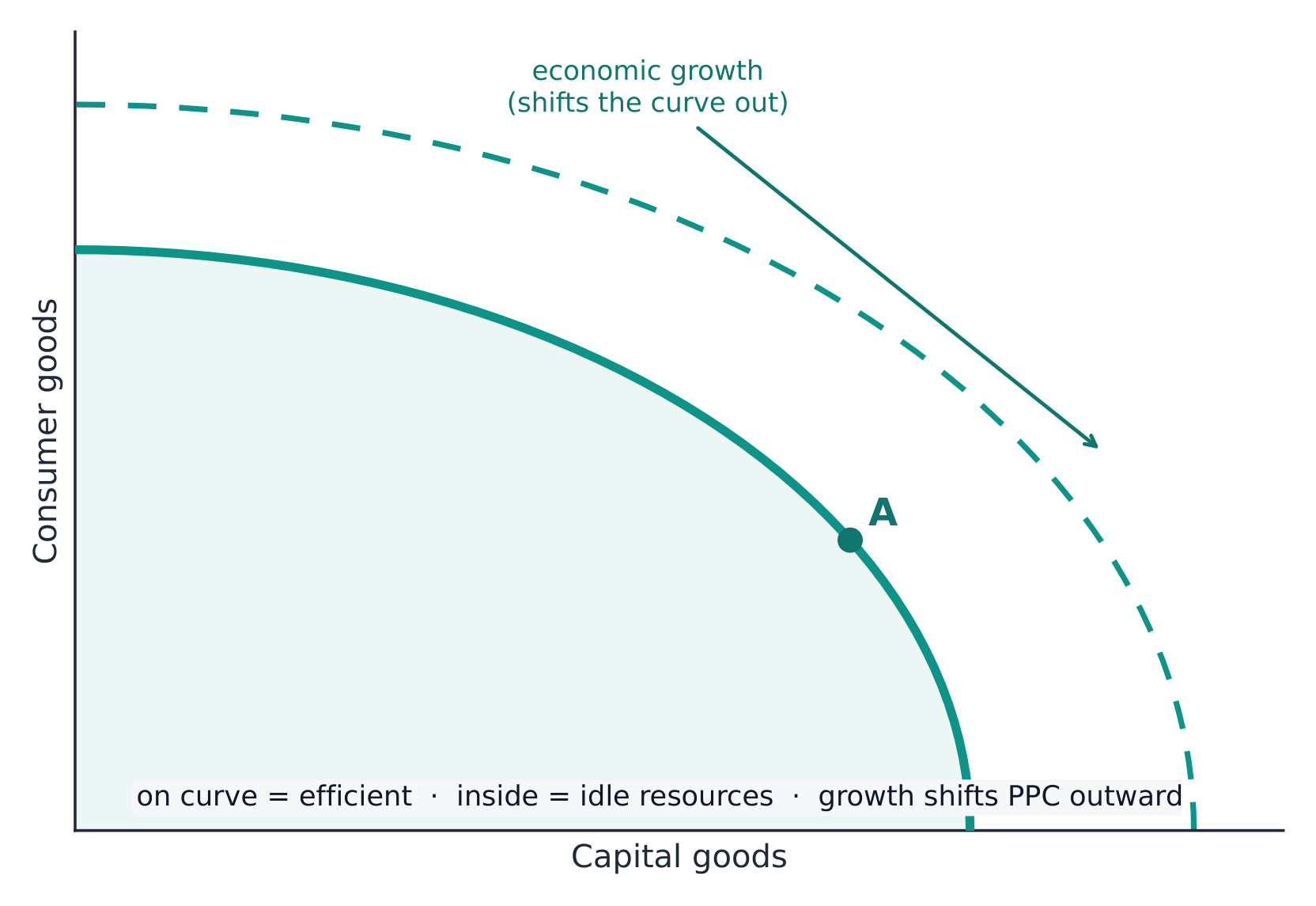
每个选择都有一个机会成本(opportunity cost)——放弃的下一个最好的替代的价值。生产可能性曲线(PPC)(production possibilities curve)显示当资源被充分而高效地使用时一个经济能制造的两种物品的最大组合。
- 曲线上的点是高效的;里面,低效的(失业的资源);外面,不可达的。
- 向下的斜率显示机会成本;一条向外凸的曲线显示增加的机会成本。
- 更多资源或更好的技术造成经济增长(economic growth),使 PPC 向外移动。
探索
Explore the production possibilities curve
Move along the curve — making more capital goods means giving up consumer goods. That lost output is the opportunity cost, and the bowed shape shows it rising with each extra unit.
词汇表
训练
| 英文 | 中文 | 拼音 |
|---|---|---|
| opportunity cost/ɒpəˈtjuːnɪti kɒst/ | 机会成本 | jī huì chéng běn |
| production possibilities curve (PPC)/prəˈdʌkʃn ˌpɒsəˈbɪlɪtiz kɜːv/ | 生产可能性曲线 | shēng chǎn kě néng xìng qū xiàn |
| economic growth/ˌiːkəˈnɒmɪk ɡrəʊθ/ | 经济增长 | jīng jì zēng zhǎng |
1.3
比较优势与贸易收益
大纲
| Enduring Understanding | Learning Objective | Essential Knowledge |
|---|---|---|
MKT-1 | MKT-1.A |
|
MKT-1.B |
|
来源:美国大学理事会 AP 课程与考试说明
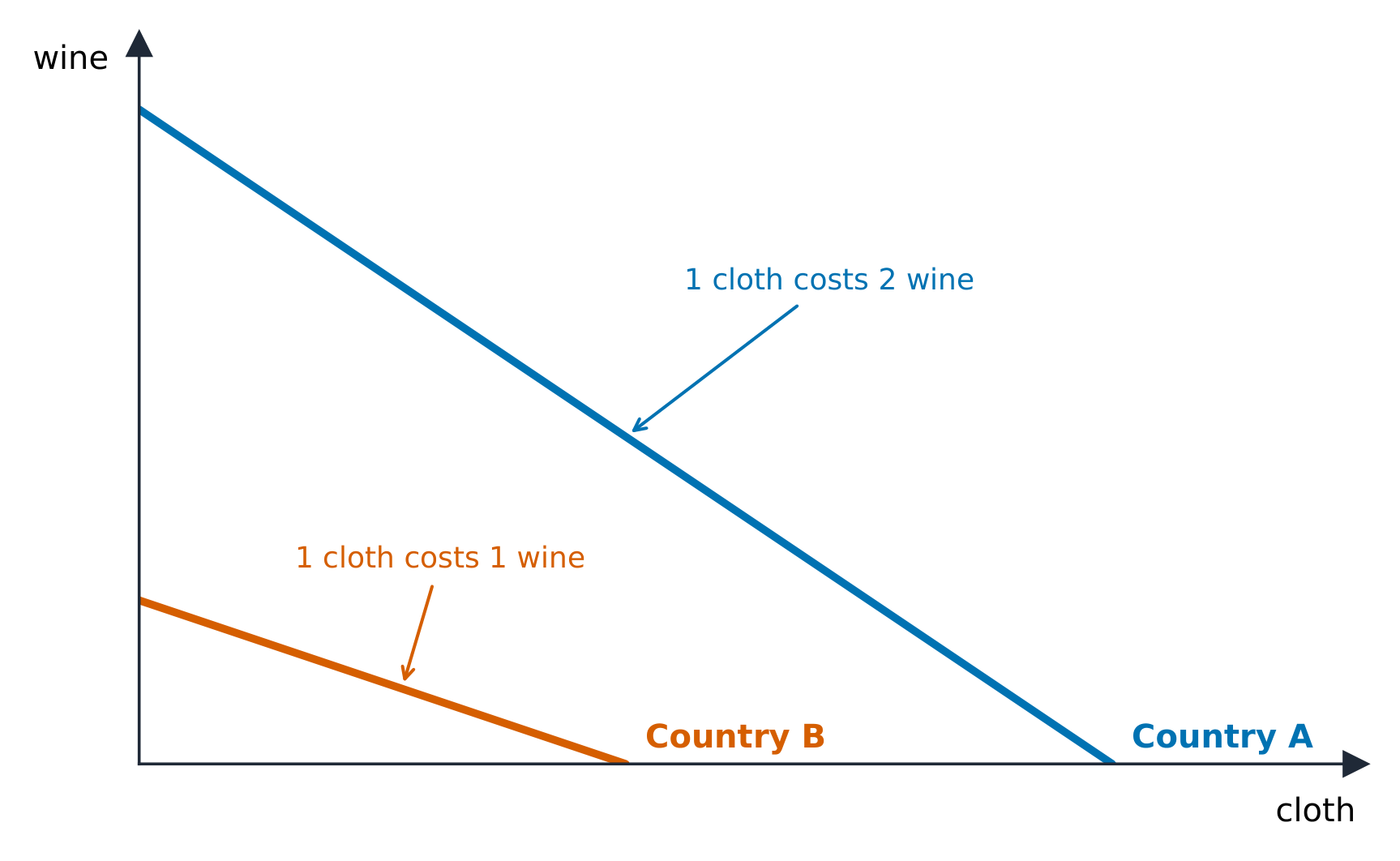
一个生产者在一种物品上有一个绝对优势(absolute advantage),若它能制造更多它。它有一个比较优势(comparative advantage),若它有更低的机会成本。国家应当专门于它们的比较优势物品并交易——若贸易条件(terms of trade)位于两个机会成本之间,两者都获益。贸易让一个国家消费超过它自己的 PPC。
Worked example. 国家 A 每天能制造 $10$ 小麦或 $5$ 布;国家 B 能制造 $8$ 小麦或 $8$ 布。对 A,一布值 $\tfrac{10}{5}=2$ 小麦;对 B 它值 $\tfrac{8}{8}=1$ 小麦。B 的布的机会成本更低,所以 B 专门于布。检查小麦:A 每小麦放弃 $0.5$ 布而 B 放弃 $1$,所以 A 专门于小麦。以两个成本之间的任何比率交易,两者都消费超过它们自己的 PPC。
探索
See the gains from specialization and trade
A country should specialize where its opportunity cost is lowest, then trade for the rest. Because the terms of trade sit between the two countries' costs, each can consume beyond its own production frontier.
词汇表
训练
| 英文 | 中文 | 拼音 |
|---|---|---|
| absolute advantage/ˈæbsəluːt ədˈvæntɪdʒ/ | 绝对优势 | jué duì yōu shì |
| comparative advantage/kəmˈpærətɪv ədˈvæntɪdʒ/ | 比较优势 | bǐ jiào yōu shì |
| terms of trade/tɜːmz ɒv treɪd/ | 贸易条件 | mào yì tiáo jiàn |
1.4
需求
大纲
| Enduring Understanding | Learning Objective | Essential Knowledge |
|---|---|---|
MKT-2 | MKT-2.A |
|
MKT-2.B |
|
来源:美国大学理事会 AP 课程与考试说明
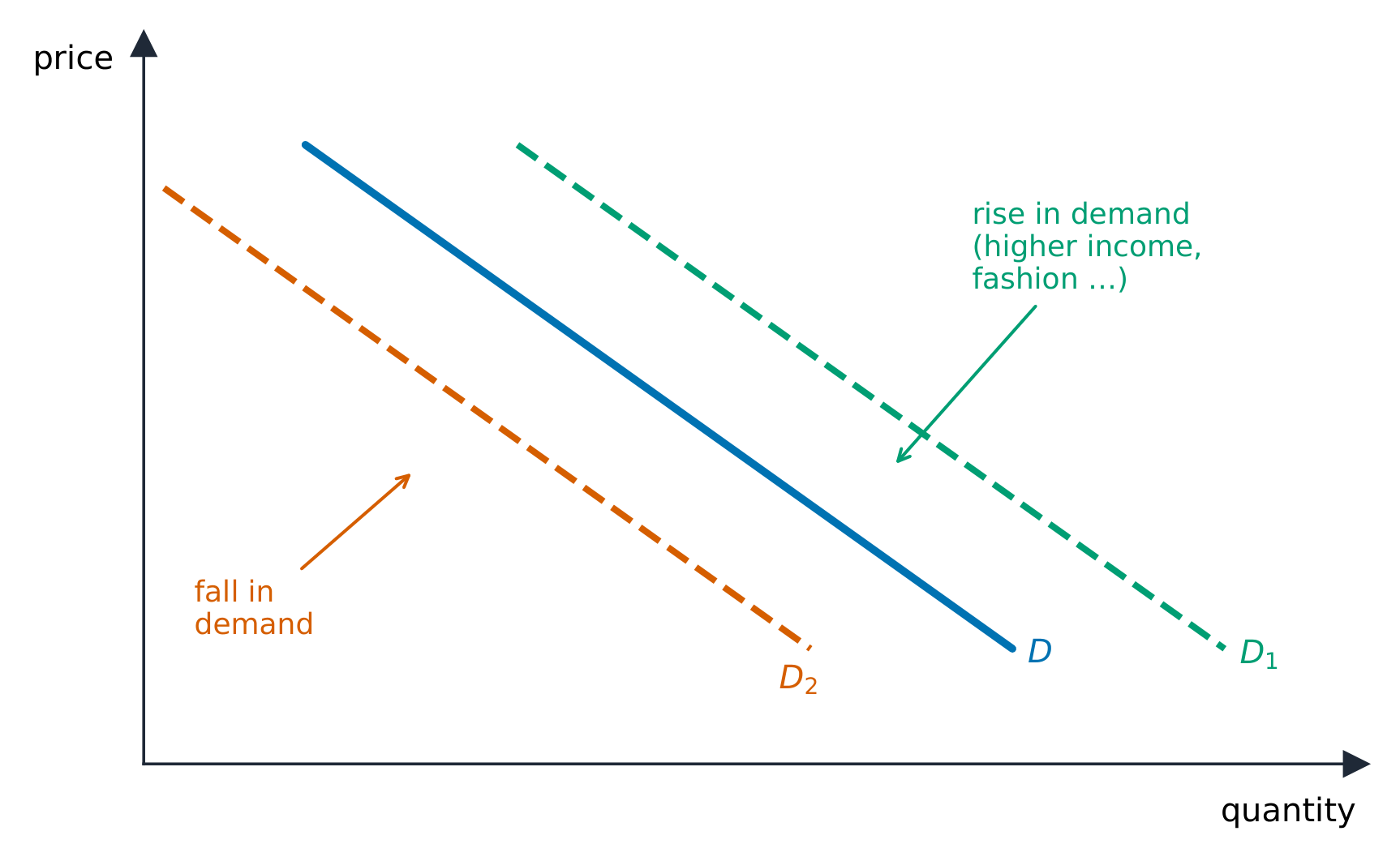
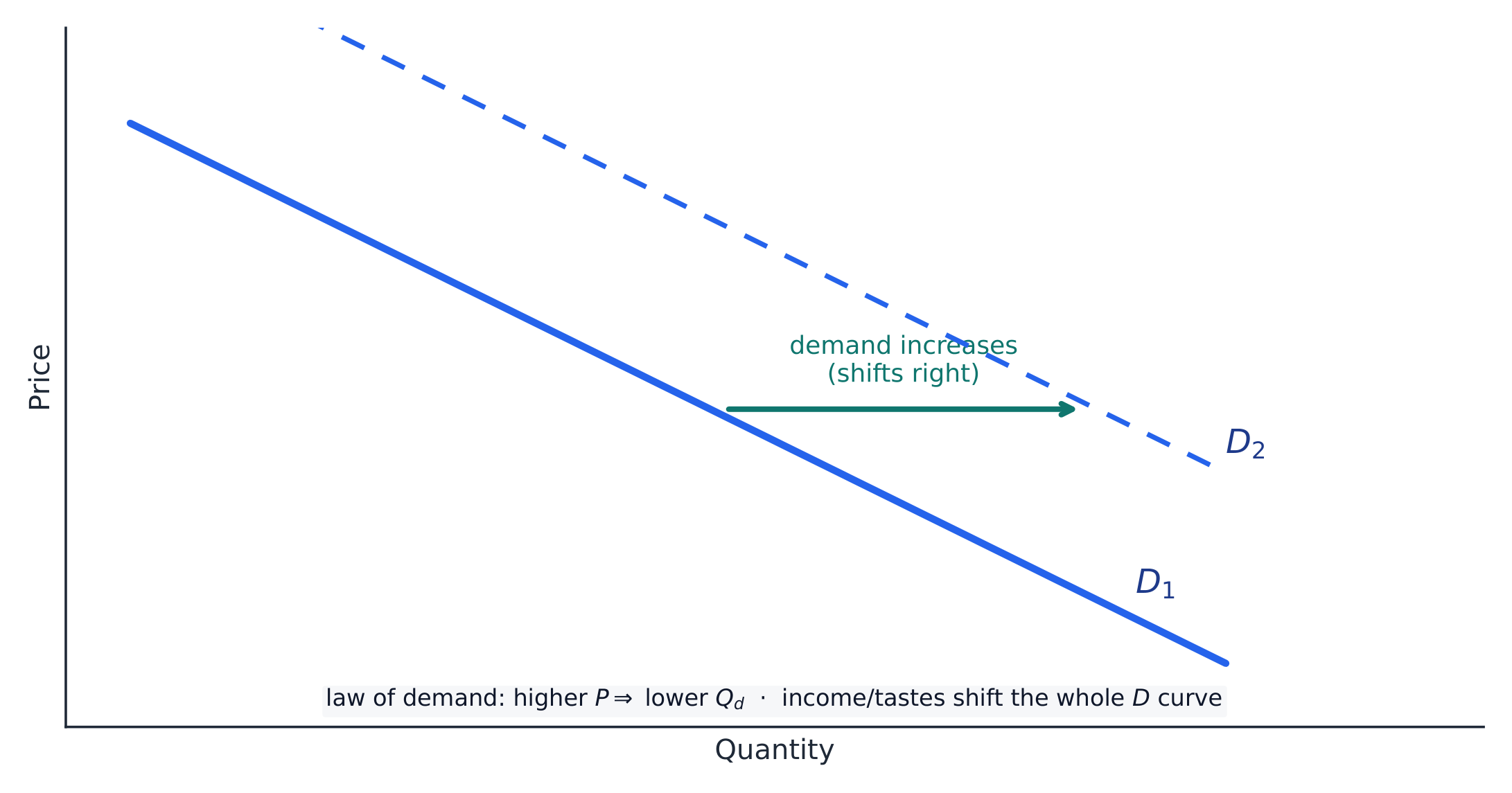
需求(demand)把价格与买者会买的数量关联。需求定律(law of demand)使曲线向下倾斜。物品自身价格的一个变化是沿曲线的一个移动;决定因素(收入、偏好、替代品(substitutes)和互补品(complements)的价格、买者数量、预期)移动整条曲线。
探索
Explore demand — move along vs shift the curve
A change in the own price moves you along a fixed curve (a change in quantity demanded); a determinant like income or tastes shifts the whole curve ($D_1 \to D_2$) — a change in demand.
词汇表
训练
| 英文 | 中文 | 拼音 |
|---|---|---|
| Demand/dɪˈmænd/ | 需求 | xū qiú |
| law of demand/lɔː ɒv dɪˈmænd/ | 需求定律 | xū qiú dìng lǜ |
| substitutes/ˈsʌbstɪtjuːts/ | 替代品 | tì dài pǐn |
| complements/ˈkɒmplɪmənts/ | 互补品 | hù bǔ pǐn |
1.5
供给
大纲
| Enduring Understanding | Learning Objective | Essential Knowledge |
|---|---|---|
MKT-2 | MKT-2.C |
|
MKT-2.D |
|
来源:美国大学理事会 AP 课程与考试说明
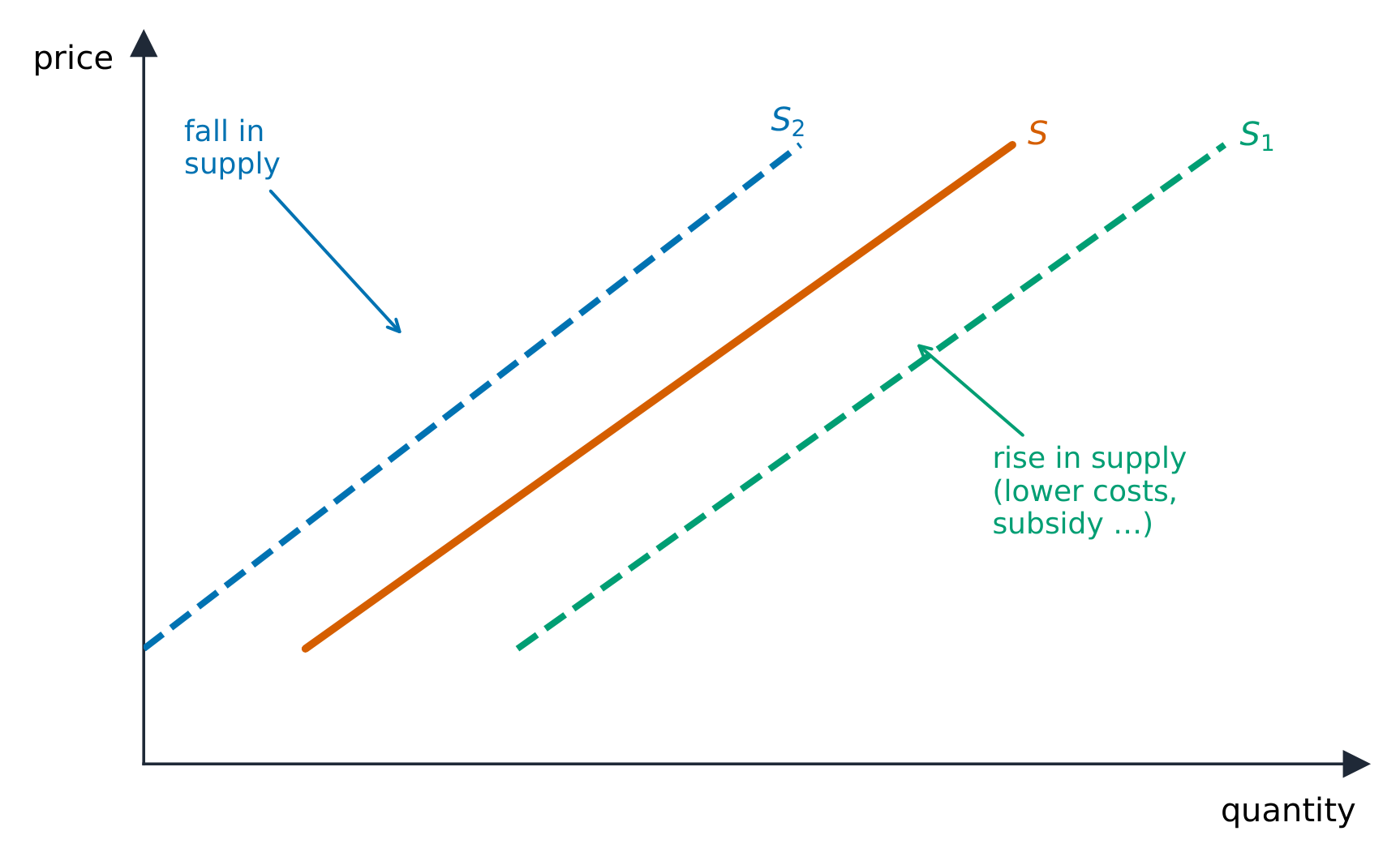
供给(supply)把价格与卖者会提供的数量关联;供给定律(law of supply)使它向上倾斜。它的决定因素——投入价格、技术、税收和补贴(subsidies)、卖者数量、预期——移动曲线,而物品自身价格沿它移动。
探索
Explore what moves the supply curve
Supply slopes up: a higher price makes selling more worthwhile. A change in costs, technology or the number of sellers shifts the whole curve — not a move along it. Drag the supply line and watch price and quantity respond.
词汇表
训练
| 英文 | 中文 | 拼音 |
|---|---|---|
| Supply/səˈplaɪ/ | 供给 | gōng jǐ |
| law of supply/lɔː ɒv səˈplaɪ/ | 供给定律 | gōng jǐ dìng lǜ |
| subsidies/ˈsʌbsɪdiz/ | 补贴 | bǔ tiē |
1.6
市场均衡、失衡与均衡的变动
大纲
| Enduring Understanding | Learning Objective | Essential Knowledge |
|---|---|---|
MKT-2 | MKT-2.E |
|
MKT-2.F |
| |
MKT-2.G |
|
来源:美国大学理事会 AP 课程与考试说明
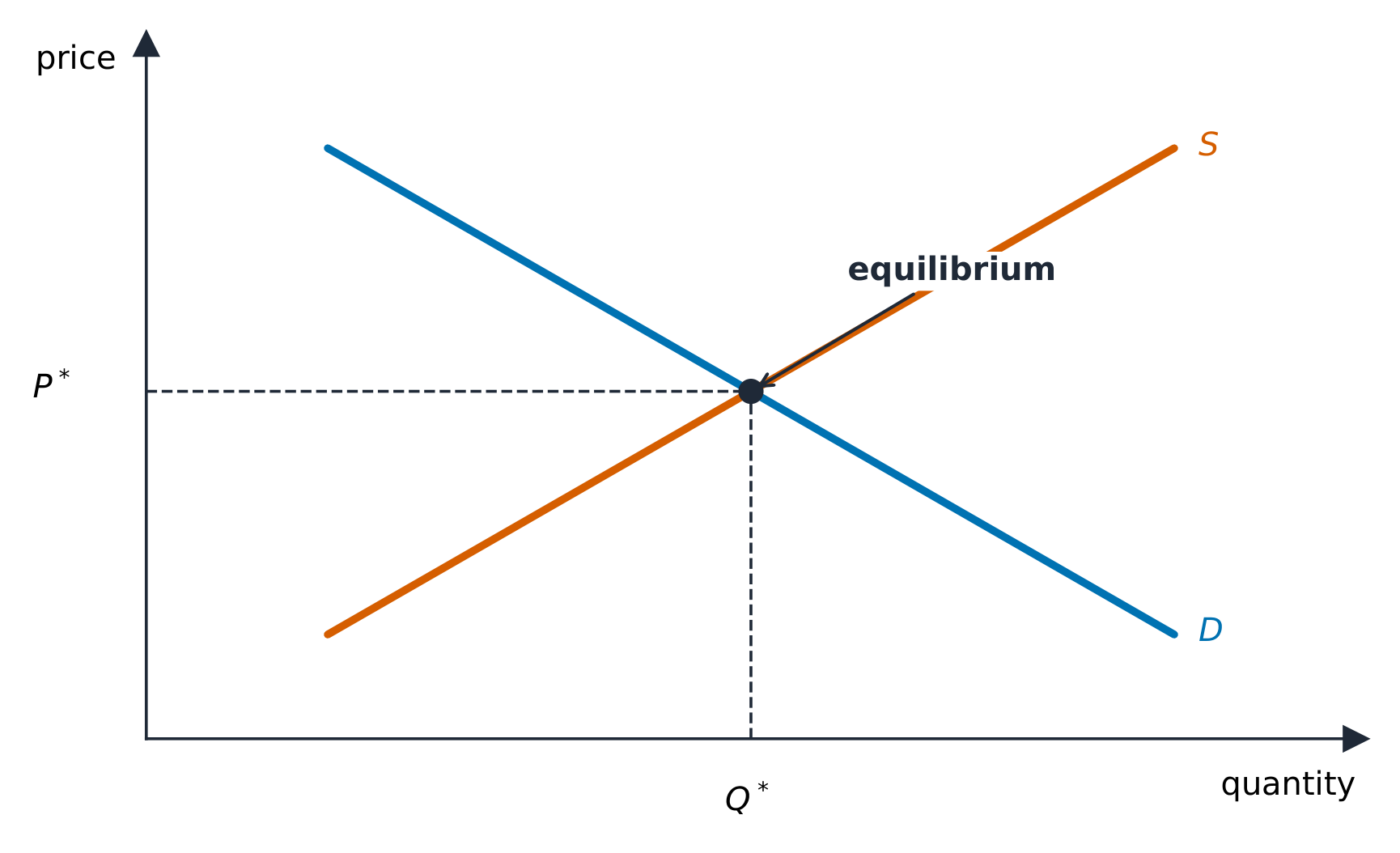
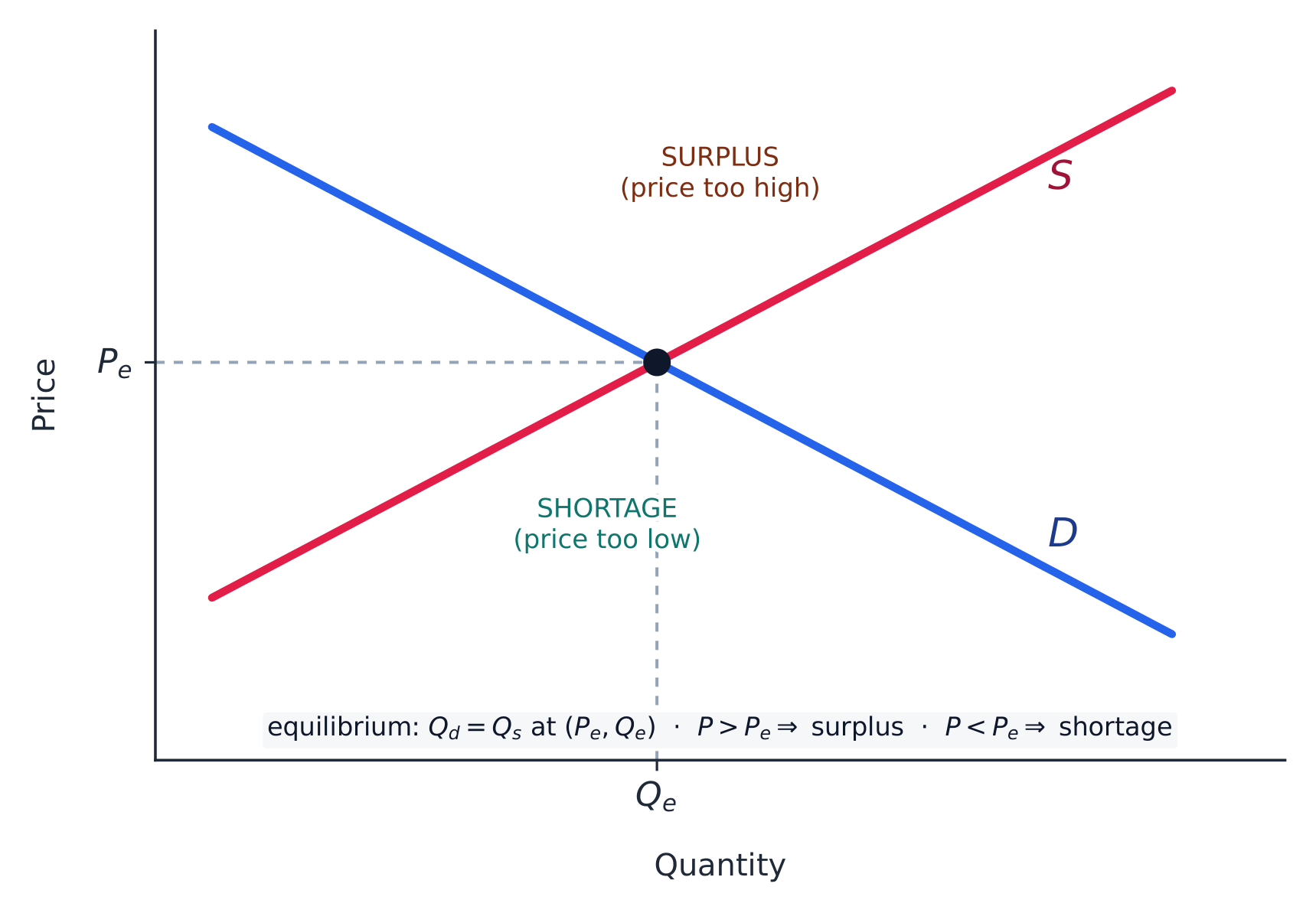
均衡(equilibrium)是供给遇到需求的地方,使市场出清。均衡价格之上一个过剩(surplus)把价格推低;它之下一个短缺(shortage)把价格推高。当一个决定因素移动一条曲线时,价格和数量可预测地移动;当两者都移动时,它们之一是不确定的(indeterminate)。
Worked example. 一项新技术降低生产者的成本,使供给右移。沿不变的需求曲线,均衡价格下降而均衡数量上升。若相反收入的一次上升同时使需求右移,数量明显上升但对价格的效应取决于哪个移动更大——"两者都移动"的不确定情况。
考试技能: 宏观建立在这些微观工具上——你必须正确地画和移动供求和 PPC 图,因为同样的移动逻辑驱动课程后面的总量(整个经济)模型。
探索
Explore market equilibrium, surplus and shortage
The market clears where supply meets demand. Shift a curve and watch the crossing move — a rightward demand shift raises both price and quantity; away from equilibrium a surplus or shortage pushes the price back.
词汇表
训练
| 英文 | 中文 | 拼音 |
|---|---|---|
| Equilibrium/ˌiːkwɪˈlɪbrɪəm/ | 均衡 | jūn héng |
| surplus/ˈsɜːpləs/ | 过剩 | guò shèng |
| shortage/ˈʃɔːtɪdʒ/ | 短缺 | duǎn quē |
1.6
考试技巧
- 机会成本是你放弃的——从一条 PPC 读它作为斜率;一条向外凸的 PPC 显示增加的机会成本。
- 比较优势(更低的机会成本),不是绝对优势,决定谁应当专门化并交易。
- PPC 里面的点是低效的、外面不可达;更多资源/技术使它向外移动(增长)。
- 把沿一条需求/供给曲线的一个移动(movement along)(自身价格)与一个移动(shift)(一个决定因素)区分开。
- 这些微观工具驱动后面的总量模型——在正确的方向画和移动正确的曲线。
本主题的互动课程
逐步学习,并即时检测练习。