Scarcity · 稀缺性
| English | 中文 | Pinyin · 拼音 |
|---|---|---|
| macroeconomics/ˌmækrəˌriːkəˈnɒmɪks/ | 宏观经济学 | hóng guān jīng jì xué |
| scarcity/ˈskeəsɪti/ | 稀缺 | xī quē |
| resources/rɪˈzɔːsɪz/ | 资源 | zī yuán |
| factors of production/ˈfæktəz ɒv prəˈdʌkʃn/ | 生产要素 | shēng chǎn yào sù |
| land/lænd/ | 土地 | tǔ dì |
| labour/ˈleɪbə/ | 劳动 | láo dòng |
| capital/ˈkæpɪtl/ | 资本 | zī běn |
| entrepreneurship/ˌɒntrɪprəˈnjʊəʃɪp/ | 企业家才能 | qǐ yè jiā cái néng |
The whole economy in one idea
- Macroeconomics 宏观经济学 zooms out — it studies total output, total jobs, and the average level of prices.
- Yet it rests on the same bedrock as every branch of economics.
- No country, however rich, can produce everything at once.
- That single fact — scarcity 稀缺 — is where the whole subject begins.
用一个概念看懂整个经济
- 宏观经济学(macroeconomics)把镜头拉远——它研究总产出、总就业和平均价格水平。
- 可它建立在与经济学每个分支相同的基石上。
- 没有哪个国家,无论多富,能同时生产一切。
- 这个简单的事实——稀缺(scarcity)——正是整门学科的起点。
Macroeconomics studies: · 宏观经济学研究:
Macro zooms out to the whole economy; micro focuses on individual markets. · 宏观拉远看整个经济;微观聚焦单个市场。
Scarcity forces choice
- Scarcity means our wants are unlimited while our resources 资源 are limited.
- So every society must choose: what to produce, how, and for whom.
- Because resources are scarce, every choice gives something up.
- Even a wealthy nation faces scarcity — it cannot do everything at once.
稀缺迫使选择
- 稀缺意味着我们的欲望无限,而资源(resources)有限。
- 所以每个社会都必须选择:生产什么、怎么生产、为谁生产。
- 因为资源稀缺,每个选择都要放弃一些东西。
- 即使富裕的国家也面临稀缺——它无法同时做到一切。
Scarcity exists because: · 稀缺存在,是因为:
Scarcity is the gap between unlimited wants and limited resources. · 稀缺是无限欲望与有限资源之间的差距。
A wealthy country does not face scarcity. · 富裕的国家不面临稀缺。
Scarcity is universal — even a rich country cannot produce everything at once. · 稀缺是普遍的——即使富国也无法同时生产一切。
The four factors of production
- Land 土地 — natural resources like soil, water, and minerals.
- Labour 劳动 — human physical and mental effort.
- Capital 资本 — machines, tools, and factories made to produce other goods.
- Entrepreneurship 企业家才能 — the initiative to combine the others and bear risk.
四种生产要素
- 土地(land)——土壤、水、矿产等自然资源。
- 劳动(labour)——人的体力和脑力付出。
- 资本(capital)——为生产其他商品而制造的机器、工具和工厂。
- 企业家才能(entrepreneurship)——把其余三者结合并承担风险的主动性。
Which factor of production? · 哪一种生产要素?
Every resource is a factor of production — land, labour, capital, or entrepreneurship. Sorting them is the first step in thinking about scarcity. · 每一种资源都是一种生产要素——土地、劳动、资本或企业家才能。给它们归类是思考稀缺的第一步。
Select all · 所有 four factors of production. · 选出所有四种生产要素。
Land, labour, capital and entrepreneurship are the four factors. · 土地、劳动、资本和企业家才能是四种要素。
Machines, tools, and factories used to make other goods are the factor called ______. · 用来生产其他商品的机器、工具和工厂,是叫做______的要素。
Capital is human-made goods used to produce other goods. · 资本是用于生产其他商品的人造物品。
Match each resource to its factor of production. · 把每种资源与它的生产要素配对。
Nature is land, human effort is labour, made tools are capital, risk-taking is entrepreneurship. · 自然是土地,人的付出是劳动,人造工具是资本,冒险创业是企业家才能。
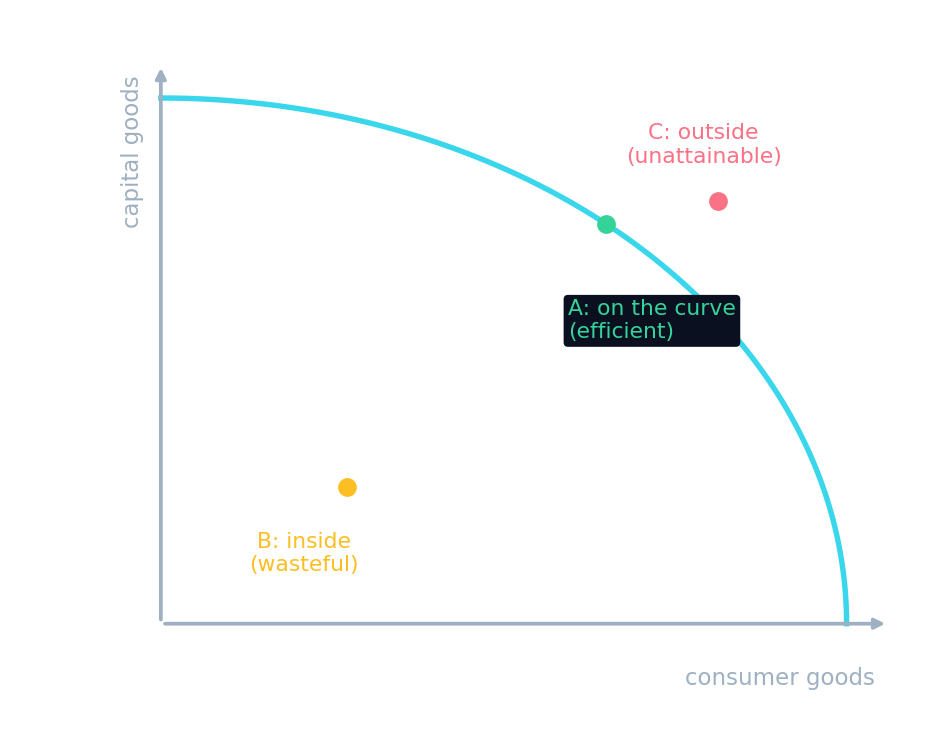
A country has only so many workers, machines, and hectares of land.
- Use them to build hospitals, and fewer are left for roads.
- Use them for consumer goods now, and fewer capital goods are made for the future.
- Every use of a scarce resource closes off another use — that is scarcity at work.
一个国家只有那么多工人、机器和土地。
- 把它们用来建医院,能留给道路的就更少。
- 把它们用来现在生产消费品,能为未来制造的资本品就更少。
- 每一次使用稀缺资源,都关上了另一种用途——这就是稀缺在起作用。
Macroeconomics studies the economy as a whole, but starts from scarcity: unlimited wants, limited resources. Scarcity forces every society to choose what, how, and for whom. Economists group resources into four factors of production — land, labour, capital, and entrepreneurship.
宏观经济学研究整个经济,但从稀缺出发:欲望无限、资源有限。稀缺迫使每个社会选择生产什么、怎么生产、为谁生产。经济学家把资源分成四种生产要素——土地、劳动、资本和企业家才能。