跳到主要内容

受众、语气与句子技巧

AP 英语语言与写作 · 第 8 主题

训练
讲义 词汇表
8.1

理解受众的信念与需求

大纲
Enduring UnderstandingLearning ObjectiveEssential Knowledge

RHS-1
Individuals write within a particular situation and make strategic writing choices based on that situation.

1.B
Reading – Explain how an argument demonstrates understanding of an audience’s beliefs, values, or needs.

  • RHS-1.K Writers may make comparisons (e.g., similes, metaphors, analogies, or anecdotes) in an attempt to relate to an audience. Effective comparisons must be shared and understood by the audience to advance the writer’s purpose.
  • RHS-1.L Writers’ choices regarding syntax and diction influence how the writer is perceived by an audience and may influence the degree to which an audience accepts an argument.
  • RHS-1.M Word choice may reflect writers’ biases and may affect their credibility with a particular audience.
  • RHS-1.N Because audiences are unique and dynamic, writers must consider the perspectives, contexts, and needs of the intended audience when making choices of evidence, organization, and language in an argument.

来源:美国大学理事会 AP 课程与考试说明

第八单元是本课程对文体(style)最深入的处理——在这里,用词、句法与受众不再是彼此分开的题目。

  • 写作者可以运用比喻——明喻、隐喻、类比或轶事(similes, metaphors, analogies, or anecdotes)——来试图与受众建立联系。
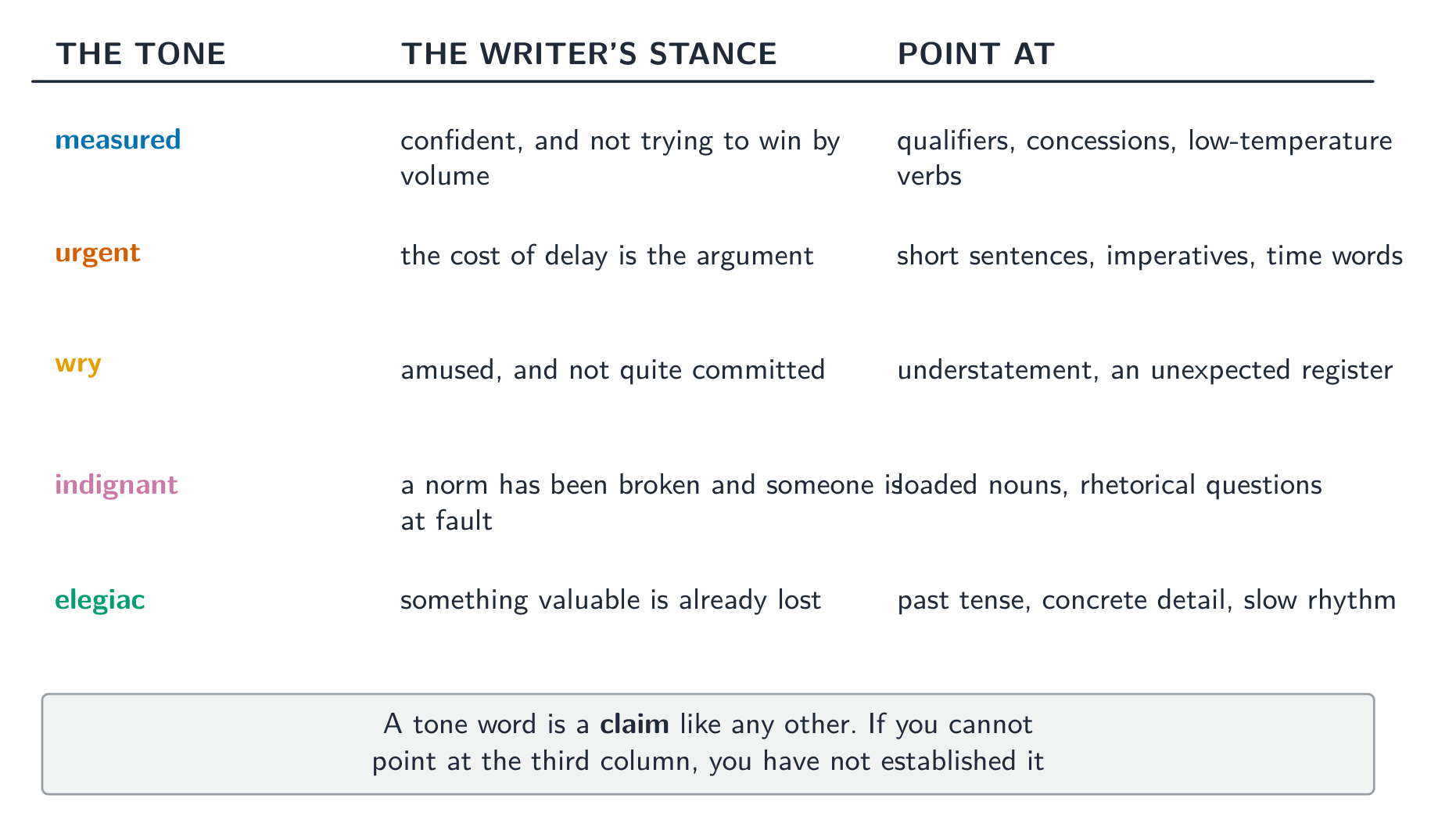
  • 写作者在句法与措辞(syntax and diction)上的选择,影响受众如何看待写作者
  • 用词可能反映写作者的偏见(biases),并可能影响其对特定受众的可信度
  • 由于受众是独特而流动的,写作者必须考虑目标受众的视角、语境与需求

第三点值得停留。措辞不只刻画对象,它也刻画写作者。一旦读者察觉到带有色彩的用词,他们就会开始对其后的一切打折扣——这正是不加节制的词汇是可信度风险而非优势的原因。

词汇表 训练
英文 中文 拼音
style 文体 wén tǐ
similes, metaphors, analogies, or anecdotes 明喻、隐喻、类比与轶事 míng yù 、 yǐn yù 、 lèi bǐ yǔ yì shì
syntax and diction 句法与措辞 jù fǎ yǔ cuò cí
Word choice may reflect a writer's biases 偏见 piān jiàn
8.2

针对受众的信念与需求写作

大纲
Enduring UnderstandingLearning ObjectiveEssential Knowledge

RHS-1
Individuals write within a particular situation and make strategic writing choices based on that situation.

2.B
Writing – Demonstrate an understanding of an audience’s beliefs, values, or needs.

  • RHS-1.K Writers may make comparisons (e.g., similes, metaphors, analogies, or anecdotes) in an attempt to relate to an audience. Effective comparisons must be shared and understood by the audience to advance the writer’s purpose.
  • RHS-1.L Writers’ choices regarding syntax and diction influence how the writer is perceived by an audience and may influence the degree to which an audience accepts an argument.
  • RHS-1.M Word choice may reflect writers’ biases and may affect their credibility with a particular audience.
  • RHS-1.N Because audiences are unique and dynamic, writers must consider the perspectives, contexts, and needs of the intended audience when making choices of evidence, organization, and language in an argument.

来源:美国大学理事会 AP 课程与考试说明

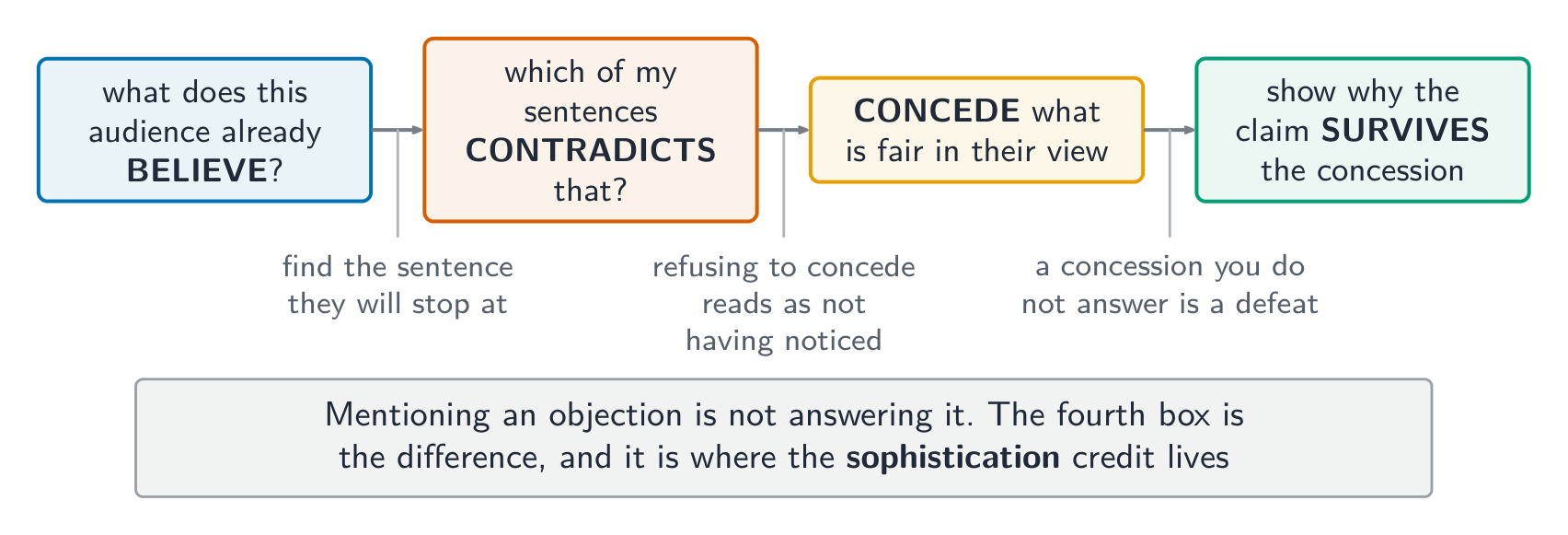
这里的指令是:受众是流动的——他们在阅读过程中会发生变化。刚刚作出让步的论证,面对的已经是一个与文章开头时略有不同的受众。

在实际操作上,这意味着让步与主张的先后顺序很重要。先让步再施压,你面对的读者此刻已认定你是公允的;先施压再让步,那份让步读起来就像退却。

8.3

用词、比喻与句法

大纲
Enduring UnderstandingLearning ObjectiveEssential Knowledge

STL-1
The rhetorical situation informs the strategic stylistic choices that writers make.

7.A
Reading – Explain how word choice, comparisons, and syntax contribute to the specific tone or style of a text.

  • STL-1.Q A writer’s style is made up of the mix of word choice, syntax, and conventions employed by that writer.
  • STL-1.R Writers may signal a complex or ironic perspective through stylistic choices. Irony may emerge from the differences between an argument and the readers’ expectations or values.

来源:美国大学理事会 AP 课程与考试说明

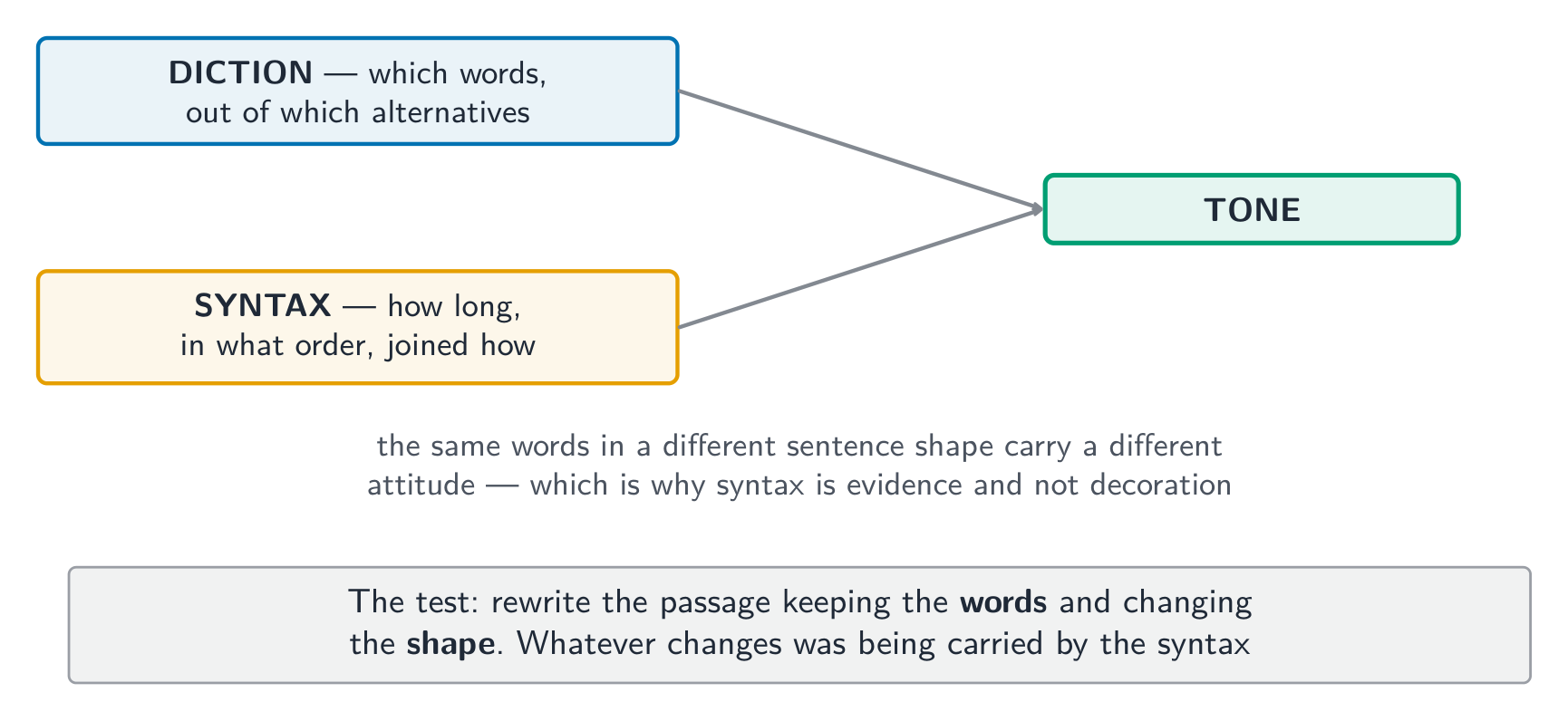
  • 写作者的文体是该写作者所使用的用词、句法与惯例的组合。文体是一种复合物,这正是"这位写作者的文体是正式的"不算分析的原因——它点出了结果,却不涉及任何构成要素。
  • 写作者可以通过文体选择传达一种复杂或反讽的视角反讽(irony)可能产生于所说与所指之间的差异,或期待与实际发生之事之间的差异。
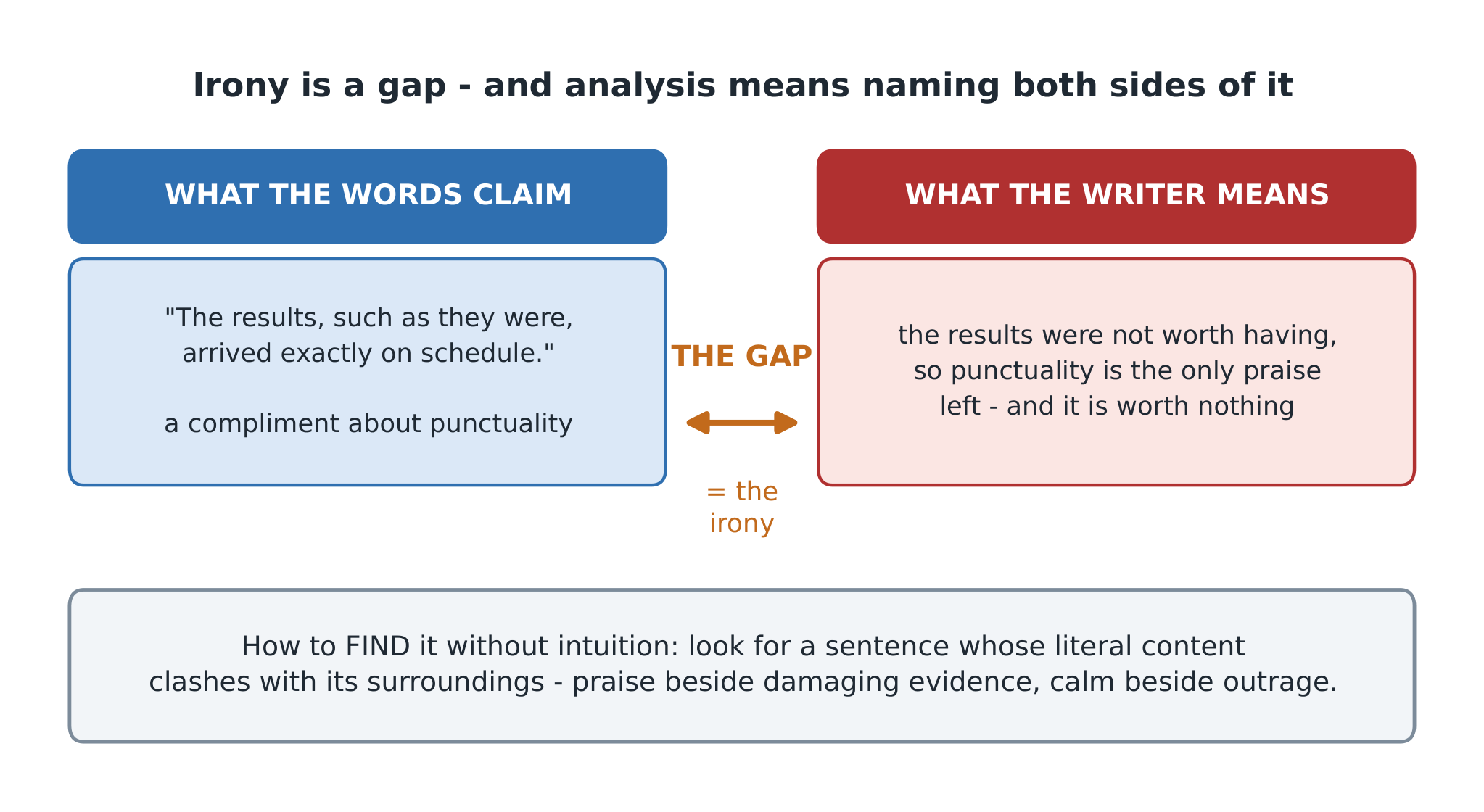
反讽是一道缝隙,而分析意味着把它的两侧都点出来
说出这些词语声称什么,说出写作者意指什么,那道缝隙就是论证

对第二语言读者而言,反讽是这门考试中最难的东西,因为它查不到。可行的方法是结构性的而非直觉性的:找出一个字面内容与其周围环境不相称的句子——过度的赞美紧挨着不利的证据,平静的语域紧挨着骇人的事实——这种不相称就是信号。

词汇表 训练
英文 中文 拼音
Irony 反讽 fǎn fěng
8.4

运用词语与句法营造语气与风格

大纲
Enduring UnderstandingLearning ObjectiveEssential Knowledge

STL-1
The rhetorical situation informs the strategic stylistic choices that writers make.

8.A
Writing – Strategically use words, comparisons, and syntax to convey a specific tone or style in an argument.

  • STL-1.Q A writer’s style is made up of the mix of word choice, syntax, and conventions employed by that writer.
  • STL-1.R Writers may signal a complex or ironic perspective through stylistic choices. Irony may emerge from the differences between an argument and the readers’ expectations or values.

来源:美国大学理事会 AP 课程与考试说明

就自己的写作而言,对反讽最安全的用法是不用。思辨深度那一分真正奖励的是控制力:一以贯之的语域、精确而不浮夸的词汇,以及有意识地为观念排定次序的句法。

8.5

分句与观点之间的关系

大纲
Enduring UnderstandingLearning ObjectiveEssential Knowledge

STL-1
The rhetorical situation informs the strategic stylistic choices that writers make.

7.B
Reading – Explain how writers create, combine, and place independent and dependent clauses to show relationships between and among ideas.

  • STL-1.S Modifiers—including words, phrases, or clauses—qualify, clarify, or specify information about the thing with which they are associated. To reduce ambiguity, modifiers should be placed closest to the word, phrase, or clause that they are meant to modify.
  • STL-1.T Parenthetical elements—though not essential to understanding what they are describing—interrupt sentences to provide additional information that may address an audience’s needs and/or advance a writer’s purpose.

来源:美国大学理事会 AP 课程与考试说明

  • 修饰成分(modifiers)——词语、短语或分句——对被修饰之物的信息加以限定、澄清或具体化
  • 插入成分(parenthetical elements)——虽然对理解所描述之物并非必需——通过打断句子来添加信息、评论或强调。

两者都在文体上丰富,在分析上有用。修饰成分是写作者判断的藏身之处:那份久拖不决的报告在表面上只是指认这份报告的同时,已经对它作出了评价。插入成分则是写作者选择要说的旁白——而选择打断本身就是一种强调。

词汇表 训练
英文 中文 拼音
Modifiers 修饰成分 xiū shì chéng fèn
Parenthetical elements 插入成分 chā rù chéng fèn
8.6

写出清晰的句子

大纲
Enduring UnderstandingLearning ObjectiveEssential Knowledge

STL-1
The rhetorical situation informs the strategic stylistic choices that writers make.

8.B
Writing – Write sentences that clearly convey ideas and arguments.

  • STL-1.S Modifiers—including words, phrases, or clauses—qualify, clarify, or specify information about the thing with which they are associated. To reduce ambiguity, modifiers should be placed closest to the word, phrase, or clause that they are meant to modify.
  • STL-1.T Parenthetical elements—though not essential to understanding what they are describing—interrupt sentences to provide additional information that may address an audience’s needs and/or advance a writer’s purpose.

来源:美国大学理事会 AP 课程与考试说明

一条具体的纪律:把修饰成分放在它所修饰之物旁边,并且节制使用插入成分。一处位置得当的打断能制造强调;一段里出现三处则会摧毁强调,因为读者无从分辨哪一次打断才是要紧的。

**Worked example(一项真实的 AP 考试任务)。**一篇修辞分析选文这样谈论某项政策:*「那些成果——姑且算是成果——恰好如期而至。」低分答案会说写作者"使用了插入短语"。能得分的答案会同时解释两部分:「插入成分『姑且算是成果』用几个字就打发掉了那些成果,却并未针对它们给出任何论证——而把它放在『恰好如期而至』之前,意味着对准时的称许落在了读者刚刚被告知要打折扣的成果之上。这个句子表面上在称赞这个项目,实际上却抽走了它唯一可被称赞之处。」*修饰成分、插入成分、反讽,以及对受众的作用,尽在一处。

8.6

考试技巧

  • 文体是复合物——用词、句法、惯例。点出构成要素才是分析;点出结果不是。
  • 带有色彩的措辞损害写作者的可信度。要写出这一点;它是可考的。
  • 结构性地寻找反讽:找出字面内容与周围环境相抵触的句子。
  • **先让步再施压。**读到你主张的那个受众,此时已经就你是否公允作出了判断。
  • 修饰成分是判断的藏身之处。那份久拖不决的报告已经对它作了评价。
  • 在自己的写作中节制使用插入成分。一段三处会彼此抵消。

本主题的互动课程

逐步学习,并即时检测练习。

AP 英语语言与写作的更多主题

登录或创建账号

IGCSE, A-Level & AP