跳到主要内容

细胞通讯与细胞周期

AP 生物 · 第 4 主题

训练
讲义 词汇表
4.1

细胞通讯

大纲
Big IdeaLearning ObjectiveEssential Knowledge

Big Idea 3 — Information Storage and Transmission
Living systems store, retrieve, transmit, and respond to information essential to life processes.

4.1.A
Describe the ways that cells can communicate with one another.

  • 4.1.A.1 Cells communicate with one another through direct contact with other cells or from a distance via chemical signaling.
    • Illustrative examples for 4.1.A.1:
      • Immune cells interact through cell-to-cell contact, antigen-presenting cells (APCs), helper T-cells, and killer T-cells.

4.1.B
Explain how cells communicate with one another over short and long distances.

  • 4.1.B.1 Cells communicate over short distances by using local regulators that target cells in the vicinity of the signal-emitting cell.
    • Illustrative examples for 4.1.B.1:
      • Neurotransmitters
      • Plant immune response
      • Quorum sensing in bacteria
      • Morphogens in embryonic development
  • 4.1.B.2 Signals released by one cell type can travel long distances to target cells of another type.
    • Illustrative examples for 4.1.B.2:
      • Insulin
      • Human growth hormone
      • Thyroid hormones
      • Testosterone
      • Estrogen

来源:美国大学理事会 AP 课程与考试说明

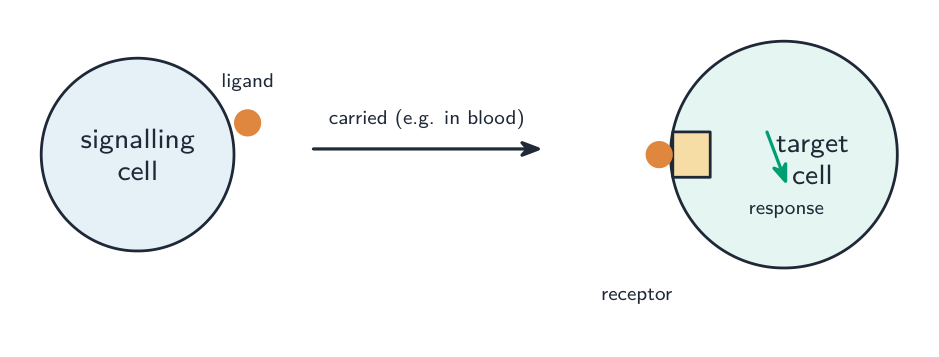
细胞通过发送和接收化学信号(signals)来协调。一个信号细胞释放一个配体(ligand),它结合一个目标细胞上的一个受体(receptor)。信号在不同范围上传播:直接接触(direct contact)(细胞连接)、局部(local)信号传递(附近的细胞,像神经递质),和长距离(long-distance)信号传递(通过血液的激素(hormones))。

一个信号分子(配体)结合目标细胞上一个匹配的受体
词汇表 训练
英文 中文 拼音
signals 信号 xìn hào
ligand 配体 pèi tǐ
receptor 受体 shòu tǐ
hormones 激素 jī sù
4.2

信号转导导论

大纲
Big IdeaLearning ObjectiveEssential Knowledge

Big Idea 3 — Information Storage and Transmission
Living systems store, retrieve, transmit, and respond to information essential to life processes.

4.2.A
Describe the components of a signal transduction pathway.

  • 4.2.A.1 Signal transduction pathways link signal receptions with cellular responses.
  • 4.2.A.2 Many signal transduction pathways include protein modifications and involve phosphorylation cascades.

4.2.B
Describe the role of components of a signal transduction pathway in producing a cellular response.

  • 4.2.B.1 Signaling begins with the recognition of a chemical messenger—a ligand—by a receptor protein in a target cell.
    • i. The ligand-binding domain of a receptor recognizes a specific chemical messenger, which can be a peptide (protein) or a small molecule.
    • ii. G protein-coupled receptors are an example of a receptor protein in eukaryotes.
    • iii. Receptors may be located on the surface of a target cell or in the cytoplasm or nucleus of the target cell.
  • 4.2.B.2 Signaling cascades relay signals from receptors to cell targets, often amplifying the incoming signals, resulting in the appropriate responses by the cell. Responses could include cell growth, secretion of molecules, or gene expression.
    • i. After the ligand binds, the intracellular domain of a receptor protein changes shape, initiating transduction of the signal.
    • ii. Enzymes and second messengers such as cyclic AMP (cAMP) relay and amplify the intracellular signal.
    • iii. Hormones are an example of a signaling messenger that can travel long distances in the bloodstream.
    • iv. The binding of ligands to ligand-gated channels can cause the channel to open or close.

来源:美国大学理事会 AP 课程与考试说明

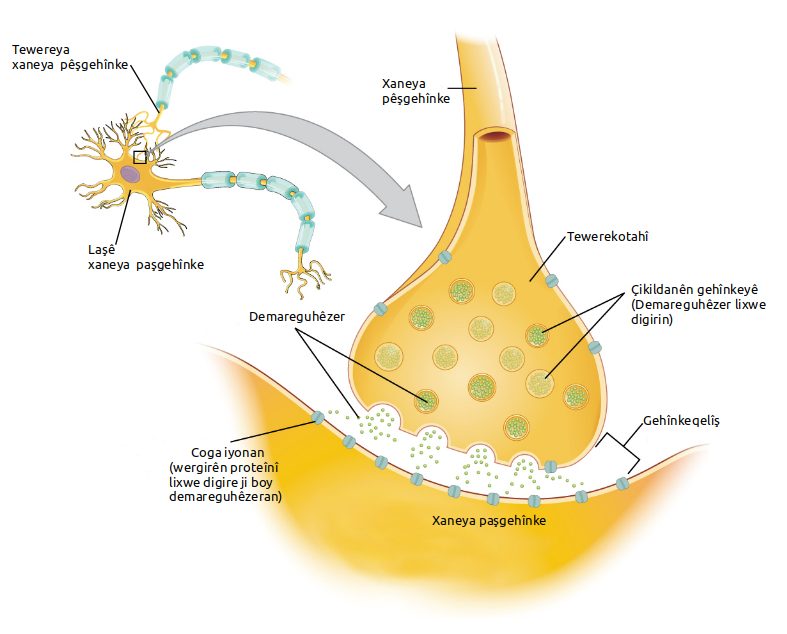
信号转导(signal transduction)分三个阶段把一个外部信号转换成一个细胞反应:接收(reception)(配体结合受体)、转导(transduction)(细胞里面分子的一次接力),和反应(response)(细胞活动的一个变化,例如开启一个基因)。受体是特异的,所以一个细胞只对它能接收的信号反应。

A chemical synapse: signal transduction passes a message across a gap with a ligand and receptor
词汇表 训练
英文 中文 拼音
Signal transduction 信号转导 xìn hào zhuǎn dǎo
4.3

信号转导通路

大纲
Big IdeaLearning ObjectiveEssential Knowledge

Big Idea 3 — Information Storage and Transmission
Living systems store, retrieve, transmit, and respond to information essential to life processes.

4.3.A
Describe the different types of cellular responses elicited by a signal transduction pathway.

  • 4.3.A.1 Signal transduction may result in changes in gene expressions and cell function, which may alter phenotype or result in programmed cell death (apoptosis).
    • Illustrative examples for 4.3.A.1:
      • Use of chemical messengers by microbes to communicate with other nearby cells and to regulate specific pathways in response to population density (quorum sensing)
      • Epinephrine stimulation of glycogen breakdown in mammals

4.3.B
Explain how a change in the structure of any signaling molecule affects the activity of the signaling pathway.

  • 4.3.B.1 Changes in signal transduction pathways can alter cellular responses. Mutations in any domain of the receptor protein or in any component of the signaling pathway may affect the downstream components by altering the subsequent transduction of the signal.
    • Illustrative examples for 4.3.B.1:
      • Cytokines regulate gene expression to allow for cell replication and division.
      • Mating pheromones in yeast trigger mating gene expression.
      • Ethylene levels cause changes in the production of different enzymes allowing fruits to ripen.
      • HOX genes regulate animal body plans during embryonic development.
  • 4.3.B.2 Chemicals that interact with any component of the signaling pathway may activate or inhibit the pathway.

来源:美国大学理事会 AP 课程与考试说明

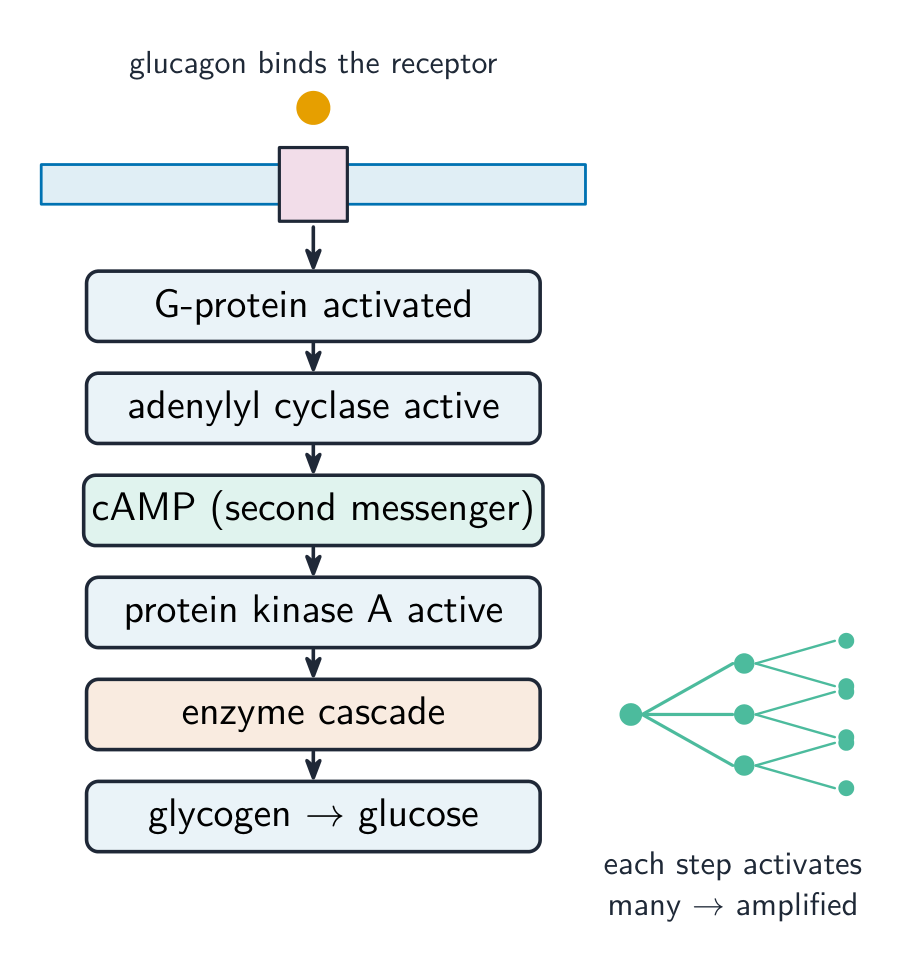
在转导阶段,信号通过一条通路(pathway)——常常是一串互相激活的蛋白质,频繁地放大信号,以便少数配体触发一个大的反应。第二信使(second messengers)(像环腺苷酸或钙离子)快速把信号扩散穿过细胞。一步的一个变化能改变整个结果。

一个信号级联在细胞里面放大信息
一个信号级联在细胞里面放大信息
4.4

反馈

大纲
Big IdeaLearning ObjectiveEssential Knowledge

Big Idea 2 — Energetics
Biological systems use energy and molecular building blocks to grow, reproduce, and maintain dynamic homeostasis.

4.4.A
Explain how positive and negative feedback helps maintain homeostasis.

  • 4.4.A.1 Organisms use feedback mechanisms to maintain their internal environments in response to internal and external changes.
    • i. Negative feedback mechanisms maintain homeostasis by reducing the initial stimulus to regulate physiological processes. If a system is perturbed or disrupted, negative feedback mechanisms return the system back to its target set point. These processes operate at the molecular, cellular, and organismal levels.
      • Illustrative examples for 4.4.A.1.i:
        • Blood sugar regulation by insulin/glucagon
    • ii. Positive feedback mechanisms amplify responses and processes in biological organisms. The variable initiating the response is moved further away from the initial set point. Amplification occurs when the stimulus is further intensified, which, in turn, initiates an additional response that produces system change.
      • Illustrative examples for 4.4.A.1.ii:
        • Lactation in mammals
        • Onset of labor in childbirth
        • Ripening of fruit

来源:美国大学理事会 AP 课程与考试说明

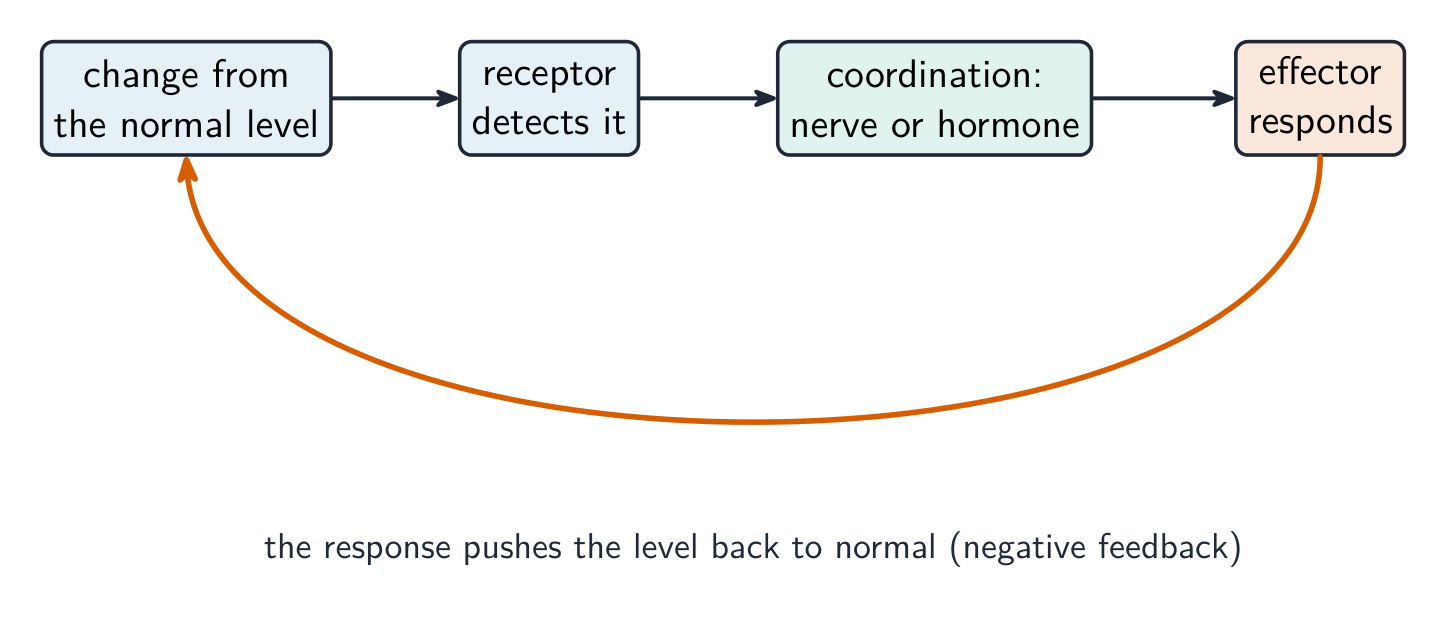
反馈(feedback)保持系统平衡:

负反馈检测并纠正一个变化
负反馈检测并纠正一个变化
  • 负反馈(negative feedback)抵消一个变化以恢复一个设定点(像一个恒温器)——它维持稳态(homeostasis)。
  • 正反馈(positive feedback)放大一个变化以推动一个过程到完成(像分娩收缩或血液凝固)。
探索

Negative feedback keeps things steady

Negative feedback senses a change and reverses it, holding a variable (like blood glucose) near a set point. Push it away and watch the system correct.

词汇表 训练
英文 中文 拼音
Feedback 反馈 fǎn kuì
Negative feedback 负反馈 fù fǎn kuì
homeostasis 稳态 wěn tài
Positive feedback 正反馈 zhèng fǎn kuì
4.5

细胞周期

大纲
Big IdeaLearning ObjectiveEssential Knowledge

Big Idea 3 — Information Storage and Transmission
Living systems store, retrieve, transmit, and respond to information essential to life processes.

4.5.A
Describe the events that occur in the cell cycle.

  • 4.5.A.1 The cell cycle is a highly regulated series of events that controls the growth and reproduction of eukaryotic cells.
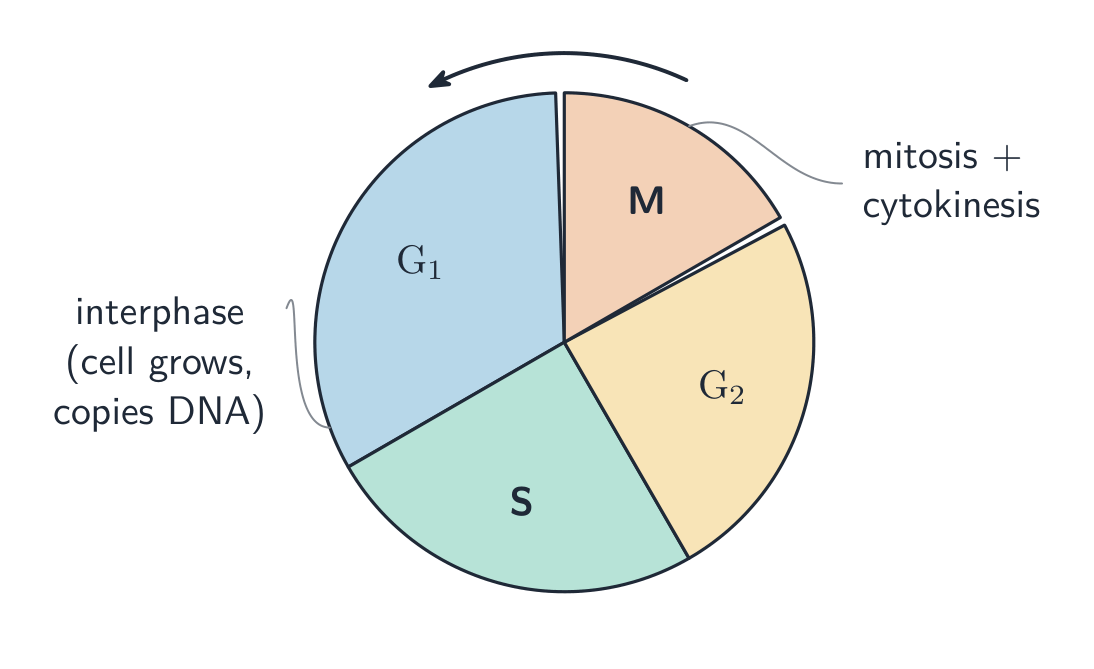
    • i. The cell cycle consists of sequential stages of interphase (G1, S, G2), mitosis, and cytokinesis.
    • ii. G1 phase: The cell is metabolically active, duplicating organelles and cytosolic components.
    • iii. S phase: DNA is in the form of chromatin and replicates to form two sister chromatids connected at a centromere.
    • iv. G2 phase: Protein synthesis occurs, ATP is produced in large quantities, and centrosomes replicate.
    • v. A cell can enter a stage (G0) in which it no longer divides, but it can reenter the cell cycle in response to appropriate cues.
    • vi. Nondividing cells may exit the cell cycle or be held at a particular stage in the cell cycle.

4.5.B
Explain how mitosis results in the transmission of chromosomes from one generation of cells to the next.

  • 4.5.B.1 Mitosis is a process that ensures the transfer of a complete genome from a parent cell to two genetically identical daughter cells in eukaryotes.
    • i. Mitosis plays a role in growth, tissue repair, and asexual reproduction.
    • ii. Mitosis occurs in sequential steps (prophase, metaphase, anaphase, telophase) and alternates with interphase in the cell cycle.
    • iii. Prophase: Sister chromatids condense, mitotic spindle begins to form, and centrosomes move to opposite poles of the cell.
    • iv. Metaphase: Spindle fibers align chromosomes along the equator of the cell.
    • v. Anaphase: Paired sister chromatids separate as spindle fibers pull chromatids toward poles.
    • vi. Telophase: Mitotic spindle breaks down, a new nuclear envelope develops, and then the cytoplasm divides.
    • vii. Cytokinesis: A cleavage furrow forms in animal cells or a cell plate forms in plant cells, resulting in two new daughter cells.

来源:美国大学理事会 AP 课程与考试说明

细胞周期(cell cycle)是一个细胞从一次分裂到下一次的生命:间期(interphase)(G1 生长、S DNA 复制、G2 准备)后接有丝分裂(mitosis)(M)和胞质分裂,它们产生两个相同的子细胞。间期占用大部分时间;DNA 只在 S 期被复制。
细胞周期:间期,然后有丝分裂和胞质分裂
细胞周期:间期,然后有丝分裂和胞质分裂
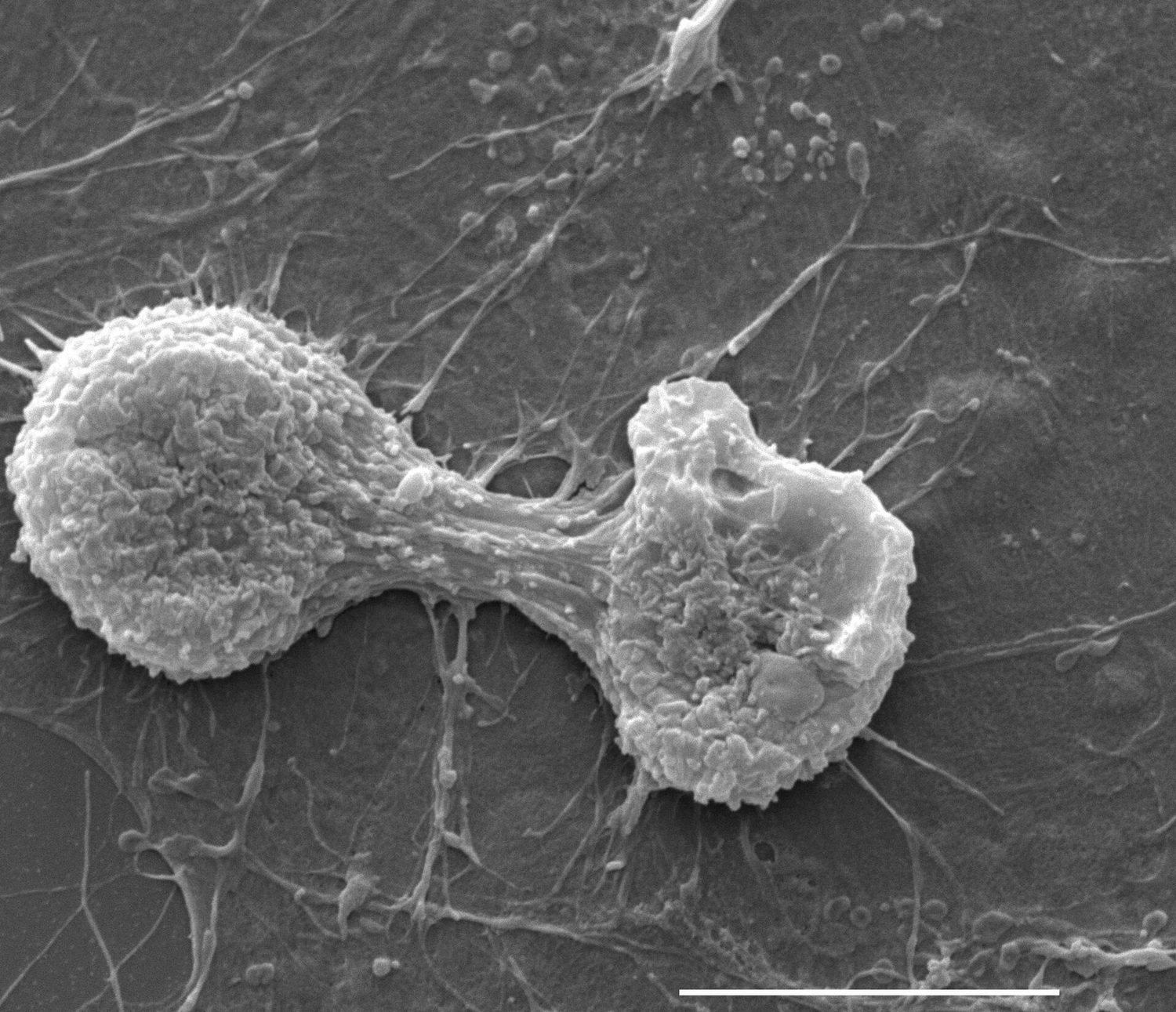
A fibroblast dividing: cytokinesis splits one cell into two after mitosis finishes
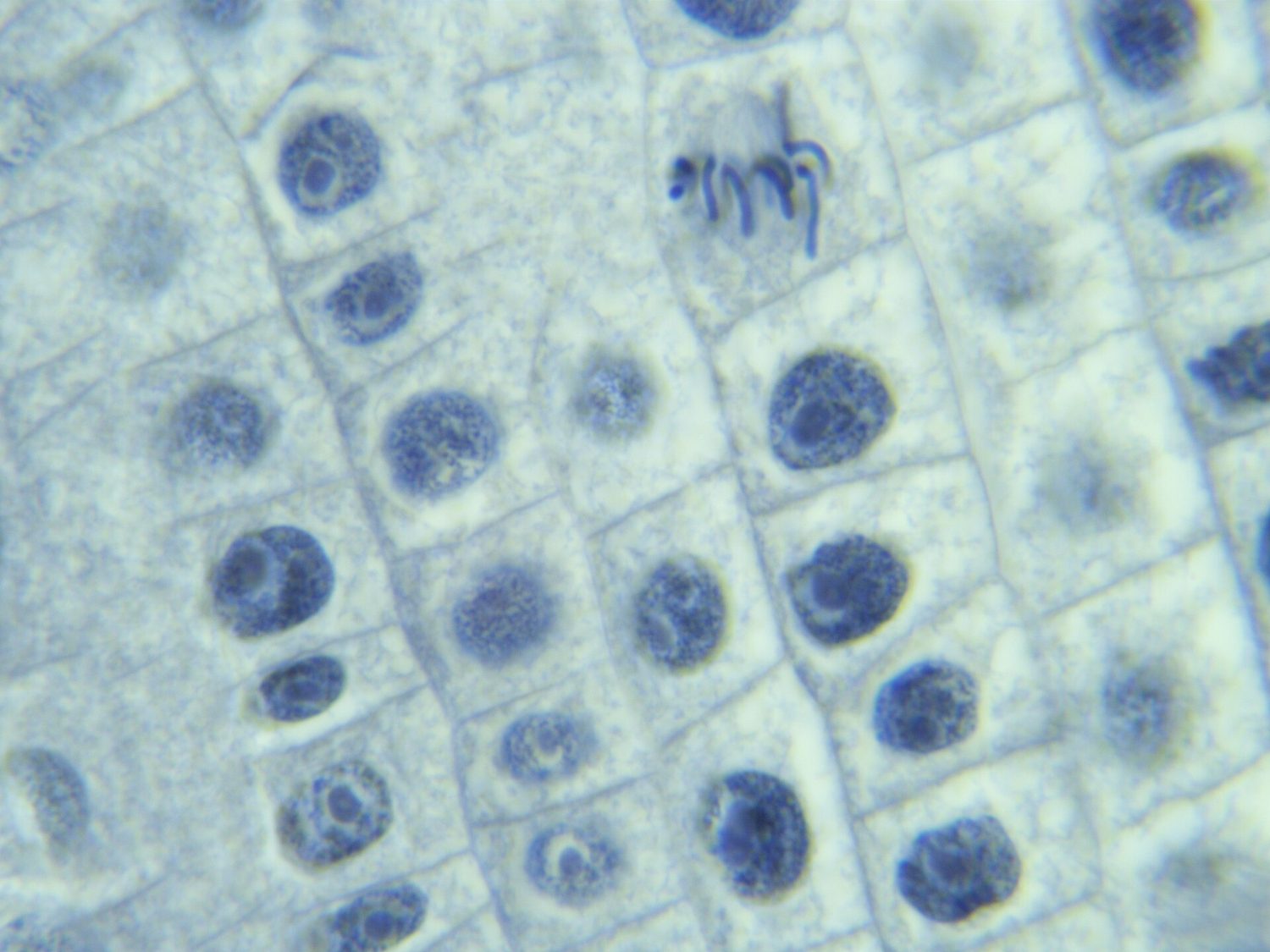
Onion root tip at metaphase: chromosomes line up before sister chromatids separate
探索

Step through the cell cycle

The cell cycle copies the DNA (S phase) then splits it evenly in mitosis, producing two identical cells. Step through the stages.

词汇表 训练
英文 中文 拼音
cell cycle 细胞周期 xì bāo zhōu qī
interphase 间期 jiān qī
mitosis 有丝分裂 yǒu sī fēn liè
4.6

细胞周期的调控

大纲
Big IdeaLearning ObjectiveEssential Knowledge

Big Idea 3 — Information Storage and Transmission
Living systems store, retrieve, transmit, and respond to information essential to life processes.

4.6.A
Describe the role of checkpoints in regulating the cell cycle.

  • 4.6.A.1 A number of internal controls or checkpoints regulate progression through the cell cycle.
  • 4.6.A.2 Interactions between cyclins and cyclin-dependent kinases control the cell cycle.
    • Exclusion statement: Knowledge of specific cyclin-CdK pairs or growth factors is beyond the scope of the AP Exam.

4.6.B
Describe the effects of disruptions to the cell cycle on the cell or organism.

  • 4.6.B.1 Disruptions to the cell cycle may result in cancer or apoptosis (programmed cell death).

来源:美国大学理事会 AP 课程与考试说明

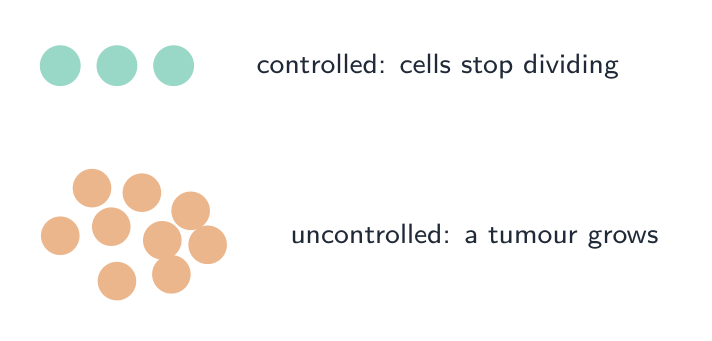
周期在检查点(checkpoints)受控制,它们在继续之前核实条件(DNA 完整吗?染色体附着了吗?)。内部信号(周期蛋白及其激酶)和外部信号驱动周期向前。当这个控制失败时——例如,一个忽略一个检查点的突变——细胞不受控制地分裂,这是癌症(cancer)的基础。

来自失败检查点的不受控制的分裂形成一个肿瘤

Worked example. 级联中的信号放大:一个激素激活一个受体,它开启约 100 个中继蛋白,每一个又制造约 1,000 个第二信使分子——所以单个信号产生大约 $100 \times 1000 = 10^{5}$ 个产物分子。这就是为什么低至 $10^{-9}\,\text{M}$ 的激素浓度就能触发一个大的细胞反应。

词汇表 训练
英文 中文 拼音
checkpoints 检查点 jiǎn chá diǎn
cancer 癌症 ái zhèng
4.6

考试技巧

  • 在信号转导里命名三个阶段:接收 → 转导 → 反应
  • 反馈逆转一个变化以保持条件稳定(稳态);反馈放大一个变化到完成(分娩、凝固)。
  • 排序细胞周期:间期(生长、在 S 期复制 DNA)然后有丝分裂 → 两个相同的子细胞。
  • DNA 被复制一次,在 S 期,所以每个子细胞得到一个完整的副本。
  • 失败的检查点允许不受控制的分裂 → 癌症。

本主题的互动课程

逐步学习,并即时检测练习。

AP 生物历年真题

AP 生物的更多主题

登录或创建账号

IGCSE, A-Level & AP