7.1 Contextualizing Period 7
Learning Objective Unit 7.A: Explain the context in which America grew into its role as a world power.
- KC-7.1 Growth expanded opportunity, while economic instability led to new efforts to reform U.S. society and its economic system.
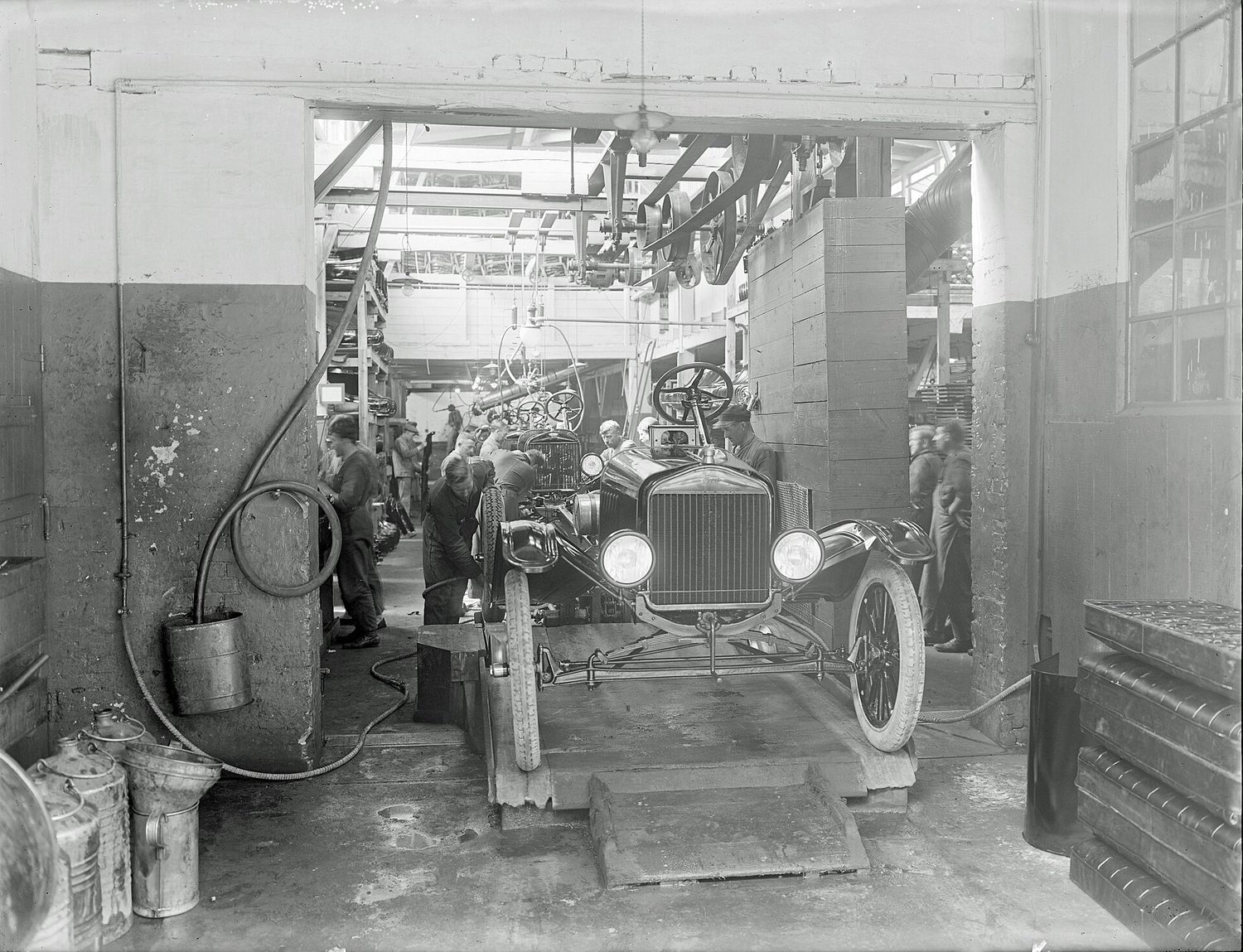
- KC-7.1.I The United States continued its transition from a rural, agricultural economy to an urban, industrial economy led by large companies.
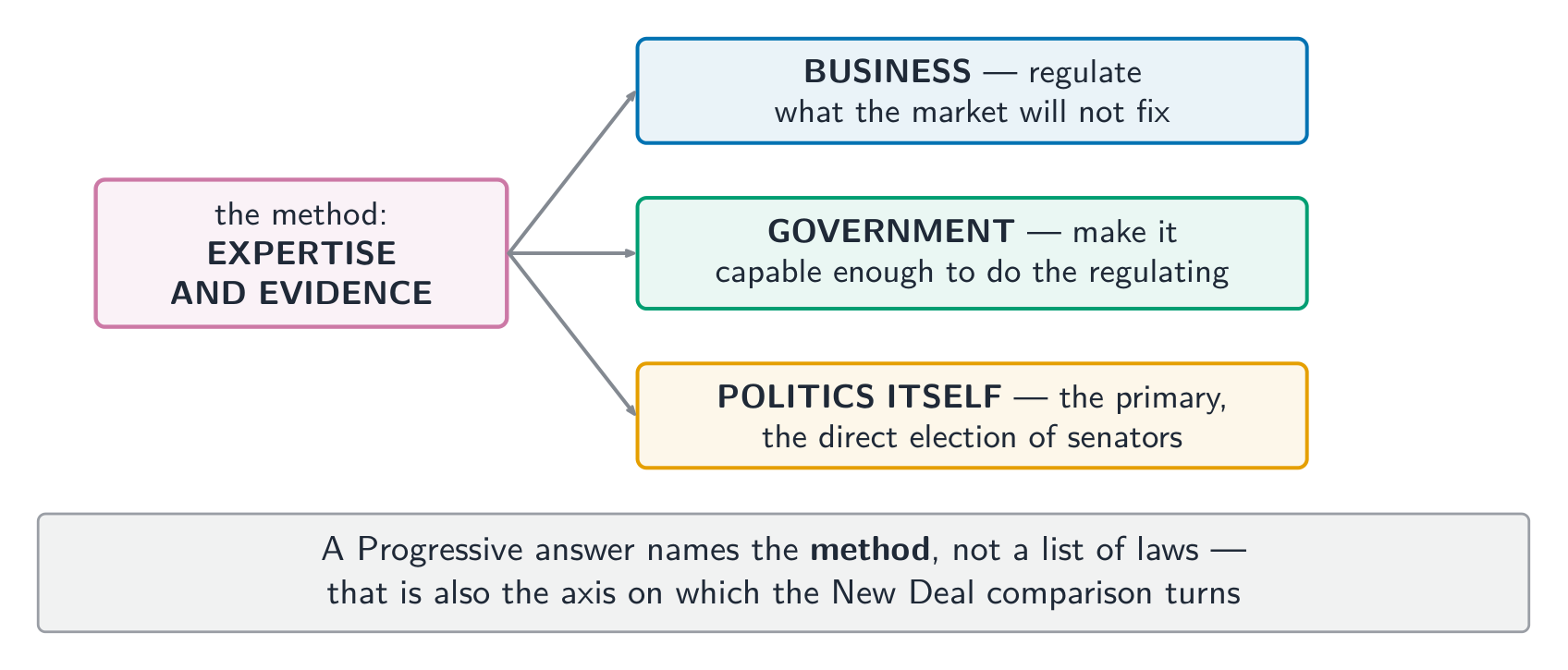
- KC-7.1.II In the Progressive Era of the early 20th century, Progressives responded to political corruption, economic instability, and social concerns by calling for greater government action and other political and social measures.
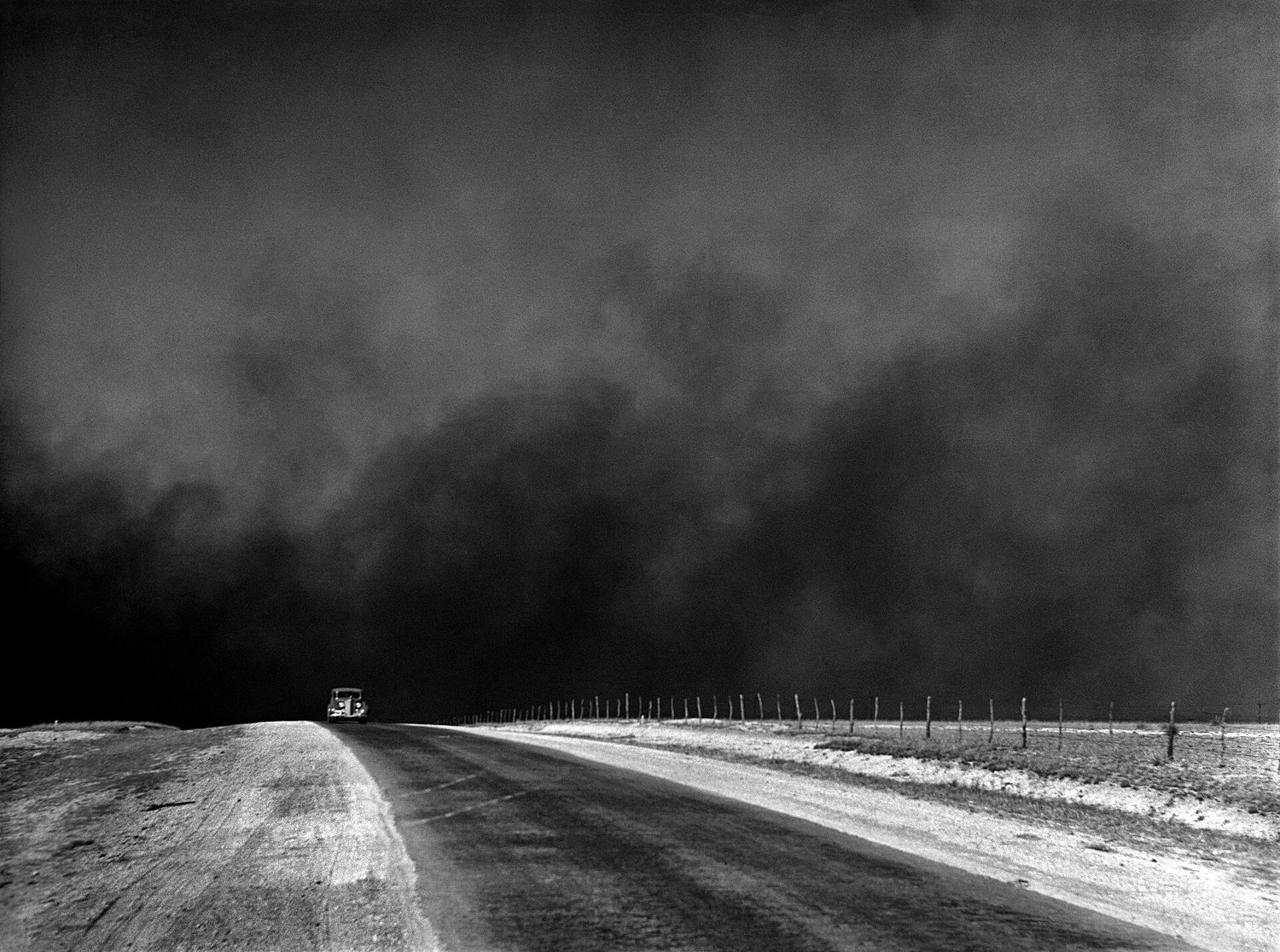
- KC-7.1.III During the 1930s, policymakers responded to the mass unemployment and social upheavals of the Great Depression by transforming the U.S. into a limited welfare state, redefining the goals and ideas of modern American liberalism.
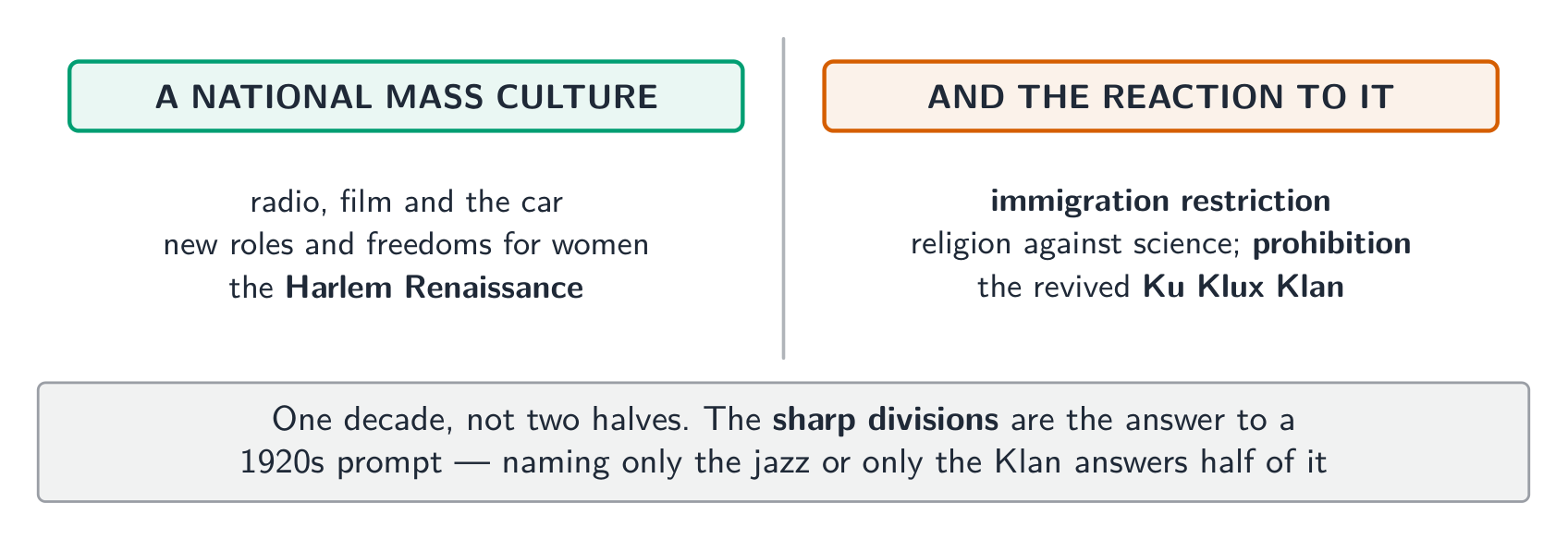
- KC-7.2 Innovations in communications and technology contributed to the growth of mass culture, while significant changes occurred in internal and international migration patterns.
- KC-7.2.I Popular culture grew in influence in U.S. society, even as debates increased over the effects of culture on public values, morals, and American national identity.
- KC-7.2.II Economic pressures, global events, and political developments caused sharp variations in the numbers, sources, and experiences of both international and internal migrants.
- KC-7.3 Participation in a series of global conflicts propelled the United States into a position of international power while renewing domestic debates over the nation’s proper role in the world.
- KC-7.3.I In the late 19th century and early 20th century, new U.S. territorial ambitions and acquisitions in the Western Hemisphere and the Pacific accompanied heightened public debates over America’s role in the world.
- KC-7.3.II World War I and its aftermath intensified ongoing debates about the nation’s role in the world and how best to achieve national security and pursue American interests.
- KC-7.3.III U.S. participation in World War II transformed American society, while the victory of the United States and its allies over the Axis powers vaulted the U.S. into a position of global, political, and military leadership.
7.1 การวางบริบทสำหรับยุคที่ 7
จุดประสงค์การเรียนรู้หน่วย 7.A: อธิบายบริบทที่อเมริกาสัมผัสบทบาทในฐานะอำนาจโลก
- KC-7.1 การเติบโตขยายโอกาส ในขณะที่ความไม่มั่นคงทางเศรษฐกิจนำไปสู่ความพยายามใหม่ในการปฏิรูปสังคมและระบบเศรษฐกิจของสหรัฐฯ
- KC-7.1.I สหรัฐฯ ยังคงการเปลี่ยนผ่านจากเศรษฐกิจเกษตรกรรมแบบชนบทไปสู่เศรษฐกิจอุตสาหกรรมแบบเมืองที่นำโดยบริษัทขนาดใหญ่
- KC-7.1.II ในยุค Progressive ของต้นศตวรรษที่ 20 ผู้สนับสนุนการปฏิรูป Response ต่อการทุจริตทางการเมือง ความไม่มั่นคงทางเศรษฐกิจ และปัญหาสังคมด้วยการเรียกร้องให้รัฐบาล采取行动และมาตรการทางการเมืองและสังคมอื่นๆ
- KC-7.1.III ในช่วงทศวรรษ 1930 ผู้กำหนดนโยบาย Response ต่อการว่างงานจำนวนมากและความวุ่นวายทางสังคมของ Great Depression โดยการเปลี่ยนสหรัฐฯ ให้เป็นรัฐสวัสดิการจำกัด และนิยามเป้าหมายและแนวคิดของ liberalism อเมริกันสมัยใหม่ใหม่
- KC-7.2 นวัตกรรมด้านการสื่อสารและเทคโนโลยีมีส่วนร่วมในการเจริญเติบโตของวัฒนธรรม mass Culture ในขณะที่มีการเปลี่ยนแปลงที่สำคัญในรูปแบบการย้ายถิ่นภายในและระหว่างประเทศ
- KC-7.2.I วัฒนธรรม mass Popular เติบโตในอิทธิพลในสังคมสหรัฐฯ แม้ว่าการถกเถียงเกี่ยวกับผลกระทบของวัฒนธรรมต่อค่านิยมสาธารณะ จริยธรรม และอัตลักษณ์แห่งชาติอเมริกันจะเพิ่มขึ้น
- KC-7.2.II ความกดดันทางเศรษฐกิจ เหตุการณ์ระดับโลก และการพัฒนาทางการเมืองทำให้เกิดความแตกต่างอย่างมากในจำนวน แหล่งที่มา และประสบการณ์ของผู้ย้ายถิ่นทั้งระหว่างประเทศและภายในประเทศ
- KC-7.3 การมีส่วนร่วมในสงครามโลกครั้งต่อๆ กันขับเคลื่อนให้สหรัฐฯ เข้าสู่อำนาจระหว่างประเทศ并同时 domestic debates关于国家在世界的适当角色。
- KC-7.3.I ในปลายศตวรรษที่ 19 และต้นศตวรรษที่ 20 ambitions ทางภูมิศาสตร์และการ acquisitions ใหม่ของสหรัฐฯ ใน半球ตะวันตกและแปซิฟิก มาพร้อมกับการถกเถียงสาธารณะที่เพิ่มขึ้นเกี่ยวกับบทบาทของอเมริกาในโลก
- KC-7.3.II สงครามโลกครั้งที่หนึ่งและ aftermath ของมัน intensified ongoing debates about 国家的 role in the world และวิธีการ achieving national security และ pursuing American interests ที่ดีที่สุด
- KC-7.3.III การมีส่วนร่วมของสหรัฐฯ ในสงครามโลกครั้งที่สอง transformed American society ในขณะที่ victory ของสหรัฐฯ และ allies ของมันเหนือ Axis powers vaulted 美国 into a position of global, political, and military leadership
7.2 Imperialism: Debates
Thematic Focus (WOR): America in the World — Diplomatic, economic, cultural, and military interactions between empires, nations, and peoples shape the development of America and America’s increasingly important role in the world.
Learning Objective Unit 7.B: Explain the similarities and differences in attitudes about the nation’s proper role in the world.
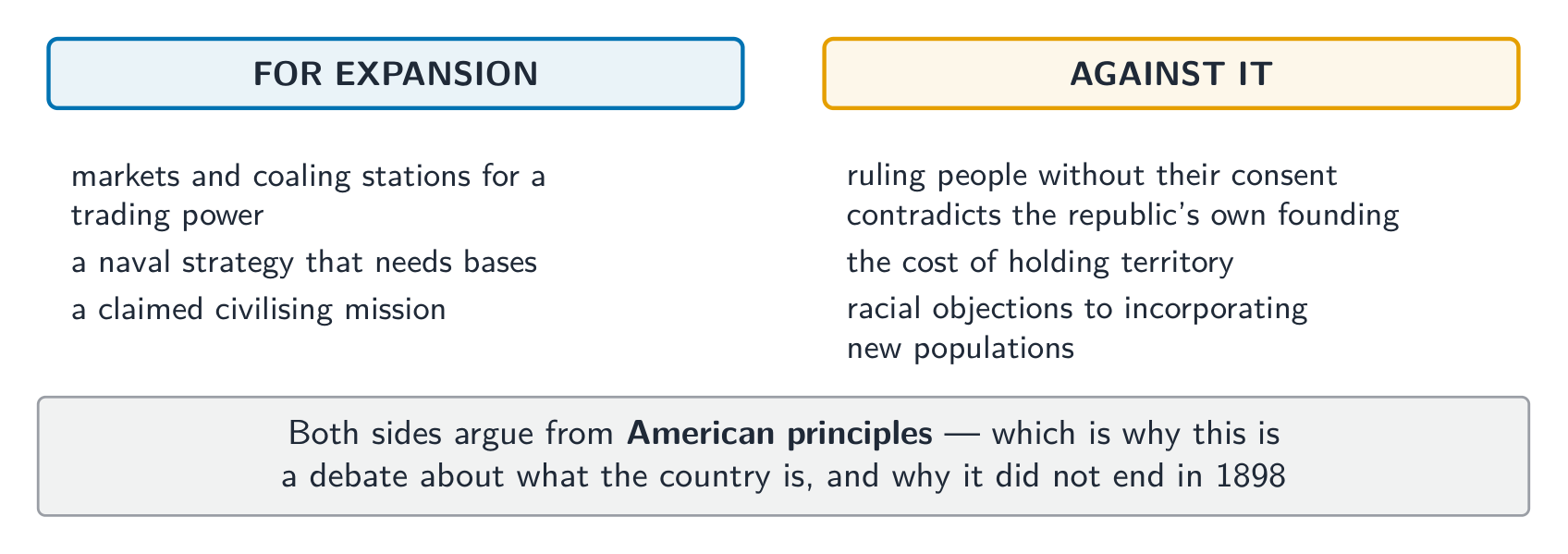
- KC-7.3.I.A Imperialists cited economic opportunities, racial theories, competition with European empires, and the perception in the 1890s that the western frontier was “closed” to argue that Americans were destined to expand their culture and institutions to peoples around the globe.
- KC-7.3.I.B Anti-imperialists cited principles of self-determination and invoked both racial theories and the U.S. foreign policy tradition of isolationism to argue that the United States should not extend its territory overseas.
7.2 Imperialism: Debates
ประเด็นเชิง主题是 (WOR): อเมริกาในโลก — การมีปฏิสัมพันธ์ทางการเมือง เศรษฐกิจ วัฒนธรรม และทหารระหว่างจักรวรรดิ ประเทศชาติ และประชาชน กำหนดการพัฒนาของอเมริกาและบทบาทที่สำคัญขึ้นของอเมริกาในโลก
วัตถุประสงค์การเรียนรู้หน่วย 7.B: อธิบายความคล้ายคลึงและความแตกต่างในทัศนคติเกี่ยวกับบทบาทที่เหมาะสมของชาติในโลก
- KC-7.3.I.A นักสนับสนุนจักรวรรดินิยมอ้างถึงโอกาสทางเศรษฐกิจ ทฤษฎีเชื้อชาติ การแข่งขันกับจักรวรรดิยุโรป และความรับรู้ในทศวรรษ 1890 ว่าแนวชายแดนตะวันตก "ปิด" แล้ว เพื่อชี้ว่าชาวอเมริกันถูกกำหนดให้ขยายวัฒนธรรมและสถาบันของตนไปยังประชาชนทั่วโลก
- KC-7.3.I.B นัก反对จักรวรรดินิยมอ้างถึงหลักการแห่งการกำหนดตนเองเองและใช้ทั้งทฤษฎีเชื้อชาติและประเพณีการทูตแบบแยกตัวของสหรัฐฯ เพื่อโต้แย้งว่าสหรัฐฯ ไม่ควรขยายดินแดนไปต่างประเทศ
7.3 The Spanish–American War
Thematic Focus (WOR): America in the World — Diplomatic, economic, cultural, and military interactions between empires, nations, and peoples shape the development of America and America’s increasingly important role in the world.
Learning Objective Unit 7.C: Explain the effects of the Spanish–American War.
- KC-7.3.I.C The American victory in the Spanish–American War led to the U.S. acquisition of island territories in the Caribbean and the Pacific, an increase in involvement in Asia, and the suppression of a nationalist movement in the Philippines.
7.3 สงครามสเปน–อเมริกัน
ประเด็นเชิง主题是 (WOR): อเมริกาในโลก — การมีปฏิสัมพันธ์ทางการเมือง เศรษฐกิจ วัฒนธรรม และทหารระหว่างจักรวรรดิ ประเทศชาติ และประชาชน กำหนดการพัฒนาของอเมริกาและบทบาทที่สำคัญขึ้นของอเมริกาในโลก
วัตถุประสงค์การเรียนรู้หน่วย 7.C: อธิบายผลกระทบของสงครามสเปน–อเมริกัน
- KC-7.3.I.C的胜利ของสหรัฐฯ ในสงครามสเปน–อเมริกัน นำไปสู่การ acquise territory islands in the Caribbean and the Pacific, an increase in involvement in Asia, and the suppression of a nationalist movement in the Philippines.