English
Enduring Understanding (ERT-1): Ecosystems are the result of biotic and abiotic interactions.
Learning Objective ERT-1.A: Explain how the availability of resources influences species interactions.
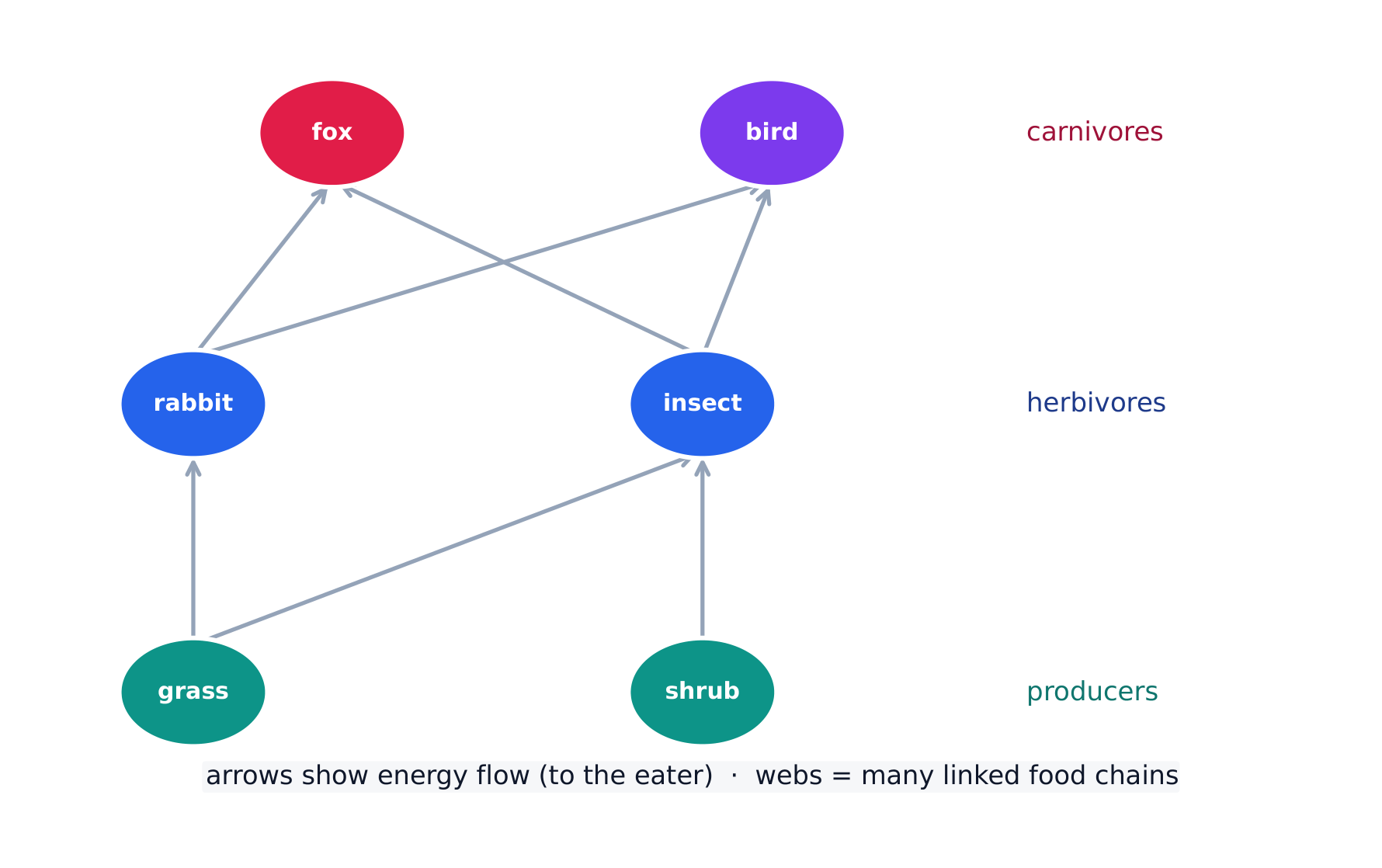
- ERT-1.A.1 In a predator-prey relationship, the predator is an organism that eats another organism (the prey).
- ERT-1.A.2 Symbiosis is a close and long-term interaction between two species in an ecosystem. Types of symbiosis include mutualism, commensalism, and parasitism.
- ERT-1.A.3 Competition can occur within or between species in an ecosystem where there are limited resources. Resource partitioning—using the resources in different ways, places, or at different times—can reduce the negative impact of competition on survival.
ไทย
ความเข้าใจที่ยั่งยืน (ERT-1): ระบบนิเวศเกิดจากการมีปฏิสัมพันธ์ระหว่างสิ่งมีชีวิตและปัจจัยที่ไม่ใช่สิ่งมีชีวิต
วัตถุประสงค์การเรียนรู้ ERT-1.A: อธิบายว่าแหล่งทรัพยากรที่มีอยู่มีอิทธิพลต่อการมีปฏิสัมพันธ์ของสายพันธุ์อย่างไร
- ERT-1.A.1 ในความสัมพันธ์ระหว่างสัตว์นักล่าและเหยื่อ สัตว์นักล่าคือสิ่งมีชีวิตที่กินสิ่งมีชีวิตอื่น (ซึ่งเรียกว่าเหยื่อ)
- ERT-1.A.2 ความสัมพันธ์แบบ symbiosis คือการมีปฏิสัมพันธ์กันอย่างใกล้ชิดและยาวนานระหว่างสองสปีชีส์ในระบบนิเวศ ประเภทของความสัมพันธ์แบบ symbiosis ได้แก่ mutualism, commensalism และ parasitism
- ERT-1.A.3 การแข่งขันสามารถเกิดขึ้นภายในหรือระหว่างสปีชีส์ในระบบนิเวศที่มีทรัพยากรจำกัด การแบ่งปันแหล่งทรัพยากร—การใช้ทรัพยากรในรูปแบบ สถานที่ หรือเวลาที่แตกต่างกัน—ช่วยลดผลกระทบเชิงลบของการแข่งขันต่อการอยู่รอดได้



















 *
*