| Enduring Understanding | Learning Objective | Essential Knowledge |
|---|---|---|
STB-2 | STB-2.A |
|
Atmospheric Pollution
AP Environmental Science · Topic 7
 8:02
8:02
Atmospheric Pollution
Look at this city. You cannot see the buildings, because you can see the air. Now step inside a kitchen, where one cooking fire fills the room with smoke. Now…
English narration · English + 中文 subtitles burned in
7.1
Introduction to Air Pollution
Syllabus
Source: College Board AP Course and Exam Description
Air pollution 空气污染 is harmful substances in the atmosphere. Primary pollutants 一次污染物 are emitted directly (carbon monoxide, nitrogen oxides, sulfur dioxide, particulates); secondary pollutants 二次污染物 form in the air from reactions (like ozone in smog). Most come from burning fossil fuels in vehicles, power plants, and industry.
Vocabulary
Train
| English |
|---|
| Air pollution/eə pəˈluːʃn/ |
| Primary pollutants/ˈpraɪməri pəˈluːtənts/ |
| secondary pollutants/ˈsekəndəri pəˈluːtənts/ |
7.2
Photochemical Smog
Syllabus
| Enduring Understanding | Learning Objective | Essential Knowledge |
|---|---|---|
STB-2 | STB-2.B |
|
Source: College Board AP Course and Exam Description
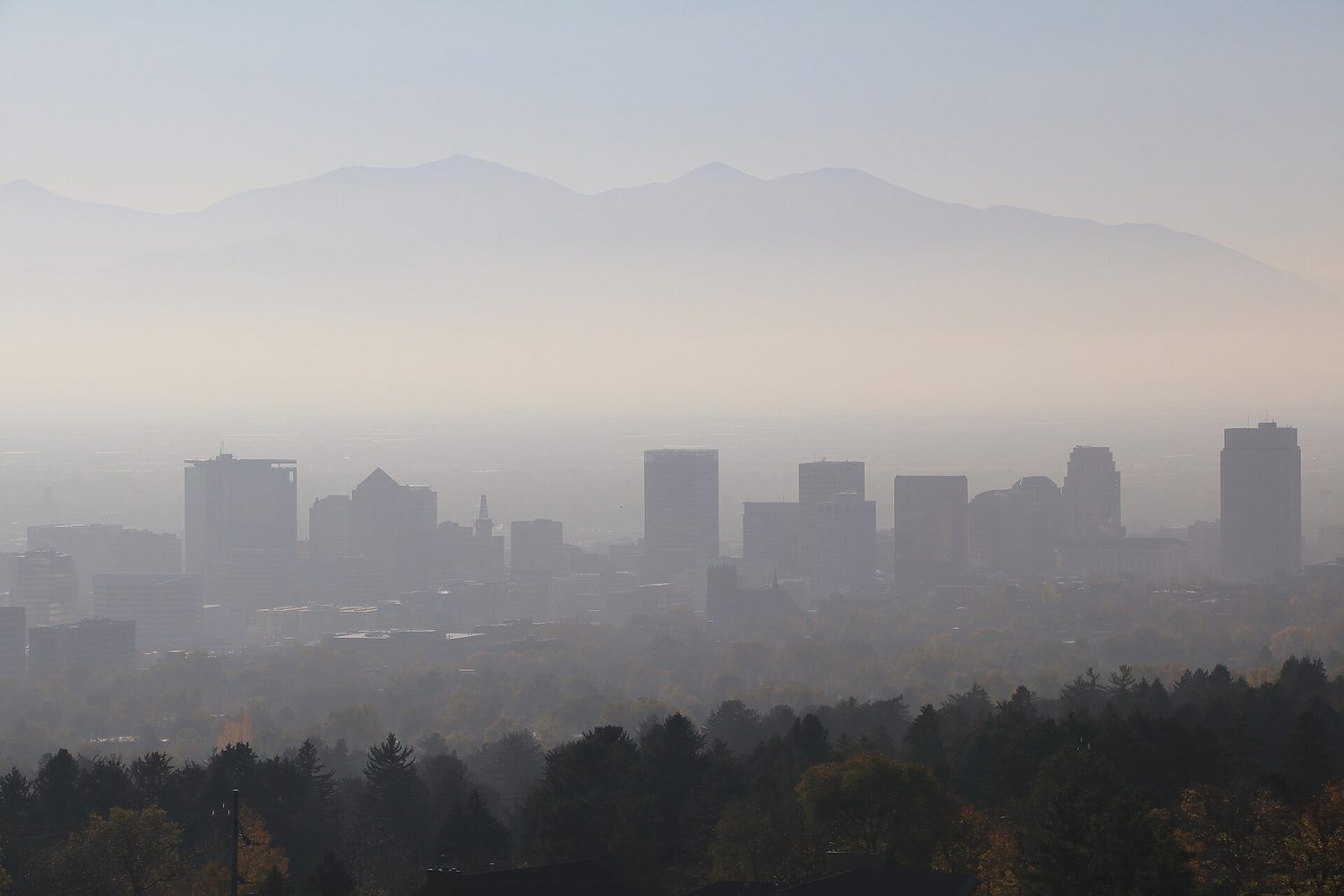
Photochemical smog 光化学烟雾 forms when sunlight drives reactions among nitrogen oxides and volatile organic compounds from car exhaust, producing ground-level ozone 臭氧. It is worst in sunny, car-heavy cities and harms lungs. (Ground-level ozone is a pollutant, unlike the protective ozone layer high up.)
Vocabulary
Train
| English |
|---|
| Photochemical smog/ˌfəʊtəʊˈkemɪkl smɒɡ/ |
| ozone/ˈəʊzəʊn/ |
7.3
Thermal Inversion
Syllabus
| Enduring Understanding | Learning Objective | Essential Knowledge |
|---|---|---|
STB-2 | STB-2.C |
|
Source: College Board AP Course and Exam Description
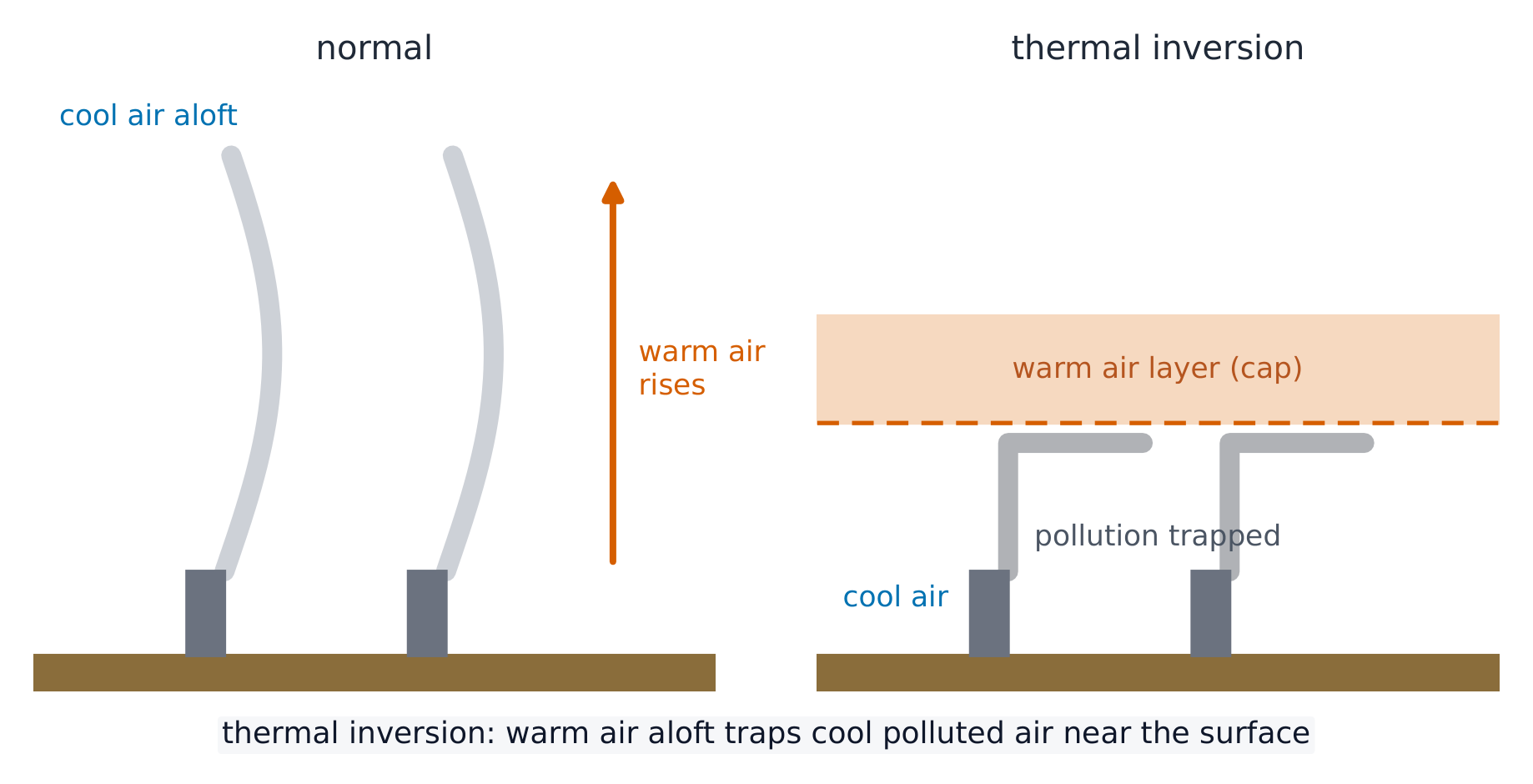
A thermal inversion 逆温 traps pollution near the ground. Normally warm air rises and carries pollutants away, but in an inversion a layer of warm air sits above cooler air, capping it. Pollutants accumulate below – causing dangerous smog episodes, especially in valleys.
Vocabulary
Train
| English |
|---|
| thermal inversion/ˈθɜːml ɪnˈvɜːʃn/ |
7.4
Atmospheric CO2 and Particulates
Syllabus
| Enduring Understanding | Learning Objective | Essential Knowledge |
|---|---|---|
STB-2 | STB-2.D |
|
Source: College Board AP Course and Exam Description
Rising atmospheric $\text{CO}_2$ from fossil fuels enhances the greenhouse effect and warms the climate. Particulate matter 颗粒物 (tiny solid/liquid particles, PM2.5 and PM10) penetrates deep into lungs, causing respiratory and heart disease, and reduces visibility.
Vocabulary
Train
| English |
|---|
| Particulate matter/pəˈtɪkjʊleɪt ˈmætə/ |
7.5
Indoor Air Pollutants
Syllabus
| Enduring Understanding | Learning Objective | Essential Knowledge |
|---|---|---|
STB-2 | STB-2.E |
|
STB-2.F |
|
Source: College Board AP Course and Exam Description
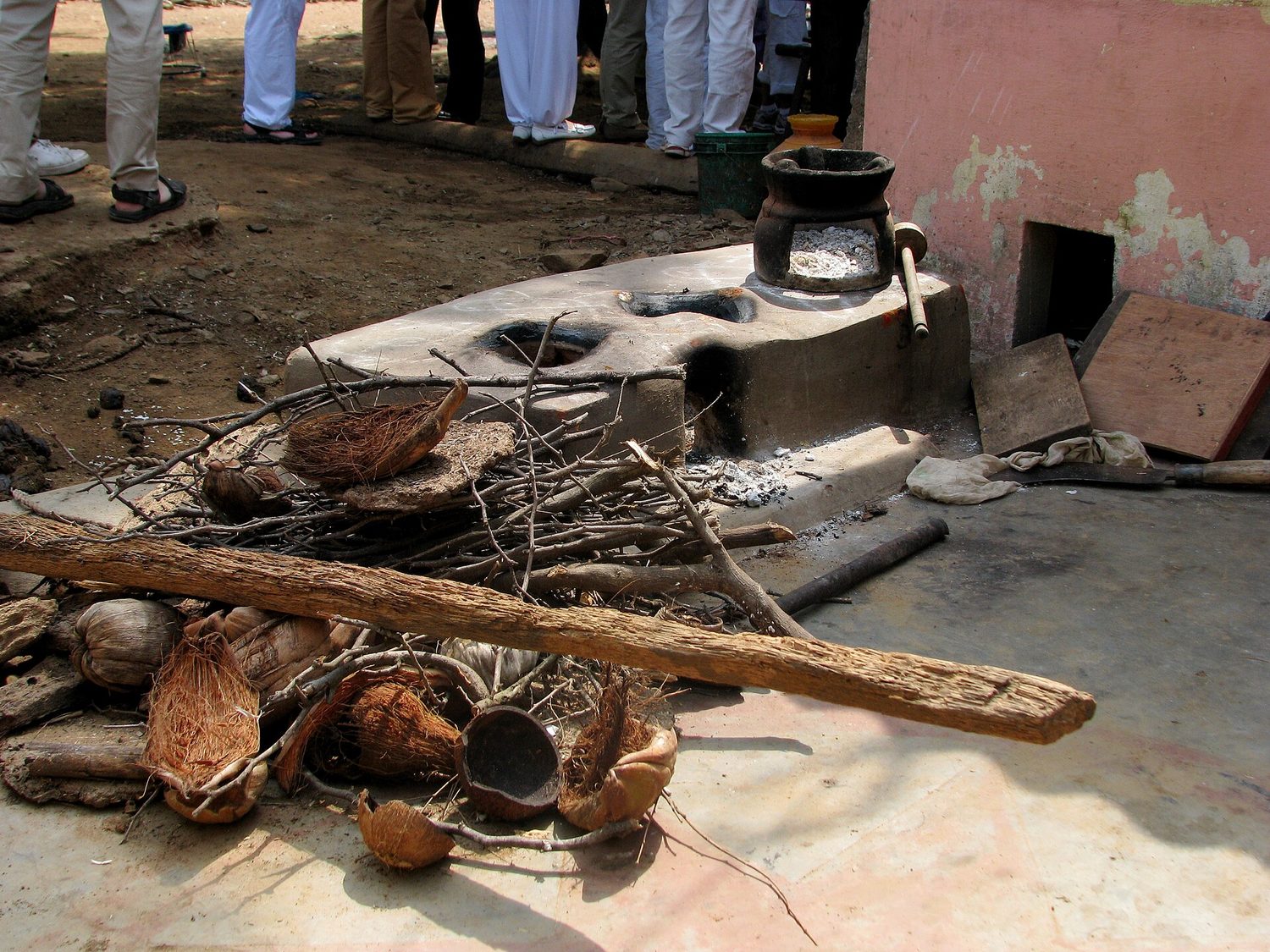
Indoor air can be more polluted than outdoor. Common indoor pollutants include radon 氡 (radioactive gas from the ground, a lung-cancer risk), carbon monoxide, asbestos 石棉, tobacco smoke, mold, and VOCs from paints and furnishings. Ventilation and source control reduce exposure.
Vocabulary
Train
| English |
|---|
| radon/ˈreɪdɒn/ |
| asbestos/æsˈbestəs/ |
7.6
Reduction of Air Pollutants
Syllabus
| Enduring Understanding | Learning Objective | Essential Knowledge |
|---|---|---|
STB-2 | STB-2.G |
|
Source: College Board AP Course and Exam Description
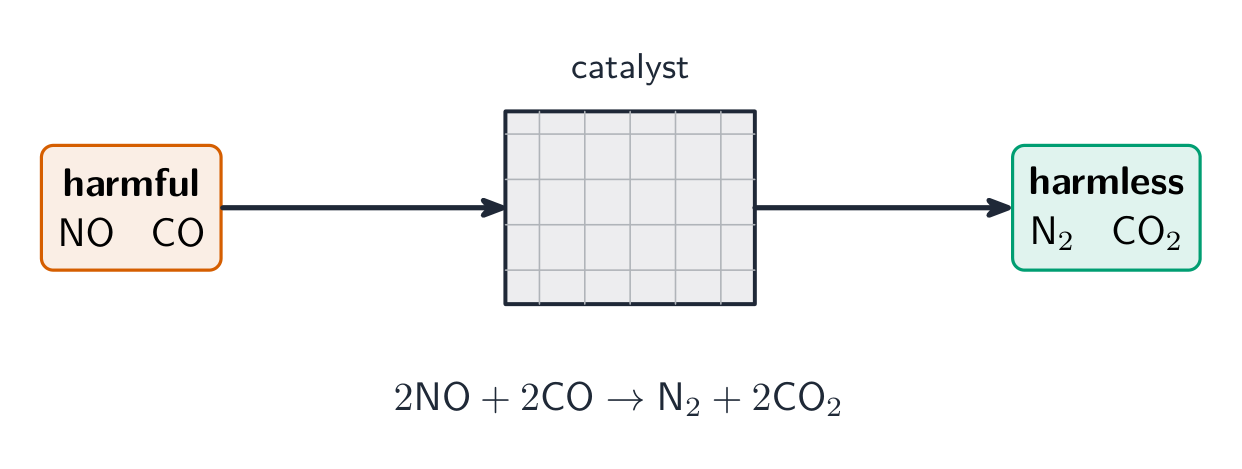
Air pollution is cut by technology and policy: catalytic converters 催化转化器 on cars, scrubbers 洗涤器 and electrostatic precipitators 静电除尘器 on smokestacks, cleaner fuels, and laws like the Clean Air Act setting emission limits. Reducing fossil-fuel use addresses the root cause.
Vocabulary
Train
| English |
|---|
| catalytic converters/ˌkætəˈlɪtɪk kənˈvɜːtəz/ |
| scrubbers/ˈskrʌbəz/ |
| electrostatic precipitators/ɪˌlektrəʊˈstætɪk prɪˈsɪpɪteɪtəz/ |
7.7
Acid Rain
Syllabus
| Enduring Understanding | Learning Objective | Essential Knowledge |
|---|---|---|
STB-2 | STB-2.H |
|
STB-2.I |
|
Source: College Board AP Course and Exam Description
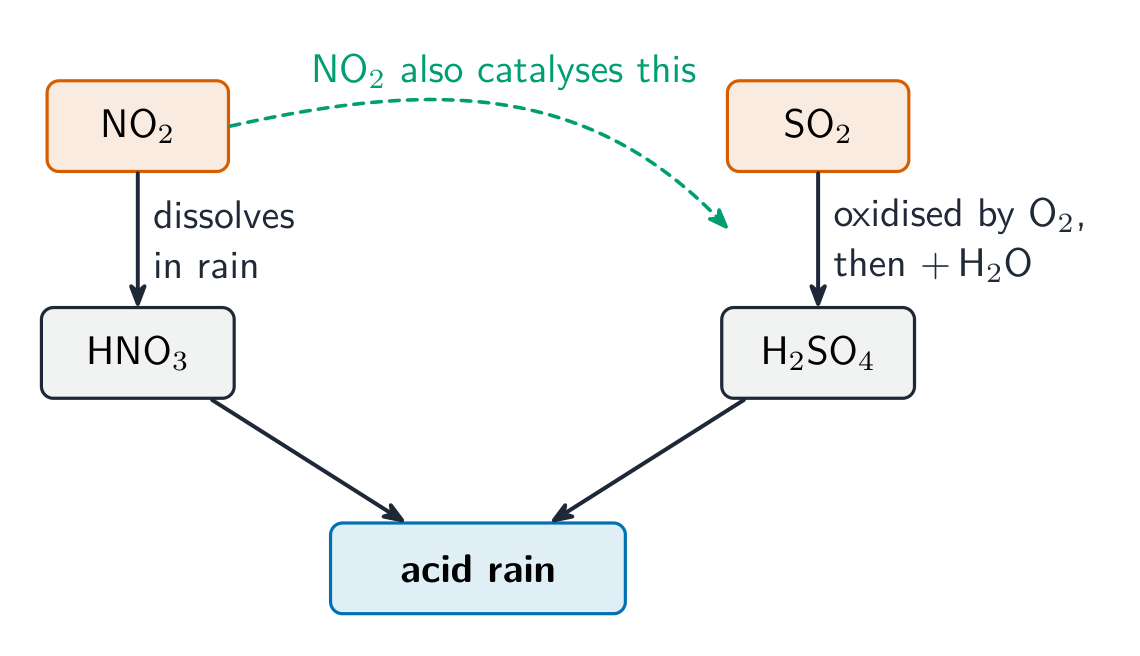
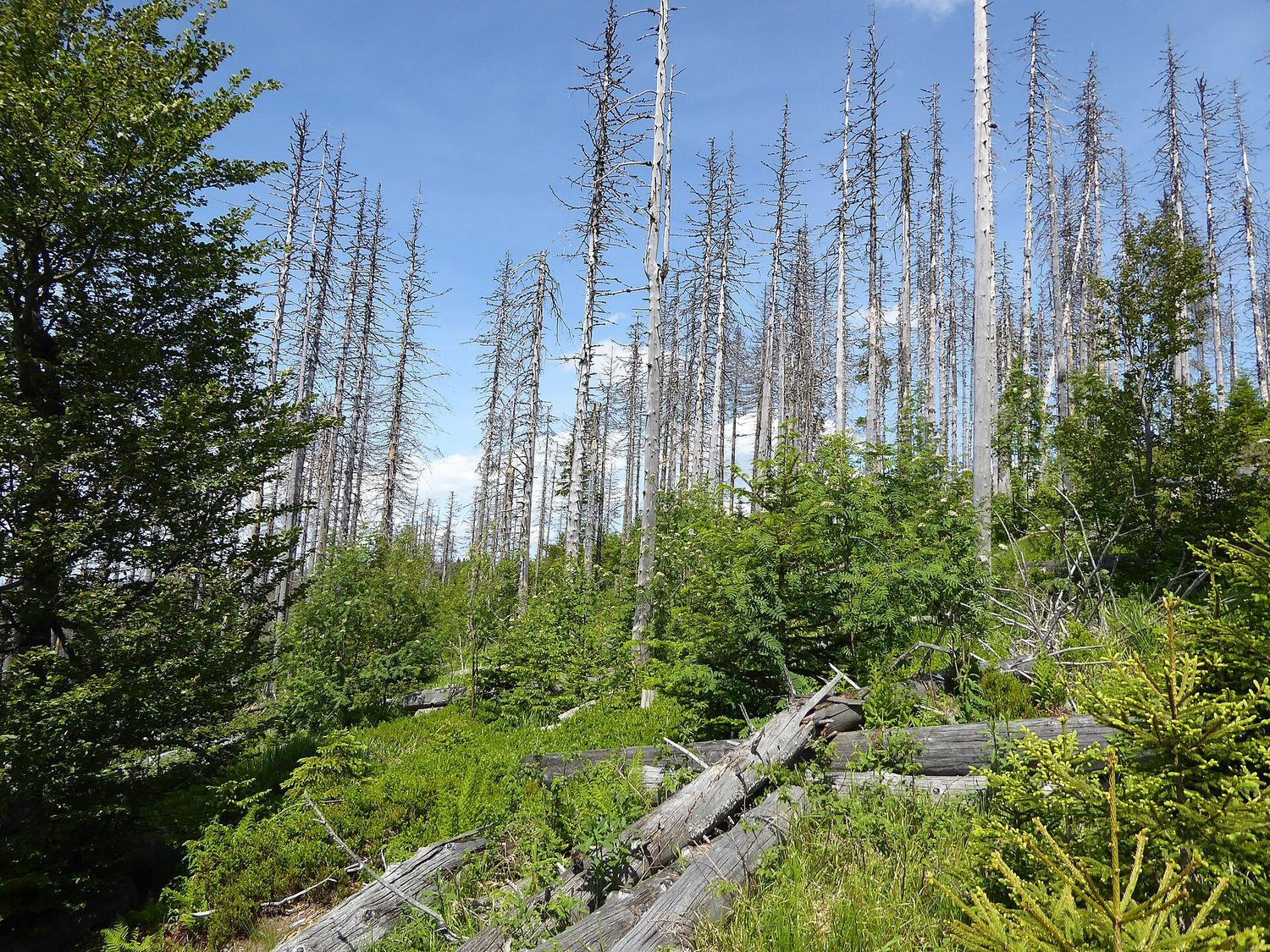
Acid rain 酸雨 forms when sulfur dioxide and nitrogen oxides react with water in the air to make sulfuric and nitric acids, which fall far downwind. It acidifies lakes and soils (harming fish and trees), leaches nutrients, and corrodes buildings. Reducing $\text{SO}_2$ and $\text{NO}_x$ emissions is the fix.
Explore
How acidic is acid rain?
Acid rain forms when sulfur and nitrogen oxides dissolve into rain, dropping its pH well below the normal ~5.6. Each pH unit down is ten times more acidic.
Vocabulary
Train
| English |
|---|
| Acid rain/ˈæsɪd reɪn/ |
7.8
Noise Pollution
Syllabus
| Enduring Understanding | Learning Objective | Essential Knowledge |
|---|---|---|
STB-2 | STB-2.J |
|
Source: College Board AP Course and Exam Description
Noise pollution 噪声污染 is unwanted or harmful sound in the environment. Major sources are road traffic, aircraft, trains, industry, and construction. In people, long or loud exposure causes hearing loss 听力损失, stress 压力, sleep loss, and higher blood pressure. It also disturbs wildlife 野生动物: it masks the sounds animals use to communicate, navigate, and find mates, and underwater noise from ships is especially harmful to whales and dolphins. It is reduced by sound barriers, quieter engines and mufflers, and land-use planning such as buffer zones around airports.
Worked example. Normal rain has a pH of about 5.6; an acid-rain sample measures pH 3.6. Because pH is a base-10 logarithmic scale, each unit is a $10\times$ change in hydrogen-ion concentration, so pH 3.6 is $10^{(5.6-3.6)}=10^{2}=100$ times more acidic than normal rain. That hundred-fold jump is why acid rain damages leaves, soils, and limestone so quickly.
Vocabulary
Train
| English |
|---|
| noise pollution/nɔɪz pəˈluːʃn/ |
| hearing loss/ˈhɪərɪŋ lɒs/ |
| stress/stres/ |
| wildlife/ˈwaɪldlaɪf/ |
7.8
Exam tips
- Distinguish primary pollutants (emitted directly: CO, NOₓ, SO₂, particulates) from secondary (form in the air: ground-level ozone).
- Ground-level ozone is a pollutant, but the ozone layer high up is protective — do not confuse them.
- Explain how a thermal inversion traps pollution near the ground.
- Acid rain (from SO₂ and NOₓ) often falls far downwind, making it an international problem.
- Link control methods to pollutants (catalytic converters, scrubbers, cleaner fuels, emission laws).
Interactive lessons on this topic
Work through it step by step, with instant-check exercises.