| Enduring Understanding | Learning Objective | Essential Knowledge |
|---|---|---|
ERT-2 | ERT-2.A |
|
The Living World: Biodiversity
AP Environmental Science · Topic 2
 7:58
7:58
The Living World: Biodiversity
A volcano pushes a new island up out of the sea. At first there is nothing on it — bare rock, no soil, no life at all. Fifty years later, it is green. So how…
English narration · English + 中文 subtitles burned in
2.1
Introduction to Biodiversity
Syllabus
Source: College Board AP Course and Exam Description
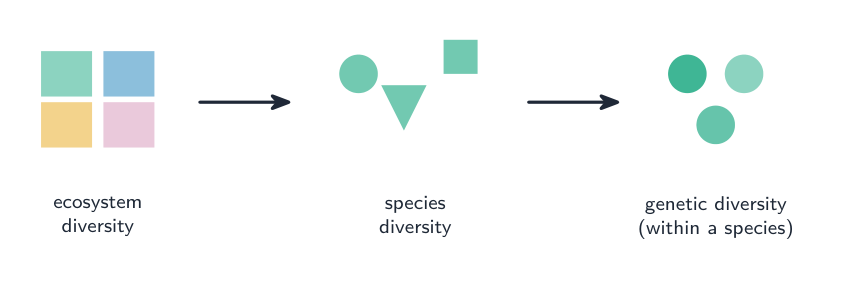
Biodiversity 生物多样性 is the variety of life, measured at three levels:
- Genetic diversity – variety of genes within a species. More genetic variety means a population can better respond to environmental stressors 环境压力; a population bottleneck 种群瓶颈 (a sharp drop in numbers) throws that variety away and leaves the survivors vulnerable.
- Species diversity – the number of species (species richness 物种丰富度) and how evenly individuals are spread among them.
- Habitat diversity – the variety of habitats in a region.
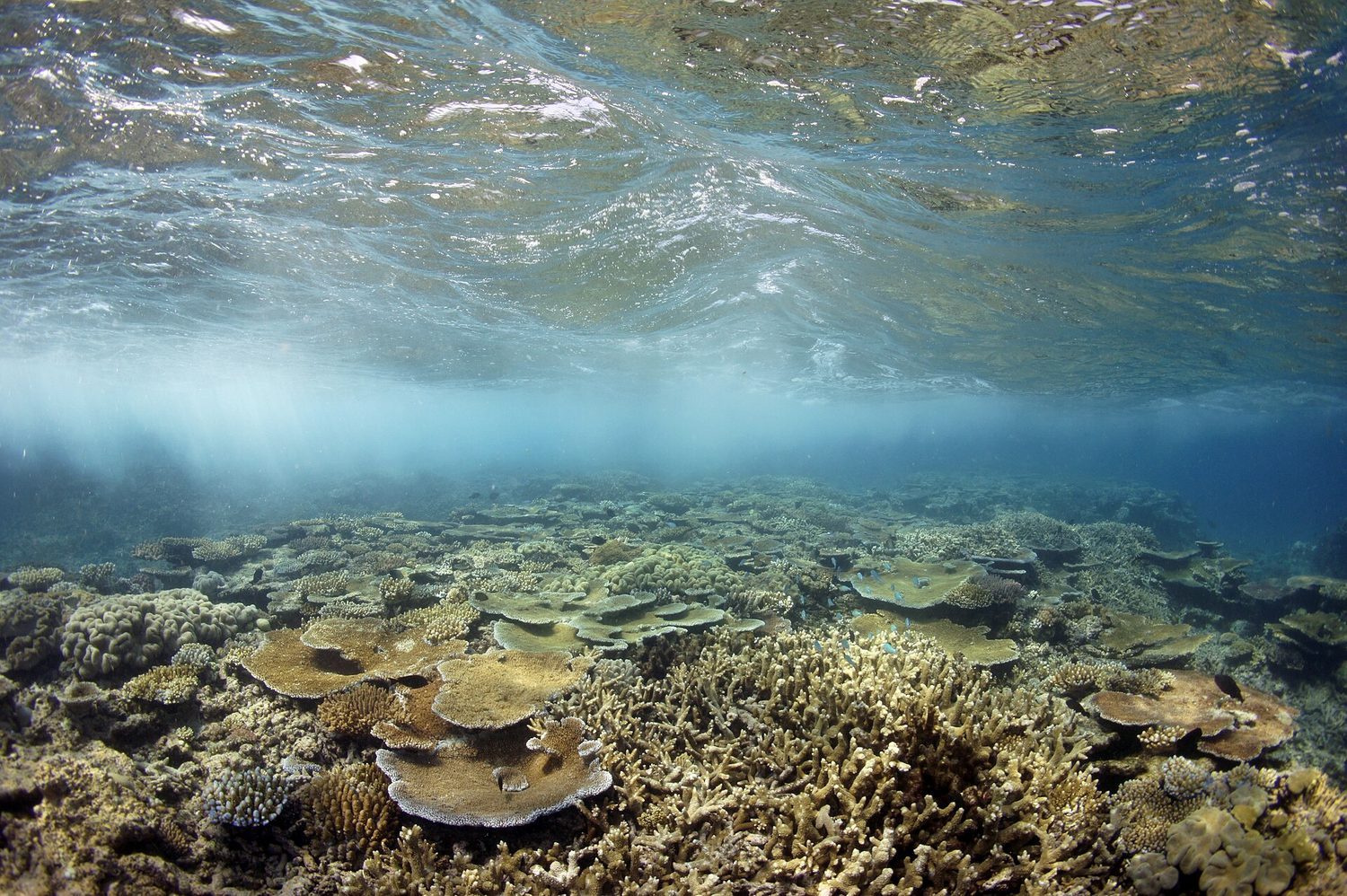
More species-rich ecosystems are more resilient 有韧性的: they recover from disruption more readily, because varied species can fill roles when conditions change. Habitat loss removes species in a predictable order – specialist 特化 species (narrow needs) go first, then the hardier generalist 广适性 species, and species that need large territories decline as their range shrinks.
Vocabulary
Train
| English |
|---|
| Biodiversity/ˌbaɪəʊdaɪˈvɜːsɪti/ |
| environmental stressors/enˌvaɪrənˈmentl ˈstresəz/ |
| population bottleneck/ˌpɒpjʊˈleɪʃn ˈbɒtəlnek/ |
| species richness/ˈspiːsiːz ˈrɪtʃnəs/ |
| resilient/rɪˈsɪlɪənt/ |
| specialist/ˈspeʃəlɪst/ |
| generalist/ˈdʒenərəlɪst/ |
2.2
Ecosystem Services
Syllabus
| Enduring Understanding | Learning Objective | Essential Knowledge |
|---|---|---|
ERT-2 | ERT-2.B |
|
ERT-2.C |
|
Source: College Board AP Course and Exam Description
Ecosystem services 生态系统服务 are the free benefits nature gives people, in four categories:
- Provisioning – products: food, fresh water, timber, fibre.
- Regulating – processes that keep conditions stable: climate regulation, water filtration, pollination, flood control.
- Cultural – non-material value: recreation, beauty, spiritual and educational value.
- Supporting – the services that make the others possible: nutrient cycling, soil formation, photosynthesis.
Anthropogenic 人为的 (human-caused) activities can disrupt these services, with real economic and ecological costs – for example, losing pollinators forces farmers to pay for pollination that bees once did for free.
Vocabulary
Train
| English |
|---|
| Ecosystem services/ˈiːkəʊsɪstəm ˈsɜːvɪsɪz/ |
| Anthropogenic/ˌænθrəpəˈdʒenɪk/ |
2.3
Island Biogeography
Syllabus
| Enduring Understanding | Learning Objective | Essential Knowledge |
|---|---|---|
ERT-2 | ERT-2.D |
|
ERT-2.E |
|
Source: College Board AP Course and Exam Description
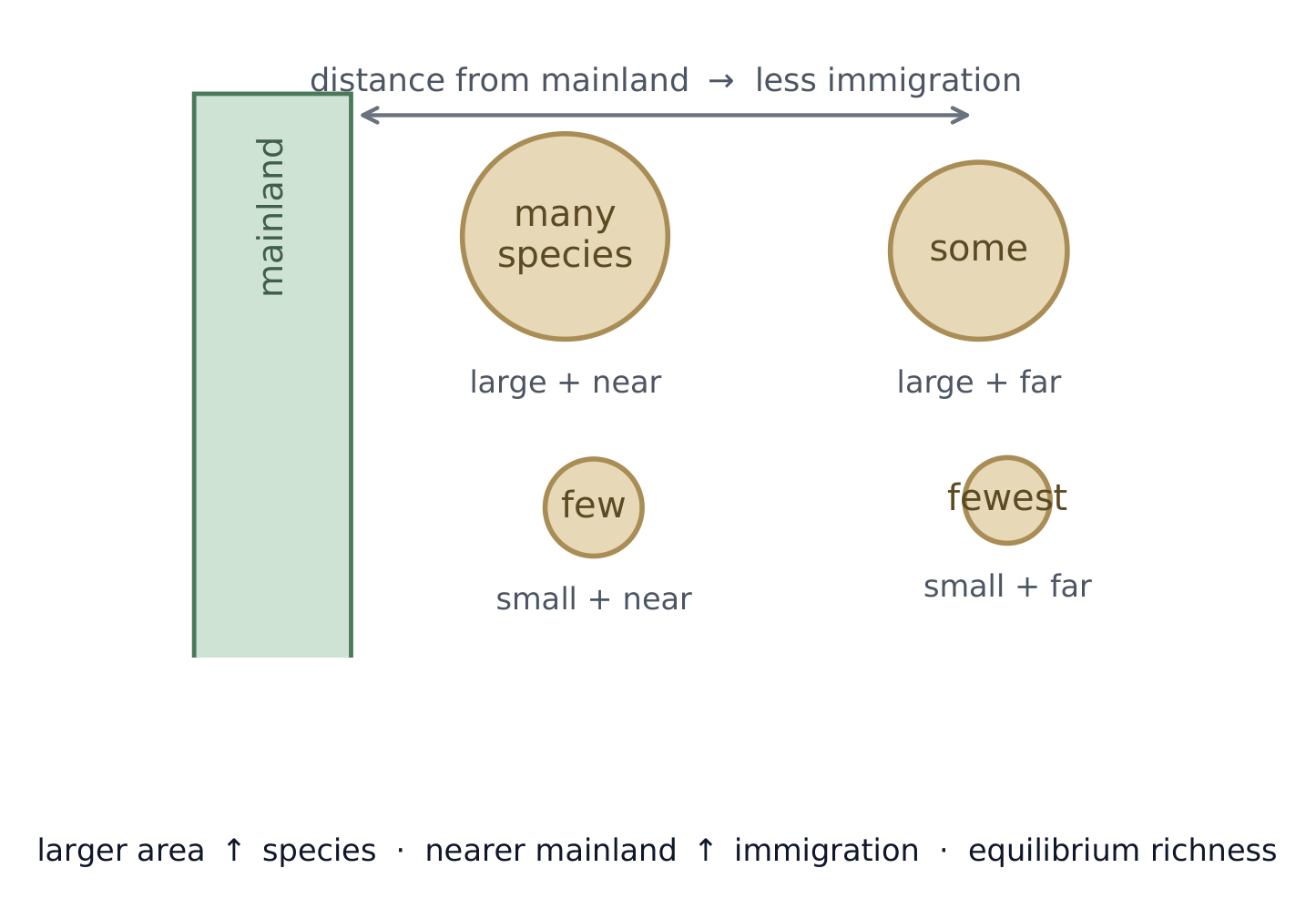
Island biogeography 岛屿生物地理学 studies how many species an island (or any isolated habitat patch) holds. The number settles at a balance between two rates:
- Immigration of new species – higher for islands closer to the mainland.
- Extinction of resident species – lower on larger islands.
So big, near islands hold the most species; small, remote ones the fewest. Isolation also drives evolution: island species often become specialists because resources are limited, and many are endemic 特有 – found nowhere else. That makes them fragile. When an invasive species 入侵物种 (usually a tough generalist) arrives, it can outcompete the specialists, which have nowhere else to go.
Vocabulary
Train
| English |
|---|
| Island biogeography/ˈaɪlənd ˌbaɪəʊdʒɪˈɒɡrəfi/ |
| endemic/enˈdemɪk/ |
| invasive species/ɪnˈveɪsɪv ˈspiːsiːz/ |
2.4
Ecological Tolerance
Syllabus
| Enduring Understanding | Learning Objective | Essential Knowledge |
|---|---|---|
ERT-2 | ERT-2.F |
|
Source: College Board AP Course and Exam Description
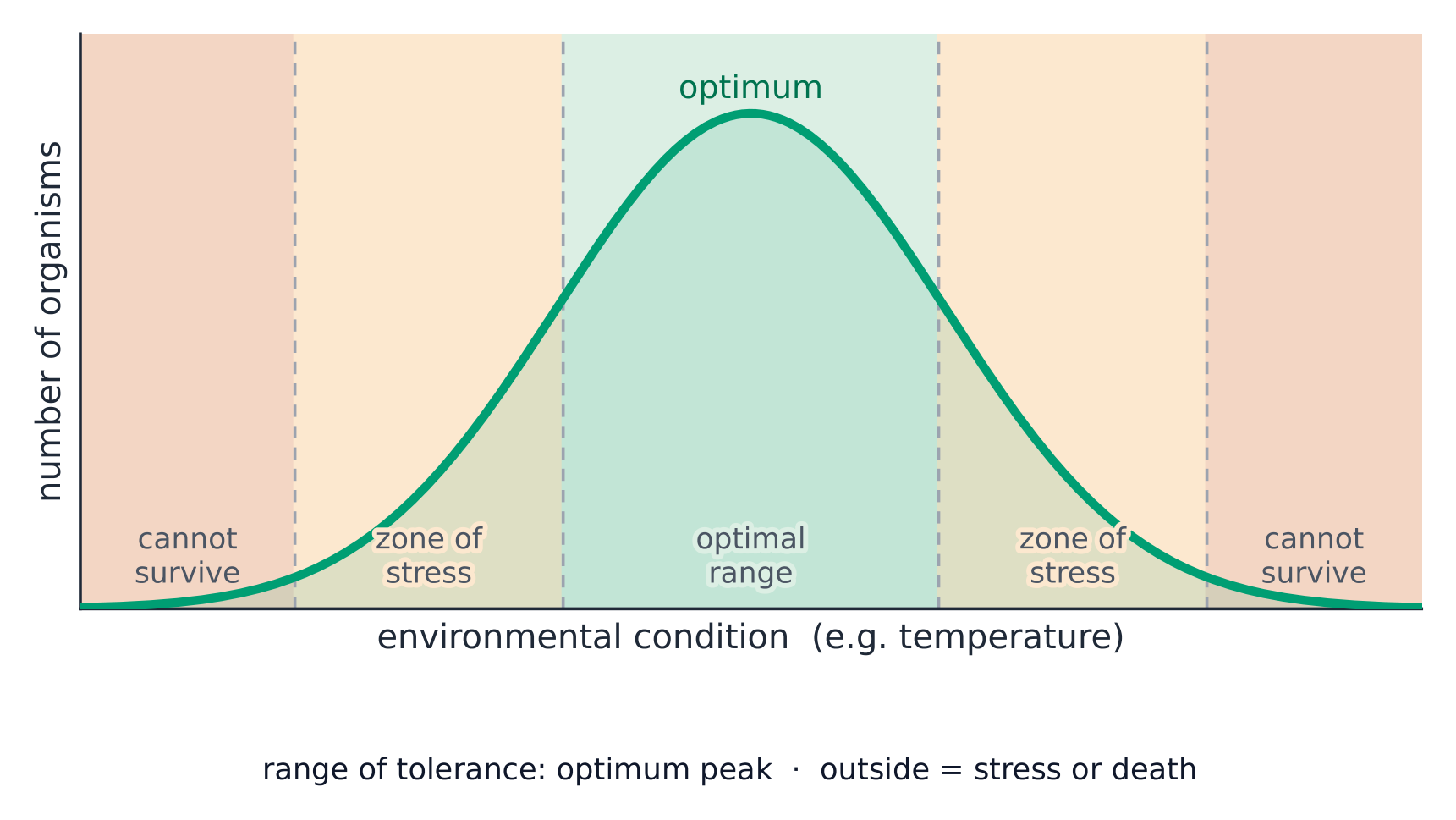
Every species has a range of tolerance 耐受范围 – the span of conditions (temperature, salinity, pH, sunlight) it can survive. Near the middle is an optimal range 最适范围 where individuals thrive; toward the edges are zones of stress 胁迫区 where they survive but struggle to grow or reproduce; beyond the limits they die. Ecological tolerance 生态耐受性 applies both to a single individual and to a whole species, and it decides where an organism can live and how it copes with change.
Vocabulary
Train
| English |
|---|
| range of tolerance/reɪndʒ ɒv ˈtɒlərəns/ |
| optimal range/ˈɒptɪml reɪndʒ/ |
| zones of stress/zəʊnz ɒv stres/ |
| Ecological tolerance/ˌekəˈlɒdʒɪkl ˈtɒlərəns/ |
2.5
Natural Disruptions to Ecosystems
Syllabus
| Enduring Understanding | Learning Objective | Essential Knowledge |
|---|---|---|
ERT-2 | ERT-2.G |
|
Source: College Board AP Course and Exam Description
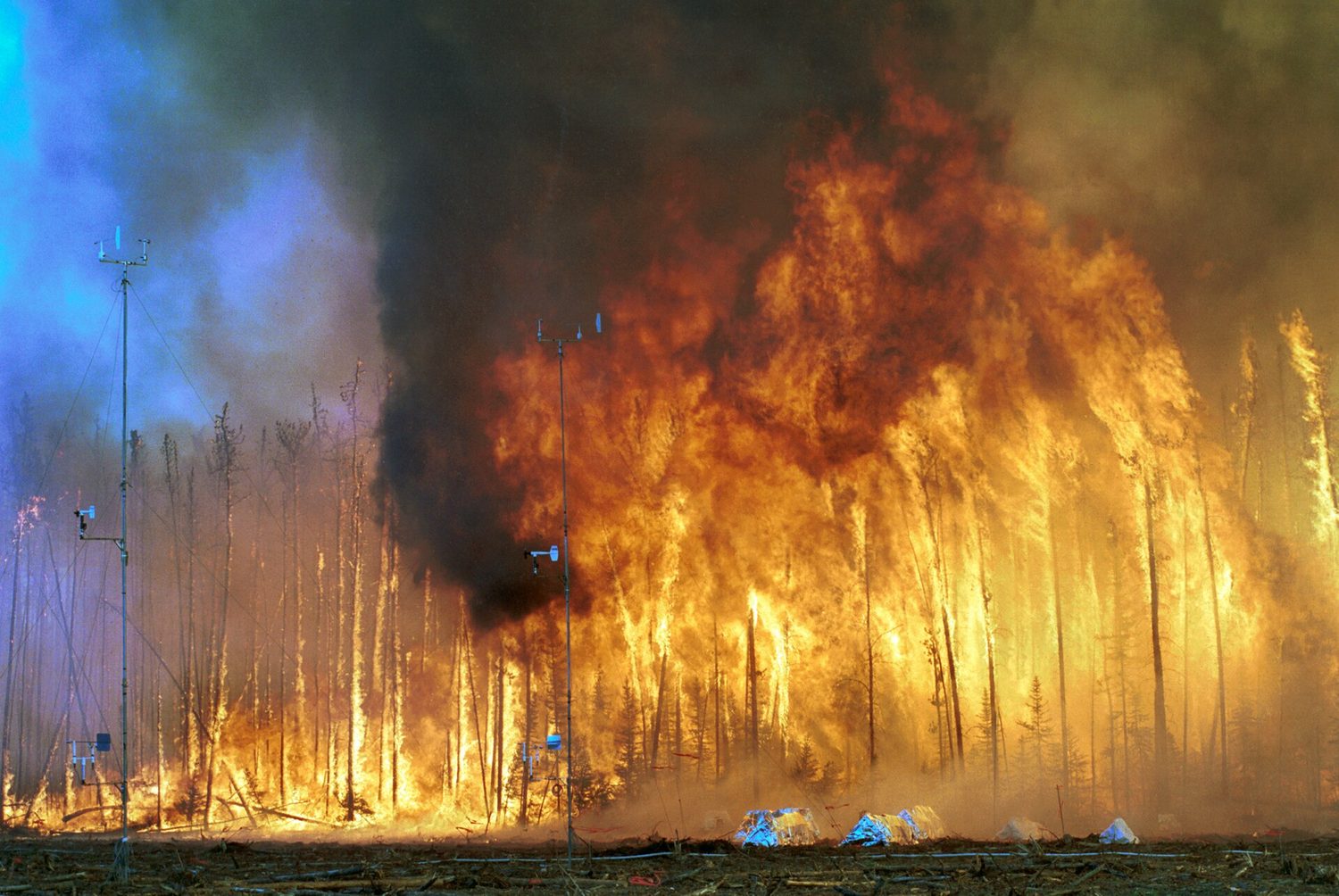
Natural events disrupt ecosystems across every timescale, and a single natural event can rival or exceed a human-made one. Earth's processes come in three timing patterns:
- Periodic 周期性 – regular cycles (seasons, tides).
- Episodic 偶发性 – occasional, irregular events (fires, floods, volcanic eruptions).
- Random 随机 – no pattern (a meteor strike).
Over geological time, Earth's climate has shifted for many reasons, and sea level has risen and fallen with the amount of glacial ice – each change reshaping large swaths of habitat. Wildlife responds by migration 迁徙, moving short or long distances to follow conditions.
Vocabulary
Train
| English |
|---|
| Periodic/ˌpɪərɪˈɒdɪk/ |
| Episodic/ˌepɪˈsɒdɪk/ |
| Random/ˈrændəm/ |
| migration/maɪˈɡreɪʃn/ |
2.6
Adaptations
Syllabus
| Enduring Understanding | Learning Objective | Essential Knowledge |
|---|---|---|
ERT-2 | ERT-2.H |
|
Source: College Board AP Course and Exam Description
An adaptation 适应 is an inherited trait that improves survival and reproduction in an environment. Adaptations arise through natural selection 自然选择 – incremental genetic change accumulating over generations, not within a single lifetime. When the environment changes, individuals must alter their behaviour, move, or die; if change comes faster than a population can adapt, it declines. A periodic disturbance such as fire is often part of a healthy cycle, and many species are adapted to it (some pine cones open only in a fire's heat).
Vocabulary
Train
| English |
|---|
| adaptation/ˌædæpˈteɪʃn/ |
| natural selection/ˈnætʃərəl sɪˈlekʃn/ |
2.7
Ecological Succession
Syllabus
| Enduring Understanding | Learning Objective | Essential Knowledge |
|---|---|---|
ERT-2 | ERT-2.I |
|
ERT-2.J |
|
Source: College Board AP Course and Exam Description
Ecological succession 生态演替 is the gradual, orderly change in a community over time:
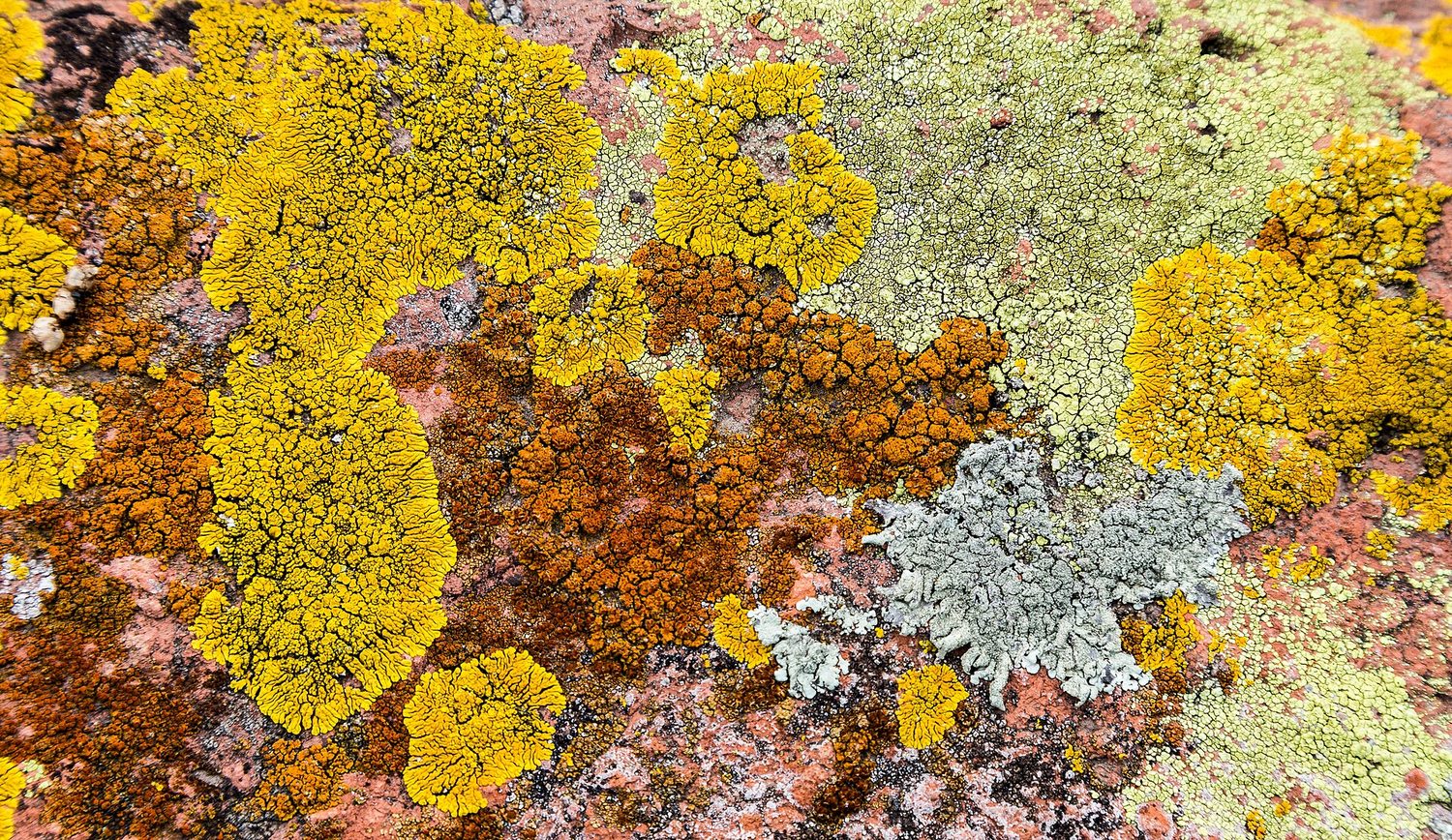
- Primary succession 初级演替 starts on bare rock with no soil – after a glacier retreats or lava cools. Pioneer species 先锋物种 such as lichens 地衣 arrive first and slowly build soil. It is slow.
- Secondary succession 次级演替 follows a disturbance that leaves the soil intact – after a fire or abandoned farming – so it is much faster.
Succession tends toward a relatively stable climax community 顶极群落. Two special roles shape a community out of proportion to their numbers: a keystone species 关键种, whose activities hold the community structure together (remove it and the community collapses – sea otters keeping urchins in check), and an indicator species 指示物种, whose presence or health signals the condition of the whole ecosystem (lichens vanish where the air is polluted).
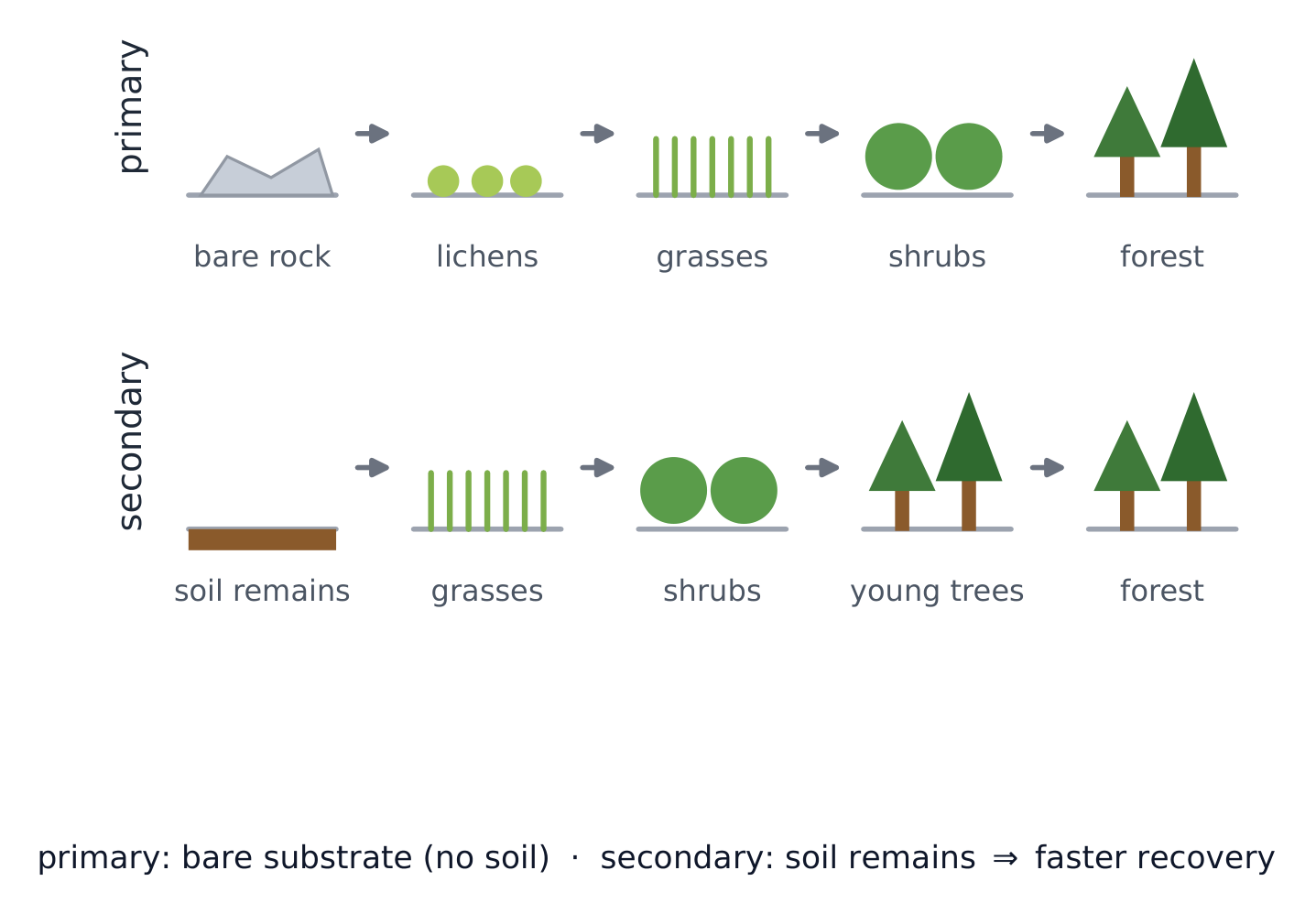
Worked example. A pond holds 3 fish species with 5, 3, and 2 individuals ($N=10$). Simpson's Diversity Index $=1-\sum\left(\tfrac{n}{N}\right)^2 = 1-\left[(0.5)^2+(0.3)^2+(0.2)^2\right] = 1-0.38 = 0.62$. A value near 1 means high diversity; near 0 means one species dominates. Adding a fourth, evenly-sized species would push the index higher.
Vocabulary
Train
| English |
|---|
| Ecological succession/ˌekəˈlɒdʒɪkl səkˈseʃn/ |
| Primary succession/ˈpraɪməri səkˈseʃn/ |
| Pioneer species/paɪəˈnɪə ˈspiːsiːz/ |
| lichens/ˈlaɪkənz/ |
| Secondary succession/ˈsekəndəri səkˈseʃn/ |
| climax community/ˈklaɪmæks kəˈmjuːnɪti/ |
| keystone species/ˈkiːstəʊn ˈspiːsiːz/ |
| indicator species/ˈɪndɪkeɪtə ˈspiːsiːz/ |
2.7
Exam tips
- Describe biodiversity at three levels: genetic, species, and habitat, and link higher diversity to greater resilience.
- Specialist species (narrow needs) are more vulnerable than generalists when a habitat changes.
- Distinguish primary succession (bare rock, no soil, slow) from secondary (soil intact, faster).
- Explain a keystone species (outsized effect) and an indicator species (signals ecosystem health).
- Name the four ecosystem services (provisioning, regulating, cultural, supporting) with examples.
Interactive lessons on this topic
Work through it step by step, with instant-check exercises.