Skip to content · ⁨ข้ามไปยังเนื้อหา⁩

Chemical Reactions · ⁨ปฏิกิริยาเคมี⁩

AP Chemistry · Topic 4 · ⁨หัวข้อ 4⁩

Video lesson for this topic · ⁨บทเรียนวิดีโอสำหรับหัวข้อนี้⁩ Open the video page · ⁨เปิดหน้าวิดีโอ⁩
7:42

ปฏิกิริยาเคมี

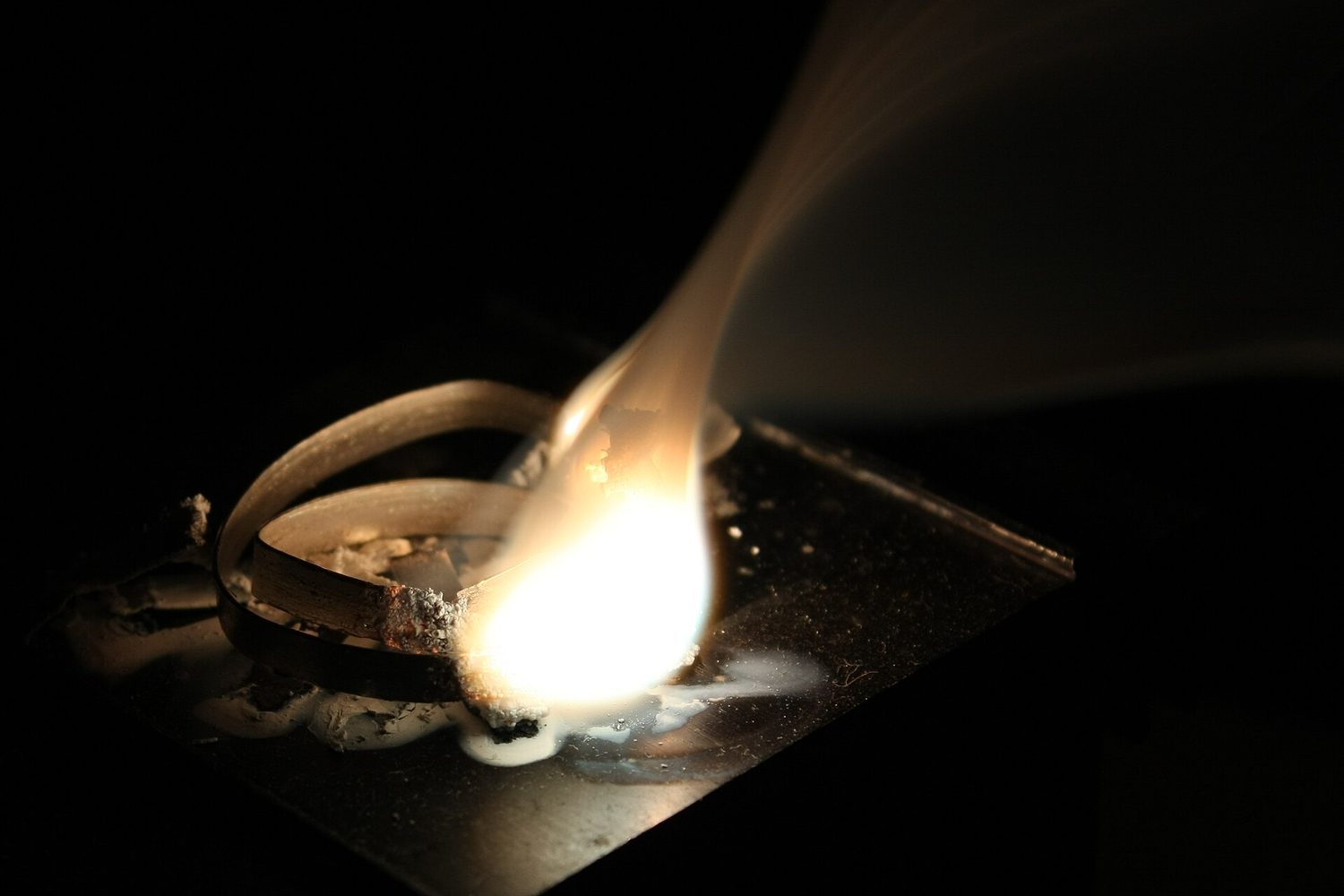
แถบโลหะแมกนีเซียม. แตะด้วยเปลวไฟแล้วมันจะเผาไหม้ — การเผาไหม้ — ด้วยแสงที่สว่างจ้าจนมองไม่ไหว สิ่งที่เหลืออยู่ไม่ใช่แมกนีเซียมอีกต่อไป. มันคือ…

English narration · English + 中文 subtitles burned in · ⁨การบรรยายภาษาอังกฤษ · คำบรรยายภาษาอังกฤษ + 中文 ลอยตัวบนภาพ⁩

4.1

Recognizing a Chemical Reaction · ⁨การระบุปฏิกิริยาเคมี⁩

Syllabus · ⁨หลักสูตร⁩
English

Learning Objective 4.1.A: Identify evidence of chemical and physical changes in matter.

  • 4.1.A.1 A physical change occurs when a substance undergoes a change in properties but not a change in composition. Changes in the phase of a substance (solid, liquid, gas) or formation/separation of mixtures of substances are common physical changes.
  • 4.1.A.2 A chemical change occurs when substances are transformed into new substances, typically with different compositions. Production of heat or light, formation of a gas, formation of a precipitate, and/or color change provide possible evidence that a chemical change has occurred.
ไทย

วัตถุประสงค์การเรียนรู้ 4.1.A: ระบุหลักฐานของการเปลี่ยนแปลงทางเคมีและฟิสิกส์ในสสาร

  • 4.1.A.1 การเปลี่ยนแปลงทางกายภาพเกิดขึ้นเมื่อสารมีการเปลี่ยนแปลงในคุณสมบัติแต่ไม่มีการเปลี่ยนแปลงในองค์ประกอบ การเปลี่ยนสถานะของสาร (ของแข็ง, ของเหลว, ก๊าซ) หรือการสร้าง/การแยกสารผสมของสารเป็นตัวอย่างทั่วไปของการเปลี่ยนแปลงทางกายภาพ
  • 4.1.A.2 การเปลี่ยนแปลงทางเคมีเกิดขึ้นเมื่อสารถูกแปลงเป็นสารใหม่ โดยปกติจะมีองค์ประกอบต่างกัน การเกิดความร้อนหรือแสง, การเกิดแก๊ส, การเกิดตะกอน, และการ/หรือการเปลี่ยนสี เป็นหลักฐานที่เป็นไปได้ว่าเกิดการเปลี่ยนแปลงทางเคมี
Source: College Board AP Course and Exam Description · ⁨แหล่งที่มา: คำอธิบายหลักสูตรและข้อสอบ College Board AP⁩

English

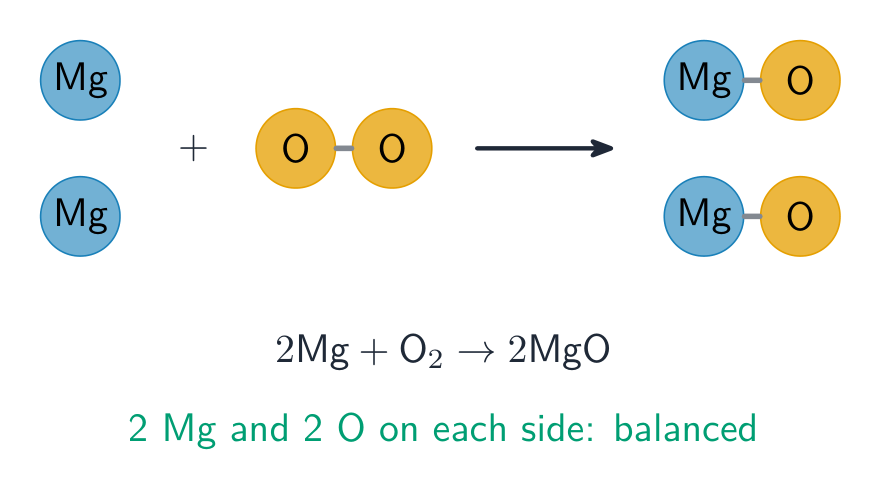
A chemical reaction 化学反应 rearranges atoms into new substances. Signs one has happened: a color change, a gas or precipitate 沉淀 forming, or a temperature change. Atoms are conserved, so an equation must be balanced – the same count of each element on both sides.

ไทย
แมกนีเซียมเผาไหม้: ปฏิกิริยาเคมีจัดเรียงอะตอมใหม่และปล่อยพลังงานออกมาเป็นแสงและความร้อน

ปฏิกิริยาเคมี จัดเรียงอะตอมเป็นสารใหม่ สัญญาณที่บ่งบอกว่าเกิดขึ้น: การเปลี่ยนแปลงสี, การเกิดแก๊สหรือ ตะกอน, หรือการเปลี่ยนแปลงอุณหภูมิ อะตอมถูกอนุรักษ์ไว้ ดังนั้นสมการต้อง สมดุล – มีจำนวนของแต่ละธาตุเท่ากันทั้งสองข้าง

4.2

Net Ionic Equations · ⁨สมการไอออนรวม⁩

Syllabus · ⁨หลักสูตร⁩
English

Learning Objective 4.2.A: Represent changes in matter with a balanced chemical or net ionic equation: i. For physical changes. ii. For given information about the identity of the reactants and/or product. iii. For ions in a given chemical reaction.

  • 4.2.A.1 All physical and chemical processes can be represented symbolically by balanced equations.
  • 4.2.A.2 Chemical equations represent chemical changes. These changes are the result of a rearrangement of atoms into new combinations; thus, any representation of a chemical change must contain equal numbers of atoms of every element before and after the change occurred. Equations thus demonstrate that mass and charge are conserved in chemical reactions.
  • 4.2.A.3 Balanced molecular, complete ionic, and net ionic equations are differing symbolic forms used to represent a chemical reaction. The form used to represent the reaction depends on the context in which it is to be used.
ไทย

วัตถุประสงค์การเรียนรู้ 4.2.A: แสดงการเปลี่ยนแปลงของสสารด้วยสมการเคมีหรือสมการไอออนสุทธิที่สมดุล: i. สำหรับการเปลี่ยนแปลงทางกายภาพ ii. สำหรับข้อมูลที่กำหนดเกี่ยวกับตัวตนของสารตั้งต้นและ/หรือผลิตภัณฑ์ iii. สำหรับไอออนในปฏิกิริยาเคมีที่กำหนดให้

  • 4.2.A.1 กระบวนการทางกายภาพและเคมีทั้งหมดสามารถแสดงด้วยสัญลักษณ์ผ่านสมการที่สมดุล
  • 4.2.A.2 สมการเคมีแสดงถึงการเปลี่ยนแปลงทางเคมี การเปลี่ยนแปลงเหล่านี้เกิดจากการจัดเรียงอะตอมใหม่เป็นกลุ่มรวมใหม่ ดังนั้น การแสดงภาพของการเปลี่ยนแปลงทางเคมีใด ๆ ต้องมีจำนวนอะตอมของทุกธาตุเท่ากันก่อนและหลังการเปลี่ยนแปลง สมการดังนั้นจึงแสดงให้เห็นว่ามวลและประจุคงที่ในปฏิกิริยาเคมี
  • 4.2.A.3 สมการโมเลกุลที่สมดุล, สมการไอออนสมบูรณ์, และสมการไอออนสุทธิ เป็นรูปแบบสัญลักษณ์ที่แตกต่างกันที่ใช้เพื่อแสดงปฏิกิริยาเคมี รูปแบบที่ใช้ขึ้นอยู่กับบริบทที่จะนำไปใช้

Source: College Board AP Course and Exam Description · ⁨แหล่งที่มา: คำอธิบายหลักสูตรและข้อสอบ College Board AP⁩

English

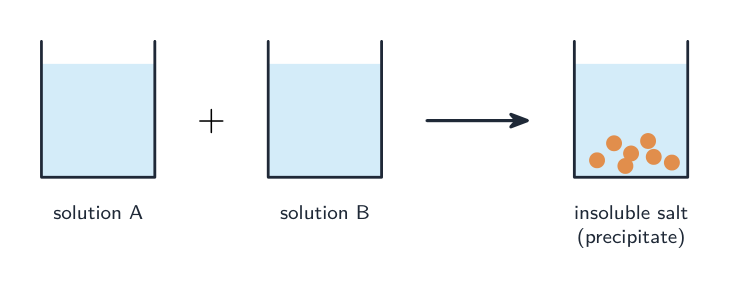
For reactions in water, ionic compounds split into ions. A net ionic equation 净离子方程式 shows only the species that actually change, leaving out the spectator ions 旁观离子 that appear unchanged on both sides. It captures the real chemistry (e.g. $\text{Ag}^+ + \text{Cl}^- \rightarrow \text{AgCl}(s)$).

ไทย

สำหรับปฏิกิริยาในน้ำ สารประกอบไอออนิกแยกออกเป็นไอออน สมการไอออนรวม แสดงเฉพาะสปีชีส์ที่เปลี่ยนแปลงจริง ทิ้ง ไอออนผู้ชม ที่ไม่เปลี่ยนบนทั้งสองข้างไว้ มันจับเคมีที่แท้จริง (เช่น $\text{Ag}^+ + \text{Cl}^- \rightarrow \text{AgCl}(s)$)

การผสมสารละลายสองชนิดอาจทำให้เกิดตะกอนที่ไม่ละลาย
4.3

Three Ways to Represent a Reaction · ⁨วิธีแสดงปฏิกิริยาสามรูปแบบ⁩

Syllabus · ⁨หลักสูตร⁩
English

Learning Objective 4.3.A: Represent a given chemical reaction or physical process with a consistent particulate model.

  • 4.3.A.1 Balanced chemical equations in their various forms can be translated into symbolic particulate representations.
ไทย

วัตถุประสงค์การเรียนรู้ 4.3.A: แสดงปฏิกิริยาเคมีหรือกระบวนการทางกายภาพที่กำหนดด้วยแบบจำลองอนุภาคที่สอดคล้องกัน

  • 4.3.A.1 สมการเคมีที่สมดุลในรูปแบบต่าง ๆ สามารถแปลเป็น表现形式อนุภาคด้วยสัญลักษณ์ได้

Source: College Board AP Course and Exam Description · ⁨แหล่งที่มา: คำอธิบายหลักสูตรและข้อสอบ College Board AP⁩

English

The same reaction can be shown as a symbolic equation, a particulate drawing (atoms and molecules), and a macroscopic observation (what you see). Moving between these levels – connecting the equation to the particles to the beaker – is a core skill.

ไทย

ปฏิกิริยาดังกล่าวสามารถแสดงได้ด้วย สมการสัญลักษณ์, ภาพระดับอนุภาค (อะตอมและโมเลกุล), และ การสังเกตในระดับมหภาค (สิ่งที่เห็นได้) การเปลี่ยนระหว่างระดับเหล่านี้ – เชื่อมโยงสมการเข้ากับอนุภาคกับแก้วทดลอง – เป็นทักษะหลัก

สมการที่สมดุลมีจำนวนอะตอมของแต่ละชนิดเท่ากันทั้งสองข้าง
4.4

Physical Changes versus Chemical Changes · ⁨การเปลี่ยนแปลงทางกายภาพกับการเปลี่ยนแปลงทางเคมี⁩

Syllabus · ⁨หลักสูตร⁩
English

Learning Objective 4.4.A: Explain the relationship between macroscopic characteristics and bond interactions for: i. Chemical processes. ii. Physical processes.

  • 4.4.A.1 Processes that involve the breaking and/or formation of chemical bonds are typically classified as chemical processes. Processes that involve only changes in intermolecular interactions, such as phase changes, are typically classified as physical processes.
  • 4.4.A.2 Sometimes physical processes involve the breaking of chemical bonds. For example, plausible arguments could be made for the dissolution of a salt in water, as either a physical or chemical process, involves breaking of ionic bonds, and the formation of ion-dipole interactions between ions and solvent.
ไทย

วัตถุประสงค์การเรียนรู้ 4.4.A: อธิบายความสัมพันธ์ระหว่างลักษณะระดับมหภาคและการเชื่อมโยงพันธะสำหรับ: i. กระบวนการทางเคมี ii. กระบวนการทางกายภาพ

  • 4.4.A.1 กระบวนการที่เกี่ยวข้องกับการแตกและ/หรือการสร้างพันธะเคมี มักจะจัดประเภทเป็นกระบวนการทางเคมี กระบวนการที่เกี่ยวข้องกับการเปลี่ยนแปลงเพียงอย่างเดียวในแรงระหว่างโมเลกุล เช่น การเปลี่ยนสถานะ มักจะจัดประเภทเป็นกระบวนการทางกายภาพ
  • 4.4.A.2 บางครั้งกระบวนการทางกายภาพเกี่ยวข้องกับการแตกของพันธะเคมี ตัวอย่างเช่น การละลายเกลือในน้ำ อาจให้เหตุผลสมเหตุสมผลได้ว่าทั้งเป็นกระบวนการทางกายภาพหรือเคมี ซึ่งเกี่ยวข้องกับการแตกของพันธะไอออน และการสร้างแรงระหว่างไอออนและไดโพลระหว่างไอออนกับตัวทำละลาย

Source: College Board AP Course and Exam Description · ⁨แหล่งที่มา: คำอธิบายหลักสูตรและข้อสอบ College Board AP⁩

English

A physical change 物理变化 alters form but not identity (melting, dissolving); a chemical change 化学变化 makes new substances by breaking and forming bonds. Dissolving salt is physical; the salt is unchanged and recoverable.

ไทย

การเปลี่ยนแปลงทางกายภาพ เปลี่ยนรูปแต่ไม่เปลี่ยนตัวตน (การหลอมเหลว, การละลาย); การเปลี่ยนแปลงทางเคมี สร้างสารใหม่ด้วยการทำลายและสร้างพันธะ การละลายเกลือเป็นการเปลี่ยนแปลงทางกายภาพ; เกลือไม่เปลี่ยนแปลงและสามารถดึงกลับมาได้

4.5

Stoichiometry · ⁨สโตइโควมิตรี⁩

Syllabus · ⁨หลักสูตร⁩
English

Learning Objective 4.5.A: Explain changes in the amounts of reactants and products based on the balanced reaction equation for a chemical process.

  • 4.5.A.1 Because atoms must be conserved during a chemical process, it is possible to calculate product amounts by using known reactant amounts, or to calculate reactant amounts given known product amounts.
  • 4.5.A.2 Coefficients of balanced chemical equations contain information regarding the proportionality of the amounts of substances involved in the reaction. These values can be used in chemical calculations involving the mole concept.
  • 4.5.A.3 Stoichiometric calculations can be combined with the ideal gas law and calculations involving molarity to quantitatively study gases and solutions.
ไทย

วัตถุประสงค์การเรียนรู้ 4.5.A: อธิบายการเปลี่ยนแปลงของปริมาณสารตั้งต้นและผลิตภัณฑ์ตามสมการปฏิกิริยาที่สมดุลสำหรับกระบวนการทางเคมี

  • 4.5.A.1 เนื่องจากอะตอมต้องคงอยู่ระหว่างกระบวนการทางเคมี จึงเป็นไปได้ที่จะคำนวณปริมาณผลิตภัณฑ์โดยใช้ปริมาณสารตั้งต้น Known หรือคำนวณปริมาณสารตั้งต้นเมื่อทราบปริมาณผลิตภัณฑ์
  • 4.5.A.2 ค่าสัมประสิทธิ์ในสมการเคมีที่สมดุลมีข้อมูลเกี่ยวกับความสัมพันธ์ของปริมาณสารที่เกี่ยวข้องในปฏิกิริยา ค่าเหล่านี้สามารถใช้ในการคำนวณทางเคมีที่เกี่ยวข้องกับแนวคิดโมล
  • 4.5.A.3 การคำนวณสโตอิกียมตรีสามารถรวมกับกฎแก๊สอุดมคติและการคำนวณที่เกี่ยวข้องกับความเข้มข้นแบบโมลาร์เพื่อศึกษาแก๊สและสารละลายอย่างมีปริมาณ

Source: College Board AP Course and Exam Description · ⁨แหล่งที่มา: คำอธิบายหลักสูตรและข้อสอบ College Board AP⁩

English

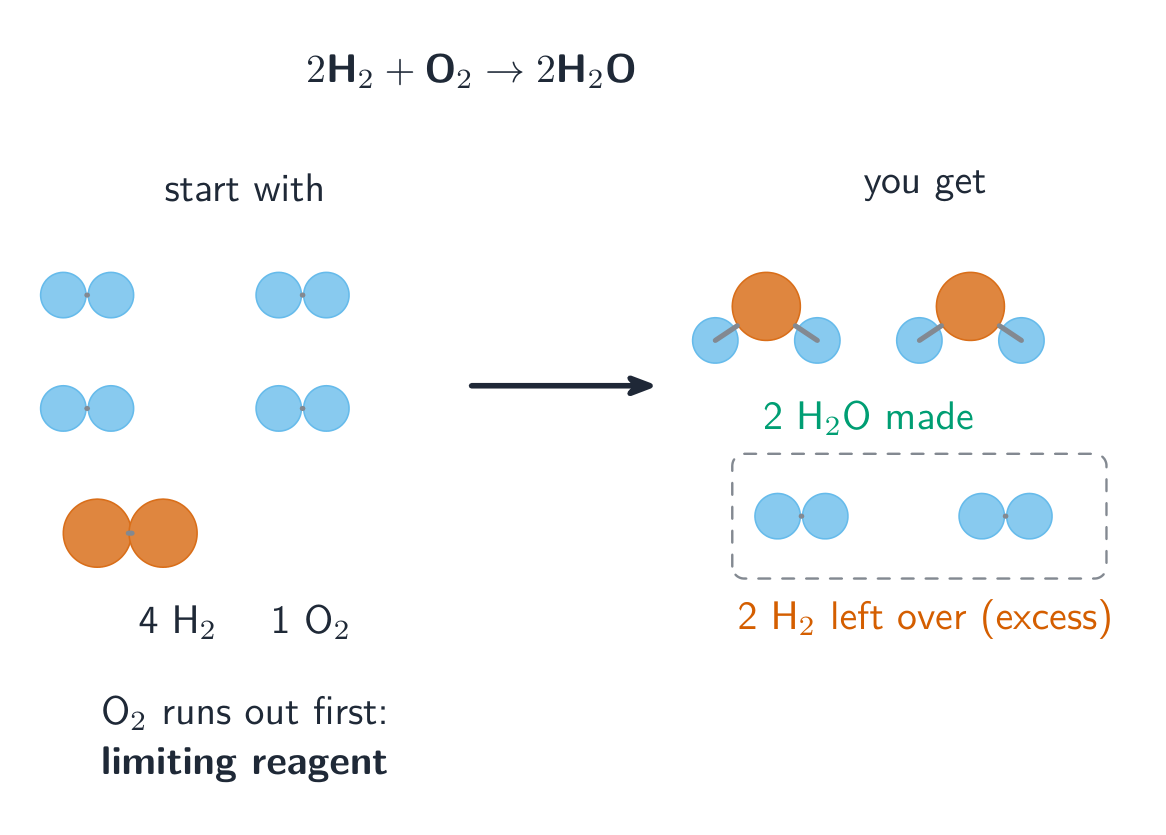
Stoichiometry 化学计量 uses the balanced equation's mole ratios to relate amounts of reactants and products. The path is always grams → moles → (mole ratio) → moles → grams. The limiting reactant 限量反应物 runs out first and sets the maximum product (the theoretical yield 理论产量); the percent yield compares actual to theoretical.

Worked example. How much water forms when $4.0\ \text{g}$ of hydrogen burns in excess oxygen? $2\text{H}_2+\text{O}_2\rightarrow2\text{H}_2\text{O}$. Convert to moles, cross the mole ratio ($2:2=1:1$ here), convert back:

$$n(\text{H}_2)=\frac{4.0}{2.0}=2.0\ \text{mol}\;\Rightarrow\;n(\text{H}_2\text{O})=2.0\ \text{mol}\;\Rightarrow\;m=2.0\times18=36\ \text{g}.$$

Worked example (limiting reactant). $10.0\ \text{g}$ of N$_2$ reacts with $5.0\ \text{g}$ of H$_2$ ($\text{N}_2+3\text{H}_2\rightarrow2\text{NH}_3$). Which runs out? Moles: $n(\text{N}_2)=10.0/28=0.36$, $n(\text{H}_2)=5.0/2=2.5$. The reaction needs $3$ H$_2$ per N$_2$; you have $2.5/0.36=7.0$, far more than $3$, so N$_2$ is limiting. It makes $2\times0.36=0.72\ \text{mol}$ of ammonia, with hydrogen left over.

ไทย

สโตइโควมิตรี ใช้อัตราส่วนโมลจากสมการที่สมดุลเพื่อเชื่อมโยงปริมาณของสารตั้งต้นและผลิตภัณฑ์ เส้นทางคือกรัม → โมล → (อัตราส่วนโมล) → โมล → กรัม สารตั้งต้นจำกัด หมดก่อนและกำหนดผลผลิตสูงสุด (ผลผลิตทฤษฎี); เปอร์เซ็นต์ผลผลิต เปรียบเทียบผลผลิตจริงต่อทฤษฎี

สารตั้งต้นจำกัดหมดก่อนและกำหนดปริมาณผลิตภัณฑ์ที่เกิดขึ้น

ตัวอย่างที่แสดงวิธีทำ. น้ำเกิด了多少เมื่อ $4.0\ \text{g}$ ของไฮโดรเจนเผาไหม้ในออกซิเจนเกิน? $2\text{H}_2+\text{O}_2\rightarrow2\text{H}_2\text{O}$. แปลงเป็นโมล, ข้ามอัตราส่วนโมล ($2:2=1:1$ ที่นี่), แปลงกลับ:

$$n(\text{H}_2)=\frac{4.0}{2.0}=2.0\ \text{mol}\;\Rightarrow\;n(\text{H}_2\text{O})=2.0\ \text{mol}\;\Rightarrow\;m=2.0\times18=36\ \text{g}.$$

ตัวอย่างที่แสดงวิธีทำ (สารตั้งต้นจำกัด). $10.0\ \text{g}$ ของ N$_2$ ทำปฏิกิริยากับ $5.0\ \text{g}$ ของ H$_2$ ($\text{N}_2+3\text{H}_2\rightarrow2\text{NH}_3$). ตัวไหนหมดก่อน? โมล: $n(\text{N}_2)=10.0/28=0.36$, $n(\text{H}_2)=5.0/2=2.5$. ปฏิกิริยาต้องการ $3$ H$_2$ ต่อ N$_2$; คุณมี $2.5/0.36=7.0$, มากกว่า $3$ มาก, ดังนั้น N$_2$ คือตัวจำกัด. มันสร้าง $2\times0.36=0.72\ \text{mol}$ ของแอมโมเนีย, พร้อมไฮโดรเจนเหลืออยู่

Explore · ⁨สำรวจ⁩

Scale reactants and products by the mole ratio · ⁨ปรับขนาดปฏิกิริยาตามอัตราส่วนโมล⁩

A balanced equation fixes the mole ratio between species. Product amount is proportional to the limiting reactant, scaled by that ratio. · ⁨สมการที่สมดุลกำหนด อัตราส่วนโมล ระหว่างสปีชีส์ ปริมาณผลิตภัณฑ์จะ แปรผันตรง กับสารจำกัด โดยคูณด้วยอัตราส่วนนั้น⁩

4.6

Introduction to Titration · ⁨บทนำเรื่องไทเทรชัน⁩

Syllabus · ⁨หลักสูตร⁩
English

Learning Objective 4.6.A: Identify the equivalence point in a titration based on the amounts of the titrant and analyte, assuming the titration reaction goes to completion.

  • 4.6.A.1 Titrations may be used to determine the amount of an analyte in solution. The titrant has a known concentration of a species that reacts specifically and quantitatively with the analyte. The equivalence point of the titration occurs when the analyte is totally consumed by the reacting species in the titrant. The equivalence point is often indicated by a change in a property (such as color) that occurs when the equivalence point is reached. This observable event is called the endpoint of the titration.
ไทย

วัตถุประสงค์การเรียนรู้ 4.6.A: ระบุจุดเสมอส่วนในการไทเทรชันโดยอ้างอิงจากปริมาณสารไทเทรนต์และสารวิเคราะห์ โดยสมมติว่าปฏิกิริยาไทเทรชันดำเนินไปจนสมบูรณ์

  • 4.6.A.1 การไทเทรตอาจใช้เพื่อหาปริมาณสารวิเคราะห์ในสารละลาย ทิตแรนต์มีความเข้มข้นที่ทราบของสปีชีส์ที่ทำปฏิกิริยาเฉพาะและตามปริมาณทางเคมีกับสารวิเคราะห์ จุดสมมูลของการไทเทรตเกิดขึ้นเมื่อสารวิเคราะห์ถูกสปีชีส์ทำปฏิกิริยาในทิตแรตบริโภครวมทั้งหมด จุดสมมูลมักแสดงด้วยการเปลี่ยนแปลงคุณสมบัติ (เช่น สี) ที่เกิดขึ้นเมื่อถึงจุดสมมูล เหตุการณ์ที่สังเกตได้นี้เรียกว่าจุดสิ้นสุดของการไทเทรต

Source: College Board AP Course and Exam Description · ⁨แหล่งที่มา: คำอธิบายหลักสูตรและข้อสอบ College Board AP⁩

English
An acid–base titration curve

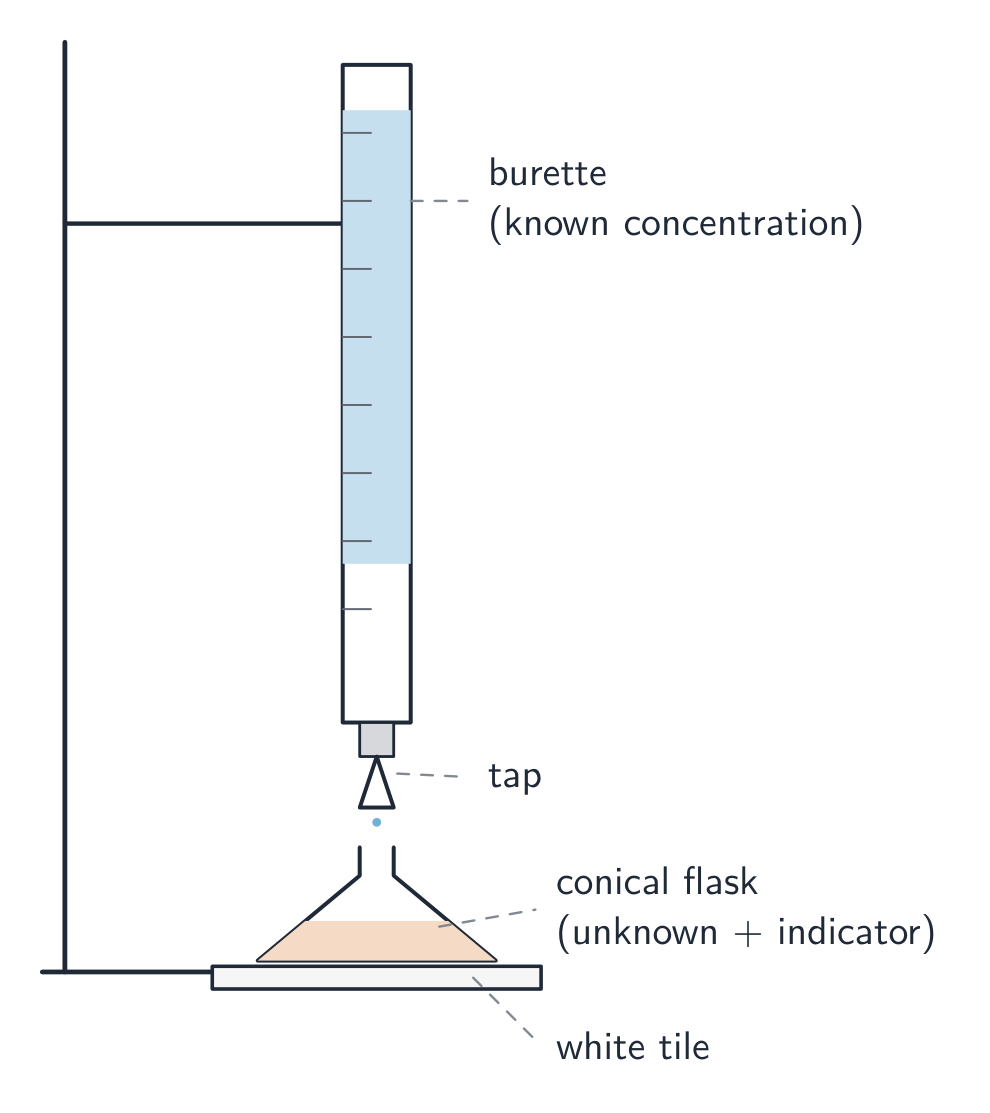
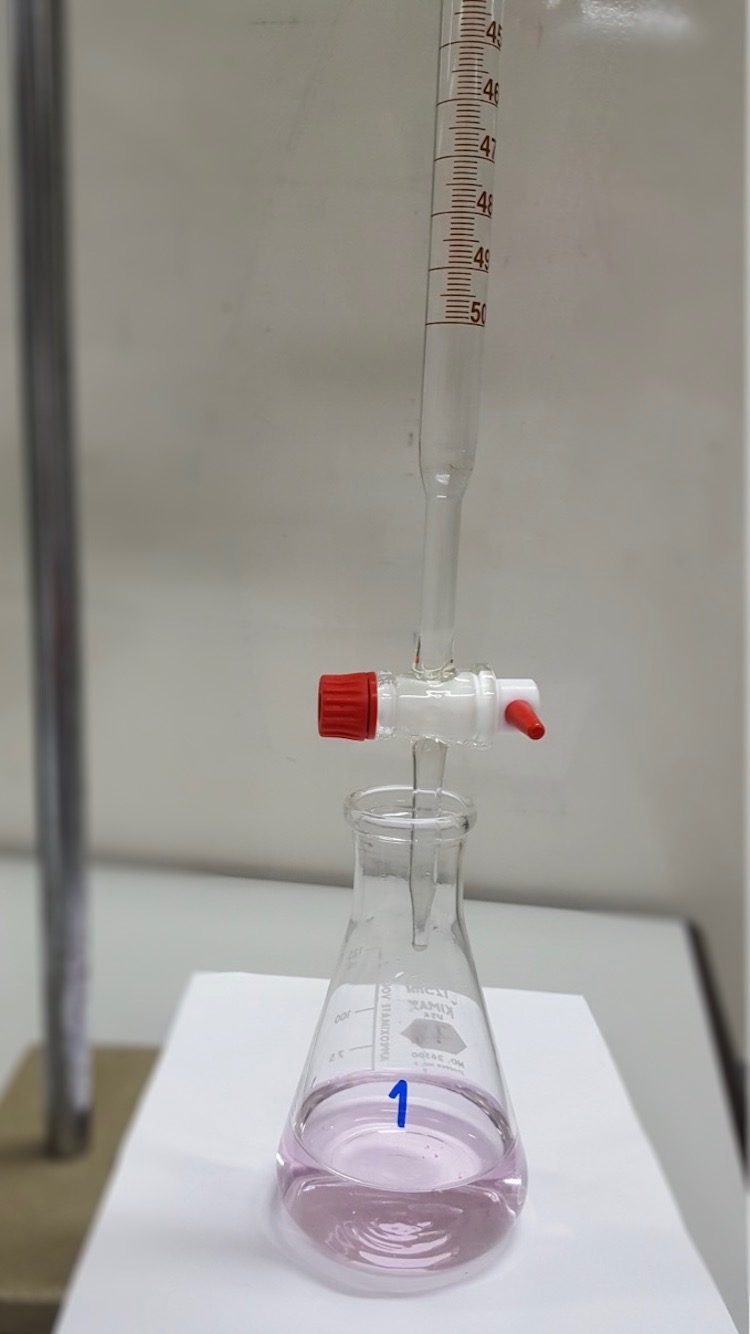
A titration 滴定 finds an unknown concentration by reacting it with a solution of known concentration until they reach the equivalence point 等当点 (stoichiometrically equal). From the known volume and concentration, use the mole ratio to find the unknown. An indicator or a pH curve signals the endpoint.

Worked example. $25.0\ \text{mL}$ of hydrochloric acid is exactly neutralized by $30.0\ \text{mL}$ of $0.100\ \text{M}$ NaOH. Find the acid's concentration. The reaction is $1:1$, so the moles match:

$$n(\text{NaOH})=0.0300\times0.100=3.00\times10^{-3}\ \text{mol}=n(\text{HCl}),\qquad [\text{HCl}]=\frac{3.00\times10^{-3}}{0.0250}=0.120\ \text{M}.$$

ไทย
กราฟไทเทรชันกรด-เบส

ไทเทรชัน หาความเข้มข้นที่ไม่ทราบโดยทำปฏิกิริยากับสารละลายที่มีความเข้มข้น已知จนกระทั่งถึง จุดสมมูล (สมมูลเชิงสโตइโควมิตรี) จากปริมาตรและความ浓度 known, ใช้อัตราส่วนโมลเพื่อหาสิ่งที่ไม่รู้ อินดิเคเตอร์ หรือกราฟ pH บ่งบอกจุดสิ้นสุด

อุปกรณ์ไทเทรต: บิวเรตต์จ่ายสารละลาย Known เข้าไปในกระบอกพารอน
อุปกรณ์ไทเทรชัน: burette ส่งสารละลาย known เข้า锥形 flask

ตัวอย่างที่แสดงวิธีทำ. $25.0\ \text{mL}$ ของกรดไฮโดรคลอริกถูกทำให้เป็นกลางโดย $30.0\ \text{mL}$ ของ $0.100\ \text{M}$ NaOH อย่างสมบูรณ์. หาความเข้มข้นของกรด. ปฏิกิริยานี้คือ $1:1$, ดังนั้นโมลตรงกัน:

$$n(\text{NaOH})=0.0300\times0.100=3.00\times10^{-3}\ \text{mol}=n(\text{HCl}),\qquad [\text{HCl}]=\frac{3.00\times10^{-3}}{0.0250}=0.120\ \text{M}.$$

-setup ไทเทรชัน: ปริมาตรที่ทำปฏิกิริยาจาก burette หาความเข้มข้นของสารละลายที่ไม่รู้
setup ไทเทรชัน: ปริมาตรที่ทำปฏิกิริยาจาก burette หาความเข้มข้นของสารละลายที่ไม่รู้
Explore · ⁨สำรวจ⁩

Titrate an acid and find the equivalence point · ⁨ทำปฏิกิริยาไทเทรตกรดเพื่อหาจุดสมมูล⁩

Adding base to acid raises the pH slowly, then sharply at the equivalence point where moles of acid and base are equal. The steep jump locates that volume. · ⁨การเติมเบสลงในกรดจะทำให้ pH ค่อยๆ เพิ่มขึ้น แล้วพุ่งสูงขึ้นอย่างรวดเร็วที่ จุดสมมูล ซึ่งโมลของกรดและเบสเท่ากัน จุดกระโดดชันนี้จะบอกปริมาตรที่ต้องการ⁩

Vocabulary · ⁨คำศัพท์⁩ Train · ⁨ฝึกฝน⁩
English ไทย
titration/taɪˈtreɪʃn/ การไทเทรต
4.7

Types of Chemical Reactions · ⁨ประเภทของปฏิกิริยาเคมี⁩

Syllabus · ⁨หลักสูตร⁩
English

Learning Objective 4.7.A: Identify a reaction as acid-base, oxidation-reduction, or precipitation.

  • 4.7.A.1 Acid-base reactions involve transfer of one or more protons ($\text{H}^+$ ions) between chemical species.
  • 4.7.A.2 Oxidation-reduction (redox) reactions involve transfer of one or more electrons between chemical species, as indicated by changes in oxidation numbers of the involved species. Combustion is an important subclass of oxidation-reduction reactions, in which a species reacts with oxygen gas. In the case of hydrocarbons, carbon dioxide and water are products of complete combustion.
  • 4.7.A.3 In a redox reaction, electrons are transferred from the species that is oxidized to the species that is reduced.
    • Exclusion statement: The meaning of the terms "reducing agent" and "oxidizing agent" will not be assessed on the AP Exam.
  • 4.7.A.4 Oxidation numbers may be assigned to each of the atoms in the reactants and products; this is often an effective way to identify the oxidized and reduced species in a redox reaction.
  • 4.7.A.5 Precipitation reactions frequently involve mixing ions in aqueous solution to produce an insoluble or sparingly soluble ionic compound. All sodium, potassium, ammonium, and nitrate salts are soluble in water.
    • Exclusion statement: Rote memorization of "solubility rules" other than those implied in 4.7.A.5 will not be assessed on the AP Exam.
ไทย

วัตถุประสงค์การเรียนรู้ 4.7.A: ระบุปฏิกิริยาว่าเป็นปฏิกิริยาระหว่างกรด-เบส, การออกซิเดชัน-รีดักชัน หรือการตกตะกอน

  • 4.7.A.1 ปฏิกิริยาระหว่างกรด-เบสเกี่ยวข้องกับการถ่ายโอนโปรตอนหนึ่งหรือมากกว่า (ไอออน $\text{H}^+$) ระหว่างสปีชีส์เคมี
  • 4.7.A.2 ปฏิกิริยาออกซิเดชัน-รีดักชัน (เรด็อกซ์) เกี่ยวข้องกับการถ่ายโอนอิเล็กตรอนหนึ่งหรือมากกว่าระหว่างสปีชีส์เคมี ซึ่งแสดงด้วยการเปลี่ยนเลขออกซิเดชันของสปีชีส์ที่เกี่ยวข้อง การเผาไหม้เป็นกลุ่มย่อยที่สำคัญของปฏิกิริยาออกซิเดชัน-รีดักชัน ในซึ่งสปีชีส์หนึ่งทำปฏิกิริยากับแก๊สออกซิเจน ในกรณีของไฮโดรคาร์บอน คาร์บอนไดออกไซด์และน้ำคือผลิตภัณฑ์จากการเผาไหม้อย่างสมบูรณ์
  • 4.7.A.3 ในปฏิกิริยาเรด็อกซ์ อิเล็กตรอนจะถูกถ่ายโอนจากสปีชีส์ที่ถูกออกซิเดชันไปยังสปีชีส์ที่ถูกรีดิวซ์
    • ข้อความยกเว้น: ความหมายของคำศัพท์ "ตัวลด" และ "ตัวออกซิไดซ์" จะไม่ถูกทดสอบในการสอบ AP
  • 4.7.A.4 เลขออกซิเดชันสามารถกำหนดให้กับอะตอมแต่ละตัวของสารตั้งต้นและผลิตภัณฑ์; นี่มักเป็นวิธีที่มีประสิทธิภาพในการระบุสปีชีส์ที่ถูกออกซิเดชันและรีดิวซ์ในปฏิกิริยาเรด็อกซ์
  • 4.7.A.5 ปฏิกิริยาการตกตะกอนมักเกี่ยวข้องกับการผสมไอออนในสารละลายน้ำเพื่อผลิต_compound_ไอออนที่ไม่ละลายหรือละลายได้เล็กน้อย เกลือของโซเดียม โพแทสเซียม แอมโมเนียม และไนเตรตทั้งหมดละลายในน้ำ
    • ข้อความยกเว้น: การท่องจำ "กฎความละลาย" อื่นๆ นอกเหนือจากที่บ่งชี้ใน 4.7.A.5 จะไม่ถูกทดสอบในการสอบ AP

Source: College Board AP Course and Exam Description · ⁨แหล่งที่มา: คำอธิบายหลักสูตรและข้อสอบ College Board AP⁩

English

Common patterns include synthesis (combining), decomposition (breaking apart), combustion (with oxygen, releasing energy), precipitation (forming an insoluble solid), acid–base (proton transfer), and redox (electron transfer). Recognizing the type helps predict the products.

ไทย

รูปแบบทั่วไปรวมถึง สังเคราะห์ (การรวมตัว), การสลายตัว (การแตกหัก), การเผาไหม้ (กับออกซิเจน, ปล่อยพลังงาน), การตกตะกอน (การสร้างของแข็งไม่ละลาย), กรด-เบส (การถ่ายโอนโปรตอน), และ รีดอกซ์ (การถ่ายโอนอิเล็กตรอน) การระบุประเภทช่วยทำนายผลิตภัณฑ์

4.8

Acid-Base Reactions · ⁨ปฏิกิริยากรด-เบส⁩

Syllabus · ⁨หลักสูตร⁩
English

Learning Objective 4.8.A: Identify species as Brønsted-Lowry acids, bases, and/or conjugate acid-base pairs, based on proton-transfer involving those species.

  • 4.8.A.1 By definition, a Brønsted-Lowry acid is a proton donor and a Brønsted-Lowry base is a proton acceptor.
  • 4.8.A.2 Only in aqueous solutions, water plays an important role in many acid-base reactions, as its molecular structure allows it to accept protons from and donate protons to dissolved species.
  • 4.8.A.3 When an acid or base ionizes in water, the conjugate acid-base pairs can be identified and their relative strengths compared.
    • Exclusion statement: Lewis acid-base concepts will not be assessed on the AP Exam. The emphasis in AP Chemistry is on reactions in aqueous solution.
ไทย

วัตถุประสงค์การเรียนรู้ 4.8.A: ระบุสปีชีส์เป็นกรดเบรอนสเตด-โลว์รี เบสเบรอนสเตด-โลว์รี และ/หรือคู่กรด-เบสคอนจูเกต โดยอาศัยการถ่ายโอนโปรตอนที่เกี่ยวข้องกับสปีชีส์เหล่านั้น

  • 4.8.A.1 ตามนิยาม กรดเบรอนสเตด-โลว์รีคือผู้ให้โปรตอน และเบสเบรอนสเตด-โลว์รีคือผู้รับโปรตอน
  • 4.8.A.2 เฉพาะในสารละลายน้ำ น้ำจึงมีบทบาทสำคัญในปฏิกิริยาระหว่างกรด-เบสหลายชนิด เนื่องจากโครงสร้างโมเลกุลของมันอนุญาตให้รับโปรตอนจากและให้โปรตอนแก่สปีชีส์ที่ละลายอยู่
  • 4.8.A.3 เมื่อกรดหรือเบสแตกตัวในน้ำ คู่กรด-เบสคอนจูเกตสามารถระบุได้และเปรียบเทียบความเข้มสัมพัทธ์ของพวกมัน
    • ข้อความยกเว้น: แนวคิดกรด-เบสลิวอิสจะไม่ถูกทดสอบในการสอบ AP การเน้นในเคมิสตรี AP คือปฏิกิริยาในสารละลายน้ำ

Source: College Board AP Course and Exam Description · ⁨แหล่งที่มา: คำอธิบายหลักสูตรและข้อสอบ College Board AP⁩

English

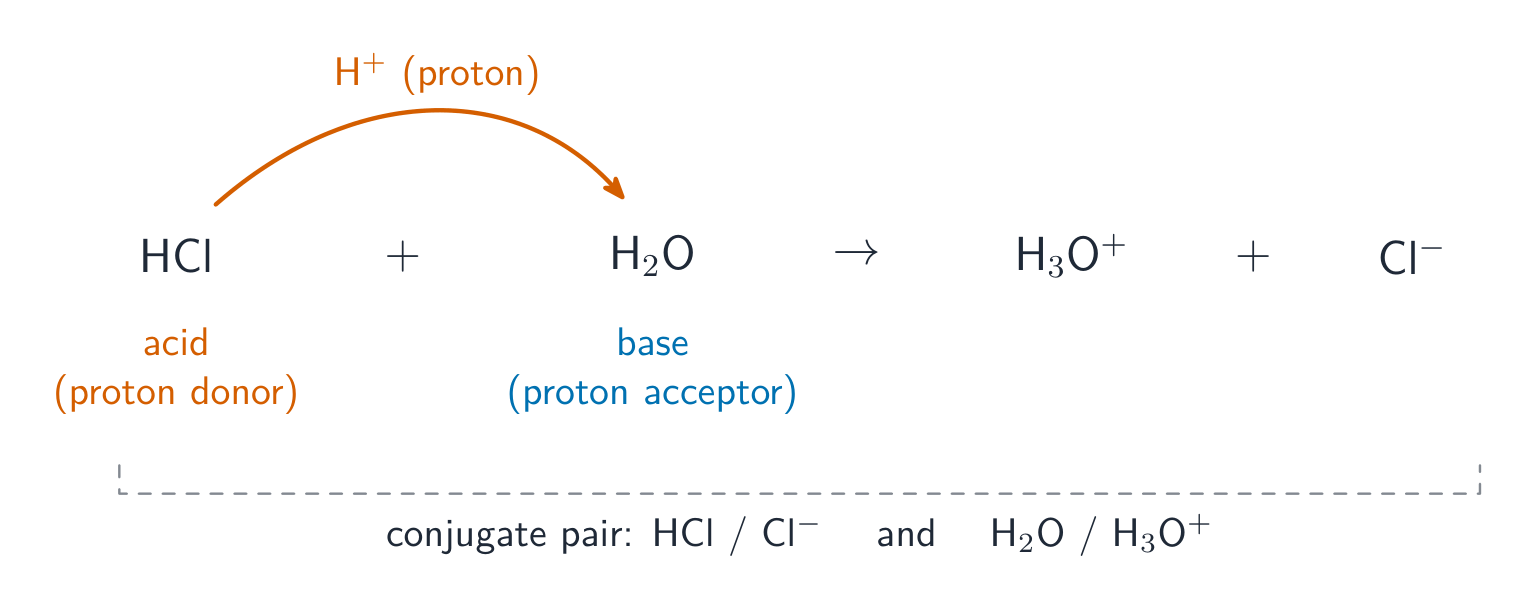
An acid 酸 donates a proton ($\text{H}^+$); a base 碱 accepts one (Brønsted–Lowry). They react to form water and a salt: $\text{H}^+ + \text{OH}^- \rightarrow \text{H}_2\text{O}$. Strong acids and bases dissociate completely; weak ones only partly.

ไทย

กรด donate โปรตอน ($\text{H}^+$); เบส accept一个 (Brønsted–Lowry). พวกมันทำปฏิกิริยาสร้างน้ำและเกลือ: $\text{H}^+ + \text{OH}^- \rightarrow \text{H}_2\text{O}$. กรดและเบสแรง dissociate ทั้งหมด; อ่อนๆ ทำเพียงบางส่วน

บรอนสเตด-โลว์รี: กรดมอบโปรตอนให้เบส เกิดคู่กรด-เบสคู่ควบสองชุด
Explore · ⁨สำรวจ⁩

Move along the pH scale · ⁨เคลื่อนที่ไปตามสเกล pH⁩

pH measures how acidic or basic a solution is. Each step of 1 pH is a tenfold change in hydrogen-ion concentration; 7 is neutral, below is acidic, above is basic. · ⁨pH บ่งบอกความเป็นกรดหรือเบสของสารละลาย Each step of 1 pH is a tenfold change in hydrogen-ion concentration; 7 is neutral, below is acidic, above is basic.⁩

4.9

Oxidation-Reduction (Redox) Reactions · ⁨ปฏิกิริยาออกซิเดชัน-รีดักชัน (Redox)⁩

Syllabus · ⁨หลักสูตร⁩
English

Learning Objective 4.9.A: Represent a balanced redox reaction equation using half-reactions.

  • 4.9.A.1 Balanced chemical equations for redox reactions can be constructed from half-reactions.
ไทย

วัตถุประสงค์การเรียนรู้ 4.9.A: เขียนสมการปฏิกิริยาเรด็อกซ์ที่สมดุลโดยใช้ครึ่งปฏิกิริยา

  • 4.9.A.1 สมการเคมีที่สมดุลสำหรับปฏิกิริยาเรด็อกซ์สามารถสร้างได้จากครึ่งปฏิกิริยา

Source: College Board AP Course and Exam Description · ⁨แหล่งที่มา: คำอธิบายหลักสูตรและข้อสอบ College Board AP⁩

English

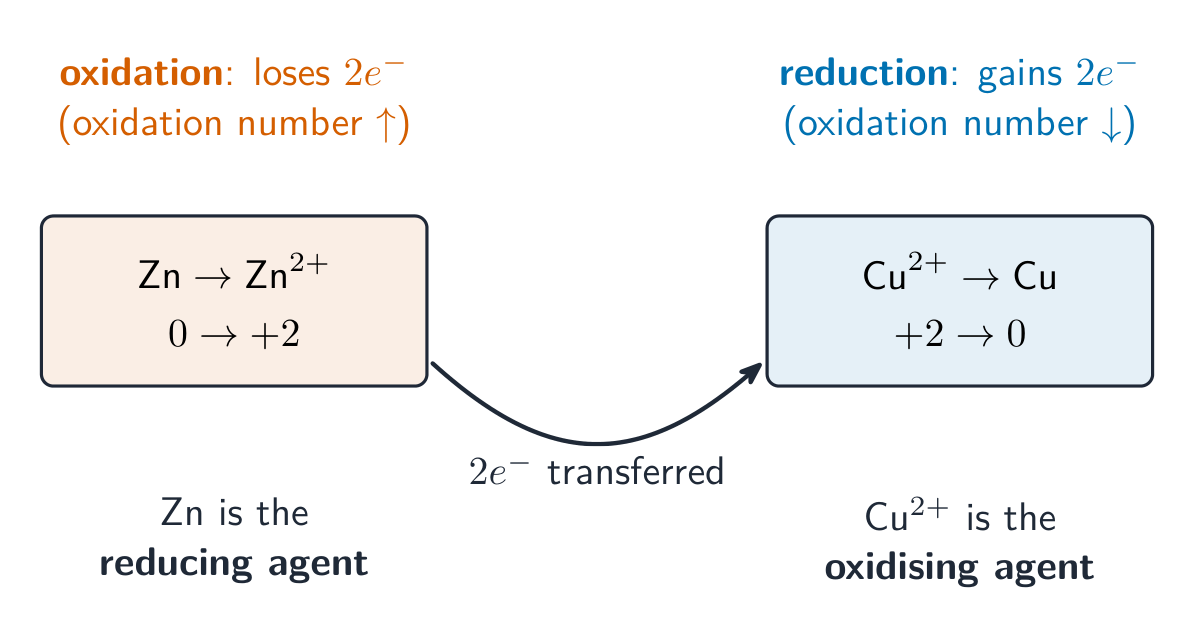
In a redox 氧化还原 reaction, electrons transfer between species. Oxidation 氧化 is loss of electrons (oxidation number rises); reduction 还原 is gain (oxidation number falls). Track changes with oxidation numbers, and remember every oxidation is paired with a reduction – the electrons lost equal the electrons gained.

Worked example. Find the oxidation number of manganese in permanganate, $\text{KMnO}_4$. Potassium is $+1$ and each oxygen is $-2$ (four of them, $-8$). The whole formula is neutral, so $(+1)+\text{Mn}+(-8)=0$, giving $\text{Mn}=+7$ – its maximum, which is why permanganate is a powerful oxidizing agent (it can only gain electrons).

ไทย

ใน redox reaction, อิเล็กตรอน transfer ระหว่าง species. Oxidation คือ loss of electrons (oxidation number rises); reduction คือ gain (oxidation number falls). ติดตามการเปลี่ยนแปลงด้วย numbers ออกซิเดชัน, และจำไว้ว่าทุก oxidation จะคู่กับ reduction – อิเล็กตรอนที่เสียเท่ากับอิเล็กตรอนที่ได้รับ

Redox คือ electron transfer: reducing agent ถูก oxidised, oxidising agent Reduced
Redox คือ electron transfer: reducing agent ถูก oxidise, oxidising agent Reduced

ตัวอย่างวิธีทำ. หาเลขออกซิเดชันของแมงกานีสในเพอร์แมงกาเนต, $\text{KMnO}_4$. โพแทสเซียมมีค่า $+1$ และออกซิเจนแต่ละตัวมีค่า $-2$ (สี่ตัว รวมเป็น $-8$). สูตรทั้งหมดเป็นกลาง电荷 ดังนั้น $(+1)+\text{Mn}+(-8)=0$ ซึ่งได้ $\text{Mn}=+7$ – ซึ่งเป็นค่าสูงสุด ดังนั้นเพอร์แมงกาเนตจึงเป็นสารออกซิไดซ์ที่แรง (เพราะรับอิเล็กตรอนได้เพียงอย่างเดียว)

Explore · ⁨สำรวจ⁩

Watch electrons transfer in a redox reaction · ⁨ดูการถ่ายโอนอิเล็กตรอนในปฏิกิริยารีดอกซ์⁩

In a redox reaction one species is oxidised (loses electrons) and another is reduced (gains them). Follow the electrons move from the metal to the non-metal. · ⁨ใน ปฏิกิริยารีดอกซ์ สปีชีส์หนึ่งจะถูก ออกซิไดซ์ (เสียelectrons) และอีกสปีชีส์จะถูก รีดิวซ์ (รับelectrons) ติดตามการเคลื่อนย้ายของelectrons จากโลหะไปยัง非金属⁩

Vocabulary · ⁨คำศัพท์⁩ Train · ⁨ฝึกฝน⁩
English ไทย
redox/rɪˈdɒks/ รีด็อกซ์
Oxidation/ˌɒksɪˈdeɪʃn/ การออกซิเดชัน
reduction/rɪˈdʌkʃn/ การลดรูป (reduction)
4.9

Exam tips · ⁨ข้อแนะนำสำหรับการสอบ⁩

English
  • Balance every equation and work in moles — convert grams→moles, cross the mole ratio, then convert back.
  • Find the limiting reactant by comparing mole ratios; it sets the maximum product (theoretical yield).
  • In redox, remember OIL RIG: oxidation is loss of electrons, reduction is gain; every oxidation is paired with a reduction.
  • For titrations use the balanced ratio to link the known and unknown at the equivalence point.
  • A net ionic equation shows only the species that change; leave out spectator ions.
ไทย
  • จัดสมการให้สมดุลและคำนวณเป็น โมล — แปลงกรัม→โมล ใช้อัตราส่วนโมล แล้วแปลงกลับ
  • หา สารจำกัดปฏิกิริยา โดยเปรียบเทียบอัตราส่วนโมล;它会กำหนดปริมาณผลิตภัณฑ์สูงสุด (ผลผลิตทางทฤษฎี)
  • ในปฏิกิริยารีดอกซ์ จำไว้ว่า OIL RIG: Oxidation คือ Loss of electrons (การสูญเสียอิเล็กตรอน), Reduction คือ Gain (การได้รับ); ทุกการออกซิเดชันจะคู่กับการรีดักชันเสมอ
  • สำหรับงานไทเทรต ใช้สัดส่วนที่สมดุลเพื่อเชื่อมโยงสารที่ทราบและไม่ทราบกันที่ จุดสมมูล (equivalence point)
  • สมการไอออนสุทธิ (net ionic equation) แสดงเฉพาะสปีชีส์ที่เกิดการเปลี่ยนแปลง saja; ทิ้งไอออนผู้ชม (spectator ions) ออกไป
Vocabulary · ⁨คำศัพท์⁩ Train · ⁨ฝึกฝน⁩
English ไทย
chemical reaction/ˈkemɪkl rɪˈækʃn/ ปฏิกิริยาเคมี
precipitate/prɪˈsɪpɪteɪt/ ตะกอน
net ionic equation/net aɪˈɒnɪk ɪˈkweɪʒn/ สมการไอออนสุทธิ
spectator ions/spekˈteɪtə ˈaɪɒnz/ ไอออนผู้ชม
physical change/ˈfɪzɪkl tʃeɪndʒ/ การเปลี่ยนแปลงทางกายภาพ
chemical change/ˈkemɪkl tʃeɪndʒ/ การเปลี่ยนแปลงทางเคมี
Stoichiometry/ˌstəʊɪkɪˈɒmətri/ สโตइโอเมทรี
limiting reactant/ˈlɪmɪtɪŋ rɪˈæktənt/ สารตั้งต้นจำกัดปริมาณ
theoretical yield/θɪəˈretɪkl jiːld/ ผลผลิตตามทฤษฎี
equivalence point/ɪˈkwɪvələns pɔɪnt/ จุดสมมูล
acid/ˈæsɪd/ กรด (acid)
base/beɪs/ ฐาน

Interactive lessons on this topic · ⁨บทเรียนเชิงโต้ตอบสำหรับหัวข้อนี้⁩

Work through it step by step, with instant-check exercises. · ⁨ทำทีละขั้นตอน พร้อมแบบฝึกหัดตรวจสอบผลทันที⁩

Past Papers · ⁨ข้อสอบย้อนหลัง⁩

More topics in AP Chemistry · ⁨หัวข้อเพิ่มเติมใน AP Chemistry⁩

Log in or create account · ⁨เข้าสู่ระบบหรือสร้างบัญชี⁩

IGCSE, A-Level & AP