English
Big Idea 2 — Energetics: Biological systems use energy and molecular building blocks to grow, reproduce, and maintain dynamic homeostasis.
Learning Objective 3.1.A: Explain how enzymes affect the rate of biological reactions.
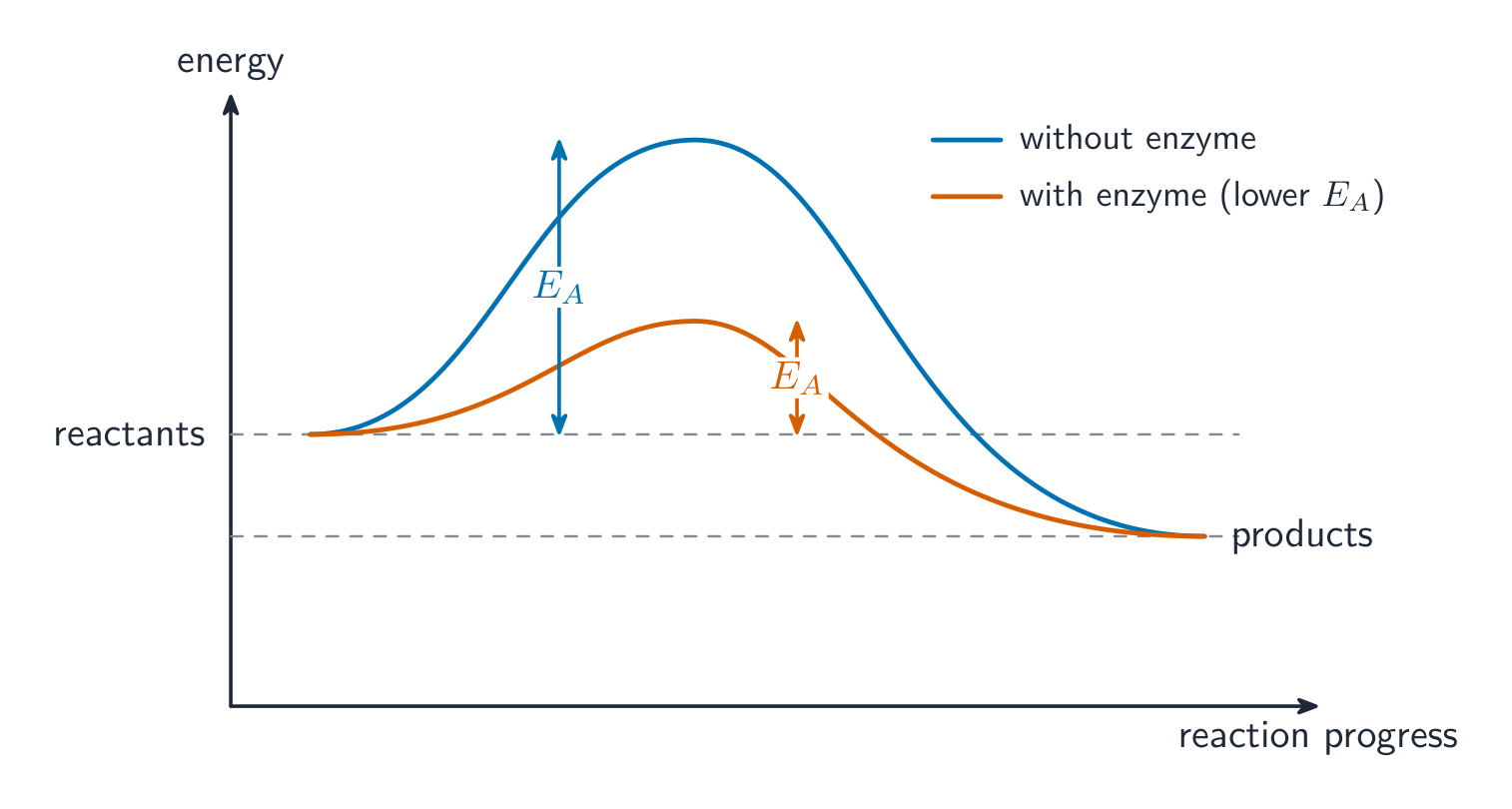
- 3.1.A.1 The structure and function of enzymes contribute to the regulation of biological processes. Enzymes are proteins that are biological catalysts that facilitate chemical reactions in cells by lowering the activation energy.
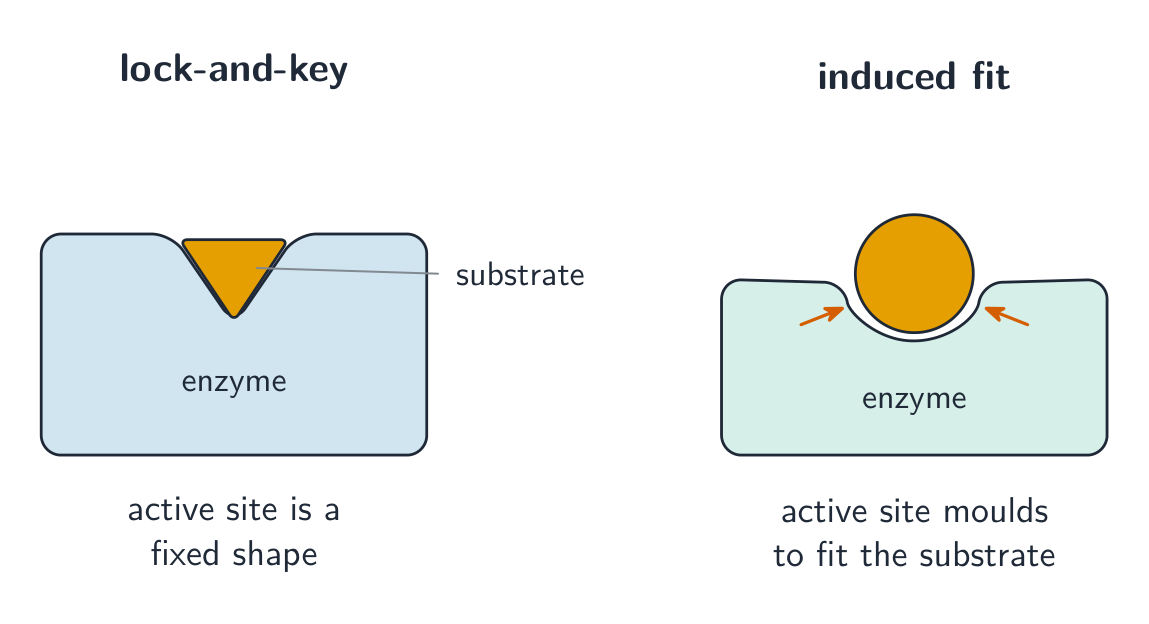
- 3.1.A.2 For an enzyme-mediated chemical reaction to occur, the shape and charge of the substrate must be compatible with the active site of the enzyme. This is illustrated by the enzyme-substrate complex model.
ไทย
แนวคิดหลัก 2 — พลังงาน: ระบบชีวภาพใช้พลังงานและหน่วยสร้างโมเลกุลเพื่อการเจริญเติบโต การสืบพันธุ์ และการรักษาสมดุลภายในแบบไดนามิก
จุดประสงค์การเรียนรู้ 3.1.A: อธิบายว่าเอนไซม์มีผลต่ออัตราการเกิดปฏิกิริยาทางชีวภาพอย่างไร
- 3.1.A.1 โครงสร้างและหน้าที่ของเอนไซม์มีส่วนช่วยในการควบคุมกระบวนการทางชีวภาพ เอนไซม์เป็นโปรตีนที่ทำหน้าที่เป็นตัวเร่งปฏิกิริยาทางชีวภาพ โดยช่วยเร่งปฏิกิริยาเคมีในเซลล์ด้วยการลดพลังงานก่อกวน (activation energy)
- 3.1.A.2 เพื่อให้เกิดปฏิกิริยาเคมีที่ขับเคลื่อนด้วยเอนไซม์ รูปร่างและประจุของสารตั้งต้นต้องเข้ากันได้กับตำแหน่งทำงานของเอนไซม์ สิ่งนี้แสดงด้วยแบบจำลองคอมเพล็กซ์เอนไซม์-สารตั้งต้น