| Big Idea | Learning Objective | Essential Knowledge |
|---|---|---|
Big Idea 3 — Information Storage and Transmission | 6.1.A |
|
6.1.B |
|
Gene Expression and Regulation
AP Biology · Topic 6
 8:40
8:40
Gene Expression and Regulation
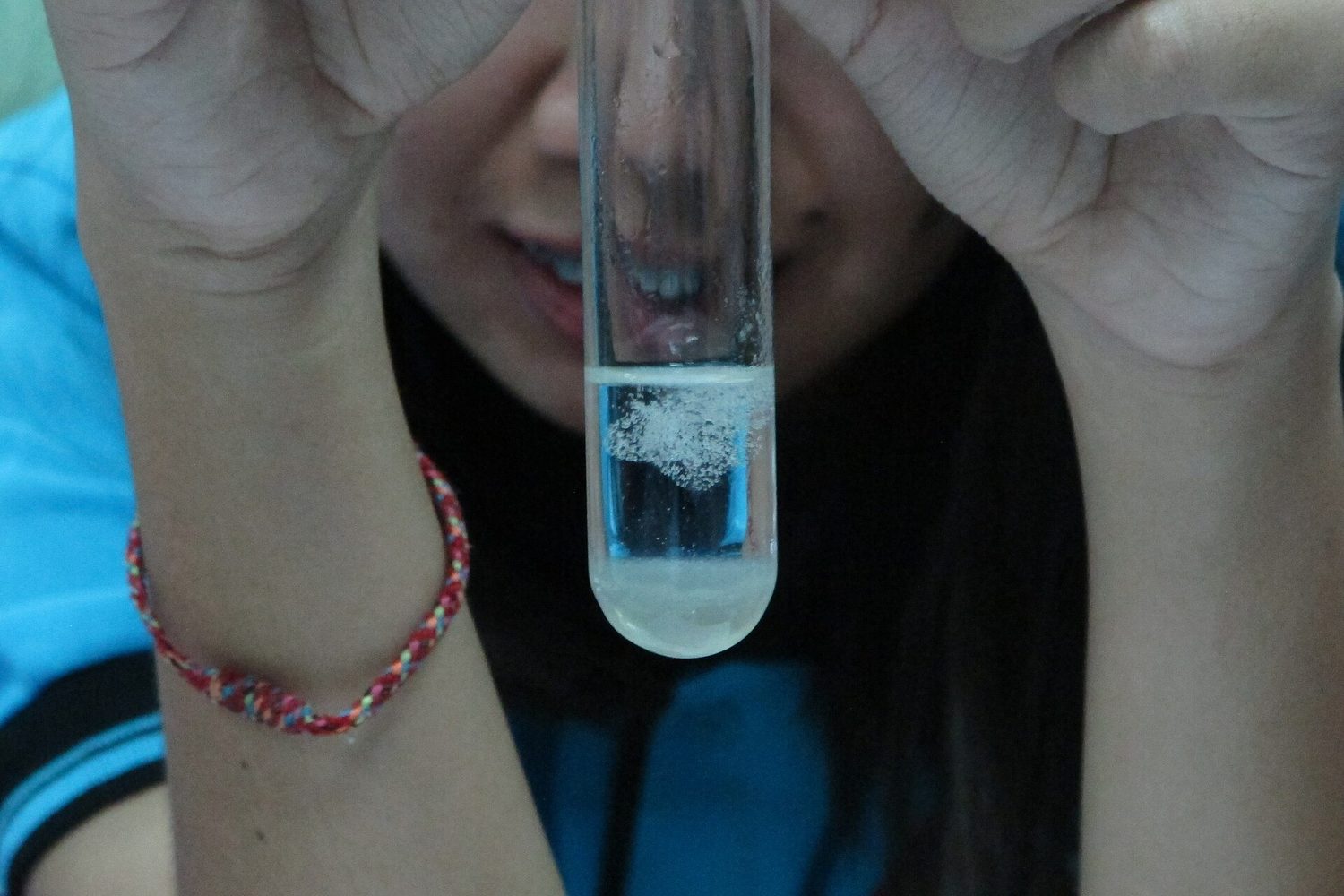
That white thread in the tube is real DNA, pulled out of ordinary cells. It looks like nothing at all. But it holds every instruction your body will ever need.…
English narration · English + 中文 subtitles burned in
6.1
DNA and RNA Structure
Syllabus
Source: College Board AP Course and Exam Description
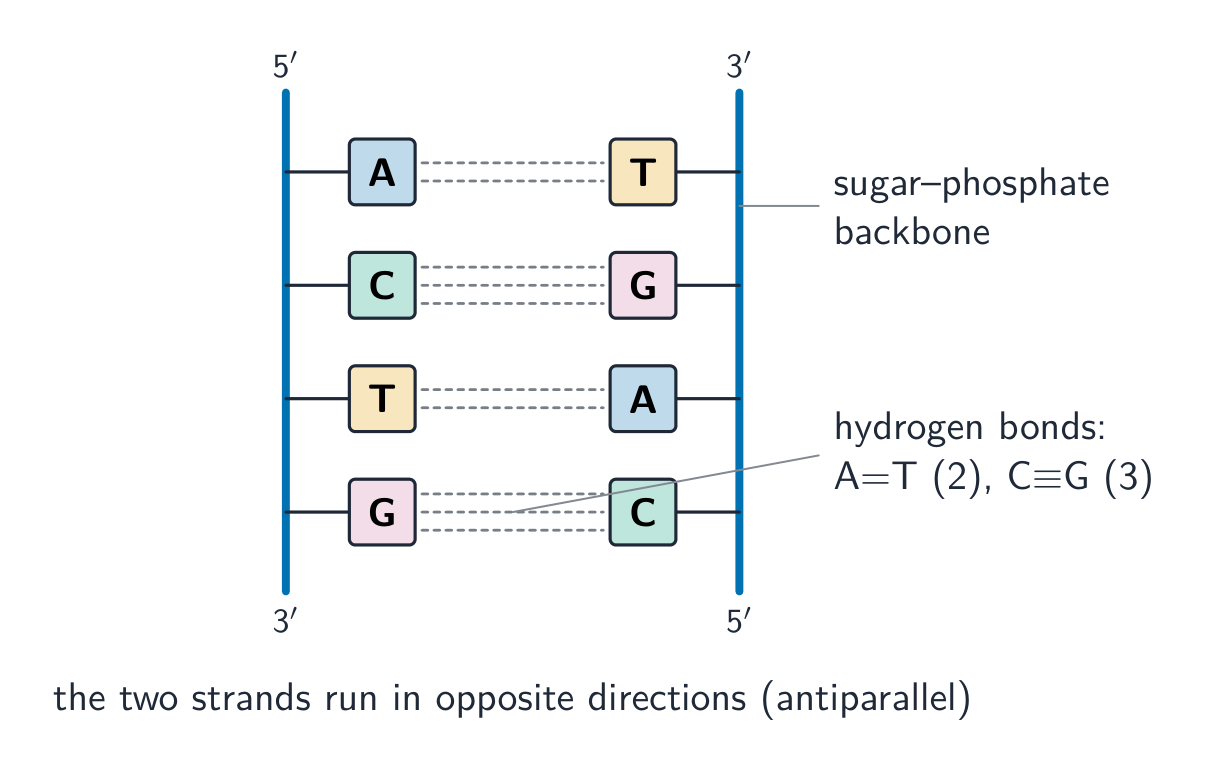
DNA carries genetic information as a double helix 双螺旋 of two strands. Its nucleotides 核苷酸 pair by rule – A with T, G with C (complementary base pairing 互补配对) – so one strand specifies the other. The strands run antiparallel 反平行. RNA is single-stranded, uses uracil (U) instead of thymine, and has ribose sugar.
How the DNA is packaged differs between the domains, and the CED asks for both.
- Prokaryotic organisms typically have a single circular chromosome 环状染色体 in the cytoplasm, often with extra small circles called plasmids.
- Eukaryotic organisms typically have multiple linear chromosomes 线性染色体, and each is condensed by wrapping around proteins called histones 组蛋白. That packing is what fits two metres of DNA into a nucleus a few micrometres across — and because a tightly wound region is hard for the transcription machinery to reach, the packing is itself a level of gene regulation.
Vocabulary
Train
| English |
|---|
| double helix/ˈdʌbl ˈhiːlɪks/ |
| nucleotides/ˈnjuːklɪɒtaɪdz/ |
| complementary base pairing/ˌkɒmplɪˈmentəri beɪs ˈpeərɪŋ/ |
| antiparallel/ˌæntɪˈpærəlel/ |
| single circular chromosome/ˈsɪŋɡl ˈsɜːkjʊlə ˈkrəʊməsəʊm/ |
| multiple linear chromosomes/ˈmʌltɪpl ˈlɪnɪə ˈkrəʊməsəʊmz/ |
| histones |
6.2
DNA Replication
Syllabus
| Big Idea | Learning Objective | Essential Knowledge |
|---|---|---|
Big Idea 3 — Information Storage and Transmission | 6.2.A |
|
Source: College Board AP Course and Exam Description
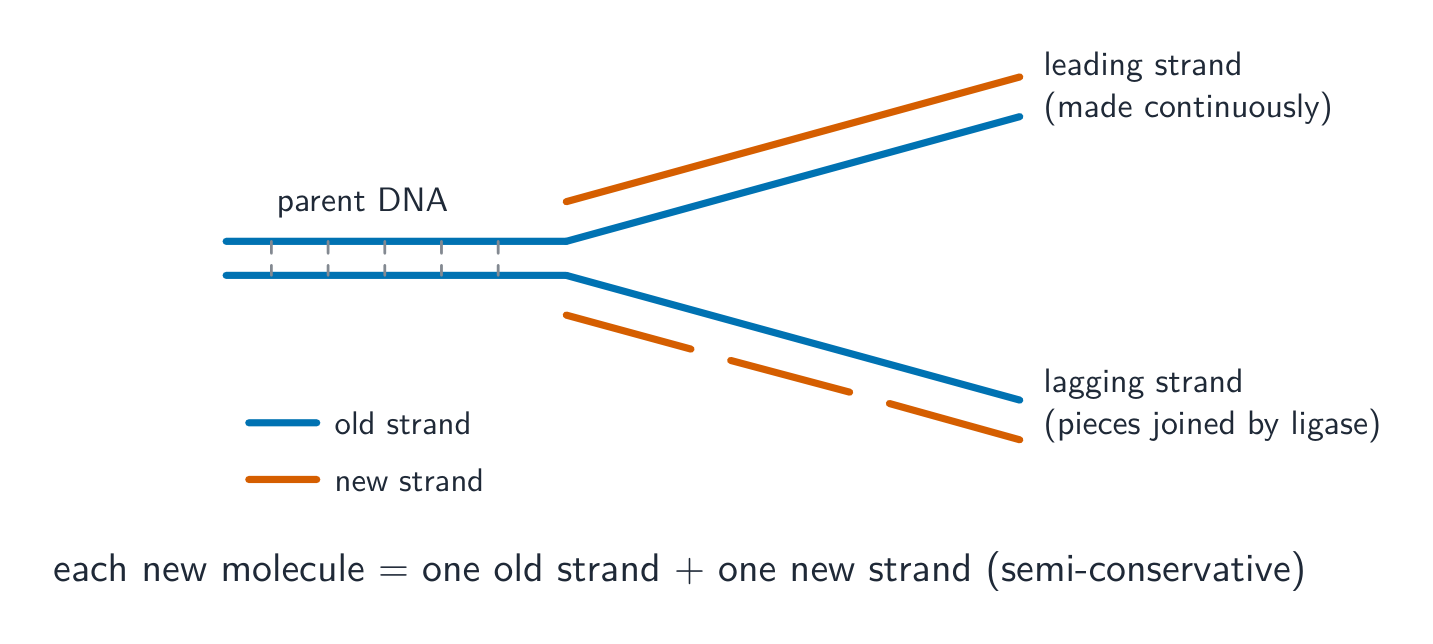
Before a cell divides, DNA is copied semiconservatively 半保留复制: the helix unwinds and each old strand templates a new one, so each daughter helix has one old and one new strand. DNA polymerase 聚合酶 adds nucleotides following base-pairing rules, building the new strand and proofreading as it goes.
Vocabulary
Train
| English |
|---|
| semiconservatively/ˌsemɪkənˈsɜːvətɪvli/ |
| DNA polymerase/ˌdiː en ˈeɪ ˌpɒlɪməˈreɪz/ |
6.3
Transcription and RNA Processing
Syllabus
| Big Idea | Learning Objective | Essential Knowledge |
|---|---|---|
Big Idea 3 — Information Storage and Transmission | 6.3.A |
|
Source: College Board AP Course and Exam Description
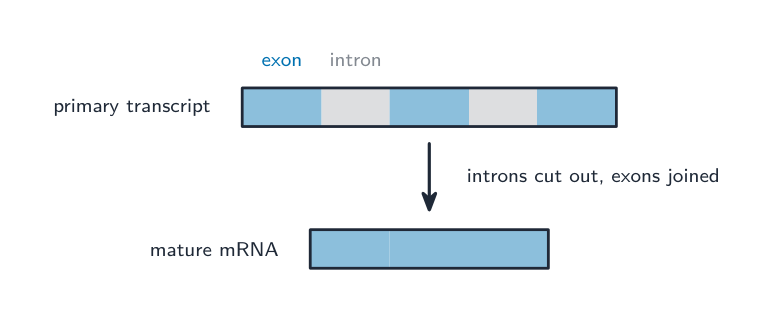
Transcription 转录 copies a gene's DNA into messenger RNA 信使RNA (mRNA). RNA polymerase reads the template strand and builds a complementary RNA. In eukaryotes the mRNA is then processed: a cap and tail are added, and introns 内含子 (non-coding parts) are spliced out, leaving the exons 外显子.
The 5′ cap added during processing is a modified guanine nucleotide — a GTP cap — and its job is recognition: it helps the ribosome recognise and bind the mRNA, as well as protecting the transcript from degradation as it leaves the nucleus.
Explore
Transcribe DNA into messenger RNA
Transcription copies a DNA template into mRNA, pairing A→U, T→A, C→G, G→C. Step through to build the RNA strand base by base.
Vocabulary
Train
| English |
|---|
| Transcription/trænˈskrɪpʃn/ |
| messenger RNA/ˈmesɪndʒə ˌɑː en ˈeɪ/ |
| introns/ɪnˈtrɒnz/ |
| exons/eɡˈzɒnz/ |
6.4
Translation
Syllabus
| Big Idea | Learning Objective | Essential Knowledge |
|---|---|---|
Big Idea 3 — Information Storage and Transmission | 6.4.A |
|
Source: College Board AP Course and Exam Description
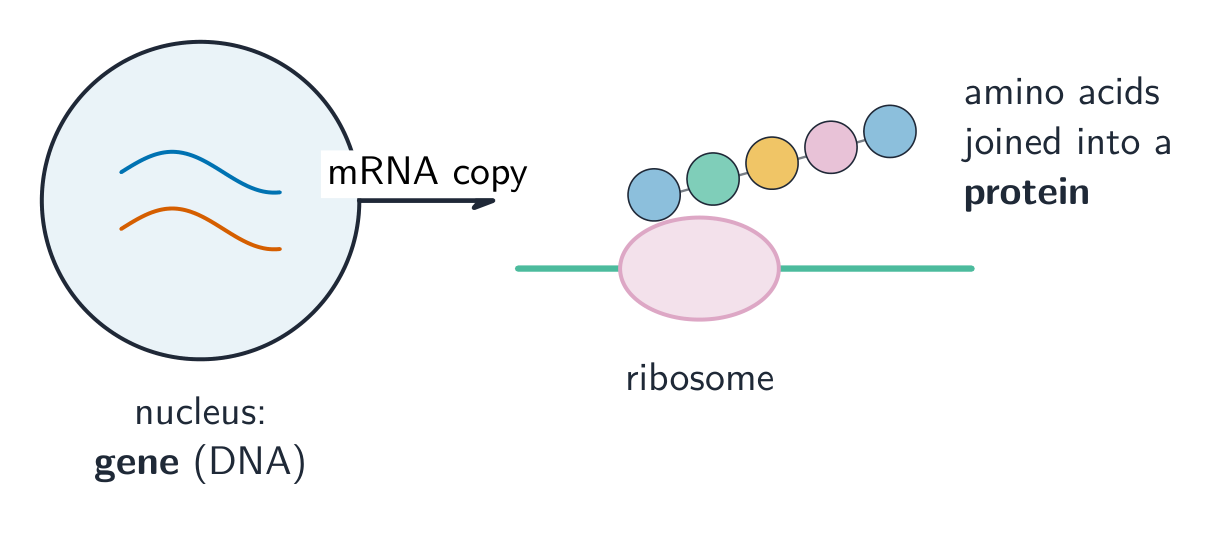
Translation 翻译 builds a protein from the mRNA at the ribosome 核糖体. The mRNA is read in three-base codons 密码子, each specifying one amino acid (the genetic code). Transfer RNA 转运RNA brings the matching amino acid, and the ribosome links them into a polypeptide until a stop codon ends it. This is the "central dogma": DNA → RNA → protein.
Vocabulary
Train
| English |
|---|
| Translation/trænˈsleɪʃn/ |
| ribosome/ˈriːbəʊsəʊm/ |
| codons/ˈkəʊdɒnz/ |
| Transfer RNA/ˈtrænsfɜː ˌɑː en ˈeɪ/ |
6.5
Regulation of Gene Expression
Syllabus
| Big Idea | Learning Objective | Essential Knowledge |
|---|---|---|
Big Idea 3 — Information Storage and Transmission | 6.5.A |
|
6.5.B |
|
Source: College Board AP Course and Exam Description
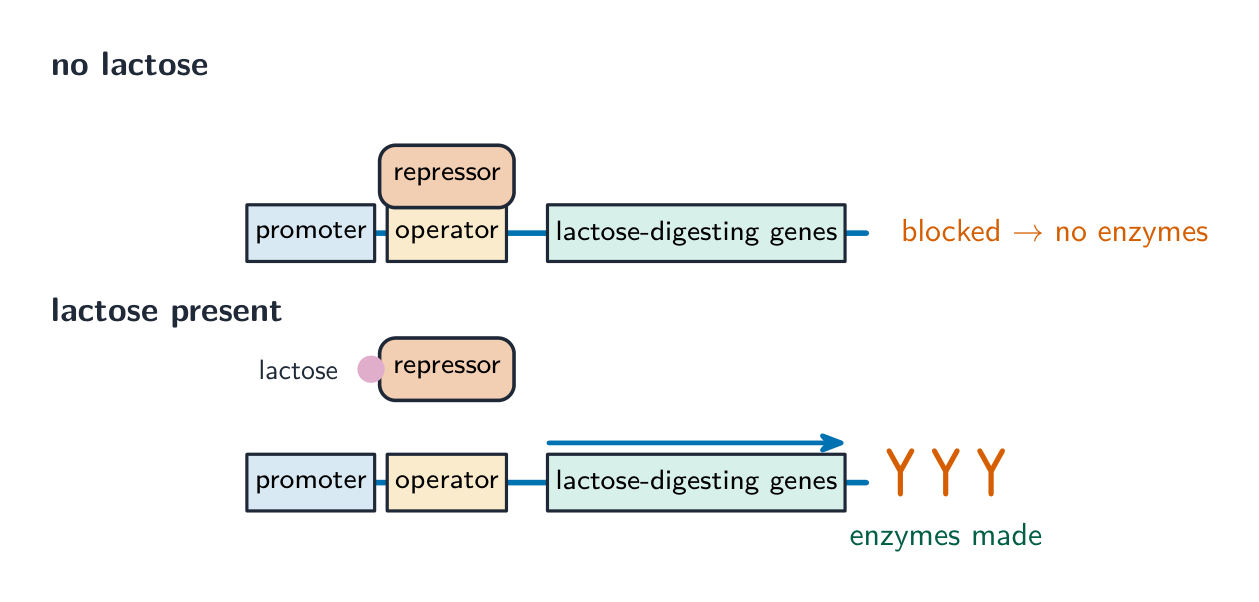
Cells control which genes are expressed and when. In prokaryotes, operons 操纵子 switch groups of genes on or off. In eukaryotes, regulation happens at many levels – which genes are transcribed (transcription factors, promoters, enhancers), RNA processing, and after translation. This lets a cell respond to its environment without changing its DNA.
Vocabulary
Train
| English |
|---|
| operons/ˈɒpərənz/ |
6.6
Gene Expression and Cell Specialization
Syllabus
| Big Idea | Learning Objective | Essential Knowledge |
|---|---|---|
Big Idea 3 — Information Storage and Transmission | 6.6.A |
|
6.6.B |
|
Source: College Board AP Course and Exam Description
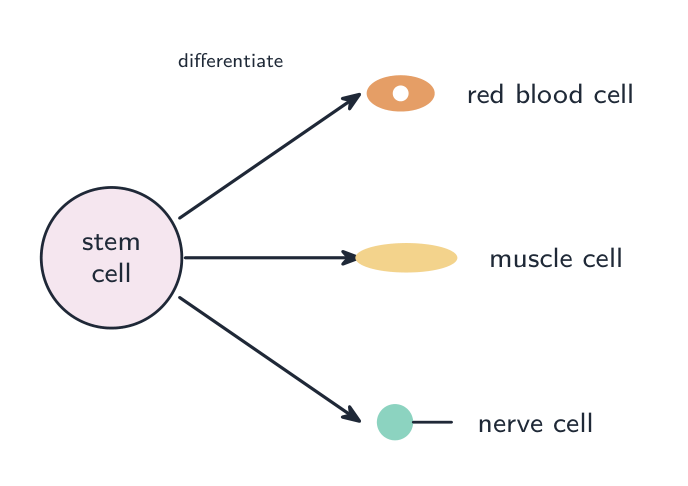
Every cell in a body has the same DNA, yet cells differ because they express different genes – differential gene expression 差异表达. This is how one fertilized egg produces many specialized cell types (muscle, nerve, skin); signals during development turn specific genes on and off.
Vocabulary
Train
| English |
|---|
| differential gene expression/ˌdɪfəˈrenʃl dʒiːn ekˈspreʃn/ |
6.7
Mutations
Syllabus
| Big Idea | Learning Objective | Essential Knowledge |
|---|---|---|
Big Idea 3 — Information Storage and Transmission | 6.7.A |
|
6.7.B |
| |
6.7.C |
|
Source: College Board AP Course and Exam Description
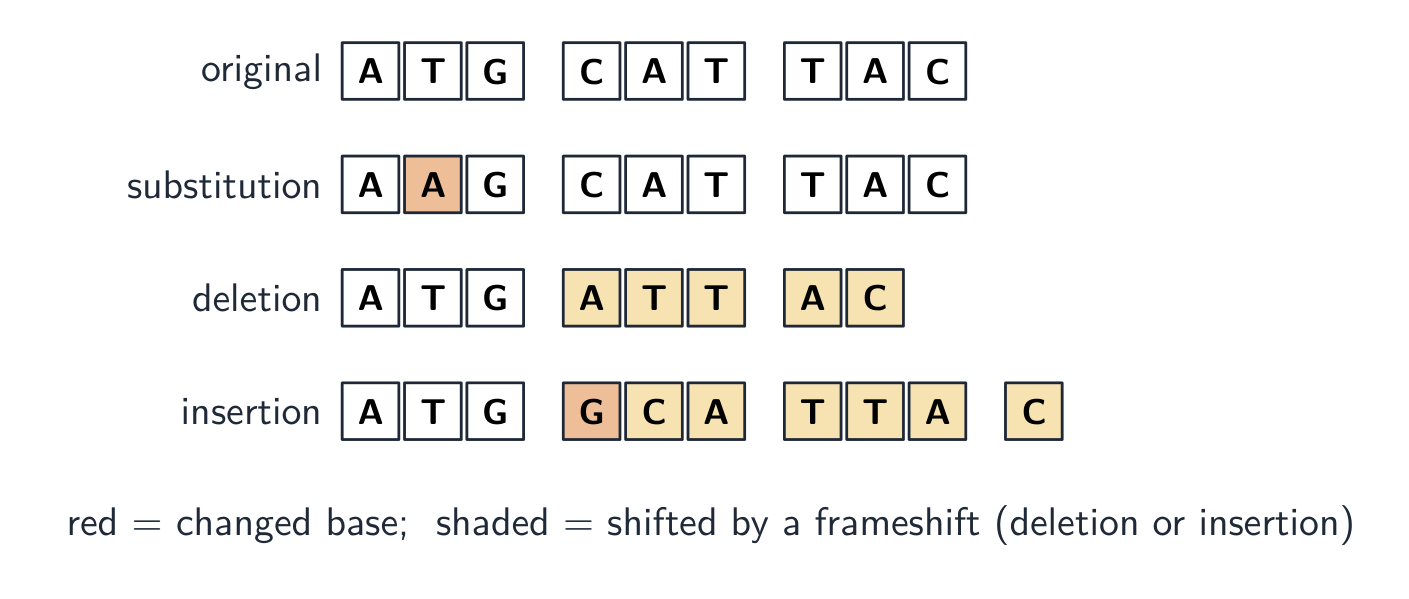
A mutation 突变 is a change in the DNA sequence. Point mutations change one base (silent, missense, or nonsense); insertions/deletions can cause a frameshift 移码 that garbles everything downstream. Mutations in gametes are heritable; they may be harmful, neutral, or beneficial – and beneficial ones supply the variation for natural selection.
Whole-chromosome errors change the phenotype too. Mutation is not only a change of base: errors in mitosis or meiosis can result in changes in phenotype. If chromosomes fail to separate — nondisjunction 不分离 — a gamete receives an extra copy or none, and the resulting zygote has an abnormal chromosome number (aneuploidy 非整倍性). Trisomy 21 is the familiar example. Because a whole chromosome carries hundreds of genes, the phenotypic effect is far broader than a point mutation's.
Vocabulary
Train
| English |
|---|
| mutation/mjuːˈteɪʃn/ |
| frameshift/ˈfreɪmʃɪft/ |
| nondisjunction/ˌnɒndɪsˈdʒʌŋkʃn/ |
| aneuploidy/ˈeɪnəplɔɪdi/ |
6.8
Biotechnology
Syllabus
| Big Idea | Learning Objective | Essential Knowledge |
|---|---|---|
Big Idea 3 — Information Storage and Transmission | 6.8.A |
|
Source: College Board AP Course and Exam Description
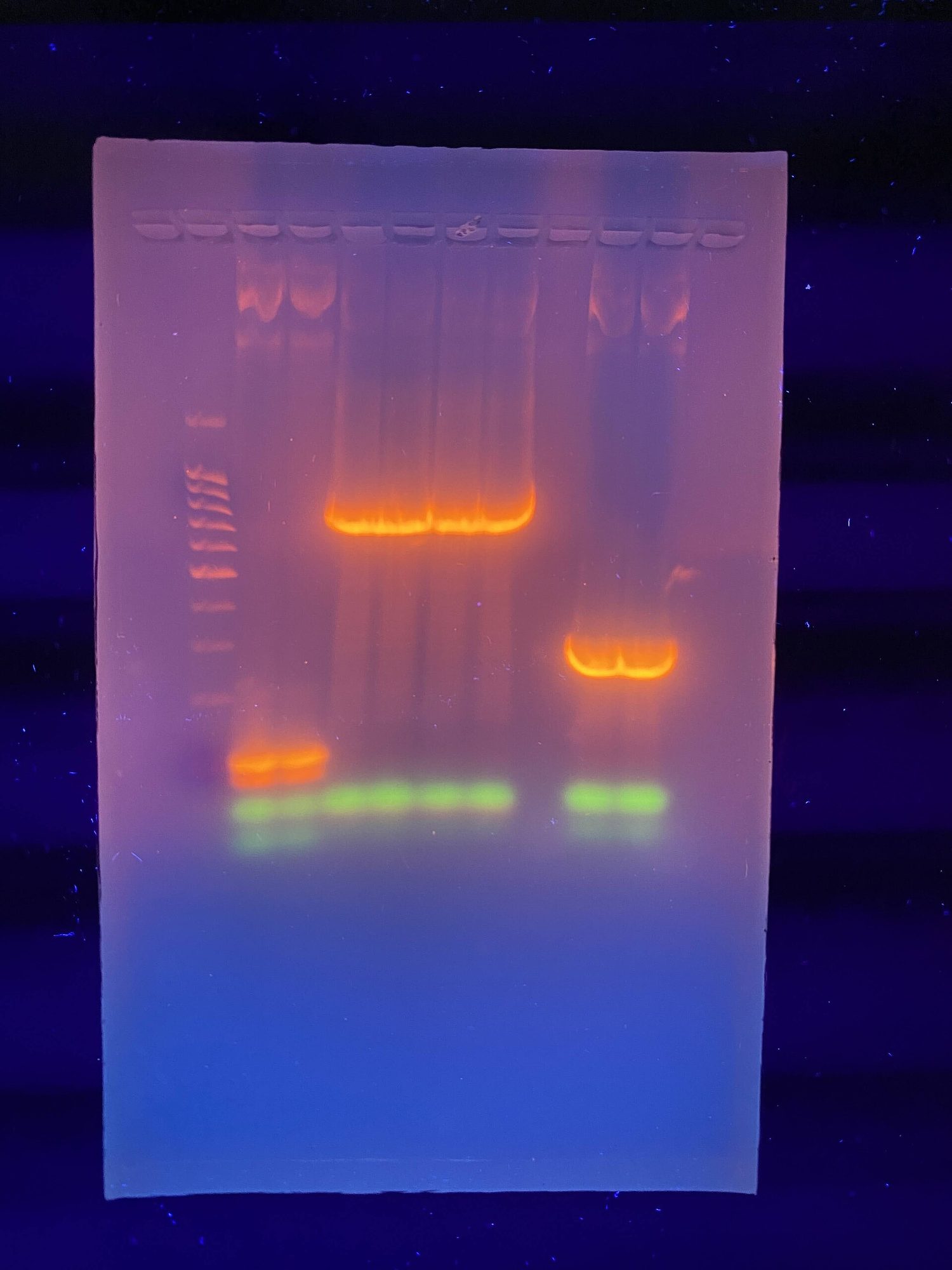
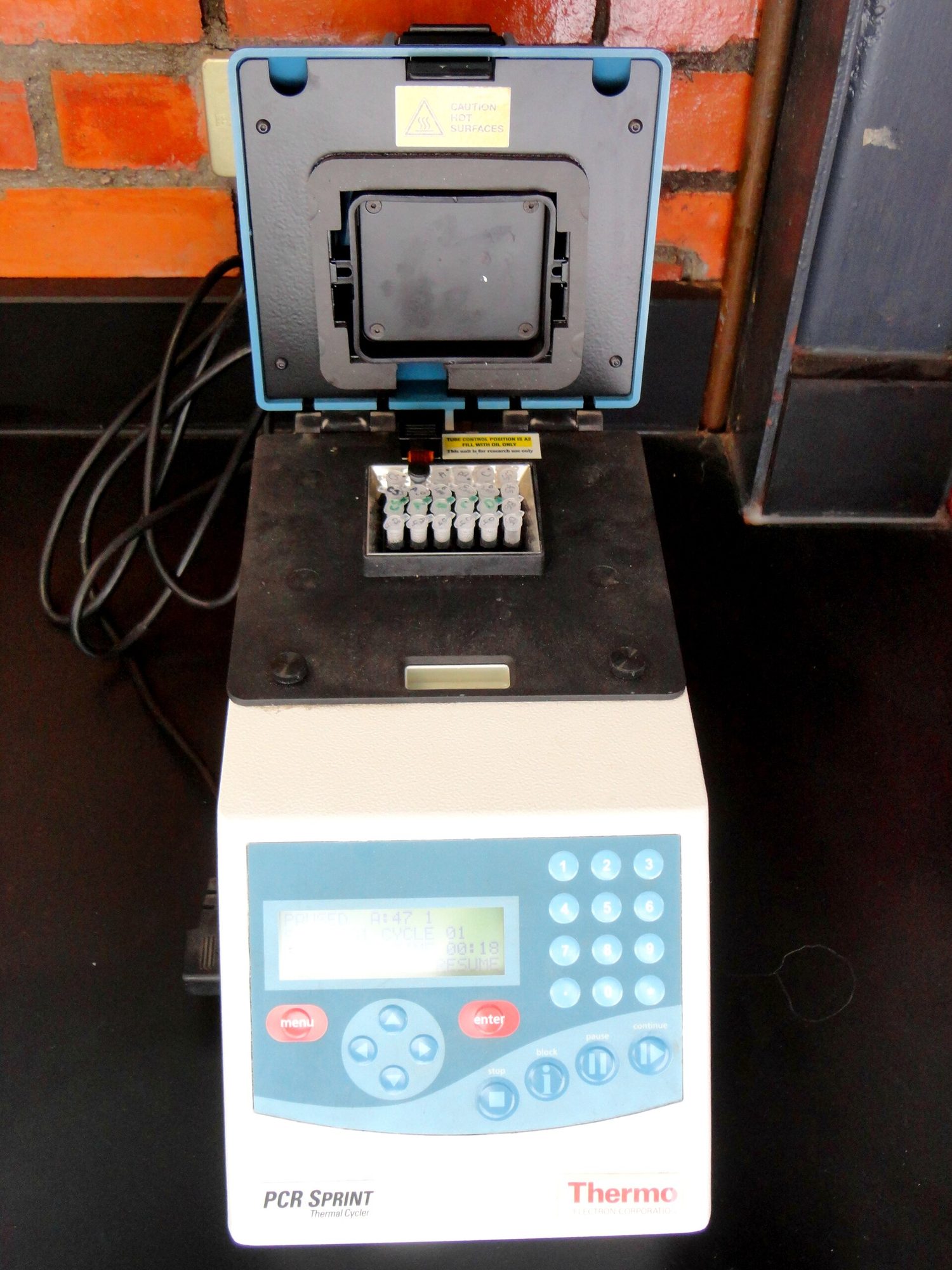
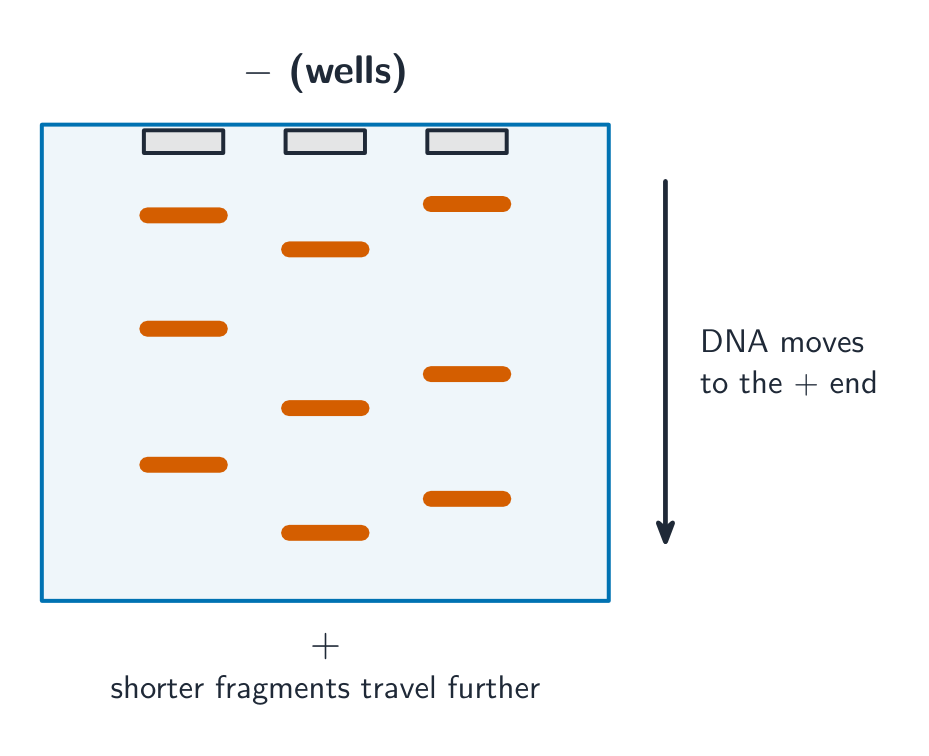
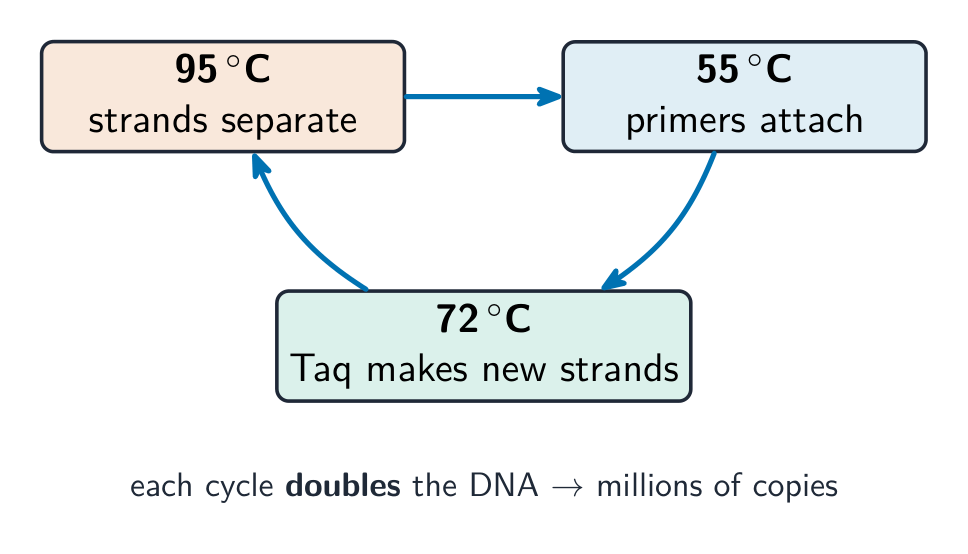
Biotechnology 生物技术 tools manipulate genetic material: PCR 聚合酶链反应 copies DNA, gel electrophoresis 凝胶电泳 separates DNA fragments by size, restriction enzymes and cloning move genes between organisms, and CRISPR edits sequences. These techniques enable genetic testing, engineered organisms, and medical treatments.
Worked example. A template DNA strand 3'-TAC GGA TTC-5' is transcribed into mRNA 5'-AUG CCU AAG-3'. A ribosome reads three codons: AUG = Met (start), CCU = Pro, AAG = Lys — coding for Met–Pro–Lys. Changing the third base of a codon often gives the same amino acid, because the genetic code is degenerate, which softens the effect of many mutations.
Reading DNA identifies individuals. Because the number of repeats at certain non-coding loci varies from person to person, analysis of DNA can be used for forensic identification: amplify those regions by PCR, separate the fragments by gel electrophoresis, and compare the pattern of band positions with a reference sample. A match is a statement about probability rather than certainty, which is why several loci are tested rather than one.
Vocabulary
Train
| English |
|---|
| Biotechnology/ˌbaɪəʊtekˈnɒlədʒi/ |
| PCR/ˌpiː siː ˈɑː/ |
| gel electrophoresis/dʒel ɪˌlektrəʊfɔːˈriːsɪs/ |
6.8
Exam tips
- Know the central dogma DNA → RNA → protein: transcription makes mRNA, translation reads it in three-base codons at the ribosome.
- Remember RNA is single-stranded and uses U instead of T; replication is semiconservative.
- Every cell has the same DNA — cells differ because they express different genes (differential gene expression).
- A mutation is a change in the DNA sequence and may be harmful, neutral, or beneficial (the raw material for selection).
- Link biotech tools to their jobs: PCR copies DNA; gel electrophoresis separates fragments by size.
Interactive lessons on this topic
Work through it step by step, with instant-check exercises.