Skip to content · ⁨본문 바로가기⁩

Transoceanic Interconnections

AP World History: Modern · ⁨AP 세계사: 근현대⁩ · Topic 4 · ⁨주제 4⁩

Video lesson for this topic · ⁨이 주제용 영상 수업⁩ Open the video page · ⁨영상 페이지 열기⁩
6:37

단원 4: 초대양 간 연결망

대부분의 학생들에게 유럽인이 항해를 한 이유를 묻으면 크루즈, 다 가마, 마젤란과 같은人名을 들립니다. 탐험가는 가장 유용하지 않은 답변입니다. 실제로…을 가능하게 한 것은 무엇이었습니까?

English narration · English + 中文 subtitles burned in · ⁨영어 내레이션 · 영어 + 중국어 자막 burned-in⁩

4.1 4.2

Why Europeans Sailed · ⁨유럽인의 항해动机⁩

Syllabus
English

4.1 Technological Innovations from1450 to 1750

Thematic Focus (TEC): Technology and Innovation — Human adaptation and innovation have resulted in increased efficiency, comfort, and security, and technological advances have shaped human development and interactions with both intended and unintended consequences.

Learning Objective Unit 4.A: Explain how cross-cultural interactions resulted in the diffusion of technology and facilitated changes in patterns of trade and travel from 1450 to 1750.

  • KC-4.1.II Knowledge, scientific learning, and technology from the Classical, Islamic, and Asian worlds spread, facilitating European technological developments and innovation.
  • KC-4.1.II.A The developments included the production of new tools, innovations in ship designs, and an improved understanding of regional wind and currents patterns—all of which made transoceanic travel and trade possible.

Illustrative examples:

  • Innovations in ship design:
    • Caravel
    • Carrack
    • Fluyt
  • European technological developments influenced by cross-cultural interactions with the Classical, Islamic, and Asian worlds:
    • Lateen sail
    • Compass
    • Astronomical charts
한국어

4.1 1450년부터 1750년까지의 기술 혁신

주제별 중점 (TEC): 기술과 혁신 — 인간의 적응과 혁신은 효율성, 편안함, 안전성의 향상을 가져왔으며, 기술 발전은 의도된 결과뿐만 아니라 비의도적인 결과까지도 포함하여 인간의 발전 및 상호작용에 영향을 미쳤다.

학습 목표 단위 4.A: 1450년부터 1750년까지 문화 간 상호작용이 어떻게 기술의 확산을 가져왔고 교역 및 여행 패턴의 변화를 촉진했는지 설명하시오.

  • KC-4.1.II 고대, 이슬람, 아시아 세계의 지식, 과학 학습 및 기술이 확산되어 유럽의 기술 발전과 혁신을 촉진했다.
  • KC-4.1.II.A 이러한 발전에는 새로운 공구의 생산, 선박 설계의 혁신, 지역 바람 및 조류 패턴에 대한 이해 증대가 포함되었으며, 이는 대양 횡단 여행 및 교역을 가능하게 했다.

예시 사례:

  • 선박 설계의 혁신:
    • 카라벨
    • 카락
    • 플루트
  • 고대, 이슬람, 아시아 세계와의 문화 간 상호작용에 의해 영향을 받은 유럽의 기술 발전:
    • 라틴 sail(라틴 선)
    • 나침반
    • 천문 도표
English

4.2 Exploration: Causes and Events from 1450 to 1750

Thematic Focus (GOV): Governance — A variety of internal and external factors contribute to state formation, expansion, and decline. Governments maintain order through a variety of administrative institutions, policies, and procedures, and governments obtain, retain, and exercise power in different ways and for different purposes.

Learning Objective Unit 4.B: Describe the role of states in the expansion of maritime exploration from 1450 to 1750. THEMATIC FOCUS Economics Systems ECN As societies develop, they affect and are affected by the ways that they produce, exchange, and consume goods and services. LEARNING OBJECTIVE

  • KC-4.1.III New state-supported transoceanic maritime exploration occurred in this period. HISTORICAL DEVELOPMENTS

Learning Objective Unit 4.C: Explain the economic causes and effects of maritime exploration by the various European states.

  • KC-4.1.III.A Portuguese development of maritime technology and navigational skills led to increased travel to and trade with Africa and Asia and resulted in the construction of a global trading-post empire.
  • KC-4.1.III.B Spanish sponsorship of the voyages of Columbus and subsequent voyages across the Atlantic and Pacific dramatically increased European interest in transoceanic travel and trade.
  • KC-4.1.III.C Northern Atlantic crossings were undertaken under English, French, and Dutch sponsorship, often with the goal of finding alternative sailing routes to Asia.
한국어

4.2 탐험: 1450년부터 1750년까지의 원인 및 사건

주제 집중 (GOV): 통치 — 다양한 내부 및 외부 요인이 국가 형성, 확장 및 쇠퇴에 기여한다. 정부는 다양한 행정 기관, 정책 및 절차를 통해 질서를 유지하며, 정부는 서로 다른 방식과 목적으로 권력을 획득, 보유 및 행사한다.

학습 목표 단위 4.B: 1450년부터 1750년까지 해양 탐험의 확장에서 국가가を果た한 역할을 서술하시오. 주제 집중 경제 체계 ECN 사회가 발달함에 따라它们是 생산, 교환, 소비 방식에 영향을 미치며 동시에 그 영향도 받는다. 학습 목표

  • KC-4.1.III 이 시기에는 신생 국가 지원의 대양 횡단 해양 탐험이 이루어졌다. 역사적 발전

학습 목표 단위 4.C: 다양한 유럽 국가에 의한 해양 탐험의 경제적 원인 및 효과를 설명하시오.

  • KC-4.1.III.A 포르투갈의 해양 기술 및 항해 기술의 발전은 아프리카 및 아시안으로의 여행 및 교역 증가를 이끌었으며, 전 지구적 트레딩 포스트 제국의 건설로 이어졌다.
  • KC-4.1.III.B 콜럼버스의 항해 및 이후 대서양 및 태평양 횡단 항해를 후원한 스페인의 노력은 대양 단 여행 및 교역에 대한 유럽의関심을 극적으로 높였다.
  • KC-4.1.III.C 북대서양 횡단 항해는 영국, 프랑스, 네덜란드의 후원을 받아 주로 아시아로 가는 대체 항로를 찾는 것을 목표로 수행되었다.
Source: College Board AP Course and Exam Description · ⁨출처: College Board AP Course and Exam Description⁩

English

Unit 4 covers 1450 to 1750 - the period in which the Eastern and Western Hemispheres are permanently joined, and the consequences of that joining.

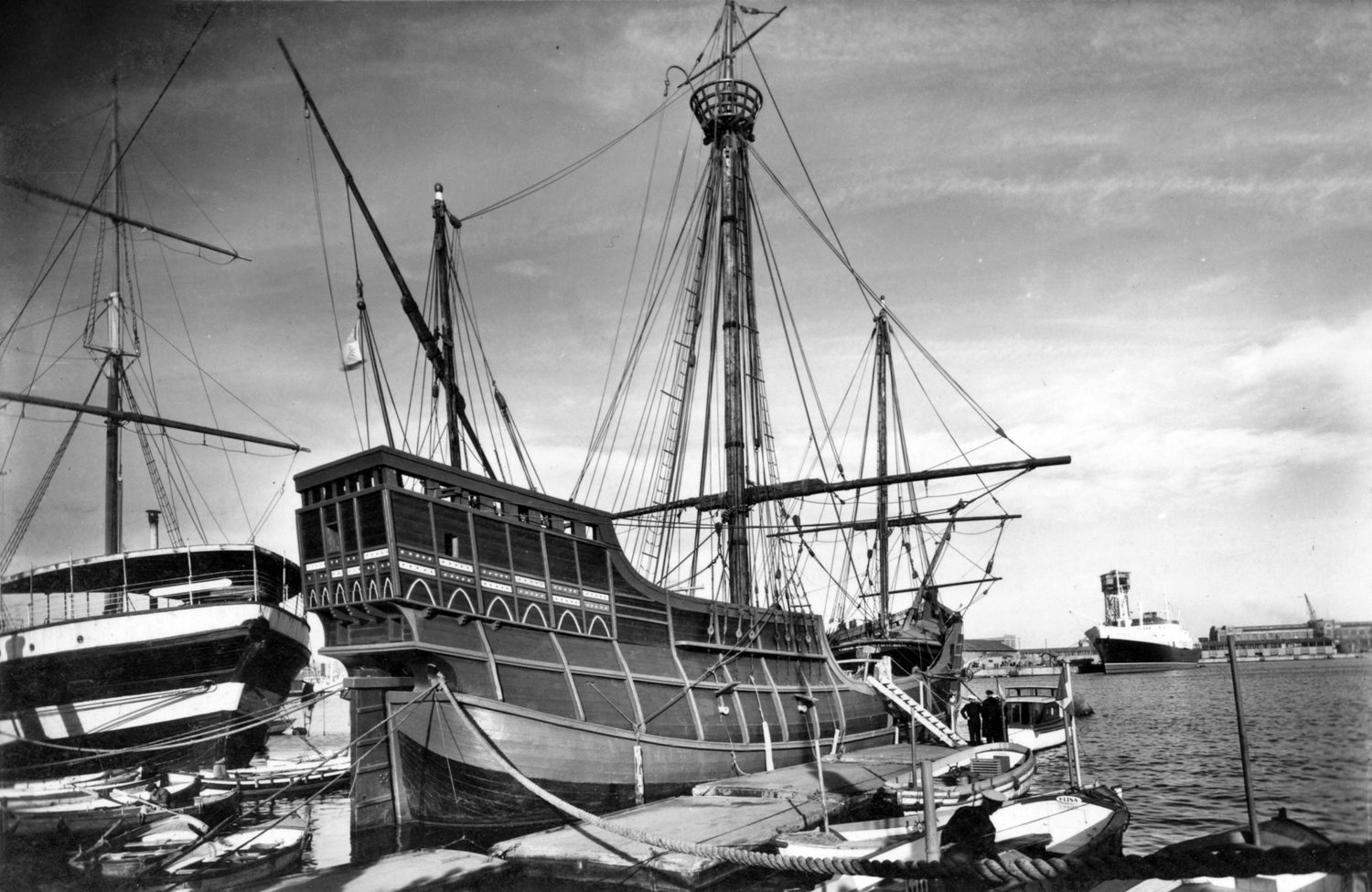
The voyages rested on borrowed knowledge. Learning and technology from the Classical, Islamic, and Asian worlds was gathered and applied in Europe: new tools, innovations in ship design 船舶设计, and better understanding of navigation 航海 - the caravel 卡拉维尔帆船, the astrolabe, the magnetic compass, and knowledge of wind patterns.

State-supported maritime exploration 国家支持的海上探索 then followed:

  • Portuguese development of maritime technology and navigational skill led to the sea route around Africa to the Indian Ocean.
  • Spanish sponsorship of Columbus and subsequent voyages opened the Atlantic to the Americas.
  • English, French, and Dutch crossings of the northern Atlantic followed.

Motives combined the search for wealth, competition between states, and religious mission.

한국어

단원 4는 1450년부터 1750년까지를 다루며, 이는 동반구와 서반구가 영구적으로 결합되고 그 결과에 대한 시기입니다.

항해는 차용된 지식에 기반했습니다. 고전, 이슬람, 아시아 세계로부터의 학습과 기술이 유럽에서 수집되어 적용되었습니다: 새로운 도구, 선박 설계의 혁신, 그리고 항해법에 대한 더 나은 이해—카라벨, etcetera, 자기 나침반, 그리고 바람 패턴에 대한 지식 등.

국가 지원 해양 탐험이 이어졌습니다:

  • 포르투갈의 해양 기술 및 항해 기술 개발은 아프리카 주변을 지나 인도양으로 가는 해상로를 열었습니다.
  • 스페인의 크리스토퍼 콜럼버스 및 이후 항해 후원 아메리카 대륙으로 대서양을 열었습니다.
  • 영국, 프랑스, 네덜란드의 북부 대서양 횡단이 뒤를 이었습니다.

동기는 부의 탐구, 국가 간의 경쟁, 그리고 종교적 사명감의 결합이었습니다.

네 가지 필수 조건, 하나의 동기만은 아님 - 지식과 도구는 여전히 후원을 필요로 함
카라벨 복제품 - 해양 항해를 가능하게 한 선박 설계
Explore · ⁨탐색하기⁩

Collect the four conditions for a voyage · ⁨항해에 필요한 네 가지 조건을 수집하십시오.⁩

Knowledge, ship design, navigation and a sponsor: any three without the fourth produces no voyage. · ⁨지식, 선박 설계, 항해, 후원자: 네 가지 중 하나라도 빠지면 항해가 이루어지지 않음.⁩

Vocabulary · ⁨어휘⁩ Train · ⁨연습하기⁩
English 한국어
ship design/ʃɪp dɪˈzaɪn/ 선박 설계
navigation/ˌnævɪˈɡeɪʃn/ 항해술
caravel/ˈkærævl/ 카라벨
State-supported maritime exploration/steɪt səˈpɔːtɪd ˈmærɪtaɪm eksplɔːˈreɪʃn/ 국가 지원 해양 탐험
4.3

The Columbian Exchange · ⁨콜럼비아 교환(The Columbian Exchange)⁩

Syllabus
English

4.3 Columbian Exchange

Thematic Focus (ENV): Humans and the Environments — The environment shapes human societies, and as populations grow and change, these populations in turn shape their environments.

Learning Objective Unit 4.D: Explain the causes of the Columbian Exchange and its effects on the Eastern and Western Hemispheres.

  • KC-4.1.V The new connections between the Eastern and Western Hemispheres resulted in the exchange of new plants, animals, and diseases, known as the Columbian Exchange.
  • KC-4.1.V.A European colonization of the Americas led to the unintentional transfer of disease vectors, including mosquitoes and rats, and the spread of diseases that were endemic in the Eastern Hemisphere, including smallpox, measles, and malaria. Some of these diseases substantially reduced the indigenous populations, with catastrophic effects in many areas.
  • KC-4.1.V.B American foods became staple crops in various parts of Europe, Asia, and Africa. Cash crops were grown primarily on plantations with coerced labor and were exported mostly to Europe and the Middle East.
  • KC-4.1.V.C Afro-Eurasian fruit trees, grains, sugar, and domesticated animals were brought by Europeans to the Americas, while other foods were brought by African enslaved persons.
  • KC-4.1.V.D Populations in Afro-Eurasia benefitted nutritionally from the increased diversity of American food crops.

Illustrative examples:

  • Domesticated animals:
    • Horses
    • Pigs
    • Cattle
  • Foods brought by African enslaved persons:
    • Okra
    • Rice
한국어

4.3 콜럼비아 교류

주제 초점 (ENV): 인간과 환경 — 환경은 인간 사회를 형성하며, 인구가 성장하고 변화함에 따라 이러한 인구들이 다시 환경을 형성한다.

학습 목표 단위 4.D: 콜럼비아 교류의 원인과 동서반구에 미친 영향을 설명하시오.

  • KC-4.1.V 동서반구 사이의 새로운 연결은 식물의交换, 동물, 그리고 질병의 exchange를 가져왔는데, 이를 콜럼비아 교류라고 한다.
  • KC-4.1.V.A 유럽의 아메리카 식민화는 모기나 쥐와 같은 질병 매개체의 의도하지 않은 이전과 동서반구에 Shooter인 작은병,麻疹, 말라리아 등 질병의 확산을 초래했다. 이러한 질병 중 일부는 토착 인구를 크게 감소시켰으며, 많은 지역에서 catastrophic한 결과를 낳았다.
  • KC-4.1.V.B 아메리카 음식들은 유럽, 아시아, 아프리카의 여러 지역에서 주곡作物이 되었다. 현금作物은 강제 노동이 사용된 농장에서 주로 재배되었으며, 대부분 유럽 및 중동으로 수출되었다.
  • KC-4.1.V.C 아프로유라시아의 과일나무, 곡물, 설탕, 가축은 유럽인에 의해 아메리카로 가져갔고, 다른 음식들은 아프리카 노예들에 의해 가져왔다.
  • KC-4.1.V.D 아프로유라시아의 인구들은 아메리카 식품作物的多様性의 증가로 영양적으로 혜택을 받았다.

예시 사례:

  • 가축:
    • 말
    • 돼지
    • 소
  • 아프리카 노예에 의해 가져온 음식:
    • 오크라
    • 쌀

Source: College Board AP Course and Exam Description · ⁨출처: College Board AP Course and Exam Description⁩

English

New connections between the hemispheres produced the Columbian Exchange 哥伦布大交换, and the CED spells out four consequences.

  • European colonisation led to the unintentional transfer of disease 疾病的非蓄意传播 to the Americas, causing catastrophic population loss.
  • American foods 美洲作物 - maize, potatoes, cassava - became staple crops in parts of Europe, Asia, and Africa.
  • Afro-Eurasian fruit trees, grains, sugar, and domesticated animals 驯化动物 were brought to the Americas, reshaping its landscapes and economies.
  • Populations in Afro-Eurasia benefited nutritionally 营养状况改善 from a more diverse diet, contributing to population growth.

The asymmetry is the examinable point: the same exchange raised population in Afro-Eurasia and destroyed it in the Americas.

한국어
양방향의 콜롬비아 교환, 대서양 노예 무역을 drove한 인구학적 결과 포함
교환은 양방향으로 이루어졌으나, 결과는 비대칭적이었습니다

반구 간의 새로운 연결은 콜롬비아交換을 낳았으며, CED는 네 가지 결과를 명시합니다.

  • 유럽의 식민화는 아메리카 대륙으로의 질병의 우발적 전파를 초래하여 catastrophic한 인구 감소를 일으켰습니다.
  • 아메리카 작물—옥수수, 감자, 카사바—유럽, 아시아, 아프리카 일부 지역의 주류 작물이 되었습니다.
  • 아프리카-유라시아의 과일나무, 곡류, 설탕, 그리고 가축이 아메리카로 가져와져 그 경관과 경제를 재편했습니다.
  • 아프리칸-유라시아의 인구는 더 다양한 식단에 의해 영양학적으로 유리를 얻어 인구 증가에 기여했습니다.

비대칭성이 examinable 포인트입니다: 동일한 교환이 아프리칸-유라시아에서는 인구를 증가시켰으나 아메리카에서는 파괴했습니다.

Vocabulary · ⁨어휘⁩ Train · ⁨연습하기⁩
English 한국어
Columbian Exchange/kəˈlʌmbɪən eksˈtʃeɪndʒ/ Columbian Exchange
unintentional transfer of disease/ˌʌnɪnˈtenʃənl ˈtrænsfɜː ɒv dɪˈziːz/ 질병의 우발적 전파
American foods/əˈmerɪkən fuːdz/ 미국산 식품
domesticated animals/dəˈmestɪkeɪtɪd ˈænɪmlz/ 가축
benefited nutritionally/ˈbenɪfɪtɪd njuːˈtrɪʃənəli/ 영양적으로 이득을 봄
trading posts/ˈtreɪdɪŋ pəʊsts/ 무역 기지
rivalries/ˈraɪvəlriz/ 경쟁 관계
4.4

Maritime Empires Established · ⁨해군 제국의確立⁩

Syllabus
English

4.4 Maritime Empires Established

Thematic Focus (GOV): Governance — A variety of internal and external factors contribute to state formation, expansion, and decline. Governments maintain order through a variety of administrative institutions, policies, and procedures, and governments obtain, retain, and exercise power in different ways and for different purposes.

Thematic Focus (ECN): Economics Systems — As societies develop, they affect and are affected by the ways that they produce, exchange, and consume goods and services.

Learning Objective Unit 4.E: Explain the process of state building and expansion among various empires and states in the period from 1450 to 1750.

  • KC-4.3.II.A.i Europeans established new trading posts in Africa and Asia, which proved profitable for the rulers and merchants involved in new global trade networks. Some Asian states sought to limit the disruptive economic and cultural effects of European-dominated long-distance trade by adopting restrictive or isolationist trade policies.
  • KC-4.3.II.C Driven largely by political, religious, and economic rivalries, European states established new maritime empires, including the Portuguese, Spanish, Dutch, French, and British.
  • KC-4.3.II.A.ii The expansion of maritime trading networks fostered the growth of states in Africa, including the Asante and the Kingdom of the Kongo, whose participation in trading networks led to an increase in their influence.

Learning Objective Unit 4.F: Explain the continuities and changes in economic systems and labor systems from 1450 to 1750. THEMATIC FOCUS Social Interactions and Organization SIO The process by which societies group their members and the norms that govern the interactions between these groups and between individuals influence political, economic, and cultural institutions and organization. LEARNING OBJECTIVE

  • KC-4.3.II.A.iii Despite some disruption and restructuring due to the arrival of Portuguese, Spanish, and Dutch merchants, existing trade networks in the Indian Ocean continued to flourish and included intra-Asian trade and Asian merchants.
  • KC-4.2.II.D Newly developed colonial economies in the Americas largely depended on agriculture, utilized existing labor systems, including the Incan mit’a, and introduced new labor systems including chattel slavery, indentured servitude, and encomienda and hacienda systems. HISTORICAL DEVELOPMENTS

Learning Objective Unit 4.G: Explain changes and continuities in systems of slavery in the period from 1450 to 1750.

  • KC-4.2.II.B Enslavement in Africa continued in its traditional forms, including incorporation of enslaved persons into households and the export of enslaved persons to the Mediterranean and the Indian Ocean regions.
  • KC-4.2.II.C The growth of the plantation economy increased the demand for enslaved labor in the Americas, leading to significant demographic, social, and cultural changes.

Illustrative examples:

  • Asian states that adopted restrictive or isolationist trade policies:
    • Ming China
    • Tokugawa Japan
  • (CONT’D) Indian Ocean Asian merchants:
    • Swahili Arabs
    • Omanis
    • Gujaratis
    • Javanese
한국어

4.4 해양 제국의確立

주제 집중 (GOV): 통치 — 다양한 내부 및 외부 요인이 국가 형성, 확장 및 쇠퇴에 기여한다. 정부는 다양한 행정 기관, 정책 및 절차를 통해 질서를 유지하며, 정부는 서로 다른 방식과 목적으로 권력을 획득, 보유 및 행사한다.

주제 집중 (ECN): 경제 체계 — 사회가 발전함에 따라 생산, 교환, 소비 방식을 변화시키고 이에 영향을 받는다.

학습 목표 단위 4.E: 1450년부터 1750년까지의 기간 동안 다양한 제국 및 국가 간의 국가 형성과 확장의 과정을 설명하시오.

  • KC-4.3.II.A.i 유럽인은 아프리카 및 아시아에 새로운 트레딩 포스트를 설립하여 새로운 글로벌 거래 네트워크에 관여한 통치자 및 상인들에게 이익을 안겨주었다. 일부 아시아 국가는 유럽 지배의 장거리 무역이 가져오는 파괴적인 경제적 및 문화적 영향을 제한하기 위해 제한적이거나 단절주의적 무역 정책을 채택하려 하였다.
  • KC-4.3.II.C 정치적, 종교적, 경제적 경쟁에 주로驱动力由着, 유럽 국가는 포르투갈, 스페인, 네덜란드, 프랑스, 영국의 maritime 제국을 포함한 새로운 maritime 제국을 수립했다.
  • KC-4.3.II.A.ii Maritime 거래 네트워크의 확대는 아산테와 콩고 왕국과 같은 아프리카의 국가 성장에 기여했으며, 이들의 거래 네트워크 참여는 영향력 증가로 이어졌다.

학습 목표 단위 4.F: 1450년부터 1750년까지의 경제 체계 및 노동 체계의 지속과 변화를 설명하시오. 주제 집중 사회적 상호작용 및 조직 SIO 사회 구성원들을 grouping하는 과정과 이 그룹들 사이 및 개인 간의 상호작용을 governing하는 norm은 정치적, 경제적, 문화적 institution 및 organization에 영향을 미친다. 학습 목표

  • KC-4.3.II.A.iii 포르투갈, 스페인, 네덜란드 상인의 도착으로 인해 일부 disruption 및 restructuring이 있었음에도 불구하고, 인도양의 기존 거래 네트워크는 여전히 flourishing remained and includes intra-Asian trade and Asian merchants.
  • KC-4.2.II.D 아메리카에서 신생 식민 경제는 대부분 농업에 의존했으며, 인카의 미타와 같은 기존 노동 체계를 활용하고 노예제, 계약직, 엔코멘다 및 가치엔다 체계와 같은 새로운 노동 체계를 도입했다. 역사적 발전

학습 목표 단위 4.G: 1450년부터 1750년까지 노예제의 변화와 지속성을 설명하시오.

  • KC-4.2.II.B 아프리카에서의 노예화는 전통적인 형태로 계속되었는데, 이는 노예를 가구에 편입시키고 노예를 지중해 및 인도양 지역으로 수출하는 것을 포함한다.
  • KC-4.2.II.C 식민지 플랜테이션 경제의 성장은 아메리카에서 노예 노동 수요를 증가시켰으며, 이로 인해 인구, 사회, 문화적 변화가 크게 일어났다.

예시 사례:

  • 제한적이거나 고립주의적 무역 정책을 채택한 아시아 국가:
    • 명나라 중국
    • 도쿠가와 일본
  • (계속) 인도양 아시아 상인:
    • 스와힐리 아랍인
    • 오만 사람
    • 구자라트인
    • 자바인

Source: College Board AP Course and Exam Description · ⁨출처: College Board AP Course and Exam Description⁩

English

Europeans established trading posts 商站 in Africa and Asia, which proved profitable, and pursued colonisation in the Americas driven by political, religious, and economic rivalries 对抗.

Where existing states were strong, Europeans traded rather than conquered: despite disruption caused by Portuguese arrival, existing trade networks in the Indian Ocean continued, and Asian states largely dictated the terms.

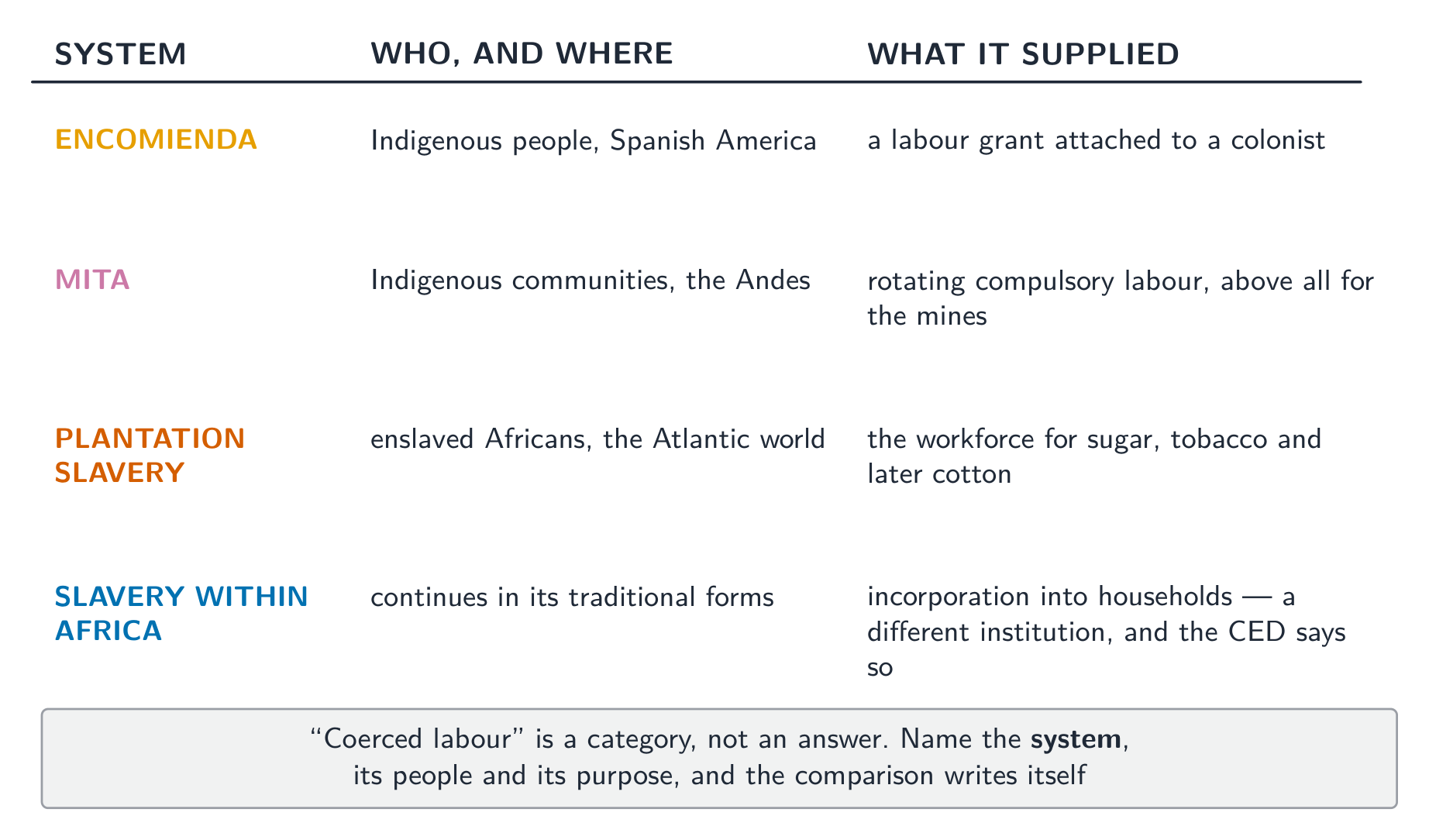
In the Americas the pattern was different. Colonial economies depended on agriculture and on coerced labour 强制劳动:

  • Enslavement in Africa continued in its traditional forms, including incorporation into households.
  • The growth of the plantation economy 种植园经济 increased demand for enslaved labour, and the Atlantic slave trade expanded enormously to supply it.
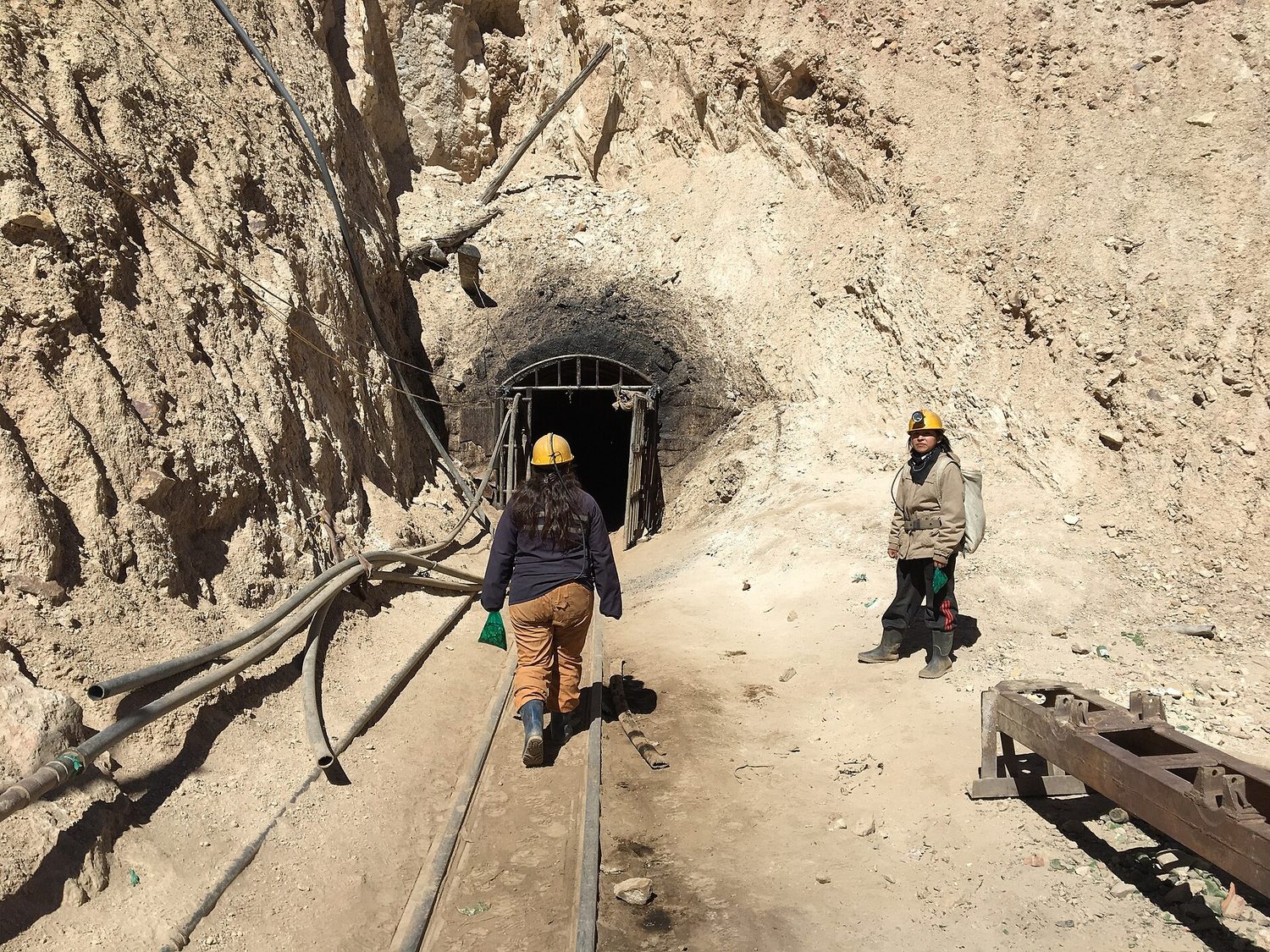
  • Systems such as the encomienda and mita 米塔制 compelled Indigenous labour.
한국어

유럽인은 아프리카와 아시아에서 수익성을 입증한 무역 기지를 설립했으며, 정치적, 종교적, 경제적 경쟁에 의해 아메리카에서의 식민화를 추진했습니다.

기존 국가가 강력한 곳에서는 유럽인이 정복하기보다 교역했습니다: 포르투갈의 도착으로 인한 혼란에도 불구하고 인도양의 기존 무역망은 계속되었고, 아시아 국가들이 거의 모든 조건을 결정했습니다.

아메리카에서는 양상이 달랐습니다. 식민 경제는 농업과 강제 노동에 의존했습니다:

  • 아프리카에서의 노예화는 가정 내 편입을 포함한 전통적 형태로 지속되었습니다.
  • 플랜테이션 경제의 성장은 강제 노동 수요를 증가시켰고, 이를 공급하기 위해 대서양 노예 무역이 방대하게 확장되었습니다.
  • 엔코미엔다와 미타와 같은 체계는 원주민 노동을 강요했습니다.
누구, 어디, 무엇 각系统在供应区 distinguished by four coerced-labour systems
포토시의 세르로 리코 - 미타 노예 노동 체계가 조직되어作業to work the mountain
Explore · ⁨탐색하기⁩

Tell the coerced-labour systems apart · ⁨강제 노조 체계를 구분하라⁩

'Coerced labour' is a category, not an answer: name the system, its people and its purpose. · ⁨'강제 노조'는 범주일 뿐 답이 아님: 체계를 명시하고, 해당 인종, 그리고 목적을 말하라.⁩

Vocabulary · ⁨어휘⁩ Train · ⁨연습하기⁩
English 한국어
coerced labour/ˌkəʊˈɜːst ˈleɪbə/ 강제 노역
plantation economy/plænˈteɪʃn ɪˈkɒnəmi/ 플랜테이션 경제
mita/ˈmiːtə/ 미타 제도
Mercantilist/ˈmɜːkæntɪlɪst/ 중상주의자
Atlantic trading system/ətˈlæntɪk ˈtreɪdɪŋ ˈsɪstəm/ 대서양 무역 체계
social hierarchies/ˈsəʊʃl ˈhaɪərɑːkiz/ 사회 계층
rebellion/rɪˈbelɪən/ 반란
maroon communities/məˈruːn kəˈmjuːnɪtiz/ 마룬 공동체
4.5 4.7

Maritime Empires Maintained · ⁨해군 제국의維持⁩

Syllabus
English

4.5 Maritime Empires Maintained and Developed

Thematic Focus (GOV): Governance — A variety of internal and external factors contribute to state formation, expansion, and decline. Governments maintain order through a variety of administrative institutions, policies, and procedures, and governments obtain, retain, and exercise power in different ways and for different purposes.

Thematic Focus (ECN): Economics Systems — As societies develop, they affect and are affected by the ways that they produce, exchange, and consume goods and services.

Thematic Focus (CDI): Cultural Developments and Interactions — The development of ideas, beliefs, and religions illustrates how groups in society view themselves, and the interactions of societies and their beliefs often have political, social, and cultural implications.

Learning Objective Unit 4.H: Explain how rulers employed economic strategies to consolidate and maintain power throughout the period from 1450 to 1750.

  • KC-4.1.IV.C Mercantilist policies and practices were used by European rulers to expand and control their economies and claim overseas territories. Joint-stock companies, influenced by these mercantilist principles, were used by rulers and merchants to finance exploration and were used by rulers to compete against one another in global trade.
  • KC-4.3.III.ii Economic disputes led to rivalries and conflict between states.

Learning Objective Unit 4.I: Explain the continuities and changes in networks of exchange from 1450 to 1750. THEMATIC FOCUS Social Interactions and Organization SIO The process by which societies group their members and the norms that govern the interactions between these groups and between individuals influence political, economic, and cultural institutions and organization. LEARNING OBJECTIVE

  • KC-4.1.IV.D.i The Atlantic trading system involved the movement of goods, wealth, and labor, including enslaved persons.
  • KC-4.1.IV The new global circulation of goods was facilitated by chartered European monopoly companies and the global flow of silver, especially from Spanish colonies in the Americas, which was used to purchase Asian goods for the Atlantic markets and satisfy Chinese demand for silver. Regional markets continued to flourish in Afro-Eurasia by using established commercial practices and new transoceanic and regional shipping services developed by European merchants.
  • KC-4.2.II.A Peasant and artisan labor continued and intensified in many regions as the demand for food and consumer goods increased. HISTORICAL DEVELOPMENTS

Learning Objective Unit 4.J: Explain how political, economic, and cultural factors affected society from 1450 to 1750.

  • KC-4.2.III.C Some notable gender and family restructuring occurred, including demographic changes in Africa that resulted from the trade of enslaved persons.
  • KC-4.1.IV.D.ii The Atlantic trading system involved the movement of labor—including enslaved persons and the mixing of African, American, and European cultures and peoples, with all parties contributing to this cultural synthesis.

Learning Objective Unit 4.K: Explain the similarities and differences in how various belief systems affected societies from 1450 to 1750.

  • KC-4.1.VI In some cases, the increase and intensification of interactions between newly connected hemispheres expanded the reach and furthered development of existing religions, and contributed to religious conflicts and the development of syncretic belief systems and practices.

Illustrative examples:

  • Competition over trade routes:
    • Muslim–European rivalry in the Indian Ocean
    • Moroccan conflict with the Songhai Empire
  • (CONT’D) Increased peasant and artisan labor:
    • Western Europe— wool and linen
    • India—cotton
    • China—silk
한국어

4.5 해상 제국: 유지 및 발전

주제 집중 (GOV): 통치 — 다양한 내부 및 외부 요인이 국가 형성, 확장 및 쇠퇴에 기여한다. 정부는 다양한 행정 기관, 정책 및 절차를 통해 질서를 유지하며, 정부는 서로 다른 방식과 목적으로 권력을 획득, 보유 및 행사한다.

주제 집중 (ECN): 경제 체계 — 사회가 발전함에 따라 생산, 교환, 소비 방식을 변화시키고 이에 영향을 받는다.

주제 집중 (CDI): 문화적 발전 및 상호작용 — 사상의 development, 신념 및 종교의 발전은 사회 내 집단이 자신을 어떻게 인식하는지를 보여주며, 사회와 그들의 신념 간의 상호작용은 종종 정치적, 사회적, 문화적 영향을 미친다.

학습 목표 단위 4.H: 1450년부터 1750년까지 통치자들이 권력을_AUDITARY 및 유지하기 위해 어떤 경제 전략을 사용했는지 설명하시오.

  • KC-4.1.IV.C 유럽 통치자들은 재상주의 정책과 관행을 사용하여 자국 경제를 확장하고 통제하며 해외 영토를 주장했다. 이러한 재상주의 원리에 영향을 받은 합자회사는 탐험을 자금 조달하기 위해 통치자와 상인들에 의해 사용되었으며, 통치자들은 글로벌 무역에서 서로 경쟁하기 위해 사용되었다.
  • KC-4.3.III.ii 경제적 분쟁은 국가 간 적대 관계와 충돌로 이어졌다.

학습 목표 단위 4.I: 1450년부터 1750년까지 교역망의 지속성과 변화를 설명하시오. 주제별 초점 사회적 상호작용 및 조직 SIO 사회 구성원들을 그룹화하고 이 그룹들 사이 및 개인 간의 상호작용을 규율하는 규범이 정치적, 경제적, 문화적 기관과 조직에 미치는 영향. 학습 목표

  • KC-4.1.IV.D.i 대서양 무역 체계는 상품, 부, 노동(노예 포함)의 이동이 수반되었다.
  • KC-4.1.IV 새로운 글로벌 상품의 순환은欧洲의 독점 회사와 스페인 식민지(아메리카)에서 유래하여 대서양 시장을 위한 아시아 상품을 구매하고 중국의 은 수요를 충족시키는 데 사용된 은의 글로벌 흐름에 의해 촉진되었다. 아프리카-유라시아에서는 유럽 상인에 의해 개발된 확립된 상업 관행과 새로운 항해 및 지역 운송 서비스를 사용하여 지역 시장이 여전히 번성했다.
  • KC-4.2.II.A 식품 및 소비재에 대한 수요가 증가함에 따라 농민과 장인의 노동은 많은 지역에서 지속되고 강화되었다. 역사적 발전

학습 목표 단위 4.J: 1450년부터 1750년까지 정치, 경제, 문화적 요인이 사회에 미친 영향을 설명하시오.

  • KC-4.2.III.C 성별 및 가족 구조의 재편이 일부 발생했는데, 이는 노예 무역로 인한 아프리카의 인구 변화가 포함된다.
  • KC-4.1.IV.D.ii 대서양 무역 체계는 노동(노예 포함)의 이동과 아프리카, 아메리카, 유럽의 문화 및 민족의 혼혈이 수반되었으며, 모든 참여자가 이 문화적 융합에 기여했다.

학습 목표 단위 4.K: 1450년부터 1750년까지 다양한 신앙 체계가 사회에 미친 영향의 유사점과 차이점을 설명하시오.

  • KC-4.1.VI 어떤 경우 newly 연결된 반구의 간 상호작용 증가 및 강화는 기존 종교의影响范围를 넓히고 발전을 촉진하였으며, 종교적 갈등과 신흥 신앙 체계 및 관행의 development에 기여했다.

예시 사례:

  • 무역 경로에 대한 경쟁:
    • 인도양에서의 무슬림-유럽적 적대 관계
    • 모로코와 송하이 제국의 충돌
  • (계속) 농민 및 장인의 노동 증가:
    • 서유럽—양모 및 린넨
    • 인도—면
    • 중국—비단
English

4.7 Changing Social Hierarchies from1450 to 1750

Thematic Focus (SIO): Social Interactions and Organization — The process by which societies group their members and the norms that govern the interactions between these groups and between individuals influence political, economic, and cultural institutions and organization.

Learning Objective Unit 4.M: Explain how social categories, roles, and practices have been maintained or have changed over time.

  • KC-4.3.I.B Many states, such as the Mughal and Ottoman empires, adopted practices to accommodate the ethnic and religious diversity of their subjects or to utilize the economic, political, and military contributions of different ethnic or religious groups. In other cases, states suppressed diversity or limited certain groups’ roles in society, politics, or the economy.
  • KC-4.2.III.A Imperial conquests and widening global economic opportunities contributed to the formation of new political and economic elites, including in China with the transition to the Qing Dynasty and in the Americas with the rise of the Casta system.
  • KC-4.2.III.B The power of existing political and economic elites fluctuated as the elites confronted new challenges to their ability to affect the policies of the increasingly powerful monarchs and leaders.

Illustrative examples:

  • Differential treatment of groups in society, politics, and the economy:
    • Expulsion of Jews from Spain and Portugal; the acceptance of Jews in the Ottoman Empire
    • Restrictive policies against Han Chinese in Qing China
    • Varying status of different classes of women within the Ottoman Empire
  • Existing elites:
    • Ottoman timars
    • Russian boyars
    • European nobility
한국어

4.7 1450년부터 1750년까지의 변화하는 사회 계층

주제 집중 (SIO): 사회 상호작용 및 조직화 — 사회가 구성원을 그룹화하는 방식과 이러한 그룹 간 및 개인 간의 상호작용을 규범하는 질서들이 정치적, 경제적, 문화적 제도와 조직에 미치는 영향.

학습 목표 단위 4.M: 사회 범주, 역할 및 관행이 시간이 지남에 따라 어떻게 유지되었거나 변했는지 설명하시오.

  • KC-4.3.I.B 무굴 제국과 오스만 제국과 같은 많은 국가들이 subjects의 민족 및 종교적 다양성을 수용하거나 다른 민족 또는 종교 집단의 경제적, 정치적, 군사적 공헌을 활용하기 위한 관행을 채택했다. 다른 경우에는 국가들이 다양성을 억압하거나 특정 집단의 사회, 정치, 경제에서의 역할을 제한하기도 했다.
  • KC-4.2.III.A 제국적 정복과 글로벌 경제 기회의 확대는 새로운 정치적 및 경제적 엘리트의 형성에 기여했으며, 이는 청나라로의 전환과 아메리카 대륙에서의 카스타 체계 부상에 포함된다.
  • KC-4.2.III.B 기존 정치적 및 경제적 엘리트들의 권력은 강력한 군주와 지도자들에 대한 정책 영향력을 행사할 수 있는 그들의 능력에 대한 새로운 도전에 직면하면서 변동되었다.

예시 사례:

  • 사회, 정치, 경제 내 집단별 차별적 대우:
    • 스페인 및 포르투갈에서 유대인의 추방; 오스만 제국에서의 유대인 수용
    • 청 중국 내 한족에 대한 제한적 정책
    • 오스만 제국 내 여성 계층별 상이한 지위
  • 기존 엘리트:
    • 오스만의 티마르 제도
    • 러시아 보야르
    • 유럽 귀족

Source: College Board AP Course and Exam Description · ⁨출처: College Board AP Course and Exam Description⁩

English

Mercantilist 重商主义 policies were used by European rulers to expand and control their economies: colonies existed to supply raw materials and buy finished goods, and trade was directed through the mother country.

The Atlantic trading system 大西洋贸易体系 moved goods, wealth, and people between Europe, Africa, and the Americas - the pattern usually taught as triangular trade, though real routes were more complex.

Economic disputes led to rivalries and conflict between states, and commercial competition became a standing cause of European war.

Colonial societies developed new social hierarchies 社会等级, defined by ancestry and by place of birth - the Spanish casta system being the most formally codified.

한국어

상업주의적 정책은 유럽 통치자들이 자국 경제를 확장하고 통제하기 위해 사용했습니다: 식민지는 원자재 공급과 완제품 구매를 위한 것이며, 무역은 조국(모국)을 통해 관리되었습니다.

대서양 무역 체계는 유럽, 아프리카, 아메리카 간에 물품, 재물, 인구를 이동시켰습니다. 이는 일반적으로 삼각 무역로라고 가르쳐지지만, 실제 경로는 더 복잡했습니다.

경제적 분쟁은 국가 간의 대립과 충돌을 초래했으며, 상업적 경쟁은 유럽 전쟁의 영구적인 원인이 되었습니다.

식민지 사회에서는 혈통과 출생지에 따라 정의된 새로운 사회적 계층이 형성되었으며, 그중 스페인의 카스타 체제가 가장 형식적으로 법전화되었습니다.

4.6

Internal and External Challenges · ⁨내부 및 외부의 과제도⁩

Syllabus
English

4.6 Internal and External Challenges to State Power from 1450 to 1750

Thematic Focus (GOV): Governance — A variety of internal and external factors contribute to state formation, expansion, and decline. Governments maintain order through a variety of administrative institutions, policies, and procedures, and governments obtain, retain, and exercise power in different ways and for different purposes.

Learning Objective Unit 4.L: Explain the effects of the development of state power from 1450 to 1750.

  • KC-4.3.III.iii State expansion and centralization led to resistance from an array of social, political, and economic groups on a local level.
  • KC-5.3.III.C Enslaved persons challenged existing authorities in the Americas through organized resistance.

Illustrative examples:

  • Local resistance:
    • Pueblo Revolts
    • Fronde
    • Cossack revolts
    • Maratha conflict with Mughals
    • Ana Nzinga’s resistance (as ruler of Ndongo and Matamba)
    • Metacom’s War (King Philip’s War)
  • Resistance of enslaved persons:
    • The establishment of Maroon societies in the Caribbean and Brazil
    • Resistance of enslaved persons in North America
한국어

4.6 1450년부터 1750년까지의 국가 권력에 대한 내부 및 외부 도전

주제 집중 (GOV): 통치 — 다양한 내부 및 외부 요인이 국가 형성, 확장 및 쇠퇴에 기여한다. 정부는 다양한 행정 기관, 정책 및 절차를 통해 질서를 유지하며, 정부는 서로 다른 방식과 목적으로 권력을 획득, 보유 및 행사한다.

학습 목표 단위 4.L: 1450년부터 1750년까지 국가 권력의 발전이 미친 영향을 설명하시오.

  • KC-4.3.III.iii 국가의 확장 및 중앙集权化는 지역 수준에서 다様な 사회, 정치, 경제 집단의 저항을 유발했다.
  • KC-5.3.III.C 아메리카에서 노예들은 조직화된 저항을 통해 기존 권위에 도전했다.

예시 사례:

  • 지역적 저항:
    • 푸에블로 봉기
    • 프롱드
    • 코사크 봉기
    • 마라타와 무굴의 갈등
    • 아나 징가 resistance (난동고 및 마탐바의 통치자로)
    • 메타콤 전쟁 (킹 필립 전쟁)
  • 노예의 저항:
    • 카리브 해 및 브라질에서의 마룬 사회 설립
    • 북미에서의 노예의 저항

Source: College Board AP Course and Exam Description · ⁨출처: College Board AP Course and Exam Description⁩

English

Rulers everywhere faced resistance. Enslaved people resisted through rebellion 起义 and maroon communities 逃奴社群; Indigenous peoples resisted colonial demands; peasants and religious groups challenged state power across Eurasia.

한국어

모든 지역의 통치자들은 저항에 직면했습니다. 노예들은 반란과 마론 공동체를 통해 저항했고, 토착민들은 식민지의 요구에 저항했으며, 농민과 종교 집단은 유라시아 전역에서 국가 권력을 도전했습니다.

반란과 마론화는 강요된 질서에 대한 두 가지 다른 대응 방식입니다
4.8

Continuity and Change from 1450 to 1750 · ⁨1450년부터 1750년까지의 지속성과 변화⁩

Syllabus
English

4.8 Continuity and Change from 1450 to 1750

Learning Objective Unit 4.N: Explain how economic developments from 1450 to 1750 affected social structures over time.

  • KC-4.1 The interconnection of the Eastern and Western Hemispheres, made possible by transoceanic voyaging, transformed trade and had a significant social impact on the world.
    • KC-4.1.II Knowledge, scientific learning, and technology from the Classical, Islamic, and Asian worlds spread, facilitating European technological developments and innovation.
    • KC-4.1.II.A The developments included the production of new tools, innovations in ship designs, and an improved understanding of regional wind and currents patterns—all of which made transoceanic travel and trade possible.
  • KC-4.2 Although the world’s productive systems continued to be heavily centered on agriculture, major changes occurred in agricultural labor, the systems and locations of manufacturing, gender and social structures, and environmental processes.
    • KC-4.2.II The demand for labor intensified as a result of the growing global demand for raw materials and finished products. Traditional peasant agriculture increased and changed in nature, plantations expanded, and the Atlantic slave trade developed and intensified.
  • KC-4.3 Empires achieved increased scope and influence around the world, shaping and being shaped by the diverse populations they incorporated.
    • KC-4.3.III.ii Economic disputes led to rivalries and conflict between states.
한국어

4.8 1450년부터 1750년까지의 지속성과 변화

학습 목표 단위 4.N: 1450년부터 1750년까지의 경제 발전이 시간이 흐르면서 사회 구조에 미친 영향을 설명하시오.

  • KC-4.1 대양 항해로 가능해진 동서반구의 연결은 무역을 변화시키고 전 세계에 중요한 사회적 영향을 미쳤다.
    • KC-4.1.II 고전, 이슬람, 아시아 세계로부터의 지식, 과학 학습 및 기술이 확산되어 유럽의 기술 발전과 혁신을 촉진하였다.
    • KC-4.1.II.A 이러한 발전에는 새로운 도구 생산, 선박 설계의 혁신, 지역 풍향 및 해류 패턴에 대한 이해 심화 등이 포함되어@aall of which made transoceanic travel and trade possible. 대양을横断하는 여행 및 무역이 가능하게 되었다.
  • KC-4.2 세계의 생산 체계가 여전히 농업에 크게 의존하고 있었음에도 불구하고 농업 노동, 제조 시스템 및 위치, 성별 및 사회 구조, 환경 과정 등에서 중대한 변화가 발생했다.
    • KC-4.2.II 원자재 및 완제품에 대한 글로벌 수요 증가로 인해 노동 수요가 강화되었다. 전통적인 농민 농업은 증가하여 그 성격이 변했고, 식민지 농장이 확장되었으며 대서양 노예 무역이 발달하고 격화되었다.
  • KC-4.3 제국은 incorporating한 다양한 인구에 의해 형성되고 형성되는 과정에서 전 세계적으로 scope와 influence를 확대했다.
    • KC-4.3.III.ii 경제적 분쟁은 국가 간 경쟁과 충돌로 이어졌다.

Source: College Board AP Course and Exam Description · ⁨출처: College Board AP Course and Exam Description⁩

English

The unit's reasoning skill is continuity and change. The strongest answers hold both: connection between hemispheres was genuinely new, while the dominance of agriculture, coerced labour, and land empires continued.

Worked example (a real AP exam question). AP World short-answer questions in this unit ask, for example, to "Explain one effect of the Columbian Exchange on the Americas" and "…on Afro-Eurasia." A full-mark pair states the effect and the mechanism for each: "In the Americas, transferred diseases such as smallpox caused a demographic collapse, which created the labour shortage that European colonisers met by expanding the Atlantic slave trade. In Afro-Eurasia, American crops such as the potato and maize improved nutrition and contributed to population growth." Notice the shape: effect questions want the consequence traced, and the two halves must not be the same answer twice.

한국어

단원별 추론 능력은 지속성과 변화입니다. 가장 좋은 답안은 두 가지를 모두 포함합니다: 반구 간 연결은 진짜로 새로운 것이었으나, 농업의 지배, 강제 노동, 그리고 토지 제국의 지배력은 계속되었습니다.

해설 예시 (실제 AP 시험 문제). 이 단원의 AP 월드短-answer questions는 예를 들어 “크리스토퍼 콜럼버斯의 교류가 아메리카에 미친 효과 하나를 설명하시오” 및 *“…아프리카-유라시아에 미친 효과”*를 묻습니다. 만점 조합은 각 경우에 대해 효과와 메커니즘을 명시합니다: “아메리카에서 이주한 매독이나 수두 같은 전염병은 인구 붕괴를 일으켰고, 이는 유럽 식민지들이 대서양 노예 무역을 확대하여 해결한劳动力 부족을 초래했습니다. 아프로-유라시아에서는 감자와 옥수수 같은 아메리카 작물이 영양 상태를 개선하고 인구 증가에 기여했습니다.” 형태를 주목하십시오: 효과 질문은 결과를 추적해야 하며, 두 부분의 답안은 동일해서는 안 됩니다.

4.8

Exam tips · ⁨시험 팁⁩

English
  • Explain the voyages with borrowed technology plus state support, not with individual explorers.
  • Keep the Columbian Exchange two-directional and asymmetrical: population fell in the Americas and rose in Afro-Eurasia.
  • Where Asian states were strong, Europeans traded; where disease had shattered societies, they conquered. That contrast answers many questions.
  • Mercantilism is the policy, the Atlantic system is the flow, and coerced labour is what made the plantation economy work.
  • Always include resistance - rebellion, maroon communities, Indigenous refusal - since it is examinable and often omitted.
  • On effect questions, trace the consequence. A named change with no mechanism is only half the mark.
한국어
  • 개인 탐험가가 아닌 차용된 기술과 국가 지원으로 항해를 설명하십시오.
  • 크리올스 교역을 양방향적이고 비대칭적으로 유지하십시오: 아메리카는 인구가 감소하고 아프로-유라시아는 인구가 증가했습니다.
  • 아시아 국가가 강력했던 곳에서는 유럽인들이 무역을 했고, 전염병이 사회를 파멸시킨 곳에서는 정복했습니다. 그 대비가 많은 문제를 답하는 열쇠입니다.
  • 상업주의는 정책이며, 대서양 체계는 흐름이며, 강제 노동이ıs장 경제를 작동하게 한 것입니다.
  • 항상 저항을 포함하십시오 - 반란, 마론 공동체, 토착민의 거부 등 - 이는 시험 대상이며 종종 누락됩니다.
  • 효과 질문에 대해서는 결과를 추적하십시오. 메커니즘이 없는 명명된 변화는 점수의 절반에 불과합니다.

Interactive lessons on this topic · ⁨이 주제에 대한 인터랙티브 수업⁩

Work through it step by step, with instant-check exercises. · ⁨즉시 체크 기능 exercises를 통해 단계별로 진행하세요.⁩

Past Papers · ⁨과거 시험지⁩

More topics in AP World History: Modern · ⁨AP 세계사: 근현대⁩ · ⁨AP World History: Modern · ⁨AP 세계사: 근현대⁩ 내 추가 주제⁩

Log in or create account · ⁨로그인 또는 계정 만들기⁩

IGCSE, A-Level & AP