Skip to content · ⁨본문 바로가기⁩

Compound Structure and Properties · ⁨합성 구조와 성질⁩

AP Chemistry · ⁨AP 화학⁩ · Topic 2 · ⁨주제 2⁩

Video lesson for this topic · ⁨이 주제용 영상 수업⁩ Open the video page · ⁨영상 페이지 열기⁩
8:45

합성 구조와 성질

실험대 위에 세 가지 고체. 식용 소금, 다이아몬드, 구리 조각. 망치로 소금을 치면 부숩니다. 다이아몬드는 거의 모든 것을 긁습니다. …

English narration · English + 中文 subtitles burned in · ⁨영어 내레이션 · 영어 + 중국어 자막 burned-in⁩

2.1

Types of Chemical Bonds · ⁨화학 결합의 종류⁩

Syllabus
English

Learning Objective 2.1.A: Explain the relationship between the type of bonding and the properties of the elements participating in the bond.

  • 2.1.A.1 Electronegativity values for the representative elements increase going from left to right across a period and decrease going down a group. These trends can be understood qualitatively through the electronic structure of the atoms, the shell model, and Coulomb's law.
  • 2.1.A.2 Valence electrons shared between atoms of similar electronegativity constitute a nonpolar covalent bond. For example, bonds between carbon and hydrogen are effectively nonpolar even though carbon is slightly more electronegative than hydrogen.
  • 2.1.A.3 Valence electrons shared between atoms of unequal electronegativity constitute a polar covalent bond.
    • i. The atom with a higher electronegativity will develop a partial negative charge relative to the other atom in the bond.
    • ii. In single bonds, greater differences in electronegativity lead to greater bond dipoles.
    • iii. All polar bonds have some ionic character, and the difference between ionic and covalent bonding is not distinct but rather a continuum.
  • 2.1.A.4 The difference in electronegativity is not the only factor in determining if a bond should be designated as ionic or covalent. Generally, bonds between a metal and nonmetal are ionic, and bonds between two nonmetals are covalent. Examination of the properties of a compound is the best way to characterize the type of bonding.
  • 2.1.A.5 In a metallic solid, the valence electrons from the metal atoms are considered to be delocalized and not associated with any individual atom.
한국어

학습목표 2.1.A: 결합의 종류와 결합에 참여하는 원소들의 성질 간의 관계를 설명하시오.

  • 2.1.A.1 주족 원소의 전기음성도는 주기가 왼쪽에서 오른쪽으로 갈수록 증가하고, 족이 위에서 아래로 갈수록 감소합니다. 이러한 경향은 원자의 전자 구조, 껍질 모델, 그리고 쿨롱의 법칙을 통해 질적으로 이해할 수 있습니다.
  • 2.1.A.2 전기음성도가 유사한 원자 사이에서 공유되는 원外层전자는 비극성 공유결합을 구성합니다. 예를 들어, 탄소는 수소보다 약간 더 전기음성도가 높지만, 탄소와 수소 사이의 결합은 실질적으로 비극성입니다.
  • 2.1.A.3 전기음성도가 다른 원자 사이에서 공유되는 원外层전자는 극성 공유결합을 구성합니다.
    • i. 전기음성도가 높은 원자는 결합 내 다른 원자와 비교하여 부분적인 음전하를 띠게 됩니다.
    • ii. 단일 결합에서는 전기음성도의 차이가 클수록 큰 결합 쌍극자를 가집니다.
    • iii. 모든 극성 결합은 일부 이온적 특성을 가지며, 이온 결합과 공유 결합의 차이는 명확하게 구분되기보다는 연속체입니다.
  • 2.1.A.4 전기음성도의 차이만으로는 결합을 이온 결합 또는 공유 결합으로 분류할 수 있는 유일한 기준이 아닙니다. 일반적으로 금속과 비금속 사이의 결합은 이온 결합이고, 두 비금속 사이의 결합은 공유 결합입니다. 화합물의 성질을 분석하는 것이 결합의 종류를 규명하는 가장 좋은 방법입니다.
  • 2.1.A.5 금속 고체에서 금속 원자의 원外层전자는 국지화되지 않고 특정 원자에 종속되지 않는 delocalized(비국지화된) 것으로 간주됩니다.
Source: College Board AP Course and Exam Description · ⁨출처: College Board AP Course and Exam Description⁩

English

A chemical bond 化学键 is an attraction that holds atoms together. Which type forms depends on the atoms' electronegativities:

  • Ionic bond 离子键: electrons transfer from a metal to a nonmetal (large electronegativity difference).
  • Covalent bond 共价键: nonmetals share electrons (small difference). A big-but-not-huge difference gives a polar covalent 极性共价 bond.
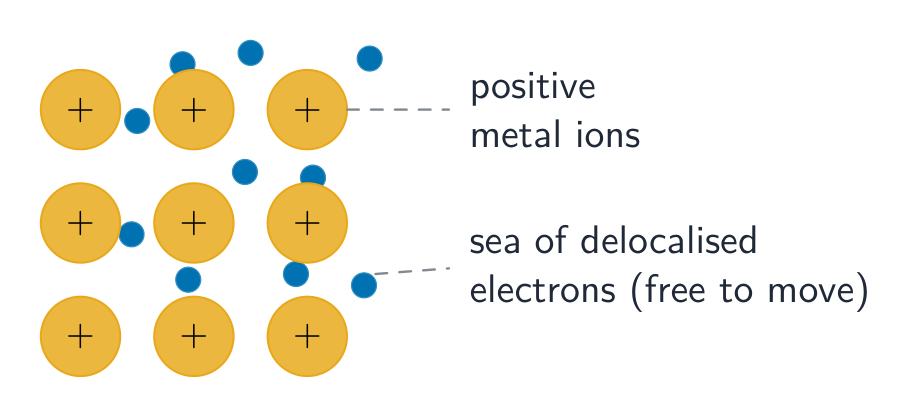
  • Metallic bond 金属键: metal atoms share a "sea" of mobile electrons.
한국어
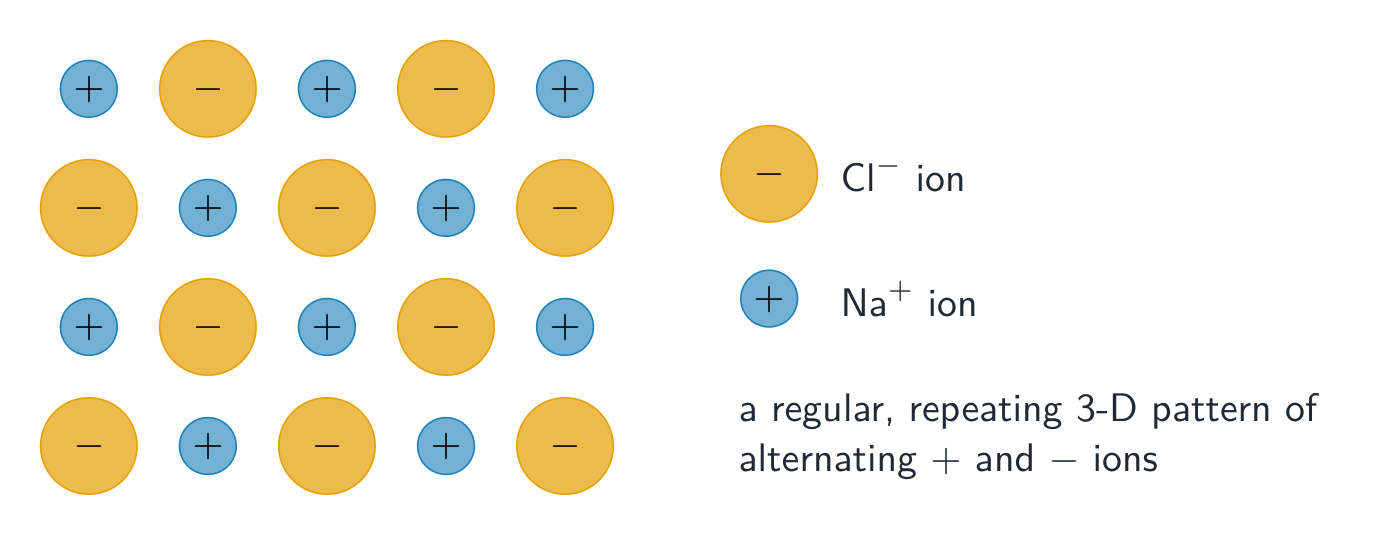
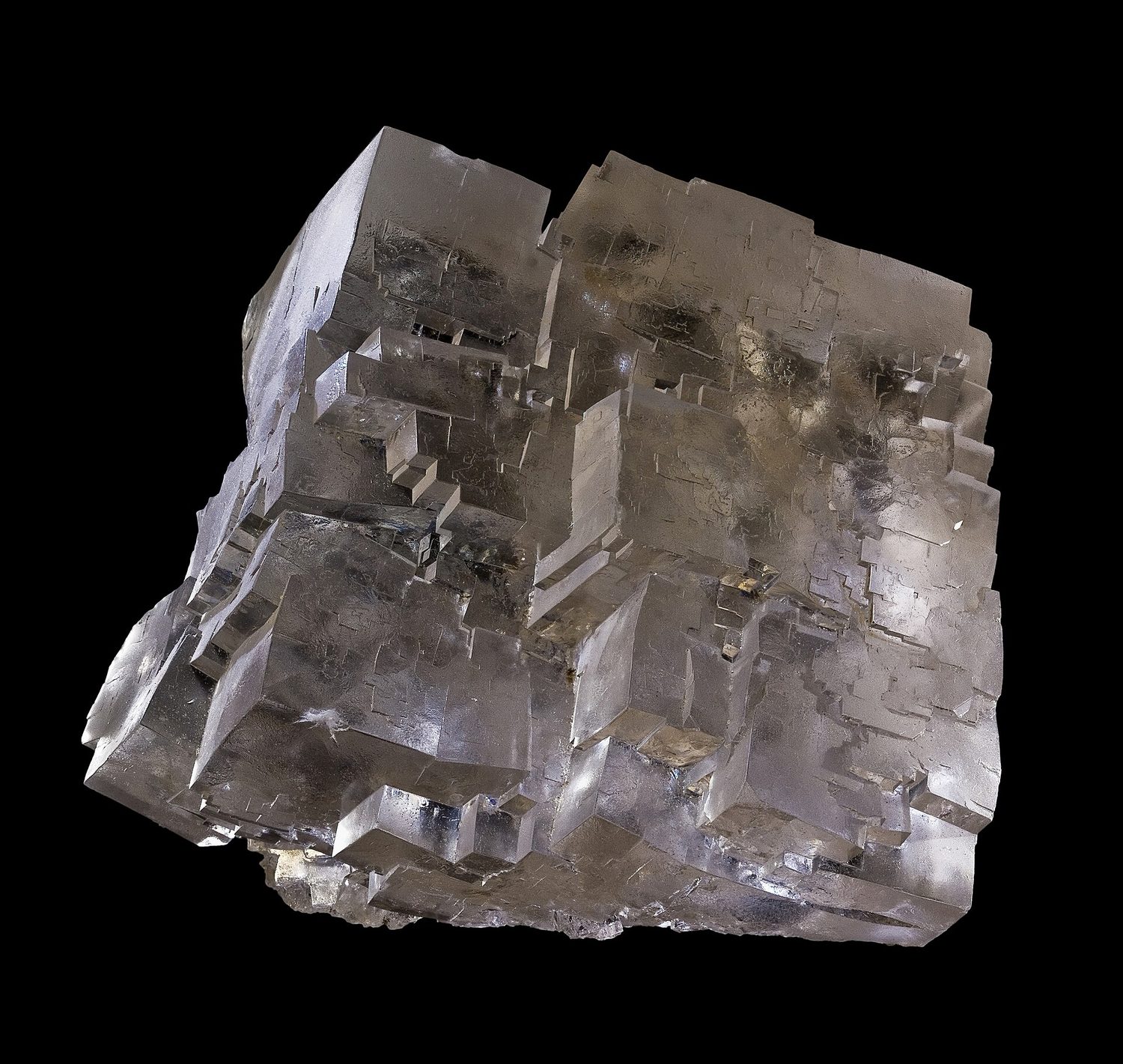
염화나트륨 결정: 이온성 고체는 서로 다른 전하를 띤 이온들의 격자로 형성됩니다

화학 결합은 원자들을在一起的 붙여두는 인력입니다. 어떤 결합이 형성될지는 원자들의 전기음성도에 따라 결정됩니다:

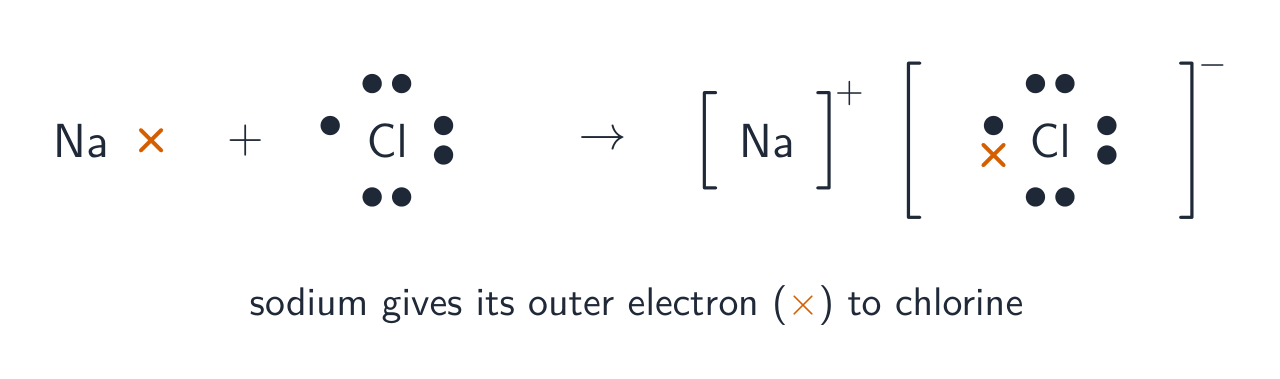
이온 결합: 금속이 외부 전자를 비금속에게 양도합니다
  • 이온 결합: 금속에서 비금속으로 전자가 이동합니다 (큰 전기음성도 차이).
  • 공유 결합: 비금속들이 전자를 공유합니다 (작은 차이). 중간 정도의 큰 차이는 극성 공유 결합을 만듭니다.
  • 금속 결합: 금속 원자들이 이동 가능한 전자의 '바다'를 공유합니다.
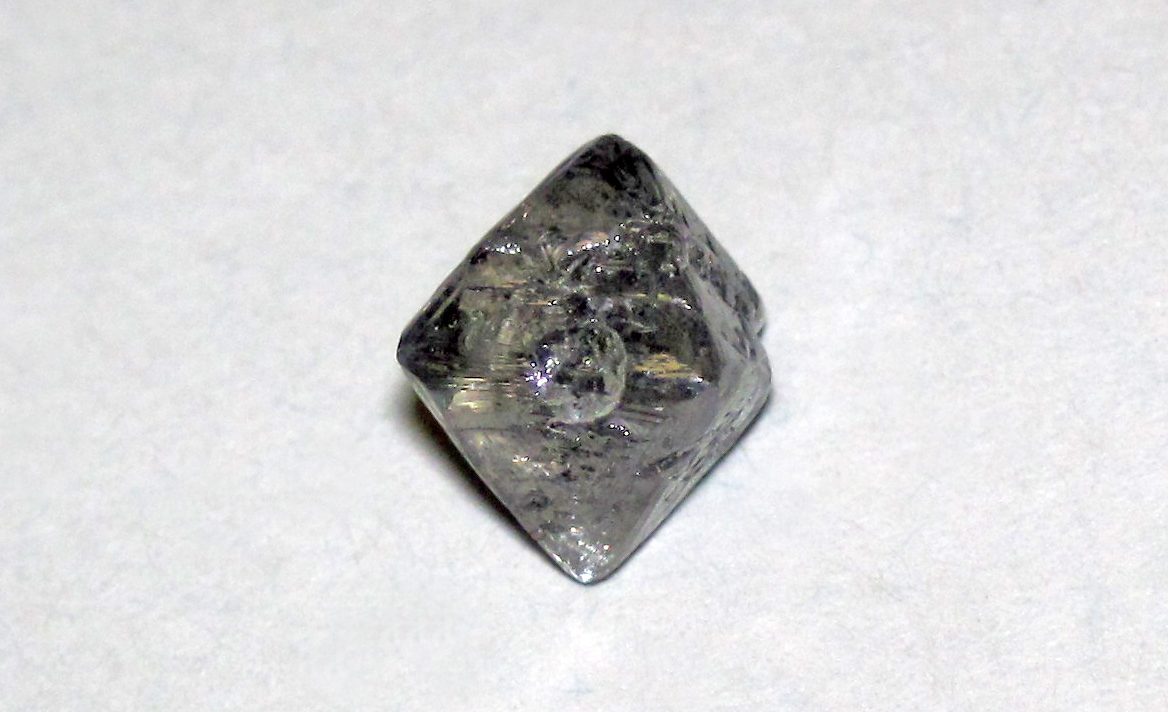
 다이아몬드 결정: 거대한 공유 결합 네트워크가 극도의 단단함과 높은 융점을 설명합니다
다이아몬드 결정: 거대한 공유 결합 네트워크가 극도의 단단함과 높은 융점을 설명합니다
Explore · ⁨탐색하기⁩

Form an ionic bond by electron transfer · ⁨전자 이동을 통해 이온 결합 형성하기⁩

An ionic bond forms when a metal gives electrons to a non-metal, making oppositely charged ions that attract; a covalent bond shares electrons instead. · ⁨이온 결합은 금속이 비금속에게 전자를 주어 서로 다른 전하를 띤 이온이 생성되고 끌어당길 때-formed됩니다. 반면, 공유 결합은 전자를 공유함으로써 형성됩니다.⁩

2.2

Intramolecular Force and Potential Energy · ⁨분자 간 힘과ポテンシャル 에너지⁩

Syllabus
English

Learning Objective 2.2.A: Represent the relationship between potential energy and distance between atoms, based on factors that influence the interaction strength.

  • 2.2.A.1 A graph of potential energy versus the distance between atoms (internuclear distance) is a useful representation for describing the interactions between atoms. Such graphs illustrate both the equilibrium bond length (the separation between atoms at which the potential energy is lowest) and the bond energy (the energy required to separate the atoms).
  • 2.2.A.2 In a covalent bond, the bond length is influenced by both the size of the atom's core and the bond order (i.e., single, double, triple). Bonds with a higher order are shorter and have larger bond energies.
  • 2.2.A.3 Coulomb's law can be used to understand the strength of interactions between cations and anions.
    • i. Because the interaction strength is proportional to the charge on each ion, larger charges lead to stronger interactions.
    • ii. Because the interaction strength increases as the distance between the centers of the ions (nuclei) decreases, smaller ions lead to stronger interactions.
한국어

학습목표 2.2.A: 상호작용 강도에 영향을 미치는 요인을 기반으로 퍼텐셜 에너지와 원자 간 거리 간의 관계를 표현하시오.

  • 2.2.A.1 퍼텐셜 에너지와 원자 간 거리(핵-핵 거리)의 그래프는 원자 간 상호작용을 설명하기 위한 유용한 표현 방식입니다.此类 그래프는 평형 결합 길이(퍼텐셜 에너지가 가장 낮을 때의 원자 간 거리)와 결합 에너지(원자를 분리하는 데 필요한 에너지)를 모두 보여줍니다.
  • 2.2.A.2 공유결합에서 결합 길이는 원자 코어의 크기와 결합 서열(즉, 단일, 이중, 삼중 결합)에 의해 영향을 받습니다. 결합 서열이 높을수록 결합 길이는 짧아지고 결합 에너지는 커집니다.
  • 2.2.A.3 쿨롱의 법칙을 사용하여 양이온과 음이온 간의 상호작용 강도를 이해할 수 있습니다.
    • i. 상호작용 강도가 각 이온의 전하에 비례하므로, 더 큰 전하수는 더 강한 상호작용을 의미합니다.
    • ii. 상호작용 강도는 이온 중심(핵) 사이의 거리가 줄어들어 증가하므로, 더 작은 이온은 더 강한 상호작용을 유도합니다.

Source: College Board AP Course and Exam Description · ⁨출처: College Board AP Course and Exam Description⁩

English

As two atoms approach, a potential energy 势能 curve captures the balance of attraction and repulsion. It dips to a minimum at the bond length 键长 (the stable separation) whose depth is the bond energy 键能. Shorter, stronger bonds sit in deeper, tighter wells; more shared pairs (double, triple bonds) give shorter, stronger bonds.

한국어

두 원자가 가까워지면 ポテン셜 에너지 곡선이 인력과 반발력의 균형을 보여줍니다. 결합 길이(안정된 거리)에서 최소값을 가지며, 그 깊이가 결합 에너지입니다. 짧고 강한 결합은 더 깊고 좁은ポテン셜 우물에 위치하며, 더 많은 공유 쌍(이중 결합, 삼중 결합)은 짧고 강한 결합을 만듭니다.

2.3

Structure of Ionic Solids · ⁨이온성 고체의 구조⁩

Syllabus
English

Learning Objective 2.3.A: Represent an ionic solid with a particulate model that is consistent with Coulomb's law and the properties of the constituent ions.

  • 2.3.A.1 The cations and anions in an ionic crystal are arranged in a systematic, periodic 3-D array that maximizes the attractive forces among cations and anions while minimizing the repulsive forces.
    • Exclusion statement: Knowledge of specific crystal structures is not essential to an understanding of the learning objective and will not be assessed on the AP Exam.
한국어

학습목표 2.3.A: 쿨롱의 법칙과 구성 이온의 성질에 부합하는 입자 모델로 이온 고체를 표현하시오.

  • 2.3.A.1 이온 결정 내의 양이온과 음이온은 양이온과 음이온 사이의 인력을 극대화하고 반발력을 최소화하도록 체계적이고 주기적인 3차원 배열을 이룹니다.
    • 제외 사항: 구체적인 결정 구조에 대한 지식은 학습목표를 이해하는 데 필수적이지 않으며, AP 시험에서 출제되지 않습니다.

Source: College Board AP Course and Exam Description · ⁨출처: College Board AP Course and Exam Description⁩

English

An ionic solid 离子固体 is a repeating 3-D lattice 晶格 of alternating cations and anions, held by strong electrostatic attraction. This explains their high melting points, brittleness, and why they conduct only when molten or dissolved (ions freed to move). The lattice energy rises with larger ion charges and smaller ions, so MgO (both $2+/2-$) melts far higher than NaCl (both $1+/1-$).

한국어

이온성 고체는 교대하는 양이온과 음이온으로 이루어진 반복되는 3차원 **격자(lattice)**이며, 강력한 정전기적 인력으로 유지됩니다. 이것이 높은 융점, 취성, 그리고 용융되거나 용해되었을 때만 전기를 전도하는 이유(이온이 자유롭게 움직일 수 있음)를 설명합니다. 격자 에너지는 이온의 전하가 클수록, 이온 크기가 작을수록 커지므로 MgO(모두 $2+/2-$)는 NaCl(모두 $1+/1-$)보다 훨씬 높은 온도에서 융해됩니다.

이온들이 교대하는 양이온과 음이온의 거대한 격자에packed됩니다
이온들이 교대하는 양이온과 음이온의 거대한 격자에 packed됩니다
Vocabulary · ⁨어휘⁩ Train · ⁨연습하기⁩
English 한국어
lattice/ˈlætɪs/ 격자
2.4

Structure of Metals and Alloys · ⁨금속 및 합금의 구조⁩

Syllabus
English

Learning Objective 2.4.A: Represent a metallic solid and/or alloy using a model to show essential characteristics of the structure and interactions present in the substance.

  • 2.4.A.1 Metallic bonding can be represented as an array of positive metal ions surrounded by delocalized valence electrons (i.e., a "sea of electrons").
  • 2.4.A.2 Interstitial alloys form between atoms of significantly different radii, where the smaller atoms fill the interstitial spaces between the larger atoms (e.g., with steel in which carbon occupies the interstices in iron).
  • 2.4.A.3 Substitutional alloys form between atoms of comparable radius, where one atom substitutes for the other in the lattice. (e.g., in certain brass alloys, other elements, usually zinc, substitute for copper.)
한국어

학습목표 2.4.A: 물질에 존재하는 구조 및 상호작용의 핵심 특징을 보여주는 모델을 사용하여 금속 고체 및/또는 합금을 표현하시오.

  • 2.4.A.1 금속 결합은 비국지화된 원外层전자로 둘러싸인 양의 금속 이온의 배열로 표현할 수 있습니다(즉, "전자 바다" 모델).
  • 2.4.A.2 입자간 합금은 원자 반지름이 크게 다른 원자 사이에 형성되는데, 작은 원자들이 큰 원자 사이의 공간(간격)을 채웁니다(예: 철의 간격을 탄소占据了하는 강철).
  • 2.4.A.3 치환형 합금은 반지름이 유사한 원자 사이에 형성되는데, 하나의 원자가 격자 내에서 다른 원자를 대체합니다.(예: 특정 황동 합금에서 구리를 대체하는 다른 원소,通常是锌).

Source: College Board AP Course and Exam Description · ⁨출처: College Board AP Course and Exam Description⁩

English

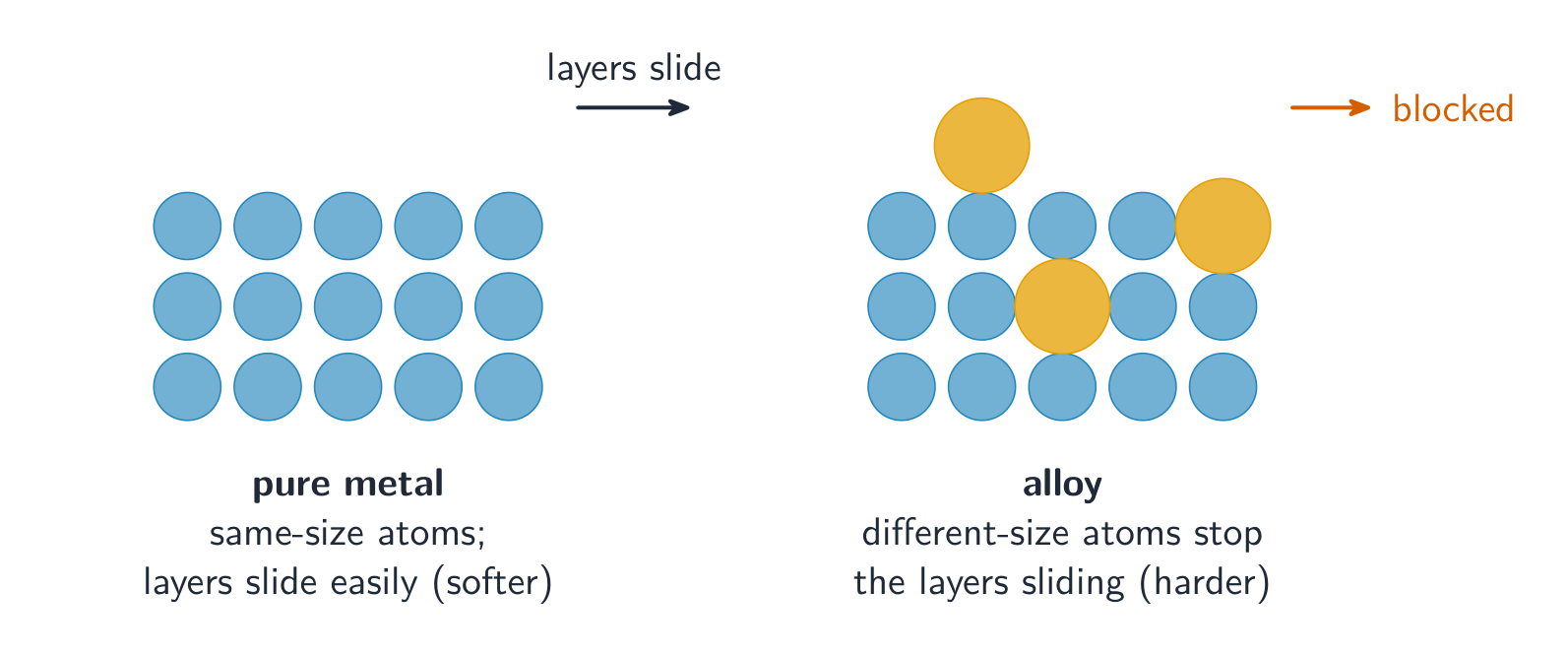
In a metal, cations sit in a lattice bathed in delocalized 离域 electrons, which explains conductivity, malleability, and luster. An alloy 合金 mixes metals: a substitutional alloy swaps in similar-sized atoms; an interstitial alloy (like steel) fits small atoms into the gaps, making it harder.

한국어

금속에서 양이온들은 비국재화된(delocalized) 전자들 속에 있는 격자 위에 자리 잡고 있으며, 이는 전도성, 연성, 광택을 설명합니다. **합금(alloy)**은 금속을 섞은 것입니다: 치환형(substitutional) 합금은 유사한 크기의 원자가 교체되고, 침입형(interstitial) 합금(예: 강철)은 작은 원자가 빈 새에 끼어들어 단단하게 만듭니다.

합금 내 서로 다른 크기의 원자가 층의 미끄러짐을 막아 단단하게 만듭니다
금속 결합: 비국소화된 전자 바다 속의 양이온들
금속 결합: 비국지화 전자의 바다 속 양이온
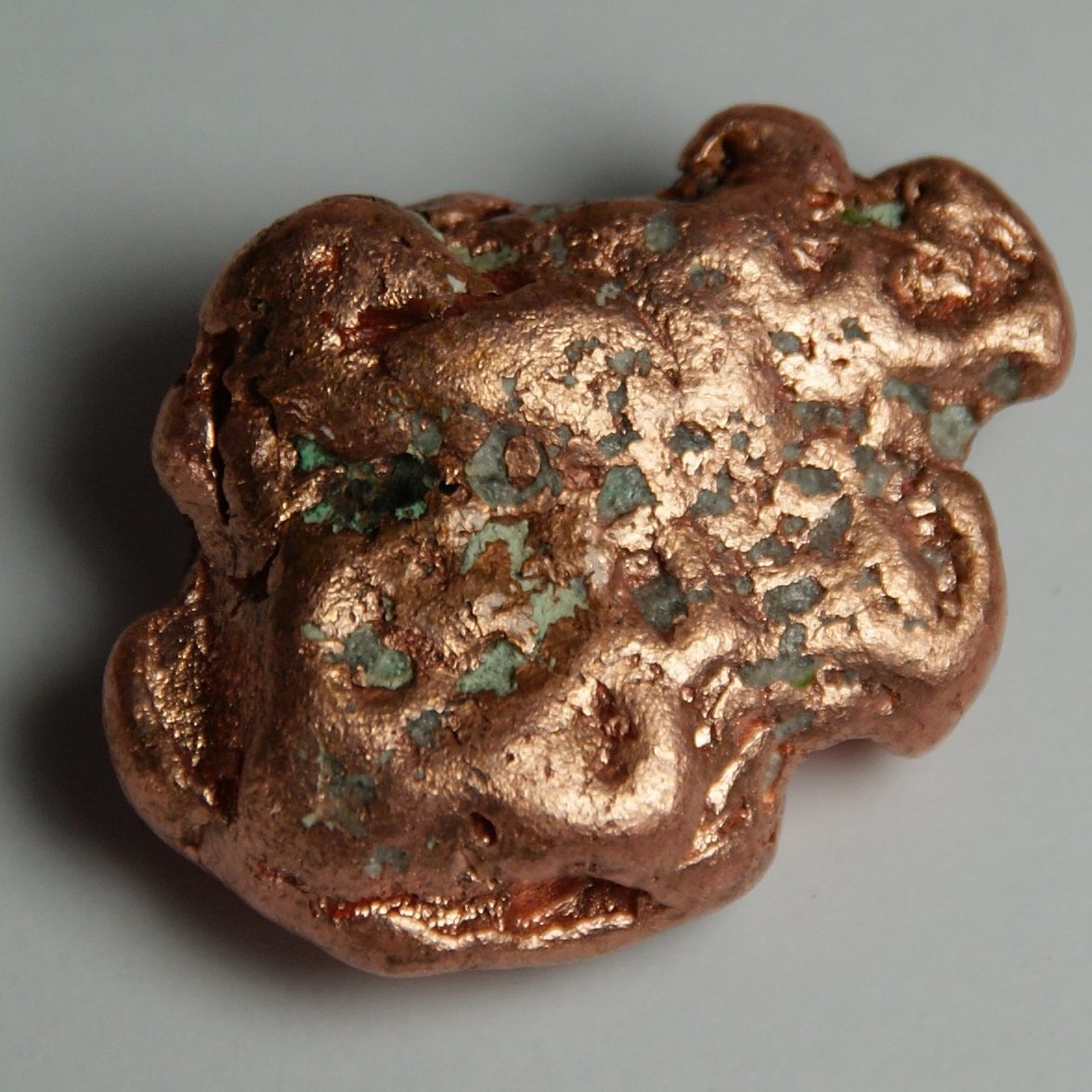
천연 구리: 금속 결합은 비국재화된 전자를 가진 반짝이고 연성 있는 고체를 만듭니다
Explore · ⁨탐색하기⁩

Slide layers in a metallic lattice · ⁨금속 격자 내 층을 미끄러지게 하기⁩

A metal is positive ions in a sea of delocalised electrons. The layers can slide without breaking the bond, so metals are malleable and conduct. · ⁨금속은 자유 전자 바다 속에 있는 양이온입니다. 층들이 결합을 끊지 않고 미끄러질 수 있어 금속은 연성(연성)과 전도성을 가집니다.⁩

Vocabulary · ⁨어휘⁩ Train · ⁨연습하기⁩
English 한국어
chemical bond/ˈkemɪkl bɒnd/ 화학 결합
Ionic bond/aɪˈɒnɪk bɒnd/ 이온 결합
Covalent bond/ˈkəʊvələnt bɒnd/ 공유 결합
polar covalent/ˈpəʊlə ˈkəʊvələnt/ 극성 공유 결합
Metallic bond/məˈtælɪk bɒnd/ 금속 결합
potential energy/pəˈtenʃl ˈenədʒi/ 위치 에너지
bond length/bɒnd leŋθ/ 결합 길이
bond energy/bɒnd ˈenədʒi/ 결합 에너지
ionic solid/aɪˈɒnɪk ˈsɒlɪd/ 이온성 고체
delocalized/dɪˈlɒkəlaɪzd/ 비국소화됨
alloy/ˈælɔɪ/ 합금(alloy)
Lewis diagram/ˈluːɪs ˈdaɪəɡræm/ 루이스 도식
2.5

Lewis Diagrams · ⁨루이스 도식(Lewis Diagrams)⁩

Syllabus
English

Learning Objective 2.5.A: Represent a molecule with a Lewis diagram.

  • 2.5.A.1 Lewis diagrams can be constructed according to an established set of principles.
한국어

학습 목표 2.5.A: 루이스 도식을 사용하여 분자를 표현한다.

  • 2.5.A.1 루이스 도식은 확립된 원칙에 따라 구성할 수 있다.

Source: College Board AP Course and Exam Description · ⁨출처: College Board AP Course and Exam Description⁩

English

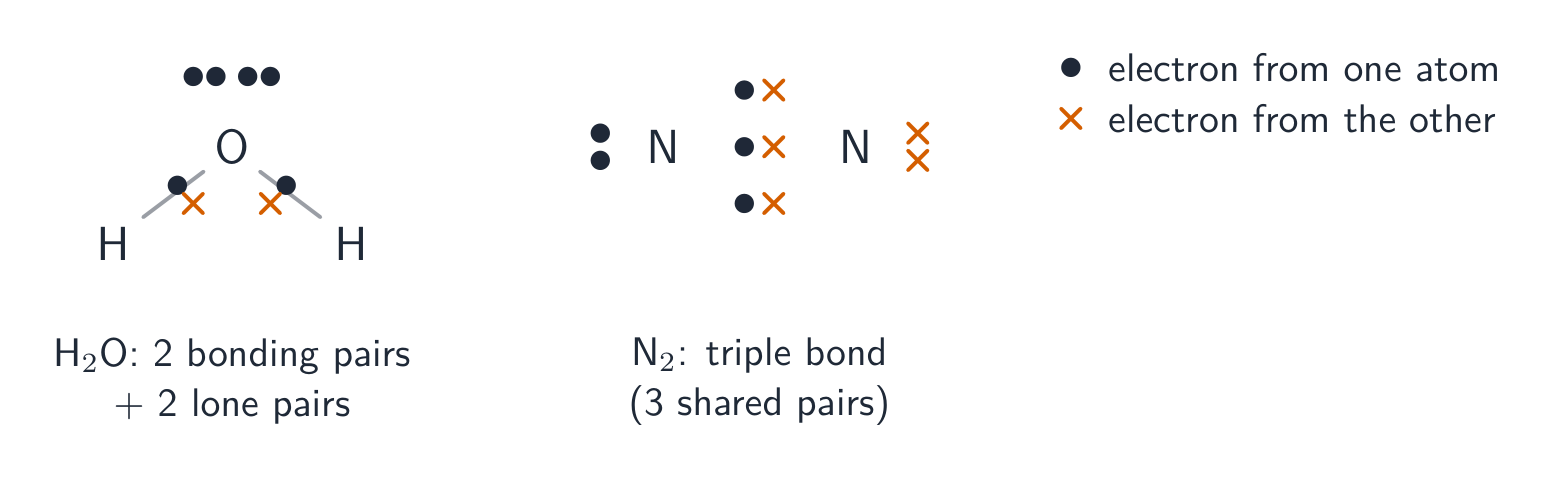
A Lewis diagram 路易斯结构 shows valence electrons as bonding pairs and lone pairs 孤对电子, giving most atoms an octet 八隅体 (8 valence electrons; H wants 2). Steps: count total valence electrons, connect atoms with single bonds, complete octets on outer atoms, then form multiple bonds if the central atom is short.

Worked example. Draw carbon dioxide, $\text{CO}_2$. Total valence electrons $=4+2(6)=16$. Put C in the centre; single bonds to each O use $4$ electrons and leave the outer O atoms short. Completing octets forces two double bonds, $\text{O}=\text{C}=\text{O}$: each O then has two lone pairs, C has none, and all $16$ electrons are placed with every atom at an octet.

한국어

루이스 도식은 결합 쌍과 **비결합 쌍(lone pairs)**로 원전자를 표시하여 대부분의 원자에게 **옥텟(octet, 원전자 8개; 수소(H)는 2개)**을 제공합니다. 단계: 총 원전자 세기, 원자同士를 단일 결합으로 연결, 외부 원자의 옥텟 완성, 중앙 원자가 부족할 경우 다중 결합 형성.

점과 십자표 도식은 분자 내의 결합 쌍과 비결합 쌍을 보여줍니다

** solved example.** 이산화탄소 $\text{CO}_2$을 그리십시오. 총 원전자 $=4+2(6)=16$. C를 중앙에 두고 각 O에 단일 결합을 두면 $4$개의 전자를 사용하고 외부 O 원자는 불완전합니다. 옥텟을 완성하려면 두 개의 이중 결합이 필요하며, $\text{O}=\text{C}=\text{O}$: 각 O에는 비결합 쌍 두 개, C에는 없으며, 모든 $16$ 전자가 배치되어 모든 원자가 옥텟을 이룹니다.

Vocabulary · ⁨어휘⁩ Train · ⁨연습하기⁩
English 한국어
lone pairs/ləʊn peəz/ 비결합쌍
octet/ɒkˈtet/ 옥텟
2.6

Resonance and Formal Charge · ⁨공명 및 형식 전하⁩

Syllabus
English

Learning Objective 2.6.A: Represent a molecule with a Lewis diagram that accounts for resonance between equivalent structures or that uses formal charge to select between nonequivalent structures.

  • 2.6.A.1 In cases where more than one equivalent Lewis structure can be constructed, resonance must be included as a refinement to the Lewis structure. In many such cases, this refinement is needed to provide qualitatively accurate predictions of molecular structure and properties.
  • 2.6.A.2 The octet rule and formal charge can be used as criteria for determining which of several possible valid Lewis diagrams provides the best model for predicting molecular structure and properties.
  • 2.6.A.3 As with any model, there are limitations to the use of the Lewis structure model, particularly in cases with an odd number of valence electrons.
한국어

학습 목표 2.6.A: 등가 구조 사이의 공명을 반영하거나 형식 전하를 사용하여 비등가 구조 중 하나를 선택하는 루이스 도식으로 분자를 표현한다.

  • 2.6.A.1 여러 개의 등가 루이스 구조를 구성할 수 있는 경우, 공명을 루이스 구조의 보정 요소로 포함해야 한다. 이러한 많은 경우에서 이 보정은 분자 구조와 성질을 정성적으로 정확히 예측하기 위해 필요하다.
  • 2.6.A.2 옥텟 규칙과 형식 전하는 가능한 여러 유효한 루이스 도식 중에서 분자 구조와 성질을 예측하는 데 가장 좋은 모델이 되는 것을 결정하는 기준으로 사용할 수 있다.
  • 2.6.A.3 모든 모델과 마찬가지로 루이스 구조 모델 사용에는 한계가 있으며, 특히 원자가 전자의 개수가 홀수인 경우에 그 한계가 뚜렷하다.

Source: College Board AP Course and Exam Description · ⁨출처: College Board AP Course and Exam Description⁩

English

When two or more valid Lewis diagrams differ only in electron placement, the true structure is an average – resonance 共振. Formal charge 形式电荷 (valence electrons minus lone-pair electrons minus half the bonding electrons) picks the best structure: the one with formal charges closest to zero, and any negative charge on the most electronegative atom.

Worked example. Assign formal charges in the nitrate ion, $\text{NO}_3^{-}$ (one double bond, two single bonds). For N (4 bonds, no lone pairs): $5-0-4=+1$. For the double-bonded O (2 lone pairs): $6-4-2=0$. For each single-bonded O (3 lone pairs): $6-6-1=-1$. The total is $+1+0+(-1)+(-1)=-1$, matching the ion's overall charge – a good check that the structure is drawn correctly. Because the three O atoms are equivalent by resonance, the real ion has three identical bonds.

한국어

두 개 이상의 유한 루이스 도식이 전자 배치만 다를 때, 실제 구조는 그 평균인 **공명(resonance)**입니다. 형식 전하(formal charge) (원전자 - 비결합쌍 전자 - 결합 전자의 절반)이 가장 좋은 구조를 선택합니다: 형식 전하가 0에 가장 가까운 것, 그리고 음전하가 가장 전기음성도가 높은 원자에 있는 구조입니다.

풀이 예제. 질산 이온 $\text{NO}_3^{-}$ (이중 결합 1개, 단일 결합 2개)의 형전하를 결정하십시오. N(4개의 결합, 비공유전자쌍 없음): $5-0-4=+1$. 이중 결합된 O(비공유전자쌍 2개): $6-4-2=0$. 각 단일 결합된 O(비공유전자쌍 3개): $6-6-1=-1$. 총합은 $+1+0+(-1)+(-1)=-1$로, 이온의 전체 전하와 일치합니다—구조가 올바르게 그려졌음을 확인하는 좋은 체크 포인트입니다. 세 개의 O 원자가 공명에 의해 동등하므로, 실제 이온은 동일한 세 개의 결합을 가집니다.

Vocabulary · ⁨어휘⁩ Train · ⁨연습하기⁩
English 한국어
resonance/ˈrezənəns/ 공명
Formal charge/ˈfɔːml tʃɑːdʒ/ 형식 전하
2.7

VSEPR and Bond Hybridization · ⁨VSEPR 및 결합 혼성화⁩

Syllabus
English

Learning Objective 2.7.A: Based on the relationship between Lewis diagrams, VSEPR theory, bond orders, and bond polarities:

  • i. Explain structural properties of molecules.

  • ii. Explain electron properties of molecules.

  • 2.7.A.1 VSEPR theory uses the Coulombic repulsion between electrons as a basis for predicting the arrangement of electron pairs around a central atom.

  • 2.7.A.2 Both Lewis diagrams and VSEPR theory must be used for predicting electronic and structural properties of many covalently bonded molecules and polyatomic ions, including the following:

    • i. Molecular geometry (linear, trigonal planar, tetrahedral, trigonal pyramidal, bent, trigonal bipyramidal, seesaw, T-shaped, octahedral, square pyramidal, square planar)
    • ii. Bond angles
    • iii. Relative bond energies based on bond order
    • iv. Relative bond lengths (multiple bonds, effects of atomic radius)
    • v. Presence of a dipole moment
    • vi. Hybridization of valence orbitals for atoms within a molecule or polyatomic ion
  • 2.7.A.3 The terms "hybridization" and "hybrid atomic orbital" are used to describe the arrangement of electrons around a central atom. When the central atom is $sp$ hybridized, its ideal bond angles are $180°$; for $sp^2$ hybridized atoms the bond angles are $120°$; and for $sp^3$ hybridized atoms the bond angles are $109.5°$.

    • Exclusion statement: An understanding of the derivation and depiction of hybrid orbitals will not be assessed on the AP Exam. The course includes the distinction between sigma and pi bonding, the use of VSEPR to explain the shapes of molecules, and the $sp$, $sp^2$, and $sp^3$ nomenclature.
    • Exclusion statement: Hybridization involving d orbitals will not be assessed on the AP Exam. When an atom has more than four pairs of electrons surrounding the central atom, students are only responsible for the shape of the resulting molecule.
  • 2.7.A.4 Bond formation is associated with overlap between atomic orbitals. In multiple bonds, such overlap leads to the formation of both sigma and pi bonds. The overlap is stronger in sigma than pi bonds, which is reflected in sigma bonds having greater bond energy than pi bonds. The presence of a pi bond also prevents the rotation of the bond and leads to geometric isomers.

    • Exclusion statement: Molecular orbital theory is recommended as a way to provide deeper insight into bonding. However, the AP Exam will neither explicitly assess molecular orbital diagrams, filling of molecular orbitals, nor the distinction between bonding, nonbonding, and antibonding orbitals.
한국어

학습 목표 2.7.A: 루이스 도식, VSEPR 이론, 결합 순서 및 결합 극성 간의 관계에 근거하여:

  • i. 분자의 구조적 특성을 설명한다.

  • ii. 분자의 전자적 특성을 설명한다.

  • 2.7.A.1 VSEPR 이론은 중심 원자 주위의 전자 쌍 배치를 예측하기 위한 기초로 전자 간의 쿨롱 반발력을 사용한다.

  • 2.7.A.2 다음을 포함한 많은 공유 결합 분자와 다원자 이온의 전자적 및 구조적 특성을 예측하려면 루이스 도식과 VSEPR 이론을 모두 사용해야 한다:

    • i. 분자 기하학(직선형, 삼각 평면형, 사면체형, 삼각 피라미드형, 은형, 삼각 이중피라미드형, 지그재그형, T자형, 팔면체형, 사각 피라미드형, 사각 평면형)
    • ii. 결합 각도
    • iii. 결합 순서에 기반한 상대 결합 에너지
    • iv. 상대 결합 길이(다중 결합, 원자 반지름의 영향)
    • v. 쌍극자 모멘트의 존재 여부
    • vi. 분자 또는 다원자 이온 내 원자의 원자가 궤도함수의 혼성화
  • 2.7.A.3 '혼성화' 및 '혼성 원자 궤도함수'라는 용어는 중심 원자 주위의 전자 배치를 설명하는 데 사용된다. 중심 원자가 $sp$ 혼성화될 때 이상적인 결합 각도는 $180°$이며, $sp^2$ 혼성화된 원자의 결합 각도는 $120°$이고, $sp^3$ 혼성화된 원자의 결합 각도는 $109.5°$이다.

    • 제외 사항: 혼성 궤도함수의 유도 과정과 표현에 대한 이해는 AP 시험에서 평가되지 않는다. 과정에서는 시그마 결합과 파이 결합의 구별, VSEPR을 이용한 분자 모양 설명, 그리고 $sp$, $sp^2$, $sp^3$ 명명법이 포함된다.
    • 제외 사항: d 궤도함수를参与的한 혼성화는 AP 시험에서 평가되지 않는다. 중심 원자를 둘러싼 전자 쌍이 네 쌍보다 많은 경우, 학생들은 생성된 분자의 형태만 담당해야 한다.
  • 2.7.A.4 결합 형성은 원자 궤도함수 간의 중첩과 관련이 있다. 다중 결합에서 이러한 중첩은 시그마 결합과 파이 결합의 형성으로 이어진다. 시그마 결합에서의 중첩은 파이 결합보다 강하므로, 시그마 결합이 파이 결합보다 높은 결합 에너지를 가지는 것이 반영된다. 파이 결합의 존재는 결합의 회전을 방지하고 기하 이성질체를 형성하게 한다.

    • 제외 사항: 분자 궤도함수 이론은 결합에 대한 더 깊은 통찰을 제공하기 위한 방법으로 권장된다. 그러나 AP 시험은 분자 궤도함수 도식, 분자 궤도함수의 채우기, 그리고 결합 궤도함수, 비결합 궤도함수, 반결합 궤도함수之间的의 구분을 명시적으로 평가하지 않는다.

Source: College Board AP Course and Exam Description · ⁨출처: College Board AP Course and Exam Description⁩

English
VSEPR: molecular shapes

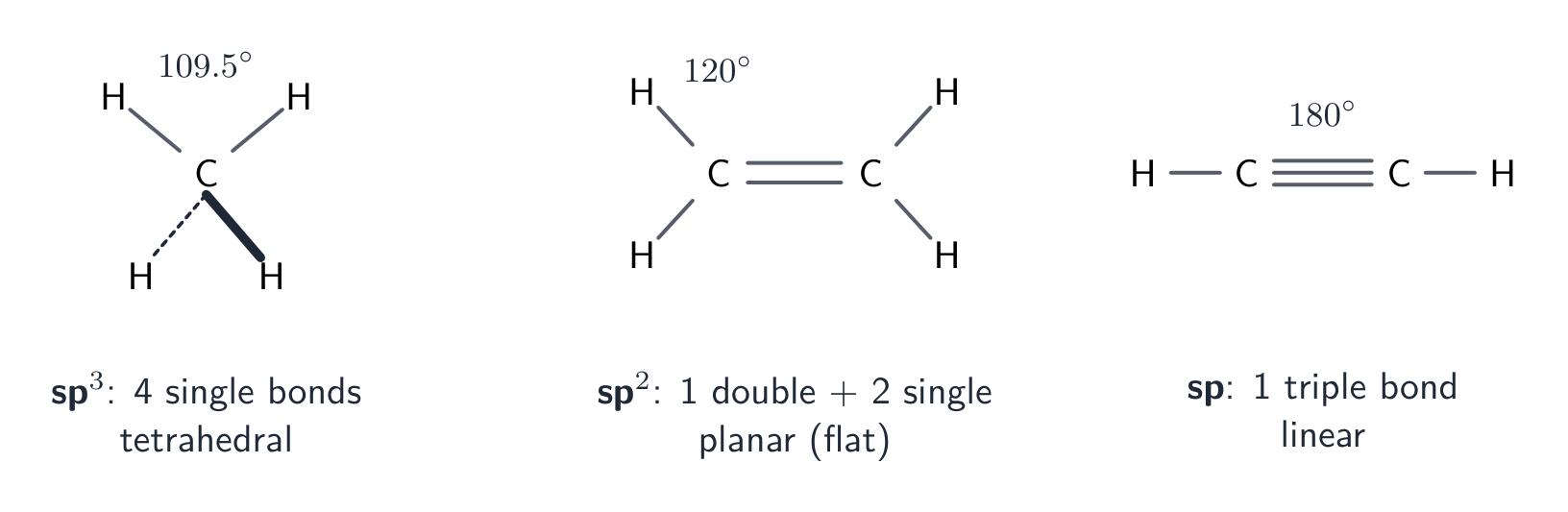
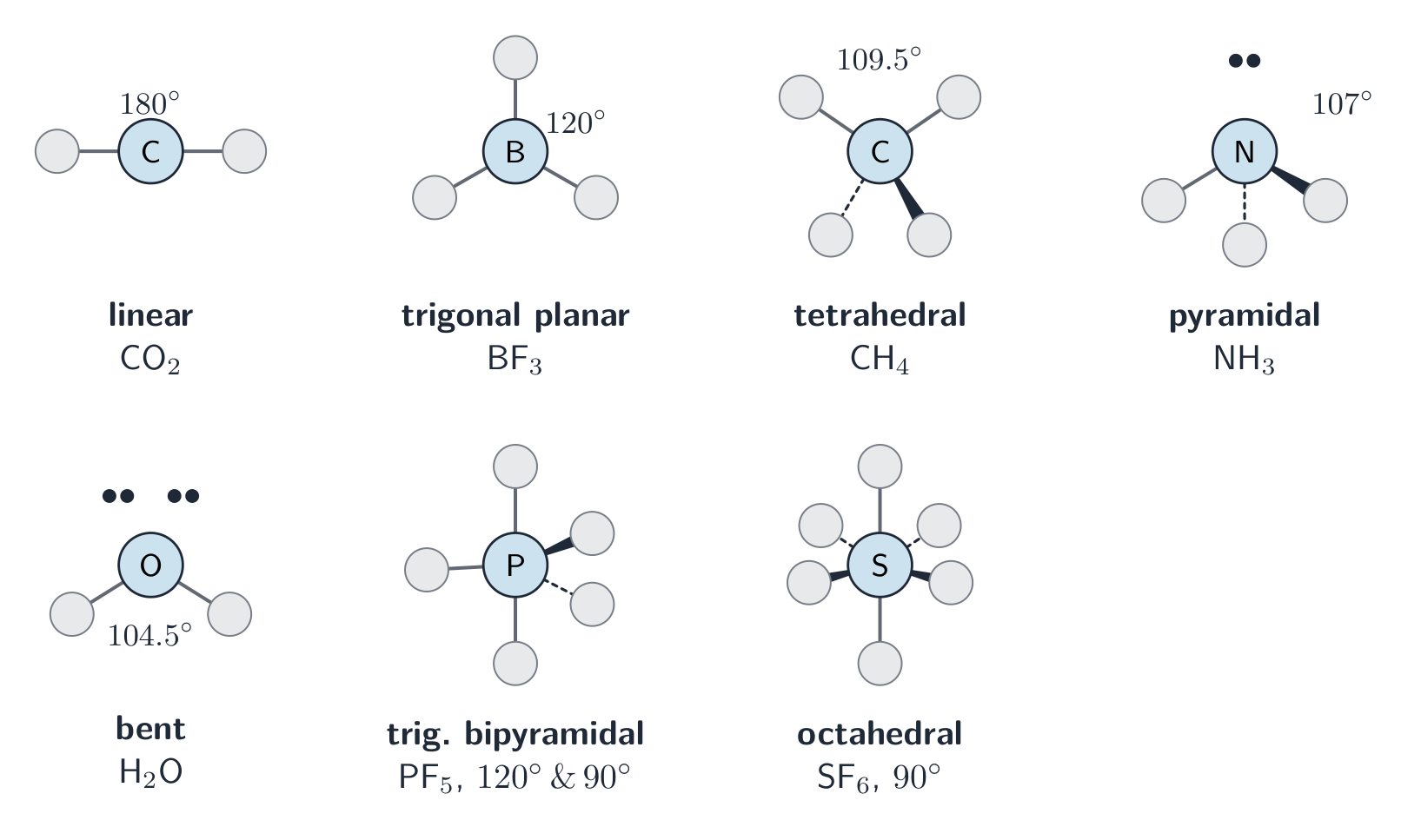
VSEPR 价层电子对互斥 theory predicts shape: electron pairs (bonds and lone pairs) around a central atom spread out as far apart as possible. Counting electron domains gives the geometry (linear, trigonal planar, tetrahedral, …); lone pairs push bonds closer, bending the shape. Hybridization 杂化 ($sp$, $sp^2$, $sp^3$) describes the mixed orbitals matching that geometry. Molecular shape and bond polarity together decide whether the whole molecule is polar.

Worked example. Predict the shape of ammonia, $\text{NH}_3$. Nitrogen has $3$ bonding pairs and $1$ lone pair – four electron domains, so the electron geometry is tetrahedral and the hybridization is $sp^3$. The lone pair is invisible in the shape but still pushes the bonds together, so the molecular shape is trigonal pyramidal with a bond angle of about $107^{\circ}$ (a little less than the ideal $109.5^{\circ}$). The three N–H dipoles do not cancel, so the molecule is polar.

Bonds form when atomic orbitals overlap. Every single bond is one sigma bond σ键 – orbitals overlapping head-on along the line joining the two atoms. A multiple bond adds a pi bond π键, made by $p$ orbitals overlapping sideways above and below that line: a double bond is one sigma + one pi, a triple bond one sigma + two pi. Head-on overlap is more effective, so a sigma bond is stronger (higher bond energy) than a pi bond – which is why a double bond is stronger than a single bond but not twice as strong. A pi bond also locks the two atoms so they cannot rotate about the bond; a C=C double bond therefore has fixed cis and trans forms – geometric isomers 几何异构体 that a freely-rotating single bond could never show.

Worked example. Count the bonds in ethene, $\text{H}_2\text{C}=\text{CH}_2$. The four C–H bonds are single bonds (one sigma each); the C=C is one sigma plus one pi. So ethene has 5 sigma and 1 pi bond, and that single pi bond is exactly what stops the two $\text{CH}_2$ ends from twisting relative to each other.

한국어
VSEPR: 분자 형태

VSEPR 이론은 형태를 예측합니다: 중심 원자 주위의 전자 쌍(결합과 비공유전자쌍)은 서로尽可能 멀리 떨어지도록 배치됩니다. 전자 영역을 세어 기하학적 구조(직선형, 삼각평면형, 사면체형, …)를 결정하며, 비공유전자쌍은 결합을 더 가까이 밀어내어 형태를 구부러지게 만듭니다. 혼성화($sp$, $sp^2$, $sp^3$)는 해당 기하학적 구조에 맞는 혼합 궤도함을 설명합니다. 분자의 형태와 결합 극성이 함께 결정하여 전체 분자가 극성인지 여부를 판별합니다.

혼성화와 형태: sp3 사면체형, sp2 평면형, sp 직선형
일반적인 VSEPR 형태 및 결합각
일반적인 VSEPR 형태 및 결합각

풀이 예제. 암모니아 $\text{NH}_3$의 형태를 예측하십시오. 질소는 $3$ 결합쌍과 $1$ 비공유전자쌍을 가지고 있어 네 개의 전자 영역이 되므로, 전자 기하학은 사면체형이고 혼성화는 $sp^3$입니다. 비공유전자쌍은 형태에는 보이지 않지만 여전히 결합을 모아당기므로, 분자 형태는 약 $107^{\circ}$의 결합각을 가진 삼각뿔형이며 이는 이상적인 $109.5^{\circ}$보다 약간 작습니다. 세 N–H 쌍극자는 상쇄되지 않으므로 분자는 극성입니다.

원자 궤도함이 중첩될 때 결합이 형성됩니다. 모든 단일 결합은 하나의 시그마 결합 σ이며, 두 원자를 잇는 선을 따라 궤도함이 정면으로 중첩됩니다. 다중 결합은 추가되는 파이 결합 π를 포함하는데, 이는 $p$ 궤도함들이 그 선 위아래로 나란히 중첩되어 만들어집니다: 이중 결합은 시그마 1개+파이 1개, 삼중 결합은 시그마 1개+파이 2개입니다. 정면 중첩이 더 효율적이므로 시그마 결합은 더 강합니다(높은 결합 에너지)—따라서 이중 결합이 단일 결합보다 강하지만 두 배만큼 강하지는 않습니다. 또한 파이 결합은 두 원자를 잠금하여 결합 축에 대한 회전을 불가능하게 합니다. C=C 이중 결합은 고정된 시스 및 트랜스 형태를 가지는데, 이는 자유롭게 회전할 수 있는 단일 결합에서는 절대 나타날 수 없는 기하 이성질체입니다.

풀이 예제. 에텐 $\text{H}_2\text{C}=\text{CH}_2$의 결합을 세어보십시오. 네 개의 C–H 결합은 단일 결합(각각 시그마 1개)이며, C=C는 시그마 1개+파이 1개입니다. 따라서 에텐은 시그마 5개와 파이 1개의 결합을 가지며, 이 단일 파이 결합이 정확히 두 $\text{CH}_2$ 끝부분이 서로에 대해 비틀리는 것을 방지합니다.

Explore · ⁨탐색하기⁩

Predict molecular shape with VSEPR · ⁨VSEPR 이론으로 분자 형태 예측하기⁩

VSEPR: electron pairs repel and spread as far apart as possible, setting the molecule's shape. Add bonding and lone pairs and watch the geometry change. · ⁨VSEPR: 전자쌍은 서로 밀어내며 최대한 멀리 퍼져 분자의 형태를 결정합니다. 결합 쌍과 비결합 전자를 추가하면 기하학 구조가 어떻게 변하는지 확인하세요.⁩

Vocabulary · ⁨어휘⁩ Train · ⁨연습하기⁩
English 한국어
VSEPR/ˈvespə/ VSEPR
Hybridization/ˌhaɪbrɪdaɪˈzeɪʃn/ 혼성 궤도함수
sigma bond/ˈsɪɡmə bɒnd/ 시그마 결합
pi bond/paɪ bɒnd/ π 결합
geometric isomers/ˌdʒiːəʊˈmetrɪk ˈaɪsəməz/ 기하 이성질체
2.7

Exam tips · ⁨시험 팁⁩

English
  • Decide the bond type from the atoms: ionic (metal + non-metal, electron transfer), covalent (non-metals, sharing), metallic (sea of delocalised electrons).
  • An ionic solid conducts only when molten or dissolved (ions free to move), never as a solid.
  • Draw Lewis structures to satisfy the octet (H wants 2), then use VSEPR — electron pairs spread as far apart as possible — to predict the shape.
  • Lone pairs take up space and push bonds closer, bending the shape (water is bent, ammonia pyramidal).
  • A molecule can have polar bonds yet be non-polar overall if its symmetry makes the dipoles cancel ($\text{CO}_2$).
  • A single bond is 1 sigma bond; a double bond is 1 sigma + 1 pi, a triple bond 1 sigma + 2 pi. Sigma is stronger than pi, and a pi bond blocks rotation, giving cis/trans geometric isomers.
한국어
  • 원子的 종류에 따른 결합 유형 결정: 이온 결합(금속+비금속, 전자 이동), 공유 결합(비금속, 공유), 금속 결합(이동성 전자의 바다).
  • 이온 고체는 용융 상태나 용해될 때만 전기를 전도합니다(이온이 자유롭게 움직일 수 있음), 고체 상태로는 절대 전도하지 않습니다.
  • 루이스 구조를 그려 옥테트(H는 2)를 만족시키고, 이후 VSEPR—전자 쌍이 서로尽可能 멀리 배치됨—을 사용하여 형태를 예측합니다.
  • 비공유전자쌍은 공간을 차지하고 결합을 더 가까이 밀어내어 형태를 구부러지게 만듭니다(물은 굽은 형태, 암모니아는 뿔형).
  • 대칭성이 쌍극자를 상쇄시켜 분자 전체는 비극성이 될 수 있지만 극성 결합을 가질 수 있습니다($\text{CO}_2$).
  • 단일 결합은 1개 시그마 결합; 이중 결합은 시그마 1개+파이 1개, 삼중 결합은 시그마 1개+파이 2개입니다. 시그마가 파이를 강하게 우위하며, 파이 결합은 회전을 차단하여 시스/트랜스 기하 이성질체를 생성합니다.

Interactive lessons on this topic · ⁨이 주제에 대한 인터랙티브 수업⁩

Work through it step by step, with instant-check exercises. · ⁨즉시 체크 기능 exercises를 통해 단계별로 진행하세요.⁩

Past Papers · ⁨과거 시험지⁩

More topics in AP Chemistry · ⁨AP 화학⁩ · ⁨AP Chemistry · ⁨AP 화학⁩ 내 추가 주제⁩

Log in or create account · ⁨로그인 또는 계정 만들기⁩

IGCSE, A-Level & AP