Skip to content · ⁨본문 바로가기⁩
Subjects · ⁨과목⁩

AP Biology · ⁨AP 생물학⁩

Tips · ⁨팁⁩

AP Biology is built on four big ideas: evolution, energetics, information storage and transmission, and systems interactions. Its content is huge, but the exam does not test recall of it. It tests whether you can use biology on an unfamiliar case — a species you have never met, an experiment you have never seen.

The science practices are the real syllabus: reading a graph, designing an experiment, identifying the control, and justifying a claim with evidence. These are exactly what the free-response section asks for.

Statistics is examinable. Chi-square, standard error and error bars appear regularly, and they carry marks that pure content revision never reaches.

Notes run through all eight units, with diagrams for the processes that are easier seen than read. The library holds released free-response questions; the biology rubric pays for linking structure to function and for handling data correctly, so the worked answers are built that way.

  • 1

    Chemistry of Life · ⁨생명의 화학⁩

    Watch lesson · ⁨수업 보기⁩
    1.1

    Structure of Water and Hydrogen Bonding · ⁨물의 구조와 수소 결합⁩

    Syllabus
    English

    Big Idea 4 — Systems Interactions: Biological systems interact, and these systems and their interactions exhibit complex properties.

    Learning Objective 1.1.A: Explain how the properties of water that result from its polarity and hydrogen bonding affect its biological function.

    • 1.1.A.1 Living systems depend on the properties of water to sustain life.
      • 1.1.A.1.i Water has polarity, because of the formation of polar covalent bonds between hydrogen and oxygen within water molecules. This polarity contributes to hydrogen bonding between and within biological molecules.
      • 1.1.A.1.ii Water has a high specific heat capacity, which allows for the maintenance of homeostatic body temperature within living organisms.
      • 1.1.A.1.iii Water has a high heat of vaporization, which allows for the evaporative cooling of the surrounding environment. In living organisms, this property allows for body temperature to be maintained.
    • 1.1.A.2 The hydrogen bonds between adjacent polar water molecules result in cohesion, adhesion, and surface tension.
    한국어

    핵심 개념 4 — 시스템 상호작용: 생물학적 시스템은 상호작용하며, 이러한 시스템과 그 상호작용은 복잡한 성질을 나타냅니다.

    학습 목표 1.1.A: 물의 극성과 수소 결합으로 인해 발생하는 성질이 생물학적 기능에 미치는 영향을 설명하십시오.

    • 1.1.A.1 생명 시스템은 생명을 유지하기 위해 물의 성질에 의존합니다.
      • 1.1.A.1.i 물은 분자 내 수소와 산소 사이의 극성 공유 결합 형성으로 인해 극성을 띱니다. 이 극성은 생물학적 분자 사이 및 내부의 수소 결합에 기여합니다.
      • 1.1.A.1.ii 물은 높은 비열을 가지고 있어, 생물체 내에서 항상 체온을 유지할 수 있게 합니다.
      • 1.1.A.1.iii 물은 높은 증발열을 가지고 있어 주변 환경의 증발 냉각을 가능하게 합니다. 생물체에서는 이 성질로 인해 체온을 유지할 수 있습니다.
    • 1.1.A.2 인접한 극성 물 분자 사이의 수소 결합은 응집력, 흡착력, 표면 장력을 유발합니다.
    Source: College Board AP Course and Exam Description · ⁨출처: College Board AP Course and Exam Description⁩

    English

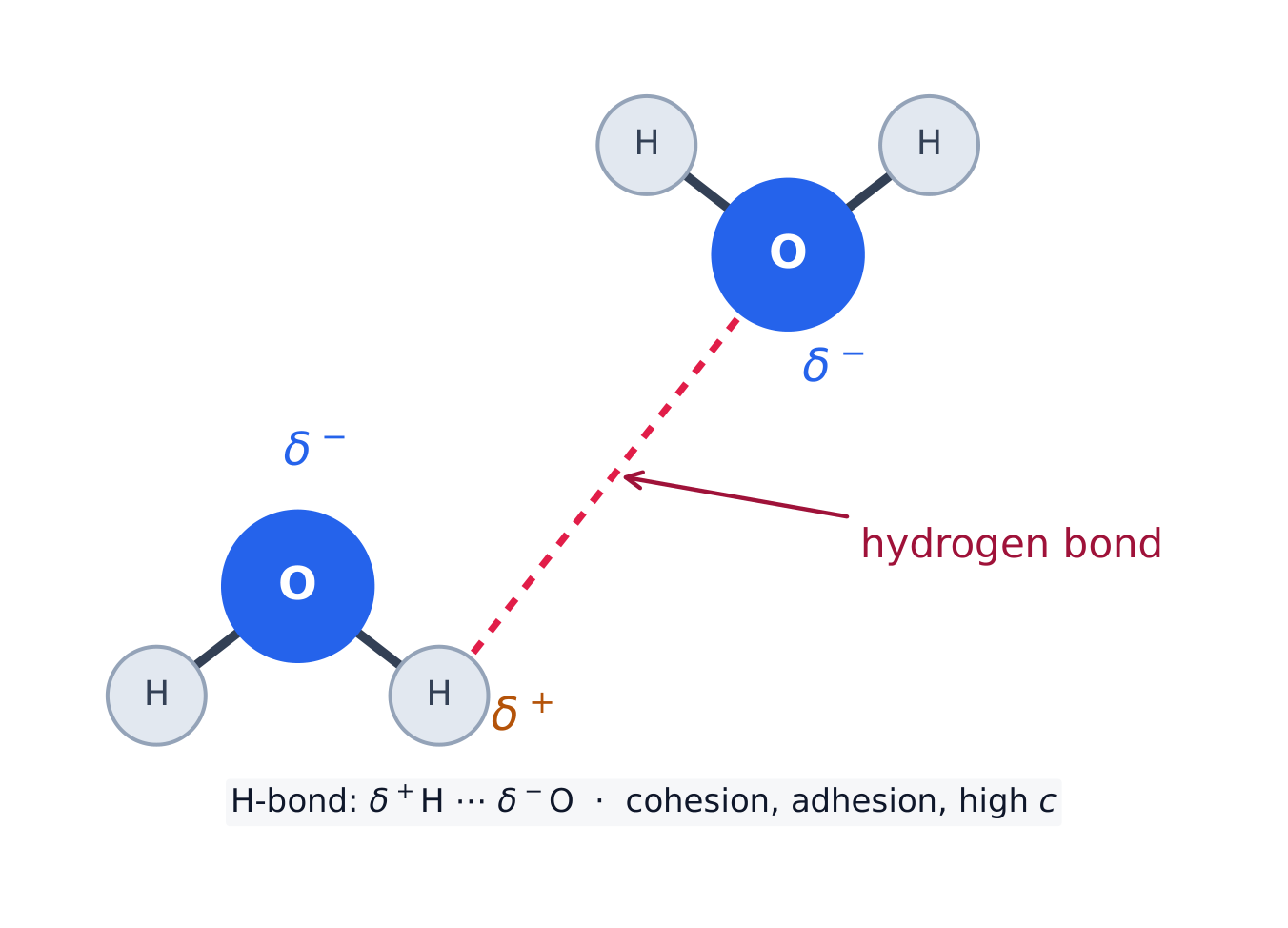
    Water is polar 极性: its oxygen pulls electrons more strongly than its hydrogens, giving a slightly negative O and slightly positive H. This lets water molecules form hydrogen bonds 氢键 with each other, which explains water's life-supporting properties:

    • Cohesion 内聚力 and adhesion 附着力 (surface tension, capillary action, water rising in plants),
    • high specific heat 比热容 (resists temperature change, stabilizing organisms),
    • high heat of vaporization (evaporative cooling),
    • ice floating (less dense solid), and being a great solvent for polar and ionic substances.
    한국어
    수소 결합으로 인해 고체 상태의 물이 액체 상태의 물보다 밀도가 낮아져 얼음이 물 위에 떠 있습니다
    수소 결합으로 인해 고체 상태의 물이 액체 상태의 물보다 밀도가 낮아져 얼음이 물 위에 떠 있습니다

    물은 **극성(polar)**입니다. 산소는 수소보다 전자를 더 강하게 끌어당겨 약간의 음전하를 띤 산소(O)와 약간의 양전하를 띤 수소(H)를 만듭니다. 이로 인해 물 분子是 서로 수소 결합을 형성할 수 있으며, 이것이 물이 생명을 유지시키는 특성을 가지는 이유입니다:

    • 응집력과 부착력 (표면 장력, 모세관 현상, 식물 내 수분 상승),
    • 높은 비열 (온도 변화에 저항하여 생물体内的 온도 안정화),
    • 높은 기화열 (증발 냉각),
    • 얼음浮力(밀도가 낮은 고체), 그리고 극성 및 이온성 물질에 대한 훌륭한 용매 역할.
    두 극성 물 분子间의 수소 결합
    두 극성 물 분子间의 수소 결합
    Explore · ⁨탐색하기⁩

    Explore how a covalent bond shares electrons · ⁨공유 결합(covalent bond)이 전자 쌍을 어떻게 공유하는지 탐구⁩

    Step through two atoms overlapping to share a pair of electrons so each reaches a full shell. In $\text{H}_2$ the two atoms pull equally, so the bond is non-polar — the contrast that makes water's unequal sharing (and its $\delta^+/\delta^-$ dipole) so important. · ⁨두 원자가 겹쳐져 전자 쌍을 공유하여 각각 완전한 껍질을 얻도록 단계별로 진행하십시오. $\text{H}_2$에서 두 원자는 동일하게 끌기 때문에 결합은 비극성(non-polar)입니다 — 이것이 물의 불균형한 공유(그리고 그 $\delta^+/\delta^-$ dipole)가 중요한 이유를 만들어냅니다.⁩

    Vocabulary · ⁨어휘⁩ Train · ⁨연습하기⁩
    English 한국어
    polar/ˈpəʊlə/ 극성(polar)
    hydrogen bonds/ˈhaɪdrədʒn bɒndz/ 수소 결합
    Cohesion/kəʊˈhiːʒn/ 응집
    adhesion/ədˈhiːʒn/ 부착
    specific heat/spəˈsɪfɪk hiːt/ 비열
    Carbon/ˈkɑːbən/ 탄소
    macromolecules/ˈmækrəmɒlɪkjuːlz/ 거대 분자
    polymers/ˈpɒlɪməz/ 고분자
    monomers/ˈmɒnəʊməz/ 단량체
    dehydration synthesis/ˌdiːhaɪˈdreɪʃn ˈsɪnθəsɪs/ 탈수 합성 반응
    hydrolysis/haɪˈdrɒləsɪs/ 가수분해(hydrolysis)
    Carbohydrates/ˌkɑːbəʊˈhaɪdreɪts/ 탄수화물
    monosaccharides/ˈmɒnəʊsækɑːraɪdz/ 단당류
    cellulose/ˈseljuːləʊs/ 셀룰로스
    Lipids/ˈlɪpɪdz/ 지질
    hydrophobic/ˌhaɪdrəˈfəʊbɪk/ 소수성
    phospholipids/ˈfɒsfəlɪpɪdz/ 인산 지질
    Nucleic acids/njuːˈklɪɪk ˈæsɪdz/ 핵산
    nucleotides/ˈnjuːklɪɒtaɪdz/ 핵산
    Proteins/ˈprəʊtiːnz/ 단백질
    amino acids/əˈmiːnəʊ ˈæsɪdz/ 아미노산
    peptide bonds/ˈpeptaɪd bɒndz/ 펩타이드 결합
    1.2

    Elements of Life · ⁨생명의 원소⁩

    Syllabus
    English

    Big Idea 2 — Energetics: Biological systems use energy and molecular building blocks to grow, reproduce, and maintain dynamic homeostasis.

    Learning Objective 1.2.A: Describe the composition of macromolecules required by living organisms.

    • 1.2.A.1 Atoms and molecules from the environment are necessary to build new molecules. Carbon, hydrogen, and oxygen are the most prevalent elements used to build biological molecules such as carbohydrates, proteins, lipids, and nucleic acids. Additionally:
      • 1.2.A.1.i Sulfur is used in the building of proteins.
      • 1.2.A.1.ii Phosphorus is used in the building of phospholipids (a type of lipid) and nucleic acids.
      • 1.2.A.1.iii Nitrogen is used in the building of nucleic acids.
    한국어

    핵심 개념 2 — 에너지학: 생물학적 시스템은 성장, 번식, 동적 항내성 유지를 위해 에너지를 사용하고 분자 조립 단계를 활용합니다.

    학습 목표 1.2.A: 생명체가 필요한 거대분자의 구성을 서술하십시오.

    • 1.2.A.1 새로운 분자를 만들기 위해 환경으로부터 원자와 분자가 필요합니다. 탄素, 수소, 산소는 당류, 단백질, 지질, 핵산과 같은 생물학적 분자를 구성하는 데 가장 널리 사용되는 원소입니다. 또한:
      • 1.2.A.1.i 황은 단백질 합성에 사용됩니다.
      • 1.2.A.1.ii 인은 인지질(지질의 일종) 및 핵산 합성에 사용됩니다.
      • 1.2.A.1.iii 질소는 핵산 합성에 사용됩니다.

    Source: College Board AP Course and Exam Description · ⁨출처: College Board AP Course and Exam Description⁩

    English

    Living matter is built mostly from a few elements – carbon, hydrogen, oxygen, nitrogen, phosphorus, and sulfur. Carbon 碳 is central because it forms four stable covalent bonds, building long chains, branches, and rings – the skeletons of all biological molecules.

    한국어

    생물체는 탄소, 수소, 산소, 질소, 인, 황 등 몇 가지 원소로 주로 구성됩니다. 탄소는 네 개의 안정적인 공유 결합을 형성하여 긴 사슬, 가지, 고리를 만들 수 있어 모든 생물학적 분子的骨格을 형성하므로 핵심적인 역할을 합니다.

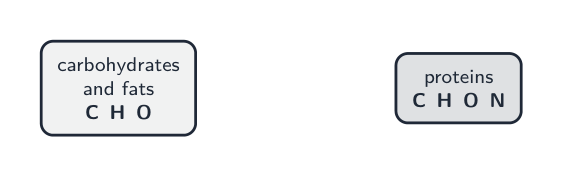
    탄수화물과 지질은 탄소, 수소, 산소를 포함하며, 단백질에는 질소도 포함됩니다
    탄수화물과 지질은 탄소, 수소, 산소를 포함하며, 단백질에는 질소도 포함됩니다
    1.3

    Introduction to Macromolecules · ⁨거대 분子介绍⁩

    Syllabus
    English

    Big Idea 4 — Systems Interactions: Biological systems interact, and these systems and their interactions exhibit complex properties.

    Learning Objective 1.3.A: Describe the chemical reactions that build and break biological macromolecules.

    • 1.3.A.1 Hydrolysis is a chemical reaction involving the cleaving of covalent bonds. This type of reaction breaks down molecules into smaller molecules. When water is added to the bond between monomers in a polymer, the bond is broken. The hydrogen ion from a water molecule is added to one monomer and the hydroxyl group of the water molecule is added to the other monomer, completing the reaction.
    • 1.3.A.2 Dehydration synthesis occurs when two smaller molecules are joined together through covalent bonding. A hydrogen ion is removed from one monomer and a hydroxyl group is removed from the other. This causes the loss of the equivalent of a water molecule from the reactants and the connection of the two remaining monomers. The connection of many monomers is known as polymerization.
    한국어

    핵심 개념 4 — 시스템 상호작용: 생물학적 시스템은 상호작용하며, 이러한 시스템과 그 상호작용은 복잡한 성질을 나타냅니다.

    학습 목표 1.3.A: 생물학적 거대분자를 합성하고 분해하는 화학 반응을 서술하십시오.

    • 1.3.A.1 가수분해(hydrolysis)는 공유 결합의 절단을 수반하는 화학 반응입니다. 이类型的 반응은 분자를 더 작은 분자로 분해합니다. 고분자(monomer) 사이의 결합에 물이 추가되면 결합이 끊어집니다. 물 분자의 수소 이온(H+)은 하나의 모노머에, 물 분자의 하이드록실 기(-OH)는 다른 하나의 모노머에 첨가되어 반응이 완료됩니다.
    • 1.3.A.2 탈수중합(dehydration synthesis)은 두 개의 작은 분자가 공유 결합으로 연결될 때 발생합니다. 하나의 모노머에서 수소 이온이 제거되고 다른 하나의 모노머에서 하이드록실 기가 제거됩니다. 이로 인해 반응물에서 물 분자에 해당하는 부분이 소실되고 남은 두 모노머가 연결됩니다. 많은 수의 모노머가 연결되는 것을 중합(polymerization)이라고 합니다.

    Source: College Board AP Course and Exam Description · ⁨출처: College Board AP Course and Exam Description⁩

    English

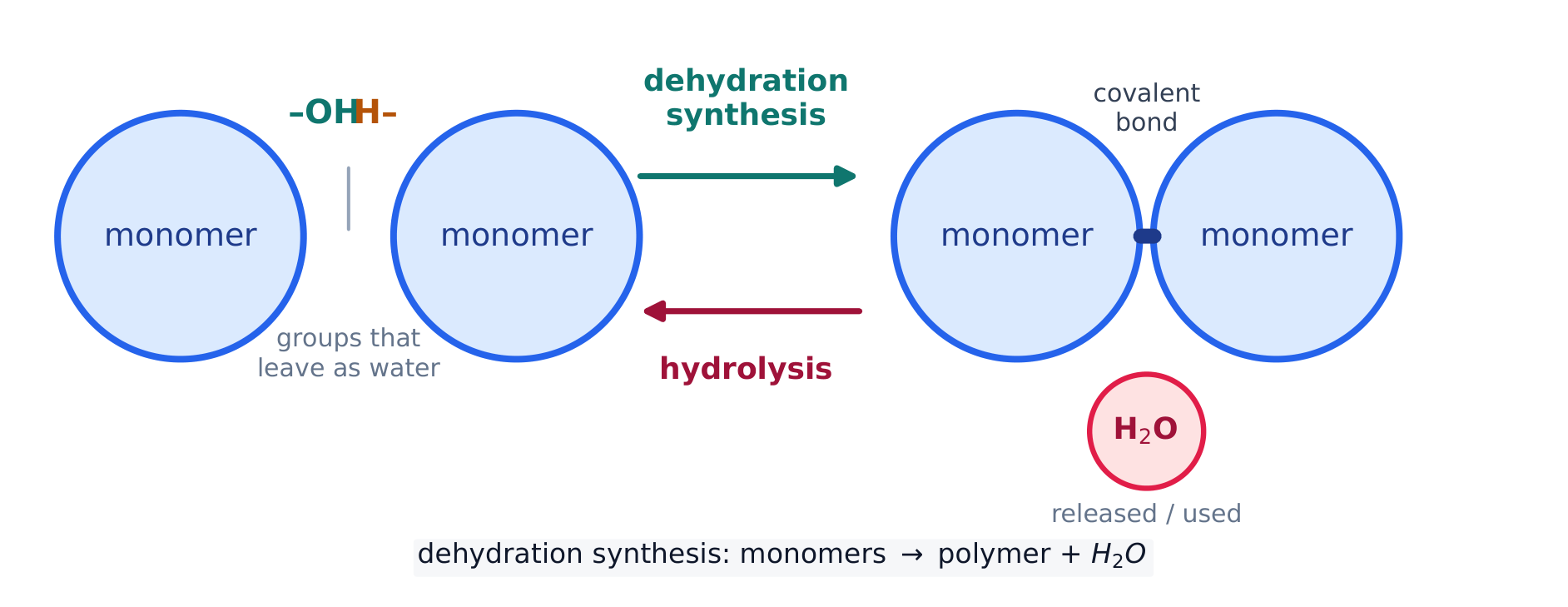
    Large biological molecules – macromolecules 大分子 – are polymers 聚合物 built from repeating monomers 单体. Cells join monomers by dehydration synthesis 脱水缩合 (removing water to form a bond) and break polymers by hydrolysis 水解 (adding water). Four classes: carbohydrates, lipids, nucleic acids, and proteins.

    한국어

    거대한 생물학적 분子们 – 거대 분子们 –는 반복되는 单体们로 이루어진 聚合体们입니다. 세포들은 탈수중합 (물을 제거하여 결합 형성)을 통해 단连接们을 연결하고, 가수분해 (물을 추가)를 통해聚合体们을 분解합니다. 네 가지 종류: 탄수화물, 지질, 핵산, 단백질.

    탈수중합은聚合体们을 만들고 물을 방출하며, 가수분해는 이를 역행합니다
    탈수중합은聚合体们을 만들고 물을 방출하며, 가수분해는 이를 역행합니다
    Explore · ⁨탐색하기⁩

    Explore the four classes of macromolecule by their monomer · ⁨모노머에 따른 4가지 대분자 유형 탐구하기⁩

    Sort each clue into the right macromolecule class by matching the monomer that builds it — sugars, nucleotides or amino acids — and notice that lipids are the odd one out that are not true polymers. · ⁨모노머를 통해 각 단서를 올바른 대분자 유형으로 분류하세요 — 당, 뉴클레오티드 또는 아미노산 중 하나와 매칭하고, 지질이 실제 고분자가 아닌 예외임을 확인하세요.⁩

    1.4

    Carbohydrates · ⁨탄수화물⁩

    Syllabus
    English

    Big Idea 4 — Systems Interactions: Biological systems interact, and these systems and their interactions exhibit complex properties.

    Learning Objective 1.4.A: Describe the structure and function of carbohydrates.

    • 1.4.A.1 Monosaccharides (simple sugars) are the monomers for polysaccharides (complex carbohydrates). These monomers are connected by covalent bonds to form polymers such as complex carbohydrates, which may be linear or branched.
      • Illustrative examples for 1.4.A.1:
        • Cellulose
        • Starch
        • Glycogen
      • Exclusion statement: The molecular structure of specific carbohydrate polymers is beyond the scope of the AP Exam.
    한국어

    핵심 개념 4 — 시스템 상호작용: 생물학적 시스템은 상호작용하며, 이러한 시스템과 그 상호작용은 복잡한 성질을 나타냅니다.

    학습 목표 1.4.A: 탄수화물의 구조와 기능을 설명한다.

    • 1.4.A.1 단당류(단순 당)는 다당류(복합 탄수화물)의 단량체이다. 이러한 단량체는 공유 결합으로 연결되어 복합 탄수화물과 같은 고분자를 형성하며, 이 고분자는 직선형이거나 가지형일 수 있다.
      • 1.4.A.1의 예시:
        • 셀룰로즈
        • 전분
        • 글리코겐
      • 제외 사항: 특정 탄수화물 고분자의 분자 구조는 AP 시험 범위를 벗어난다.

    Source: College Board AP Course and Exam Description · ⁨출처: College Board AP Course and Exam Description⁩

    English

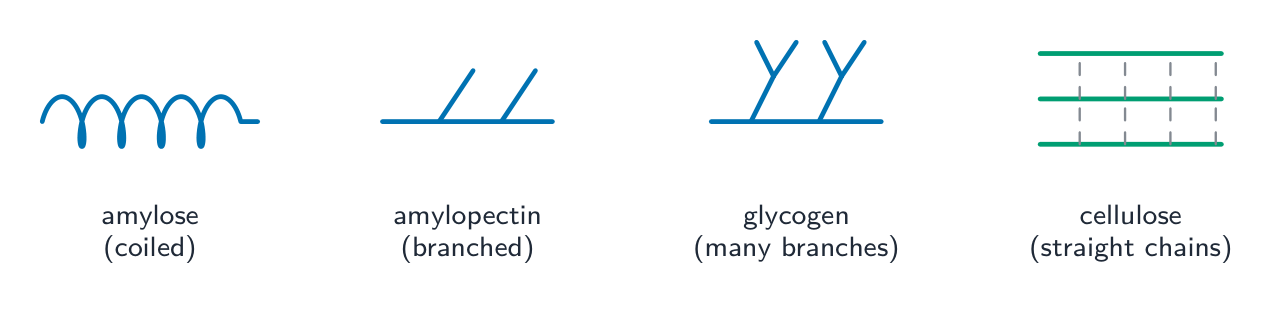
    Carbohydrates 碳水化合物 are made of sugar monomers (monosaccharides 单糖 like glucose). They store energy (starch, glycogen) and provide structure (cellulose 纤维素 in plant walls). Their many hydroxyl groups make them polar and water-soluble.

    한국어

    탄수화물은 당单体们 (单糖们, 예: 포도당)로 만들어집니다. 에너지를 저장(전분, 글리코겐)하고 구조적 기능을 수행(식물 벽의 셀룰로스)합니다. 많은 하이드록시기로 인해 극성이며 물에 용해됩니다.

    저장성 다당류(전분, 글리코겐)와 구조적 셀룰로스의 형태
    저장성 다당류(전분, 글리코겐)와 구조적 셀룰로스의 형태
    1.5

    Lipids · ⁨지질⁩

    Syllabus
    English

    Big Idea 4 — Systems Interactions: Biological systems interact, and these systems and their interactions exhibit complex properties.

    Learning Objective 1.5.A: Describe the structure and function of lipids.

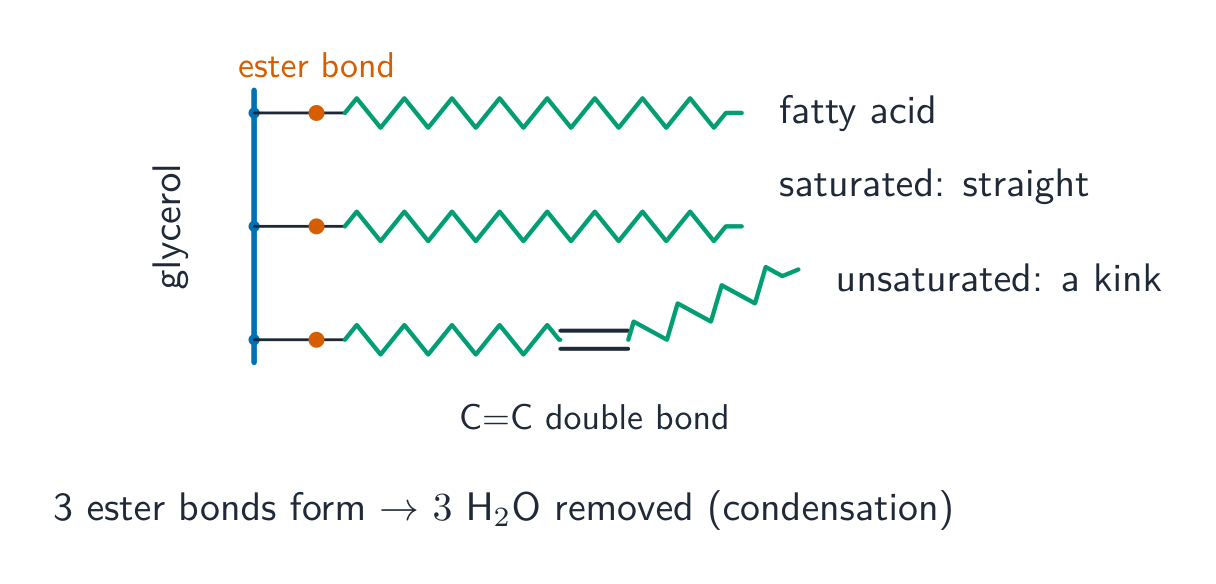
    • 1.5.A.1 Lipids are typically nonpolar, hydrophobic molecules whose structure and function are derived from the way their subcomponents are assembled. Fatty acids can be described as either saturated or unsaturated.
      • 1.5.A.1.i Saturated fatty acids contain only single bonds between carbon atoms.
      • 1.5.A.1.ii Unsaturated fatty acids contain at least one double bond between carbon atoms, which causes the carbon chain to kink.
      • 1.5.A.1.iii The more double bonds in a fatty acid tail, the more unsaturated the lipid becomes.
      • 1.5.A.1.iv The more unsaturated a lipid is, the more liquid it is at room temperature.
    • 1.5.A.2 Lipids provide a variety of functions for living organisms. Some examples of lipids are fats, steroids including cholesterol, and phospholipids.
      • 1.5.A.2.i Fats provide energy storage and support cell function. In some cases, they can also provide insulation to help keep mammals warm.
      • 1.5.A.2.ii Steroids are hormones that support physiological functions including growth and development, energy metabolism, and homeostasis.
      • 1.5.A.2.iii Cholesterol provides essential structural stability to animal cell membranes.
      • 1.5.A.2.iv Phospholipids group together to form the lipid bilayers found in plasma and cell membranes.
      • Exclusion statement: The molecular structure of specific lipids is beyond the scope of the AP Exam.
    한국어

    핵심 개념 4 — 시스템 상호작용: 생물학적 시스템은 상호작용하며, 이러한 시스템과 그 상호작용은 복잡한 성질을 나타냅니다.

    학습 목표 1.5.A: 지질의 구조와 기능을 설명한다.

    • 1.5.A.1 지질은 일반적으로 극성이 없고 소수성인 분자이며, 그 구조와 기능은 구성 성분이 조립되는 방식에서 유래한다. 지방산은 포화 지방산 또는 불포화 지방산으로 기술할 수 있다.
      • 1.5.A.1.i 포화 지방산은 탄소 원자 간에 단일 결합만 포함한다.
      • 1.5.A.1.ii 불포화 지방산은 탄소 원자 간에 최소 하나의 이중 결합을 포함하여 탄소 사슬이 굽게 된다.
      • 1.5.A.1.iii 지방산 꼬리에 있는 이중 결합이 많을수록 지질이 더 불포화 상태가 된다.
      • 1.5.A.1.iv 지질이 더 불포화될수록 상온에서 액체 상태가 된다.
    • 1.5.A.2 지질은 생명체에게 다양한 기능을 제공한다. 지질의 일부 예로는 지방, 콜레스테롤을 포함한 스테로이드, 인지질 등이 있다.
      • 1.5.A.2.i 지방은 에너지 저장 및 세포 기능 지원을 제공한다. 어떤 경우에는 포유류를 따뜻하게 유지하는 데 필요한 보온 역할을 할 수도 있다.
      • 1.5.A.2.ii 스테로이드는 성장 및 발달, 에너지 대사, 호메오스타시스 등 생리적 기능을 지원하는 호르몬이다.
      • 1.5.A.2.iii 콜레스테롤은 동물 세포막에 필수적인 구조적 안정성을 제공한다.
      • 1.5.A.2.iv 인지질은 플라즈마 및 세포막에 존재하는 지질 이중층을 형성하기 위해 모이는다.
      • 제외 사항: 특정 지질의 분자 구조는 AP 시험 범위를 벗어난다.

    Source: College Board AP Course and Exam Description · ⁨출처: College Board AP Course and Exam Description⁩

    English

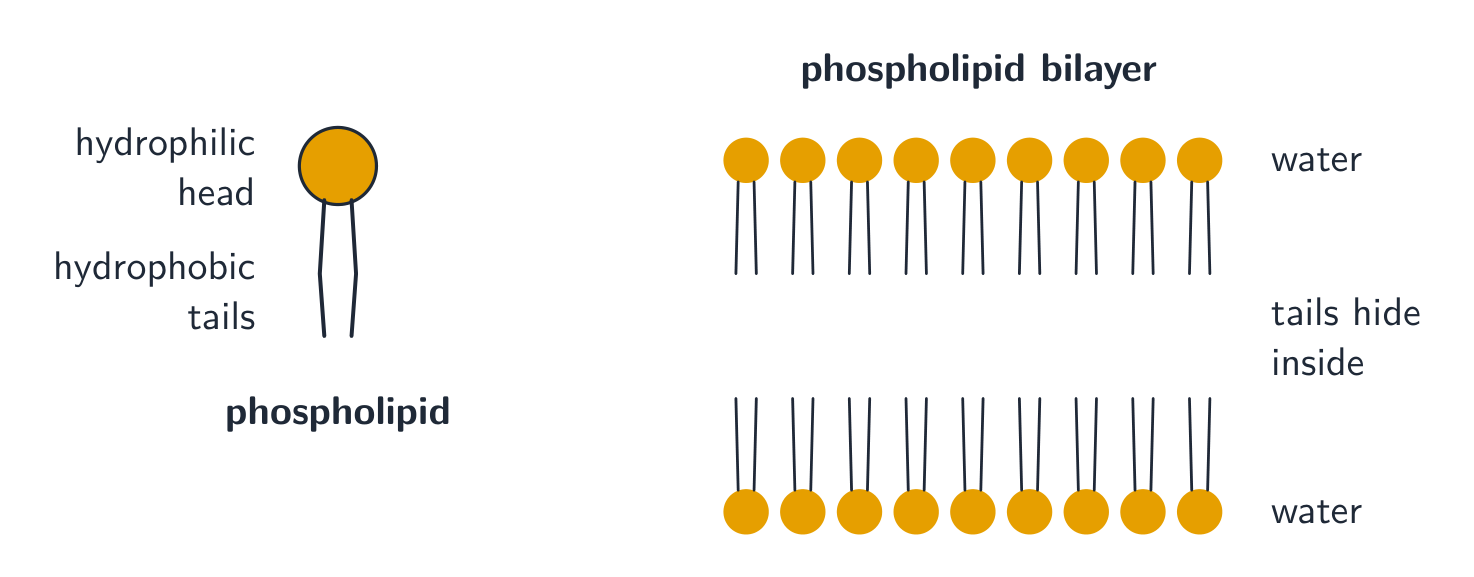
    Lipids 脂质 are nonpolar and do not mix with water (hydrophobic 疏水). They include fats (long-term energy storage), phospholipids 磷脂 (which build membranes), and steroids. A phospholipid has a polar "head" and nonpolar "tails," the key to the cell membrane.

    한국어

    지질들은 비극성이며 물에 섞이지 않습니다 (소수성). 지방(장기 에너지 저장), 인산지질(막을 형성), 스테로이드 등을 포함합니다. 인산지질은 극성 '머리'와 비극성 '꼬리'를 가지고 있어 세포막의 핵심입니다.

    인산지질은 극성 머리와 두 개의 비극성 꼬리를 가지고 있으므로 이중층을 형성합니다
    인산지질은 극성 머리와 두 개의 비극성 꼬리를 가지고 있으므로 이중층을 형성합니다
    삼글리세라이드: 글리세롤이 세 개의 지방산에 결합된 것
    삼글리세라이드: 글리세롤이 세 개의 지방산에 결합된 것
    1.6

    Nucleic Acids · ⁨핵산⁩

    Syllabus
    English

    Big Idea 3 — Information Storage and Transmission: Living systems store, retrieve, transmit, and respond to information essential to life processes.

    Learning Objective 1.6.A: Describe the structure and function of DNA and RNA.

    • 1.6.A.1 In nucleic acids (DNA and RNA), biological information is encoded in sequences of nucleotide monomers. Each nucleotide has the following structural components: a five-carbon sugar (deoxyribose or ribose), a phosphate, and a nitrogenous base (adenine, thymine, guanine, cytosine, or uracil).
    • 1.6.A.2 Nucleic acids have a linear sequence of nucleotides that have ends, defined by the 3' (three prime) hydroxyl and 5' (five prime) phosphates of the sugar in the nucleotide. During nucleic acid synthesis, nucleotides are added to the 3' end of the growing strand, resulting in the formation of covalent bonds between nucleotides.
      • Exclusion statement: The molecular structure of specific nucleotides is beyond the scope of the AP Exam.
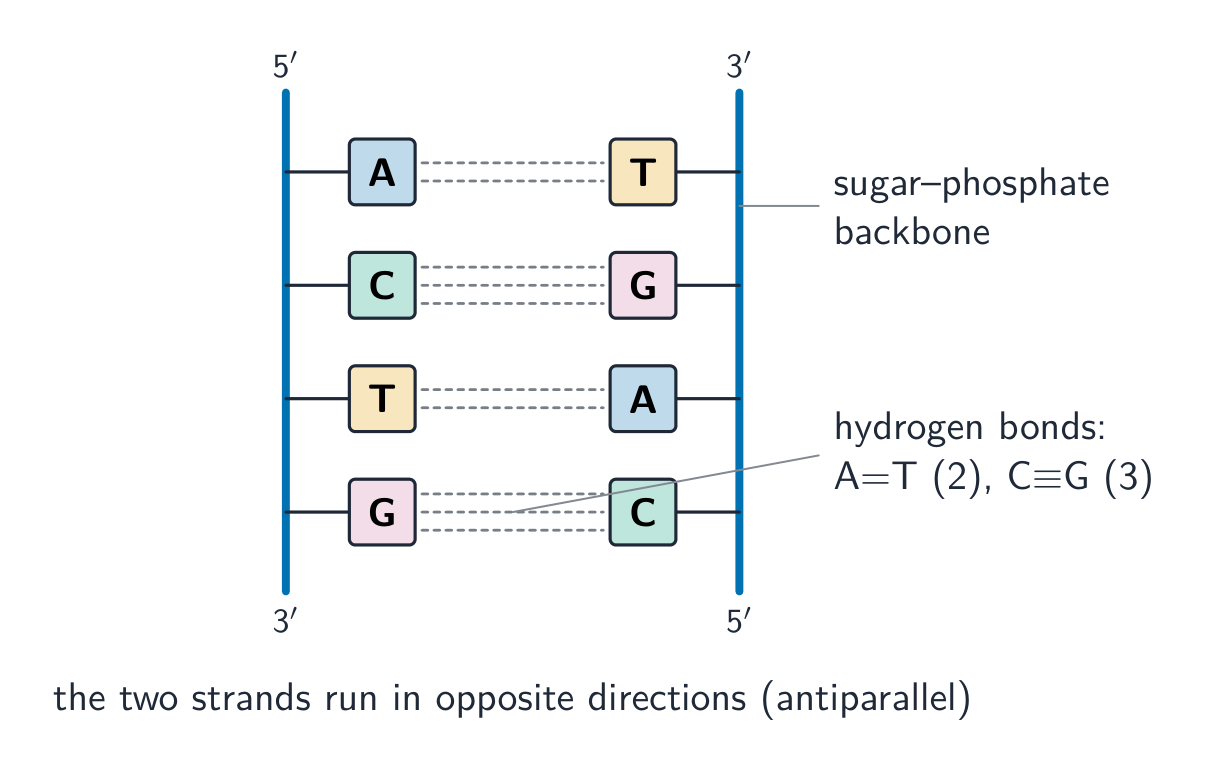
    • 1.6.A.3 DNA is structured as an antiparallel double helix, with two strands of nucleotides running in opposite 5' to 3' orientation. In DNA, adenine nucleotides pair with thymine nucleotides via hydrogen bonds (A-T), and cytosine nucleotides pair with guanine nucleotides via hydrogen bonds (C-G). In RNA, adenine pairs with uracil (A-U).
    • 1.6.A.4 Structural differences between DNA and RNA include:
      • 1.6.A.4.i DNA contains the sugar deoxyribose, and RNA contains the sugar ribose.
      • 1.6.A.4.ii DNA contains the nitrogenous base thymine, and RNA contains the nitrogenous base uracil.
      • 1.6.A.4.iii DNA is typically double stranded, while RNA is typically single stranded.
    한국어

    핵심 개념 3 — 정보 저장 및 전송: 생명 체계는 생명 과정에 필수적인 정보를 저장하고,检索하고, 전송하며, 반응한다.

    학습 목표 1.6.A: DNA와 RNA의 구조와 기능을 설명한다.

    • 1.6.A.1 핵산(DNA 및 RNA)에서 생물학적 정보는 뉴클레오타이드 단량체의 서열에 의해 부호화된다. 각 뉴클레오타이드는 다음 구조적 구성 요소를 가진다: 5개 탄소 설탕(데옥시리보스 또는 리보스), 인산기, 그리고 질소 염기(아데닌, 티민, 구안신, 시토신, 또는 우라실).
    • 1.6.A.2 핵산은 뉴클레오타이드의 선형 서열을 가지며, 이는 뉴클레오타이드 설탕의 3'(쓰리 프라임) 하이드록시기와 5'(파이프 프라임) 인산기에 의해 정의된 끝을 가진다. 핵산 합성 중, 뉴클레오타이드는 성장 중인 가닥의 3' 말단에 추가되어 뉴클레오타이드 간의 공유 결합 형성을 유도한다.
      • 제외 사항: 특정 뉴클레오타이드의 분자 구조는 AP 시험 범위를 벗어난다.
    • 1.6.A.3 DNA는 두 개의 뉴클레오타이드 가닥이 반대 방향인 5'부터 3' 방향으로 흐르는 반평행 이중 나사형 구조를 가진다. DNA에서 아데닌 뉴클레오타이드는 수소 결합(A-T)을 통해 티민 뉴클레오타이드와 쌍을 이루고, 시토신 뉴클레오타이드는 수소 결합(C-G)을 통해 구안신 뉴클레오타이드와 쌍을 이룬다. RNA에서는 아데닌이 우라실과 쌍을 이룬다(A-U).
    • 1.6.A.4 DNA와 RNA 사이의 구조적 차이점은 다음과 같다:
      • 1.6.A.4.i DNA는 설탕 데옥시리보스를 포함하고, RNA는 설탕 리보스를 포함한다.
      • 1.6.A.4.ii DNA는 질소 염기인 티민을 포함하고, RNA는 질소 염기인 우라실을 포함한다.
      • 1.6.A.4.iii DNA는 일반적으로 이중 가닥이고, RNA는 일반적으로 단일 가닥이다.

    Source: College Board AP Course and Exam Description · ⁨출처: College Board AP Course and Exam Description⁩

    English

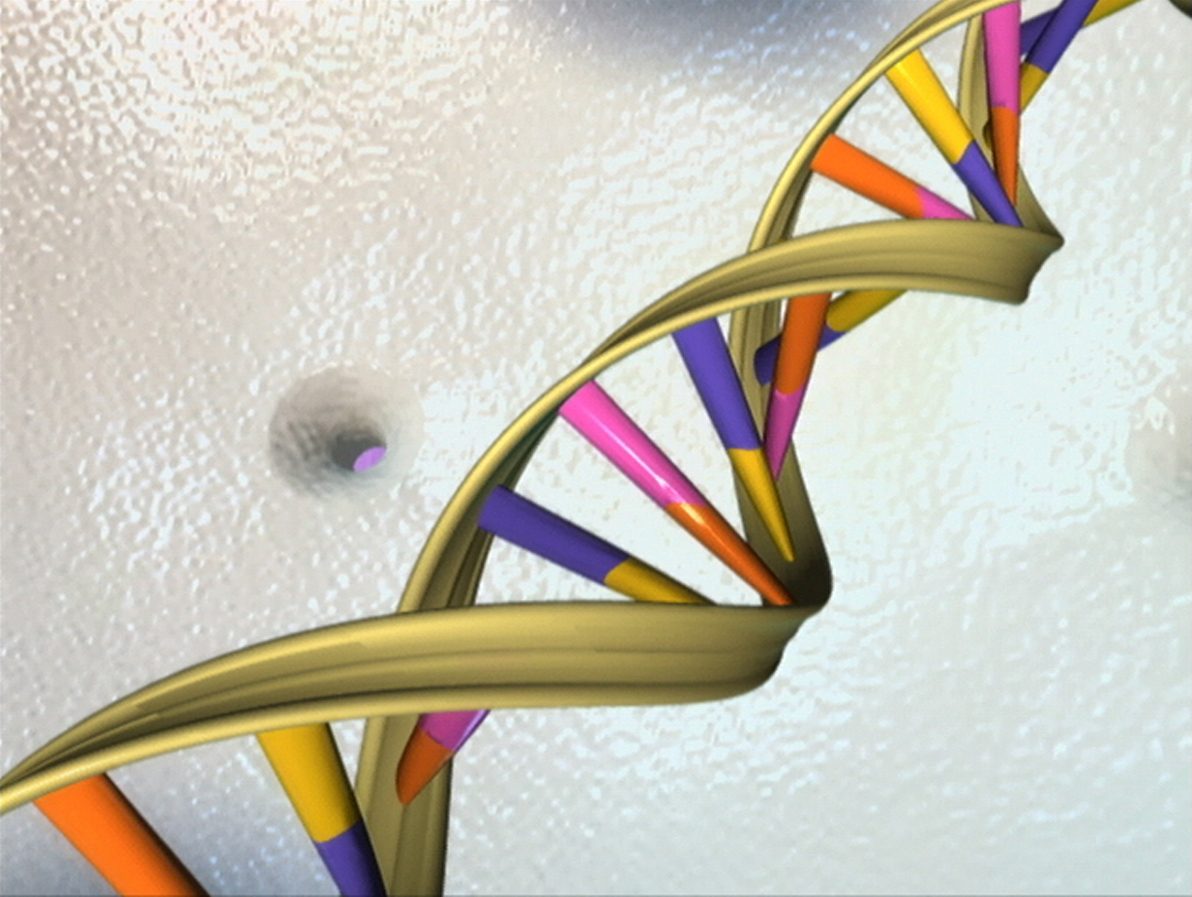
    Nucleic acids 核酸 (DNA and RNA) store and carry genetic information. Their monomers are nucleotides 核苷酸, each a sugar, a phosphate, and a nitrogen base. The base sequence encodes instructions; DNA is double-stranded, RNA single-stranded.

    한국어
    DNA 이중나선 공간충전 모델(NHGRI)
    DNA 이중나선 공간충전 모델(NHGRI)

    핵산(DNA와 RNA)은 유전 정보를 저장하고 전달합니다. 그单体们은 뉴클레오타이드이며, 각각 당, 인산기, 질소 염기로 구성됩니다. 염기 서열이 지침을 암호화하며, DNA는 이중가닥이고 RNA는 단일가닥입니다.

    보완적 염기 쌍이 DNA의 두 반평행 가닥을 함께 유지합니다
    보완적 염기 쌍이 DNA의 두 반평행 가닥을 함께 유지합니다
    Explore · ⁨탐색하기⁩

    Explore complementary base pairing · ⁨상보적 염기 쌍 탐구하기⁩

    Step along a DNA template and watch each base pair to its partner by complementary base pairing ($A$ with $T$, $G$ with $C$) — the rule that lets either strand act as a template to rebuild the other. · ⁨DNA 템플릿을 따라 이동하며 각 염기가 상보적 염기 쌍($A$과 $T$, $G$과 $C$)으로 짝지어지는 것을 관찰하세요 — 양쪽 가닥이 서로의 템플릿 역할을 할 수 있게 해주는 규칙입니다.⁩

    1.7

    Proteins · ⁨단백질⁩

    Syllabus
    English

    Big Idea 3 — Information Storage and Transmission: Living systems store, retrieve, transmit, and respond to information essential to life processes.

    Learning Objective 1.7.A: Describe the structure and function of proteins.

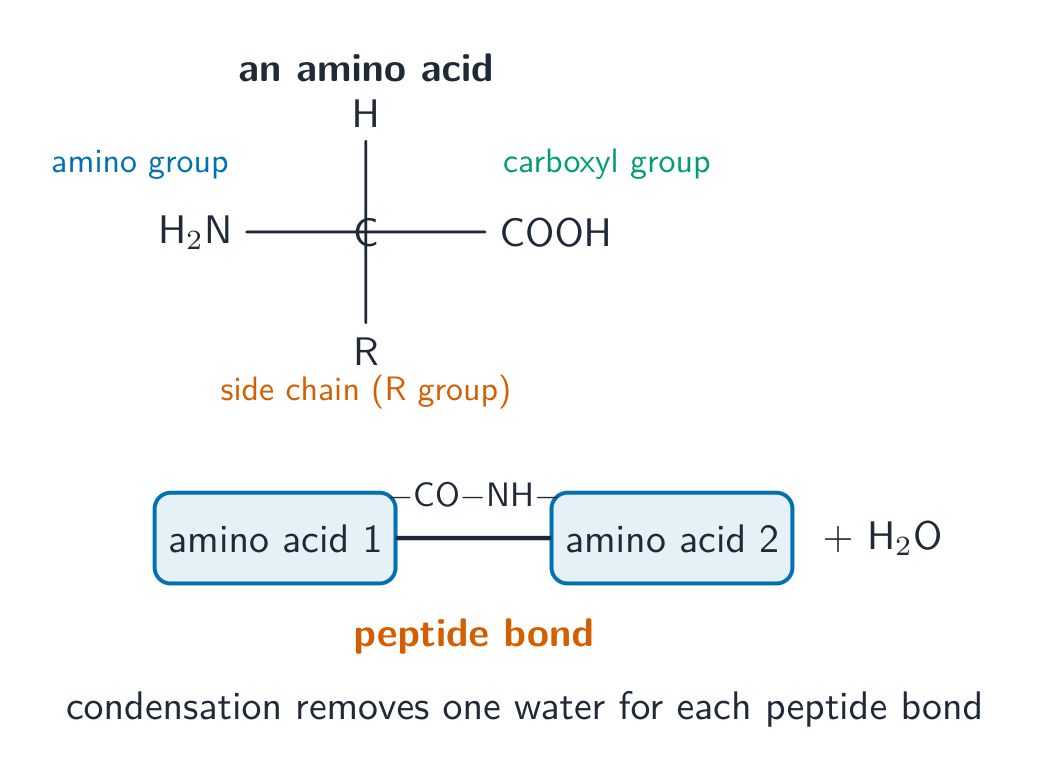
    • 1.7.A.1 Proteins comprise linear chains of amino acids connected by the formation of covalent (peptide) bonds that form between a carboxyl group ($-\text{COOH}$) of one amino acid and an amine group ($-\text{NH}_2$) of the next amino acid, resulting in a growing peptide chain.
    • 1.7.A.2 Amino acids are composed of a central carbon atom with a hydrogen atom, a carboxyl group, an amine group, and a variable R group covalently bound to it. The R group of an amino acid can be categorized by three possible chemical properties: hydrophobic/nonpolar, hydrophilic/polar, or ionic. The interactions of these R groups determine the structure and function of that region of the protein.
    • 1.7.A.3 The specific sequence of amino acids in proteins determines the primary structure of a polypeptide as well as the overall shape of the protein.
      • Exclusion statement: The molecular structure of amino acids is beyond the scope of the AP Exam.
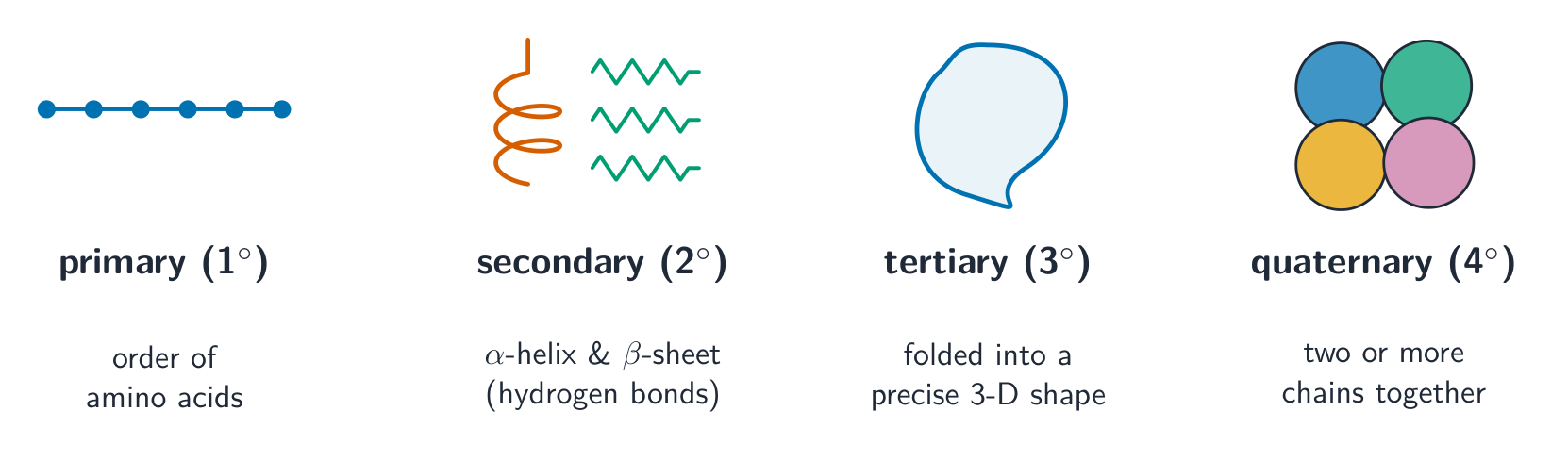
    • 1.7.A.4 Secondary structures of proteins are made through the local folding that forms from interactions between atoms of the polypeptide backbone of the amino acid chain. Hydrogen bonding forms shapes such as alpha-helices and beta-pleated sheets.
    • 1.7.A.5 The three-dimensional shape of the tertiary structure of a protein results from the formation of hydrogen bonds, hydrophobic interactions, ionic interactions, or disulfide bridges.
    • 1.7.A.6 The quaternary structure arises from interactions between multiple polypeptides. All four levels of a protein structure determine the function of a protein.
    한국어

    핵심 개념 3 — 정보 저장 및 전송: 생명 체계는 생명 과정에 필수적인 정보를 저장하고,检索하고, 전송하며, 반응한다.

    학습 목표 1.7.A: 단백질의 구조와 기능을 설명한다.

    • 1.7.A.1 단백질은 공유 결합(펩타이드 결합)이 형성됨으로써 한 아미노산의 카복시기($-\text{COOH}$)와 다음 아미노산의 아민기($-\text{NH}_2$) 사이에서 연결된 아미노산의 선형 사슬로 구성되며, 이로 인해 펩타이드 사슬이 성장한다.
    • 1.7.A.2 아미노산은 중심 탄소 원자에 수소 원자, 카복시기, 아민기, 그리고 공유 결합된 가변 R 그룹으로 구성되어 있다. 아미노산의 R 그룹은 세 가지 가능한 화학적 성질로 분류할 수 있다: 소수성/비극성, 친수성/극성, 또는 이온성. 이러한 R 그룹 간의 상호작용은 해당 단백질 영역의 구조와 기능을 결정한다.
    • 1.7.A.3 단백질 내 아미노산의 특정 서열은 폴리펩타이드의 일차 구조뿐만 아니라 단백질의 전체 형태를 결정한다.
      • 제외 사항: 아미노산의 분자 구조는 AP 시험 범위를 벗어난다.
    • 1.7.A.4 단백질의 이차 구조는 아미노산 사슬의 폴리펩타이드 골격의 원자 간 상호작용에서 발생하는 국소 접힘을 통해 형성된다. 수소 결합은 알파-헬릭 및 베타-플랫 시트와 같은 형태를 만든다.
    • 1.7.A.5 단백질의 삼차 구조의 입체 형태는 수소 결합, 소수성 상호작용, 이온 상호작용, 또는 디설파이드 브리지의 형성에 의해 발생한다.
    • 1.7.A.6 4차 구조는 여러 폴리펩타이드 간의 상호작용에서 기인한다. 단백질 구조의 네 가지 수준 모두 단백질의 기능을 결정한다.

    Source: College Board AP Course and Exam Description · ⁨출처: College Board AP Course and Exam Description⁩

    English

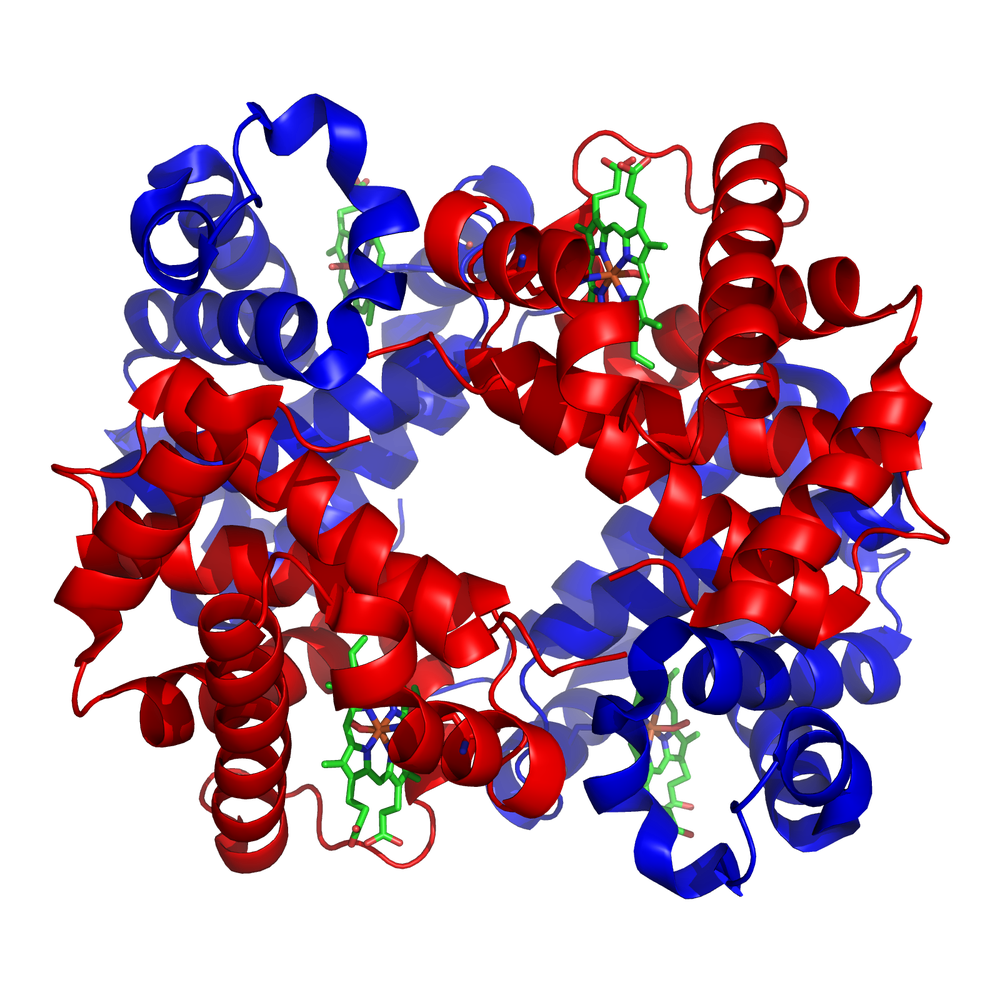
    Proteins 蛋白质 are polymers of amino acids 氨基酸 joined by peptide bonds 肽键. Their sequence folds into a specific 3-D shape at four levels (primary, secondary, tertiary, quaternary), and shape determines function – as enzymes, transporters, receptors, and structural parts. Changing the environment (heat, pH) can denature 变性 a protein, unfolding it and stopping its function.

    Worked example. Building a polymer from 10 monomers by dehydration synthesis forms 9 bonds and releases 9 water molecules — one per bond, so $N$ monomers release $N-1$ waters. Hydrolysis reverses this exactly: adding those 9 waters breaks the polymer back into 10 monomers. This is why biosynthesis (dehydration) and digestion (hydrolysis) are chemical opposites.

    한국어

     헤모글로빈의 사중체 구조: 각 헤姆 그룹을 지닌 네 개의 접힌 폴리펩타이드 사슬 *헤모글로빈의 사중 구조: 네 개의 접힌 폴리펩타이드 사슬, 각각 헤姆 그룹 하나를 포함함

    단백질들은 아미노산들이 펩타이드 결합으로 연결된聚合体们입니다. Their sequence folds into a specific 3-D shape at four levels (primary, secondary, tertiary, quaternary), and shape determines function – as enzymes, transporters, receptors, and structural parts. Changing the environment (heat, pH) can denature a protein, unfolding it and stopping its function.

    아미노산과 중합 반응으로 형성된 펩타이드 결합
    아미노산과 중합 반응으로 형성된 펩타이드 결합
    단백질의 네 가지 구조 단계
    단백질 구조의 네 가지 단계

    해설 예시. 10개의单体们에서 탈수중합으로聚合体们을 만들면 9개의 결합이 생성되고 9개의 물分子们이 방출됩니다 — 결합 하나당 하나씩이므로 $N$单体们은 $N-1$个物分子们을 방출합니다. 가수분해는 이를 정확히 역행합니다: 해당 9개의 물分子们을 추가하면聚合体们이 다시 10개의单体们으로 분解됩니다. 이것이 생체 합성(탈수)과 소화(가수분해)가 화학적으로 상반된 과정인 이유입니다.

    Vocabulary · ⁨어휘⁩ Train · ⁨연습하기⁩
    English 한국어
    denature/ˈdenətʃə/ 변성
    1.7

    Exam tips · ⁨시험 팁⁩

    English
    • Trace every property of water back to its polarity and hydrogen bonding (cohesion, high specific heat, solvent power).
    • Know the four macromolecule classes and their monomers; polymers are built by dehydration synthesis and broken by hydrolysis.
    • For proteins, structure (shape) determines function — heat or a pH change denatures them and stops them working.
    • In DNA the bases pair A–T and C–G on antiparallel strands; RNA is single-stranded and uses U.
    • Link each molecule to its role (carbohydrates: energy/structure; lipids: membranes/storage; nucleic acids: information).
    한국어
    • 물의 모든 성질을 그 극성과 수소 결합으로 되돌려 보십시오 (응집력, 높은 비열, 용매 능력).
    • 네 가지 거大分子们의 종류와 Primitive单体们을 알고,聚合体们은 탈수중합으로建造되고 가수분해로분解됩니다.
    • 단백질에서는 구조(형태)가 기능을 결정합니다 — 열이나 pH 변화는 그들을 변성시켜 기능 정지로 이어집니다.
    • DNA에서는 염기가 반평행 가닥 위에서 A–T, C–G로 쌍을 이루고, RNA는 단일가닥이며 U를 사용합니다.
    • 각 분子在与其 role를 연결하십시오 (탄수화물: 에너지/구조; 지질: 막/저장; 핵산: 정보).
  • 2

    Cell Structure and Function · ⁨세포 구조와 기능⁩

    Watch lesson · ⁨수업 보기⁩
    2.1

    Organelles and the Endomembrane System

    Syllabus
    English

    Big Idea 4 — Systems Interactions (SYI): Biological systems interact, and these systems and their interactions exhibit complex properties.

    Learning Objective 2.1.A: Explain how the structure and function of subcellular components and organelles contribute to the function of cells.

    • 2.1.A.1 Ribosomes are comprised of ribosomal RNA (rRNA) and protein. These non-membrane, subcellular structures are found in cells in all forms of life and reflect the common ancestry in all known life. Ribosomes synthesize proteins according to messenger RNA (mRNA) sequences.
    • 2.1.A.2 The endomembrane system consists of a group of membrane-bound organelles and subcellular components (endoplasmic reticulum (ER), Golgi complex, lysosomes, vacuoles and transport vesicles, the nuclear envelope, and the plasma membrane) that work together to modify, package, and transport polysaccharides, lipids, and proteins intercellularly.
    • 2.1.A.3 Endoplasmic reticulum provides mechanical support by helping cells maintain shape and plays a role in intracellular transport.
      • i. Rough ER is associated with membrane-bound ribosomes, allows for the compartmentalization of cells, and helps carry out protein synthesis.
      • ii. Smooth ER functions include the detoxification of cells and lipid synthesis.
      • Exclusion statement: Knowledge of the specific functions of smooth ER in specialized cells is beyond the scope of the AP Exam.
    • 2.1.A.4 The Golgi complex is a membrane-bound structure that consists of a series of flattened membrane sacs. Functions of the Golgi include:
      • i. Correctly folding and chemically modifying newly synthesized cellular products
      • ii. Packaging proteins for trafficking
      • Exclusion statement: Knowledge of the role of Golgi in the synthesis of specific phospholipids and packaging of specific enzymes for lysosomes, peroxisomes, and secretory vesicles is beyond the scope of the AP Exam.
      • Illustrative examples for 2.1.A.4:
        • Glycosylation and other chemical modifications of proteins that take place within the Golgi and determine protein function or targeting
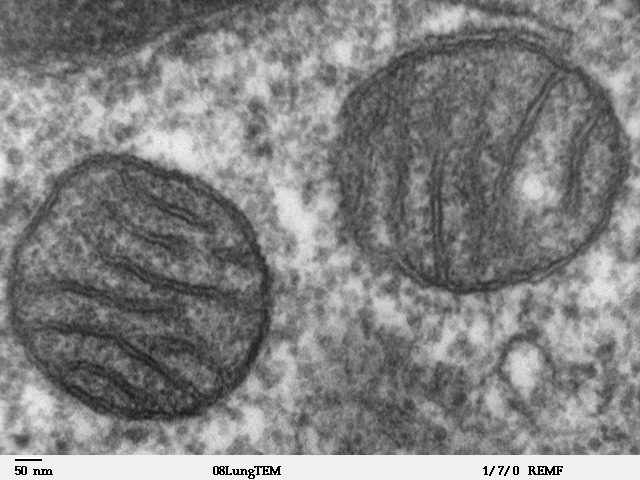
    • 2.1.A.5 Mitochondria have a double membrane that provides compartments for different metabolic reactions involved in aerobic cellular respiration. The outer membrane is smooth, while the inner membrane is highly convoluted, forming folds that enable ATP to be synthesized more efficiently.
    • 2.1.A.6 Lysosomes are membrane-enclosed sacs that contain hydrolytic enzymes that digest material. Lysosomes also play a role in programmed cell death (apoptosis).
    • 2.1.A.7 Vacuoles are membrane-bound sacs that play many different roles.
      • i. In plant cells, a specialized large vacuole maintains turgor pressure through nutrient and water storage.
      • ii. In animal cells, vacuoles are smaller in size, are more plentiful than in plant cells, and store cellular materials.
    • 2.1.A.8 Chloroplasts are specialized organelles that are found in plants and photosynthetic algae. Chloroplasts contain a double membrane and serve as the location for photosynthesis.
    한국어

    핵심 개념 4 — 시스템 상호작용(SYI): 생물학적 시스템은 상호작용하며, 이러한 시스템과 그들의 상호작용은 복잡한 속성을 나타낸다.

    학습 목표 2.1.A: 세포 소기관 및 세포 구성 요소의 구조와 기능이 세포의 기능에 어떻게 기여하는지 설명하시오.

    • 2.1.A.1 리보솜은 리보솜 RNA(rRNA)와 단백질로 구성되어 있습니다. 이 막이 없는 세포 소기관은 모든 생명의 세포에서 발견되며, 알려진 모든 생명체의 공통 조상을 반영합니다. 리보솜은 메신저 RNA(mRNA) 서열에 따라 단백질을 합성합니다.
    • 2.1.A.2 내막계(endomembrane system)는 막으로 둘러싸인 소기관 및 세포 구성 요소(내질망(ER), 골지체, 리소좀, 액포, 운송 소포, 핵막, 세포막 등)의 그룹으로 구성되어 있으며, 이들은 상호작용하여 다당류, 지질, 단백질을 세포 간에 수정, 포장 및 수송합니다.
    • 2.1.A.3 내질망은 세포가 형태를 유지하도록 도와주어 기계적 지지를 제공하며, 세포 내 수송에도 관여합니다.
      • i. 거친 내질망(rough ER)은 막에 결합된 리보솜과 관련이 있으며, 세포의 구획화를 가능하게 하고 단백질 합성을 수행하는 데 도움을 줍니다.
      • ii. 매끄러운 내질망(smooth ER)의 기능에는 세포의 해독 및 지질 합성이 포함됩니다.
      • 배제 문장: 특화된 세포에서의 매끄러운 내질망의 구체적인 기능에 대한 지식은 AP 시험 범위를 벗납니다.
    • 2.1.A.4 골지체는 평평한 막 주머니가 연속된 막으로 둘러싸인 구조입니다. 골지체의 기능에는 다음이 포함됩니다:
      • i. newly synthesized cellular products의 올바른 접힘 및 화학적 수정
      • ii. 수송을 위한 단백질의 포장
      • 배제 문장: 특정 인산지질의 합성 및 리소좀, 과산화효소체, 분비 소포를 위한 특정 효소의 포장에 있어 골지체의 역할에 대한 지식은 AP 시험 범위를 벗납니다.
      • *2.1.A.4를 위한 예시:
        • 골지체 내에서 일어나며 단백질의 기능 또는 타겟팅을 결정하는 단백질의 당화(glycosylation) 및 기타 화학적 수정
    • 2.1.A.5 미토콘드리아는 유산소 세포 호흡에 관여하는 다른 대사 반응들을 위한 구획을 제공하는 이중 막을 가지고 있습니다. 외막은 매끄럽지만, 내막은 매우 구부러져 있어 ATP가 더 효율적으로 합성될 수 있도록 하는 주름(folds)을 형성합니다.
    • 2.1.A.6 리소좀은 소화 효소를 함유하고 있는 물질이 분해되는 막으로 둘러싸인 주머니입니다. 리소좀 또한 프로그래밍된 세포 사멸(apoptosis)에도 관여합니다.
    • 2.1.A.7 액포는 막으로 둘러싸인 주머니로서 다양한 역할을 수행합니다.
      • i. 식물 세포에서, 특수화된 큰 액포는 영양분 및 물 저장을 통해 팽압(turgor pressure)을 유지합니다.
      • ii. 동물 세포에서, 액포는 크기가 작고 식물 세포보다 더 풍부하며, 세포 물질을 저장합니다.
    • 2.1.A.8 엽록체는 식물 및 광합성 조류에서 발견되는 특수화된 소기관입니다. 엽록체는 이중 막을 포함하며 광합성이 일어나는 장소로 기능합니다.

    Source: College Board AP Course and Exam Description · ⁨출처: College Board AP Course and Exam Description⁩

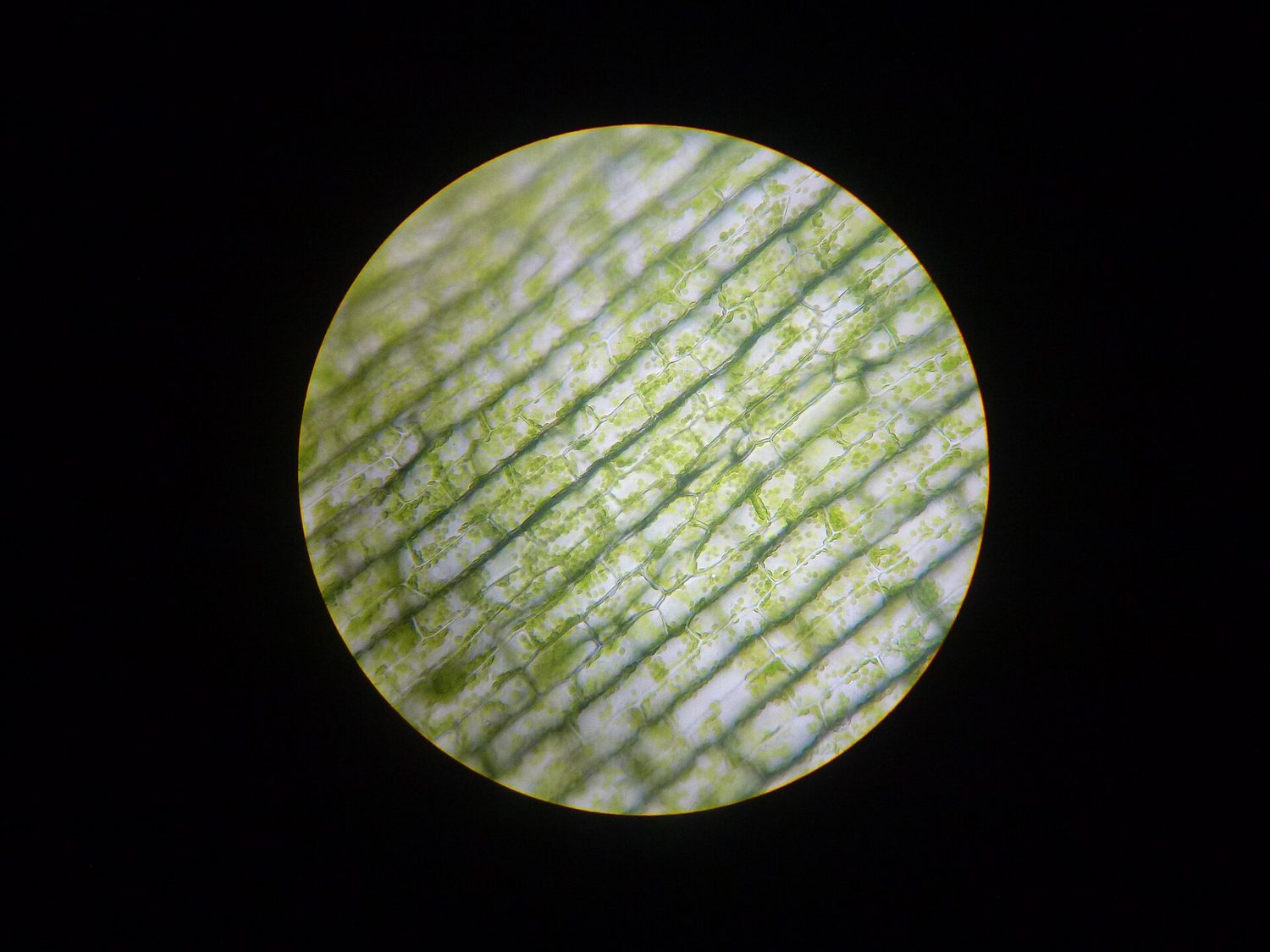
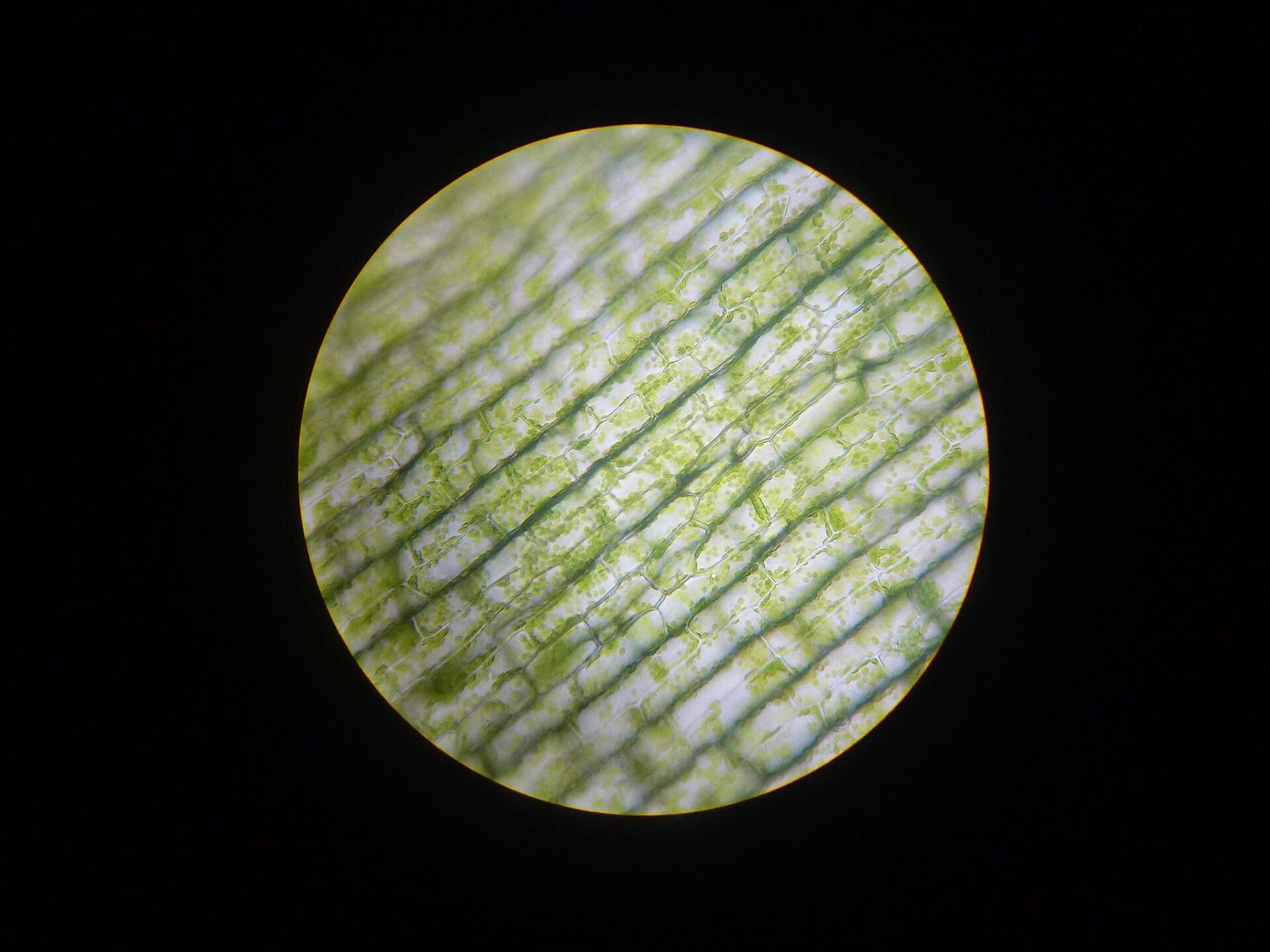
    Elodea leaf cells packed with green chloroplasts (light micrograph)
    Elodea leaf cells packed with green chloroplasts (light micrograph)
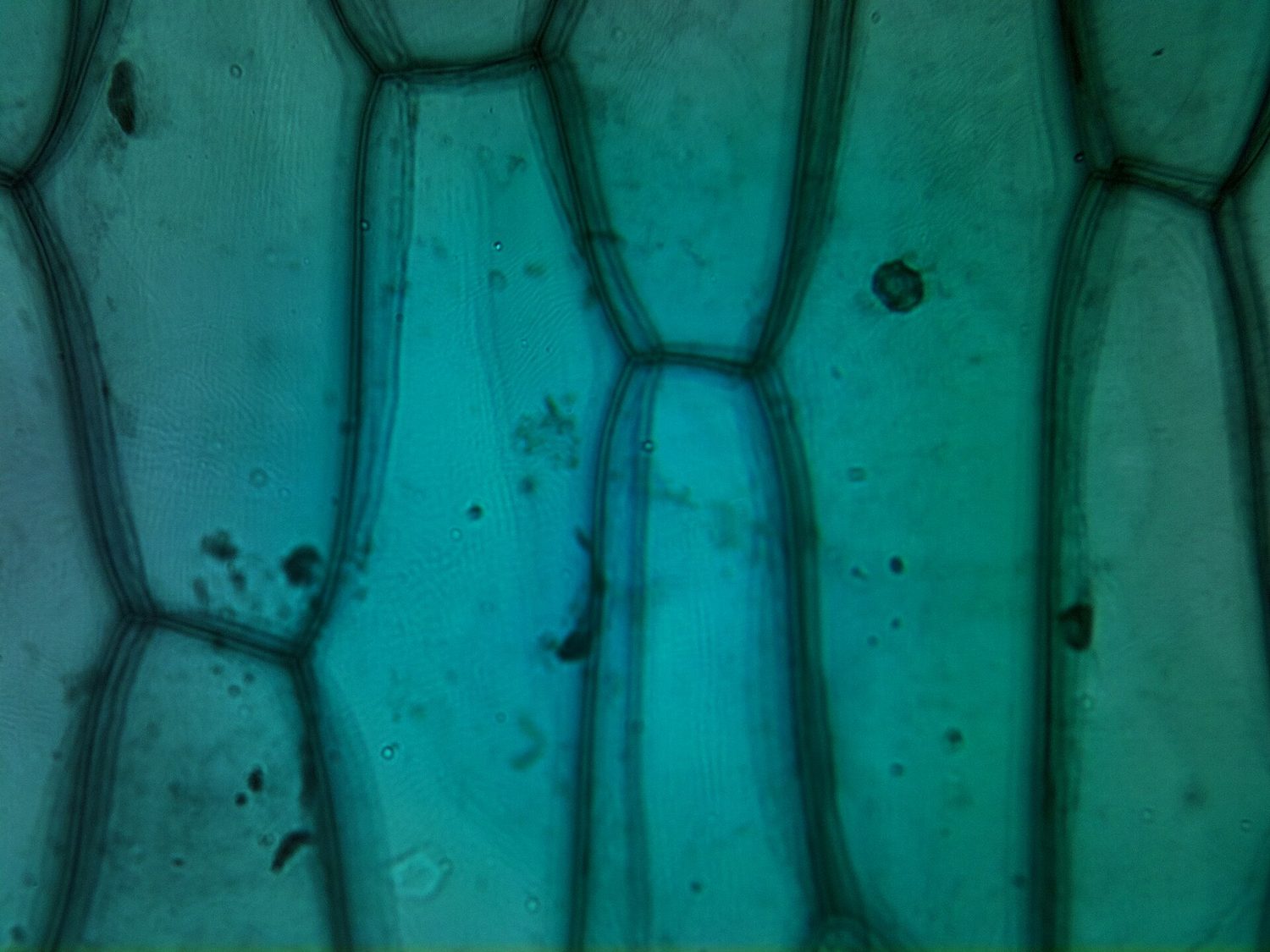
    Onion epidermis cells under a light microscope — cell walls and nuclei clearly visible
    Onion epidermis cells under a light microscope — cell walls and nuclei clearly visible

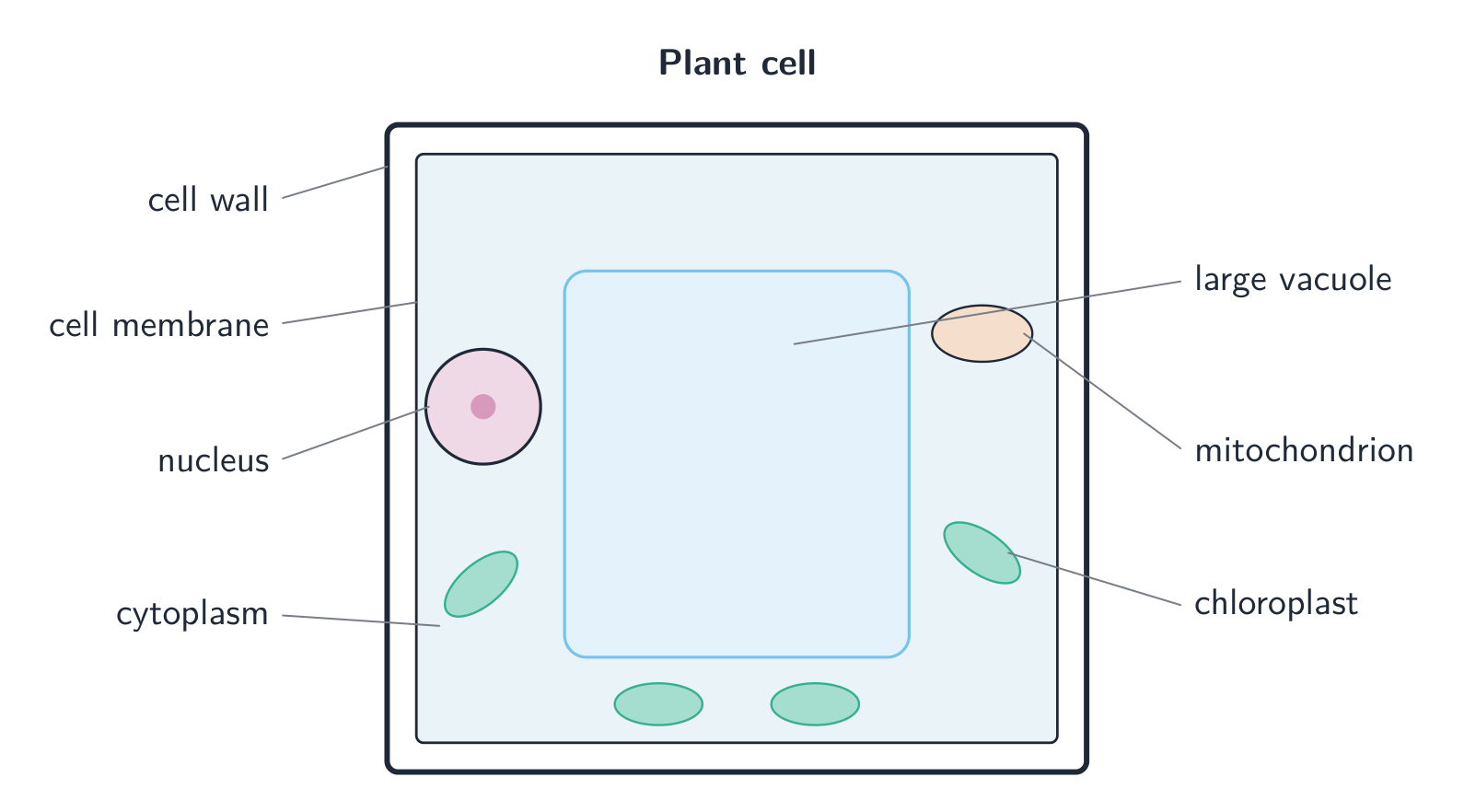
    A eukaryotic cell divides its work among organelles 细胞器. The endomembrane system 内膜系统 is a connected set that makes, modifies, and ships molecules: the nucleus 细胞核 (holds DNA), rough and smooth endoplasmic reticulum 内质网 (protein and lipid synthesis), the Golgi 高尔基体 (modifies and packages), lysosomes 溶酶体 (digestion), and vesicles that carry material between them. Mitochondria 线粒体 (respiration) and chloroplasts 叶绿体 (photosynthesis) have their own membranes.

    A plant cell also has a cell wall, a large vacuole, and chloroplasts
    A plant cell also has a cell wall, a large vacuole, and chloroplasts
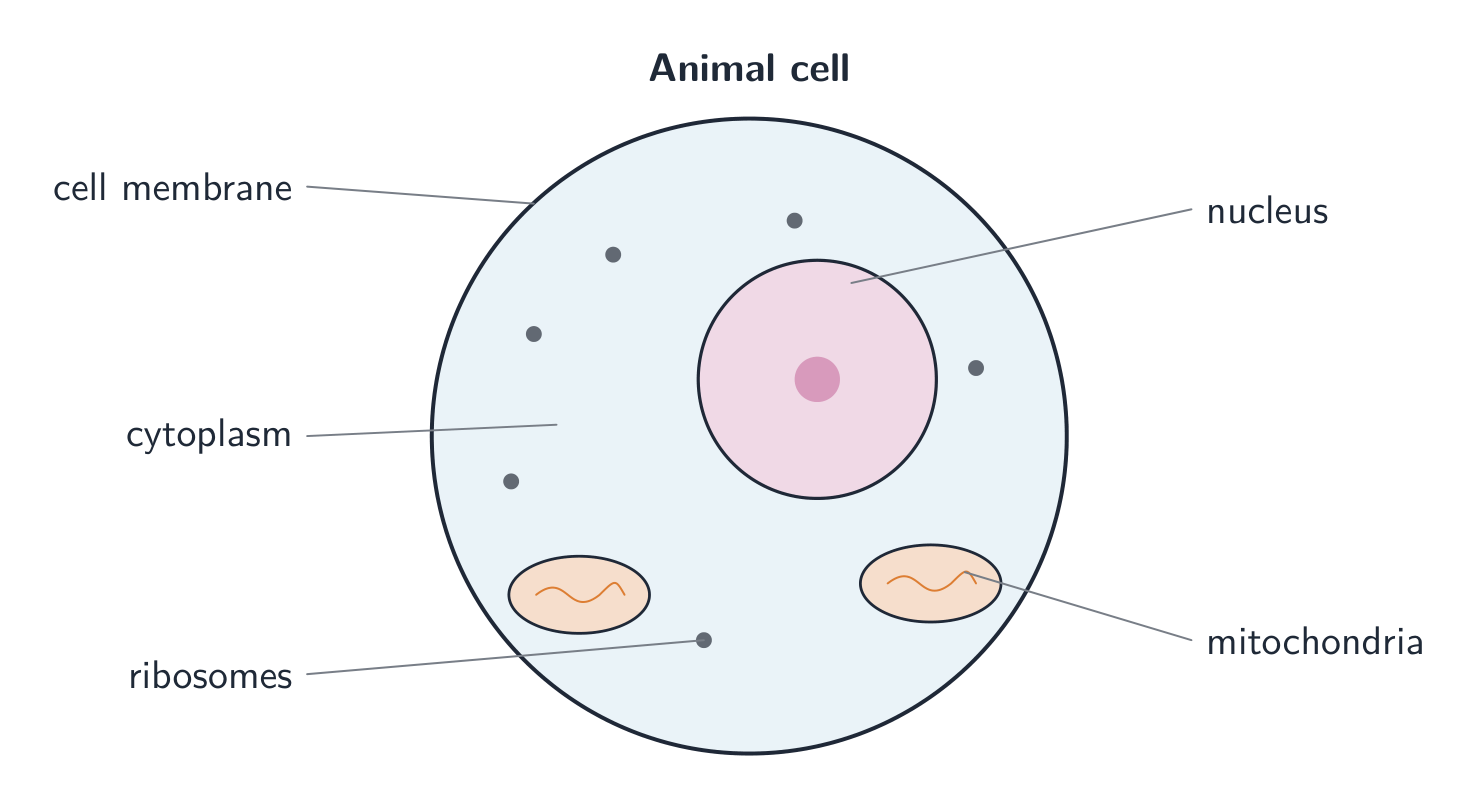
    A generalised animal cell and its organelles
    A generalised animal cell and its organelles

    What each organelle actually does

    The exam asks you to name a structure and say what it does, so learn them as pairs.

    Ribosomes 核糖体 are made of ribosomal RNA 核糖体核糖核酸 (rRNA) and protein. They have no membrane, and they are found in every form of life — bacteria, archaea and eukaryotes alike. That shared presence is evidence of common ancestry: a structure this central was already present in the last common ancestor of all living things. A ribosome reads messenger RNA 信使核糖核酸 (mRNA) and builds the protein it codes for. Free ribosomes make proteins for use inside the cell; ribosomes bound to the rough endoplasmic reticulum make proteins for export or for the membrane.

    The Golgi complex 高尔基复合体 is a series of flattened, membrane-bound sacs. A protein arriving from the endoplasmic reticulum is passed through them, and three things happen to it:

    • it is folded correctly and chemically modified — most often by glycosylation 糖基化, the attachment of short sugar chains;
    • it is sorted and targeted, so the modified sugar or phosphate tag decides which compartment the protein is sent to;
    • it is packaged into a vesicle for transport.

    So the Golgi is not storage: it is the cell's finishing and dispatch department, and its modifications determine what a protein does and where it ends up.

    Lysosomes are membrane-enclosed sacs of hydrolytic enzymes 水解酶 that digest material — worn-out organelles, engulfed bacteria, and food particles taken in by the cell. Their enzymes work best at a low pH, which the lysosome maintains inside itself; keeping them enclosed protects the rest of the cell. Lysosomes also take part in apoptosis 细胞凋亡, programmed cell death, in which a cell is dismantled deliberately, for example to sculpt fingers from a webbed embryonic hand.

    Vacuoles 液泡 are membrane-bound sacs with many different roles: storing water, ions, nutrients or waste, and in a plant cell the large central vacuole also presses outwards on the cell wall to keep the cell firm.

    Mitochondria and chloroplasts each have a double membrane and their own circular DNA and ribosomes — the evidence behind endosymbiotic theory below.

    Vocabulary · ⁨어휘⁩ Train · ⁨연습하기⁩
    English 한국어
    organelles/ˌɔːɡəˈnelz/ 소기관
    endomembrane system/ˈendəʊmembreɪn ˈsɪstəm/ 내막 시스템
    nucleus/ˈnjuːklɪəs/ 핵
    endoplasmic reticulum/ˌendəʊˈplæzmɪk reˈtɪkjʊləm/ 소질체
    Golgi/ˈɡɒlɡɪ/ 골지체
    lysosomes/ˈlaɪsəsəʊmz/ 리소좀
    Mitochondria/ˌmaɪtəˈkɒndrɪə/ 미토콘드리아
    chloroplasts/ˈklɔːrəʊplæsts/ 엽록체
    Ribosomes/ˈrɪbəsəʊmz/ 리보솜
    ribosomal RNA/ˈrɪbəsɒml ˌɑː en ˈeɪ/ 리보솜 RNA
    messenger RNA/ˈmesɪndʒə ˌɑː en ˈeɪ/ 전사RNA
    The Golgi complex/ðə ˈɡɒlɡɪ ˈkɒmpleks/ 골지 복합체
    glycosylation/ˌɡlaɪkəsɪˈleɪʃn/ 당화 반응
    hydrolytic enzymes/ˌhaɪdrəˈlɪtɪk ˈenzaɪmz/ 가수분해 효소
    apoptosis/əpəpˈtəʊsɪs/ apoptosis
    Vacuoles/ˈvækjuːəʊlz/ 액포
    ribosomal RNA (rRNA)/ˈrɪbəsɒml ˌɑː en ˈeɪ/ 리보솜 RNA (rRNA)
    2.2

    Why Cells Stay Small

    Syllabus
    English

    Big Idea 2 — Energetics (ENE): Biological systems use energy and molecular building blocks to grow, reproduce, and maintain dynamic homeostasis.

    Learning Objective 2.2.A: Explain the effect of surface area-to-volume ratios on the exchange of materials between cells or organisms and the environment.

    • 2.2.A.1 Surface area-to-volume ratios affect the ability of a biological system to obtain necessary nutrients, eliminate waste products, acquire or dissipate thermal energy, and otherwise exchange chemicals and energy with the environment.
      • Relevant equations:
        • Volume of a Sphere: $V = \dfrac{4}{3}\pi r^3$
        • Volume of a Cube: $V = s^3$
        • Volume of a Rectangular Solid: $V = lwh$
        • Volume of a Cylinder: $V = \pi r^2 h$
        • Surface Area of a Sphere: $SA = 4\pi r^2$
        • Surface Area of a Cube: $SA = 6s^2$
        • Surface Area of a Rectangular Solid: $SA = 2lh + 2lw + 2wh$
        • Surface Area of a Cylinder: $SA = 2\pi rh + 2\pi r^2$
        • $r$ = radius
        • $l$ = length
        • $h$ = height
        • $w$ = width
        • $s$ = length of one side of a cube
      • Illustrative examples for 2.2.A.1:
        • SA/V Ratios and Exchanges
          • Root hairs
          • Guard cells
          • Gut epithelial cells
        • Cilia
        • Stomata
    • 2.2.A.2 The surface area of the plasma membrane must be large enough to adequately exchange materials.
      • i. The surface area-to-volume ratio can restrict cell size and shape. Smaller cells typically have a higher surface area-to-volume ratio as well as a more efficient exchange of materials with the environment than do larger cells.
      • ii. As cells increase in volume, the surface area-to-volume ratio decreases and the demand for internal resources increases.
      • iii. More complex cellular structures (e.g., membrane folds) are necessary to adequately exchange materials with the environment.
      • iv. As organisms increase in size, their surface area-to-volume ratio decreases, affecting properties like rate of heat exchange with the environment. Smaller amounts of mass exchange proportionally more heat with the ambient environment than do larger masses. As mass increases, both the surface area-to-volume ratio and the rate of heat exchange decrease.
      • v. There is a relationship between metabolic rate per unit body mass and the size of multicellular organisms; typically, the smaller the organism, the higher the metabolic rate per unit body mass.
    한국어

    핵심 개념 2 — 에너지代谢(ENE): 생물학적 시스템은 성장, 번식 및 동적 호모스타시스 유지를 위해 에너지와 분자 구성 요소를 사용합니다.

    학습 목표 2.2.A: 표면적 대 부피 비가 세포 또는 생물과 환경 간의 물질 교환에 미치는 영향을 설명하시오.

    • 2.2.A.1 표면적 대 부피 비는 생물학적 시스템이 필수적인 영양분을 얻고, 노폐물을 배설하며, 열 에너지를 획득하거나 방출하며, 그 밖의 방법으로 환경과의 화학 물질 및 에너지交换에 영향을 미칩니다.
      • *관련 공식:
        • 구의 부피: $V = \dfrac{4}{3}\pi r^3$
        • 정육면체의 부피: $V = s^3$
        • 직사각형 부피体的 부피: $V = lwh$
        • 원통의 부피: $V = \pi r^2 h$
        • 구의 표면적: $SA = 4\pi r^2$
        • 정육면체의 표면적: $SA = 6s^2$
        • 직사각형 부피体的 표면적: $SA = 2lh + 2lw + 2wh$
        • 원기둥의 표면적: $SA = 2\pi rh + 2\pi r^2$
        • $r$ = 반지름
        • $l$ = 길이
        • $h$ = 높이
        • $w$ = 너비
        • $s$ = 정육면체 한 변의 길이
      • *2.2.A.1을 위한 예시:
        • SA/V 비 및交换
          • 근모(root hairs)
          • 기공 세포(guard cells)
          • 장 상피细胞(gut epithelial cells)
        • 편모(cilia)
        • 기공(stomata)
    • 2.2.A.2 세포막의 표면적이 충분히 커서 물질 exchange가 이루어져야 합니다.
      • i. 표면적 대 부피 비는 세포의 크기와 형태를 제한할 수 있습니다. 작은 세포는 일반적으로 큰 세포보다 높은 표면적 대 부피 비를 가지며, 환경과의 물질 exchange가 더 효율적입니다.
      • ii. 세포의 부피가 증가하면 표면적 대 부피 비는 감소하고 내부 자원에 대한 수요는 증가합니다.
      • iii. 환경과의 충분한物质交换을 위해서는 더 복잡한 세포 구조(예: 막 주름)가 필요합니다.
      • iv. 생물체의 크기가 커질수록 표면적 대 부피 비율이 감소하여 환경과의 열교환 속도 같은 성질에 영향을 미친다. 작은 질량은 큰 질량보다 주변 환경과 비례적으로 더 많은 열을 교환한다. 질량이 증가할수록 표면적 대 부피 비율과 열교환 속도 모두 감소한다.
      • v. 단위 체중당 대사율과 다세포 생물체의 크기 사이에는 관계가 있으며; 일반적으로 생물체가 작을수록 단위 체중당 대사율이 높다.

    Source: College Board AP Course and Exam Description · ⁨출처: College Board AP Course and Exam Description⁩

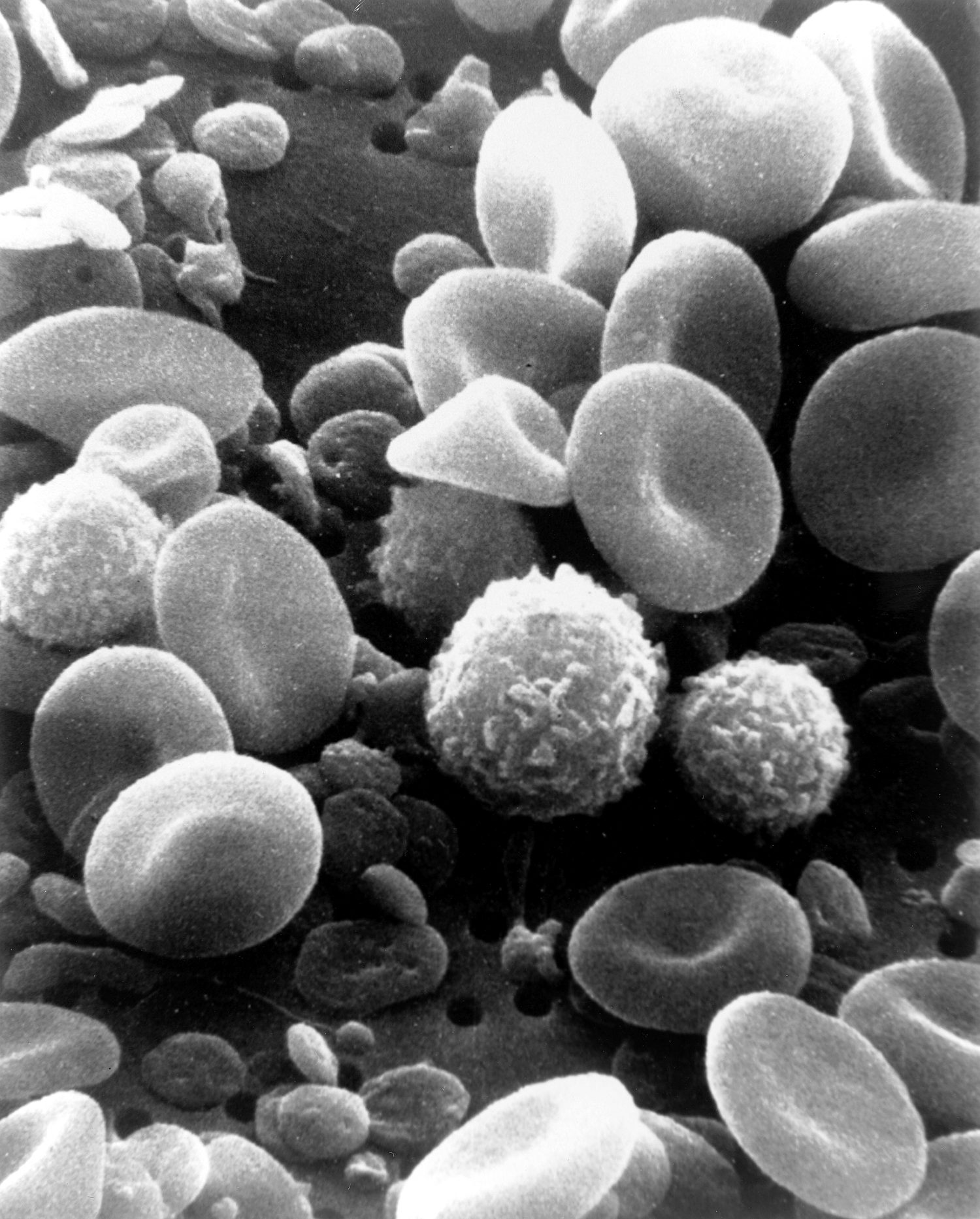
    Scanning electron micrograph of red blood cells — no nucleus, high surface area for gas exchange
    Scanning electron micrograph of red blood cells — no nucleus, high surface area for gas exchange

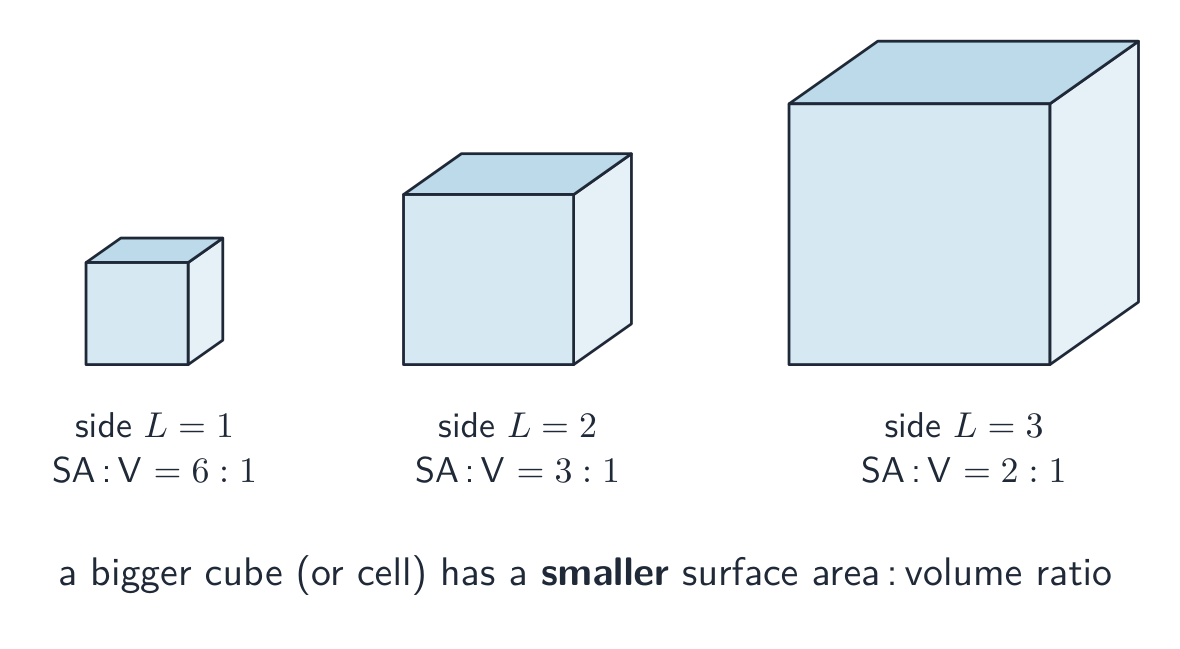
    Cells stay small because of the surface-area-to-volume ratio 表面积与体积比. As a cell grows, its volume rises faster than its surface area, so its membrane cannot exchange materials fast enough for the interior. Staying small (or being flat or folded) keeps enough surface to serve the volume.

    The surface-area-to-volume ratio falls as a cell gets bigger
    The surface-area-to-volume ratio falls as a cell gets bigger

    Worked example. A cube-shaped cell $2\ \mu\text{m}$ on a side has surface area $6\times2^2=24\ \mu\text{m}^2$ and volume $2^3=8\ \mu\text{m}^3$, so its surface-area-to-volume ratio is $\tfrac{24}{8}=3$. Double the side to $4\ \mu\text{m}$: surface area $=6\times4^2=96$, volume $=4^3=64$, ratio $=\tfrac{96}{64}=1.5$. Doubling the size halved the ratio – the larger cell has far less membrane per unit of interior, which is why cells stay small.

    Explore · ⁨탐색하기⁩

    See surface area vs volume as a cube grows · ⁨정육면체가 커질 때 표면적 대비 부피 변화 보기⁩

    As a cell grows, volume rises faster than surface area, so the surface-area-to-volume ratio falls. A small cell keeps enough membrane to exchange materials fast enough. · ⁨세포가 자라면서 부피가 표면적보다 빠르게 증가하여 표면적 대비 부피 비율이 감소합니다. 작은 세포는 물질을 빠르게 교환할 수 있는 충분한 막을 유지합니다.⁩

    Vocabulary · ⁨어휘⁩ Train · ⁨연습하기⁩
    English 한국어
    surface-area-to-volume ratio/ˈsɜːfɪs ˈeərɪə tə ˈvɒljuːm ˈreɪʃɪəʊ/ 표면적 대 부피 비율
    2.3

    The Fluid Mosaic Model of the Membrane

    Syllabus
    English

    Big Idea 2 — Energetics (ENE): Biological systems use energy and molecular building blocks to grow, reproduce, and maintain dynamic homeostasis.

    Learning Objective 2.3.A: Describe the roles of each of the components of the cell membrane in maintaining the internal environment of the cell.

    • 2.3.A.1 Phospholipids have both hydrophilic and hydrophobic regions. The polar hydrophilic phosphate regions of the phospholipids are oriented toward the aqueous external or internal environment, while the nonpolar hydrophobic fatty acid regions face each other within the interior of the membrane.
    • 2.3.A.2 Embedded proteins can be hydrophilic (with charged and polar side groups), hydrophobic (with nonpolar side groups), or both.
      • i. Hydrophilic regions of the proteins are either inside the interior of the protein or exposed to the cytosol (cytoplasm).
      • ii. Hydrophobic regions of proteins make up the protein surface that interacts with the fatty acids in the interior membrane.

    Learning Objective 2.3.B: Describe the fluid mosaic model of cell membranes.

    • 2.3.B.1 Plasma membranes consist of a structural framework of phospholipid molecules embedded with proteins, steroids (such as cholesterol in vertebrate animals), glycoproteins, and glycolipids. All of these can move around the surface of the cell within the membrane, as illustrated by the fluid mosaic model.
    한국어

    핵심 개념 2 — 에너지代谢(ENE): 생물학적 시스템은 성장, 번식 및 동적 호모스타시스 유지를 위해 에너지와 분자 구성 요소를 사용합니다.

    학습 목표 2.3.A: 세포막의 각 구성 요소가 세포 내부 환경을 유지하는 데 담당하는 역할을 설명하시오.

    • 2.3.A.1 인산지질은 친수성 영역과 소수성 영역을 모두 가진다. 인산지질의 극성 친수성 인산 영역은 수성 외부 또는 내부 환경으로 향하고, 비극성 소수성 지방산 영역은 막 내부에서 서로 마주 보고 있다.
    • 2.3.A.2 삽입 단백질은 친수성(전하를 띤 극성 측쇄를 가짐), 소수성(비극성 측쇄를 가짐), 또는 두 가지 특성을 모두 가질 수 있다.
      • i. 단백질의 친수성 영역은 단백질 내부에 있거나 세포질(시토플라스마)에 노출되어 있다.
      • ii. 단백질의 소수성 영역은 막 내부의 지방산과 상호작용하는 단백질 표면을 형성한다.

    학습 목표 2.3.B: 세포막의 유동 모자이크 모델을 설명하시오.

    • 2.3.B.1 세포막은 인산지질 분자로 구성된 구조적 골격과 그 속에 삽입된 단백질, 스테로이드(예: 척추동물의 콜레스테롤), 당단백질, 당지질로 이루어져 있다. 이 모든 성분은 유동 모자이크 모델에서와 같이 막 내에서 세포 표면 주위를 이동할 수 있다.

    Source: College Board AP Course and Exam Description · ⁨출처: College Board AP Course and Exam Description⁩

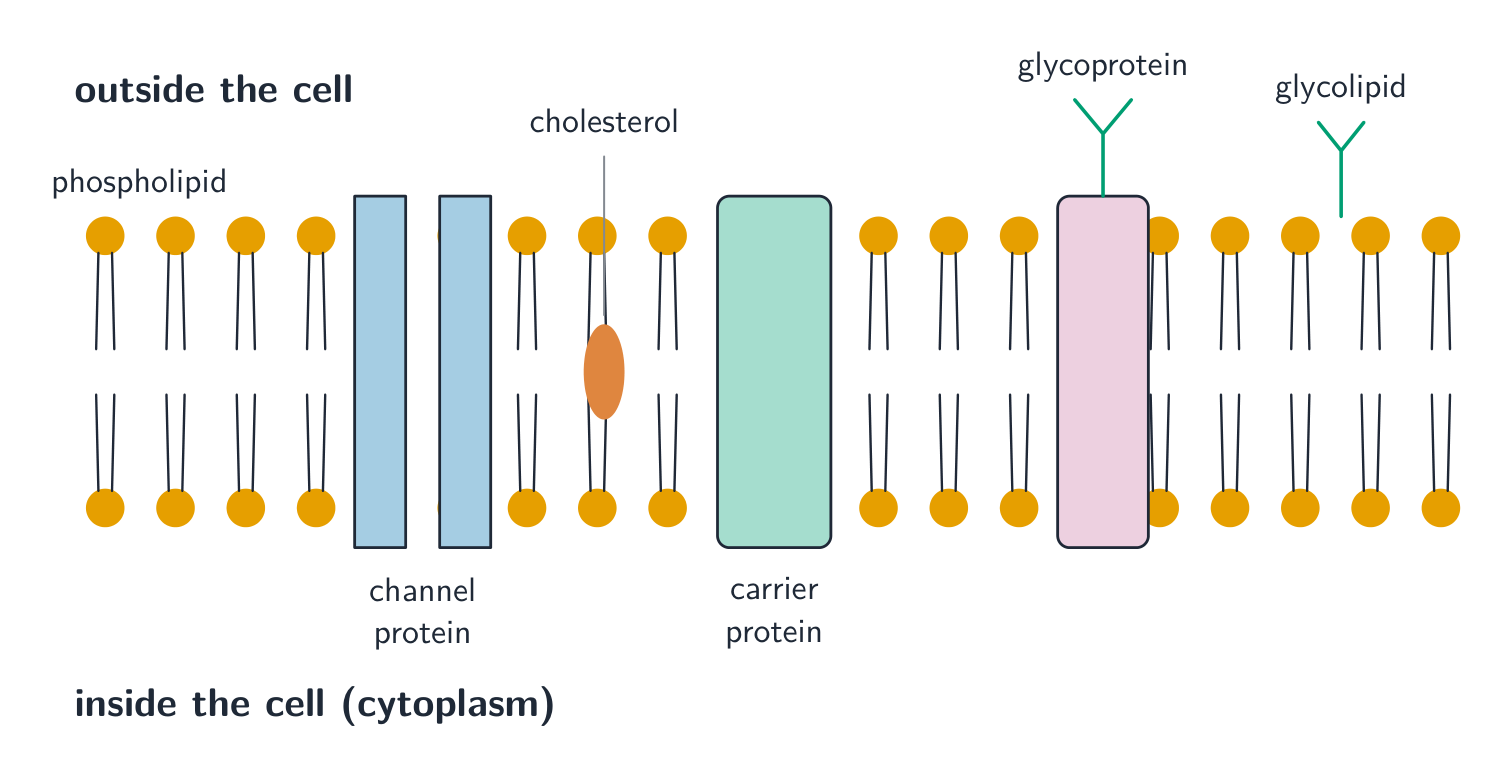
    The cell membrane is a phospholipid bilayer 磷脂双分子层 – polar heads facing the water, nonpolar tails inside – studded with proteins. The fluid mosaic model 流动镶嵌模型 pictures it as a fluid sheet in which lipids and proteins drift. Cholesterol and the degree of unsaturation tune its fluidity.

    The fluid mosaic model of the cell membrane
    The fluid mosaic model of the cell membrane
    Vocabulary · ⁨어휘⁩ Train · ⁨연습하기⁩
    English 한국어
    phospholipid bilayer/ˈfɒsfəlɪpɪd ˈbɪleɪə/ 인지질 이중층
    fluid mosaic model/ˈfluːɪd məˈseɪɪk ˈmɒdl/ 유동 모자이크 모델
    2.4

    What Can Cross the Membrane

    Syllabus
    English

    Big Idea 2 — Energetics (ENE): Biological systems use energy and molecular building blocks to grow, reproduce, and maintain dynamic homeostasis.

    Learning Objective 2.4.A: Explain how the structure of biological membranes influences selective permeability.

    • 2.4.A.1 Plasma membranes separate the internal environment of the cell from the external environment. Selective permeability is the result of the plasma membrane having a hydrophobic interior.
    • 2.4.A.2 Small nonpolar molecules, including $\mathrm{N_2}$, $\mathrm{O_2}$, and $\mathrm{CO_2}$, freely pass across the membrane. Hydrophilic substances, such as large polar molecules and ions, move across the membrane through embedded channels and transport proteins.
    • 2.4.A.3 The nonpolar hydrocarbon tails of phospholipids prevent the movement of ions and polar molecules across the membrane. Small polar, uncharged molecules, like $\mathrm{H_2O}$ or $\mathrm{NH_3}$ (ammonia), pass through the membrane in small amounts.

    Learning Objective 2.4.B: Describe the role of the cell wall in maintaining cell structure and function.

    • 2.4.B.1 Cell walls of Bacteria, Archaea, Fungi, and plants provide a structural boundary as well as a permeability barrier for some substances to the internal or external cellular environments and protection from osmotic lysis.
    한국어

    핵심 개념 2 — 에너지代谢(ENE): 생물학적 시스템은 성장, 번식 및 동적 호모스타시스 유지를 위해 에너지와 분자 구성 요소를 사용합니다.

    학습 목표 2.4.A: 생물학적인 막의 구조가 선택적 투과성에 미치는 영향을 설명하시오.

    • 2.4.A.1 세포막은 세포의 내부 환경과 외부 환경을 분리한다. 선택적 투과성은 세포막이 소수성 내부를 가지고 있기 때문에 발생한다.
    • 2.4.A.2 소수성 분자인 $\mathrm{N_2}$, $\mathrm{O_2}$, $\mathrm{CO_2}$를 포함한 작은 비극성 분자는 막을 자유롭게 통과한다. 친수성 물질(큰 극성 분자 및 이온 등)은 막에 삽입된 채널 및 운반 단백질을 통해 이동한다.
    • 2.4.A.3 인산지질의 비극성 탄화수소 꼬리는 이온과 극성 분자의 막 통과를 방지한다. 작은 극성 전하 없는 분자, 예를 들어 $\mathrm{H_2O}$ 또는 $\mathrm{NH_3}$(암모니아)은 막을 소량 통과할 수 있다.

    학습 목표 2.4.B: 세포벽이 세포 구조와 기능 유지에 담당하는 역할을 설명하시오.

    • 2.4.B.1 세균, 고생물, 진균, 식물의 세포벽은 구조적 경계뿐만 아니라 특정 물질에 대한 투과성 장벽을 제공하며, 내부 또는 외부 세포 환경에 대해 삼투 용해로부터 보호한다.

    Source: College Board AP Course and Exam Description · ⁨출처: College Board AP Course and Exam Description⁩

    The membrane is selectively permeable 选择透过性. Small nonpolar molecules ($\text{O}_2$, $\text{CO}_2$) and water cross easily; large or charged/polar particles (ions, glucose) cannot pass the nonpolar core without help. This selectivity lets the cell control its internal environment.

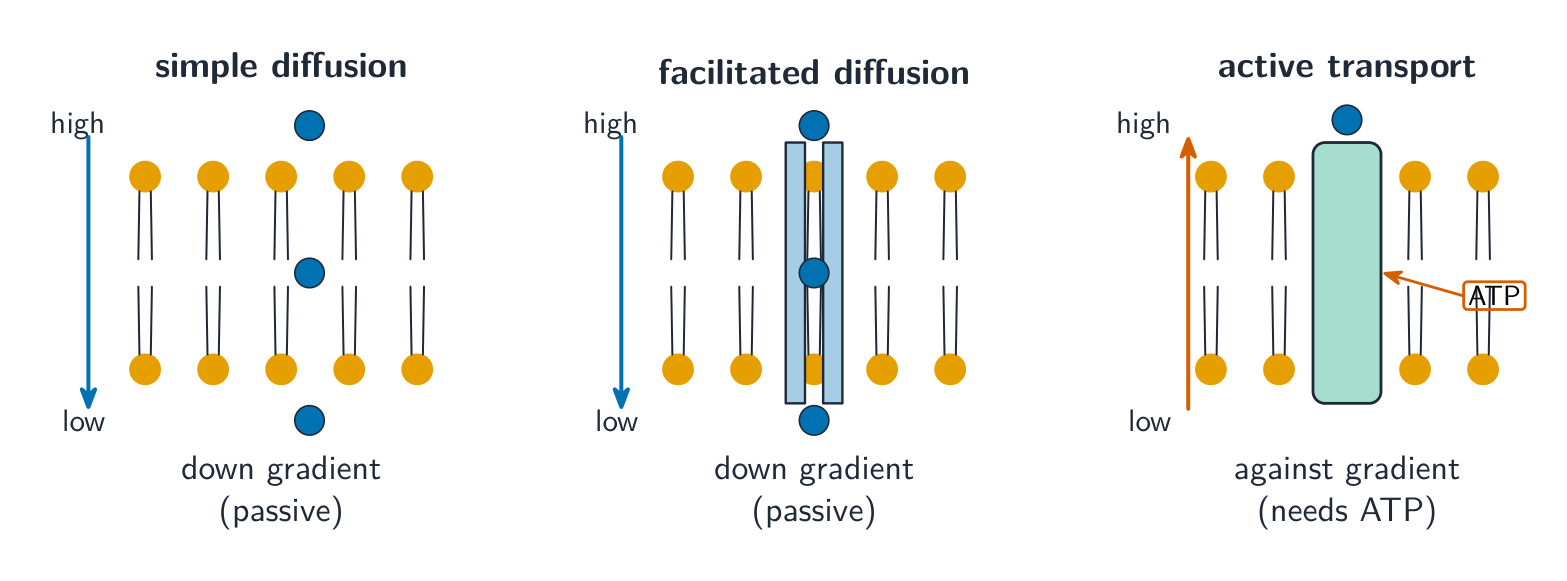
    Three ways substances cross the membrane
    Three ways substances cross the membrane
    Vocabulary · ⁨어휘⁩ Train · ⁨연습하기⁩
    English 한국어
    selectively permeable/sɪˈlektɪvli ˈpɜːməbl/ 선택 투과성
    2.5

    Passive and Active Transport

    Syllabus
    English

    Big Idea 2 — Energetics (ENE): Biological systems use energy and molecular building blocks to grow, reproduce, and maintain dynamic homeostasis.

    Learning Objective 2.5.A: Describe the mechanisms that organisms use to maintain solute and water balance.

    • 2.5.A.1 The selective permeability of membranes allows for the formation of concentration gradients of solutes across the membrane.
    • 2.5.A.2 Passive transport is the net movement of molecules from regions of high concentration to regions of low concentration without the direct input of metabolic energy.
    • 2.5.A.3 Active transport requires the direct input of energy to move molecules. In some cases, active transport is utilized to move molecules from regions of low concentration to regions of high concentration.

    Learning Objective 2.5.B: Describe the mechanisms that organisms use to transport large molecules across the plasma membrane.

    • 2.5.B.1 The processes of endocytosis and exocytosis require energy to move large substances or large amounts of substances into and out of cells.
      • i. In endocytosis, the cell takes in large molecules and particulate matter by folding the plasma membrane in on itself and forming new (small) vesicles that engulf material from the external environment.
      • ii. In exocytosis, internal vesicles release material from cells by fusing with the plasma membrane and secreting large molecules from the cell.
    한국어

    핵심 개념 2 — 에너지代谢(ENE): 생물학적 시스템은 성장, 번식 및 동적 호모스타시스 유지를 위해 에너지와 분자 구성 요소를 사용합니다.

    학습 목표 2.5.A: 생물이 용질 및 수분 균형을 유지하기 위해 사용하는 기전을 설명하시오.

    • 2.5.A.1 막의 선택적 투과성은 막 전체에 걸쳐 용질의 농도 기울기를 형성할 수 있게 한다.
    • 2.5.A.2 능동 수송이 아닌 수동 수송은 대사 에너지의 직접적인 투입 없이 높은 농도 영역에서 낮은 농도 영역으로 분자가 순이동하는 것이다.
    • 2.5.A.3 능동 수송은 분자를 이동시키기 위해 에너지가 직접적으로 투입되어야 한다. 어떤 경우에는 능동 수송을 사용하여 낮은 농도 영역에서 높은 농도 영역으로 분자를 이동시키기도 한다.

    학습 목표 2.5.B: 생물이 대형 분자를 세포막을 가로질러 수송하기 위해 사용하는 기전을 설명하시오.

    • 2.5.B.1 내포 작용 및 외배 작용은 세포 안으로나 밖으로 대형 물질을 수송하거나 대량의 물질을 수송하기 위해 에너지를 필요로 한다.
      • i. 내포 작용에서는 세포가 세포막을 자체 안쪽으로 접어 새로운 (작은) 소포를 형성함으로써 외부 환경으로부터 재료를 흡수하고大型 분자 및 입자 물질을 uptake한다.
      • ii. 외배 작용에서는 내부 소포가 세포막과 융합하여 세포로부터大型 분자를 분비하고 배출한다.

    Source: College Board AP Course and Exam Description · ⁨출처: College Board AP Course and Exam Description⁩

    • Passive transport 被动运输 moves substances down their concentration gradient (high → low) with no energy – diffusion 扩散.
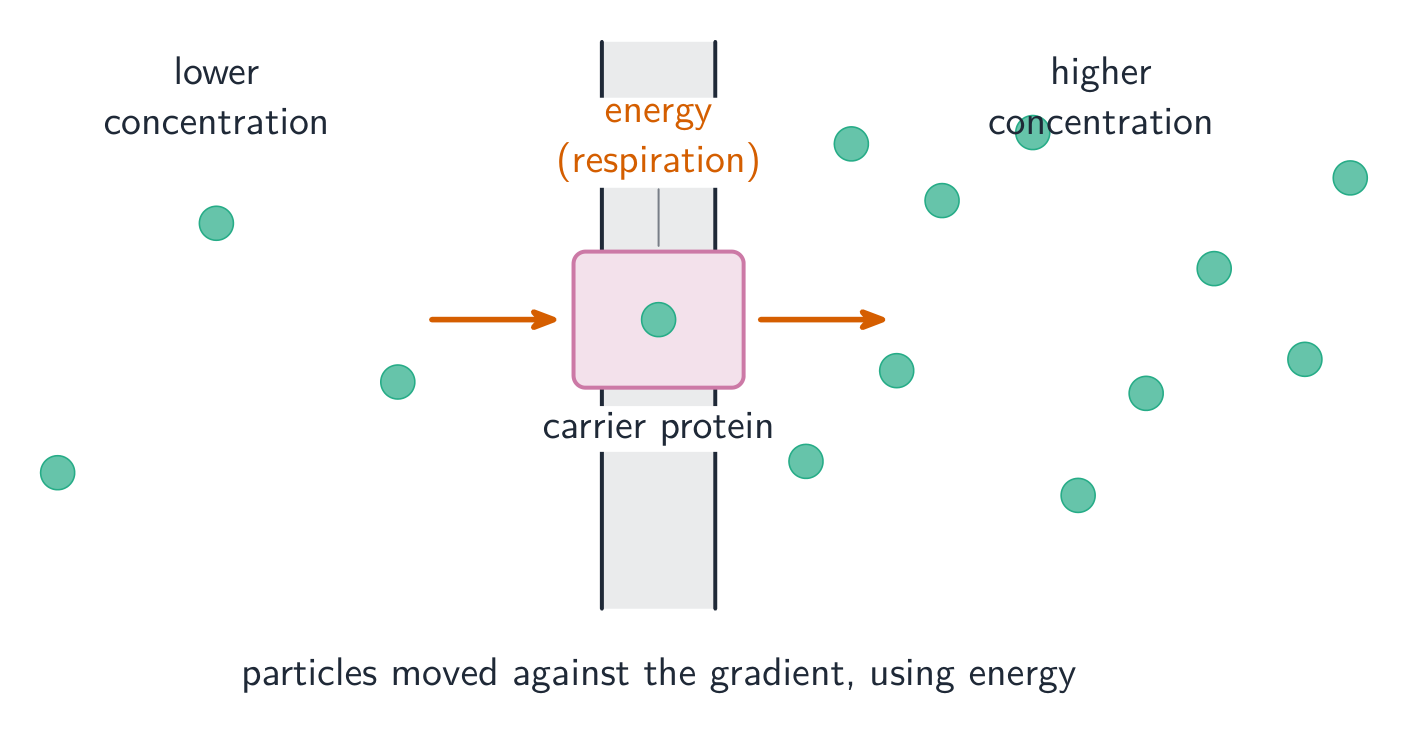
    • Active transport 主动运输 moves substances against the gradient (low → high), requiring energy (ATP), via protein pumps like the sodium–potassium pump.
    Active transport moves particles against the gradient, using ATP and a carrier protein
    Active transport moves particles against the gradient, using ATP and a carrier protein
    Explore · ⁨탐색하기⁩

    Pump a solute against its gradient · ⁨농도 기울기에 반대方向으로 용질을 펌프질하기⁩

    Passive transport moves solutes down their gradient for free; active transport uses ATP to pump them the other way, from low to high concentration. · ⁨능동 수송은 농도 기울기를 따라 자발적으로 용질을 이동시킵니다. 반면 능동 수송은 ATP를 사용하여 낮은 농도에서 높은 농도로 역방향으로 펌프질합니다.⁩

    Vocabulary · ⁨어휘⁩ Train · ⁨연습하기⁩
    English 한국어
    Passive transport/ˈpæsɪv ˈtrænspɔːt/ 수동 수송
    diffusion/dɪˈfjuːʒn/ 확산
    Active transport/ˈæktɪv ˈtrænspɔːt/ 능동 운송(active transport)
    2.6

    Facilitated Diffusion

    Syllabus
    English

    Big Idea 2 — Energetics (ENE): Biological systems use energy and molecular building blocks to grow, reproduce, and maintain dynamic homeostasis.

    Learning Objective 2.6.A: Explain how the structure of a molecule affects its ability to pass through the plasma membrane.

    • 2.6.A.1 Facilitated diffusion requires transport or channel proteins to enable the movement of charged ions across the membrane.
      • i. Membranes may become polarized by the movement of ions across the membrane.
      • ii. Charged ions, including $\mathrm{Na^+}$ (sodium) and $\mathrm{K^+}$ (potassium), require channel proteins to move through the membrane.
    • 2.6.A.2 Facilitated diffusion enables the movement of large polar molecules through membranes with no energy input. In this type of diffusion, substances move down the concentration gradient.
    • 2.6.A.3 Aquaporins transport large quantities of water across membranes.
    한국어

    핵심 개념 2 — 에너지代谢(ENE): 생물학적 시스템은 성장, 번식 및 동적 호모스타시스 유지를 위해 에너지와 분자 구성 요소를 사용합니다.

    학습 목표 2.6.A: 분자의 구조가 세포막 통과 능력에 미치는 영향을 설명하시오.

    • 2.6.A.1 촉진 확산은 전하를 띤 이온이 막을 통과할 수 있도록 운반 단백질이나 채널 단백질이 필요하다.
      • i. 막은 이온이 막을 가로질러 이동함에 따라 극성이 될 수 있다.
      • ii. 전하를 띤 이온, 즉 $\mathrm{Na^+}$(나트륨)과 $\mathrm{K^+}$(칼륨)은 막을 통과하기 위해 채널 단백질이 필요하다.
    • 2.6.A.2 촉진 확산은 에너지 투입 없이 큰 극성 분자가 막을 통과할 수 있게 한다. 이러한 유형의 확산에서 물질은 농도 기울기 방향으로 이동한다.
    • 2.6.A.3 아쿠아포린은 대량의 물을 막을 가로질러 수송한다.

    Source: College Board AP Course and Exam Description · ⁨출처: College Board AP Course and Exam Description⁩

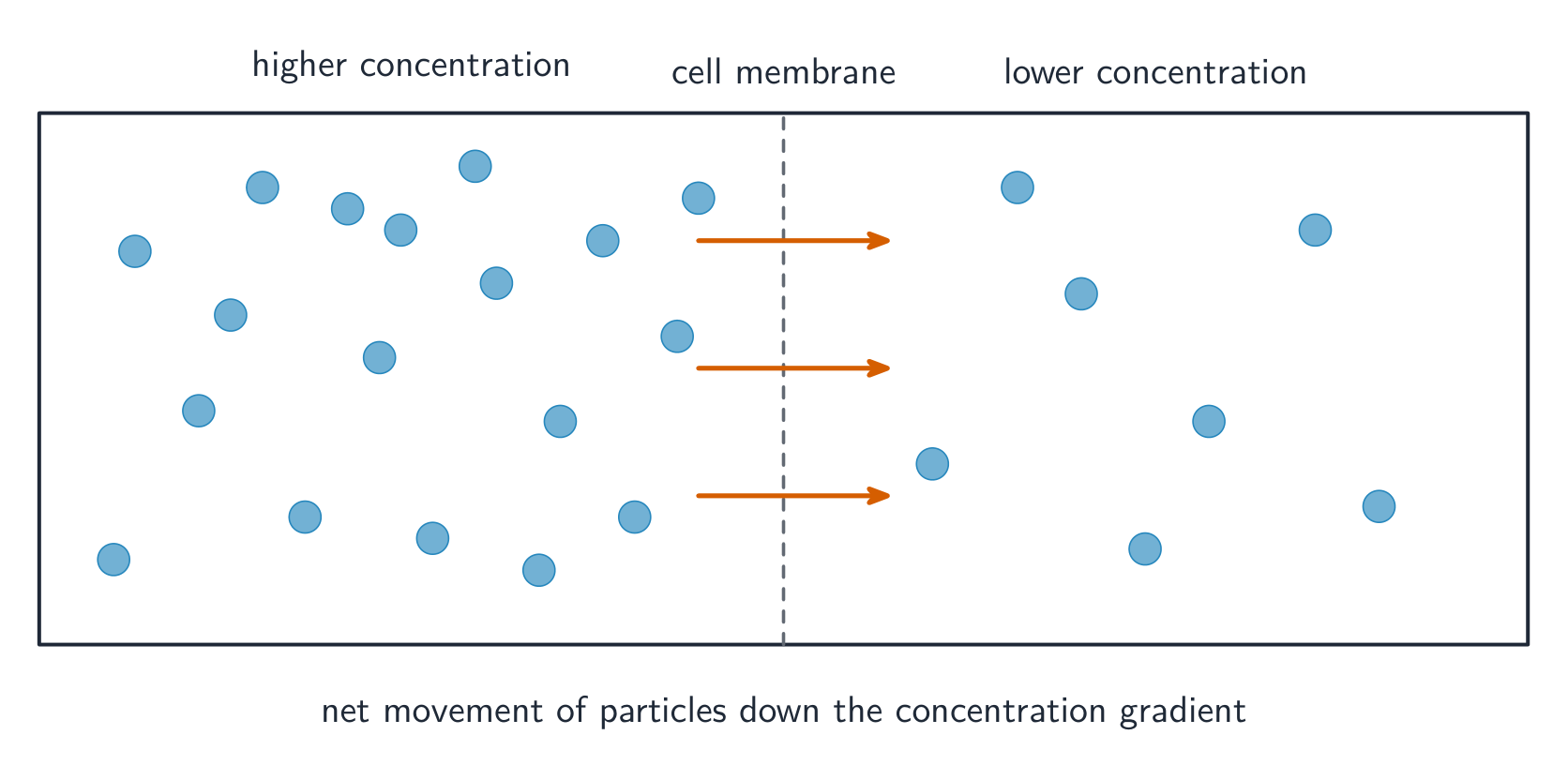
    Facilitated diffusion 易化扩散 is passive transport through a membrane protein – a channel or carrier 载体 – for particles that cannot cross the lipid alone. It still goes down the gradient and needs no energy, but its rate can saturate when all the proteins are busy.

    Diffusion: particles spread from higher to lower concentration, down the gradient
    Diffusion: particles spread from higher to lower concentration, down the gradient
    Vocabulary · ⁨어휘⁩ Train · ⁨연습하기⁩
    English 한국어
    Facilitated diffusion/fəˈsɪlɪteɪtɪd dɪˈfjuːʒn/ 보조 확산 (facilitated diffusion)
    carrier/ˈkærɪə/ 운반체
    2.7

    Tonicity, Water Potential, and Osmoregulation

    Syllabus
    English

    Big Idea 2 — Energetics (ENE): Biological systems use energy and molecular building blocks to grow, reproduce, and maintain dynamic homeostasis.

    Learning Objective 2.7.A: Explain how concentration gradients affect the movement of molecules across membranes.

    • 2.7.A.1 External environments can be hypotonic, hypertonic, or isotonic to internal environments of cells. Movement of water can also be described as moving from hypotonic to hypertonic regions. Water moves by osmosis from regions of high water potential to regions of low water potential.
      • Equation (Water Potential): $\psi = \psi_p + \psi_s$
        • where:
        • $\psi_p$ = pressure potential
        • $\psi_s$ = solute potential
      • Illustrative examples for 2.7.A.1:
        • Contractile vacuole in protists
        • Central vacuole in plant cells

    Learning Objective 2.7.B: Explain how osmoregulatory mechanisms contribute to the health and survival of organisms.

    • 2.7.B.1 Growth and homeostasis are maintained by the constant movement of molecules across membranes.
    • 2.7.B.2 Osmoregulation maintains water balance and allows organisms to control their internal solute composition and water potential. Water moves from regions of low osmolarity or solute concentration to regions of high osmolarity or solute concentration.
      • Equation (Solute Potential of a Solution): $\psi_s = -iCRT$
        • where:
        • $i$ = ionization constant
        • $C$ = molar concentration
        • $R$ = pressure constant $\left(R = 0.0831 \dfrac{L \cdot bars}{mol \cdot K}\right)$
        • $T$ = temperature in Kelvin (°C + 273)
    한국어

    핵심 개념 2 — 에너지代谢(ENE): 생물학적 시스템은 성장, 번식 및 동적 호모스타시스 유지를 위해 에너지와 분자 구성 요소를 사용합니다.

    학습 목표 2.7.A: 농도 기울기가 막을 통한 분자 이동에 미치는 영향을 설명하시오.

    • 2.7.A.1 외부 환경은 세포의 내부 환경에 대해 등渗, 저渗, 또는 고渗일 수 있다. 물의 이동은 저渗 영역에서 고渗 영역으로 이동한다고도 묘사할 수 있다. 물은 삼투 현상에 의해 높은 물ポテンシャル 영역에서 낮은 물ポテンシャル 영역으로 이동한다.
      • 식(물ポテンシャル): $\psi = \psi_p + \psi_s$
        • 여기서:
        • $\psi_p$ = 압력ポテン셜
        • $\psi_s$ = 용질ポテン셜
      • 예시: 2.7.A.1:
        • 원생생물의 수축포포
        • 식물 세포의 중심포포

    학습 목표 2.7.B: 삼투조절 기제가 생명의 건강과 생존에 기여하는 방법을 설명하시오.

    • 2.7.B.1 성장과 호메오스타시는 막을 통한 분자의 지속적인 이동에 의해 유지된다.
    • 2.7.B.2 삼투조절은 물의 균형을 유지하고 생물이 내부 용질 구성 및 물ポテン셜을 조절할 수 있게 한다. 물은 저삼투압 또는 저용질 농도 영역에서 고삼투압 또는 고용질 농도 영역으로 이동한다.
      • 식(용액의 용질ポテン셜): $\psi_s = -iCRT$
        • 여기서:
        • $i$ = 이온화 상수
        • $C$ = 몰농도
        • $R$ = 압력 상수 $\left(R = 0.0831 \dfrac{L \cdot bars}{mol \cdot K}\right)$
        • $T$ = 켈빈 온도 (°C + 273)

    Source: College Board AP Course and Exam Description · ⁨출처: College Board AP Course and Exam Description⁩

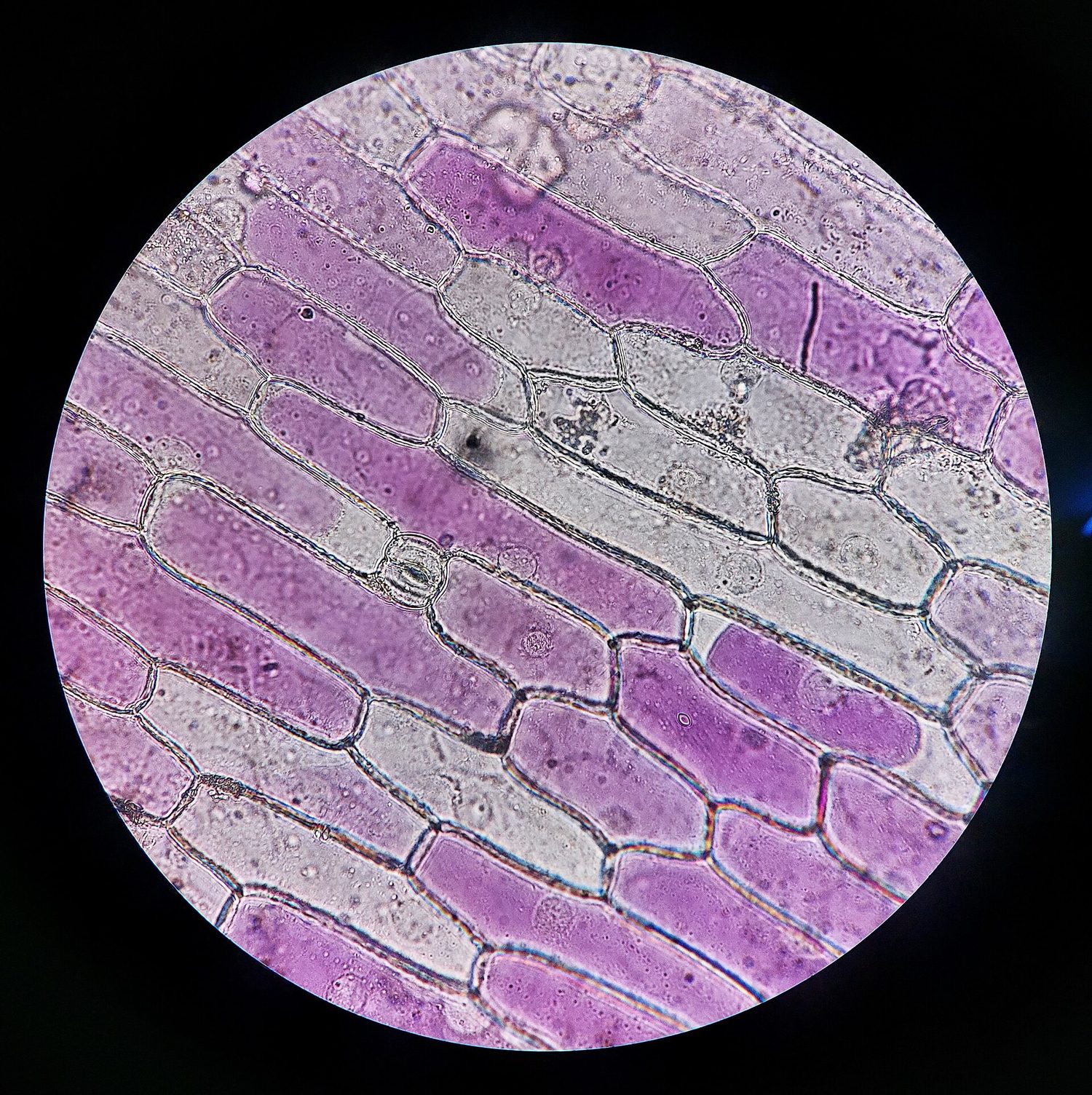
    Red onion cells in hypertonic solution: the membrane pulls away from the wall (plasmolysis)
    Red onion cells in hypertonic solution: the membrane pulls away from the wall (plasmolysis)

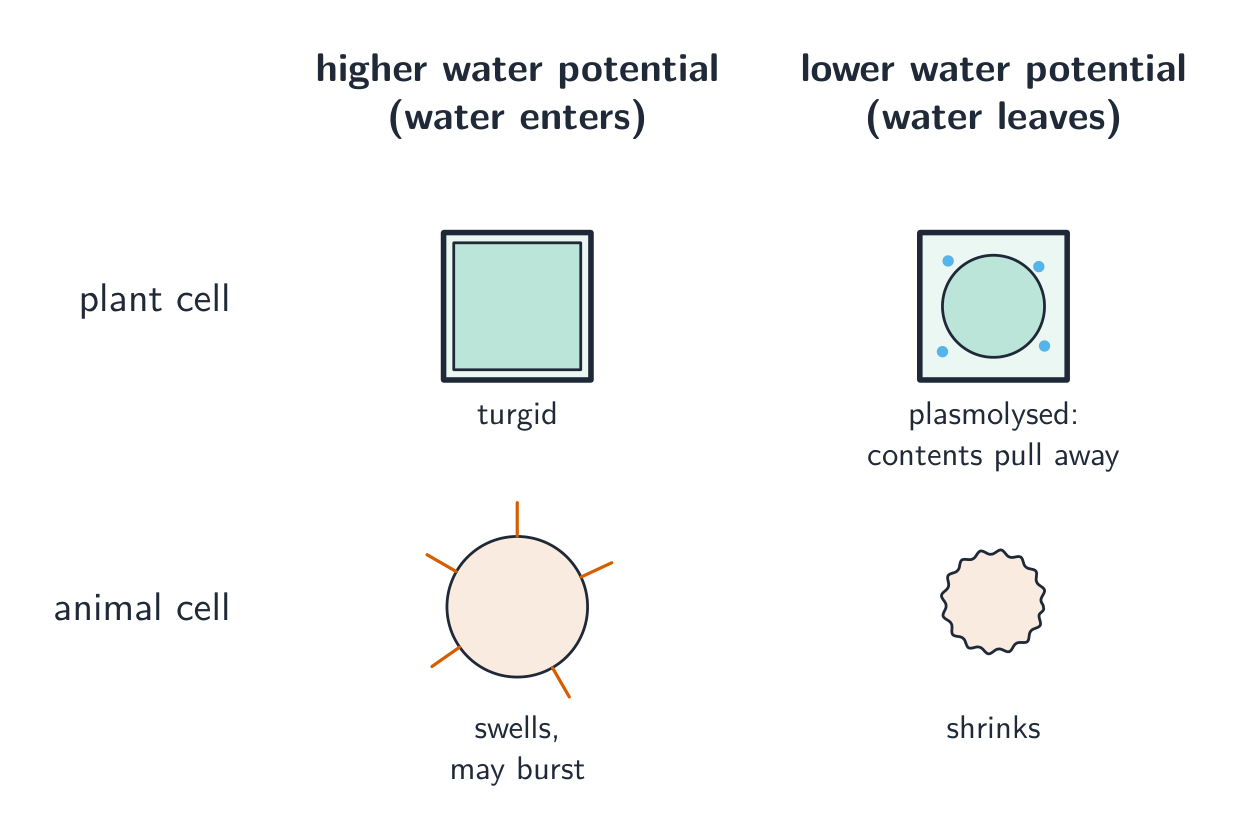
    Osmosis 渗透 is the diffusion of water across a membrane. Tonicity 张力 compares solute concentrations: in a hypotonic 低渗 solution a cell gains water (may burst); in a hypertonic 高渗 one it loses water (shrinks); in an isotonic 等渗 one there is no net change. Water potential 水势 predicts the direction of water movement (water moves to lower water potential), and is the sum of a pressure term and a solute term: $\Psi=\Psi_p+\Psi_s$, where the solute potential $\Psi_s=-iCRT$. Osmoregulation 渗透调节 is how organisms control this balance.

    How plant and animal cells respond to solutions of different water potential
    How plant and animal cells respond to solutions of different water potential

    Worked example. For a $0.1\,\text{M}$ sucrose solution ($i=1$) in an open beaker (so pressure potential $\Psi_p=0$) at $25\,°\text{C}$ ($T=298\,\text{K}$, $R=0.0831\ \text{L}\cdot\text{bar/mol}\cdot\text{K}$): $\Psi_s=-iCRT=-(1)(0.1)(0.0831)(298)\approx-2.48\ \text{bar}$, so $\Psi\approx-2.48\ \text{bar}$. A plant cell whose interior is $\Psi=-1.0\ \text{bar}$ sits in this solution: since the solution is more negative, water moves out of the cell into the solution, and the cell loses turgor.

    Explore · ⁨탐색하기⁩

    Watch water move by osmosis · ⁨삼투에 의한 물 이동 관찰하기⁩

    Water moves across the membrane from high water potential to low, toward the more concentrated (hypertonic) side. Set the concentrations and watch which way the cell swells or shrinks. · ⁨물은 높은 물ポテン셜에서 낮은 쪽으로 막을 가로질러 이동하며, 더 농축된(고장) 쪽으로 향합니다. 농도를 설정하고 세포가 부풀어 오르거나 줄어드는 방향을 확인하세요.⁩

    Vocabulary · ⁨어휘⁩ Train · ⁨연습하기⁩
    English 한국어
    Osmosis/ɒzˈməʊsɪs/ 삼透 (osmosis)
    Tonicity/təˈnɪsɪti/ 투농도
    hypotonic/ˌhaɪpəʊˈtɒnɪk/ 저농도액
    hypertonic/ˌhaɪpəˈtɒnɪk/ 고농도액
    isotonic/ˌaɪsəˈtɒnɪk/ 등장(isotonic)
    Water potential/ˈwɔːtə pəˈtenʃl/ 물포텐셜
    Osmoregulation/ˌɒzmɔːɡjʊˈleɪʃn/ 삼투조절(Osmoregulation)
    2.8

    Mechanisms of Membrane Transport

    Syllabus
    English

    Big Idea 2 — Energetics (ENE): Biological systems use energy and molecular building blocks to grow, reproduce, and maintain dynamic homeostasis.

    Learning Objective 2.8.A: Describe the processes that allow ions and other molecules to move across membranes.

    • 2.8.A.1 Metabolic energy (such as that from ATP) is required for active transport of molecules across the membrane and to establish and maintain electrochemical gradients.
      • i. Membrane proteins are necessary for active transport.
      • ii. The $\mathrm{Na^+}/\mathrm{K^+}$ pump and ATPase contribute to the maintenance of the membrane potential.
    한국어

    핵심 개념 2 — 에너지代谢(ENE): 생물학적 시스템은 성장, 번식 및 동적 호모스타시스 유지를 위해 에너지와 분자 구성 요소를 사용합니다.

    학습 목표 2.8.A: 이온 및 기타 분자가 막을 이동할 수 있게 하는 과정을 서술하시오.

    • 2.8.A.1 막을 통한 능동 운송 및 전기화학적 기울기의 형성과 유지를 위해서는 ATP와 같은 대사 에너지가 필요하다.
      • i. 능동 운송에는 막 단백질이 필수적이다.
      • ii. $\mathrm{Na^+}/\mathrm{K^+}$ 펌프와 ATP아제는 막 전위 유지에 기여한다.

    Source: College Board AP Course and Exam Description · ⁨출처: College Board AP Course and Exam Description⁩

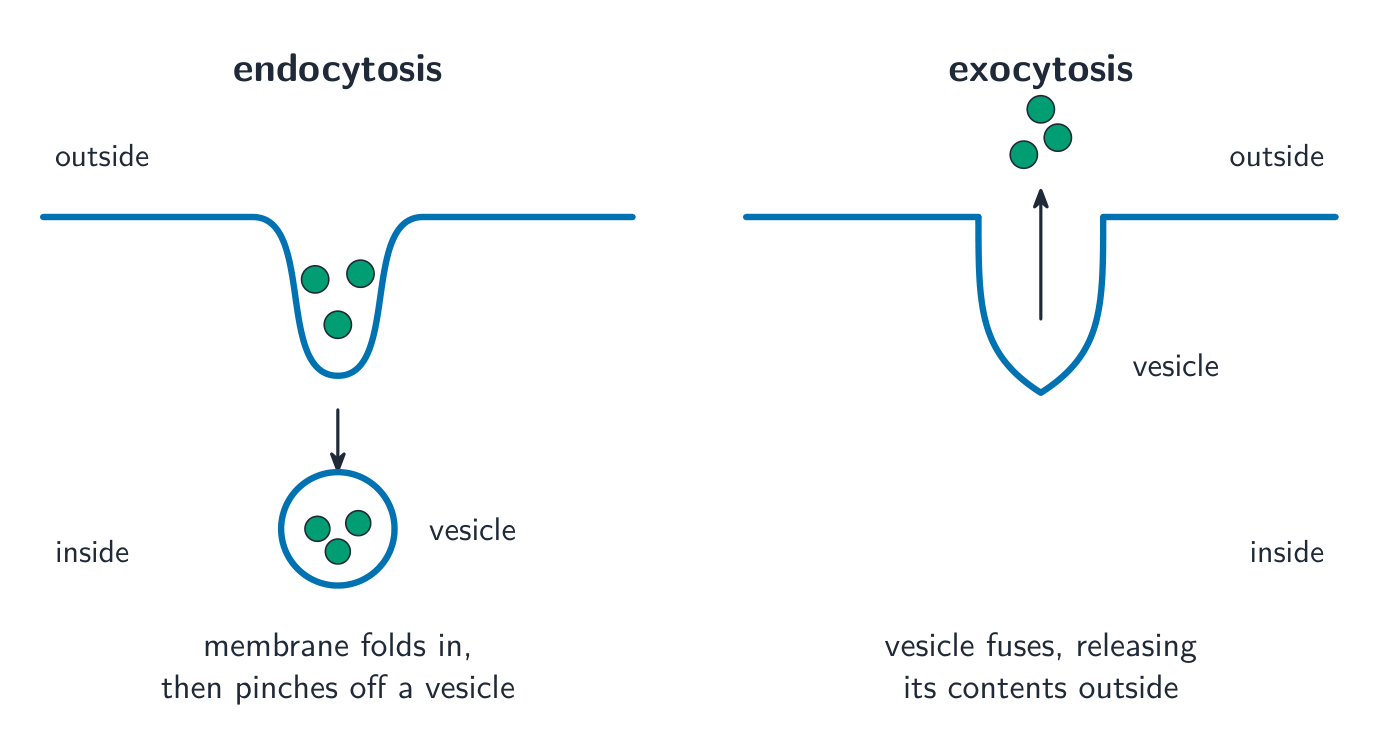
    Large materials move in bulk by vesicles: endocytosis 内吞 brings material in (the membrane engulfs it), and exocytosis 外排 sends material out (a vesicle fuses with the membrane). Both require energy and let cells import and secrete large molecules.

    Endocytosis brings material in; exocytosis releases it out
    Endocytosis brings material in; exocytosis releases it out
    Vocabulary · ⁨어휘⁩ Train · ⁨연습하기⁩
    English 한국어
    endocytosis/ˌendəʊsɪˈtəʊsɪs/ 내포작용
    exocytosis/eɡˌzɒsɪˈtəʊsɪs/ 외포작용
    2.9

    Compartmentalization Inside the Cell

    Syllabus
    English

    Big Idea 2 — Energetics (ENE): Biological systems use energy and molecular building blocks to grow, reproduce, and maintain dynamic homeostasis.

    Learning Objective 2.9.A: Describe the membrane-bound structures of the eukaryotic cell.

    • 2.9.A.1 Membranes and membrane-bound organelles in eukaryotic cells compartmentalize intracellular metabolic processes and specific enzymatic reactions.

    Learning Objective 2.9.B: Explain how internal membranes and membrane-bound organelles contribute to compartmentalization of eukaryotic cell functions.

    • 2.9.B.1 Internal membranes facilitate cellular processes by minimizing competing interactions and by increasing the surface area where reactions can occur.
    한국어

    핵심 개념 2 — 에너지代谢(ENE): 생물학적 시스템은 성장, 번식 및 동적 호모스타시스 유지를 위해 에너지와 분자 구성 요소를 사용합니다.

    학습 목표 2.9.A: 진핵세포의 막 결합 구조를 서술하시오.

    • 2.9.A.1 진핵세포의 막 및 막결합 소기관은 세포 내 대사 과정과 특정 효소 반응을 구획화한다.

    학습 목표 2.9.B: 내부 막과 막결합 소기관이 진핵세포 기능의 구획화에 기여하는 방법을 설명하시오.

    • 2.9.B.1 내부 막은 경쟁적 상호작용을 최소화하고 반응이 일어나는 표면적을 증가시켜 세포 과정을 촉진한다.

    Source: College Board AP Course and Exam Description · ⁨출처: College Board AP Course and Exam Description⁩

    Membranes create separate compartments 区室 so incompatible reactions can run at once and conditions (pH, ion levels) can be tuned locally. This organization boosts efficiency – the internal membranes also add surface area for reactions.

    Vocabulary · ⁨어휘⁩ Train · ⁨연습하기⁩
    English 한국어
    compartments/kəmˈpɑːtmənts/ 구획
    2.10

    The Origins of Cell Compartmentalization

    Syllabus
    English

    Big Idea 1 — Evolution (EVO): The process of evolution drives the diversity and unity of life.

    Learning Objective 2.10.A: Describe similarities and/or differences in compartmentalization between prokaryotic and eukaryotic cells.

    • 2.10.A.1 Membrane-bound organelles such as mitochondria and chloroplasts evolved from once free-living prokaryotic cells via endosymbiosis.
    • 2.10.A.2 Prokaryotes typically lack internal membrane-bound organelles but have internal regions with specialized structures and functions.
    • 2.10.A.3 Eukaryotic cells maintain internal membranes that partition the cell into specialized regions.
    한국어

    핵심 개념 1 — 진화(EVO): 진화 과정은 생명의 다양성과 통일성을 이끕니다.

    학습 목표 2.10.A: 원핵세포와 진핵세포 사이의 구획화의 유사점 및/또는 차이점을 서술하시오.

    • 2.10.A.1 미토콘드리아 및 엽록체와 같은 막으로 둘러싸인 소기관들은 내공생(endosymbiosis)을 통해 자유 생활을 하던かつて의 원핵세포로부터 진화했습니다.
    • 2.10.A.2 원핵생물은 일반적으로 내부 막으로 둘러싸인 소기관이 없으나, 특수한 구조와 기능을 가진 내부 영역을 가집니다.
    • 2.10.A.3 진핵세포는 세포를 특수화된 영역으로 분리하는 내부 막을 유지합니다.

    Source: College Board AP Course and Exam Description · ⁨출처: College Board AP Course and Exam Description⁩

    The endosymbiotic theory 内共生学说 explains mitochondria and chloroplasts: they arose when a larger cell engulfed free-living prokaryotes that then lived inside it. The evidence – their own circular DNA, their own ribosomes, and double membranes – supports this shared evolutionary origin.

    Vocabulary · ⁨어휘⁩ Train · ⁨연습하기⁩
    English 한국어
    endosymbiotic theory/ˌendəʊˌsɪmbaɪˈɒtɪk ˈθɪəri/ 내공생설
    2.10

    Exam tips

    • Use the two AP-formula skills: surface-area-to-volume ratio (why cells stay small) and water potential $\Psi=\Psi_p+\Psi_s$ ($\Psi_s=-iCRT$).
    • Water moves toward the lower (more negative) water potential; predict swelling or shrinking from tonicity (hypo/hyper/isotonic).
    • Passive transport and osmosis need no energy (down the gradient); active transport needs ATP (against the gradient).
    • Distinguish diffusion, facilitated diffusion (a channel/carrier protein), and active transport.
    • Explain membrane selectivity from the phospholipid bilayer — small non-polar molecules cross, large/charged ones need help.
  • 3

    Cellular Energetics · ⁨세포 에너지학⁩

    Watch lesson · ⁨수업 보기⁩
    3.1

    Enzymes as Biological Catalysts

    Syllabus
    English

    Big Idea 2 — Energetics: Biological systems use energy and molecular building blocks to grow, reproduce, and maintain dynamic homeostasis.

    Learning Objective 3.1.A: Explain how enzymes affect the rate of biological reactions.

    • 3.1.A.1 The structure and function of enzymes contribute to the regulation of biological processes. Enzymes are proteins that are biological catalysts that facilitate chemical reactions in cells by lowering the activation energy.
    • 3.1.A.2 For an enzyme-mediated chemical reaction to occur, the shape and charge of the substrate must be compatible with the active site of the enzyme. This is illustrated by the enzyme-substrate complex model.
    한국어

    핵심 개념 2 — 에너지학: 생물학적 시스템은 성장, 번식, 동적 항내성 유지를 위해 에너지를 사용하고 분자 조립 단계를 활용합니다.

    학습 목표 3.1.A: 효소가 생물학적 반응 속도에 미치는 영향을 설명하시오.

    • 3.1.A.1 효소의 구조와 기능은 생물학적 과정의 조절에 기여한다. 효소는 활성화 에너지를 낮춤으로써 세포 내에서 화학 반응을 촉진하는 생물학적 촉매인 단백질이다.
    • 3.1.A.2 효소 매개 화학 반응이 일어나기 위해서는 기질의 모양과 전하가 효소의 활성 부위에 적합해야 한다. 이는 효소-기질 복합체 모델로 설명된다.

    Source: College Board AP Course and Exam Description · ⁨출처: College Board AP Course and Exam Description⁩

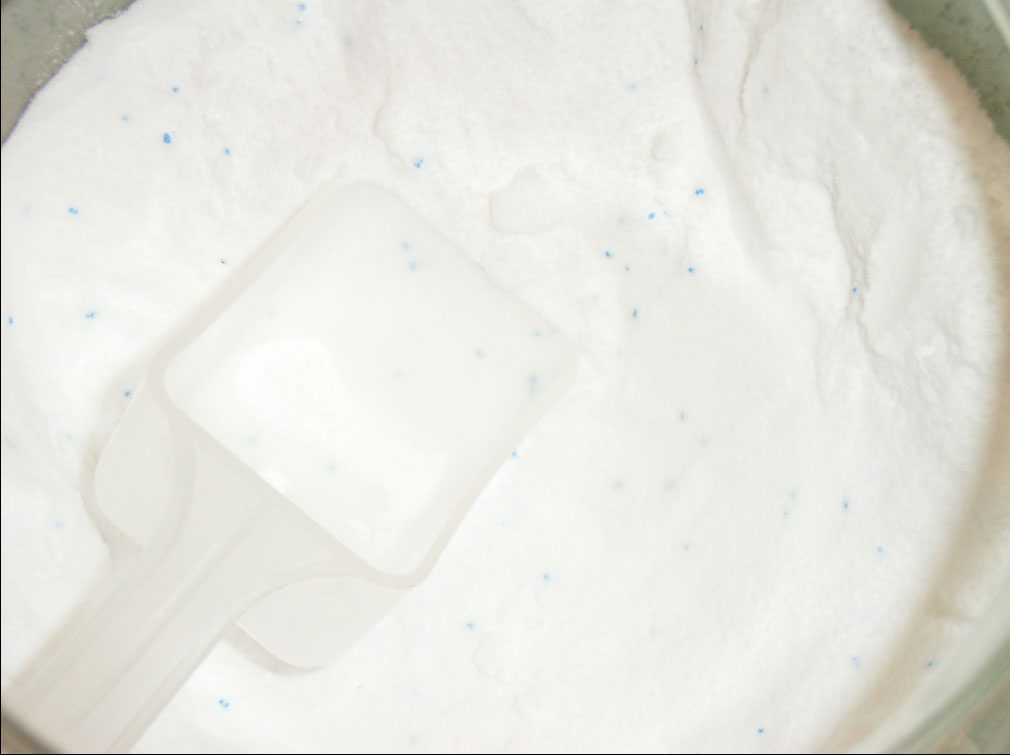
    Biological washing powder uses enzymes that work at moderate temperature and pH
    Biological washing powder uses enzymes that work at moderate temperature and pH

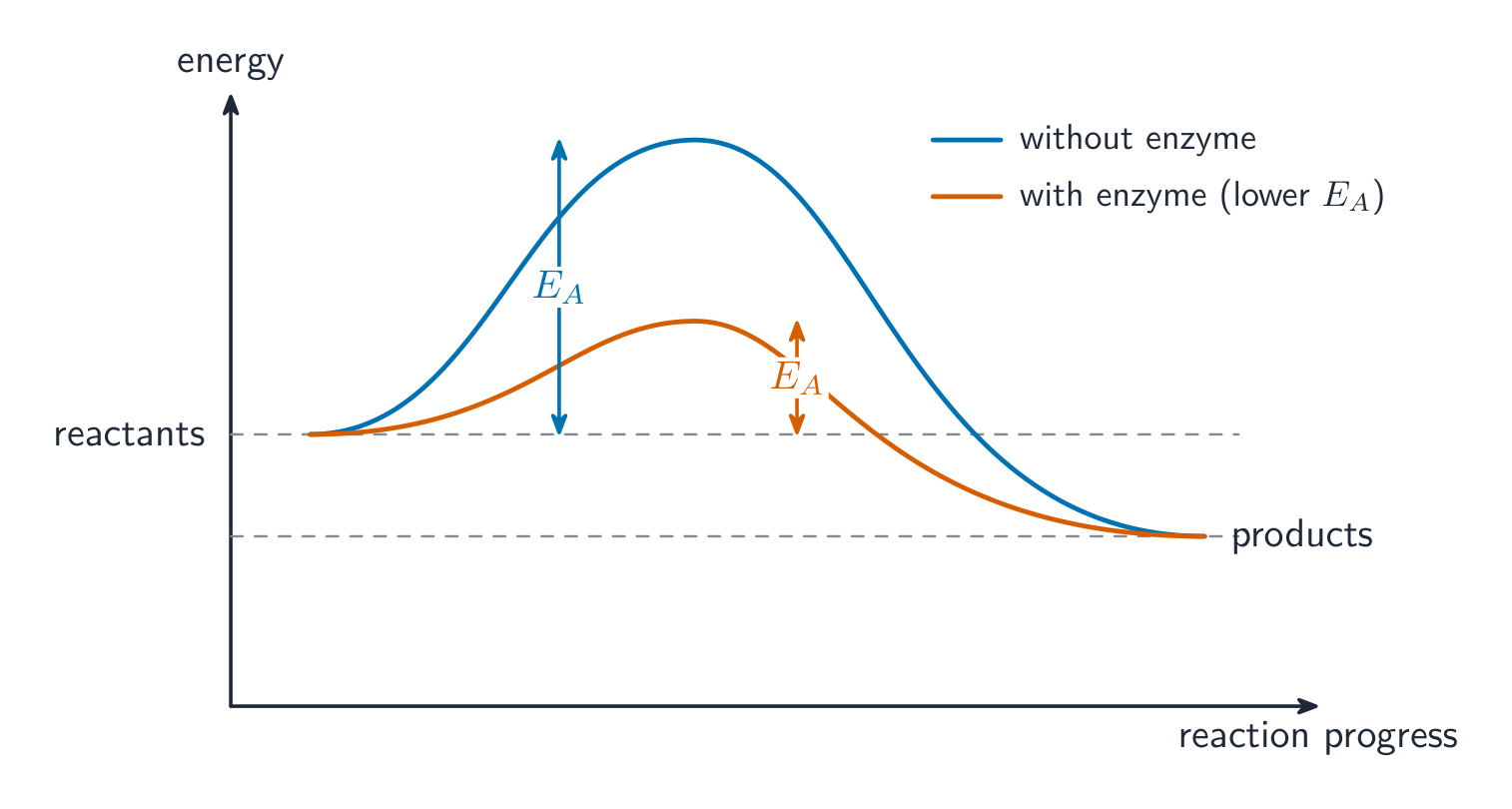
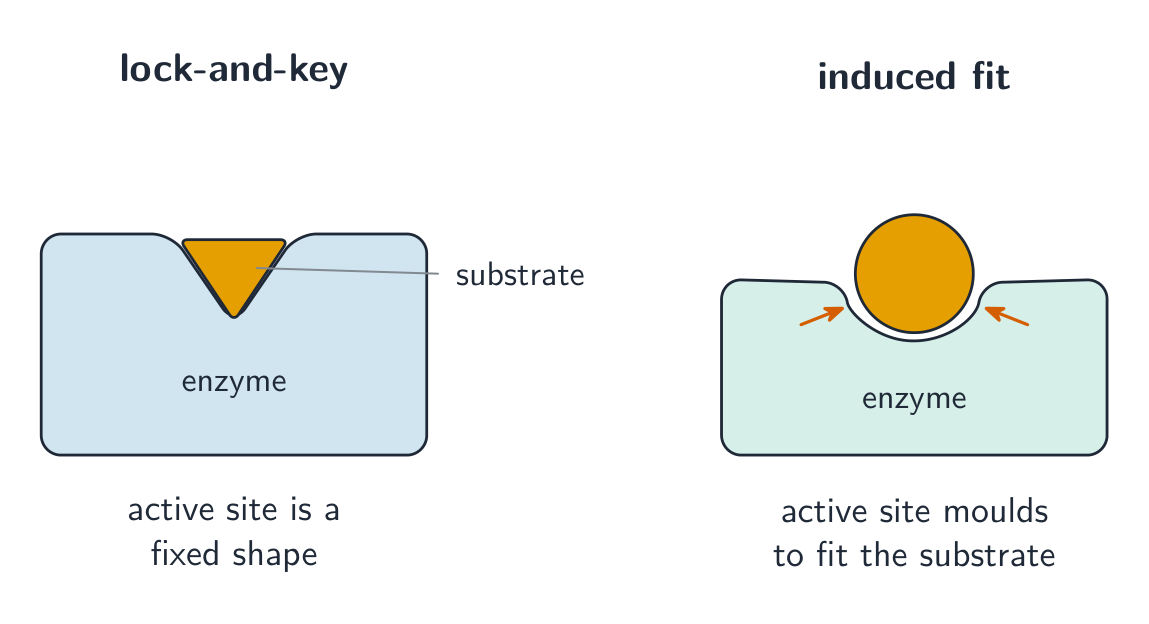
    An enzyme 酶 is a protein catalyst 催化剂 that speeds a reaction by lowering its activation energy 活化能, without being used up. Each enzyme has an active site 活性位点 that binds a specific substrate 底物 (the "lock and key" or induced fit), so enzymes are highly specific. They do not change whether a reaction is favorable – only how fast it goes.

    An enzyme lowers the activation energy of a reaction
    An enzyme lowers the activation energy of a reaction
    The lock-and-key and induced-fit models of enzyme action
    The lock-and-key and induced-fit models of enzyme action
    Explore · ⁨탐색하기⁩

    Raise substrate and watch the rate saturate · ⁨기질을 높여 반응 속도가 포화됨을 관찰하기⁩

    An enzyme speeds a reaction by lowering activation energy. As substrate rises the rate climbs, then levels off once every active site is busy (saturation). · ⁨효소는 활성화 에너지를 낮춤으로써 반응을 가속화합니다. 기질이 증가하면 속도가 올라가지만, 모든 활성 부위가 바쁜 시점(포화 상태)에서는 더 이상 증가하지 않고 일정해집니다.⁩

    Vocabulary · ⁨어휘⁩ Train · ⁨연습하기⁩
    English 한국어
    enzyme/ˈenzaɪm/ enzyme
    catalyst/ˈkætəlɪst/ catalyst
    activation energy/ˌæktɪˈveɪʃn ˈenədʒi/ activation energy
    active site/ˈæktɪv saɪt/ active site
    substrate/ˈsʌbstreɪt/ substrate
    3.2

    Environmental Impacts on Enzyme Function

    Syllabus
    English

    Big Idea 2 — Energetics: Biological systems use energy and molecular building blocks to grow, reproduce, and maintain dynamic homeostasis.

    Learning Objective 3.2.A: Explain how changes to the structure of an enzyme may affect its function.

    • 3.2.A.1 Change to the molecular structure of a component in an enzymatic system may result in a change to its function or efficiency.
      • i. Denaturation of proteins, such as enzymes, occurs when the protein structure is disrupted by a change in temperature, pH, or chemical environment, eliminating the ability to catalyze reactions.
      • ii. Environmental temperatures and pH outside the optimal range for a given enzyme will cause changes to its structure (by disrupting the hydrogen bonds), altering the efficiency with which it catalyzes reactions.
    • 3.2.A.2 In some cases, enzyme denaturation is reversible, allowing the enzyme to regain activity.

    Learning Objective 3.2.B: Explain how the cellular environment affects enzyme activity.

    • 3.2.B.1 The relative concentrations of substrates and products determine how efficiently an enzymatic reaction proceeds.
    한국어

    핵심 개념 2 — 에너지학: 생물학적 시스템은 성장, 번식, 동적 항내성 유지를 위해 에너지를 사용하고 분자 조립 단계를 활용합니다.

    학습 목표 3.2.A: 효소 구조의 변화가 기능에 미치는 영향을 설명하시오.

    • 3.2.A.1 효소 시스템 구성 요소의 분자 구조 변화는 기능이나 효율의 변화를 초래할 수 있다.
      • i. 온도와 pH, 또는 화학적 환경의 변화로 인해 단백질 구조가 파괴되면 단백질 변성이 일어나며, 이는 효소가 반응을 촉매하는 능력을 상실하게 한다.
      • ii. 특정 효소에 대한 최적 범위를 벗어난 환경 온도와 pH는 수소 결합을 파괴하여 효소 구조를 변화시키고, 이로 인해 반응 촉매 효율이 달라진다.
    • 3.2.A.2 일부 경우 효소 변성은 가역적일 수 있어 효소가 다시 활성을 회복할 수 있다.

    학습 목표 3.2.B: 세포 환경이 효소 활동에 미치는 영향을 설명하시오.

    • 3.2.B.1 기질과 생성물의 상대적 농도는 효소 반응의 효율성을 결정한다.

    Source: College Board AP Course and Exam Description · ⁨출처: College Board AP Course and Exam Description⁩

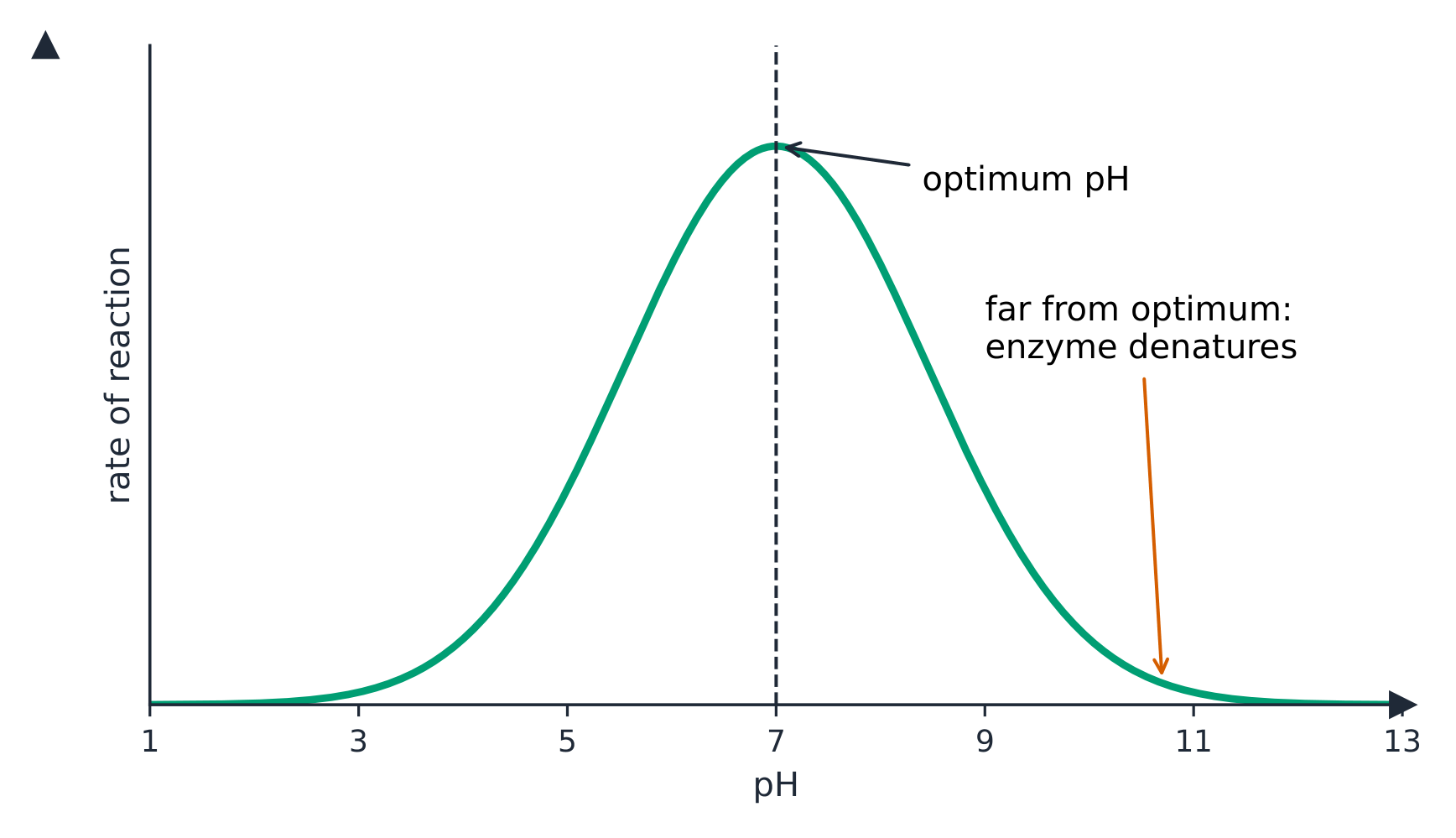
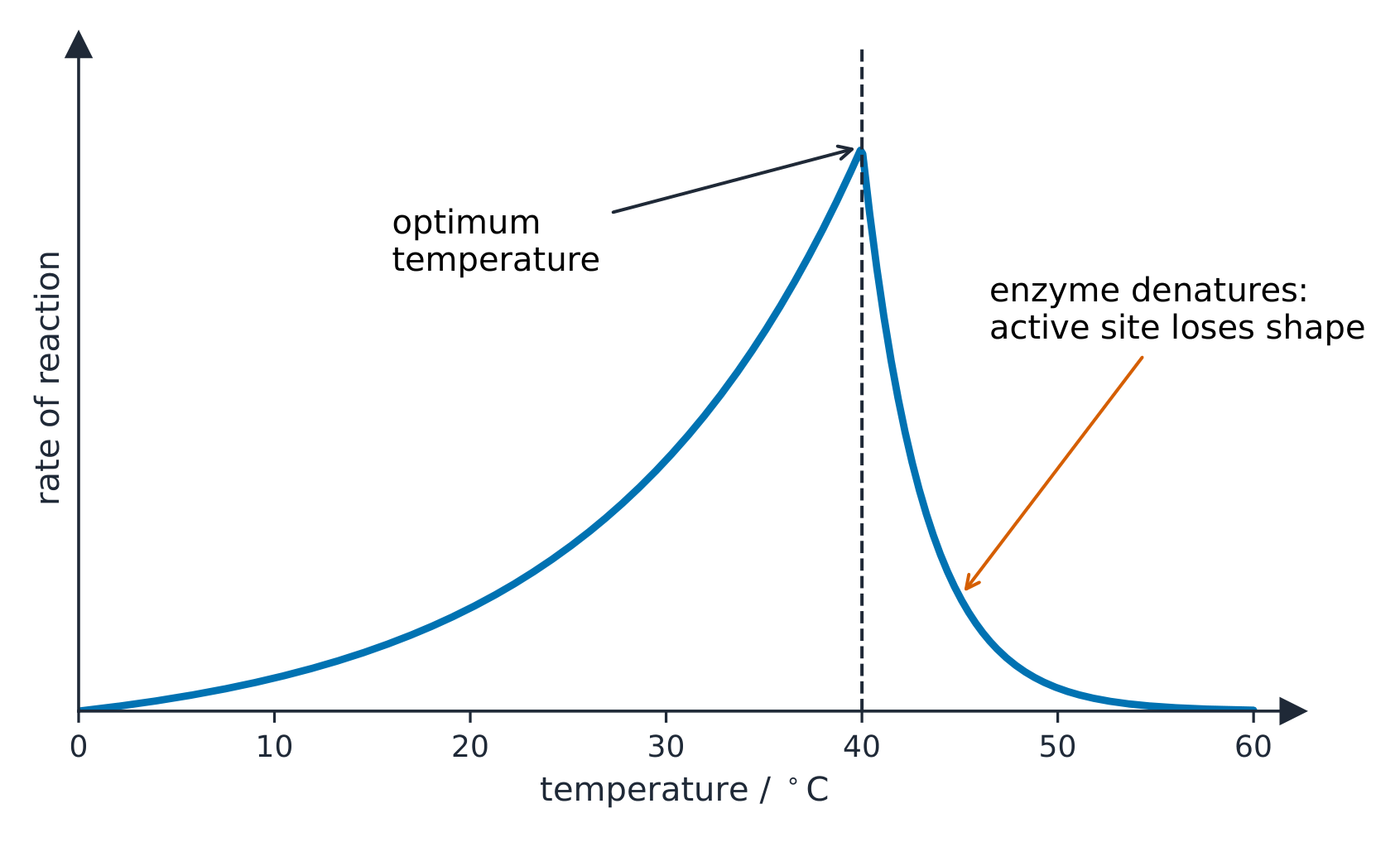
    Enzyme activity depends on conditions. Each enzyme has an optimal temperature and pH; beyond it, the protein denatures 变性 (loses shape) and stops working. Substrate concentration raises the rate until the enzyme saturates. Inhibitors 抑制剂 slow enzymes – competitive ones block the active site, noncompetitive ones bind elsewhere and change the shape.

    Each enzyme has an optimum pH
    Each enzyme has an optimum pH
    Rate rises to an optimum temperature, then falls as the enzyme denatures
    Rate rises to an optimum temperature, then falls as the enzyme denatures
    Explore · ⁨탐색하기⁩

    Change temperature and watch enzyme activity · ⁨온도를 변경하여 효소 활동 변화 보기⁩

    Each enzyme has an optimum temperature and pH. Too cold is slow; too hot denatures the enzyme so its active site loses shape and activity crashes. · ⁨각 효소에는 최적 온도와 pH가 있습니다. 너무 차가우면 느려지고, 너무 뜨거우면 효소가 변성되어 활성 부위의 형태가 변하고 활동이 급격히 감소합니다.⁩

    Vocabulary · ⁨어휘⁩ Train · ⁨연습하기⁩
    English 한국어
    denatures/ˈdenətʃəz/ denatures
    Inhibitors/ɪnˈhɪbɪtəz/ Inhibitors
    3.3

    Cellular Energy and ATP

    Syllabus
    Big IdeaLearning ObjectiveEssential Knowledge

    Big Idea 2 — Energetics
    Biological systems use energy and molecular building blocks to grow, reproduce, and maintain dynamic homeostasis.

    3.3.A
    Describe the role of energy in living organisms.

    • 3.3.A.1 All living systems require an input of energy.
    • 3.3.A.2 Life requires a highly ordered system and does not violate the first and second laws of thermodynamics.
      • i. Energy input must exceed energy loss to maintain order and to power cellular processes.
      • ii. Cellular processes that release energy may be coupled with cellular processes that require energy.
      • iii. Significant loss of order or energy flow results in death.
      • Exclusion statement: Students will need to understand the concept of energy, but the equation for Gibbs free energy is beyond the scope of the AP Exam.
    • 3.3.A.3 Energy-related pathways in biological systems are sequential to allow for a more controlled transfer of energy. A product of a reaction in a metabolic pathway is typically the reactant for the subsequent step in the pathway.

    3.3.B
    Explain how shared, conserved, and fundamental processes and features support the concept of common ancestry for all organisms.

    • 3.3.B.1 Core metabolic pathways (e.g., glycolysis, oxidative phosphorylation) are conserved across all currently recognized domains (Archaea, Bacteria, and Eukarya).

    Source: College Board AP Course and Exam Description · ⁨출처: College Board AP Course and Exam Description⁩

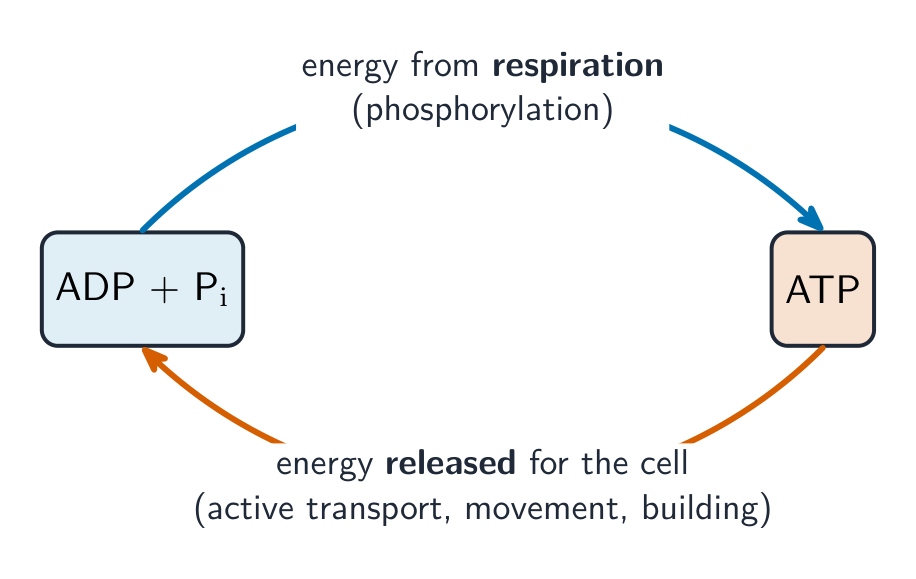
    ATP (adenosine triphosphate) is the cell's energy currency. Energy is stored in its phosphate bonds; breaking off a phosphate (ATP → ADP) releases energy to power cellular work, and reattaching one stores energy. Cells constantly recycle ATP, coupling energy-releasing reactions to energy-requiring ones.

    The ATP-ADP cycle stores and releases energy
    The ATP-ADP cycle stores and releases energy

    Life and the laws of thermodynamics

    A living cell is highly ordered, and that order is often mistaken for a violation of physics. It is not.

    • The first law 热力学第一定律 says energy is conserved: it changes form but is never created or destroyed. A cell does not make energy — it transforms the chemical energy of glucose, or the light energy of the Sun, into the chemical energy of ATP.
    • The second law 热力学第二定律 says that in any energy transfer, some energy is lost as heat and the entropy 熵 of the universe increases. A cell builds order inside itself, but only by releasing more disorder to its surroundings, mostly as heat.

    So life requires a constant input of free energy 自由能 from outside. This is why an organism cut off from its energy source dies: maintaining order is not free, and the moment the input stops, the ordered system runs down.

    Vocabulary · ⁨어휘⁩ Train · ⁨연습하기⁩
    English 한국어
    The first law/ðə fɜːst lɔː/ The first law
    The second law/ðə ˈsekənd lɔː/ The second law
    entropy/ˈentrəpi/ entropy
    constant input of free energy/ˈkɒnstənt ˈɪnpʊt ɒv friː ˈenədʒi/ constant input of free energy
    3.4

    Photosynthesis

    Syllabus
    English

    Big Idea 2 — Energetics: Biological systems use energy and molecular building blocks to grow, reproduce, and maintain dynamic homeostasis.

    Learning Objective 3.4.A: Describe the photosynthetic processes and structural features of the chloroplast that allow organisms to capture and store energy.

    • 3.4.A.1 Photosynthesis is the series of reactions that use carbon dioxide $(\mathrm{CO_2})$, water $(\mathrm{H_2O})$, and light energy to make carbohydrates and oxygen $(\mathrm{O_2})$.
      • i. Photosynthetic organisms capture energy from the sun and produce sugars that can be used in biological processes or stored.
      • ii. Photosynthesis first evolved in prokaryotic organisms.
      • iii. Scientific evidence supports the claim that prokaryotic (cyanobacterial) photosynthesis was responsible for the production of an oxygenated atmosphere.
      • iv. Prokaryotic photosynthetic pathways were the foundation of eukaryotic photosynthesis.
      • Exclusion statement: Memorization of the steps in the Calvin cycle, the structure of the molecules, and the names of the enzymes involved, with the exception of ATP synthase, is beyond the scope of the AP Exam.
    • 3.4.A.2 Stroma and thylakoids are found within the chloroplast.
      • i. The stroma is the fluid within the inner chloroplast membrane and outside the thylakoid. The carbon fixation (Calvin cycle) reactions of photosynthesis occur in the stroma.
      • ii. The thylakoid membranes contain chlorophyll pigments organized into two photosystems, as well as electron transport proteins.
      • iii. Thylakoids are organized in stacks called grana. The light reactions of photosynthesis occur in the grana.
    • 3.4.A.3 The light reactions of photosynthesis in eukaryotes involve a series of coordinated reaction pathways that capture energy present in light to yield ATP and NADPH, which power the production of organic molecules in the Calvin cycle. This provides energy for metabolic processes.

    Learning Objective 3.4.B: Explain how cells capture energy from light and transfer it to biological molecules for storage and use.

    • 3.4.B.1 Electron transport chain (ETC) reactions occur in chloroplasts, in mitochondria, and across prokaryotic plasma membranes. In photosynthesis, electrons that pass through the thylakoid membrane are picked up and ultimately transferred to $\mathrm{NADP^+}$ reducing it to NADPH in photosystem I.
      • Exclusion statement: The full names of the specific electron carriers in the electron transport chain are beyond the scope of the AP Exam.
      • Exclusion statement: Specific steps, names of enzymes, and intermediates of the pathways for these processes are beyond the scope of this course and the AP Exam.
    • 3.4.B.2 During photosynthesis, chlorophylls absorb energy from light, boosting electrons to a higher energy level in photosystems I and II. Water then splits, supplying electrons to replace those lost from photosystem II.
    • 3.4.B.3 Photosystems I and II are embedded in the thylakoid membranes of chloroplasts and are connected by the transfer of electrons through an ETC.
    • 3.4.B.4 When electrons are transferred between molecules in a series of oxidation/reduction reactions as they pass through the ETC, an electrochemical gradient of protons (hydrogen ions) is established across the thylakoid membrane. The membrane separates a region of low proton concentration outside the thylakoid membrane from a region of high proton concentration inside the thylakoid membrane.
    • 3.4.B.5 The formation of the proton gradient is linked to the synthesis of ATP from ADP and inorganic phosphate via ATP synthase. The flow of protons back through membrane-bound ATP synthase by chemiosmosis drives the formation of ATP from ADP and inorganic phosphate; this is known as photophosphorylation.
    • 3.4.B.6 The energy captured in the light reactions and transferred to ATP and NADPH powers the production of carbohydrates from carbon dioxide in the Calvin cycle. This occurs in the stroma of the chloroplast.
    한국어

    핵심 개념 2 — 에너지학: 생물학적 시스템은 성장, 번식, 동적 항내성 유지를 위해 에너지를 사용하고 분자 조립 단계를 활용합니다.

    학습 목표 3.4.A: 생물이 에너지를 포획하고 저장할 수 있게 하는 광합성 과정 및 엽록체의 구조적 특징을 서술하시오.

    • 3.4.A.1 광합성은 탄소 dioxide $(\mathrm{CO_2})$, 물 $(\mathrm{H_2O})$, 빛 에너지를 사용하여 탄수화물과 산소 $(\mathrm{O_2})$를 생성하는 일련의 반응이다.
      • i. 광합성 생물은 태양으로부터 에너지를 포획하여 생물학적 과정에서 사용하거나 저장할 수 있는 당을 생성한다.
      • ii. 광합성은 처음에 원핵생물에서 진화하였다.
      • iii. 원핵생물(파랑green algae) 광합성이 산소-containing 대기의 형성에 기여했다는 주장은 과학적 증거에 의해 지지된다.
      • iv. 원핵생물 광합성 경로들은 진핵생물 광합성의 기초가 되었다.
      • 배제 문구: 칼빈 회로의 단계, 분자의 구조, 그리고 관련 효소의 명칭(ATP 합성효소는 예외)을 암기하는 것은 AP 시험의 범위를 벗어난다.
    • 3.4.A.2 스토마와 틸라코이드는 엽록체 내부에 위치한다.
      • i. 스토마는 엽록체 내막 내부 및 틸라코이드 외부의 액상이다. 광합성의 탄소 고정(칼빈 회로) 반응은 스토마에서 일어난다.
      • ii. 틸라코이드 막에는 클로로필 색소가 두 개의 광계로 조직화되어 있으며, 전자 전달 단백질도 포함한다.
      • iii. 틸라코이드는 그라나라고 불리는 단층으로 배열되어 있다. 광합성의 빛 반응은 그라나에서 일어난다.
    • 3.4.A.3 진핵생물의 광합성 빛 반응은 빛에 존재하는 에너지를 포획하여 ATP와 NADPH를 생성하고, 이 물질들이 칼빈 회로에서 유기물 생성을 위한 에너지를 공급하는 일련의 조화된 반응 경로들을 포함한다. 이는 대사 과정에 에너지를 제공한다.

    학습 목표 3.4.B: 세포가 빛으로부터 에너지를 포획하여 저장 및 사용용 생물학적 분자로 전달하는 방법을 설명하시오.

    • 3.4.B.1 전자전달계(ETC) 반응은 엽록체, 미토콘드리아, 그리고 원핵생물 세포막에서 일어난다. 광합성에서 틸라코이드 막을 통과한 전자는 포획되어最終적으로 $\mathrm{NADP^+}$로 환원되며, 이를 통해 광계 I에서 NADPH가 생성된다.
      • 배제 문구: 전자전달계의 특정 전자 운반체의 완전한 명칭은 AP 시험의 범위를 벗어난다.
      • 배제 문구: 해당 과정들의 경로의 특정 단계, 효소 명칭, 그리고 중간체들은 이 과정과 AP 시험의 범위를 벗어난다.
    • 3.4.B.2 광합성 중 클로로필이 빛으로부터 에너지를 흡수하여 광계 I 및 II 내 전자를 더 높은 에너지 수준으로 증가시킨다. 이때 물이 분해되어 광계 II에서 손실된 전자를 보충하는 데 기여한다.
    • 3.4.B.3 광계 I과 II는 엽록체의 틸라코이드 막에 매립되어 있으며, ETC를 통한 전자 전달을 통해 연결되어 있다.
    • 3.4.B.4 전자가 ETC를 통과하면서 일련의 산화/환원 반응 중 분자 간에 전달될 때, 프로톤(수소 이온)의 전기화학적 기울기가 틸라코이드 막을 가로질러 형성된다. 이 막은 틸라코이드 막 외부의 낮은 프로톤 농도 영역과 틸라코이드 막 내부의 높은 프로톤 농도 영역을 분리한다.
    • 3.4.B.5 프로톤 기울기의 형성은 ATP 합성효소를 통한 ADP와 무기인산으로부터 ATP가 합성되는 것과 연관되어 있다. 화학삼투에 의해 막에 결합된 ATP 합성효소를 통해 프로톤이 다시 흐르면서 ADP와 무기인산으로부터 ATP가 형성되는데, 이를 광인산화라고 한다.
    • 3.4.B.6 빛 반응에서 포획되어 ATP와 NADPH로 전달된 에너지는 칼빈 회로에서 탄 Klo dioxide로부터 탄수화물이 생성되는 데 에너지를 공급한다. 이는 엽록체의 스토마에서 일어난다.

    Source: College Board AP Course and Exam Description · ⁨출처: College Board AP Course and Exam Description⁩

    Chloroplasts fill plant mesophyll cells — the organelles of photosynthesis
    Chloroplasts fill plant mesophyll cells — the organelles of photosynthesis

    Photosynthesis 光合作用 captures light energy to build sugar from $\text{CO}_2$ and water, releasing $\text{O}_2$. It has two stages:

    The two stages of photosynthesis are linked by ATP and NADPH
    The two stages of photosynthesis are linked by ATP and NADPH
    • The light reactions (in the thylakoid membranes) use light to make ATP and NADPH and split water, releasing oxygen.
    • The Calvin cycle 卡尔文循环 (in the stroma) uses that ATP and NADPH to fix $\text{CO}_2$ into sugar.

    So light energy becomes chemical energy stored in glucose.

    Where the oxygen in the air came from

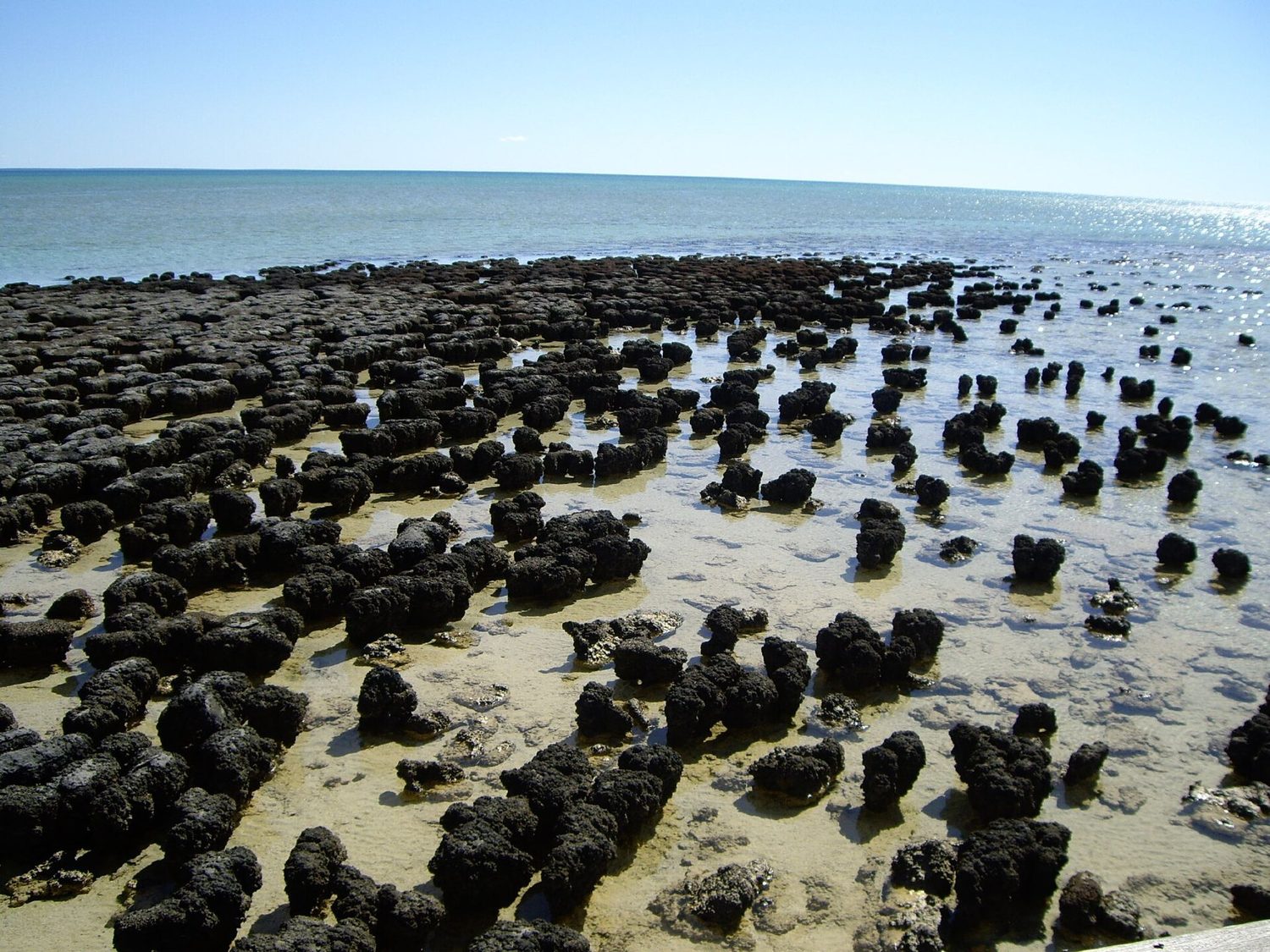
    Photosynthesis did not only feed the first organisms; it changed the planet. Scientific evidence supports the claim that photosynthesis by prokaryotes 原核生物 — specifically cyanobacteria 蓝细菌 — produced the oxygen that built Earth's oxygenated atmosphere 含氧大气.

    The evidence is physical: banded iron formations 条带状铁建造 in rocks about 2.4 billion years old record iron dissolved in the ocean being oxidised and precipitating out, which needs free oxygen. Before that event, called the Great Oxidation Event, the atmosphere held almost none.

    Two consequences matter for the rest of the course. Free oxygen made aerobic respiration possible, which releases far more ATP per glucose than anaerobic pathways do. And it was lethal to much of the anaerobic life already present, so it counts as one of the largest extinction events in Earth's history — an early example of organisms changing their own environment.

    Vocabulary · ⁨어휘⁩ Train · ⁨연습하기⁩
    English 한국어
    Photosynthesis/ˌfəʊtəʊˈsɪnθəsɪs/ Photosynthesis
    Calvin cycle/ˈkælvɪn ˈsaɪkl/ Calvin cycle
    prokaryotes/ˈprɒkərɪəʊts/ prokaryotes
    cyanobacteria/ˌsaɪəˌnɒbəkˈtɪərɪə/ cyanobacteria
    oxygenated atmosphere/ˈɒksɪdʒeneɪtɪd ˈætməsfɪə/ oxygenated atmosphere
    banded iron formations/ˈbændɪd ˈaɪən fɔːˈmeɪʃnz/ banded iron formations
    3.5

    Cellular Respiration

    Syllabus
    English

    Big Idea 2 — Energetics: Biological systems use energy and molecular building blocks to grow, reproduce, and maintain dynamic homeostasis.

    Learning Objective 3.5.A: Describe the processes and structural features of mitochondria that allow organisms to use energy stored in biological macromolecules.

    • 3.5.A.1 Cellular respiration uses energy from biological macromolecules to synthesize ATP. Respiration and fermentation are characteristic of all forms of life.
    • 3.5.A.2 Aerobic cellular respiration in eukaryotes involves a series of coordinated enzyme-catalyzed reactions that capture energy from biological macromolecules.
    • 3.5.A.3 The ETC transfers electrons in a series of oxidation-reduction reactions that establish an electrochemical gradient across membranes.
      • i. In cellular respiration, electrons delivered by NADH and $\mathrm{FADH_2}$ are passed to a series of electron acceptors as they move toward the terminal electron acceptor, oxygen. Aerobic prokaryotes use oxygen as a terminal electron acceptor, while anaerobic prokaryotes use other molecules.
      • ii. The transfer of electrons, through the ETC, is accompanied by the formation of a proton gradient across the inner mitochondrial membrane, with the membrane(s) separating a region of high proton concentration outside the membrane from a region of low proton concentration inside the membrane. The folding of the inner membrane increases the surface area, which allows for more ATP to be synthesized. In prokaryotes, the passage of electrons is accompanied by the movement of protons across the plasma membrane.
      • iii. The flow of protons back through membrane-bound ATP synthase by chemiosmosis drives the formation of ATP from ADP and inorganic phosphate. This is known as oxidative phosphorylation in aerobic cellular respiration.
      • iv. In aerobic cellular respiration, decoupling oxidative phosphorylation from electron transport generates heat. This heat can be used by endothermic organisms to regulate body temperature.
      • Exclusion statement: The full names of the specific electron carriers in the electron transport chain are beyond the scope of the AP Exam.
      • Exclusion statement: Specific steps, names of enzymes, and intermediates of the pathways for these processes are beyond the scope of this course and the AP Exam.

    Learning Objective 3.5.B: Explain how cells obtain energy from biological macromolecules in order to power cellular functions.

    • 3.5.B.1 Glycolysis is a biochemical pathway that releases the energy in glucose molecules to form ATP (from ADP and inorganic phosphate), NADH (from $\mathrm{NAD^+}$), and pyruvate.
    • 3.5.B.2 Pyruvate is transported from the cytosol to the mitochondrion where oxidation occurs. This process releases electrons during the Krebs (citric acid) cycle, reducing $\mathrm{NAD^+}$ to NADH and FAD to $\mathrm{FADH_2}$, and releasing $\mathrm{CO_2}$.
    • 3.5.B.3 The Krebs cycle takes place in the mitochondrial matrix. During the Krebs cycle, carbon dioxide is released from organic intermediates, ATP is synthesized from ADP and inorganic phosphate, and electrons are transferred by the coenzymes $\mathrm{NAD^+}$ and FAD.
    • 3.5.B.4 Electrons extracted in glycolysis and Krebs cycle reactions are transferred by NADH and $\mathrm{FADH_2}$ to the ETC in the inner mitochondrial membrane.
    • 3.5.B.5 When electrons are transferred between molecules in a sequence of reactions as they pass through the ETC, an electrochemical gradient of protons (hydrogen ions) across the inner mitochondrial membrane is established. The pH inside the mitochondrial matrix is higher than in the intermembrane space.
    • 3.5.B.6 Fermentation allows glycolysis to proceed in the absence of oxygen and produces organic molecules such as alcohol and lactic acid.
      • Exclusion statement: Memorization of the steps in glycolysis and the Krebs cycle, and of the structures of the molecules and the names of the enzymes involved, is beyond the scope of this course and the AP Exam.
    한국어

    핵심 개념 2 — 에너지학: 생물학적 시스템은 성장, 번식, 동적 항내성 유지를 위해 에너지를 사용하고 분자 조립 단계를 활용합니다.

    학습 목표 3.5.A: 생물이 생물학적 거대분자에 저장된 에너지를 사용할 수 있게 하는 미토콘드리아의 과정과 구조적 특징을 서술하시오.

    • 3.5.A.1 세포 호흡은 생물학적 거대분자로부터 에너지를 사용하여 ATP를 합성한다. 호흡과 발효는 모든 형태의 생명체에 공통적인 특징이다.
    • 3.5.A.2 진핵생물의 유산소 세포 호흡은 생물학적 거대분자로부터 에너지를 포획하는 일련의 조화된 효소 촉매 반응들을 포함한다.
    • 3.5.A.3 ETC는 막을 가로지르는 전기화학적 기울기를 형성하는 일련의 산화-환원 반응 중 전자를 전달한다.
      • i. 세포 호흡에서 NADH와 $\mathrm{FADH_2}$에 의해 전달된 전자는 최종 전자 수용체인 산소로 이동하며 일련의 전자 수용체를 거쳐 전달된다. 유산소 원핵생물은 산소를 최종 전자 수용체로 사용하지만, 혐기성 원핵생물은 다른 분자들을 사용한다.
      • ii. 전자의 전달(E TC을 통해)은 막(들)이 막 외부의 높은 프로톤 농도 영역과 막 내부의 낮은 프로톤 농도 영역을 분리하는 동안 미토콘드리아 내막을 가로지르는 프로톤 기울기의 형성과 동반된다. 내막의 접힘은 표면적을 증가시켜 더 많은 ATP 합성을 가능하게 한다. 원핵생물에서는 전자 전달이 세포막을 가로질러 프로톤이 이동함과 동반된다.
      • iii. 화학삼투에 의해 막에 결합된 ATP 합성효소를 통해 프로톤이 다시 흐르면서 ADP와 무기인산으로부터 ATP가 형성된다. 이는 유산소 세포 호흡에서 산화인산화라고 한다.
      • iv. 유산소 세포 호흡에서 산화인화화를 전자 전달으로부터 분리하면 열이 발생한다. 이 열은 온혈동물이 체온을 조절하는 데 사용될 수 있다.
      • 배제 문구: 전자전달계의 특정 전자 운반체의 완전한 명칭은 AP 시험의 범위를 벗어난다.
      • 배제 문구: 해당 과정들의 경로의 특정 단계, 효소 명칭, 그리고 중간체들은 이 과정과 AP 시험의 범위를 벗어난다.

    학습 목표 3.5.B: 세포가 세포 기능을 구동하기 위해 생물학적 거대분자로부터 에너지를 얻는 방법을 설명하시오.

    • 3.5.B.1 당분해는 포도당 분자 내에 있는 에너지를 방출하여 ATP(ADP와 무기인산으로부터), NADH($\mathrm{NAD^+}$로부터), 그리고 피루브산을 형성하는 생화학적 경로이다.
    • 3.5.B.2 피루브산은 세포질에서 미토콘드리아로 운반되어 산화가 일어난다. 이 과정은 크레브스(시트르산) 회로를 통해 전자를 방출하며, $\mathrm{NAD^+}$를 NADH로, FAD를 $\mathrm{FADH_2}$로 환원시키고 $\mathrm{CO_2}$를 방출한다.
    • 3.5.B.3 크레브스 회로는 미토콘드리아 기질에서 일어난다. 크레브스 회로 중에는 유기 중간체로부터 이산화탄소가 방출되고, ADP 및 무기인산으로부터 ATP가 합성되며, 조효소 $\mathrm{NAD^+}$ 및 FAD에 의해 전자가 전달된다.
    • 3.5.B.4 해당과정 및 크레브스 회로 반응에서 추출된 전자는 NADH와 $\mathrm{FADH_2}$에 의해 미토콘드리아 내막의 전자전달계(ETC)로 전달된다.
    • 3.5.B.5 전자가 전자전달계를 거치며 일련의 반응 동안 분자 간에 전달될 때, 미토콘드리아 내막을 가로지르는 수소 이온(양성자)의 전기화학적 기울기가 형성된다. 미토콘드리아 기질 내부의 pH는 막간격보다 높다.
    • 3.5.B.6 발효는 산소가 없는 상태에서 해당과정을 지속하게 하며 알코올 및 유산과 같은 유기 물질을 생성한다.
      • 배제 사항: 해당과정 및 크레브스 회로의 단계, 관련 분자의 구조 및 효소의 명칭에 대한 암기는 이 과정 및 AP 시험의 범위를 벗어난다.

    Source: College Board AP Course and Exam Description · ⁨출처: College Board AP Course and Exam Description⁩

    TEM of a mitochondrion: folded inner membrane (cristae) multiplies surface for respiration
    TEM of a mitochondrion: folded inner membrane (cristae) multiplies surface for respiration

    Cellular respiration 细胞呼吸 releases the energy in glucose to make ATP, mostly using oxygen. Its stages:

    The stages of aerobic respiration and where in the cell they happen
    The stages of aerobic respiration and where in the cell they happen
    • Glycolysis 糖酵解 (in the cytoplasm) splits glucose, making a little ATP.
    • The Krebs cycle 克雷布斯循环 (mitochondrial matrix) releases $\text{CO}_2$ and loads electron carriers.
    • The electron transport chain 电子传递链 (inner membrane) uses those electrons to pump protons and make most of the ATP, with oxygen as the final electron acceptor.

    Without oxygen, cells use fermentation 发酵 to keep glycolysis running, making far less ATP. Photosynthesis and respiration are complementary – the products of one are the reactants of the other.

    Worked example. Aerobic respiration of one glucose nets about 2 ATP from glycolysis, 2 ATP from the Krebs cycle, and about 28 ATP from oxidative phosphorylation, for $\approx$ 32 ATP total. With no oxygen only glycolysis runs, so fermentation nets just 2 ATP per glucose — roughly 16 times less energy, which is why aerobic pathways dominate in oxygen-rich cells.

    Vocabulary · ⁨어휘⁩ Train · ⁨연습하기⁩
    English 한국어
    Cellular respiration/ˈseljʊlə ˌrespɪˈreɪʃn/ Cellular respiration
    Glycolysis/ɡlaɪˈkɒləsɪs/ Glycolysis
    Krebs cycle/krebz ˈsaɪkl/ Krebs cycle
    electron transport chain/ɪˈlektrɒn ˈtrænspɔːt tʃeɪn/ electron transport chain
    fermentation/fɜːmənˈteɪʃn/ fermentation
    3.5

    Exam tips

    • An enzyme lowers the activation energy and is not used up; its active site is specific to one substrate (lock and key).
    • Rate rises with temperature only up to the optimum — beyond it the enzyme denatures and the rate falls (unlike an ordinary reaction).
    • Know the ATP↔ADP cycle: breaking a phosphate releases energy to power the cell.
    • Write the overall equations: photosynthesis stores energy (builds glucose); respiration releases it (breaks glucose down) — they are opposites.
    • Match each stage to its location and whether it needs oxygen.
  • 4

    Cell Communication and Cell Cycle · ⁨세포 신호 전달 및 세포 주기⁩

    Watch lesson · ⁨수업 보기⁩
    4.1

    Cell Communication

    Syllabus
    English

    Big Idea 3 — Information Storage and Transmission: Living systems store, retrieve, transmit, and respond to information essential to life processes.

    Learning Objective 4.1.A: Describe the ways that cells can communicate with one another.

    • 4.1.A.1 Cells communicate with one another through direct contact with other cells or from a distance via chemical signaling.
      • Illustrative examples for 4.1.A.1:
        • Immune cells interact through cell-to-cell contact, antigen-presenting cells (APCs), helper T-cells, and killer T-cells.

    Learning Objective 4.1.B: Explain how cells communicate with one another over short and long distances.

    • 4.1.B.1 Cells communicate over short distances by using local regulators that target cells in the vicinity of the signal-emitting cell.
      • Illustrative examples for 4.1.B.1:
        • Neurotransmitters
        • Plant immune response
        • Quorum sensing in bacteria
        • Morphogens in embryonic development
    • 4.1.B.2 Signals released by one cell type can travel long distances to target cells of another type.
      • Illustrative examples for 4.1.B.2:
        • Insulin
        • Human growth hormone
        • Thyroid hormones
        • Testosterone
        • Estrogen
    한국어

    핵심 개념 3 — 정보 저장 및 전송: 생명 체계는 생명 과정에 필수적인 정보를 저장하고,检索하고, 전송하며, 반응한다.

    학습 목표 4.1.A: 세포가 서로 신호를 전달하는 방법을 설명하시오.

    • 4.1.A.1 세포는 다른 세포와의 직접 접촉이나 화학적 신호 전달을 통한 원거리 소통으로 서로 신호를 전달한다.
      • *4.1.A.1의 예시:
        • 면역 세포는 세포-세포 접촉을 통해 상호작용하며, 항원 제시 세포(APCs), 보조 T 세포 및 살해 T 세포가 포함된다.

    학습 목표 4.1.B: 세포가 단거리 및 장거리에서 서로 신호를 전달하는 방식을 설명하시오.

    • 4.1.B.1 세포는 신호를発信하는 세포 주변에 있는 표적 세포를 타겟팅하는 국소 조절 인자를 사용하여 단거리 신호를 전달한다.
      • *4.1.B.1의 예시:
        • 신경전달물질
        • 식물 면역 반응
        • 세균의 군집 감지(quorum sensing)
        • 배아 발달 시 형태형성인(morphogens)
    • 4.1.B.2 한 세포 유형에서 방출된 신호는 다른 유형의 표적 세포로 장거리를 이동할 수 있다.
      • *4.1.B.2의 예시:
        • 인슐린
        • 인간 성장 호르몬
        • 갑상선 호르몬
        • 테스토스테론
        • 에스트로겐

    Source: College Board AP Course and Exam Description · ⁨출처: College Board AP Course and Exam Description⁩

    Cells coordinate by sending and receiving chemical signals 信号. A signaling cell releases a ligand 配体 that binds a receptor 受体 on a target cell. Signals travel over different ranges: direct contact (cell junctions), local signaling (nearby cells, like neurotransmitters), and long-distance signaling (hormones 激素 through the blood).

    A signal molecule (ligand) binds a matching receptor on the target cell
    A signal molecule (ligand) binds a matching receptor on the target cell
    Vocabulary · ⁨어휘⁩ Train · ⁨연습하기⁩
    English 한국어
    signals/ˈsɪɡnlz/ 신호
    ligand/ˈlɪɡænd/ 리간드
    receptor/rɪˈseptə/ 수용체
    hormones/ˈhɔːməʊnz/ 호르몬
    4.2

    Introduction to Signal Transduction

    Syllabus
    Big IdeaLearning ObjectiveEssential Knowledge

    Big Idea 3 — Information Storage and Transmission
    Living systems store, retrieve, transmit, and respond to information essential to life processes.

    4.2.A
    Describe the components of a signal transduction pathway.

    • 4.2.A.1 Signal transduction pathways link signal receptions with cellular responses.
    • 4.2.A.2 Many signal transduction pathways include protein modifications and involve phosphorylation cascades.

    4.2.B
    Describe the role of components of a signal transduction pathway in producing a cellular response.

    • 4.2.B.1 Signaling begins with the recognition of a chemical messenger—a ligand—by a receptor protein in a target cell.
      • i. The ligand-binding domain of a receptor recognizes a specific chemical messenger, which can be a peptide (protein) or a small molecule.
      • ii. G protein-coupled receptors are an example of a receptor protein in eukaryotes.
      • iii. Receptors may be located on the surface of a target cell or in the cytoplasm or nucleus of the target cell.
    • 4.2.B.2 Signaling cascades relay signals from receptors to cell targets, often amplifying the incoming signals, resulting in the appropriate responses by the cell. Responses could include cell growth, secretion of molecules, or gene expression.
      • i. After the ligand binds, the intracellular domain of a receptor protein changes shape, initiating transduction of the signal.
      • ii. Enzymes and second messengers such as cyclic AMP (cAMP) relay and amplify the intracellular signal.
      • iii. Hormones are an example of a signaling messenger that can travel long distances in the bloodstream.
      • iv. The binding of ligands to ligand-gated channels can cause the channel to open or close.

    Source: College Board AP Course and Exam Description · ⁨출처: College Board AP Course and Exam Description⁩

    Signal transduction 信号转导 converts an outside signal into a cellular response in three stages: reception (ligand binds receptor), transduction (a relay of molecules inside the cell), and response (a change in the cell's activity, such as switching on a gene). Receptors are specific, so a cell only responds to signals it can receive.

    A chemical synapse: signal transduction passes a message across a gap with a ligand and receptor
    A chemical synapse: signal transduction passes a message across a gap with a ligand and receptor
    Vocabulary · ⁨어휘⁩ Train · ⁨연습하기⁩
    English 한국어
    Signal transduction/ˈsɪɡnl trænsˈdʌkʃn/ 신호 전달
    4.3

    Signal Transduction Pathways

    Syllabus
    English

    Big Idea 3 — Information Storage and Transmission: Living systems store, retrieve, transmit, and respond to information essential to life processes.

    Learning Objective 4.3.A: Describe the different types of cellular responses elicited by a signal transduction pathway.

    • 4.3.A.1 Signal transduction may result in changes in gene expressions and cell function, which may alter phenotype or result in programmed cell death (apoptosis).
      • Illustrative examples for 4.3.A.1:
        • Use of chemical messengers by microbes to communicate with other nearby cells and to regulate specific pathways in response to population density (quorum sensing)
        • Epinephrine stimulation of glycogen breakdown in mammals

    Learning Objective 4.3.B: Explain how a change in the structure of any signaling molecule affects the activity of the signaling pathway.

    • 4.3.B.1 Changes in signal transduction pathways can alter cellular responses. Mutations in any domain of the receptor protein or in any component of the signaling pathway may affect the downstream components by altering the subsequent transduction of the signal.
      • Illustrative examples for 4.3.B.1:
        • Cytokines regulate gene expression to allow for cell replication and division.
        • Mating pheromones in yeast trigger mating gene expression.
        • Ethylene levels cause changes in the production of different enzymes allowing fruits to ripen.
        • HOX genes regulate animal body plans during embryonic development.
    • 4.3.B.2 Chemicals that interact with any component of the signaling pathway may activate or inhibit the pathway.
    한국어

    핵심 개념 3 — 정보 저장 및 전송: 생명 체계는 생명 과정에 필수적인 정보를 저장하고,检索하고, 전송하며, 반응한다.

    학습 목표 4.3.A: 신호 전달 경로에 의해 유발되는 다양한 세포 반응을 설명하시오.

    • 4.3.A.1 신호 전달은 유전자 발현 및 세포 기능의 변화를 초래하여, 표현형 변경이나 프로그래밍 세포 사멸(apoptosis)로 이어질 수 있다.
      • *4.3.A.1의 예시:
        • 미생물이 인접한 다른 세포와 소통하거나 집단 밀도에 따른 특정 pathway를 조절하기 위해 사용하는 화학적 메신저 사용(군집 감지/quorum sensing)
        • 포유류에서의 글리코겐 분해를 자극하는 아드레날린(epinephrine)

    학습 목표 4.3.B: 신호 분자의 구조 변화가 신호 전달 경로의 활동에 미치는 영향을 설명하시오.

    • 4.3.B.1 신호 전달 경로의 변화는 세포 반응을 변경시킬 수 있다. 수용체 단백질의 어떤 도메인이나 신호 전달 경로의 어떤 구성 요소에도 돌연변이가 발생할 경우, 이후 신호 전달(transduction)의 변화를 통해 하류 구성 요소에 영향을 미칠 수 있다.
      • *4.3.B.1의 예시:
        • 사이토카인은 세포 복제 및 분열을 허용하기 위해 유전자 발현을 조절한다.
        • 효모의 교배 페로몬은 교배 유전자 발현을 Trigger한다.
        • 에틸렌 수준은 과일의 숙성을 가능하게 하는 다양한 효소의 생산 변화를 유발한다.
        • HOX 유전자는 배아 발달 중 동물 체체를 조절한다.
    • 4.3.B.2 신호 전달 경로의 구성 요소 중 하나와 상호작용하는 화학 물질은 해당 경로를 활성화하거나 억제할 수 있다.

    Source: College Board AP Course and Exam Description · ⁨출처: College Board AP Course and Exam Description⁩

    In the transduction stage, the signal passes through a pathway – often a cascade of proteins that activate one another, frequently amplifying the signal so a few ligands trigger a large response. Second messengers (like cyclic AMP or calcium ions) spread the signal quickly through the cell. A change in one step can alter the whole outcome.

    A signalling cascade amplifies the message inside the cell
    A signalling cascade amplifies the message inside the cell
    4.4

    Feedback

    Syllabus
    English

    Big Idea 2 — Energetics: Biological systems use energy and molecular building blocks to grow, reproduce, and maintain dynamic homeostasis.

    Learning Objective 4.4.A: Explain how positive and negative feedback helps maintain homeostasis.

    • 4.4.A.1 Organisms use feedback mechanisms to maintain their internal environments in response to internal and external changes.
      • i. Negative feedback mechanisms maintain homeostasis by reducing the initial stimulus to regulate physiological processes. If a system is perturbed or disrupted, negative feedback mechanisms return the system back to its target set point. These processes operate at the molecular, cellular, and organismal levels.
        • Illustrative examples for 4.4.A.1.i:
          • Blood sugar regulation by insulin/glucagon
      • ii. Positive feedback mechanisms amplify responses and processes in biological organisms. The variable initiating the response is moved further away from the initial set point. Amplification occurs when the stimulus is further intensified, which, in turn, initiates an additional response that produces system change.
        • Illustrative examples for 4.4.A.1.ii:
          • Lactation in mammals
          • Onset of labor in childbirth
          • Ripening of fruit
    한국어

    핵심 개념 2 — 에너지학: 생물학적 시스템은 성장, 번식, 동적 항내성 유지를 위해 에너지를 사용하고 분자 조립 단계를 활용합니다.

    학습 목표 4.4.A: 양의 피드백과 음의 피드백이 홈오스타시스를 유지하는 원리를 설명하라.

    • 4.4.A.1 생물은 내부 및 외부 변화에 대응하여 내부 환경을 유지하기 위해 피드백 메커니즘을 사용한다.
      • i. 음의 피드백 메커니즘은 생리적 과정을 조절하기 위해 초기 자극을 감소시켜 홈오스타시스를 유지한다. 시스템이 교란되거나 손상되면 음의 피드백 메커니즘은 시스템을 초기 설정 지점(set point)으로 되돌린다. 이러한 과정들은 분자, 세포, 생물체 수준에서 작동한다.
        • 4.4.A.1.i를 위한 예시:
          • 인슐린/글루카곤에 의한 혈당 조절
      • ii. 양의 피드백 메커니즘은 생물학적 생물체 내에서 반응 및 과정을 증폭시킨다. 반응을 유발하는 변수는 초기 설정 지점에서 더 멀리 이동한다. 자극이 더욱 강화될 때 증폭이 발생하며, 이로 인해 시스템 변화를 초래하는 추가적인 반응이 시작된다.
        • 4.4.A.1.ii를 위한 예시:
          • 포유류의 수유(젖 분비)
          • 출산 시 분만 시작
          • 과일의 숙성

    Source: College Board AP Course and Exam Description · ⁨출처: College Board AP Course and Exam Description⁩

    Feedback 反馈 keeps systems balanced:

    Negative feedback detects and corrects a change
    Negative feedback detects and corrects a change
    • Negative feedback 负反馈 counteracts a change to restore a set point (like a thermostat) – it maintains homeostasis 稳态.
    • Positive feedback 正反馈 amplifies a change to push a process to completion (like childbirth contractions or blood clotting).
    Explore · ⁨탐색하기⁩

    Negative feedback keeps things steady · ⁨음의 피드백이 안정성을 유지함⁩

    Negative feedback senses a change and reverses it, holding a variable (like blood glucose) near a set point. Push it away and watch the system correct. · ⁨음의 피드백은 변화를 감지하여 반대로 작용하여 변수(예: 혈당)를 특정 수준 근처에 유지합니다. 값을偏离시키면 시스템이 교정하는 것을 관찰할 수 있습니다.⁩

    Vocabulary · ⁨어휘⁩ Train · ⁨연습하기⁩
    English 한국어
    Feedback/ˈfiːdbæk/ 피드백
    Negative feedback/ˈneɡətɪv ˈfiːdbæk/ 음성 피드백
    homeostasis/ˌhəʊmiːəˈstɑːsiz/ 홈오스타시스 (homeostasis)
    Positive feedback/ˈpɒzɪtɪv ˈfiːdbæk/ 양성 피드백
    4.5

    Cell Cycle

    Syllabus
    English

    Big Idea 3 — Information Storage and Transmission: Living systems store, retrieve, transmit, and respond to information essential to life processes.

    Learning Objective 4.5.A: Describe the events that occur in the cell cycle.

    • 4.5.A.1 The cell cycle is a highly regulated series of events that controls the growth and reproduction of eukaryotic cells.
      • i. The cell cycle consists of sequential stages of interphase (G1, S, G2), mitosis, and cytokinesis.
      • ii. G1 phase: The cell is metabolically active, duplicating organelles and cytosolic components.
      • iii. S phase: DNA is in the form of chromatin and replicates to form two sister chromatids connected at a centromere.
      • iv. G2 phase: Protein synthesis occurs, ATP is produced in large quantities, and centrosomes replicate.
      • v. A cell can enter a stage (G0) in which it no longer divides, but it can reenter the cell cycle in response to appropriate cues.
      • vi. Nondividing cells may exit the cell cycle or be held at a particular stage in the cell cycle.

    Learning Objective 4.5.B: Explain how mitosis results in the transmission of chromosomes from one generation of cells to the next.

    • 4.5.B.1 Mitosis is a process that ensures the transfer of a complete genome from a parent cell to two genetically identical daughter cells in eukaryotes.
      • i. Mitosis plays a role in growth, tissue repair, and asexual reproduction.
      • ii. Mitosis occurs in sequential steps (prophase, metaphase, anaphase, telophase) and alternates with interphase in the cell cycle.
      • iii. Prophase: Sister chromatids condense, mitotic spindle begins to form, and centrosomes move to opposite poles of the cell.
      • iv. Metaphase: Spindle fibers align chromosomes along the equator of the cell.
      • v. Anaphase: Paired sister chromatids separate as spindle fibers pull chromatids toward poles.
      • vi. Telophase: Mitotic spindle breaks down, a new nuclear envelope develops, and then the cytoplasm divides.
      • vii. Cytokinesis: A cleavage furrow forms in animal cells or a cell plate forms in plant cells, resulting in two new daughter cells.
    한국어

    핵심 개념 3 — 정보 저장 및 전송: 생명 체계는 생명 과정에 필수적인 정보를 저장하고,检索하고, 전송하며, 반응한다.

    학습 목표 4.5.A: 세포 주기에서 일어나는 사건들을 서술하라.

    • 4.5.A.1 세포 주기는 진핵 세포의 성장과 번식을 통제하는 고도로regulated된 일련의 사건들이다.
      • i. 세포 주기는 간기(interphase: G1, S, G2), 유분열(mitosis), 세포질분열(cytokinesis)의 순차적 단계들로 구성된다.
      • ii. G1기: 세포는 대사적으로 활발하며, 소기관 및 세포질 성분을 복제한다.
      • iii. S기: DNA는 크로마틴 형태로 존재하며 복제되어 한 개의 approcentromere(접합점)에 연결된 두 개의 자매 염색单体(sister chromatids)를 형성한다.
      • iv. G2기: 단백질 합성이 일어나고, 대량의 ATP가 생성되며, 중심체(centrosomes)가 복제된다.
      • v. 세포는 더 이상 분열하지 않는 단계(G0)에 진입할 수 있으나, 적절한 신호에 따라 세포주기로 재진입할 수 있다.
      • vi. 비분열 세포는 세포주기에서 이탈하거나 특정 단계에 정체될 수 있다.

    학습 목표 4.5.B: 유분열이 어떻게 하여 한 세대의 세포에서 다음 세대로의 염색체 전이를 보장하는지 설명하라.

    • 4.5.B.1 유분열은 진핵생물에서 모세포로부터 두 개의 유전적으로 동일한 딸세포로 완전한 게놈이 전달되도록 보장하는 과정이다.
      • i. 유분열은 성장, 조직 복구, 무성 생식에 관여한다.
      • ii. 유분열은 전위기(prophase), 중기(metaphase), 후기(anaphase), 말기(telophase)의 순차적 단계를 거치며 세포 주기 내에서 간기와 교차한다.
      • iii. 전위기: 자매 염색单体가 응축되고, 유분열 방울(mitotic spindle) 형성이 시작되며, 중심체가 세포의 반대 극(pole)로 이동한다.
      • iv. 중기: 방울 섬유가 세포의 적도면(equator)을 따라 염색체를 정렬시킨다.
      • v. 후기: 방울 섬유가 염색单体를 극(pole) 쪽으로 당겨 매칭된 자매 염색单体가 분리된다.
      • vi. 말기: 유분열 방울이 붕괴되고, 새로운 핵막이 형성된 후 세포질이 분열된다.
      • vii. 세포질분열: 동물 세포에서는 절개 골(fissure furrow)이 형성되고 식물 세포에서는 세포판(cell plate)이 형성되어 두 개의 새로운 딸세포가 만들어진다.

    Source: College Board AP Course and Exam Description · ⁨출처: College Board AP Course and Exam Description⁩

    Onion root-tip cells at different stages of mitosis (light micrograph)
    Onion root-tip cells at different stages of mitosis (light micrograph)

    The cell cycle 细胞周期 is the life of a cell from one division to the next: interphase 间期 (G1 growth, S DNA replication, G2 preparation) followed by mitosis 有丝分裂 (M) and cytokinesis, which produce two identical daughter cells. Interphase takes most of the time; DNA is copied only in S phase.

    The cell cycle: interphase, then mitosis and cytokinesis
    The cell cycle: interphase, then mitosis and cytokinesis
    A fibroblast dividing: cytokinesis splits one cell into two after mitosis finishes
    A fibroblast dividing: cytokinesis splits one cell into two after mitosis finishes
    Onion root tip at metaphase: chromosomes line up before sister chromatids separate
    Onion root tip at metaphase: chromosomes line up before sister chromatids separate
    Explore · ⁨탐색하기⁩

    Step through the cell cycle · ⁨세포 주기 단계별 진행하기⁩

    The cell cycle copies the DNA (S phase) then splits it evenly in mitosis, producing two identical cells. Step through the stages. · ⁨세포 주기는 DNA를 복제(S기)한 후 유사분열에서 고르게 나누어 동일한 두 개 세포를 생성합니다. 단계를 따라 진행하세요.⁩

    Vocabulary · ⁨어휘⁩ Train · ⁨연습하기⁩
    English 한국어
    cell cycle/sel ˈsaɪkl/ 세포 주기
    interphase/ˌɪntəˈfeɪz/ 간기(interphase)
    mitosis/maɪˈtəʊsɪs/ 유사분열
    4.6

    Regulation of Cell Cycle

    Syllabus
    English

    Big Idea 3 — Information Storage and Transmission: Living systems store, retrieve, transmit, and respond to information essential to life processes.

    Learning Objective 4.6.A: Describe the role of checkpoints in regulating the cell cycle.

    • 4.6.A.1 A number of internal controls or checkpoints regulate progression through the cell cycle.
    • 4.6.A.2 Interactions between cyclins and cyclin-dependent kinases control the cell cycle.
      • Exclusion statement: Knowledge of specific cyclin-CdK pairs or growth factors is beyond the scope of the AP Exam.

    Learning Objective 4.6.B: Describe the effects of disruptions to the cell cycle on the cell or organism.

    • 4.6.B.1 Disruptions to the cell cycle may result in cancer or apoptosis (programmed cell death).
    한국어

    핵심 개념 3 — 정보 저장 및 전송: 생명 체계는 생명 과정에 필수적인 정보를 저장하고,检索하고, 전송하며, 반응한다.

    학습 목표 4.6.A: 체크포인트이 세포 주기를 조절하는 역할에 대해 서술하라.

    • 4.6.A.1 세포 주기 진행을 조절하는 여러 내부 통제 장치나 체크포인트이 존재한다.
    • 4.6.A.2 사이클린(cyclins)과 사이클린 의존성 키네이스(cyclin-dependent kinases) 간의 상호작용이 세포 주기를 통제한다.
      • 배제 문구: 특정 사이클린-CdK 쌍이나 성장 인자에 대한 지식은 AP 시험 범위를 벗어난다.

    학습 목표 4.6.B: 세포 주기에 장애가 생겼을 때 세포나 생물체에 미치는 영향을 서술하라.

    • 4.6.B.1 세포 주기에 장애는 암 또는 아포토시스(apoptosis: 프로그래밍된 세포 사멸)를 유발할 수 있다.

    Source: College Board AP Course and Exam Description · ⁨출처: College Board AP Course and Exam Description⁩

    The cycle is controlled at checkpoints 检查点 that verify conditions before proceeding (Is the DNA intact? Are chromosomes attached?). Internal signals (cyclins and their kinases) and external signals drive the cycle forward. When this control fails – for example, a mutation that ignores a checkpoint – cells divide uncontrollably, which underlies cancer 癌症.

    Uncontrolled division from failed checkpoints forms a tumour
    Uncontrolled division from failed checkpoints forms a tumour

    Worked example. Signal amplification in a cascade: one hormone activates one receptor, which switches on about 100 relay proteins, and each of those makes about 1,000 second-messenger molecules — so a single signal produces roughly $100 \times 1000 = 10^{5}$ product molecules. This is why a hormone concentration as low as $10^{-9}\,\text{M}$ can trigger a large cellular response.

    Vocabulary · ⁨어휘⁩ Train · ⁨연습하기⁩
    English 한국어
    checkpoints/ˈtʃekpɔɪnts/ 체크포인트
    cancer/ˈkænsə/ 암 (cancer)
    4.6

    Exam tips

    • In signal transduction name the three stages: reception → transduction → response.
    • Negative feedback reverses a change to keep conditions steady (homeostasis); positive feedback amplifies a change to completion (childbirth, clotting).
    • Order the cell cycle: interphase (grow, copy DNA in S phase) then mitosis → two identical daughter cells.
    • The DNA is copied once, in S phase, so each daughter gets a full copy.
    • Failed checkpoints allow uncontrolled division → cancer.
  • 5

    Heredity · ⁨유전⁩

    Watch lesson · ⁨수업 보기⁩
    5.1

    Meiosis

    Syllabus
    English

    Enduring Understanding (BIG IDEA 3 — Information Storage and Transmission): Living systems store, retrieve, transmit, and respond to information essential to life processes.

    Learning Objective 5.1.A: Explain how meiosis results in the transmission of chromosomes from one generation to the next.

    • 5.1.A.1 Meiosis is a process that ensures the formation of haploid gamete cells, sometimes referred to as daughter cells, in sexually reproducing diploid organisms.
    • 5.1.A.2 Meiosis I involves the following steps:
      • i. Prophase I: Homologous chromosomes pair up and condense, synapsis occurs and then chiasmata may form, meiotic spindle begins to form, centrosomes move to opposite poles of the cell, and the nuclear envelope breaks down.
      • ii. Metaphase I: Meiotic spindle fibers align homologous pairs of chromosomes along the equator of the cell at the metaphase plate.
      • iii. Anaphase I: Homologous chromosomes separate, while sister chromatids remain attached, as meiotic spindle fibers pull chromosomes toward poles.
      • iv. Telophase I: Meiotic spindle breaks down, a new nuclear envelope develops, a cleavage furrow (animal cell) or cell plate (plant cell) forms, and cytokinesis occurs. Two haploid daughter cells are formed (at the end of meiosis I).
    • 5.1.A.3 Meiosis II involves the following steps:
      • i. Prophase II: Meiotic spindle forms; sister chromatids connected at the centromere attach to meiotic spindle.
      • ii. Metaphase II: Chromosomes align along the metaphase plate; the kinetochore of each chromatid is attached to a microtubule extending from the poles.
      • iii. Anaphase II: Proteins at the centromeres break down, and sister chromatids are pulled apart and toward opposite poles in the cell.
      • iv. Telophase II: Meiotic spindle breaks down, a new nuclear envelope develops, a cleavage furrow (animal cell) or a cell plate (plant cell) forms, chromatids begin to decondense, and cytokinesis occurs. Four haploid daughter cells are formed, each with an unduplicated chromatid.

    Learning Objective 5.1.B: Describe similarities and differences between the phases and outcomes of mitosis and meiosis.

    • 5.1.B.1 Mitosis and meiosis are similar in the use of a spindle apparatus to move chromosomes but differ in the number of cells produced and the genetic content of the daughter cells.
    한국어

    지속적 이해 (BIG IDEA 3 — 정보 저장 및 전송): 생명 체계는 생명 과정에 필수적인 정보를 저장하고,检索하고, 전송하며, 반응한다.

    학습 목표 5.1.A: 감수분열이 어떻게 하여 한 세대에서 다음 세대까지의 염색체 전이를 보장하는지 설명하라.

    • 5.1.A.1 감수분열은 유성 생식을 하는 이배체 생물에서 haploid(단배체) 배세포(gamete cells, 때로는 딸세포라고 불림)가 형성되도록 보장하는 과정이다.
    • 5.1.A.2 감수분열 I에는 다음과 같은 단계가 포함된다:
      • i. 전위기 I: 동원염색체가 짝을 이루고 응축되며, synapsis(동원염색체 결합)가 일어나고 chiasmata(교차)가 형성될 수 있으며, 감수분열 방울 형성이 시작되고, 중심체가 세포의 반대 극으로 이동하며, 핵막이 붕괴된다.
      • ii. 중기 I: 감수분열 방울 섬유가 중기판(metaphase plate)에서 동원염색체의 짝을 세포의 적도면에 정렬시킨다.
      • iii. 후기 I: 감수분열 방울 섬유가 염색체를 극(pole) 쪽으로 당겨 동원염색체가 분리되지만, 자매 염染色单体는 여전히 연결된 채로 남는다.
      • iv. 말기 I: 감수분열 방울이 붕괴되고, 새로운 핵막이 형성되며, 절개 골(동물 세포) 또는 세포판(식물 세포)이 형성되고 세포질분열이 일어난다. 두 개의 단배체 딸세포가 형성된다(감수분열 I 종료 시).
    • 5.1.A.3 감수분열 II에는 다음과 같은 단계가 포함된다:
      • i. 전위기 II: 감수분열 방울이 형성됩니다; approcentromere(접합점)에 연결된 자매 염染色单体가 감수분열 방울에 부착합니다.
      • ii. 중기 II: 염색체가 중기판에 정렬되며, 각 자매 염색单体의 키네토코어는 극에서 뻗어 나온 미세소관에 연결된다.
      • iii. 후기 II: approcentromere(중심체)에 있는 단백질이 분해되고, 자매 염색单体가 분리되어 세포의 반대쪽 극으로 이동한다.
      • iv. 말기 II: 감수분열 방패가 붕괴되고 새로운 핵막이 형성되며, 분열溝(동물세포) 또는 세포판(식물세포)이 생성되고, 염색单体가 비축성화되기 시작하며 세포질분열이 일어난다. 네 개의 단배수 딸세포가 생성되며, 각细胞에는 미복제된 염색单体를 가진다.

    학습 목표 5.1.B: 유분열과 감수분열의 단계 및 결과의 유사점과 차이점을 설명하라.

    • 5.1.B.1 유분열과 감수분열은 염색체를 움직이기 위해 방패 장치를 사용하는 데 유사하지만, 생성되는 세포의 수와 딸세포의 유전적 내용物에 차이를 보인다.

    Source: College Board AP Course and Exam Description · ⁨출처: College Board AP Course and Exam Description⁩

    A human karyotype: 22 pairs of autosomes plus the sex chromosomes
    A human karyotype: 22 pairs of autosomes plus the sex chromosomes

    Meiosis 减数分裂 makes gametes 配子 (eggs and sperm) with half the chromosome number, so fertilization restores the full set. One diploid cell divides twice to give four haploid cells. Meiosis I separates homologous chromosomes 同源染色体 (reducing the number); meiosis II separates sister chromatids (like mitosis).

    Meiosis halves the chromosome number in two divisions
    Meiosis halves the chromosome number in two divisions
    Explore · ⁨탐색하기⁩

    Divide a cell's chromosomes · ⁨세포의 염색체 분배하기⁩

    Meiosis halves the chromosome number and shuffles genes, making four genetically varied gametes. Step through to see the divisions. · ⁨감수분열은 염색체 수를 절반으로 줄이고 유전자를 섞어 유전적으로 다양한 네 개의 배.osome을 만듭니다. 분열 과정을 보려면 단계를 따라 진행하세요.⁩

    Vocabulary · ⁨어휘⁩ Train · ⁨연습하기⁩
    English 한국어
    Meiosis/meɪˈəʊsɪs/ 감수분열
    gametes/ˈɡæmiːts/ 배당자
    homologous chromosomes/həˈmɒləɡəs ˈkrəʊməsəʊmz/ 상동 염색체(homologous chromosomes)
    5.2

    Meiosis and Genetic Diversity

    Syllabus
    English

    Enduring Understanding (BIG IDEA 3 — Information Storage and Transmission): Living systems store, retrieve, transmit, and respond to information essential to life processes.

    Learning Objective 5.2.A: Explain how the process of meiosis generates genetic diversity.

    • 5.2.A.1 Correct separation of the homologous chromosomes in meiosis I and sister chromatids in meiosis II ensures that each gamete receives a haploid (1n) set of chromosomes that comprises an assortment of both maternal and paternal chromosomes. When incorrect separation occurs (nondisjunction), gametes are no longer haploid.
    • 5.2.A.2 During prophase I of meiosis, non-sister chromatids exchange genetic material via a process called crossing over (recombination), which increases genetic diversity among the resultant gametes.
    • 5.2.A.3 Sexual reproduction in eukaryotes increases genetic variation, including crossing over, random assortment of chromosomes during meiosis, and subsequent fertilization of gametes.
      • Exclusion statement: Knowledge of the details of sexual reproduction cycles in various plants and animals is beyond the scope of the AP Exam.
    한국어

    지속적 이해 (BIG IDEA 3 — 정보 저장 및 전송): 생명 체계는 생명 과정에 필수적인 정보를 저장하고,检索하고, 전송하며, 반응한다.

    학습 목표 5.2.A: 감수분열 과정이 유전적 다양성을 어떻게 생성하는지 설명하라.

    • 5.2.A.1 감수분열 I에서 동형 염색체의 올바른 분리 및 감수분열 II에서 자매 염색单体의 올바른 분리는 각 배우모세포가 모원과 부원의 염색체를 포함하는 단배수(1n) 염색체 세트를 받도록 보장한다. 잘못된 분리가 발생하면(비분리), 배우모세포는 더 이상 단배수가 되지 않는다.
    • 5.2.A.2 감수분열 전구기 I 동안 비자매 염색单体는 교차互换(crossing over, 재조합)이라는 과정을 통해 유전 물질을 교환하여, 생성된 배우모세포 간의 유전적 다양성을 증가시킨다.
    • 5.2.A.3 진핵생물의 성교배는 교차互换, 감수분열 중의 염색체 무작위 배열, 그리고 배우모세포의 후속 수정을 포함하여 유전적 변이를 증가시킨다.
      • 배제 문장: 다양한 식물 및 동물에서의 성교배 주기의 세부 사항에 대한 지식은 AP 시험 범위를 벗어난다.

    Source: College Board AP Course and Exam Description · ⁨출처: College Board AP Course and Exam Description⁩

    Meiosis shuffles genes three ways, so offspring differ from parents and each other:

    Independent assortment produces many gamete combinations
    Independent assortment produces many gamete combinations
    Crossing over swaps segments between homologous chromosomes
    Crossing over swaps segments between homologous chromosomes
    • Crossing over 交叉互换: homologous chromosomes swap segments in meiosis I.
    • Independent assortment 自由组合: each homologous pair lines up and separates randomly.
    • Random fertilization: any sperm can meet any egg.

    Together these create enormous variation – the raw material for evolution.

    Vocabulary · ⁨어휘⁩ Train · ⁨연습하기⁩
    English 한국어
    Crossing over/ˈkrɒsɪŋ ˈəʊvə/ 교차
    Independent assortment/ˌɪndɪˈpendənt əˈsɔːtmənt/ 독립적 배분(Independent assortment)
    5.3

    Mendelian Genetics

    Syllabus
    English

    Enduring Understanding (BIG IDEA 1 — Evolution): The process of evolution drives the diversity and unity of life.

    Enduring Understanding (BIG IDEA 3 — Information Storage and Transmission): Living systems store, retrieve, transmit, and respond to information essential to life processes.

    Learning Objective 5.3.A: Explain the inheritance of genes and traits as described by Mendel's laws.

    • 5.3.A.1 Mendel's laws of segregation and independent assortment can be applied to genes that are on different chromosomes.
    • 5.3.A.2 In most cases, fertilization involves the fusion of two haploid gametes, restoring the diploid number of chromosomes and increasing genetic variation in populations by creating new combinations of alleles in the zygote.
      • i. Rules of probability can be applied to analyze the passing of single-gene traits from parent to offspring.
      • ii. Monohybrid, dihybrid, and test crosses can be used to determine whether alleles are dominant or recessive.
      • iii. An organism's genotype is the set of alleles inherited for one or more genes by an individual organism. An organism's genotype can be homozygous or heterozygous for each gene.
      • iv. An organism's phenotype is the observable expression of the inherited traits.
      • v. Patterns of inheritance (autosomal, genetically linked, sex-linked) and whether an allele is dominant or recessive can often be predicted from data, including pedigrees. Punnett squares can be used to predict the genotypes and phenotypes of parents and offspring.
      • Equation (Laws of Probability): If $A$ and $B$ are mutually exclusive, then: $P(A \text{ or } B) = P(A) + P(B)$
      • Equation (Laws of Probability): If $A$ and $B$ are independent, then: $P(A \text{ and } B) = P(A) \times P(B)$
    한국어

    지속적 이해 (BIG IDEA 1 — 진화): 진화 과정은 생명의 다양성과 통일성을 주도한다.

    지속적 이해 (BIG IDEA 3 — 정보 저장 및 전송): 생명 체계는 생명 과정에 필수적인 정보를 저장하고,检索하고, 전송하며, 반응한다.

    학습 목표 5.3.A: 멘델의 법칙에 따른 유전자와 형질의 유전을 설명하라.

    • 5.3.A.1 멘델의 분리의 법칙과 독립적인 배합의 법칙은 서로 다른 염색체에 위치한 유전자에 적용할 수 있다.
    • 5.3.A.2 대부분의 경우, 수정은 두 개의 단배수 배우모세포의 융합을 포함하며, 합자(zygote)에서等新 allele 조합을 만들어 개체군 내 유전적 변이를 증가시키고 diploid 염색체 수를 회복시킨다.
      • i. 확률의 규칙은 단일 유전자 형질의 부모에서 자손으로 전달되는 것을 분석하는 데 적용될 수 있다.
      • ii. 단형 교배, 이형 교배 및 검사 교배는 alleles가 우성인지隐性인지 여부를 결정하는 데 사용될 수 있다.
      • iii. 개체의 유전형(genotype)은 개체가 하나 이상의 유전자에 대해 상속받은 allele의 집합이다. 개체의 유전형은 각 유전자에 대해 동형접합(homozygous)이거나 이형접합(heterozygous)일 수 있다.
      • iv. 개체의 유전형(phenotype)은 상속받은 형질의 관측 가능한 발현이다.
      • v. 유전의 양상(상염색체, 유전적으로 결합, 성연동) 및 한 allele가 우성인지隐性인지는 가계도(pedigrees)를 포함한 데이터로부터 자주 예측할 수 있다. 판네트 사각형(Punnett squares)은 부모와 자손의 유전형과 유형을 예측하는 데 사용할 수 있다.
      • 공식 (확률의 법칙): $A$과 $B$이 배타적이라면: $P(A \text{ or } B) = P(A) + P(B)$
      • 공식 (확률의 법칙): $A$과 $B$이 독립적이라면: $P(A \text{ and } B) = P(A) \times P(B)$

    Source: College Board AP Course and Exam Description · ⁨출처: College Board AP Course and Exam Description⁩

    Natural variation in snail shell banding — heritable differences selection can act on
    Natural variation in snail shell banding — heritable differences selection can act on

    A gene's alternative versions are alleles 等位基因. An organism's genotype 基因型 (its alleles) produces its phenotype 表型 (its traits). Mendel's rules: a dominant 显性 allele masks a recessive 隐性 one; the two alleles segregate into different gametes (law of segregation); genes for different traits assort independently. A Punnett square 庞纳特方格 predicts offspring ratios (a heterozygous cross gives 3:1). Homozygous 纯合 means two identical alleles; heterozygous 杂合 means two different.

    A monohybrid Punnett square giving a 3:1 ratio
    A monohybrid Punnett square giving a 3:1 ratio

    Worked example. For a dihybrid cross of two independent genes, $AaBb\times AaBb$, use the multiplication rule instead of a $16$-box square. Each gene alone gives $\tfrac34$ dominant, so the chance an offspring shows both dominant traits is $\tfrac34\times\tfrac34=\tfrac{9}{16}$, and the chance of the fully recessive $aabb$ is $\tfrac14\times\tfrac14=\tfrac{1}{16}$. Multiplying two independent $3{:}1$ ratios is what produces the classic $9{:}3{:}3{:}1$ pattern.

    Explore · ⁨탐색하기⁩

    Cross two parents · ⁨두 부모의 교배하기⁩

    A Punnett square combines each parent's alleles to predict the offspring ratios. Set the parent genotypes and read off the expected proportions. · ⁨폰넷 격자는 각 부모의 대립유전자를 조합하여 자손의 비율을 예측합니다. 부모의 유전자형을 설정하고 예상 비율을 확인하세요.⁩

    Vocabulary · ⁨어휘⁩ Train · ⁨연습하기⁩
    English 한국어
    alleles/əˈliːlz/ 알레르
    genotype/ˈdʒenətaɪp/ 유전자형
    phenotype/ˈfenətaɪp/ 표현형
    dominant/ˈdɒmɪnənt/ 주요(dominant)
    recessive/rɪˈsesɪv/ 우성
    Punnett square/ˈpʌnɪt skweə/ 페네트 사각형
    Homozygous/ˌhɒməˈzɪɡəs/ 순종 합자
    heterozygous/ˌhetrəˈzɪɡəs/ 이형접합
    5.4

    Non-Mendelian Genetics

    Syllabus
    English

    Enduring Understanding (BIG IDEA 3 — Information Storage and Transmission): Living systems store, retrieve, transmit, and respond to information essential to life processes.

    Learning Objective 5.4.A: Explain deviations from Mendel's model of the inheritance of traits.

    • 5.4.A.1 Patterns of inheritance of many traits do not follow the ratios predicted by Mendel's laws and can be identified by quantitative analysis, when the observed phenotypic ratios statistically differ from the predicted ratios.
      • i. Genes located on the same chromosome are referred to as being genetically linked. The probability that these linked genes segregate together during meiosis can be used to calculate the map distance (or map units) between them on a chromosome. This calculation is called gene or genetic mapping.
      • ii. Codominance occurs when the phenotype from both alleles is expressed such that the heterozygote would have a different phenotype than either homozygote.
      • iii. Incomplete dominance occurs when neither allele of a gene can mask the other, so the phenotype of the heterozygote is a blended version of the dominant and recessive phenotypes.
    • 5.4.A.2 Some traits, known as sex-linked traits (X- or Y-linked), are determined by genes on sex chromosomes. The pattern of inheritance of sex-linked traits can often be predicted from data, including pedigrees, indicating the genotypes and phenotypes of both parents and offspring.
      • Illustrative examples for EK 5.4.A.2:
        • Sex-linked traits (X- or Y-linked) reside on sex chromosomes.
        • Sex-linked traits (X- or Y-linked) are inherited at higher rates in XY individuals than they are in XX individuals.
        • In certain species, the chromosomal basis of sex determination is not based on X and Y chromosomes (e.g., ZW in birds, haplodiploidy in bees).
    • 5.4.A.3 Pleiotropy is a phenomenon in which the expression of a single gene results in multiple traits or effects; these traits therefore do not segregate independently.
    • 5.4.A.4 Some traits result from non-nuclear inheritance.
      • i. Chloroplasts and mitochondria are randomly assorted to gametes and daughter cells; thus, traits determined by chloroplast and mitochondrial DNA do not follow simple Mendelian rules.
      • ii. In animals, mitochondria are usually transmitted by the egg and not by sperm; thus, traits determined by the mitochondrial DNA are typically maternally inherited.
      • iii. In plants, mitochondria and chloroplasts are transmitted in the ovule and not in the pollen; as such, mitochondria-determined and chloroplast-determined traits are typically maternally inherited.
    한국어

    지속적 이해 (BIG IDEA 3 — 정보 저장 및 전송): 생명 체계는 생명 과정에 필수적인 정보를 저장하고,检索하고, 전송하며, 반응한다.

    학습 목표 5.4.A: 멘델의 형질 유전 모델에서의 편차를 설명하라.

    • 5.4.A.1 많은 형질의 유전 양상은 멘델의 법칙이 예측하는 비율을 따르지 않으며, 관측된 유형 비율이 예측된 비율과 통계적으로 다르다는 점에서 정량적 분석을 통해 식별될 수 있다.
      • i. 같은 염색체에 위치한 유전자는 유전적으로 결합(geneetically linked)되어 있다고 한다. 이러한 결합 유전자가 감수분열 중 함께 분리될 확률을 사용하여 염색체 상의 그들 사이의 지도 거리(또는 단위)를 계산할 수 있다. 이 계산은 유전자 또는 유전 도표법(gene or genetic mapping)이라고 한다.
      • ii. 공우성(codominance)은 두 allele의 유형이 모두 발현되어 이형접합자가 어느 한 동형접합자와 다른 유형을 갖는 경우 발생한다.
      • iii. 불완전 우성(incomplete dominance)은 유전자의 한 allele가 다른 allele를遮盖하지 못하여, 이형접합자의 유형이 우성과隐性의 유형이 섞인 형태인 경우 발생한다.
    • 5.4.A.2 성연동 형질(sex-linked traits, X- 또는 Y-연동)로 알려진 일부 형성은 성염색체上的 유전자에 의해 결정된다. 성연동 형질의 유전 양상은 가계도를 포함한 데이터로부터 종종 예측할 수 있으며, 이는 부모와 자손의 유전형과 유형을 나타낸다.
      • *EK 5.4.A.2를 위한 예시:
        • 성연동 형질(X- 또는 Y-연동)은 성염색체에 위치한다.
        • 성연동 형질(X- 또는 Y-연동)은 XY개체에서 XX개체보다 높은 빈도로 유전된다.
        • 특정 종에서는 성 결정의 염색체 기반이 X와 Y 염색체에 기반하지 않는다(예: 조류의 ZW, 벌의 haplodiploidy).
    • 5.4.A.3 다형성(pleiotropy)은 하나의 유전자 발현이 여러 형질이나 효과를 초래하는 현상으로, 따라서 이 형질들은 독립적으로 분리되지 않는다.
    • 5.4.A.4 일부 형상은 비핵 유전(non-nuclear inheritance)에서 기인한다.
      • i. 엽록체와 미토콘드리아는 배우모세포와 딸세포에 무작위로 배분되므로, 엽록체 및 미토콘드리아 DNA에 의해 결정되는 형상은 단순한 멘델 규칙을 따르지 않는다.
      • ii. 동물에서는 미토콘드리아가 보통 알에 의해 유전되며 정자에 의해 유전되지 않으므로, 미토콘드리아 DNA에 의해 결정되는 형질은 일반적으로 모계 유전을 따른다.
      • iii. 식물에서는 미토콘드리아와 엽록체가花粉(꽃가루)이 아닌 난포에 의해 유전되므로, 미토콘드리아 및 엽록체에 의해 결정되는 형질은 일반적으로 모계 유전을 따른다.

    Source: College Board AP Course and Exam Description · ⁨출처: College Board AP Course and Exam Description⁩

    Many traits do not follow simple dominance:

    Sex linkage gives different results for sons and daughters
    Sex linkage gives different results for sons and daughters
    • Incomplete dominance 不完全显性: heterozygotes are a blend (red × white → pink).
    • Codominance 共显性: both alleles show fully (AB blood type).
    • Multiple alleles, polygenic 多基因 traits (many genes, like height), pleiotropy (one gene, many effects), and sex-linked 伴性 genes (on the X chromosome) all give more complex ratios.

    Worked example (chi-square test). To check whether real data fit a predicted ratio, use $\chi^2=\sum\dfrac{(o-e)^2}{e}$. A monohybrid cross predicts $3{:}1$, so of $80$ offspring you expect $60$ dominant and $20$ recessive, but you observe $55$ and $25$. Then $\chi^2=\dfrac{(55-60)^2}{60}+\dfrac{(25-20)^2}{20}=\dfrac{25}{60}+\dfrac{25}{20}=0.42+1.25=1.67$. With $1$ degree of freedom the critical value at $p=0.05$ is $3.84$; since $1.67<3.84$, we fail to reject the null hypothesis – the deviation is within chance.

    Vocabulary · ⁨어휘⁩ Train · ⁨연습하기⁩
    English 한국어
    Incomplete dominance/ɪŋkəmˈpliːt ˈdɒmɪnəns/ 불완전 우성
    Codominance/ˈkəʊdəmɪnəns/ 공존 유전
    polygenic/ˌpɒlɪˈdʒenɪk/ 다중 유전 형질
    sex-linked/seks lɪŋkt/ 성염색체 연결
    5.5

    Environmental Effects on Phenotype

    Syllabus
    English

    Enduring Understanding (BIG IDEA 4 — Systems Interactions): Biological systems interact, and these systems and their interactions exhibit complex properties.

    Learning Objective 5.5.A: Explain how the same genotype can result in multiple phenotypes under different environmental conditions.

    • 5.5.A.1 Environmental conditions influence gene expression and can lead to phenotypic plasticity (e.g., the ability of individual genotypes to produce different phenotypes).
      • Illustrative examples for EK 5.5.A.1:
        • Height and weight in humans
        • Flower color based on soil pH
        • Seasonal fur color in arctic animals
        • Sex determination in reptiles
        • Effect of increased UV on melanin production in animals
        • Presence of the opposite mating type on pheromone production in yeast and other fungi
    한국어

    지속 가능한 이해 (BIG IDEA 4 — 시스템 상호작용): 생물학적 시스템은 서로 상호작용하며, 이러한 시스템과 그 상호작용은 복잡한 특성을 나타냅니다.

    학습 목표 5.5.A: 동일한 유전자형이 다른 환경 조건 하에서 여러 표현형을 어떻게 만들어내는지 설명하십시오.

    • 5.5.A.1 환경 조건은 유전자 발현에 영향을 미치며 표현형 가소성(개별 유전자형이 서로 다른 표현형을 생성할 수 있는 능력 등)을 유발할 수 있습니다.
      • EK 5.5.A.1 관련 예시:
        • 인간의 신장과 체중
        • 토양 pH에 따른 꽃색
        • 극지방 동물의 계절별 털 색
        • 파충류의 성 결정
        • UV 증가가 동물 멜라닌 생성에 미치는 영향
        • 효모 및 기타 균류의 페로몬 생성에 대한 반대 교배 유형의 존재

    Source: College Board AP Course and Exam Description · ⁨출처: College Board AP Course and Exam Description⁩

    Phenotype is not set by genes alone – the environment also matters. Temperature, nutrition, and other factors can change how genes are expressed (a Himalayan rabbit's dark fur where it is cold, a plant's height with more sunlight). So identical genotypes can give different phenotypes in different conditions.

    5.5

    Exam tips

    • Contrast mitosis (2 identical, full chromosome number) with meiosis (4 non-identical gametes, half the number).
    • Explain variation from crossing over, independent assortment, and random fertilisation.
    • Use the multiplication rule for dihybrid crosses (each gene's $3{:}1$ multiplied), and a chi-square test ($\chi^2=\sum\frac{(o-e)^2}{e}$) to judge observed vs expected ratios.
    • Keep genotype (the alleles) separate from phenotype (what you see) — $AA$ and $Aa$ can look the same.
    • Recognise non-Mendelian patterns: incomplete dominance, codominance, and sex linkage.
  • 6

    Gene Expression and Regulation · ⁨유전자 발현 및 조절⁩

    Watch lesson · ⁨수업 보기⁩
    6.1

    DNA and RNA Structure · ⁨DNA 및 RNA 구조⁩

    Syllabus
    English

    Enduring Understanding (BIG IDEA 3 — Information Storage and Transmission): Living systems store, retrieve, transmit, and respond to information essential to life processes.

    Learning Objective 6.1.A: Describe the structures involved in passing hereditary information from one generation to the next.

    • 6.1.A.1 Genetic information is stored in and passed to subsequent generations through DNA molecules and, in some cases, RNA molecules.
      • 6.1.A.1.i Prokaryotic organisms typically have circular chromosomes.
      • 6.1.A.1.ii Eukaryotic organisms typically have multiple linear chromosomes that are comprised of DNA. These chromosomes are condensed using histones and associated proteins.
    • 6.1.A.2 Prokaryotes and eukaryotes can contain plasmids, which are extra-chromosomal circular molecules of DNA.

    Learning Objective 6.1.B: Describe the characteristics of DNA that allow it to be used as hereditary material.

    • 6.1.B.1 Nucleic acids exhibit specific nucleotide base pairing that is conserved through evolution.
      • 6.1.B.1.i Purines (guanine and adenine) have a double ring structure.
      • 6.1.B.1.ii Pyrimidines (cytosine, thymine, and uracil) have a single ring structure.
      • 6.1.B.1.iii Purines pair with pyrimidines: adenine with thymine (or uracil in RNA) and guanine with cytosine.
    한국어

    지속적 이해 (BIG IDEA 3 — 정보 저장 및 전송): 생명 체계는 생명 과정에 필수적인 정보를 저장하고,检索하고, 전송하며, 반응한다.

    학습 목표 6.1.A: 한 세대에서 다음 세대까지 유전 정보를 전달하는 데 관여하는 구조를 설명하십시오.

    • 6.1.A.1 유전 정보는 DNA 분자, 때로는 RNA 분자에 저장되어 후대에게 전달됩니다.
      • 6.1.A.1.i 원핵생물은 일반적으로 원형 염색체를 가집니다.
      • 6.1.A.1.ii 진핵생물은 일반적으로 DNA로 구성된 다수의 선형 염색체를 가집니다. 이 염색체는 히스톤 및 관련 단백질을 사용하여 응축됩니다.
    • 6.1.A.2 원핵생물과 진핵생물은 플라스미드를 포함할 수 있으며, 이는 염색체 외부의 원형 DNA 분자입니다.

    학습 목표 6.1.B: DNA가 유전 물질로 사용될 수 있게 하는 그 특성을 설명하십시오.

    • 6.1.B.1 염기산은 진화를 통해 보존된 특정 염기 서열 쌍을 나타냅니다.
      • 6.1.B.1.i 퓨린(구아닌 및 아데닌)은 이중 고리 구조를 가집니다.
      • 6.1.B.1.ii 피리미딘(시토신, 티민 및 우라실)은 단일 고리 구조를 가집니다.
      • 6.1.B.1.iii 퓨린은 피리미딘과 쌍을 이룹니다: 아데닌은 티민(또는 RNA에서는 우라실)과, 구아닌은 시토신과 쌍을 이룹니다.

    Source: College Board AP Course and Exam Description · ⁨출처: College Board AP Course and Exam Description⁩

    English

    DNA carries genetic information as a double helix 双螺旋 of two strands. Its nucleotides 核苷酸 pair by rule – A with T, G with C (complementary base pairing 互补配对) – so one strand specifies the other. The strands run antiparallel 反平行. RNA is single-stranded, uses uracil (U) instead of thymine, and has ribose sugar.

    How the DNA is packaged differs between the domains, and the CED asks for both.

    • Prokaryotic organisms typically have a single circular chromosome 环状染色体 in the cytoplasm, often with extra small circles called plasmids.
    • Eukaryotic organisms typically have multiple linear chromosomes 线性染色体, and each is condensed by wrapping around proteins called histones 组蛋白. That packing is what fits two metres of DNA into a nucleus a few micrometres across — and because a tightly wound region is hard for the transcription machinery to reach, the packing is itself a level of gene regulation.
    한국어
    세포 추출물에서 침전된 DNA를 스풀링하는 모습 — DNA는 실제 관찰 가능한 분자임
    세포 추출물에서 침전된 DNA를 스풀링하는 모습 — DNA는 실제 관찰 가능한 분자임

    DNA는 두 가닥으로 이루어진 이중 나선 형태로 유전 정보를 담고 있습니다. 뉴클레오티드는 규칙에 따라 쌍을 이룹니다(A-T, G-C). 이를 상보적 염기쌍 매칭이라 하며, 한 가닥이 다른 한 가닥을 지정합니다. 두 가닥은 반대 방향으로 배열됩니다. RNA는 단일 가닥이며, 타이민 대신 우라실(U)을 사용하고 리보스 당을 포함합니다.

    상보적 염기쌍 매칭으로 연결된 두 개의 반대 방향 가닥을 가진 DNA
    상보적 염기쌍 매칭으로 연결된 두 개의 반대 방향 가닥을 가진 DNA

    DNA의 포장 방식은 도메인마다 다르며, CED는 두 경우 모두 요구합니다.

    • 원핵생물은 일반적으로 세포질 내에 단일 원형 염색체를 가지며, 종종 플라스미드라고 불리는 작은 추가 원형 DNA를 포함하기도 합니다.
    • 진핵생물은 일반적으로 여러 직선형 염색체를 가지며, 각 염색체는 히스톤이라고 하는 단백질 주위로 감겨 응축됩니다. 이러한 포장은 2미터 길이의 DNA를 몇 마이크로미터 크기의 핵 안에 들어오게 하는 데 기여하며, 조밀하게 감겨 있는 영역은 전사 기계가 접근하기 어렵기 때문에, 포장 자체도 하나의 유전자 조절 수준으로 작용합니다.
    6.2

    DNA Replication · ⁨DNA 복제⁩

    Syllabus
    English

    Enduring Understanding (BIG IDEA 3 — Information Storage and Transmission): Living systems store, retrieve, transmit, and respond to information essential to life processes.

    Learning Objective 6.2.A: Describe the mechanisms by which genetic information is copied for transmission between generations.

    • 6.2.A.1 DNA replication ensures continuity of hereditary information.
      • 6.2.A.1.i DNA is synthesized in the 5' to 3' direction.
      • 6.2.A.1.ii Replication is a semiconservative process, meaning one strand of DNA serves as the template for a new strand of complementary DNA.
      • 6.2.A.1.iii Helicase unwinds the DNA strands.
      • 6.2.A.1.iv Topoisomerase relaxes supercoiling in front of the replication fork.
      • 6.2.A.1.v DNA polymerase requires RNA primers to initiate DNA synthesis.
      • 6.2.A.1.vi DNA polymerase synthesizes new strands of DNA continuously on the leading strand and discontinuously on the lagging strand.
      • 6.2.A.1.vii Ligase joins the fragments on the lagging strand.
      • Exclusion statement: The names of the steps and particular enzymes involved, excluding DNA polymerase, ligase, RNA polymerase, helicase, and topoisomerase, are beyond the scope of the AP Exam.
    한국어

    지속적 이해 (BIG IDEA 3 — 정보 저장 및 전송): 생명 체계는 생명 과정에 필수적인 정보를 저장하고,检索하고, 전송하며, 반응한다.

    학습 목표 6.2.A: 유전 정보가 세대 간에 전달되도록 복사되는 메커니즘을 설명하십시오.

    • 6.2.A.1 DNA 복제는 유전 정보의 연속성을 보장합니다.
      • 6.2.A.1.i DNA는 5'에서 3' 방향으로 합성됩니다.
      • 6.2.A.1.ii 복제는 반보존적 과정으로, DNA의 한 가닥이 새로운 상보적 DNA 가닥의 템플릿 역할을 합니다.
      • 6.2.A.1.iii 헬리케이스는 DNA 가닥을 풀어서解开합니다.
      • 6.2.A.1.iv 토포이소메라제는 복제 포크 앞의 초나선(supercoiling)을 완화합니다.
      • 6.2.A.1.v DNA 중합효소는 DNA 합성을 시작하기 위해 RNA 프라이머가 필요합니다.
      • 6.2.A.1.vi DNA 중합효소는 리딩 가닥에서는 새로운 DNA 가닥을 연속적으로, 라깅 가닥에서는 불연속적으로 합성합니다.
      • 6.2.A.1.vii 라이게이스는 라깅 가닥의 조각들을 연결합니다.
      • 제외 사항: DNA 중합효소, 라이게이스, RNA 중합효소, 헬리케이스, 토포이소메라제를 제외한 단계의 명칭 및 관련 특정 효소에 대한 내용은 AP 시험 범위를 벗어납니다.

    Source: College Board AP Course and Exam Description · ⁨출처: College Board AP Course and Exam Description⁩

    English

    Before a cell divides, DNA is copied semiconservatively 半保留复制: the helix unwinds and each old strand templates a new one, so each daughter helix has one old and one new strand. DNA polymerase 聚合酶 adds nucleotides following base-pairing rules, building the new strand and proofreading as it goes.

    한국어

    세포가 분열하기 전에 DNA는 반보존적으로 복제됩니다: 이중 나선이 풀리고 각 원래 가닥이 새로운 가닥의 템플릿이 되어, 각 자손 이중 나선에 원래 가닥 하나와 새 가닥 하나가 포함됩니다. DNA 중합효소는 염기쌍 매칭 규칙에 따라 뉴클레오티드를 추가하여 새 가닥을 합성하면서 동시에 오류를 교정합니다.

    복제 지점에서 일어나는 반보존적 DNA 복제
    복제 지점에서 일어나는 반보존적 DNA 복제
    6.3

    Transcription and RNA Processing · ⁨전사 및 RNA 가공⁩

    Syllabus
    Big IdeaLearning ObjectiveEssential Knowledge

    Big Idea 3 — Information Storage and Transmission
    Living systems store, retrieve, transmit, and respond to information essential to life processes.

    6.3.A
    Describe the mechanisms by which genetic information flows from DNA to RNA to protein.

    • 6.3.A.1 The sequence of the RNA bases, together with the structure of the RNA molecule, determines RNA function.
      • 6.3.A.1.i Messenger RNA (mRNA) molecules carry information from DNA in the nucleus to the ribosome in the cytoplasm.
      • 6.3.A.1.ii Distinct transfer RNA (tRNA) molecules bind specific amino acids and have anticodon sequences that base pair with the codons of mRNA. tRNA is recruited to the ribosome during translation to generate the primary peptide sequence based on the mRNA sequence.
      • 6.3.A.1.iii Ribosomal RNA (rRNA) molecules are functional building blocks of ribosomes.
    • 6.3.A.2 RNA polymerases use a single template strand of DNA to direct the inclusion of bases in the newly formed RNA molecule. This process is known as transcription.
    • 6.3.A.3 The enzyme RNA polymerase synthesizes mRNA molecules in the 5' to 3' direction by reading the template DNA strand in the 3' to 5' direction.
    • 6.3.A.4 In eukaryotic cells the mRNA transcript undergoes a series of enzyme-mediated modifications.
      • 6.3.A.4.i The addition of a poly-A tail makes mRNA more stable.
      • 6.3.A.4.ii The addition of a GTP cap helps with ribosomal recognition.
      • 6.3.A.4.iii The excision of introns, along with the splicing and retention of exons, generates different versions of the resulting mature mRNA molecule. This process is known as alternative splicing.

    Source: College Board AP Course and Exam Description · ⁨출처: College Board AP Course and Exam Description⁩

    English

    Transcription 转录 copies a gene's DNA into messenger RNA 信使RNA (mRNA). RNA polymerase reads the template strand and builds a complementary RNA. In eukaryotes the mRNA is then processed: a cap and tail are added, and introns 内含子 (non-coding parts) are spliced out, leaving the exons 外显子.

    The 5′ cap added during processing is a modified guanine nucleotide — a GTP cap — and its job is recognition: it helps the ribosome recognise and bind the mRNA, as well as protecting the transcript from degradation as it leaves the nucleus.

    한국어

    전사는 유전자의 DNA를 메신저 RNA(mRNA)로 복사합니다. RNA 중합효소가 템플릿 가닥을 읽어서 상보적인 RNA를 합성합니다. 진핵생물에서 mRNA는 이후 가공됩니다: 캡과 꼬리가 추가되고, 인트론(비코딩 부분)이 제거되어 엑손만이 남습니다.

    인트론이 제거되고 엑σον이 결합되어 성숙한 mRNA가 형성됨
    인트론이 제거되고 엑ซอน이 결합되어 성숙한 mRNA가 형성됨

    가공 과정에서 추가되는 5′ 캡은 변형된 구아닌 뉴클레오티드인 GTP 캡이며, 그 기능은 인식입니다: 이는 리보솜이 mRNA를 인식하고 결합하도록 돕는 동시에, 전사 산물이 핵을 빠져나갈 때 분해를 방지합니다.

    Explore · ⁨탐색하기⁩

    Transcribe DNA into messenger RNA · ⁨DNA를 메신저 RNA로 전사하기⁩

    Transcription copies a DNA template into mRNA, pairing A→U, T→A, C→G, G→C. Step through to build the RNA strand base by base. · ⁨전사는 DNA 템플릿을 mRNA로 복사합니다(A→U, T→A, C→G, G→C). 단계를 따라 염기별로 RNA 가닥을 만들어 보세요.⁩

    6.4

    Translation · ⁨번역⁩

    Syllabus
    English

    Enduring Understanding (BIG IDEA 3 — Information Storage and Transmission): Living systems store, retrieve, transmit, and respond to information essential to life processes.

    Learning Objective 6.4.A: Explain how the phenotype of an organism is determined by its genotype.

    • 6.4.A.1 Translation of the mRNA to generate a polypeptide occurs on ribosomes that are present in the cytoplasm of both prokaryotic and eukaryotic cells, as well as the cytoplasmic surface of the rough ER of eukaryotic cells.
    • 6.4.A.2 In prokaryotic organisms, translation of the mRNA molecule occurs while it is being transcribed.
    • 6.4.A.3 Translation involves many sequential steps, including initiation, elongation, and termination. The salient features of translation include:
      • 6.4.A.3.i Translation is initiated when the rRNA in the ribosome interacts with the mRNA at the start codon (AUG, coding for the amino acid methionine).
      • 6.4.A.3.ii The sequence of nucleotides on the mRNA is read in triplets, called codons.
      • 6.4.A.3.iii Each codon encodes a specific amino acid, which can be deduced by using a genetic code chart. Many amino acids are encoded by more than one codon.
      • 6.4.A.3.iv Nearly all living organisms use the same genetic code, which is evidence for the common ancestry of all living organisms.
      • 6.4.A.3.v tRNA brings the correct amino acid to the place specified by the codon on the mRNA.
      • 6.4.A.3.vi The amino acid is transferred to the growing polypeptide chain.
      • 6.4.A.3.vii The process continues along the mRNA until a stop codon is reached.
      • 6.4.A.3.viii Translation terminates with the release of the newly synthesized protein.
      • Exclusion statement: The details and names of the enzymes and factors involved in each of these steps are beyond the scope of the AP Exam.
      • Exclusion statement: Memorization of the genetic code, with the exception of the start codon AUG, is beyond the scope of the AP Exam.
    • 6.4.A.4 Genetic information in retroviruses is a special case and has an alternate flow of information: from RNA to DNA, made possible by reverse transcriptase, an enzyme that copies the viral RNA genome into DNA. This DNA integrates into the host genome and is transcribed and translated for the assembly of new viral progeny.
    한국어

    지속적 이해 (BIG IDEA 3 — 정보 저장 및 전송): 생명 체계는 생명 과정에 필수적인 정보를 저장하고,检索하고, 전송하며, 반응한다.

    학습 목표 6.4.A: 생물의 표현형이 유전자형에 의해 어떻게 결정되는지 설명하십시오.

    • 6.4.A.1 mRNA의 번역을 통한 폴리펩타이드 생성은 원핵생물 및 진핵생물 세포 모두의 세포질에 존재하는 리보솜, 그리고 진핵생물 세포의 거친 ER 세포질 표면에서 이루어집니다.
    • 6.4.A.2 원핵생물에서 mRNA 분자의 번역은 전사가 진행되는 동안 동시에 일어납니다.
    • 6.4.A.3 번역은 initiation, elongation, termination을 포함한 여러 순차적 단계를 거칩니다. 번역의 주요 특징은 다음과 같습니다:
      • 6.4.A.3.i 리보솜의 rRNA가 시작 코돈(AUG, 아미노산 메티오닌을 코딩)에서 mRNA와 상호작용할 때 번역이 시작됩니다.
      • 6.4.A.3.ii mRNA上の 뉴클레오티드 서열은 코돈이라는 삼중체로 읽힙니다.
      • 6.4.A.3.iii 각 코돈은 특정 아미노산을 코딩하며, 유전 코드 표를 사용하여 이를 알 수 있습니다. 많은 아미노산은 하나의 코돈보다 더 많은 코돈에 의해 코딩됩니다.
      • 6.4.A.3.iv 거의 모든 생물은 동일한 유전 코드를 사용하므로, 이는 모든 생물이 공통 조상을 가졌음을 보여주는 증거입니다.
      • 6.4.A.3.v tRNA는 mRNA상의 코돈이 지시하는 위치에 정확한 아미노산을 가져옵니다.
      • 6.4.A.3.vi 아미노산은 성장 중인 폴리펩타이드 사슬로 전달됩니다.
      • 6.4.A.3.vii 이 과정은 mRNA를 따라 진행되어 정지 코돈에 도달할 때까지 계속됩니다.
      • 6.4.A.3.viii 번역은 새로 합성된 단백질이 방출됨으로써 종료됩니다.
      • 배제 문구: 이러한 각 단계에 관여하는 효소 및 인자의 세부 사항과 명칭은 AP 시험의 범위를 벗어납니다.
      • 배제 문구: 시작 코돈 AUG를 제외하고 유전 코드의 암기는 AP 시험의 범위를 벗어납니다.
    • 6.4.A.4 역전사 바이러스의 유전 정보는 특수한 사례로서, 역전사효소라는 효소에 의해 바이러스 RNA 게놈이 DNA로 복제되어 RNA에서 DNA로의 정보 흐름이 가능합니다. 이 DNA는 숙주 게놈에 통합되며, 새로운 바이러스 자손의 조립을 위해 전사되고 번역됩니다.

    Source: College Board AP Course and Exam Description · ⁨출처: College Board AP Course and Exam Description⁩

    English

    Translation 翻译 builds a protein from the mRNA at the ribosome 核糖体. The mRNA is read in three-base codons 密码子, each specifying one amino acid (the genetic code). Transfer RNA 转运RNA brings the matching amino acid, and the ribosome links them into a polypeptide until a stop codon ends it. This is the "central dogma": DNA → RNA → protein.

    한국어

    번역은 리보솜에서 mRNA를 사용하여 단백질을 합성합니다. mRNA는 3개의 염기로 구성된 코돈 단위로 읽히며, 각 코돈은 하나의 아미노산을 지정합니다(유전 코드). tRNA는 해당 아미노산을 가져와 리보솜이它們을 폴리펩타이드 사슬로 연결합니다. stop codon이 도달할 때까지这个过程 continues. 이것이 "중심 도마"입니다: DNA → RNA → 단백질.

    리보솜이 mRNA를 읽어 아미노산으로부터 단백질을 합성하는 모습
    리보솜이 mRNA를 읽어 아미노산으로부터 단백질을 합성하는 모습
    6.5

    Regulation of Gene Expression · ⁨유전자 발현 조절⁩

    Syllabus
    English

    Enduring Understanding (BIG IDEA 3 — Information Storage and Transmission): Living systems store, retrieve, transmit, and respond to information essential to life processes.

    Learning Objective 6.5.A: Describe the types of interactions that regulate gene expression.

    • 6.5.A.1 Regulatory sequences are stretches of DNA that interact with regulatory proteins to control transcription. Some genes are constitutively expressed, and others are inducible.
    • 6.5.A.2 Epigenetic changes can affect gene expression through reversible modifications of DNA or histones.
    • 6.5.A.3 The phenotype of a cell or an organism is determined by the combination of genes that are expressed and the levels at which they are expressed.
      • 6.5.A.3.i Observable cell differentiation results from the expression of genes for tissue-specific proteins.
      • 6.5.A.3.ii Induction of transcription factors during development results in sequential gene expression.
      • 6.5.A.3.iii The function and amount of gene products determine the phenotype of organisms.

    Learning Objective 6.5.B: Explain how the location of regulatory sequences relates to their function.

    • 6.5.B.1 Both prokaryotes and eukaryotes have groups of genes that are coordinately regulated.
      • 6.5.B.1.i Prokaryotes regulate operons in an inducible or repressible system.
      • 6.5.B.1.ii In eukaryotes, groups of genes may be influenced by the same transcription factors to coordinately regulate expression.
    한국어

    지속적 이해 (BIG IDEA 3 — 정보 저장 및 전송): 생명 체계는 생명 과정에 필수적인 정보를 저장하고,检索하고, 전송하며, 반응한다.

    학습 목표 6.5.A: 유전자 발현을 조절하는 상호작용의 유형을 설명하시오.

    • 6.5.A.1 조절 서열은 전사를 조절하기 위해 조절 단백질과 상호작용하는 DNA의 일부분입니다. 어떤 유전자는 상시 발현되고, 다른 유전자는 유도될 수 있습니다.
    • 6.5.A.2 엠퍼리젯틱 변화는 DNA나 히스톤의 가역적 수정을 통해 유전자 발현에 영향을 미칠 수 있습니다.
    • 6.5.A.3 세포 또는 생물의 표현형은 발현되는 유전의 조합과 그 발현 수준에 의해 결정됩니다.
      • 6.5.A.3.i 관찰 가능한 세포 분화는 조직 특이적 단백질에 대한 유전자의 발현에 의해 발생합니다.
      • 6.5.A.3.ii 발달 과정에서 전사 인자의 유도는 sequential gene expression(순차적 유전자 발현)를 유발합니다.
      • 6.5.A.3.iii 유전자 산물의 기능과 양은 생물의 표현형을 결정합니다.

    학습 목표 6.5.B: 조절 서열의 위치가 기능과 어떻게 관련되는지 설명하시오.

    • 6.5.B.1 원핵생물과 진핵생물 모두 co-ordinatedly regulated(조율적으로 조절되는) 유전자 그룹을 가지고 있습니다.
      • 6.5.B.1.i 원핵생물은 inducible or repressible system(유도 시스템 또는 억제 시스템)에서 operons(オペ론)를 조절합니다.
      • 6.5.B.1.ii 진핵생물에서 유전자 그룹은 동일한 전사 인자에 의해 영향을 받아 expression(발현)을 co-ordinatedly regulate(조율적으로 조절)할 수 있습니다.

    Source: College Board AP Course and Exam Description · ⁨출처: College Board AP Course and Exam Description⁩

    English

    Cells control which genes are expressed and when. In prokaryotes, operons 操纵子 switch groups of genes on or off. In eukaryotes, regulation happens at many levels – which genes are transcribed (transcription factors, promoters, enhancers), RNA processing, and after translation. This lets a cell respond to its environment without changing its DNA.

    한국어

    세포는 어떤 유전자가 발현되고 언제 발현될지를 제어합니다. 원핵생물에서는 오페론이 일련의 유전자를 켜거나 끕니다. 진핵생물에서는 여러 수준에서 조절이 이루어집니다: 어떤 유전자가 전사되는지(전사 인자, 프로모터, 엔핸서), RNA 가공, 그리고 번역 후 단계. 이로 인해 세포는 DNA를 변경하지 않고도 환경에 반응할 수 있습니다.

    락 오페론은 락토스가 존재할 때만 유전자를 켭니다
    락 오페론은 락토스가 존재할 때만 유전자를 켭니다
    6.6

    Gene Expression and Cell Specialization · ⁨유전자 발현 및 세포 특화⁩

    Syllabus
    English

    Enduring Understanding (BIG IDEA 3 — Information Storage and Transmission): Living systems store, retrieve, transmit, and respond to information essential to life processes.

    Learning Objective 6.6.A: Explain how the binding of transcription factors to promoter regions affects gene expression and the phenotype of the organism.

    • 6.6.A.1 RNA polymerase and transcription factors bind to promoter or enhancer DNA sequences to initiate transcription. These sequences can be upstream or downstream of the transcription start site.
    • 6.6.A.2 Negative regulatory molecules inhibit gene expression by binding to DNA and blocking transcription.

    Learning Objective 6.6.B: Explain the connection between the regulation of gene expression and phenotypic differences in cells and organisms.

    • 6.6.B.1 Gene regulation results in differential gene expression and influences cell products and functions.
    • 6.6.B.2 Certain small RNA molecules have roles in regulating gene expression.
    한국어

    지속적 이해 (BIG IDEA 3 — 정보 저장 및 전송): 생명 체계는 생명 과정에 필수적인 정보를 저장하고,检索하고, 전송하며, 반응한다.

    학습 목표 6.6.A: transcription factors(전사 인자)가 promoter regions(프로모터 영역)에 결합하는 것이 유전자 발현과 생물의 표현형에 미치는 영향을 설명하시오.

    • 6.6.A.1 RNA 중합효소와 transcription factors(전사 인자)는 promoter 또는 enhancer DNA 서열에 결합하여 transcription(전사)을 시작합니다. 이러한 서열은 transcription start site(전사 시작 부위)의 upstream 또는 downstream에 있을 수 있습니다.
    • 6.6.A.2 부정적 조절 분자는 DNA에 결합하여 transcription(전사)을 차단함으로써 유전자 발현을 억제합니다.

    학습 목표 6.6.B: 유전자 발현 조절과 세포 및 생물의 표현형 차이 간의 연결성을 설명하시오.

    • 6.6.B.1 유전자 조절은 differential gene expression(상이 유전자 발현)을 유발하고 세포 산물 및 기능에 영향을 미칩니다.
    • 6.6.B.2 특정 small RNA molecules(소형 RNA 분자)는 유전자 발현 조절에 역할을 합니다.

    Source: College Board AP Course and Exam Description · ⁨출처: College Board AP Course and Exam Description⁩

    English

    Every cell in a body has the same DNA, yet cells differ because they express different genes – differential gene expression 差异表达. This is how one fertilized egg produces many specialized cell types (muscle, nerve, skin); signals during development turn specific genes on and off.

    한국어

    몸의 모든 세포는 같은 DNA를 가지고 있지만, 서로 다른 유전자를 발현하기 때문에 세포는 서로 다릅니다. 이를 차별적 유전자 발현이라고 합니다. 이것이 한 개체란이 근육, 신경, 피부와 같은 다양한 특수화된 세포 유형을 생성하는 방법입니다. 발달 과정에서 신호가 특정 유전자를 켜고 끄는 역할을 합니다.

    줄기세포가 특수화된 세포 유형으로 분화하는 모습
    줄기세포가 특수화된 세포 유형으로 분화하는 모습
    6.7

    Mutations · ⁨돌연변이⁩

    Syllabus
    English

    Enduring Understanding (BIG IDEA 3 — Information Storage and Transmission): Living systems store, retrieve, transmit, and respond to information essential to life processes.

    Learning Objective 6.7.A: Describe the various types of mutation.

    • 6.7.A.1 Alterations in a DNA sequence are mutations that can cause changes in the type or amount of the protein produced and the consequent phenotype. DNA mutations can be beneficial, detrimental, or neutral based on the effect or the lack of effect they have on the resulting nucleic acid or protein and the phenotypes that are conferred by the protein.
      • 6.7.A.1.i Point mutations occur when one nucleotide has been substituted for a different nucleotide.
      • 6.7.A.1.ii Frameshift mutations occur when one or more nucleotides are inserted or deleted, causing the reading frame to be shifted.
      • 6.7.A.1.iii Nonsense mutations occur when there is a point mutation that causes a premature stop.
      • 6.7.A.1.iv Silent mutations occur when the change in the nucleotide sequence has no effect on the amino acid sequence.
      • Illustrative examples for 6.7.A.1:
        • Mutations in the CFTR gene disrupt ion transport and result in cystic fibrosis.
        • Mutations in the MC1R gene give adaptive melanism in pocket mice.
      • Exclusion statement: Knowledge of specific mutations and their effects is beyond the scope of the AP Exam.

    Learning Objective 6.7.B: Explain how changes in genotype may result in changes in phenotype.

    • 6.7.B.1 Errors in DNA replication or DNA repair mechanisms as well as external factors, including radiation and reactive chemicals, can cause random mutations in the DNA.
      • 6.7.B.1.i Whether a mutation is beneficial, detrimental, or neutral depends on the environmental context.
      • 6.7.B.1.ii Mutations are a source of genetic variation.
    • 6.7.B.2 Errors in mitosis or meiosis can result in changes in phenotype.
      • 6.7.B.2.i Changes in chromosome number resulting from nondisjunction often result in new phenotypes caused by triploidy (aneuploidy).
      • 6.7.B.2.ii Changes in chromosome number often result in disorders with developmental limitations.
      • 6.7.B.2.iii Alterations in chromosome structure lead to genetic disorders.
      • Exclusion statement: Knowledge of specific disorders related to changes in chromosome number is beyond the scope of the AP Exam.

    Learning Objective 6.7.C: Explain how alterations in DNA sequences contribute to variation that can be subject to natural selection.

    • 6.7.C.1 Changes in genotype may affect phenotypes that are subject to natural selection. Genetic changes that enhance survival and reproduction can be selected for by environmental conditions.
      • 6.7.C.1.i The horizontal acquisitions of genetic information in prokaryotes via transformation (uptake of DNA), transduction (viral transmission of genetic information), conjugation (cell-to-cell transfer of DNA), and transposition (movement of DNA segments within and between DNA molecules) increase genetic variation.
      • 6.7.C.1.ii Related viruses can recombine genetic information if they infect the same host cell.
      • 6.7.C.1.iii Reproductive processes that increase genetic variation are evolutionarily conserved and are shared by various organisms.
      • Illustrative examples for 6.7.C.1: Sickle cell anemia
    한국어

    지속적 이해 (BIG IDEA 3 — 정보 저장 및 전송): 생명 체계는 생명 과정에 필수적인 정보를 저장하고,检索하고, 전송하며, 반응한다.

    학습 목표 6.7.A: 다양한 유형의 돌연변이를 기술하시오.

    • 6.7.A.1 DNA 서열의 변화는 돌연변이이며, 생성되는 단백질의 종류 또는 양과 그에 따른 표현형의 변화를 초래할 수 있습니다. DNA 돌연변이는 resultant nucleic acid or protein( resulting 핵산이나 단백질)과 해당 단백질이 부여하는 표현형에 미치는 효과 또는 효과 부재에基于하여 유익하거나, 해롭거나, 중립적일 수 있습니다.
      • 6.7.A.1.i point mutations(점 돌연변이)는 하나의 뉴클레오티드가 다른 서로 다른 뉴클레오티드로 치환될 때 발생합니다.
      • 6.7.A.1.ii frameshift mutations(독독 프레임-shift 돌연변이)는 하나 이상의 뉴클레오티드가 삽입되거나 결실되어 reading frame(읽기 프레임)이 이동할 때 발생합니다.
      • 6.7.A.1.iii nonsense mutations(무의미 돌연변이)는 premature stop(조기 정지)을 유발하는 점 돌연변이가 있을 때 발생합니다.
      • 6.7.A.1.iv silent mutations(침묵 돌연변이)는 뉴클레오티드 서열의 변화가 아미노산 서열에 영향을 주지 않을 때 발생합니다.
      • 6.7.A.1을 위한 예시:
        • CFTR 유전자의 돌연변이는 이온 운송을 방해하여 cystic fibrosis(낭포성 섬유증)을 유발합니다.
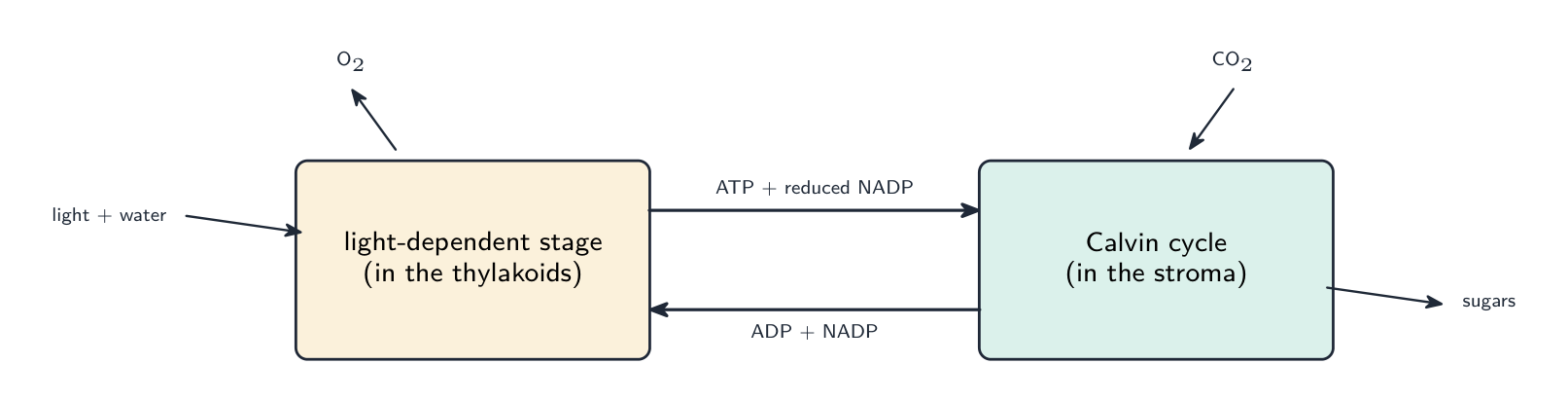
        • MC1R 유전자의 돌연변이는 pocket mice(주머니 쥐)에서 adaptive melanism(적응적 멜라닌 증식)을 나타냅니다.
      • 배제 문구: 특정 돌연변이와 그 효과에 대한 지식은 AP 시험의 범위를 벗어납니다.

    학습 목표 6.7.B: genotype(유전자형)의 변화가 phenotype(표현형)의 변화로 이어질 수 있는 이유를 설명하시오.

    • 6.7.B.1 DNA 복제 오류, DNA 수리 기작, 그리고 방사선 및 반응성 화학 물질과 같은 외부 요인은 DNA에 무작위 돌연변이를 유발할 수 있습니다.
      • 6.7.B.1.i 돌연변이가 유익하거나, 해롭거나, 중립적인지는 환경적 맥락에 따라 달라집니다.
      • 6.7.B.1.ii 돌연변이는 유전적 변이의 원천이다.
    • 6.7.B.2 분열분열 또는 감수분열의 오류는 표현형 변화로 이어질 수 있다.
      • 6.7.B.2.i 비분리(non-disjunction)로 인한 염색체 수의 변화는 삼배체(비상염색체성, aneuploidy)로 인해 새로운 표현형이 나타나는 경우가 많다.
      • 6.7.B.2.ii 염색체 수의 변화는 종종 발달 제한이 있는 장애를 유발한다.
      • 6.7.B.2.iii 염색체 구조의 변화는 유전 장애를 초래한다.
      • 제외 사항: 염색체 수 변화와 관련된 특정 장애에 대한 지식은 AP 시험 범위를 벗어난다.

    학습 목표 6.7.C: DNA 서열의 변화가 자연선택의 대상이 될 수 있는 변이에 어떻게 기여하는지 설명하시오.

    • 6.7.C.1 유전형의 변화는 자연선택의 대상이 되는 표현형에 영향을 미칠 수 있다. 생존과 번식을 향상시키는 유전적 변화는 환경 조건에 의해 선택될 수 있다.
      • 6.7.C.1.i 전세균에서의 수평 유전 정보 획득(변환: DNA 흡수, 전도: 바이러스에 의한 유전 정보 전달, 접합: 세포 간 DNA 전달, 전이: DNA 내 및 DNA 간 DNA 절편 이동)은 유전적 다양성을 증가시킨다.
      • 6.7.C.1.ii 관련 바이러스는 동일한 숙주 세포에 감염될 경우 유전 정보를 재조합할 수 있다.
      • 6.7.C.1.iii 유전적 다양성을 증가시키는 생식 과정은 진화적으로 보존되어 있으며 다양한 생물체에 공유된다.
      • 6.7.C.1의 illustrative examples: sickle cell anemia

    Source: College Board AP Course and Exam Description · ⁨출처: College Board AP Course and Exam Description⁩

    English

    A mutation 突变 is a change in the DNA sequence. Point mutations change one base (silent, missense, or nonsense); insertions/deletions can cause a frameshift 移码 that garbles everything downstream. Mutations in gametes are heritable; they may be harmful, neutral, or beneficial – and beneficial ones supply the variation for natural selection.

    Whole-chromosome errors change the phenotype too. Mutation is not only a change of base: errors in mitosis or meiosis can result in changes in phenotype. If chromosomes fail to separate — nondisjunction 不分离 — a gamete receives an extra copy or none, and the resulting zygote has an abnormal chromosome number (aneuploidy 非整倍性). Trisomy 21 is the familiar example. Because a whole chromosome carries hundreds of genes, the phenotypic effect is far broader than a point mutation's.

    한국어

    돌연변이는 DNA 서열의 변화를 의미합니다. 점 돌연변이는 하나의 염기를 변경하며(침묵 돌연변이, 미스센스 돌연변이, 논센스 돌연변이), 삽입/삭제는下游의 모든 것을 망가뜨리는 프레임시프트를 유발할 수 있습니다. 배우자에서의 돌연변이는 유전되며, 해롭거나 중립적이거나 유익할 수 있으며, 유익한 돌연변이는 자연선택을 위한 변이를 제공합니다.
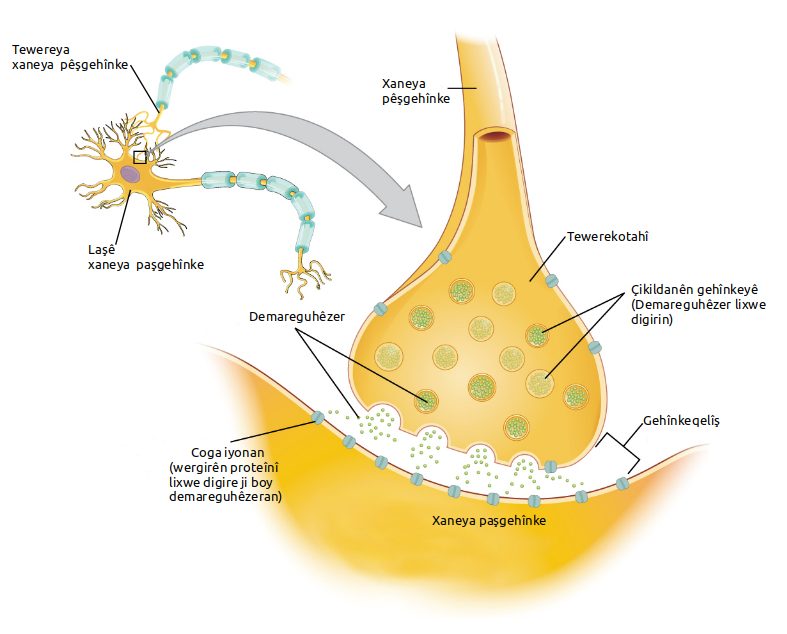
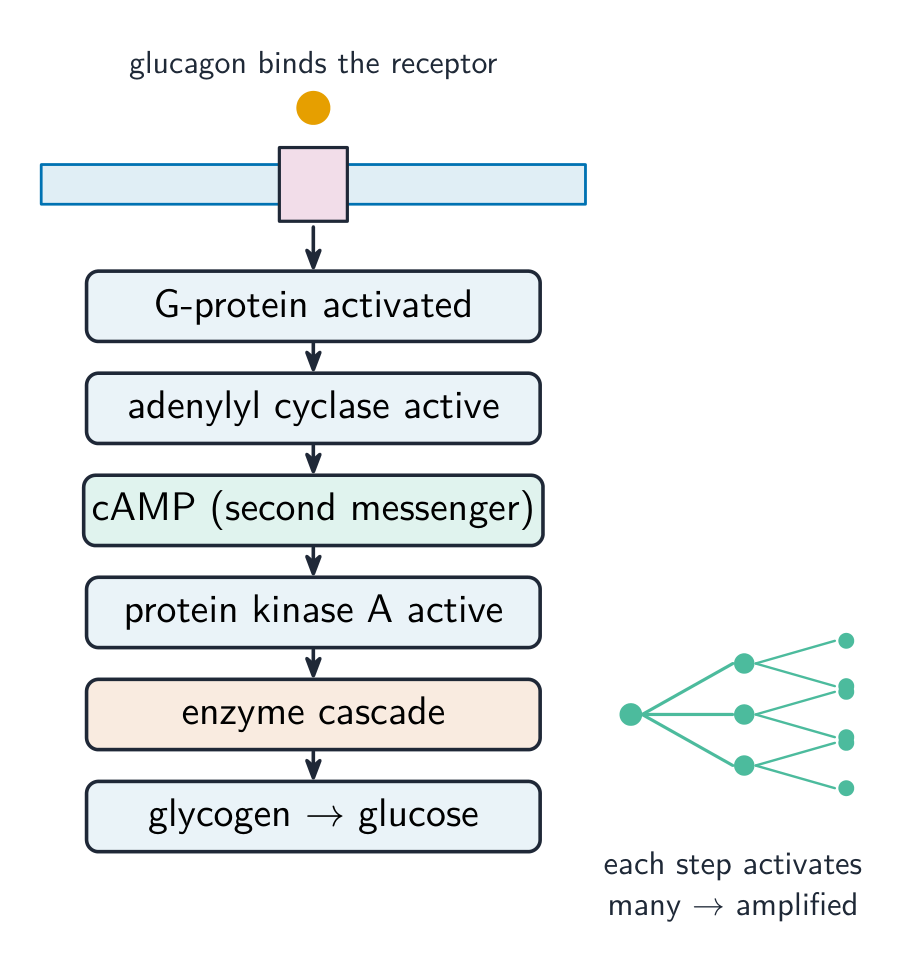
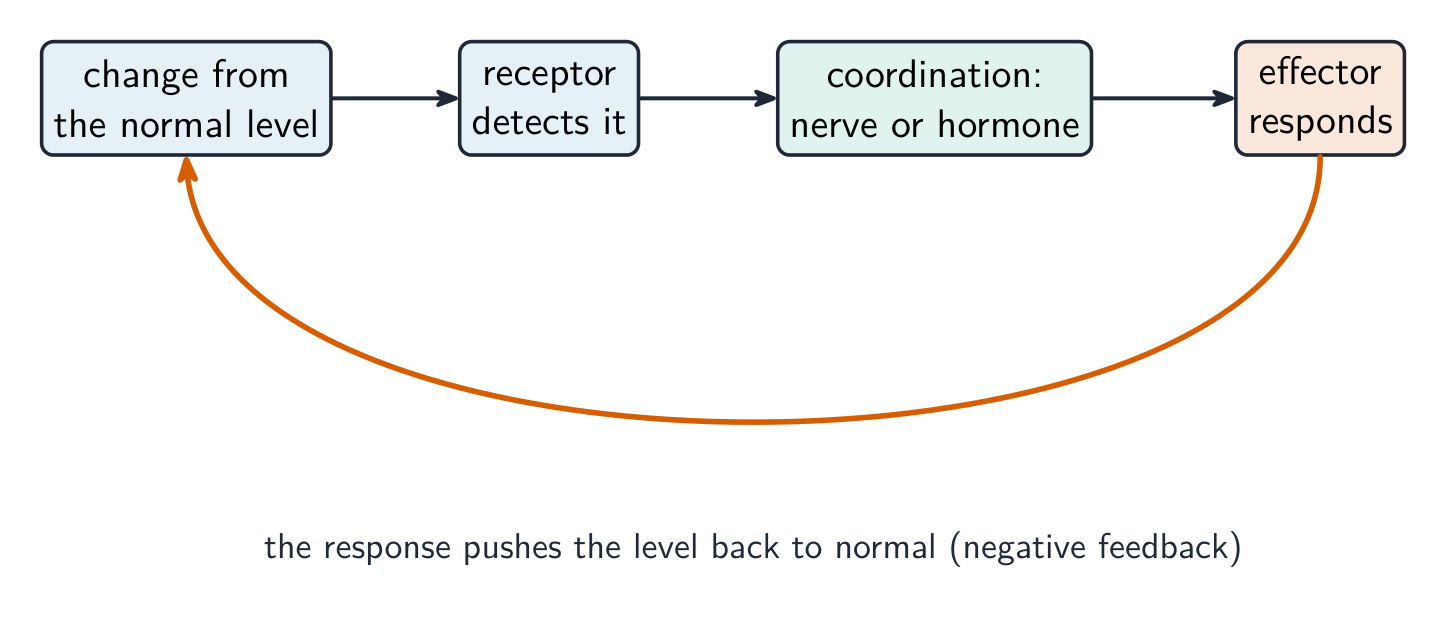
    대체, 결실 및 삽입 돌연변이
    대체, 결실 및 삽입 돌연변이

    염색체 전체의 오류도 표현형에 영향을 미칩니다. 돌연변이는 염기 변화뿐만 아니라 유사분열이나 감수분열 중 발생한 오류가 표현형의 변화를 초래할 수 있습니다. 염색체가 분리되지 않아 **비분리(nondisjunction)**가 발생하면, 배자(게메트)는 추가된 염색체를 받거나 전혀 받지 못하며, 이로 인해 형성된 합자(지고트)는 비정상적인 염색체 수를 가지게 됩니다(비배수성, aneuploidy). 21번 삼염색체증은 이를 잘 보여주는 예입니다. 한 개의 염색체는 수백 개의 유전자를 포함하므로, 전체 염색체의 오류로 인한 표현형적 영향은 점 돌연변이의影響보다 훨씬 넓습니다.
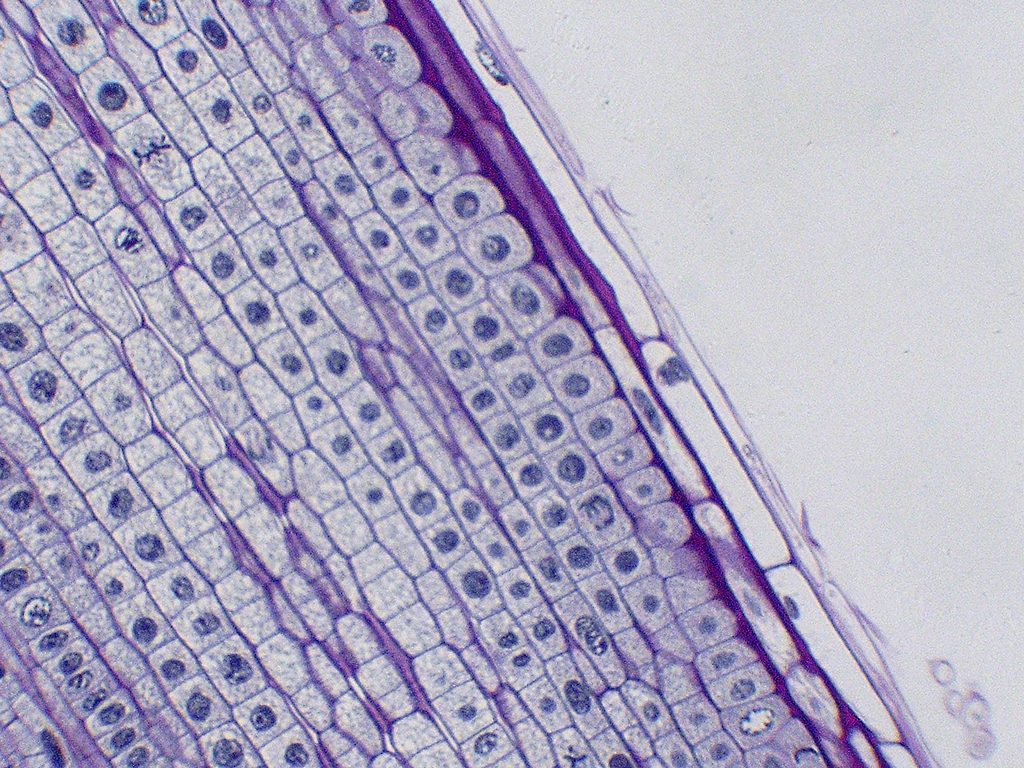
    Vocabulary · ⁨어휘⁩ Train · ⁨연습하기⁩
    English 한국어
    mutation/mjuːˈteɪʃn/ 변이
    frameshift/ˈfreɪmʃɪft/ 프레임 시프트(frameshift)
    nondisjunction/ˌnɒndɪsˈdʒʌŋkʃn/ 비분리 현상
    aneuploidy/ˈeɪnəplɔɪdi/ 비정배수
    Biotechnology/ˌbaɪəʊtekˈnɒlədʒi/ 바이오기술(Biotechnology)
    6.8

    Biotechnology · ⁨생명공학⁩

    Syllabus
    English

    Enduring Understanding (BIG IDEA 3 — Information Storage and Transmission): Living systems store, retrieve, transmit, and respond to information essential to life processes.

    Learning Objective 6.8.A: Explain the use of genetic engineering techniques in analyzing or manipulating DNA.

    • 6.8.A.1 Genetic engineering techniques can be used to analyze and manipulate DNA and RNA.
      • 6.8.A.1.i Gel electrophoresis is a process that separates DNA fragments by size and charge.
      • 6.8.A.1.ii During polymerase chain reaction (PCR), DNA fragments are amplified by denaturing DNA, annealing primers to the original strand, and extending the new DNA molecule.
      • 6.8.A.1.iii Bacterial transformation introduces foreign DNA into bacterial cells.
      • 6.8.A.1.iv DNA sequencing technology determines the order of nucleotides in a DNA molecule. Typically, these techniques result in a DNA fingerprint that allows for the comparison of DNA sequences from various samples.
      • Illustrative examples for 6.8.A.1:
        • Amplified DNA fragments can be used to identify organisms and perform phylogenetic analysis.
        • Analysis of DNA can be used for forensic identification.
        • Genetically modified organisms include transgenic animals.
        • Gene cloning allows propagation of DNA fragments.
      • Exclusion statement: Knowledge of the details of each of these genetic engineering techniques is beyond the scope of the AP Exam.
    한국어

    지속적 이해 (BIG IDEA 3 — 정보 저장 및 전송): 생명 체계는 생명 과정에 필수적인 정보를 저장하고,检索하고, 전송하며, 반응한다.

    학습 목표 6.8.A: DNA를 분석하거나 조작하기 위한 유전자 공학 기법의 활용을 설명하시오.

    • 6.8.A.1 유전자 공학 기법은 DNA와 RNA를 분석하고 조작하는 데 사용될 수 있다.
      • 6.8.A.1.i 겔 전기영동은 크기와 전하에 따라 DNA 조각을 분리하는 과정이다.
      • 6.8.A.1.ii 중합효소 연쇄 반응(PCR) 동안 DNA 조각은 DNA의变性(denaturing), 프라이머를 원본 가닥에 결합(annealing), 새로운 DNA 분자를 연장(extending)함으로써 증폭된다.
      • 6.8.A.1.iii 세균 변환(bacterial transformation)은 외源性 DNA를 세균 세포에 주입한다.
      • 6.8.A.1.iv DNA 서열 분석 기술은 DNA 분자의 뉴클레타이드 순서를 결정한다. 일반적으로 이러한 기술은 다양한 샘플의 DNA 서열을 비교할 수 있게 하는 DNA 지문(DNA fingerprint)을 산출한다.
      • 6.8.A.1의 illustrative examples:
        • 증폭된 DNA 조각은 생물 식별 및 계통 발생 분석에 사용될 수 있다.
        • DNA 분석은 법의학적 식별에 사용될 수 있다.
        • 유전자 수정 생물(GMO)에는 transgenic 동물이 포함된다.
        • 유전자 클로닝은 DNA 조각의 증식(전파)을 가능하게 한다.
      • 제외 사항: 이러한 각 유전자 공학 기법에 대한 상세 지식은 AP 시험 범위를 벗어난다.

    Source: College Board AP Course and Exam Description · ⁨출처: College Board AP Course and Exam Description⁩

    English

    Biotechnology 生物技术 tools manipulate genetic material: PCR 聚合酶链反应 copies DNA, gel electrophoresis 凝胶电泳 separates DNA fragments by size, restriction enzymes and cloning move genes between organisms, and CRISPR edits sequences. These techniques enable genetic testing, engineered organisms, and medical treatments.

    Worked example. A template DNA strand 3'-TAC GGA TTC-5' is transcribed into mRNA 5'-AUG CCU AAG-3'. A ribosome reads three codons: AUG = Met (start), CCU = Pro, AAG = Lys — coding for Met–Pro–Lys. Changing the third base of a codon often gives the same amino acid, because the genetic code is degenerate, which softens the effect of many mutations.

    Reading DNA identifies individuals. Because the number of repeats at certain non-coding loci varies from person to person, analysis of DNA can be used for forensic identification: amplify those regions by PCR, separate the fragments by gel electrophoresis, and compare the pattern of band positions with a reference sample. A match is a statement about probability rather than certainty, which is why several loci are tested rather than one.

    한국어
    열 순환기는 DNA를 증폭하기 위해(PCR) 시료를 반복적으로 가열하고 냉각함
    열 순환기(PCR)가 시료를 반복적으로 가열하고 냉각하여 DNA를 증폭하는 모습
    UV 광선 아래 아가로스 겔: 밝은 밴드로 크기에 따라 DNA 조각이 분리됨
    UV 광선 아래 아가로스 겔: 밝은 밴드 형태로 크기에 따라 DNA 조각이 분리됨

    생명공학 도구는 유전 물질을 조작합니다: PCR은 DNA를 복제하고, **겔 전동分离(gel electrophoresis)**는 크기에 따라 DNA 조각을 분리하며, **제한 효소(restriction enzymes)**와 클로닝은 생물 간에 유전자를 이동시키고, CRISPR은 서열을 편집합니다. 이러한 기술들은 유전자 검사, 공생 생물 제작 및 의학적 치료에 기여합니다.

    겔 전기영동은 길이에 따라 DNA 조각을 분리함
    겔 전동分离(gel electrophoresis)가 길이에 따라 DNA 조각을 분리함
    폴리메라아프화합반응은 각 주기가 마다 DNA를 두 배로 늘림
    중합효소 연쇄 반응(PCR)은 각 주기가 끝날 때마다 DNA 양을 두 배로 증가시킵니다

    작은 예제. 템플릿 DNA 가닥 3'-TAC GGA TTC-5'이 mRNA 5'-AUG CCU AAG-3'로 전사됩니다. 리보솜은 세 개의 코돈을 읽습니다: AUG = Met (시작), CCU = Pro, AAG = Lys — 즉 Met–Pro–Lys를 코딩합니다. 코돈의 제3 염기를 변경하더라도 동일한 아미노산이 생성되는 경우가 많는데, 이는 유전 부호가 **중복(degenerate)**되어 있어 많은 돌연변이의 효과를 완화하기 때문입니다.

    DNA를 읽으면 개인을 식별할 수 있습니다. 특정 비코딩 부위의 반복 횟수가 사람마다 다르므로, DNA 분석은 법의학적 신원 확인에 사용될 수 있습니다: PCR로 해당 부위를 증폭한 뒤, 겔 전동分离(gel electrophoresis)로 조각을 분리하고 밴드 위치 패턴을 기준 샘플과 비교합니다. 일치 여부는 확률에 대한 진술이지 확실성이 아니므로, 단일 부위가 아닌 여러 부위를 테스트하는 것입니다.

    Vocabulary · ⁨어휘⁩ Train · ⁨연습하기⁩
    English 한국어
    PCR/ˌpiː siː ˈɑː/ PCR
    gel electrophoresis/dʒel ɪˌlektrəʊfɔːˈriːsɪs/ 겔 전기영동
    6.8

    Exam tips · ⁨시험 팁⁩

    English
    • Know the central dogma DNA → RNA → protein: transcription makes mRNA, translation reads it in three-base codons at the ribosome.
    • Remember RNA is single-stranded and uses U instead of T; replication is semiconservative.
    • Every cell has the same DNA — cells differ because they express different genes (differential gene expression).
    • A mutation is a change in the DNA sequence and may be harmful, neutral, or beneficial (the raw material for selection).
    • Link biotech tools to their jobs: PCR copies DNA; gel electrophoresis separates fragments by size.
    한국어
    • 중심 명제(central dogma) DNA → RNA → 단백질을 알고 있어야 합니다: 전사는 mRNA를 만들고, 번역은 리보솜에서 3염기 코돈(codons) 단위로 이를 읽습니다.
    • RNA는 단일 가닥이며 T 대신 U를 사용합니다; 복제는 반보존(semiconservative) 방식입니다.
    • 모든 세포는 같은 DNA를 가지고 있습니다: 세포들이 다른 것은 **서로 다른 유전자를 발현(differential gene expression)**하기 때문입니다.
    • **돌연변이(mutation)**는 DNA 서열의 변화이며 해롭거나, 중립적이거나, 유리할 수 있습니다(선택의 원료입니다).
    • 생명공학 도구와 그 기능을 연결해 주세요: PCR은 DNA를 복제하고, 겔 전동分离(gel electrophoresis)는 크기에 따라 조각을 분리합니다.
    Vocabulary · ⁨어휘⁩ Train · ⁨연습하기⁩
    English 한국어
    double helix/ˈdʌbl ˈhiːlɪks/ 이중 나사선 구조
    nucleotides/ˈnjuːklɪɒtaɪdz/ 핵산
    complementary base pairing/ˌkɒmplɪˈmentəri beɪs ˈpeərɪŋ/ 상보적 염기쌍
    antiparallel/ˌæntɪˈpærəlel/ 반평행
    single circular chromosome/ˈsɪŋɡl ˈsɜːkjʊlə ˈkrəʊməsəʊm/ 단일 원형 염색체
    multiple linear chromosomes/ˈmʌltɪpl ˈlɪnɪə ˈkrəʊməsəʊmz/ 다중 선형 염색체
    condensed by wrapping around proteins called histones/kənˈdenst baɪ ˈræpɪŋ əˈraʊnd ˈprəʊtiːnz kɔːld ˈhɪstəʊnz/ 히스톤이라는 단백질에 감겨서 응축됨
    semiconservatively/ˌsemɪkənˈsɜːvətɪvli/ 반보존적으로
    DNA polymerase/ˌdiː en ˈeɪ ˌpɒlɪməˈreɪz/ DNA 중합효소
    Transcription/trænˈskrɪpʃn/ 전사
    messenger RNA/ˈmesɪndʒə ˌɑː en ˈeɪ/ 전사RNA
    introns/ɪnˈtrɒnz/ 인트론
    exons/eɡˈzɒnz/ 엑손
    Translation/trænˈsleɪʃn/ 번역
    ribosome/ˈriːbəʊsəʊm/ 리보솜
    codons/ˈkəʊdɒnz/ 코돈들
    Transfer RNA/ˈtrænsfɜː ˌɑː en ˈeɪ/ 전달 RNA
    operons/ˈɒpərənz/ 오페론
    differential gene expression/ˌdɪfəˈrenʃl dʒiːn ekˈspreʃn/ 차별 유전자 발현
  • 7

    Natural Selection · ⁨자연선택⁩

    Watch lesson · ⁨수업 보기⁩
    7.1

    Introduction to Natural Selection · ⁨자연선택 개론⁩

    Syllabus
    English

    Enduring Understanding (BIG IDEA 1 — Evolution): The process of evolution drives the diversity and unity of life.

    Learning Objective 7.1.A: Describe the causes of natural selection.

    • 7.1.A.1 Natural selection is a major mechanism of evolution.
    • 7.1.A.2 According to Darwin's theory of natural selection, competition for limited resources results in differential survival. Individuals with more favorable phenotypes are more likely to survive and produce more offspring, thus passing on those favorable traits to subsequent generations.

    Learning Objective 7.1.B: Explain how natural selection affects populations.

    • 7.1.B.1 Evolutionary fitness is measured by reproductive success.
    • 7.1.B.2 Biotic and abiotic environments can fluctuate, affecting the rate and direction of evolution. Different genetic variations can be selected in each generation.
    한국어

    지속적 이해 (BIG IDEA 1 — 진화): 진화 과정은 생명의 다양성과 통일성을 주도한다.

    학습 목표 7.1.A: 자연선택의 원인을 설명하시오.

    • 7.1.A.1 자연선택은 진화의 주요 메커니즘이다.
    • 7.1.A.2 다윈의 자연선택 이론에 따르면, 제한된 자원에 대한 경쟁은 차별적 생존(differential survival)을 초래한다. 더 유리한 표현형을 가진 개체는 생존하고 더 많은 후손을 남길 가능성이 높아, 이러한 유리한 형질을 차세대에게 물려준다.

    학습 목표 7.1.B: 자연선택이 집단에 미치는 영향을 설명하시오.

    • 7.1.B.1 진화적 적합도는 생식 성공으로 측정된다.
    • 7.1.B.2 생물학적 및 비생물학적 환경은 변동할 수 있으며, 이는 진화의 속도와 방향에 영향을 미친다. 각 세대마다 다른 유전적 변이가 선택될 수 있다.

    Source: College Board AP Course and Exam Description · ⁨출처: College Board AP Course and Exam Description⁩

    English

    Evolution 进化 is a change in the heritable traits of a population over generations. Natural selection 自然选择 is its main driver: individuals vary, some variations are heritable, more offspring are produced than survive, and those with traits better suited to the environment survive and reproduce more. Over time, helpful traits become more common.

    한국어

    **진화(evolution)**는 세대를 거쳐 집단의 유전적 형질이 변화하는 것입니다. **자연선택(natural selection)**은 이 과정의 주요 동력입니다: 개체에는 변이가 있으며, 일부 변이는 유전되고, 생존 가능한 자손보다 더 많이 태어나며, 환경에 더 잘 적응한 형질을 가진 개체가 더 잘 생존하고 번식합니다. 시간이 지남에 따라 유용한 형질이 더 흔해집니다.

    자연선택: 가장 잘 적응한 개체가 생존하여, 번식하며, 자신의 알레울을 전달함
    자연선택: 가장 잘 적응한 개체가 생존, 번식하여 대립유전자를 전달함
    Vocabulary · ⁨어휘⁩ Train · ⁨연습하기⁩
    English 한국어
    Evolution/ɪvəˈluːʃn/ 진화
    Natural selection/ˈnætʃərəl sɪˈlekʃn/ 자연 선택
    7.2

    Natural Selection · ⁨자연선택⁩

    Syllabus
    English

    Enduring Understanding (BIG IDEA 1 — Evolution): The process of evolution drives the diversity and unity of life.

    Learning Objective 7.2.A: Describe the importance of phenotypic variation in a population.

    • 7.2.A.1 Natural selection acts on phenotypic variations in populations.
    • 7.2.A.2 Environments change and apply selective pressures to populations.
      • Illustrative examples for 7.2.A.2: Flowering time in relation to global climate change
    • 7.2.A.3 Some phenotypic variations can increase or decrease the fitness of an organism in particular environments.
      • Illustrative examples for 7.2.A.3: Sickle cell anemia; DDT resistance in insects

    Learning Objective 7.2.B: Explain how variation in molecules within cells connects to the fitness of an organism.

    • 7.2.B.1 Variation in the number and types of molecules within cells can provide populations a greater ability to survive and reproduce in different environments.
    한국어

    지속적 이해 (BIG IDEA 1 — 진화): 진화 과정은 생명의 다양성과 통일성을 주도한다.

    학습 목표 7.2.A: 집단 내 표현형 변이의 중요성을 서술하라.

    • 7.2.A.1 자연선택은 집단 내 표현형 변이에 작용한다.
    • 7.2.A.2 환경은 변화하며 집단에 선택 압력을 가한다.
      • 7.2.A.2의 예시: 기후 변화와 관련된 개화 시기
    • 7.2.A.3 일부 표현형 변이는 특정 환경에서 생물의 적응도(fitness)를 증가시키거나 감소시킬 수 있다.
      • 7.2.A.3의 예시: 삼각형 적혈구 빈혈증; 곤충의 DDT 저항성

    학습 목표 7.2.B: 세포 내 분자의 변이가 생물의 적응도와 어떻게 연결되는지 설명하라.

    • 7.2.B.1 세포 내 분자의 수와 종류에 대한 변이는 집단이 다양한 환경에서 생존하고 번식할 수 있는 능력을 향상시켜 줄 수 있다.

    Source: College Board AP Course and Exam Description · ⁨출처: College Board AP Course and Exam Description⁩

    English

    Selection acts on variation 变异. Fitness 适合度 means reproductive success, not strength. Selection comes in modes: directional (favors one extreme), stabilizing (favors the average), and disruptive (favors both extremes). The environment does the "selecting," so a trait that helps in one setting may not in another. Well-suited traits are adaptations 适应.

    한국어
    피바퀴의 어두운 형태(carbonaria) — 산업 멜라니즘은 고전적인 자연택 사례 연구입니다
    호박나방의 어두운 형태(carbonaria) — 산업黑色素증(industrial melanism)은 자연선택의 고전적인 사례 연구입니다

    선택은 **변이(variation)**에 작용합니다. **적응도(fitness)**는 힘의 강도가 아니라 생식 성공도를 의미합니다. 선택에는 방향성이 있습니다: **방향성 선택(directional)**은 한쪽 극단성을 선호하고, **안정화 선택(stabilizing)**은 평균형을 선호하며, **파괴적/파열적 선택(disruptive)**은 양쪽 극단성을 선호합니다. 환경이 '선택'을 수행하므로, 한 환경에서는 도움이 되는 형질이 다른 환경에서는 도움이 되지 않을 수 있습니다. 환경에 잘 맞는 형질을 **적응(adaptations)**이라고 합니다.

    안정화 선택, 방향성 선택, 파괴적 선택
    안정화, 방향성, 파괴적 선택
    Explore · ⁨탐색하기⁩

    Watch selection shift a population · ⁨선택이 집단을 변화시키는 과정 보기⁩

    Natural selection: individuals better suited to the environment survive and reproduce more, so helpful traits spread. Change the environment and watch the population adapt. · ⁨자연선택: 환경에 더 잘 적응한 개체가 생존하고 더 많이 번식하므로 유용한 형질이 확산됩니다. 환경을 변경하면 집단이 적응하는 과정을 관찰할 수 있습니다.⁩

    Vocabulary · ⁨어휘⁩ Train · ⁨연습하기⁩
    English 한국어
    variation/ˌveərɪˈeɪʃn/ 변화
    Fitness/ˈfɪtnəs/ 적응도
    adaptations/ˌædæpˈteɪʃnz/ 적응
    7.3

    Artificial Selection · ⁨인공선택⁩

    Syllabus
    English

    Enduring Understanding (BIG IDEA 1 — Evolution): The process of evolution drives the diversity and unity of life.

    Learning Objective 7.3.A: Explain how humans can affect diversity within a population.

    • 7.3.A.1 Through artificial selection, humans affect variation in other species.
    한국어

    지속적 이해 (BIG IDEA 1 — 진화): 진화 과정은 생명의 다양성과 통일성을 주도한다.

    학습 목표 7.3.A: 인간이 집단 내 다양성에 미치는 영향을 설명하라.

    • 7.3.A.1 인공선택을 통해 인간은 다른 종의 변이에 영향을 미친다.

    Source: College Board AP Course and Exam Description · ⁨출처: College Board AP Course and Exam Description⁩

    English

    In artificial selection 人工选择, humans – not nature – choose which individuals breed, selecting for desired traits (crops, livestock, dogs). It works the same way as natural selection and, being fast and visible, is strong evidence that selection can reshape populations.

    한국어

    **인공선택(artificial selection)**에서 인간은 자연이 아닌自身가 어떤 개체가 번식할지를 결정하며, 원하는 형질(작물, 가축, 개 등)을 선별합니다. 이는 자연선택과 동일한 원리로 작동하며, 빠르고 관찰 가능하다는 점에서 선택이 집단을 재구성할 수 있음을强有力的Evidence로 제시합니다.

    선발적 교배는 세대를 거쳐 원하는 형질을 더 흔하게 만듦
    선택적 교배가 세대를 거듭하여 원하는 형질이 더 흔해지는 모습
    Vocabulary · ⁨어휘⁩ Train · ⁨연습하기⁩
    English 한국어
    artificial selection/ˌɑːtɪˈfɪʃl sɪˈlekʃn/ 인공선택
    7.4

    Population Genetics · ⁨집단유전학⁩

    Syllabus
    English

    Enduring Understanding (BIG IDEA 1 — Evolution): The process of evolution drives the diversity and unity of life.

    Learning Objective 7.4.A: Explain how random occurrences affect the genetic makeup of a population.

    • 7.4.A.1 Evolution is also driven by random occurrences.
      • i. Mutation is a random process that adds new genetic variation to a population.
      • ii. Genetic drift is a change in allele frequencies attributable to a nonselective process occurring in small populations.
      • iii. The bottleneck effect is a type of genetic drift that occurs when a population size is reduced to a small number of individuals for at least one generation.
      • iv. The founder effect is a type of genetic drift that occurs when a population is separated from other members of the population. The frequency of genes and traits will shift based on the genes in this new founder population.
      • v. Migration can result in gene flow (the addition or removal of alleles from a population).

    Learning Objective 7.4.B: Describe the role of random processes in the evolution of specific populations.

    • 7.4.B.1 Random processes can lead to changes in allele frequencies in a population.
      • i. Mutations result in genetic variation, which provides phenotypes on which natural selection acts.
      • ii. Genetic drift can allow a small population to diverge from other populations of the same species.
      • iii. Gene flow between two populations prevents them from diverging into separate species.

    Learning Objective 7.4.C: Describe the change in the genetic makeup of a population over time.

    • 7.4.C.1 Changes in allele frequencies provide evidence for the occurrence of evolution in a population.
    한국어

    지속적 이해 (BIG IDEA 1 — 진화): 진화 과정은 생명의 다양성과 통일성을 주도한다.

    학습 목표 7.4.A: 우연한 사건이 집단의 유전 구성에 미치는 영향을 설명하라.

    • 7.4.A.1 진화는 우연한 사건에 의해서도 추진된다.
      • i. 돌연변이는 새로운 유전적 변이를 집단에게 추가하는 우연한 과정이다.
      • ii. 유전적 부동(genetic drift)은 소규모 집단 내에서 비선택적 과정으로 인해 대립유전자 빈도가 변화하는 현상이다.
      • iii. 병목 효과(bottleneck effect)는 집단 크기가 최소 한 세대 동안 소수의 개체로 감소할 때 발생하는 유전적 부동의 일종이다.
      • iv. 창시자 효과(founder effect)는 집단 중 일부가 Remaining 집단으로부터 분리되어 새로운 집단을 형성할 때 발생하는 유전적 부동의 일종이다. 이 새로운 창시자 집단의 유전자에 따라 유전자 및 형질의 빈도는 변화하게 된다.
      • v. 이주는 유전자 흐름(gene flow, 집단의 대립유전자 추가 또는 제거)을 초래할 수 있다.

    학습 목표 7.4.B: 특정 집단의 진화에서 우연한 과정의 역할을 서술하라.

    • 7.4.B.1 우연한 과정은 집단 내 대립유전자 빈도의 변화를 초래할 수 있다.
      • i. 돌연변이는 유전적 변이를 유발하여 자연선택이 작용할 수 있는 표현형을 제공한다.
      • ii. 유전적 부동은 소규모 집단이 동일한 종의 다른 집단들과 구별되게 할 수 있다.
      • iii. 두 집단 간의 유전자 흐름은 이들이 별개의 종으로分化되도록 방지한다.

    학습 목표 7.4.C: 시간 경과에 따른 집단의 유전 구성 변화를 서술하라.

    • 7.4.C.1 대립유전자 빈도의 변화는 집단 내에서 진화가 일어나고 있음을 보여주는 증거가 된다.

    Source: College Board AP Course and Exam Description · ⁨출처: College Board AP Course and Exam Description⁩

    English

    Population genetics 群体遗传学 studies the pool of alleles in a population. Evolution is a change in allele frequencies 等位基因频率 over time. Besides natural selection, allele frequencies change through mutation (new alleles), gene flow 基因流 (migration), and genetic drift 遗传漂变 (random change, strongest in small populations – the bottleneck and founder effects).

    한국어

    **집단유전학(population genetics)**은 집단의 대립유전자 풀(allele pool)을 연구합니다. 진화는 시간 경과에 따른 **대립유전자 빈도(allele frequencies)**의 변화입니다. 자연선택 외에도 대립유전자 빈도는 돌연변이(새로운 대립유전자 생성), 유전자 흐름(gene flow), 그리고 유전적 부동(genetic drift)(무작위적 변화, 소수 집단에서 특히 강력함—병목 현상(bottleneck)과 기저 효과(founder effects))를 통해 변화합니다.

    개체군 병목 현상이 유전적 다양성을 감소시킨다
    집단 병목 현상이 유전적 다양성을 줄이는 모습
    Vocabulary · ⁨어휘⁩ Train · ⁨연습하기⁩
    English 한국어
    Population genetics/ˌpɒpjʊˈleɪʃn dʒɪˈnetɪks/ 집단 유전학
    allele frequencies/əˈliːl ˈfriːkwənsiz/ 알리얼 빈도
    gene flow/dʒiːn fləʊ/ 유전자 흐름
    genetic drift/dʒɪˈnetɪk drɪft/ 유전적 부동
    7.5

    Hardy-Weinberg Equilibrium · ⁨하디-윈버그 평형⁩

    Syllabus
    English

    Enduring Understanding (BIG IDEA 1 — Evolution): The process of evolution drives the diversity and unity of life.

    Learning Objective 7.5.A: Describe the conditions under which allele and genotype frequencies will change in populations.

    • 7.5.A.1 The Hardy–Weinberg Equilibrium is a model for describing and predicting allele frequencies in a non-evolving population. Conditions for a population or an allele to be in Hardy–Weinberg equilibrium are:

      • i. A large population size
      • ii. No migration
      • iii. No new mutations
      • iv. Random mating
      • v. No natural selection

      These conditions are never met, but they provide a valuable null hypothesis.

    • 7.5.A.2 Allele frequencies in a nonevolving population can be calculated from genotype frequencies.

      • Equation: Hardy–Weinberg Equation— $p^2 + 2pq + q^2 = 1$; $p + q = 1$, where: $p$ = frequency of allele 1 in the population; $q$ = frequency of allele 2 in the population
      • Illustrative examples for 7.5.A.2: Graphic analysis of allele frequencies in a population
    한국어

    지속적 이해 (BIG IDEA 1 — 진화): 진화 과정은 생명의 다양성과 통일성을 주도한다.

    학습 목표 7.5.A: 집단에서 대립유전자 및 유전자형 빈도가 변화하는 조건을 서술하라.

    • 7.5.A.1 하디-위버그 평형(Hardy–Weinberg Equilibrium)은 진화하지 않는 집단에서 대립유전자 빈도를 서술하고 예측하는 모델이다. 집단이나 대립유전자가 하디-위버그 평형에 있을 수 있는 조건은 다음과 같다:

      • i. 큰 집단 크기
      • ii. 이주 없음
      • iii. 새로운 돌연변이 없음
      • iv. 무작위 교배
      • v. 자연선택 없음

      이러한 조건들은 절대 충족되지 않지만, 중요한 영가설(null hypothesis)을 제공한다.

    • 7.5.A.2 진화하지 않는 집단에서의 대립유전자 빈도는 유전자형 빈도로부터 계산할 수 있다.

      • 식: 하디-위버그 식— $p^2 + 2pq + q^2 = 1$; $p + q = 1$, 여기서: $p$ = 집단 내 대립유전자 1의 빈도; $q$ = 집단 내 대립유전자 2의 빈도
      • 7.5.A.2의 예시: 집단의 allele frequencies(대립유전자 빈도)에 대한 Graphic analysis(그래픽 분석)

    Source: College Board AP Course and Exam Description · ⁨출처: College Board AP Course and Exam Description⁩

    English

    The Hardy–Weinberg 哈迪-温伯格 model gives the allele and genotype frequencies expected when a population is not evolving. With allele frequencies $p$ and $q$ ($p+q=1$):

    $$p^2 + 2pq + q^2 = 1,$$
    where $p^2$ and $q^2$ are the homozygotes and $2pq$ the heterozygotes. It holds only under five conditions (no selection, no mutation, no migration, random mating, large population); when real data differ from the prediction, the population is evolving.

    Worked example. In a population, $16\%$ of individuals show the recessive phenotype, so $q^2=0.16$ and $q=\sqrt{0.16}=0.4$. Then $p=1-q=0.6$. The predicted carrier frequency (heterozygotes) is $2pq=2(0.6)(0.4)=0.48$, i.e. $48\%$, and the homozygous dominants are $p^2=0.6^2=0.36$, i.e. $36\%$. As a check, $0.36+0.48+0.16=1$. This is the standard route: recessive phenotype $\to q^2\to q\to p\to$ everything else.

    한국어

    하디-윈버그(Hardy–Weinberg) 모델은 집단이 진화하지 않을 때 예상되는 대립유전자 및 유전자형 빈도를 제공합니다. 대립유전자 빈도가 $p$과 $q$일 때($p+q=1$):

    $$p^2 + 2pq + q^2 = 1,$$
    여기서 $p^2$과 $q^2$는 동형접합(homozygotes)이고 $2pq$는 이형접합(heterozygotes)입니다. 이는 선택 없음, 돌연변이 없음, 이주 없음, 무작위 교배, 큰 집단이라는 5가지 조건 하에서만 성립하며, 실제 데이터가 예측치와 다를 경우 집단은 진화하고 있는 것입니다.

    풀이 예제. 한 집단에서 $16\%$의 개체가 우성 대립유전자의 반성 phenotype을 나타내므로, $q^2=0.16$ 및 $q=\sqrt{0.16}=0.4$이다. 따라서 $p=1-q=0.6$이다. 예측된 carrier 빈도(이형접합자)는 $2pq=2(0.6)(0.4)=0.48$, 즉 $48\%$이며, 동형접합 우성은 $p^2=0.6^2=0.36$, 즉 $36\%$이다. 검증으로, $0.36+0.48+0.16=1$이다. 이는 표준적인 방법: 반성 phenotype $\to q^2\to q\to p\to$ 나머지 모든 것.

    하디-위너그: 알레 빈도 p와 q가 형질빈도 p², 2pq, q²를 결정합니다
    하디-위너그: 알레 빈도 p와 q가 형질빈도 p², 2pq, q²를 결정합니다
    Explore · ⁨탐색하기⁩

    Allele frequencies across a cross · ⁨교배에 따른 대립유전자 빈도⁩

    Hardy-Weinberg predicts genotype frequencies ($p^2+2pq+q^2$) in a population that isn't evolving. A Punnett square shows the same allele combining at the population scale. · ⁨하디-바인버그 법칙은 진화하지 않는 집단에서 유전자형 빈도($p^2+2pq+q^2$)를 예측합니다. 폰넷 격자는 집단 규모에서 동일한 대립유전자가 결합하는 모습을 보여줍니다.⁩

    Vocabulary · ⁨어휘⁩ Train · ⁨연습하기⁩
    English 한국어
    Hardy–Weinberg/ˈhɑːdi ˈwaɪnbɜːɡ/ 하디-바인베르크
    fossil record/ˈfɒsl ˈrekɔːd/ 화석 기록
    homologous structures/həˈmɒləɡəs ˈstrʌktʃəz/ 동형 기관
    vestigial structures/ˈvestɪdʒl ˈstrʌktʃəz/ 퇴화 구조
    common ancestor/ˈkɒmən ˈænsestə/ 공통 조상
    phylogenetic tree/ˌfaɪləʊdʒˈnetɪk triː/ 계통수
    7.6

    Evidence of Evolution · ⁨진화의 증거⁩

    Syllabus
    English

    Enduring Understanding (BIG IDEA 1 — Evolution): The process of evolution drives the diversity and unity of life.

    Learning Objective 7.6.A: Describe the types of data that provide evidence for evolution.

    • 7.6.A.1 Evolution is supported by scientific evidence from many disciplines (geographical, geological, physical, biochemical, and mathematical data).

    Learning Objective 7.6.B: Explain how morphological, biochemical, and geological data provide evidence that organisms have changed over time.

    • 7.6.B.1 Molecular, morphological, and genetic evidence from extant and extinct organisms adds to our understanding of evolution.
      • i. Fossils can be dated by a variety of methods. These include 1) the age of the rocks where a fossil is found; 2) the rate of decay of isotopes including carbon-14; and 3) geographical data.
      • ii. Morphological homologies, including vestigial structures, provide evidence of common ancestry.
    • 7.6.B.2 A comparison of DNA nucleotide sequences and protein amino acid sequences provides evidence for evolution and common ancestry.
    한국어

    지속적 이해 (BIG IDEA 1 — 진화): 진화 과정은 생명의 다양성과 통일성을 주도한다.

    학습 목표 7.6.A: 진화를 입증하는 데이터의 종류를 서술하시오.

    • 7.6.A.1 진화는 지리, 지질, 물리, 생화학 및 수학적 데이터 등 다방면의 과학적 증거에 의해 지지받는다.

    학습 목표 7.6.B: 형태학적, 생화학적, 지질학적 데이터가 생물이 시간에 따라 변화했음을 어떻게 입증하는지 설명하시오.

    • 7.6.B.1 현생 및 멸종 생물의 분자, 형태학적, 유전적 증거는 진화에 대한 우리의 이해를 넓혀준다.
      • i. 화석은 다양한 방법을 통해 연대를 측정할 수 있다. 여기에는 1) 화석이 발견된 암반의 연대; 2) 탄소-14를 포함한 동위원소의 붕괴 속도; 3) 지리적 데이터 등이 포함된다.
      • ii. 퇴행 기관을 포함한 형태학적 동형성은 공통 조상을 입증하는 증거가 된다.
    • 7.6.B.2 DNA 염기 서열과 단백질 아미노산 서열의 비교는 진화와 공통 조상에 대한 증거를 제공한다.

    Source: College Board AP Course and Exam Description · ⁨출처: College Board AP Course and Exam Description⁩

    English

    Multiple independent lines support evolution: the fossil record 化石记录, homologous structures 同源结构 (shared anatomy from common ancestry), vestigial structures 痕迹器官, shared embryology, and molecular evidence – the near-universal genetic code and matching DNA/protein sequences.

    한국어
    아르카오테릭스 화석: 깃털과 파충류적 특징 — 공통 조상의 증거
    아르카오테릭스 화석: 깃털과 파충류적 특징 — 공통 조상의 증거

    다양한 독립적인证据들이 진화를 지지한다: 화석 기록, 동질 구조(공통 조상으로부터 유래한 공유 해부학), 퇴행 구조, 공유 배발생학, 그리고 분자적 증거 — 거의 보편적인 유전 부호와 일치하는 DNA/단백질 서열.

    7.7

    Common Ancestry · ⁨공통 조상⁩

    Syllabus
    English

    Enduring Understanding (BIG IDEA 1 — Evolution): The process of evolution drives the diversity and unity of life.

    Learning Objective 7.7.A: Describe structural and functional evidence on cellular and molecular levels that provides evidence for the common ancestry of all eukaryotes.

    • 7.7.A.1 Structural and functional evidence indicates common ancestry of all eukaryotes. This evidence includes:
      • i. Membrane-bound organelles
      • ii. Linear chromosomes
      • iii. Genes that contain introns
    한국어

    지속적 이해 (BIG IDEA 1 — 진화): 진화 과정은 생명의 다양성과 통일성을 주도한다.

    학습 목표 7.7.A: 모든 진핵생물의 공통 조상을 입증하는 세포 및 분자 수준의 구조적, 기능적 증거를 서술하시오.

    • 7.7.A.1 구조적 및 기능적 증거는 모든 진핵생물의 공통 조상을 시사한다. 이 증거는 다음과 같다:
      • i. 막 결합 소기관
      • ii. 선형 염색체
      • iii. 인트론을 포함하는 유전자

    Source: College Board AP Course and Exam Description · ⁨출처: College Board AP Course and Exam Description⁩

    English

    All life shares a common ancestor 共同祖先, shown by universal features: the same DNA/RNA machinery, the same genetic code, ribosomes, and core metabolic pathways in all organisms. The more features and sequences two species share, the more recently they diverged.

    한국어

    모든 생명체는 공통 조상을 공유하며, 이는 보편적인 특징에 의해 입증된다: 동일한 DNA/RNA 기계장치, 동일한 유전 부호, 리보솜, 그리고 모든 생물체에서 공유되는 핵심 대사 경로. 두 종之间가 공유하는 특징과 서열이 많을수록 더 최근에 분화했다.

    아르카오테릭스: 전이 화석이 주요 계통군을 연결하고 공통 조상을 지지함
    아르카오테릭스: 전이 화석이 주요 계통군을 연결하고 공통 조상을 지지함
    7.8

    Continuing Evolution · ⁨지속되는 진화⁩

    Syllabus
    English

    Enduring Understanding (BIG IDEA 1 — Evolution): The process of evolution drives the diversity and unity of life.

    Learning Objective 7.8.A: Explain how evolution is an ongoing process in all living organisms.

    • 7.8.A.1 All species have evolved and continue to evolve. Examples include:
      • i. Genomic changes over time
      • ii. Continuous change in the fossil record
      • iii. Evolution of resistance to antibiotics, pesticides, herbicides, or chemotherapy drugs
      • iv. Pathogens evolving and causing emergent diseases
    한국어

    지속적 이해 (BIG IDEA 1 — 진화): 진화 과정은 생명의 다양성과 통일성을 주도한다.

    학습 목표 7.8.A: 진화가 모든 생물에 있어 지속되는 과정임을 설명하시오.

    • 7.8.A.1 모든 종은 진화해 왔으며 지금도 진화하고 있다. 예시는 다음과 같다:
      • i. 시간에 따른 유전체 변화
      • ii. 화석 기록에서의 지속적인 변화
      • iii. 항생제, 농약, 제초제 또는 화학요법 약물에 대한 내성 진화
      • iv. 병원체가 진화하여 신생 감염병을 유발함

    Source: College Board AP Course and Exam Description · ⁨출처: College Board AP Course and Exam Description⁩

    English

    Evolution is ongoing and observable: antibiotic-resistant bacteria, pesticide-resistant insects, and rapid changes in fast-breeding species. Because environments keep changing, selection keeps acting – evolution has no endpoint.

    한국어
    항생제 감수성 배판: 투명한 영역은 어떤 항생제가 세균을 죽이는지 보여줌
    항생제 감수성 배판: 투명한 영역은 어떤 항생제가 세균을 죽이는지 보여줌

    진화는 계속되고 관찰 가능하다: 항생제 내성 세균, 농약 내성 곤충, 그리고 빠른 번식 속도를 가진 종에서의 급격한 변화. 환경이 끊임없이 변하므로 선택도 계속 작용하며—진화에는 종점이 없다.

    자연선택에 의한 집단을 통한 항생제 내성의 확산 과정
    자연선택에 의한 집단을 통한 항생제 내성의 확산 과정
    7.9

    Phylogeny · ⁨계통 분류⁩

    Syllabus
    English

    Enduring Understanding (BIG IDEA 1 — Evolution): The process of evolution drives the diversity and unity of life.

    Learning Objective 7.9.A: Describe the types of evidence that can be used to infer an evolutionary relationship.

    • 7.9.A.1 Phylogenetic trees and cladograms show hypothetical evolutionary relationships among lineages that can be tested.
    • 7.9.A.2 Phylogenetic trees show the amount of change over time calibrated by fossils or a molecular clock, whereas cladograms do not show time scale or the evolutionary difference between groups.
    • 7.9.A.3 Traits that are either gained or lost during evolution can be used to construct phylogenetic trees and cladograms. The out-group represents the lineage that is least closely related to the remainder of the organisms in the phylogenetic tree or cladogram.
      • i. Shared derived characters can be present in more than one lineage and indicate common ancestry. These are informative for the construction of phylogenetic trees and cladograms.
      • ii. Molecular data typically provide more accurate and reliable evidence than morphological traits in the construction of phylogenetic trees or cladograms.

    Learning Objective 7.9.B: Explain how phylogenetic trees and cladograms can be used to infer evolutionary relatedness.

    • 7.9.B.1 Phylogenetic trees and cladograms can be used to illustrate speciation that has occurred. The nodes on a tree represent the most recent common ancestor of any two groups or lineages.
    • 7.9.B.2 Phylogenetic trees and cladograms can be constructed from morphological similarities of living or fossil species and from DNA and protein sequence similarities.
    • 7.9.B.3 Phylogenetic trees and cladograms represent hypotheses that are constantly being revised based on evidence.
    한국어

    지속적 이해 (BIG IDEA 1 — 진화): 진화 과정은 생명의 다양성과 통일성을 주도한다.

    학습 목표 7.9.A: 진화적 관계를 추론하는 데 사용될 수 있는 증거의 종류를 서술하시오.

    • 7.9.A.1 계통수와 클라드그램은 검증 가능한 가상의 계통 간 진화적 관계를 보여준다.
    • 7.9.A.2 계통수는 화석이나 분자 시계를 통해 시간으로 보정된 변화량을 나타내는 반면, 클라드그램은 시간 축이나 그룹 간의 진화적 차이를 나타내지 않는다.
    • 7.9.A.3 진화 과정에서 획득되거나 상실된 형질을 사용하여 계통수와 클라드그램을 구성할 수 있다. 외부군(out-group)은 계통수나 클라드그램에서 나머지 생물들과 가장远的(least closely related) 계통을 의미한다.
      • i. 공유 파생 형질(shared derived characters)은 여러 계통에 존재할 수 있으며 공통 조상을 나타낸다. 이는 계통수와 클라드그램의 구성에 유용한 정보이다.
      • ii. 계통수나 클라드그램을 구성할 때 분자 데이터는 형태학적 형질보다 더 정확하고 신뢰할 수 있는 증거를 thường적으로 제공한다.

    학습 목표 7.9.B: 계통수와 클라드그램을 사용하여 진화적 친밀도를 어떻게 추론할 수 있는지 설명하시오.

    • 7.9.B.1 계통수와 클라드그램은 발생한 종분화를 설명하는 데 사용할 수 있다. 계통수의 노드는 두 개 이상의 그룹 또는 계통의 최후공통조상을 나타낸다.
    • 7.9.B.2 계통수와 클라드그램은 현생 또는 화석 종의 형태학적 유사성, 그리고 DNA 및 단백질 서열의 유사성을 바탕으로 구성할 수 있다.
    • 7.9.B.3 계통수와 클라드그램은 증거에 따라 지속적으로 수정되는 가설을 나타낸다.

    Source: College Board AP Course and Exam Description · ⁨출처: College Board AP Course and Exam Description⁩

    English

    A phylogenetic tree 系统发育树 (cladogram) diagrams evolutionary relationships, with branch points marking common ancestors and shared derived traits grouping related species. Trees are hypotheses, revised as new (especially molecular) data arrive.

    한국어

    계통 발생 나무(클라드그램)는 진화적 관계를 도식화하며, 가지 끝점들은 공통 조상과 공유된 파생 형질이 관련 종들을 묶음을 표시한다. 나무들은 가설이며, 새로운 데이터(특히 분자적 데이터)가 들어올 때마다 수정된다.

    생명나무: 계통 분류는 공통 기원에서 유래한 공유 조상에 따라 생물체를 그룹화함
    생명나무: 계통 분류는 공통 기원에서 유래한 공유 조상에 따라 생물체를 그룹화함
    7.10

    Speciation · ⁨종 형성⁩

    Syllabus
    English

    Enduring Understanding (BIG IDEA 1 — Evolution): The process of evolution drives the diversity and unity of life.

    Learning Objective 7.10.A: Describe the conditions under which new species may arise.

    • 7.10.A.1 Speciation occurs when two populations become reproductively isolated from each other.
    • 7.10.A.2 The biological species concept provides a commonly used definition of a species for sexually reproducing organisms. It states that species can be defined as a group capable of interbreeding and exchanging genetic information to produce viable, fertile offspring.

    Learning Objective 7.10.B: Describe the rate of evolution and speciation under different ecological conditions.

    • 7.10.B.1 Punctuated equilibrium is when evolution occurs rapidly after a long period of stasis. Gradualism is when evolution occurs slowly over hundreds of thousands or millions of years.
    • 7.10.B.2 Divergent evolution occurs when adaptation to new habitats results in phenotypic diversification. Speciation rates can be especially rapid during times of adaptive radiation as new habitats become available.
    • 7.10.B.3 Convergent evolution occurs when similar selective pressures result in similar phenotypic adaptations in different populations or species.

    Learning Objective 7.10.C: Explain the processes and mechanisms that drive speciation.

    • 7.10.C.1 Sympatric speciation occurs in populations with geographic overlap. Allopatric speciation occurs in populations that are geographically isolated.
    • 7.10.C.2 Various pre-zygotic and post-zygotic mechanisms can maintain reproductive isolation and prevent gene flow between populations.
    • Illustrative examples for 7.10.C: Hawaiian Drosophila; Caribbean Anolis; Apple maggot Rhagoletis
    한국어

    지속적 이해 (BIG IDEA 1 — 진화): 진화 과정은 생명의 다양성과 통일성을 주도한다.

    학습 목표 7.10.A: 새로운 종이 발생할 수 있는 조건을 설명하시오.

    • 7.10.A.1 두 집단이 서로 생식적으로 격리(reproductively isolated)되면 종 형성이 일어난다.
    • 7.10.A.2 생물학적 종 개념은 성생식 생물 종에 대해 널리 사용되는 정의이다. 이는 종을 교배하여 생존 가능한(fertile) 후손을 생성하고 유전 정보를 교환할 수 있는 집단으로 정의한다.

    학습 목표 7.10.B: 다양한 생태적 조건 하에서 진화와 종 형성의 속도를 설명하시오.

    • 7.10.B.1间断平衡(punctuated equilibrium)은 장기간의 정지(stasis) 후 급격한 진화가 일어나는 것이다. 점진론(gradualism)은 수십만 년에서 수백만 년에 걸쳐 천천히 진화가 진행되는 것이다.
    • 7.10.B.2 이종 진화(divergent evolution)는 새로운 서식지에 대한 적응이 표현형 다양화로 이어지는 경우이다. 새로운 서식지가 이용 가능해지면 적응 방사(adaptive radiation) 시기에 종 형성 속도가 특히 빠를 수 있다.
    • 7.10.B.3 동종 진화(convergent evolution)는 유사한 선택 압력이 다른 집단이나 종에서 유사한 표현형 적응을 유도하는 경우이다.

    학습 목표 7.10.C: 종 형성을 주도하는 과정과 메커니즘을 설명하시오.

    • 7.10.C.1 동역 종 형성(sympatric speciation)은 지리적 중첩이 있는 집단에서 일어난다. 이형 종 형성(allopatric speciation)은 지리적으로 격리된 집단에서 일어난다.
    • 7.10.C.2 다양한 전자배합 및 자배막 요인들은 종간 reproductive isolation(생식적 격리)을 유지하고 집단 간 유전자 흐름을 방지할 수 있다.
    • 7.10.C의 illustrative examples: Hawaiian Drosophila; Caribbean Anolis; Apple maggot Rhagoletis

    Source: College Board AP Course and Exam Description · ⁨출처: College Board AP Course and Exam Description⁩

    English

    Speciation 物种形成 is the origin of new species, usually when populations become reproductively isolated 生殖隔离 and diverge. Allopatric speciation follows a geographic split; sympatric speciation happens without one. Once populations can no longer interbreed, they are separate species.

    한국어

    종 형성은 새로운 종의 기원으로, 일반적으로 집단들이 생식적으로 격리되어 분화할 때 일어난다. 외지적 종 형성은 지리적 분리에 따르고, 공지적 종 형성은 그러한 분리 없이 일어난다. 집단들이 더 이상 교배할 수 없게 되면 그들은 별도의 종으로 간주된다.

    외지적 및 공지적 종 형성
    외지적 및 공지적 종 형성
    Vocabulary · ⁨어휘⁩ Train · ⁨연습하기⁩
    English 한국어
    Speciation/ˌspiːʃɪˈeɪʃn/ 신종 형성(Speciation)
    reproductively isolated/rɪprəˈdʌktɪvli ˈaɪsəleɪtɪd/ 生生殖적으로隔隔离
    diversity/daɪˈvɜːsɪti/ 다양성
    endosymbiosis/ˌendəʊˌsɪmbaɪˈəʊsɪs/ 내공생
    7.11

    Variations in Populations · ⁨집단 내 변이⁩

    Syllabus
    English

    Enduring Understanding (BIG IDEA 4 — Systems Interactions): Biological systems interact, and these systems and their interactions exhibit complex properties.

    Learning Objective 7.11.A: Explain how the genetic diversity of a species or population affects its ability to withstand environmental pressures.

    • 7.11.A.1 The level of variation in a population affects population dynamics.
      • i. The ability of a population to respond to changes in the environment is influenced by genetic diversity. Species and populations with little genetic diversity are at risk of decline or extinction.
      • ii. Genetically diverse populations are more resilient to environmental perturbation because they are more likely to contain individuals that can withstand the environmental pressure.
      • iii. Alleles that are adaptive in one environmental condition may be deleterious in another because of different selective pressures.
      • Illustrative examples for 7.11.A.1: California condors; Black-footed ferrets; Prairie chickens; Potato blight; Corn rust; Genetic diversity and selective pressures; Antibiotic resistance in bacteria (not all individuals in a diverse population are susceptible to a disease outbreak)
    한국어

    지속 가능한 이해 (BIG IDEA 4 — 시스템 상호작용): 생물학적 시스템은 서로 상호작용하며, 이러한 시스템과 그 상호작용은 복잡한 특성을 나타냅니다.

    학습 목표 7.11.A: 한 종 또는 집단의 유전적 다양성이 환경 압력에 견디는 능력에 미치는 영향을 설명하시오.

    • 7.11.A.1 집단의 변이 수준은 집단 역동에 영향을 미친다.
      • i. 집단이 환경 변화에 대응하는 능력은 유전적 다양성에 의해 영향을 받는다. 유전적 다양성이 적은 종과 집단은 감소하거나 멸종할 위험에 처해 있다.
      • ii. 유전적으로 다양한 집단은 환경 교란에 더 강건하며, 이는 환경적 압력에 견딜 수 있는 개체가 포함될 가능성이 높기 때문이다.
      • iii. 특정 환경 조건에서 적응적인 대립유전자는 다른 선택 압력으로 인해 다른 환경에서는 유익하지 않을 수 있다.
      • 7.11.A.1의 예시: 캘리포니아 독수리; 블랙풋 페럿; 프레이리 치킨; 감자 병충해; 옥수수 녹병; 유전적 다양성과 선택 압력; 세균의 항생제 내성 (다양한 집단 내 모든 개체가 질병 발생에 취약하지는 않음)

    Source: College Board AP Course and Exam Description · ⁨출처: College Board AP Course and Exam Description⁩

    English

    Genetic diversity 多样性 helps a population survive change – if conditions shift, some variants may already be suited to them. Low diversity (as in an endangered species) leaves a population vulnerable. Variation arises from mutation and the reshuffling of meiosis and sexual reproduction.

    한국어

    유전적 다양성은 집단이 변화를 견디는 데 도움이 된다—조건이 바뀌면 일부 변이가 이미 그에 적합할 수 있다. 낮은 다양성(멸종 위기종에서처럼)은 집단을 취약하게 만든다. 변이는 돌연변이와 감수분열 및 성생식을 통한 재조합에서 비롯된다.

    불연속 및 연속 변이
    불연속 및 연속 변이
    7.12

    Origins of Life on Earth · ⁨지구의 생명 기원⁩

    Syllabus
    English

    Enduring Understanding (BIG IDEA 4 — Systems Interactions): Biological systems interact, and these systems and their interactions exhibit complex properties.

    Learning Objective 7.12.A: Describe the scientific evidence that supports models of the origin of life on Earth.

    • 7.12.A.1 The origin of life on Earth is supported by scientific evidence.
      • i. Geological evidence reinforces models of the origin of life on Earth.
      • ii. Earth formed approximately 4.6 billion years ago (bya). The environment was too hostile for life until about 3.9 bya, and the earliest fossil evidence for life dates to 3.5 bya. Taken together, this evidence provides a plausible range of dates for the origin of life.
    • 7.12.A.2 The RNA world hypothesis proposes that RNA could have been the earliest genetic material. There are three assumptions:
      • i. At some point in time, genetic continuity was assured by the replication of RNA.
      • ii. Base-pairing is necessary for replication.
      • iii. Genetically encoded proteins were not involved as catalysts.
    한국어

    지속 가능한 이해 (BIG IDEA 4 — 시스템 상호작용): 생물학적 시스템은 서로 상호작용하며, 이러한 시스템과 그 상호작용은 복잡한 특성을 나타냅니다.

    학습 목표 7.12.A: 지구의 생명 기원을 지지하는 과학적 증거를 서술하라.

    • 7.12.A.1 지구의 생명 기원은 과학적 증거에 의해 지지된다.
      • i. 지질학적 증거는 지구의 생명 기원 모델들을 강화시킨다.
      • ii. 지구는 약 4.6십억 년 전(bya)에 형성되었다. 환경이 생명에 적합하지 않았던 시기는 약 3.9십억 년 전까지였으며, 생명의 가장 오래된 화석 증거는 3.5십억 년 전으로 거슬러 올라간다. 이러한 증거들을 종합하면 생명의 기원에 대한 plausible range(타당한 시기 범위)를 제시할 수 있다.
    • 7.12.A.2 RNA 세계 가설(RNA world hypothesis)은 RNA가 최초의 유전 물질이었을 수 있다고 제안한다. 여기에는 세 가지 가정들이 있다:
      • i. 어떤 시점에서는 RNA의 복제를 통해 유전적 연속성이 보장되었을 것이다.
      • ii. 복제를 위해서는 염기 쌍 결합(base-pairing)이 필수적이다.
      • iii. 유전적으로 코딩된 단백질은 촉매 역할을 하지 않았다.

    Source: College Board AP Course and Exam Description · ⁨출처: College Board AP Course and Exam Description⁩

    English

    Evidence suggests early Earth's conditions could form simple organic molecules (the Miller–Urey type experiments), which assembled into polymers, then self-replicating RNA (the "RNA world"), and eventually membrane-bound cells. The first cells were prokaryotes; eukaryotes arose later through endosymbiosis 内共生.

    한국어

    證據에 따르면 초기 지구의 조건은 단순한 유기 분자(밀러-유레이 실험 유형)를 만들 수 있었고, 이들이 중합체로 조립되었고, 이후 자기 복제 RNA(

    스트로마톨라이트: 층상 미생물/mat은 지구상의 생명 가장 오래된 증거 중 하나이다
    스트로마톨라이트: 층상 미생물/mat은 지구상의 생명 가장 오래된 증거 중 하나이다
    열수 분출구: 화학 성분이 풍부한 뜨거운 물이 생명의 기원 시 초기 대사를 powering했을 수 있다
    열수 분출구: 화학 성분이 풍부한 뜨거운 물이 생명의 기원 시 초기 대사를 powering했을 수 있다
    7.12

    Exam tips · ⁨시험 팁⁩

    English
    • State natural selection cleanly: variation → differential survival and reproduction → helpful traits become common.
    • Fitness = reproductive success, not strength or health.
    • Evolution is a change in allele frequencies in a population — individuals do not evolve.
    • Use Hardy–Weinberg ($p^2+2pq+q^2=1$): start from the recessive phenotype $q^2\to q\to p$.
    • Cite independent evidence (fossils, homologous structures, DNA) and explain speciation via reproductive isolation.
    한국어
    • 자연선택을 명확히 서술하라: 변이 → 차등 생존 및 번식 → 유리한 형질이 보편화됨.
    • 적응도(Fitness) = 번식 성공률, 힘이나 건강이 아니다.
    • 진화는 개체군 내의 대립유전자 빈도의 변화이다. 개체 자체는 진화하지 않는다.
    • 하디-와인베르크 평형($p^2+2pq+q^2=1$): 열성 표현형 $q^2\to q\to p$에서 시작한다.
    • 독립적인 증거(화석, 동형 구조, DNA)를 인용하고 생식적 격리를 통해 종분화가 이루어진다고 설명하라.
  • 8

    Ecology · ⁨생태학⁩

    Watch lesson · ⁨수업 보기⁩
    8.1

    Responses to the Environment

    Syllabus
    English

    Big Idea 2 — Energetics: Biological systems use energy and molecular building blocks to grow, reproduce, and maintain dynamic homeostasis.

    Learning Objective 8.1.A: Explain how the behavioral and physiological response of an organism is related to changes in internal or external environment.

    • 8.1.A.1 Organisms respond to changes in their environment through behavioral and physiological mechanisms.
      • Exclusion statement: Knowledge of specific behavioral or physiological mechanisms is beyond the scope of the AP Exam.
      • Illustrative examples for 8.1.A.1:
        • Photoperiodism and phototropism in plants
        • Taxis and kinesis in animals
        • Nocturnal and diurnal activity
    • 8.1.A.2 Organisms exchange information with one another in response to internal changes and external cues, which can change behavior.
      • Illustrative examples for 8.1.A.2:
        • Fight-or-flight response
        • Predator warnings
        • Plant responses to herbivory

    Big Idea 3 — Information Storage and Transmission: Living systems store, retrieve, transmit, and respond to information essential to life processes.

    Learning Objective 8.1.B: Explain how the behavioral responses of organisms affect their overall fitness and may contribute to the success of a population.

    • 8.1.B.1 Organisms communicate through various mechanisms (visual, audible, tactile, electrical, and/or chemical signals).
      • i. Organisms have a variety of signaling behaviors that produce changes in the behavior of other organisms and can result in differential reproductive success.
      • ii. Animals use signals to indicate dominance, find food, establish territory, and ensure reproductive success.
      • Exclusion statement: Knowledge of specific mechanisms of communication is beyond the scope of the AP Exam.
      • Illustrative examples for 8.1.B.1:
        • Territorial marking in mammals
        • Coloration in flowering plants and animals
        • Bird songs
        • Pack behaviors in animals
        • Predatory warnings
    • 8.1.B.2 Responses to information and communication of information are vital to natural selection and evolution.
      • i. Fitness favors innate and learned behaviors that increase survival and reproductive success.
      • ii. Cooperative behavior tends to increase the fitness of the individual and the survival of the population.
      • Exclusion statement: The details of the various communications and community behavioral systems are beyond the scope of the AP Exam.
      • Illustrative examples for 8.1.B.2.i:
        • Parent and offspring interactions
        • Courtship and mating behaviors
        • Foraging by bees and other animals
      • Illustrative examples for 8.1.B.2.ii:
        • Pack behavior in animals
        • Herd, flock, and schooling behavior in animals
        • Predator warnings
        • Colony and swarming behavior in insects
        • Kin selection
    한국어

    핵심 개념 2 — 에너지학: 생물학적 시스템은 성장, 번식, 동적 항내성 유지를 위해 에너지를 사용하고 분자 조립 단계를 활용합니다.

    학습 목표 8.1.A: 생물의 행동 및 생리적 반응이 내부 또는 외부 환경의 변화와 어떻게 관련되는지 설명하시오.

    • 8.1.A.1 생물은 행동 및 생리적 기제를 통해 환경의 변화에 반응한다.
      • 배제 문구: 구체적인 행동 또는 생리적 기제의 지식은 AP 시험 범위를 벗어난다.
      • *8.1.A.1의 설명적 예시:
        • 식물의 광주기와 광회향성
        • 동물의 택시스(kinesis) 및 킨시스(taxis)
        • 야간 및 주간 활동
    • 8.1.A.2 생물은 내부 변화 및 외부 자극에 대응하여 서로 정보를 교환하며, 이로 인해 행동이 변경될 수 있다.
      • *8.1.A.2의 설명적 예시:
        • 투쟁 또는 도주(fight-or-flight) 반응
        • 포식자 경고
        • 초식동물에 의한 식생 손상(herbivory)에 대한 식물 반응

    핵심 개념 3 — 정보 저장 및 전송: 생명 체계는 생명 과정에 필수적인 정보를 저장하고,检索하고, 전송하며, 반응한다.

    학습 목표 8.1.B: 생물의 행동 반응이 전체 적성과 어떻게 관련되며, 집단 성공에 기여할 수 있는지 설명하시오.

    • 8.1.B.1 생물은 시각, 청각, 촉각, 전기, 및/또는 화학 신호 등 다양한 메커니즘을 통해 소통한다.
      • i. 생물은 다른 생물의 행동을 변화시켜 Differential reproductive success를 가져올 수 있는 다양한 신호 전달 행동을 가진다.
      • ii. 동물은 지배력 표시, 먹이 찾기, 영역 설정, 및 생식 성공 확보를 위해 신호를 사용한다.
      • 배제 문구: 구체적인 소통 메커니즘에 대한 지식은 AP 시험 범위를 벗어난다.
      • *8.1.B.1의 설명적 예시:
        • 포유류의 영역 표시
        • 개화식물과 동물에서의 Coloration(색채/외형)
        • 새의 노래
        • 동물의 무리 행동
        • 포식자 경고
    • 8.1.B.2 정보에 대한 반응과 정보의 전달은 자연선택 및 진화에 필수적이다.
      • i. 적응도는 생존과 번식 성공률을 높이는 선천적·학습된 행동을 선호한다.
      • ii. 협력적 행동은 개체의 적응도와 집단의 생존율을 높이는 경향이 있다.
      • 배제 문장: 다양한 통신 및 집단 행동 시스템의 세부 내용은 AP 시험 범위를 벗어난다.
      • *8.1.B.2.i 관련 설명 예시:
        • 부모와 자손 간의 상호작용
        • 교미 및 짝짓기 행동
        • 벌及其他 동물의 먹이 찾기 행동
      • *8.1.B.2.ii 관련 설명 예시:
        • 동물群体的 행동
        • 동물群体, 무리 및 학교 행동
        • 포식자 경고
        • 곤충의 집단 및 군집 행동
        • 친족 선택

    Source: College Board AP Course and Exam Description · ⁨출처: College Board AP Course and Exam Description⁩

    Organisms sense and respond to their surroundings in ways that aid survival and reproduction. Behaviors may be innate (inherited, like reflexes and instincts) or learned. Responses such as migration, hibernation, and phototropism, and signals between organisms, are shaped by natural selection because they improve fitness.

    Sunflowers face the light: organisms detect and respond to environmental stimuli
    Sunflowers face the light: organisms detect and respond to environmental stimuli

    The behaviours the CED lists by name

    These are the illustrative behaviours an exam question builds its scenario from, so learn what each one is and what it buys the organism:

    Behaviour What it is Why it aids fitness
    taxis 趋性 movement directed towards or away from a stimulus reaches food, light or moisture, or escapes a hazard
    kinesis 动性 a change in the rate of random movement, with no direction keeps the animal in favourable conditions by moving less there and more elsewhere
    nocturnal and diurnal activity 夜行性与昼行性 being active at night, or by day avoids predators or heat, and matches activity to when food is available
    territorial marking 领域标记 scent, sound or visual marks that claim an area secures food, nesting sites and mates without repeated fighting
    coloration 体色 pigmentation in animals and flowering plants warning, camouflage, mate attraction — and in flowers, attracting pollinators
    foraging 觅食 by bees and others searching for and collecting food efficient foraging returns more energy than it costs, which is what selection acts on

    ⚠️ Taxis and kinesis are the pair most often confused. Taxis has a direction: the woodlouse walks towards the damp. Kinesis has only a rate: the woodlouse moves quickly and turns often in dry air and slows down in damp air, so it ends up in the damp without ever steering there.

    Life-history strategy 生活史策略 is the pattern of when an organism grows, reproduces and dies, and it too is shaped by selection: a biennial plant stores resources in its first year and flowers in its second; reproductive diapause pauses development until conditions improve, so offspring arrive when they can survive. Both trade the timing of reproduction against the chance that it succeeds.

    Vocabulary · ⁨어휘⁩ Train · ⁨연습하기⁩
    English 한국어
    taxis/ˈtæksiz/ 움직임 성향(taxis)
    kinesis/kəˈniːsɪs/ 키네시스
    nocturnal and diurnal activity/nɒkˈtɜːnl ænd ˈdɪɜːnl ækˈtɪvɪti/ 야간 및 주간 활동
    territorial marking/ˌterɪˈtɔːrɪəl ˈmɑːkɪŋ/ 영토 표시
    coloration/ˌkʌləˈreɪʃn/ 색채
    foraging/ˈfɒrɪdʒɪŋ/ 수렵
    Life-history strategy/laɪf ˈhɪstəri ˈstrætədʒi/ 생명史 전략
    8.2

    Energy Flow Through Ecosystems

    Syllabus
    English

    Big Idea 2 — Energetics: Biological systems use energy and molecular building blocks to grow, reproduce, and maintain dynamic homeostasis.

    Learning Objective 8.2.A: Describe the strategies organisms use to acquire and use energy.

    • 8.2.A.1 Organisms use energy to organize, grow, reproduce, and maintain homeostasis.
      • i. Organisms use different strategies to regulate body temperature and metabolism. Endotherms use thermal energy generated by metabolism to maintain homeostatic body temperatures. Ectotherms lack efficient internal mechanisms for maintaining body temperature, although they may regulate their temperature behaviorally by moving into the sun or shade or by aggregating with other individuals.
      • ii. A net gain in energy results in energy storage, the growth of an organism, and increased reproductive output.
      • iii. A net loss of energy results in loss of mass, a decrease in reproductive output, and, eventually, the death of an organism.
    • 8.2.A.2 Different organisms use various reproductive strategies in response to energy availability. Some organisms alternate between asexual and sexual reproduction in response to energy availability.
      • Illustrative examples for 8.2.A:
        • Seasonal reproduction in animals and plants
        • Life-history strategy (biennial plants, reproductive diapause)

    Learning Objective 8.2.B: Explain how energy flows and matter cycles through trophic levels.

    • 8.2.B.1 Ecological levels of organization include populations, communities, ecosystems, and biomes.
    • 8.2.B.2 Energy flows through ecosystems, while matter and nutrients cycle between the environment and organisms via biogeochemical cycles. The cycles are essential for life, and each cycle demonstrates the conservation of matter. The cycles are interdependent.
    • 8.2.B.3 Biogeochemical cycles include abiotic and biotic reservoirs, as well as processes that cycle matter between reservoirs.
    • 8.2.B.4 The hydrologic (water) cycle involves water movement and storage within the hydrosphere. Reservoirs include oceans, surface water, the atmosphere, and living organisms. Processes include evaporation, condensation, precipitation, and transpiration.
    • 8.2.B.5 The carbon cycle involves recycling carbon atoms through Earth's biosphere into organisms as carbohydrates and back into the atmosphere as carbon dioxide $\left(\mathrm{CO_2}\right)$. At the highest levels of organization, the carbon cycle can be simplified into four parts: photosynthesis, cellular respiration, decomposition, and combustion.
    • 8.2.B.6 The nitrogen cycle involves several steps, including nitrogen fixation, assimilation, ammonification, nitrification, and denitrification. These steps are performed by microorganisms in the soil. The largest reservoir of nitrogen is the atmosphere. In nitrogen fixation, nitrogen gas $\left(\mathrm{N_2}\right)$ is fixed into ammonia $\left(\mathrm{NH_3}\right)$, which ionizes to ammonium $\left(\mathrm{NH_4^+}\right)$ by acquiring hydrogen ions from the soil solution.
    • 8.2.B.7 The phosphorus cycle involves weathering rocks releasing phosphate $\left(\mathrm{PO_4^{3-}}\right)$ into soil and groundwater. Producers take in phosphate, which is incorporated into biological molecules; consumers eat producers, transferring phosphate to animals. Phosphorus returns to the soil via decomposition of biomass, or excretion. Phosphate can also be incorporated back into the environment via decomposition of decaying organic matter.

    Learning Objective 8.2.C: Explain how changes in energy availability affect populations, communities, and ecosystems.

    • 8.2.C.1 Changes in energy availability can result in changes in population size.
    • 8.2.C.2 Changes in energy availability can result in disruptions to an ecosystem.
      • i. A change in energy resources such as sunlight can affect the number and size of the trophic levels. Trophic levels include producers; primary, secondary, tertiary, and quaternary consumers; and decomposers.
      • ii. A change in the biomass or number of producers in a given geographic area can affect the number and size of other trophic levels.

    Learning Objective 8.2.D: Explain how the activities of autotrophs and heterotrophs enable the flow of energy within an ecosystem.

    • 8.2.D.1 Autotrophs capture energy from physical or chemical sources in the environment.
      • i. Photosynthetic organisms capture energy present in sunlight contributing to primary productivity.
      • ii. Chemosynthetic organisms capture energy from small inorganic molecules present in their environment, which can occur in the absence of oxygen.
    • 8.2.D.2 Heterotrophs, which include carnivores, herbivores, omnivores, decomposers, and scavengers, metabolize carbohydrates, lipids, and proteins as sources of energy. Heterotrophs capture the energy present in carbon compounds by consuming organic matter derived from autotrophs incorporating matter into their tissues.
    한국어

    핵심 개념 2 — 에너지학: 생물학적 시스템은 성장, 번식, 동적 항내성 유지를 위해 에너지를 사용하고 분자 조립 단계를 활용합니다.

    학습 목표 8.2.A: 생물체가 에너지를 획득하고 사용하는 전략을 서술하라.

    • 8.2.A.1 생물체는 조직화, 성장, 번식 및 내생태계 유지에 에너지를 사용한다.
      • i. 생물체는 체온 및 신진대사를 조절하기 위해 서로 다른 전략을 사용한다. 온혈동물은 신진대산물에서 발생하는 열에너지를 사용하여 내생태계적 체온을 유지한다. 냉혈동물은 체온을 효율적으로 유지하는 내부 기전이 없으나, 햇볕이나 그늘로 이동하거나 다른 개체들과 뭉침으로써 행동적으로 온도를 조절할 수 있다.
      • ii. 에너지의 순증가는 에너지 저장, 생물의 성장 및 번식 산출물 증가로 이어진다.
      • iii. 에너지의 순감소는 체중 감소, 번식 산출물 감소, 그리고 결국 생물의 사망으로 이어진다.
    • 8.2.A.2 다양한 생물체는 에너지 가용성에 따라 다양한 번식 전략을 사용한다. 어떤 생물자들은 에너지 가용성에 따라 무성생식과 유성생식을 번갈아 사용하기도 한다.
      • *8.2.A 관련 설명 예시:
        • 동물 및 식물의 계절적 번식
        • 생활사 전략(이년성 식물, 번식 휴면)

    학습 목표 8.2.B: 에너지가 영양단계 간에 어떻게 흐르고 물질이 순환하는지 설명하라.

    • 8.2.B.1 생태학적 조직 수준에는 개체군, 군집, 생태계 및 생물구계가 포함된다.
    • 8.2.B.2 에너지는 생태계를 통해 흐르지만, 물질과 영양염은 생지화학 순환을 통해 환경과 생물체 사이를 순환한다. 이 순환은 생명에 필수적이며 각 순환은 물질 보존 법칙을 보여준다. 이 순환들은 서로 의존적이다.
    • 8.2.B.3 생지화학 순환에는 비생물적 및 생물적 저류소, 그리고 저류소 사이의 물질을 순환시키는 과정이 포함된다.
    • 8.2.B.4 수문순환(수질 순환)에는 수권 내에서의 물의 이동 및 저류가 포함된다. 저류소로는 바다, 지표수, 대기 및 생물이 포함된다. 과정으로는 증발, 응결, 강수 및 증산이 포함된다.
    • 8.2.B.5 탄소 순환에는 탄소 원자가 지권의 biosphere를 통해 탄수화물로 생물체에 재사용되고 다시 이산화탄소 $\left(\mathrm{CO_2}\right)$로 대기로 돌아가는 과정이 포함된다. 가장 높은 수준의 조직 단계에서 탄소 순환은 네 가지 부분으로 단순화될 수 있다: 광합성, 세포호흡, 분해 및 연소.
    • 8.2.B.6 질소 순환에는 질소 고정, assimilation, 암모니아화, 질산화 및 탈질화가 포함된 여러 단계를 거친다. 이러한 단계들은 토양의 미생물에 의해 수행된다. 질소의 가장 큰 저류소는 대기이다. 질소 고정에서 질소 가스 $\left(\mathrm{N_2}\right)$는 암모니아 $\left(\mathrm{NH_3}\right)$로 고정되며, 이는 토양 용액으로부터 수소 이온을 얻어 암모늄 $\left(\mathrm{NH_4^+}\right)$로 이온화된다.
    • 8.2.B.7 인 순환에는 암석의 풍화로 인해 인산염 $\left(\mathrm{PO_4^{3-}}\right)$가 토양 및 지하수로 방출되는 과정이 포함된다. 생산자는 인산염을 흡수하여 생물학적 분자에 통합시킨다. 소비자는 생산자를 섭취하여 인산염을 동물에게 전달한다. 인은 생물량 분해 또는 배설을 통해 토양로 돌아간다. 또한 부패한 유기물 분해를 통해 인산염이 환경에 다시 통합되기도 한다.

    학습 목표 8.2.C: 에너지 가용성의 변화가 개체군, 군집 및 생태계에 미치는 영향을 설명하라.

    • 8.2.C.1 에너지 가용성의 변화는 개체군 크기 변화를 초래할 수 있다.
    • 8.2.C.2 에너지 가용성의 변화는 생태계의 교란을 초래할 수 있다.
      • i. 햇빛과 같은 에너지 자원的变化는 영양단계의 수와 크기에 영향을 미칠 수 있다. 영양단계에는 생산자; 일차, 이차, 삼차 및 사차 소비자; 분해자가 포함된다.
      • ii. 특정 지리적 영역에서 생산자의 생물량 또는 개체수 변화는 다른 영양단계의 수와 크기에 영향을 미칠 수 있다.

    학습 목표 8.2.D: autotrophs와 heterotrophs의 활동이 생태계 내에서 에너지 흐름을 가능하게 하는 방법을 설명하라.

    • 8.2.D.1 autotrophs는 환경의 물리적 또는 화학적 출처에서 에너지를 포획한다.
      • i. 광합성 생물체는 일차 생산성에 기여하는 햇빛에 존재하는 에너지를 포획한다.
      • ii. 화학합성 생물체는 산소가 없는 환경에서도 발생할 수 있는 환경에 존재하는 작은 무기분자로부터 에너지를 포획한다.
    • 8.2.D.2 carnivores, herbivores, omnivores, decomposers 및 scavengers를 포함하는 heterotrophs는 에너지의원으로 탄수화물, 지질 및 단백질을 대사한다. Heterotrophs는 autotrophs에서 유래한 유기물을 섭취하여 탄소 화합물에 존재하는 에너지를 포획하고 물질을 자신의 조직에 통합시킨다.

    Source: College Board AP Course and Exam Description · ⁨출처: College Board AP Course and Exam Description⁩

    Energy enters most ecosystems 生态系统 as sunlight, is captured by producers 生产者 (photosynthesizers), and passes to consumers 消费者 along a food chain 食物链. Each level is a trophic level 营养级. Only about 10% of energy transfers up each level (the rest is lost as heat), so food chains are short and producers are the most abundant. Energy flows through and is lost, while matter (carbon, nitrogen) cycles.

    Only about 10% of the energy passes to the next trophic level
    Only about 10% of the energy passes to the next trophic level

    Worked example. Suppose producers capture $10{,}000\ \text{kcal}$. Applying the $10\%$ rule, primary consumers receive about $1{,}000\ \text{kcal}$, secondary consumers $100\ \text{kcal}$, and tertiary consumers only $10\ \text{kcal}$. Losing $90\%$ as heat at every step is exactly why food chains rarely exceed four or five levels – there is too little energy left to support another.

    Explore · ⁨탐색하기⁩

    Energy up a food chain · ⁨식품 사슬을 따라 에너지 흐름 보기⁩

    Only about 10% of energy passes to the next trophic level; the rest is lost as heat. That's why food chains are short and top predators are few. · ⁨에너지의 약 10% 만 다음 영양단계로 전달되며, 나머지는 열로 손실됩니다. 그래서 식품 사슬은 짧고 최상위 포식자는 적습니다.⁩

    Vocabulary · ⁨어휘⁩ Train · ⁨연습하기⁩
    English 한국어
    ecosystems/ˈiːkəʊsɪstəmz/ 생태계들
    producers/prəˈdjuːsəz/ 생산자
    consumers/kənˈsuːməz/ 소비자
    food chain/fuːd tʃeɪn/ 먹이 사슬
    trophic level/ˈtrəʊfɪk ˈlevl/ 영양 단계
    8.3

    Population Ecology

    Syllabus
    English

    Big Idea 3 — Information Storage and Transmission: Living systems store, retrieve, transmit, and respond to information essential to life processes.

    Learning Objective 8.3.A: Describe factors that influence growth dynamics of populations.

    • 8.3.A.1 Populations comprise individual organisms of the same species that interact with one another and with the environment in complex ways.
    • 8.3.A.2 Many adaptations in organisms are related to obtaining and using energy and matter in a particular environment.
      • i. Population growth dynamics depend on birth rate, death rate, and population size.
        • Equation: Population Growth — $\dfrac{dN}{dt} = B - D$ where $dt$ = chage in time; $B$ = birth rate; $D$ = death rate; $N$ = population size; $dN$ = change in population size
      • ii. Reproduction without constraints results in the exponential growth of a population.
        • Equation: Exponential Growth — $\dfrac{dN}{dt} = r_{max} N$ where $dt$ = change in time; $N$ = population size; $dN$ = change in population size; $r_{max}$ = maximum per capita growth rate of population
    한국어

    핵심 개념 3 — 정보 저장 및 전송: 생명 체계는 생명 과정에 필수적인 정보를 저장하고,检索하고, 전송하며, 반응한다.

    학습 목표 8.3.A: 개체군의 성장 역동에 영향을 미치는 요인을 설명하시오.

    • 8.3.A.1 개체군은 서로 상호작용하며 환경과도 복잡한 방식으로相互作用하는 동일 종의 개체들로 구성된다.
    • 8.3.A.2 생물体内的许多适应性特征都与在特定环境中获取和利用能量及物质有关。
      • i. 개체군 성장 역동성은 출생률, 사망률 및 개체군 크기에 따라 결정된다.
        • 수식: 개체군 성장 — $\dfrac{dN}{dt} = B - D$ 여기서 $dt$ = 시간 변화; $B$ = 출생률; $D$ = 사망률; $N$ = 개체군 크기; $dN$ = 개체군 크기 변화
      • ii. 제한 없는 번식은 개체군의 지수적 성장을 초래한다.
        • 수식: 지수적 성장 — $\dfrac{dN}{dt} = r_{max} N$ 여기서 $dt$ = 시간 변화; $N$ = 집단 크기; $dN$ = 집단 크기 변화; $r_{max}$ = 집단의 최대 per capita growth rate(개체당 성장률)

    Source: College Board AP Course and Exam Description · ⁨출처: College Board AP Course and Exam Description⁩

    A population 种群 is the individuals of one species in an area. Its growth depends on birth, death, immigration, and emigration. Exponential growth 指数增长 ($J$-shaped) happens with unlimited resources; logistic growth 逻辑斯蒂增长 ($S$-shaped) levels off at the carrying capacity 环境容纳量 $K$ – the maximum the environment can sustain – following $\dfrac{dN}{dt}=r_{\max}N\dfrac{K-N}{K}$.

    Population growth: lag, exponential, then levelling off at the carrying capacity
    Population growth: lag, exponential, then levelling off at the carrying capacity

    Worked example. A population has $r_{\max}=0.5\ \text{yr}^{-1}$, carrying capacity $K=1000$, and current size $N=400$. Then $\dfrac{dN}{dt}=0.5\times400\times\dfrac{1000-400}{1000}=0.5\times400\times0.6=120$ individuals per year. The $\frac{K-N}{K}$ term is why growth is fastest near $N=K/2$ and slows toward zero as $N$ approaches $K$.

    Explore · ⁨탐색하기⁩

    Grow a population to carrying capacity · ⁨집단을 수용 능력까지 성장시키기⁩

    A population grows fast when small, then slows as it nears its carrying capacity $K$ — logistic growth. Raise the growth rate and watch it level off. · ⁨작을 때는 집단이 빠르게 성장하지만, 수용 능력 $K$에 가까워지면 성장이 둔화됩니다 — 이는 로지스틱 성장입니다. 성장률을 높이면 곡선이 평탄해지는 것을 볼 수 있습니다.⁩

    Vocabulary · ⁨어휘⁩ Train · ⁨연습하기⁩
    English 한국어
    population/ˌpɒpjʊˈleɪʃn/ 인구
    Exponential growth/ˌekspəˈnenʃl ɡrəʊθ/ 지수 성장
    logistic growth/ləˈdʒɪstɪk ɡrəʊθ/ 로지스틱 성장
    carrying capacity/ˈkæriɪŋ kəˈpæsɪti/ 환경 수용력
    8.4

    Effect of Density on Populations

    Syllabus
    English

    Big Idea 4 — Systems Interactions: Biological systems interact, and these systems and their interactions exhibit complex properties.

    Learning Objective 8.4.A: Explain how the density of a population affects and is determined by resource availability in the environment.

    • 8.4.A.1 Carrying capacity is the sustainable abundance of a species that can be supported by the ecosystem's total available resources.
    • 8.4.A.2 As limits to growth attributable to density-dependent and density-independent factors are imposed, a logistic growth model typically ensues.
      • Equation: Logistical Growth — $\dfrac{dN}{dt} = r_{max} N \left( \dfrac{K - N}{K} \right)$ where $dt$ = change in time; $N$ = population size; $dN$ = change in population size; $r_{max}$ = maximum per capita growth rate of population; $K$ = carrying capacity
    한국어

    핵심 개념 4 — 시스템 상호작용: 생물학적 시스템은 상호작용하며, 이러한 시스템과 그 상호작용은 복잡한 성질을 나타냅니다.

    학습 목표 8.4.A: 개체군의 밀도가 환경 내 자원 가용성에 의해 어떻게 영향을 받거나 결정되는지 설명하시오.

    • 8.4.A.1 수용 용량(carrying capacity)은 생태계의 총 가용 자원으로 유지될 수 있는 한 종의 지속 가능한 풍부도를 의미한다.
    • 8.4.A.2 밀도 의존적 요인과 밀도 비의존적 요인에 의한 성장 제한이 작용하면 일반적으로 로지스틱 성장 모델이 발생한다.
      • 수식: 로지스틱 성장 — $\dfrac{dN}{dt} = r_{max} N \left( \dfrac{K - N}{K} \right)$ 여기서 $dt$ = 시간 변화량; $N$ = 개체군 크기; $dN$ = 개체군 크기 변화량; $r_{max}$ = 최대 개체당 성장률; $K$ = 환경 수용력

    Source: College Board AP Course and Exam Description · ⁨출처: College Board AP Course and Exam Description⁩

    Some factors depend on crowding, others do not:

    • Density-dependent 密度制约 factors intensify as a population grows – competition, predation, disease.
    • Density-independent 非密度制约 factors act regardless of density – weather, natural disasters.

    These factors regulate population size around the carrying capacity.

    A dense deer herd: density-dependent factors such as disease and food competition intensify as numbers rise
    A dense deer herd: density-dependent factors such as disease and food competition intensify as numbers rise
    Vocabulary · ⁨어휘⁩ Train · ⁨연습하기⁩
    English 한국어
    Density-dependent/ˈdensɪti dɪˈpendənt/ 밀도 의존적
    Density-independent/ˈdensɪti ˌɪndɪˈpendənt/ 밀도 비의존적
    8.5

    Community Ecology

    Syllabus
    English

    Big Idea 2 — Energetics: Biological systems use energy and molecular building blocks to grow, reproduce, and maintain dynamic homeostasis.

    Learning Objective 8.5.A: Describe the structure of a community according to its species composition and diversity.

    • 8.5.A.1 The structure of a community is measured and described in terms of species composition and species diversity.
      • Equation: Simpson's Diversity Index — $\text{Diversity Index} = 1 - \sum \left( \dfrac{n}{N} \right)^2$ where $n$ = total number of organisms of a particular species; $N$ = total number of organisms of all species

    Learning Objective 8.5.B: Explain how interactions within and among populations influence community structure.

    • 8.5.B.1 Communities are groups of interacting populations of different species that change over time based on the interactions between those populations.
    • 8.5.B.2 Interactions among populations determine how they access energy and matter within a community.
    • 8.5.B.3 Relationships among interacting populations can be characterized by positive and negative effects and can be modeled. Examples include predator/prey interactions, cooperation, trophic cascades, and niche partitioning.
    • 8.5.B.4 Competition, predation, and symbioses, including parasitism, mutualism, and commensalism, can drive population dynamics.
    한국어

    핵심 개념 2 — 에너지학: 생물학적 시스템은 성장, 번식, 동적 항내성 유지를 위해 에너지를 사용하고 분자 조립 단계를 활용합니다.

    학습 목표 8.5.A: 종 구성 및 다양성을 기준으로 군락의 구조를 설명하시오.

    • 8.5.A.1 군락의 구조는 종 구성 및 종 다양성으로 측정되고 기술된다.
      • 수식: 심프슨 다양성 지수 — $\text{Diversity Index} = 1 - \sum \left( \dfrac{n}{N} \right)^2$ 여기서 $n$ = 특정 종의 개체总数; $N$ = 모든 종의 개체总数

    학습 목표 8.5.B: 개체군 내부 및 개체군 간의 상호작용이 군락 구조에 미치는 영향을 설명하시오.

    • 8.5.B.1 군락은 서로 상호작용하는 서로 다른 종의 개체군들의 집합이며, 이러한 개체군 간의 상호작용을 바탕으로 시간이 지남에 따라 변화한다.
    • 8.5.B.2 개체군 간의 상호작용은它们在群落内如何获取能量和物质的方式来决定。
    • 8.5.B.3 상호작용하는 개체군 간의 관계는 긍정적·부정적 효과로 특징지어질 수 있으며 모델링할 수 있다. 예로는 포식자/피식자 상호작용, 협력, 영양 단계 연쇄 현상(trophic cascades), 서식지 분할(niche partitioning) 등이 있다.
    • 8.5.B.4 경쟁, 포식, 공생(기생, 상리공생, 기생관계 등 포함)은 개체군 역동을 주도할 수 있다.

    Source: College Board AP Course and Exam Description · ⁨출처: College Board AP Course and Exam Description⁩

    Clownfish among sea-anemone tentacles — a textbook mutualism
    Clownfish among sea-anemone tentacles — a textbook mutualism

    A community 群落 is all the interacting populations in an area. Key interactions: competition 竞争 (for shared resources), predation 捕食, symbiosis 共生 – mutualism (both benefit), commensalism (one benefits, other unaffected), and parasitism (one benefits, other harmed). These relationships shape which species coexist.

    A food web links several food chains together
    A food web links several food chains together
    Vocabulary · ⁨어휘⁩ Train · ⁨연습하기⁩
    English 한국어
    community/kəˈmjuːnɪti/ 군집
    competition/ˌkɒmpəˈtɪʃn/ 경쟁
    predation/prɪˈdeɪʃn/ 포식
    symbiosis/ˌsɪmbaɪˈəʊsɪs/ 공생
    8.6

    Biodiversity

    Syllabus
    English

    Big Idea 4 — Systems Interactions: Biological systems interact, and these systems and their interactions exhibit complex properties.

    Learning Objective 8.6.A: Describe the relationship between ecosystem diversity and its resilience to changes in the environment.

    • 8.6.A.1 Natural and artificial ecosystems with fewer component parts, and with little diversity among the parts, are often less resilient to changes in the environment.
    • 8.6.A.2 Keystone species, producers, and essential abiotic and biotic factors contribute to maintaining the diversity of an ecosystem.

    Learning Objective 8.6.B: Explain how the addition or removal of any component of an ecosystem will affect its overall short-term and long-term structure.

    • 8.6.B.1 The effects of keystone species on the ecosystem are disproportionate relative to their abundance in the ecosystem. When they are removed from the ecosystem, it often collapses.
    한국어

    핵심 개념 4 — 시스템 상호작용: 생물학적 시스템은 상호작용하며, 이러한 시스템과 그 상호작용은 복잡한 성질을 나타냅니다.

    학습 목표 8.6.A: 생태계 다양성과 환경 변화에 대한 복원력 사이의 관계를 설명하시오.

    • 8.6.A.1 구성 요소가 적고 구성 요소 간 다양성이 적은 자연 및 인공 생태계는 환경 변화에 대해 상대적으로 낮은 복원력을 가진다.
    • 8.6.A.2 키 스톤종, 생산자, 그리고 필수 비생물적·생물적 요인은 생태계의 다양성 유지에 기여한다.

    학습 목표 8.6.B: 생태계의 구성 요소가 추가되거나 제거되었을 때 전체적인 단기 및 장기 구조에 미치는 영향을 설명하시오.

    • 8.6.B.1 키 스톤종의 생태계에 미치는 영향은 그 생태계 내 CommonModule에 비해 과대하게 나타난다. 이들이 생태계에서 제거되면 생태계가 붕괴하는 경우가 많다.

    Source: College Board AP Course and Exam Description · ⁨출처: College Board AP Course and Exam Description⁩

    Coral reef outcrop: high biodiversity in a productive marine ecosystem
    Coral reef outcrop: high biodiversity in a productive marine ecosystem

    Biodiversity 生物多样性 is the variety of life – genes, species, and ecosystems. Higher diversity generally makes a community more resilient 有韧性, better able to withstand and recover from disturbance. A keystone species 关键种 has an outsized effect, so losing it can collapse the community.

    Biodiversity at three levels: genetic, species, and habitat
    Biodiversity at three levels: genetic, species, and habitat
    Vocabulary · ⁨어휘⁩ Train · ⁨연습하기⁩
    English 한국어
    Biodiversity/ˌbaɪəʊdaɪˈvɜːsɪti/ 생물 다양성
    resilient/rɪˈsɪlɪənt/ 회복력 있는 / 탄력적인
    keystone species/ˈkiːstəʊn ˈspiːsiːz/ 키 스페시즈(Keystone species)
    8.7

    Disruptions in Ecosystems

    Syllabus
    English

    Big Idea 1 — Evolution: The process of evolution drives the diversity and unity of life.

    Learning Objective 8.7.A: Explain the interaction between the environment and random or preexisting variations in populations.

    • 8.7.A.1 An adaptation is a genetic variation that is favored by selection and manifests as a trait that provides an advantage to an organism in a particular environment.
    • 8.7.A.2 Heterozygote advantage is when the heterozygous genotype has a higher relative fitness than either the homozygous dominant or homozygous recessive genotype.
    • 8.7.A.3 Mutations are not directed by specific environmental pressures.

    Big Idea 4 — Systems Interactions: Biological systems interact, and these systems and their interactions exhibit complex properties.

    Learning Objective 8.7.B: Explain how invasive species affect ecosystem dynamics.

    • 8.7.B.1 The intentional or unintentional introduction of an invasive species can allow the species to exploit a new niche free of predators or competitors or to outcompete native species for resources.
      • Illustrative examples for 8.7.B.1:
        • Kudzu
        • Zebra mussels

    Learning Objective 8.7.C: Describe human activities that lead to changes in ecosystem structure and dynamics.

    • 8.7.C.1 Human impact accelerates changes at local and global levels. These activities can drive changes in ecosystems, such as the following, that cause extinctions to occur:
      • i. Biomagnification
      • ii. Eutrophication
      • Illustrative examples for 8.7.C.1:
        • Dutch elm disease
        • Potato blight

    Learning Objective 8.7.D: Explain how geological and meteorological activity leads to changes in ecosystem structure and dynamics.

    • 8.7.D.1 Geological and meteorological events affect habitat change and ecosystem distribution. Biogeographical studies illustrate these changes.
      • Illustrative examples for 8.7.D.1:
        • Global climate change
        • Logging
        • Urbanization
        • Monocropping
        • El Nino
        • Continental drift
        • Meteor impact on dinosaurs
    한국어

    핵심 개념 1 — 진화: 진화의 과정은 생명의 다양성과 통일성을 이끈다.

    학습 목표 8.7.A: 환경과 개체군 내 무작위 또는 기존 변이 사이의 상호작용을 설명하시오.

    • 8.7.A.1 적응(adaptation)은 선택에 의해 선호되는 유전적 변이로서, 특정 환경에서 생물에게 이점을 제공하는 형질로 발현된다.
    • 8.7.A.2 이형접합자 우세(heterozygote advantage)란 이형접합형 유전자형이 동형접합 우성 또는 동형접합 열성 유전자형보다 상대적 적합도가 더 높은 경우이다.
    • 8.7.A.3 돌연변이는 특정한 환경 압력에 의해 유도되지 않는다.

    핵심 개념 4 — 시스템 상호작용: 생물학적 시스템은 상호작용하며, 이러한 시스템과 그 상호작용은 복잡한 성질을 나타냅니다.

    학습 목표 8.7.B: 침입종이 생태계 역동에 미치는 영향을 설명하시오.

    • 8.7.B.1 침입종의 의도적 또는 우발적 도입은 해당 종이 포식자나 경쟁자가 없는 새로운 서식지를 활용하거나 자원을 두고 토착종보다 경쟁하여 우위를 점하게 할 수 있게 한다.
      • *8.7.B.1 참고 예시:
        • 쿠두(Kudzu)
        • 조개(Mussel)

    학습 목표 8.7.C: 생태계 구조와 역동성에 변화를 가져오는 인간 활동을 설명하시오.

    • 8.7.C.1 인간의 영향은 지역 및 글로벌 수준에서의 변화를 가속화한다. 이러한 활동은 다음과 같은 생태계 변화를 유발하여 멸종을 일으킬 수 있다:
      • i. 생농축(biomagnification)
      • ii. 부영양화(eutrophication)
      • *8.7.C.1 참고 예시:
        • 네덜란드 elm 병(elm disease)
        • 감자晚疫病(potato blight)

    학습 목표 8.7.D: 지질학적 및 기상학적 활동이 어떻게 생태계 구조와 역동성의 변화를 유발하는지 설명하시오.

    • 8.7.D.1 지질학적 및 기상학적 사건은 서식지 변화 및 생태계 분포에 영향을 미친다. 생지리학 연구는 이러한 변화를 보여준다.
      • *8.7.D.1 참고 예시:
        • Global climate change(全球气候变化)
        • Logging(임업/벌목)
        • Urbanization(도시화)
        • Monocropping(단작 재배)
        • El Nino(엘 니뇨 현상)
        • Continental drift(대륙 이동설)
        • Meteor impact on dinosaurs(공룡에 미친 소행성 충돌)

    Source: College Board AP Course and Exam Description · ⁨출처: College Board AP Course and Exam Description⁩

    Deforested landscape — habitat loss is a major disruption to ecosystems
    Deforested landscape — habitat loss is a major disruption to ecosystems

    Ecosystems change from natural and human causes – climate shifts, invasive species, habitat loss, and pollution. A disturbance can trigger ecological succession 生态演替 (the community rebuilds over time). Because species are interconnected, a change to one – especially a keystone or a trophic level – can ripple through the whole ecosystem.

    Deforestation lowers biodiversity and causes erosion, flooding, and higher CO2
    Deforestation lowers biodiversity and causes erosion, flooding, and higher CO2
    Vocabulary · ⁨어휘⁩ Train · ⁨연습하기⁩
    English 한국어
    ecological succession/ˌekəˈlɒdʒɪkl səkˈseʃn/ 생태계 succession (성숙 과정)
    8.7

    Exam tips

    • Apply the 10% rule: about 90% of energy is lost at each trophic level, so food chains are short.
    • Distinguish exponential ($J$) from logistic ($S$) growth; the latter levels off at the carrying capacity ($\frac{dN}{dt}=r_{\max}N\frac{K-N}{K}$).
    • Separate density-dependent (competition, disease, predation) from density-independent (weather) limiting factors.
    • Name community interactions (competition, predation, symbiosis) and the effect of a keystone species.
    • Explain how disturbing one species — especially a keystone or a whole trophic level — ripples through the ecosystem.

Log in or create account · ⁨로그인 또는 계정 만들기⁩

IGCSE, A-Level & AP