| Enduring Understanding | Learning Objective | Essential Knowledge |
|---|---|---|
CHR-1 | 1.A |
|
Poetry I
AP English Literature and Composition · Topic 2
 6:10
6:10
Unit 2: Poetry I
Unit 2 is the course's first poetry unit, and it adds two things to Unit 1's toolkit: structure as an object of analysis, and figurative language handled…
English narration · English + 中文 subtitles burned in
2.1
What Textual Details Reveal About a Character
Syllabus
Source: College Board AP Course and Exam Description
Unit 2 is the course's first poetry unit, and it adds two things to Unit 1's toolkit: structure as an object of analysis, and figurative language 比喻性语言 handled precisely rather than by name-dropping.
One addition on character first: characters reveal their perspectives and biases through the words they use, the details they provide, and the details they omit.
That last item is the analytical opening. A meaningful omission can support an interpretation when the surrounding wording creates a reason to expect the missing detail. Do not invent an omitted fact.
Vocabulary
Train
| English |
|---|
| figurative language/ˈfɪɡjərətɪv ˈlæŋɡwɪdʒ/ |
2.2
The Function of Structure in a Text
Syllabus
| Enduring Understanding | Learning Objective | Essential Knowledge |
|---|---|---|
STR-1 | 3.C |
|
Source: College Board AP Course and Exam Description
- Line and stanza breaks 行与诗节的断开 contribute to the development and relationship of ideas in a poem.
- The arrangement of lines and stanzas contributes to that development.
- A text's structure affects readers' reactions and expectations by presenting the relationships among ideas.
Structure in poetry is not decoration; it is punctuation for thought. Where a line breaks decides which words sit at the ends of lines, and a line ending can give a word prominence, depending on syntax, rhythm and context. A sentence that runs past a line break asks the reader to hold something unresolved; one that stops at the break closes it.
Explore
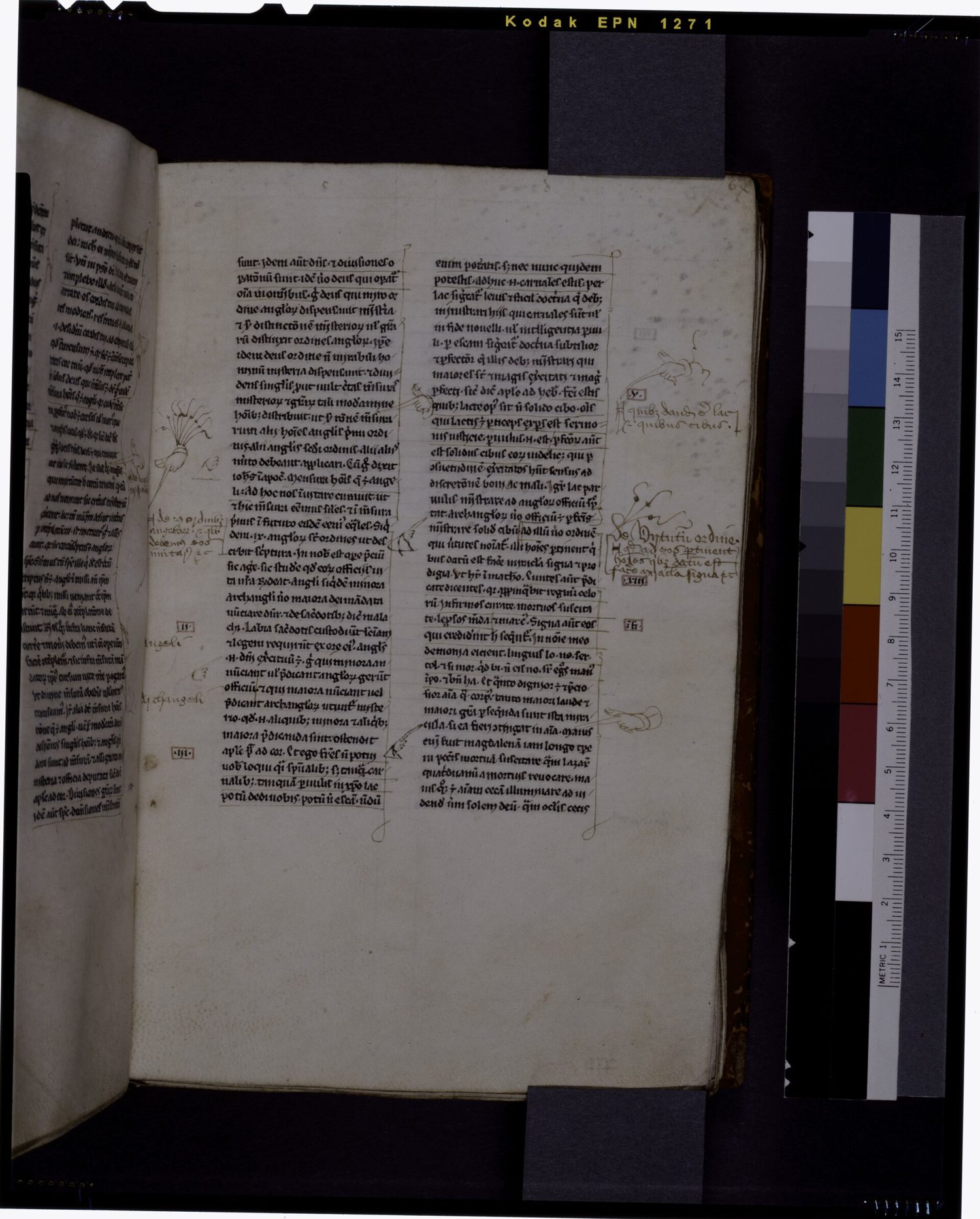
Match each structural choice to its function
Describing the shape is not naming the function. Say what the reader is made to do, and where.
Vocabulary
Train
| English |
|---|
| Line and stanza breaks/laɪn ænd ˈstænzə breɪks/ |
2.3
The Function of Contrasts Within a Text
Syllabus
| Enduring Understanding | Learning Objective | Essential Knowledge |
|---|---|---|
STR-1 | 3.D |
|
Source: College Board AP Course and Exam Description
- Contrast 对照 can be introduced through focus, tone, point of view, character or speaker perspective, and dramatic situation.
- Contrasts are the result of shifts or juxtapositions or both.
- Shifts may be signalled by a word, a structural convention, or punctuation.
- Shifts may emphasise contrasts between particular segments of a text.
This is the most reliable route into an unseen poem. Find the shift - a but, a stanza break, a change of tense or address - and the poem divides into a before and an after. What changed, and what the change costs or gains, is very often the poem's argument.
Explore
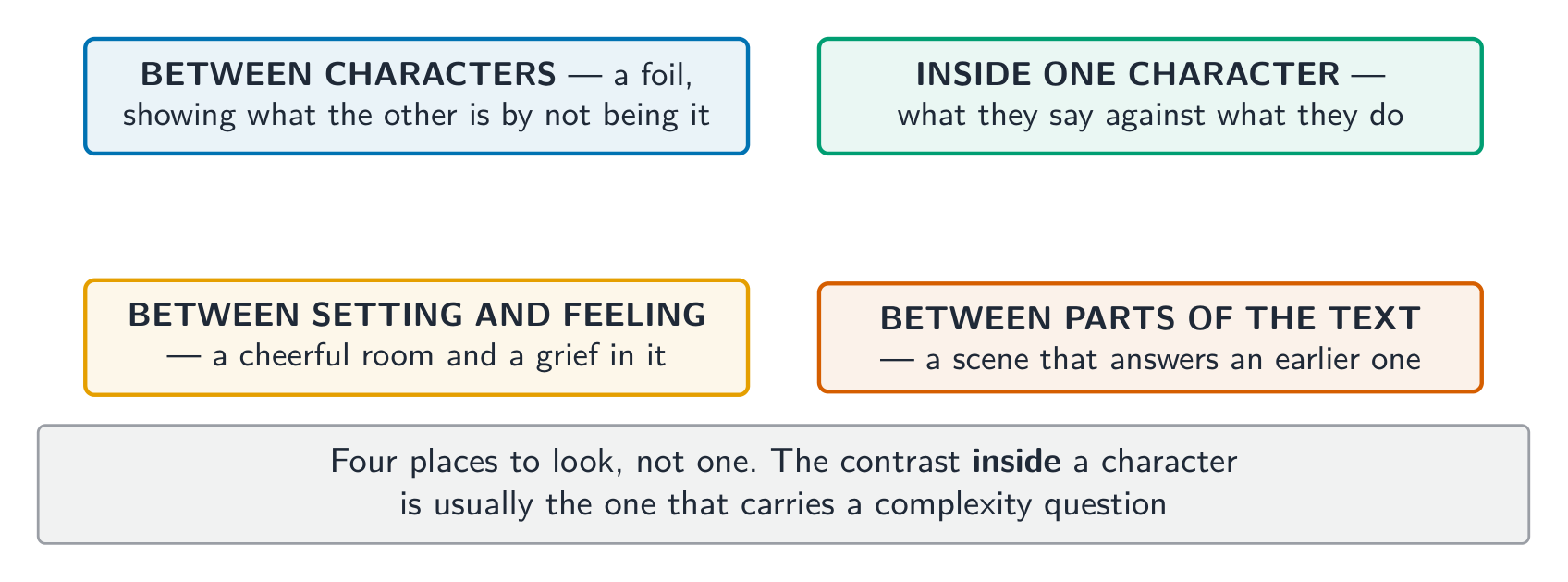
Find the contrast in four places, not one
Students find the obvious pairing and stop — and the contrast inside a character usually carries the complexity question.
Vocabulary
Train
| English |
|---|
| Contrast/ˈkɒntræst/ |
2.4
The Function of Specific Words and Phrases
Syllabus
| Enduring Understanding | Learning Objective | Essential Knowledge |
|---|---|---|
FIG-1 | 5.B |
|
Source: College Board AP Course and Exam Description
- An antecedent 先行词 is a word, phrase, or clause that precedes its referent.
- Referents are ambiguous if they can refer to more than one antecedent, which affects interpretation 影响阐释.
- Words or phrases may be repeated to emphasise ideas or associations.
- Alliteration 头韵 is the repetition of the same initial sound in adjacent or nearby words, emphasising those words.
Ambiguous reference is worth special attention. In poetry or prose, a pronoun with two plausible antecedents can create ambiguity. Test both readings against context before claiming a deliberate effect.
Vocabulary
Train
| English |
|---|
| antecedent/ˌæntɪˈsiːdənt/ |
| affects interpretation/əˈfekts ɪnˌtɜːprɪˈteɪʃn/ |
| Alliteration/əˌlɪtəˈreɪʃn/ |
2.5
The Function of a Simile
Syllabus
| Enduring Understanding | Learning Objective | Essential Knowledge |
|---|---|---|
FIG-1 | 6.A |
|
Source: College Board AP Course and Exam Description
- A simile 明喻 uses "like" or "as" to liken two objects or concepts.
- Similes liken two different things to transfer the traits or qualities of one to the other.
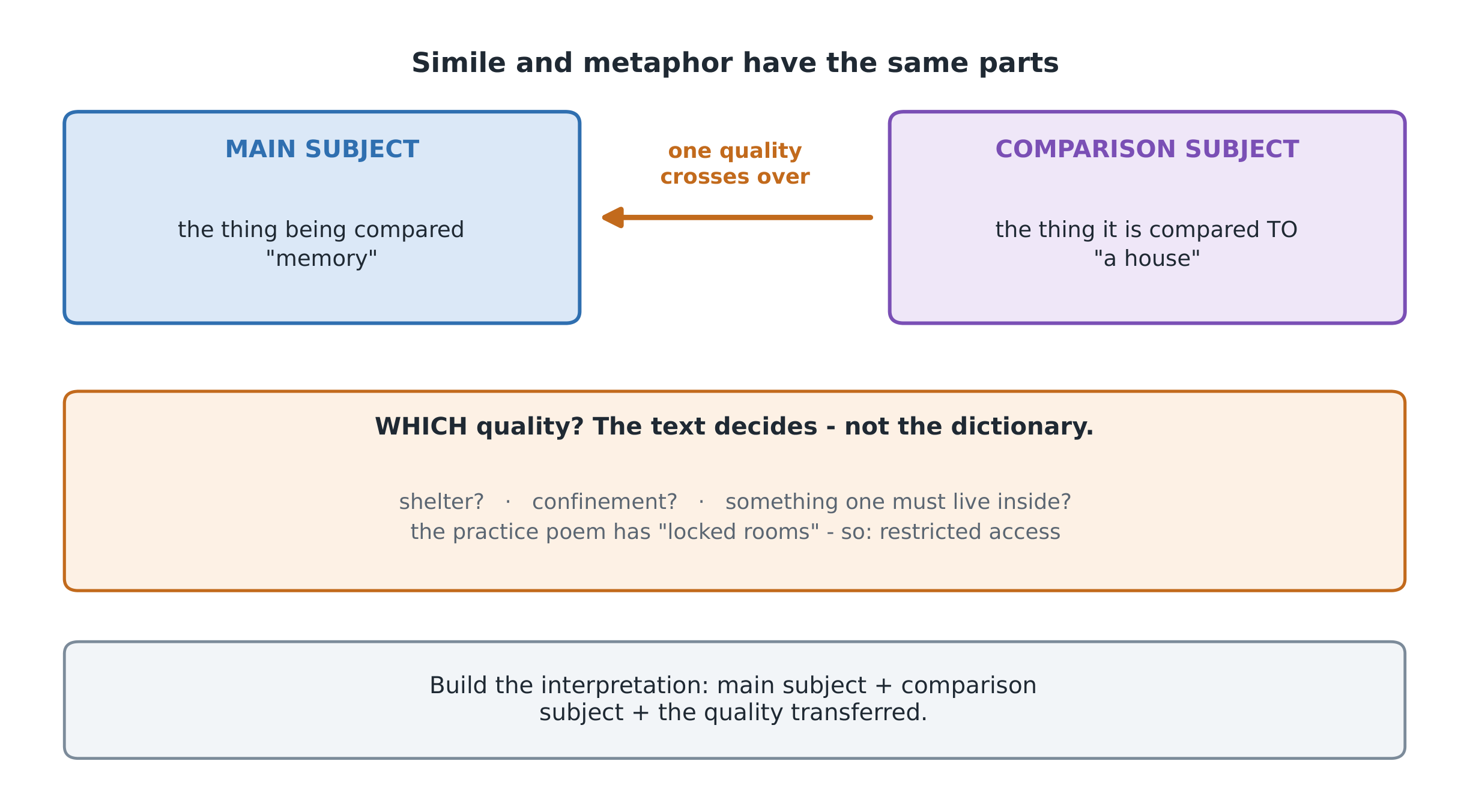
- In a simile, the thing being compared is the main subject; the thing to which it is compared is the comparison subject.
Those two terms are the whole method. A scoring answer names the main subject, names the comparison subject, and then says which quality was transferred - because that quality is the claim the poem is making.
Vocabulary
Train
| English |
|---|
| simile/ˈsɪmɪlɪ/ |
2.6
The Function of a Metaphor
Syllabus
| Enduring Understanding | Learning Objective | Essential Knowledge |
|---|---|---|
FIG-1 | 6.B |
|
Source: College Board AP Course and Exam Description
- A metaphor 隐喻 implies similarities between two usually unrelated concepts to reveal or emphasise qualities of the main subject.
- The same main-subject and comparison-subject structure applies.
- Comparisons draw on the experiences and associations readers already have with the comparison subject - which is why a metaphor can fail with an audience that lacks those associations.
- Interpretation of a metaphor may depend on the context of its use: what is happening in the text may determine which of the comparison subject's qualities is meant.
That last point protects you from the commonest error, which is importing every association a word has. If a poem calls grief a house, the relevant quality might be shelter, or confinement, or the fact that one must live inside it. The text decides which.
Vocabulary
Train
| English |
|---|
| metaphor/ˈmetəfɔː/ |
2.7
Developing a Paragraph with Claim and Evidence
Syllabus
| Enduring Understanding | Learning Objective | Essential Knowledge |
|---|---|---|
LAN-1 | 7.A |
|
Source: College Board AP Course and Exam Description
Same three components as Unit 1: a claim requiring textual defence, the textual evidence, and details identified in combination.
Original practice poem: memory and a house
This poem was written for teaching. It is not an extract from an AP paper.
Memory is a house.
I polish the key each morning,
but pass the locked rooms
without a sound.
At dusk I leave the door ajar.
Worked analysis. Memory is the main subject and a house is the comparison subject. “Polish the key each morning” suggests continuing attachment, while “but” turns towards avoidance of “locked rooms”. Together these details present a past the speaker maintains but does not fully revisit. The final door “ajar” suggests a tentative opening; it does not establish a complete recovery. Context supports restricted access and attachment, rather than every possible quality of a house. Naming “metaphor” alone does not explain that interpretation.
Practice. Explain how “but” and the final line complicate the speaker's attitude. Use the actual words rather than assuming that a house always represents safety or confinement.
2.7
Exam tips
- Explain a significant omission only when the surrounding words support the inference.
- Find the shift first. A but, a stanza break, a change of tense - the poem divides there.
- Test line endings in context. Explain their relation to syntax and emphasis.
- An ambiguous referent can support more than one reading; test the wording before claiming intention.
- Always name main subject and comparison subject, then the quality transferred. That quality is the claim.
- Context decides which quality a metaphor imports. Do not list every association the word has.
Interactive lessons on this topic
Work through it step by step, with instant-check exercises.